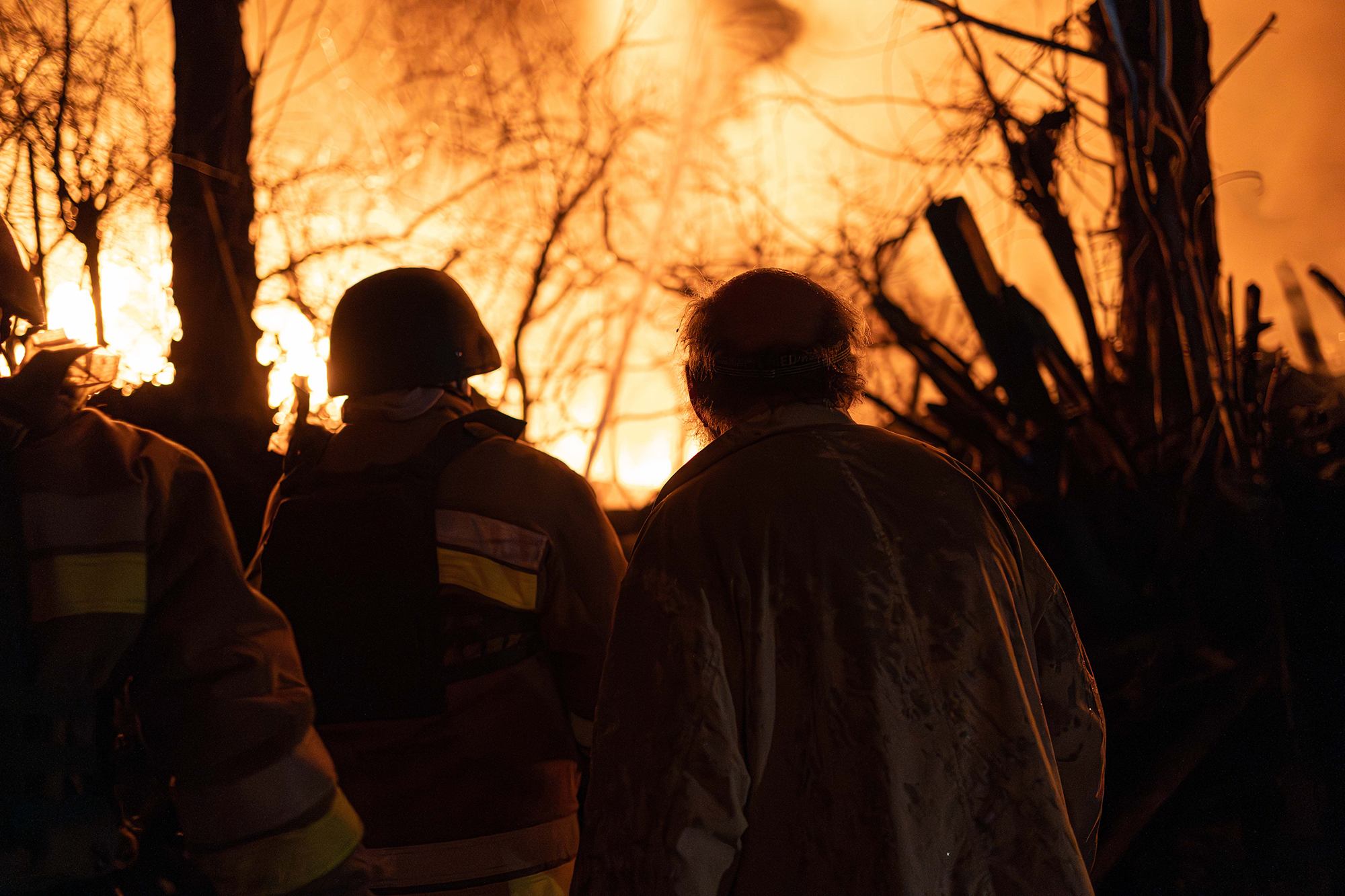
Throughout the autumn, Russia almost every week launched massive attacks on Ukraine. This week was no exception. The most destructive and deadly were the attacks on Kharkiv and Kyiv. The UN Human Rights Monitoring Mission in Ukraine reports that with the increased intensity of shelling by the Russian army, the number of Ukrainian civilians killed has increased several-fold. In particular, in Kyiv in the first ten months of 2025, the number of civilian casualties compared to last year is almost four times higher. The situation is similar in Dnipro and Zaporizhzhia.
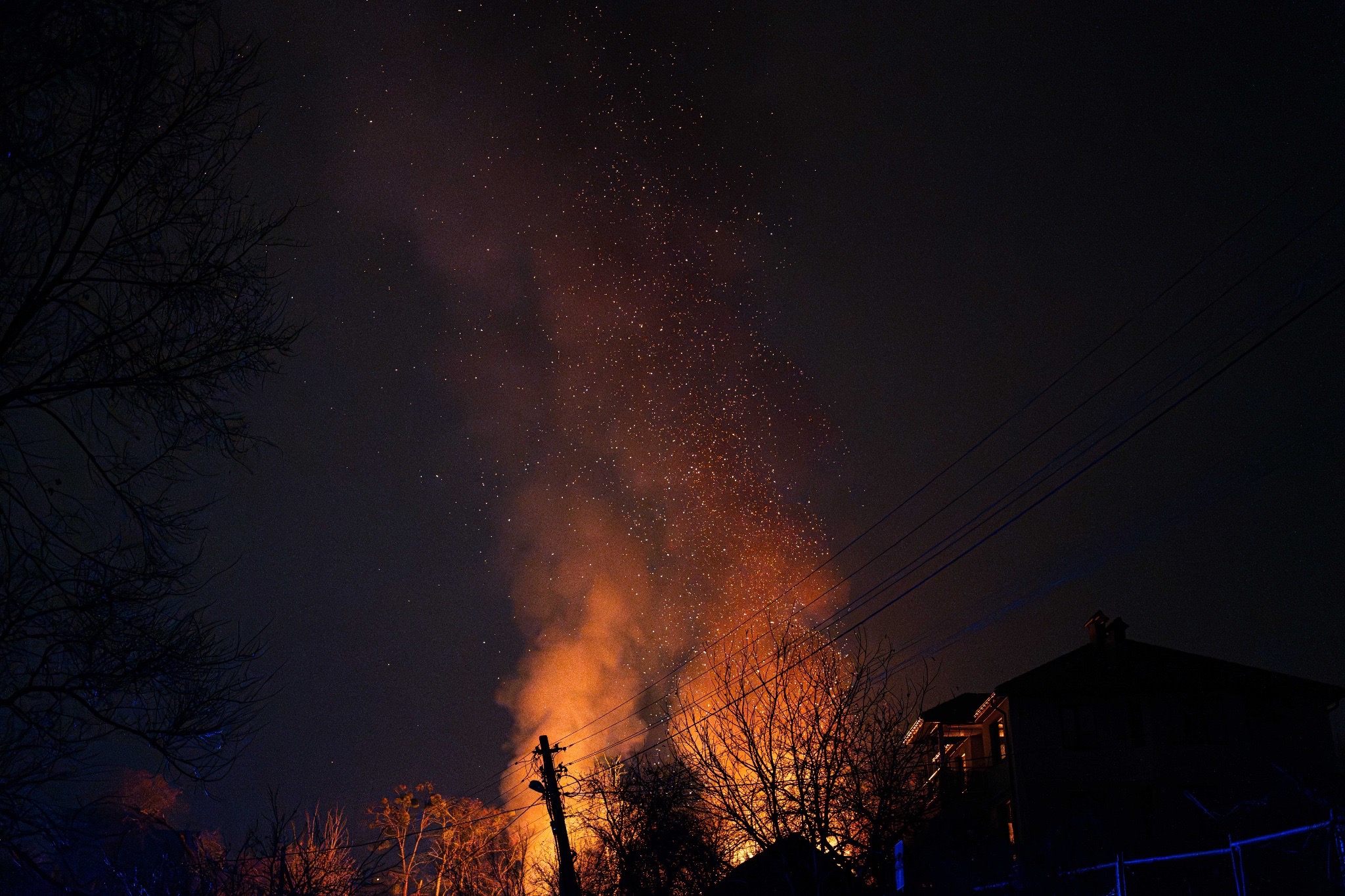

On the night of November 24, the Russian army struck energy facilities in Dnipropetrovsk, Donetsk, Kharkiv, and Chernihiv regions. According to reports by the Ministry of Energy, the most difficult situation with electricity by morning was in Dnipropetrovsk and Kharkiv regions. A residential and industrial zone in Sloviansk, Donetsk region, came under an airstrike: five people were injured, including two children; two high-rise buildings and one private house were damaged, as well as an enterprise; fires broke out. Kramatorsk was also shelled, with fires and destruction of residential and social infrastructure. Chernihiv region was attacked at night; the targets included critical and transport infrastructure facilities, a former fire brigade building, and a residential building. In Chernihiv, a Russian UAV damaged a private house; two people were hospitalized; fires broke out in multiple locations. In Odesa region, Russian drones attacked civilian port infrastructure, damaging equipment.
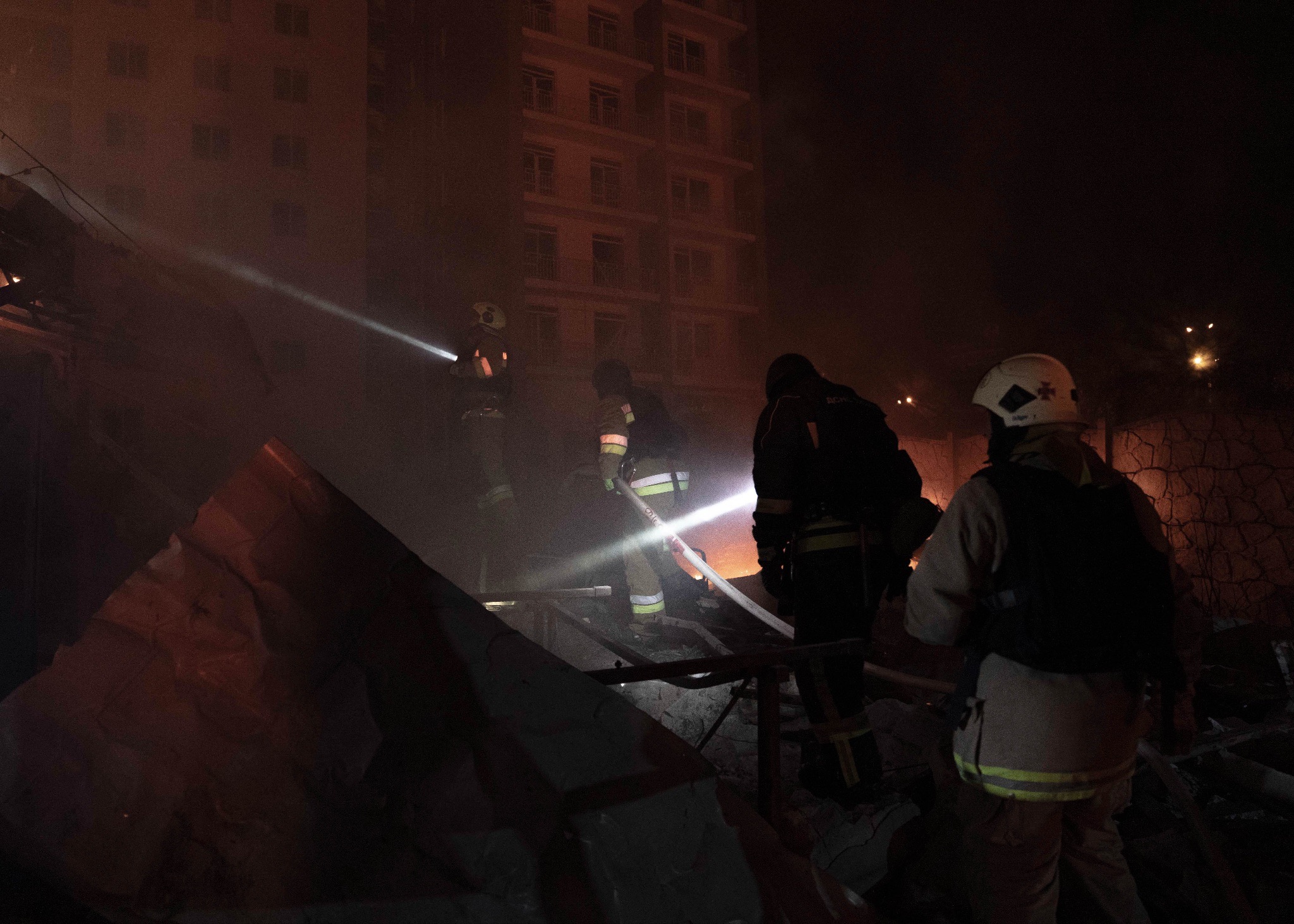
Photo by Mykyta Kuznetsov / Gwara Media
Kharkiv under drone attack: five killed
Russia massively shelled Kharkiv with 15 UAVs; the Shevchenkivskyi, Saltivskyi, and Kholodnohirskyi districts of the city were affected. Fires broke out in three residential buildings and at infrastructure facilities. Seven private houses and one high-rise building were severely damaged. A civilian enterprise, an educational institution, and vehicles were also damaged. In the Saltivskyi district, an energy facility was attacked, and there were power outages.
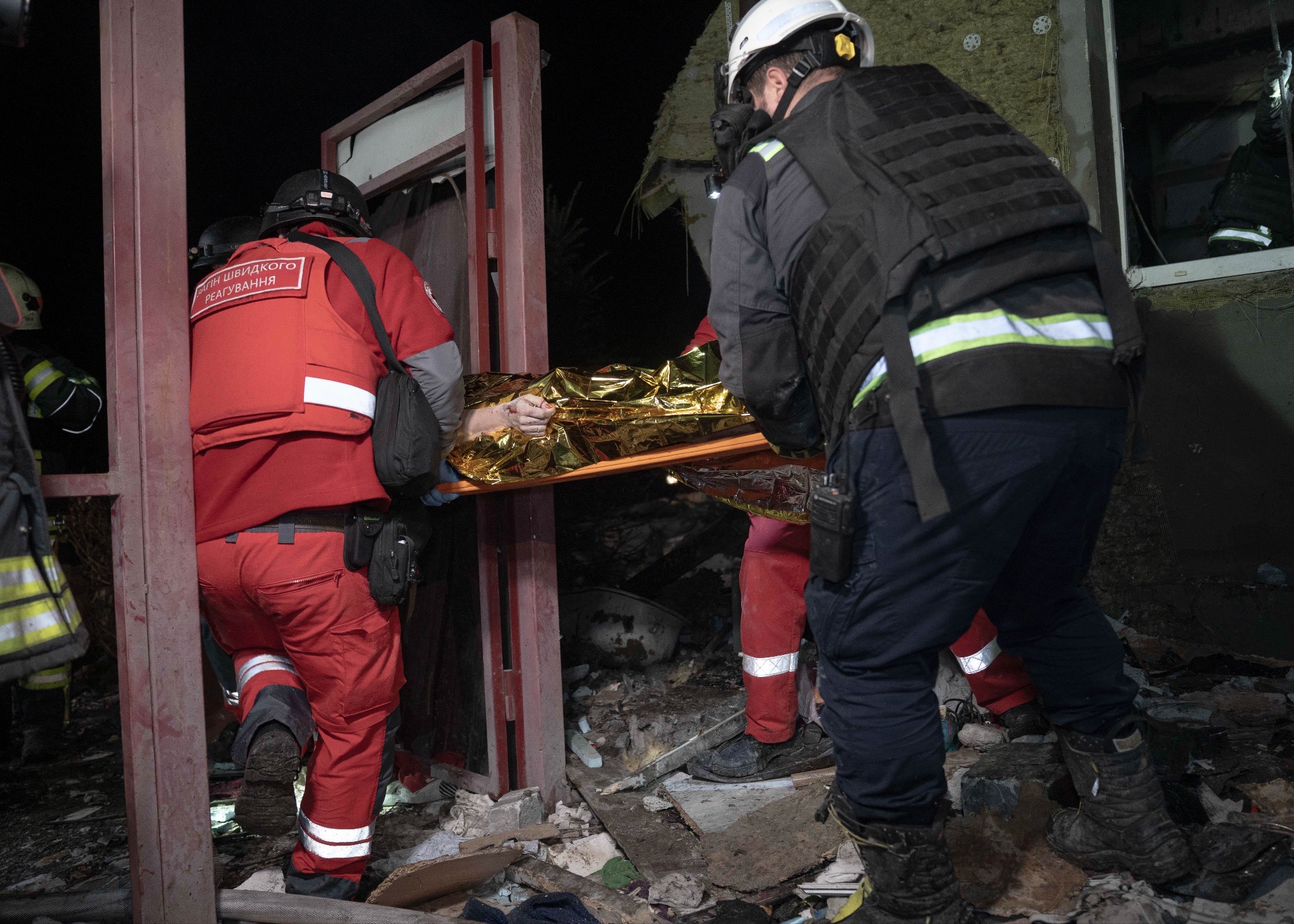
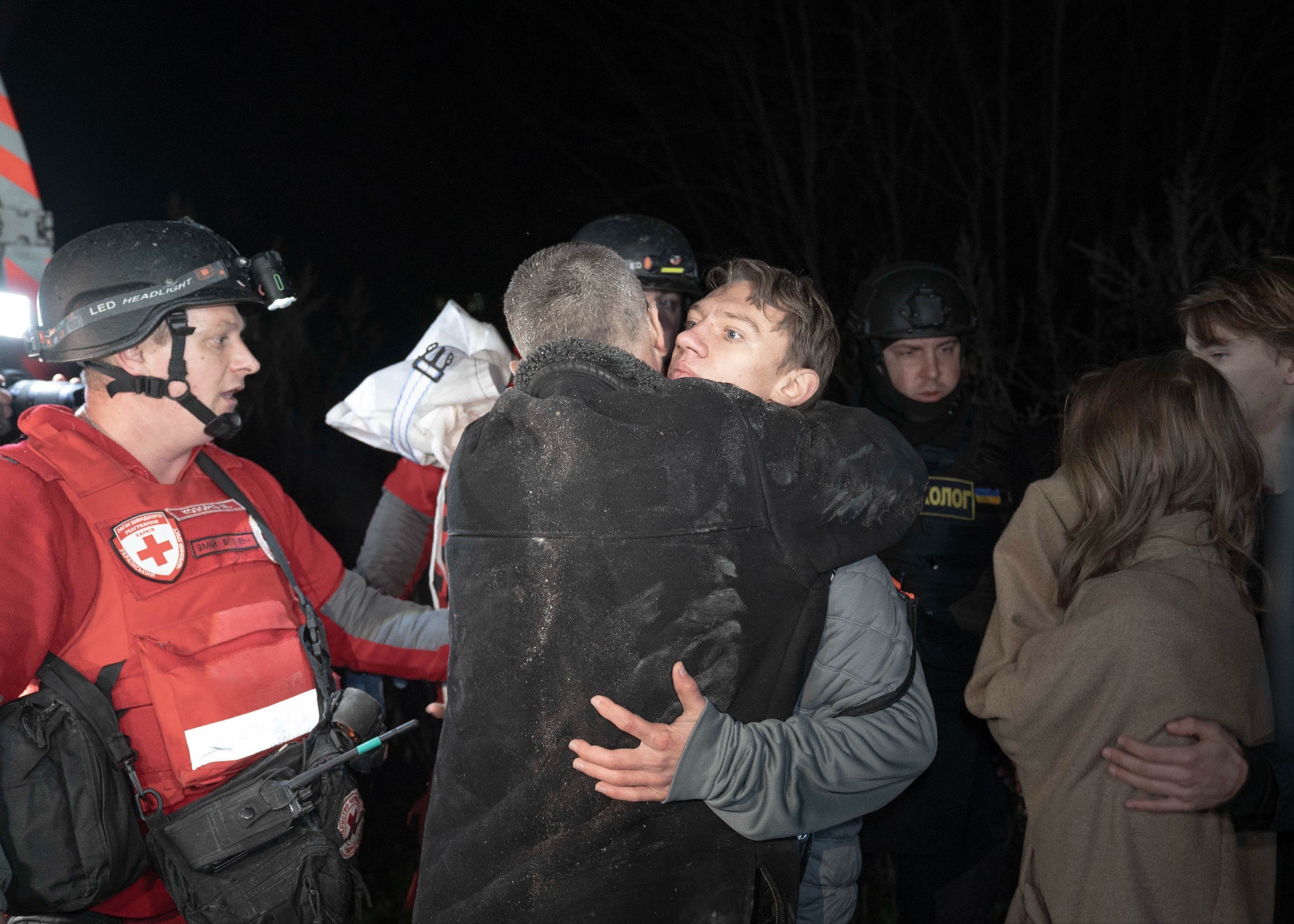
Photo by Mykyta Kuznetsov / Gwara Media
In Kharkiv, five people were killed; one man died in hospital. Seventeen people were affected: five were injured, two were hospitalized in moderate condition, and the rest had an acute stress reaction. Among those affected were two children. In Chuhuiv district, an agricultural enterprise caught fire; about 60 pigs died; a woman was injured.
That day, Russian troops struck an administrative building in Novovorontsovka, Kherson region, killing a settlement council employee; shelling in Bilozerka took a man’s life. In Kherson, due to Russian shelling, an associate professor of the Department of Public Administration and Local Self-Government at Kherson National Technical University was killed; another woman was hospitalized. During response work in Sumy after Russian shelling, the enemy carried out a repeated strike, hitting a State Emergency Service unit. As a result, a specialized vehicle was destroyed. During the day, the enemy attacked Sumy region with strike UAVs; a child was hospitalized; part of Sumy was left without power. In Dnipropetrovsk region, two people were killed and there were injured; administrative buildings, a college, an enterprise, high-rise buildings and private houses, gas stations, power lines were damaged; vehicles were destroyed and damaged.
From night until morning on November 25, Russia struck Ukraine’s critical infrastructure, using 464 UAVs of various types and 22 missiles. The Air Force reported the destruction (suppression) of 452 aerial targets. The main strike hit the capital and the region; Odesa, Dnipropetrovsk, Kharkiv, Chernihiv, and Cherkasy regions were also shelled. In Chernihiv region, there were hits on an enterprise, an energy facility, and a residential building; production capacities were destroyed. In Chernihiv, an enterprise was attacked; four employees were injured, one hospitalized. In the region, a 25-year-old non-local woman, a volunteer, was killed. Energy and port infrastructure facilities in Odesa region were attacked overnight; fires broke out; six people were injured, including two children. In Kharkiv region, critical and railway infrastructure was attacked.
The Ministry of Energy reported power outages in regions as a result of the attack on Ukraine; in Kyiv region in particular, more than 40,000 consumers were left without electricity.
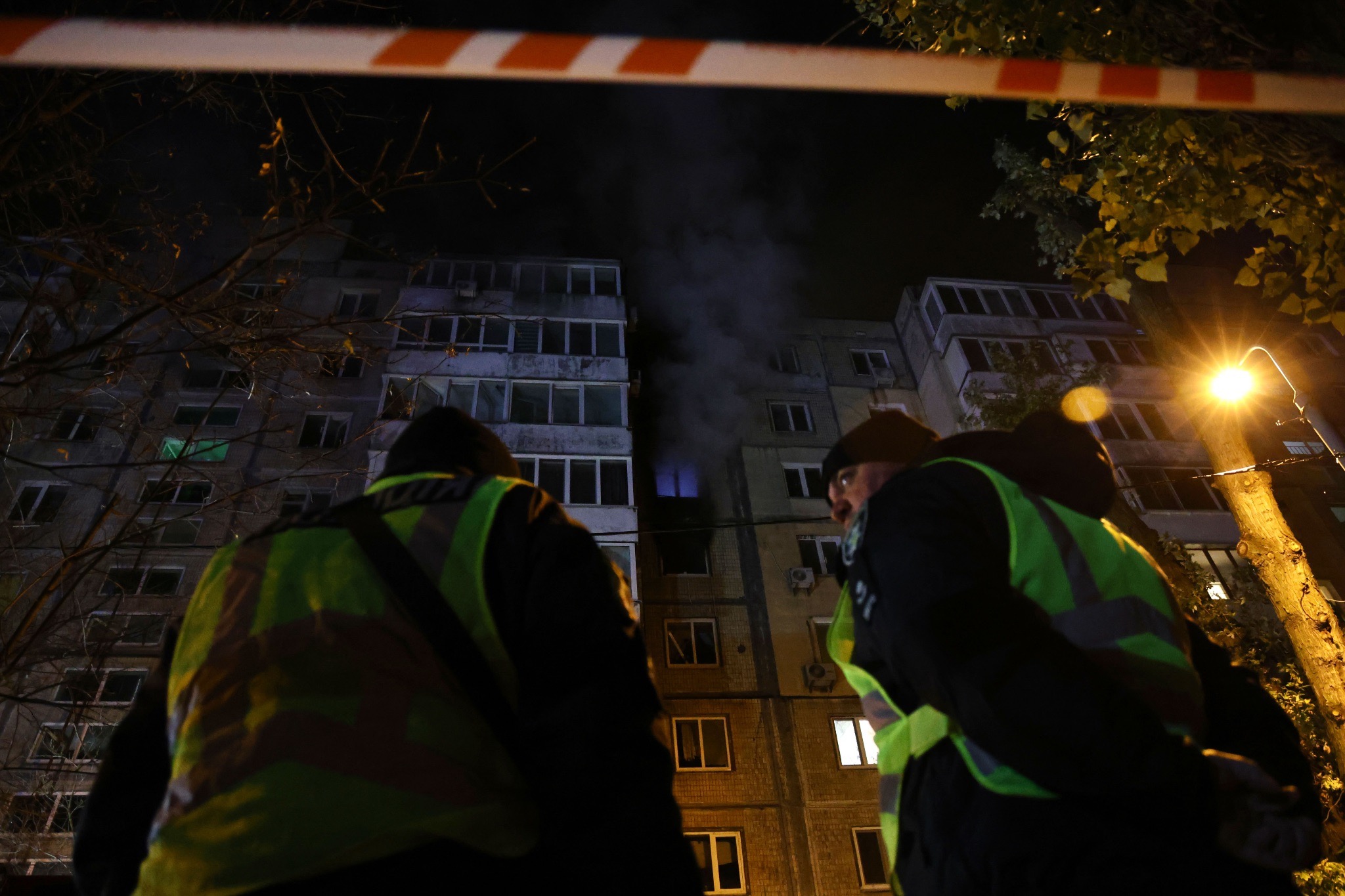
Photo by Ivan Antypenko / Suspilne News
Double strike on the capital: seven killed
The Russian army attacked Kyiv twice: at night it struck with “Kalibr” cruise missiles and Shaheds, and in the morning it hit with “Kinzhal” aeroballistic missiles. As a result of the enemy strike, seven people were killed in the capital; 21 were affected, including a child. Rescuers managed to save 18 people. The Holosiivskyi, Sviatoshynskyi, Pecherskyi, Darnytskyi, Desnianskyi, and Dniprovskyi districts were under attack. In the latter two, emergency and rescue operations in residential buildings hit by drones continued throughout the day.

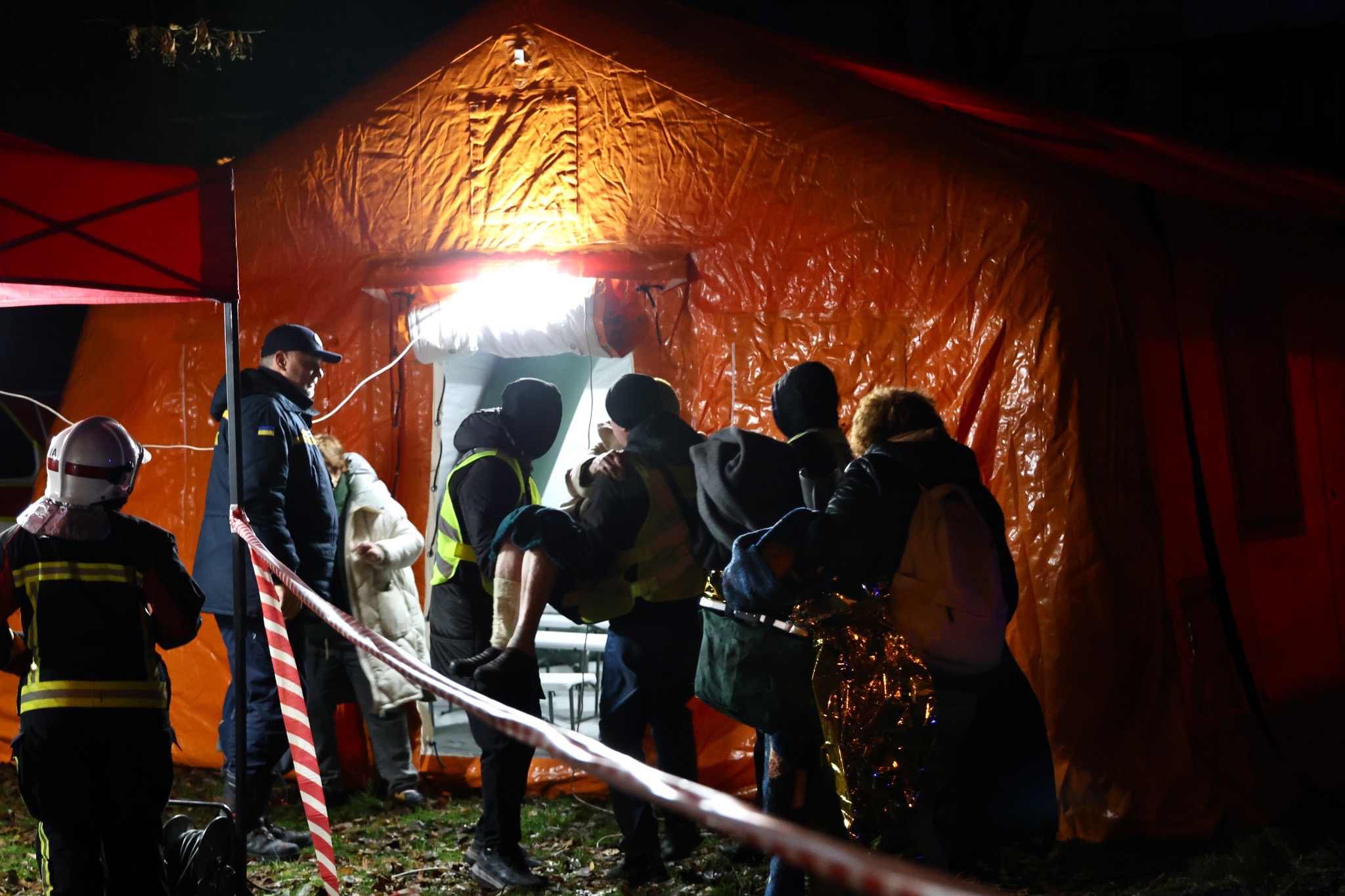
Photo by Ivan Antypenko / Suspilne News
In Sviatoshynskyi district, a hit was recorded near a four-storey warehouse building; a fire broke out. The bodies of four people were found there, and three others were injured. In Pecherskyi district, a drone hit a 22-storey residential building, causing destruction from the fourth to the eighth floors. In Dniprovskyi district, a nine-storey building was damaged by a direct strike; destruction and a fire occurred on the sixth and seventh floors. There was a hit and a fire of about 50 sq m in a garage cooperative. In an open area of the private sector in Darnytskyi district, debris fell.

Photo by Ivan Antypenko / Suspilne News
As a result of the Russian shelling, one of the largest book printing houses in Ukraine, “Vid A do Ya”, was damaged. The only logistics center of the Novus supermarket chain, with an area of 40,000 sq m, was also destroyed, reports “Ukrainska Pravda”. Four supplier drivers who had arrived to deliver goods were killed there. At the time of the attack, almost none of the employees were on the premises.
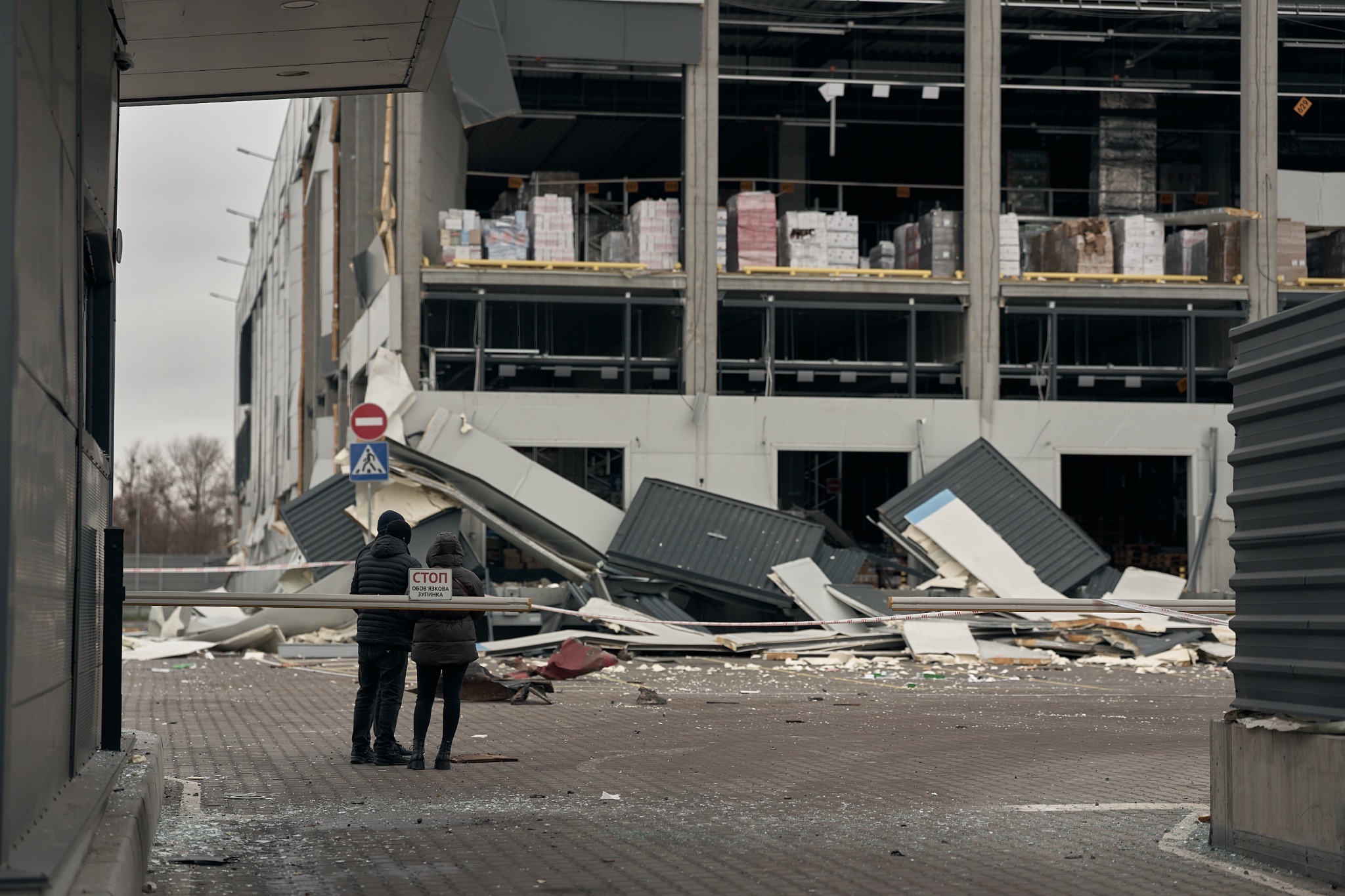
Photo by Kostiantyn Liberov
Kostiantyn Liberov documented the aftermath of Russia’s shelling of the capital. On social media, he shared a personal story that attests to the Russian army’s killing of civilians:
One of the drivers who arrived to unload at the Novus logistics center this morning was my uncle. Today I went to identify his body at the morgue. All his life he lived in Odesa. He worked as a simple driver. And he ended up in Kyiv at exactly 7 a.m. and exactly where a Russian missile struck.
We weren’t very close, but we regularly talked a few times a year. And now he’s gone. He, like five other people who were innocent of anything, was killed by Russia.

Photo by Kostiantyn Liberov
There was extensive infrastructure damage in Kyiv region: in Brovary, Bila Tserkva, Obukhiv, and Vyshhorod districts. In Bila Tserkva, a four-storey residential building was damaged; four houses were completely destroyed; two people were killed; eight were injured, including a 14-year-old child. 46 people were rescued from the building and from the basement.
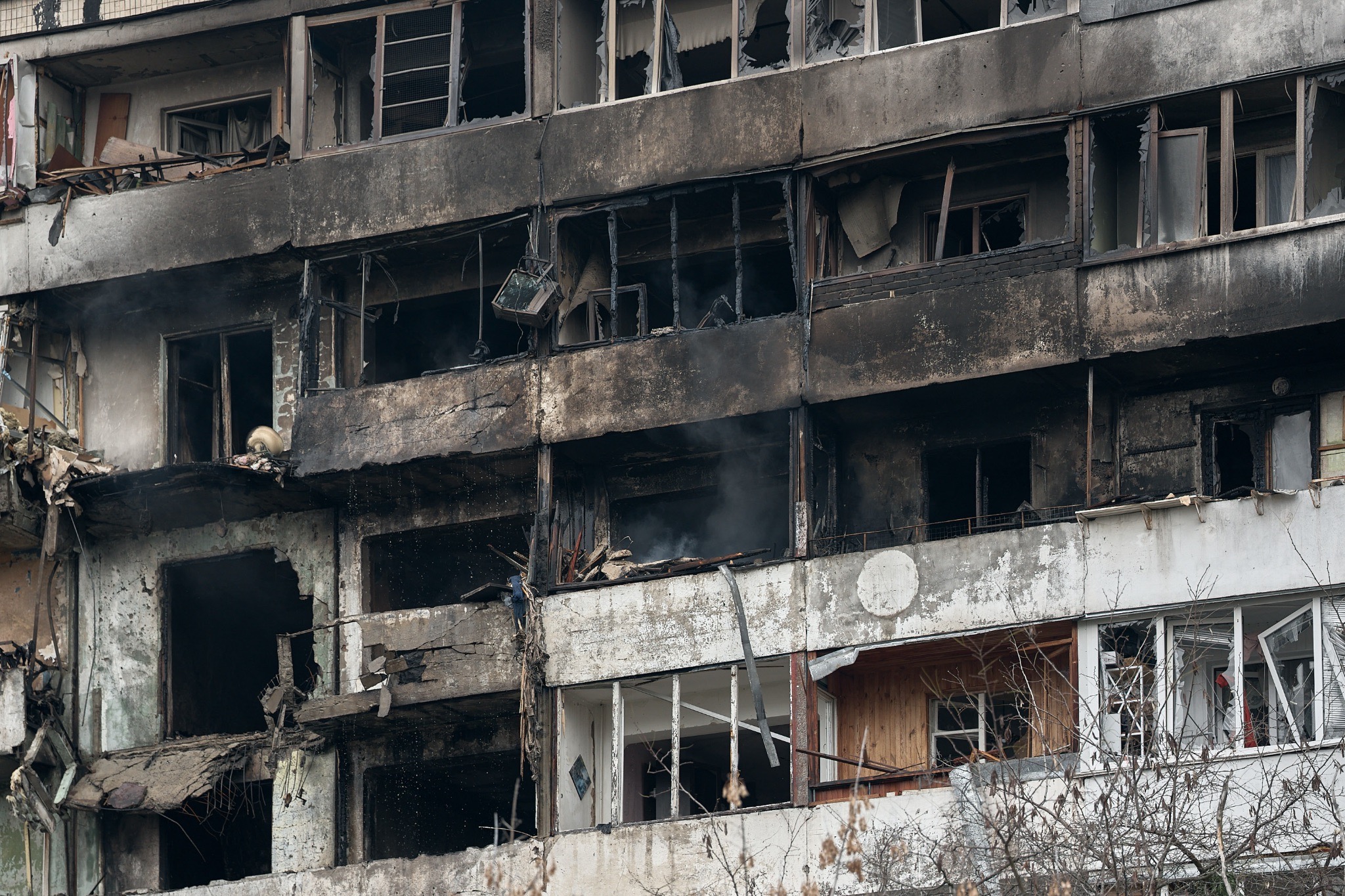
Photo by Kostiantyn Liberov
Head of the Kyiv Regional Military Administration Mykola Kalashnyk reported on the destruction in Kyiv region:
“Right now I am in Brovary district, in Pohreby — one of the settlements that suffered the most from the night attack by the terrorist state. Here, residential buildings, outbuildings, and cars have been destroyed completely and damaged. Houses have been left without roofs; windows blown out; yards shattered. Tonight the enemy again deliberately and cruelly struck Kyiv region.”
Volodymyr Zelenskyy spoke about Russian drones flying into neighboring countries during the shelling of Ukraine and once again called on international partners to provide military support to Ukraine:
“It is known that four drones flew to our neighbors — Moldova and Romania; there is exact timing of the overflights. That is why all partners must not forget that lives need to be saved every day. Weapons and air defense matter — as does sanctions pressure on the aggressor. There must be no pauses in assistance. The key now is for all partners together, through joint efforts, to move toward diplomacy. Pressure on Russia must work.”
In particular, six drones were recorded in Moldova’s airspace, one of which fell onto the roof of a private house.
That day, Russian forces dropped guided aerial bombs on Sloviansk, Donetsk region. Three people were injured; high-rise buildings and private houses, three educational institutions, a fire station, a trolleybus depot, and vehicles were damaged. In Kherson, the enemy shelled a kindergarten; windows were blown out and furniture damaged; a garage cooperative, high-rise buildings, and the private sector were also damaged; in Bilozerka a child was injured. Dnipro was again under enemy fire: houses and an educational institution were damaged; a woman was seriously wounded in the city, and her child is in moderate condition; in the region three people were injured. Also in Dnipropetrovsk region, a Russian FPV drone attacked rescuers while they were extinguishing a fire; a specialized vehicle was damaged.
On the night of November 26, Russian forces massively attacked Zaporizhzhia, causing fires and destruction. Nineteen people were affected, 12 of them hospitalized; 10 people were rescued. High-rise buildings and private houses, a gas station, warehouses, a shop, and cars were damaged. Russians also hit a university dormitory with people inside; the Suspilne Zaporizhzhia building was damaged. Dnipropetrovsk and Kharkiv regions were under shelling; in the latter, the enemy struck the suburbs with missiles. In Kherson’s Korabelnyi district, a Russian drone hit a car; a woman and a child were killed, and a man was injured. Chornobaivka, Kherson region, was under fire; residential houses and a church were damaged and destroyed; four people were injured.
November 27 — strike drones attacked Dnipropetrovsk and Kharkiv regions, as well as Sloviansk; there were injured everywhere. In Chernihiv region, there were hits on transport infrastructure, an agricultural enterprise, and a forestry enterprise; vehicles, production facilities, and a hangar were damaged; about a thousand pigs were killed. In Odesa region, residential houses, an equestrian sports club, and a gas station were damaged. It became known about the death of another child — a 12-year-old girl who had been wounded during a missile attack on Ternopil.
November 28 — the enemy struck Kharkiv and Dnipropetrovsk regions; there was extensive infrastructure damage everywhere, and there were killed and injured. Among those affected in Kharkiv region was a child. In Zaporizhzhia region, Russians attacked a fire-and-rescue unit; the building and equipment were damaged. All day, Chernihiv region was under attack by Russian drones; 26 settlements were hit. There was extensive damage to residential buildings in the region, and fires broke out. In Chernihiv, energy infrastructure, a residential house, and an enterprise were affected. In Kherson region, a drone struck a civilian car; a seriously wounded man died in hospital, and another woman is in serious condition. A KAB strike hit Kharkiv’s Nemishlianskyi district.
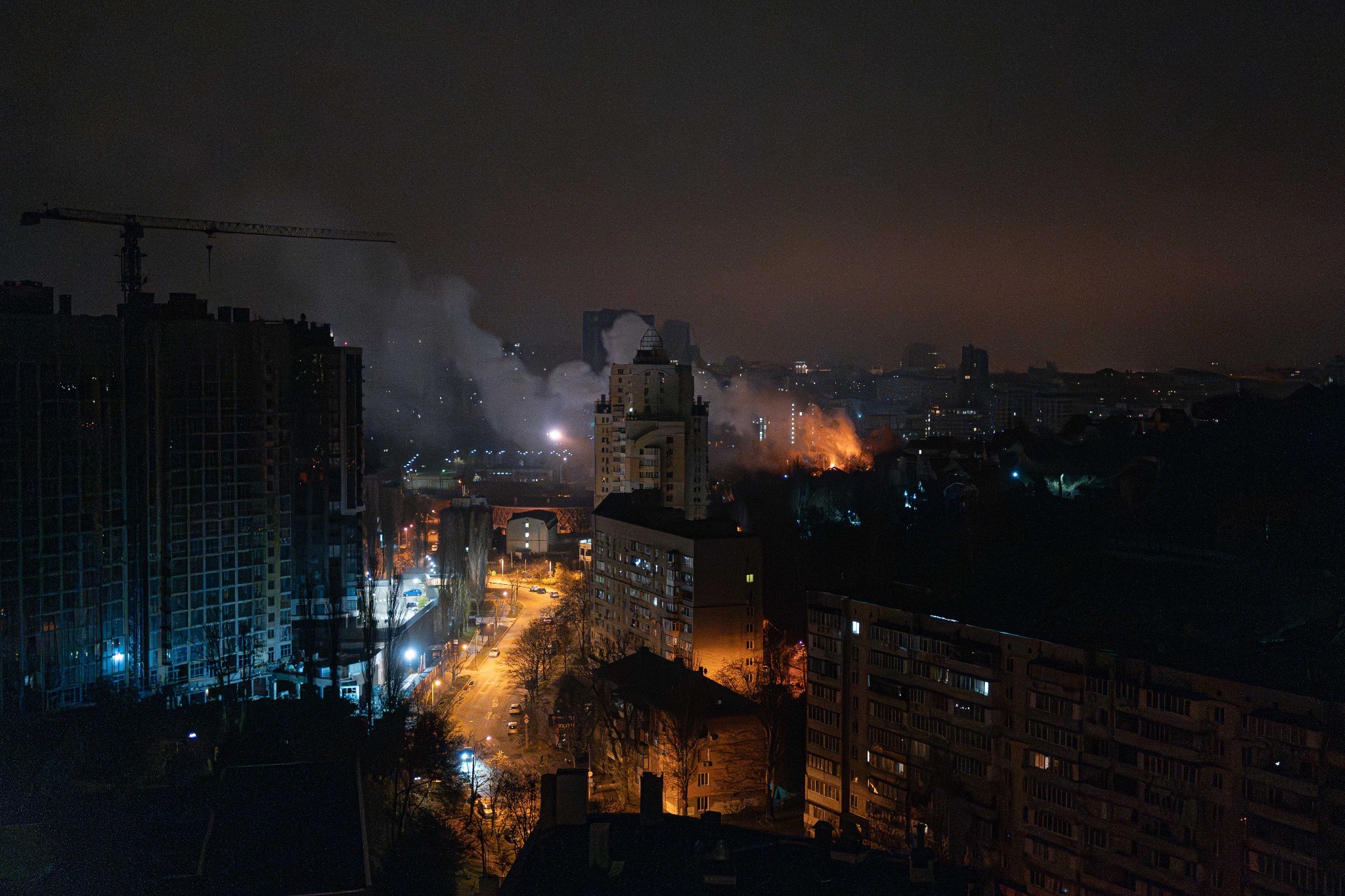
Ominous night in Kyiv: more hits on homes and two killed
From night until morning on November 29, the Russian army massively attacked energy facilities in Kyiv and Kyiv region, as well as in Chernihiv, Sumy, Poltava, and Kharkiv regions. For the attack, Russians used nearly 600 UAVs of various types and 36 missiles. The air-raid alert lasted more than 10 hours. According to the Ministry of Energy, more than 500,000 consumers were left without power in Kyiv, more than 100,000 in Kyiv region, and 8,000 in Kharkiv region.

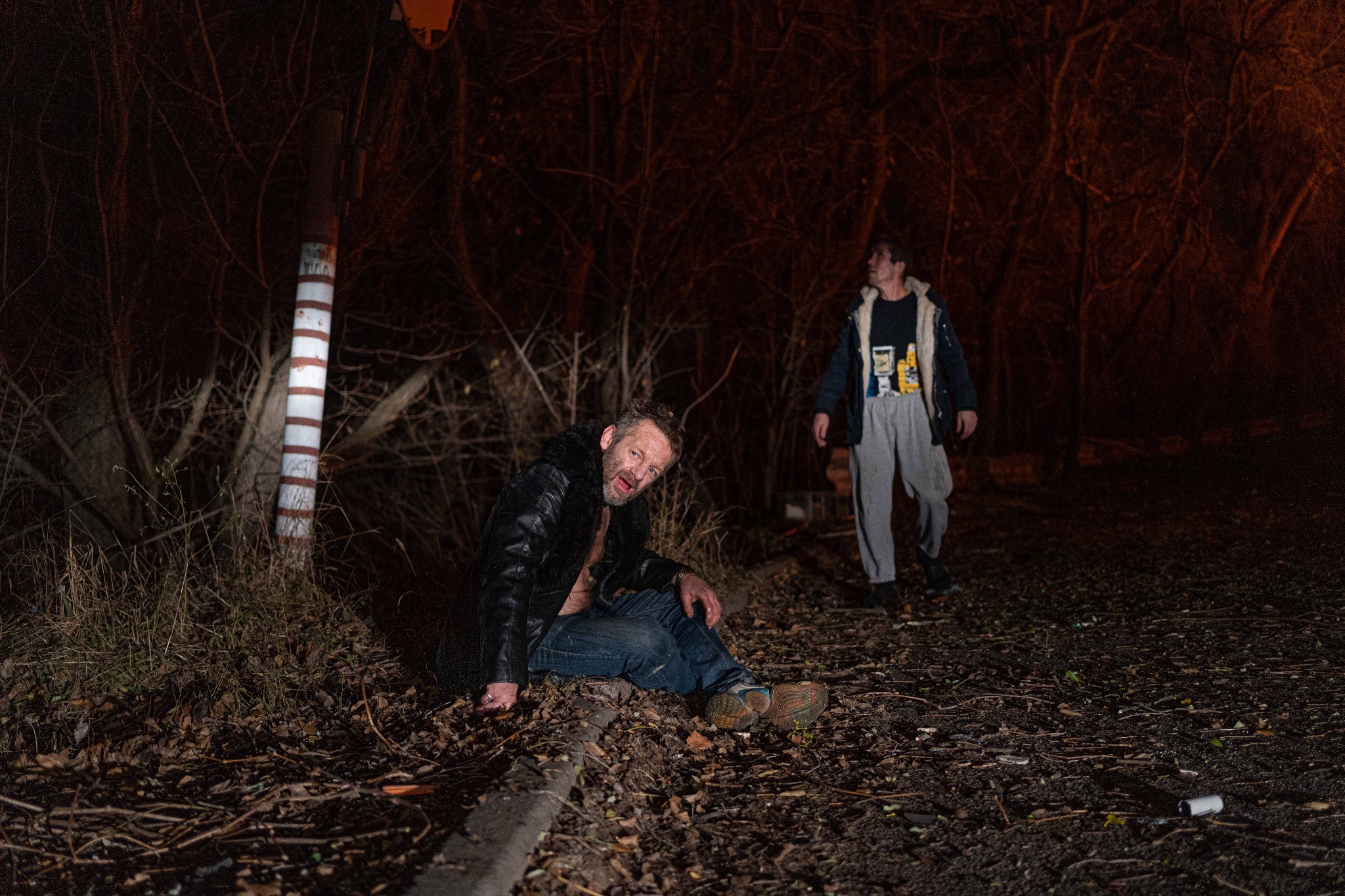
Eighteen locations with destruction were recorded in seven districts of the capital. Fires broke out at most locations. In Shevchenkivskyi district, there was a hit on a 14-storey building. In Sviatoshynskyi district, a strike hit the entrance of a three-storey building; a person was killed under the rubble; in the same district there was a direct hit on a private house. In Solomianskyi district, debris fell on two residential houses; vehicles nearby were damaged; a garage burned in the private sector. In Obolonskyi district, a private house burned due to shelling. In Holosiivskyi district, falling debris caused garages to catch fire. In Dniprovskyi district, there was a direct hit on a 10-storey building; among those rescued was a person with limited mobility. In Darnytskyi district, a missile fell into a yard near a high-rise building; the 7th–8th floors caught fire. A person was killed there, and another was hospitalized. Vehicles burned near a shopping center.
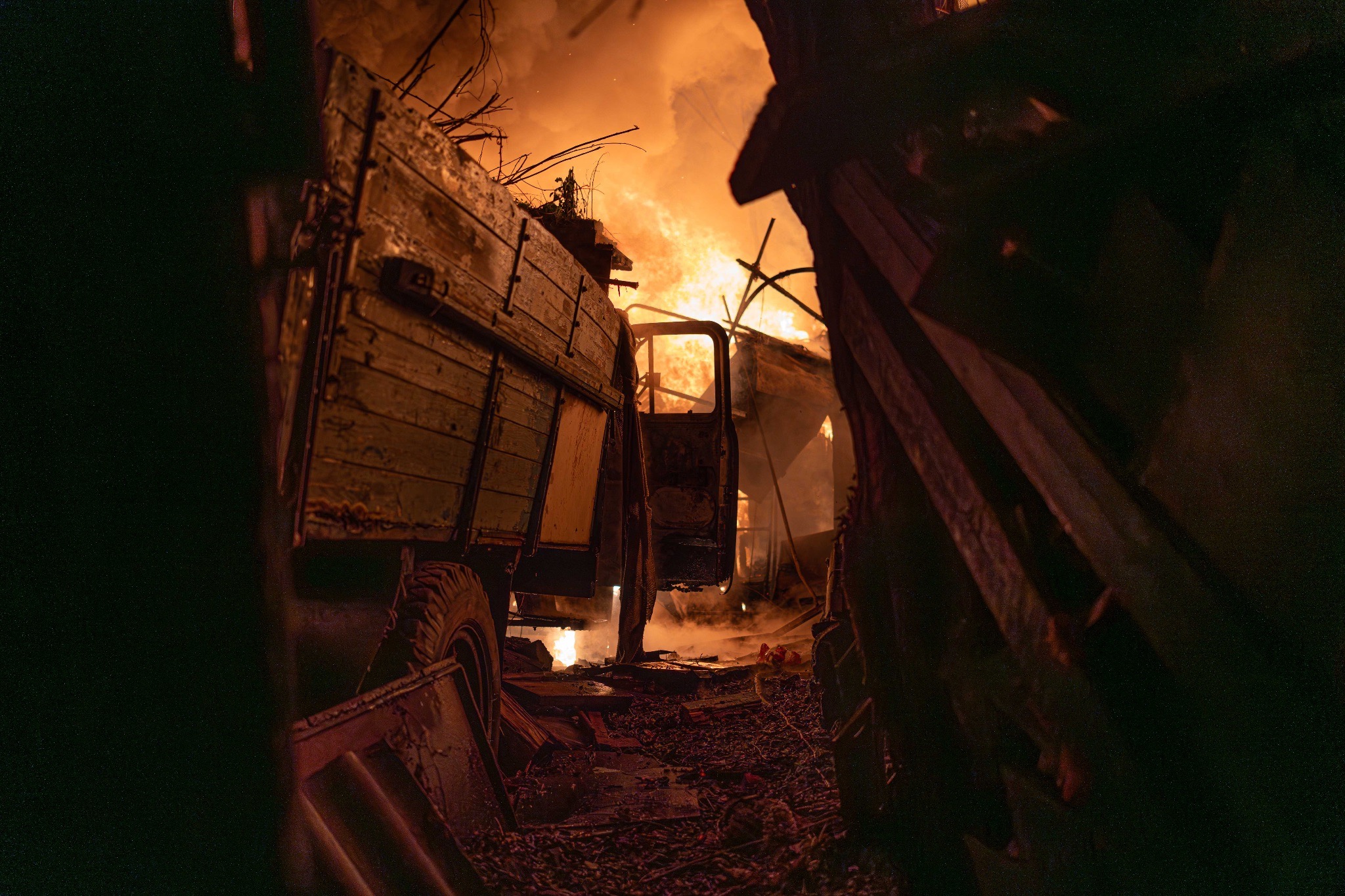
As a result of the attack in Kyiv, two people were killed; 32 people were affected; 19 people were hospitalized, including a child. State Emergency Service rescuers saved 40 people; during debris removal at one of the damaged buildings, they pulled a cat out from under the rubble. 360 rescuers worked to eliminate the consequences of the shelling in the capital.
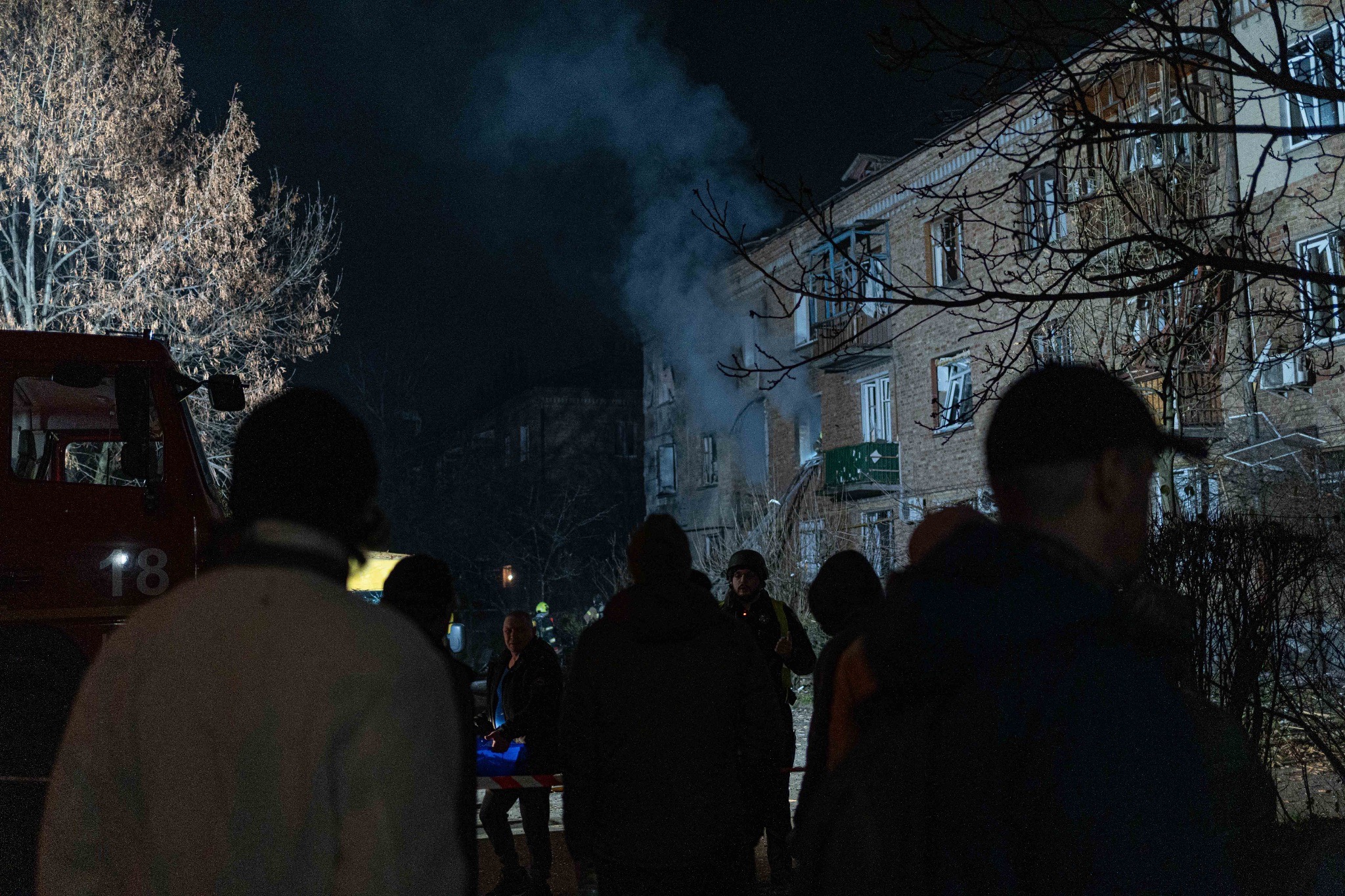

Photo by Anton Shtuka
Head of the Kyiv City Military Administration Tymur Tkachenko shared his emotions after visiting the locations of Russia’s shelling:
“We seem to be getting used to explosions, to alerts; we’ve learned how to react to attacks. We learned out of necessity, because this year there have been many more of them. Yet it always feels like the first time — every loss, every human tragedy. Someone lost their home today, and someone lost what is most precious — their loved ones. It is impossible to get used to that.”
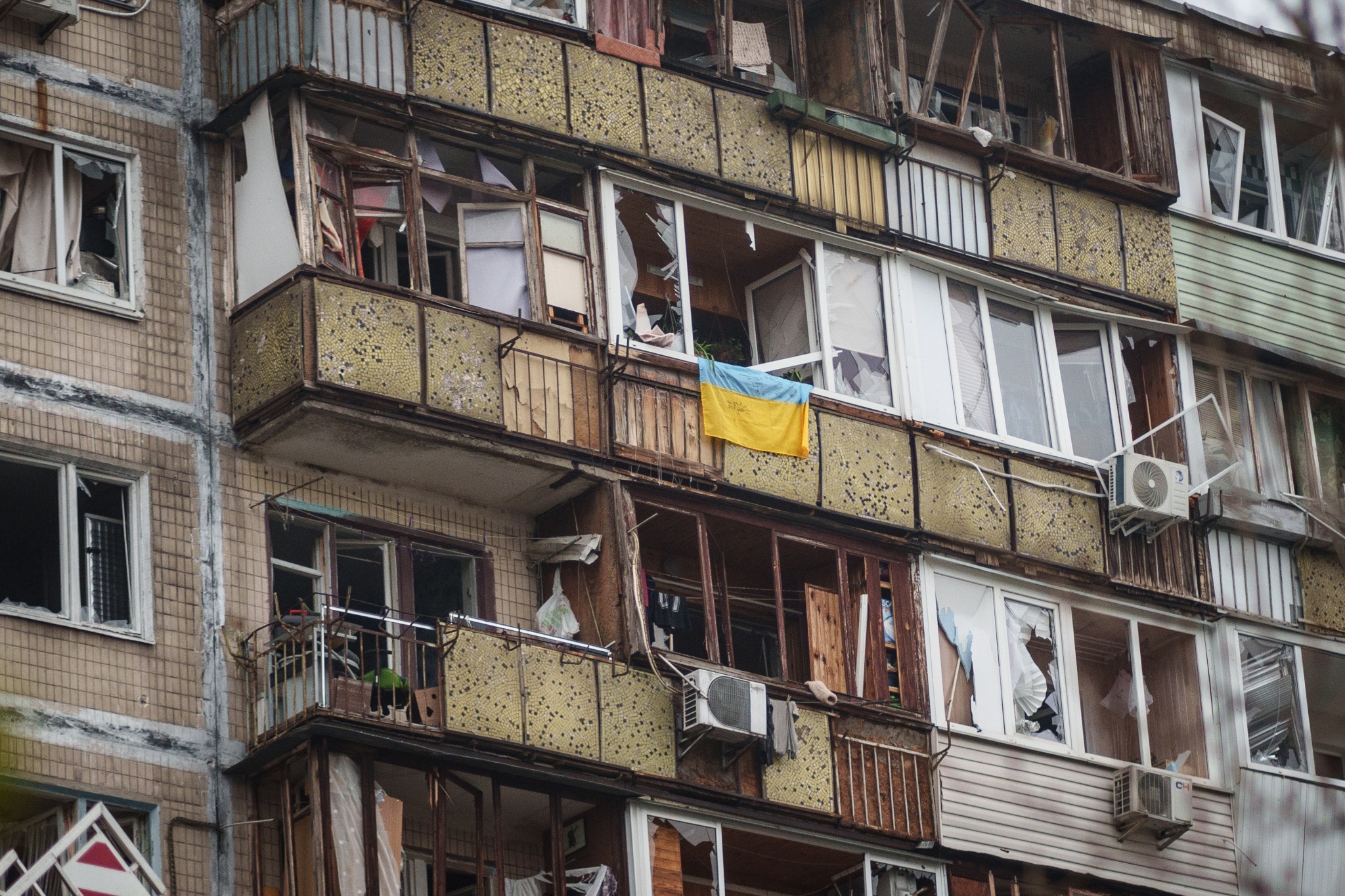
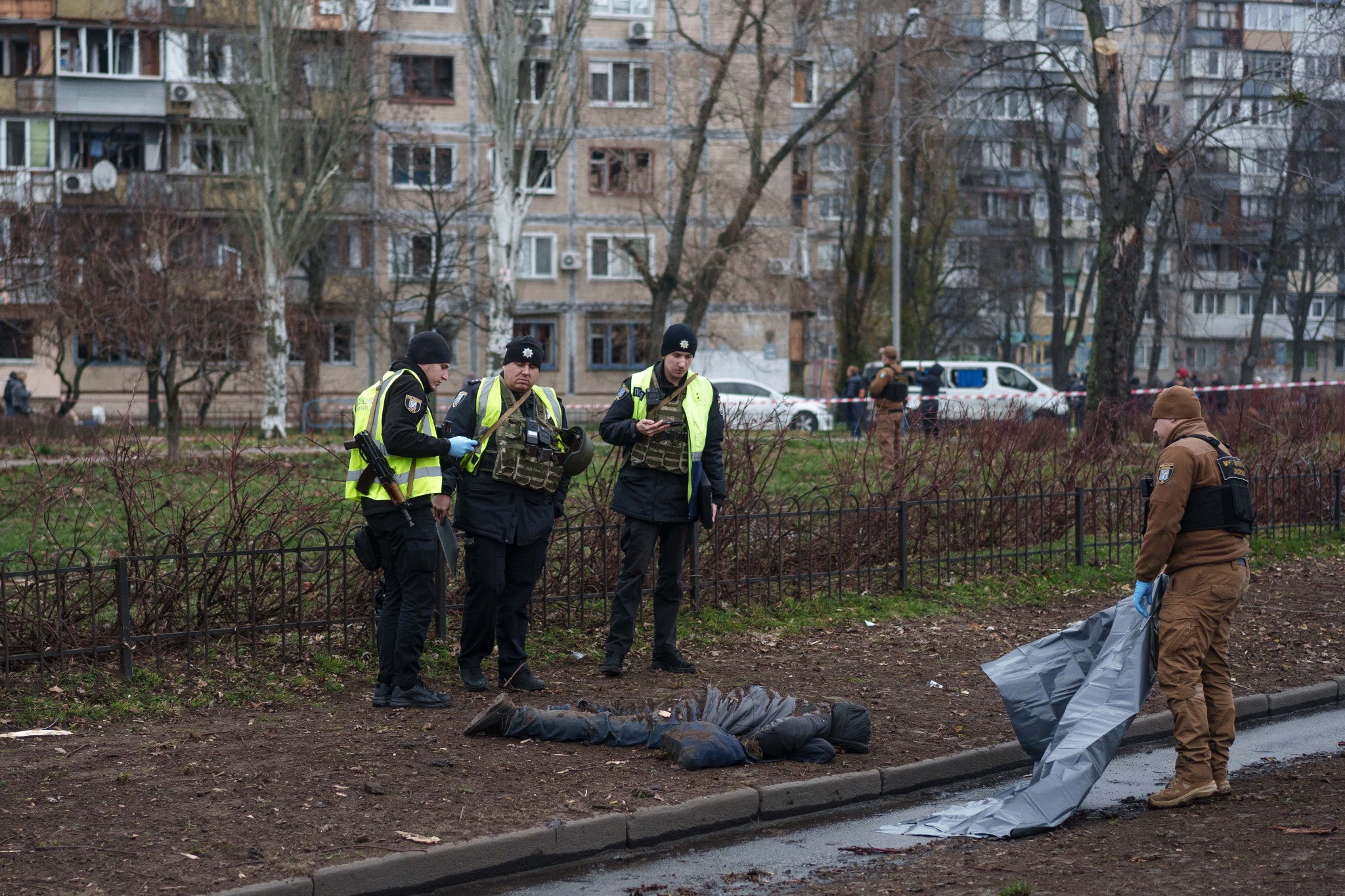
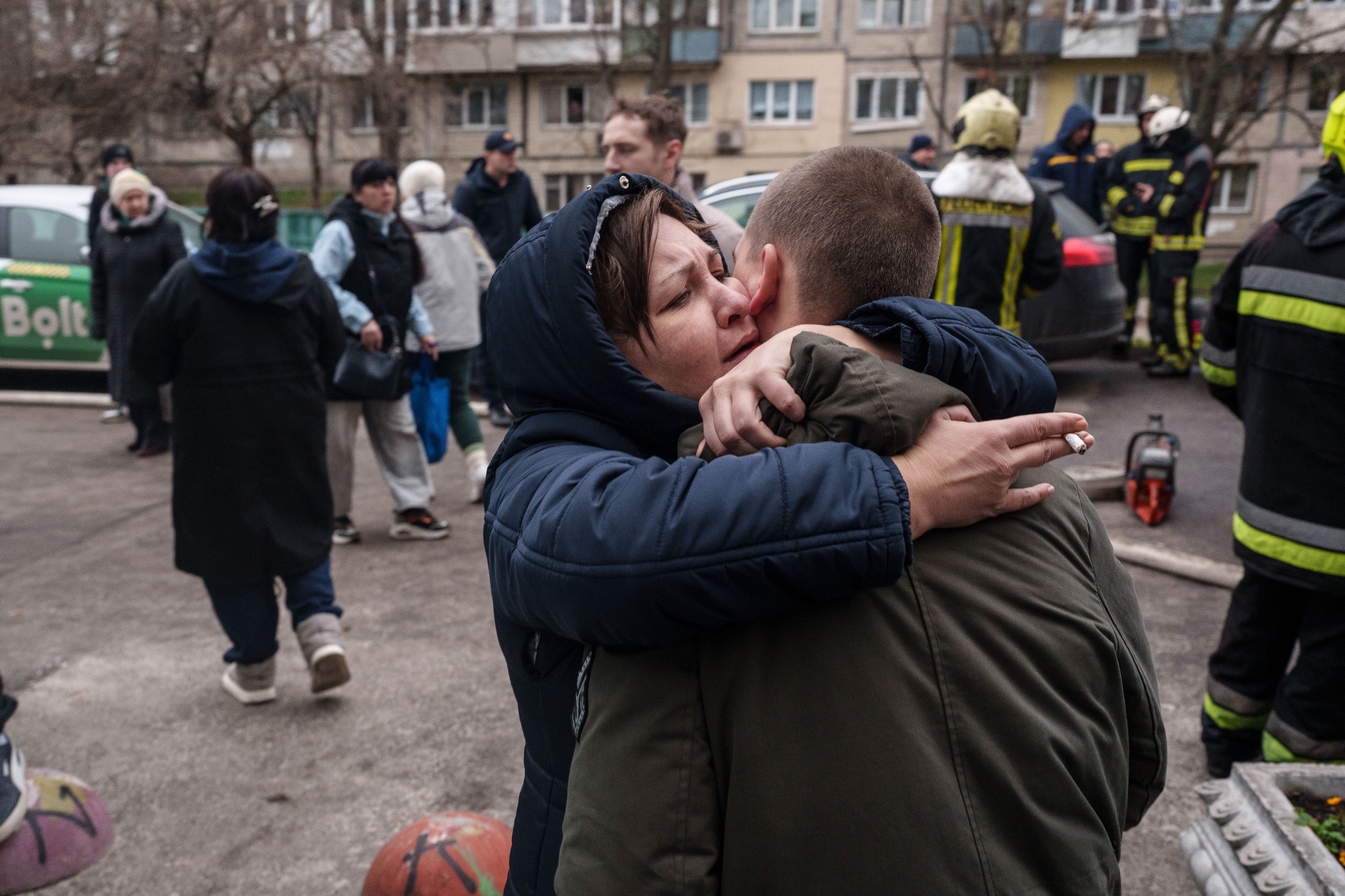
Serhii Korovainyi, one of the documentarians who recorded the capital wounded by Russian attacks that morning, shared reflections on how civilians keep dying:
The city is filling up with locations that will always remind us of the bodies of people killed by Russia: on Antonovycha, on the eve of the holidays, a man lay with his arms spread wide as if he wanted one last embrace, while his clothes were still smoldering; in Teremky — black bags in the archway of a Soviet sixteen-storey building; in Sviatoshyn — when they pulled him out of the ruins of an old two-storey building just as an April dawn was rising; yesterday — a passerby in a blue down jacket near the unwelcoming Darnytsia railway station. This is Kyiv geography. We somehow survived ten hours of Shaheds, ballistic and cruise missiles; he and one other person did not.
A woman with carnations complained that now she won’t make it to a funeral in the region; for some reason I said the deceased would have understood. The red flowers reminded me of red blood underfoot and on car doors; burned-out balconies of a panel building — of black earth where rocket fragments were still smoking. Colleagues suggested the missile may have had a cluster warhead — an effective instrument of terror. The Russians thought of everything.
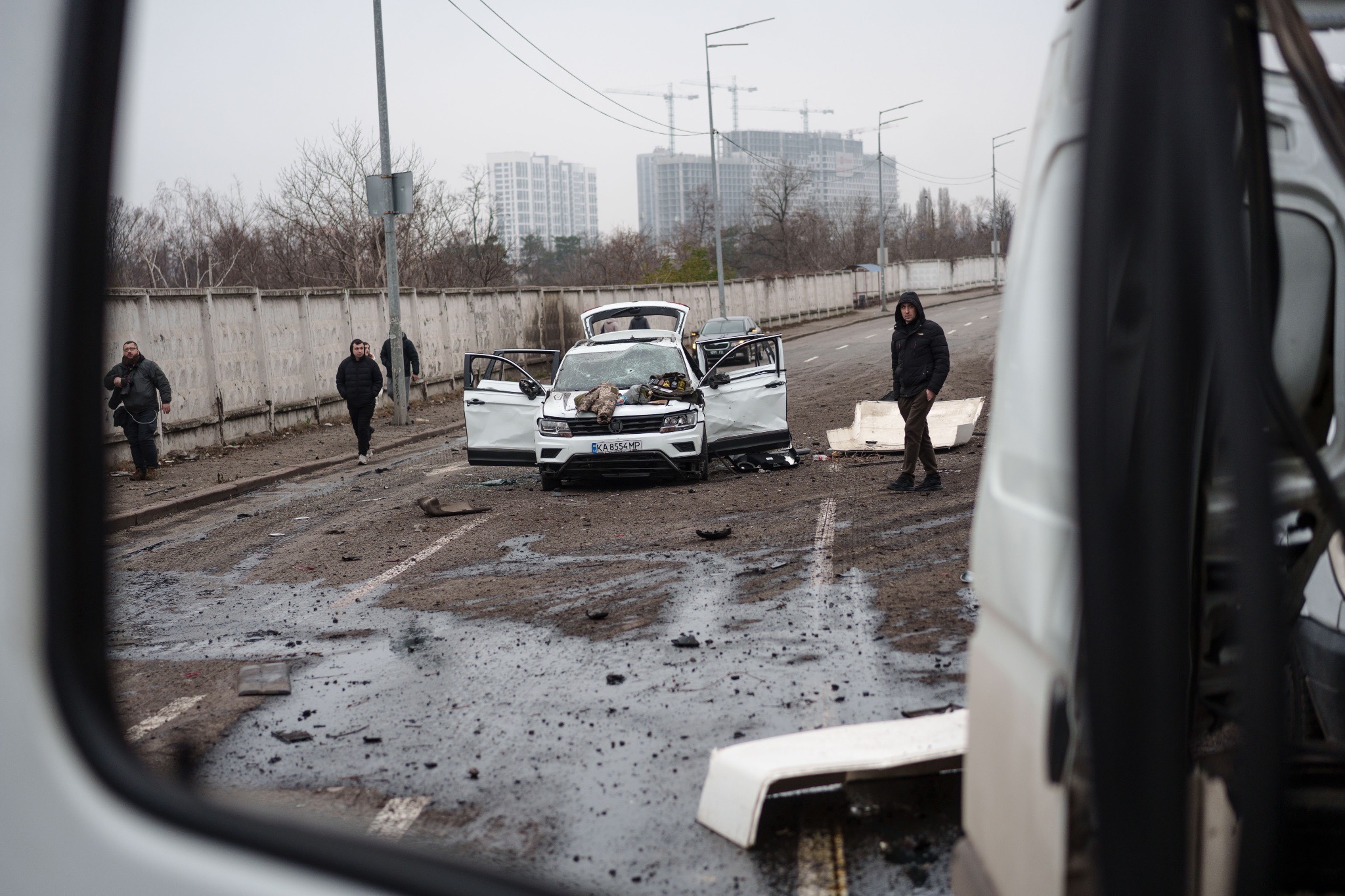
In Kyiv region, the consequences of the shelling were recorded in five districts: Fastiv, Brovary, Obukhiv, Vyshhorod, and Bucha. One person was killed, and eight were injured. 78 settlements were left without power. In the affected districts of Kyiv region there are many damaged private houses; some houses were completely destroyed; a Nova Poshta branch and an enterprise were damaged. Fastiv was completely de-energized; critical infrastructure switched to backup power. In the city of Brovary, six high-rise buildings were damaged, including destruction on the upper floors of a nine-storey building with a fire. Two people were injured, one of them hospitalized. 52 residents were evacuated from the building. Private houses and cars were also damaged, as well as a shopping center; a fire broke out in a garage cooperative.
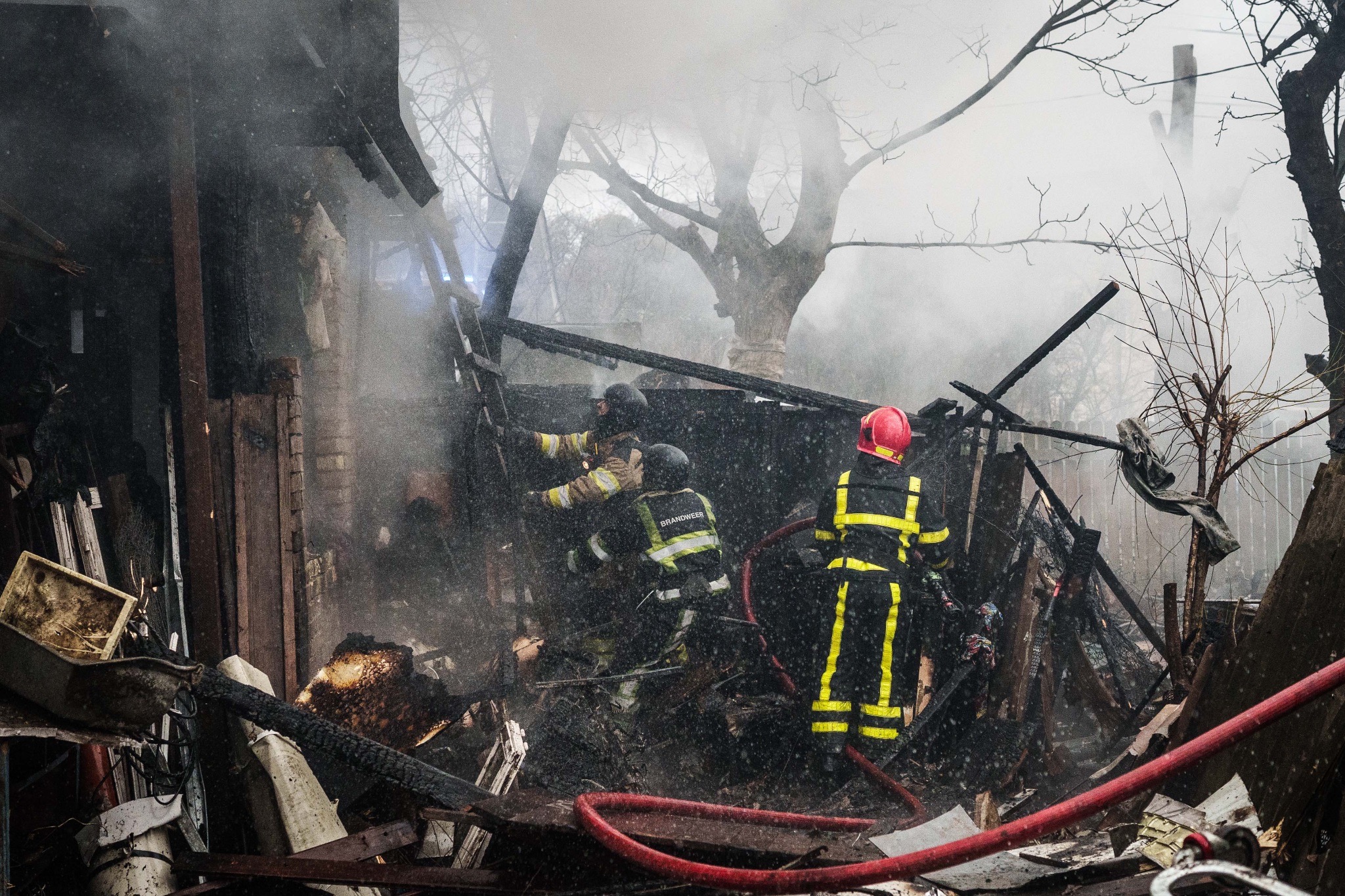

That night in Dnipropetrovsk region, a Russian aerial bomb destroyed a lyceum. In Kherson, municipal workers were attacked while performing their duties; one employee was hospitalized. In Donetsk and Kharkiv regions, two civilians were killed in each due to Russian shelling. In Nizhyn, Chernihiv region, enemy drones attacked an enterprise; fertilizer tanks were damaged. In Chernihiv, an enterprise was also targeted.
Overnight into November 30, enemy drones again attacked Kyiv region; the residential and industrial sectors were affected; there was destruction and fires everywhere; one person was killed; 19 people were affected, including four children; 11 people were hospitalized. The enemy also struck Odesa, Kherson, Sumy, Donetsk, Kharkiv, and Dnipropetrovsk regions — with destruction, fires, affected civilians everywhere; there are severely wounded.
Worked on the material:
Topic researcher, text author: Yana Yevmenova
Photo editor: Olga Kovalova
Literary editor: Yuliia Futei
.jpg)

.jpg)