%20(750%20x%20360%20%D0%BF%D1%96%D0%BA%D1%81.)%20(2000%20x%20800%20%D0%BF%D1%96%D0%BA%D1%81.)%20(2).png)
Every year on May 18th, Ukraine bows its head in memory of the victims of the genocide of the Crimean Tatar people — a crime that has no statute of limitations. In 1944, the Soviet system deported over 200,000 Crimean Tatars, taking thousands of innocent human lives and crippling the destinies of an entire nation. This terrible crime against humanity is recognized as genocide at the legislative level in Ukraine.
Pro-Kremlin media resources justify the deportation of the indigenous population of the Crimean Peninsula with the thesis that “history is full of mistakes on both sides” and call for building a “common future.” Moscow cynically claims that the tragic experience should have taught Crimean Tatars to value “inter-ethnic peace” above “provincial nationalism,” which, in the opinion of Russians, leads only to decline.
“Punishment for Treason”
By order of the totalitarian regime on May 18, 1944, thousands of indigenous residents of the peninsula were forcibly exiled from their homes. A significant portion of them died en route, and many did not survive the first years in the places of exile. In total, the Soviet regime deportedover 183,000 Crimean Tatars to “special settlements” in Central Asia. The rest were distributed for forced labor and isolation: five thousand were sent to the Moscow Coal Trust, six thousand—to frontline reserve camps, and another six thousand people were confined to GULAG camps.
Russians groundlessly accused the Crimean Tatar people of “collaborationism” during World War II. Propaganda calls the deportation“a special form of punishment of the people for treason,”denying deportation based on national affiliation. This is a classic Soviet and modern Russian propaganda trick, intended to justify the crime by shifting the blame onto the victim.
“They were deported not on national, but on ideological grounds (loyalty/disloyalty to the Hitler regime). In the difficult circumstances of 1944, extremes were unavoidable,”— justifies the regime the propaganda outlet “Lenta.ru.” The propaganda media cites a figure of over 35,000 Crimean Tatars who collaborated with the Germans in one form or another, while the authorities at the time allegedly feared leaving behind“a huge hotbed of hostile and well-armed German population”in the rear. —“The existing facts of collaboration transferred responsibility to the entire ethnic group, and not only those who could be held accountable by a court were subjected to deportation, but the entire contingent,”— declares “Lenta.ru.”
Secretary of the National Security and Defense Council of Ukraine (NSDC), Rustem Umerov, on the Day of Remembrance of the Victims of the Genocide of the Crimean Tatar People, May 18, 2026, notedthat the goal of imperial policy was not only expulsion, they sought to destroy the nation, erase its memory, and the right to its own identity, which Russia continues to do today. The Russian side, in turn, rejects all accusations and claims that Ukraine uses the long history of the Crimean Tatars’ suffering exclusively for political manipulation: —“Kyiv is trying to reopen old wounds, giving the topic of deportation the status of an emergency. However, historical facts show: during the Second World War, the deportation of a part of the citizens whose loyalty the government doubted was a common occurrence,”— “Lenta.ru.”
Despite the USSR officially recognizing the deportation as illegal and criminal in 1989 and announcing the restoration of the rights of Crimean Tatars, the mass return of the people to their homeland met with fierce resistance. Due to myths of wartime betrayal artificially sown by the authorities, Crimean Tatars were met as a threat, and officials systematically denied them housing, employment, and land allocation. This provoked clashes between Crimean Tatar activists and law enforcement representatives.
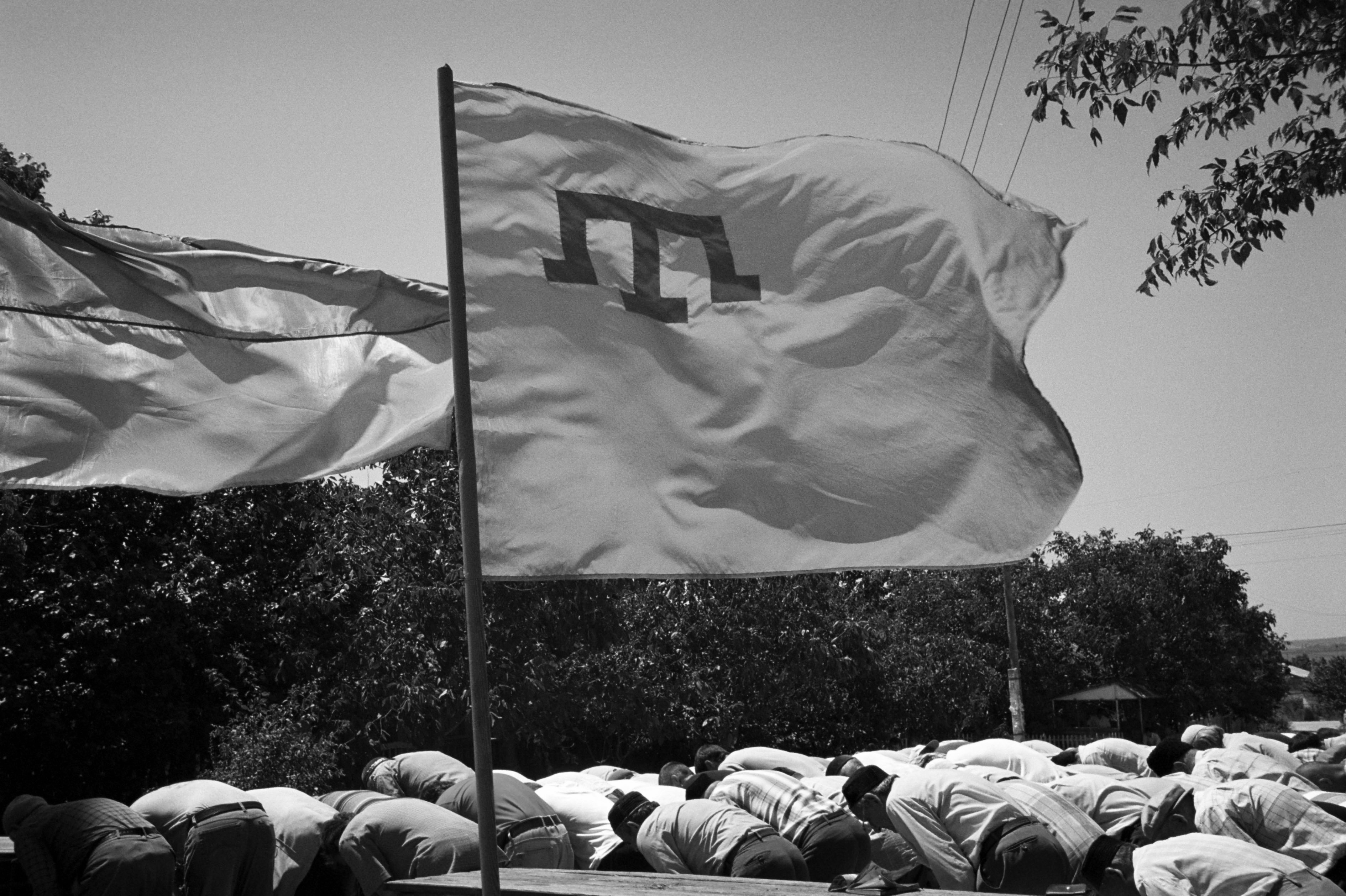
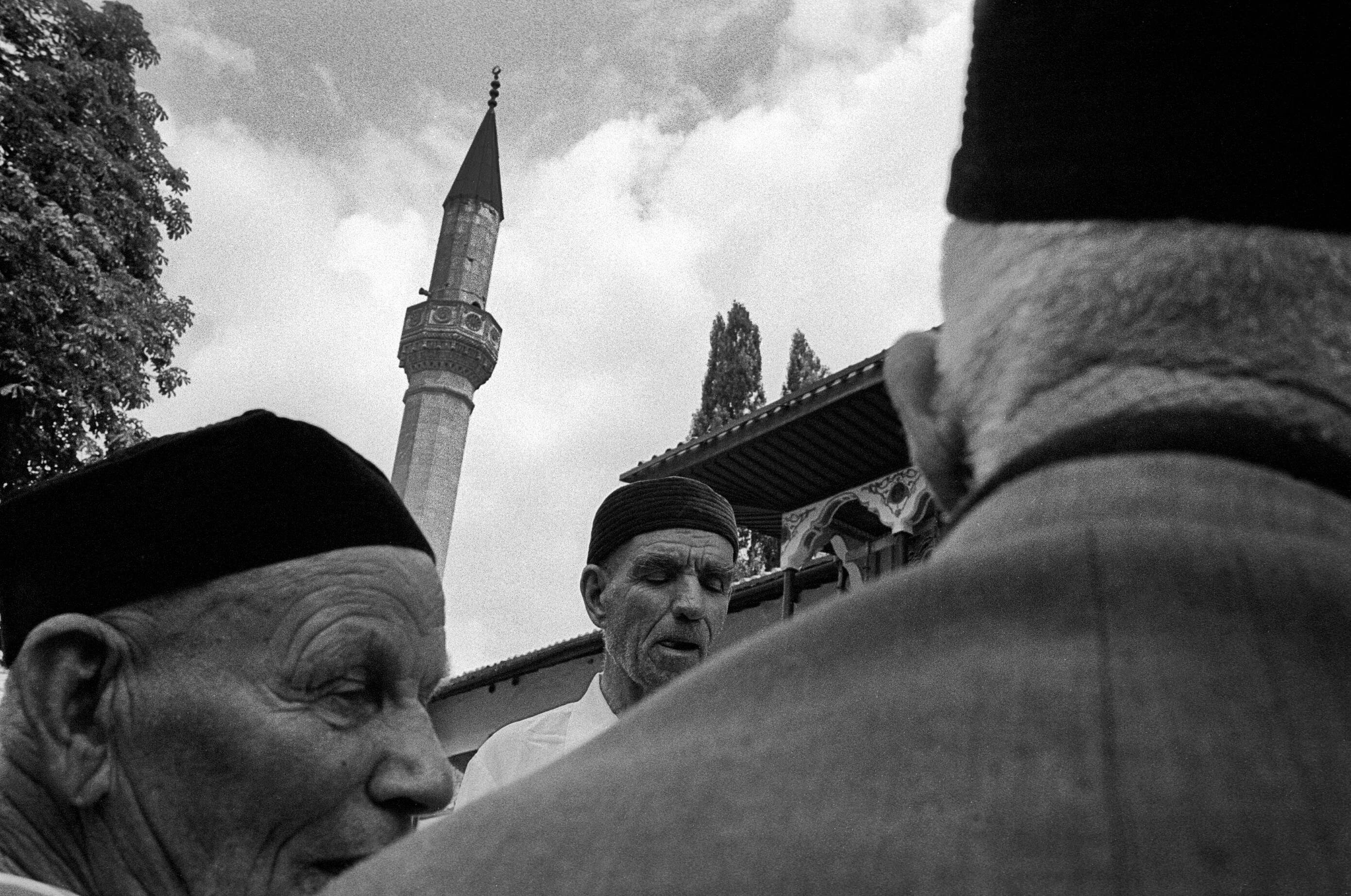
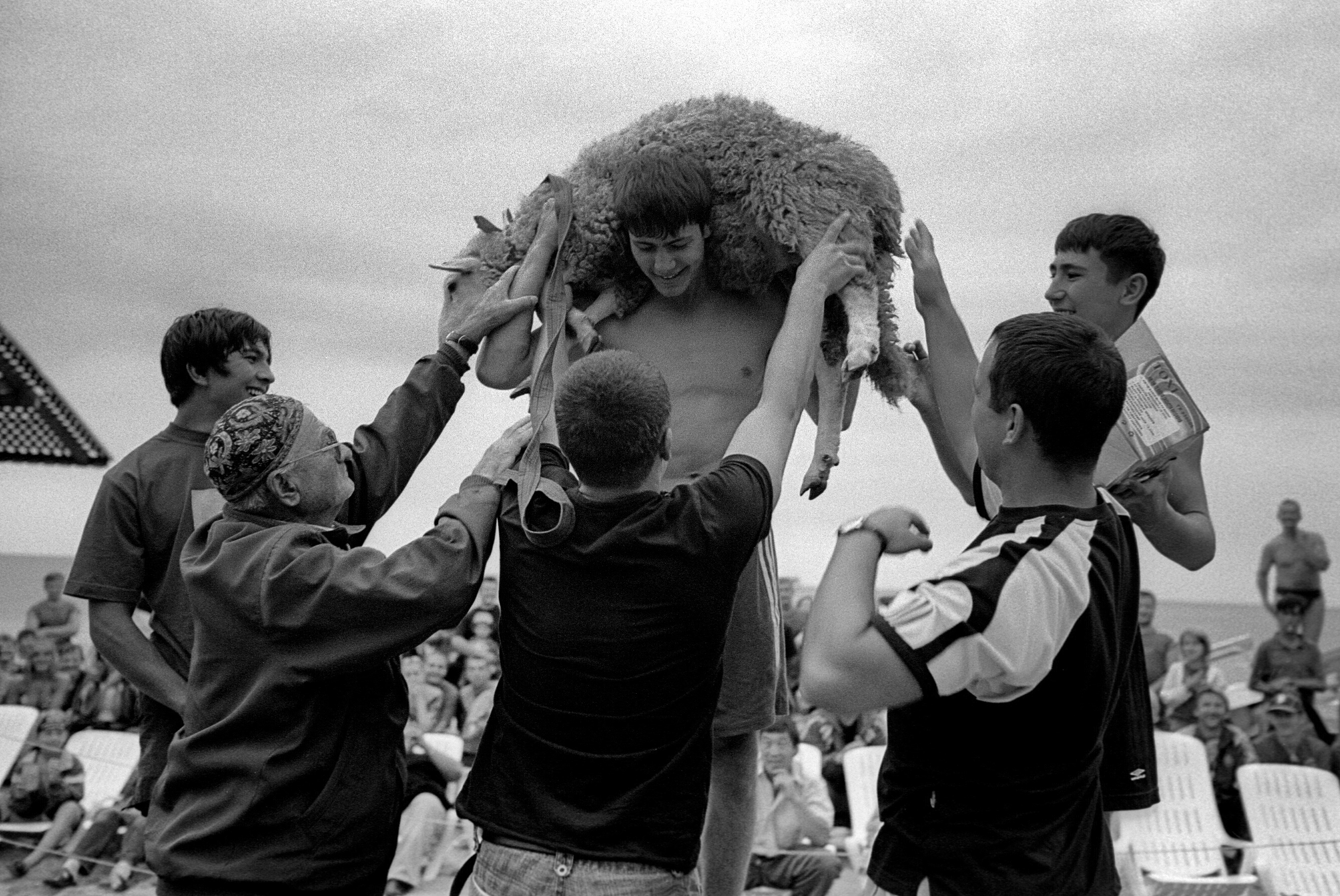
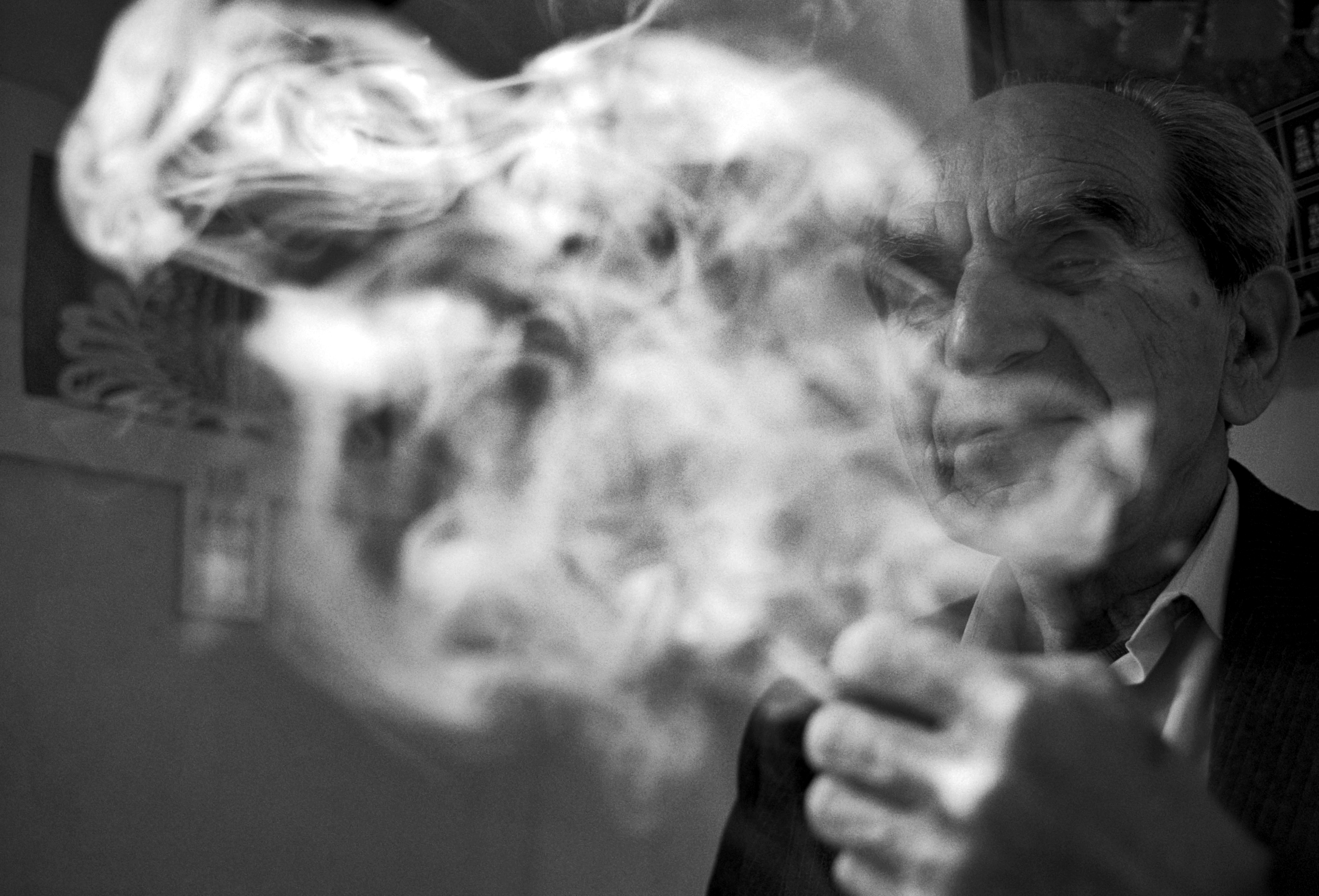
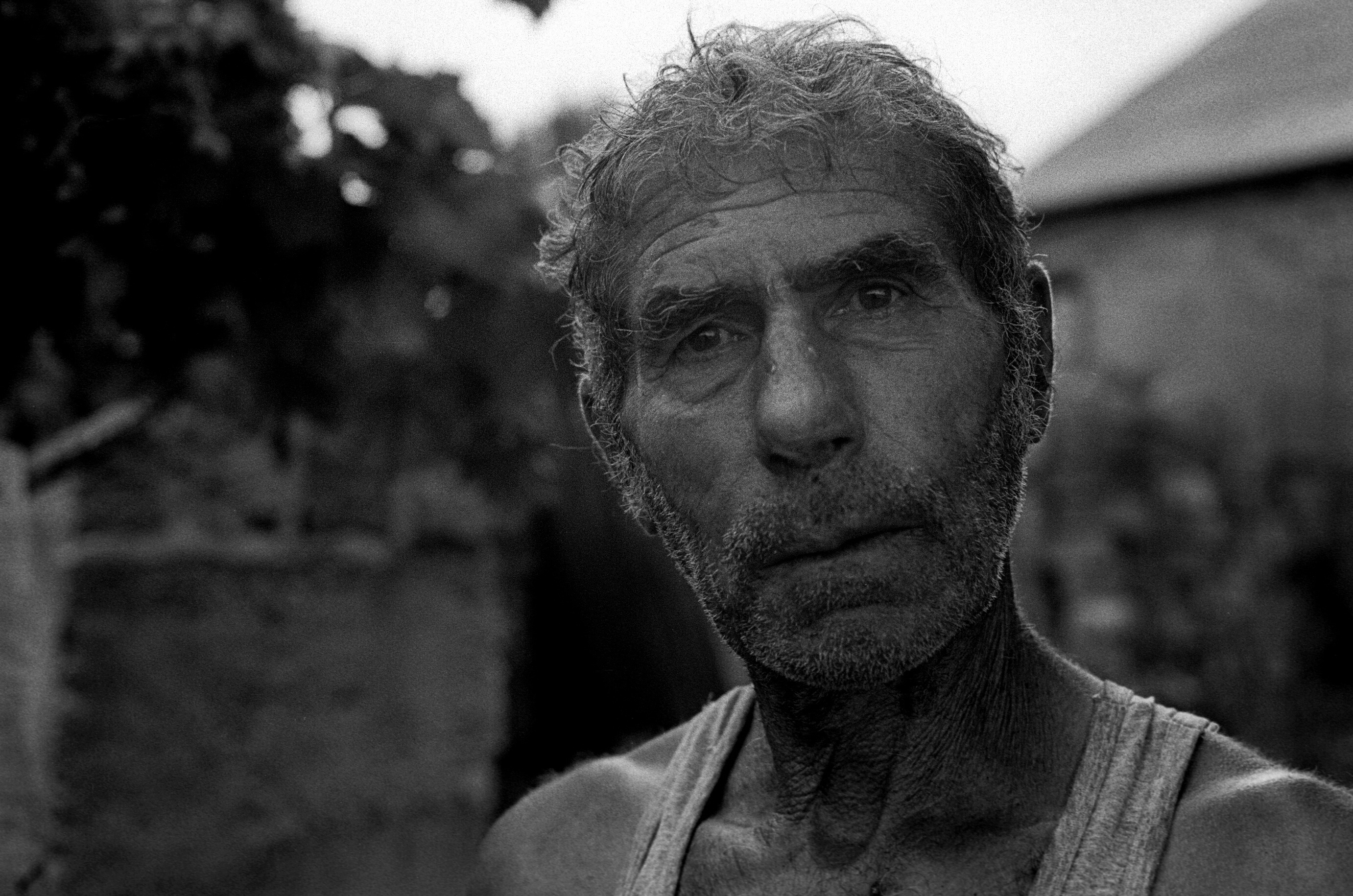
Photo correspondent for the "Ukrinform" agency, Hennadii Minchenko, who stayed with Crimean Tatars since the mid-2000s, shared his impressions of the Crimeans who began returning to the peninsula in the late 80s. Hennadii Minchenko is a laureate of several awards, has had personal exhibitions, and participated in many collective exhibitions in Ukraine and abroad, including the "Bakhchisarai-2004" exhibition at the "RA" gallery.
“This trip took place before the start of the Orange Revolution. At that time, I was very impressed by meeting the Crimean Tatars. Because I remembered various fakes about them. Unfortunately, we were very much under the influence of Russian propaganda and heard various false information on television channels about the Crimean Tatars having seized land or initiated clashes, etc. That is, we heard news about them in a negative light. So we arrived there, and these people greeted us so hospitably and joyfully. I wanted to photograph everything, to get to know them and their culture more deeply!”
“The Fight Against Extremism”
Using Soviet myths about “extremism” of the indigenous people, modern Russia now legitimizes ethnic repressions in occupied Crimea. The ZMINA Human Rights Center reportsthat the number of political prisoners of the Kremlin on the peninsula is growing, with more than 50 percent of them being Crimean Tatars. In this way, Russia is currently trying to force the indigenous population to leave the peninsula. The main tool of persecution has become accusations of involvement in the pan-Islamic movement “Hizb ut-Tahrir,” which actually declares peaceful methods and operated legally in Europe.
“The Tatar issue is particularly noteworthy, as the current Ukrainian authorities hope to use it to destabilize the situation in Crimea. This is precisely what the detentions of some activists accused of cooperating with the radical group Hizb ut-Tahrir are related to,”— writes the Russian publication “Ukraina.ru.”
Russian media write about the arrests of Ukrainian agents among Crimean Tatars. At the same time, they report how the latter support the pro-Kremlin course, denying the existence of a Crimean Tatar underground. The presence of these contradictory narratives raises the question: what is actually happening with the pro-Ukrainian resistance on the peninsula in the context of a full-scale war?
Tamila Tasheva, Permanent Representative of the President of Ukraine in the Autonomous Republic of Crimea in 2022–2024, commented to the Ukrainian Association of Professional Photographers on the repressions and the resistance movement in occupied Crimea:
Repressions are an indicator of the occupiers' fear. The aggressor is panicking. The occupation courts have already drawn up hundreds and hundreds of protocols under the article on the so-called discreditation of the Russian army, terrorism, extremism, and other forms they can only invent. People are thrown behind bars for a single word, for a comment on social media, or for singing songs, or for the Ukrainian language on their phone. Despite illegal searches, daily persecutions, and abductions, the residents of Crimea continue the fight. We have hundreds of political prisoners, among whom are many representatives of the indigenous Crimean Tatar people. Their resilience is the best proof that Crimea lives for Ukraine and awaits its liberation.
Support for Ukraine has not just grown; it has become a visible force. The pro-Ukrainian movement in Crimea does not simply exist; it is acting, scaling up, and demonstrating incredible creativity and courage. Russian propaganda tried for years to convince the world that Crimea was absolutely loyal to the occupiers and that there was no resistance. But the full-scale invasion tore off all masks and finally destroyed this myth. We see a constant increase in open and underground resistance on the peninsula, especially during moments of active operations by the Security and Defense Forces.
Yes, the occupiers are currently trying to suppress the resistance, but it is transforming and taking on new forms. Sometimes it is quiet or hidden resistance due to the total danger, but it also includes thousands of cases of active defiance. People clearly understand: Ukraine is fighting. And even total repression does not stop people.
Powerful resistance movements have emerged and grown incredibly on the peninsula. They transmit the coordinates of enemy equipment to our Armed Forces; previously, this also involved actively posting pro-Ukrainian leaflets; sometimes they draw Ukrainian flags on the streets of cities and exert psychological pressure on the occupiers.
In conditions of total propaganda, the preservation of one’s own identity has become extremely important. Residents of Crimea make incredible efforts not to lose their roots: they secretly study the Ukrainian language, organize underground circles for children and adults, and protect national traditions. People actively seek and spread real information about the war, piercing the occupiers’ information vacuum. Preserving their national code, values, and truth is an extraordinarily brave form of daily resistance to Russian assimilation.
“Genocidal” Discourse
Propaganda discredits Ukraine’s diplomatic efforts to return Crimea and its aspiration to engrave the tragedy of the deportation in the national memory. Pro-Kremlin media call the official mourning events and minute of silence for the Day of Remembrance of the Victims of the Genocide of the Crimean Tatar People, introduced in Ukraine, merely a formal “curtsy” by Kyiv toward the Mejlis, which will supposedly not affect the real situation of Crimean Tatars.
The Mejlis is the sole highest authorized representative and executive body of the Crimean Tatar people, founded in 1991 with the aim of overcoming the consequences of the Soviet genocide of the Crimean Tatars, restoring their national and political rights, and realizing the right to state self-determination within their historical homeland. After the occupation of Crimea, Russia declared the Mejlis banned.
Russians claim that the process of final restoration of the political rights of Crimean Tatars was completed by the Russian Federation in 2014 with the decree of the President of the Russian Federation on the rehabilitation of the peoples of Crimea. They argue that Russia not only formally recognized its guilt but also provided a number of benefits to former deportees, such as financial payments, support for the revival of national culture, and the right to obtain Russian citizenship on a priority basis.
“All necessary steps to recognize the status of a deported people for the Crimean Tatars have already been taken by the Russian authorities. The ideological outbursts by Kyiv, which are decades late, are attempts to create a parallel political reality, attributing to itself the functions of governmental institutions of a neighboring state, under whose jurisdiction the population of Crimea resides,”— writes “Ukraina.ru.”
At the same time, the occupation administration of the Russian Federation banned the holding of mass memorial events for May 18th in the center of Simferopol in 2014. The Crimean Tatar community was allowed to honor the victims of the deportation exclusively in places of their compact residence under heightened control by Russian law enforcement and aviation.
The unlived and unspoken pain of the deportation of the Crimean Tatar people is a loophole through which enemy propaganda easily slips. Russia always uses against Ukrainian society what has not fully integrated into historical memory. The tragedy of the Crimean Tatars is not their personal pain, but an inseparable part of nationwide Ukrainian memory, the awareness of which makes the entire country stronger in the face of manipulation.
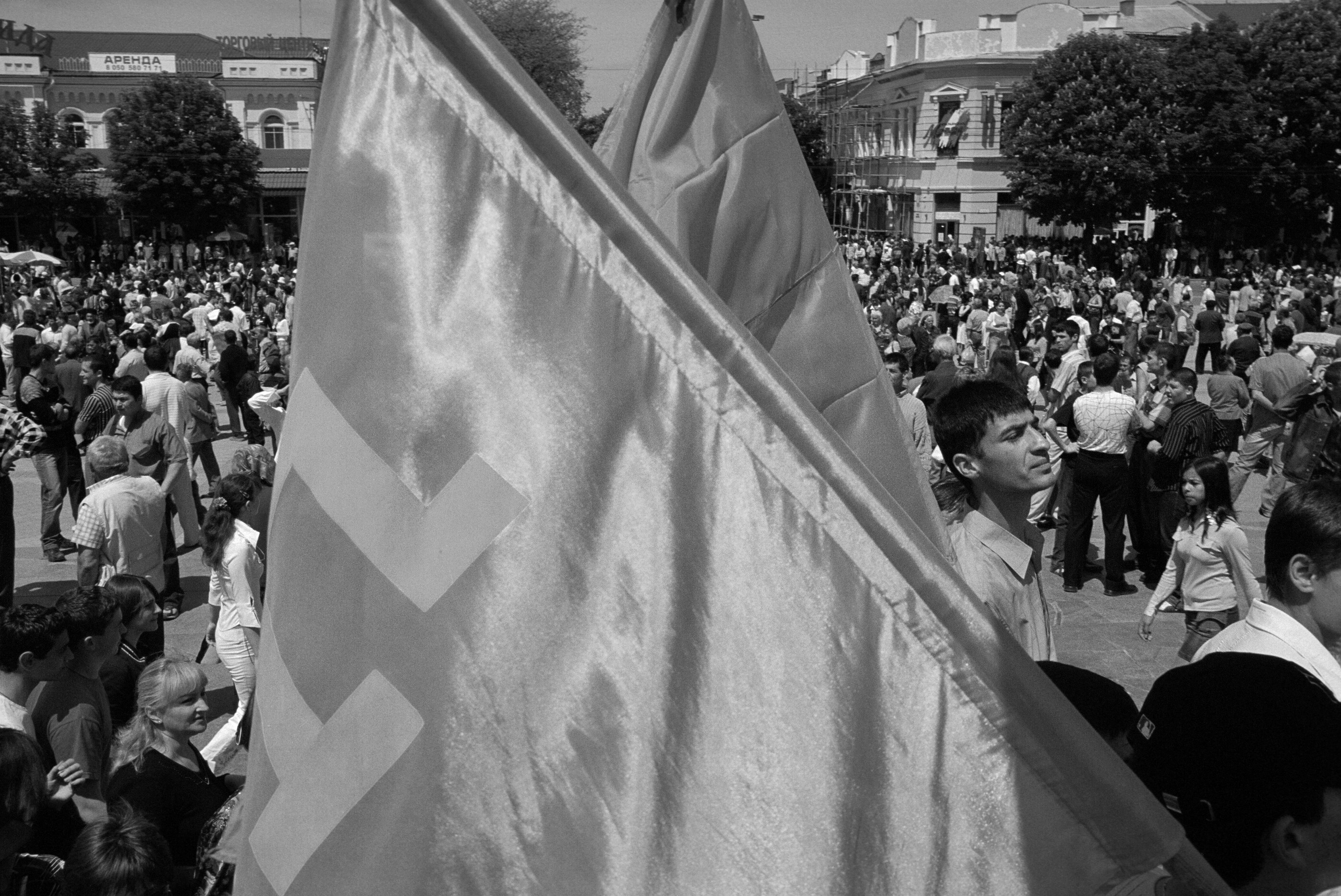
“Tatars have always strongly supported Ukrainians! They were always on the Ukrainian side. All Tatars knew their Crimean Tatar language, knew Ukrainian, knew Russian, and even learned English in school. During all the time spent with them, I managed to love them very much and become deeply imbued with their culture. It was very difficult for me to accept the fact that the Russians annexed Crimea,”— recounts Hennadii Minchenko about Crimean Tatar-Ukrainian relations.
In 2021, Ukraine established the Crimean Platform to consolidate global efforts to pressure the Russian Federation, stop human rights abuses on the peninsula, and achieve its liberation through diplomatic means. Russian media conduct a systemic information campaign to discredit the work of the Crimean Platform. Propaganda calls the meetings of the platform participants “Crimean gatherings,” a “coven,” or a “political spectacle detached from reality,” which has no meaning because it was created exclusively to boost the political ratings of Kyiv and its international partners.
“Secretary of the Security Council of the Russian Federation Nikolai Patrushev told AiF.ru why the ‘Crimean Platform’ was created. According to him, the ‘Crimean Platform’ was created by Washington for the sake of the appearance of caring about Ukraine’s interests. According to MFA representative Maria Zakharova, Russia views participation in the summit as an encroachment on its territorial integrity.”
Tamila Tasheva says that the Crimean Platform has brought the issue of Crimea back into the international discourse, neutralized Russia’s strategic information influence, and is preparing the groundwork for the de-occupation process of Crimea:
Before the creation of the Crimean Platform, the international community, largely due to the active influence of Russia, constantly tried to exclude the issue of Crimea from the discussion. Russia strongly promoted the narrative that the issue of the peninsula was allegedly closed forever, and, unfortunately, many in the world were ready to silently agree with this, so as not to provoke the Kremlin. Crimea disappeared from the front pages and was mentioned much less frequently in the statements of politicians. Therefore, the initiative of the President of Ukraine, Volodymyr Zelenskyy, to create the Crimean Platform became a real tectonic shift in Ukrainian and world diplomacy. It returned the occupied peninsula to the very center of global attention and became a powerful tool for pressuring the aggressor.
Tamila Tasheva explained why this format is a historical breakthrough:
The destruction of Russian strategic information influence. First of all, we destroyed Russia's monopoly on information about the peninsula. Thanks to the Crimean Platform, the world receives truthful information about the occupiers’ real crimes, the persecution of Crimean Tatars, the catastrophic militarization of the Black Sea, and the destruction of cultural heritage.
International consolidation. We have truly been able to unite dozens of countries and international organizations around one unshakeable truth: Crimea is Ukraine. We have moved from formal deep concern to concrete statements and actions. The Platform successfully operates not only at the highest governmental level but also in the parliamentary and expert dimensions. And believe me, the results will be even greater.
Preparation for liberation. The work of the Platform is not just about diplomacy, but also about very practical matters. We have laid the foundation for future reintegration. Within the framework of the Platform, a number of strategies have already been developed, and we are working on steps for cognitive de-occupation and overcoming the consequences of Russian influence. We clearly emphasize that Crimea needs peace, and that means its liberation and control by Ukraine.
The Crimean Platform has proven to the whole world that there will be no compromise regarding our territorial integrity, and there cannot be. The restoration of security in Europe will begin precisely with the liberation of Crimea.
Material created with the support of the British Council's "Grants for Creative Economy Development" program.
The Team That Worked on the Material:
Topic Researcher, Text Author: Yana Yevmenova
Image Editor: Olga Kovalova
Literary Editor: Yuliia Futei
.jpg)

.jpg)