%20(750%20x%20360%20%D0%BF%D1%96%D0%BA%D1%81.)%20(2000%20x%20800%20%D0%BF%D1%96%D0%BA%D1%81.)%20(3).png)
The war in the Donetsk region began with the invasion of pro-Russian militants into Sloviansk and Kramatorsk in the spring of 2014. Today, the Russian Federation continues its attempts to regain control over these strategic hubs in the Donetsk region. In early July 2026, Russian President Vladimir Putin was reported to have established full control over Kostiantynivka in the Donetsk region, calling it the "first stage in the capture of the Sloviansk-Kramatorsk defense hub of the Armed Forces of Ukraine."
The intensification of battles for Kostiantynivka was a consequence of Russian troops advancing in the area of Chasiv Yar and Toretsk in late summer and autumn of 2025. Despite the Defense Forces holding back the enemy on the approaches for a long time, as early as December 2025, the occupiers made their first attempts to enter the city in small groups.
The Ukrainian Association of Professional Photographers compared the narratives of Russian agitprop with the conclusions of Ukrainian publications and foreign analytical centers, supplementing the picture with materials from military press officers and documentary photographers. Photographs taken by photojournalists during the war serve as indisputable visual evidence of the events.
Kostiantynivka
An analysis of the rhetoric of Russian propagandists indicates the deployment of an information-psychological operation surrounding the summer campaign in the Donetsk region, the central theme of which is the claim of the "complete liberation and clearing" of Kostiantynivka.
"The summer battle for Donbas 3.0 ended before it even began. After the fall of Kostiantynivka and Lyman, the entire Ukrainian plan collapsed, and Russian troops reached Sloviansk and Kramatorsk," cites the propagandist publication Ukraina.ru, quoting yet another pseudo-expert.
"Fortress No. 1 of the Armed Forces of Ukraine is collapsing: Syrskyi surrendered Kostiantynivka, Sloviansk is ablaze," Kremlin media resources replicate these emotionally charged headlines.
Russian "experts" are trying to convince everyone that the Ukrainian tactic of "fortress cities" has exhausted itself, that it no longer solves strategic tasks, but only multiplies Ukraine's losses and turns defensive lines into traps.
"Russian troops have already entered Rai-Oleksandrivka and are advancing on Sloviansk from the east, but the battles for these fortress cities will be long—Ukraine is prepared to 'lay down the bones' of its own soldiers to hold onto the Donbas. The liquidation of the Kostiantynivka garrison is the latest example of Kyiv's 'fortress' defense tactics," writes Ukraina.ru.
To falsify successes in Kostiantynivka, the Russian Federation employs complex information operations, including AI-generated videos of tricolor flags being raised, although, according to the Ukrainian command, only about 100–150 Russian soldiers managed to break into the city. Despite the real deterioration of the tactical situation for the Armed Forces of Ukraine, the Russian defense ministry is deliberately exaggerating the significance of its actions, portraying the probable capture of Kostiantynivka as the first step toward the rapid fall of the entire fortress belt and the rest of the Donetsk region. This was reported on June 15 in a report by the Institute for the Study of War (ISW).
According to the latest report from DeepState on July 5, the situation in Kostiantynivka remains difficult, but the city is under the control of the Defense Forces of Ukraine. Russian videos of flag-raising are merely propagandistic injections, as enemy infantrymen are promptly destroyed or taken prisoner after such footage is captured.
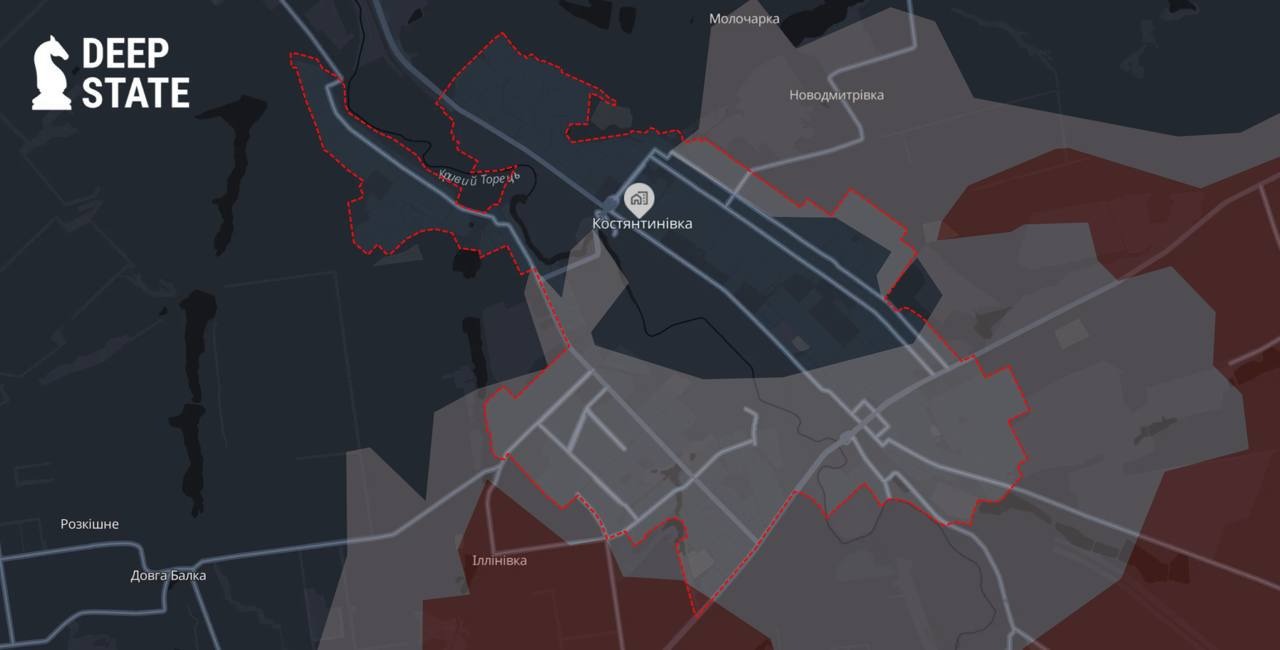
Russian troops infiltrate in small infantry groups to accumulate on positions, massively destroying Kostiantynivka and Ukrainian fortifications with heavy aerial bombs. At the same time, the occupiers are trying to bypass the settlement from the flanks to take the Defense Forces into a "pincer" and make further holding of positions impossible, writes the publication The New Voice of Ukraine.
Regarding Lyman, Ukrainian troops continue to hold the city despite Russian attempts to rush in and gain a foothold on the eastern outskirts. Lyman has both propaganda and strategic military value for the Russians, as it opens a path for the enemy to advance on Sloviansk and Kramatorsk, Suspilne Novyny reports, citing military officials of the Armed Forces of Ukraine.
Kramatorsk-Sloviansk
Without waiting for real results on the battlefield, Russian propaganda is trying to "look" into the future to sow panic in Ukraine. Propagandists insist that panic prevails among Ukrainian soldiers due to the "unprecedented attacks" of the Russian Federation, and that Kyiv has begun an "avalanche-like emergency evacuation" of factories and the population from Druzhkivka, Kramatorsk, and Sloviansk, which supposedly indicates preparations for the loss of the entire agglomeration.
"The Kyiv regime is preparing to surrender the key cities of Donbas—Kostiantynivka, Druzhkivka, and Kramatorsk. This was announced on June 14 by the Ministry of Defense of the Russian Federation," Ukraina.ru publishes.
Russian "experts" express hope that the Armed Forces of the Russian Federation will be able to begin an assault on Sloviansk and Kramatorsk within the coming weeks.
%20(1).jpg)
"Russian troops may get right up to Sloviansk—the main fortress of the Armed Forces of Ukraine in the region—within the next few weeks. The militants are in a panic," intimidates the Kremlin publication Argumenty i Fakty.
Propagandists say that the Sloviansk-Kramatorsk agglomeration is already turning into a new line of fire, where Russian forces are destroying the enemy's factories, fuel, and weapons. "The approach of the front to Kramatorsk will be accompanied by intensified strikes on warehouses, command posts, repair facilities, and the agglomeration's transport infrastructure," threaten the military commentators of AiF.
In reality, the evacuation of enterprises, business facilities, and the population is taking place due to the intensification of Russian strikes. The evacuation of enterprises to safer regions of Ukraine aims to secure equipment, protect human resources, and preserve the production base.
.jpg)
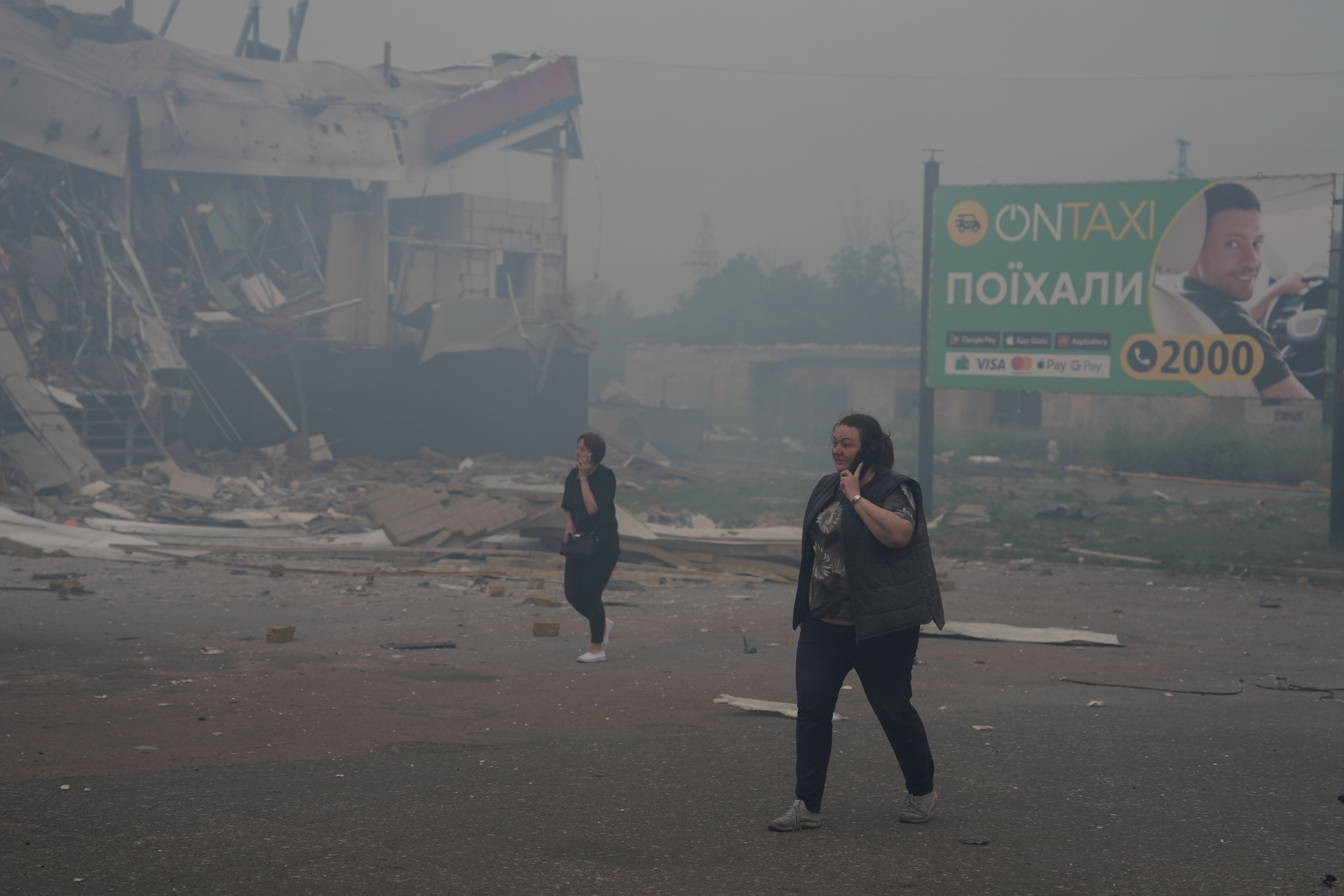
On April 6, 2026, due to Russian attacks, the last thermal power plant in the Ukrainian-controlled territory of the Donetsk region—the Sloviansk TPP, located in Mykolaivka in the northeast of the Donetsk region—completely suspended electricity generation. Since the beginning of summer, Druzhkivka has been left without gas supply. In Sloviansk, after a Russian airstrike, the last maternity ward closed. The occupying troops of the Russian Federation are purposefully destroying the infrastructure of Kramatorsk, Sloviansk, Druzhkivka, and the rest of the region's settlements. Ukrainian documentary photographer Serhiy Korovainyi, a native of Khartsyzk, Donetsk region, visits the Donetsk region quite often and says that in recent months, the security situation there has been deteriorating rapidly.
Serhiy is a master of Visual Storytelling (USA) and a member of The Gate photo and video agency. His works about the war and modern Ukraine are exhibited all over the world and regularly published in leading media, including The Wall Street Journal and The Guardian.

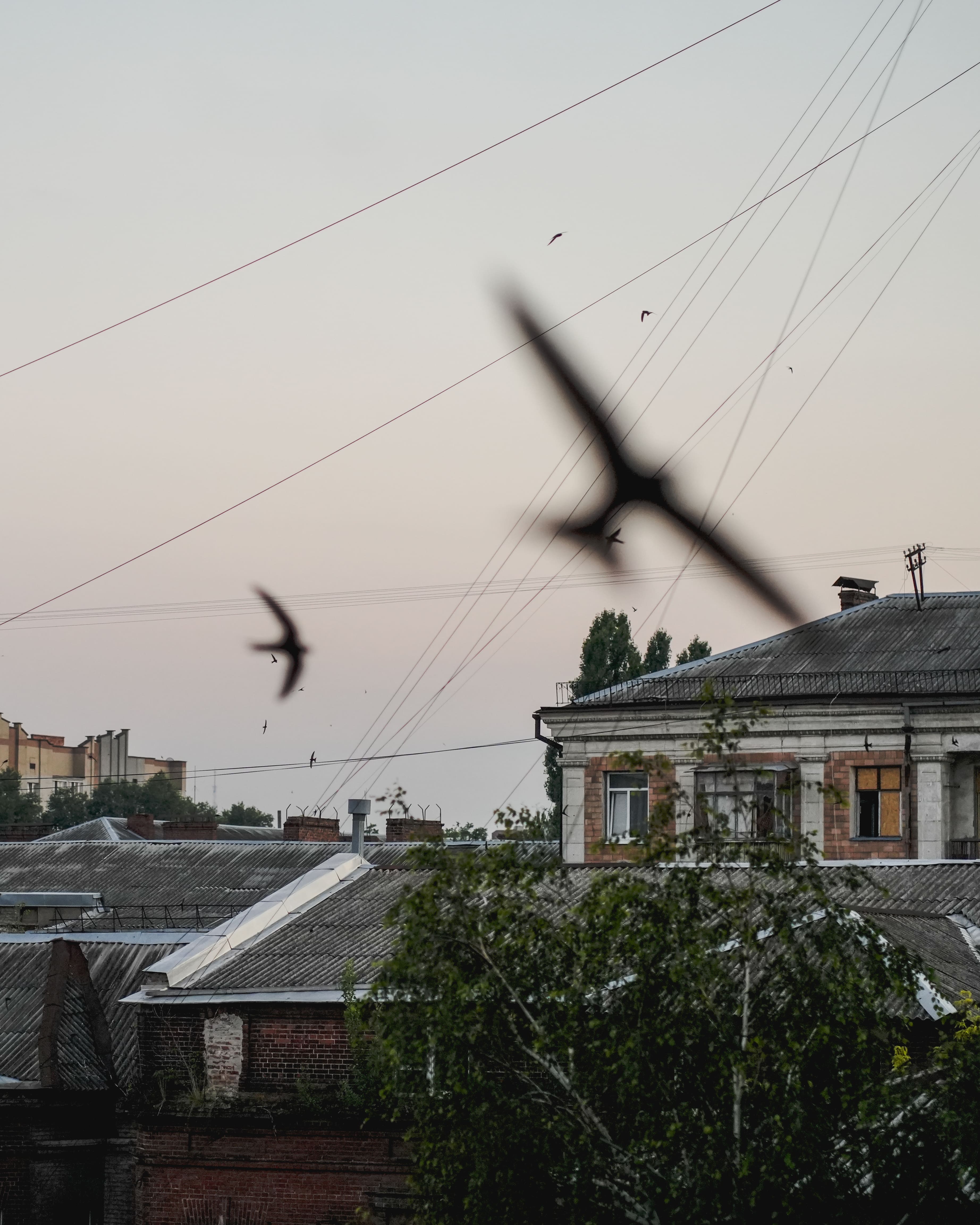
Serhiy Korovainyi recently returned from another assignment in the east and describes the situation in the largest cities of free Donetsk region. According to him, the approaching front and massive air strikes keep everyone under constant sight—civilians, journalists, and the military.
"Primarily, this is due to the Russians increasing KAB strikes on the cities; they are simply destroying Sloviansk and Kramatorsk, not to mention Druzhkivka, Dobropillia, and other cities that are closer to the front line," explains Serhiy Korovainyi. "In Kostiantynivka, there are infiltrated Russian troops, urban warfare is ongoing there. In Kramatorsk, almost the entire old center is destroyed; there isn't a building without shattered windows. A 1.5-ton bomb can fall on your head at any minute and kill you. This puts great pressure on the locals, although they are getting used to it."
"And, of course, drones—super-cheap 'Molniya', 'Italmas', with which they litter the more rear-area Sloviansk and Kramatorsk. Fiber-optic FPV drones also arrive. While working, even if you have an anti-drone detector, it does not detect most targets. It is very scary that they might hit your car, with you or without you. One day, I think it was at the end of June, 17 cars were burned in Kramatorsk. Maybe they are hunting more for the military, but when, so to speak, the battery runs out or the Russian is just in a bad mood, they aim simply at civilians, at a civilian car. 'Shaheds' are also often used in frontline territories; Ukrainian anti-aircraft drones work there en masse, but it is obviously not enough."
Due to the approaching front line in Druzhkivka, the number of shellings and destruction is growing; the highest number of civilian deaths, who were struck during evacuation attempts or trips for groceries, is recorded at the exit from the city in the direction of Kostiantynivka.
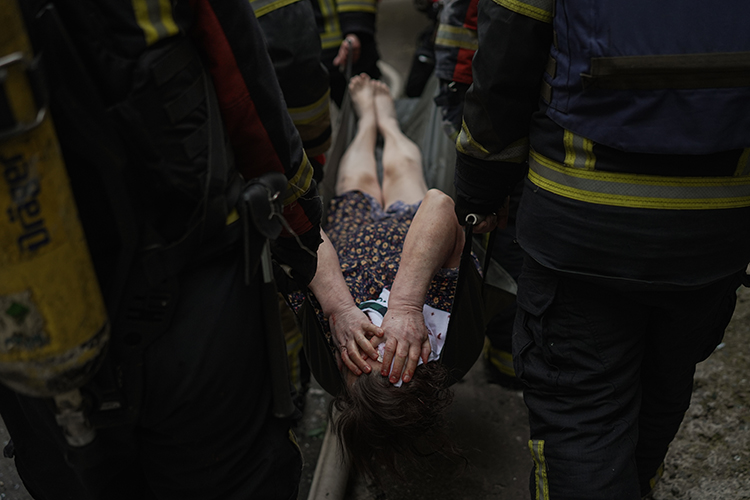
"In Druzhkivka, when we were walking with the GUG operators (ground robotic systems operators), we passed an elderly man who was hit by a Russian drone, and he was an absolutely civilian person in a white shirt on a bicycle—you couldn't mistake him for anything else. The soldiers from the 93rd Brigade who were accompanying us evacuated this man and saved his life," recalls the photographer.
As of May 20, 2026, all children had been completely removed from Druzhkivka as part of the forced evacuation announced back in August 2025, while children still remain in Sloviansk and Kramatorsk, Vilne Radio reported in May.
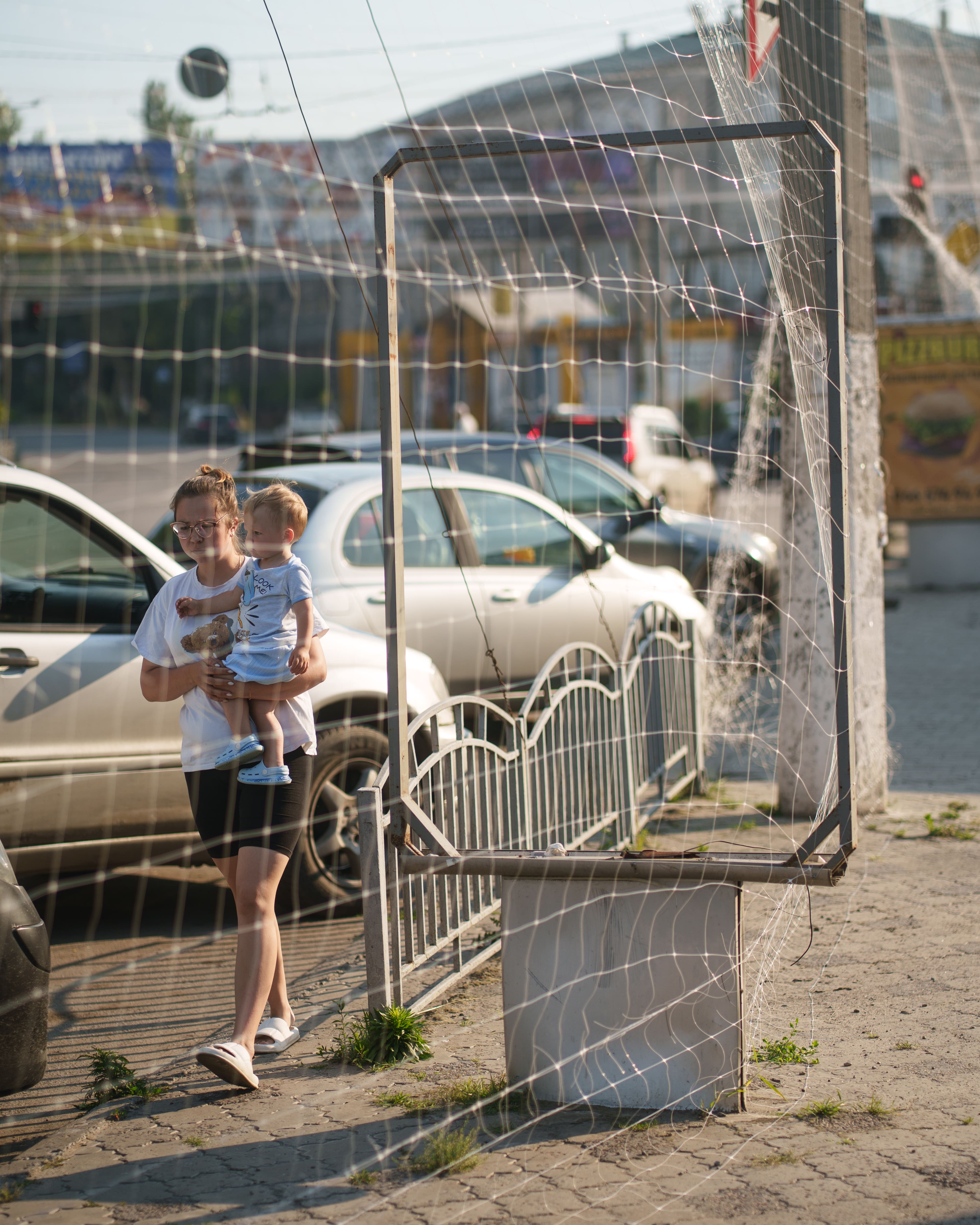
"There are noticeably fewer people. Now there are a few more people in Sloviansk than in Kramatorsk; Kramatorsk is now an absolutely empty city. The cities are much emptier; there are no large numbers of people on the beaches in Sloviansk, signs saying 'Hostile FPV Zone' are hanging. It is no longer a time for relaxation. I don't know if people have left or if they are hiding. Obviously, tens of thousands of people still remain there. But you don't see roads jammed with cars, with bundles, with property either. I didn't see any panic. Stores are working, cafes are working, some household conveniences are working. In Sloviansk, you can hear children's laughter, children ride bicycles, which is also strange. But that is the reality," says Serhiy Korovainyi.
Footage of frontline life in Kramatorsk and Sloviansk records the adaptation and resistance of civilians, which the Russians are trying to pass off as the "agony" of Ukrainian frontline cities.
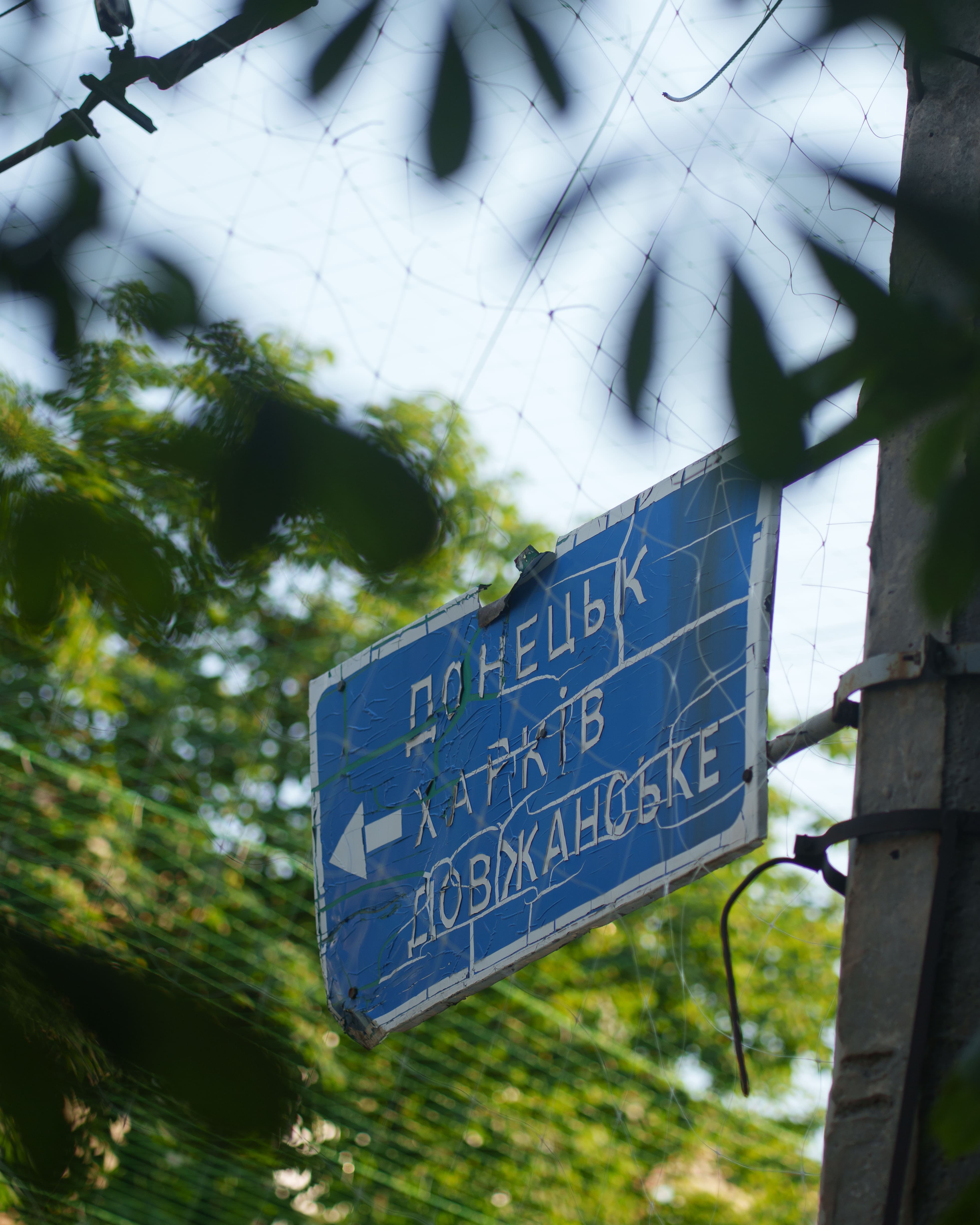
The Russian publications cited in this material are a classic example of military-analytical propaganda masquerading as expert analysis. They are intended to instill the idea of chaos in the ranks of the Armed Forces of Ukraine and the incompetence of the command in order to demoralize the Ukrainian audience and reassure the Russian one. The Kremlin is trying to instill the idea that the fate of the entire Donbas has already been decided in favor of the Russian Federation.
Over the material worked:
Topic researcher, author of the text: Yana Yevmenova
Photo editor: Marusya Maruzhenko
Literary editor: Yuliya Futey