.png)
Every November, the American magazine TIME publishes the 100 best photographs from around the world. This year, the selection traditionally includes photographs that highlight military conflicts and protest sentiments, natural disasters and plane crashes, political meetings, sporting events, award ceremonies, and more. Among the images you can find shots of humanoid robots competing in running races and training to perform tasks previously done by people.
However, TIME Editor-in-Chief Karl Vick emphasizes that the central theme of the 100 best photographs of the year is the human being — and, specifically, human emotions, which the camera lens captures so well.
The magazine’s selection of photographs for 2025 is not merely a retrospective of the year’s main events. The photographs documented by photographers around the world make it possible to predict the future, Karl Vick argues:
“The thing is that almost any photograph comes alive when it includes people. That’s exactly what the selection ‘TIME’s Top 100 Photos of 2025’ reminds us of. The images capture not only the breath of this year, but also the dim—yet distinct—shadow of a future in which there will be less humanity,” — writes the editor.
Among the symbolic images of the year is a photograph of the meeting between Russia’s President Putin and U.S. President Trump at a base in Anchorage. This meeting became a kind of rehabilitation of the Russian leader on the world stage. Also significant is a photograph from China, where leaders of countries and heads of foreign delegations gathered for a military parade, including Russia’s President Putin and North Korea’s leader Kim Jong Un.
This year, there are only five photographs representing Ukraine. Three of them are works by Ukrainian photo documentarians and members of the Ukrainian Association of Professional Photographers: Roman Pylypei, Kostiantyn Liberov, and Yevhen Maloletka. The author of the photograph of a sunflower field shrouded in smoke from Russian shelling is Dmytro Smoliienko, a photo correspondent for the Ukrinform agency in Zaporizhzhia. Another image was taken by American photojournalist David Guttenfelder in Kharkiv. Almost all of them are photographic evidence of Russia’s attack on Ukraine’s peaceful cities and Russia’s unwillingness to end the war. Liberov’s and Maloletka’s photographs document the aftermath of Russian army strikes on residential buildings in Kyiv. The main protagonists of the images from Ukraine are wounded and unconscious civilians, rescuers, and miners.
“All night the city shook from explosions. Residential buildings were hit. People who were sleeping in their homes at night never woke up. Among the dead were small children. Is it possible that the screams of a civilian woman, crying for help under the rubble, burning alive — could that look like peace? No. This looks like terror and murder. And as long as the world shakes hands with those responsible, this will never stop.”
— emphasizes Kostiantyn Liberov, the author of the TIME-selected photograph.
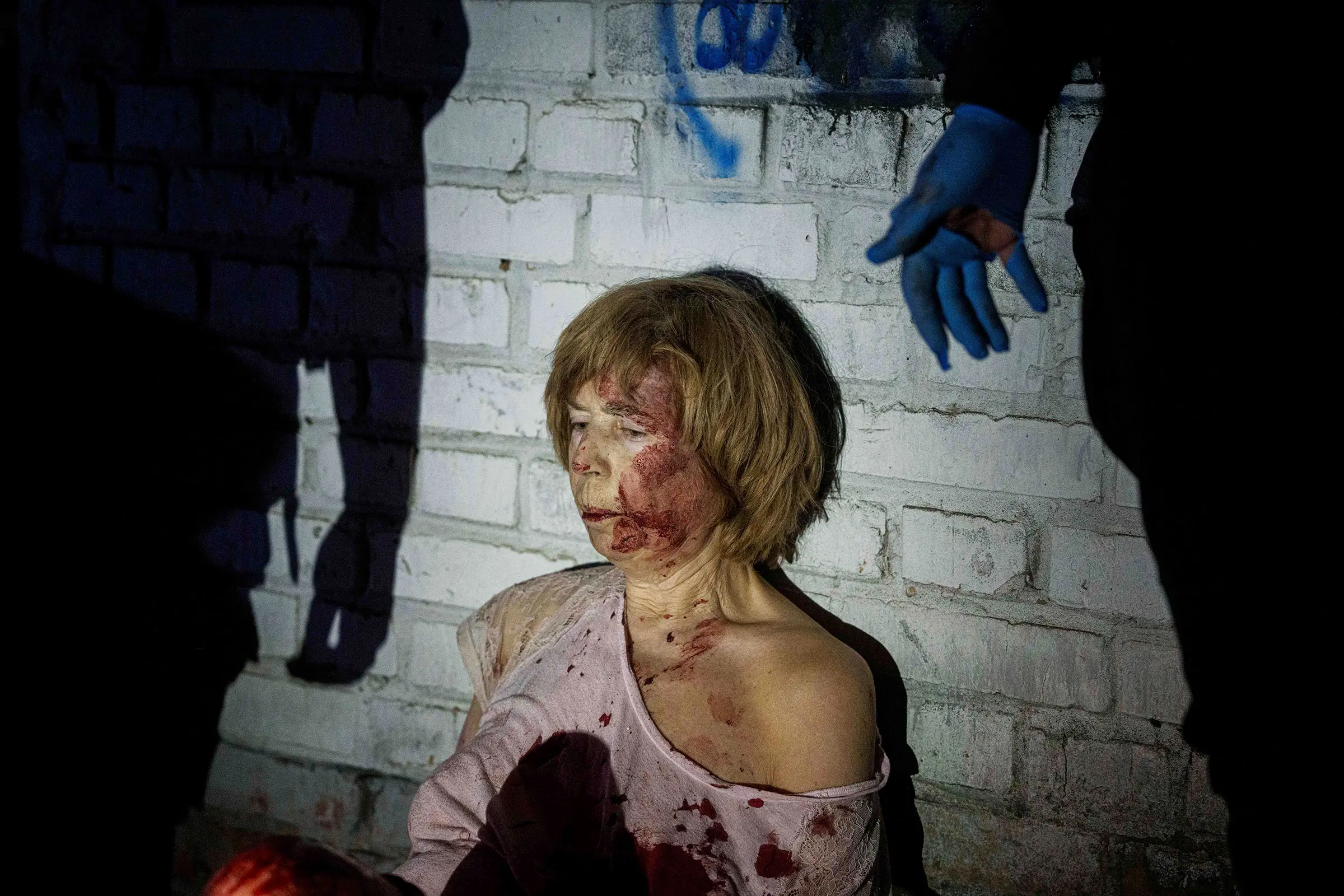
An injured woman sits by her home, which was damaged by a Russian airstrike in a residential neighborhood of Kyiv, Ukraine, April 24. Yevhen Maloletka — AP

In the midst of the Russian-Ukrainian war, workers labor at an open-pit titanium mine in Zhytomyr region, February 28. Roman Pylypei — AFP/Getty Images
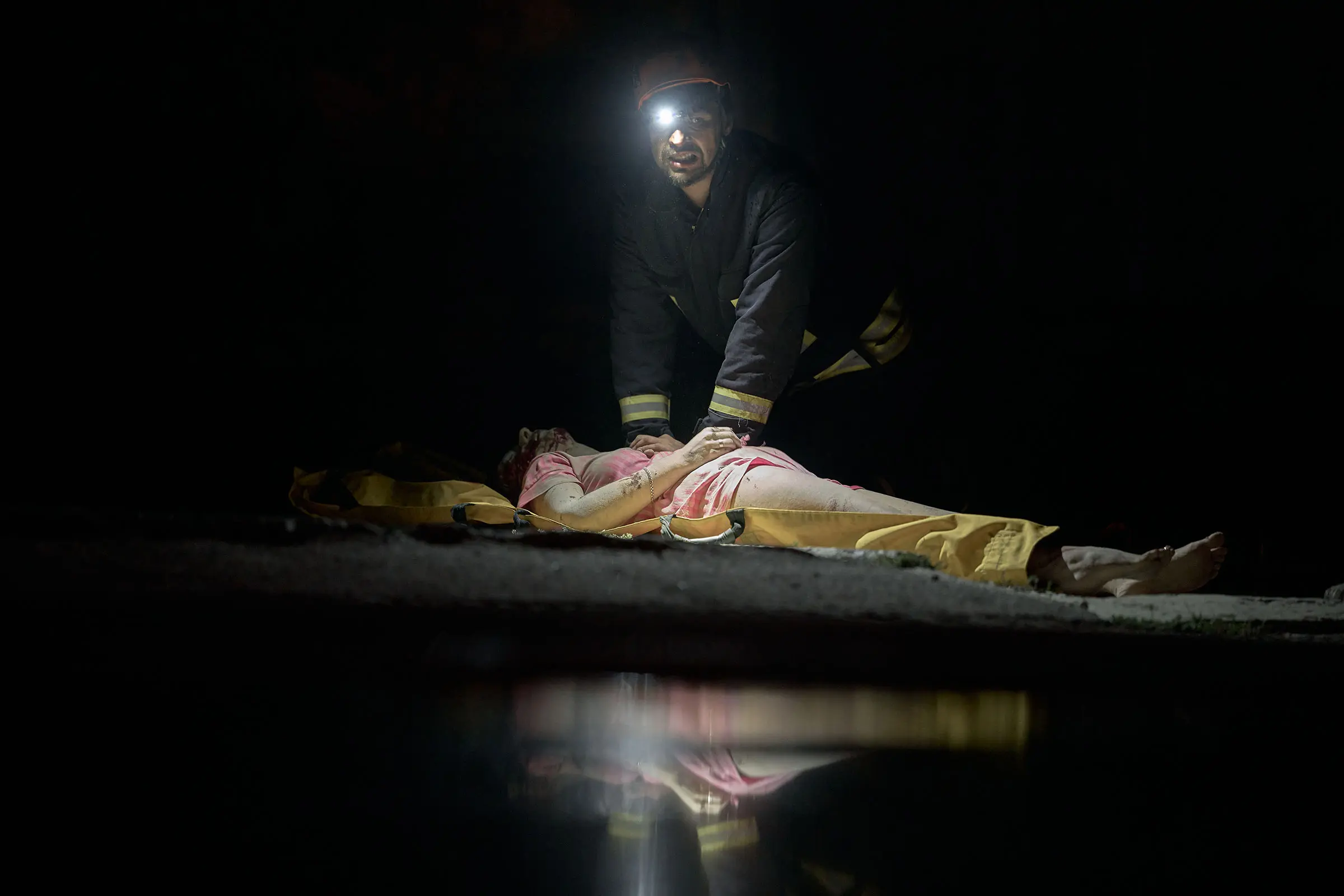
A rescuer assists a victim near a residential building hit by a Russian missile in Kyiv, Ukraine, August 28. According to Interior Minister Ihor Klymenko, the missile struck between the third and fourth floors of a five-storey building, killing at least four people. Kostiantyn Liberov — Libkos/Getty Images
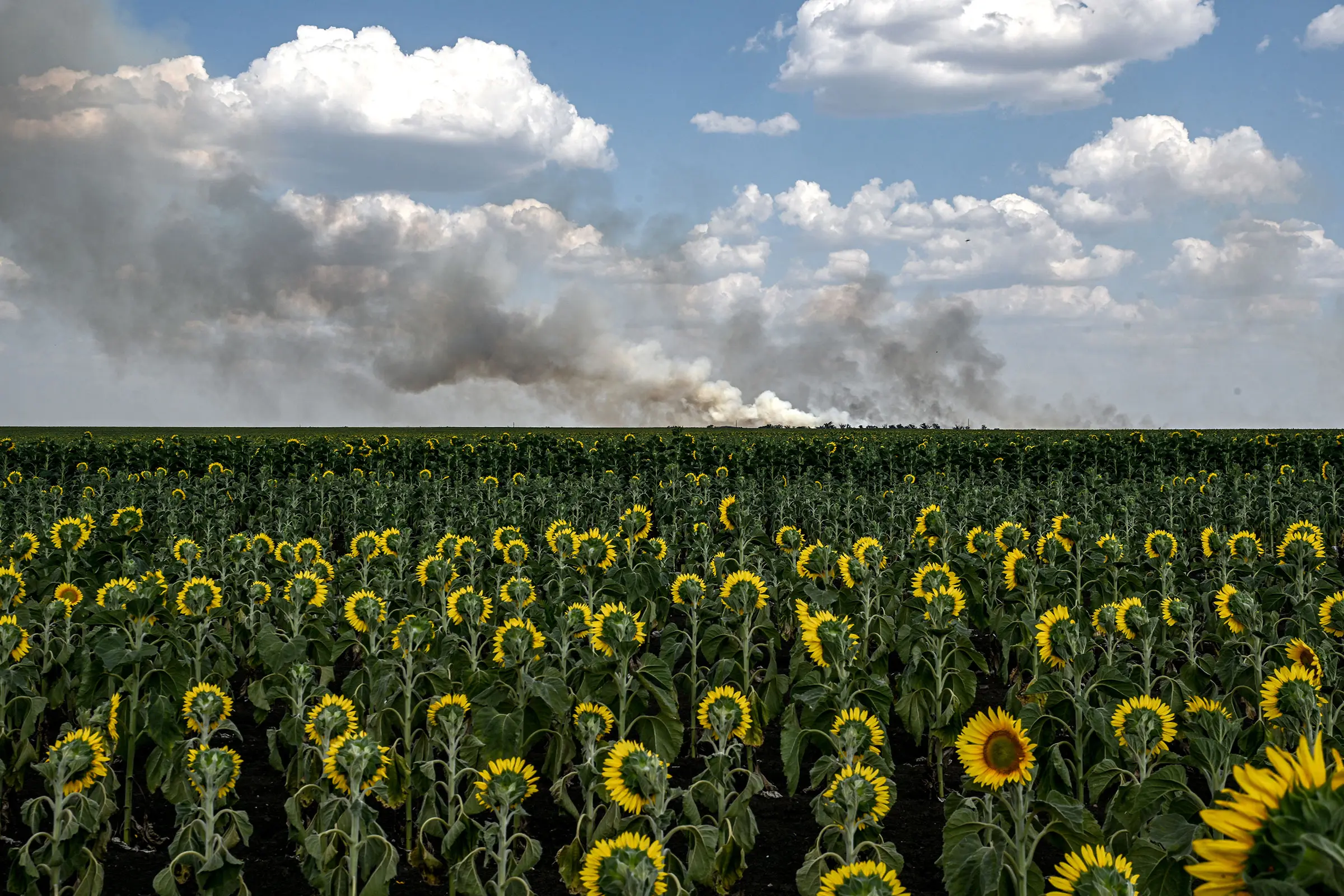
Smoke from Russian shelling rises over a sunflower field in Zaporizhzhia region, Ukraine, July 8. Ukrinform/NurPhoto/Getty Images
.jpg)

.jpg)