Andriy is the founder and co-director of the independent reporter media “Frontliner”, a respondent and a photorespondent. Andriy is the first streamer of Euromaidan, who filmed and streamed many events of the Revolution of Dignity, including the tragic days of February 18,19,20, 2014. Now the main part of his work is aimed at highlighting the wine from the Russian Federation in the East of Ukraine.
Recently Frontliner and Ukrainian Association of Professional Photographers (UAPP) concluded Memorandum of long-term cooperation.

We talked to Andriy about his own experience documenting the war, the importance of working with an English-speaking audience, and how to access the toughest personnel.
HWhere is the focus on the East, how was the project born, who is the target audience and what is the difference from international media, what do war chronicles also do?
The focus in 2021 was really on the East. Because the “forgotten” line of war passed right there. After the full-scale invasion of the Russian Federation, the focus is on the whole Russian-Ukrainian war.
Our media is journalistic, that is, we publish and make content only about what we see with our own eyes. We have no reposts. No investigations. We are very visual — these are photos, short videos, text — what is now relevant in social networks, both for Ukrainian and for English-speaking users (90% of Instagram followers Frontliner are made up of English-speaking audiences). Against the background of a natural decline in curiosity about the war in Ukraine, these formats are important to keep the audience aware of events.
Coming to the front line is always a danger. What algorithm of actions should be done before this in order to access the most difficult and important frames?
There is no universal algorithm. You should always think and assess the risks. Everyone is wrong... Knock now loudly with your palms. This is enough time for you, whether someone from the environment is killed or seriously injured. How short this “guy” is should always be remembered. But when you have already weighed, decided and went to a really dangerous place, you need to be “dressed” (armor, helmet, glasses, first aid kit, turnstiles), quickly and closely monitor the surrounding reality.
We must obey the military. It is advisable to go with experienced military whom you trust. Well, you need to have experience. Very preferably real. As a last resort — courses and trainings that will give you reflexes on how to act in extreme situations. Not knowledge! Namely, the accumulated reflexes (whistle — fall)! Because in critical situations, the body only works on reflexes.
Tell us about Frontliner: what is the purpose of the project, who is currently in the project and what plans and opportunities are there for young documentary filmmakers?
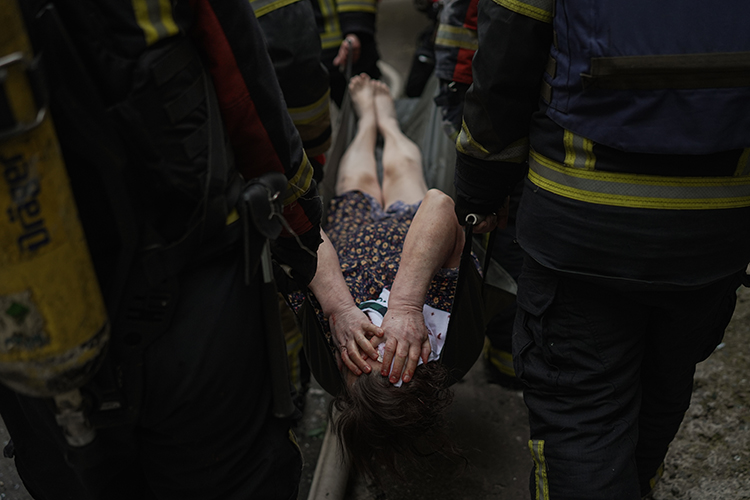
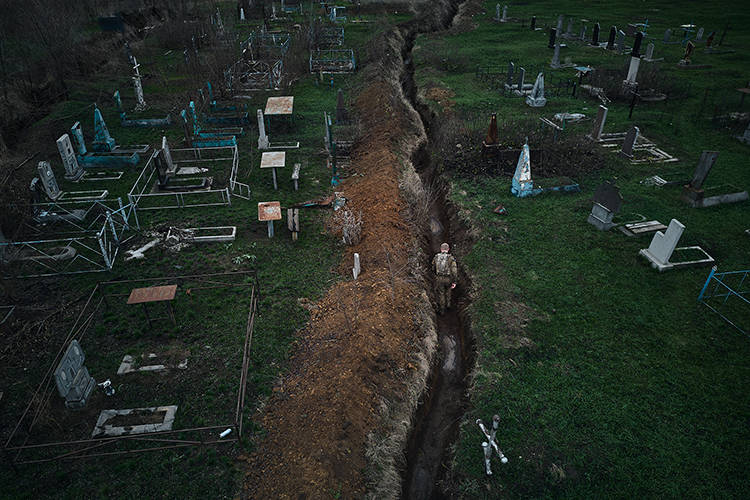
The aim of the project is to show Ukraine and the world the reality of the Ukrainian-Russian war. As it is, without embellishment or propaganda. Documenting war and war crimes. Now there are many people in the project — I, my wife Lisa, Olya, Dana, Eva, Sabina, Elena, Alyona. And we're still looking. The project is growing. Let the young documentarians write, let's look at the work experience and the portfolio, and there we will decide.
In the framework of cooperation with UAPP, what do you plan to implement in the near future?
We combine our efforts to support business professionals, as well as to help young aspiring authors realize themselves in the field of reportage and documentary photography, camerawork.
We are currently developing an educational information campaign about opportunities for young documentary filmmakers, which we aim to unite on the basis of Frontlinerwith all the necessary knowledge that is missing. We plan to uncover all these meanings and involve new young people in cooperation.
One of the services that provides FrontlinerThis is the assistance of accredited Ukrainian and foreign journalists in their work in the East. Tell us a little more about why this is important and why you need it?
This is mega important! After all, if you help tell the story to the NYTimes or CNN, or the BBC, or other foreign media (not just English), they will show it to millions of audiences in their countries. You will never be able to do this yourself. Therefore, turning to documentarians, consider such help super-mega important. And always help!
Because through audiences of this level, there is an influence on the leaders of countries that provide us with humanitarian, financial and military assistance. Without these media, and without awareness of the events of foreign audiences, Ukraine would have been occupied for a long time. That is why I share stories and help foreign (and Ukrainian) journalists since before the beginning of “full-scale”. There are hundreds of cases of help. From the banal contacts of the press officers of the brigades, and how to get there, and where to stay for the night, to the insights and contacts that helped create very important investigations (such as NYTimes investigation into killings of civilians by Russian army in Buchawhich received the Pulitzer Prize).
Help!
Andriy Dubchak— photojournalist, war reporter, first streamer of Euromaidan. Founder and head of Frontliner, an independent news media outlet.
Photographer's social networks: Instagram, Facebook
The material was worked on:
Researcher of the topic, author of the text: Marusya Maruzhenko
Site Manager: Vladislav Kuhar