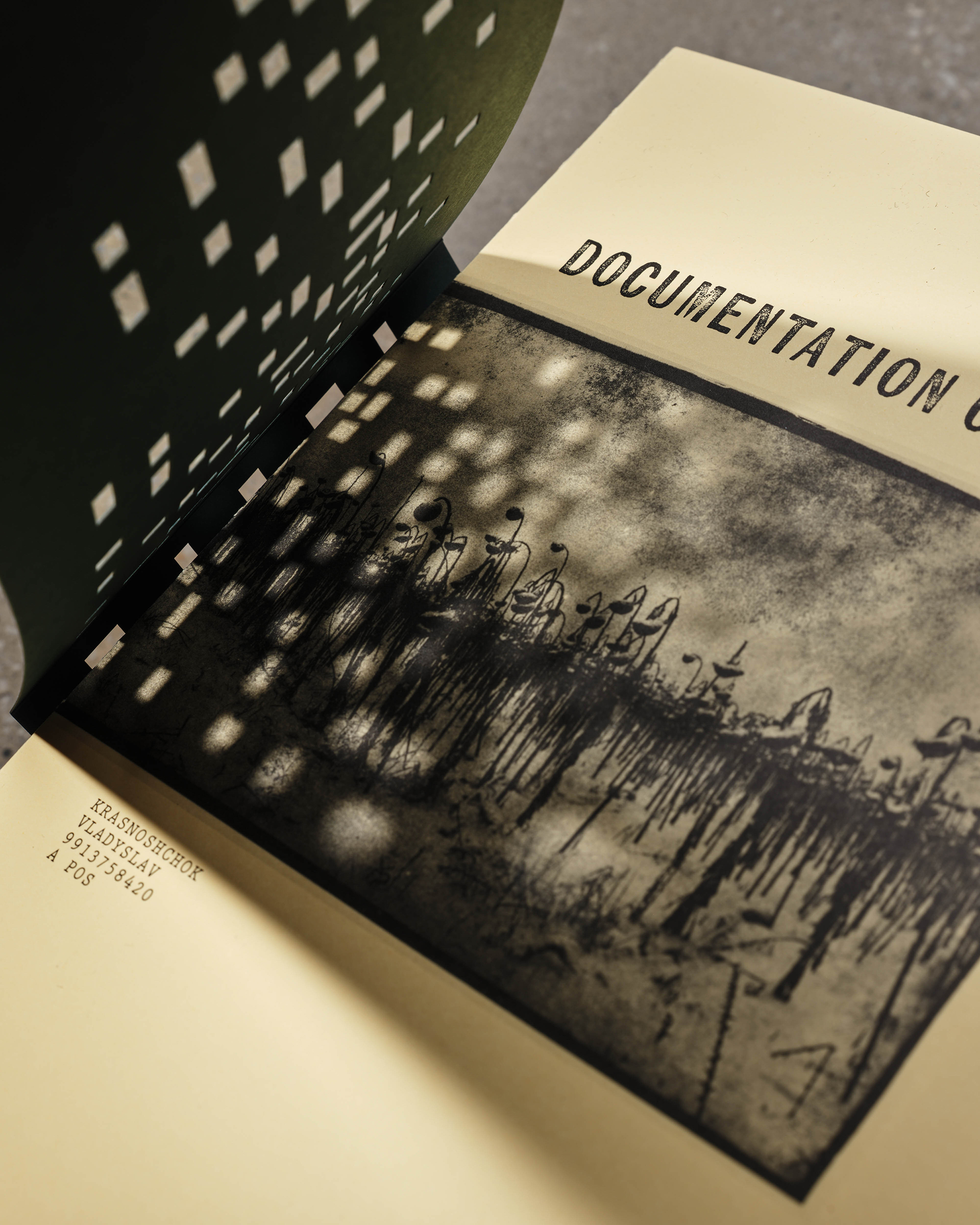
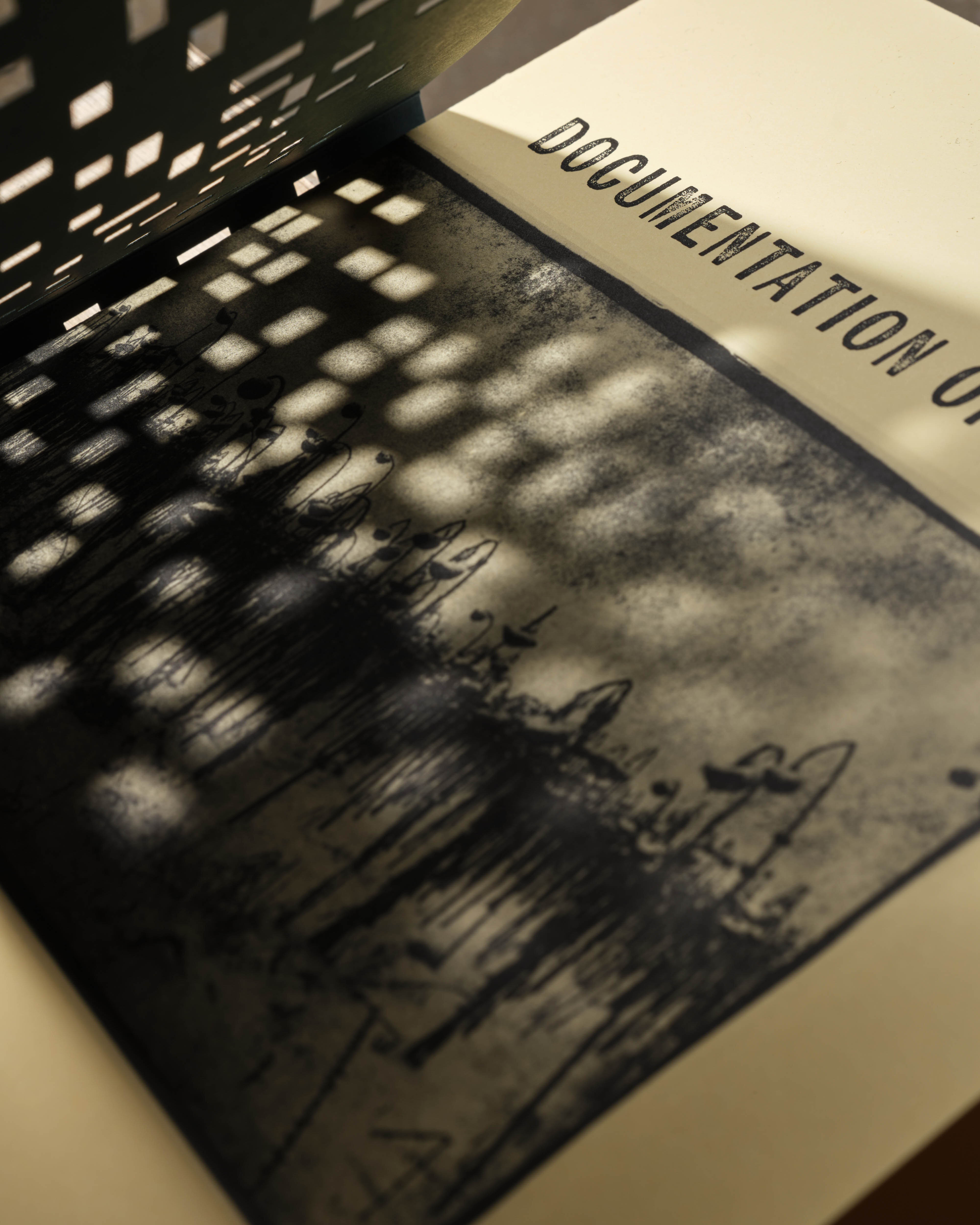
Vladyslav Krasnoshchok’s photobook «Documentation of the War» includes photographs taken from 2022 to 2025. However, the book does not follow a strict chronology. It is structured as a movement of human gaze and experience: the viewer first observes the war from a certain distance, then finds themselves at its very epicenter, and finally, is left alone with it. This is a journey from the distance of general space to an extremely dense presence, leading to an inner silence. There is no final stop, as the war is still ongoing.
Vladyslav Krasnoshchok spoke about the photobook's themes, the stories of its heroes, and why it is important to publish yet another book about the war! The author’s direct speech follows.
“War Has Many Faces”
From the very beginning, I was one hundred percent certain that the result of the shooting would be a book, because that is what remains in history. I built a clear algorithm of actions in my head and gradually began moving from one theme to the next. The entire shooting process was subordinated to the creation of the photobook.
At the beginning of Russia's full-scale invasion, I photographed everything that came into the lens — the destruction in Kharkiv and destroyed equipment. Of course, not everything was allowed to be photographed, as accreditation had to be obtained. I gradually moved from topic to topic: ruined buildings and people in front of them, animals, the work of the military, the dead... War has many faces. I understood: if I could cover at least 60–70% of these topics and compile them into a book, that would already be a worthy result.
I am convinced that it is impossible to cover one hundred percent of the war's themes. Furthermore, a visual series cannot be created from every topic. Something else was important to me: that this book would become a cohesive story. As strange as it may sound, I wanted to make it artistic and beautiful, and to convey the depth of what is happening.
Sometimes a shot is taken during the war, but when you look at it, that feeling is lost. For me, this is a problem when a photograph looks detached from the context of events. Of course, not every shot must have direct signs of combat, but within the overall sequence, in its place, it must work toward the common idea. I sought to build such a sequence of shots in the photobook that even without a direct image of explosions or weapons, it would be clear: this is a story about war.
“The Presence of War in Every Centimeter of Our Land”
The work on the book was the result of long-term cooperation with the designer and the printing house. We went through a long search process and settled on the option that best matched my vision. It was essential for me to control every step so that the final edition, down to the smallest detail, would reflect the author's intent.
The selection process was difficult: I had to sacrifice many good works to maintain the book's integrity. It was hard for me to leave out strong shots that did not fit into the overall logic of the publication. However, I wanted the visual sequence to work as a single unit. Therefore, there are no random shots in the photobook.
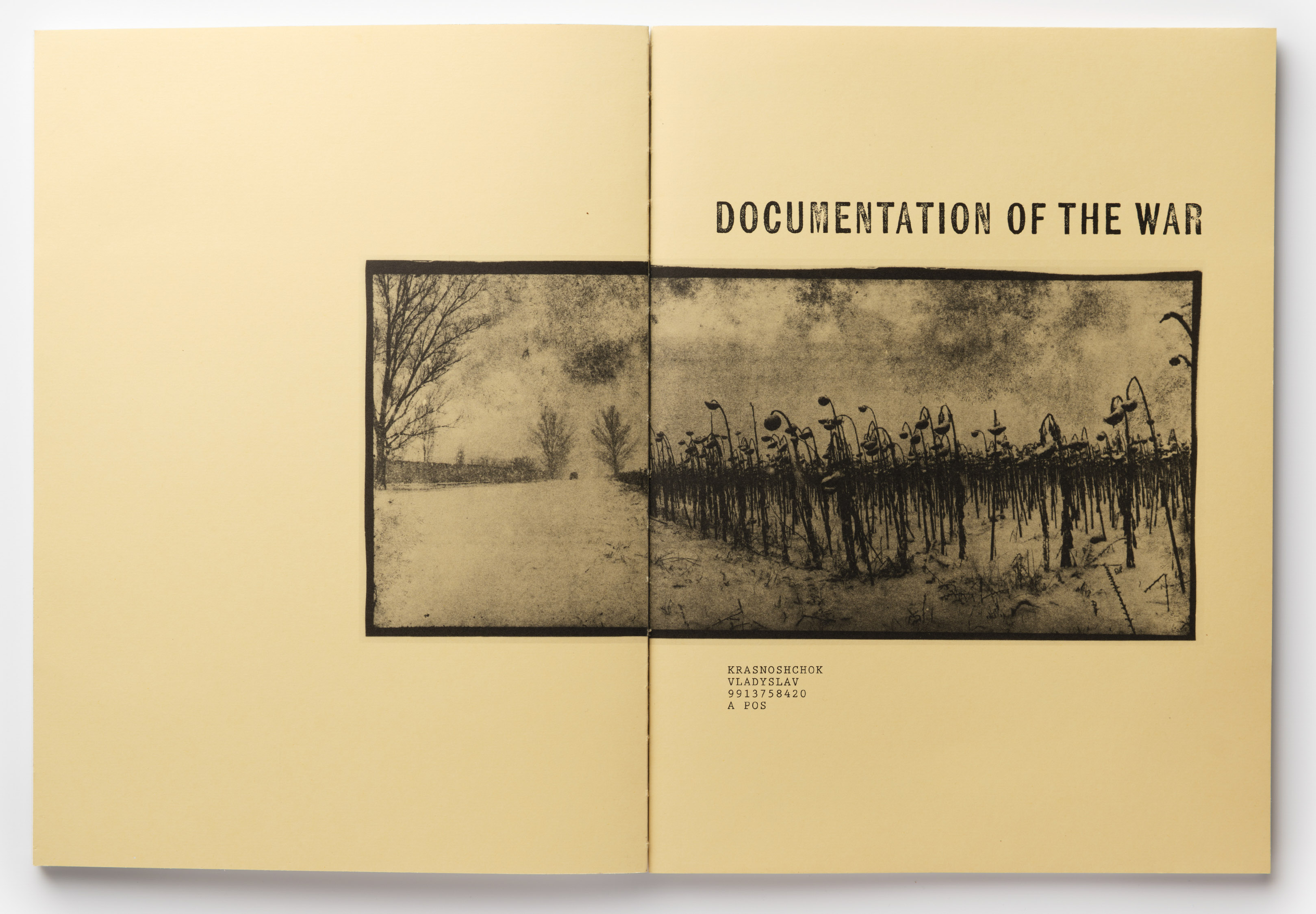
The book's cover features a field of sunflowers that no one harvested and were left under the snow — this is one of the symbols of the war. In the frame, there is a road on which a car, most likely military, is driving in the background. This is a story about a space that has changed forever and about the presence of war in every centimeter of our land.
The endpaper features a graphic symbol that resembles an optical sight. At the same time, it is a visual scheme of the book itself — if you gather all the photographs together, it turns out they form exactly this structure. The endpaper also includes photographs with handwritten inscriptions. These are imprints of the reverse sides of real photographs. I always sign my works: I indicate the place of shooting, the year, the series title, and the limited edition print run, for example, 10 copies plus two author's prints. I told the designers that these photos should also be added to the book, and we found this solution.
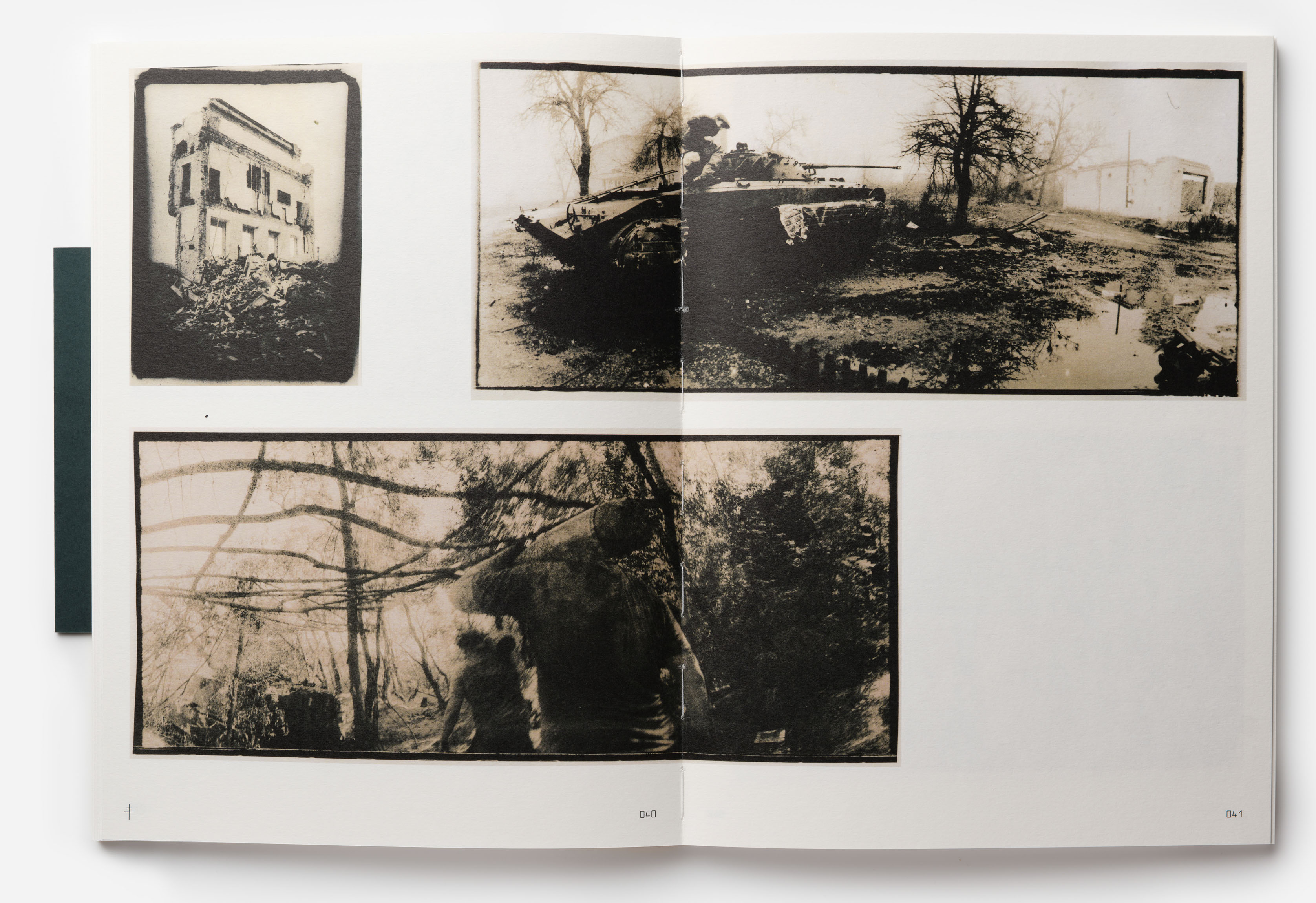
One of the biggest challenges in working with the designer was the variety of formats: the book combines medium format shots, narrow film, half-frames, and panoramas, including vertical ones. Each spread had its own rigid geometry. Sometimes the structure strictly required a medium format, and no matter how much I liked another photograph, I could not "jump over" this structural logic. I had to sacrifice even very strong frames, for example, from the series about Zmiinyi Island (Snake Island), because they fell out of the visual rhythm. It was critically important to me that the book have a dynamic and holistic "drawing."
“In working on the book, I was guided exclusively by the visual quality of the frame”
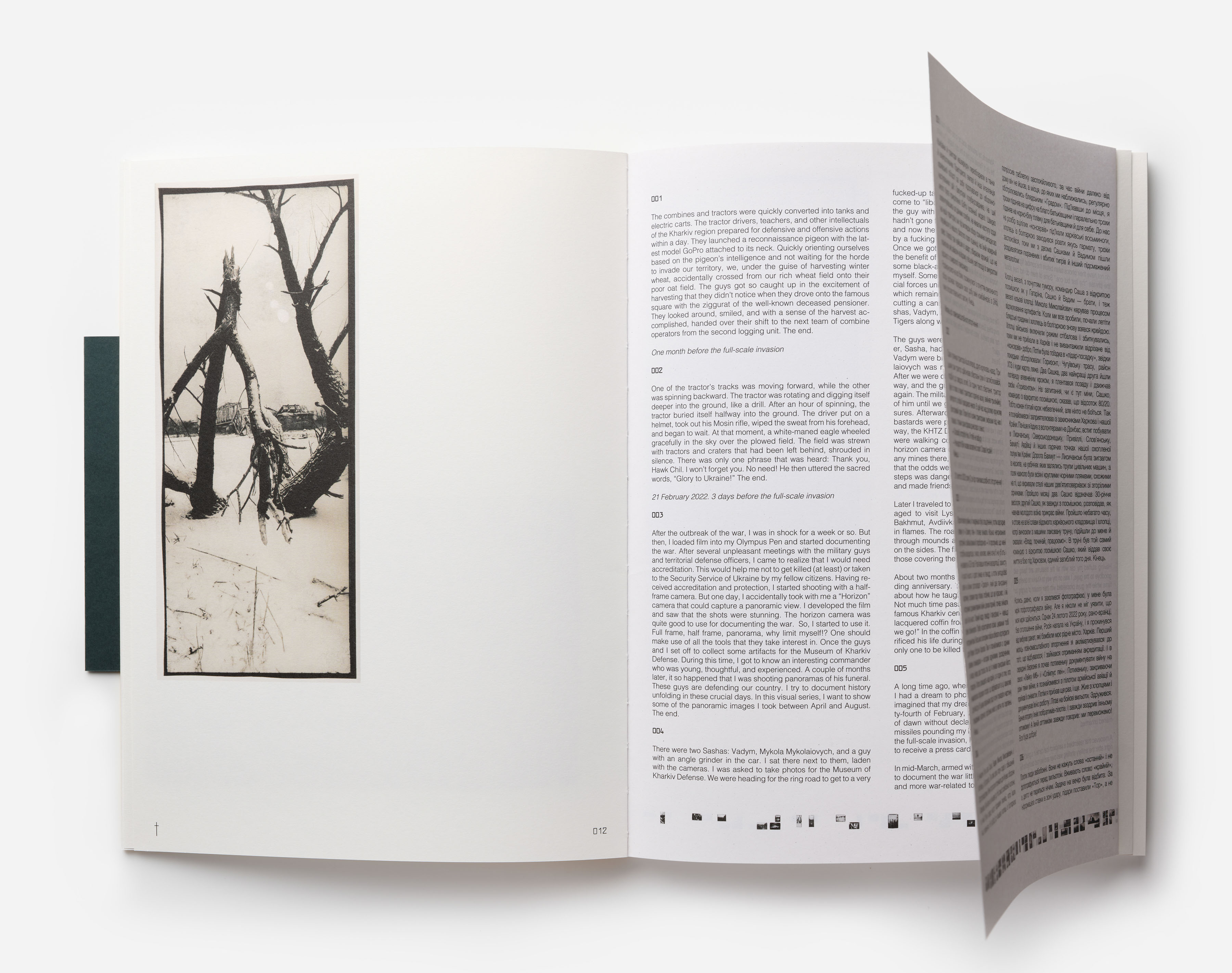
I was completely uninterested in creating yet another chronicle of events. This book does not have classic captions under the photos — let the people for whom factual accuracy is important do that. The book does have texts, but they are my notes and short stories. I added my thoughts related to this war to the book. The texts in the book are in Ukrainian and English.
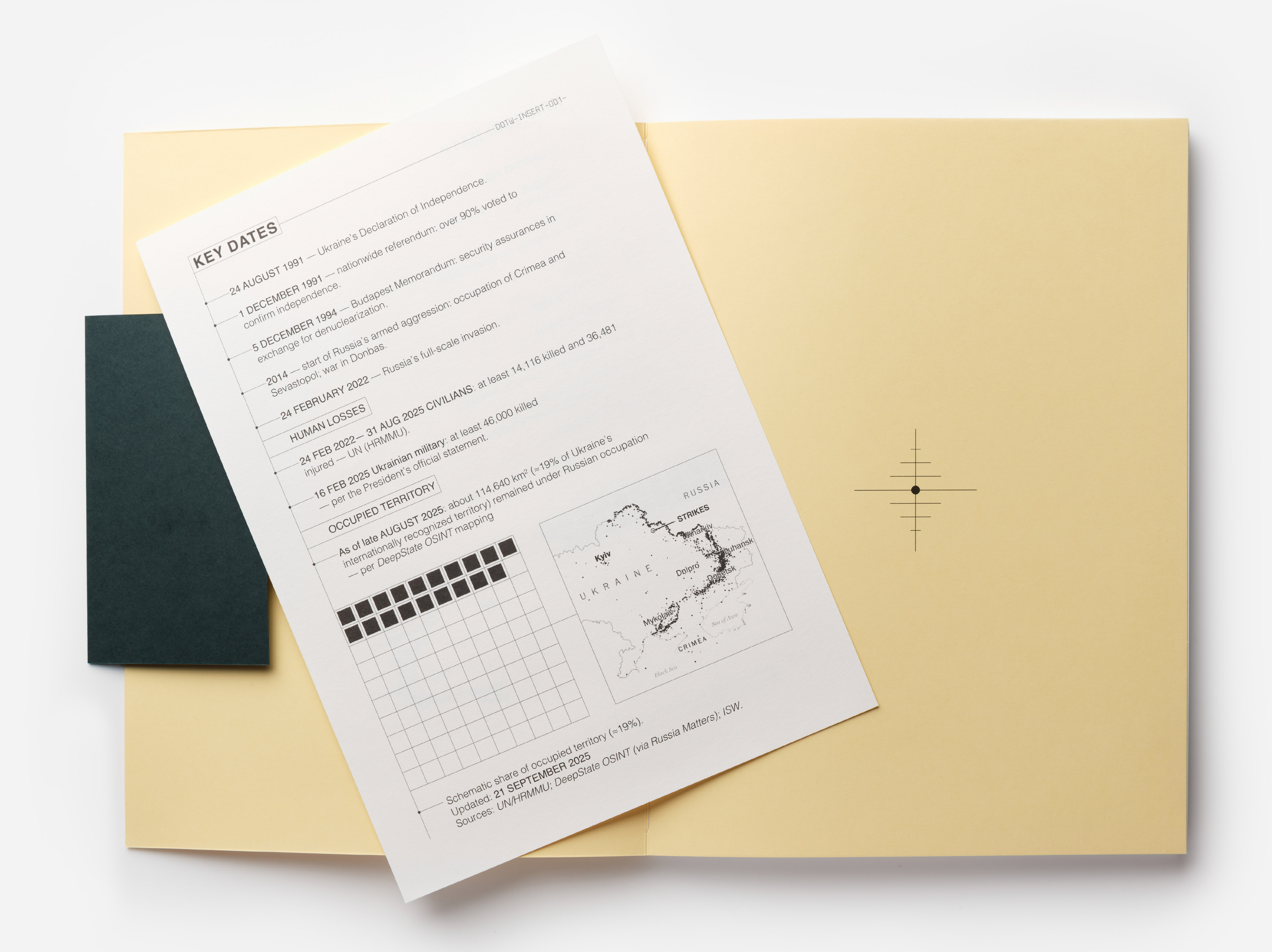
In addition to my personal reflections, the book contains an insert with key facts of our history. This is dry, but necessary documentation: from the declaration of independence and the signing of the Budapest Memorandum to the beginning of the annexation of Crimea. Statistical data on the Russian-Ukrainian war are also recorded there. I added this data from open sources.
The stories about the photographs that I remember are connected to people. For example, a photograph of two soldiers walking toward a tree line near Kharkiv, from which the city was being shelled. One of these servicemen later died, and I photographed his burial. Or a frame with a church, after which we were filming artillery work and my colleague was wounded. A story can be told about each of the photographs in the book. However, this is all literature, and photographs are more about feeling.
However, I never let emotions or feelings guide me when choosing frames. In working on the book, I was guided exclusively by the visual quality of the frame. If a photograph works compositionally and meaningfully, then it stays; if not, I reject it despite any behind-the-scenes stories. At the same time, over time, one can also notice strong shots that were initially missed.
“The flow of documentary photos from the front turned into an endless repetition”
The potential audience for any photobook is photographers themselves. My book is primarily aimed at them, but also at people who are passionate about photography as an art, are interested in the topic of war, or are exploring contemporary visual practices. The book is published in two languages — Ukrainian and English — which makes it accessible to the foreign reader. The bilingualism concerns the accompanying text, while photography itself speaks a universal language. If someone masters this visual language, the book's meaning and emotional content become clear without unnecessary words.
Why is another book about the war needed? Perhaps so that among dozens of publications, at least one truly evocative work appears. Today we see hundreds of similar frames, where amid the accumulation of events, it is often impossible to discern the author or understand their deep intent.
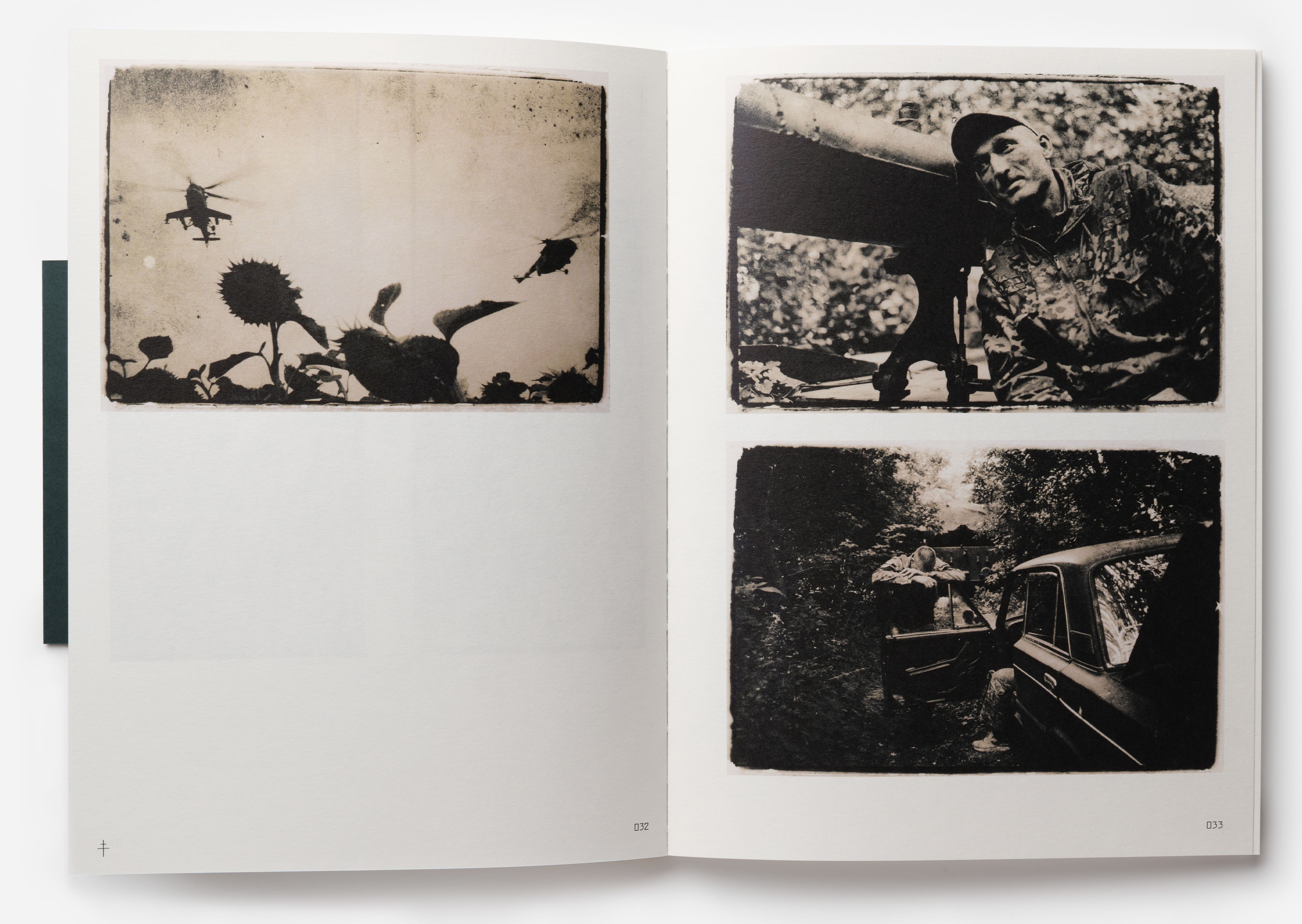
We live in a time when the flow of documentary photos from the front has become so dense that it has turned into an endless repetition. For me, 90% of modern content about the war is just the bare facts of what is happening. I don't know exactly how my photographs will affect the viewer and what thoughts they will provoke, but I hope they can break through this information noise and touch something deeper.
The release of this book was made possible through cooperation with the New York-based publisher Red Hook Editions. It is important to me to be published there because they specialize in high-quality photobooks and cooperate with leading global institutions, such as MoMA. It is fundamental to me that I created the photobook completely independently. This is an absolutely independent project: I did not apply for grants or announce fundraisers. For this edition to see the light of day, I sold everything I could, and even borrowed money, taking all the risks upon myself. The realization that the book appeared thanks to my own efforts makes this result truly valuable and honest for me.
Vladyslav Krasnoshchok— a Ukrainian photographer and artist known for documentary projects on the socio-political realities of contemporary Ukraine. By education, Vladyslav is a maxillofacial surgeon; he studied at the Kharkiv Medical University (1997–2002) and worked in emergency medicine until 2018, when he fully transitioned to private dental practice and began an active artistic career. As a member of the "Shilo" group, along with Serhii Lebedynskyi, he continues the traditions of the Kharkiv School of Photography, emphasizing visual narrative as a form of social commentary and historical documentation.
Krasnoshchok’s photographic projects explore the complex realities of life in Ukraine — from post-Soviet transformations to the ongoing war. In his practice, he uses techniques such as analog photography, appropriation, hand-coloring, and combining images with sculptural elements. Also known for experiments in graphic art, engraving, and street art, he has developed a recognizable style and creates socially engaged projects that have gained international recognition. Following Russia’s full-scale invasion, he has been documenting its consequences for Ukraine, focusing on the human condition and the resilience of those affected by the war, and will continue this work until its completion.
His works are represented in prestigious collections, including the Museum of Fine Arts in Houston (USA), Kiyosato Museum of Photographic Arts (Japan), Museum of Modern Arts in Rio de Janeiro (Brazil), Centre Pompidou in Paris (France), Grynyov Art Foundation (Ukraine), Museum of the Kharkiv School of Photography, and Odesa Museum of Art.
Social networks of the author: Facebook,Instagram
The material was worked on:
Researcher of the topic, author of the text: Katya Moskalyuk
Bildeditor: Vladislav Krasnoshchuk
Literary Editor: Julia Futei
.jpg)
.jpg)