Photographer Adriana Dovha spoke about how she shows bright people and light in her photographs at a time when there are only shadows and darkness all around, and why the camera helps preserve empathy and sentimentality when, through it, one comes very close to pain and grief.
“The camera was that straw that kept me afloat”
From childhood, the moment when I wanted to photograph is firmly etched in my memory. I was already in high school, and on my way to school I saw a small boy adjusting his classmate’s backpack. I thought, “That would make such a beautiful photograph.” Later my mother bought me a FED camera, but I did not really enjoy shooting with it. Eventually, I forgot about photography for a long time.
When my son Maksym was born, of course I photographed him with a point‑and‑shoot camera. I started photographing my friends and acquaintances, and they really liked my photographs. They said that I never “cut off” anyone’s arms or legs in the frame and that I pay attention to composition. I seriously began thinking about buying a professional camera, but when my son was three and a half years old he was diagnosed with a serious illness. In the years that followed, I tried to come to terms with this situation, and in fact all our money went toward Maksym’s treatment.
I bought my first camera in 2008. A friend brought a Canon 450D from the United States. I began looking for opportunities to study photography and enrolled in courses in Lviv in 2009 with Volodymyr Dubas. Eventually, I found myself in the circle of photographers of the National Union of Photo Artists of Ukraine, most of whom worked in the aesthetics of socialist realism of the 1960s–1970s.
Instead, when I began studying photography on my own — looking at photographs and videos online, buying photo books — I felt drawn to a completely different kind of photography. I discovered many new contemporary photographers and classics. I became fascinated by the American photographer Ray K. Metzker, known for his high‑contrast black‑and‑white photographs with plays of shadow, as well as the color photographs of Fred Herzog. In general, my favorite photographers change often; I love discovering new ones.
When it comes to women photographers, I am very fond of the work of Sarah Moon, Dolorès Marat, Francesca Stern Woodman, and others. Recently, I have been especially inspired by the images of Elaine Constantine, who photographs smiling young people. Perhaps war forces one to seek joy. Usually, photography, like all art, works differently — it touches deep emotions, experiences, pain, catharsis, purification, loneliness, and searching, but it never carries an aesthetic of joy. The stereotype of high art is that people are happy only for a moment and only as a contrast to drama. Photographing or painting happy people is always a challenge for an artist, because there is a risk of slipping into kitsch, and for a photographer — into cheap commercialism.
When I first began working with photography, I was simply shooting individual images rather than projects or series. One of the first was a story about a craftsman named Markiian who repaired upholstered furniture. He worked in one of the industrial districts of Lviv that tourists rarely visit. Even in 2018, when I photographed Markiian’s workshop, furniture repair was already becoming irrelevant, because our culture of consumption has changed greatly and almost no one repairs old things anymore. I had the impression that I had entered a world that was about to slip out of reality and would no longer exist tomorrow. Perhaps that is part of the magic of photography — transporting us into other dimensions.
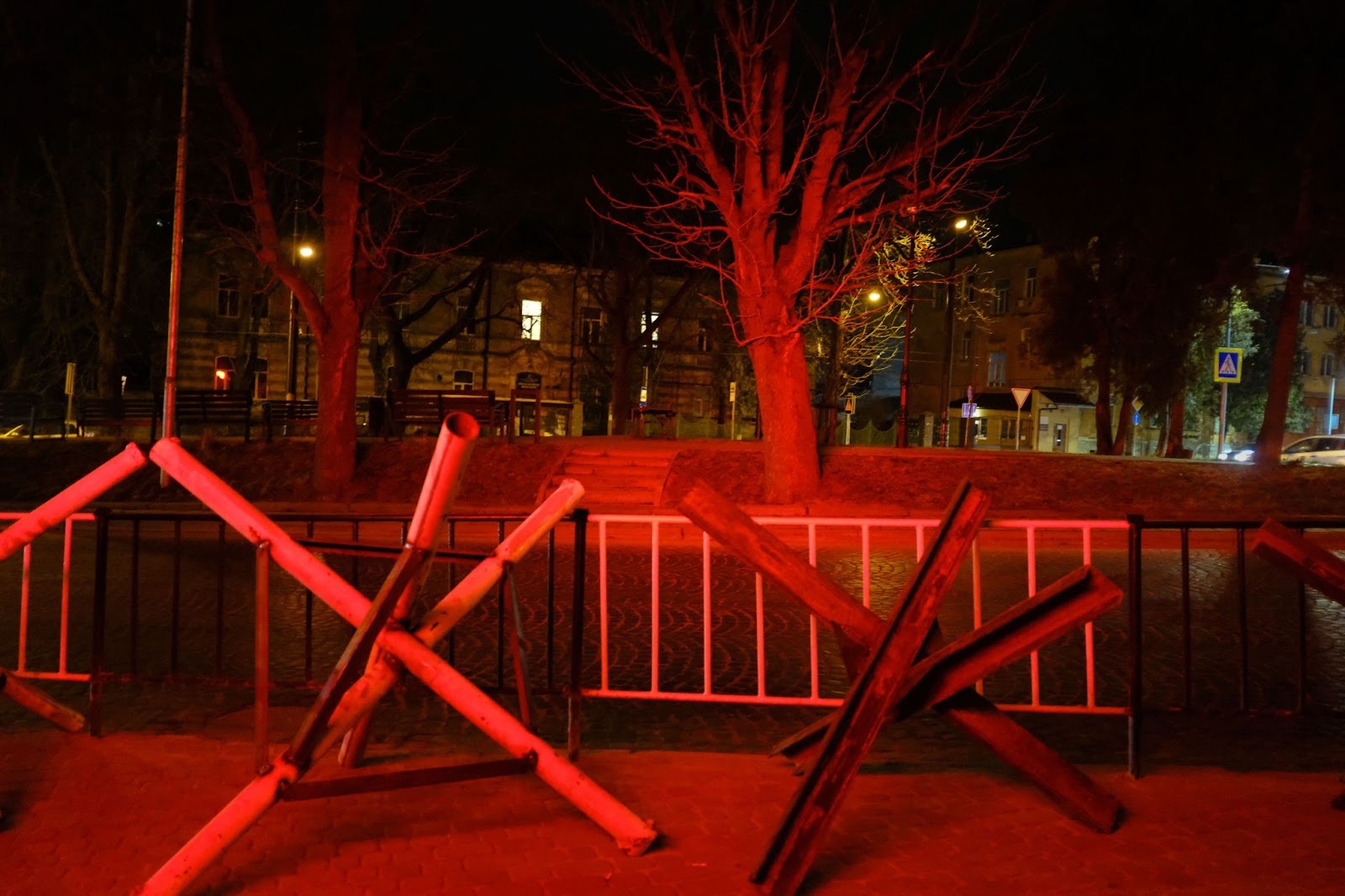
Later, I joined a community of street photographers organized in Lviv by Taras Bychko. For me, it was a breath of fresh air — I felt that I had found my pack. In the most difficult moments, photography gave me the strength to live and move forward. The camera was that straw that kept me afloat, a way to cope with difficulties. There are periods when I do not like the shots I have taken, but I have never had the thought of abandoning photography.
“I position myself as a photographer who depends on the sun”
All my professional interests are one way or another connected with photography. Every day I take my camera with me and photograph city life. Recently, I became the head of a museum dedicated to a well‑known Ukrainian photographer of the interwar and Soviet periods, the opening of which will take place this spring. He was a pioneer of Ukrainian cinematography in Galicia and one of the founders of the Ukrainian Photographic Society. Thanks to his photographs, we know what life was like in the villages and small towns of western Ukraine. The museum will be located in an authentic apartment — we plan to create a permanent exhibition there, as well as promote the history of Ukrainian photography, organize lectures, exhibitions by contemporary photographers, and friendly creative meetings.
For more than five years, I have been teaching the history of photography and photographic practice to students at the Lviv Professional College of Culture and Arts. I realized that I would not be able to systematize all my knowledge in the field of photography unless I went on to teach photography to someone else. In addition, I enjoyed working with students, and I hope that feeling is mutual. Working with students is always a two‑way process of exchanging energy and knowledge. From students, I learn to adopt their lightness and confidence, and I am often amazed that at sixteen or seventeen years old they are already so purposeful and know what they want from life.
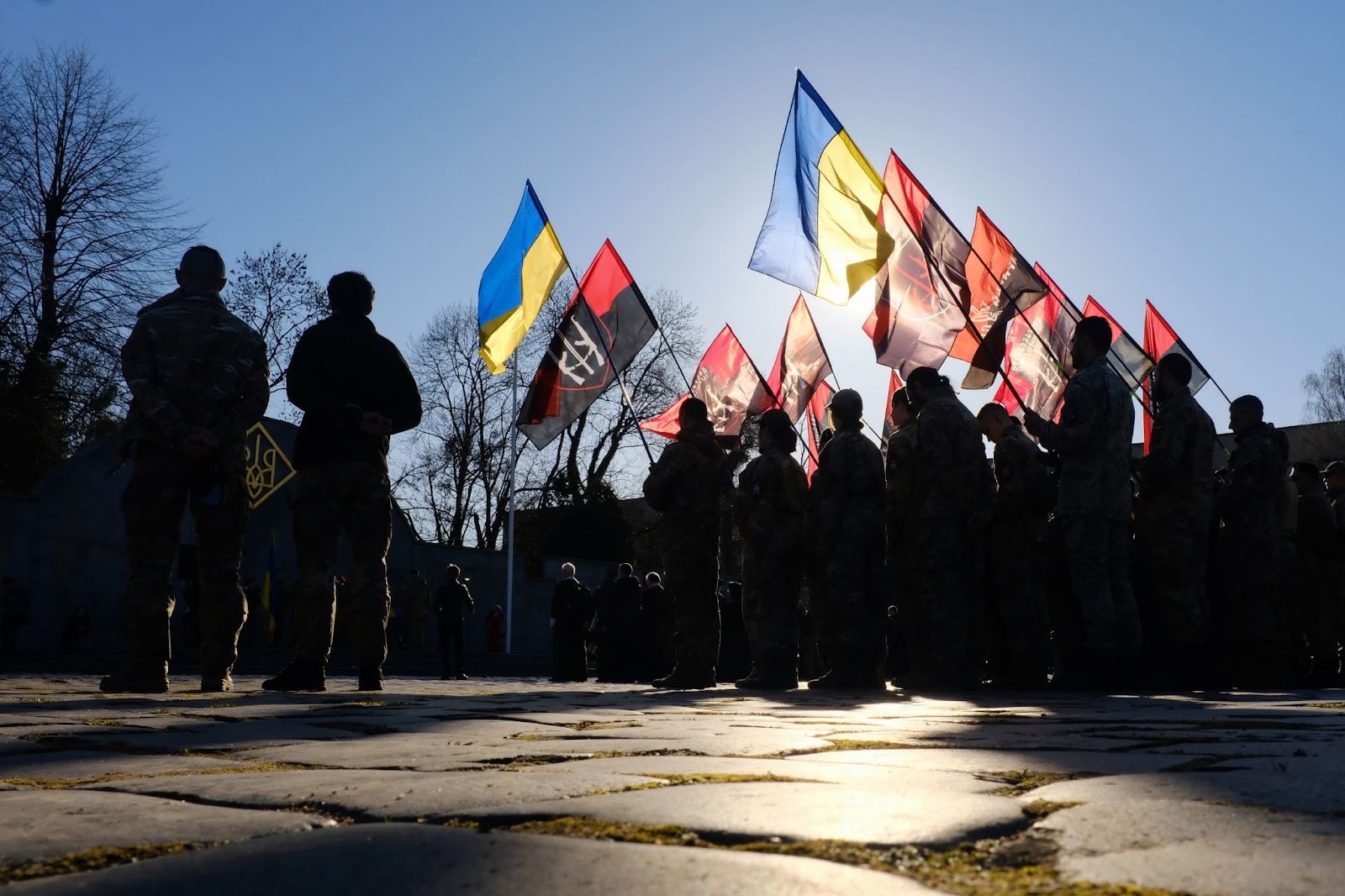
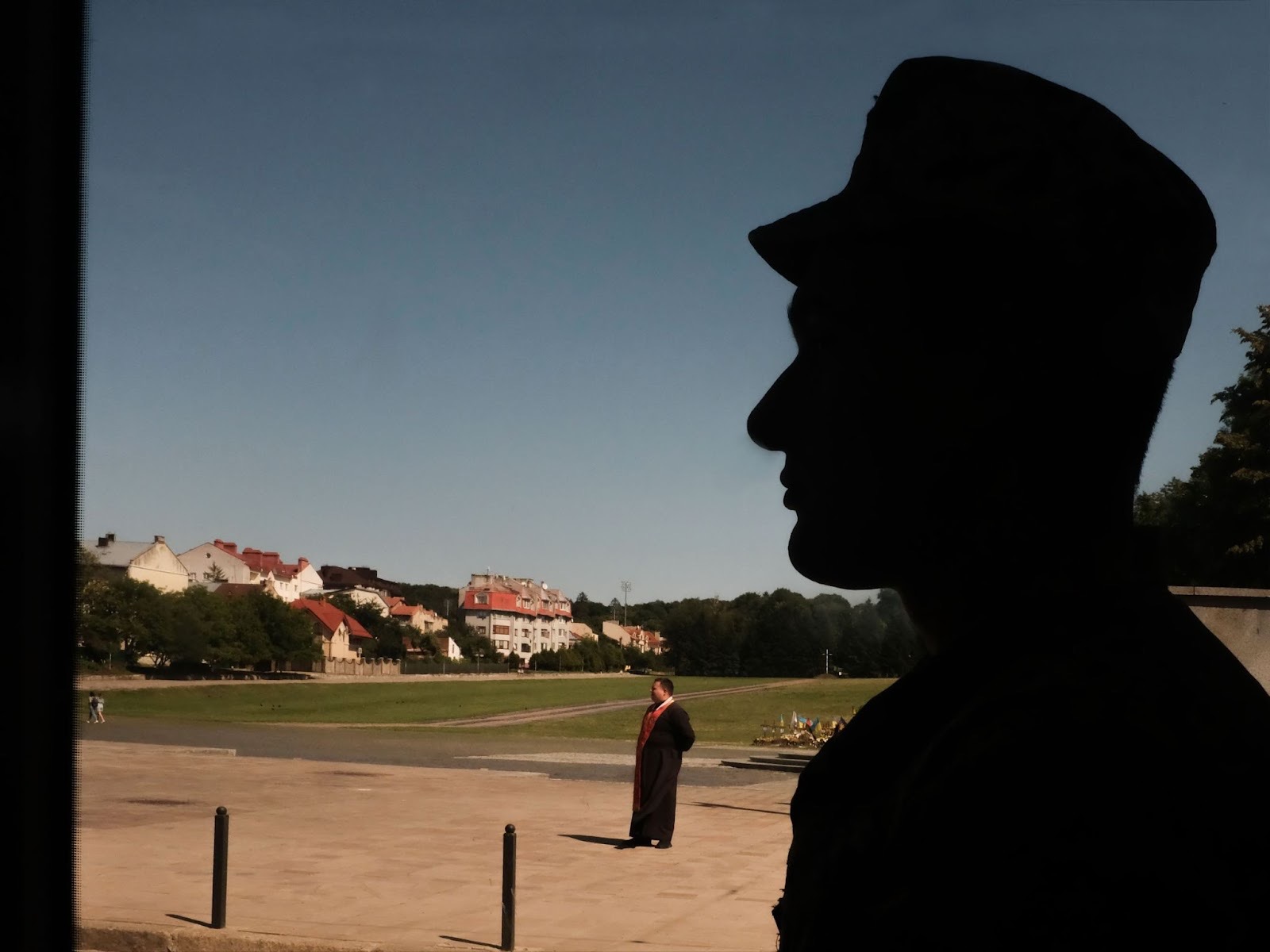
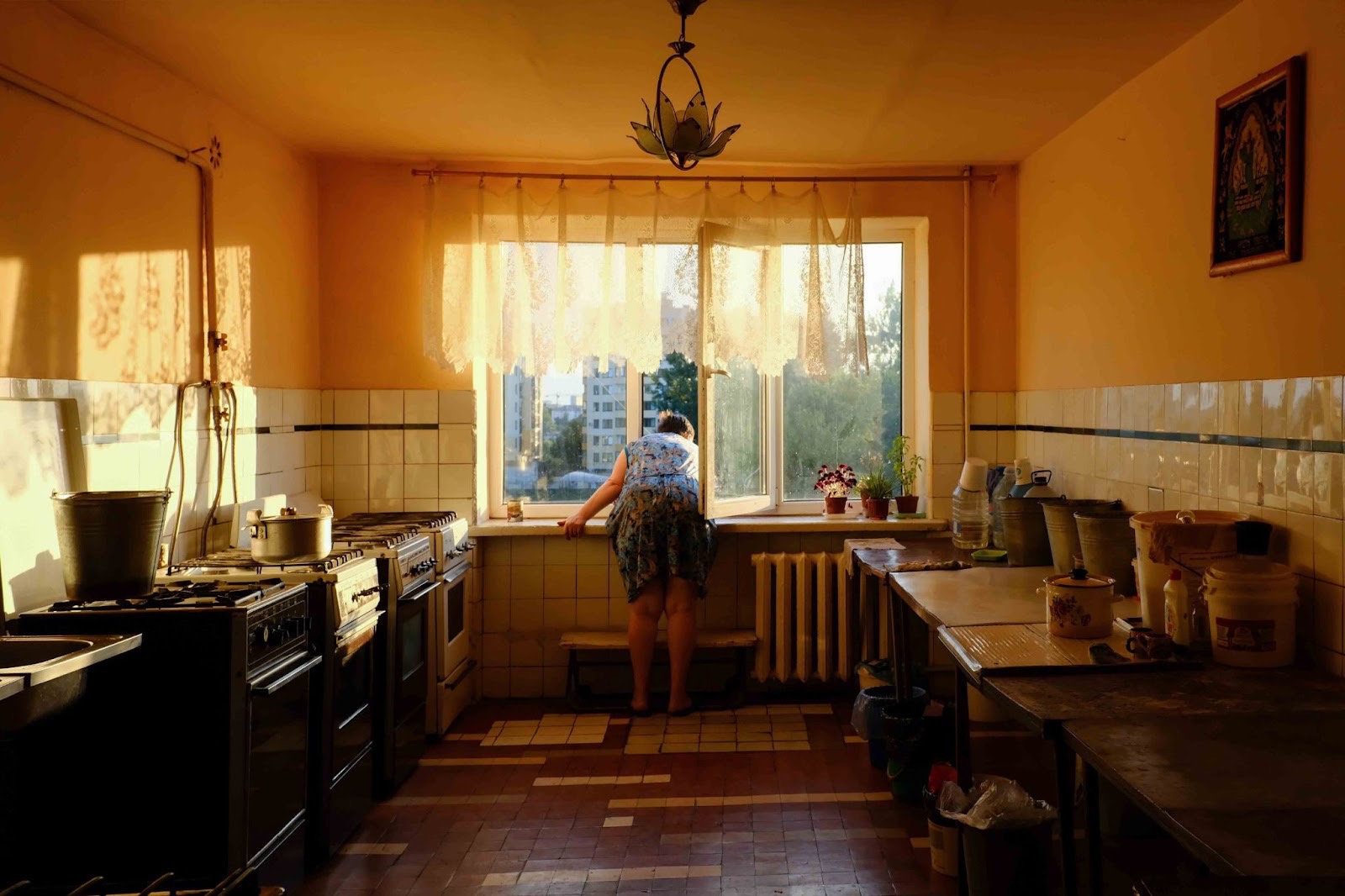
I position myself as a documentary and street photographer who depends on the sun. In order to go out and photograph, I need sunlight. I love low sun and the play of light and shadow. I really like it when different themes can be shown not through a direct image, but through associations, for example, as Edward Weston did. Today, this approach interests me the most, and I am working in this vein on an abstract series about architecture.
“I am grateful that I had the opportunity to meet wonderful people, but it is a great pity that it was under such circumstances”
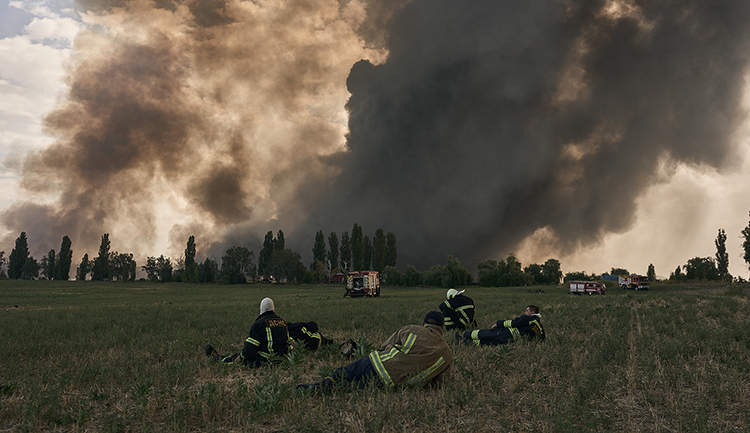
I cannot say that the beginning of the full‑scale Russian‑Ukrainian war became a certain Rubicon in my creative work. I photographed a great deal before the Russian invasion, and with the start of the war many new important themes were added. I felt that I had to document the events of the war, that I had a duty to do so, first and foremost to myself.
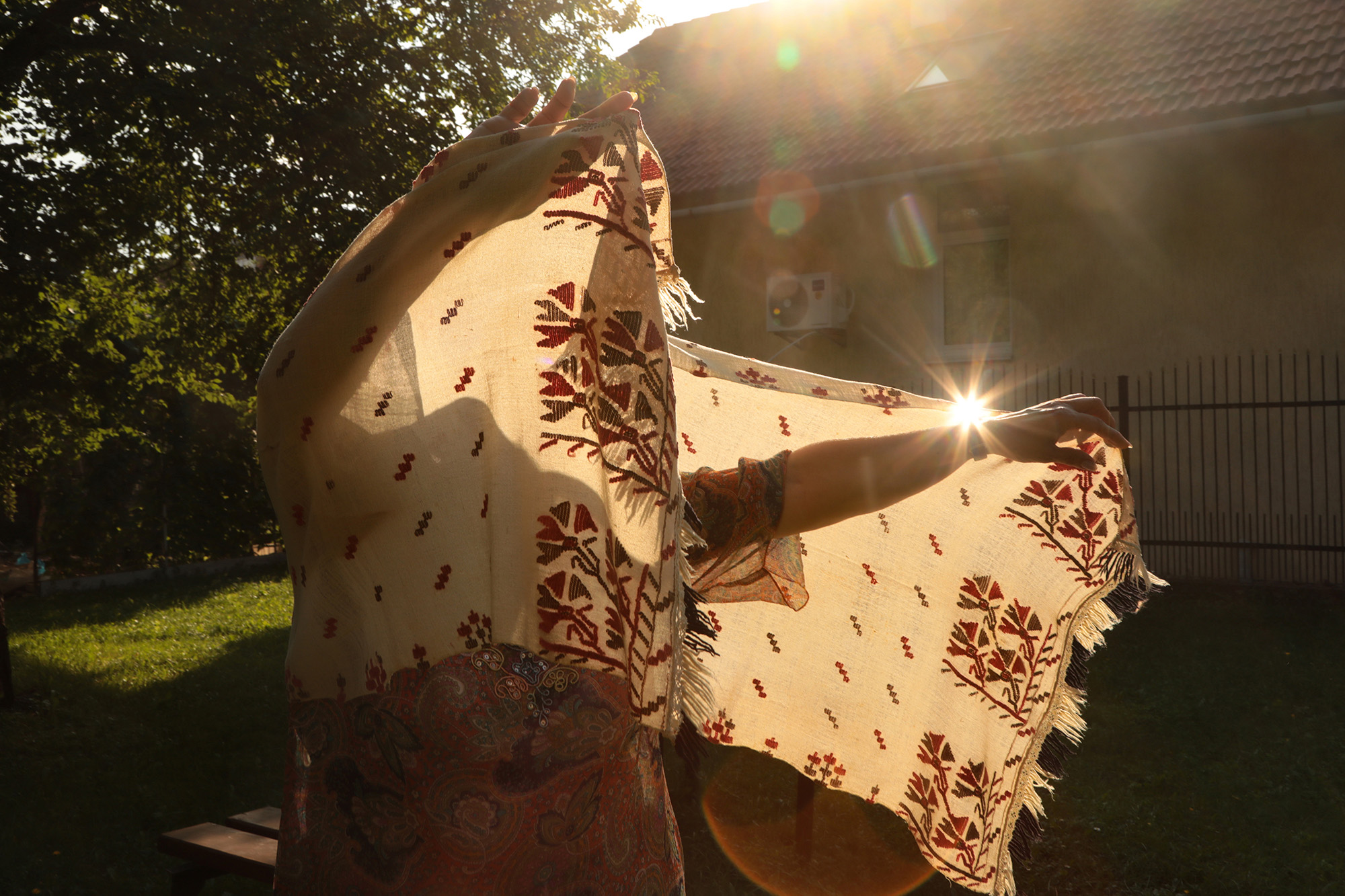
Being a photographer during wartime is a calling and a duty, but on the other hand, it is a challenge and a vulnerability. From the first days of the full‑scale war, I photographed railway stations, volunteers, and shelters for internally displaced families in Lviv. I am grateful that I had the opportunity to meet wonderful people, but it is a great pity that it was under such circumstances. I especially remember Oleksandra Liashchenko from Luhansk and Svitlana Kravchenko from the city of Bakhmut. I photographed them and other women for a project about the items that forcibly displaced people took with them during evacuation. Svitlana Kravchenko, for example, brought a family relic — a Psalter published in Lviv at the printing house of Andrey Sheptytsky in 1905. These are very bright women, and I wanted to convey that in the photographs.
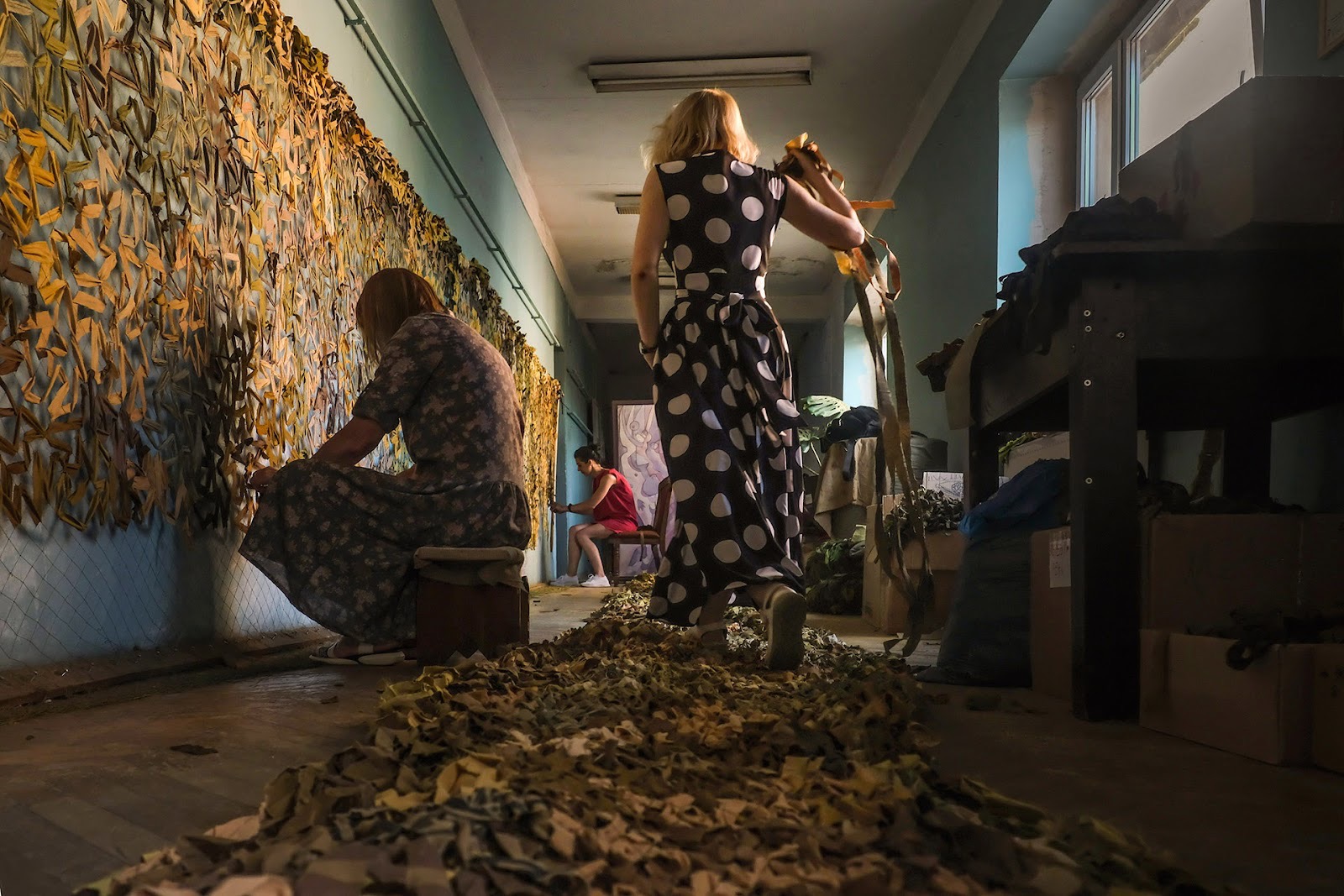
From the first days of the full‑scale war, I began photographing a project in Lviv about volunteers who weave camouflage nets. I came to the Academy of Arts, near where I live, to photograph the weaving of nets. Eventually, I began weaving them myself and became part of the community. To help raise funds for materials, I made a photo book and sold it for donations.
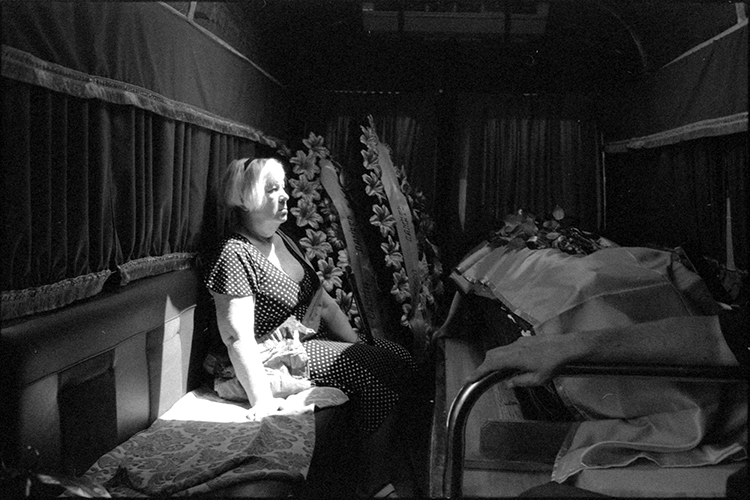
Like many photographers, I photographed the funerals of fallen soldiers in Lviv. The first was the funeral of Ukrainian poet Yurii Ruf — at that time there were literally only a few graves at the Field of Honorary Burials in Lviv. Today, burials are no longer conducted at that cemetery — there is no more space. It was then that I first felt respect for men in uniform, as opposed to soldiers of the Soviet army, who had previously evoked only aversion in me. After photographing funerals, I would come home with a huge void inside, and it took several hours for that hollow to become at least a little smaller. Currently, I am working on a project about the minute of silence in Lviv.
“In my photographs, I did not want to show the vulnerability of soldiers”
I photographed a story about a soldier named Oleksandr, who lost both legs and an arm in the war. He is from the city of Konotop, by profession an ecologist — he managed to graduate from Kyiv University literally just before the beginning of the full‑scale Russian invasion. Together with his girlfriend, he moved to Lviv and sent her to relatives in the United States. At the age of 24, he signed a contract with the Special Operations Forces and was wounded in September 2023 in Kharkiv region. I met him in January 2024 — probably at the most difficult period for him in accepting his new self.
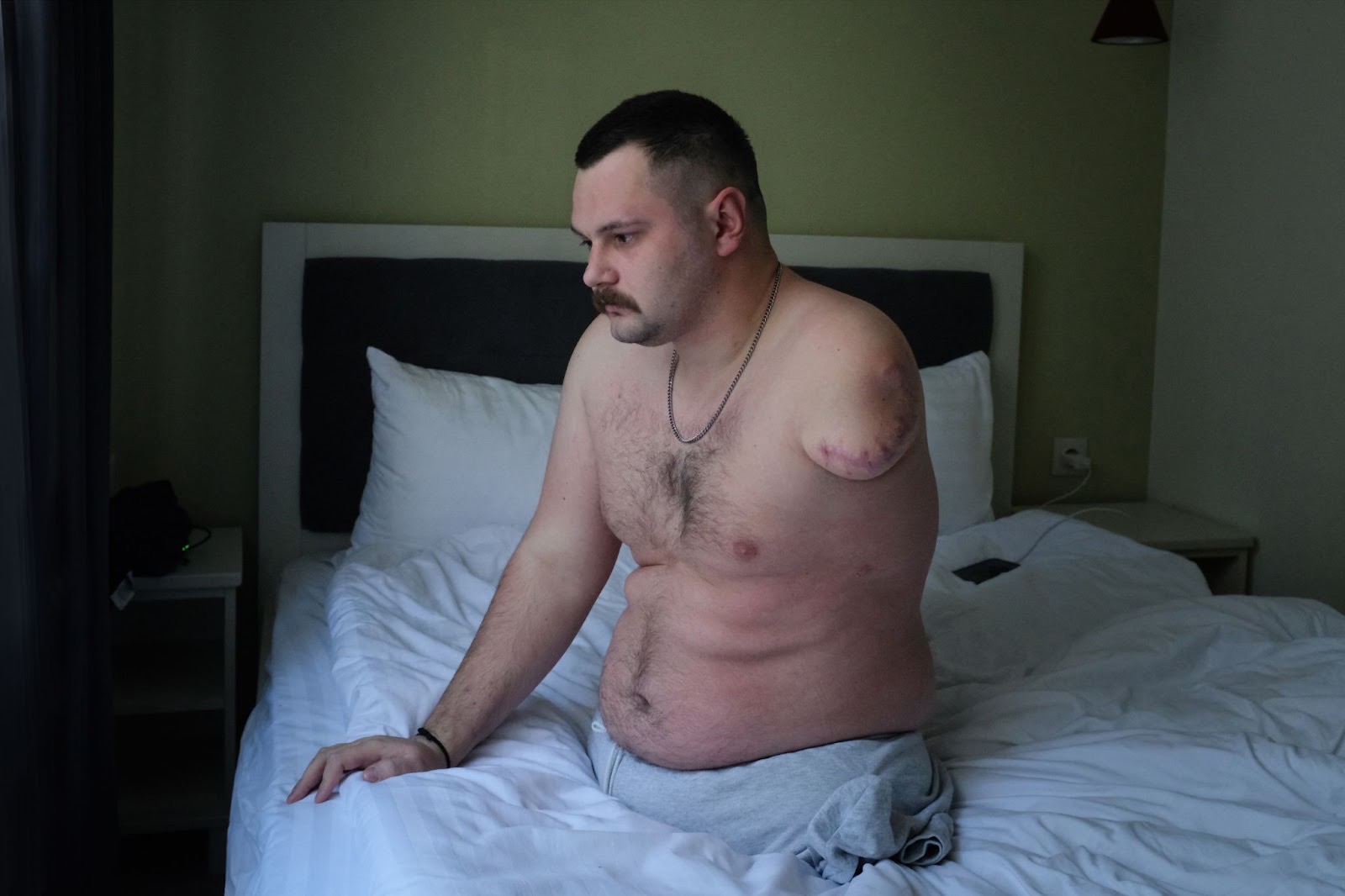
In the photographs, I did not want to show Oleksandr’s vulnerability. In all of them, he appears strong and courageous. In the project, I have only one photograph where the full scale of the amputations is visible and where Oleksandr looks very sensitive. I chose the simplest and most direct photographic language possible so that the focus would be on Oleksandr’s story rather than on the play of light and shadow.
I was struck by Oleksandr’s inner strength. At first, it seemed to me that he was only trying to be positive in public. However, after spending a lot of time with him, I realized that a positive perception of life is his natural state. His ability to be grateful simply for having survived deeply moved me, as did the fact that he has the strength and resources to help other men with similar injuries. He readily agreed to be photographed because he wants to draw attention to veterans with injuries, so that they are visible to the rest of society.
“I still notice kindness and humanity around me”
Since I do not work for media outlets, I have the opportunity to choose my own subjects and themes for shooting. I try to be as sincere as possible with people so that my images are also truthful. As for the visual language of stories on sensitive topics, I would never use excessive artistic processing. It seems to me that such projects should be done using the method of straightforward documentary photography. As for subject matter, I would never photograph propaganda or falsehood.
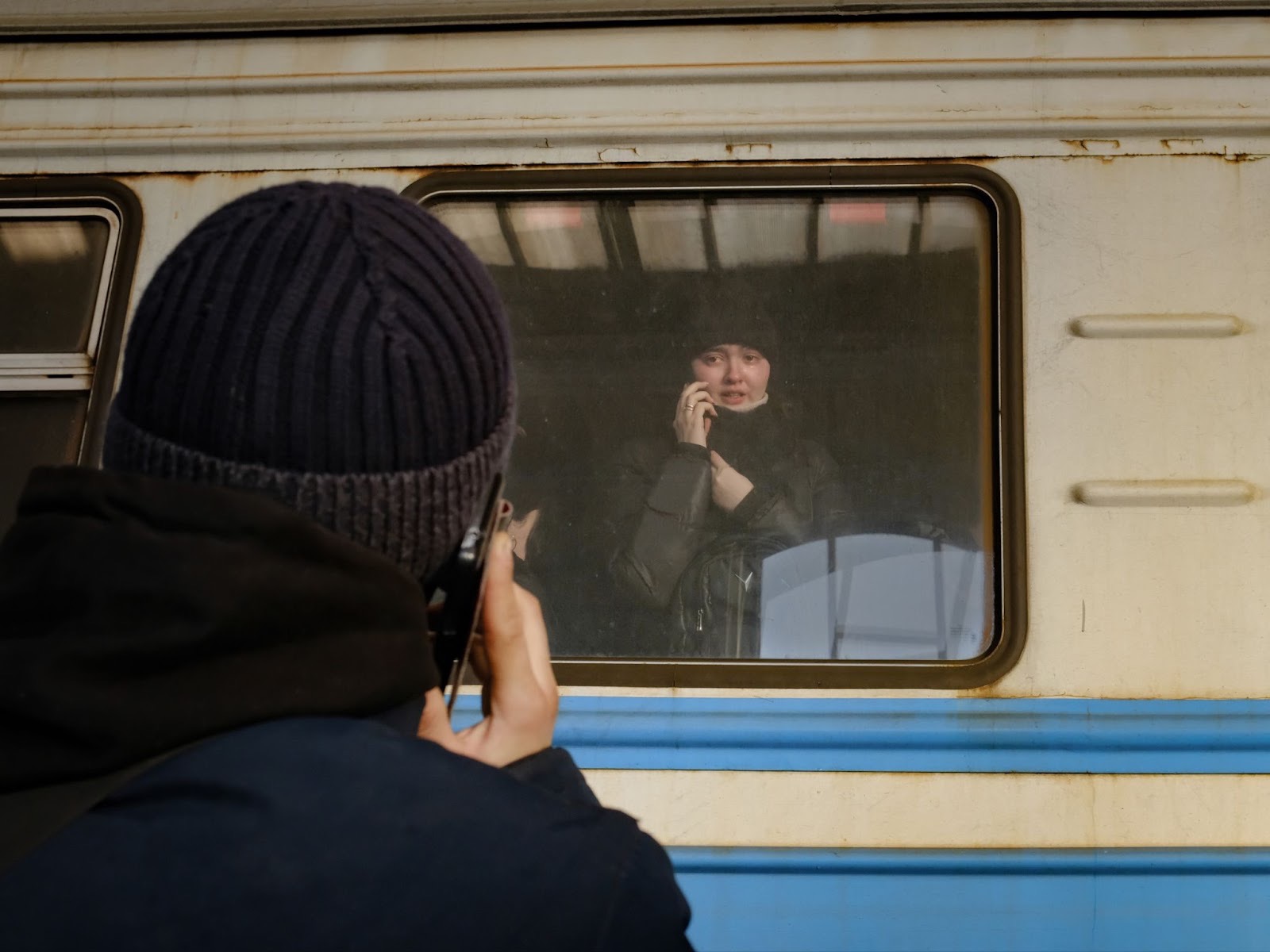
With the beginning of the full‑scale war, I did not become cynical in my view of the world; on the contrary, I developed more empathy and sentimentality. Before February 2022, I almost never cried over films or books. Today, tears come to my eyes much more easily and quickly. I do not know whether this helps or, on the contrary, hinders work on sensitive topics. At the very least, I still notice kindness and humanity around me.
Photography today gives me a sense of belonging to the people who live and work in Ukraine, who are fighting for its independence. For me, photography is a way of existence — without photography, there would be no me.
Adriana Dovha — a photographer from Lviv. She has been photographing since 2009. A member of the National Union of Photo Artists of Ukraine. She lectures on the history of photography and teaches photographic practice at the Lviv Professional College of Culture and Arts. She is a participant and award winner of many Ukrainian and international competitions, including in Poland, Belgium, Serbia, and Turkey. She has had solo exhibitions in Ukraine and Poland and has taken part in many group exhibitions.
Social media: Facebook, Instagram
Worked on the material:
Researcher, author of the text: Katia Moskaliuk
Picture editor: Vladyslav Krasnoshchok
Literary editor: Yuliia Futei
.png)