

In his book “100 Days of War,” photographer Ihor Chekachkov moves away from traditional war reportage photography. He focuses on reflection and intimacy to convey the atmosphere of the first months of Russia’s full-scale invasion of Ukraine.
Ihor Chekachkov discussed how his personal experience of evacuating from Kharkiv transformed into reflections on the loss of home, identity, and displacement; why the project raises questions about the limitations of photography as a tool for documentation and its ability to influence conflicts; and shared the warmest and most painful photographs in the book for him.
— The book covers the first 100 days of the full-scale invasion. Why exactly 100 days—is it a symbolic number or the moment you felt this stage of documentation was complete?
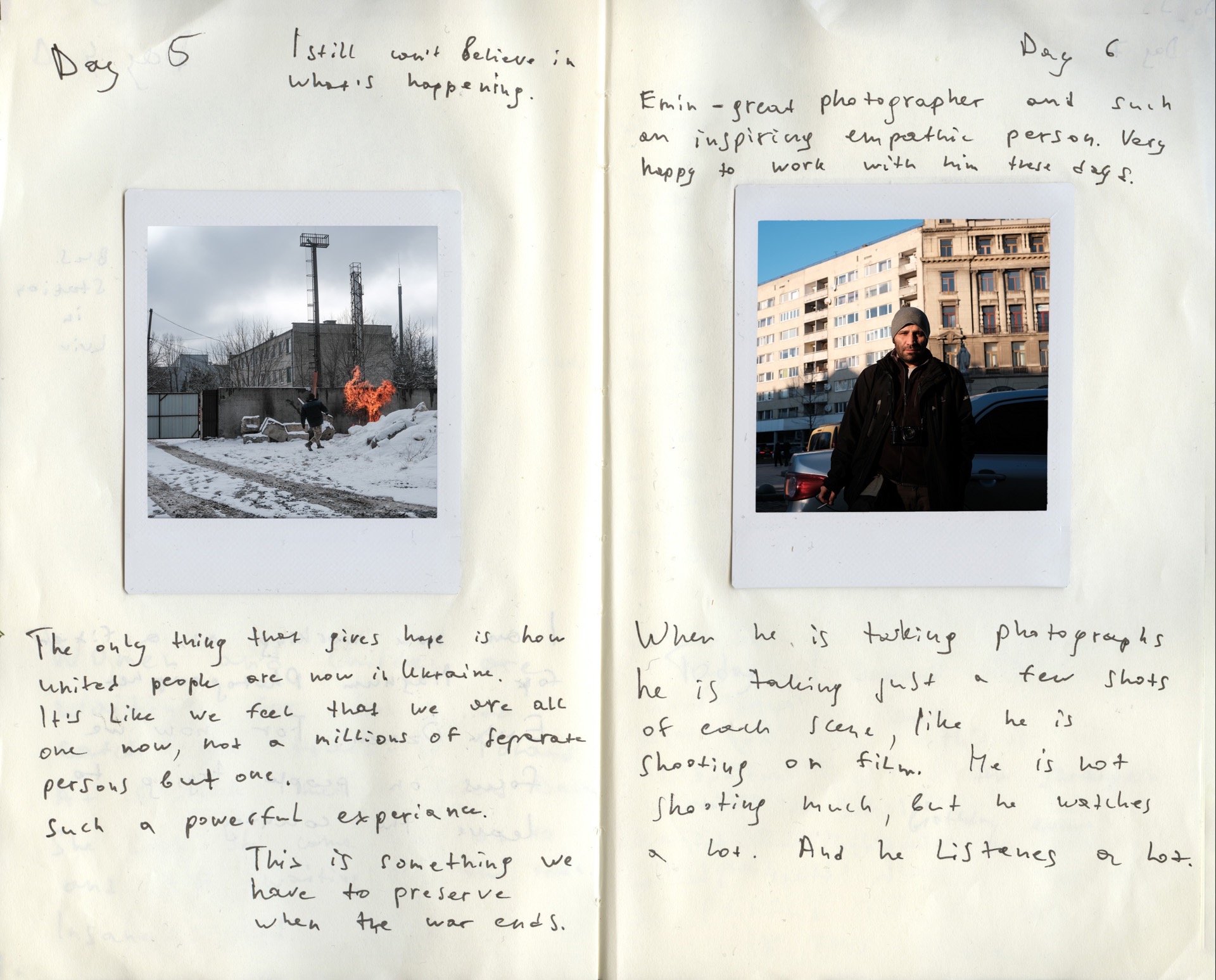
— The original of the book is a Moleskine notebook into which I glued Instax photographs and wrote my notes. This dictated a certain finality of form, as the pages in my notebook ran out around the hundredth day. There were literally two pages left. When we printed the photobook, I wrote my acknowledgments on the blank pages. The notebook's form dictated the book's format. However, that is not the only reason.
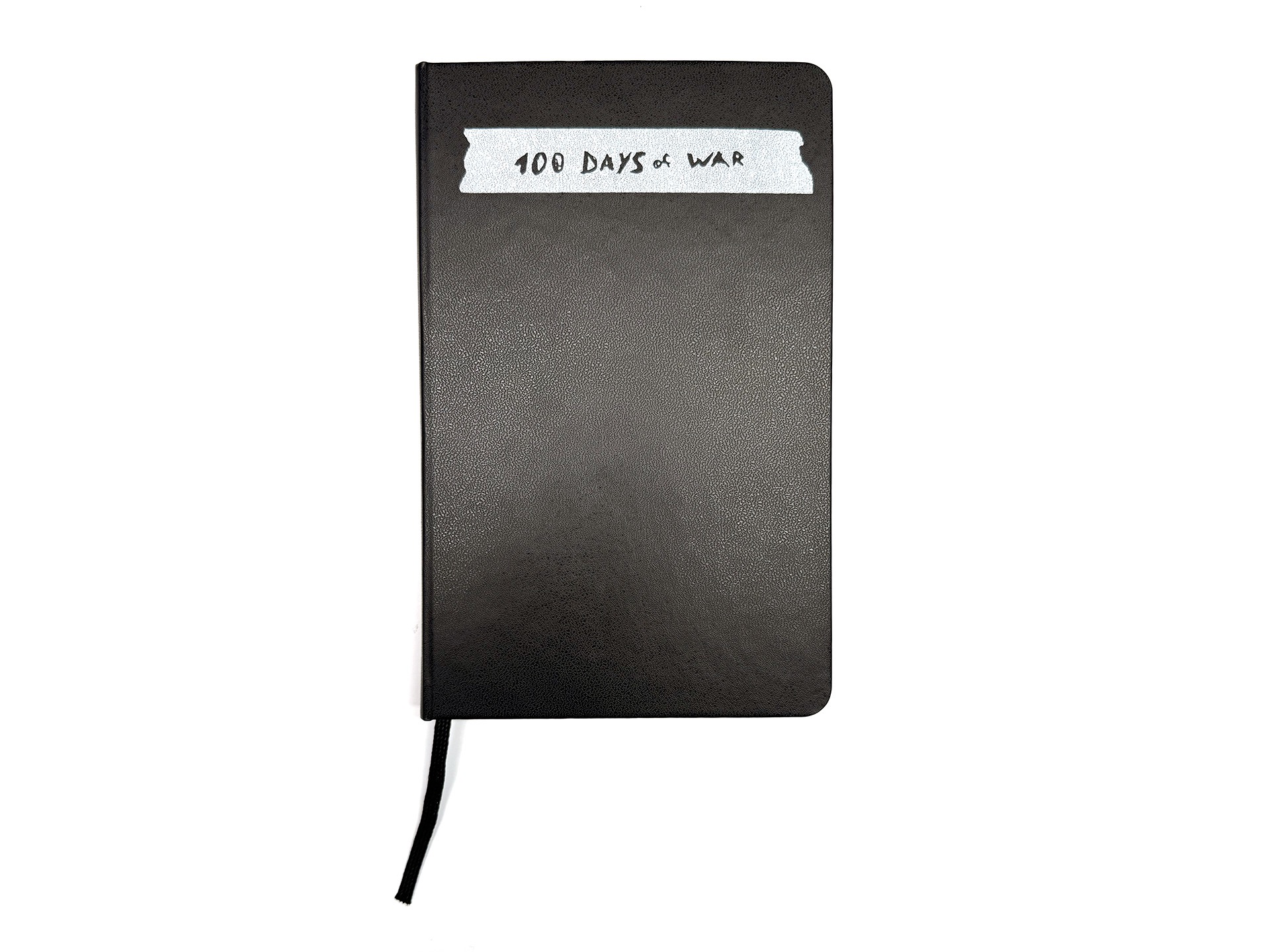
I started working on the project immediately after the full-scale Russian invasion. At that time, everything was happening very chaotically, incomprehensibly, and I had naive hopes that the photobook would encompass the beginning and the end of the war in Ukraine. At some point, I realized that would not happen.
Then several events took place that made me understand that I should conclude the book precisely at the first hundred days of the Russian-Ukrainian war. First, there was a feeling that the intensive phase of the Russian offensive was fading—the war was becoming positional and would last for a long time. If I continued working, it would already be a book about how we are getting used to the war. In contrast, in the first months, everything was new and incomprehensible to us, and the book “100 Days of War” is precisely about that time.
Second, at the beginning of the full-scale invasion, I was reading Márquez, and the repetitiveness of events seemed very symbolic to me: the constant recurrence, the cycles of violence that humanity goes through. One Hundred Years of Solitude by Gabriel García Márquez and one hundred days of the full-scale Russian-Ukrainian war as a reflection of the cyclical nature of time. I read Márquez's The Autumn of the Patriarch—in that novel, repetitiveness becomes a form of rule, because the tyrant-ruler lives almost forever. That is also, unfortunately, a story familiar to us.

— How do you perceive the first months of the full-scale Russian-Ukrainian war now—four years after the invasion?
— There was certainly a lot of naivety back then. When I started working on the project, I didn't see the whole of it yet. Before the start of the full-scale Russian invasion, I submitted documents to apply for a scholarship to study in Great Britain. I knew I had made the shortlist and might have a chance to go to London. So, I wanted to do as much as possible in Ukraine.
The project “100 Days of War” turned out to be intimate and personal to a certain extent. I wrote the notes in the notebook immediately in English. Why would Ukrainians, each of whom has their own experience of living through the first months of the full-scale invasion, need to read this? When the project won a prize from The Photographers’ Gallery, I realized it was interesting to foreigners and started working on creating the book. I don't think I could have done this project any other way.
— How conscious was the decision to document the war, or was it an attempt not to lose touch with reality and do what you do best? Did the camera become a protective barrier for you or, conversely, a way to feel the pain more keenly?
— No matter what happened to me, I always used photography as a way to connect with a reality I couldn't comprehend, or as a way to somehow protect myself from it. It's difficult to grasp the full danger of war. My father recently passed away, and the only thing I could do was photograph. I felt powerless and, perhaps, hid behind photography.
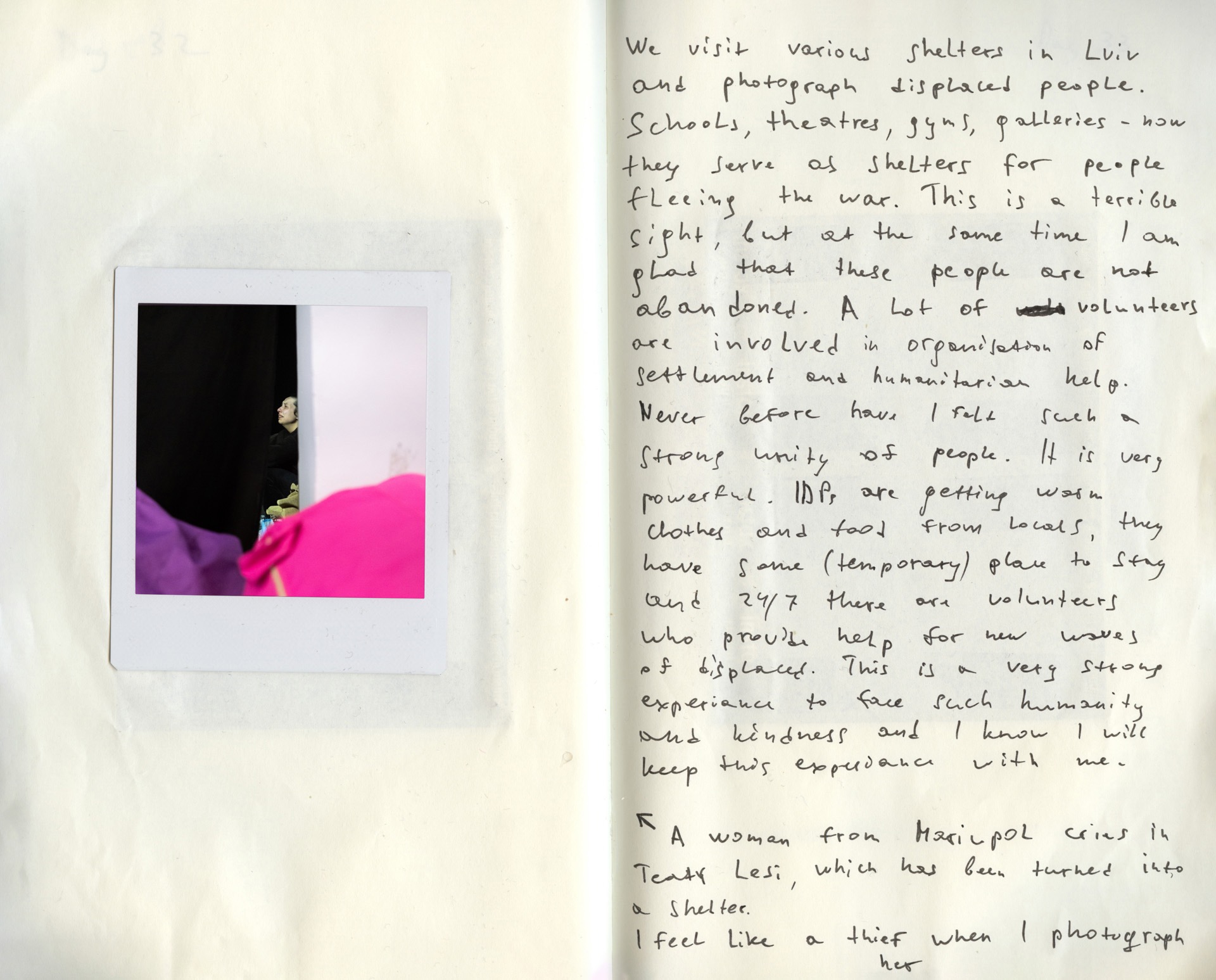
However, photography helps cope with pain. When I was preparing materials for the book, I re-read my notes and reviewed the photographs. I then thought that I was grateful to myself for this work because I recorded things I would have otherwise forgotten. For example, in the first week of the full-scale invasion, I felt how all the people in Ukraine united, how they helped each other. This is a very important feeling, and it must not be forgotten after the war. The book “100 Days of War” is truly important to me and opens a new chapter in my photographic practice. With the war, everything is definitely changing.
— Why specifically the diary format? How did this format influence the choice of frames and their sequence?
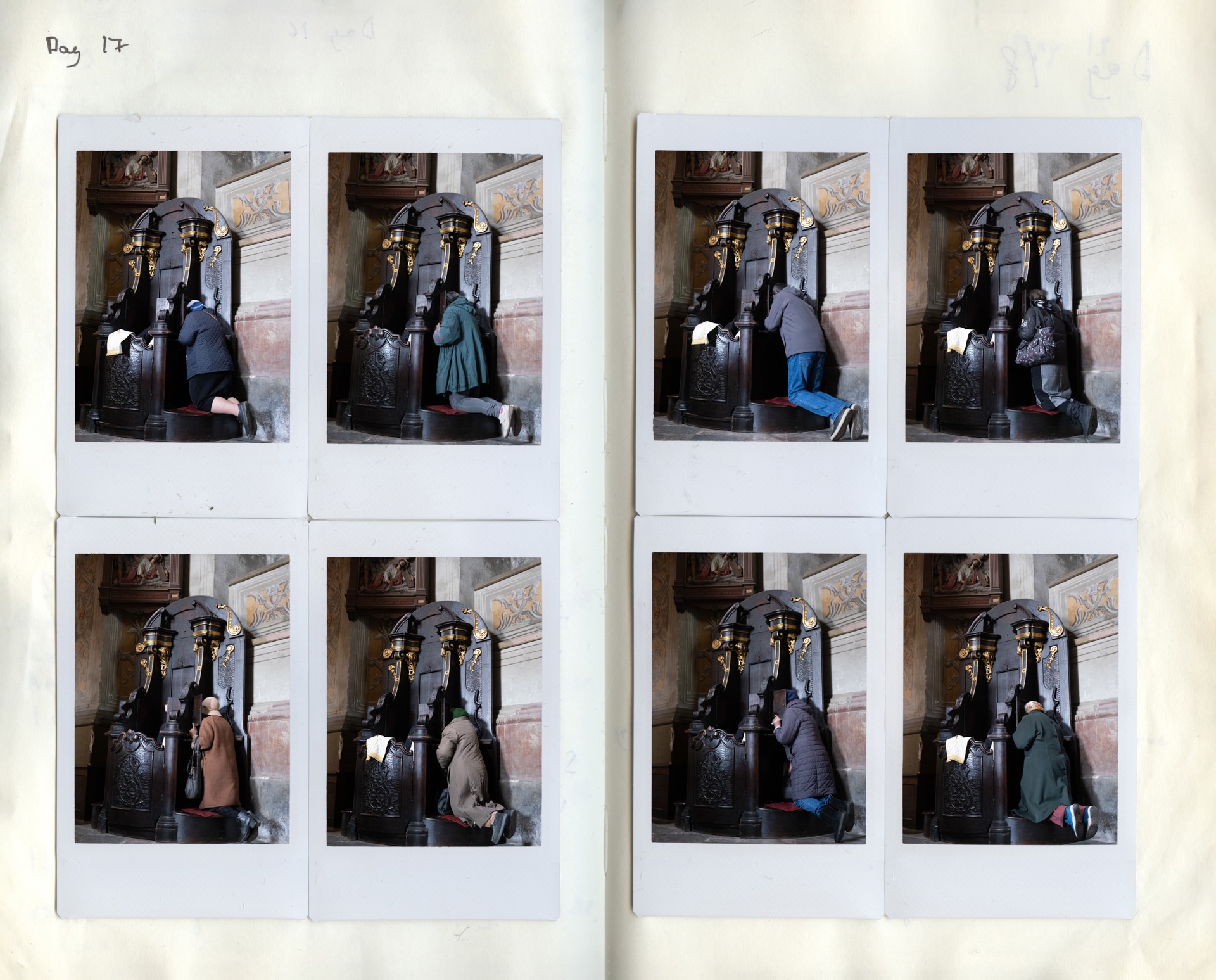
— I started creating the project in a diary format intuitively. I had long wanted to create a photobook with Instax prints and notes, but only on the level of an unformed idea.
When the full-scale invasion began, I packed my things and left Kharkiv for western Ukraine. Every day, I faced the challenge of how to properly structure the book. Usually, when creating a photobook, a lot of attention is paid to the selection of photographs and their sequence. With the project “100 Days of War,” I didn't have that privilege—I simply took photos or made entries every day. The photobook turned out less thought-out, but it is a document of a certain era that has already ended—very honest and, at the same time, naive.
Initially, I planned for at least one photograph and text every day. But everything started to change over time. There are pages in the book with almost no text, only photographs, and vice versa. There are days with many photographs. The themes also change throughout the story—sometimes it's something very personal and intimate, about family and experiences, sometimes, conversely, it's something very general. I simply wrote down my thoughts and placed the photographs in the notebook.
— How successful a medium is photography for telling the story of the war? Is it possible to show war without the front line?
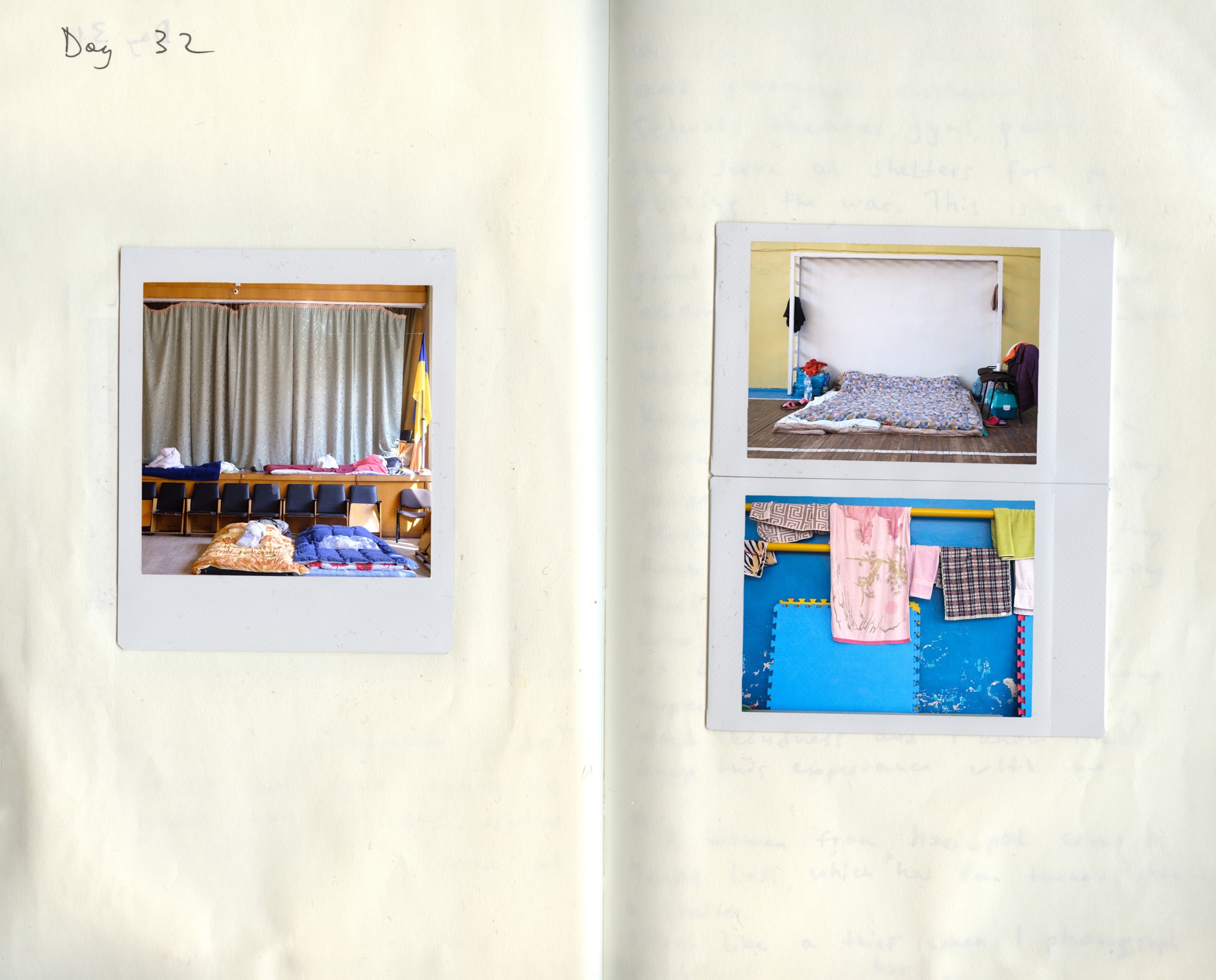
— Photography is an important medium for documenting the war, but at the same time, it is very limited. Especially if it's done by photographers who come to Ukraine for a few days, photograph the way they are used to shooting wars, and then return.
Recently, IST Publishing released Susan Sontag's book Regarding the Pain of Others, where she reflects on war photography. In it, Sontag says that there are so many images of wars that people are becoming insensitive to them. It is difficult for me to say how the war should be covered in the media, and I certainly wouldn't tell anyone how to shoot it. Everyone must find their own path and do what they feel. I felt that I wanted to focus not on the front but on a personal story. And since I felt a certain limitation of photography as a language (or my own inability to express myself in that language), I added words.

— Please tell us, how did the process of selecting frames for the book take place? Were there any frames you considered technically imperfect but became key due to their semantic weight?
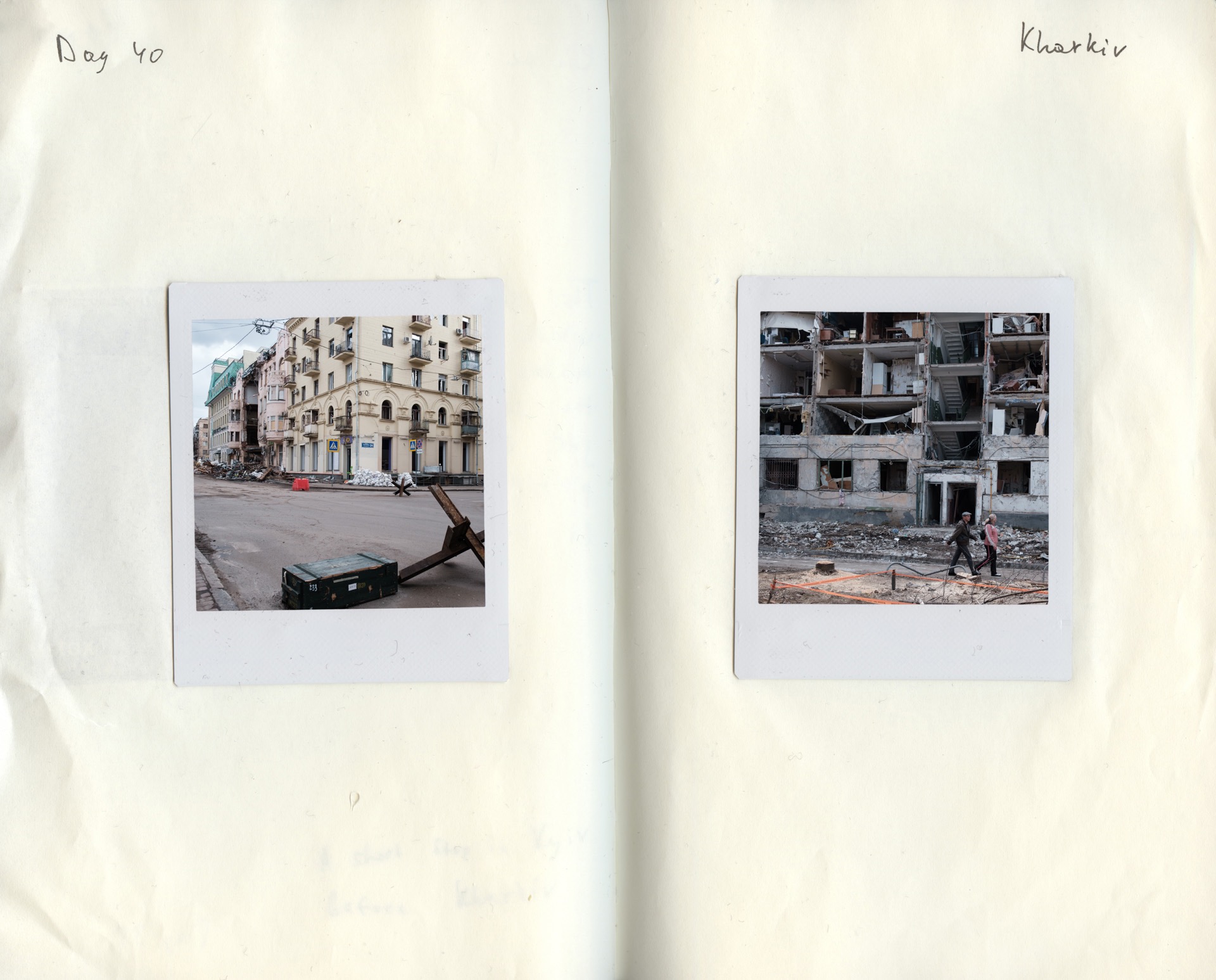
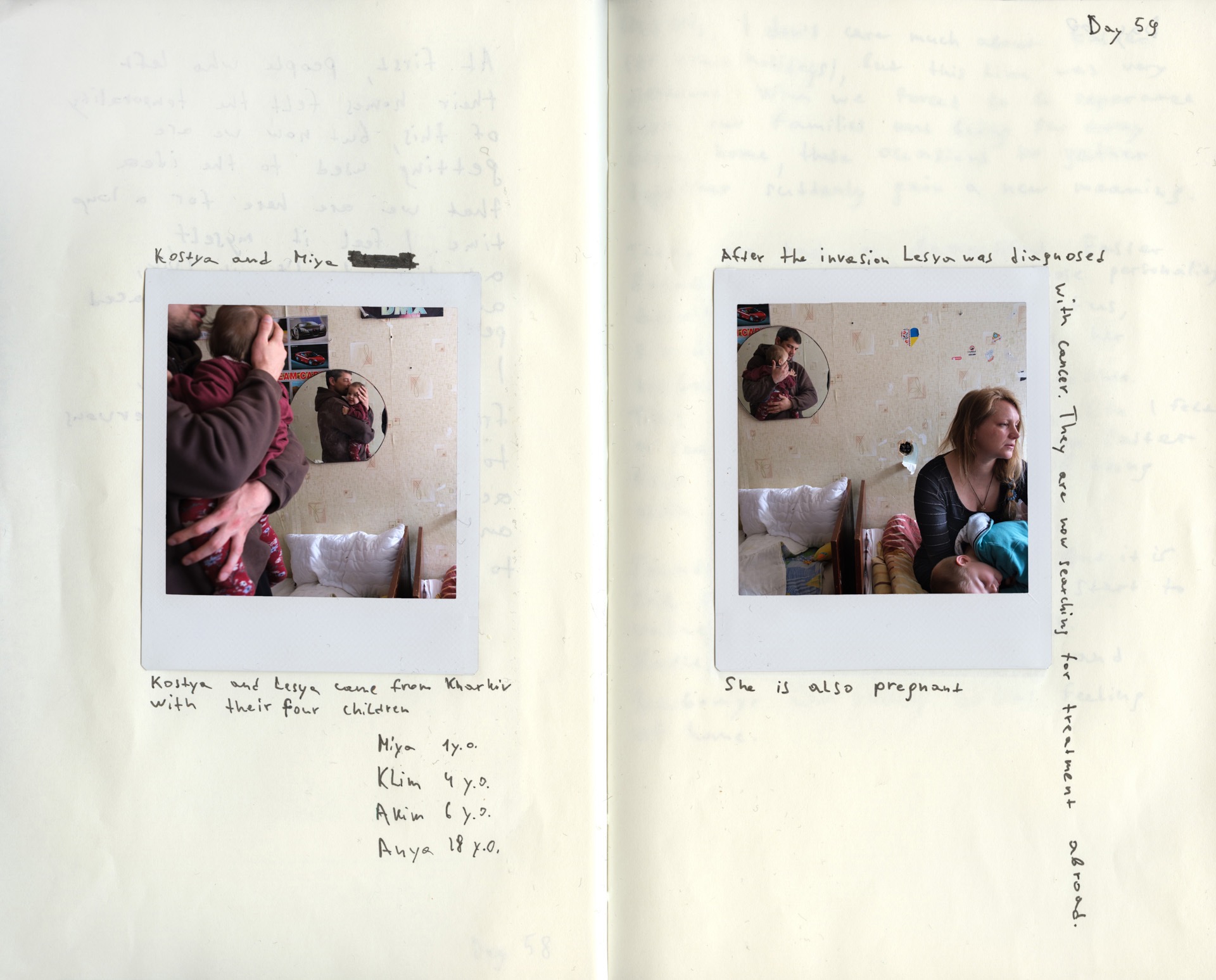
— If I may put it this way, photography is not the most important element in this book. I occasionally shot with a mobile phone, and sometimes such quick mobile photographs conveyed the emotion more than those shot more thoughtfully with a camera. I had many difficult decisions while working on the project. In addition to everything else, the photographs in this book are very small. “100 Days of War” cannot be called a classic photobook. However, that is precisely why I like it, because it shows what we all experienced then in a more personal way.
— Today, the photobook is a separate art form. Why did you choose the format of a physical publication and not, for example, a multimedia exhibition or a digital project?
— Over the past few years, I have deeply immersed myself in the world of photobooks. My first photobook, NA4JOPM8, was published in 2021 by IST Publishing. The book is named after the hard drive where my archive was stored. Due to a technical failure, many shots were corrupted or “stitched together” by an algorithm. Recently, the MOKSOP museum (Museum of the Kharkiv School of Photography) published my next book—The Mayor’s Funeral. The book is made in a leporello format—a fold-out book that presents a panorama of the queue of people who came to say goodbye to the mayor of Kharkiv. The book also shows a layer of Kharkiv life that no longer exists.
“100 Days of War” was one of many projects I was working on and didn't know if I would manage to complete it as a photobook. But it was conceived that way and could not have looked otherwise, because the book's format was dictated by the very fact that the project's body was a notebook with photographs glued into it. However, a project should not exist in only one form. For example, a photo exhibition based on this book recently opened in Paris. The exhibition was very difficult to organize, because we had to “transfer to the walls” not only the photographs but also the texts. And also because the book has a chronology and a certain narrative that cannot be transferred into the exhibition in the format that existed in the original. We found a successful way to transpose the book into space: we abandoned the chronology, made certain accents, and diversified the format of the photographs. But the exhibition will not replace the book; it exists in dialogue with it.

One of the advantages of the book format is that it allows photographs to escape the temporary space where most photographs shot for news end up. We see these pictures in the media, and then they disappear from view. With the exception of photographs that have already become iconic. I would very much like my book to be cheaper and more accessible, but that is currently impossible in this photobook market.
— Why was the book published by the French publisher André Frère Éditions?
— I believe this book is not for the Ukrainian market, and I wanted to distribute it abroad. As for the publisher André Frère Éditions—I have simply loved their books for a very long time. I was lucky that they liked my diary and decided to print it. The process, however, was very protracted. Other publishers came to me with proposals to publish the book, but I wanted it to be published specifically by André Frère Éditions. This publisher covers only the European market, and so that the book could also be purchased in the US, we found another publisher there—Fall Line Press.
— The book contains many notes from your notebook. What was primary for you—the word or the visual image? Can they exist separately in this project?
— The visual is always more important to me. I don't think I worked consciously with the word. “100 Days of War” is not the kind of book I could sit, think, and write about for hours or weeks. The texts in the diary were always spontaneous.
When we presented the project at the exhibition, we displayed some photographs and texts separately. That is, they can be separated from each other. I think this project can exist in different forms. However, the book is holistic, with a ratio of word to photograph that is appropriate for me.
— What in your diary turned out to be stronger than the image? Is there a phrase that became a tuning fork for the entire project for you?
— In the book, I wrote that the first days of the full-scale Russian invasion united us, Ukrainians. I am glad that this layer of our history is documented in my book exactly like that.
— Is the book “100 Days of War” more of a document or your personal reflection on the events of that time?
— My very personal experience was superimposed on a critical period for Ukraine. The first photograph is my bed in Kharkiv and the caption “Leaving home.” Next to the bed is Brassaï's book Conversations with Picasso. I read it up to the point where Picasso describes how he lived in Paris during the Nazi occupation of the city. I was reflecting then on how an artist should behave during a war. A few days later, the full-scale war began in Ukraine. I never managed to finish that book.

— The photobook consists of instant photos. Why did you choose this particular technique? How did it affect the visual language of the book?
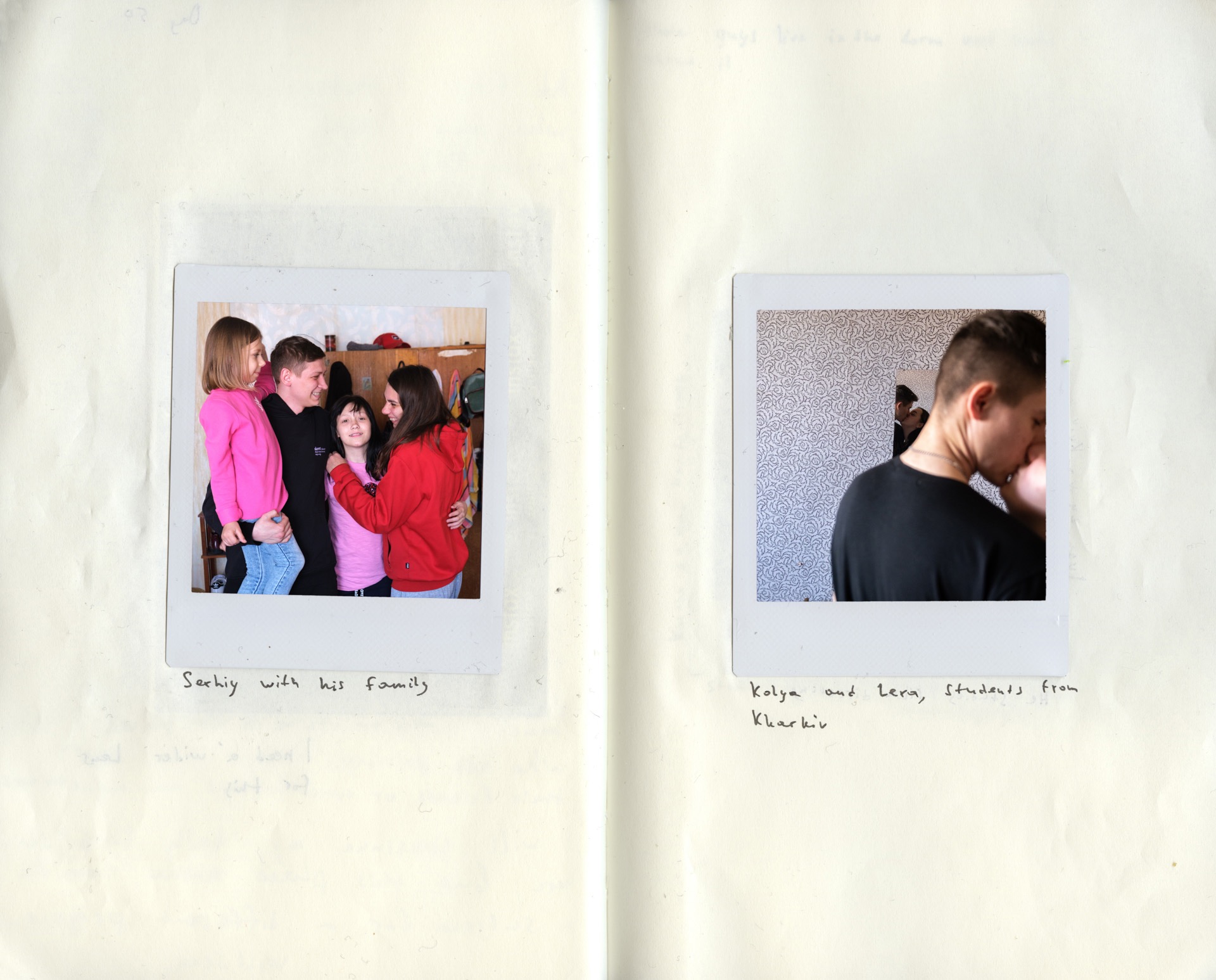
— It was important to me that the photo format allowed them to be placed in the notebook. That's all I needed. In the first days of the full-scale invasion, photo shops in Lviv, where I had moved from Kharkiv, were not working, and I couldn't print photographs. However, I had two Instax camera-printers—I could print any photograph, even from a mobile phone. For example, I took the first photograph with my phone—just a note, a bad photograph, but it became important to me. Over time, when shops opened and printing photographs became available again, I still decided to continue the diary in the same way. I wanted the book to be visually cohesive.
— Which photographs in the book “100 Days of War” are the warmest for you, and which are the most painful?
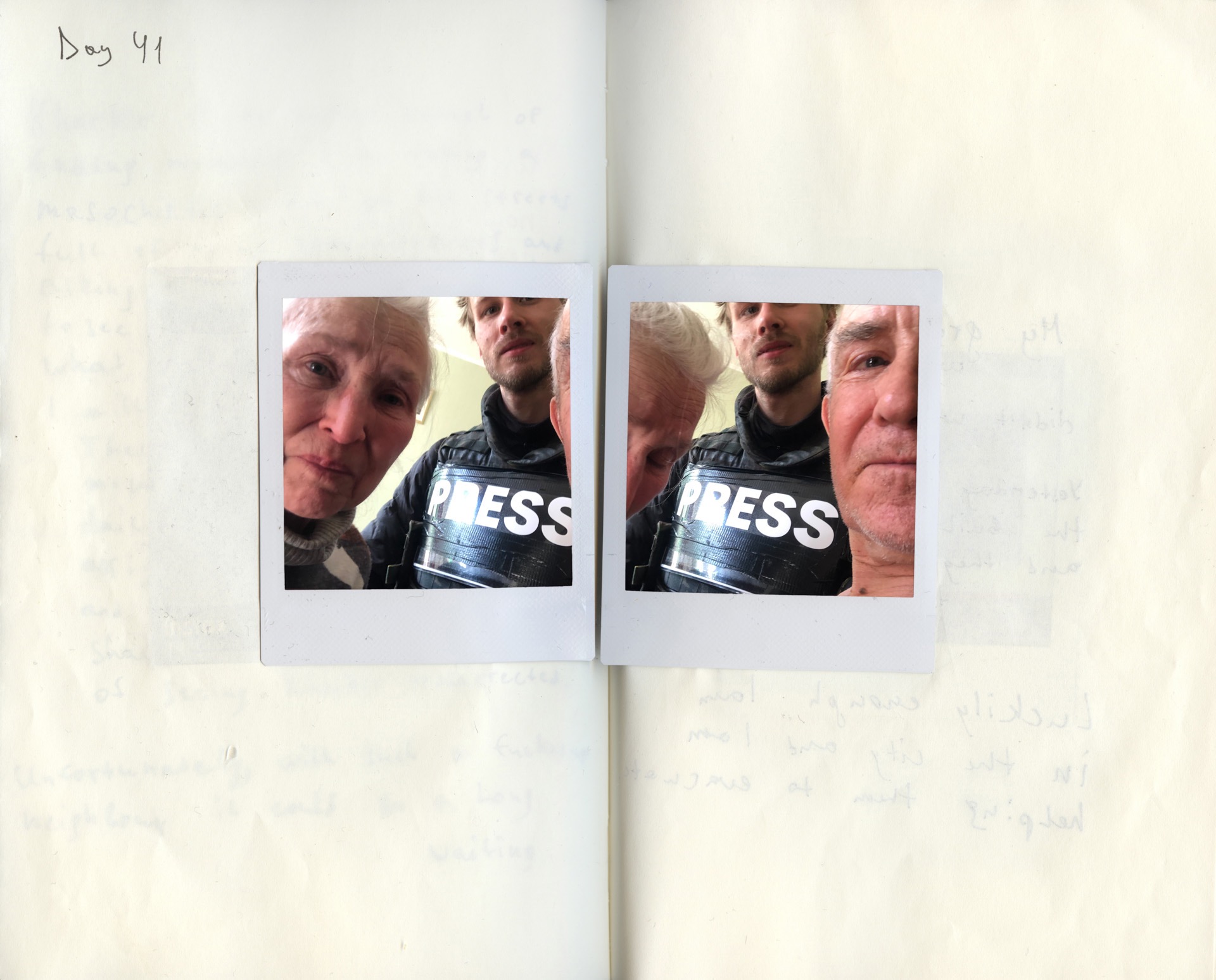
— There is a spread in the book whose photographs are the warmest and most painful for me at the same time. On the 41st day of the full-scale Russian-Ukrainian war, I came to Kharkiv. It was very painful for me to look at what the Russian Federation had done to my life and my past. I walked through the streets of my city, which I love and know so well, and each of them is associated with moments of my life. I walked, for example, past a bar where I once had a date, and today that establishment is destroyed because of the war. And there are many such places, unfortunately. I went to visit my grandparents. I took a selfie with them not for the book, but for my mother, who wanted to see her parents. Now, these are some of the most important photographs in the book for me.
— What do you want the viewer in Europe or the US to feel when closing the last page of “100 Days of War”?
— I would like the book's viewers not to forget what Ukraine is going through now. People in the world continue to live their lives: it is difficult to follow what is happening far away from you every day. It seems to me that people are tired of the news. I very much hope that the book format, which goes beyond news photography, will help intensify interest in the lives of people in Ukraine. After all, “100 Days of War” is a very personal story that everyone can relate to.
The photobook “100 Days of War” by Ihor Chekachkov can be purchased via this link — https://www.andrefrereditions.com/en/books/to-be-released/100-days-of-war/

Ihor Chekachkov — Ukrainian photographer and lecturer, founder of Chekachkov Photo Academy. He began his career in 2008 as a photojournalist, later focusing on art photography. In his practice, he explores the boundaries between public and private spaces, as well as the influence of digital technologies and algorithms on the image; following Russia's full-scale invasion, he works with themes of Ukrainian identity and “home.” His works have been published in National Geographic, The Guardian, Le Monde, Forbes, and other media; his projects have been presented at numerous exhibitions and festivals in Ukraine and abroad.
This material was created with the support of the British Council program “Creative Economy Grants.”
Credits:
Topic Researcher, Text Author: Katia Moskalyuk
Photo Editor: Olga Kovalova
Literary Editor: Yuliia Futei













.jpg)


