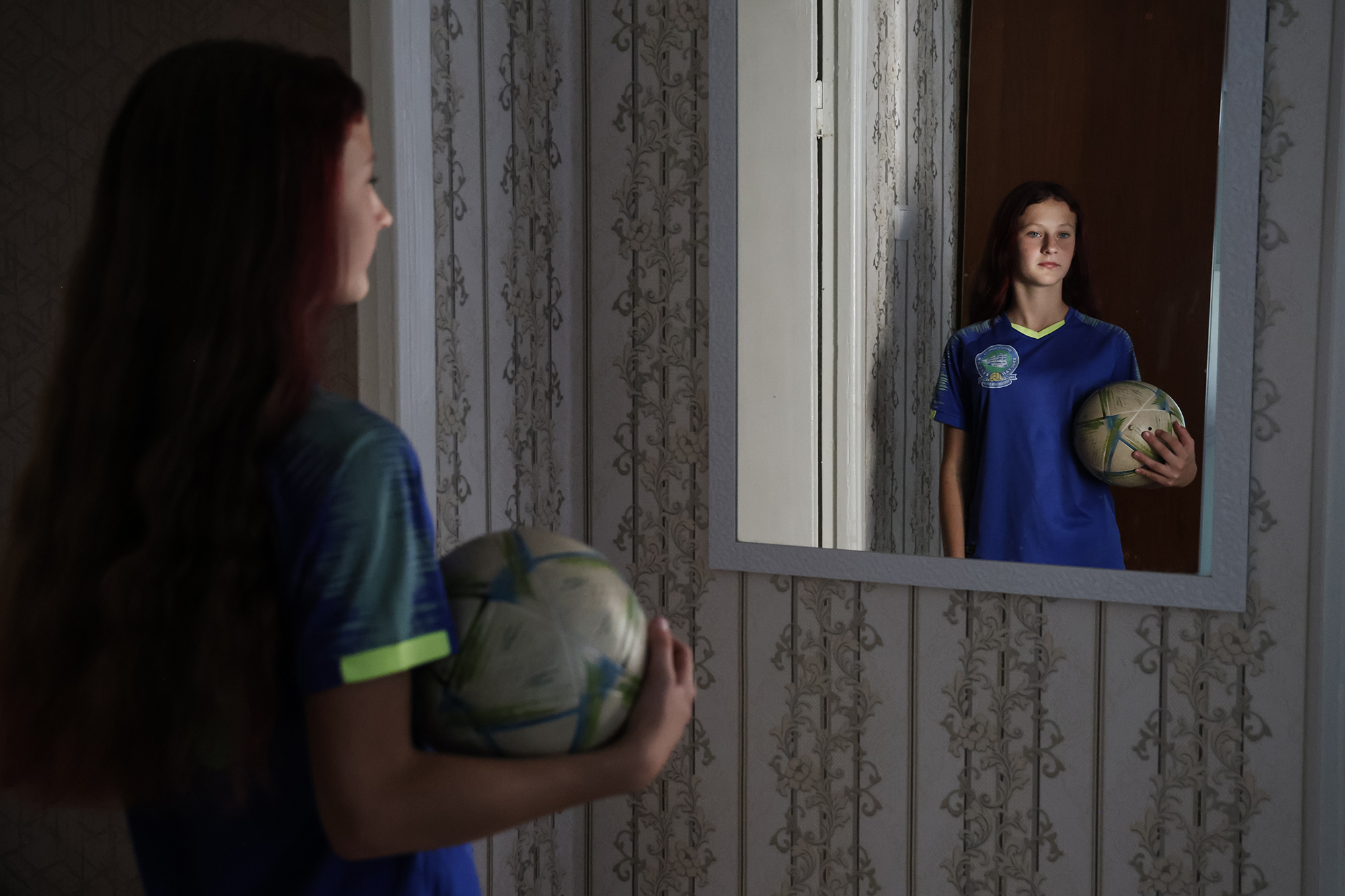
Suspilne News journalist and photographer Ivan Antypenko spent a year documenting the girls' football team "Krystal" from the children's and youth sports school in Kherson. The focus is on the story of how young female athletes continue to pursue their favorite activity even during the war.
Ivan Antypenko shared how he met the members of the "Krystal" team, in which cities he had to photograph them, and why football helps the girls and their families maintain humanity and faith in the future.
Girls and Football
In 2024 in Kherson, I witnessed a surreal scene: a girls' football team was training on the sports ground, while explosions—artillery fire—could be heard from a distance. Drones were already flying over the coastal part of Kherson and reaching deeper into the city. I saw these girls from the "Krystal" team, who played football despite all the threats, and I decided to tell their story in a photo essay.
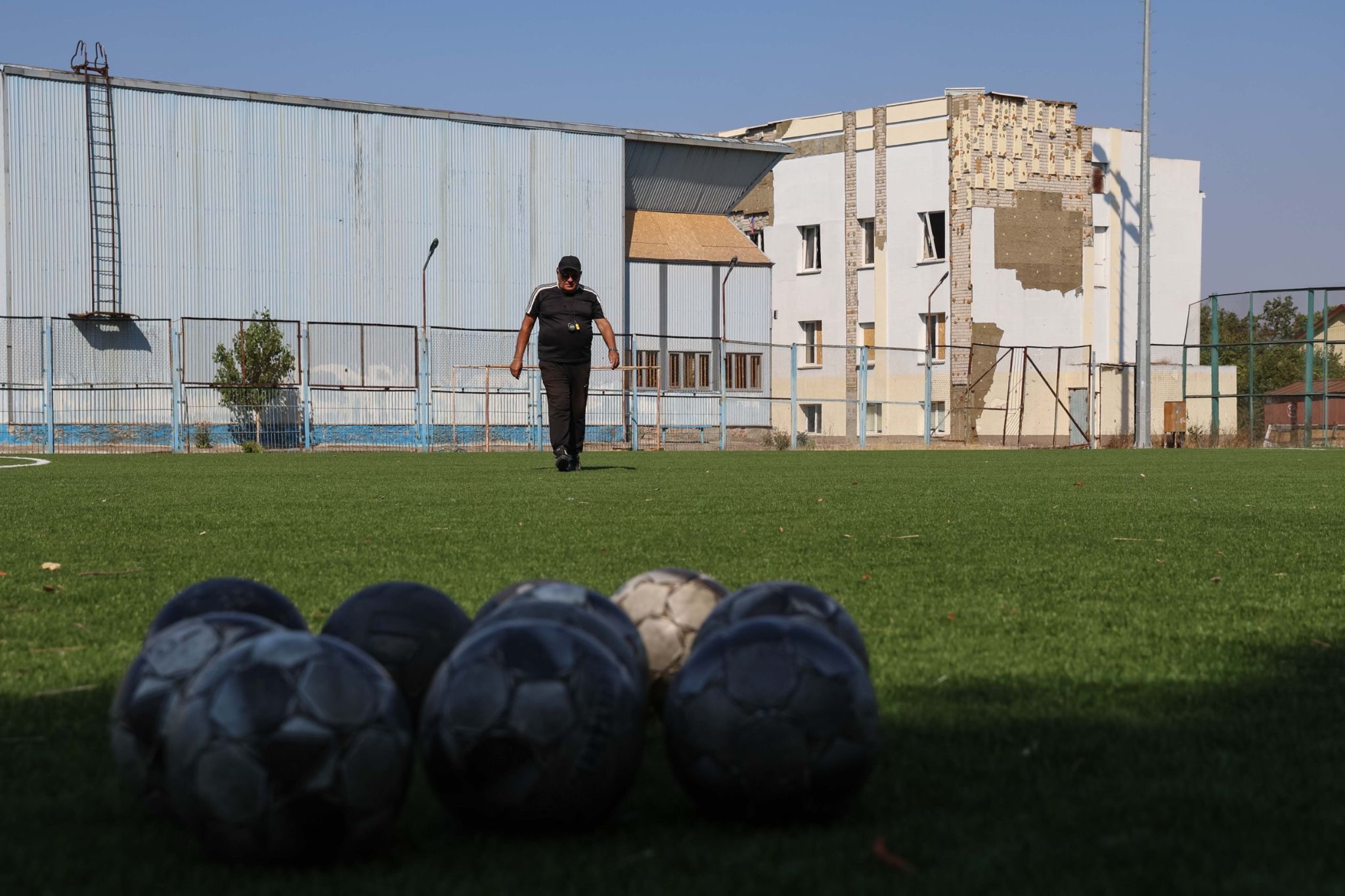
I met the team's coach, Viacheslav Rol, whom the girls simply call Anatoliiovych. The coach is strict and monitors discipline, but the footballers know for certain that Viacheslav Anatoliiovych is kind. After a victory, he takes the entire team to McDonald's and buys them everything they want.
I maintained contact with Viacheslav Rol, photographing training sessions when possible, but I actively started working on the photo essay in 2025. I filmed home training sessions and matches at a tournament in Odesa, talked to the girls and their families, and traveled to see them in Mykolaiv, Fastiv, Lviv, Busk, and, of course, Kherson.

Despite the fact that many team members no longer live in their native Kherson, they proudly wear the "Krystal" team jersey and represent it in matches. It was important for me to photograph the girls in informal settings, at their homes, to tell about their parents' support for their daughters' passion, and to show that they take them to competitions even despite the danger. Krystal’s struggle for victory in the Odesa tournament matches became the backdrop onto which I threaded the stories of the girls from the team.

In Odesa, I met all the members of "Krystal" and their families. For the project, I decided to photograph the girls from the older group, as they could speak a bit more deeply about their passion and the conditions they have to live in. The coach introduced me to everyone on the team. I talked about my passion for football, as I have watched matches and rooted for teams since childhood, and about the upcoming photo project. Moreover, I myself am originally from Kherson, so it was easy for me, the girls, and their families to find common ground. It was very important for me to build trusting relationships with the footballers' parents. The project includes the stories of seven girls from "Krystal."
Football and War
Today in Ukraine, we all live in very different realities. For the "Krystal" team, the opponents are not only other teams but also the conditions in which they live and train. Driving the highway from Kherson to Mykolaiv for a competition is already a struggle. Gathering for training after a guided aerial bomb raid requires effort and courage. Every day, the team has to make difficult choices to adhere to a training routine that is ordinary for others.
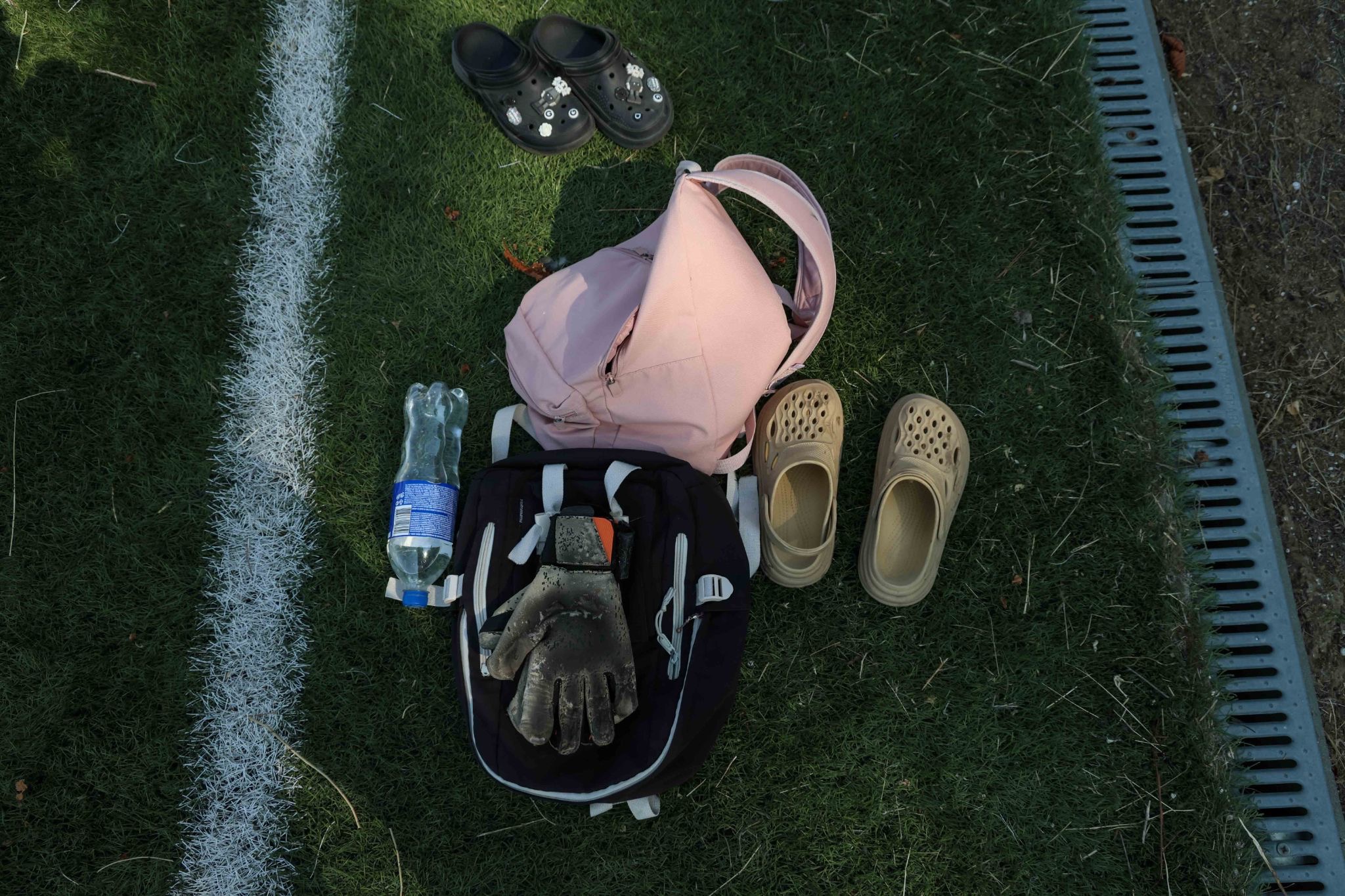
It was important for me to talk to the team members, to see how their ordinary days and competition days went. At that time, they were 13–14 years old. We walked together, drank tea, had lunch, and simply talked about many different topics. For example, in Kherson, I went with the girls Amina and Nastia to their school, which the Russians had bombed. The school building was almost completely destroyed by an aerial bomb. Incidentally, I also attended this school at one point—I studied there for one semester in the eleventh grade.
I visited Nataliia and her parents in Fastiv. We traveled together to Kyiv, where Uliana joined us—a girl who lives with her family in Kherson. I wanted the project to include more girls currently living in Kherson, as "Krystal" is the team of this city.
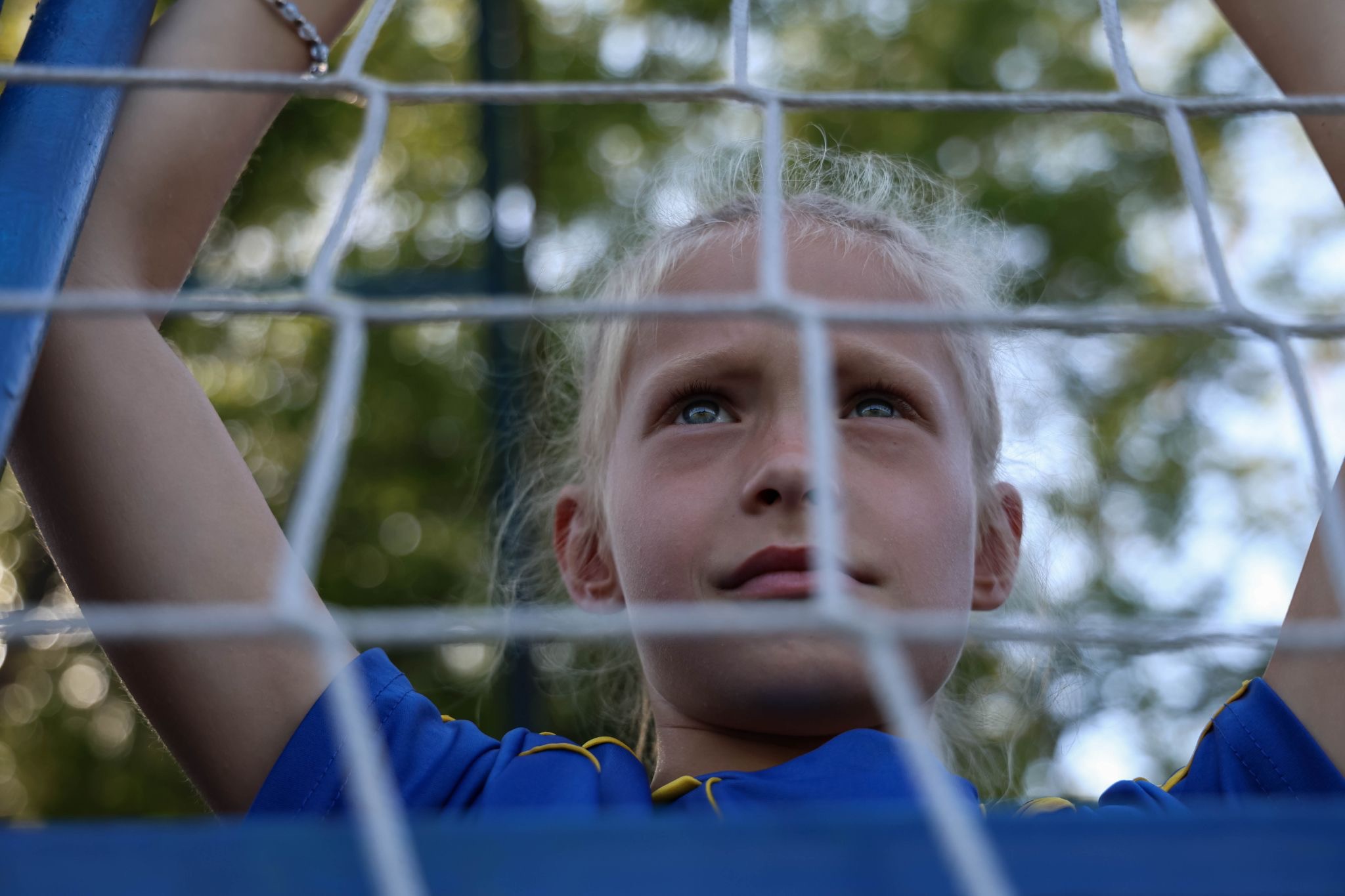
With Yeva, who now lives with her parents in Lviv, we traveled together to a match in the small town of Busk in western Ukraine. Incidentally, when I was in Lviv recently, Yeva's parents invited me over. We continue to communicate with many of the girls and their families even after shooting the project. When I visit Kherson, I make sure to go to their training sessions.
I asked the girls when they decided to play football and if their parents supported them. I was interested in how the male footballers treat them, as the girls often have to train with them: the girls' team often lacks players. I wanted to debunk stereotypes that football is not a women's sport and show that our girls are achieving more and more success in it.
Routine and War
I also wrote text for the photo project about the "Krystal" girls' football team. It is important to explain the context to the viewers and tell the girls' stories. I included shots in the project that serve as war markers—several locations in Kherson with destroyed buildings, and traces of shelling on the football field. However, there is a lot of sun and light in the photographs—the story is not only about the war but also about youth and hope. The girls often smile and hope to achieve success in sports and in life generally.

The photograph of the girls hugging before the game is important to me. This gesture is about support and team unity. I like the photograph where Nastia holds a medal and laughs genuinely. A frame I decided to definitely add to the series is where Amina curls her hair before the game, because you have to be fully armed at the tournament. Perhaps it is stereotypical toward girls, but it holds a lot of tenderness and sincerity.
When Russia’s full-scale war began, the girls were only 10–11 years old. Many no longer remember the details of the first day of the Russian invasion. For instance, Amina, who still lives in Kherson, said that she was a little scared at first, but then not so much. She added that she has loved fireworks and pyrotechnics since childhood. My colleagues and I debated whether to keep Amina's words in the material, because for many, it might be a trigger. However, these are Amina’s words, and she has the right to say them—it is her way of escaping the sounds of shelling she hears every day in her native Kherson.
War and Home
The war, of course, has affected the girls and changed them. Although they often smile, I see longing in their eyes—they miss normal life. The girls simply want to go to practice, not hide behind trees from drones; they want to walk with friends until late, not rush for the last bus at four in the afternoon, because public transport no longer runs in Kherson later than that. Furthermore, cinemas, cultural centers, or theaters do not operate in this city—its entire life takes place in shelters. The girls are athletic and active—they want to go to practice, not hide in basements from constant shelling.
At the same time, the girls who live with their parents in relatively safer Ukrainian cities greatly miss their friends and teammates who remained in Kherson. The girls correspond and communicate on social media, but they desperately want to return home, although they understand that it is currently very dangerous. When I met with members of the "Krystal" team who do not currently live in Kherson, all our conversations ultimately revolved around memories of their native city.

I noticed that the girls do not talk about the war or shelling during practice or before matches. Only when we were traveling from the Odesa tournament to Kherson did everyone actively monitor the situation in the city, call their parents, and ask how safe the journey was. As "Krystal" team coach Viacheslav Rol noted, football is also a way to detach from the events in the city and avoid thinking about the war.
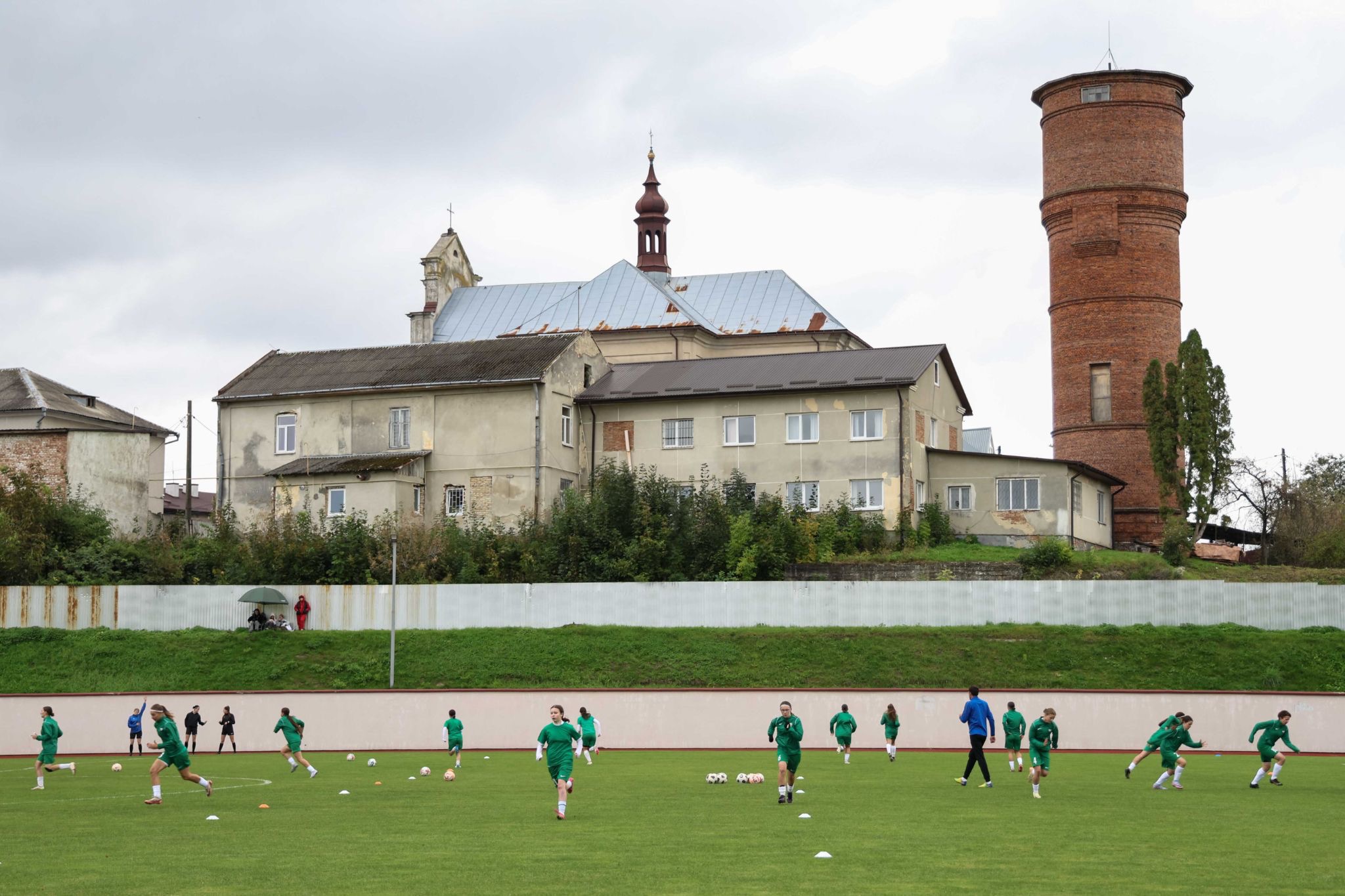
Despite the constant shelling of Kherson, the distance, and everything they have endured, the girls remain the "Krystal" team—strong and unified. In the photo project, I aimed to capture these feelings of closeness and mutual support, which the girls so carefully preserve amid the war.
Ivan Antypenko — Ukrainian journalist and photographer for Suspilne News, covering the Russian-Ukrainian war.
This material was created with the support of the British Council program “Creative Economy Grants.”
Material Prepared by:
Topic Researcher, Text Author: Katia Moskalyuk
Photo Editor: Vladyslav Krasnoshchok
Literary Editor: Yuliia Futei
.png)