%20(750%20x%20360%20%D0%BF%D1%96%D0%BA%D1%81.)%20(2000%20x%20800%20%D0%BF%D1%96%D0%BA%D1%81.)%20(4).png)
The book "Eyes of War" is a documentary photo project by Ukrainian photographers Kostyantyn and Vlada Liberov, released with the support of PUMB Bank. The publication includes 280 of the most important photographs from the front lines and frontline territories, taken from 2022 to 2025. The book depicts combat operations, the pain of loss, and hope. In addition to the photographs, the collection includes texts by Vlada Liberova that capture the reality and emotional experience of the war. In the spring of 2026, the project was presented to an international audience at the prestigious London Book Fair, and by the beginning of summer, the book was available for public sale.
Kostyantyn and Vlada Liberov share which photographs the photo book "Eyes of War" would be incomplete without, how documentary photography can be honest without compromising human dignity, and why hope is, after all, a choice everyone makes.
— You have emphasized multiple times that "Eyes of War" is not about you as observers, but about the war itself looking at the viewer. When exactly were this metaphor and title for the book born?
I think everyone involved in military actions or working in any zone where disaster can strike, where you can be killed or maimed, always feels the birth of an internal dialogue where you start explaining to yourself why you won't die today. Because you are interacting with something living, and this living thing has certain rules. If you follow these rules—and in this case, I am speaking of war as a phenomenon, war as something with its own will or its own thinking. And at some point, you catch yourself thinking that you are bargaining with the war: if I don't do this and that, then I will be fine. And then you feel the war looking at you, seeing how you keep your promise. In a moment of general danger, I physically felt that the war has its own eyes and it is looking at me. The most interesting thing is that the war doesn't have just one set of eyes; it looks at you through the eyes of other people, through the eyes of the military, through the eyes of civilians, children, the wounded. At some point, it even seems to you that cities have their own eyes and they are looking at you.
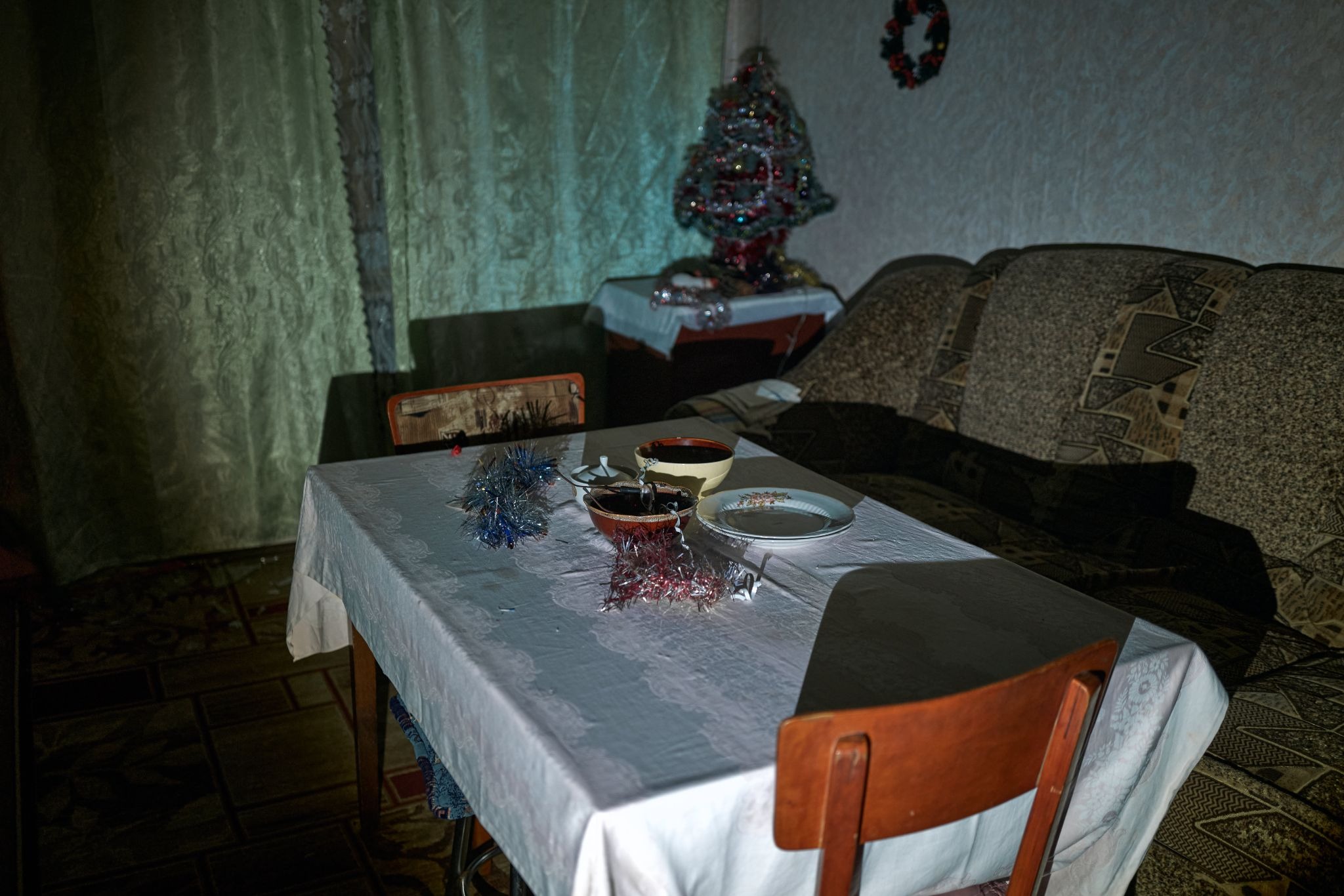
One of the hardest shots that personally broke my heart is a shot Vlada took in Pokrovsk when we were working with volunteers, evacuating civilians based on requests from a very dangerous district. We arrived at one of the requests and entered the apartment. The apartment was completely empty, but a table was set for Christmas. There was a tablecloth, beautiful empty plates, some tinsel. This shot is in our "Hope" chapter. At that moment, I felt that the city of Pokrovsk was looking at you with sadness, that this was its last Christmas. The city that gave birth to "Shchedryk" and gifted it to the whole world—its last Christmas had come.
This book is merely a testament to the moments of events. We were nearby at the moment these events were taking place. So this title wasn't created in one specific moment; it was born gradually as we looked through thousands of photographs over the years of war.
We are almost absent from this book. There is, of course, the beginning in the first chapter, personal feelings about how it all started. For some photographs that especially pierced the heart, there are additional captions that convey my specific state in a certain period. There is what I consider a very personal chapter about Hero of Ukraine Dmytro Kotsiubailo, "Da Vinci," where there is indeed a lot of us and our thoughts. But even if you think about it that way, this chapter is also about how the war was looking at us.
— Since the full-scale Russian invasion, your photographs have been published by numerous media outlets, and you are active on social media. Why was there a need for a photo book specifically? When did you decide to create it?
Everything that lives on social media lives, essentially, for a day or two and then disappears in the flow of endless information that haunts us every day. Numerous media outlets do publish photos, but they perhaps live a few days longer than a social media post. One of the ideas when we knew for sure we needed to make a book arose in 2023 when we held a massive exhibition at VDNG. It was called "Line of Contact." And at that moment, I felt that when a photograph is physically printed, the viewer can interact with it; it looks at the viewer in a completely different way, and the viewer treats the photograph differently. Even that exhibition, which stayed in a huge pavilion at VDNG for a month, left its mark. I can't say it was forgotten, but the memory of it wasn't as strong after a certain time.

A book is that very artifact that lives at home, lives on the bookshelf, and it is what remains for years. It is something you can take out at any moment, show, and interact with for a long time. It seems to me that every photographer strives for their photograph to live as long as possible. A book is exactly one of those artifacts that gives a photographer such an opportunity.
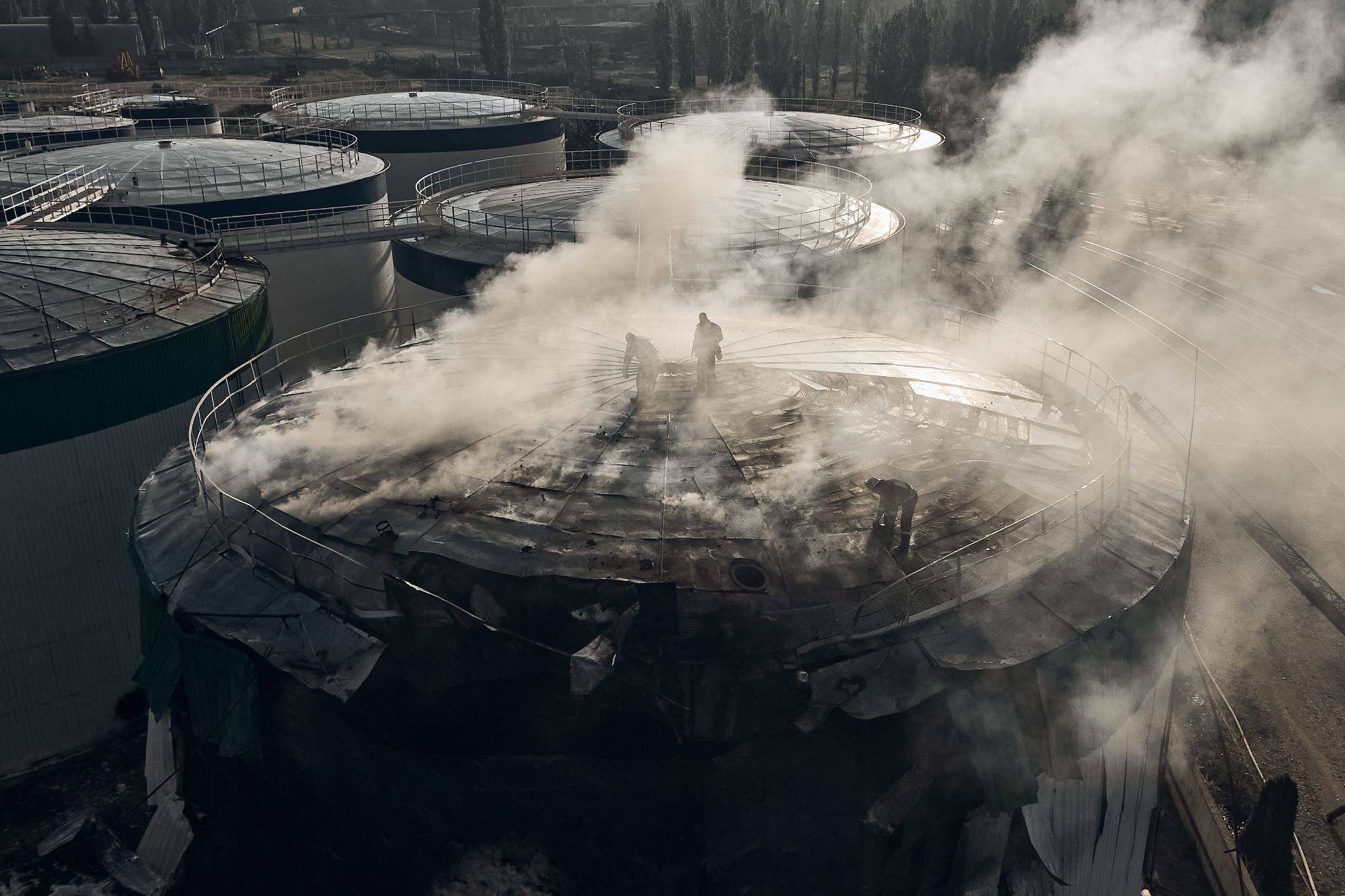
The moment of decision to create the book came when Vlada and I realized it was no longer possible to shoot the way we used to. The war had changed completely, and any logistics became almost impossible. In such moments, you realize your archive is ready. When we started working on the book, we immediately created the "New War" section. At some point during the layout preparation, we realized it wasn't complete. But we had the chance to shoot very important shots for this section: the combat launch of "Flamingo" missiles onto the territory of the Russian Federation and the launch of drones flying to destroy Russian oil refineries. These shots created the feeling that we were indeed able to capture and show all aspects of this horrific war right now, planning the final launch of this project for June.
— There are 280 photographs in the book, but over these years you have taken hundreds of thousands of shots. By what criteria did you choose the photographs for the photo book? Were there many discussions and versions of the final layout?
My combined archive with Vlada at the time of layout preparation consisted of about 100,000 photographs. Over about a month, I reviewed almost the entire archive and selected a few thousand photographs from it. These few thousand became the foundation with which we began working on the layout. There were many truly good photographs that we rejected. There were many photographs that were successful on social media and became our hallmarks, which we also rejected. Essentially, there was only one criterion: does this photograph scream pain, and can this photograph explain to the viewer what is happening in it without a caption.
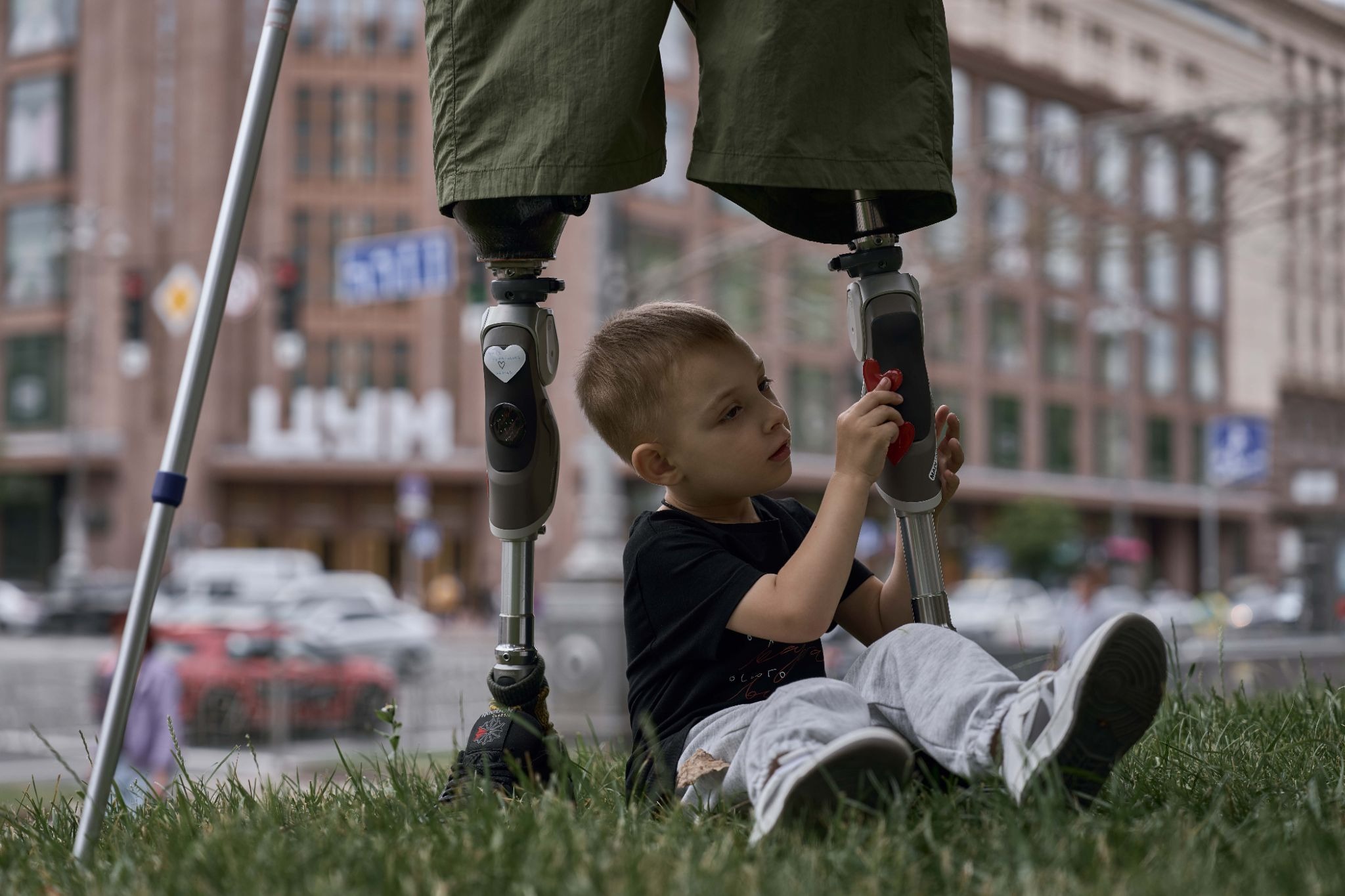
It all started with a search for the best photographs, but at some point, I realized we didn't want a hit parade of the best shots. Each photograph answers the question of whether it is needed right here, in this section. It was important to us that every shot added to the narrative rather than repeating what had already been said. It was very difficult to choose military photographs, because every trip to the infantry at "zero" is always not just the photographs you brought back, but also an incredible amount of experiences and feelings that you personally lived through to make those shots.
It is very difficult for an author to select photographs, because what I felt at the moment of shooting and how difficult it was for me to make that shot constantly overlays. I believe Vlada and I are very lucky; we have a superpower—we work together and sometimes each of us can give a more objective assessment of a photograph than its author. We removed and returned photographs more than once; the layout changed until the very last moment. If I am not mistaken, the last photographs were added to the layout even after the final proofreading of all texts.
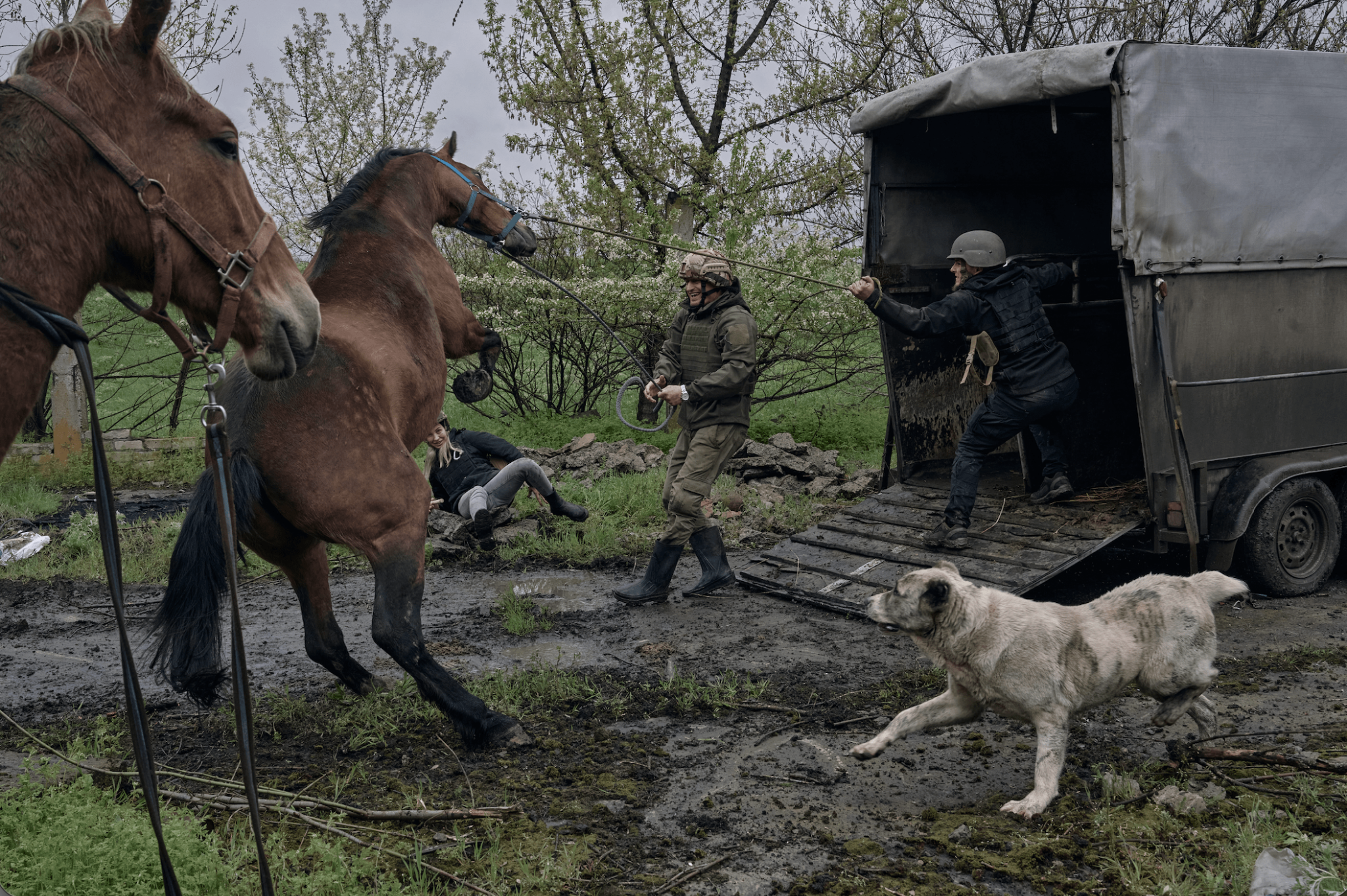
I am very proud that this 316-page book is not a collection of separate strong shots; it is, essentially, one story, and each photograph works not just on its own, but they all work together. That is, we didn't assemble this book from the best photographs; we assembled it from the photographs without which this story would be incomplete.
— The photographs in the book are grouped into thematic chapters. Could you please tell us why you chose these specific themes for the individual chapters of the book?
The first idea, of course, was to make a chronology of events, but unfortunately, we couldn't be in all the places important to this war. If we had made the book according to the chronological principle, we certainly would have had enough materials to assemble a complete panorama of the Ukrainian-Russian war. At the time we began working on the archive, I had already selected fifteen hundred photographs that we wanted to work with further. I uploaded them to a virtual board. In electronic form, all my photographs were mixed up, and I simply started sorting them. At some point, I realized that all the photographs were very tentatively divided into groups. These groups formed the basis of our chapters. Some photos are about the front, others about civilians, third about captivity, and so the structure gradually formed. It was very important for us to highlight a chapter about Dmytro "Da Vinci" Kotsiubailo, because this is one of the most painful moments for us in this entire war. I think not only for us, but perhaps for all of Ukraine. And it was very difficult to understand how to end this book, so the last chapter "Hope" is precisely about investigating what awaits us.
— Dmytro Kotsiubailo occupies a special place in your work and life. Why was it important to dedicate a separate block to him, and how do you want people flipping through this book in 10 or 20 years to remember him?
Dmytro Kotsiubailo occupies a special place in our understanding and our feeling of the war. I can't say we talked with him a lot; we saw each other up to five times. And it so happened that we were witnesses to his final days. We saw his last assault. We saw how he saved his favorite tank with his bare hands after shelling and extinguished it with a bottle of water when the entire tank crew was hiding behind trees, thinking it was about to explode. Unfortunately, we were witnesses to the shrapnel hitting him and him dying before our eyes at the moment he was still being given medical aid in that very basement.
Dmytro gave a sense of a general aura of immortality. When you are near him, you feel that absolutely anything is possible, that nothing will surely happen to you. He somehow created a dome that protected everyone around him. This is not a story about making a monument out of him. On the contrary, we wanted people to see a living person in this chapter—smiling, sincere, sometimes tired. A person who loved his people very much, and a person with an incredible aura that guarded everyone around. In 10 or 20 years, I want people to see in him not just a name from a textbook or a memorial plaque; I want them to see a living person. That is exactly what documentary photography exists for, it seems to me.
— Shooting military personnel returning from captivity, or families waiting, is an extraordinary concentration of pain. How exactly does the "Captivity" chapter return the society's focus to a reality that many in the rear try to forget? How do the shots from the "Captivity" chapter help understand the psychological transformation our released servicemen and civilians undergo, finding themselves in conditions of inhuman pressure?
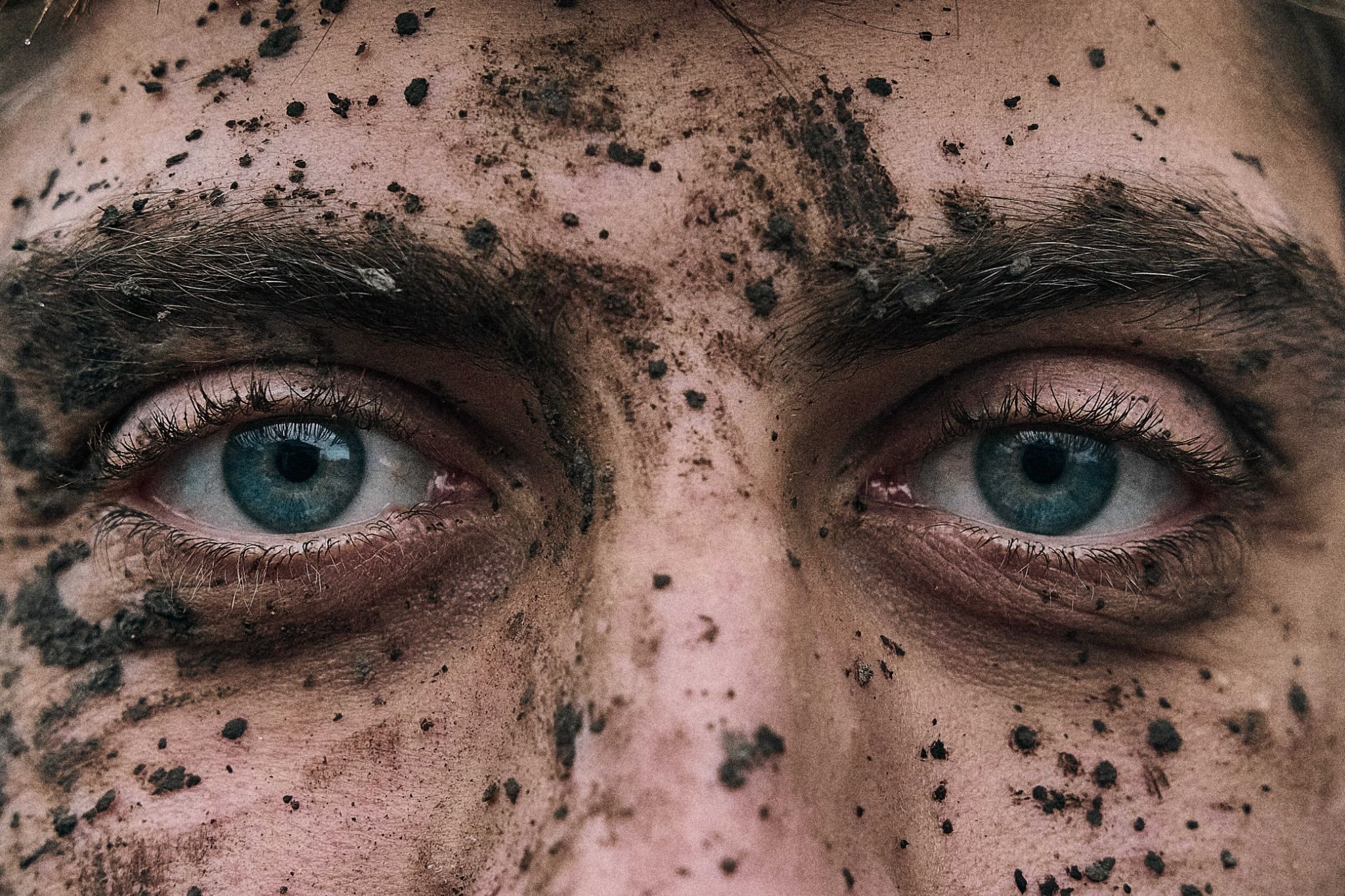
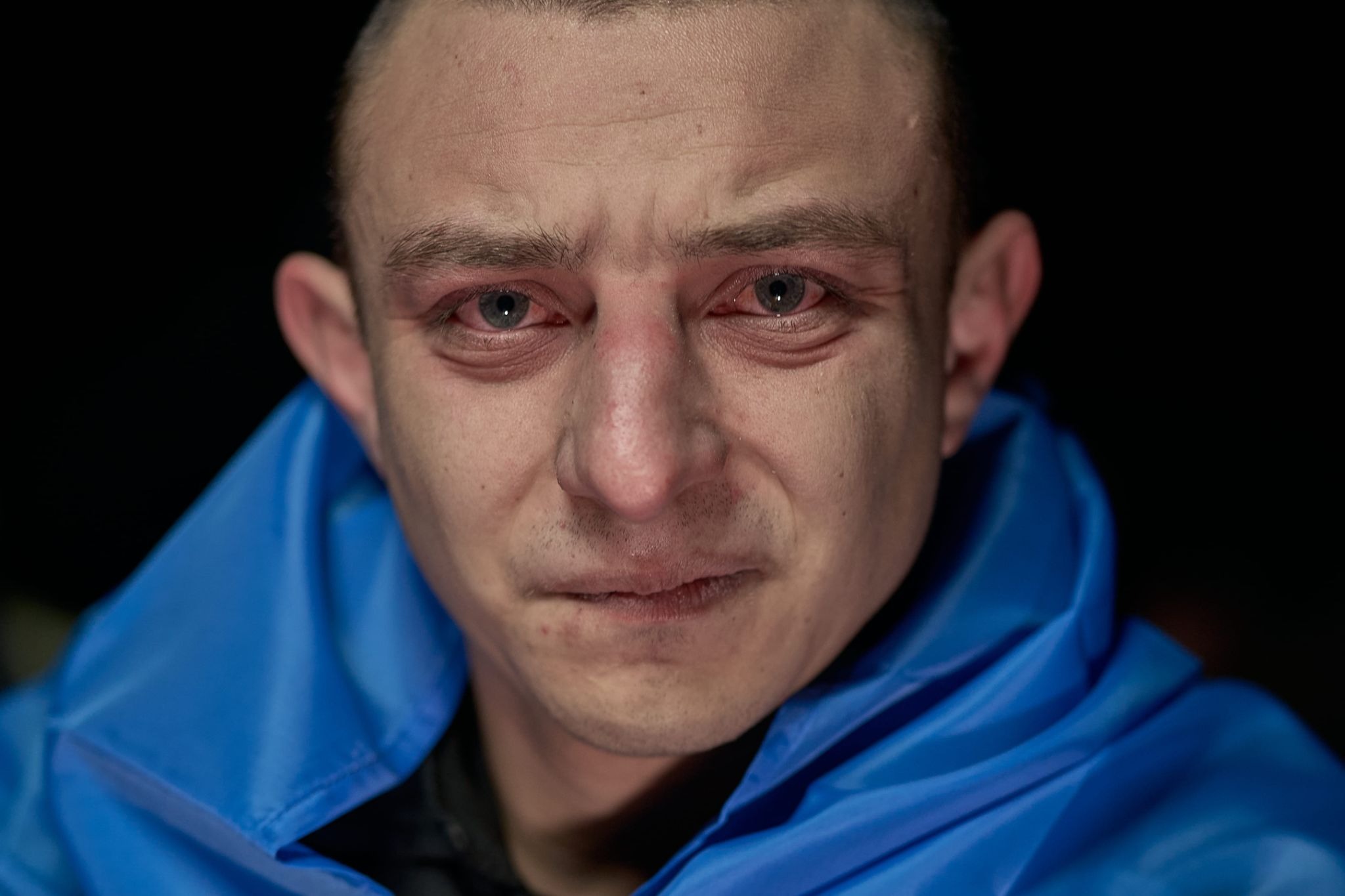
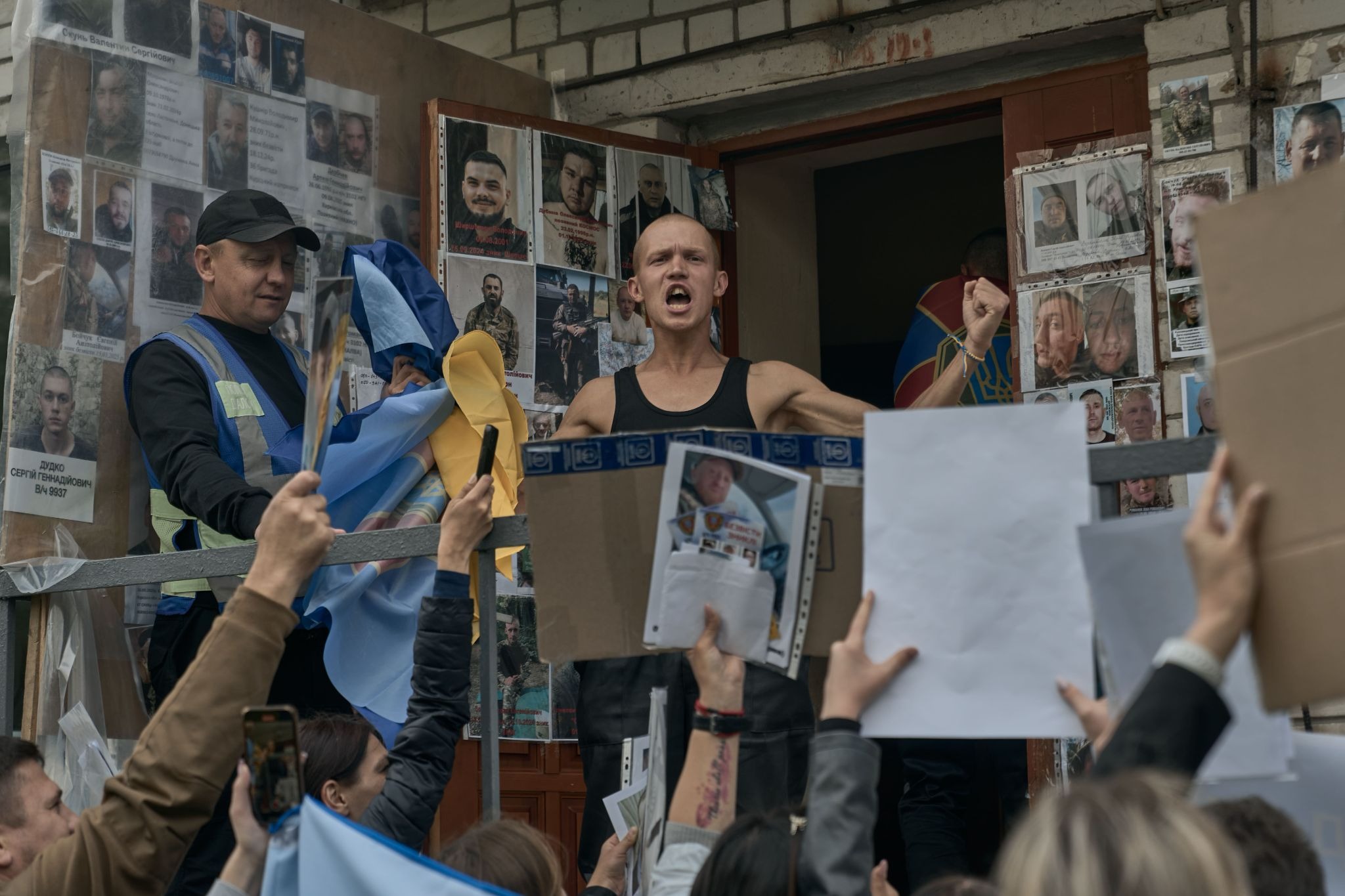
I can say that this chapter focuses more on the captivity itself. We cannot show people after captivity in a way that conveys everything that happened to them inside Russian prisons, but we can show what was done to them. What struck me most was how much people change, what happens to their eyes, how thin they arrive, and this sense of being broken. But at the same time, exchanges are some of the most pleasant memories that envelop us during the war. Seeing people return, seeing soldiers wrap themselves in the Ukrainian flag, seeing them kiss the ground. These are things that actually charge you up very much. It is very important that these photographs remain before people's eyes, because as long as the war continues and thousands of Ukrainians remain in captivity, if we stop talking about them, it will be another form of loss. I don't think a photograph can explain all the horror of captivity, but it can certainly remind us that behind the words "prisoner exchange" there are always specific people who went through what no one should ever have to experience.


— The book features many photos from hospitals and stabilization points. How do you artistically show injuries, amputations, and pain without violating the dignity of the soldier?
Actually, we never set a goal to make a beautiful photograph of someone else's pain. A person should not turn into an object. All photographs are about the sensation of pain, about trying to convey these moments between life and death that occur during the provision of first aid. It seems to me that we definitely succeeded in showing this with dignity and conveying the feeling of stabilization points.

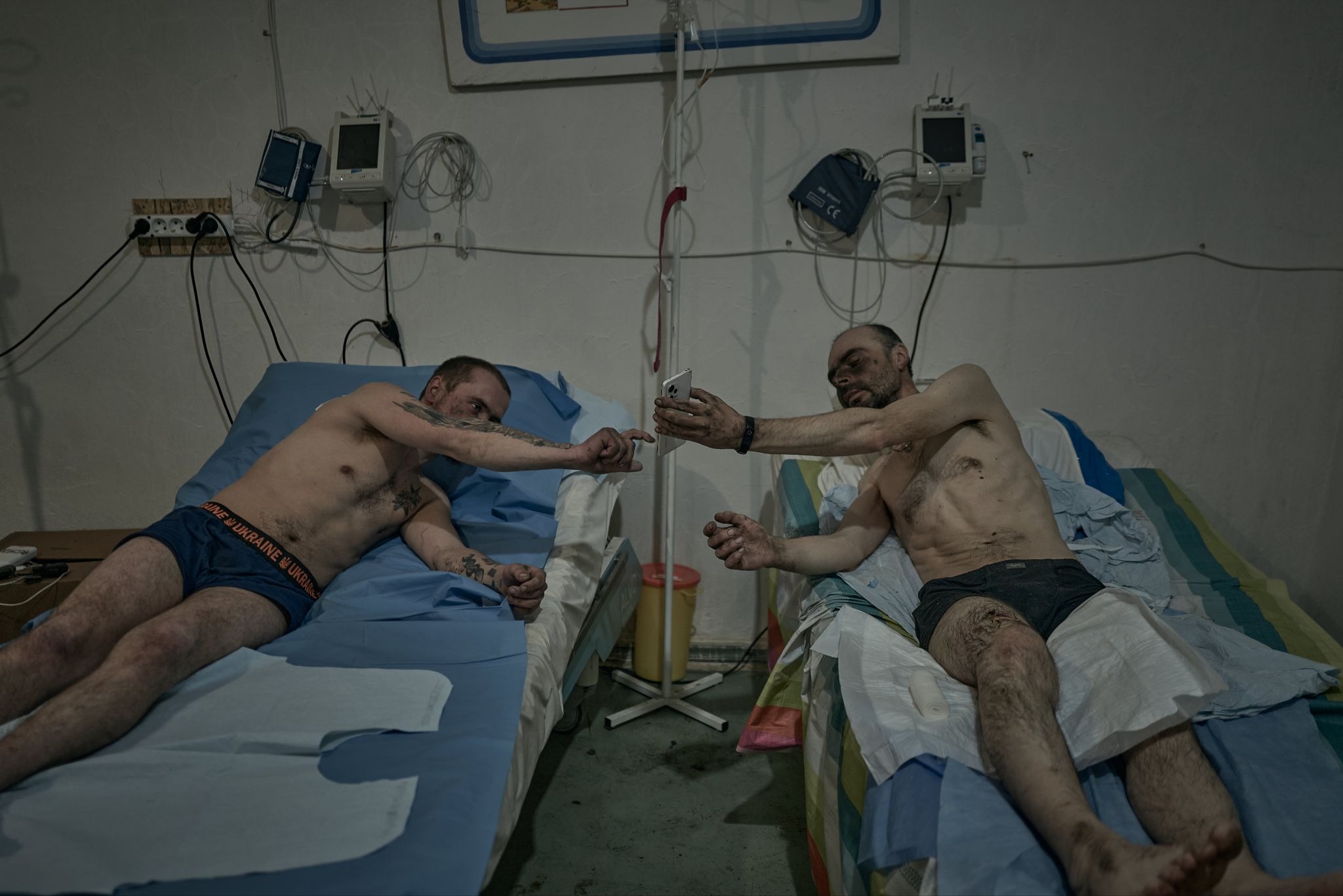
I am convinced that documentary photography can be honest without compromising human dignity. And here it is very important to understand: we are not showing an injury, we are showing the person who received this injury, and the conditions in which the person preserves their life. Or rather, we are not showing the injury, we are showing the moment when this injury is not allowed to take a person's life.
— The "New War" chapter is dedicated to drones and EW. How has technical progress at the front changed your work as photographers?
This is a very painful question because, essentially, technical progress didn't just change our work as photographers; it destroyed our work as photographers. In 2022 and 2023, it was still possible to reach the front, work with the infantry; there was some logistics and the worst thing that could happen to you was artillery shelling, or "grads" working on the point where you were. By the way, a shrapnel from "grads" actually remained in Vlada's body.

Now drones have destroyed any logistics. Logistics is absent for both us and the Russians. And when we are already delivering provisions to positions with drones, what work of documentary photographers can we speak of. As I already said, it was precisely this technical progress that essentially brought us to the realization that we can no longer shoot as we shot before, and we need to start working on our archive and packaging everything we have captured. We tried to convey this sense of a new war in this chapter, and it seems to me that we definitely succeeded.
— The book concludes with the chapter "Hope." Who is this chapter about? Which photographs were included in it?
It seems to me we often look for hope somewhere outside, in the news, political decisions, or good forecasts. But while we were working on the book, we realized a simple thing: hope lives in people. In the fact that they give birth to children, love, recover after injuries, return home, and find the strength to live on. That is exactly why we decided to conclude the book with this chapter. Not because the war has ended. But because despite the war, people haven't stopped being human. And, perhaps, that is precisely our greatest hope. And at the end of the chapter—the first ultrasound scan of our then-future son.

— How difficult was it to look for light and love among the ruins, and what personally gives you this hope today? What in the frame serves as a metaphor for hope? They say that in war, all feelings are heightened to the limit.
Actually, looking for hope was not difficult. What was harder was believing that it truly exists after everything we saw. Hope is our choice.

— Have you noticed that manifestations of tenderness, care, and love at the front look even stronger and purer than in peaceful life? How is this translated through your photographs?
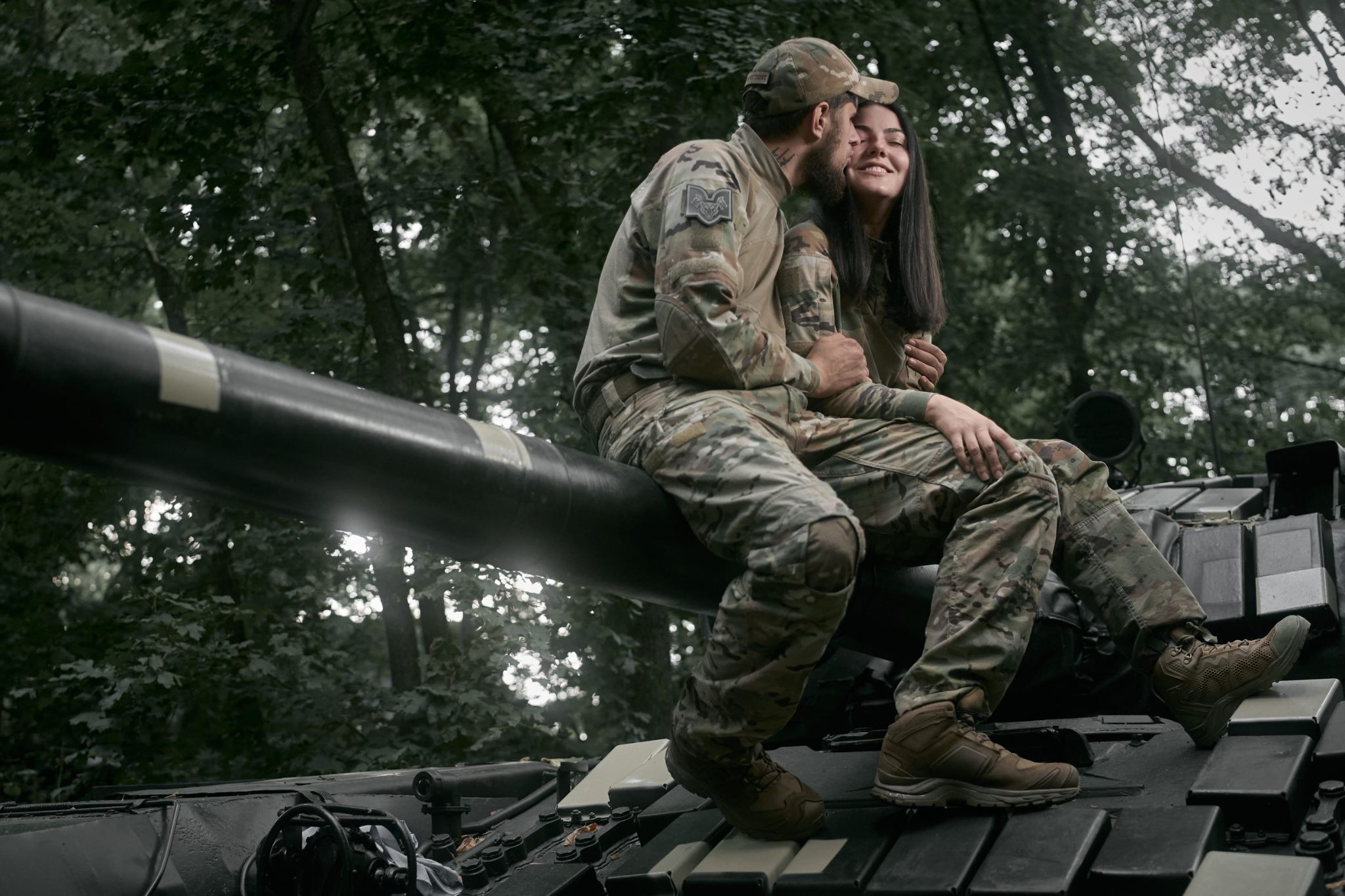
I think so. But not because war makes people better. It simply removes everything unnecessary very quickly. At the front, people are not ashamed to say important words to each other, hug, support, or take risks for a comrade. There you feel very acutely that every meeting could be the last. Because of this, all emotions become more honest.
— Kostyantyn, Vlada, what personally restored hope and faith to you in moments when it seemed that strength was exhausted? Which photograph from this chapter is your personal "anchor"?
To be honest, it is the last photograph of the book, the ultrasound of our son. At the end of the book, we address him with these words: "To our son, little Noah, born in Ukraine, which is fighting for its independence and freedom. You don't know this yet, but you saved us. You gave us hope." This is the absolute truth.
Over these years, there were moments when it seemed there was no more strength left. But when we found out we would become parents, a lot changed inside. A sense appeared that life continues. That is why we ended the book not with war, but with him. Because for us, he is the answer to the question of where hope comes from today.
— Vlada, you became the author of the texts and stories of the heroes. What was more difficult—witnessing these events with your own eyes or later picking the right words to fix them on paper? How do texts and photographs combine?
A photograph answers the question "what happened." A text is always more about "what we felt then." Together they tell the story more honestly than each alone. These are simply honest experiences.

— How were roles distributed during the creation of the book? Who among you was more responsible for the visual rhythm and layout, and who for the content accents?
It is rather like in all our work usually. I prepare the broader material, and Vlada then cuts out the unnecessary from this selection and creates that very "tsimes." Therefore, if speaking of roles, my stage is more of a draft and preparation of material, and Vlada is about the visual rhythm and final choice. And most importantly, we work as partners who complement each other in all aspects.
— Who is the intended audience for the book? Who is its viewer?
First and foremost, we made this book for Ukrainians. So that after many years it stands at home on the shelf and reminds us of what we went through. So that our children and grandchildren can not only read about this war in a textbook, but also see it through the eyes of people who were inside these events. But at the same time, we very much want this book to live abroad as well. Because the war in Ukraine is not only our story. It is important to us that people in other countries can see not numbers from news reports, but specific people, their destinies, their pain, and strength. It seems to me that good documentary photography does not need translation. It is understandable in any language. That is precisely why we very much want this book to find its reader not only in Ukraine, but throughout the world.
— You presented "Eyes of War" at The London Book Fair. What was the initial reaction of foreigners who took the book in their hands? Do you feel that the visual language of photography is capable of piercing the "war fatigue" that is so often talked about in the West?
The London Book Fair is primarily professional editors looking at what publishers are releasing. I don't think it is appropriate to talk here about something being pierced or that this is the very place to speak of war fatigue. People here are interested in good books. It seemed to me our book received a certain interest here. We have certain contacts and agreements regarding the future life of the book.

As for people getting tired of the war, in my opinion, people get tired of the appearance of war, they get tired of information. And I very much want to believe that photography returns a human face to information. One photograph can completely change a person's attitude toward an event, but it can force them to stop for at least a few minutes, and today for us that is already very much, actually.
— You donated copies to the National Library in London and to Ukrainian libraries and veteran hubs. Do you have a sense that you have created not just an art book, but a textbook on the history of Ukraine that will be studied by future generations?
Signing copies of books for various major libraries is perhaps the most valuable thing we have done in our lives since the creation of this layout and work on the book. We truly wanted this book to become a piece of our Ukraine's history, and it seems to me that the donation of copies to national libraries, to Ukrainian libraries, and veteran hubs is the first step toward it becoming part of the history of Ukraine. I very much want in the future, not so much for them to study the war through this book, but for this book to definitely be part of the awareness of these horrific events.
— The book covers the period up to 2025. However, the war and your work continue. Do you plan a continuation of this project?
We definitely plan to release other books; we already have a series of thoughts about next projects. It definitely won't be "Eyes of War 2" as a continuation, because, as I said, in the format we shot the war, unfortunately, it can no longer be shot. But we will definitely work on other book projects. And actually, after you have released a book—this is not our first book, before this we did a book with DTEK "To the Light"—a sense arises that a book is more important than social media; it remains in the heart. And now all our future work will be considered even more through the prism of what we should do next with this material. It seems to me that archiving our photographs into books is the right path of development. For example, we also plan to present other commercial projects in the format of exhibitions, similar to prepared proposals to shoot wind turbines in the Mykolaiv region, but creating a book is always the final and most powerful stage of preserving memory.
— In your opinion, why another book about the war?
I don't think the world needs another book about the war. Let's be honest, the world doesn't need wars at all. But I know for sure that every war needs its witnesses. With this book, we are not trying to tell the whole story of this war—that is impossible. This book preserves only a small part of what we saw with our own eyes. If someone ever opens this book, flips through a few pages, and for at least a moment feels that these were not heroes from a textbook, not some mythical AFU heroes, but ordinary people who loved, feared, lost, fought, then it seems to me this book was definitely needed.
We didn't want to make another book about the war; we wanted to make a book after which it will be harder to forget the people whom this war changed, whom this war took away. Perhaps one of the most painful realizations when I personally flip through this book and review it is the realization of how many people I photographed who are no longer with us. You can't even imagine how painful it is to open a page of the book and realize that this person died and that person died. But it seems right that there is memory of them.
Kostyantyn and Vlada Liberov are a married couple of photographers from Odesa. They began their journey five years ago, initially focusing on creative and emotional love stories. Within a few years, they became among the most recognizable photographers in the field and moved into active teaching, with thousands of grateful students around the world. At the start of the war in Ukraine, they changed the vector of their work, focusing on artistic documentary: their photographs from Ukraine's hot spots go viral on social media, garnering hundreds of thousands of reposts; they are published by influential media such as the BBC, Welt, Vogue, Forbes, and are also featured on the social media of the President of Ukraine and other high-ranking officials.
Instagram of the couple.
Contributors to this material:
Authors of the text: Kostyantyn and Vlada Liberov, Katya Moskalyuk
Photo editor: Marusia Maruzhenko
Literary editor: Yulia Futey

.jpg)
.jpg)