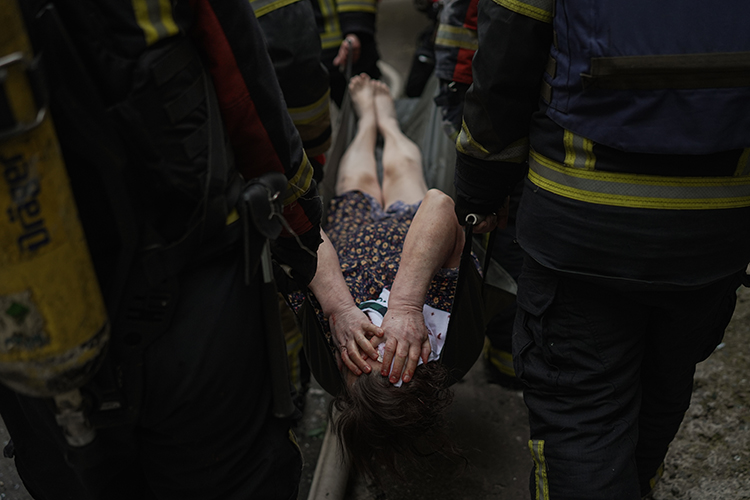
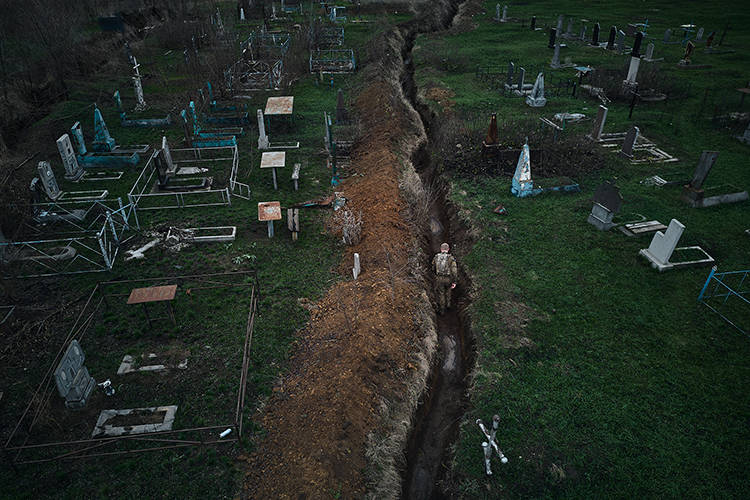
Massive drone attacks, ballistic missiles, dozens of wounded and dead civilians — from April 28 to May 2, Russia attacked at least nine Ukrainian cities. Residential areas, hospitals, and schools were once again targeted. Explosions were heard in Kharkiv, Odesa, Kyiv, Zaporizhzhia, Dnipro, Cherkasy, Kherson, and frontline communities. Children were injured, dozens of people were wounded, and critical infrastructure was destroyed.
This week, Russian strikes were documented by filmmakers in several cities: Kharkiv was filmed by Georgy Ivanchenko, Odesa by Alexander Gimanov and Timofey Melnikov, and Zaporizhzhia by Kateryna Klochko. All these images are evidence of systematic Russian military terror.
April 28
Shostka community (Sumy region): At night, Russian UAVs attacked the community, causing destruction to infrastructure.
Kupyansk and Kupyansk-Vuzlovyi (Kharkiv region): Shelling from Uragan multiple launch rocket systems and airstrikes damaged residential buildings and farm buildings.
Zaporizhzhia region: At least two aerial bombs were dropped on frontline settlements.
Cherkasy: An explosion was reported near the city in the morning, likely caused by a UAV attack.
April 29
Kharkiv: The city was attacked by at least 15 Geran-2 drones, affecting five districts.
Kyiv: An attack by 11 UAVs was recorded at night; nine of them were destroyed by Ukrainian air defense forces. A recreation center was damaged in the attack.
Sumy region: shelling of border settlements, including Stepky, Myropilske, Naumivka, and Semenivka.
April 30
Kharkiv: more than 45 people, including children, were injured as a result of a massive drone attack; a hospital, a school, and residential buildings were damaged.
Odesa: A drone attack killed and wounded civilians and damaged civilian infrastructure.
Dnipro: One person was killed in a drone attack.
May 1
Zaporizhzhia: The city was hit by at least 10 drone strikes, damaging residential buildings, educational institutions, and infrastructure; 29 people were wounded.
Ukraine as a whole: Russia launched 5 ballistic missiles and 170 UAVs; air defense forces destroyed 74 drones.
May 2
Kherson: a drone attack in the city center wounded two people and damaged a civilian vehicle.
Ukraine as a whole: 150 UAVs were recorded during the night; air defense forces actively repelled the attack.
Kharkiv: Russian troops used strike drones with thermobaric warheads. As a result of the attack, 51 people were wounded.
May 3
Kharkiv region: Russian troops launched a massive attack on the region, using more than 60 drones, including 21 Shahed and 28 Geran drones, as well as guided aerial bombs and FPV drones. As a result of the shelling, a 47-year-old man was killed in Kupiansk and 48 people were wounded.
May 4
Kyiv: The capital was hit by a massive attack with kamikaze drones. Debris falling in three districts of the city — Obolonskyi, Sviatoshynskyi, and Shevchenkivskyi — caused fires and destruction. Eleven people were injured, including two children.
Cherkasy: Five fires broke out at different locations in the city. Residential apartments, a warehouse building of one of the enterprises, a summer house, and dry vegetation were on fire. One person was injured.
Kharkiv through the lens of Georgy Ivanchenko

On the evening of April 29, Kharkiv was hit by a massive attack from Russian drones. Explosions were heard in several areas of the city, including Shevchenkivskyi, Slobidska, Kyivskyi, Saltivskyi, and Nemyshlianskyi. The strike left many civilians injured.
This was reported by Kharkiv Mayor Ihor Terekhov. According to him, the enemy used strike drones that attacked residential and civilian infrastructure.
“Explosions were heard in the city. Be careful — Kharkiv is under attack by enemy UAVs,” Terekhov wrote on social media. He later clarified that new areas, including Kyivskyi, were hit.


According to preliminary data, a drone struck a multi-story building in the Slobidska district. A total of at least 16 strikes were recorded in the city. Apartment buildings and private homes, a medical facility, and civilian infrastructure were damaged.


As of the morning of April 30, the head of the Kharkiv Regional Military Administration, Oleg Synyegubov, reported that the number of victims had risen to 45. Thirty-one people were diagnosed with acute stress reaction, and 14 others suffered injuries of varying severity. Five victims were hospitalized. Among them are a 5-year-old girl, a 16-year-old boy, and a 24-year-old pregnant woman.

According to Spartak Borisenko, head of the department for combating crimes committed during armed conflict at the Kharkiv Regional Prosecutor's Office, the enemy used Geran-2 drones. The attack lasted from 10:00 p.m. to 10:30 p.m. The Kyiv, Shevchenkivskyi, Slobidska, Saltivska, and Nemyshlyanska districts of the city were hit.

Both residential buildings (multi-story and private) and civilian objects were significantly damaged: cars, businesses, and two city hospitals. The consequences of the attack were documented by photojournalist Georgy Ivanchenko.
Odessa through the lens of Alexander Gimanov and Timofey Melnikov

The Russian army launched a drone and missile strike on the Odesa region, using 21 drones and five Iskander-M ballistic missiles. This was reported by the Southern Air Command. They also noted that during the attack, the Russians used Shahed-type strike UAVs and other types of drones. The southern air defense shot down 16 Shaheds.


“Over the past day, April 30, 2025, two ZALA reconnaissance UAVs and four Molniya strike drones were destroyed in the southern direction,” the statement said.
The President of Ukraine said: “There were many fires in the city at night. A total of 21 drones attacked Odesa. Unfortunately, there are casualties. All those affected are receiving the necessary assistance.”

An air raid alert was declared in the region at 11:12 p.m. on April 30. Explosions began to be heard in Odesa at around 11:55 p.m. Prior to this, the Air Force warned that strike drones were moving toward the city from the Black Sea. As of 00:28 on May 1, at least 15 explosions were heard in Odesa.


Two people were killed in an attack in Odesa. Another 15 were injured, according to the State Emergency Service. The prosecutor's office has launched an investigation. Residential high-rise buildings, private houses, a supermarket, a school, and cars were damaged.


Additionally, following the drone attack in the Odesa region, an air raid alert was issued due to the threat of ballistic missiles. The Air Force reported a high-speed target heading toward the Odesa region.
Zaporizhzhia through the lens of Kateryna Klochko

On the evening of May 1, Russian forces launched a massive drone attack on Zaporizhzhia. Preliminary reports indicate that at least ten strikes were carried out by Shahed-type drones across various parts of the city.
The strikes ignited fires throughout the city, damaging apartment buildings, private homes, garages, vehicles, educational institutions, and infrastructure. According to official information, 31 people were injured, including two children. Some of the victims remain in the hospital: seven have been admitted, two of whom are in serious condition, and four are in moderate condition.


The State Emergency Service reported that the attack lasted from 10:05 p.m. to 10:20 p.m., causing significant damage and fires in several locations. A fire broke out in a multi-story residential building, covering an area of 100 square meters. Preliminary information suggests that a person may be trapped under the rubble. At other sites, rescuers extinguished fires in five garages covering a total area of 72 square meters.


According to updated data, 27 high-rise buildings, 11 private houses, six garages, eight cars, a truck, five educational buildings, and one critical infrastructure facility were damaged. A passenger electric locomotive repair plant (ZERZ) belonging to Ukrzaliznytsia was also hit.
A fire broke out at the plant, which rescue workers were able to completely extinguish the following morning. There were no casualties among the staff, as the workers were in shelters during the attack.


The Zaporizhzhia Regional Prosecutor's Office has opened a criminal investigation into a war crime under Part 1 of Article 438 of the Criminal Code of Ukraine. The investigation is ongoing and the consequences of the attack are being documented.
As of the morning of May 2, 12 victims remain in the city's medical facilities. Regional authorities urge residents not to ignore alarm signals and to immediately move to safe places in case of renewed attacks.
50 days of Russia ignoring the ceasefire
President Zelenskyy reminded that Russia has been ignoring the US proposal for a complete and unconditional ceasefire for over 50 days.
"We also made proposals — at least to refrain from strikes on civilian infrastructure and to ensure a lasting ceasefire in the air, at sea, and on land. Russia responds to all this with new shelling and new assaults," stressed Zelenskyy.
He emphasized that diplomacy requires a tangible impetus—further pressure on Russia is necessary to force it toward silence and negotiations.
“The more effective the sanctions, the greater the incentive for Russia to end the war. The stronger Ukraine’s defense and our air defense forces, the more lives we can save and the sooner we can guarantee long-term security,” Zelensky said.
Contributors:
Researcher and author: Vira Labych
Image editor: Olga Kovalova
Copy editor: Yulia Futey
Website manager: Vladislav Kukhar