.jpeg)
In 2024, Pokrovsk in Donetsk Oblast was a relatively safe rear-area city, receivingdisplaced people from frontline communities. The city had functioningutilities; shops and banks were open; and residents felt comparatively safe.However, over the past six months the situation has changed dramatically:Pokrovsk has become a frontline city, and people have begun leaving en masse.With neighboring settlements such as Avdiivka and Ocheretyne captured, fearsare growing that Pokrovsk may be the Russian army’s next target. Enemy forcesare now roughly within 10 km of the city.
Today, Pokrovsk in Donetsk Oblast is one of the places where the war leaves its mostpainful marks. Daily shelling, the evacuation of thousands, and uncertaintyabout the future are forcing residents to leave their homes. Yet in everystory—despite fear and grief—there remains hope of returning.
Theintensity of fighting and calls to evacuate
Thesituation on the Pokrovsk axis remains extremely tense. Russian forces carryout numerous assaults every day, trying to break through Ukraine’s defenses.Conditions in the city are no less difficult: constant shelling and the threatto life are forcing people to leave their homes. Local authorities are urgingevacuation, especially for families with children. Despite the danger, around26,000 residents still remain in the city, including more than 1,000 children.Since Sept. 5, evacuation trains from the city have been canceled for securityreasons. People can reach safer parts of Ukraine with the help of volunteers orusing their own transport.
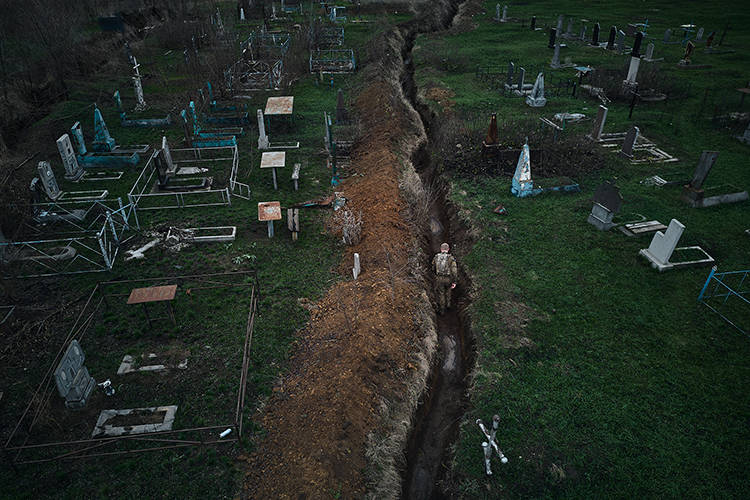
Today, theUkrainian Association of Professional Photographers publishes photos byKostiantyn and Vlada Liberov and Oleksandr Mahula from Pokrovsk railwaystation, as well as images by Marian Kushnir of Ukrainian troops holding backthe Russian advance on the city.
Evacuation: heartbreaking moments and farewells
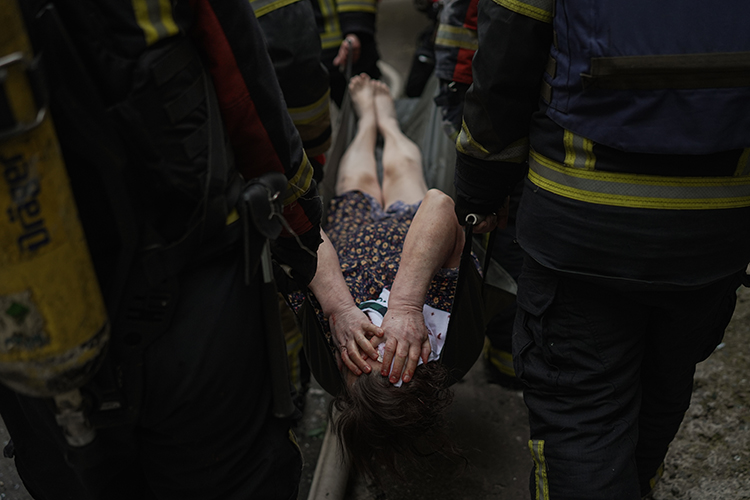
In recentmonths, evacuation from Pokrovsk has become part of everyday life. The stationis crowded with people gathering what matters most and preparing for theunknown. In early September, documentary photographers Kostiantyn and VladaLiberov captured the situation on the platform and inside the train cars:
“Aheadof everyone lies the unknown—even for those whose relatives are waiting inother cities. You can’t prepare a person for this. You can’t explain to a smallchild why she and her mother are leaving while her father stays behind. Youcan’t calm an 80-year-old grandmother who was born, grew up, fell in love,worked, built a family, and spent her whole life in one city—only to learn shewon’t be able to live out her old age there in peace. It hurts toomuch.”


The photographers also note that what hits hardest is that some people have alreadyhad to leave their homes in 2014 or in 2022:
“It’spainful for everyone, but there’s a certain group of people whose stories tearat your heart in a special way. As a rule, they stand out from the others atthe station. They behave a bit more confidently and carry fewer things thanmost. These are people who have been through this before. Someone—in Donetsk in2014. Someone—in Bakhmut in 2022. They have already packed their whole lifeinto a few bags. They have already fled the Russians and their so-called‘liberation,’ but they have been caught by it again—here, too. Someone on thistrain, not originally from Pokrovsk but from elsewhere in the oblast, hasalready lost their home to a Russian shell. Someone has already lost lovedones. People are cared for on the train: food is handed out, hygiene kits aredistributed, medics are on duty and quickly assist elderly passengers whosehearts trouble them under stress.”

Oleksandr Mahula: emotions at the station
“Women hug and cry beside the evacuation train. Locals gradually fill the cars, andconductors in body armor help load suitcases and animals. Elderly people aregiven medical assistance for stress and heart attacks. Ahead of everyone liesthe unknown,” —this is what Suspilne photojournalist Oleksandr Mahula saw at the station onAug. 24, 2024, Ukraine’s Independence Day.
Everydeparture is a moment of farewell to a city that has witnessed the unspeakablepain of its residents.


Marian Kushnir: describing frontline developments
Radio Svoboda military correspondent Marian Kushnir describes the frontline situation that directlythreatens Pokrovsk:
“Occupation troops advance in small groups, looking for weak spots. They bypass Ukrainianairborne positions, carry out assaults, and search for a chance to breakthrough. The enemy operates under the cover of artillery and aviation, whileour fighters use drones for a rapid response.”


Kushnir notes how difficult the situation is when even earlier defensive lines becomecover for occupation troops, while Ukrainian forces do everything possible tohold back the pressure.
“Everythingis working on the Pokrovsk axis: aviation, artillery, rocket systems. So it’snot easy. Support the fighters!” — the journalist writes.


Kostiantyn and Vlada Liberov are a married couple of photographers from Odesa. They began theirjourney focusing on creative, emotional love stories. Within a few years, theybecame among the most recognizable photographers in the field and moved intoactive teaching, with thousands of grateful students around the world. At thestart of the war in Ukraine, they changed the direction of their work, focusingon artistic documentary photography: their images from Ukraine’s hottest spotsgo viral on social media, gaining hundreds of thousands of reposts; they arepublished by influential outlets such as BBC, Welt, Vogue, and Forbes; and areshared on social media by the President of Ukraine and other high-rankingofficials. In Europe, the Liberovs have held two solo exhibitions; their photographshave also become part of many thematic exhibitions.
Oleksandr Mahula is aphotographer originally from Kharkiv. He is a journalist with Suspilne News inKyiv. He studied journalism at V. N. Karazin Kharkiv National University.Before the war, he worked in local media. He collaborated with majorGerman-language print outlets in Europe (NZZ, FAZ, TAZ, Focus, DerStandard).
Marian Kushnir hasworked at “Radio Svoboda” since 2015; today, he actively covers events related to Russia’sfull-scale invasion of Ukraine. In March 2022, while on assignment, MarianKushnir was injured as a result of a Russian strike in Kyiv Oblast—he wasdiagnosed with a concussion. In May 2023, he received a special award from theBucha Journalism Conference.
Thismaterial was produced with the support of The Fritt Ord Foundation.
Workedon the piece:
Topic researcher, text author: Vira Labych
Photo editor: Viacheslav Ratynskyi
Literary editor: Yuliia Futei