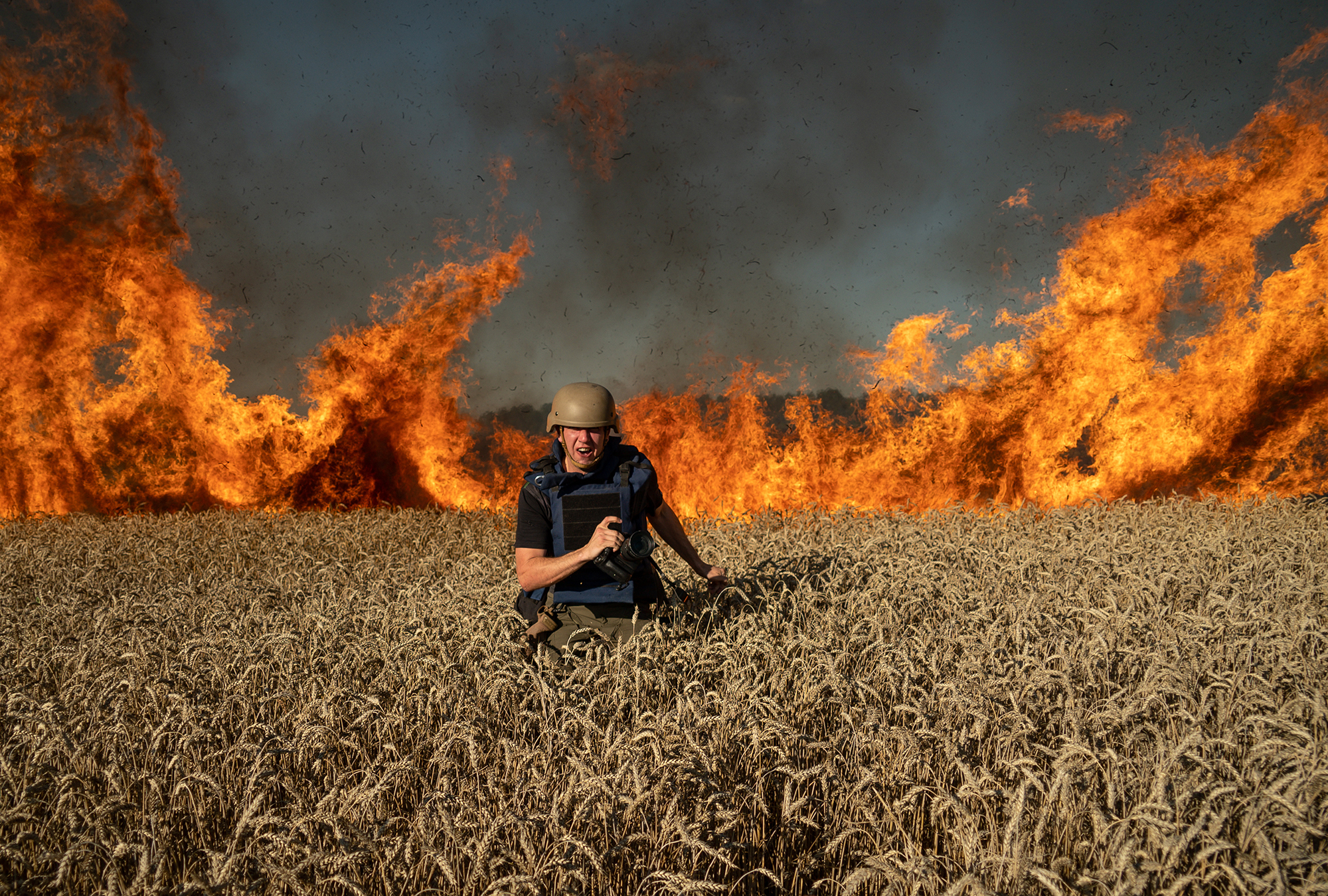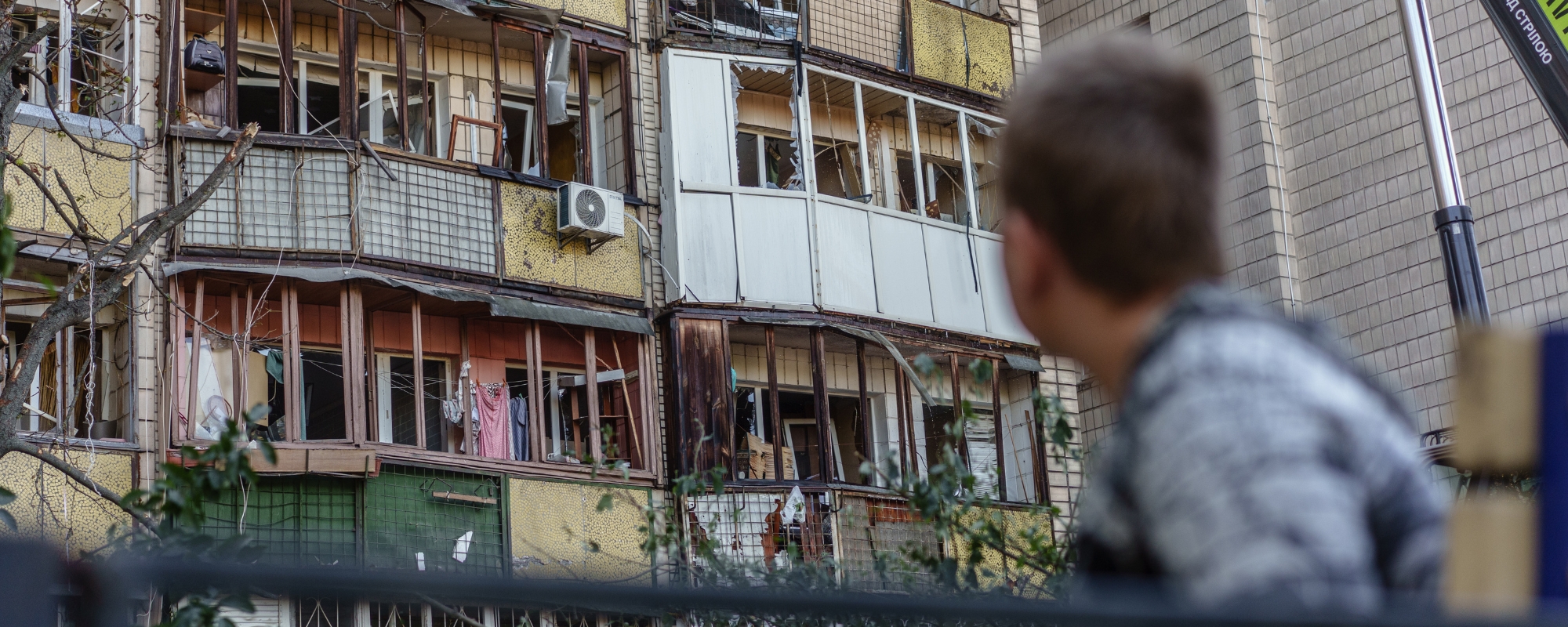
For documentary photographers, the war in Ukraine has practically erased the line between professional duty and personal life. Frequent trips to strike sites, documenting human tragedy, and witnessing destruction demand immense mental resilience. Five years into the full-scale war, this burden continues to grow amidst escalating Russian terror against Ukraine's peaceful cities.
Until recently, Kyiv was perceived as a relatively safe rear city—a place to recharge between attacks, where lulls were longer, and the situation remained somewhat predictable. For photojournalists, this meant a chance to safely recover after assignments to frontline cities. Today, however, Russian forces have shifted to relentless terror against the capital using jet-powered UAVs and ballistic missiles. In effect, Kyiv is now experiencing what frontline regions endured early in the war. Documentary photographers now face a new challenge: how to work and recover when the boundary between work and personal space has vanished, taking with it any sense of a safe haven.
Ahead of World Mental Health Day, the Ukrainian Association of Professional Photographers spoke with Kyiv-based documentary photographers Kostiantyn and Vlada Liberov, Serhiy Korovayny, and Vyacheslav Ratynsky about how they are navigating this difficult period and what they do to protect their mental health.
Kostiantyn and Vlada Liberov: For the past two months, we haven't left the house without cameras and trauma kits
Documentary photography couple Kostiantyn and Vlada Liberov have continuously documented the aftermath of Russian aggression since the start of the invasion: reporting from the front lines, liberated regions, and missile strike locations. Their photographs have become internationally recognized symbols of the war in Ukraine.
Following another drone attack on Kyiv on September 25, 2026, Kostiantyn Liberov admitted on social media that although he was accustomed to danger at the front, seeing dead civilians in his hometown brought a completely different, profoundly heavy grief. Despite a long break from personal posts, he felt compelled to share his feelings, realizing he was reaching his breaking point, much like most Ukrainians.
“A drone strike on a business center in the middle of a crowded street. Someone was walking by, someone was driving. The second strike like this today. People killed again. Bodies right on the street. Terrified passersby walking past. And I'm among them. Today, I'm scared too. I don't know why. Working at the front, I got used to fear; I've truly been in situations where death was very close. But that's the front. Kyiv is home. And it hurts to see my people and my city being killed every day,” — wrote Kostiantyn.
Photographer Vlada Liberova, Kostiantyn's wife, says that due to their professional experience, they believed that escalating tension in Kyiv wouldn't affect their emotional state and that they were prepared for anything. However, reality turned out to be quite different:
“When you see the city that became your home, where your child was born, bleeding every day—it's deeply painful. And you can never be ready for it. For the past two months, almost every day, we've seen columns of smoke from fires out of one window or another in our apartment. Sometimes several times a day. And during these past two months, we haven't left our apartment in Kyiv even once without a camera and trauma kits. Even when there's no air raid alert, you're constantly expecting something to happen and wanting to be prepared.”
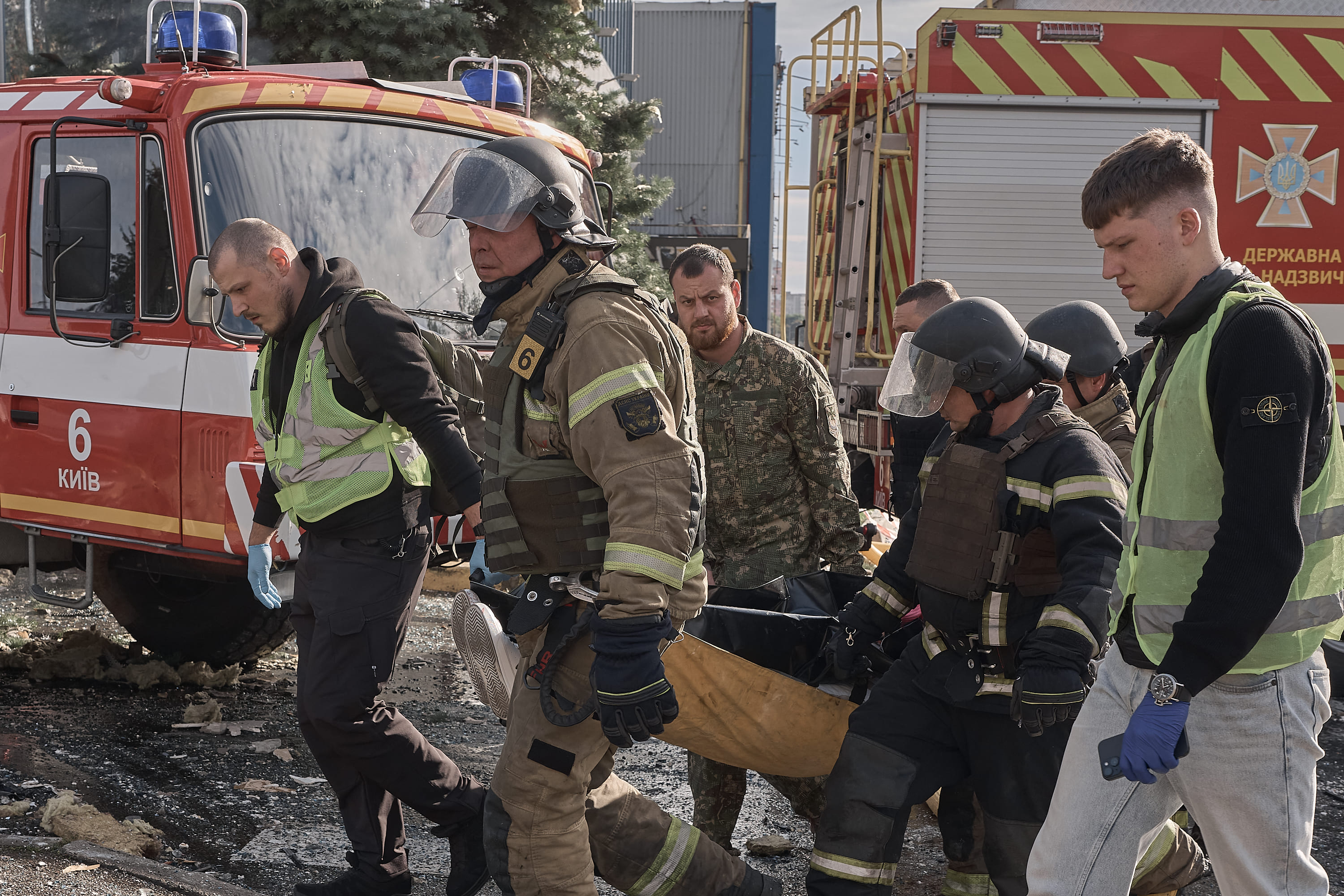
Vlada admits that their mental state is currently heavy, feeling as though the “armor they built in their minds over these years has cracked.” Everything around them now feels as acute as it did at the start of the full-scale invasion. She recalls her husband's tears after 14-year-old Danylo was killed in a strike on an apartment building. She remembers her own fear and despair during an attack on Antonovycha Street—the moment she realized her own child and nanny could have been in the blast zone. That day, Vlada was photographing the damage to a medical facility in historic central Kyiv.
The couple does not plan to leave Kyiv, but the city has lost its feeling of a safe home, robbing them of the ability to properly rest. Vlada explains that balancing daily routines and university teaching with near-daily assignments at strike locations leaves them mentally and physically exhausted.
“I know that most of our Kyiv colleagues feel similarly based on our conversations. No matter how much we've seen what war does to cities along the front line, you can never prepare for daily attacks in your own home. Yes, there are countless Ukrainian cities and towns where the situation is far worse, and people in our profession know this better than anyone. That hurts no less, just with a different kind of pain. The pain of Kyiv is like the pain of someone close to you—you don't just sympathize, you live through it yourself,” says the couple.
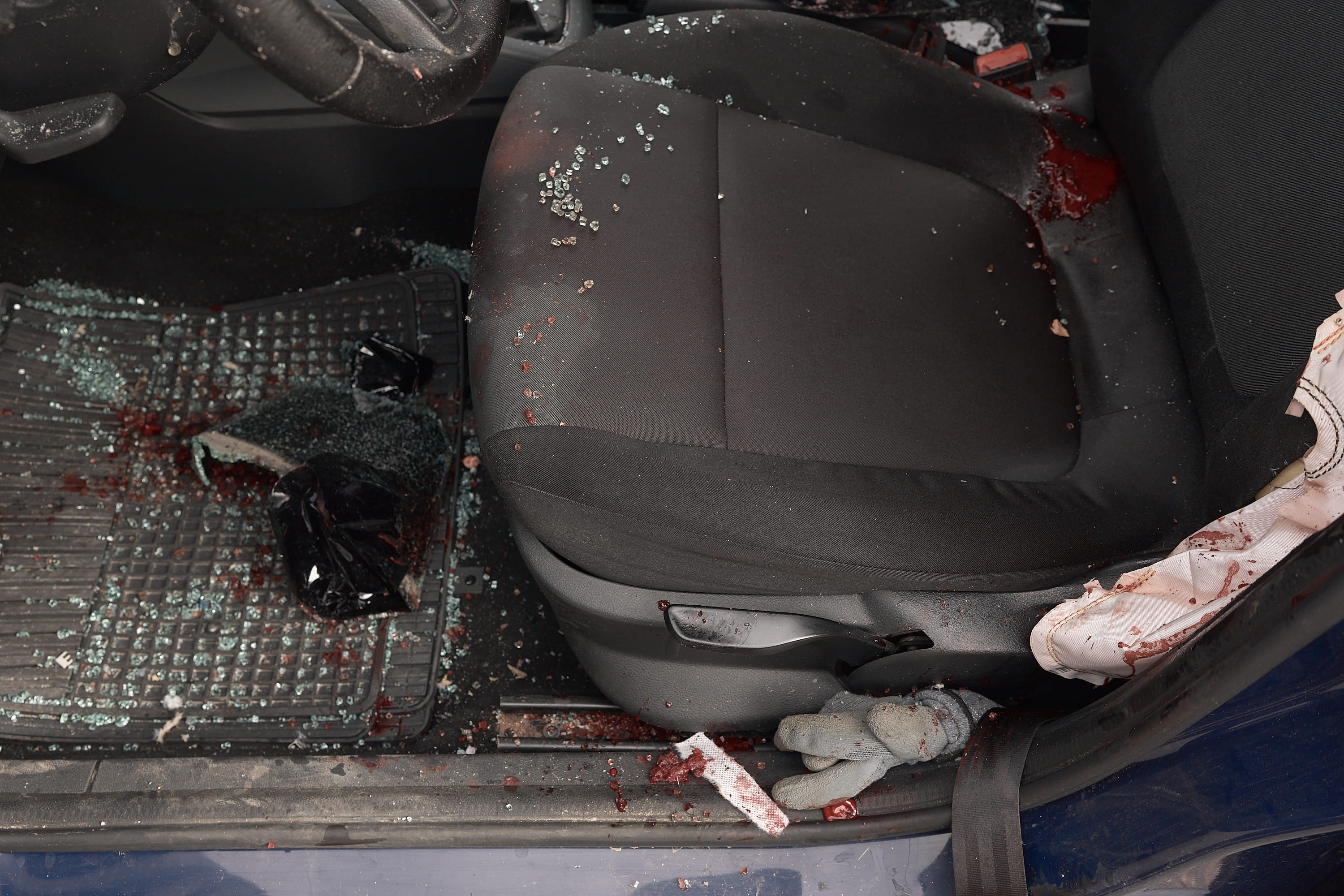
Serhiy Korovayny: I realize that in a place like Kramatorsk, it's ten times more dangerous right now
Documentary photographer Serhiy Korovayny, originally from Donetsk region, has been documenting the Russo-Ukrainian war since 2014. During the full-scale invasion, Serhiy covered the defense of Kharkiv and Kyiv, liberated northern regions, worked in Mykolaiv, and documented the aftermath of the Kakhovka Dam destruction and the southern counteroffensive. Though based in Kyiv since 2012, he frequently travels to Donetsk region for work.
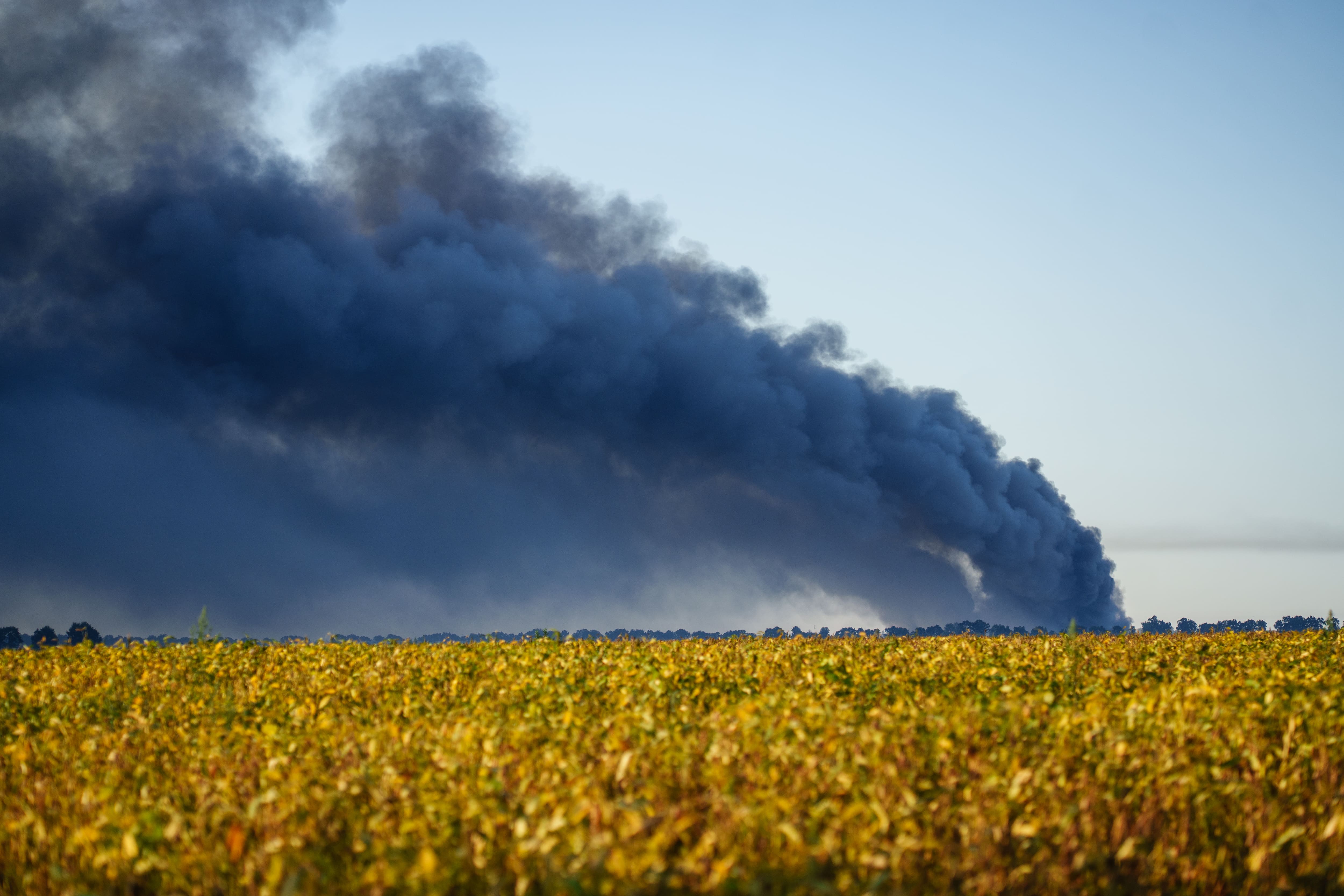
Preparing for another assignment to the south, in Odesa, Serhiy shared how he experiences burnout in the capital and what keeps him going:
“Honestly, this is probably one of the hardest periods of the entire war. Overall fatigue has accumulated. And with these prolonged attacks, recovery is much harder because I can't simply disconnect. The only way out right now, it seems, would be to step away from work, stop following the news, and completely ignore the attacks. Then maybe I could rest. But I haven't done that yet; there's always work to do.”
Serhiy notes that although Odesa region is also dangerous, focusing purely on his work process there is psychologically much easier than in Kyiv.
“I definitely feel considerable psychological pressure. When you travel near the front line alone or with a team, you focus entirely on the job, knowing that you're taking temporary risks with your life, health, or equipment. You commit to the trip, do the work, and return home. In that sense, the current strikes on Kyiv are a real trial.”
Serhiy Korovayny notes that compared to eastern cities, Kyiv still feels relatively safe to him.
“I'm fairly calm regarding safety, because Kyiv is a huge city, and Russia's recent tactic involves one or two drones at a time rather than swarms. I realize that in Kramatorsk it's ten times more dangerous right now, while Kharkiv continuously faces KAB glide bombs and FPV drones, same as Zaporizhzhia.”
The primary psychological strain, according to the photographer, comes from needing to constantly monitor news and stay ready to rush to a scene, blurring the line between personal life and work. At home, family duties await, alongside desk work—handling documentation, writing text, submitting contest entries, emailing, and attending meetings—which can be even more draining than field work. Constant vigilance over air raids and the sounds of explosions fracture focus and prevent concentration. Serhiy observes that Kyiv lacks a quiet space for recovery, even as he continues living his civilian life without feeling an immediate direct threat.
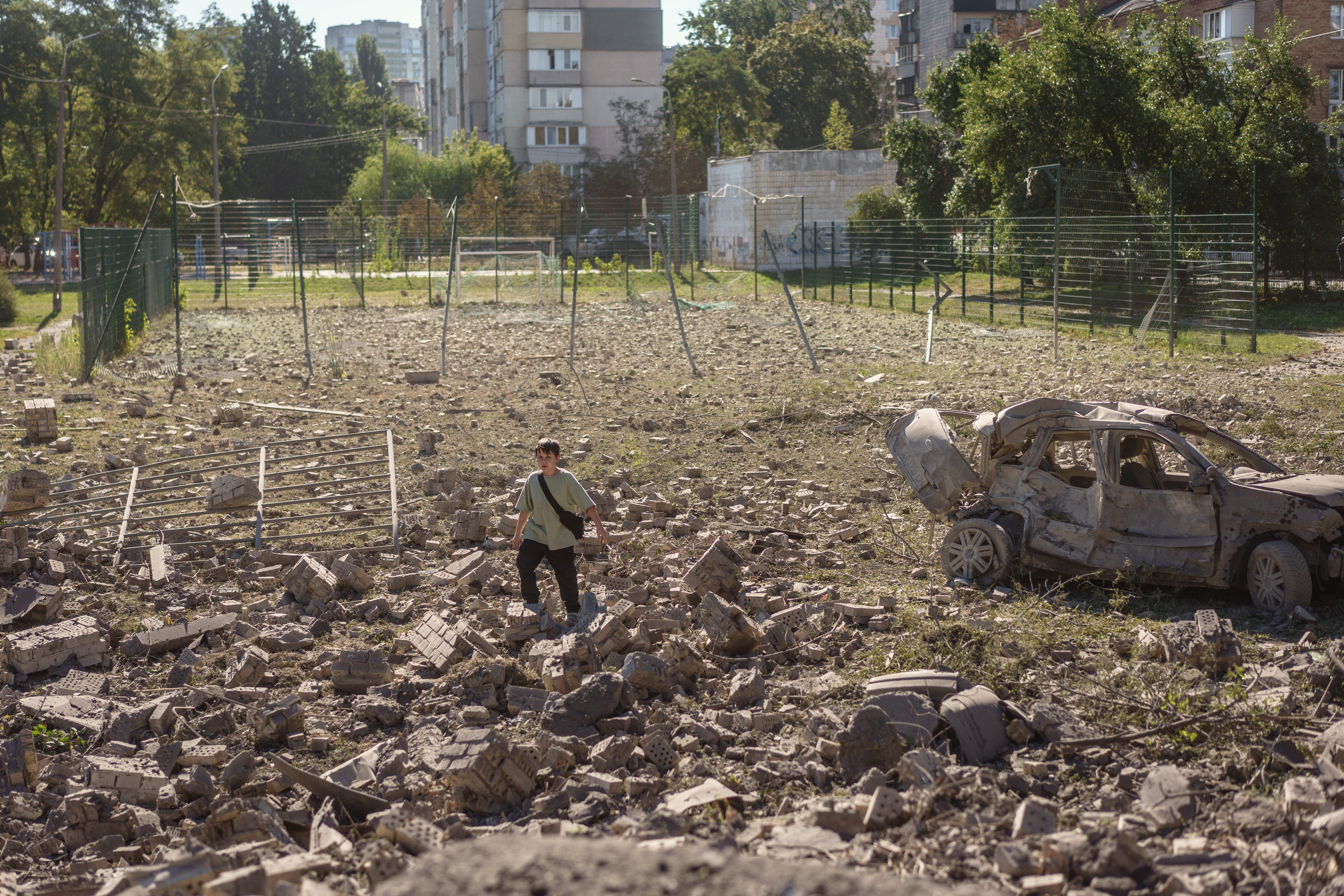
The photographer is frustrated by comparisons between living near the front lines and living in Kyiv. In his view, stoking such fear is part of Russian psychological operations aimed at destabilizing society, and he is annoyed by his own involuntary involvement in this process.
“For instance, if I want to go for a run, I end up running near my car so I can quickly drive to shoot if something hits. I can't simply unwind through sports or walk the dog. I can't walk far into the woods with my dog and just disconnect. I'm completely exhausted, working on the brink of severe fatigue from endless concentration and continuous attacks. And I think that's precisely what the Russians are trying to achieve. For us, this feeling is amplified because we document it.”
Serhiy tries to practice self-care and protect his mental health, but admits that familiar coping mechanisms no longer work as they used to:
“I see a therapist and go for walks in the fresh air, but it doesn't feel like it works the way it once did. Again, it really bothers me that the Russians are succeeding in their goals. I want to defy their plans by remaining energetic, but psychologically, it has proven harder than I'm willing to admit to myself.”
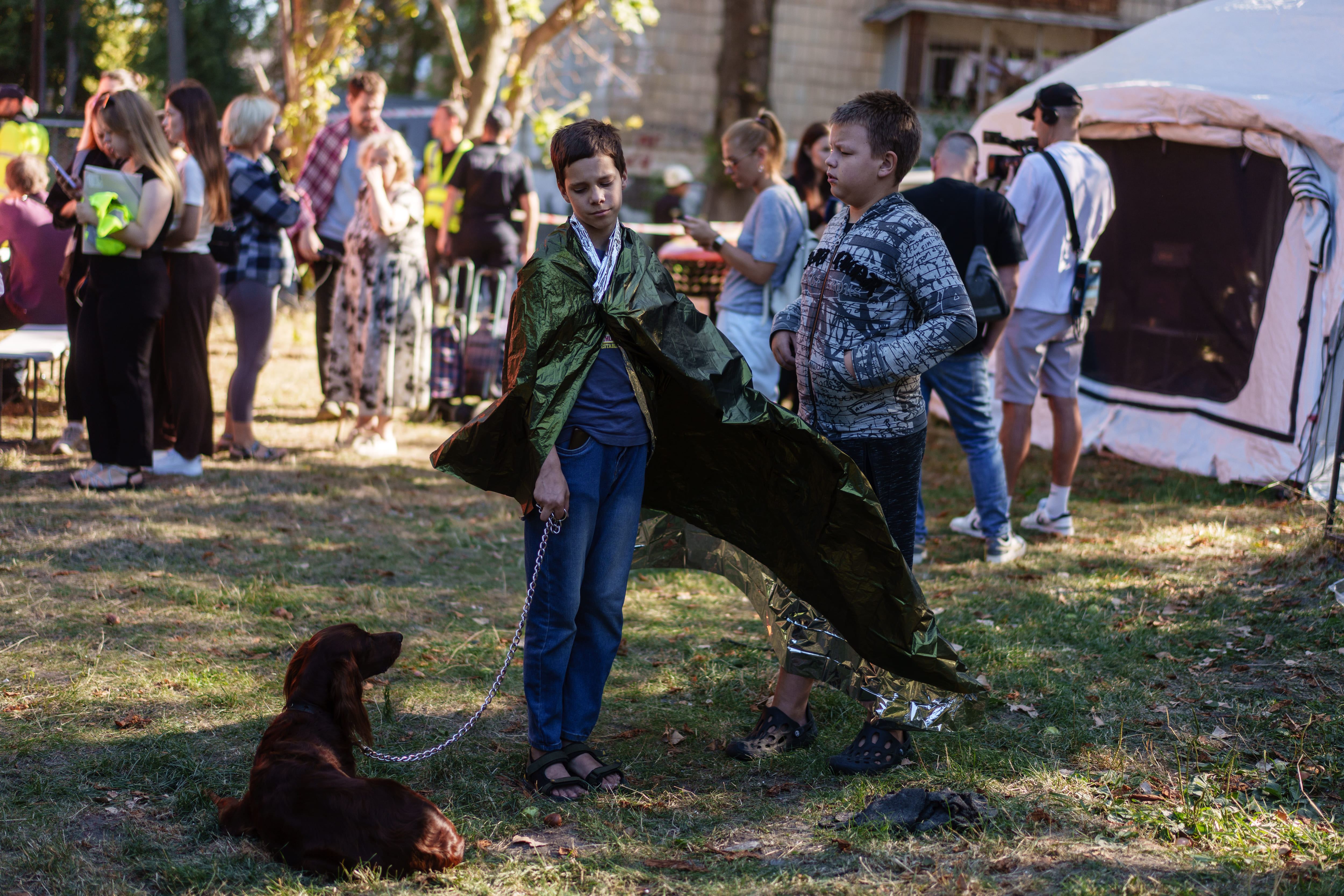
Vyacheslav Ratynsky: Taking on work that is genuinely meaningful and engaging, rather than everything like before
“Mental Health Day? We don't celebrate that,” photographer Vyacheslav Ratynsky begins wryly.
Despite the irony, rest and resilience remain crucial topics for the photographer—UAPP caught up with Vyacheslav while he was taking a short break.
Reporter and documentary photographer Vyacheslav Ratynsky, originally from Zhytomyr, has lived and worked in photojournalism in Kyiv for over a decade. He covered the Revolution of Dignity and has documented combat zones since the full-scale invasion began, including a documentary project on recovering fallen soldiers in mined forests across Kharkiv and Donetsk regions.
Yet extensive experience does not make processing the war any easier, Vyacheslav says:
“Nothing has really changed over these years; it has just become harder to tune out constant Russian strikes. I try not to rush to every single explosion, and for a while, I attempted to stop reading the news—or rather, my mind and body simply refused to take it in. Though for as long as I can remember, working in journalism, I never missed a news update.”
Fatigue and declining productivity forced the photographer to rethink his work habits:
“Pervasive fatigue makes it hard to focus on anything, including photography, which is harmful because work quality and efficiency drop. That's why I try to accept only assignments that feel truly meaningful and interesting to me, rather than taking everything like I used to.”
Vyacheslav breaks his work into shorter, manageable tasks to maintain concentration. In addition, he schedules brief but effective breaks for walks, trips outside the city, and short vacations, striving to rebuild his energy reserves ahead of a long and challenging winter.
“I haven't hit my limit yet; sports, reading, and walks help a lot, though fully switching off is tough,” Vyacheslav speaks candidly. “But I'm not complaining at all. I always think of the Ukrainian soldier, who is the one truly facing hardship.”
Mental State of the Media Community
Extensive research indicates that high rates of depression symptoms, anxiety disorders, and traumatic experiences are widespread across the national media community.
An analytical survey conducted under the Mental Support for Media program by the Public Interest Journalism Lab and the Braincult Center revealed that nine out of ten surveyed media workers exhibit signs of depression, with the majority showing moderate to severe symptoms. At the same time, eight out of ten suffer from anxiety disorders, and over seventy percent feel anxiety about the future, a key indicator of burnout. More than sixty percent of journalists have directly experienced trauma, and nearly half report intrusive memories, highlighting a high risk of PTSD. Furthermore, rates of anxiety and depression were significantly higher among female journalists compared to their male colleagues.
However, neurobiological research confirms that emotional trauma is a natural physiological response to extreme stress, not a reflection of personal weakness. Mental health struggles do not make a person “weak” and should not be silenced. Speaking openly about one's psychological state is a healthy and necessary practice.
For professionals in high-trauma fields like documentary photography in Ukraine, seeking professional psychological support should be as fundamental as basic safety protocols. The UAPP encourages photographers to monitor their well-being and seek timely professional mental health support.
Contributors:
Researcher and author: Yana Yevmenova
Photo editor: Marusya Maruzhenko
Copy editor: Yulia Futey