When exiting the Maidan Nezalezhnosti metro station, you come across a row of souvenir shops in the underpass. Overall, this is a fairly typical tourist scene common to many countries, just with a touch of local pop-cultural imagery. Wreaths of artificial flowers, colorful embroidered shirts (vyshyvankas), keychains shaped like small maces or featuring images of Taras Shevchenko, painted plates, and flags. Souvenir comes from the French word for "memory."
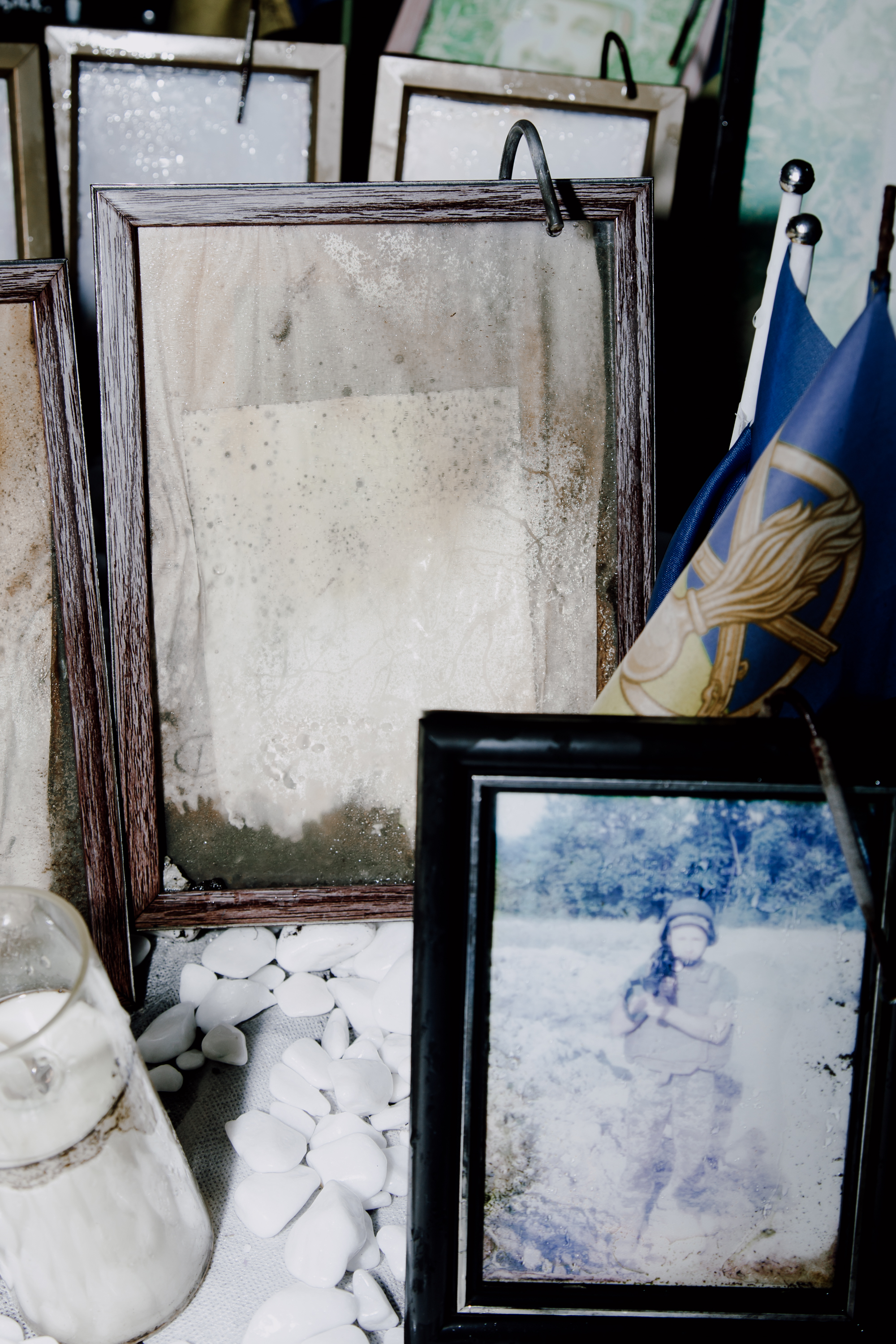
In 2022, a sign appeared on Maidan: "Place a flag if you know someone killed by Russia." Over the years, the word "if" became redundant a painfully large number of times. The lawn transformed into a place of remembrance woven with trampled paths, photographs, flowers, and military unit banners.
Over these same years, pounds of flowers dried up, flags faded, photographs became waterlogged, and the glass in the frames cracked. "The paint can't withstand this much water. The glass can't withstand the gusts of wind," writes Oleksandra Rakhimova beneath her photo.

In 2013, as a ten-year-old watching a live broadcast from central Kyiv, I couldn't have known what an unpleasant draft sweeps from Yevropeiska Square to Maidan on such November days. In 2026, emerging from the pedestrian underpass, I turn up my coat collar and listen to the flags fluttering in the breeze. Meanwhile, I remind myself: under no circumstances look down while walking past the portraits. It takes just one crosswalk along Horodetskoho Street to go from a spontaneous memorial to an offer to take a picture with Patron the Dog against the backdrop of Maidan.
It is impossible to hold every portrait in your mind. Perhaps that is why we need photography—one of its tasks being to etch a moment forever. Forever is longer than a lifetime; it isn't bound by the lifespan of a single human being. Yet, photography seems to manage only a lifetime. A photograph is fleeting: behind cracked glass, water will most likely seep through over time and blur the image. Still, it is far worse when memory does the same.
And memory, as we know, cannot be trusted. Or rather, there might not be enough of it. In that case, it must be replaced with an action: remembering.
Photograph: Oleksandra Rakhimova
Text: Valeriia Andriichenko