Ielena Kalinichenko is a Ukrainian documentary photographer and photojournalist. In her work, she combines fine art and documentary photography. She recently quit her corporate job to dedicate herself entirely to the art of photography. The author explores the psychological impact of war on people and what happens to them when they allow themselves to be vulnerable.
Ielena Kalinichenko discussed her work on the project I’m not fine: how only negative emotions felt sincere, learning from Annie Leibovitz and why it’s important to also communicate with other mentees, and how photography helps to understand what is happening to all of us.
— Why and when did photography appear in your life? Why did visual art, in particular, become the medium through which you communicate with the world?
— As a child, I constantly imagined that we were locked inside our own heads, and because of this, we couldn't see the world through the eyes of others. When I got older, I started thinking about how people mostly pay attention to information that matches their beliefs and expectations. Everyone perceives the world through personal experience and often doesn't even try to look at it through the eyes of others. Photography seemed to me like a medium that could help with this. My childhood thoughts were actually quite mature.
I was always drawn to art in general, and photography in particular. I wanted to capture moments and what I saw around me. My very first camera was a family "point-and-shoot." I used to go for walks with my younger brother, and while he was sleeping in his stroller, I photographed the world around. My parents gave me an entry-level DSLR, a Nikon D5100, for good grades in school. To earn money for a professional camera, I quit university and went to work in China. Now I shoot with a Sony.
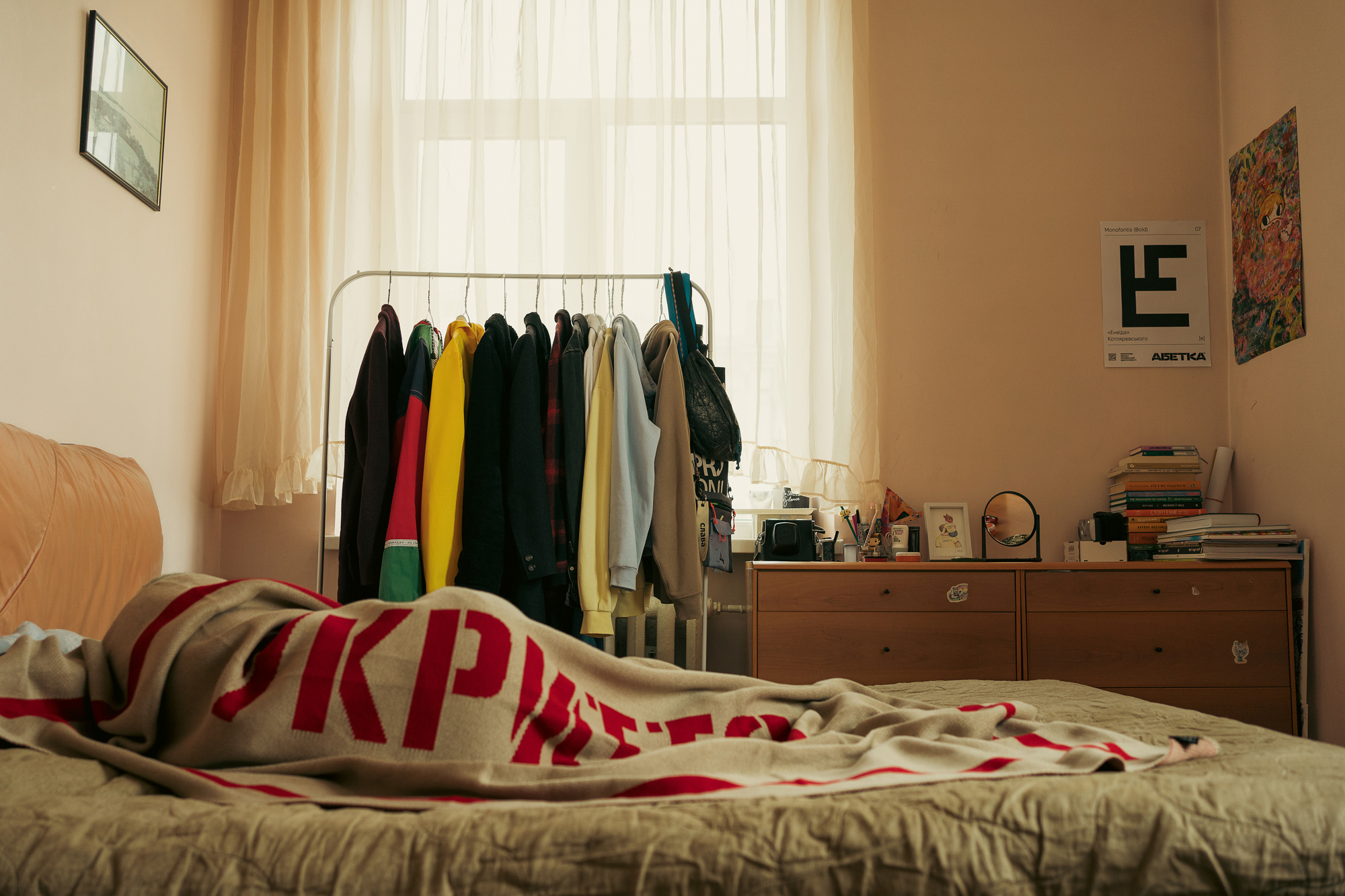
I love to draw, but photography interests me the most. The enjoyment of the process and the magical feeling inside arise exclusively from photography. However, it took me a long time to focus solely on photography. Last year, I quit my corporate job and now dedicate all my time to photography.
— Please tell us, do you have a visual arts education, and how did you begin your path in photography?
— Initially, I simply went out with my camera and photographed everything I liked. I tried to catch interesting light. I enjoyed observing how it reflected, passed through different objects, and highlighted certain details. Then I started photographing my friends, doing portrait shoots. I think my path into photography is quite standard.
Unfortunately, I don't have a visual arts education—I learn from my own mistakes and by analyzing the photographs of other photographers. I have often considered getting an education related to visual art. I submit my work to various mentorship programs, educational courses, and workshops to gain knowledge and hear the experiences of colleagues.
In 2023, IKEA announced a photo contest about home — Ikea Life at Home, IKEA Artist in Residence: Mentorship with Annie Leibovitz. Annie Leibovitz, whose work I truly love, was invited as the program mentor. It was also a wonderful opportunity to tell the world what home means to Ukrainians. The selection process was long, and in the final stage, participants were chosen personally by Annie Leibovitz. We had several online meetings, followed by an in-person meeting in Sweden. The project concluded with an exhibition in Paris, where we had the opportunity to display our work alongside Annie Leibovitz's photographs.
I learned a lot not only from Annie Leibovitz but also from the other mentees. It is important to apply for mentorship programs because they offer an opportunity to discuss photographs with colleagues and ask them for advice. Before this, there were no people in my life who were interested in photography. I consider my participation in this program very significant, as it boosted my self-confidence and gave me the impetus to pursue photography professionally.
— Who influenced your style of photography? Who did you look up to at the start of your career?
— The first famous photographer I learned about and started looking up to was Annie Leibovitz. That is why it was so important and symbolic for me to meet her in person. I was interested in reading about the start of her career, as I always loved rock music and imagined what it must have been like to tour with The Rolling Stones. I believe many people have influenced and continue to influence me. All my favorite photographers are like pieces of a puzzle that I am putting together for myself. Now I focus more on Ukrainian female and male photographers, but if I were to list them, the list would be very long. I am also inspired by painting and films. I save specific frames for myself to examine them later, thinking about composition and lighting. I really like the French black-and-white film La Haine (Hate) from 1995, with its excellent cinematography. Or the movie There Will Be Blood, where the first 15 minutes of the film have no dialogue—only beautiful imagery. However, all these are films from the past. Since the start of the full-scale Russian invasion, I find it difficult to watch serious cinema; I just want to distract myself with simple, plot-driven movies or series.
— Which media outlets are you currently collaborating with? Do you define yourself as a freelance photographer?
— I see myself as a documentary photographer, and I am currently experimenting with art photography. I photograph thoughtfully and slowly. When I am shooting, it's as if I am in my own world, and sometimes it's even difficult for me to communicate everything that is happening in my head during the shoot. I need time to look and think.
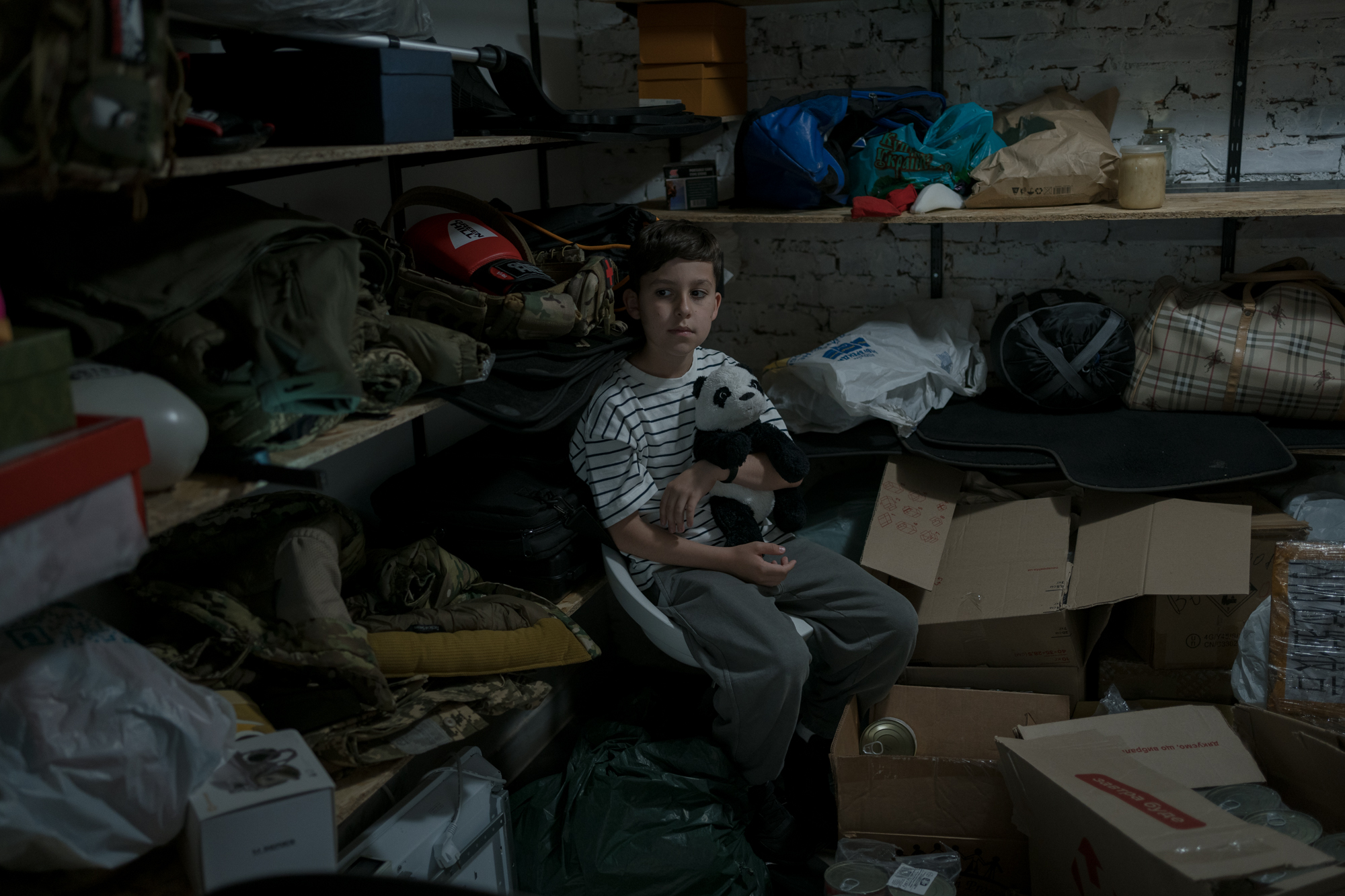
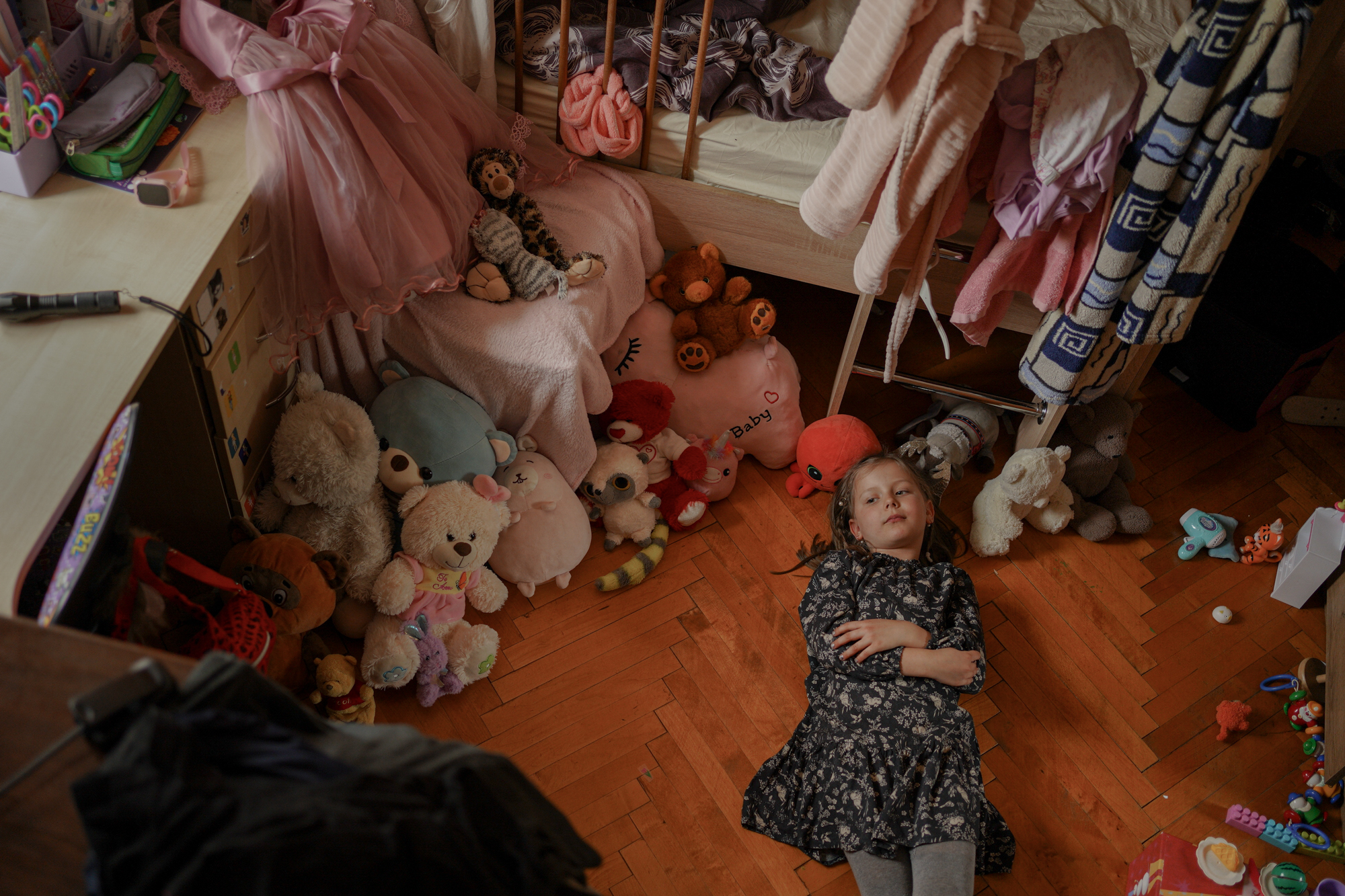
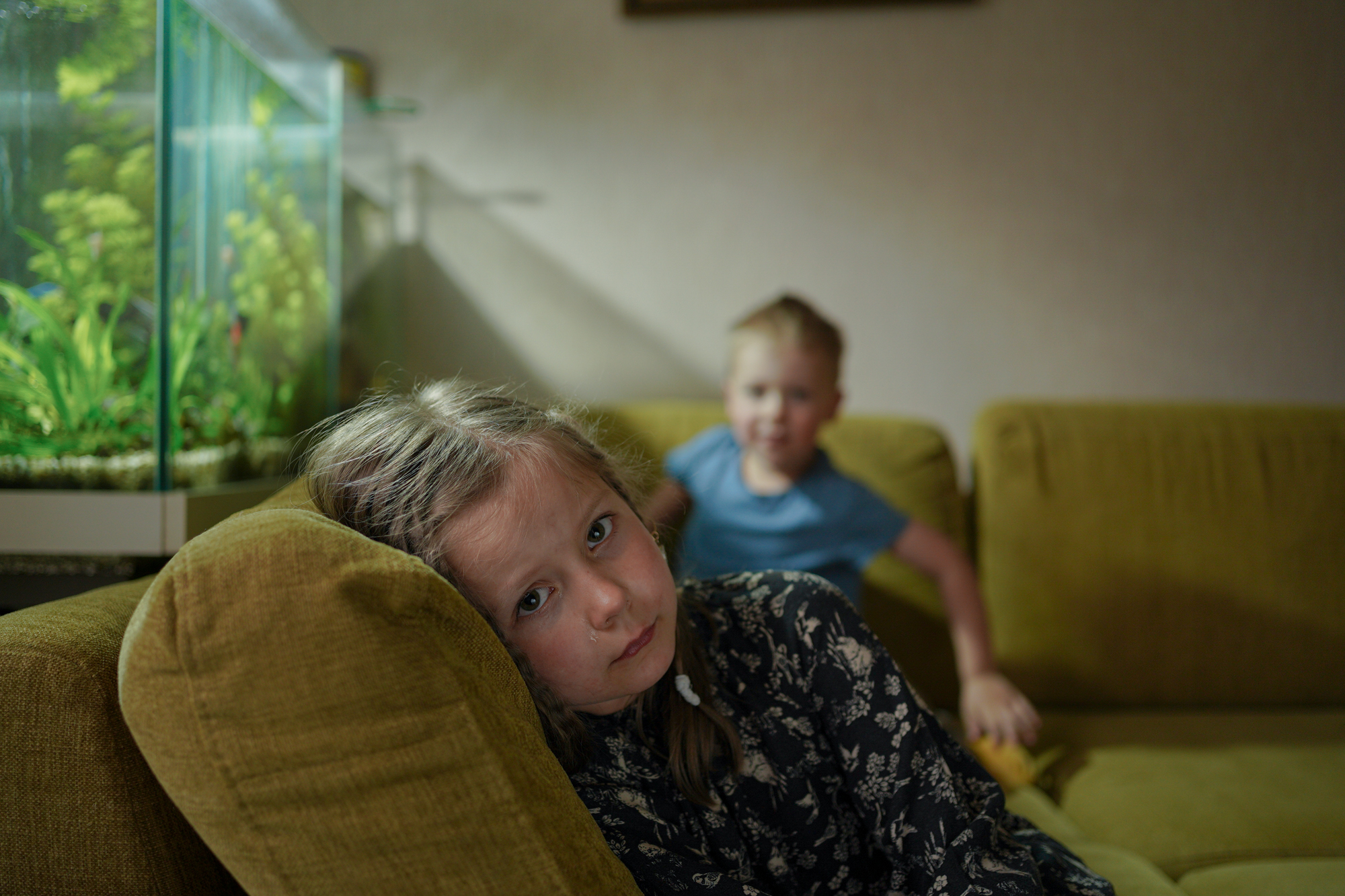
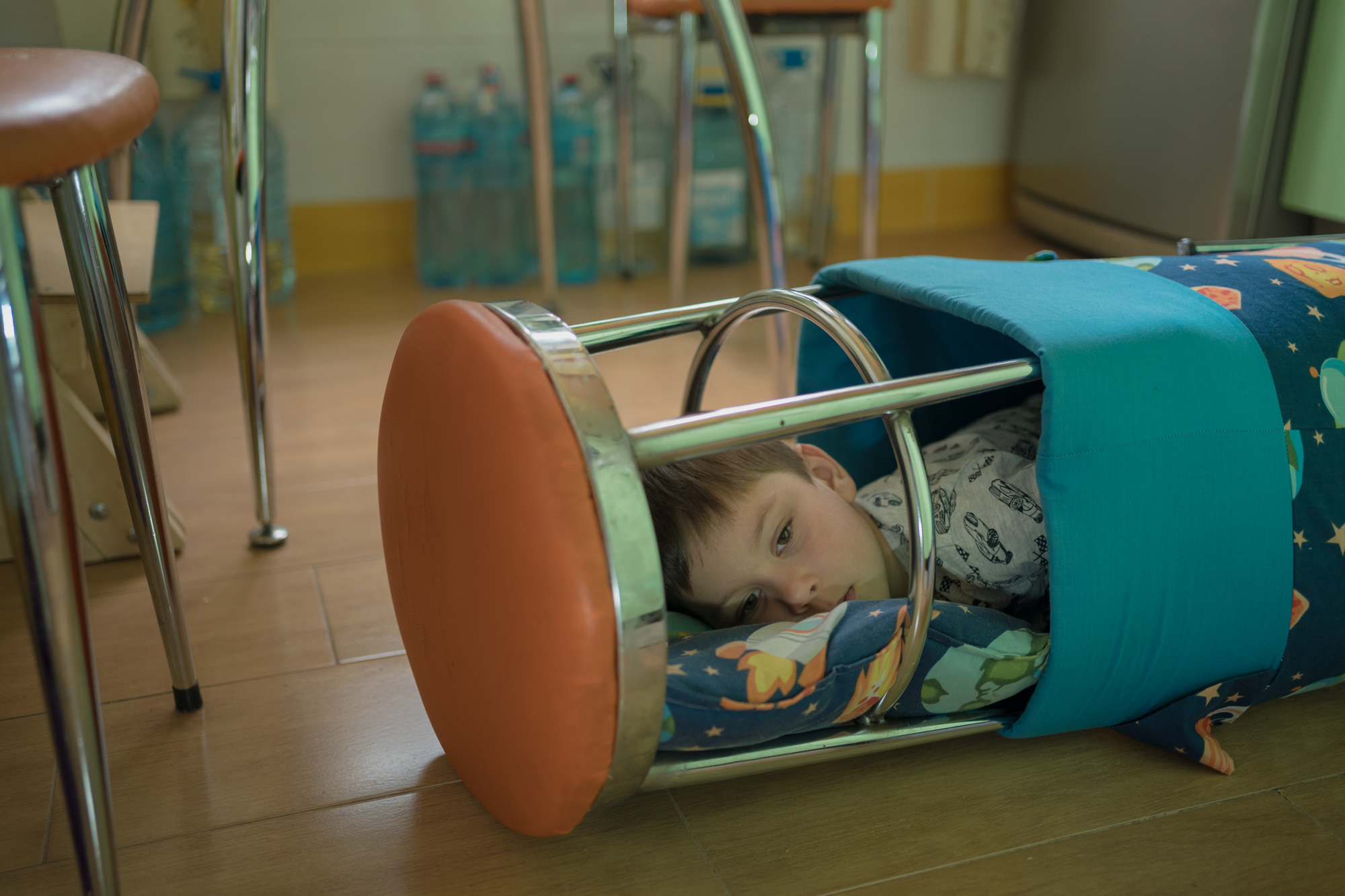
Of course, I also work on reports for media outlets. I interned at The Kyiv Independent — I really liked their team, it was interesting to collaborate with photo editor Irynka Hromotska, and I am very grateful to her for the knowledge and experience I gained. I created a photo project about how children experience the war. How they see it through their honest and naive eyes. Working with children was truly exhausting but also exciting. I conducted a short interview with them, and I hope that those who read it smiled at their answers, just as I did. My internship concluded with the publication of the project Growing up under missiles — Ukrainian childhoods shaped by war in The Kyiv Independent. I plan to grow and collaborate with international media as well.
— What projects did you work on at the beginning of your photography career?
— When I started doing photography, I saw many examples of commercial shoots — you take a series of photos, hand them over to the client, and get paid. For a long time, I tried to work that way too, but that kind of work didn't resonate with me at all — simply taking beautiful pictures of people. Because of this, I thought I was failing and gave up photography for a while. Then I got involved in the IKEA project and realized which direction I wanted to go. I'm interested in talking to people, deeply immersing myself in a topic, and working on it over a long period.
— How have your personal priorities in photography changed since the start of the full-scale war?
— The full-scale Russian invasion significantly affected me and the topics I want to work on. I am a very principled person, and this has only intensified since the start of the full-scale war. It's hard to be an artist during this time, experiencing life during the war alongside the heroes and transforming that experience through photographs.
I have no illusions that photography can change anything. I only hope that if a photograph prompts at least one person to have a new thought, doesn't leave them indifferent, or makes them reflect a little, that will already be a good result. At the exhibition in Paris, I saw people approaching the photographs about Ukraine, examining them emotionally, and in that moment, I thought that taking pictures is truly important.
The war didn't so much change my view of the world as it helped me understand that life is fragile and it's important to cherish every moment. Working at a job I never loved no longer made sense. I decided that if I liked photography and hadn't gotten around to my favorite pursuit for so many years, the time was now, because there might not be another chance.
— What aspects of the full-scale war do you highlight in your projects? Please tell us about your photo project I’m not fine!
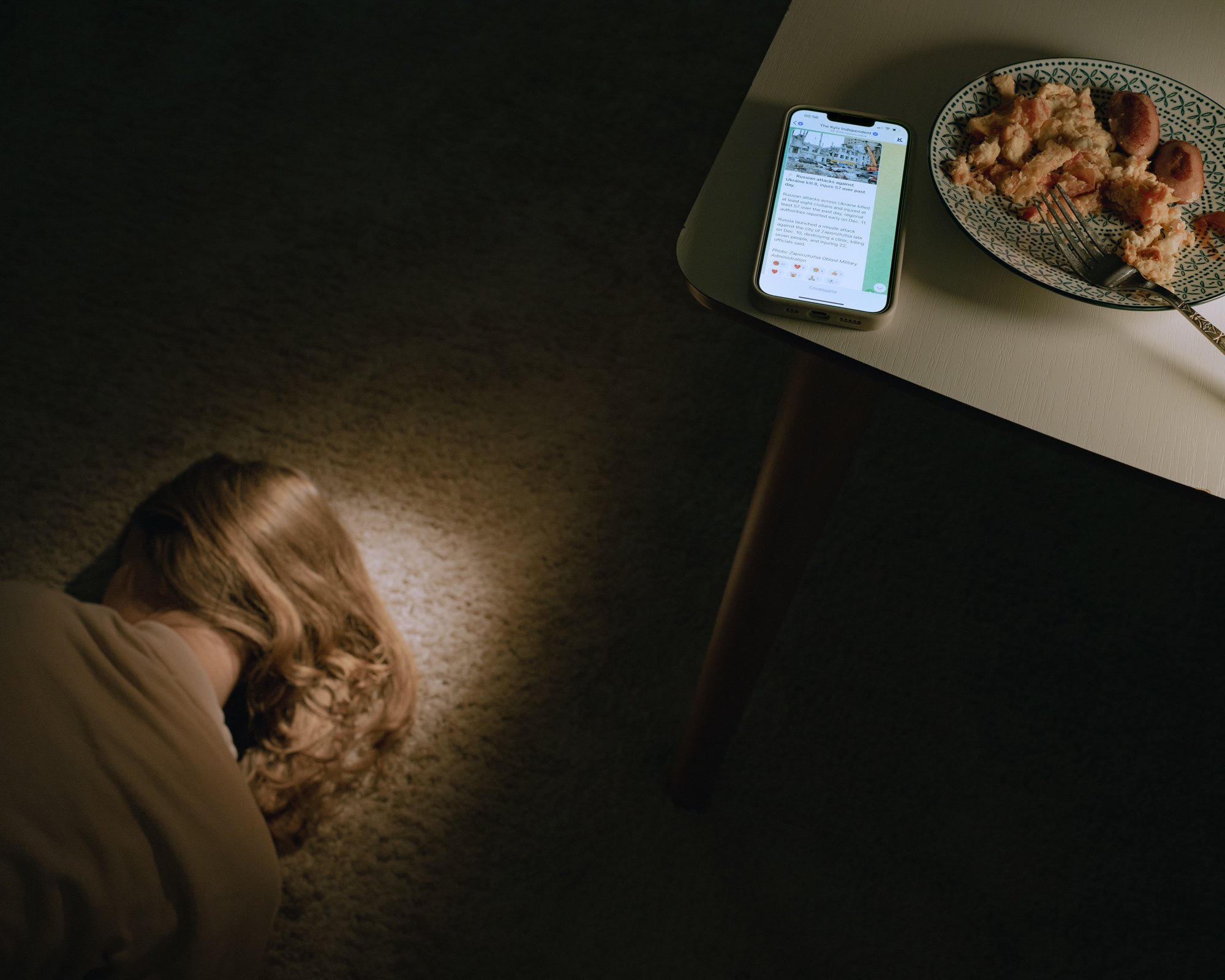
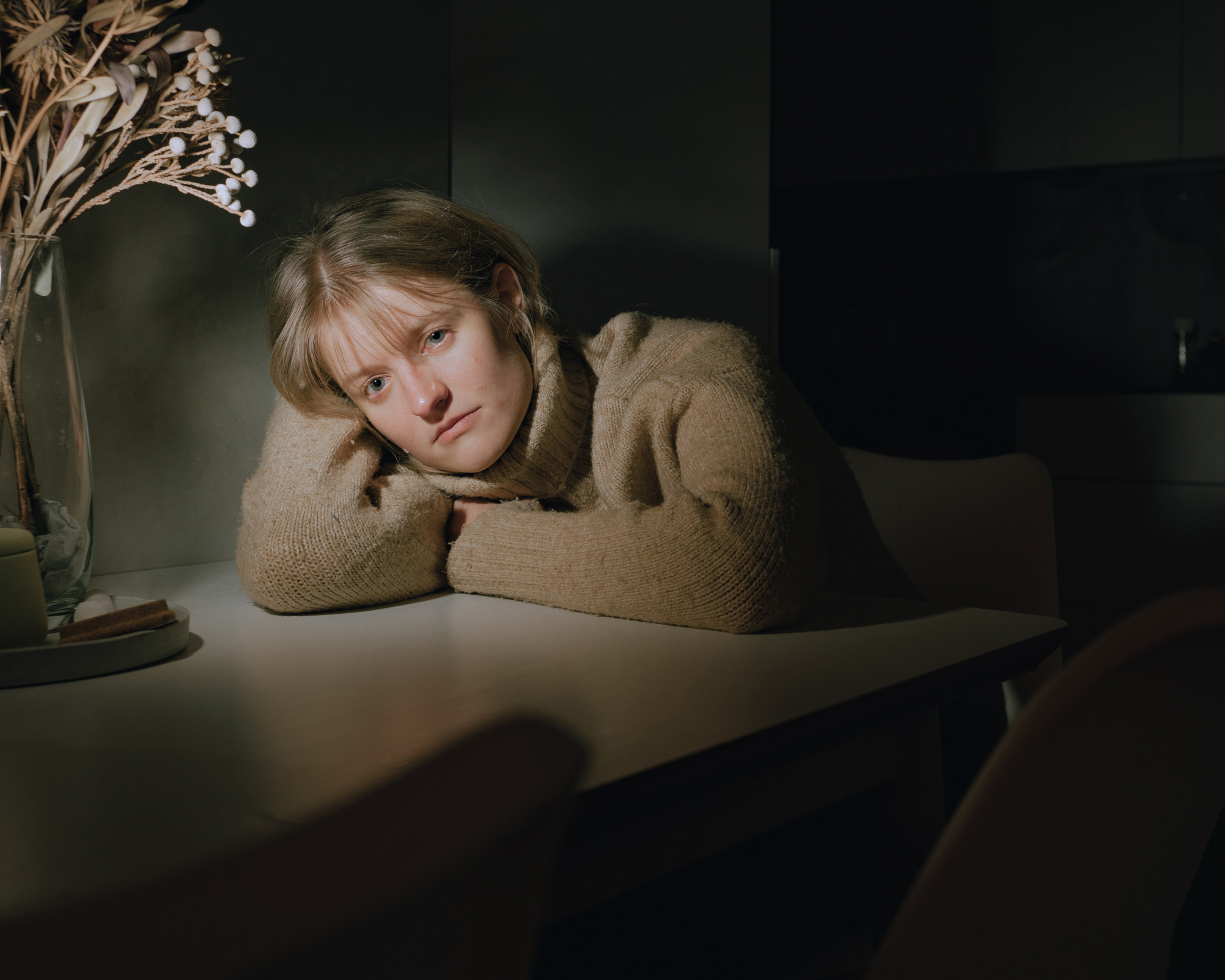
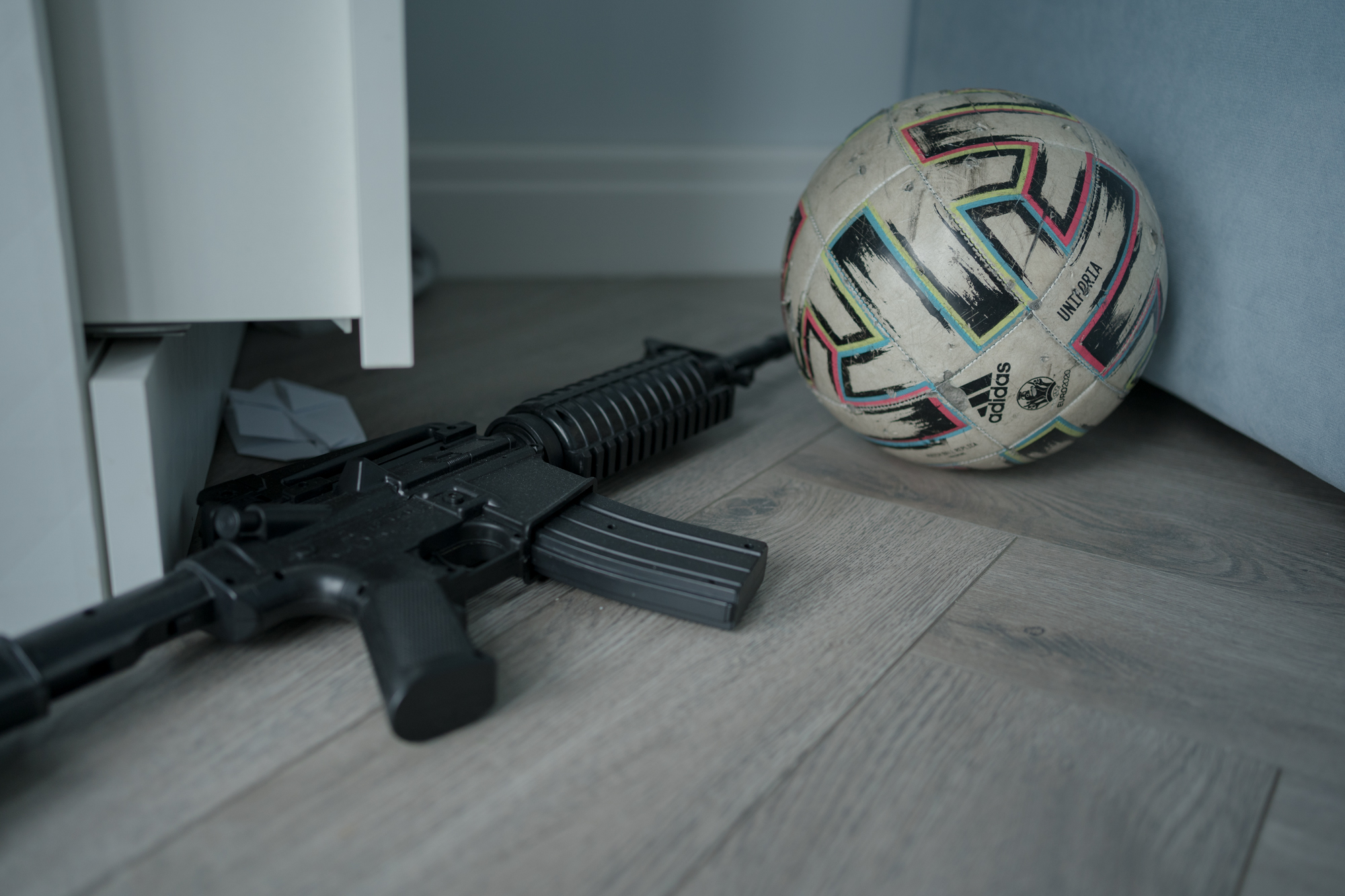
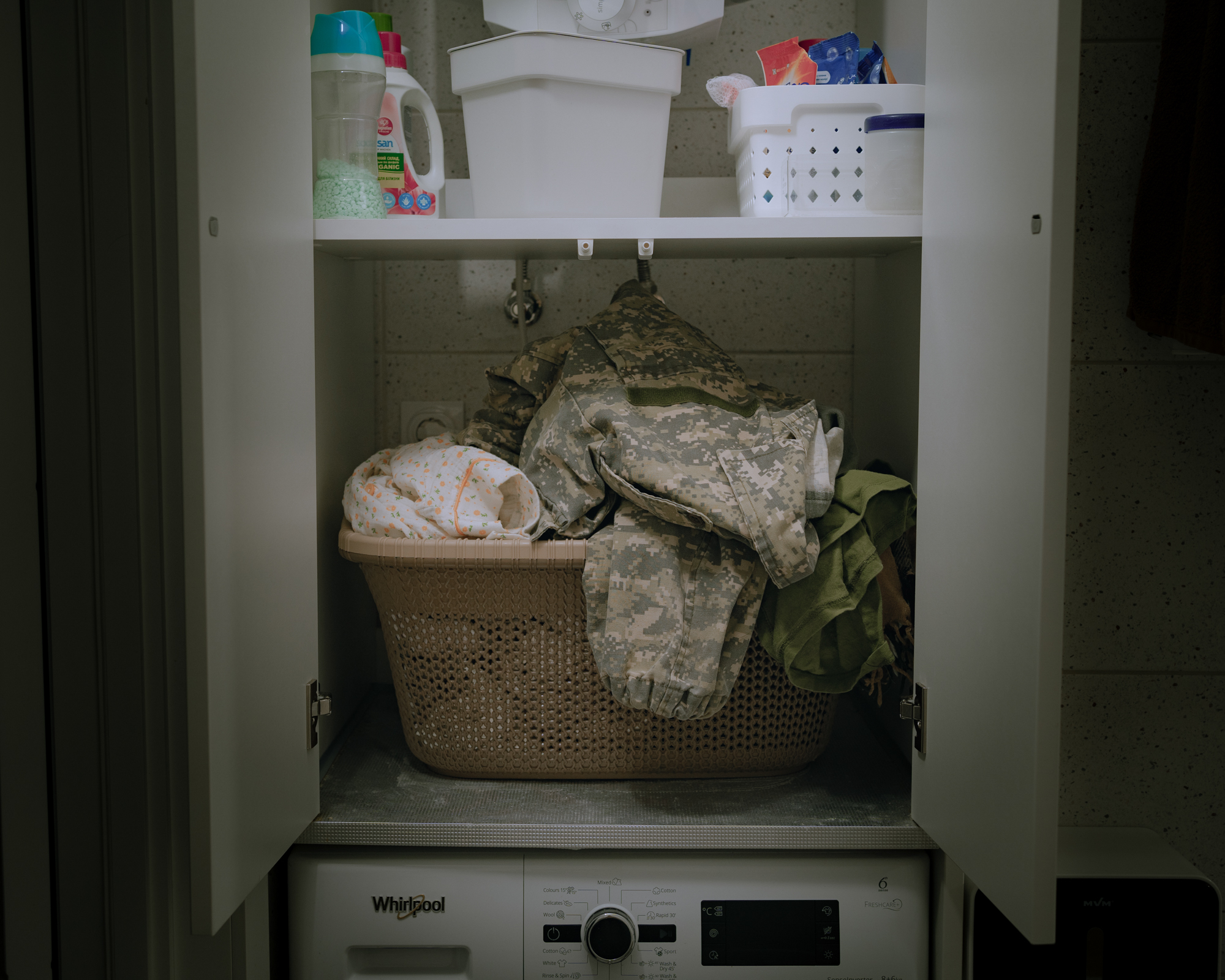
— I am working on the project I’m not fine — about mental health and the psychological impact of the war on Ukrainians. The topic deeply resonates with me — I think about it often, and I suffer greatly from it. I lack the courage to go to the front lines, so I focus on topics related to the consequences of the war.
The story is personal because our collective experience and shared trauma are formed through individual stories. Considering our history and our past, and its influence on us now, I understand what is happening currently and how it might affect future generations. I am interested in analyzing and documenting this to provide more groundwork for reflection and analysis of what is happening to all of us. The project currently has one story, but I am now working on subsequent ones.
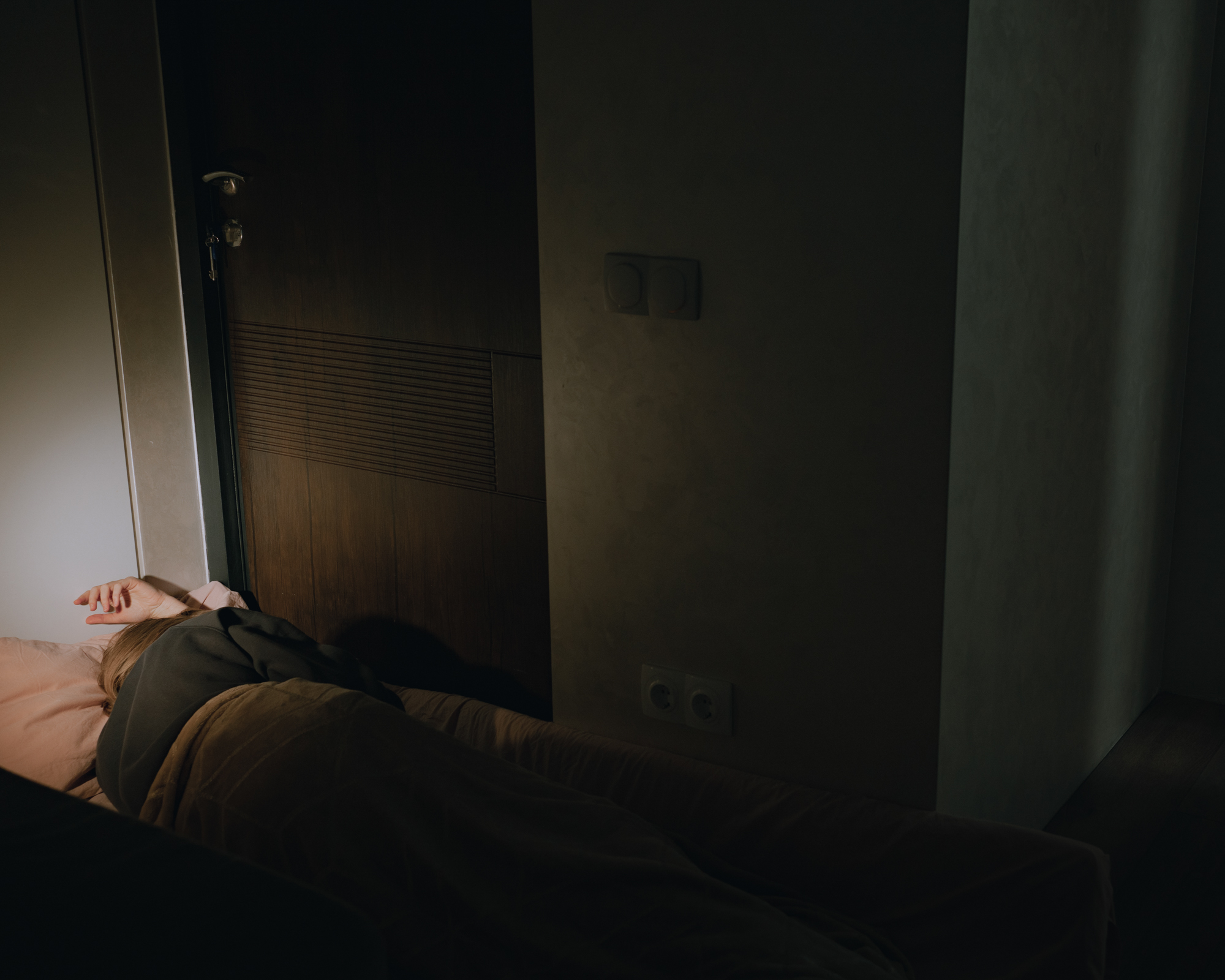
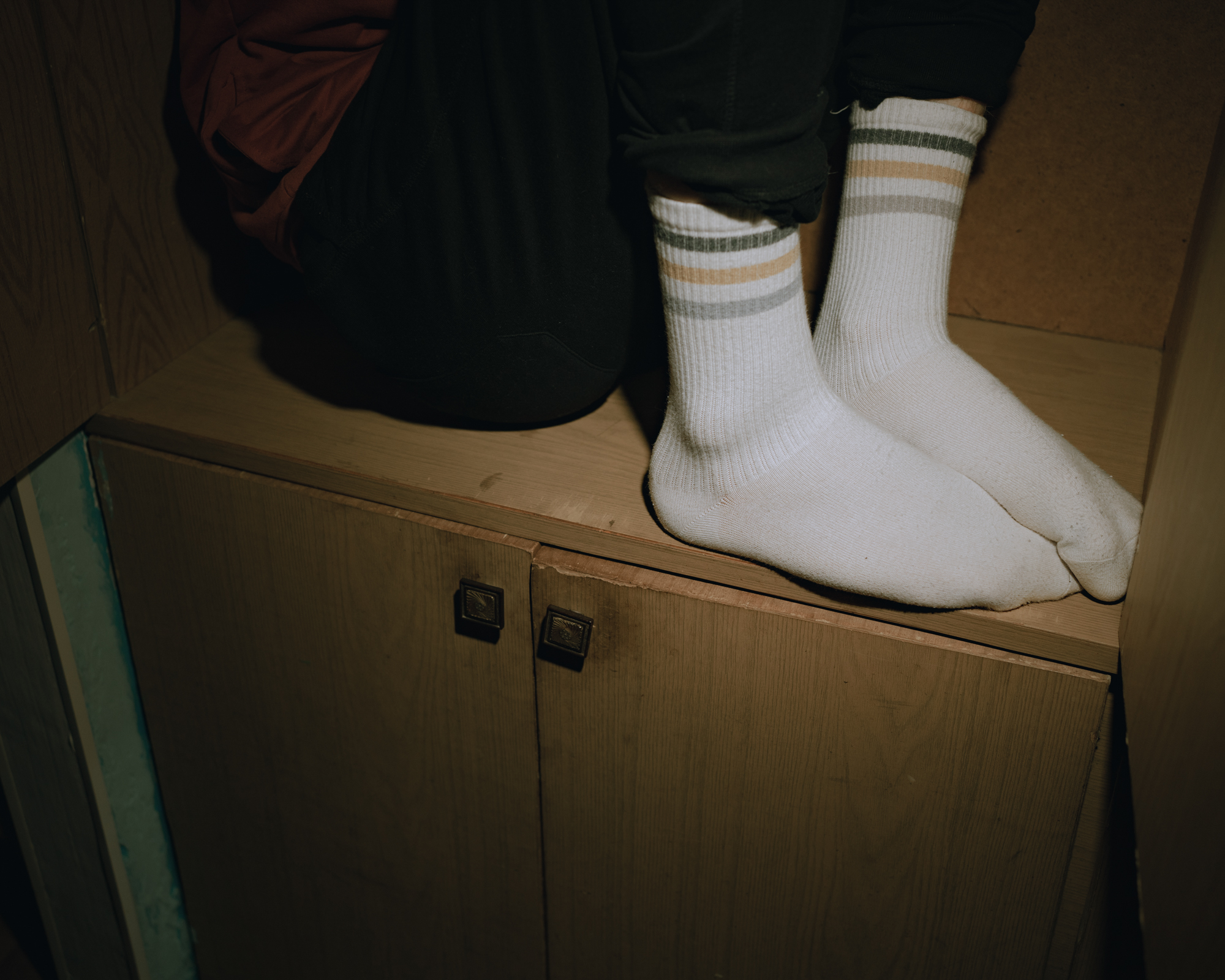
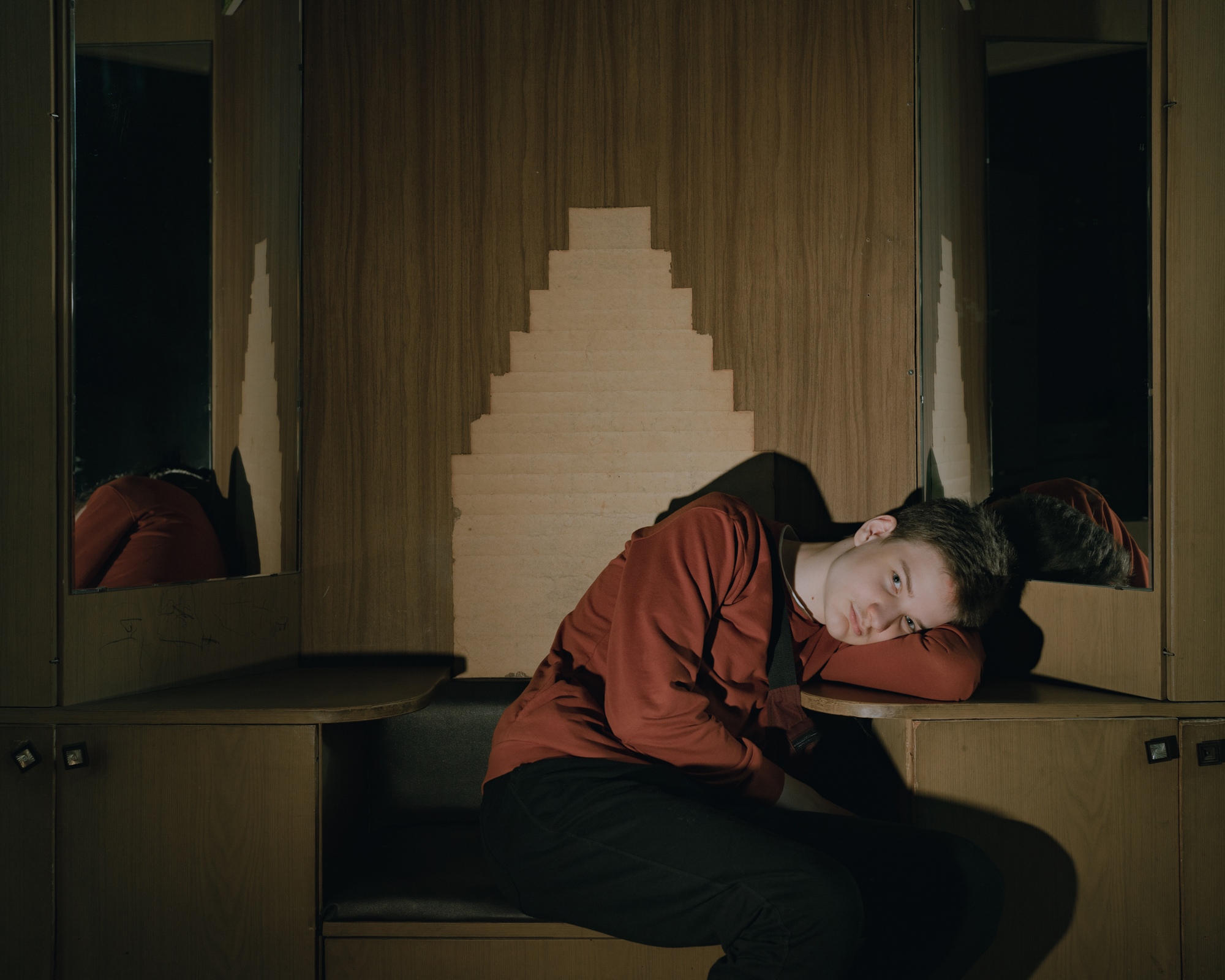
The idea for the project I’m not fine took shape in 2022. Countless emotions—misunderstanding, hopelessness, despair, anger, grief, etc.—were accumulating inside and had no outlet. At some point, I realized I needed to process these emotions somehow, to transform them into photographs. Furthermore, my partner joined the military, and I was left alone at home. I am proud of him and his decision. For me, this was a new experience—I had to learn to live by myself, and this coincided with constant shelling and blackouts in Kyiv.
During this time, I received a letter from Annie Leibovitz, informing me that I had reached the final of the Saltzman-Leibovitz Photography Prize 2025. They had not announced an open call but had selected the finalists themselves, and I needed to submit a new project. I created the photo story I’m not fine in a matter of weeks. I was going through a very difficult emotional state, and I hope I never feel that bad again. However, at that time, I felt no positive emotions, so I created this project — dark, but sincere. I understood from the feedback that this project is relatable and necessary for many people. I won second place in the Saltzman-Leibovitz Photography Prize for it, and it was presented at Photo London 2025.
— Please tell us about the visual language of your photo stories.
— My visual language is still forming — I am working on it. I think it will change over time and with new experiences. However, light and color are always important to me in photography. They are part of the story I am working on, which is why I never shoot black-and-white photos. Although I really love monochrome photographs. Colors convey and create the mood in a photograph, while light sets the atmosphere and emotions. Color and light are like additional characters in the photo for me.
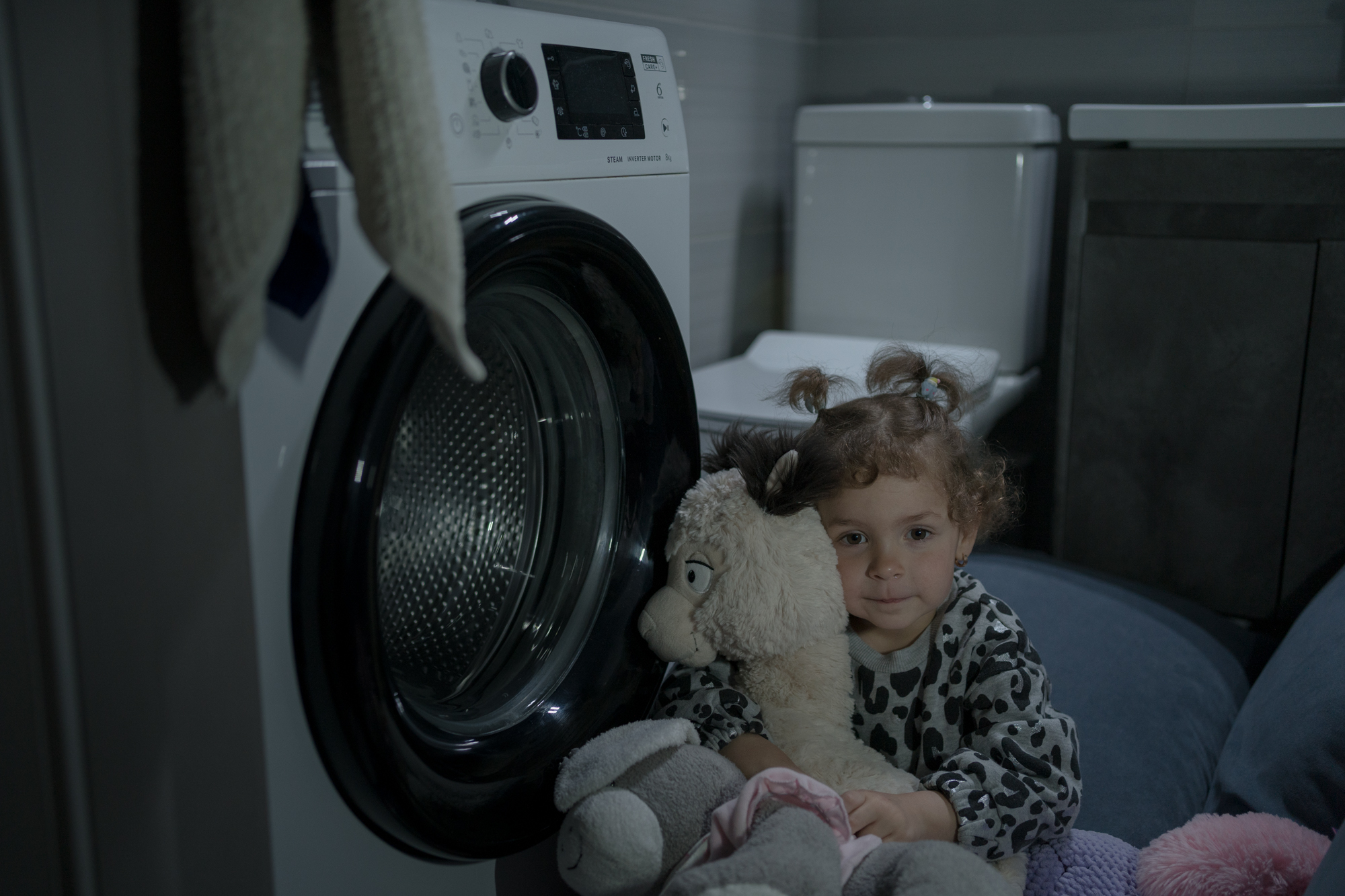
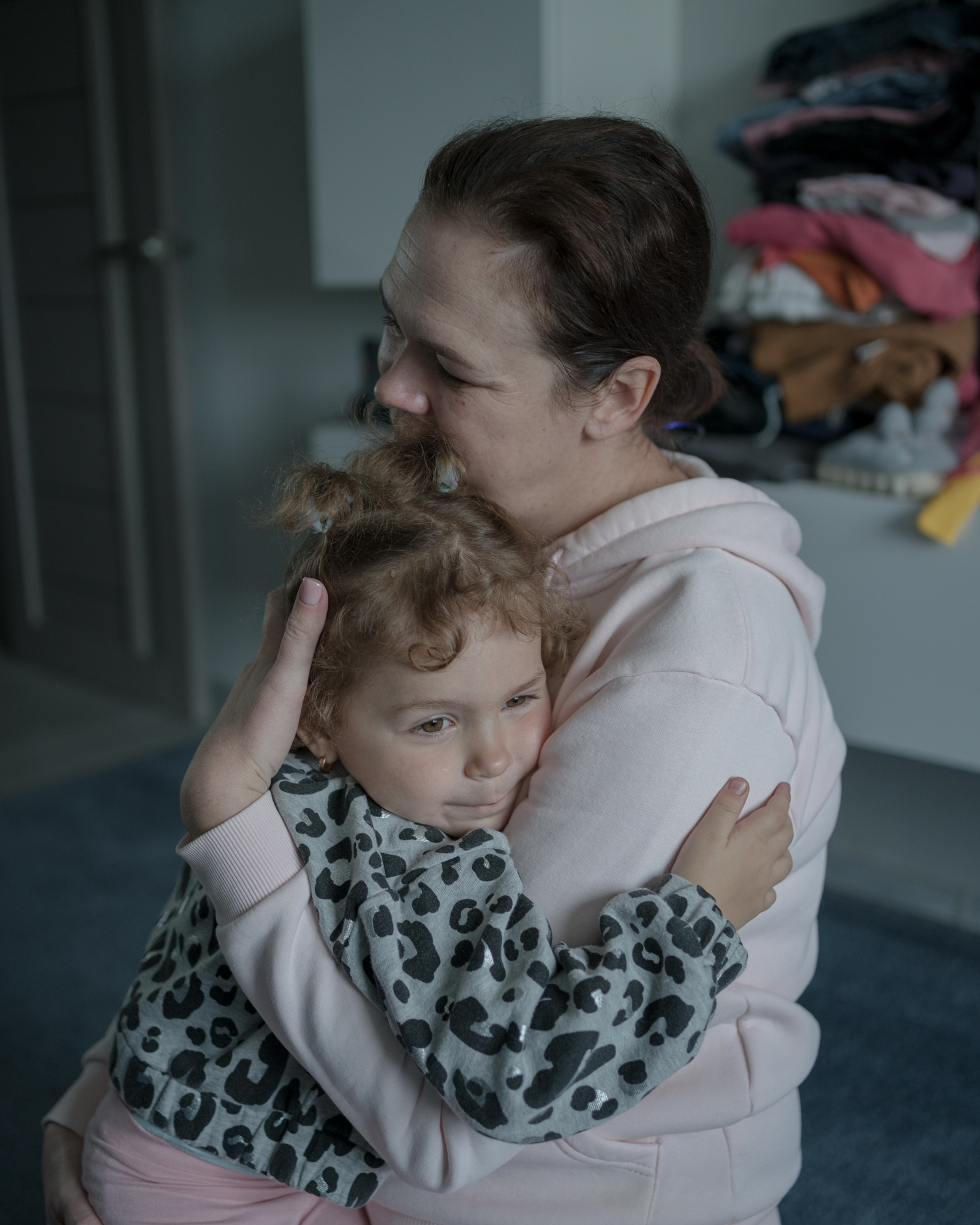
I really love taking portraits in the environment, so-called environmental portraits. I am learning to work on close-up portraits, but the surrounding context is always important to me. I joke that I very often take portraits where you still have to find the person.
— To what extent does photography help you cope with your own emotions? How has working as a photographer changed you during the full-scale war?
— It all depends on the stories and topics I work on. Sometimes photographs help both me and the subjects of my stories to reflect on and process certain events. I am currently working on another series of photos for the I’m not fine project. The subject of the shoots shares that the process of photography is a kind of therapy for him because he can share his story.
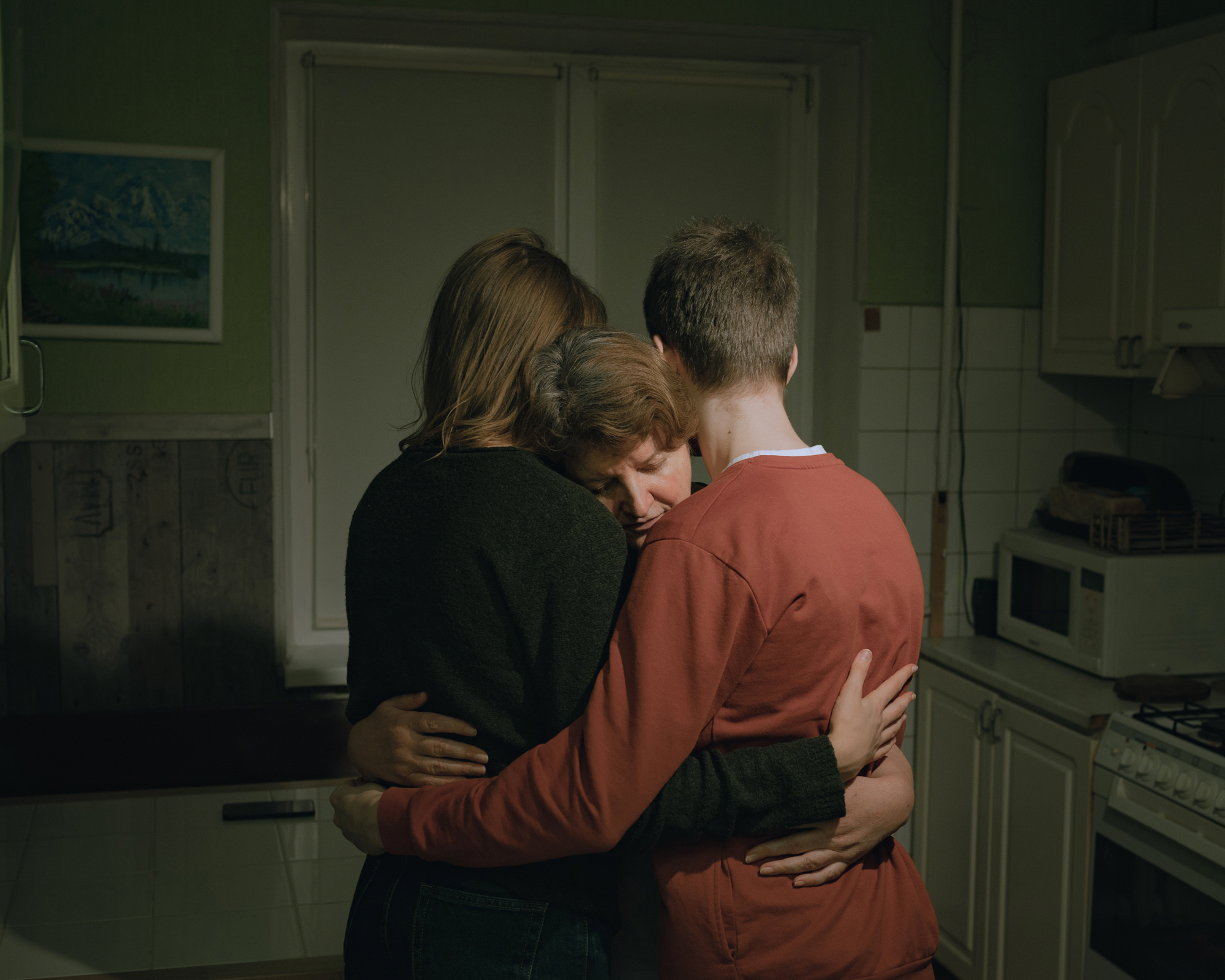
In contrast, when I photographed a soldier who had just been released from captivity, immediately after the shoot, I went outside, sat on a bench, and cried for a long time. Our work is a constant balance of emotions, and sometimes it is very difficult to maintain it.
I probably react to certain situations more cynically now, unfortunately, than before the full-scale war began. Sometimes it seems that nothing in this world makes sense anymore. However, when I start asking myself what time was better than now, I cannot find a single era in human history. The problems probably began when humanity came into existence. Nevertheless, life must be lived, and I cannot live it indifferently.
Ielena Kalinichenko – a Ukrainian documentary photographer and photojournalist. Her work explores personal stories of war and human resilience. Photography is not only her passion but also a way of interacting with the world. She is interested in experimenting with creative approaches to documentary photography. She decided to stay in Kyiv during the war, combining office work to support her country with her desire to photograph. Last year, she quit her corporate job and completely focused on photography.
Ielena learns independently and through observing the work of others. She aims to become a photographer whose work stays with people.
Photographer's Instagram
The material was prepared by:
Topic Researcher, Text Author: Katia Moskalyuk
Visual Editor: Vladyslav Krasnoshchok
Literary Editor: Yuliia Futei


.jpg)