%20(750%20x%20360%20%D0%BF%D1%96%D0%BA%D1%81.)%20(2000%20x%20800%20%D0%BF%D1%96%D0%BA%D1%81.)%20(3).png)
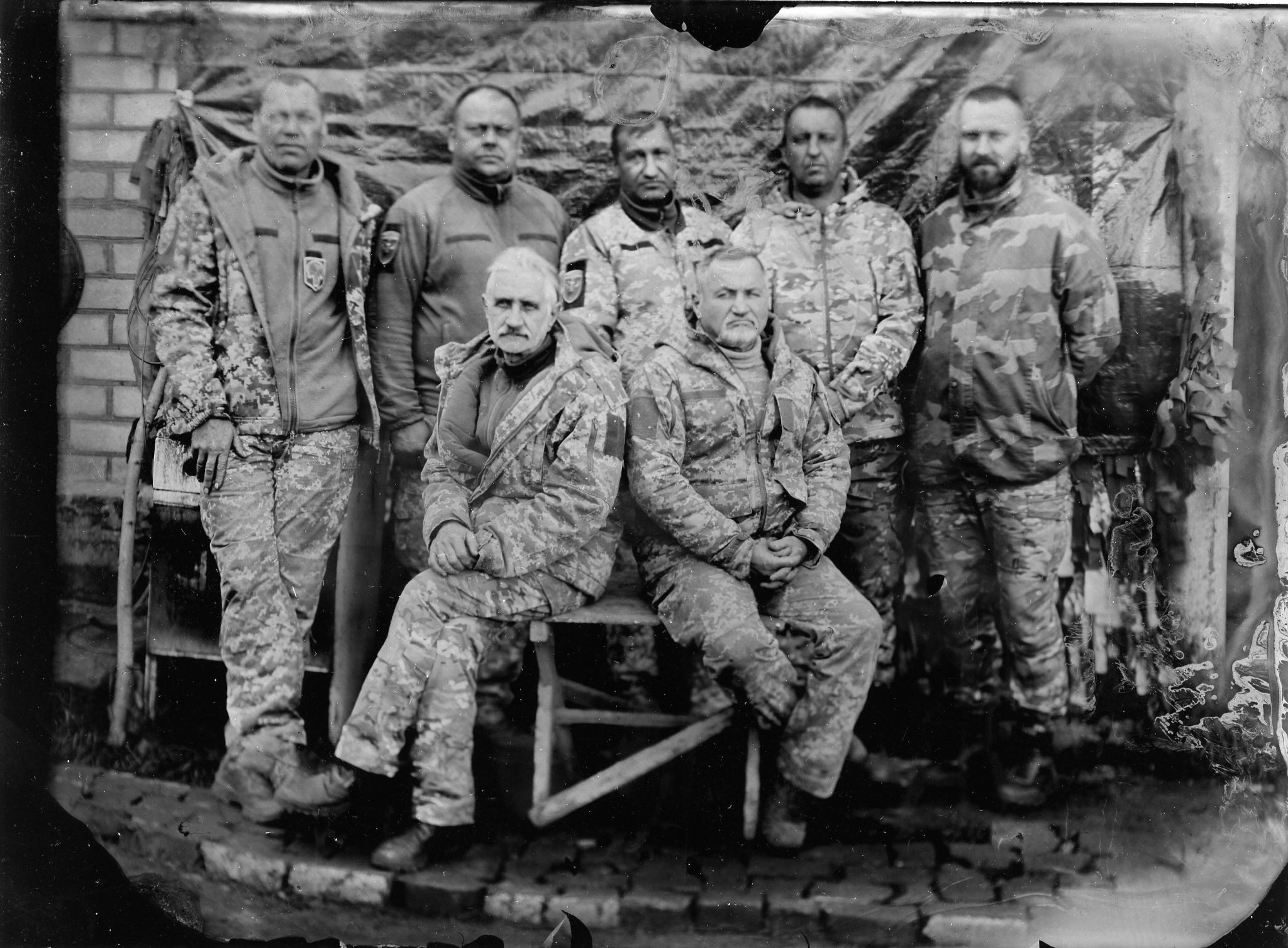
The exposure time for an ambrotype lasts, on average, seven seconds. In the reality of war, this time can transform into a precarious pause between explosions, a moment in which many people perish, or the instant when light falls onto a glass plate and preserves the image of a soldier. During this time, the fighter is left alone with himself, and his seven seconds of life remain on the glass forever.
“I watched the creation of an image using collodion, silver, and glass, and the thought of trying it myself never left me”
At an art residency in Lithuania, I met photo artist Artūras Šeštokas, who specializes in creating ambrotypes. He, together with Lithuanian photographer and curator Darius Vaichekauskas, won a grant and used the funds to set up an ambrotype studio. It was in this studio that I first saw how an ambrotype is made, and I was completely captivated by the process. I immediately wanted to try working in this technique myself.
Of course, I didn't even imagine where to start. Mastering the creation of ambrotypes on my own seemed impossible. Ukrainian masters would hardly share their experience—everyone has their own work and limited time. Nevertheless, I managed to visit Artūras Šeštokas with my students. In Kherson, I met several times with Israeli documentary photographer and director Eduard Kaprov, who became known for documenting military conflicts using ambrotype. I watched the creation of an image using collodion, silver, and glass, and the thought of trying it myself never left me.
I was lucky enough to meet Yurii Kravchenko, a doctor and head of the Kharkiv Regional Bureau of Forensic Medical Examination, who is passionate about photography, including ambrotype. Incidentally, he was the one who organized the expert work concerning the victims of the "Boeing 777-200" flight MH17 air crash in 2014. In Kravchenko's office, there are many portraits of people famous in Kharkiv and beyond whom he photographed in his studio.
I told Yurii Mykolaiovych that I had been interested in the ambrotype technique for a long time, and he promised to show me everything and teach me. I bought reagents, an old wooden camera, and a good light-sensitive lens and began to immerse myself in this magical process of ambrotype. I came to Yurii Kravchenko's studio several times and took photographs there. Yurii Mykolaiovych has a masterful command of the ambrotype technique, so he often criticizes my overexposed or underexposed shots. He strives for everything to be perfect.
I really like the process of creating an ambrotype—it is manual work. I actually love artifacts—permissible technical imperfections that arise during the creation of the image. However, not all artifacts are valued; sometimes it's simply a defect that can be eliminated after developing the image. Kaprov taught me this.
“Shooting in the ambrotype technique, for me, is associated with the Crimean War and the American Civil War”
Since 2022, I have been actively cooperating with Alla Bovt, the head of the communications department of the 16th Army Corps. I photograph a lot for the military and take film shots for my own projects. At the end of last year, Alla came up with the idea of making a calendar for the military, and I had just started working with ambrotypes at that time. We agreed that I would photograph with a medium-format film camera and try to make ambrotypes, if successful.
Shooting in the ambrotype technique, for me, is associated with the Crimean War and the American Civil War. For example, British photographer Roger Fenton was the first person officially sent to the front by the government and publishers to photograph the course of the Crimean War. He created over 350 large-format shots that made up the world's first photo report about the war. He mostly photographed portraits of the command and the daily life of the soldiers, and also shot landscapes after battles. His most famous photograph is "The Valley of the Shadow of Death," which shows a road strewn with cannonballs. He could not photograph combat operations because the technical capabilities of the camera—long exposure and a complex technical process of obtaining images—did not allow it.
Roger Fenton photographed the war, if one can say so, in a positive light—he made portraits of heroes. In contrast, the images from the American Civil War were a shock to society—people saw battlefields strewn with the dead for the first time. Photographers shot the Civil War harshly—they had no assignment from politicians and sought to convey all the horrors of war in their photographs.
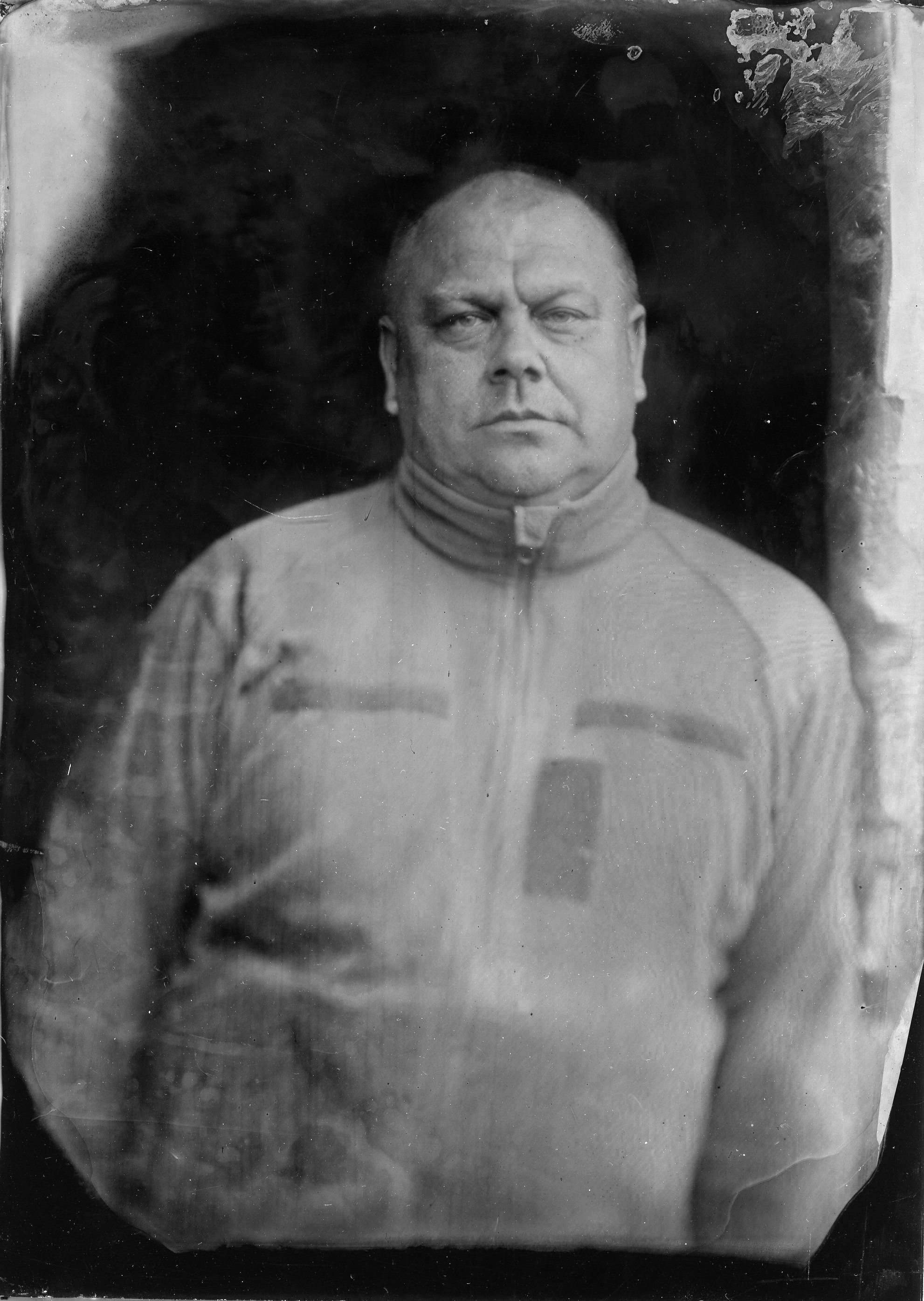

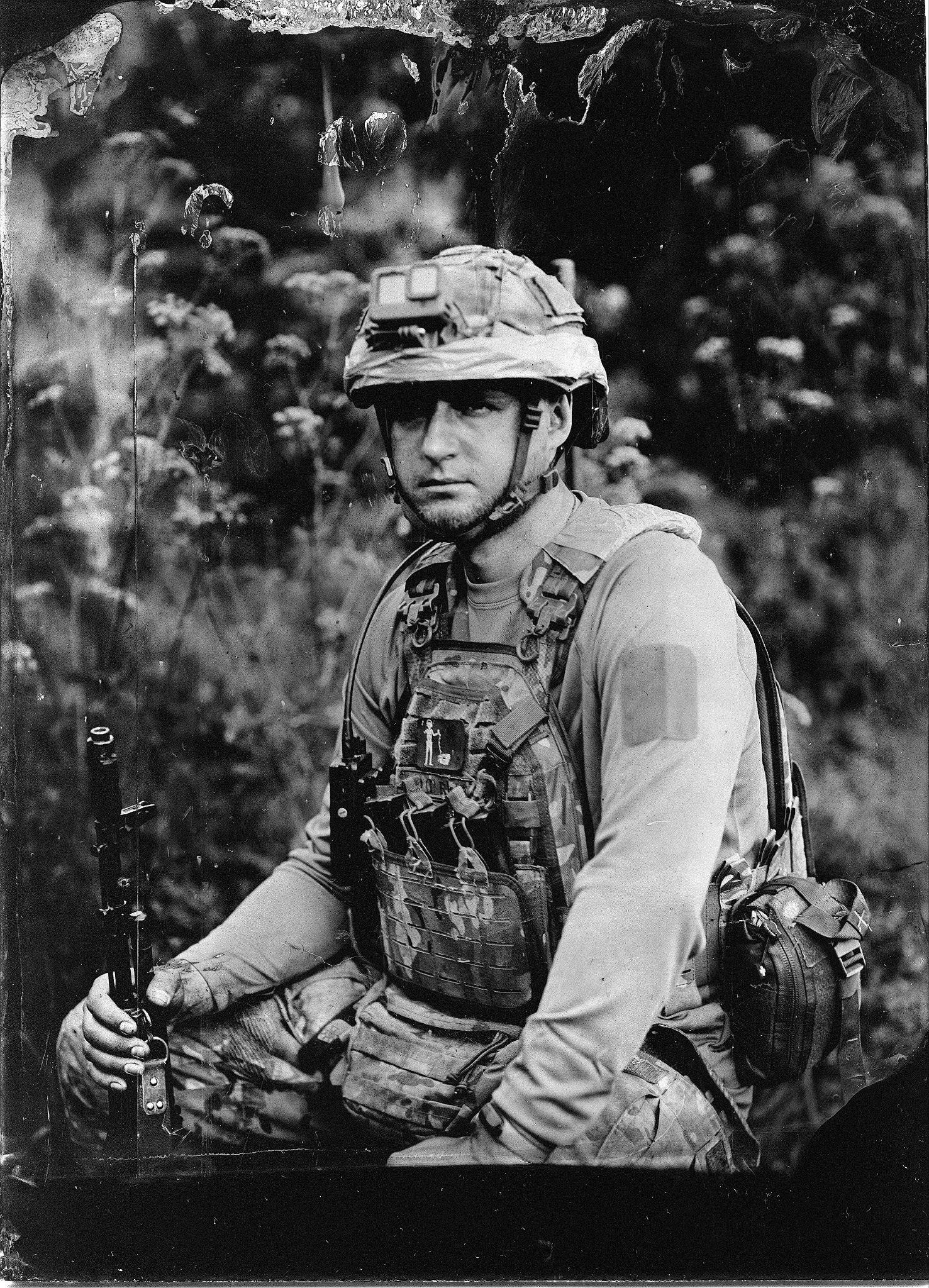
I am inspired by the photographs of Roger Fenton, Alexander Gardner, Timothy O’Sullivan, Mathew Brady, and his team of photojournalists. This material is interesting to me because I have been photographing the war myself for over ten years. In 2014, for example, I traveled with colleagues to the Perekop Isthmus—photographing border guards. In 2015, I ended up in the Donetsk region due to family circumstances but took my camera with me. I am still surprised that I was not searched at the so-called "DNR" checkpoint when I was returning home with photographs.
“There is a danger of immersing yourself completely in the technical side of the ambrotype process and forgetting the purpose of image creation”
From my first trip to the 16th Corps, I brought back not ambrotypes, but a stack of flawed glass. I deliberately kept these spoiled plates as a keepsake. I was photographing in difficult conditions—we drove a lot on broken roads, and dust was everywhere. Ambrotype is a sterile technology that does not tolerate dirt. However, we had dust and mud in every crack of our car, and consequently, it floated in the reagents and stuck to the glass. It was very hot, and the collodion, which should pour easily onto the plate, turned into a thick substance and slid off the glass. Glass is a fragile material, and I simply broke several ambrotypes. Out of the first forty glass plates, I only managed to make 15 images.
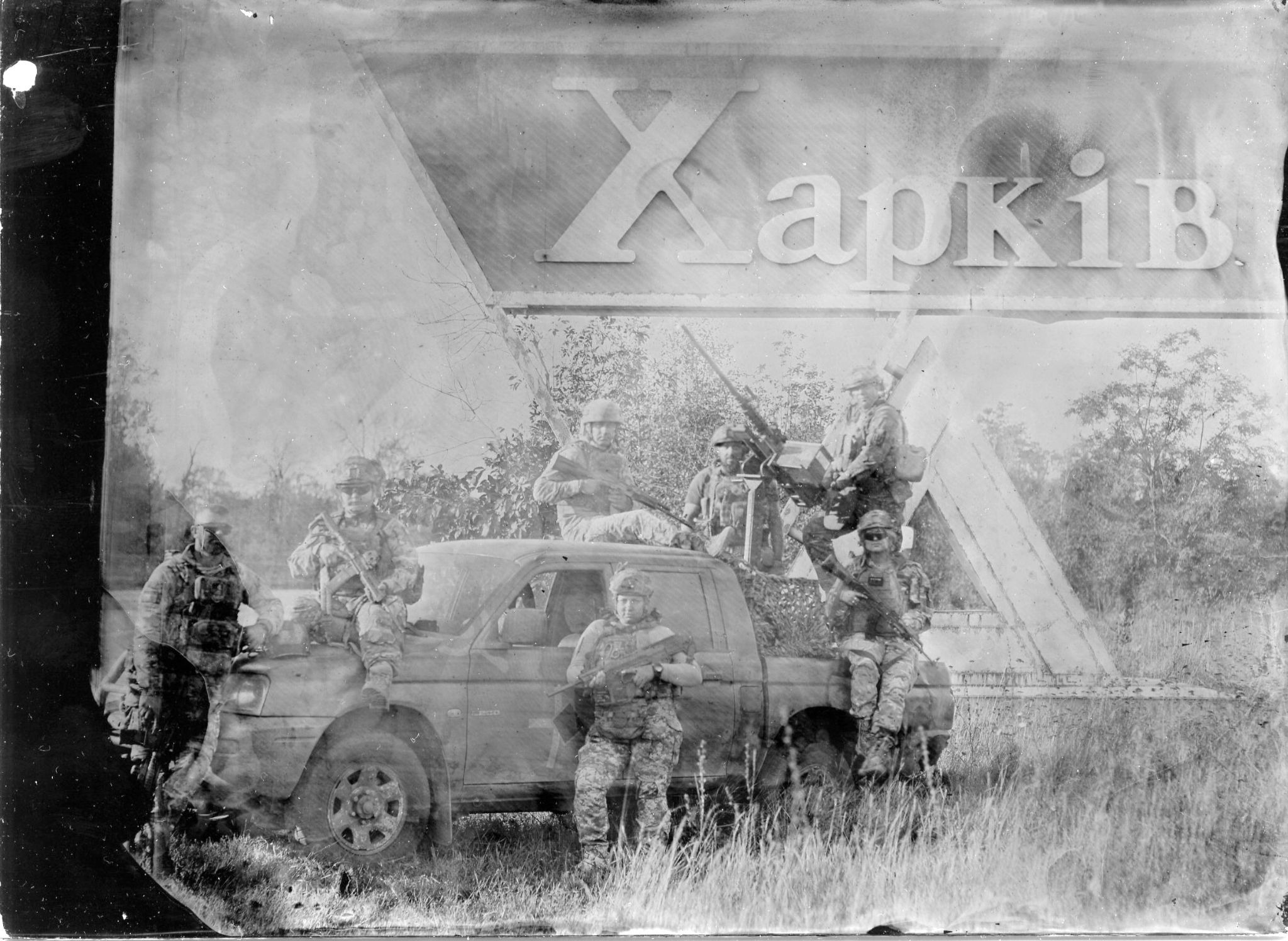
The first experience of shooting ambrotypes was difficult, but I still decided to continue. Together with communicator Alla Bovt, I traveled to the military of the 16th Corps, talked with them, and took photographs. I do not have a specialized portable laboratory—a darkroom—which is necessary for shooting ambrotypes. One time, I set up a "darkroom" inside a "Bohdana" howitzer. They locked me inside, and I made ambrotypes among the combat gear.
The creation of ambrotypes occurs in several stages: applying light-sensitive reagents to the glass, shooting, and developing. The first and last processes require a space tightly closed off from light, otherwise the glass plate will be "exposed," like film or photographic paper. Furthermore, the photograph on the glass must be developed immediately — otherwise, the image will be ruined. As it turned out, making an ambrotype in the field is quite difficult.
I really like how ambrotypes look. I appreciate the aesthetic of these images. However, this technology is quite complex, and to get high-quality images, you need to shoot a lot and automate all the processes of creating an ambrotype. Otherwise, there is a danger of immersing yourself completely in the technical side of the process and forgetting the purpose of their creation.
“I catch myself, like Roger Fenton in his time, wanting to show the military only as heroes”
I want the people in the photographs to be natural and without additional tragic overtones. It seems to me that a turning point is beginning in our war, that our military, no matter how difficult it is for them, have gained confidence in their abilities. I understand how hard every day and every centimeter of the war is for us, but we have realized our strength. I catch myself, like Roger Fenton in his time, wanting to show the military only as heroes. I want to tell how proud we are of them.
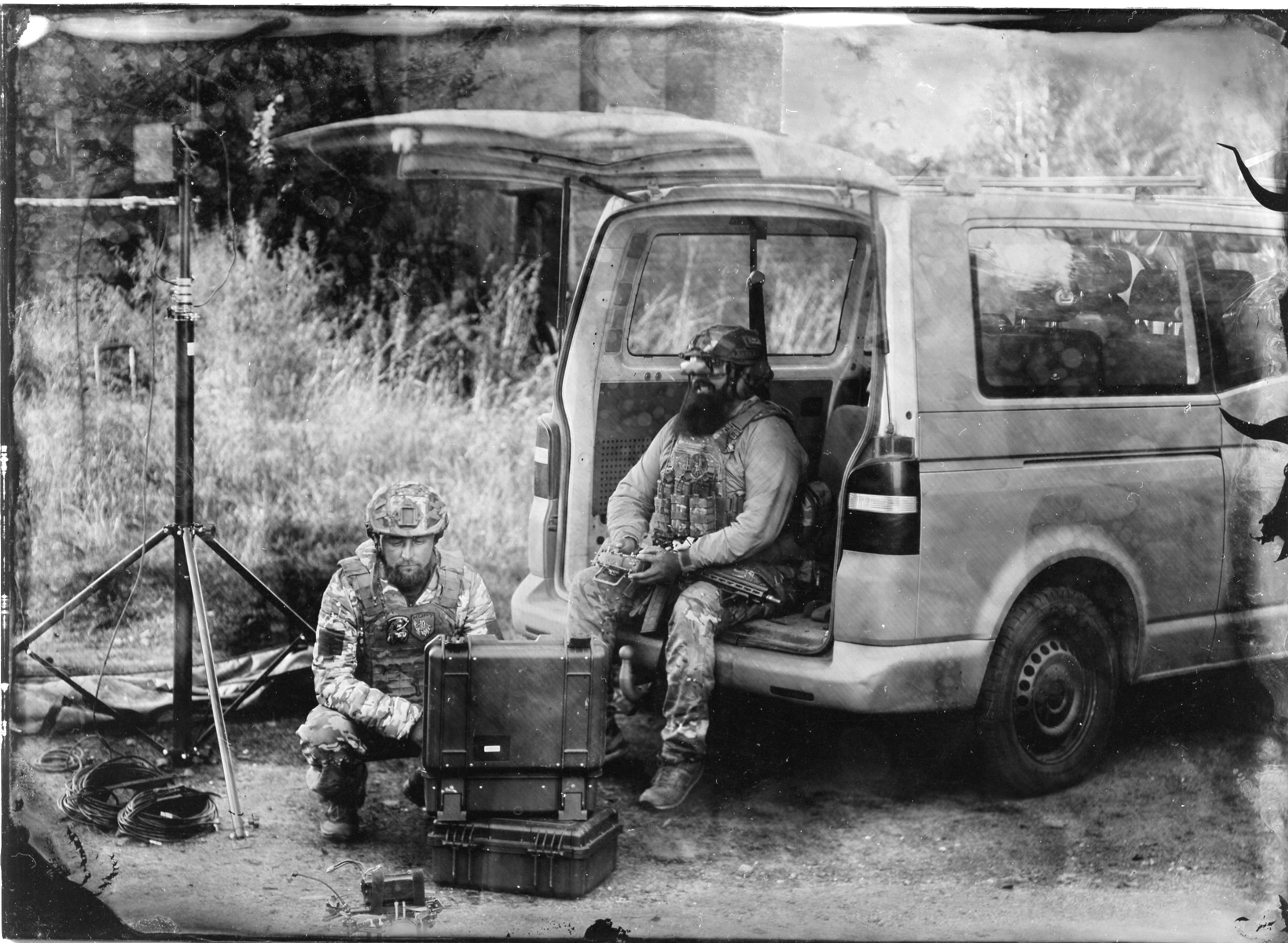
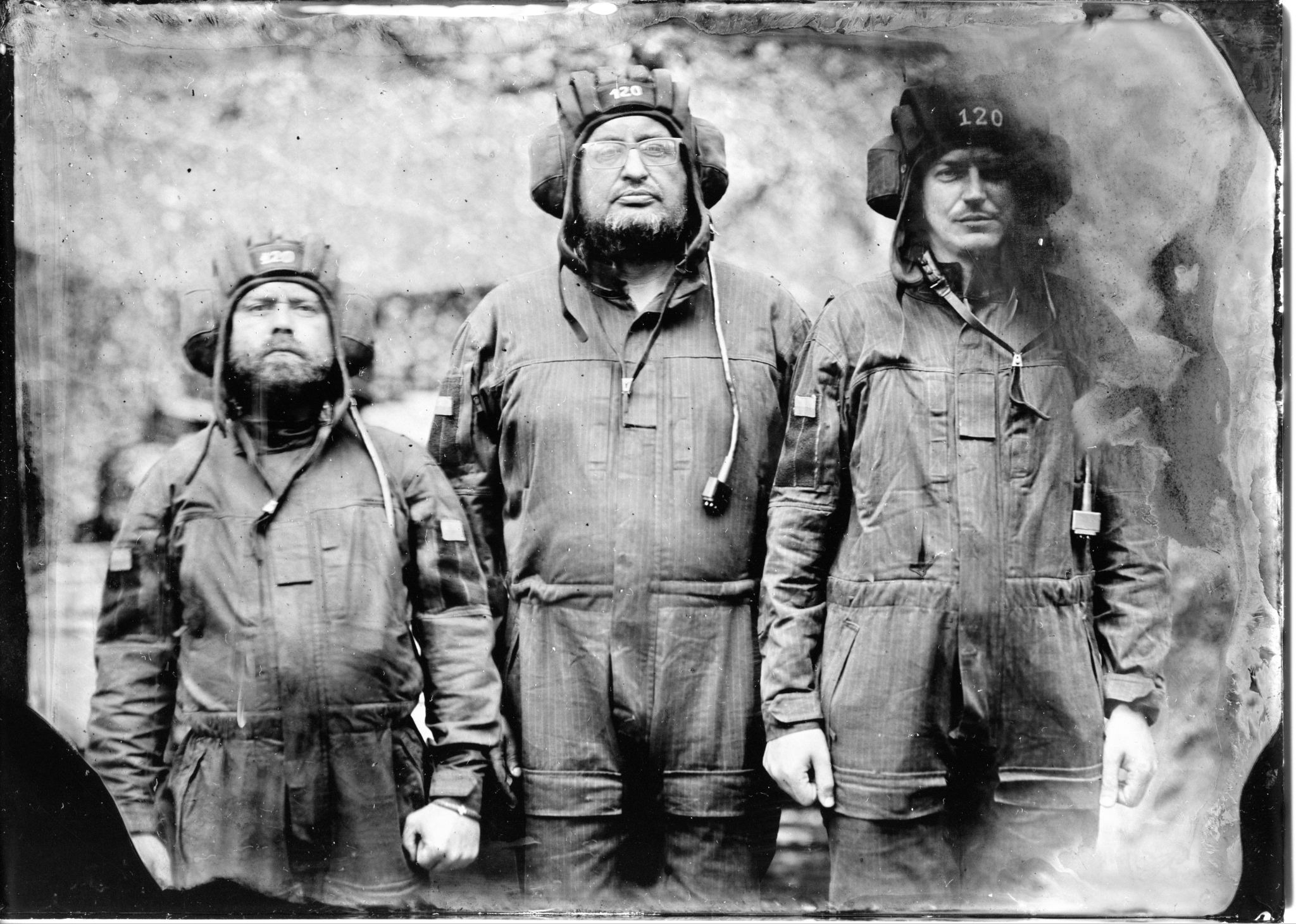
I have many photographs where the military personnel are laughing, talking near their equipment, and confidently looking into the lens. I want to preserve these moments forever, and ambrotypes are best suited for this. After all, the very name ambrotype comes from the Greek words ambrotos—immortal, eternal, and typos — impression, form. Ambrotype is eternal photography.
Many different journalists and photographers visit the military, and it seems to me that the soldiers treat the media with a certain amount of irony. Of course, at first, I felt a lot of distrust towards myself, but over time, the military begins to let you closer. In fact, they want to be talked about and heard. I continue to work on the "7 Seconds" project—I visit the fighters of the 16th Corps and shoot ambrotypes.
“Seven seconds of a person's life remain on the glass forever”
When I pull out my old wooden camera, the eyes of the military personnel widen, like those of small children. They immediately start walking around, asking questions, often joking that I, supposedly, didn't save up enough money for a normal camera. I love this moment very much, as it immediately helps relieve tension and establish contact. I always invite the military into my improvised "darkroom" and show them the process of developing the image. People are always interested in this; they recall how they used to print photos with their parents as children.
The military willingly pose for photographs because they can see the result right away. An ambrotype is like a Polaroid, dating from the nineteenth century. The military joke with each other, surprised by who and how they turned out in the image. I often feel like Melquíades—the magician from Gabriel García Márquez's novel "One Hundred Years of Solitude," who brought amazing inventions to the village.
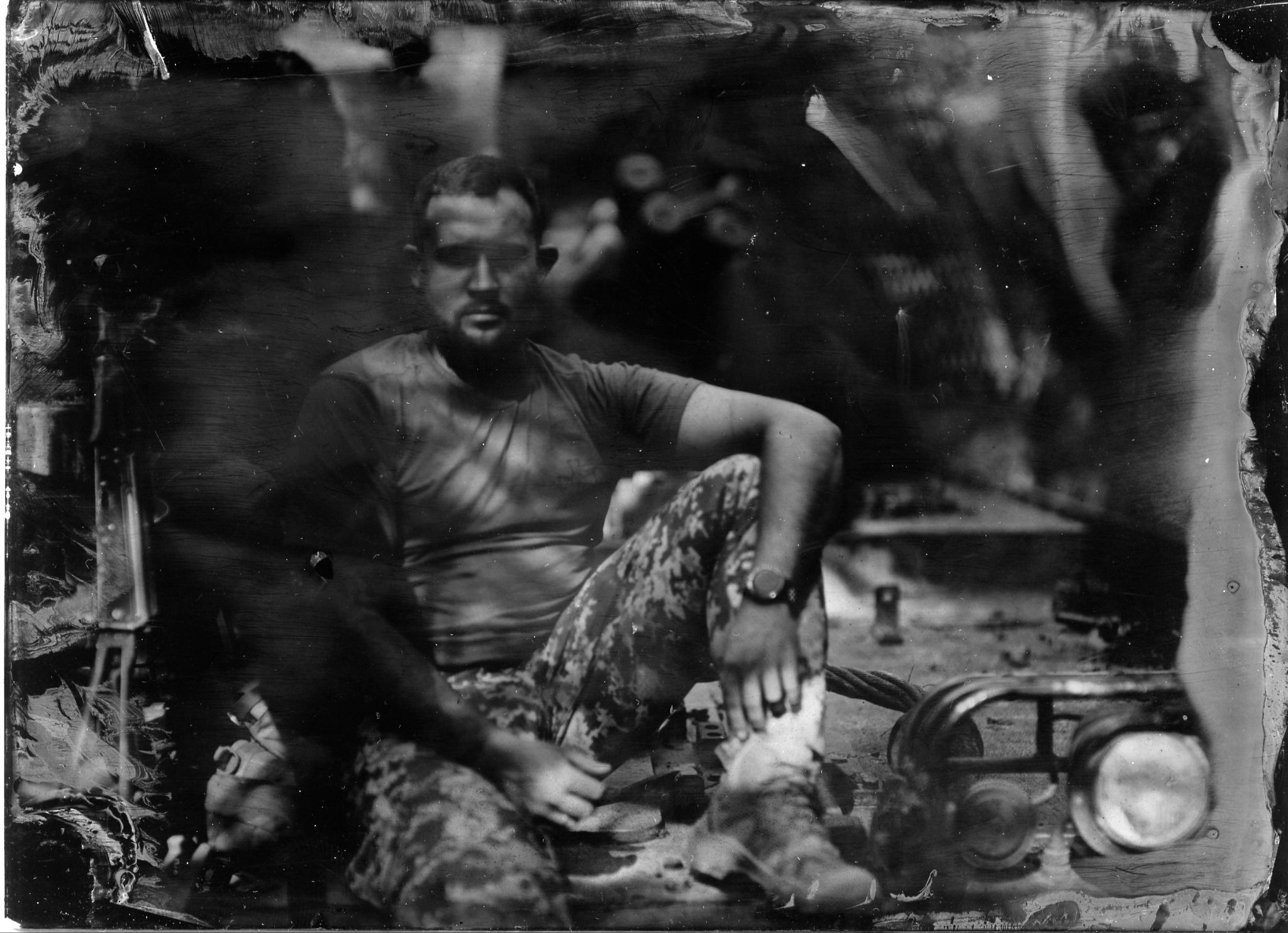
I photograph ordinary people, and I want this simplicity to be preserved in the ambrotypes. I don't look for special places for shooting. If I see the guys standing near their equipment, I photograph them there. I take many portraits, although I really want to photograph the daily life of the military and the landscapes around them.
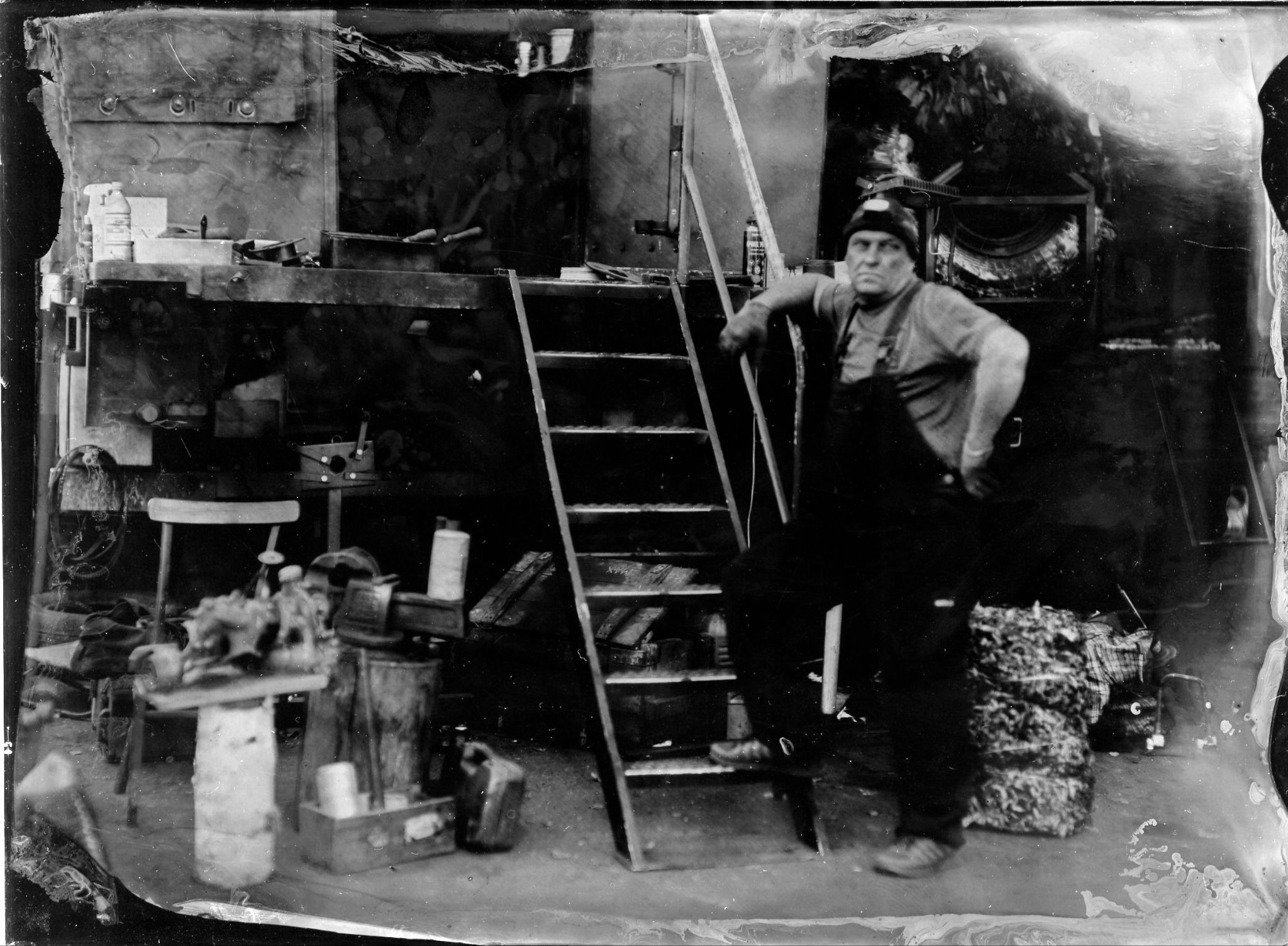
I greatly regret that I didn't manage to photograph a group of fighters who had just left Kupiansk. We met them on the edge of the forest; as always, there was little time, and no place to set up a "darkroom." They had a special, completely different attitude toward life. I photographed them on film, and we drove on.
Ambrotypes are images that exist in a single copy. Of course, you can make contact prints or scan them, but the original image is unique. There is a certain symbolism in this—the uniqueness and fragility of every human life.
For the photograph to come out sharp, I need the people in the frame to sit still for seven seconds—hence the project's name. The longest exposure I have ever photographed with is 20 seconds. Of course, it's not an X-ray—you can breathe. But this is the time of life that a person dedicates to the photograph, and during which something in the person's image changes. The soldier sits, looking carefully into the lens, and this time is captured on the silver emulsion. Seven seconds of a person's life remain on the glass forever.
Material created with the support of the British Council's "Grants for Creative Economy Development" program
Stanislav Ostrous — born in 1972 in Zhmerynka, Ukraine. Photographer, photojournalist, and teacher, lives and works in Kharkiv. He works at the intersection of documentary and art photography, mainly using analog technologies.
Finalist of the Leica Oskar Barnack Award (LOBA) 2025, nominee for LOBA Newcomer 2026, scholarship recipient of the Heinrich Böll Foundation (2024). Member of UPHA, UAPP, and MYPH; his works have been exhibited in Ukraine, Germany, Georgia, Armenia, Poland, Korea, and Lithuania. He teaches photography at the Kharkiv State Academy of Culture and at the MYPH school of conceptual and art photography.
The Team That Worked on the Material:
Topic Researcher, Text Author: Kateryna Moskalyuk
Literary Editor: Yuliia Futei


.jpg)