.png)
Ukrainian photographer Anatolii Stepanov has been documenting the Russo-Ukrainian war since 2014. He spoke about the greatest challenges for a photographer documenting life and death in war today, his most significant shots, and how to maintain one's sense of self amidst the daily routine of the front lines while preserving respect for the pain of others.
The Edge of the Front
"I have been practicing photography for over twenty years, and during this time, I have had to shoot very different events. I could not even imagine that I would be photographing a war in my own country. However, since 2014, the Russo-Ukrainian war has become the main theme of my photographs", says Anatolii Stepanov.
He became interested in photography at the age of 35 and gradually became immersed in the process. In 2004, Anatolii Stepanov enrolled in the Viktor Marushchenko School of Photography.
"Studying under Viktor Marushchenko, who is unfortunately no longer with us, opened new horizons in photography for me. I saw that there are many interesting and diverse topics around. Most of all, I was drawn to documentary and reportage work, which ultimately often overlap in many aspects", recalls Anatolii Stepanov.
His graduation project at the Marushchenko School was a project about the 2004 Orange Revolution. Subsequently, Anatolii Stepanov began working for various Ukrainian publications, and collaborations with photo agencies were established.
"My path into photography was a long one, without any particular sudden rises—you know, it's like hitting the same spot for a long time", says the photographer.
Anatolii Stepanov has been shooting the Russo-Ukrainian war since 2014. Even before the full-scale Russian invasion, the photographer often worked in eastern Ukraine, frequently visiting the military and spending several days with them at their positions.
"I tried to show the war", says the photographer.
He managed to shoot both photographs and video documentaries. Most of all, at that time, he collaborated with the media outlet Radio Liberty, where his materials were constantly published and where he had a personal blog.

"Right now, being on the front line is practically impossible. Not to mention the infantry, which is very difficult to reach, Stepanov explains. — Even if one of the military commanders takes responsibility, it will be very difficult to stay with the guys for a few days. However, believe me, I haven't met any commanders who would let a photojournalist into the infantry at this moment. All I managed to do was live for three days with a mortar team near Toretsk."
Anatolii Stepanov has countless frames from the front, and it is very difficult for him to single out one as the most valuable. Photographs of people who died at the front are important.
"Each person is like a universe. Everyone has their own fears, hopes, love, and life principles. Beautiful people died for our country, and photographs are a memory of them", the photographer shares.
On Anatolii's Facebook cover, there is a photograph in which soldiers are carrying a belt of shells on themselves.
"I visited the military in Pisky, a village near the Donetsk airport, in August and September. The belt lay on a large pile of harvested wheat. Then I came there in December, and for some reason, it seems to me that the guys picked up and carried that same belt. They took it out of the wheat, says Anatolii Stepanov. — For me, this frame is very symbolic. The belt lies on all the soldiers and unites, sticks them together. The belt is heavy, it is difficult to carry, like the burden of war that we all carry, which the Ukrainian army carries on its shoulders."

The Ethical Boundary
Working in a war is certainly exhausting. Anatolii Stepanov says that it is impossible to get used to such shoots.
"Emotions move in a sinusoid; periodic dips and rises in mood are inevitable. When it becomes very difficult, I understand that I need to stop for a while—to rest, go to nature, to the forest, to the river, walk with my dog. I brought a shepherd from the front—it was love at first sight. However, fatigue and experienced moments still accumulate, and I am no longer who I was before. War changes you forever, says the photographer. — I simply tip my hat to the Ukrainian military who have been on the front line for three and a half years already. War greatly exhausts and destroys a person not only physically but also psychologically."
Anatolii Stepanov says that in early 2023, agencies recommended not showing death directly, as people were not ready to look at such photographs.
"People in the world are softened by normal life, and our bloody war, in my opinion, has simply tired them, says Anatolii Stepanov. — However, editorial offices love strong photographs and do not refuse to publish them. Even frames where there are dead bodies."
In January 2023, Anatolii Stepanov worked alongside the cameraman of the French news agency Agence France-Presse, Arman Soldin. They were at positions near Siversk, where heavy battles took place in October–November 2022.
"On the positions lay mangled corpses—dogs and foxes had eaten the flesh, birds had pecked out the eyes. I shot everything as it was. Arman, on the other hand, tried to shoot very delicately—through a pack of cigarettes in a pocket, through the framing of a hand. In the evening, he received a call from the editorial office saying there was too much death, that these frames could not be shown", recalls the photographer.
Arman Soldin died on May 9, 2023, near the city of Chasiv Yar in the Donetsk region. Anatolii Stepanov says that Arman Soldin was one of the best in the profession.
Anatolii Stepanov continues to travel to the front and document the war.
"I stay in Kyiv, and then I realize that I need to go to the front line. I am drawn there. I won't say it's a drug—rather an addiction. Those who have tried it understand very well what I mean, says Stepanov. — Unlike the military, who are there all the time, I can choose when to go. I prepare myself mentally, then arrange the shoot, pack my things, protective gear, first aid kit, and go to the war."
Anatolii Stepanov says the main thing is to draw a plan for himself—where and how far he wants to get.
Near the Boundary of Life
Anatolii Stepanov shot the project "Independent"—a series of portraits of Ukrainian military personnel born in an already independent Ukraine.
"The idea arose gradually: I was traveling to the front and started thinking that there are many people on the front who were born after 1991, in independent Ukraine. They are fighting for the country in which they were born", says Anatolii Stepanov.
He shot their portraits and recorded videos in which the young men and women explained their motivation for going to war. The photographer worked on the project for nearly three years.
"I met a female soldier named Iryna on the front line. She graduated from Lviv University, Faculty of Philology, and joined the infantry. I was with her at the positions; she sang songs on camera and told me why it was important for her to be at the front. After this interview, I realized that I had a finished project", recalls the photographer.
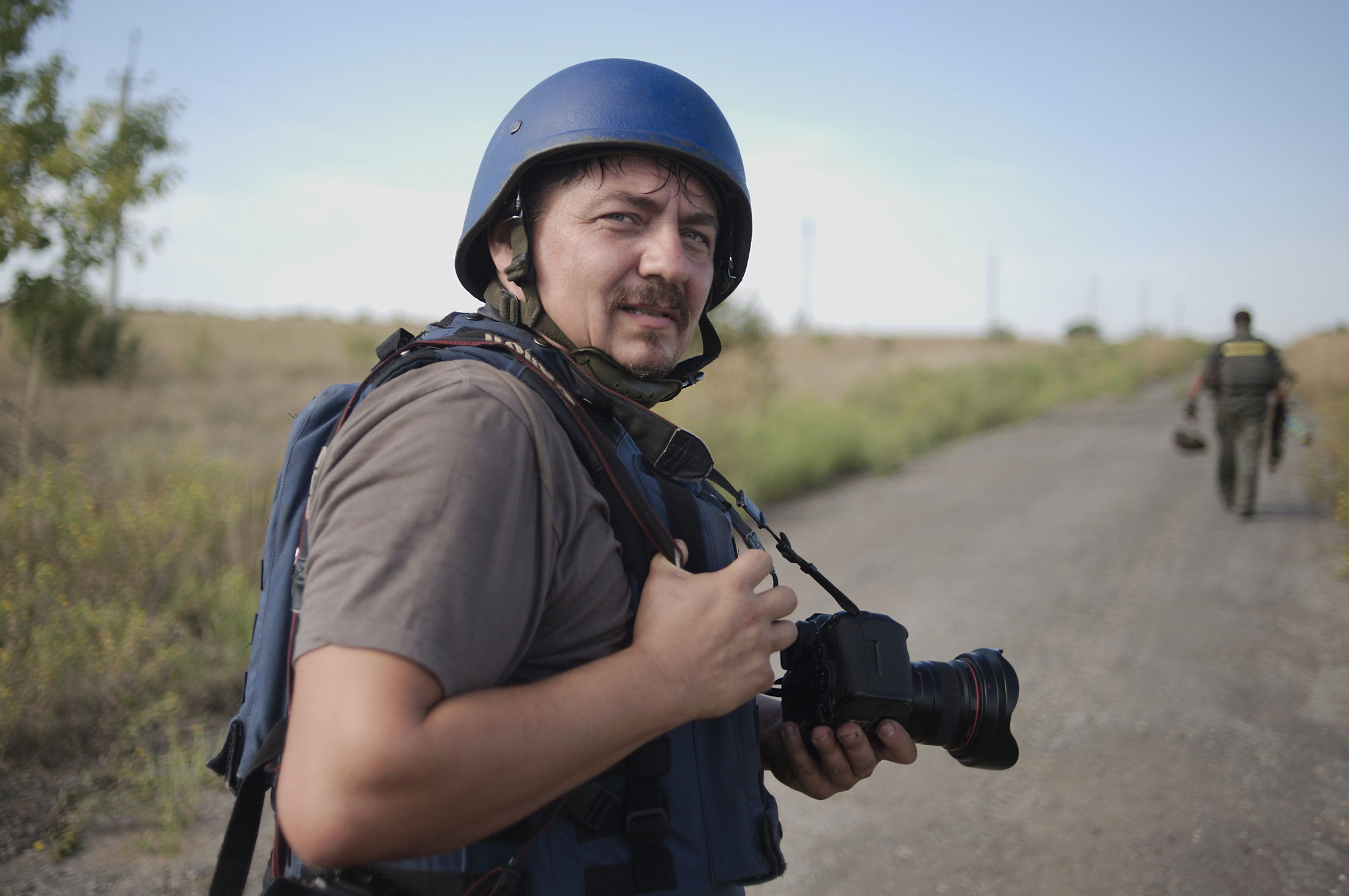
Currently, Anatolii Stepanov travels to the war, covering the daily lives of the military.
"I strive to show the full horror of war; I want to get into Pokrovsk, Myrnohrad—cities cut off from normal life. There is constant anxiety in the air there, says Anatolii Stepanov. — I shoot artillery, I try to get closer to the infantry. The infantry is the salt of the earth; right now they are working the most and suffering the most. In some brigades, there is no infantry left at all."
During the time of documenting the war, Anatolii Stepanov has had several moments after which he could celebrate a second birthday. The first time this happened was on November 23, 2014, when Anatolii came under fire.
"I went for a walk through the city when the artillery was active. You shouldn't do that—it's an axiom. I had a very vivid experience: about eight shells landed in the place where I was. I lay on the ground, I was being tossed up, and it felt like I was inside a church bell that someone was hitting with a sledgehammer. Fortunately, everything turned out fine", recalls the photographer.
"On May 10, 2017, I came under tank fire with the military. The tank started working on our position and then shifted fire slightly deeper. At that time, it seemed like the end. Shells were exploding ten to twenty meters away from us. I decided I would go crazy if I didn't start shooting video. Photographs at that moment made no sense; they would have only shown huddled people in a trench. The video was published in Der Spiegel and was very powerful, as it conveyed the feeling of an infantryman when a tank is firing on him."
Beyond the Edge of Pain
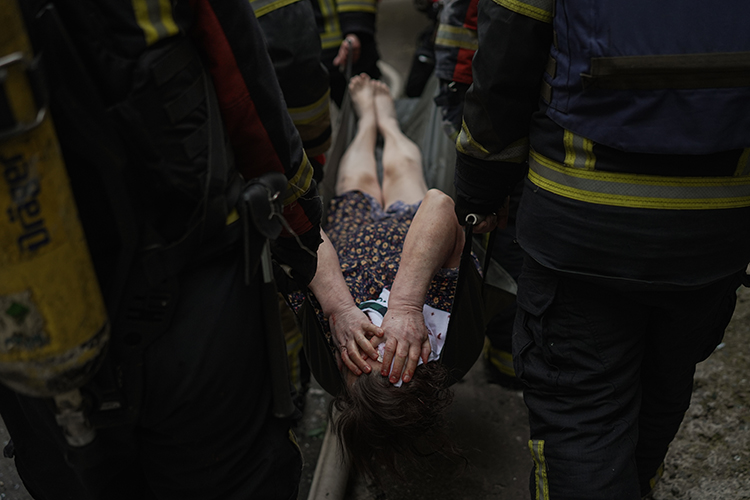
After three years of full-scale war, it is already difficult to shock anyone with photographs containing sensitive content. However, it is also impossible not to film the situation in Ukraine. Foreign media are currently most interested in the civilian population living near the front line—this is a painful topic throughout the world. Anatolii Stepanov arrived at the Kramatorsk railway station on April 8, 2022, fifteen minutes after a rocket attack.
"It is important to show the pain of war; otherwise, there will be no evidence. In Kramatorsk, I saw a bloody mess of people. I tried to photograph everything. I realized that when you shoot such things for the first time, you react more calmly. The next time, there is an understanding that not everything can be photographed. If you press the camera shutter, not everything can be shown immediately. I decided for myself to photograph everything, but not to publish everything", says the photographer.
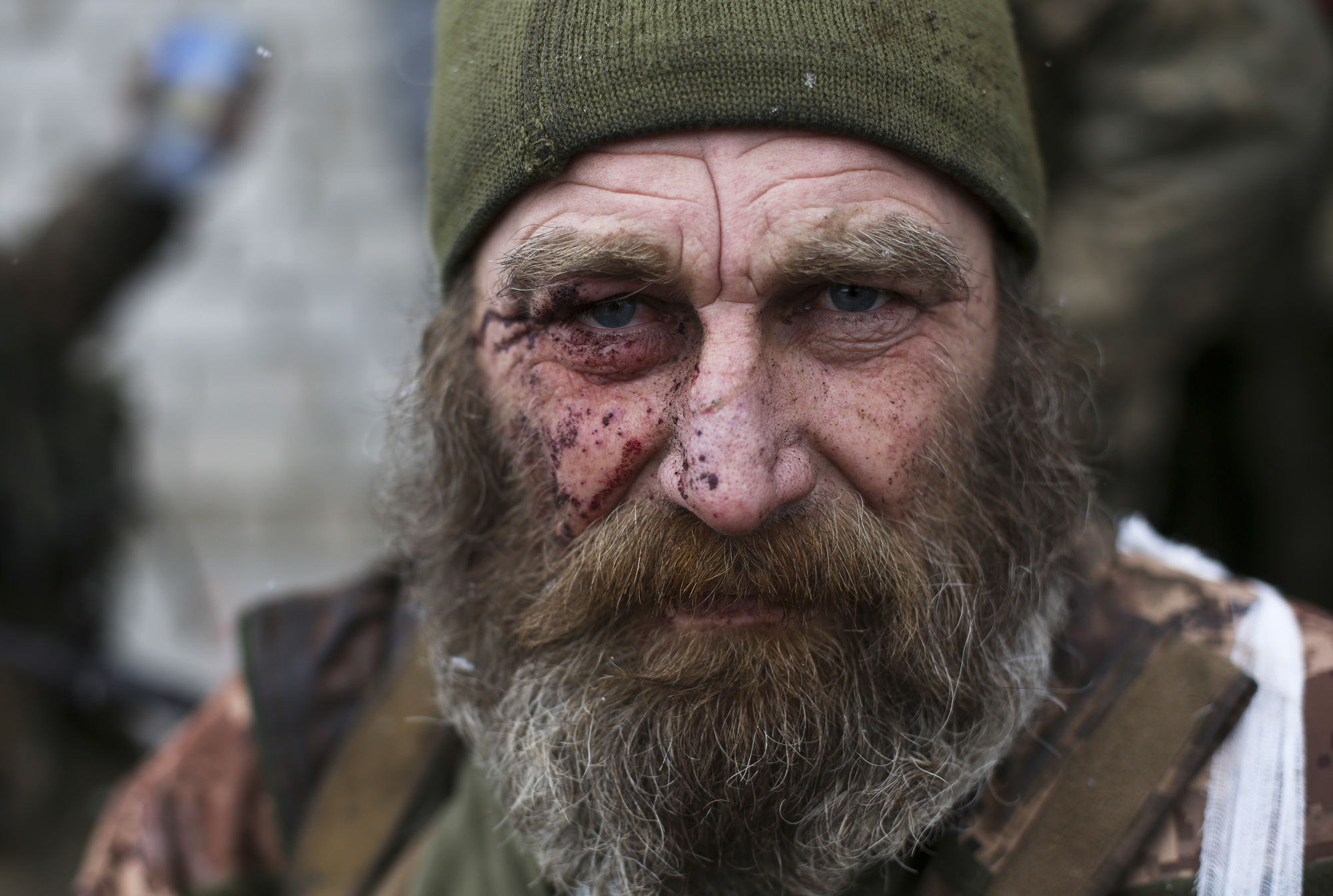
Anatolii Stepanov says that it is currently difficult for him to photograph the evacuation of the wounded. It is important to shoot carefully so as not to traumatize the relatives of the people in the images.
"When you get into a stabilization point, you see the horrific wounds of soldiers, you see the edge of pain. For the people who work there, all boundaries of perception have already been erased. They see it every day and react calmly. The people for whom I shoot this will hardly want to look. I will take the shots, but who will I show them to?" concludes Anatolii Stepanov.
For photographers who are just starting to work with the theme of war, Anatolii Stepanov advises doing everything gradually. It is important to have all the necessary documents and accreditation, and to travel initially with more experienced colleagues to learn from their experience. Anatolii Stepanov emphasizes that without military accompaniment, it is impossible to enter places that are especially dangerous. When soldiers take journalists with them, they take responsibility for their lives and try to ensure maximum safety while showing their work. They know which paths are best to take and at what time of day to do so.
"Currently, it is not worth coming to the war as a gonzo photographer, because you will immediately fall into some kind of mess. Such trips end very badly 90 percent of the time, says Anatolii Stepanov. — I'm not even talking about the front line, because it is already dangerous at a distance of 7–10 kilometers from the line of contact. The sky is buzzing there."
Anatolii Stepanov is a Ukrainian photographer, born and raised in Kyiv, who received an education as an engineer. In 2004, he graduated from the Viktor Marushchenko School of Photography and since then has worked as a professional photojournalist for a number of Ukrainian media outlets and international agencies. He has had numerous publications in National Geographic, Spiegel, Stern, Time, and many other international publications, and has participated in international photo exhibitions.
In November 2017, he gave a presentation about his work on the front during the presentation of the photo book RAW at the Ukrainian Museum in New York. His project "Independent," dedicated to the Ukrainian youth fighting for their country, is being exhibited at an online exhibition at the Ukrainian National Museum in Chicago. Anatolii Stepanov has been covering Russian aggression against Ukraine since the first days of 2014 and throughout all these years in cooperation with the Agence France-Presse. The photographer's social media: Instagram, Facebook.
Credits:
Researcher, author: Katia Moskalyuk
Photo editor: Olga Kovalova
Literary editor: Yulia Futey