
%20(1).png)
Kremlin propaganda is banking on a successful advance by the Russian army in southern Ukraine. Consequently, it is actively spreading the narrative that Zaporizhzhia residents are waiting for the enemy army to arrive. Supposedly, “local media are concerned about whether Moscow will take the city under control after negotiations or yield it in favor of Kyiv” **(propagandist publication “Ukraina.ru”).
Zaporizhzhia: “Gesture of Goodwill” or Large-Scale Offensive?
Some propagandist bloggers suggest that Moscow might, in fact, refuse to take Zaporizhzhia. The rest anticipate an offensive by the Russian army in the Zaporizhzhia direction if the issue of the Donetsk region is resolved in Russia's favor. For each of these scenarios, the Kremlin government has separate dangerous plans. Propagandists, citing the anonymous Telegram channel “Povestki. Zaporozhye,” which publishes locations for handing out draft notices, spread reports of panic in the city and rumors of possible provocations by Ukrainian authorities.
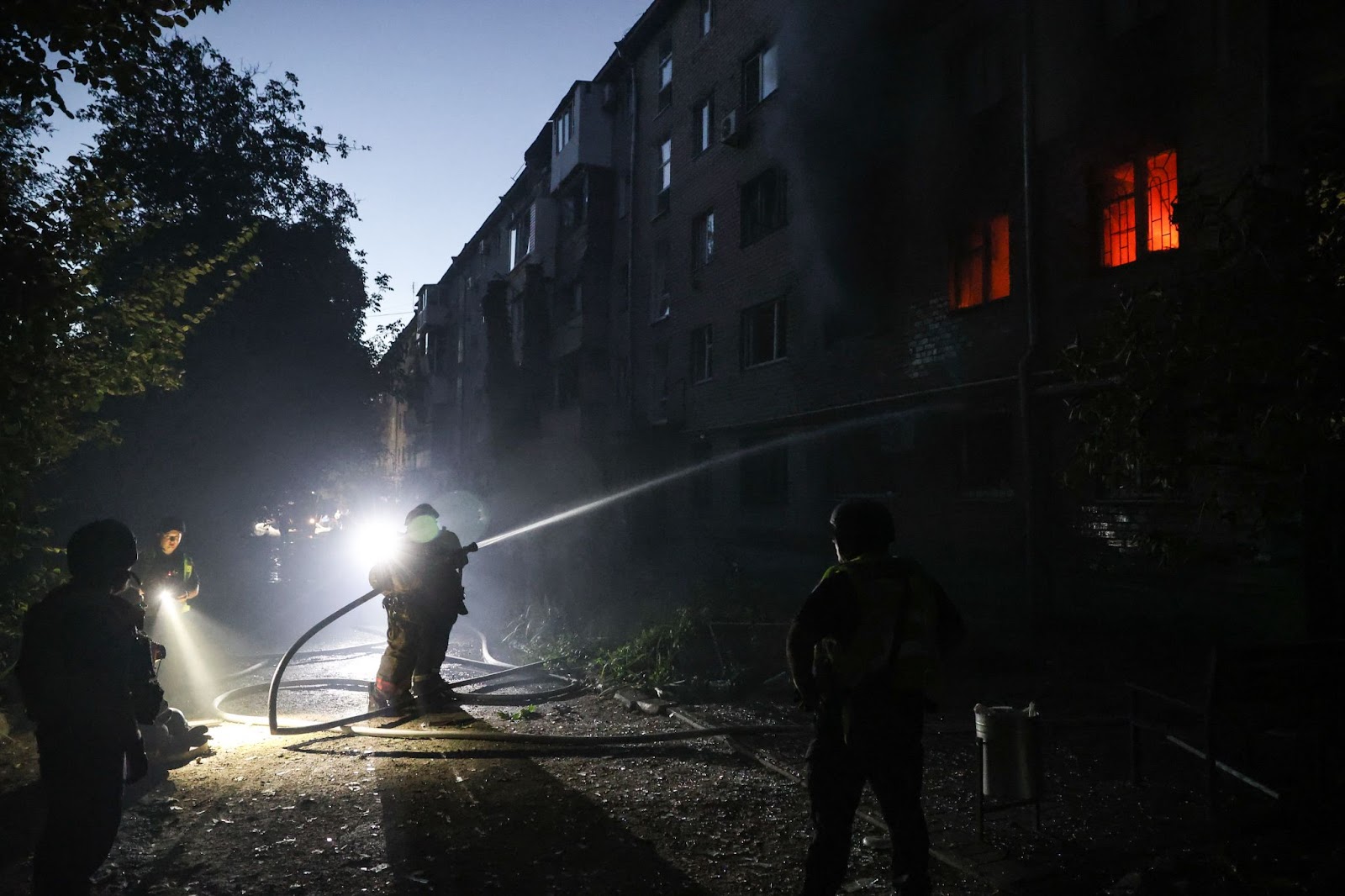
Photo by Kateryna Klochko
The public channel, which aids Russian propaganda, claims that the panic among locals is supposedly being artificially fueled by the very structures meant to contain it. Allegedly, rumors circulate in Zaporizhzhia that “Western journalists are heading to the city, which usually precedes a bloody military provocation for which Western media must already be on the scene.”
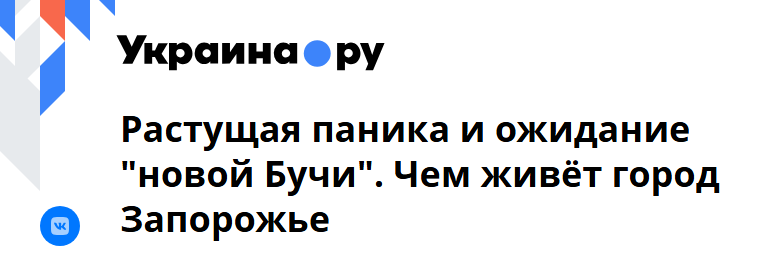
Propagandists assure that “Zelensky is preparing a ‘new Bucha’ in Zaporizhzhia to derail agreements, using bloody victims as leverage before Trump.”


Photo by Kateryna Klochko
This is a classic example of when enemy propaganda creates the informational environment it needs and employs the tactic of an informational alibi, preemptively accusing Ukraine of actions that could be committed by the Russian Federation itself. This has been repeatedly warned about by the Center for Countering Disinformation.
Ukrainian photo documentarian Kateryna Klochko from Zaporizhzhia told the Ukrainian Association of Professional Photographers that nothing has fundamentally changed in the city:
“Zaporizhzhia is living its ordinary life. Everything is operating normally: transport runs, stores, cafes, cinemas, and theaters are open. I do not observe any panic in Zaporizhzhia even after the shelling—unfortunately, we have gotten used to living with this. Zaporizhzhia residents live, work, and rest despite everything.”
Concurrently with talks of a possible withdrawal from Zaporizhzhia, the Russians claim they are preparing an offensive on the city. Propagandist publication “Argumenty i Fakty” writes that one might get the impression that everything is “without change or upheaval” in the Zaporizhzhia direction, but this is only an illusion. “It is the southern offensive that could become the trigger that collapses the entire Ukrainian front,” — asserts “AiF.”
Ukrainian online media outlet “Ukrinform” published a statement by the President of Ukraine, Volodymyr Zelenskyy, on August 21, 2025, that the Russian command is transferring additional troops to Zaporizhzhia from the Kursk direction. The President noted that the Defense Forces of Ukraine are observing the enemy's actions.
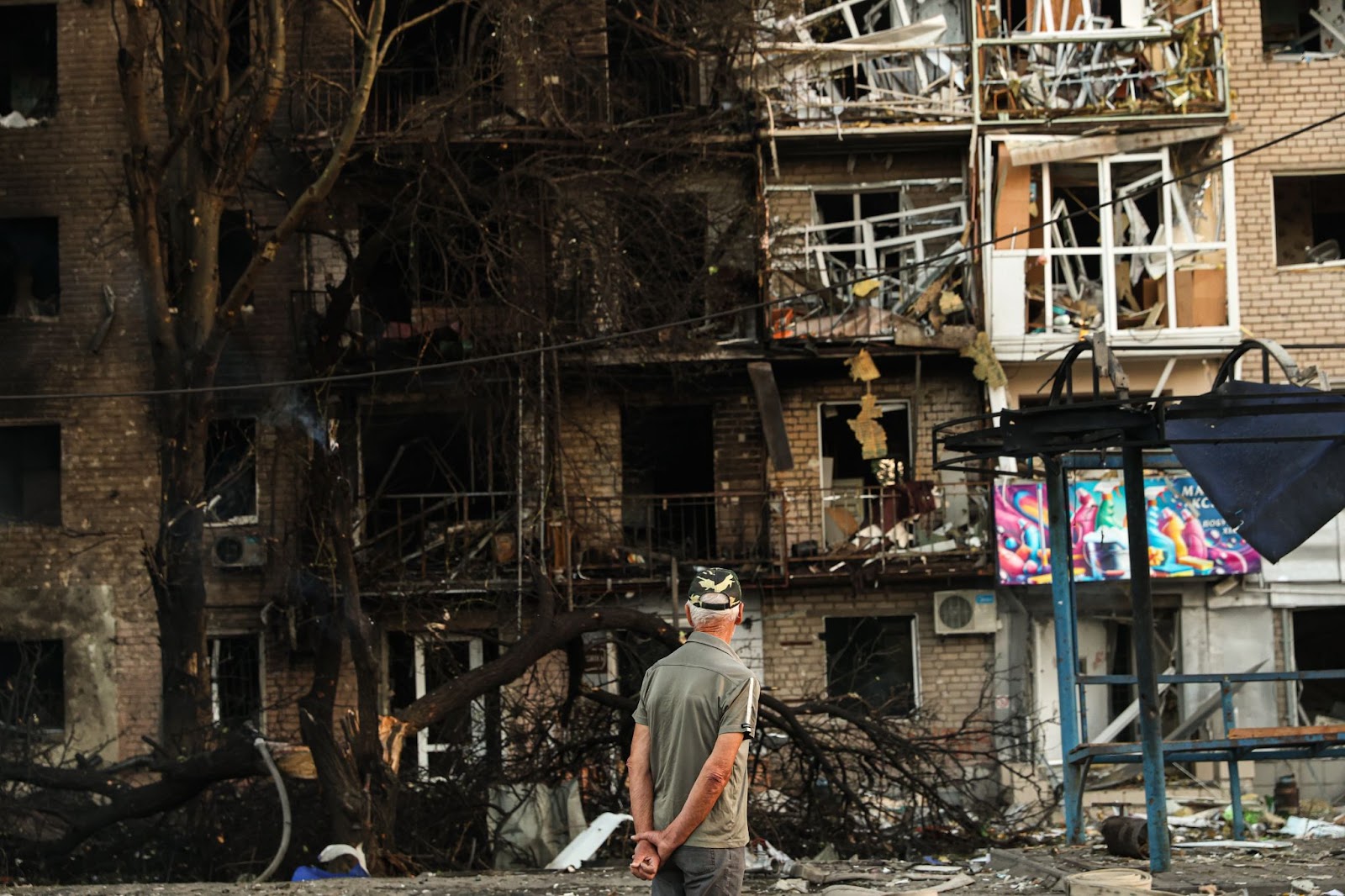
Photo by Kateryna Klochko
In preparation for a possible offensive, propaganda is creating its own agenda in Zaporizhzhia, fueling panic. Panic messages are spreading not only through Russian media but also via Telegram channels disguised as Ukrainian ones. Allegedly, an unannounced evacuation, similar to a flight, is underway in the city, and security and administrative structures have abandoned the city. Moreover, the local Territorial Recruitment Center (TCC) has allegedly been tasked with preparing a defense garrison of civilians for when the Russian army approaches the city (Telegram channel “Voenkory russkoy vesny”).
“Local authorities are present,” — says Kateryna Klochko, — “just yesterday, representatives of the regional and city administration reported on the start of the new academic year. Ukrainian flags are everywhere in the city.”
Concealing the source of information, Russian propagandist websites disseminate disinformation about the alleged terrorist intentions of the Ukrainian authorities. “According to experts, Kyiv has gone to extreme measures by mining the DniproHES (Dnipro Hydroelectric Power Plant) and is ready to activate it should Russian troops approach,” — claims “AiF.”
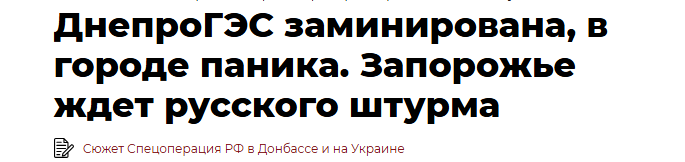
Similar Russian disinformation drops are intended to intimidate and spread panic among the population to demoralize Ukrainians. Russians have periodically launched similar disinformation since the beginning of the full-scale invasion. In March 2022, Russians spread claims that the Khadzhibey Dam, which was supposedly mined by order of the Head of the Odesa Regional Military Administration, Maksym Marchenko. And in the spring of 2024, propagandists reported that the Ukrainian Armed Forces had mined the dam in Kharkiv. This disinformation was refuted by the Center for Strategic Communications and Information Security.
However, one cannot rule out the enemy preparing to commit another terrorist act on a hydro-facility, as happened with the Kakhovka HPP in June 2023, which the Russians mined and blew up. The Russian army also carried out missile strikes on the DniproHES in March 2024.

Photo by Kateryna Klochko
Alona Romaniuk, media expert and chief editor of the fact-checking project “Nota Yеnota” (Note of the Raccoon), says in a comment for the UAPF (Ukrainian Association of Professional Photographers):
“When this type of disinformation is released, we can expect provocations orchestrated by Russian agents and sabotage groups in Ukraine. When Russian media or the Russian side reports that something somewhere has been mined by Ukrainians, it means we need to look more closely at those specific targets. Russia is thus creating a so-called ‘safety cushion’ for itself, so that it has someone to blame later. This is one manifestation of so-called ‘false flag operations.’ However, I believe this piece of news was released to spread panic, implying, ‘Russian troops are already near Zaporizhzhia and an attack on Zaporizhzhia is imminent.’”
ZNPP: To Return or To Restart?
Propagandists claim that Kyiv will also try to reclaim the Zaporizhzhia Nuclear Power Plant (ZNPP), which is located in the Russian-occupied part of the Zaporizhzhia region, during negotiations. They recall that “Zelensky previously blackmailed Western partners by claiming that the presence of Russian troops at the ZNPP is supposedly a threat to all of Europe.” “To confirm this threat, the Ukrainian Armed Forces regularly shell the plant, accusing Russians of self-shelling,” — justifies the terrorist actions of the Russian army, “Ukraina.ru.”
The main propagandist narratives regarding the ZNPP during the last month of summer 2025 were as follows:
- The cheapest, roofless spent nuclear fuel storage option is being used at the Zaporizhzhia Nuclear Power Plant;
- All Ukrainian NPPs are in terrible condition. For global safety, they must be shut down, as is the ZNPP, or, as a last resort, transferred to US control;
- IAEA specialists may be spies and report information about vulnerabilities to the “Kyiv regime” and the West;
- There is a possibility that the Ukrainian Armed Forces will use Western long-range weapons to shell nuclear facilities: the Zaporizhzhia NPP, as well as Russian ones located on the border with Ukraine.
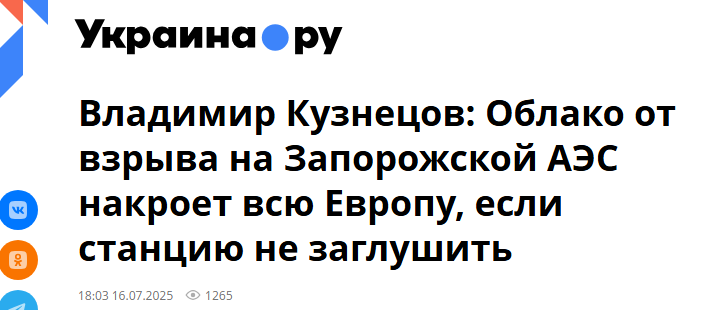
The Ministry of Energy of Ukraine on its website reported that on August 8, 2025, the expert mission of the International Atomic Energy Agency concluded its assessment of Ukraine's nuclear facilities and electrical substations critical for NPP safety. The inspections lasted 10 days. IAEA representatives reported significant progress in the restoration work at the facilities they had inspected earlier. The specialists also identified the needs for additional technical assistance for nuclear safety.
Regarding the ZNPP, all six reactors were gradually shut down following its capture by the Russian army. Since the occupation of the ZNPP began, Russia has been trying to play the role of a guarantor against a nuclear disaster. However, it has effectively transformed the nuclear facility into a military base, where it stationed equipment and soldiers.
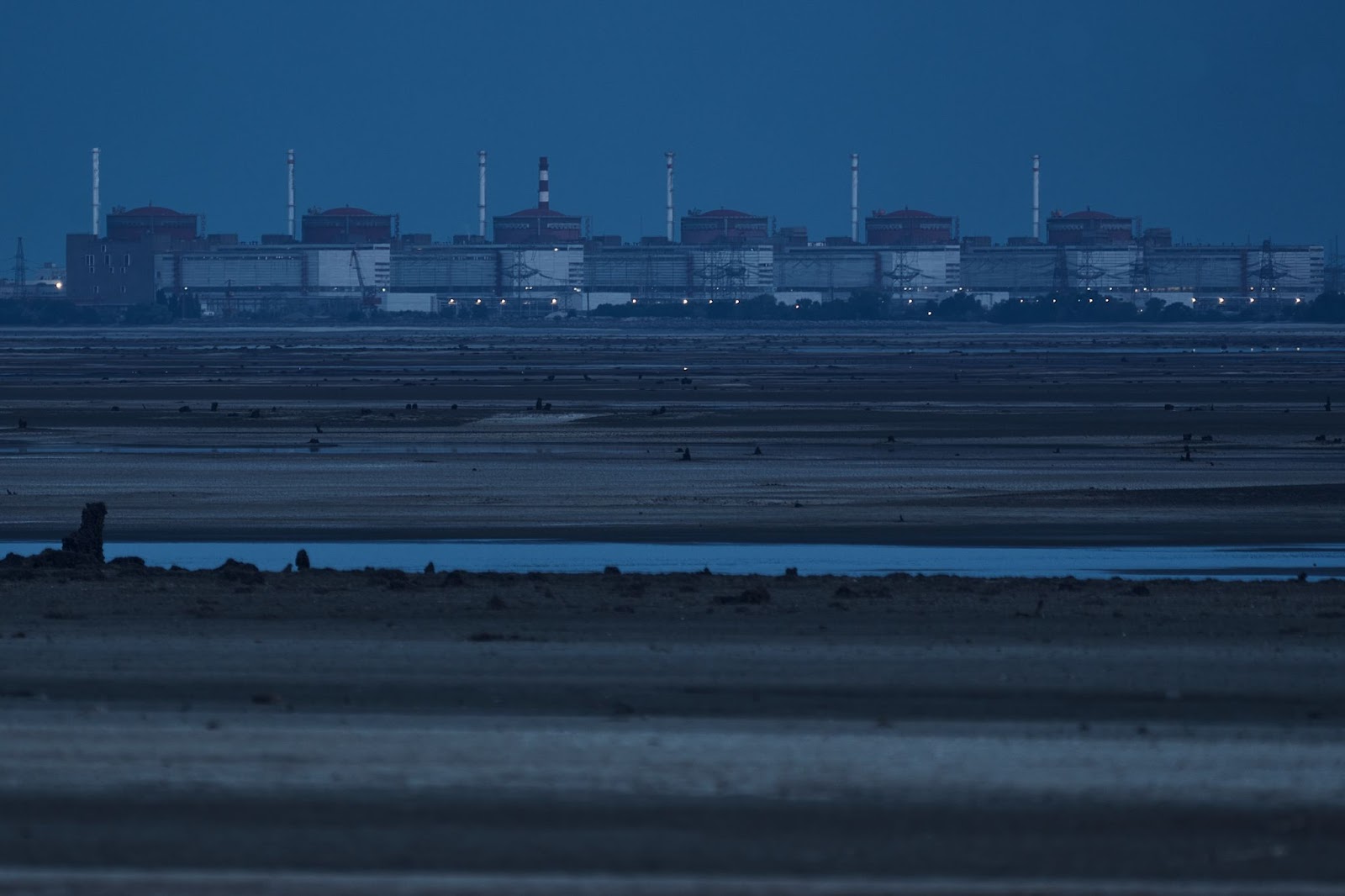
In May 2025, analysts from the agency “Molfar Intelligence Institute”, which provides training and information on intelligence and digital security, published material about Russia's plans to restart the ZNPP and connect it to its own energy system. To achieve this, the Russian Federation retrained 58 ZNPP specialists to work according to Russian standards and is laying a new power transmission line in the Melitopol — Berdiansk area. Analysts say the plant likely stores about 200 tons of unused American-made nuclear fuel. Also, Russians cannot send the spent American fuel for reprocessing because they lack legal permission from the USA.
“Molfar Intelligence Institute”warns that Russian attempts to restart the plant could lead to unpredictable consequences:“The ZNPP is the largest nuclear power plant in Europe.Removing it from the Ukrainian energy system means not only the potential loss of gigawatts of power but also the risk of manipulation by the Russian Federation in case of critical loads in winter or during attacks on other Ukrainian power plants. De-occupation of the ZNPP will be significantly complicated. Should Ukraine attempt to reclaim the ZNPP militarily while it is actively producing energy, the plant would pose extremely high man-made risks. The Russian Federation could use this factor as its ‘nuclear shield.’”
We emphasize that the scorched-earth tactic is being used by Russia, not Ukraine, and Ukraine certainly does not shell or destroy its own facilities.
Contributors:
Researcher and author: Yana Yevmenova
Photo editor: Olga Kovalova
Literary editor: Yuliia Futei
This material was created as part of the “Disinformation Booster Academy” training course.
.jpg)
.jpg)














.jpg)


