Three Weeks of War in the Works of Yevhen Maloletka and Mstislav Chernov
Yevgeny Maloletka and Mstislav Chernov arrived in Mariupol just an hour before the start of a full-scale Russian invasion. The day before, they were shooting troops in Bakhmut. When the situation escalated, we went to document the daily life of Mariupol, a strategically important city for the war. They stayed in Mariupol for 20 days.


Russian troops approached Mariupol from the west — a direction from which no threat was expected. The city was attacked by 18 to 22 thousand Russiansn supported by heavy machinery, artillery, aviation and navy. The Russians were confronted by fewer than six thousand Ukrainian troops with limited weapons and ammunition. Even with this ratio, the battle for the city lasted 86 days.
Journalists tried to publish photos and videos from Mariupol every day.
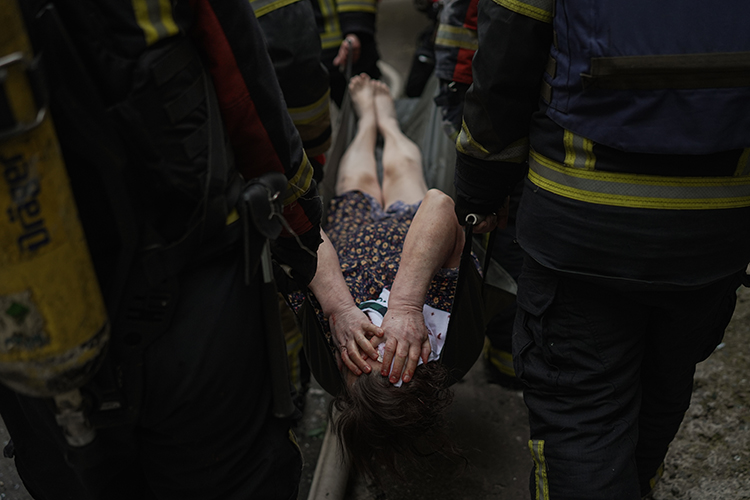
“It was important to show almost live what was happening. When the children were brought to the hospital and tried to resuscitate, the hospital, the mass graves,” says Yevhen Maloletka.
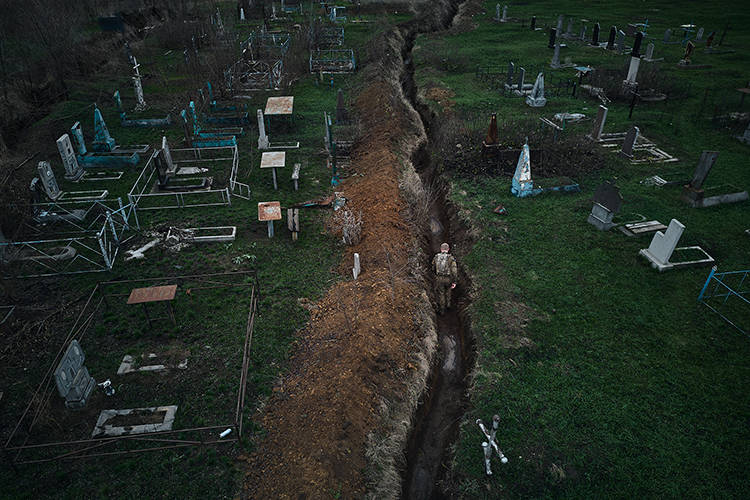
At the end of February, the Russians broke through the defenses in the north and approached Mariupol. The city began to be shelled with artillery, which was placed on its outskirts. Since the beginning of March, Mariupol was completely surrounded, fighting and massive shelling continued in all neighborhoods of the city. Evacuation of the peaceful inhabitants of the city was impossible due to the massive shelling of Russian troops.


“When we planned the trip, we said to ourselves: if we get into the environment, we will stay as long as there is an opportunity to work,” recalls Yevhen Maloletka. Mstislav Chernov shot 30 hours of video, but the news managed to transmit about 40 minutes. More events were included in the film “20 Days in Mariupol” — a personal story of journalists who found themselves surrounded together with the inhabitants of the city. Despite the fear and risk of dying at any moment, Yevgeny Maloletka and Mstislav Chernov went to shoot every day.
“It was scary, but it was worse not to do anything, to sit and not know what was happening, not to be able to tell about it,” says Mstislav Chernov.
In mid-March, when Mariupol's air defense system was destroyed, Russian planes bombed the city every 20 minutes. The roar of artillery, the whistle of rockets and bursts of shells became the constant sound background of Mariupol.
On March 8, the Russians hit a hospital and a maternity hospital in the center of Mariupol. The ring of Russian troops around the central part of the city gradually tightened. In March, Yevhen Maloletka and Mstislav Chernov were the only international team of journalists in Mariupol who sent materials from there. They were also the latest journalists to be evacuated from the city due to the threat of being found by Russian soldiers. They left on March 15, and the next day there was a strike on the Drama Theater in the city center. Journalists tried to make material about the Mariupol Theater, but they did not have enough photos and video evidence. “People who were leaving were trying to erase everything from their phones. Some try to erase it not only from phones, but also from their memory,” says Yevhen Maloletka.


Materials from the city surrounded and bombed by Russian troops were published by almost all the leading publications of the world.
Mstislav Chernov, “20 Days in Mariupol”
Journalists Yevgeny Maloletka and Mstislav Chernov received numerous awards, including the Pulitzer Prize. Yevgeny Maloletka became the winner of one of the most prestigious photo competitions World Press Photo. The film “20 Days in Mariupol” won the audience prize at the American festival of independent film Sundance.
“It is an honor to represent Ukrainian documentary and use this platform to draw attention to the difficulties, resilience and courage of the Ukrainian people, especially Mariupol people,” said Mstislav Chernov.
This year the film was nominated for an Oscar from Ukraine in the category “Best International Feature Film”.
Read also:
9 Ukrainian Photographers Tell and Show How the Great Invasion Began