OleksandrHimanov has recently become a member of the Ukrainian Association ofProfessional Photographers. He is an Odesa-based photojournalist who not onlycovers events with his camera, but also writes—reflecting on his path inphotography, the profession’s challenges, and the value of every frame inwartime.
Whichcame first: photography or writing?
“I cameto journalism through photography. Writing has always been harder for me, butphotography is my love and my passion,” Oleksandr says.
He startedout as a videographer, but over time he realized that a still image cansometimes capture a moment faster—and more deeply—than text or video.
“Photographygives you an immediate response—that’s its power,” Himanov says.
In time, hebegan photographing not only the news, but also developing his own reportageprojects on a range of topics. Some were more in-depth—such as his historicalphoto explorations—or observations of city life:
“I’dcall them not so much projects as sketches. I would simply go to anyneighborhood in Odesa, take photos, and talk with local residents about theirlives.”

Associo-political events in the country unfolded, his photographic stylegradually evolved into more complex photo reportages.
Warchanged the way he looks at photography
Himanovsays his perspective on photography has changed over time—especially after thestart of the Russia–Ukraine war in 2014, and later after the full-scaleinvasion in 2022. Now, he says, his attention is focused on the most importantevents, largely connected to the war: “After 2022, the emphasis shifted, andmany topics that used to interest me no longer do—like cultural events,” hesays.
The changesalso affected his visual style. He says he began photographing portraits,realizing how important it is to record personal stories that can be cut shortat any moment:
“Before,I didn’t really make portraits. Now I catch myself thinking that I want tocapture the person, too—because, sadly, these are the times we live in, and aperson might not be here tomorrow.”

“A photoreport has a beginning and an end”
Oleksandrsays most of his work now is reportage, and that this genre allows him toconvey reality best. In his approach to reportage photography, he pays closeattention to a story’s cohesion. For him, each story is not just a set offrames, but a visual narrative with a beginning, development, and conclusion.It is also important that the images work together harmoniously:
“I likeit when photos in a report ‘rhyme.’ When you scroll, the next photo should echothe previous one—in color, composition, in rhythm.”
Withexperience, Oleksandr learned to limit the number of photos in his reportages,focusing only on what matters most:
“Atfirst, my reportages had about 70 photos… But now I understand better that noteverything is necessary. In the end, I leave a maximum of 10–15 images.”
Each ofHimanov’s reportages must have its own dynamics and a strong concludingphotograph.
“Thefirst photo has to grab you, and the last should be the exclamation point ofthe story,” headds.


War
ForOleksandr Himanov, photography has become part of everyday life—and a personalresponsibility. He believes that even in difficult conditions, it is importantto keep documenting events, especially when it comes to tragedies and theconsequences of war:
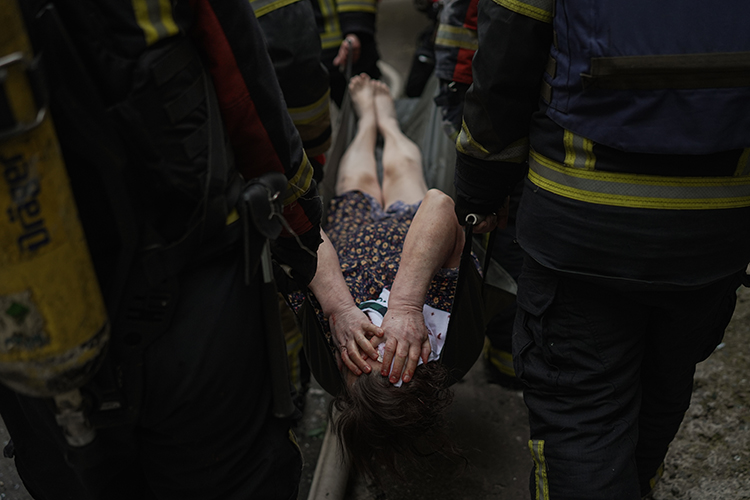
“Documentingthe aftermath of Russian strikes has, unfortunately, become routine. You arriveat the site and record this reality—this tragedy.”

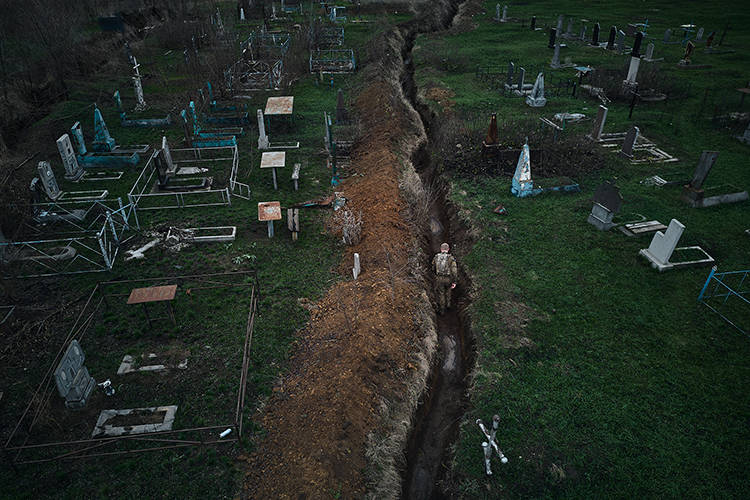
From thefirst days of the full-scale invasion, Oleksandr documented the war’sconsequences in Kherson and Mykolaiv oblasts. He recalls being struck by thescale of destruction the war left behind.
“It washorrifying to see a beautiful, well-off village turned into rubble—completelydestroyed. And somewhere there’s a skinny dog that won’t let anyone come close,still sitting on a chain,” the photographer says. “Scenes like the flooding of Kherson and thedestruction of the Kakhovka dam shocked me with their senselessness andcruelty—things you have to document for history, of course, while letting thempass through you.”


.jpeg)
Theunexpected power of photography
Himanovwarmly recalls one reportage from 2020 that became special to him. It wasn’t astory about warfare or extreme events, but about an ordinary outreach event forhomeless people in Odesa—one that ended with a happy outcome.

“InOdesa, one Christian mission works with homeless people. They would set up atent where they fed people and helped them warm up—those who found themselvesin difficult life circumstances. Many homeless people came. Among them was adrunk woman with a five-year-old boy. He was too bright for a place like that.The contrast was striking. That child shouldn’t have been there,” the photographer recalls. “Aphoto of the boy among the homeless struck not only me, but also my journalistcolleague so deeply that later she and her husband adopted the child. It’s astory about the power of photography. You truly don’t know how an event willend, or where the assignment you came to cover will lead,” Oleksandr says.

The seaas a symbol—and a challenge
Before thewar, Himanov often photographed the sea, finding in it an endless source ofinspiration. But during the war, his view of the sea changed.
“Photographingthe sea became difficult for me. It felt inappropriate when there was so muchpain and tragedy around. But over time I realized: the sea is part of who weare. Even though, for me, it’s associated with celebration.”

Oleksandrhopes that one day he will be able to photograph the sea—and the people byit—just as carefree again.
“The seais never the same. It’s probably the most difficult subject to photograph,because its constant movement demands attention and patience. And photographingthe sea is how you build your skills.”


Whatmatters to you personally
Himanovsees his work as more than a profession—first and foremost, he says, it is aresponsibility to the country. His photos are not only a way to conveyinformation to the world, but also a way to preserve history. At the same time,the photographer acknowledges that it is impossible to remain completelyobjective in this work.
“Areportage will never be objective, because every photographer frames the shotthrough their own perception. But that’s the magic of photography—it conveyswhat matters to you personally,” Oleksandr says.
In hisview, a photographer’s emotions toward what they are shooting play an importantrole—because “what you like, you’ll photograph better… and you’ll tell thatstory more powerfully.” However, Oleksandr Himanov is skeptical of the ideathat photography can change the world, though he acknowledges its impact: “It’sgood if somewhere, someone sees my photo, changes themselves, and decidessomething for themselves.”
OleksandrHimanov wasborn and lives in Odesa. He works as a photojournalist for the regional onlineoutlet “Dumskaya.net,” documenting life in his home city. He collaborates withregional and national media, as well as international photo agencies. Since thestart of the full-scale invasion, he has documented the consequences of Russianaggression in southern Ukraine.
Workedon the piece:
Topic researcher, text author: Vira Labych
Photo editor: Viacheslav Ratynskyi
Literary editor: Yuliia Futei
Site manager: Vladyslav Kukhar