Photographer Serhii Melnychenko presented the project “Frontline Tapes: photographs, letters, and artifacts of Ukrainian soldiers”, which he worked on throughout 2025. Serhii Melnychenko sent disposable film cameras to Ukrainian soldiers and asked them to capture their everyday life, work, and war. However, the project went beyond photography, because together with the cameras Serhii Melnychenko also asked them to send him handwritten letters and artifacts that the soldiers chose themselves. Serhii Melnychenko’s project is not only frames and documents of the war, but also personal stories and the memory of people who today defend Ukraine’s independence.
Films about life
Today, the full-scale Russian-Ukrainian war is considered the most documented war in the history of humanity. It has gained this status thanks to a combination of modern technologies and the mass recording of events in real time. Unique photographs are created not only by professional photographers, but also by Ukrainian soldiers. Serhii Melnychenko decided to send soldiers disposable film cameras so that they could photograph their lives during the war.
Photography often becomes a voice for those whom society usually does not hear, and gives people from different social groups an opportunity to document their own lives. Around the world there are many projects created using the method of participatory photography — when professional photographers hand out cameras to all participants and ask them to express their own view of different events. “Of course, the idea is far from new, but I decided to try,” says Serhii Melnychenko. “After working on the project ‘Попід Дніпром’, I continued working with the military and documenting the events taking place during the full-scale war. However, I do not identify myself as a documentary photographer, so I am constantly looking for new approaches to shooting.”
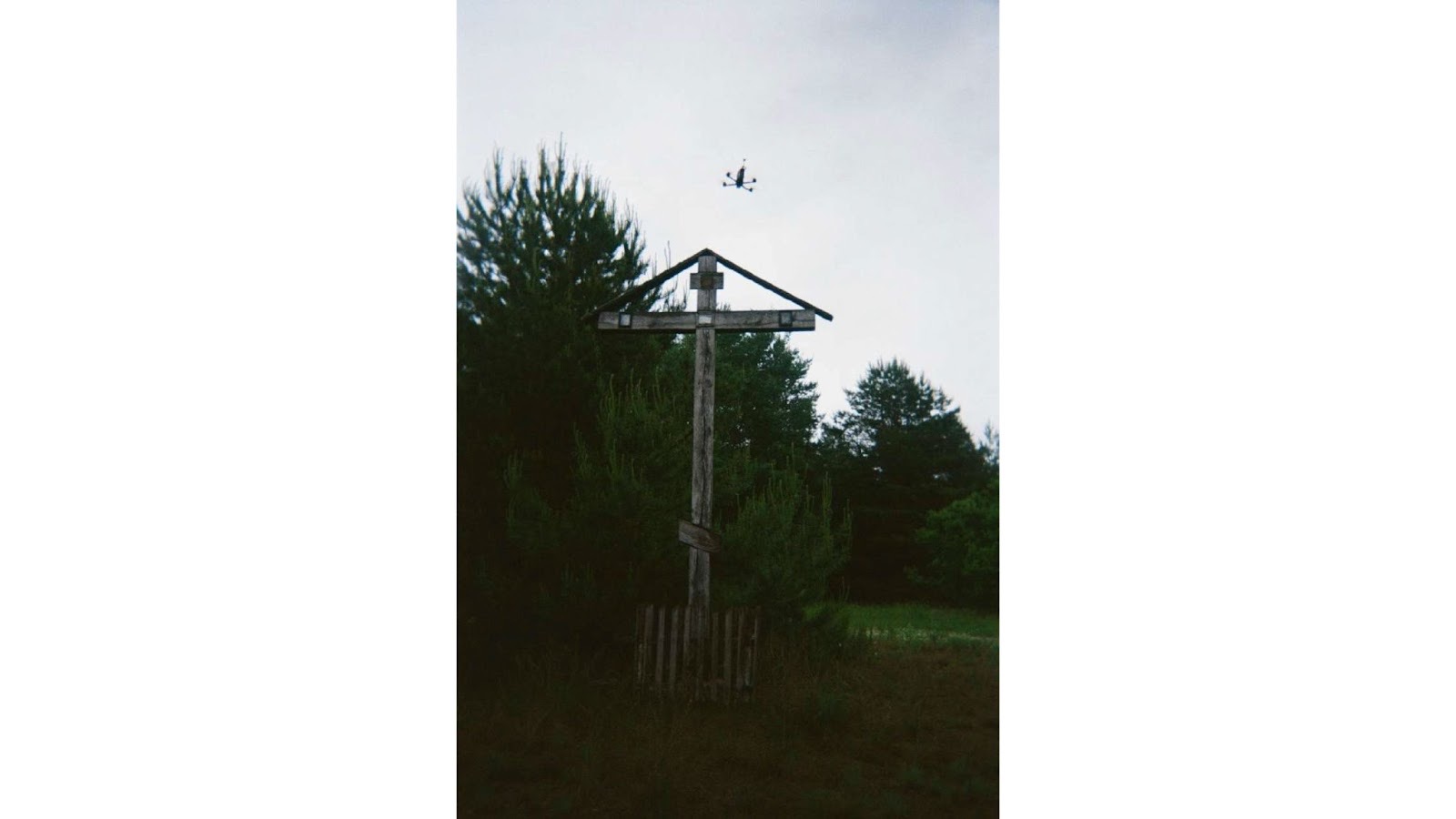
Serhii Melnychenko reached an agreement with the lab-store Fotovramci, which agreed to provide disposable film cameras for the project. “We started with five cameras, which we mailed to service members. We had certain concerns — whether the soldiers would be able to photograph, whether they would have time for it,” Serhii Melnychenko recalls. “But when the military began returning the cameras and we saw interesting results, we decided to continue the project.” In the end, 25 service members took part in Serhii Melnychenko’s project.
Letters from the front
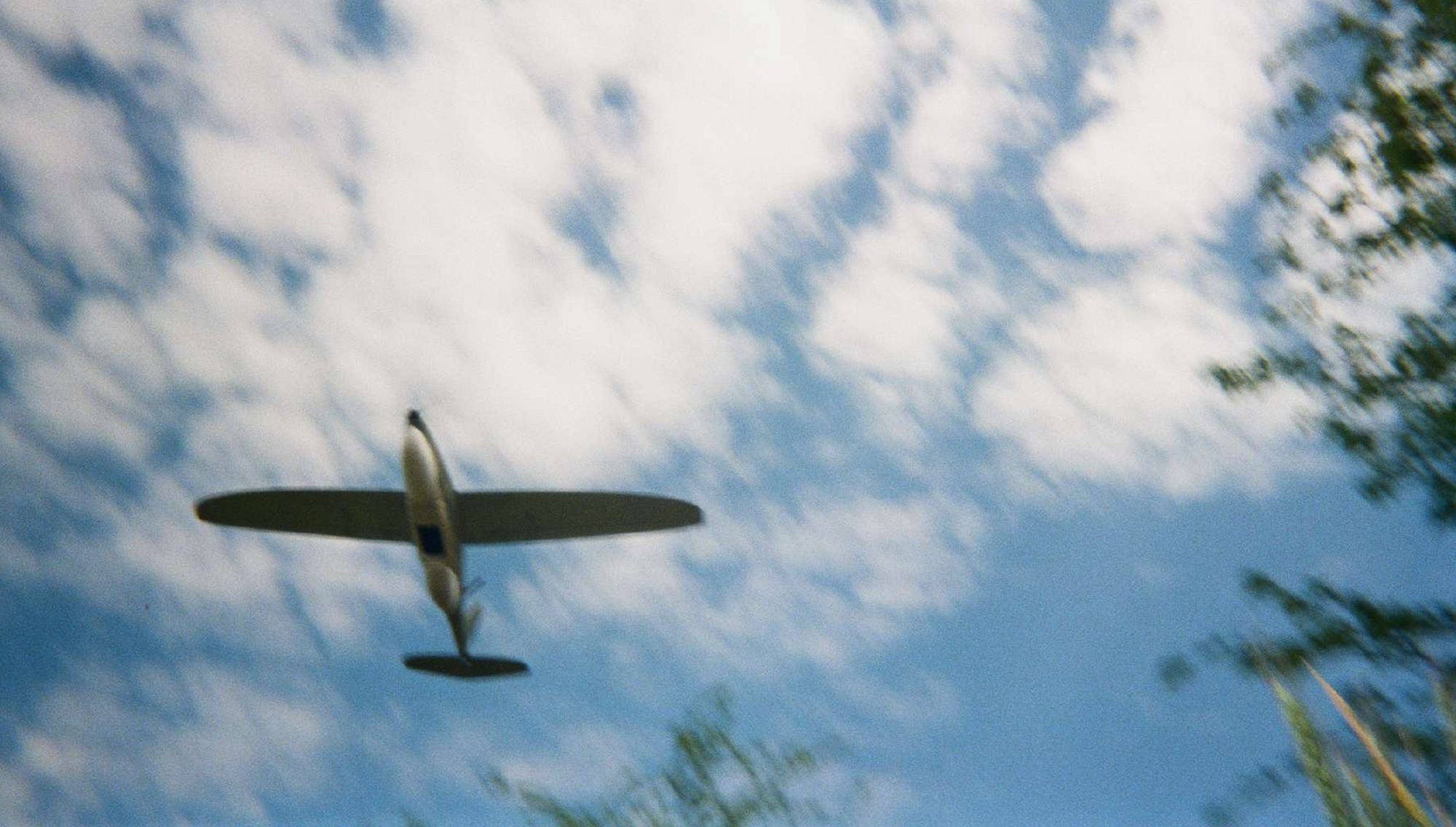
Serhii Melnychenko sent the first camera to a service member with the call sign Viking — a Mi-24 helicopter pilot who serves in the 11th Separate Army Aviation Brigade of the Ground Forces of Ukraine. “I learned about Viking from the photographs of my colleague Vladyslav Krasnoshchok and suggested that he join the project. I had always been interested in working with aviation,” Serhii Melnychenko says. “Viking agreed and very quickly sent wonderful shots. It inspired our team a lot, and we continued sending the next cameras.”
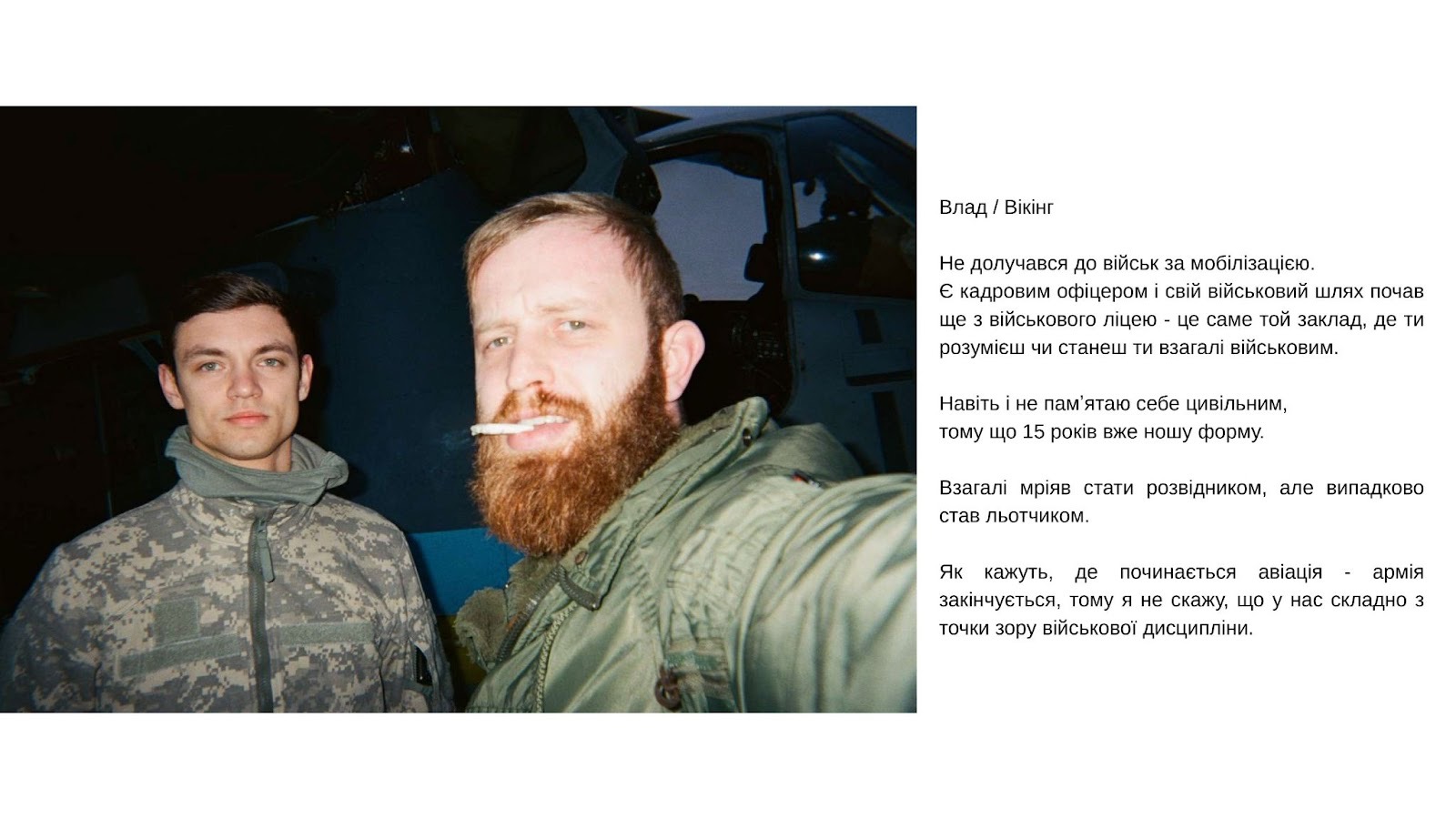
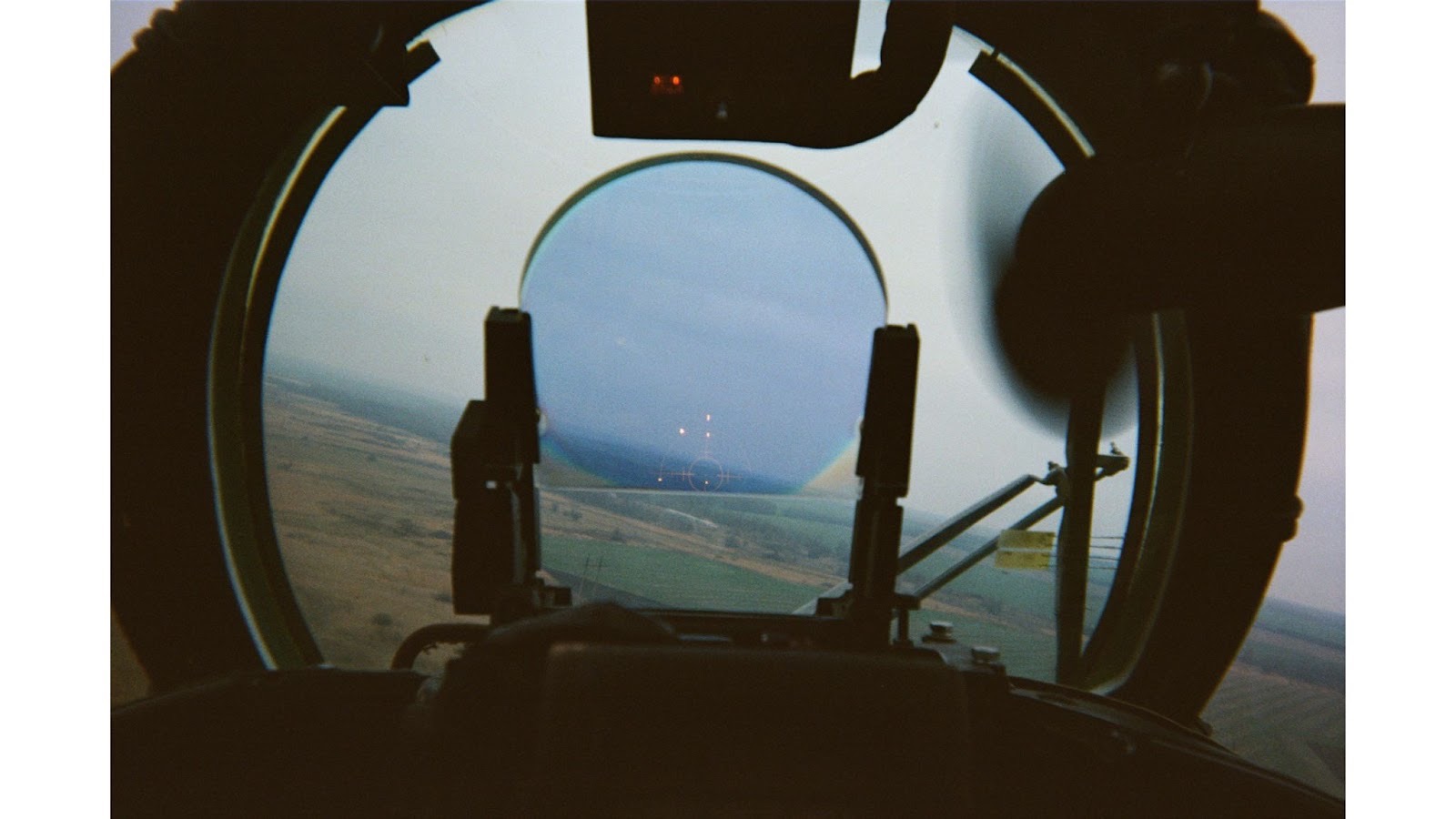
From February to November 2025, Serhii Melnychenko periodically sent cameras to service members. It was important for him to cover different sections of the front line and all seasons so that the project would be cohesive and high-quality. “It’s a pity we didn’t manage to take pictures from Sudzha — we missed each other in time,” the photographer smiles.
Each service member who joined the project received one disposable camera with film. The exception was Ksenia, to whom Serhii Melnychenko accidentally sent two cameras. “It so happened that Ksenia is the only girl in the project. She is my former student who decided to voluntarily join the Armed Forces,” Serhii Melnychenko says. “Ksenia shot two rolls, and I included her photographs in the project.”
Together with the cameras, Serhii Melnychenko sent the service members a letter in which he asked them to document their current lives. “I did not create any framework, because I did not want to complicate anyone’s life. I understand that the military have their tasks, and they simply might not have had time for shooting,” the photographer says. As a result, Serhii Melnychenko received photographs that were radically different in style and subject matter — self-portraits, portraits of fellow soldiers, photos of dugouts, animals, nature, and so on.
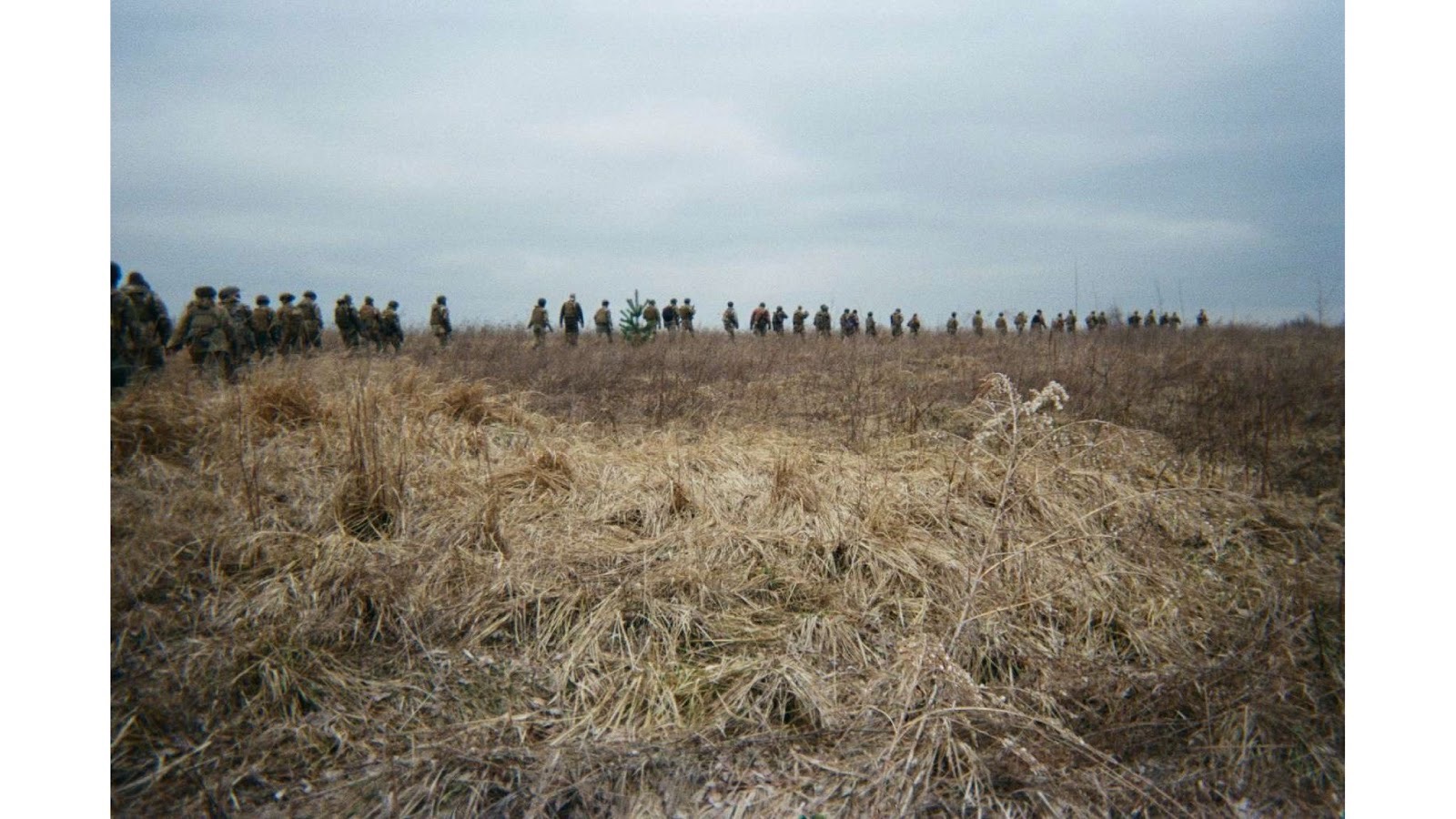
Among the project participants are also professional photographers who are now serving in the Armed Forces of Ukraine. Serhii Melnychenko did not set out to distribute cameras only to amateurs or, on the contrary, only to professionals in photography. The project’s target group is service members regardless of their background. “Of course, it was interesting for me to receive shots from professional photographers who approached the shooting with an understanding of the craft. But their photographs made for the project still differed greatly from the images they make with their own equipment or publish on social media. For them, it was also an interesting experiment,” Serhii Melnychenko says.
Things to remember
In addition to photographs, service members sent Serhii Melnychenko letters and various important items with special stories. The letters, like the photographs, also turned out very different. “There were several letters in which the military described the deaths of their fellow soldiers. It was very painful to read these texts — to the point of tears,” Serhii Melnychenko shares. For example, photographer Roman Pashkovskyi dedicated his letter to a fallen comrade and sent a chevron in the shape of a blue-and-yellow flag, with his friend’s call sign written on it in marker. In other cases, the letters were positive; some shared their own thoughts, wrote poems, or simply described the artifact they were sending.
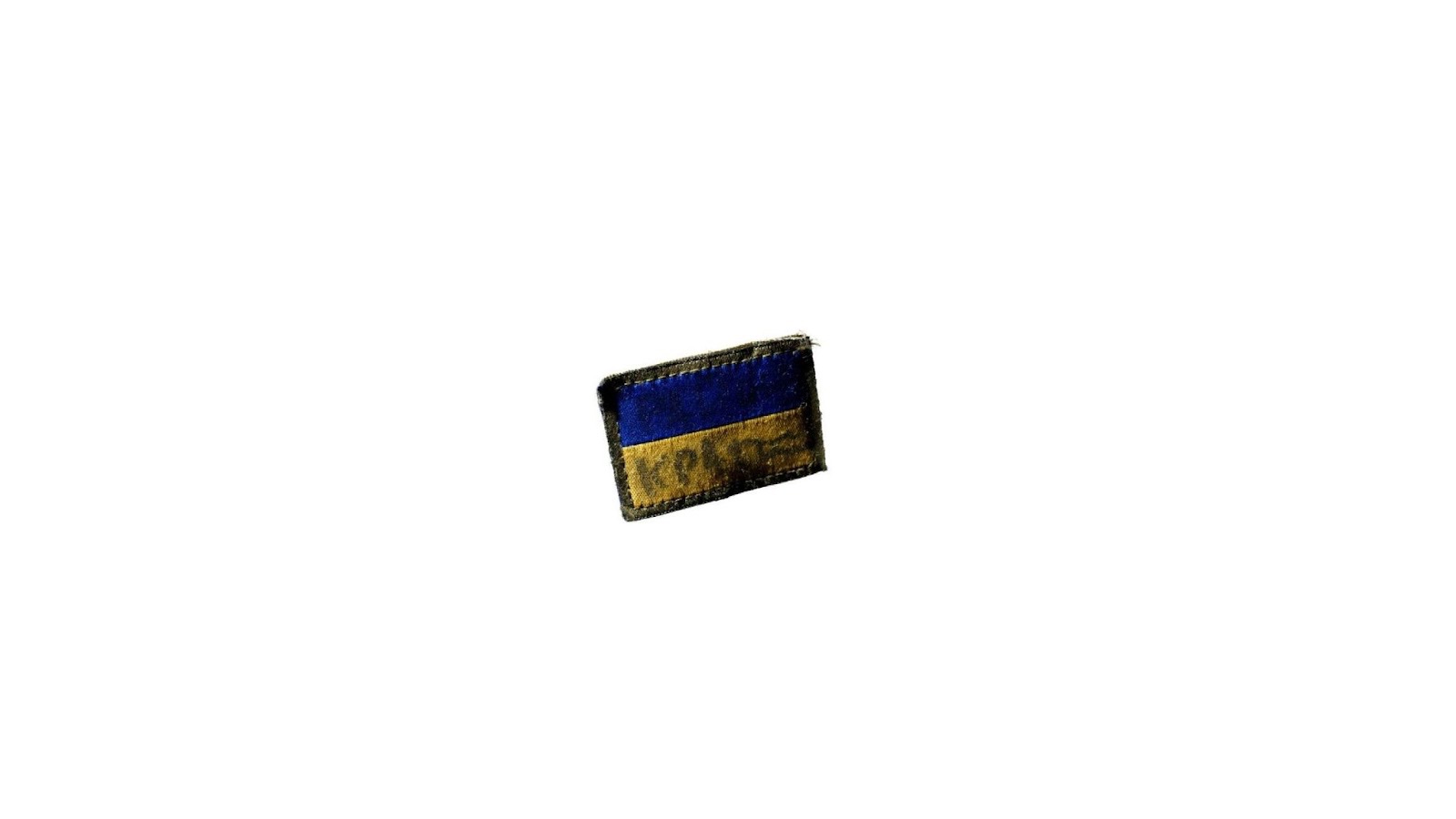
“Every time I received a letter, I had no idea what to expect. The joy I felt that the photographs and artifacts had finally arrived would abruptly disappear when I started reading the texts,” Serhii Melnychenko says. “Of course, I wish none of this had ever happened, that this project did not exist, and that everyone was alive and healthy.”
As artifacts, the military sent patches, personal ID tags, drones — ours and captured trophies — shells, and elements of gear. “The most ironic artifact for me is the MacCoffe 3in1 coffee sachets that were so close to the enemy,” Serhii Melnychenko says. “In my collection of artifacts I also have a trench candle, a notebook with artillery calculations, a lighter, and a car keychain that the guys sent to preserve the memory of the vehicle that repeatedly took them out of positions and gave them a chance to live. I received things that seem ordinary at first glance, but in fact hide countless stories. I am very glad that the guys entrusted them to me.”
Different dimensions of life
The project materials were included in the book “Frontline Tapes: photographs, letters, and artifacts of Ukrainian soldiers”. The design was done by Maryna Brodovska, and the artifacts were photographed by Vasyl Demkiv. The images of the objects were made against a neutral light background, outside space and time. “I immediately understood that there would be a book, because I started receiving a lot of interesting material from the military — texts, photographs, and unique objects with stories,” Serhii Melnychenko says.
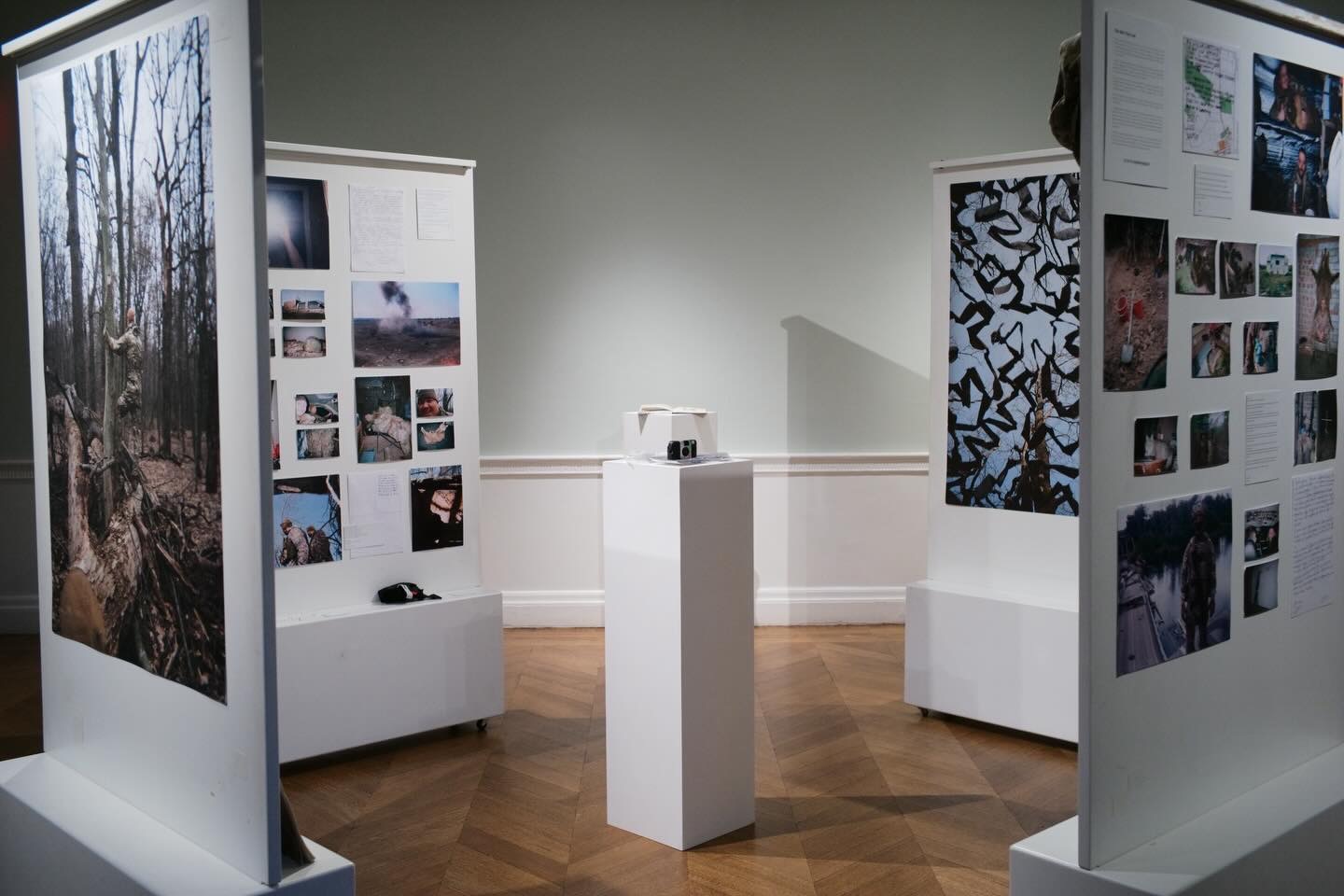
Photo editor at The Kyiv Independent Irynka Hromotska suggested that Serhii Melnychenko present the project materials at an exhibition in New York. The exhibition was titled “The War They Live” and was shown as part of The Kyiv Independent events dedicated to storytelling, investigative journalism, and frontline reporting. In New York, visitors could not only view the photographs and buy the book, but also see real artifacts. “The exhibition worked really well with the audience. Visitors examined the items and carefully read the soldiers’ letters,” the photographer says. “At the charity auction, we raffled a signed book and a disposable camera.”
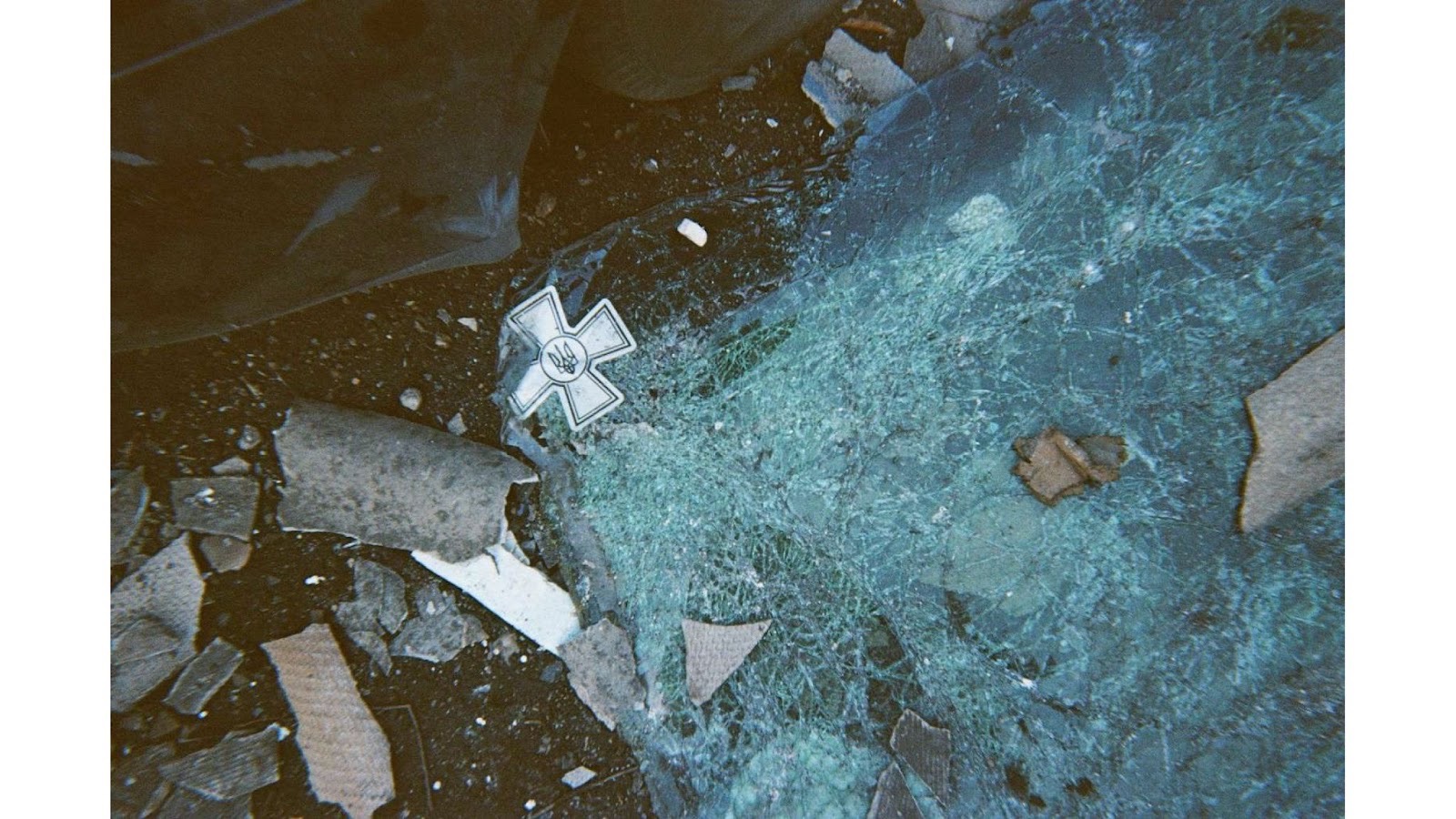
The project “Плівки з передової: фотографії, листи та артефакти українських військових” is filled with stories about the lives of fighters and the deaths of their comrades. “Recently, one woman bought the book because it contains the story of her husband’s death, which was written by Viktor Holikov. She wrote that this publication is very important to her,” Serhii Melnychenko says. “I immediately offered to refund her money, but she asked me to donate it to the military.”
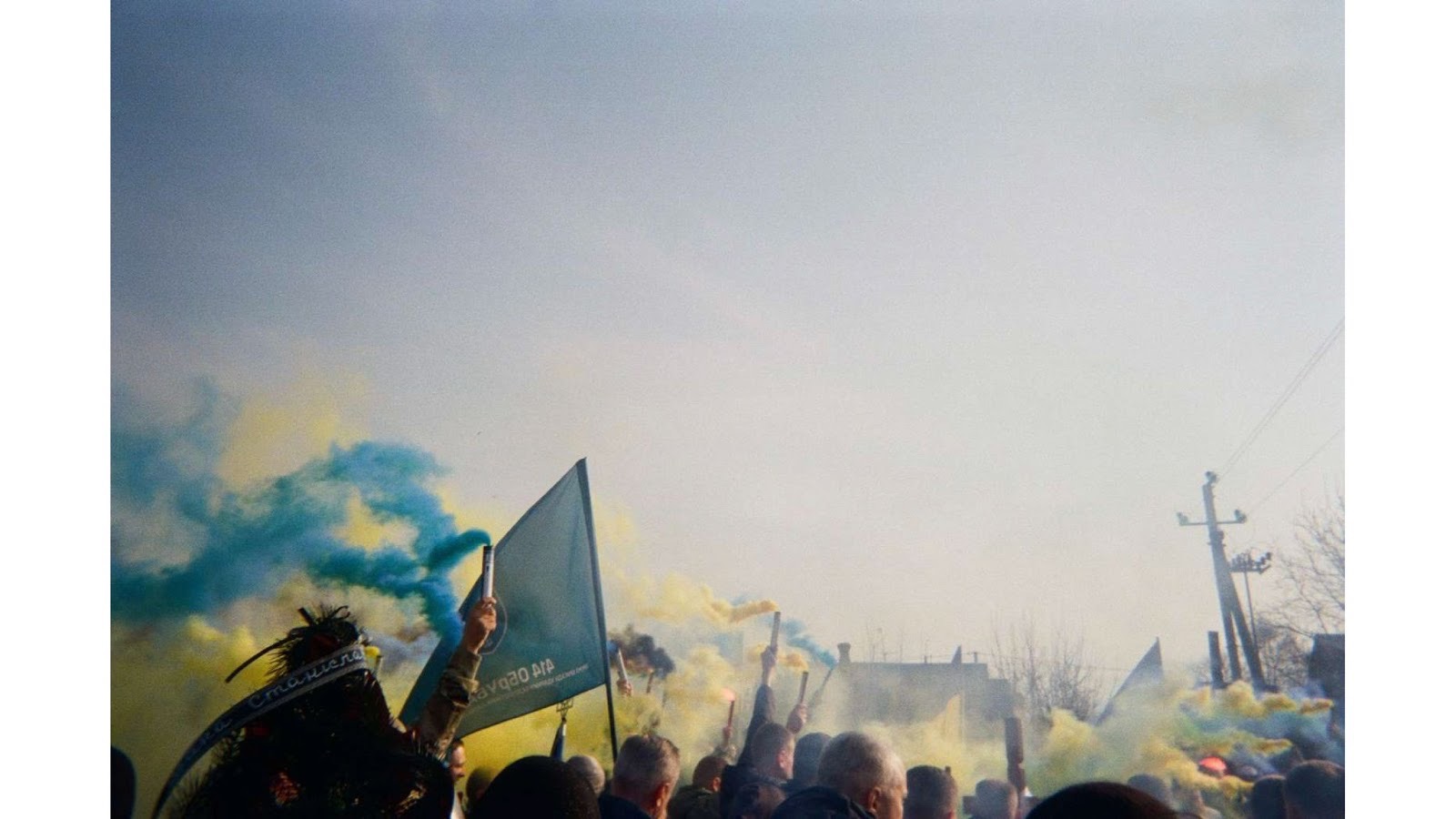
Serhii Melnychenko says the military also thanked him for the opportunity to join the project and to distract themselves a little from routine. The photographer sends the fighters books and printed photographs. “The guys joke that thanks to the project they have been to New York and are published in books,” the photographer smiles. “I’m glad the project worked positively for all sides. Of course, the greatest gratitude, honor, and deep bow go to the military who, despite difficult conditions, took part in this project.”
Serhii Melnychenko — a photographer, teacher, and founder of the school of conceptual and art photography MYPH. He began photography in 2009. Over this time, he has participated in about 200 solo and group exhibitions, fairs, and festivals worldwide. He is the organizer and curator of more than 50 projects and exhibitions featuring works by MYPH school students around the world over the past seven years. Winner of Ukrainian and international contests and awards, including the Leica Oskar Barnack Award Newcomer in 2017 (Berlin), “Photographer of the Year” 2012, 2013, and 2016 (Kyiv, Ukraine), and “Golden Camera” in 2012 (Kyiv, Ukraine). Finalist of Krakow Photomonth, Pinchuk Art Center Prize, Off_Festival Bratislava 2014, DEBUTS 2018, Kolga Tbilisi Photo Award, Batumi Photodays, and others.
Participant of Paris Photo, Volta Art Fair, Photo L.A., Photo Basel, Unseen fair. Nominee for the Foam Paul Huf Award in 2020 and 2023. Selected for the European platform for photographers FUTURES in 2022. Serhii’s photographs are in private and public collections in the U.S., Hong Kong, Ukraine, Poland, France, Germany, Belgium, Lithuania, the Czech Republic, Japan, the Netherlands, Italy, Switzerland, Norway, and others. In 2022 and 2023, two series — and a total of 25 of Serhii’s works — entered the permanent collection of the Alexander Tutsek-Stiftung foundation. In 2023, he received an annual scholarship (grant) from the Alexander Tutsek-Stiftung foundation to create his own photo project.
Worked on the material:
Topic researcher, text author: Katya Moskaliuk
Photo editor: Vladyslav Krasnoshchok
Literary editor: Yuliia Futei


.jpg)