Taras Fedorenko’s “They Bring the Light” is an observation of how Christmas celebrations have adapted to the reality of war. Through caroling, a simple yet fundamental feeling emerges: life continues even where everything around tries to break it.
“During wartime, the continuity of tradition is resistance not only to war, but to death itself”
In my childhood, I went caroling to spend time with friends and earn a little extra money. We didn't have costumes or any understanding of why people organized Vertep performances year after year. I didn't see any deep meaning in this performance, and my family wasn't religious. Last year, I went caroling in eastern Ukraine for the first time with friends. That was when I realized I really wanted to return there again.
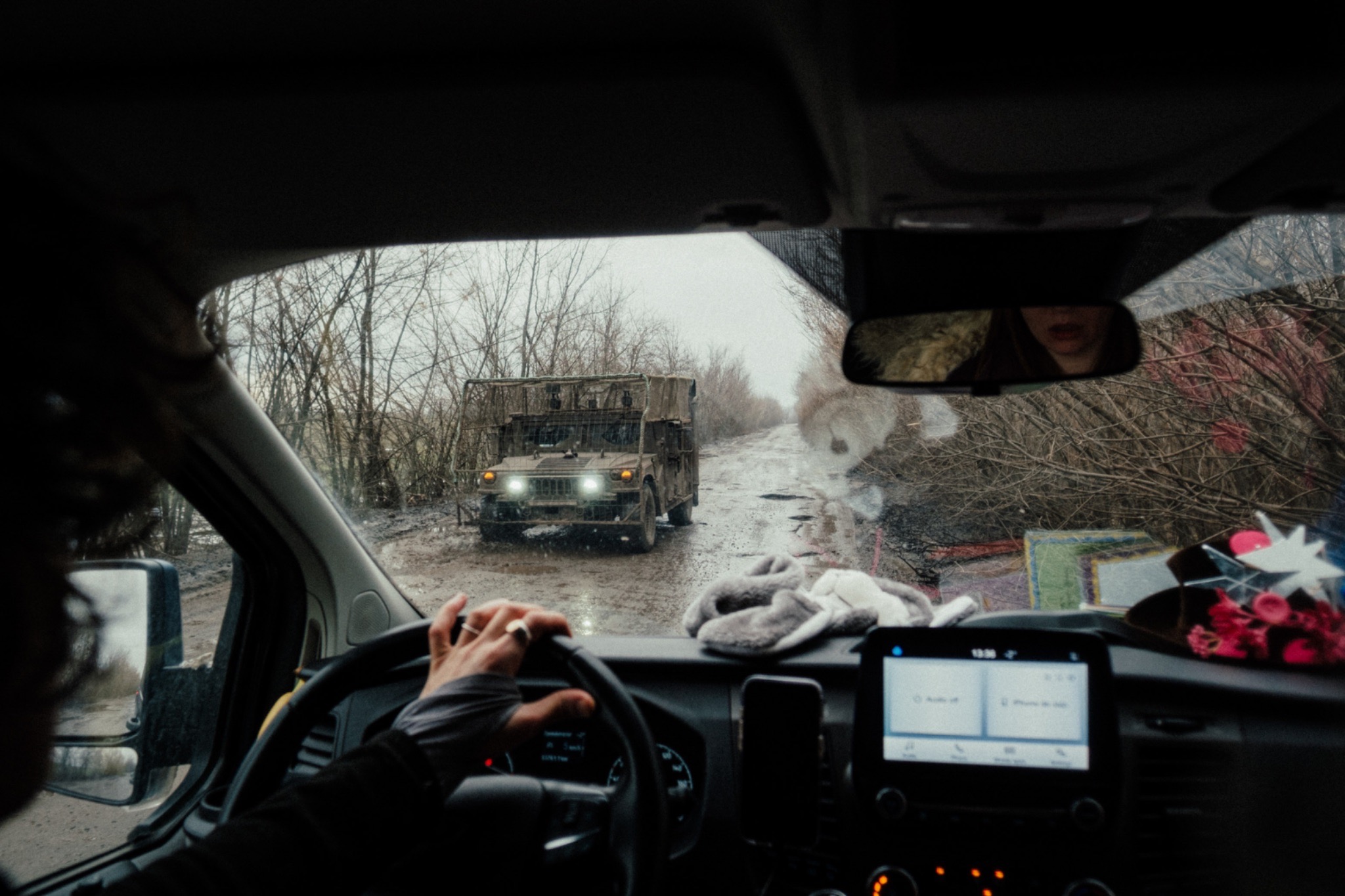
Now, in wartime, gathering even with your closest friends has become a real challenge. That is why it is so valuable when traditions unite us, help us find common ground, meet new people, and feel this important connection.
The main characteristic of any tradition is repetition. However, in the current realities of war, in practice, the periodicity of actions requires significant effort. For example, returning to frontline areas to meet again with people living there after de-occupation and under the looming threat of the front moving closer.
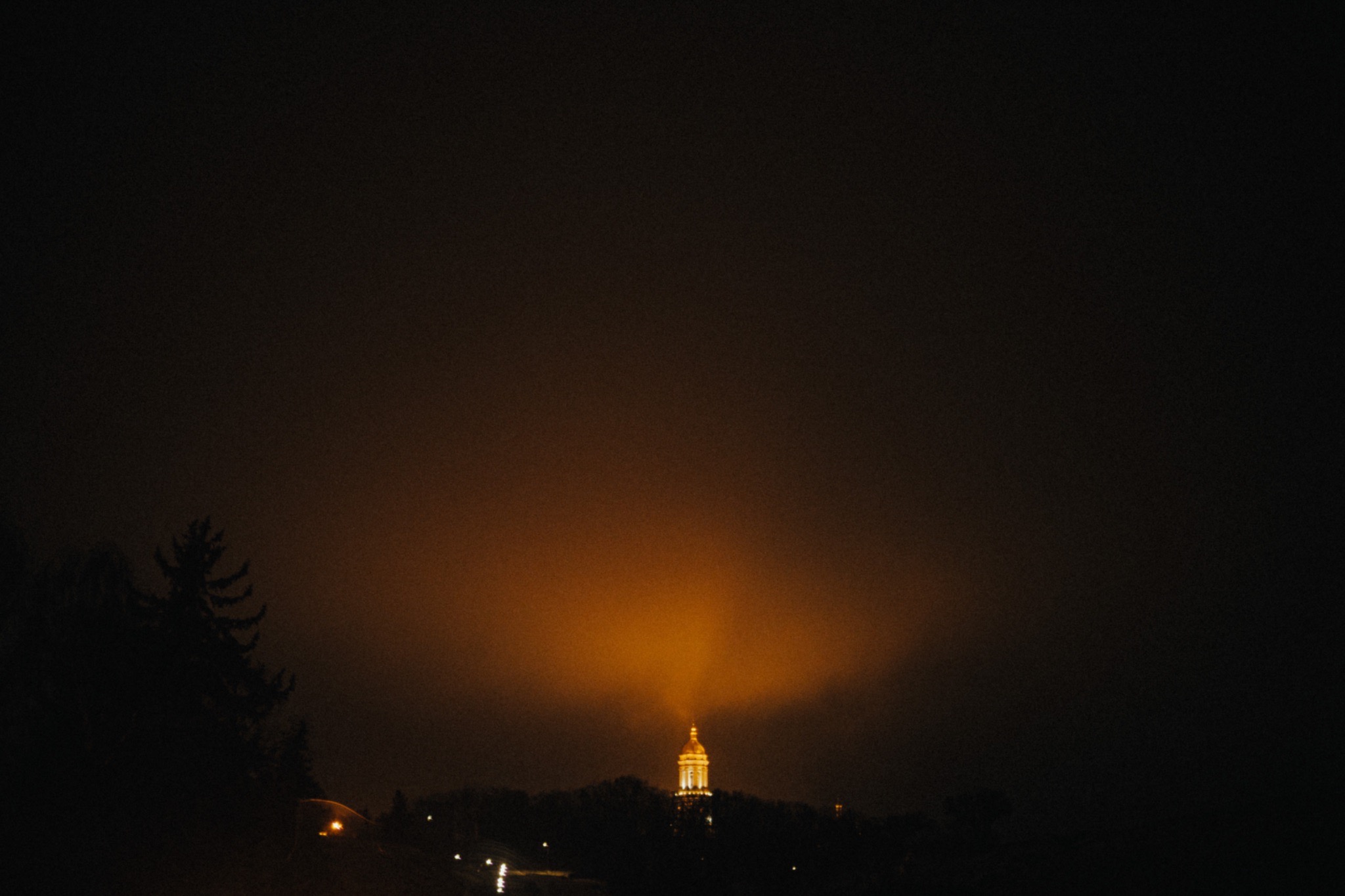
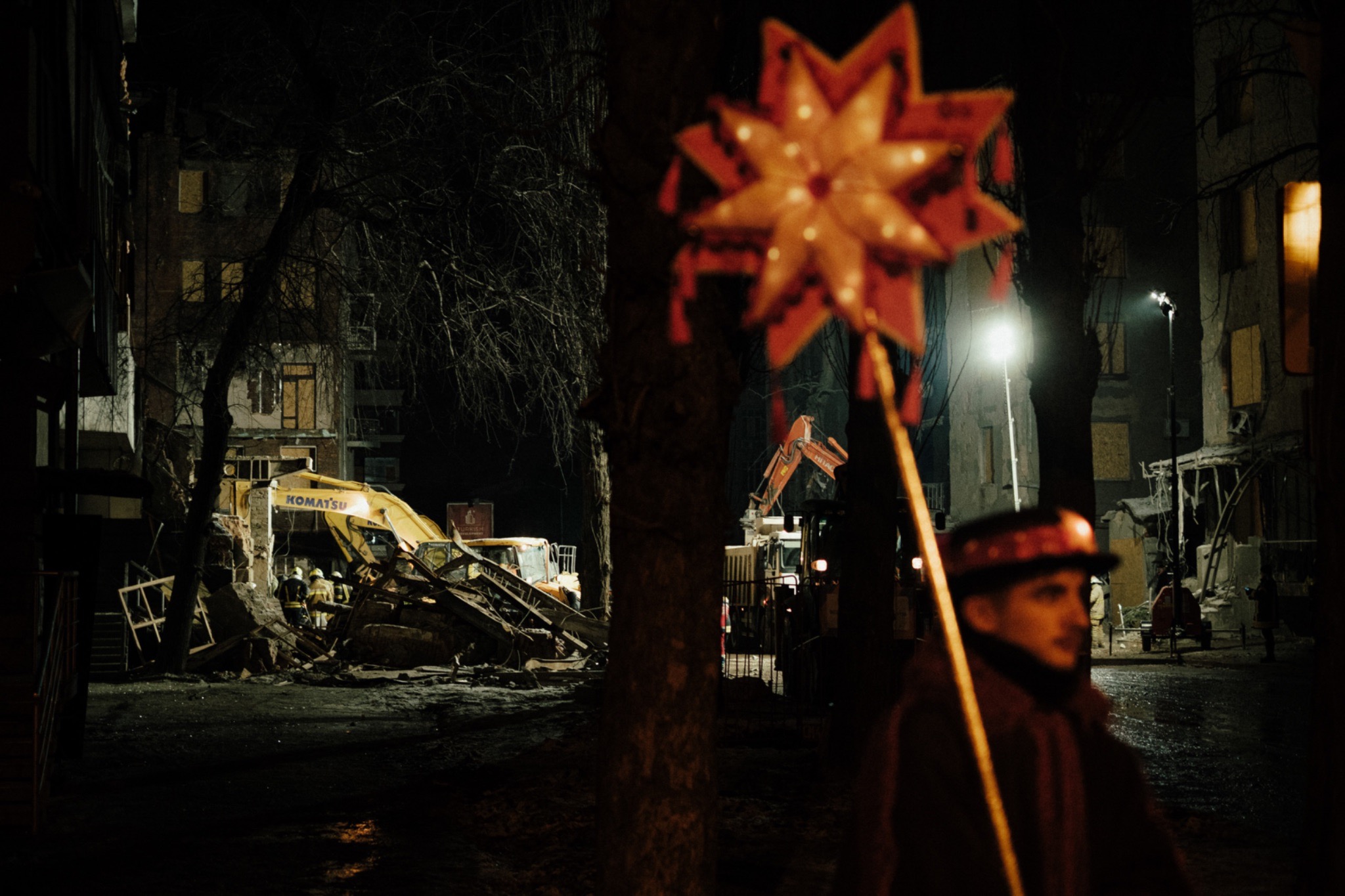
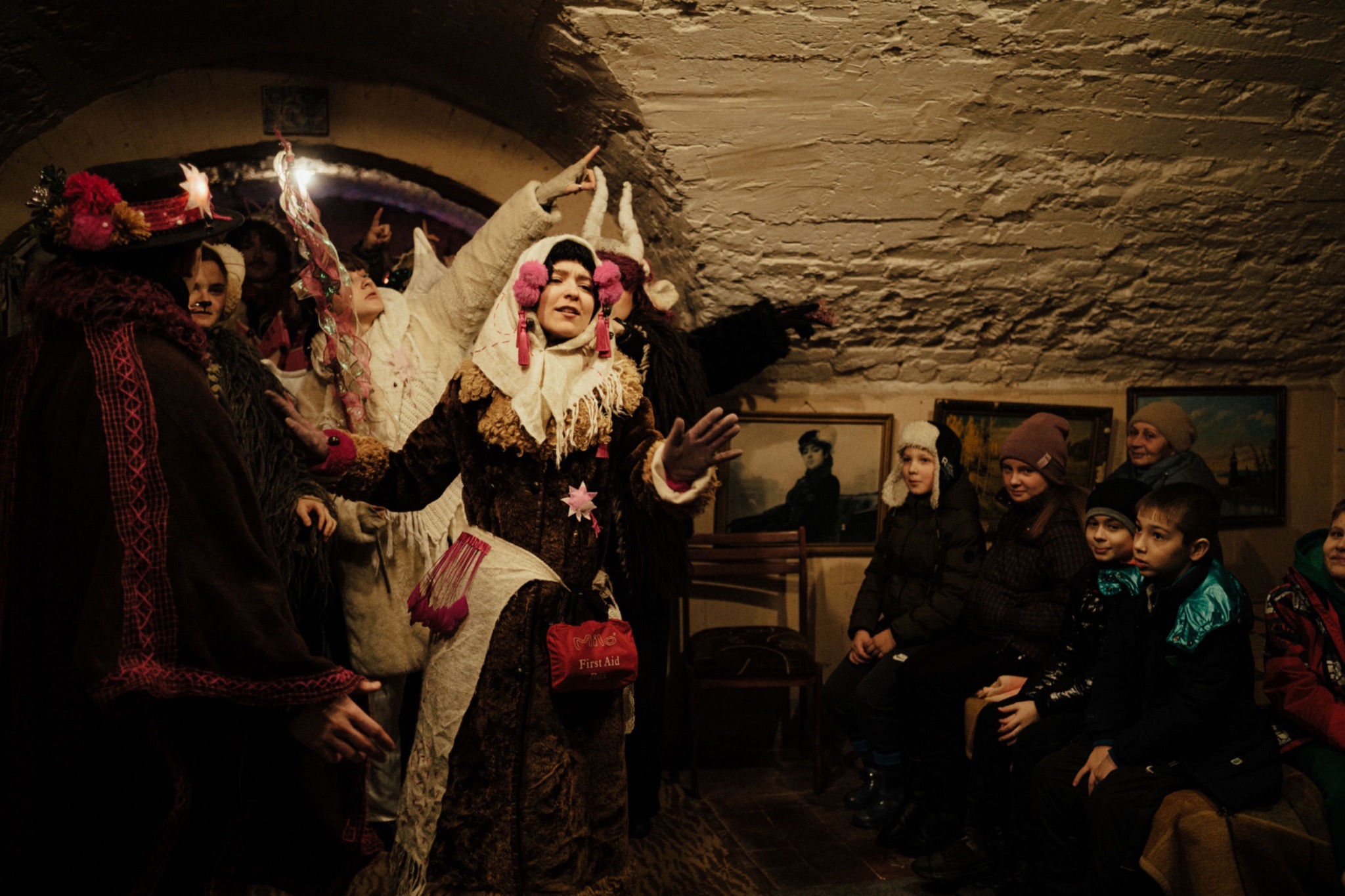
In the project, there is a photograph where my friend in a Goat costume hands a glowing sphere to an older man. I have a good memory for faces, and it was very important to me to meet this elderly gentleman again. He cried when he came to watch our Vertep again. Such moments are truly the most touching. This moment became a real discovery for me. It gave me a personal interpretation and a deep understanding of why Verteps were held in the past and why this tradition continues to this day. During wartime, the continuity of tradition is resistance not only to war, but to death itself.
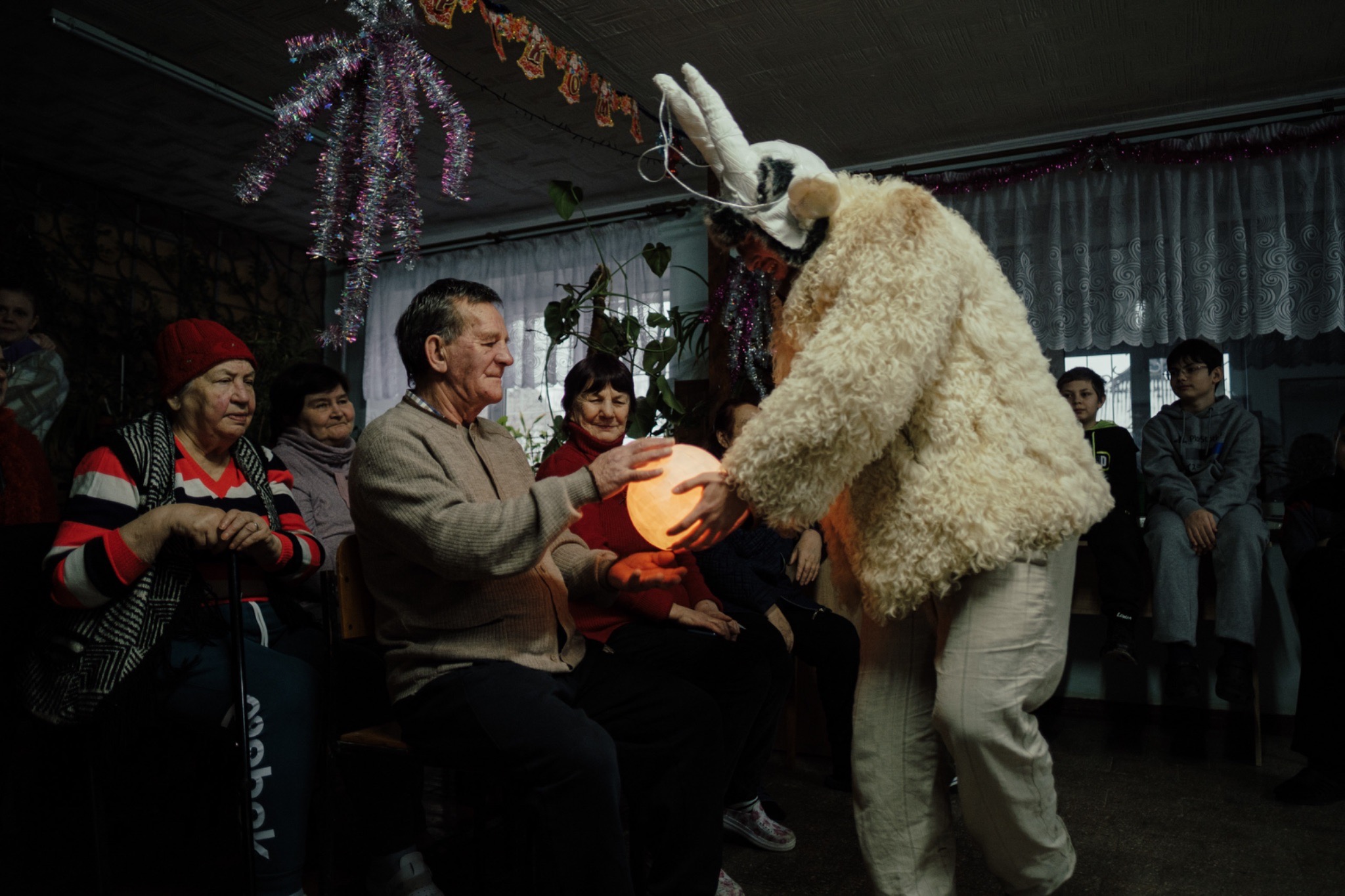
“Vertep is a story about people who bring light into the darkest corners of the country during wartime”
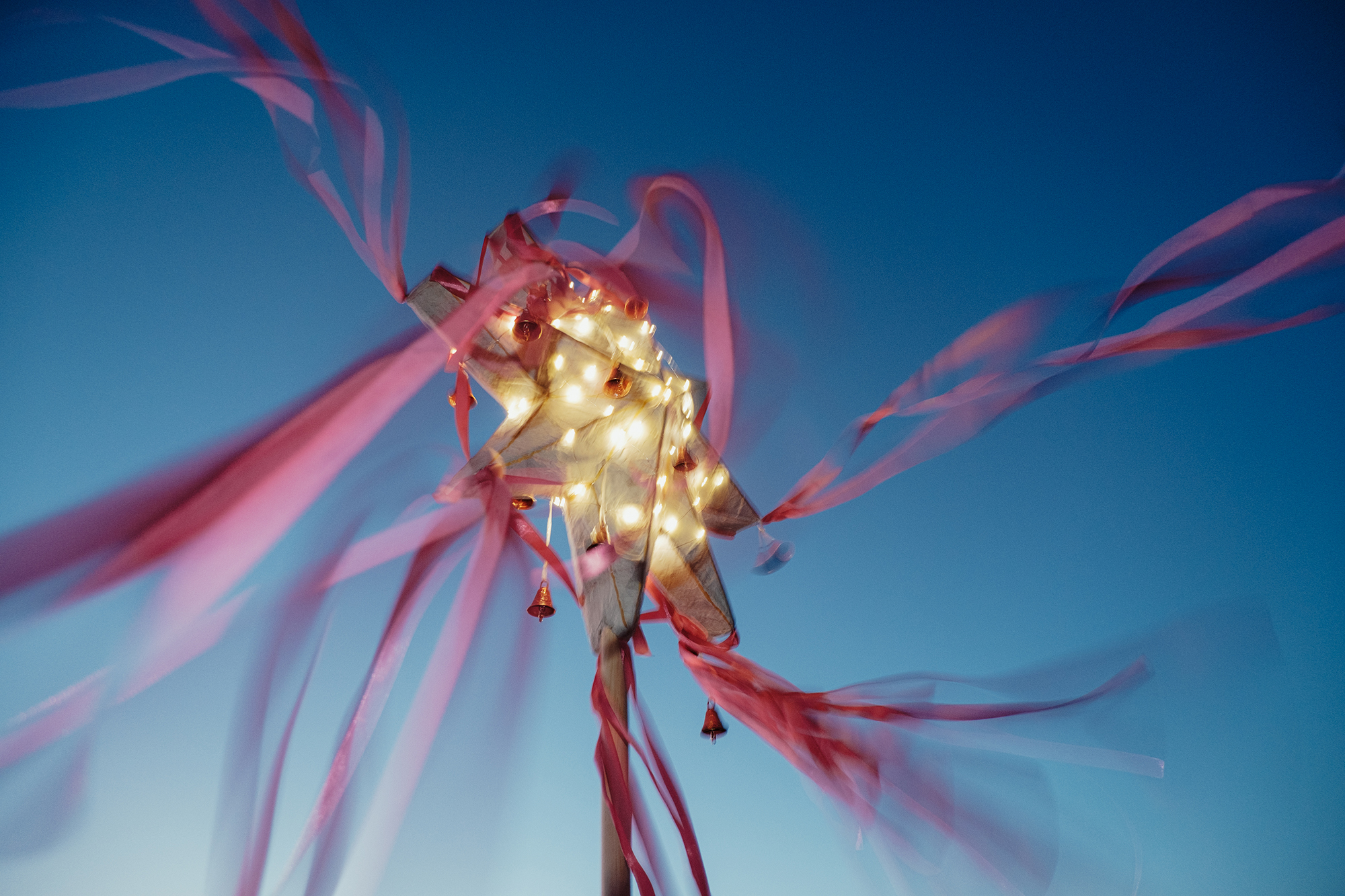
The title “They Bring the Light” was inspired by a photograph from the project. In the photo, a girl in a Vertep costume holds a glowing sphere in the semi-darkness. The shot is laconic but quite evocative — it’s as if the person is touching the moon in the sky, reaching for the light to pass it on to others. If we abstract away from politics, geography, and the chronology of combat operations and look at events through the prism of centuries, a different scale is revealed. For me, Vertep is a story about people who bring light into the darkest corners of the country during wartime.
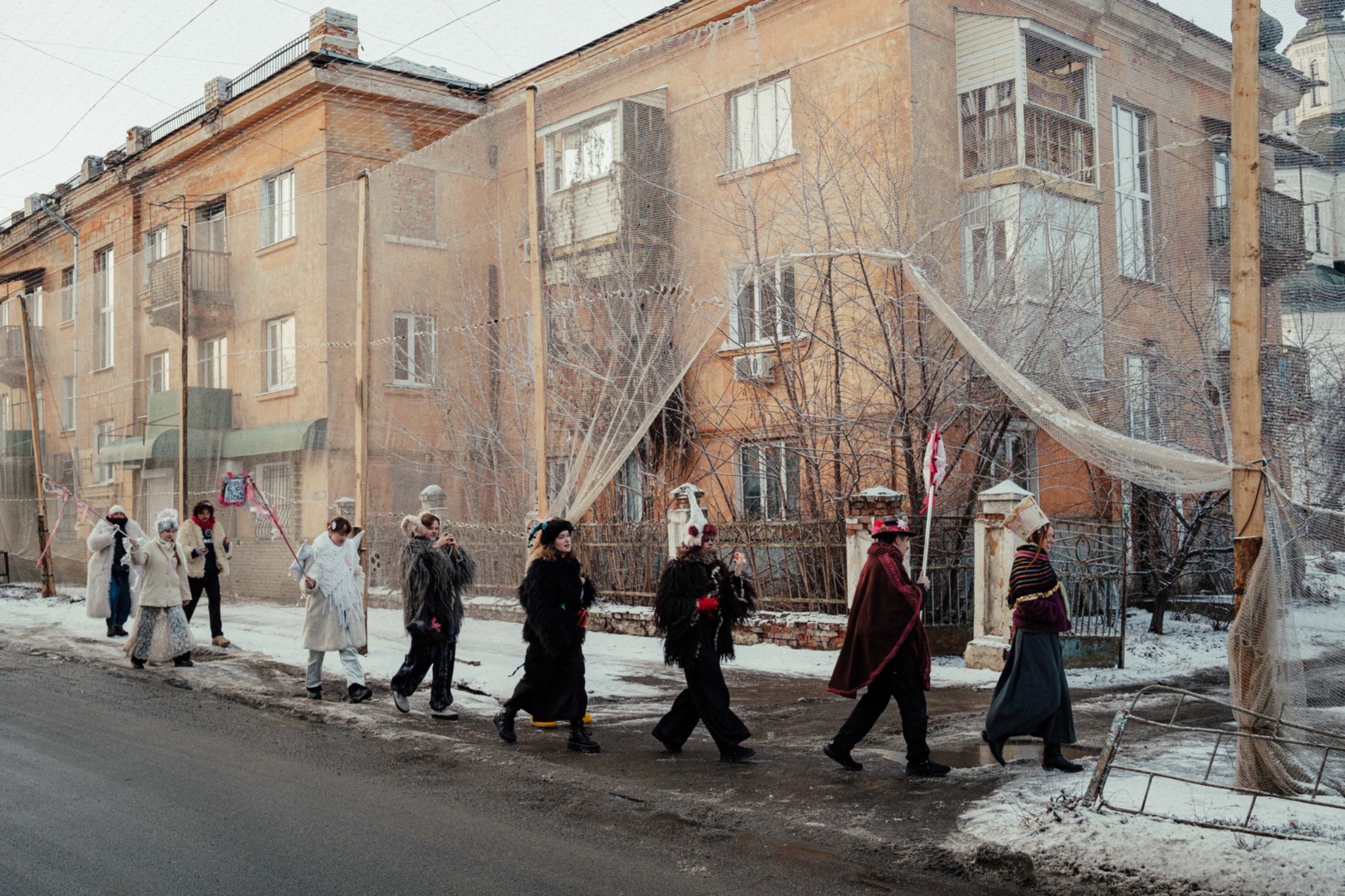
I really like coming to children with the Vertep. Adults already have life experience of celebrating Christmas and memories of their own childhood, no matter how different it may have been. One of the participants in our Vertep said that carolers also visited his school back in the day — and these are memories for a lifetime. We have the opportunity to give children their first impressions of the Vertep and Christmas holidays, to create a joyful and colorful event for them. In such moments, light is the joy of children.
During the war, the enemy not only seizes Ukrainian territories but also destroys our culture and traditions. The attempt to recreate traditions every year, again and again, is also an important form of resistance in the Russian-Ukrainian war. This is needed not only by the people we visit but also by us. We were in small towns and villages of the Kharkiv region — everything around was gray and cold. Instead, we are dressed in bright, colorful clothes, singing loudly, and telling about the birth of the Child. We bring light and life.
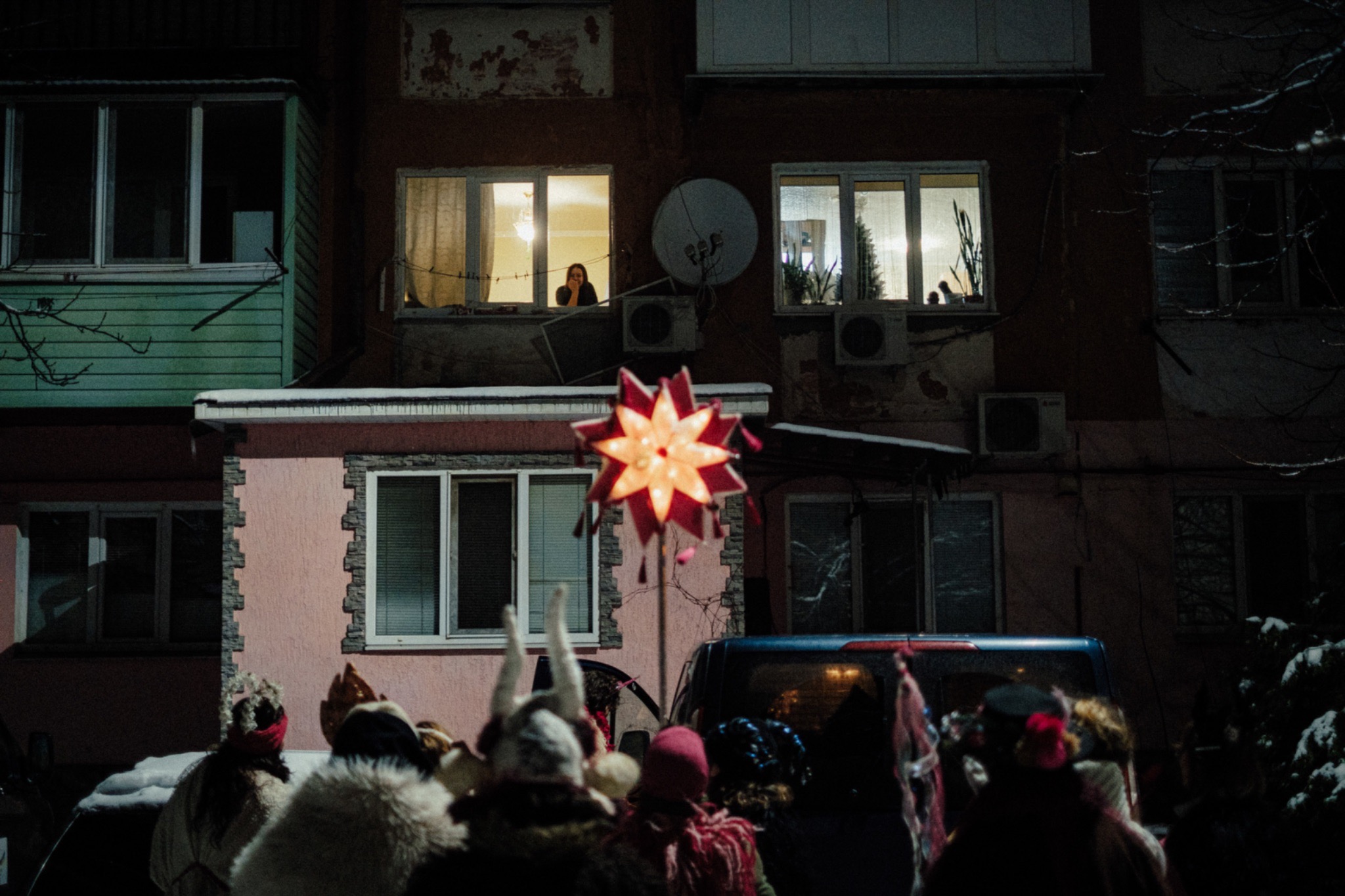
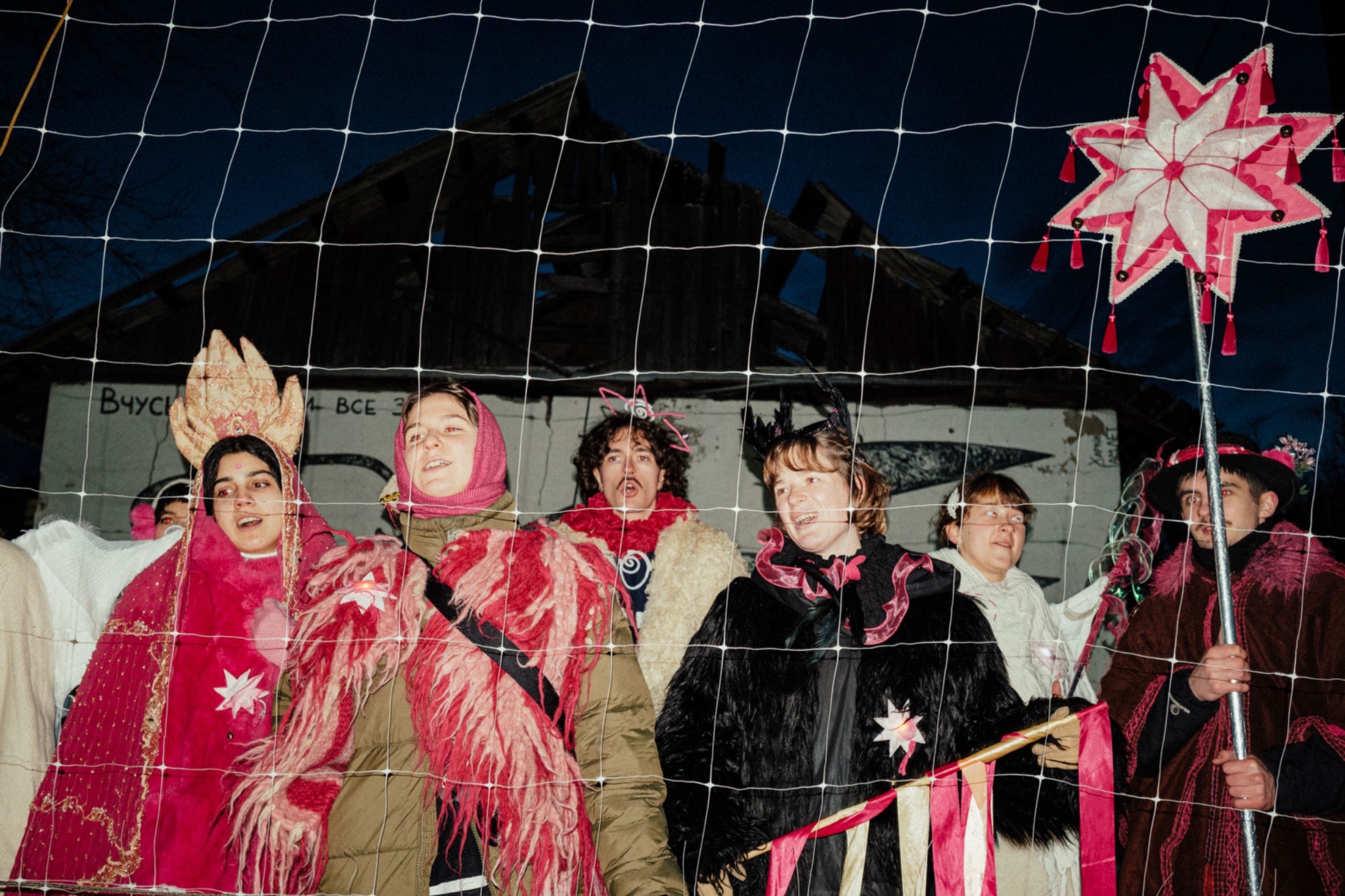
“Our Vertep is appropriate, and we are exactly where we need to be”
I photograph Christmas celebrations during the war, and its presence is in many of the shots. For example, carolers singing behind a net meant for drone protection or against the backdrop of destroyed buildings. However, these markers of war, obvious to us, may not always be understood by a foreign audience. Therefore, I consider it necessary to add captions to the photos to introduce viewers to the context of the story. So that the foreign audience understands that the carolers are arriving in the East, where at any moment they could die from enemy shelling and drones.
A year ago, we traveled to the Donetsk region, specifically to Sloviansk and Kramatorsk, and to the Kharkiv region. This year, due to the constant threat of FPV drones, we concentrated only on villages and towns in the Kharkiv region. Over ten days, we caroled in shelters for internally displaced families, in hospitals, and went into people's homes.
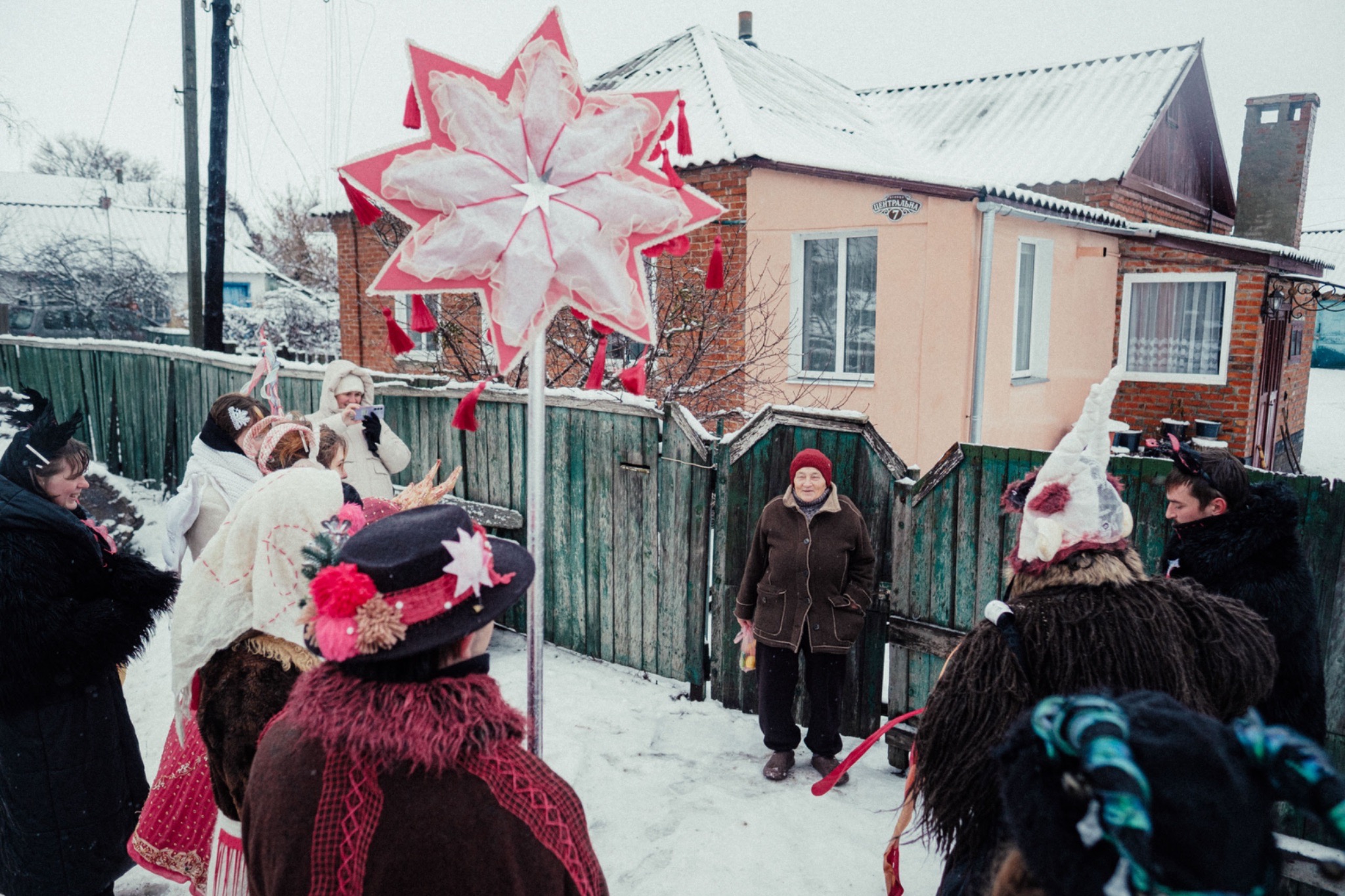
For me personally, it was always a question of whether people would receive us kindly, and whether it was appropriate, for example, to come to a hospital to visit soldiers with severe injuries, amputations, and sing for them. However, we went against this fear, and the Vertep lifted people's spirits. We are brightly dressed, adorned with lights and garlands, we sing a lot — everyone was recording us on their phones and rejoicing. We felt that our Vertep was appropriate and that we were exactly where we needed to be. It is very important for me to return to people and see their smiles again. I am currently in the army, but I hope that I will still have the opportunity to research and photograph Vertep traditions.
“We are creating a new form of Vertep, which has its own special meaning and depth of faith for each of us”
I photograph the Vertep organized by the “Lesia Kvartyrka” project. In 2021, it started as a unique, independent Ukrainian festival of original music and set design. At first, it was a small, cozy event in the Kyiv courtyards of Podil, which eventually grew into a large-scale cultural platform. Our collective includes two women who designed the costumes and handled the sewing, and who actually took part in the performance themselves.
Our Vertep scenario always adapts to the time in which it takes place. The story of Christ’s birth remains the foundation, but, for example, this time the main theme was societal strife. We tried to convey to people that the enemy — Herod in our scenario — is trying to divide us because it will be easier for him to defeat us that way.
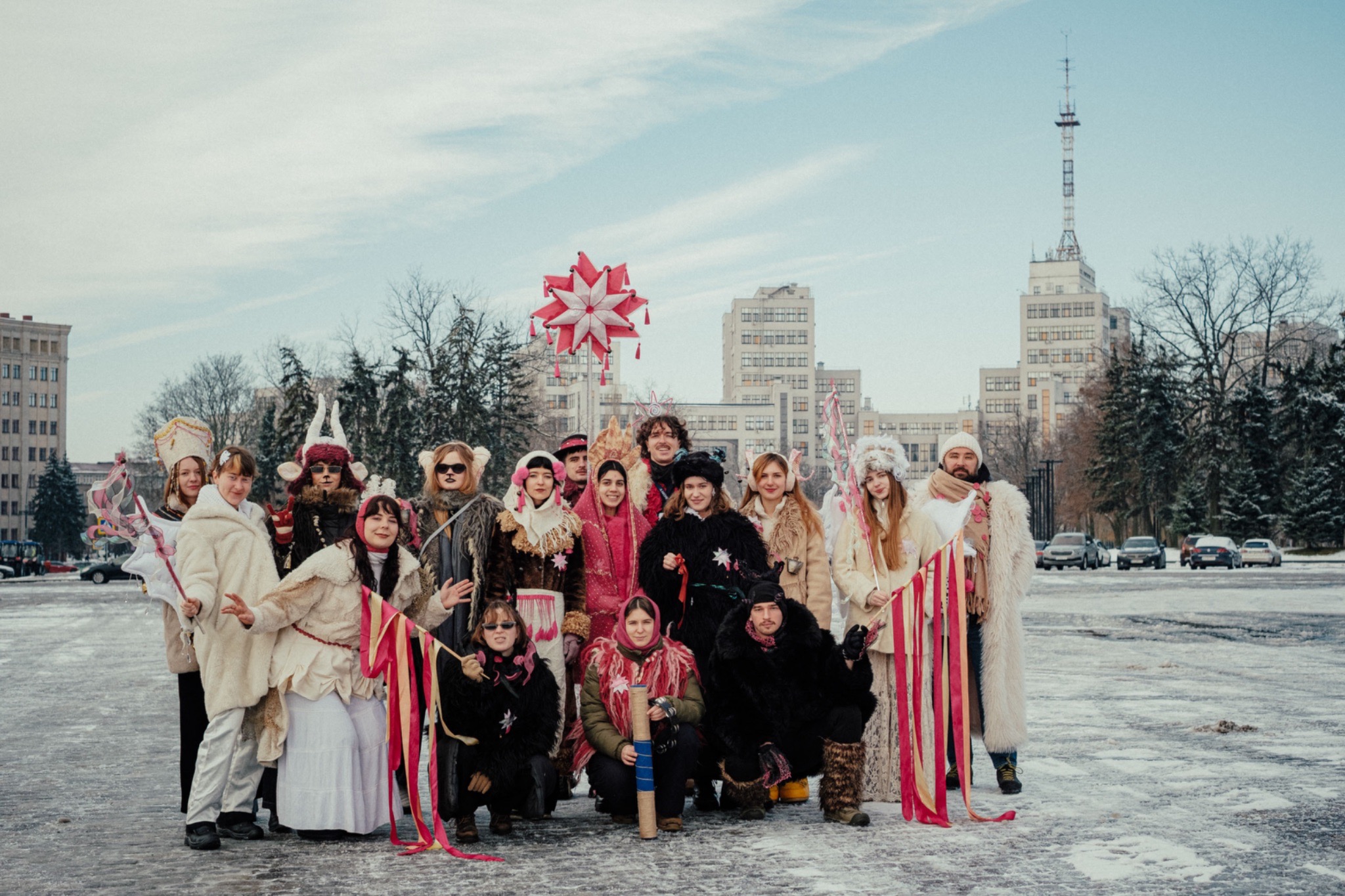
I am interested in researching the Vertep and the images of its characters. Before the start of the full-scale invasion, I viewed the Vertep more as a costume party. The tradition of singing carols seemed strange, archaic to me. Now, we are creating a new form of Vertep, which has its own special meaning and depth of faith for each of us.
I am not prepared to defend the thesis that photography is a document, but I transfer my photos to various war archives. Who knows what it will be like in fifty, a hundred, or two hundred years? But I believe that the photography will remain, and it will be much harder to deny that on these lands, in these corners of the country, a true Ukrainian Vertep did not exist.
Material created with the support of the British Council's "Grants for Creative Economy Development" program
Taras Fedorenko is a documentary photographer and filmmaker. He has been covering the Russian-Ukrainian war since 2022. He is the author of series on flooded Kherson after the Kakhovka HPP explosion, the shelling of the Okhmatdyt children's hospital, and a reportage from a prisoner of war camp.In 2023–2025, he worked at "Slidstvo.Info," where he created a number of frontline reportages from the Kharkiv, Donetsk, and Kherson regions. In 2025, as part of a collaboration with the Ukrainian Association of Professional Photographers (UAPP), he created a series of documentary films titled "On the Frame Line" about military photographers as a director and cinematographer. He held a personal photo exhibition in Stuttgart; his works have been exhibited in Quebec and Brussels. In his practice, he explores life during the war and the search for normalcy in abnormal conditions, preferring wide-angle shots that allow him to be "inside" the events.
Working on the material:
Topic researcher, author of the text: Katia Moskaliuk
Photo editor: Olga Kovalova
Literary editor: Yuliia Futei
.png)