Doctors, museum staff, entrepreneurs, volunteers—people from various walks of life remain in Kherson despite the increasingly dire security situation. Kherson local Stanislav Ostrous regularly visits his hometown to document life here in all its vulnerability and complexity. This time, he not only created ambrotypes—"immortal imprints" of Kherson's residents—but also briefly recorded their stories, thoughts, and impressions. The following are the photographer's own words.
Arriving in Kherson, I always know exactly what I want to shoot. I have a specific intent, which I turn into a plan and begin to act: I make calls, arrange meetings, meet up, and shoot. I suppose everyone does it this way; it’s obvious. But despite my plans, intentions, and arrangements, life inevitably makes its own edits, and everything goes sideways!
This time I came to shoot on wet collodion using an old 13×18 cm format camera. Twenty kilos of cut and thoroughly washed glass, not counting the chemistry, the tripod, and a pile of auxiliary devices, press down on me like a weight pressing sauerkraut in a barrel. I feel appropriately burdened.
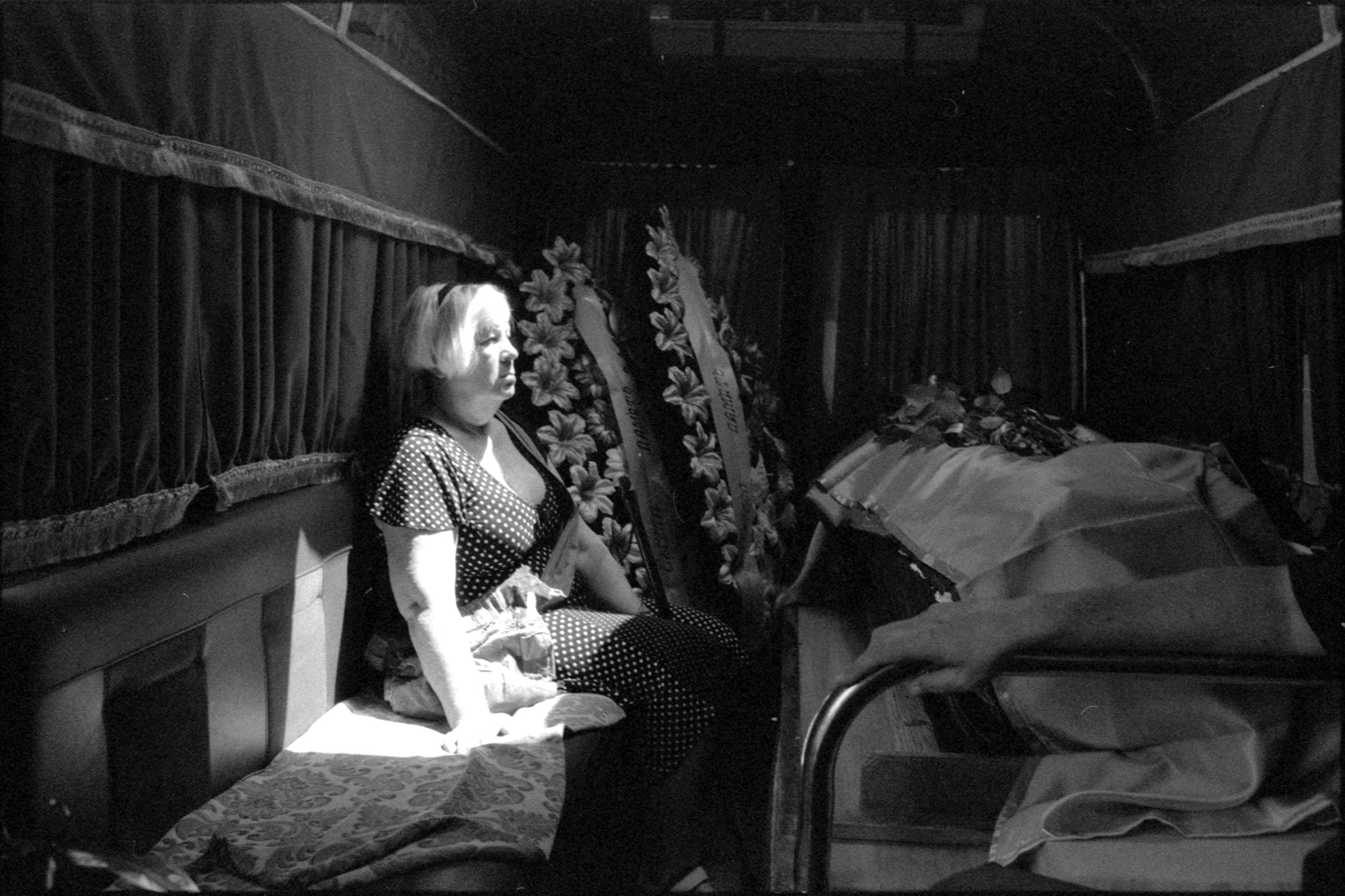
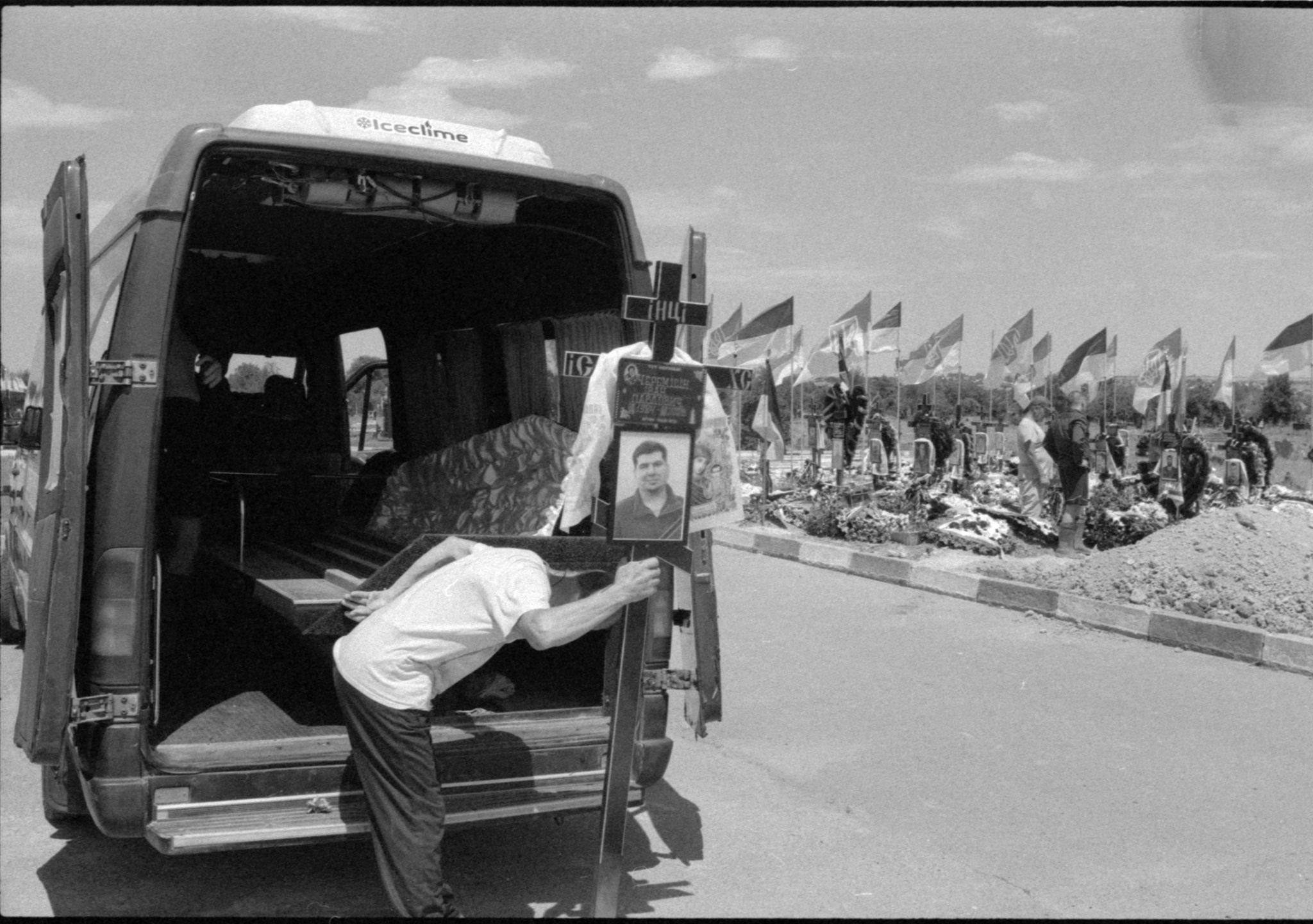
The first thing I have to go shoot is a funeral. Kherson residents are paying their last respects to fallen soldiers. The glass wasn't suitable for this. So I take my small Nikon FM2 film camera and drive to the church.
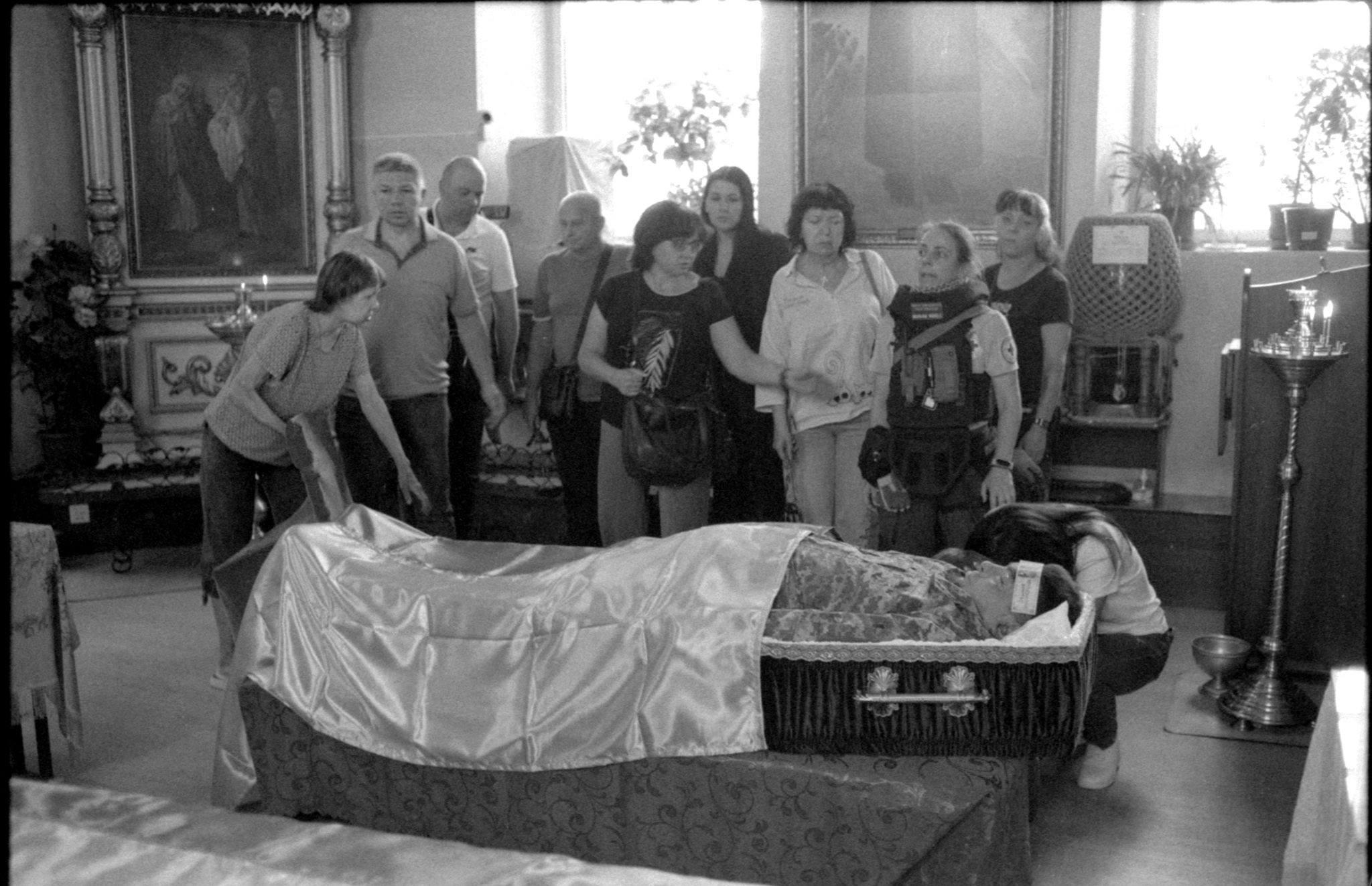
People have already gathered and are huddling under the trees to avoid the danger of a drone strike. Then comes the brief farewell, the grief, the sweaty torsos of the cemetery workers. The wind flutters the flags; the sun shines through the dust kicked up by shovels.
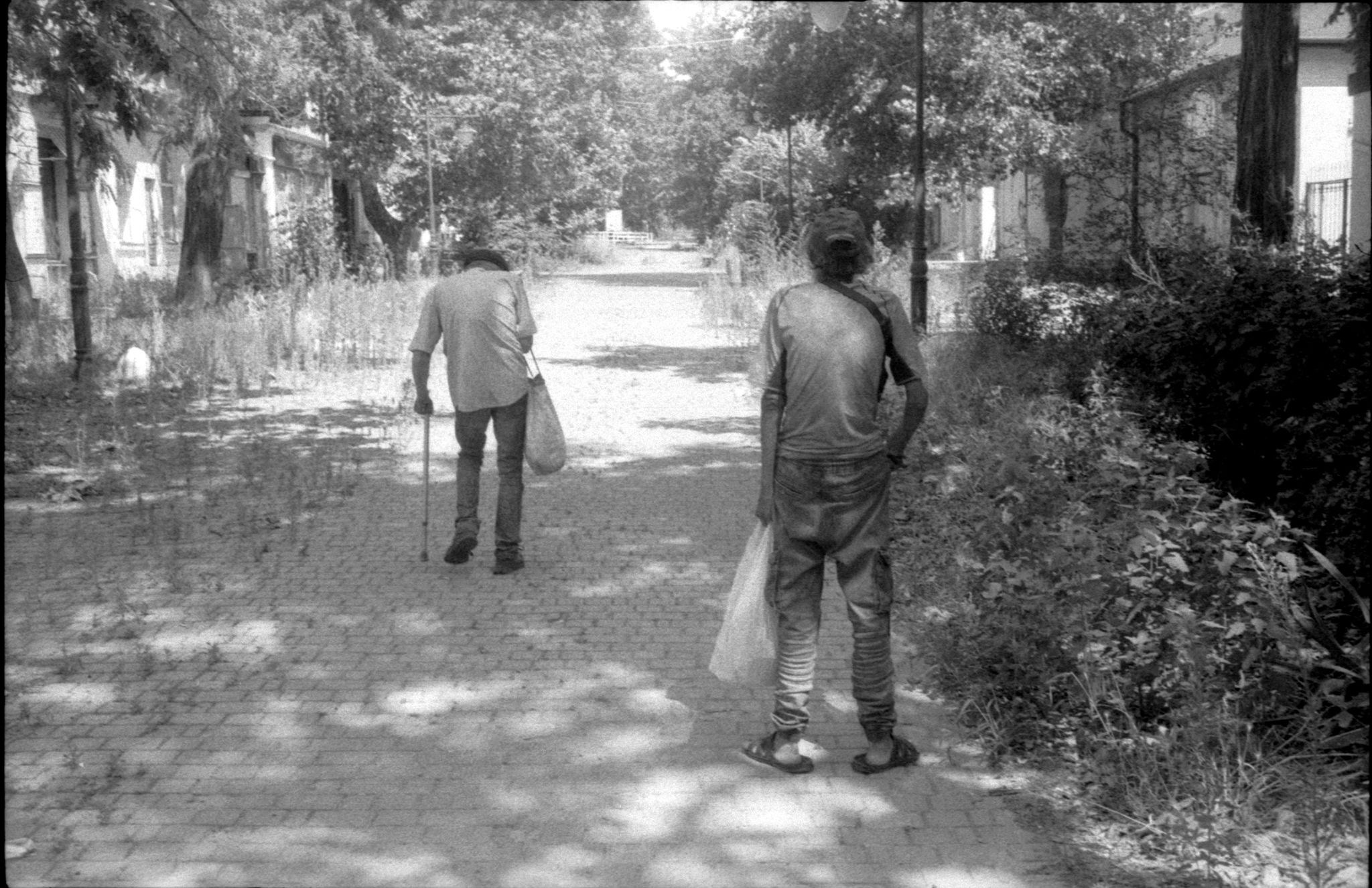
On the second day, I decided to go into the city. I drove to the Drama Theater, hiding under the trees, and went down to European Street—now it is a red zone. Deserted and neglected, what was once the most beloved pedestrian street in Kherson is almost completely overgrown with weeds. Fallen trees, scorched facades, and solitary human shadows.
I head toward the Art Museum and see that something is happening at the "Pyvovar," a local dive where the neighborhood regulars gather. I go inside; there is a set table, the remains of a simple snack, heavy air, and sad faces. The owner of the establishment, Mykhailivna, stands behind the bar. Seeing me, she reaches out both hands. I shake them, and she, barely holding back, points to a portrait with a black ribbon standing right there on the bar.
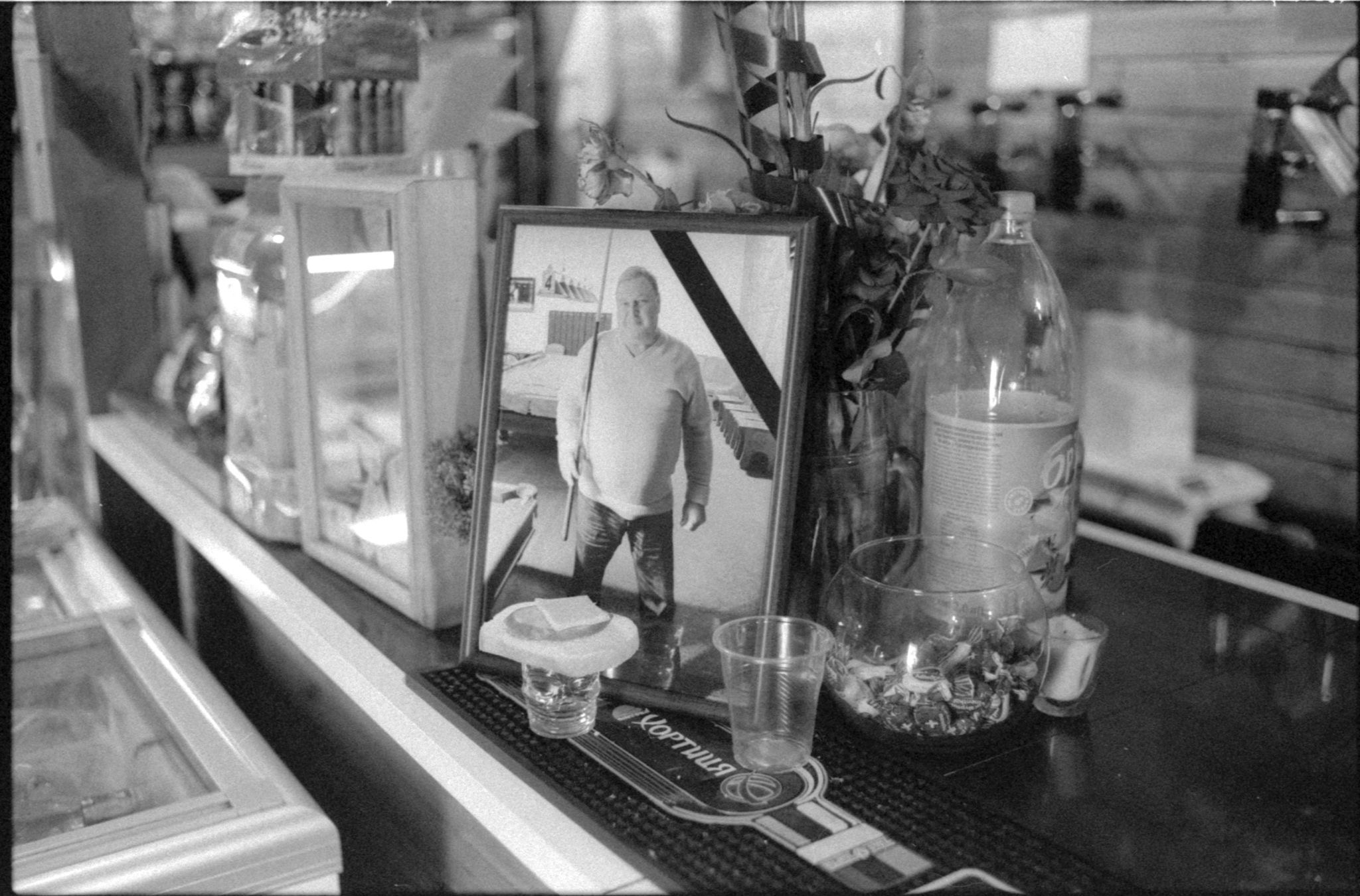
Uncle Serhiy—a driver, a friend, a regular, and the soul of the place. He died in his car from an enemy drone. Even the netting didn't save him.
Mykhailivna rubs her face and pours me some cognac. We drink and listen to Uncle Serhiy's favorite tracks, all those Highway to Hell and Smoke on the Water. Stray dogs are milling about near the entrance. The group is trying to keep their spirits up, because Uncle Serhiy was an optimist and loved life. But in the middle of a shattered street, next to the charred buildings, it all looks even more poignant and sad. The sun is setting, and everyone is slowly dispersing.
On the third day, I go to the Department of Culture. Now I am ready to shoot the ambrotypes. The city is draping itself in netting. Next to the workers pulling it tight, there are soldiers armed with shotguns. While I am shooting the cultural figures, the soldiers open fire on drones flying over us several times. They look nervously at my old wooden equipment, but they probably realize that this museum junk—which was probably used to photograph dinosaurs—is unlikely to pose any threat to them.
Several more days pass like this. I shoot on glass, come home, dry the plates, and varnish the images.
The shelling does not stop, neither by day nor by night. In the center, you can clearly hear the "exits" from the left bank, then the whistle and the explosion!
I am shooting doctors at the First Maternity Hospital. It is located literally on the front line. The entire hospital has moved to the basement. But everything around is clean and bright. Pregnant women walk through the corridors. They perceive me and my historical equipment with surprise and irony. But also with interest!
After the first successful picture on glass, everyone lines up and waits for their turn. Time flies by quickly; I take the last portrait, pack up, and realize I've missed the time when there was a lull. The buzzing of drones and bursts of automatic gunfire can be heard from everywhere! There is no way to leave. I wait.
Finally, a small pause and silence, and I run. At least it seems like I'm running, because with a backpack and a huge bag, I'm not much of a runner; in reality, I am briskly limping!
My heart is pounding, blood is rushing in my ears, the glass is clattering! I stop, listen, and run on!
I reach the market, it's not as dangerous here, I stop and call a taxi. A black Opel rushes towards me at breakneck speed, makes a U-turn at full speed in the middle of the street, picks me up, barely stopping, and races toward the safety of the Shumenskyi district!
The next day, I am getting ready for a shoot, and at that moment, a massive shelling begins. I hear the glide bombs (KABs) flying; explosions ring out. Somewhere, buildings are being destroyed again; perhaps people are dying.
I have to go into the city. But the thoughts are that, perhaps, it is better to stay, wait it out, lie low. After the shelling, the power goes out in the city—the equipment of the regional power company must be damaged. The internet is also barely working.
Against the backdrop of all this, the news feed is filling up with reports about the resignation of Defense Minister Fedorov. People are taking to the streets again. Protest slogans are being heard. In my Kherson apartment, it is quiet, stuffy, and lonely.
While preparing the material for publication, news reaches me that my friend Zhenya Solodkyi, with whom we once traveled through the mountain Crimea back in peaceful times, and during my previous winter visit over a bottle of cognac recalled those wonderful times in that same dive bar on European Street, has died at the front.
Yevheniy was buried in my native Vinnytsia region.
Yevheniy Solodkyi. Died on July 23 as a result of a Russian glide bomb strike. From the beginning of the occupation, he and his like-minded friends helped the Ukrainian military by passing on information about the movement of Russian troops. After the liberation of Kherson, he volunteered, and in February 2026, he joined the ranks of the Armed Forces of Ukraine himself. Of his own free will, he remained to defend his native Kherson region as part of the 37th Separate Marine Brigade.
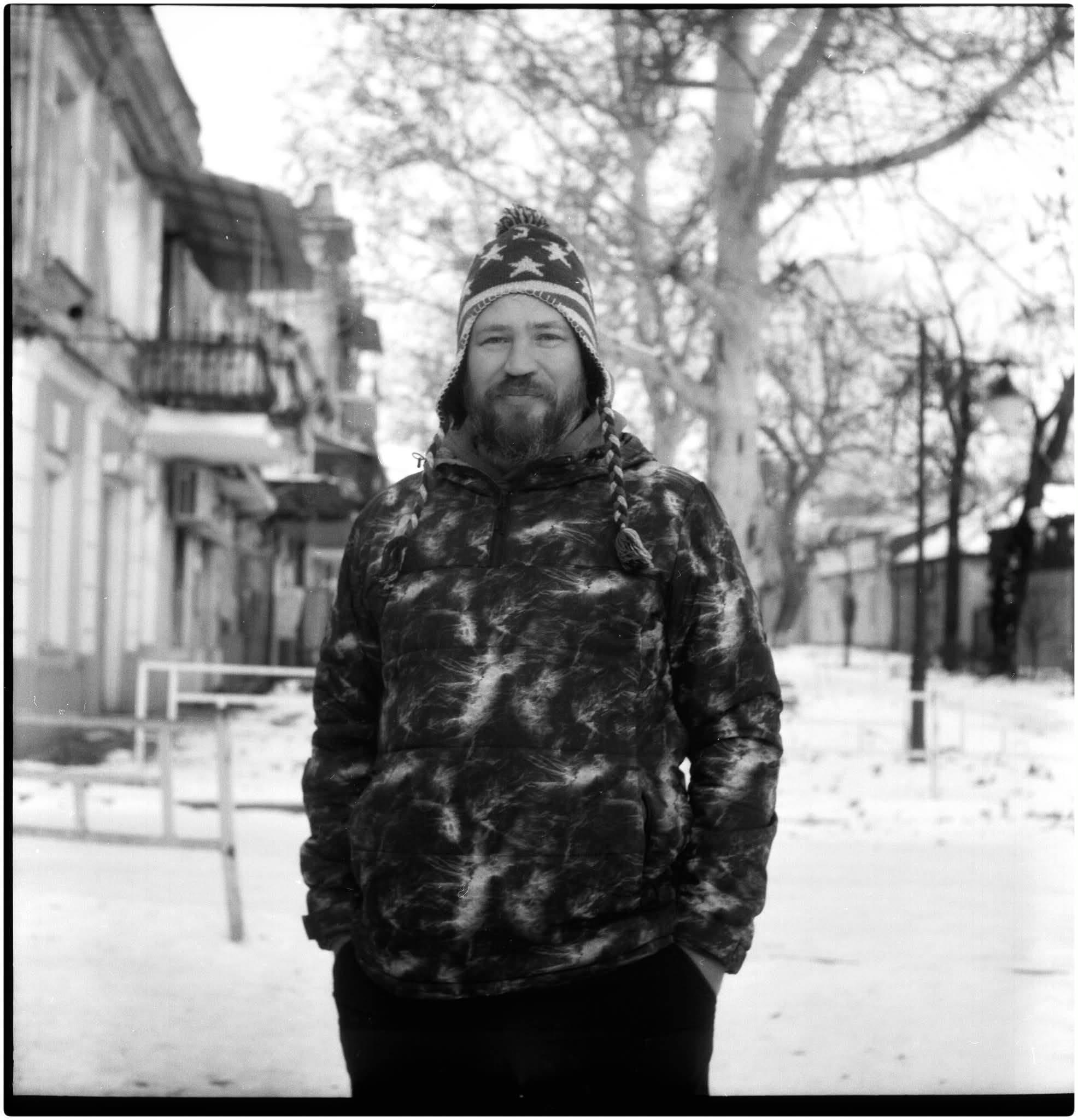
Voice of the Residents of Kherson
Mykhailo Podhanyi. Head of the Natural History Department of the Kherson Regional Local History Museum, has been working for over 40 years. After the de-occupation of Kherson, he participated in the evacuation of museum collections and the maintenance of museum buildings in a "habitable" condition. Unfortunately, the main building of the museum was bombed last year. He had to move from there to the Natural History Department building. But it is also located in the red zone. A month ago, half of the wing burned down.
"We have to move to work by running in dashes, hiding from drones. We have already collected a whole collection of drones that have fallen into courtyards and onto the roofs of museum buildings. But there is nowhere else to go; we manage as best we can..."
Oksana Pohomii. Head of the public organization "Solidarna Sprava Hromad" and the Kherson territorial organization of the political party "European Solidarity" in Kherson. She has been volunteering with her husband since 2014.
"We help the army, weave nets; we had a bakery; for three years in a row, we baked bread and gave it to the military. Two months ago, we closed it because it is in the red zone and it became dangerous. Now I can't move the equipment, nor find another place that is safe. During the occupation, we bought groceries, packed them, and distributed them to the heads of our condo associations, to the families of scouts; we only bought Ukrainian products. There was a group of people who collected data and passed it to the Armed Forces of Ukraine, went to rallies until they started shooting."
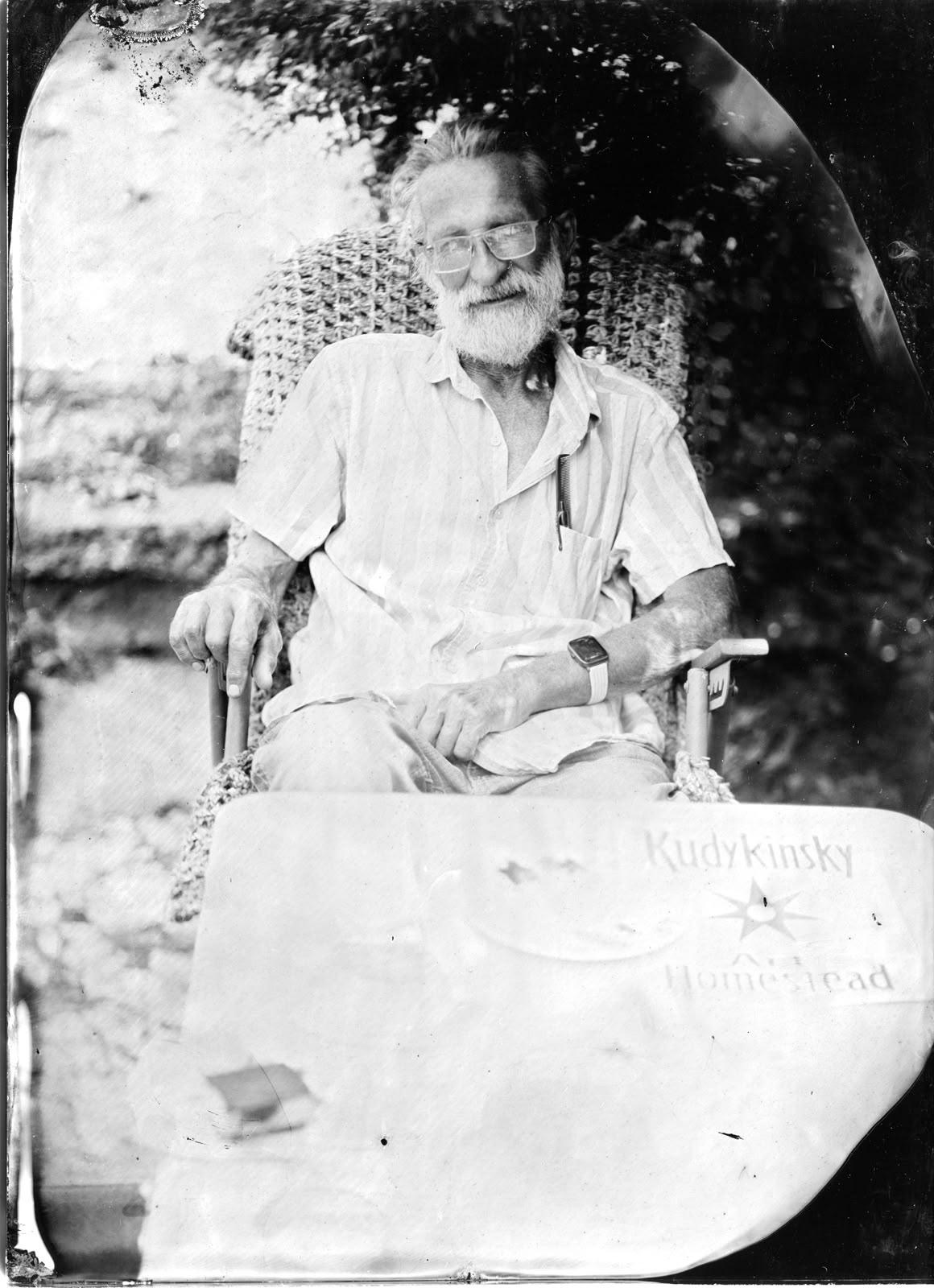
Oleksandr Kudykinskyi Semenchenko. Gardener of the Kherson Botanical Garden. He is involved in art—ceramics, land art.
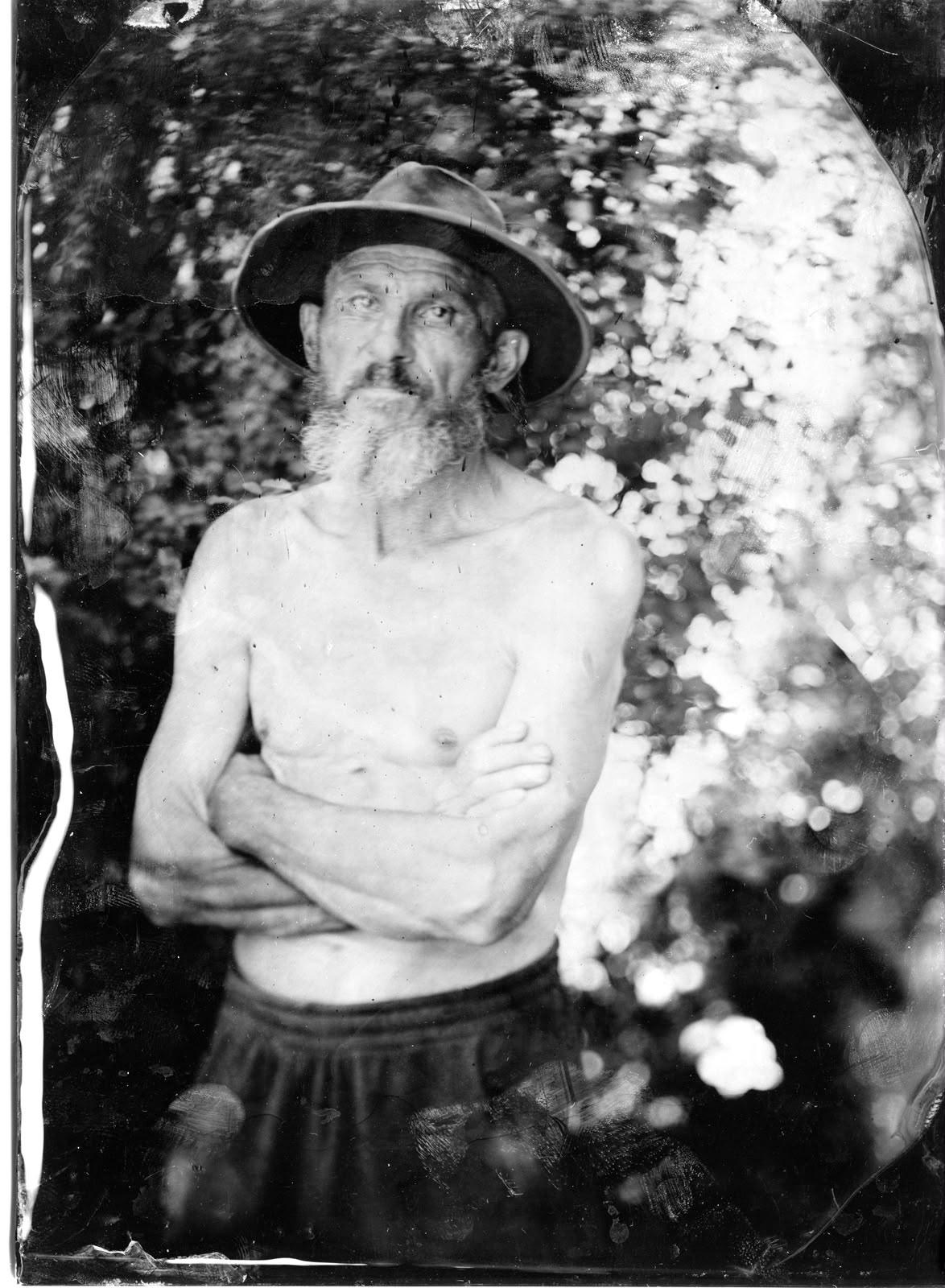
"I am staying in Kherson to preserve the botanical garden's plant collection. The collection has been partially moved to various plots in Kherson to increase the probability of its survival. We have to work while taking the security situation into account, because the enemy is literally across the Dnipro River and there is a very large number of enemy drones, artillery, and airstrikes. But preserving the plant collection is extremely important, because thanks to this, there will be a botanical restoration of the Kherson region. It is unknown in what state Askania-Nova, Oleshky Sands, and other protected areas of the Kherson region will be after the de-occupation. The botanical garden's collection can become a nursery for their restoration."
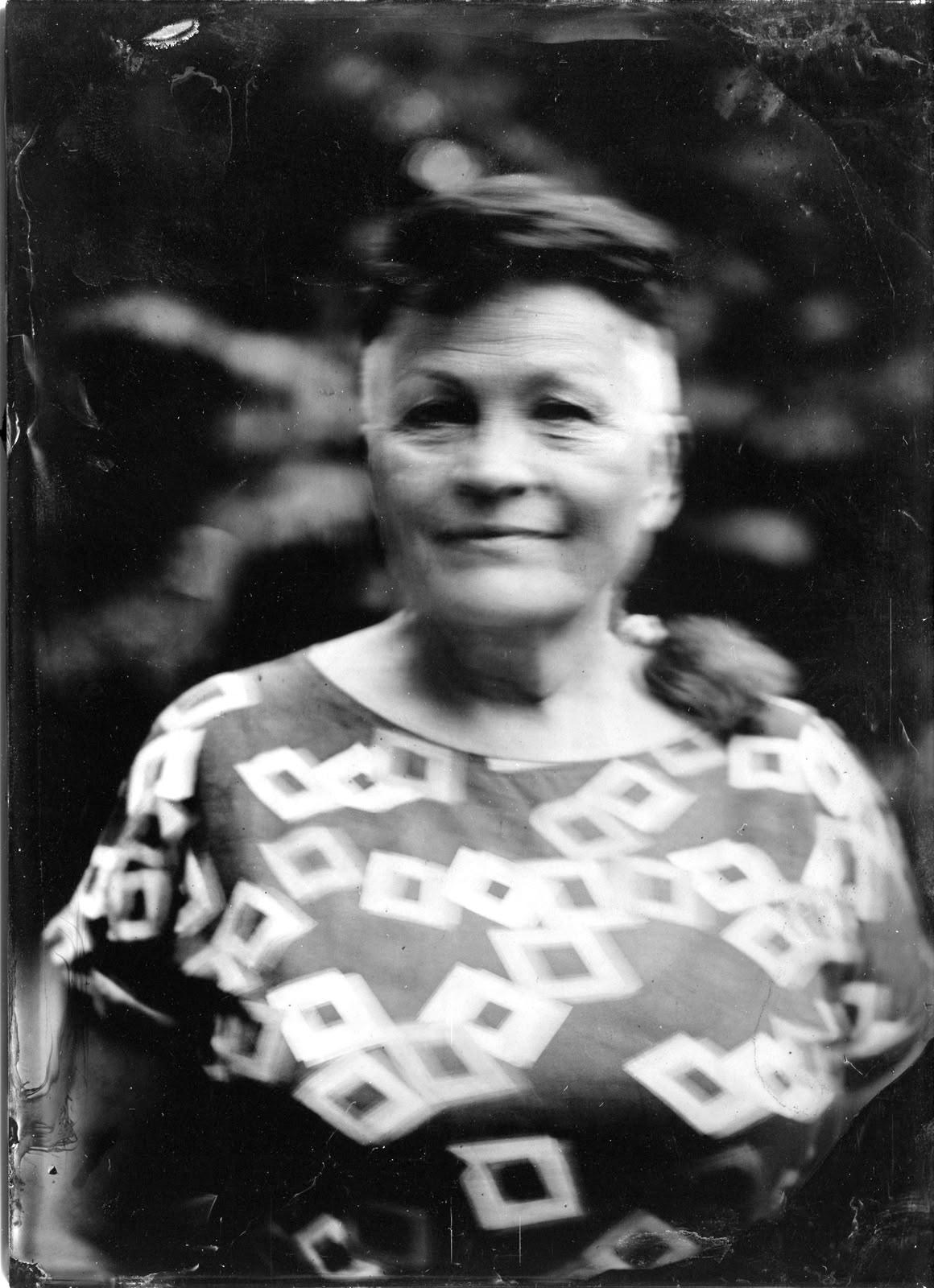
Maryna Savchenko. Born in the Kherson region. Lived in Kherson from the age of 17. Graduated from Kherson State University.
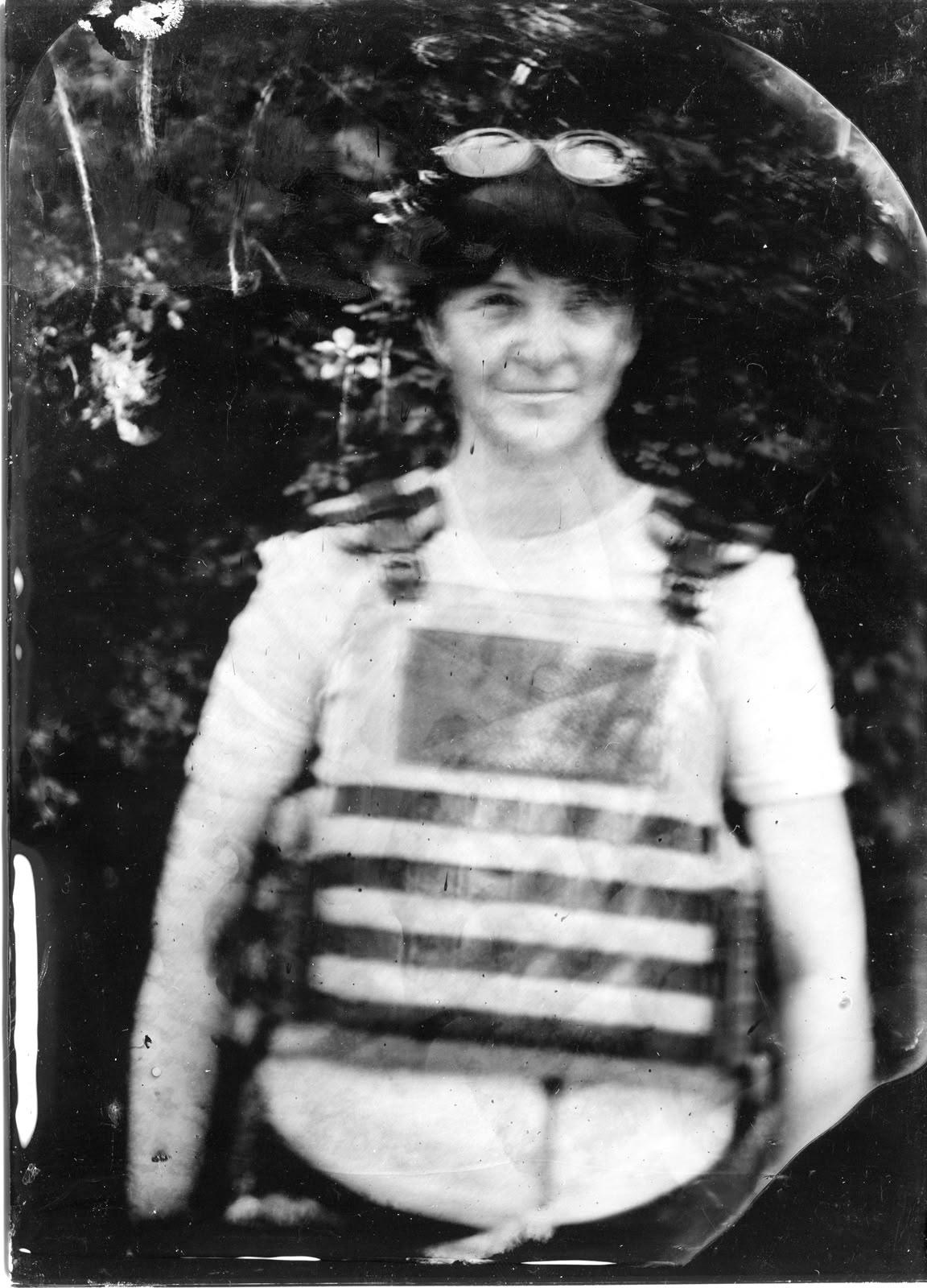
"I have been working in journalism since my last year of university. I dedicated 27 years to this profession, 17 of which were in television. In particular, I was a staff correspondent for 'Channel 24'. I left Kherson after four months of occupation, fleeing from the FSB, who were looking for me.
Despite moving to Vinnytsia, I remained in Kherson journalism. I create content for the Kherson publications 'MOST' and 'Novy Den', including in the mobile journalism genre—I film, write, voice-over, and edit reports myself. I do a lot of material directly from Kherson—I go on business trips and continue to work where the events are taking place."
Mykola Koshelyuk. An engineer-technologist by profession. For many years, a significant part of his life has been connected with photography, design, local history, and cultural projects. Since 2003, he has been working at the Kherson photo club "Fresh Look," engaging in curatorial and organizational work. In recent years, he has also been working on projects related to the preservation and reinterpretation of the cultural memory of Kherson and southern Ukraine.
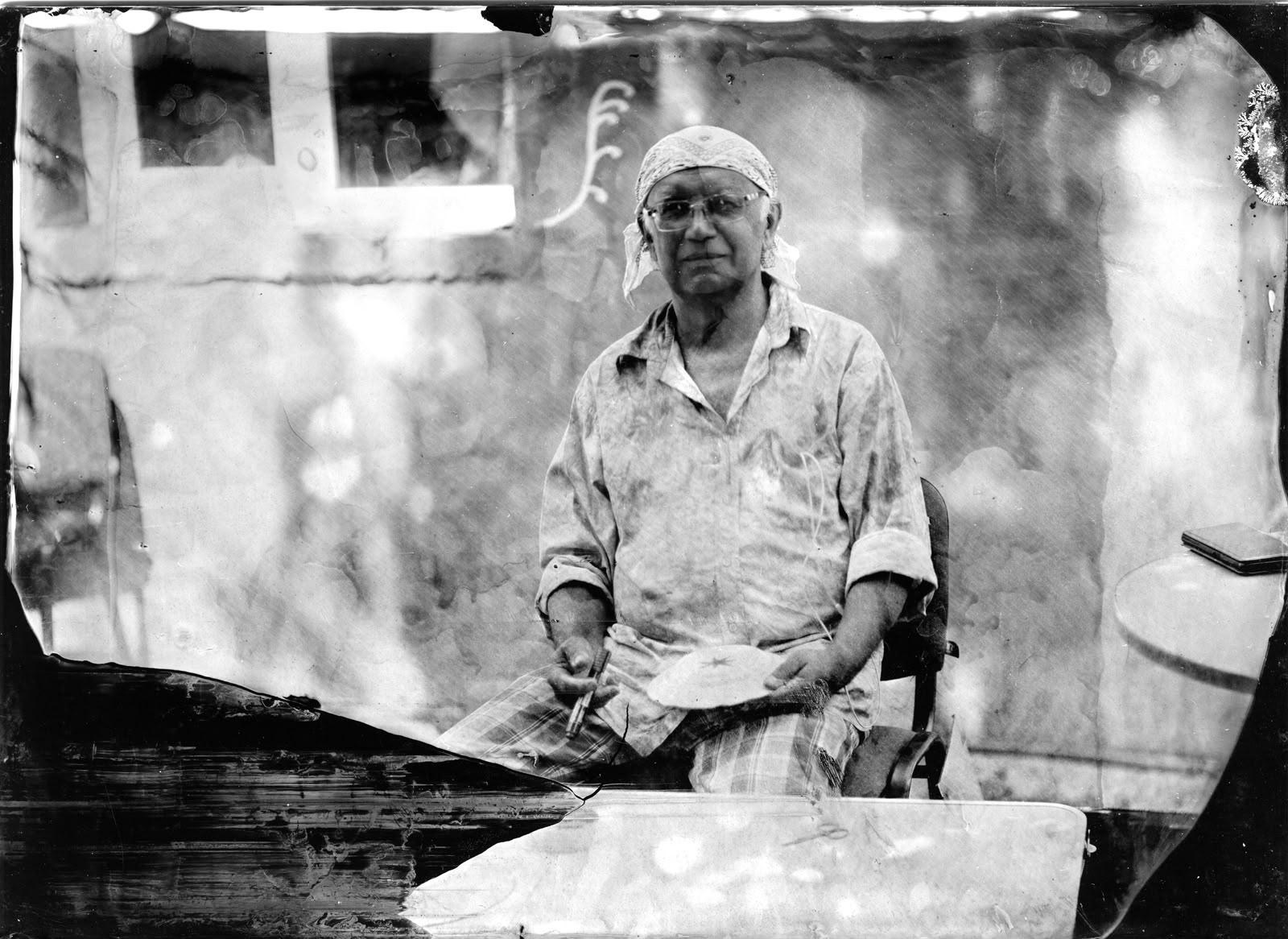
"I am staying in Kherson. There is probably no one big explanation for this—there is home, people, unfinished business, and a feeling that right now it is especially important not to let the city's cultural life disappear completely.
Working has become much more difficult: a lot happens in small groups, almost in private spaces, sometimes literally between air raid sirens and shelling. But people continue to meet, take photographs, draw, and invent new projects.
This portrait me myself seems somewhat more dramatic than I feel in life. But perhaps the old photographic technique just revealed something of its own—not so much a portrait of an individual, but an imprint of time and place."
Ernest Safonov. In 1986, he graduated from the Kherson Music College with a degree in "Wind Instruments Teacher." He worked as an orchestra artist for the Main Directorate of the National Police in the Kherson region. In 2020, he took an oath in the ranks of the Territorial Defense Forces of the 124th Separate Brigade.
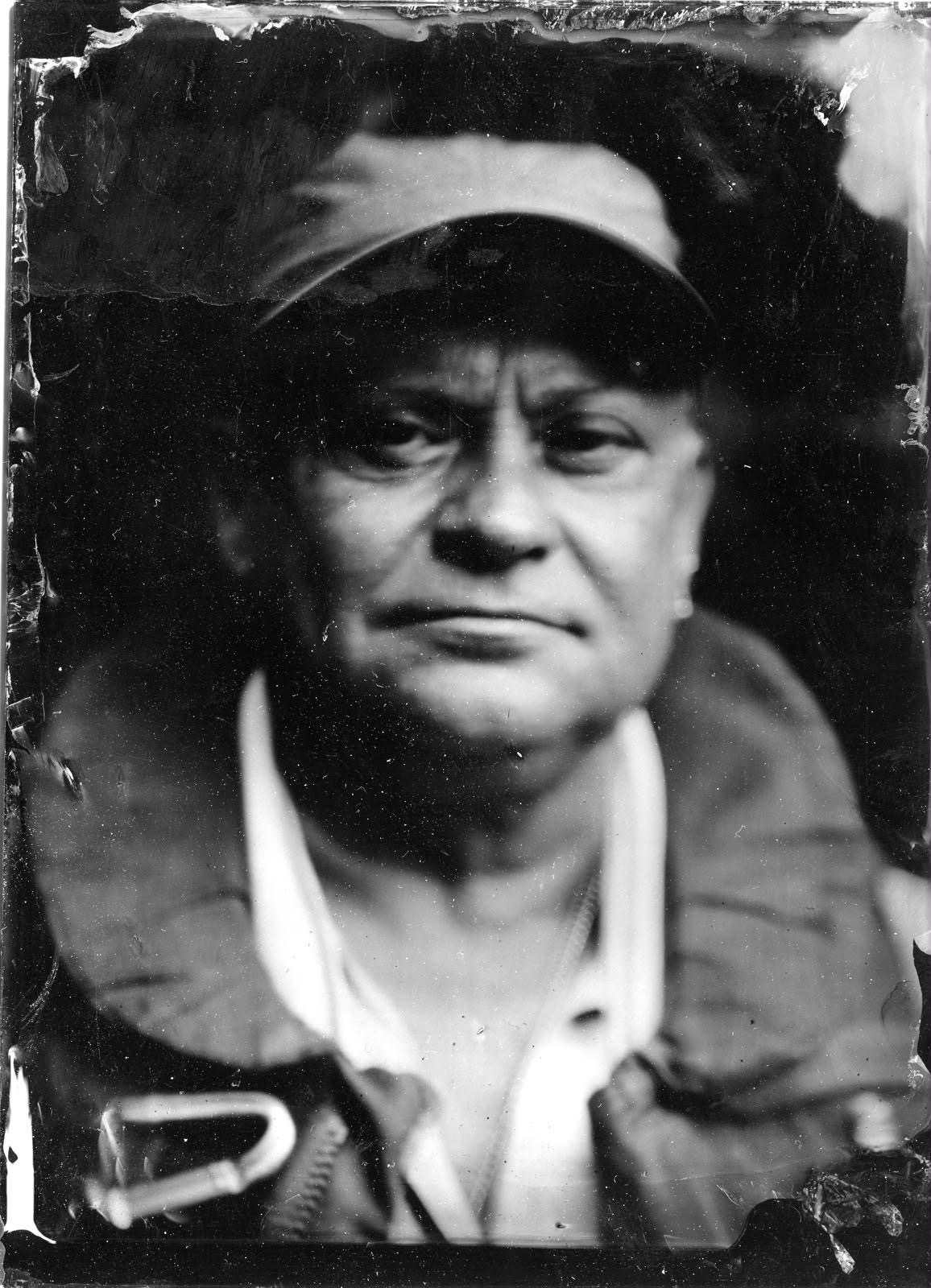
"During the full-scale invasion in 2022, I stayed in Kherson, collected information to help members of the partisan and resistance movements, and volunteered. After the Kakhovka Dam was blown up, I helped evacuate people from the flooded areas of the Kherson city territorial community as a member of the NGO 'Dopomoga4UA,' which I remain to this day. I delivered humanitarian aid to fellow citizens, established cooperation with other charitable organizations, including those of international significance."
Stanislav Ostrous — born in 1972 in the city of Zhmerynka, Ukraine. Photographer, photojournalist, and educator, living and working in Kharkiv. He works at the intersection of documentary and art photography, predominantly using analog technologies.
Finalist of the Leica Oskar Barnack Award (LOBA) 2025, nominator for LOBA Newcomer 2026, and scholarship holder of the Heinrich Böll Foundation (2024). Member of UPHA, UAPP, and MYPH; his works have been exhibited in Ukraine, Germany, Georgia, Armenia, Poland, Korea, and Lithuania. He teaches photography at the Kharkiv State Academy of Culture and at the MYPH school of conceptual and art photography.
Contributors to the material:Theme researchers, authors of the text: Stanislav Ostrous, Yuliia Futei
Photo Editor: Vladyslav Krasnoshchok
Literary Editor: Yuliia Futei