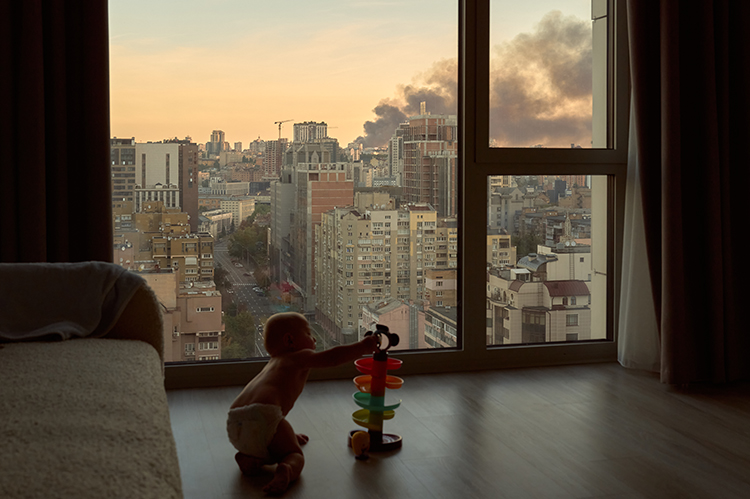
Today, on World Photography Day, we want to remind everyone how Ukrainian documentary photography has changed the way the world perceives Ukraine in general and the Russo-Ukrainian war in particular. We aim to show how documenting events influences, on one hand, global perceptions and attitudes toward us, and on the other, real legal cases and political decisions. It is a reminder that through the daily labor of photographers in war conditions, despite all restrictions and risks, not only is the image of a country being formed as it enters European history, but the fates of specific individuals are being decided.
Let's take a small step back: in a historical perspective, 13 years is a trifle, but it is these 13 years that have overturned both our understanding of the world and the global community's perception of us.
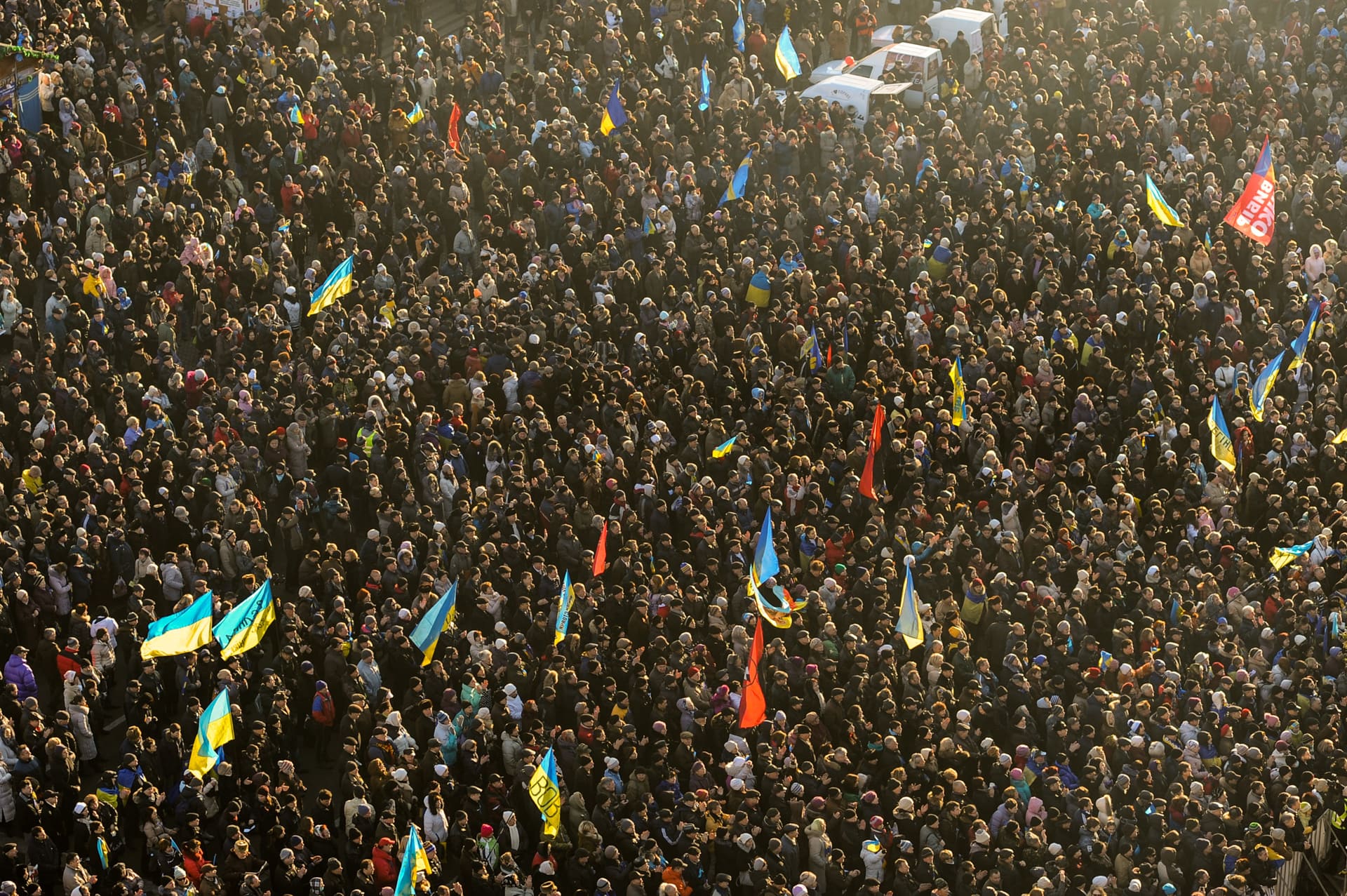
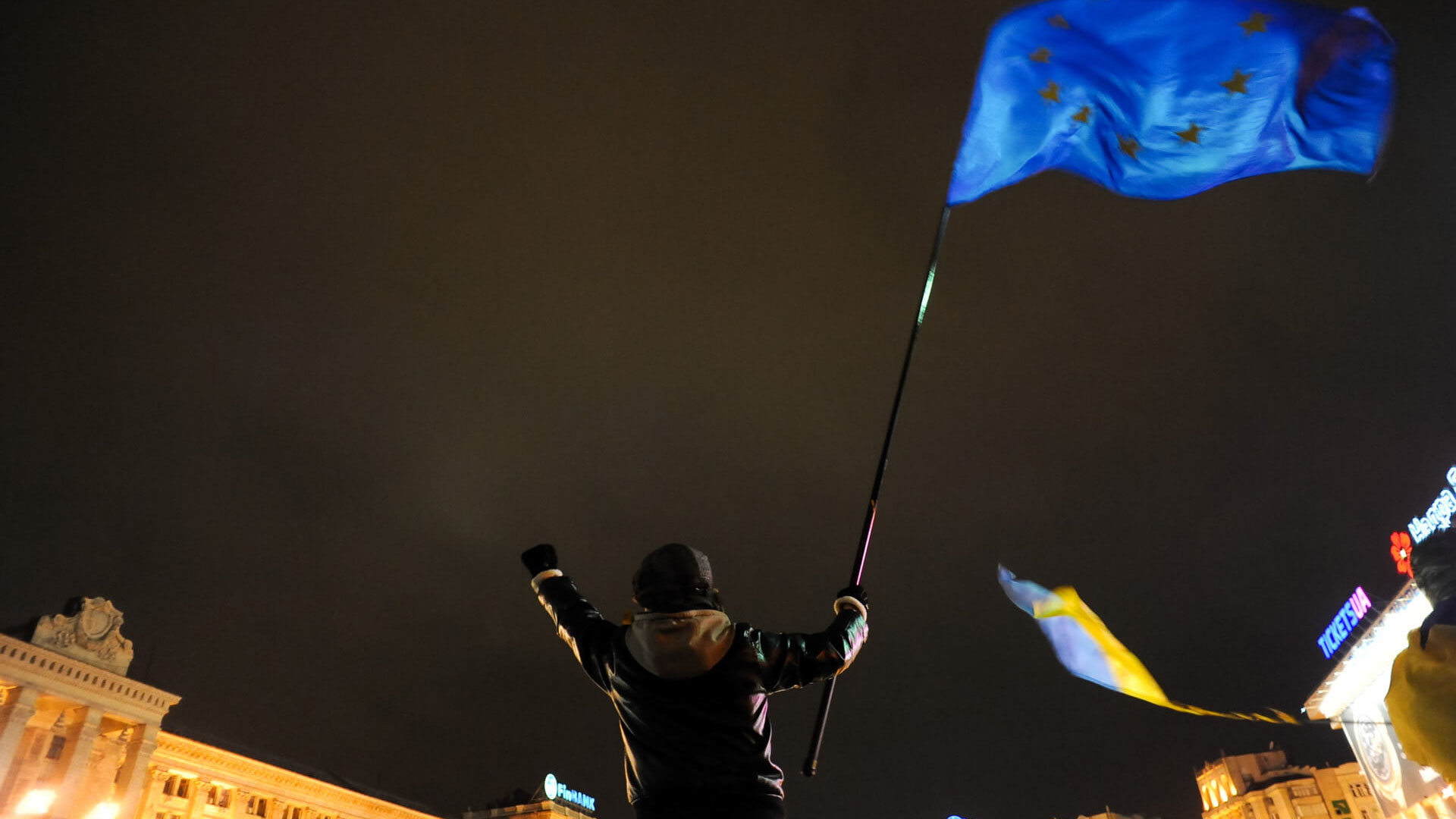
Revolution of Dignity — a period of mass protests from November 21, 2013, to February 22, 2014, which began as a reaction to the abandonment of the state's pro-European course and grew into a movement against corruption and government tyranny. During the protests, 107 people were killed.
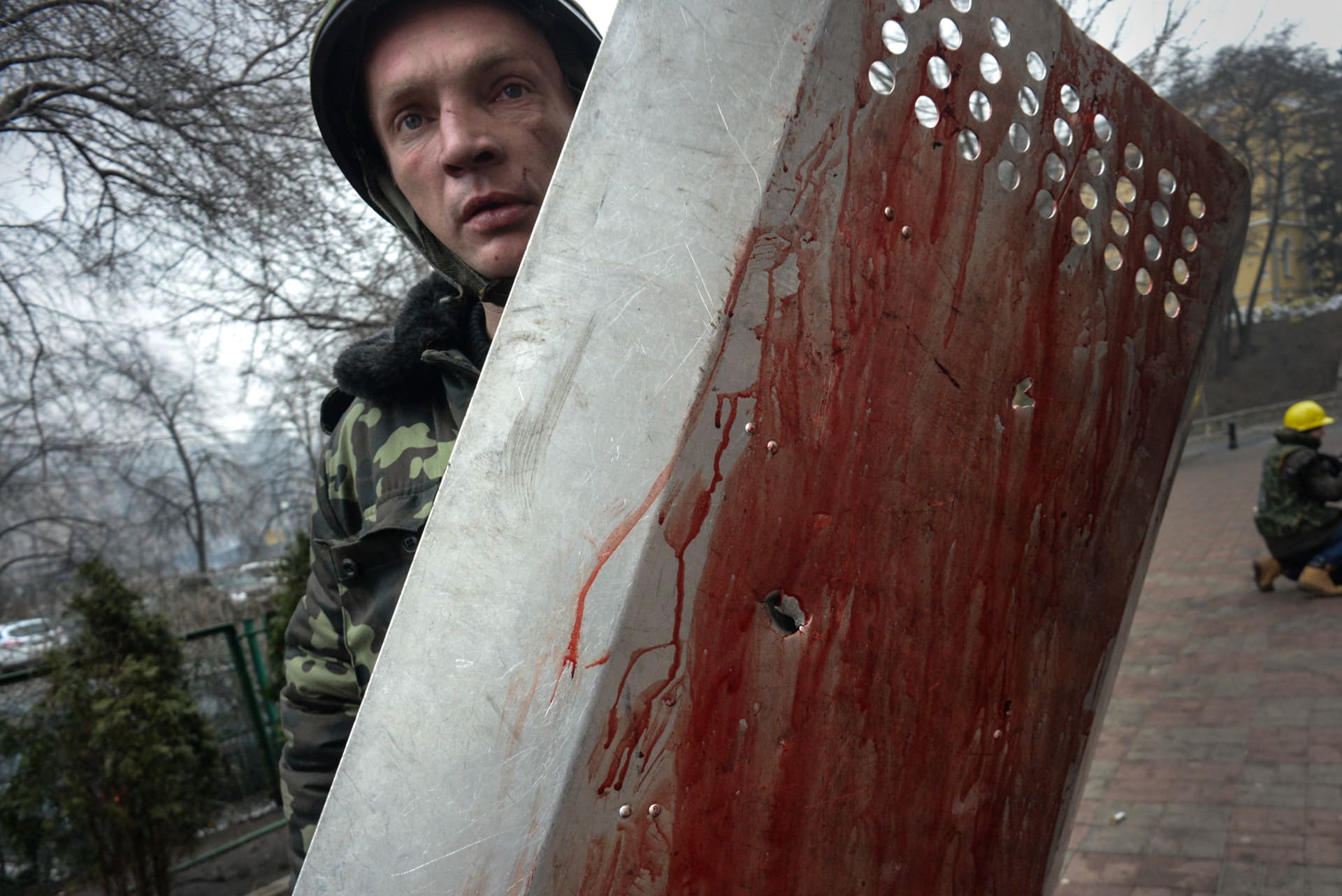
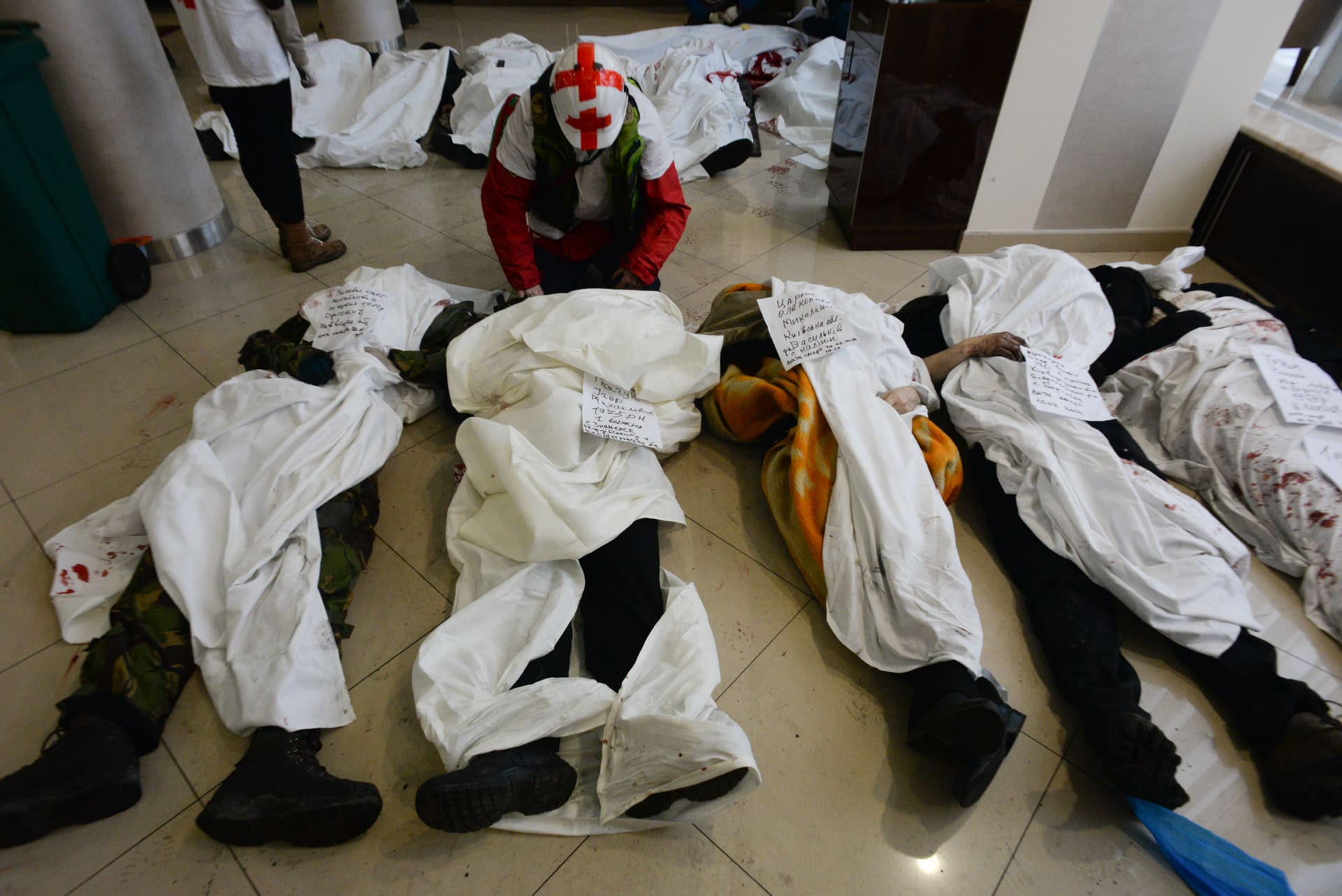
Photographs of the shootings on the Maidan in February 2014 became the catalyst for the introduction of personal visa and economic sanctions by the USA and the EU against representatives of Yanukovych's inner circle. Western countries recognized the legitimacy of the newly formed government and supported Ukraine's European trajectory.
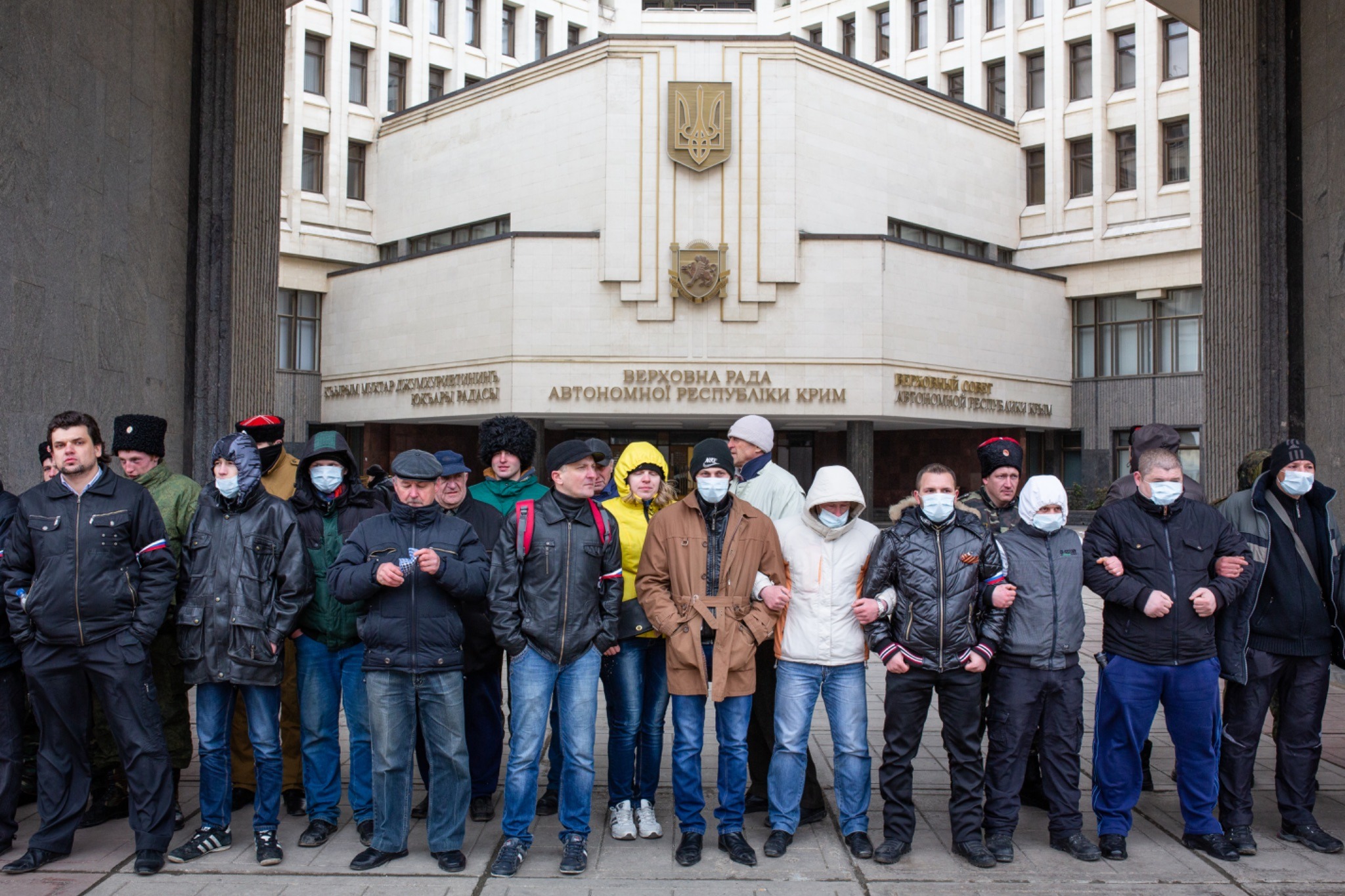
Russian Occupation of the Crimean Peninsula — a planned Russian special operation carried out by RF special forces in March 2014 following the Revolution of Dignity. The occupiers seized administrative buildings, blocked Ukrainian military units, and conducted a fake referendum at gunpoint, announcing the annexation of the peninsula on March 18.
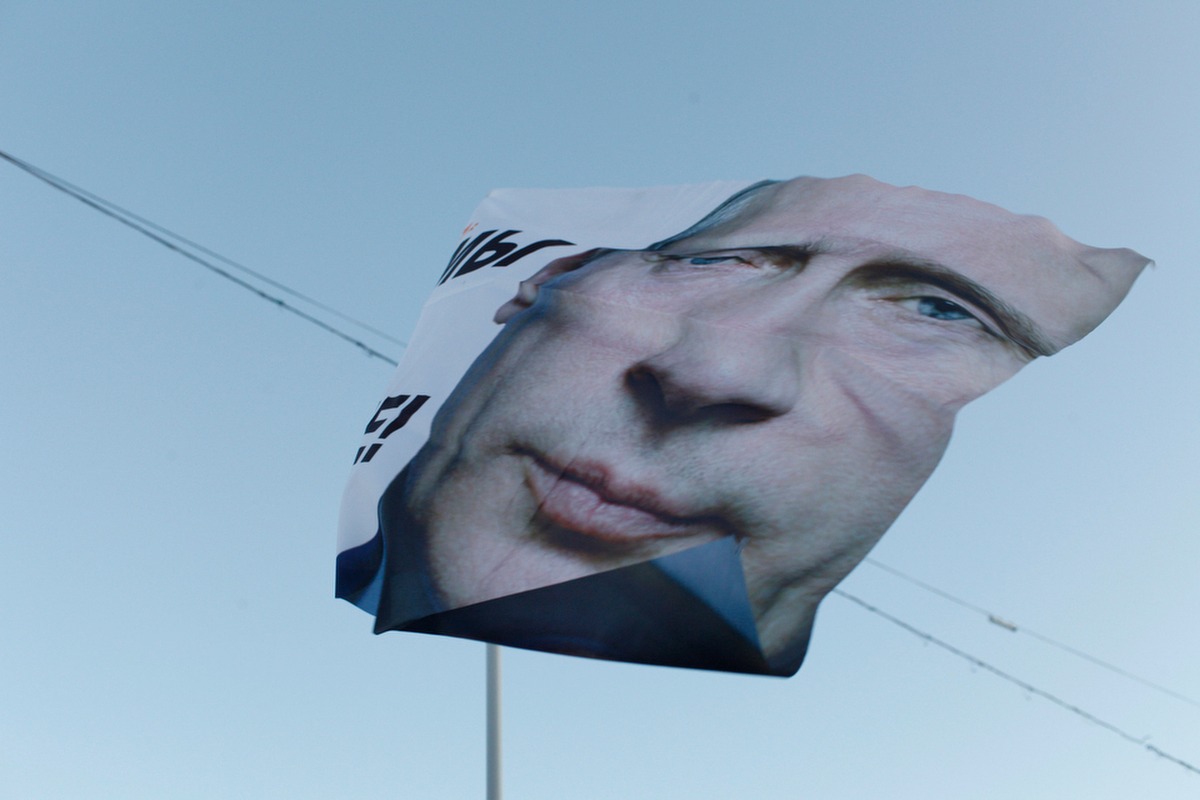
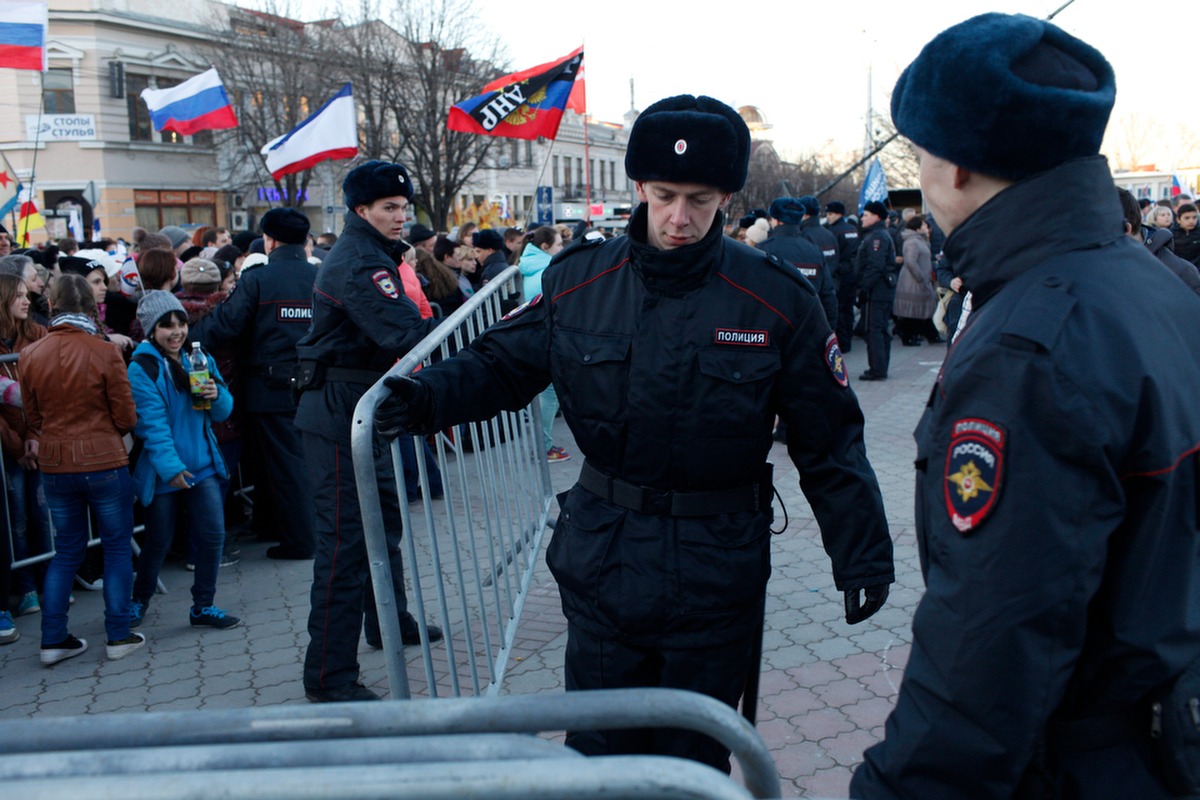
Images of blocked Ukrainian military units, the unarmed resistance of Ukrainian sailors, and "little green men" with weapons outside administrative buildings became the first alarm bell for the international community; for the first time, the world saw RF's hybrid aggression firsthand. The photographs captured the falsity of the "referendum" held under the sights of automatic rifles, unmasking the occupiers and laying the groundwork for the first international sanctions. Following the illegal seizure of Crimea in 2014, Russia was expelled from the club of the world's leading economies.
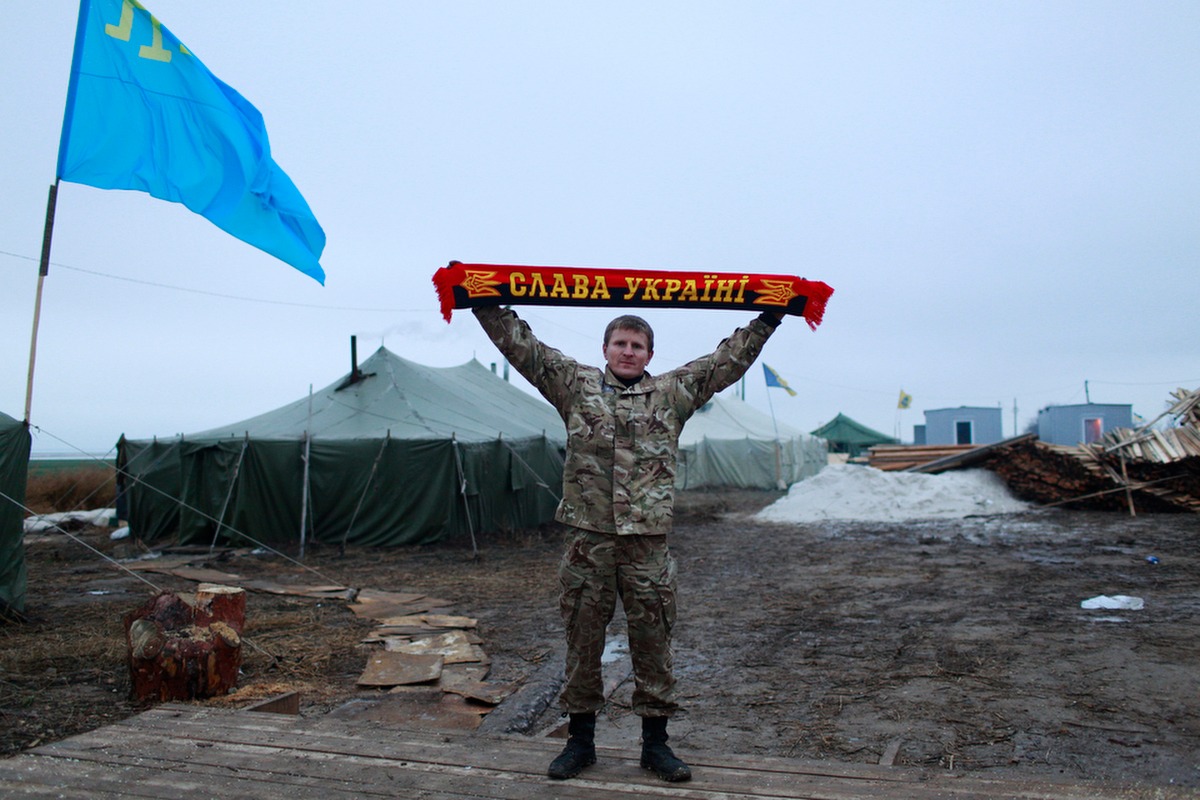
Battle for Donetsk Airport — a battle for control over the strategically important Donetsk "Sergei Prokofiev" International Airport, lasting from May 26, 2014, to January 23, 2015. Ukrainian soldiers, special forces, paratroopers, and volunteers held the defense in completely destroyed terminals under constant enemy fire and were eventually forced to leave the ruins of the terminals. In the battles for DAP, 97 Ukrainian defenders died, and the concrete terminals of the airport were completely destroyed.
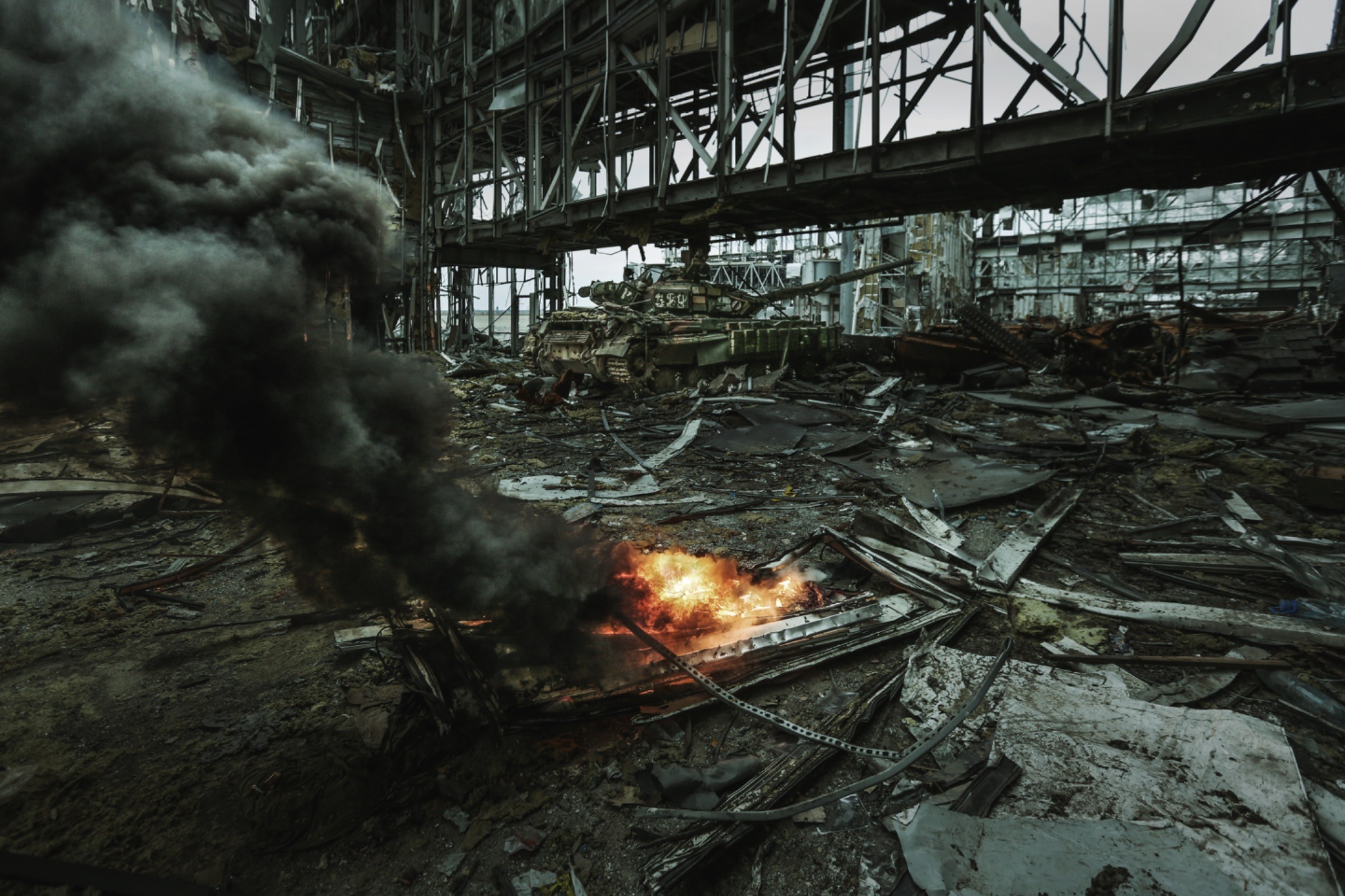
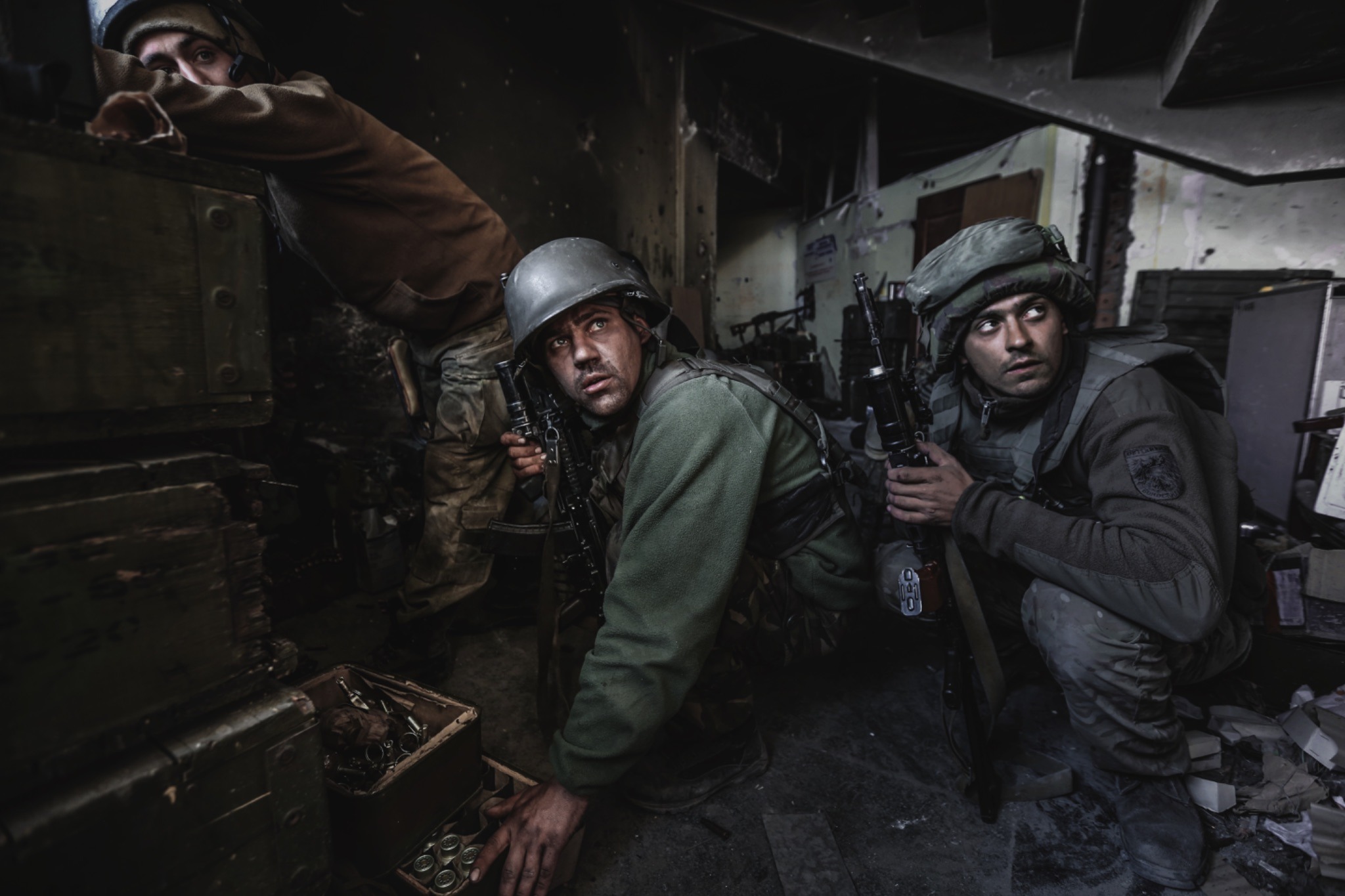
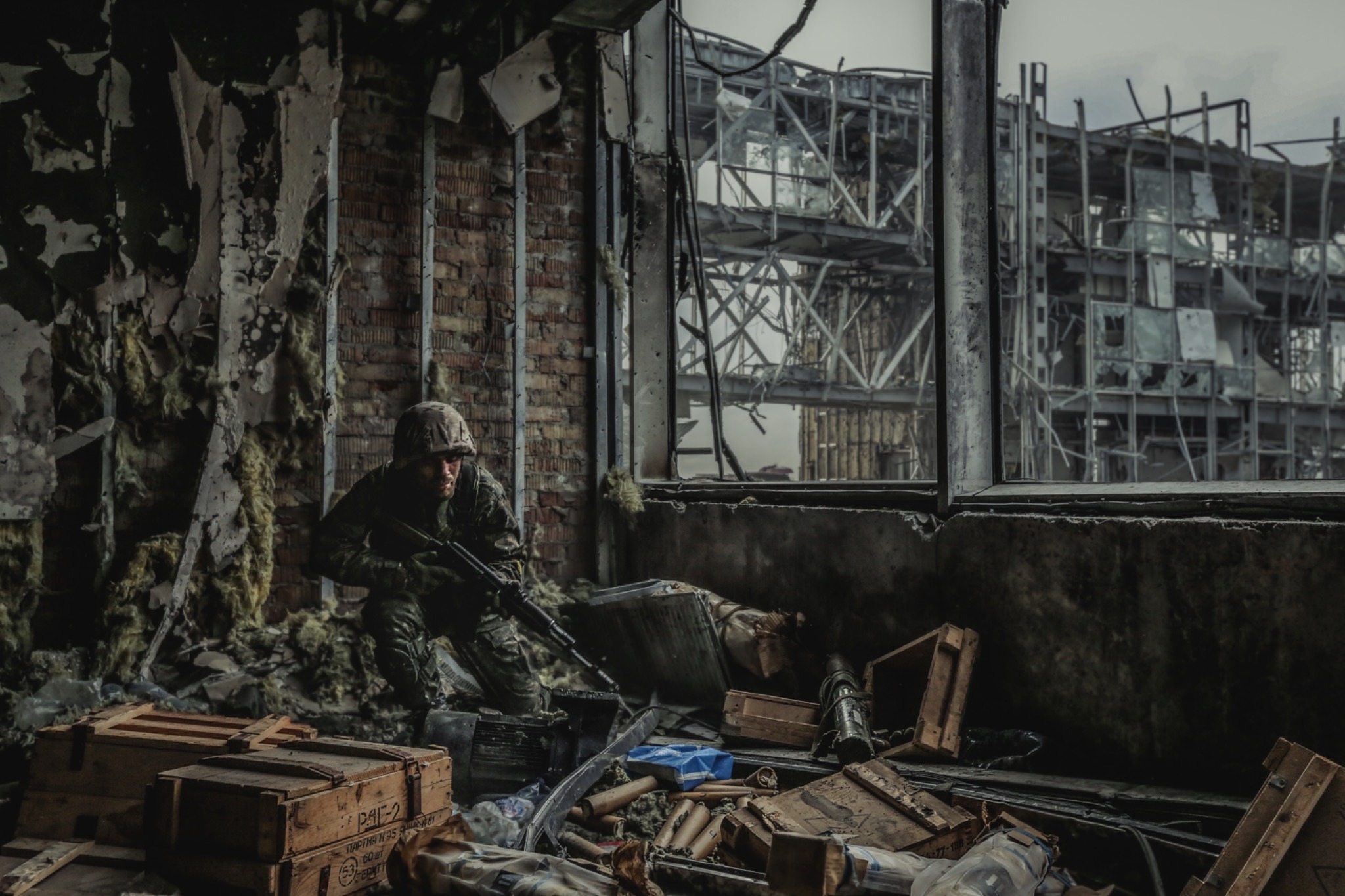
Photographs by Sergei Loiko and other photographers, taken directly in the hell of DAP, became legendary, telling the world about the "cyborgs" — people who proved tougher than concrete and would fight for their land to the last.
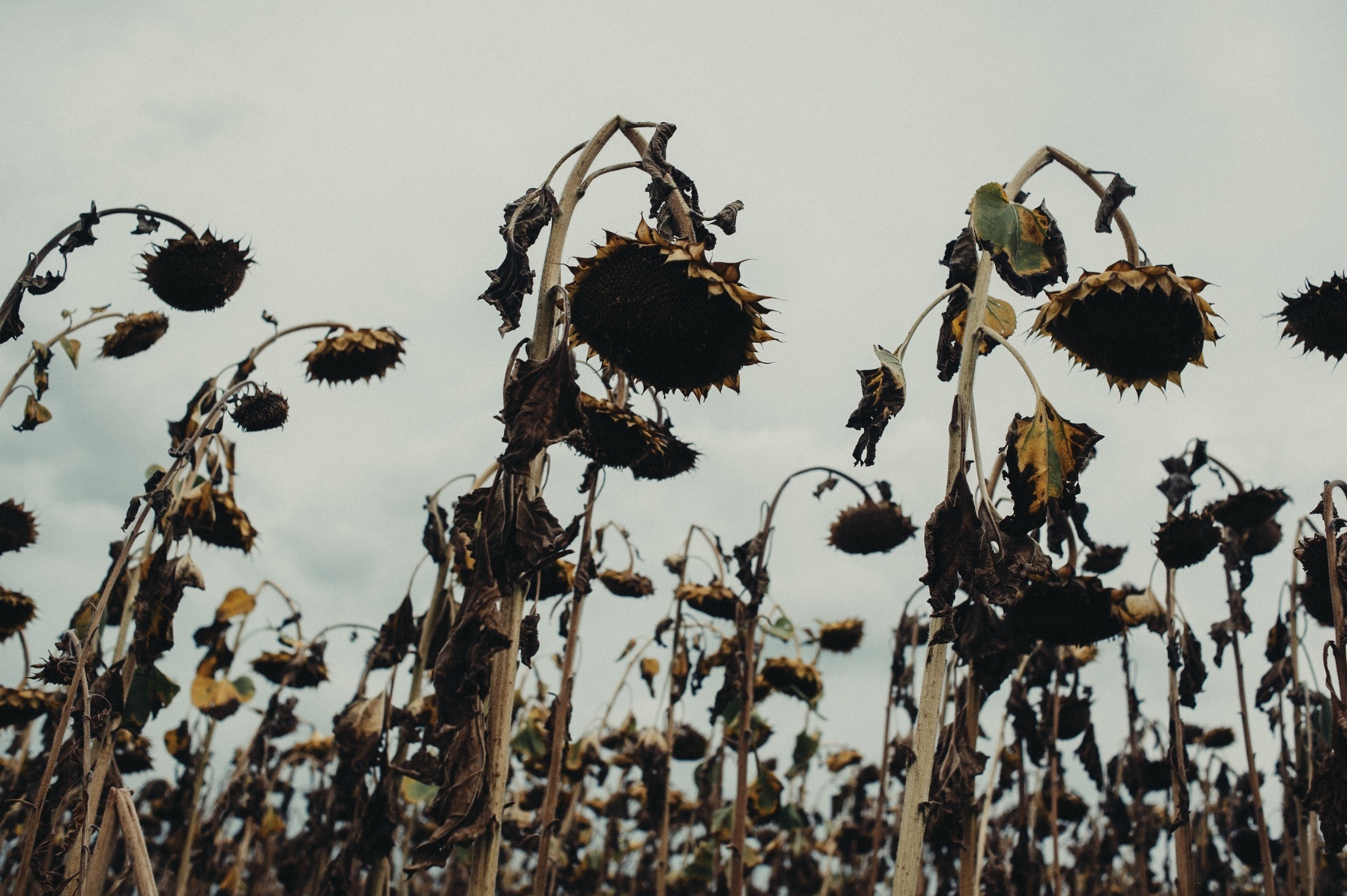
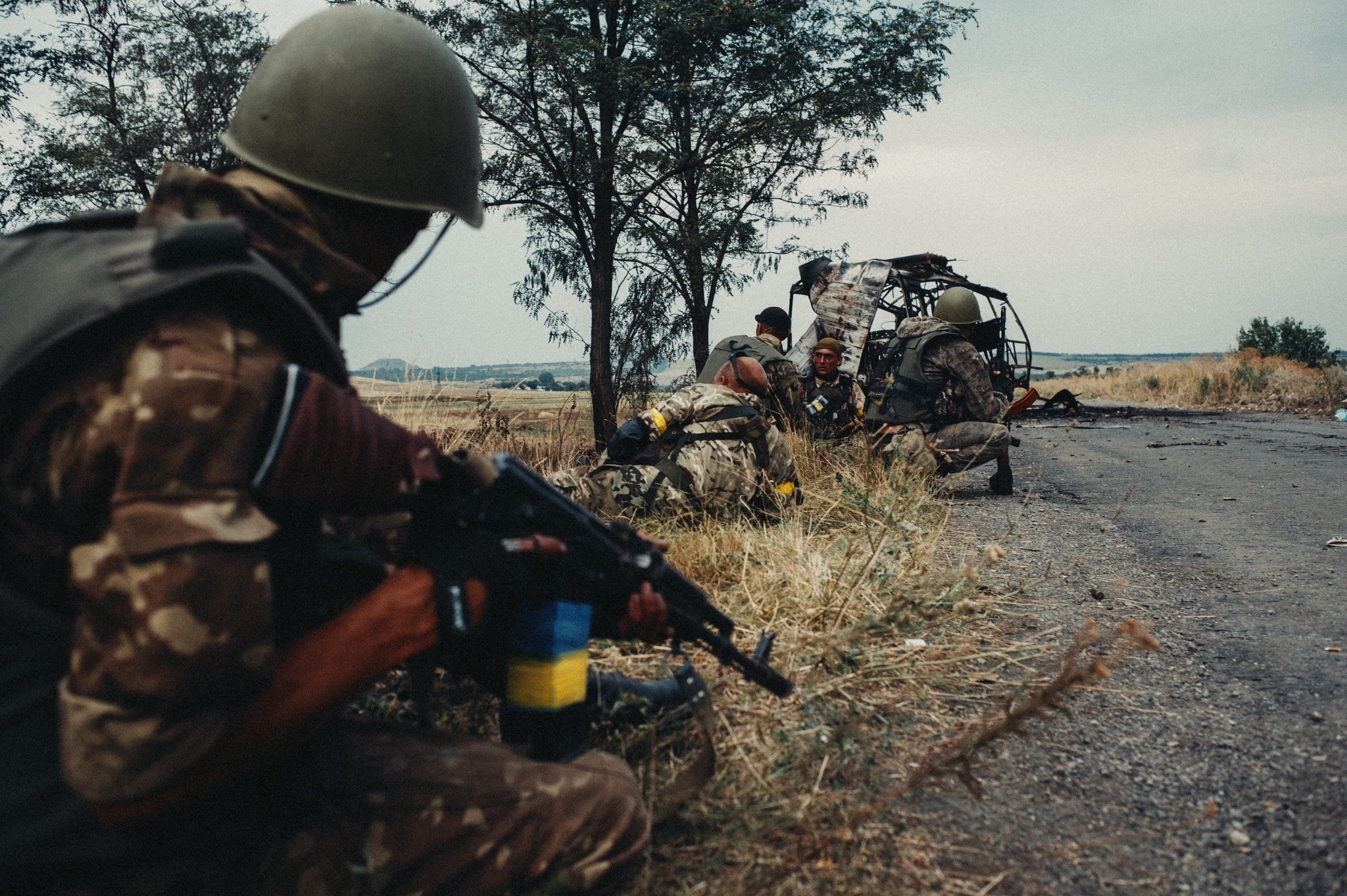
Ilovaisk Tragedy — the encirclement of a grouping of Ukrainian forces near Ilovaisk, Donetsk region, and the shooting by Russian military of a column moving through a "green corridor" on August 29, 2014.
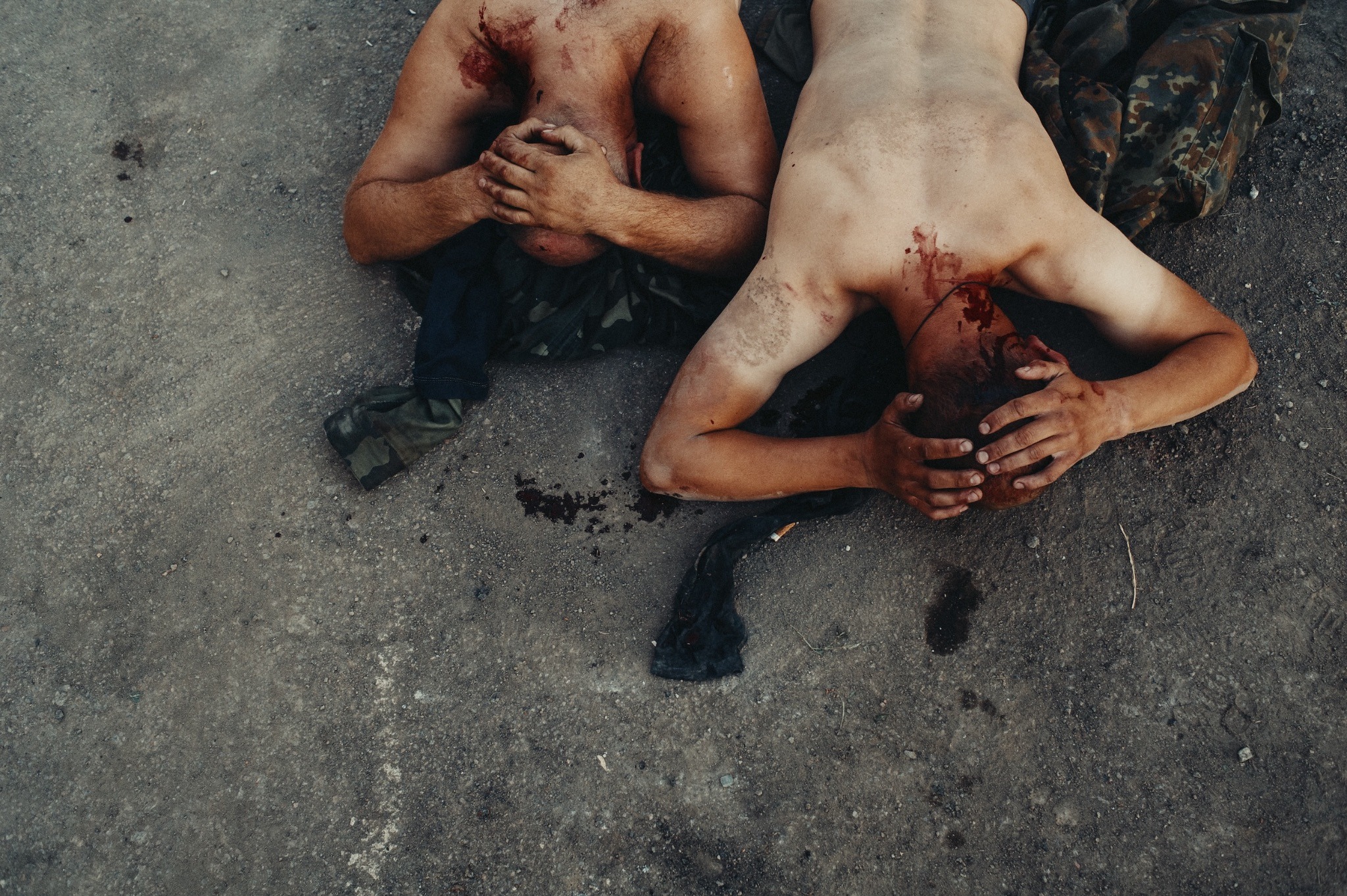
Photographic evidence showing knocked-out Russian armored vehicles, regular RF troop markings, and captured Russian paratroopers debunked the Kremlin's "internal conflict" narrative and proved the direct invasion of Ukraine by the RF army. This became the catalyst for the swift adoption of sectoral sanctions packages by the USA and the European Union in the fall of 2014.
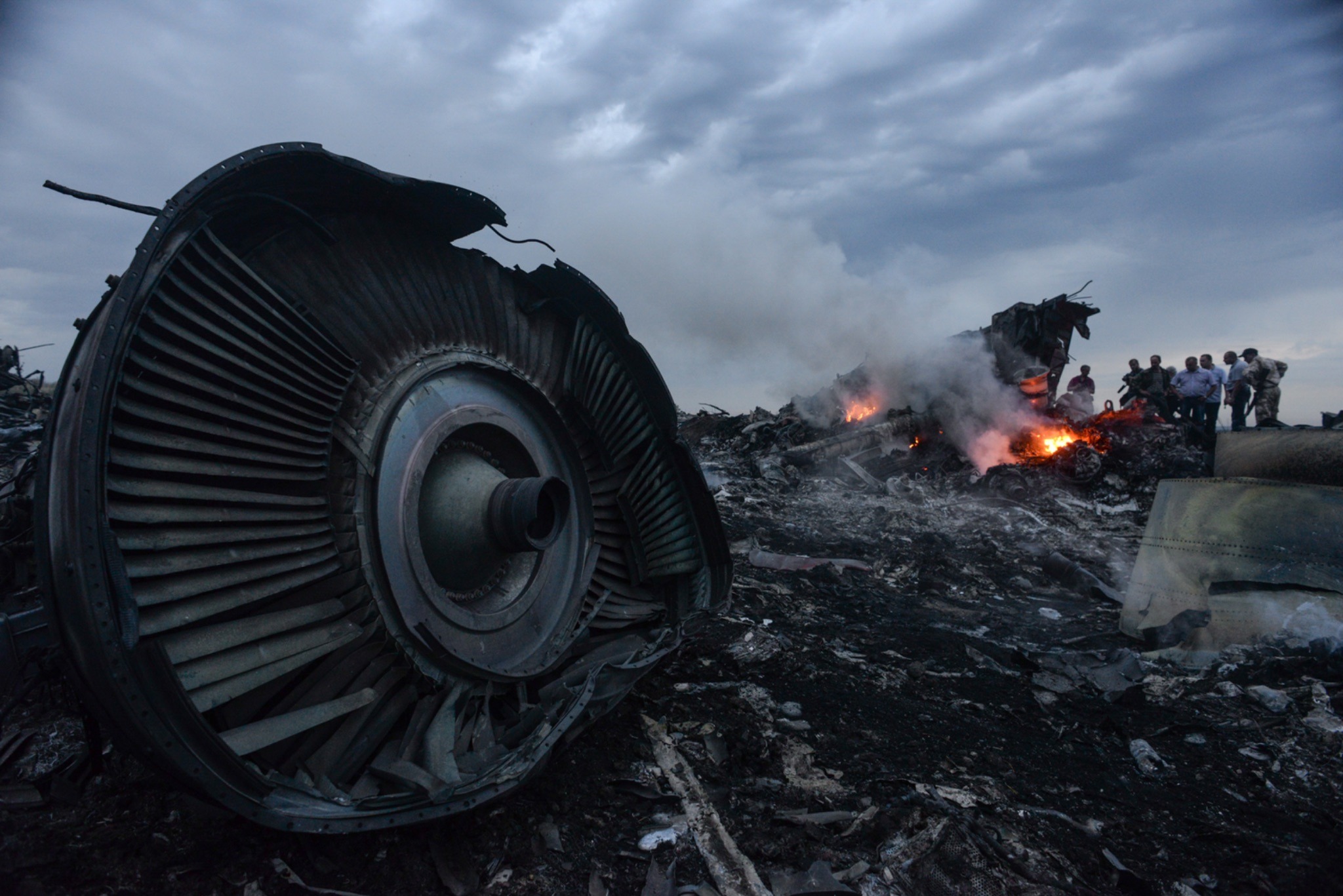
Flight MH17 — the disaster of a Malaysian passenger Boeing 777, in which all 298 people on board died. The plane was shot down in the skies over the Donetsk region by a missile from a "Buk" anti-aircraft missile system fired from territory controlled by pro-Russian militants on July 17, 2014.
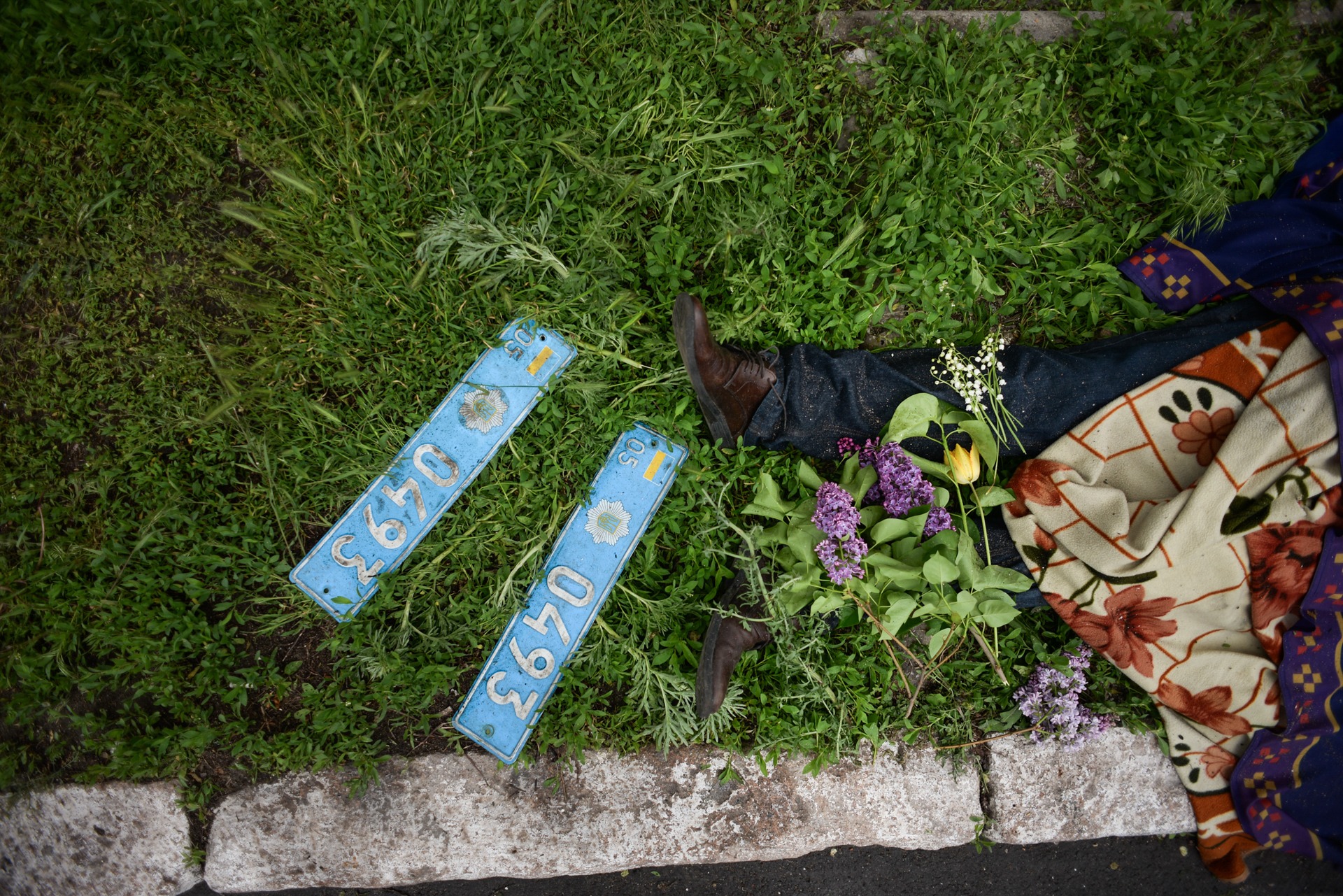
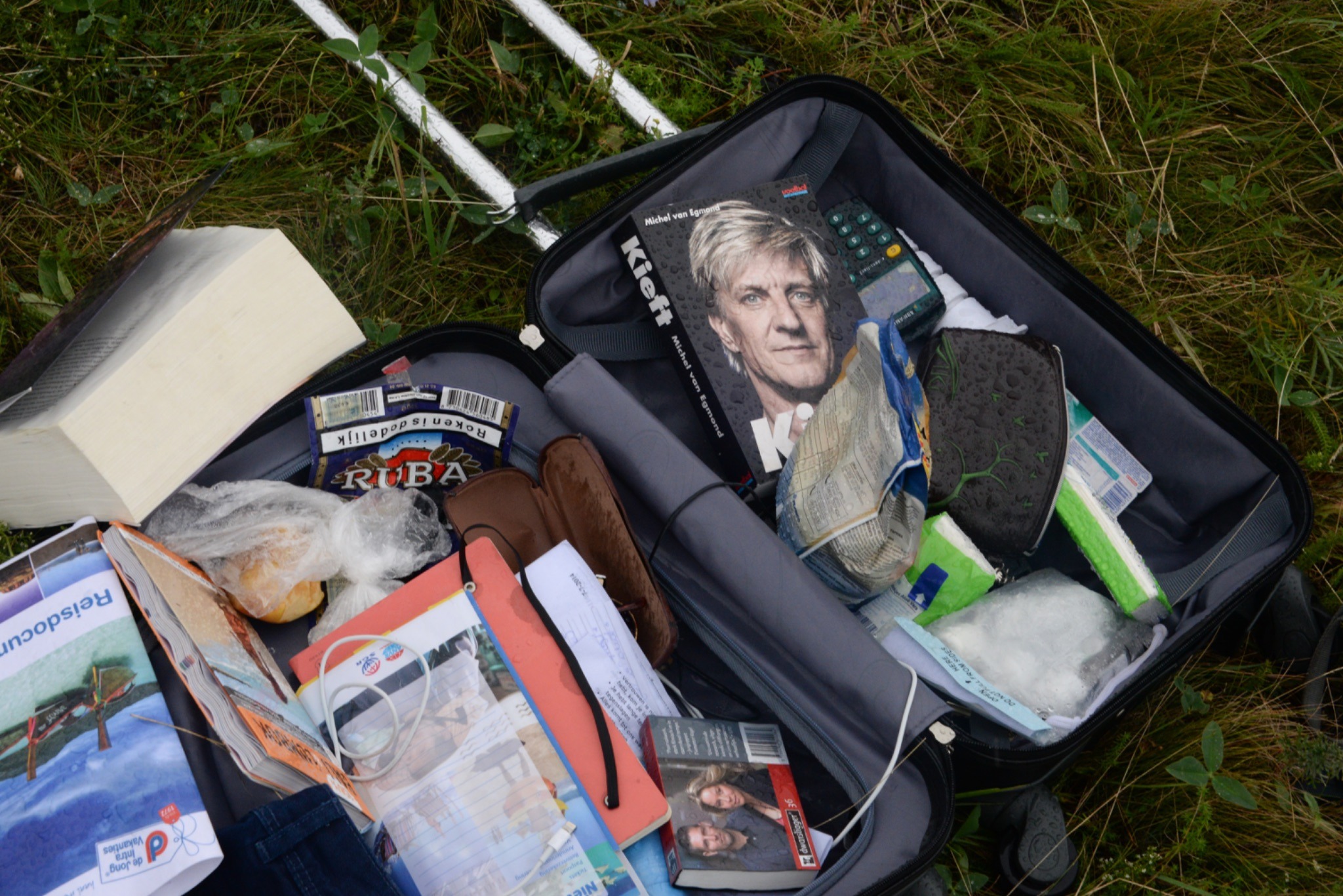
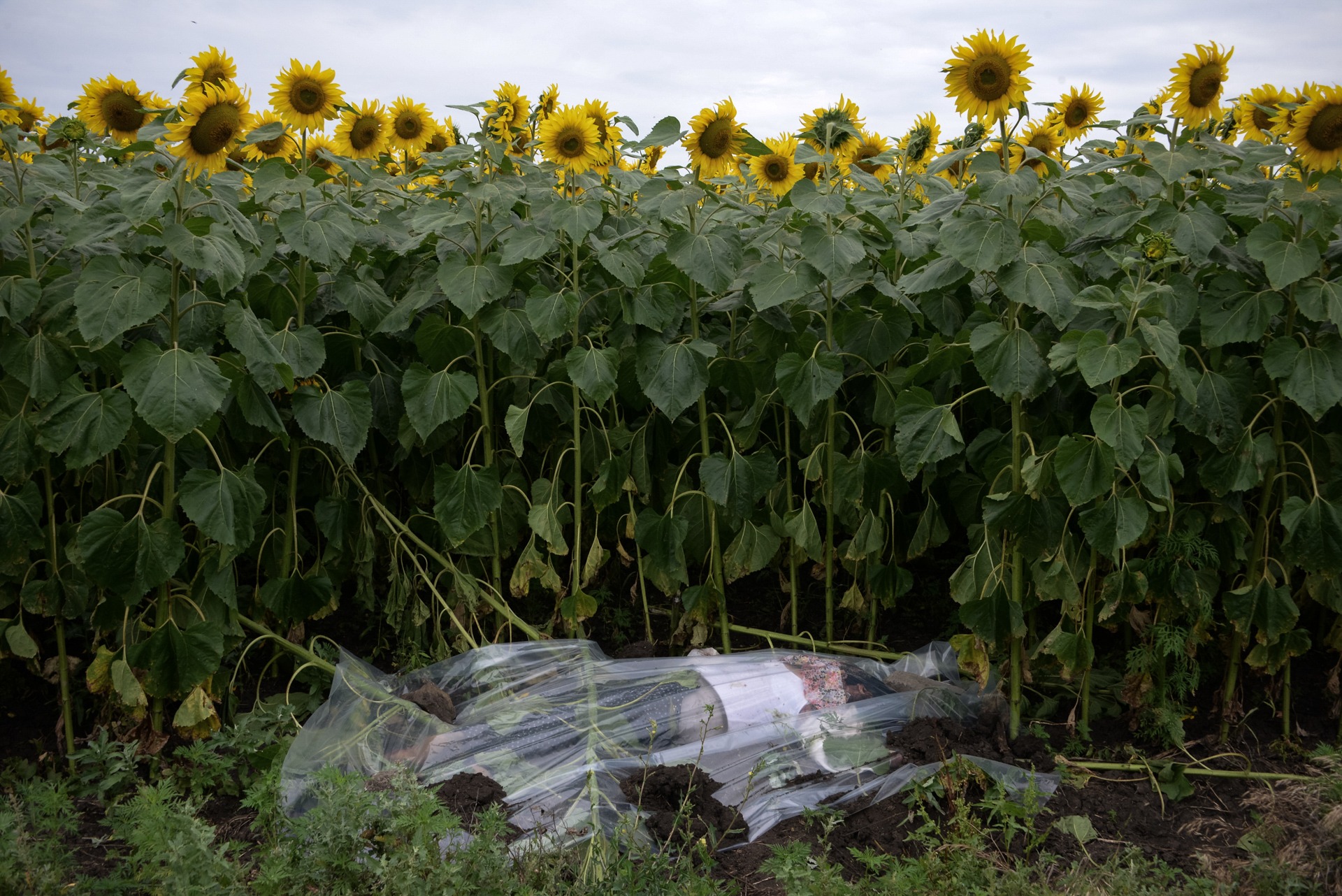
Images from photojournalists who were the first to reach the field near Hrabove where the tragedy occurred—specifically photographs of civilian airliner debris, children's toys, and scattered suitcases—shocked the international community. Thanks to these photo materials, Kremlin propaganda was unable to impose its numerous versions of the causes of the disaster on the world. An unprecedented decision by the District Court of The Hague legally proved RF's direct guilt in this air disaster and forced international leaders to demand accountability for all involved as a united front.
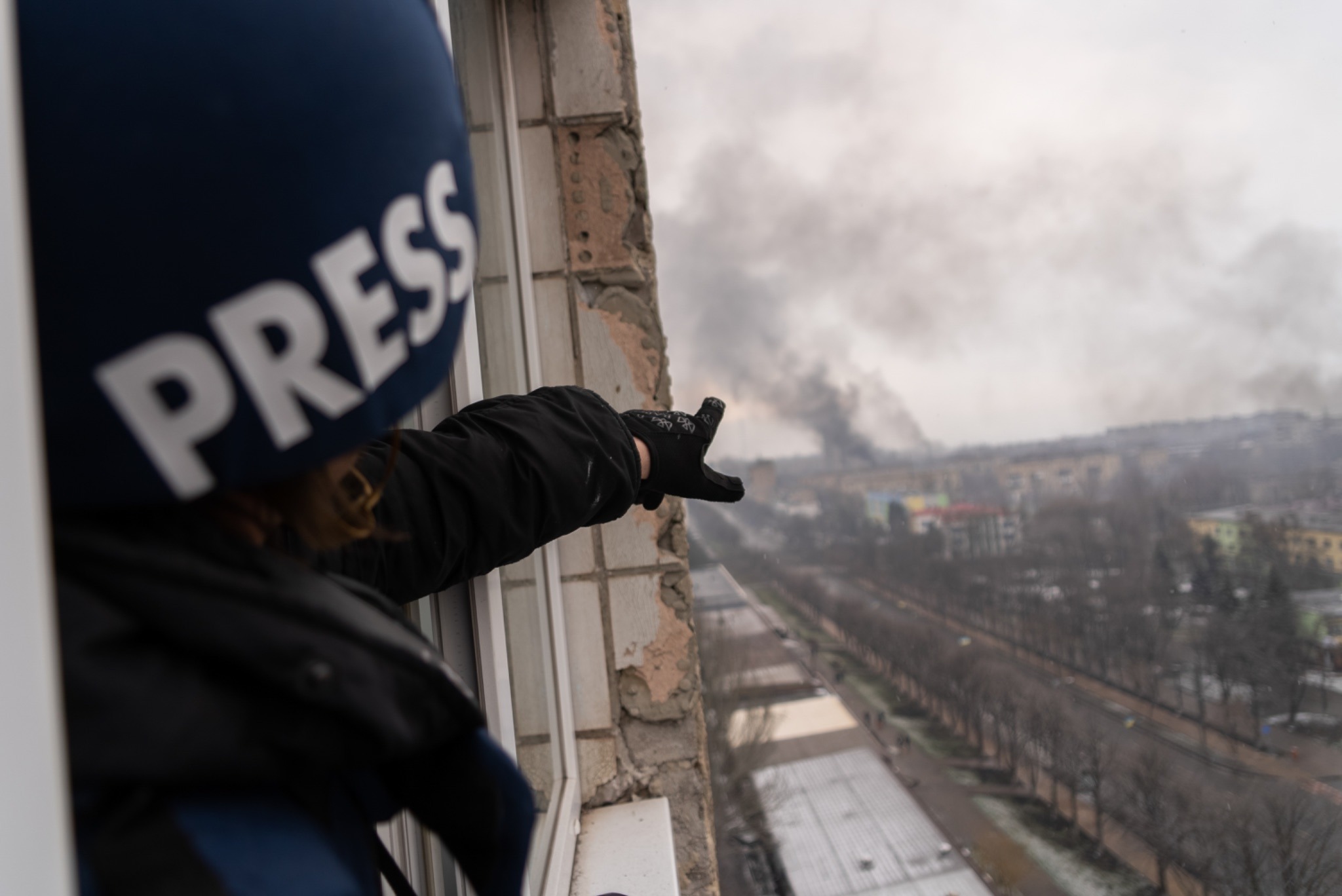
Bombing of the Maternity Hospital in Mariupol — a targeted Russian strike on a maternity hospital and children's hospital on March 9, 2022, resulting in the deaths of at least six people, including a pregnant woman and a child; at least 33 people were injured. This tragic episode became one of the most famous symbols of Russian war crimes during the siege of Mariupol.
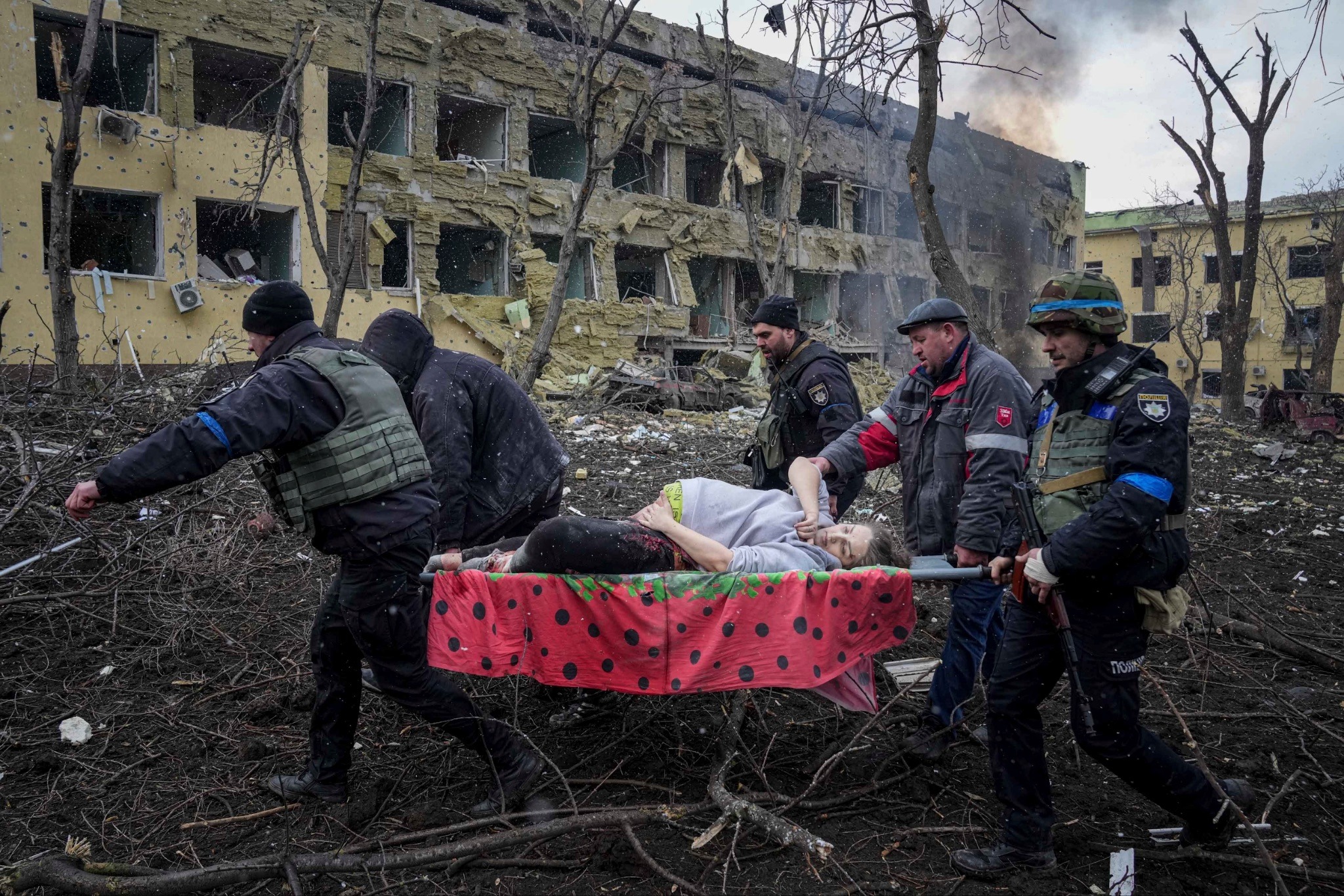
Evgeniy Maloletka's footage of a wounded pregnant woman on a stretcher debunked RF's claims of a "staged event" and an "Azov battalion base." The photographs reached the front pages of leading global publications, turning into an indisputable evidence base for the international investigation. This forced the European Union to expand personal restrictions and approve the fourth and fifth sanctions packages against the RF, which included an embargo on Russian coal, a ban on Russian vessels entering EU ports, and the disconnection of key banks from SWIFT.
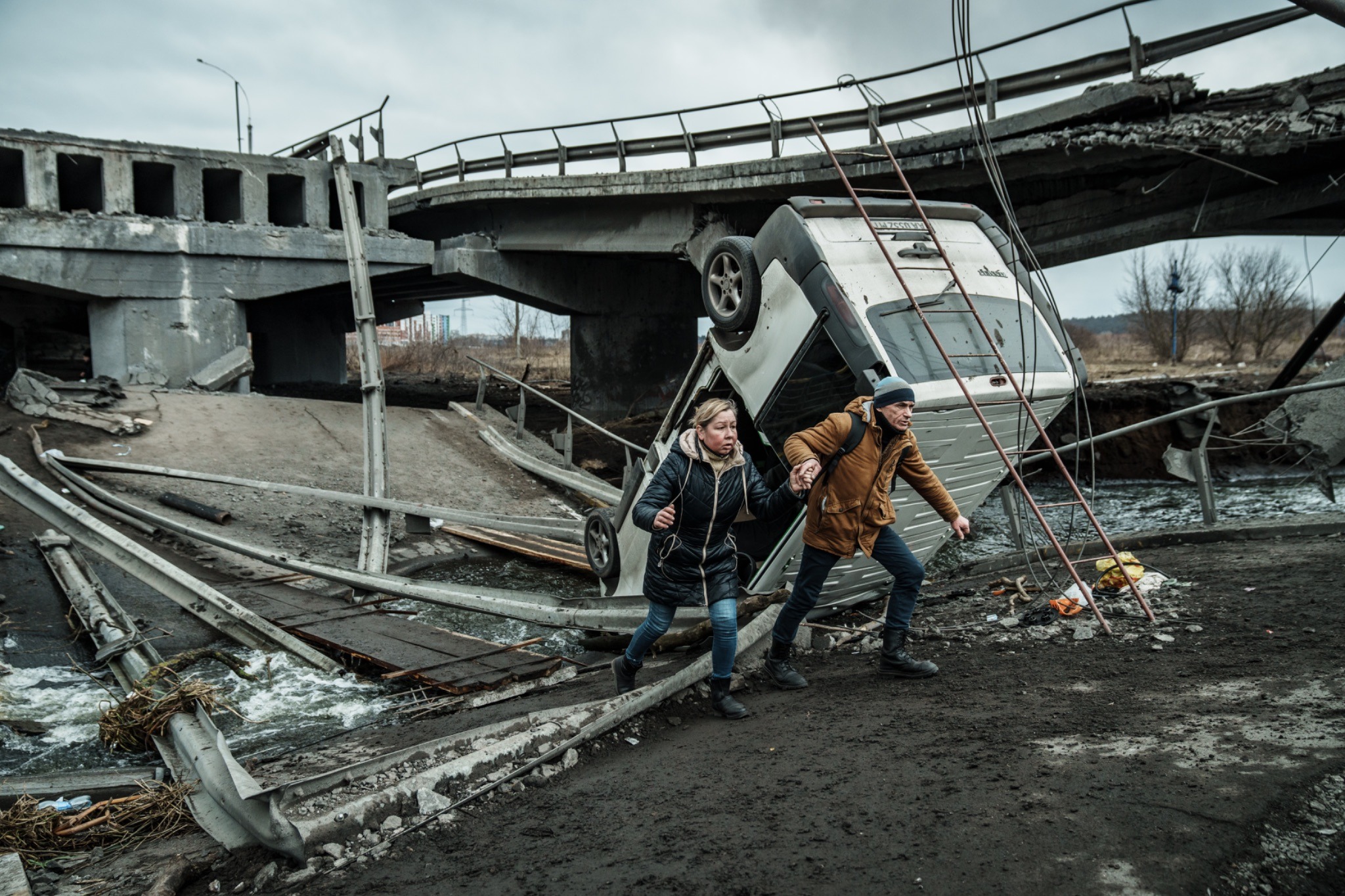
Evacuation via the Romaniv Bridge — a bridge in Irpin, blown up by the Armed Forces of Ukraine to deter the advance on Kyiv, became the sole evacuation route for tens of thousands of residents of surrounding cities and towns in March 2022. The evacuation took place under constant shelling, resulting in deaths and injuries. Footage of the evacuation, where thousands of people took cover under the ruins of the bridge structures, swept the front pages of the global press, including being named among the best photos of 2022 by the American magazine Time.
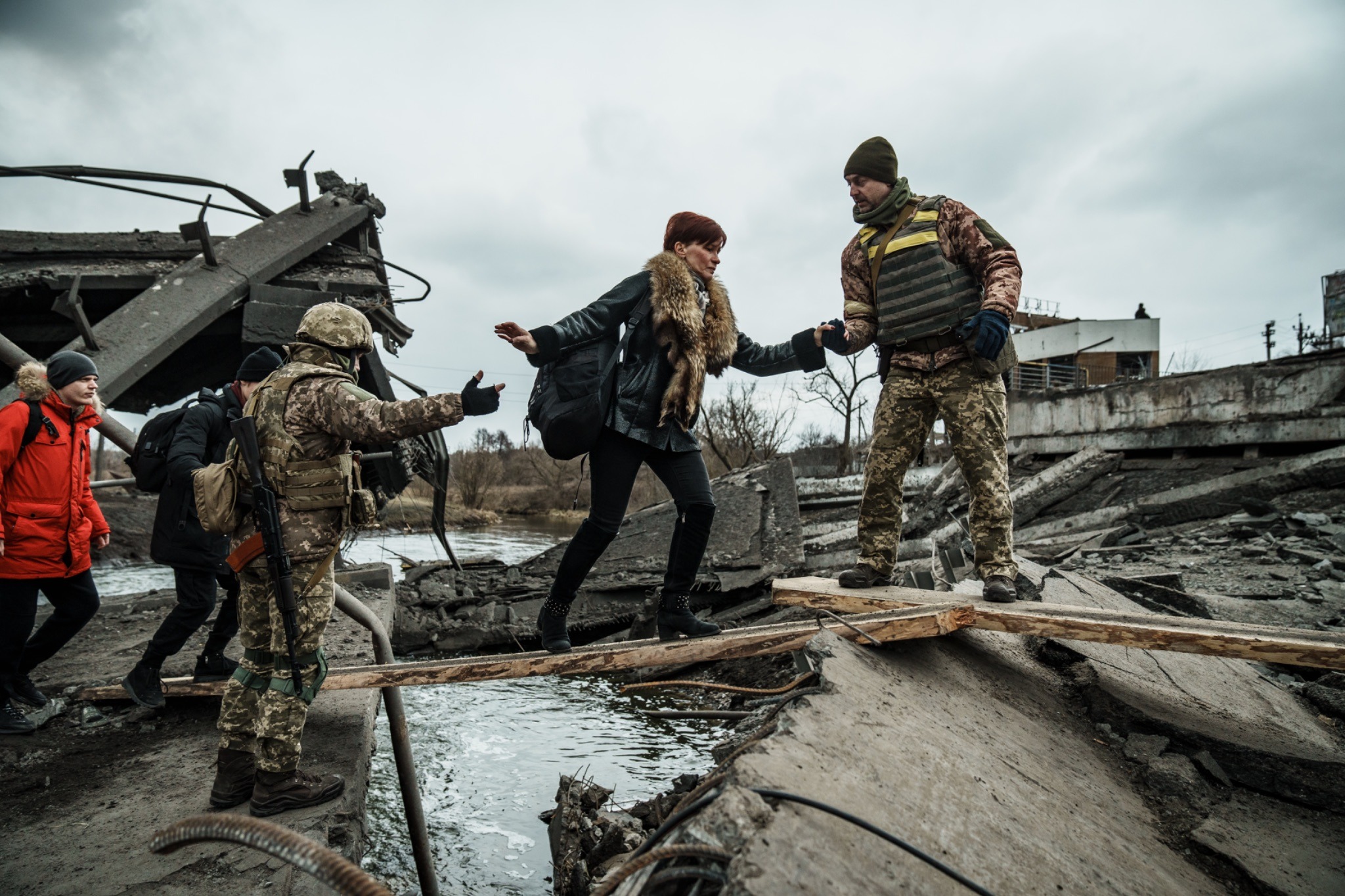
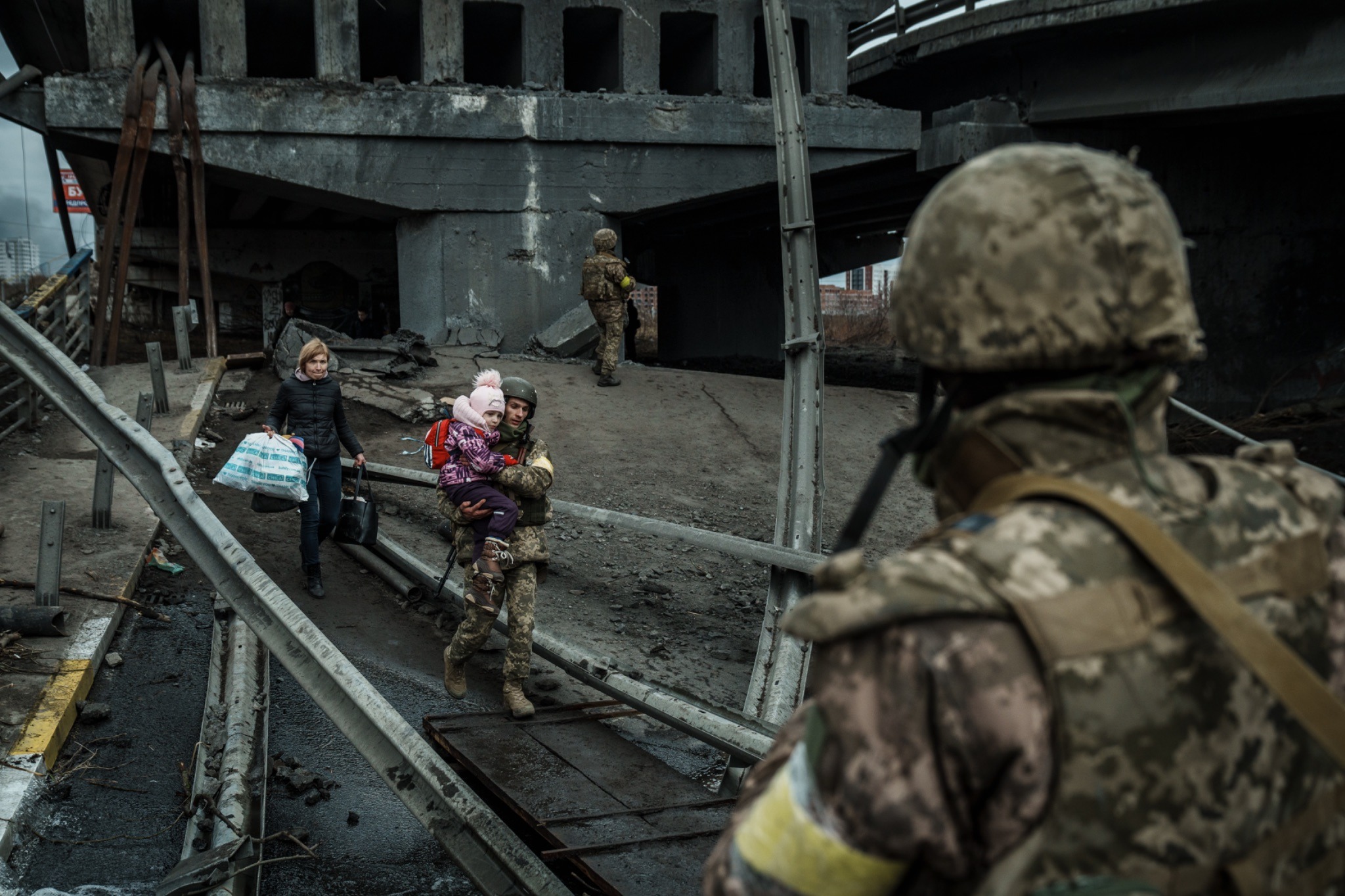
This contributed to the adoption of the EU Temporary Protection Directive, which provided millions of Ukrainian refugees with simplified access to residency, work, and social assistance in Europe.
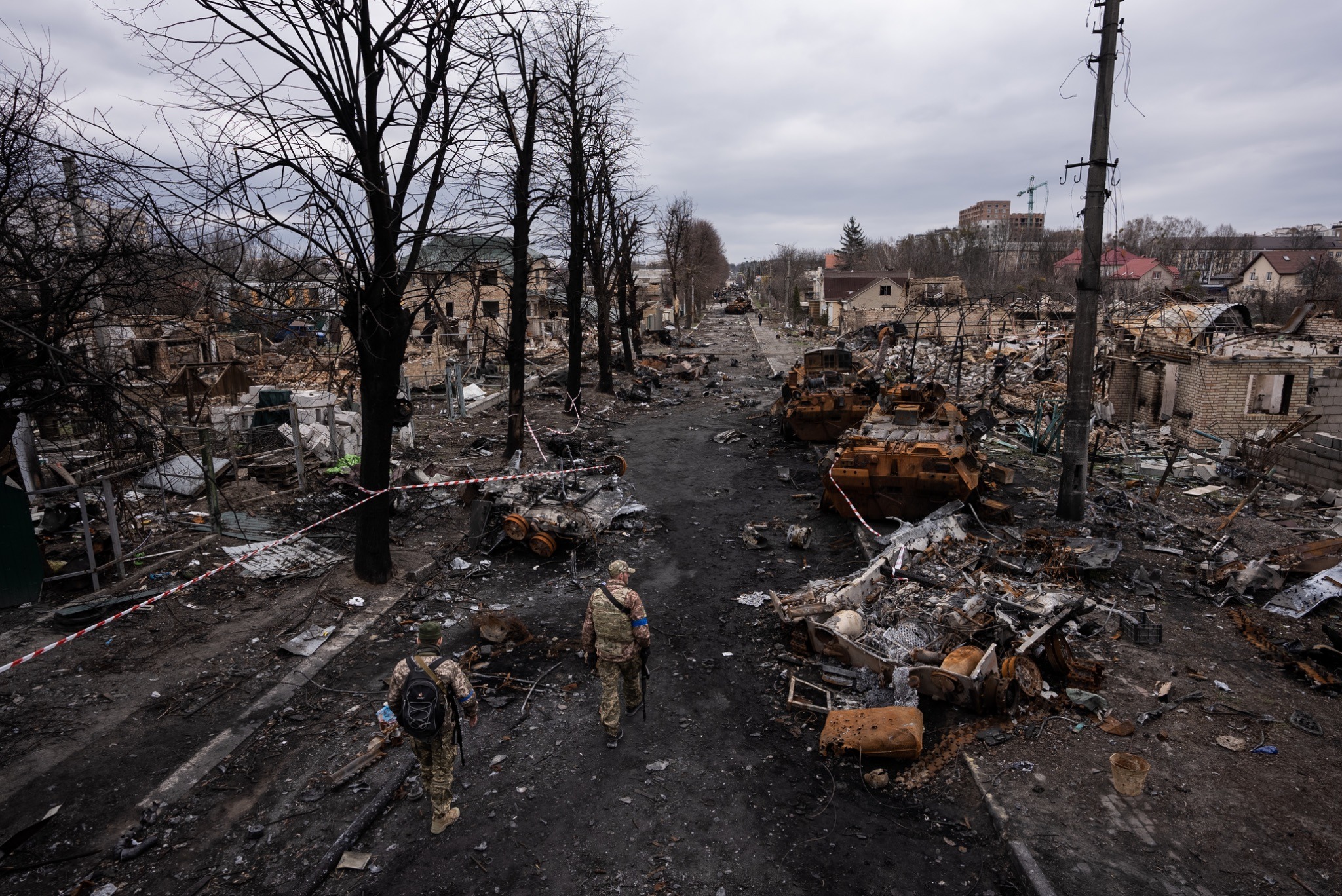
Bucha Tragedy — the documentation of hundreds of bodies of murdered, tortured, and raped civilians following the liberation of the city on March 31, 2022. During more than a month of occupation in Bucha, hundreds of civilians fell victim to Russian soldiers, many showing signs of violence, with hands tied and gunshot wounds.
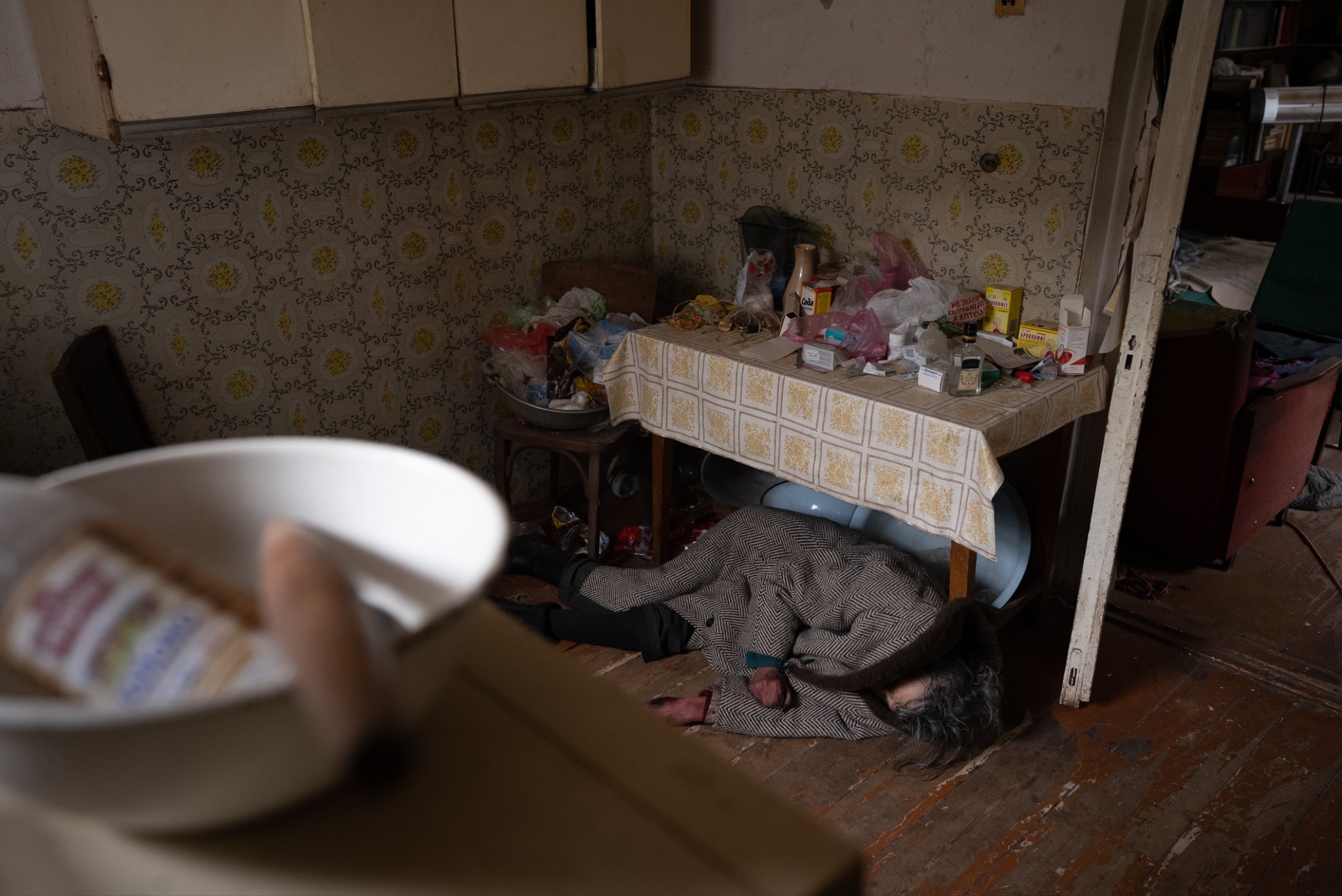
The high-profile photo and video evidence of mass killings of civilians in Bucha prompted the United States on April 4, 2022, to initiate the suspension of Russia's membership in the UN Human Rights Council. On April 7, the UN General Assembly voted by a majority to suspend RF membership due to the atrocities of its army in Ukraine. In response to this decision, the Russian side announced its early withdrawal from the body. Within a week after the images were published, European Union countries expelled Russian diplomats, depriving Moscow of traditional channels of influence.
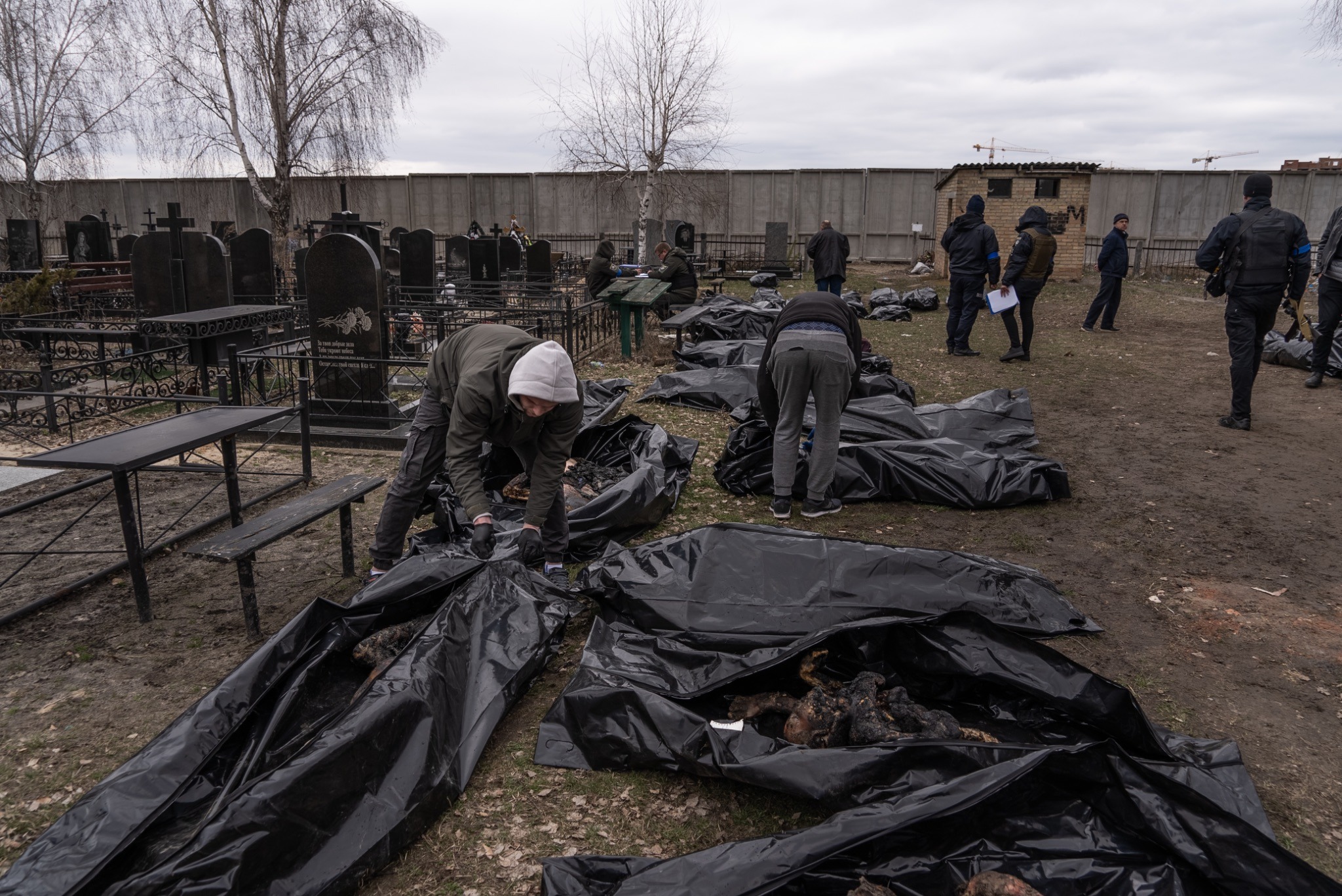
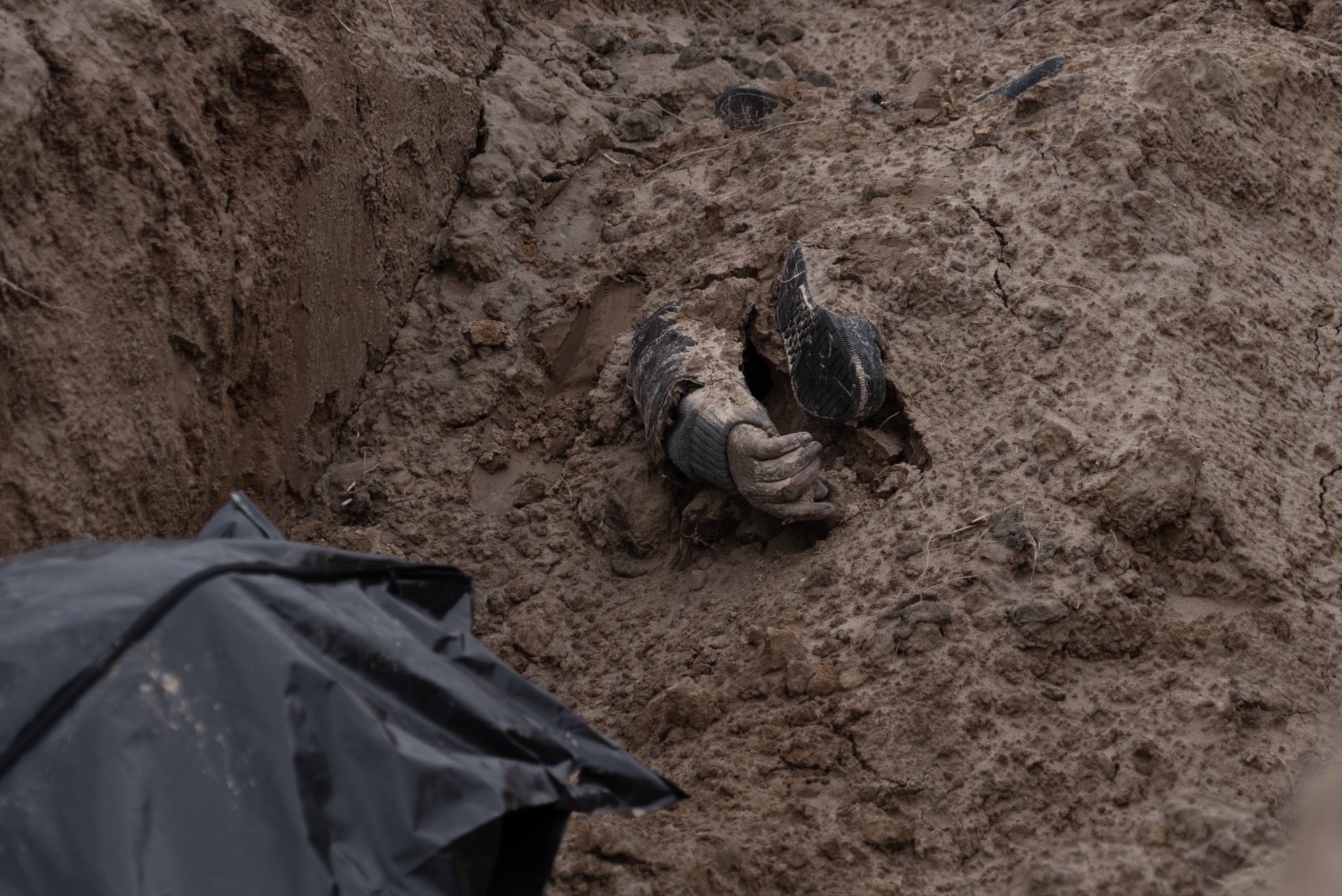
Photographs of Ukrainian tragedies became the most convincing argument for international advocacy. In April 2022, partners formed a coalition in the "Ramstein" format to transfer military aid to Ukraine. In the four years of its existence, the defense coalition in the "Ramstein" format has mobilized military-technical assistance for Ukraine amounting to over 150 billion dollars.
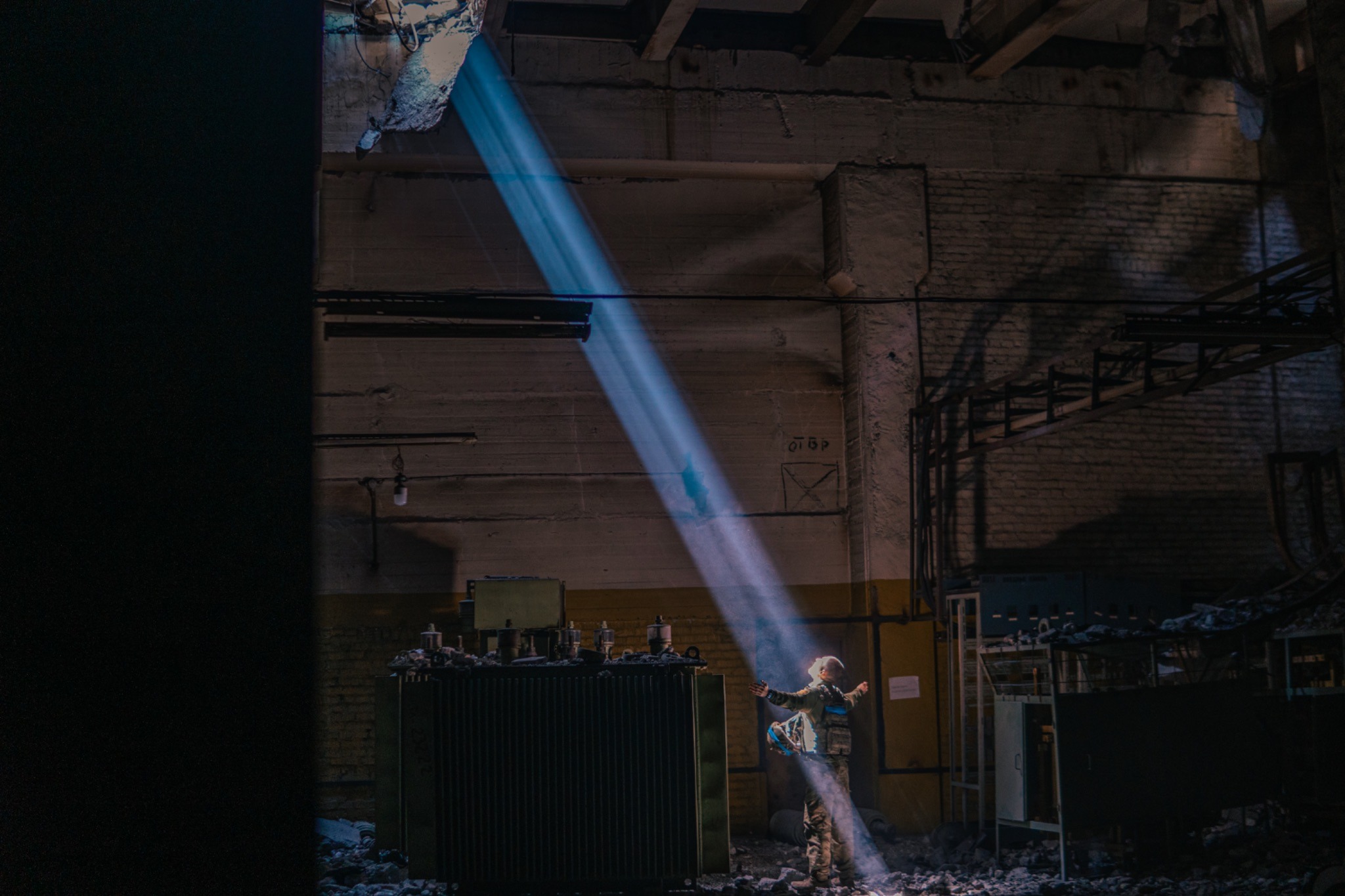
Photographs from the Azovstal Iron and Steel Works — a photo series taken by "Azov" regiment soldier and photographer Dmytro (Orest) Kozatskyi during the multi-week defense of the besieged "Azovstal" by Ukrainian soldiers under conditions of humanitarian catastrophe.
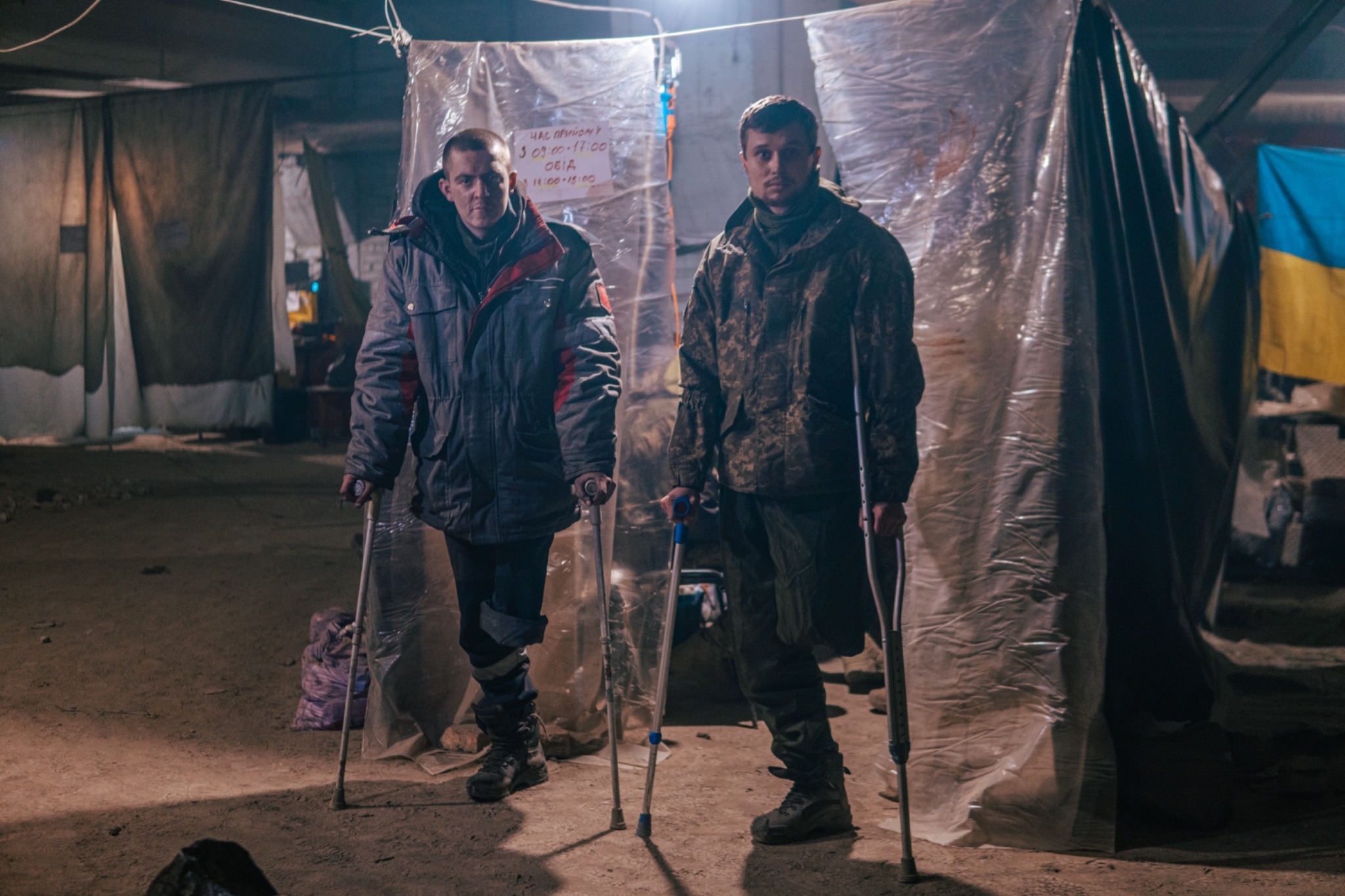
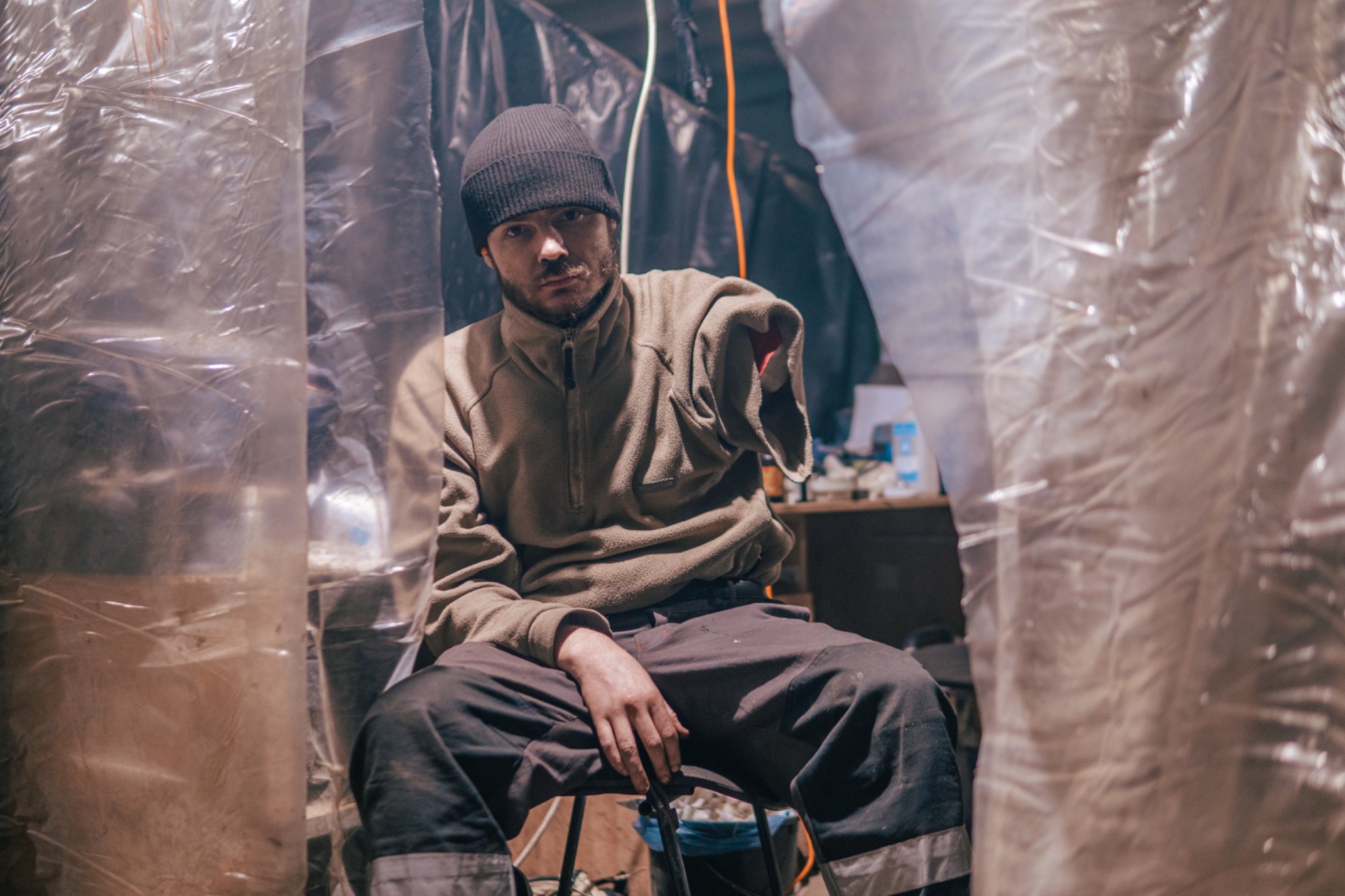
His photographs from the bunkers of the steel plant, which first appeared on social media on May 20, 2022, gained global publicity and became indisputable evidence of the reality in which its defenders found themselves. The photograph "Light Will Win" was named among the 20 best photographs of the year by the British publication The Guardian. The publication of photographs of wounded soldiers from the underground of "Azovstal" increased diplomatic pressure on the RF, which allowed for the launch of the evacuation process for Ukrainian military personnel.
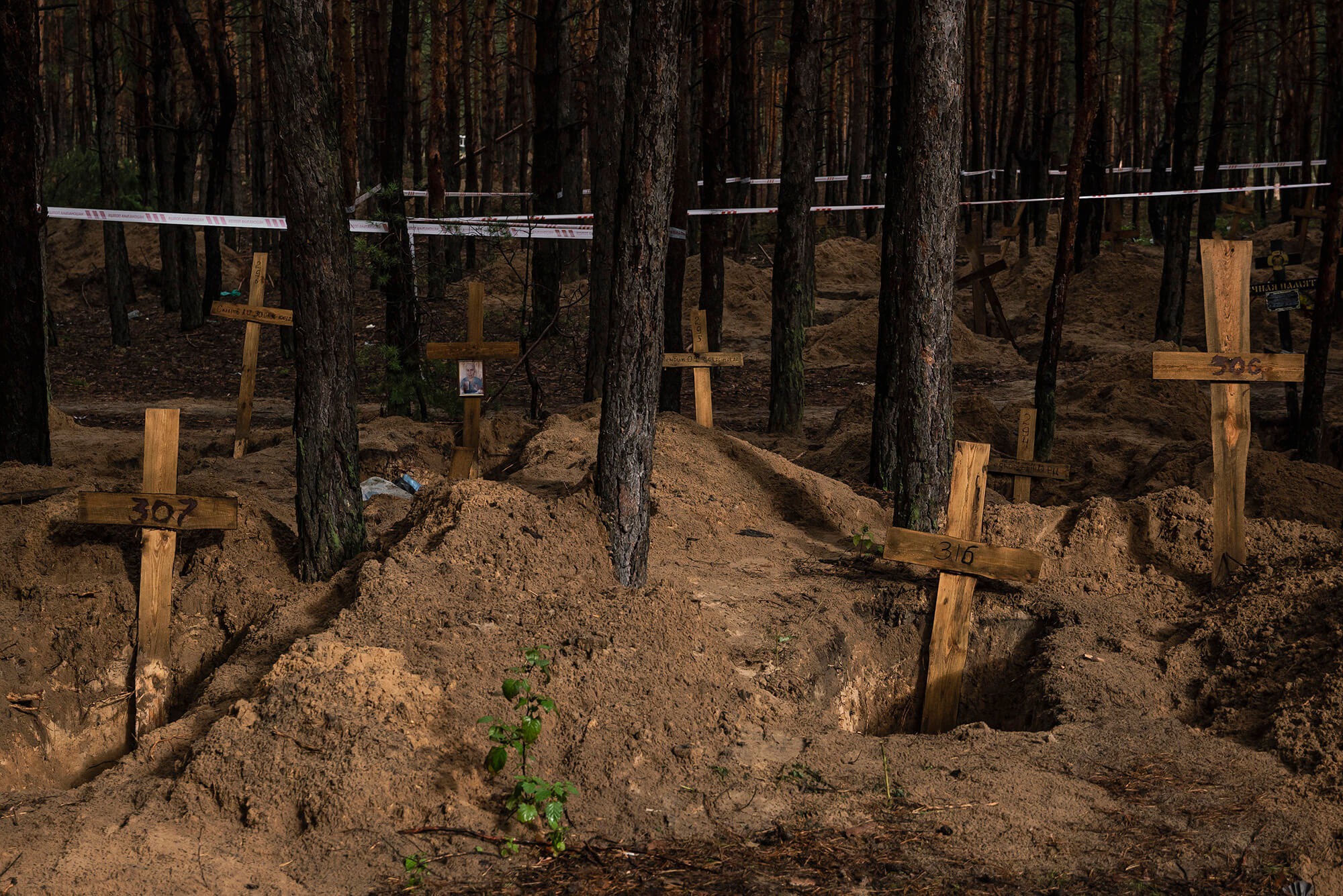
Mass Burials in Izium — mass graves with wooden crosses marked with serial numbers, in which 449 bodies were found with traces of torture, gunshot wounds, and the effects of shelling near Izium five days after the city's de-occupation on September 10, 2022.
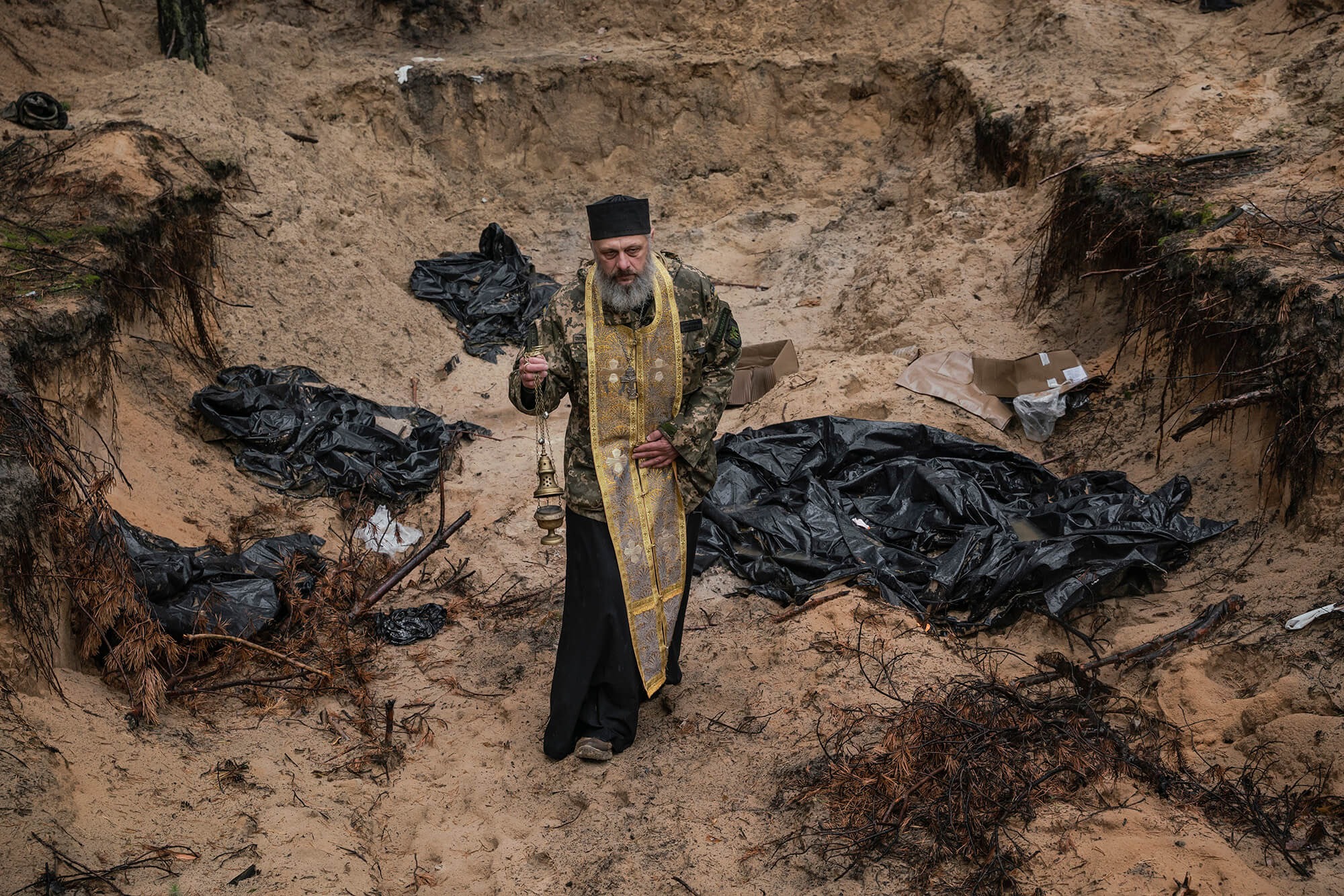
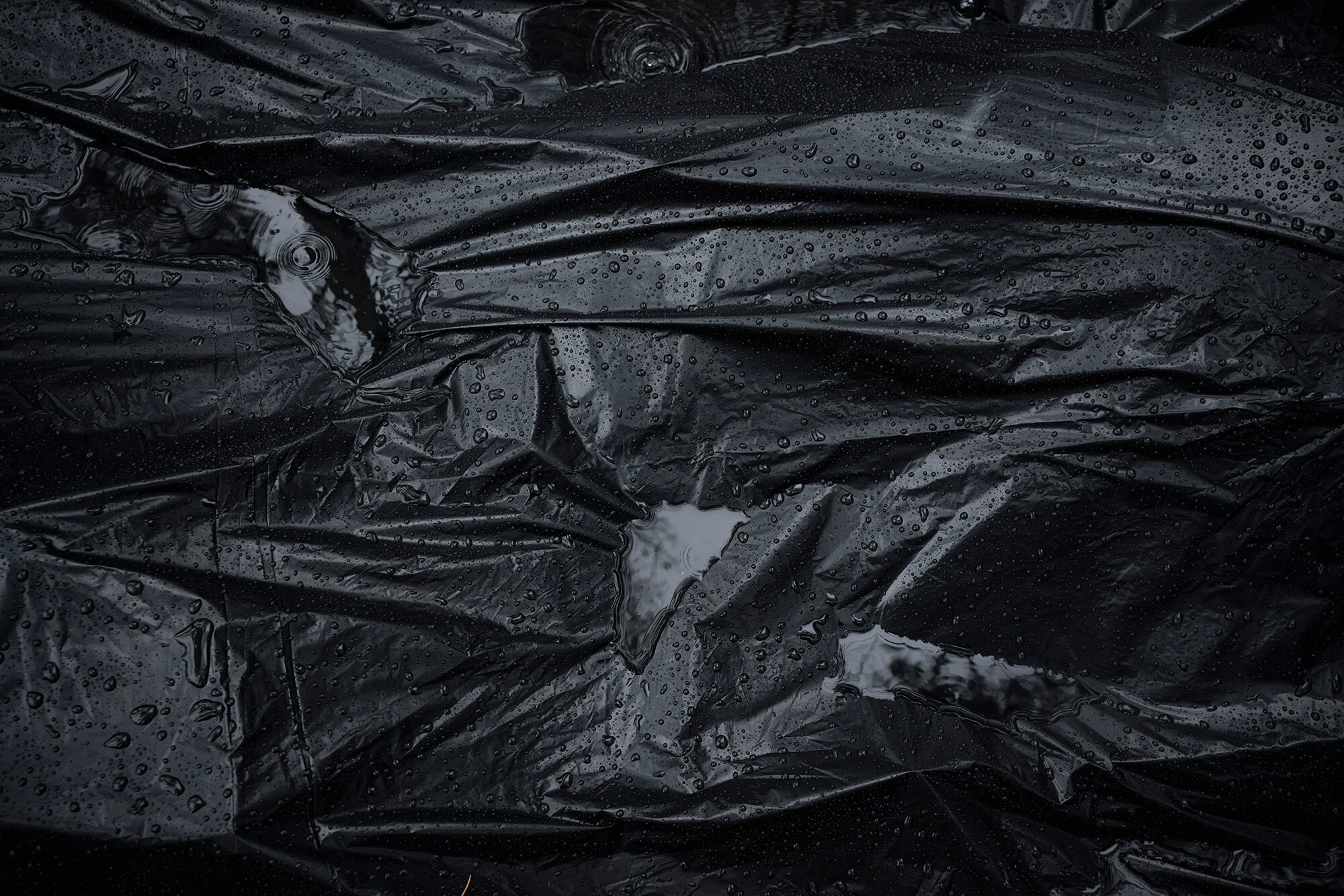
Forensic medical examination established that the deceased—civilians and military personnel, including women, men, children, and the remains of 11 persons whose gender could not be determined—died both from the use of heavy weaponry and as a result of violent actions by the occupiers: numerous traces of torture were found on the bodies: ropes around necks, bound limbs, pre-mortem fractures, gunshot wounds, and genital mutilation. Izium was under occupation for half a year.
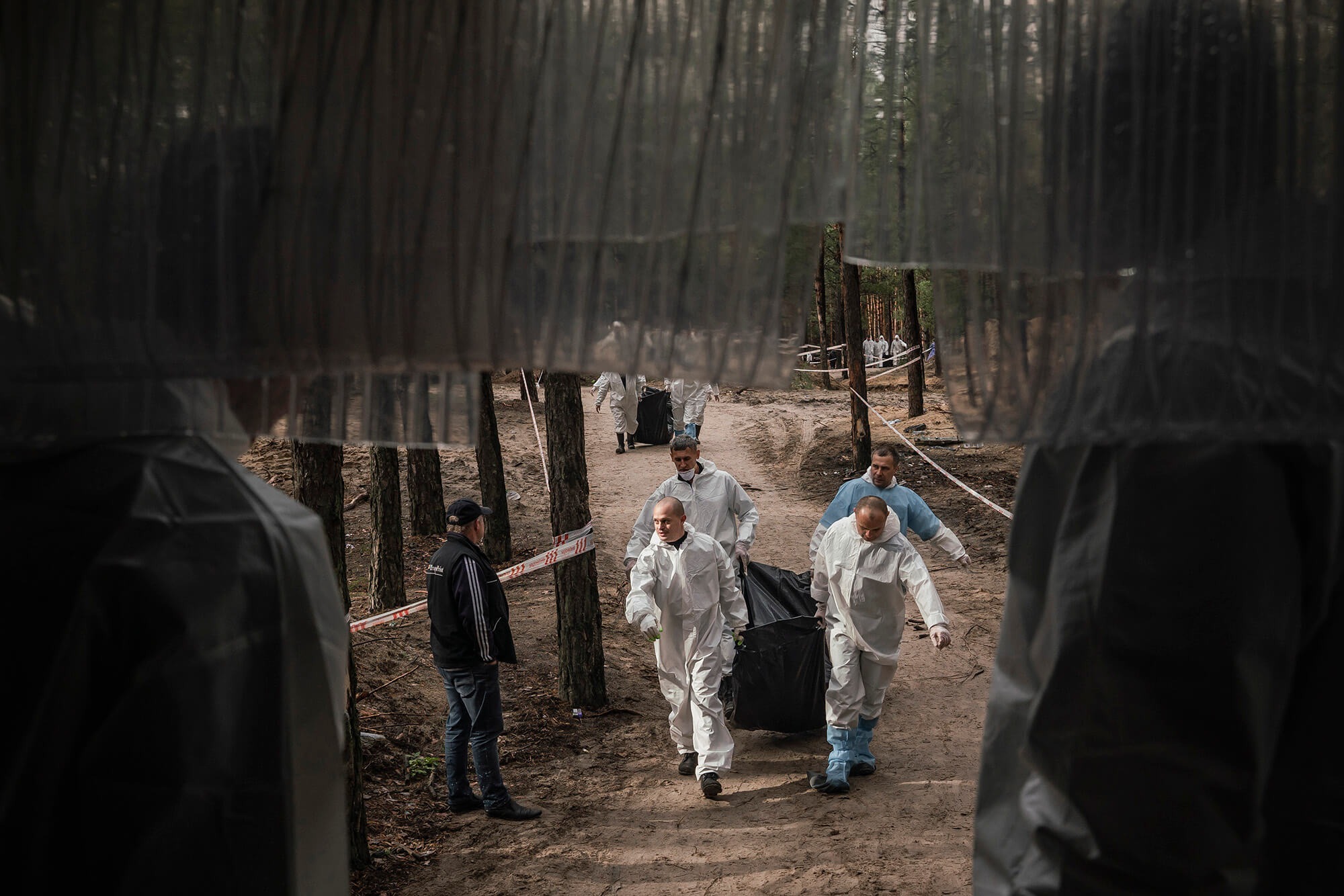
Torture chambers and mass graves found near Izium confirm the fact that the atrocities in Bucha were not an exception—it is a systematic practice and a generalized portrait of Russian occupation. Photographs of nameless crosses in the forest and the exhumation of bodies with bound hands contributed to the arrival of international experts and criminologists in the city. In the USA and Europe, talk began regarding the need to intensify support for Ukraine.
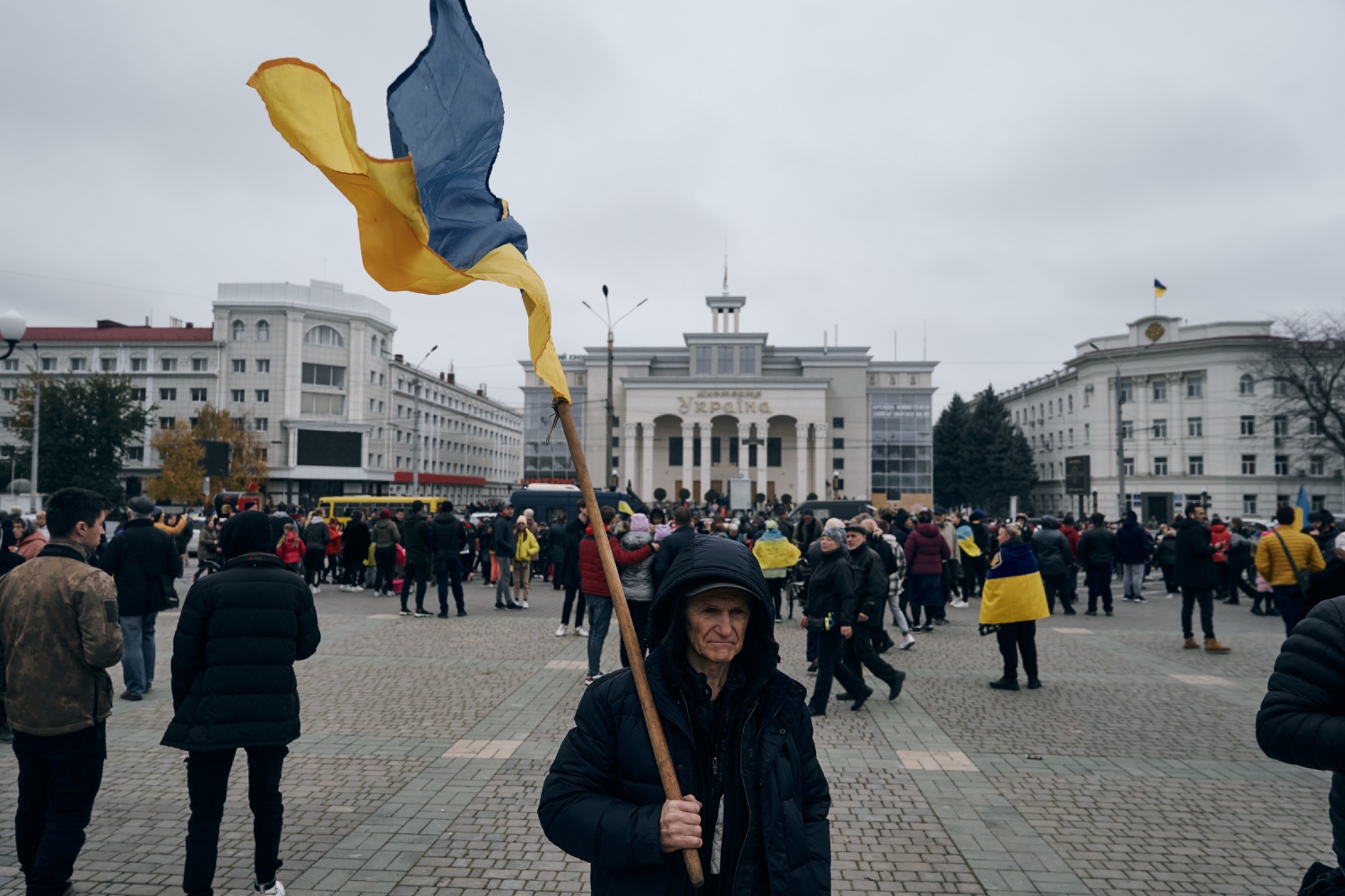
Liberation of Kherson — a special operation by the AFU resulting in the de-occupation of the right bank of the Kherson region and the city of Kherson. The city was under occupation for eight months, during which local residents maintained active partisan resistance. Having suffered significant losses under pressure from the Ukrainian army, Russian troops were forced to perform a "gesture of good will" and retreat. The return of the blue-and-yellow flag to the only captured regional center on November 11, 2022, became a symbol of Ukraine's indomitability.
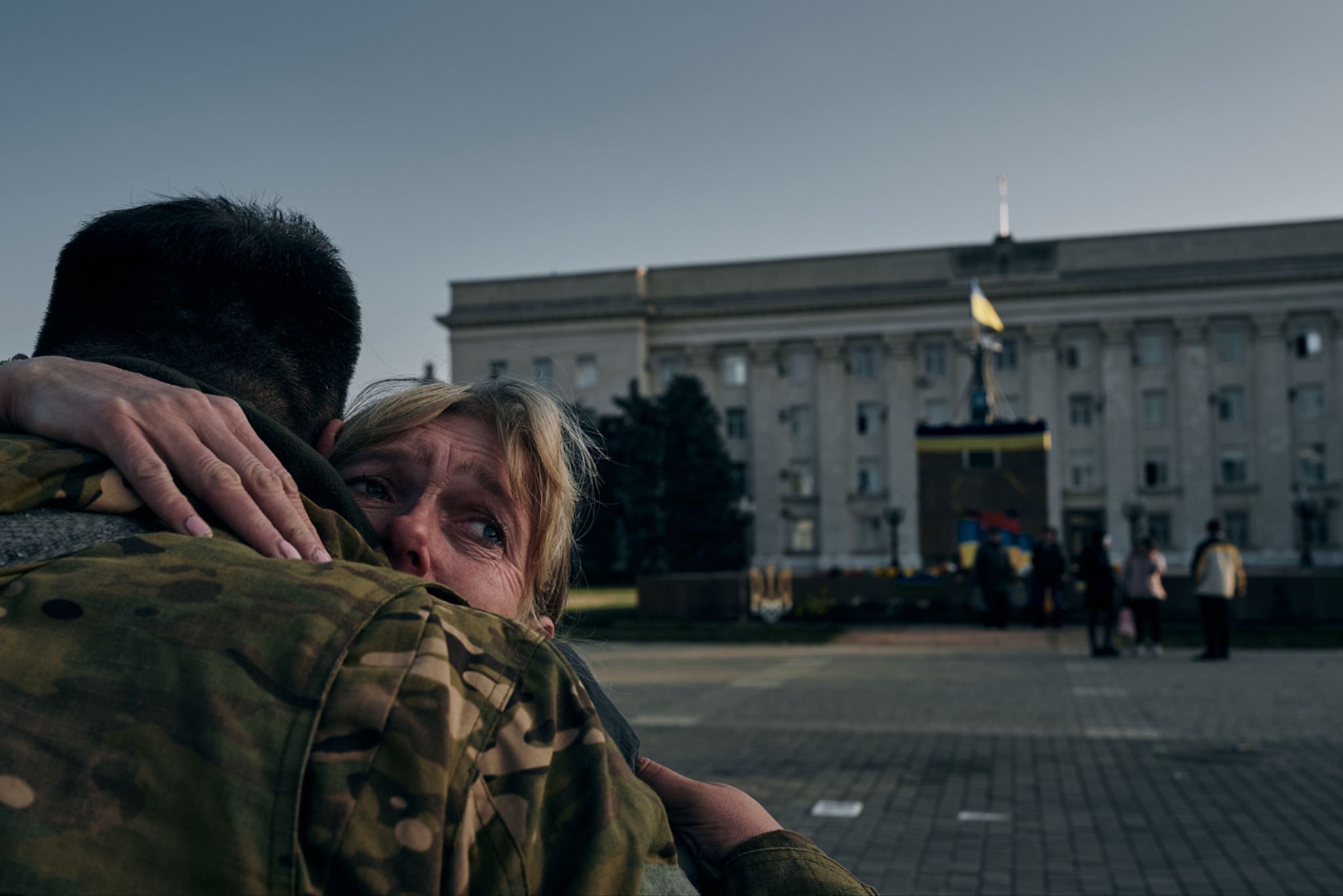
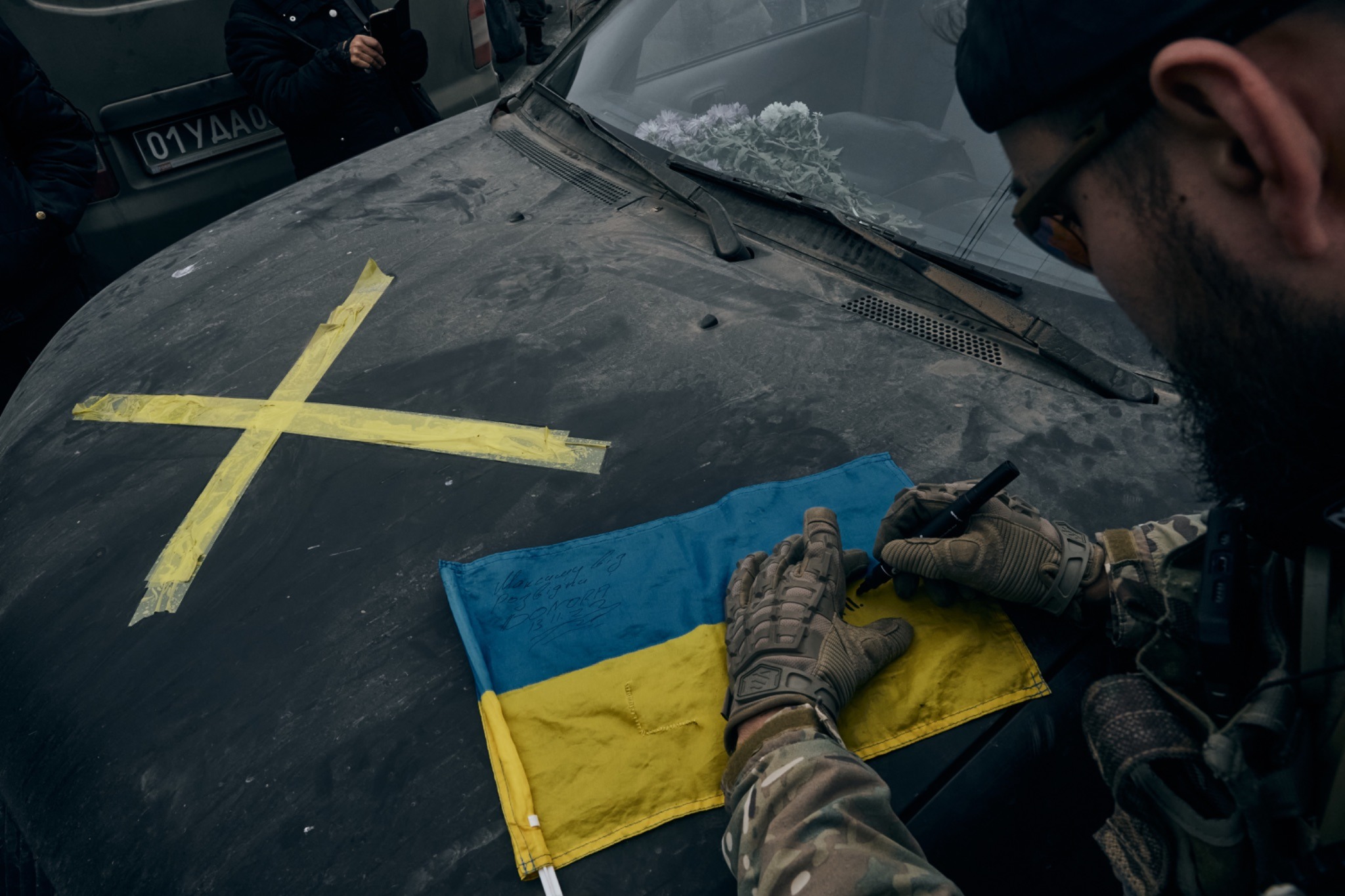
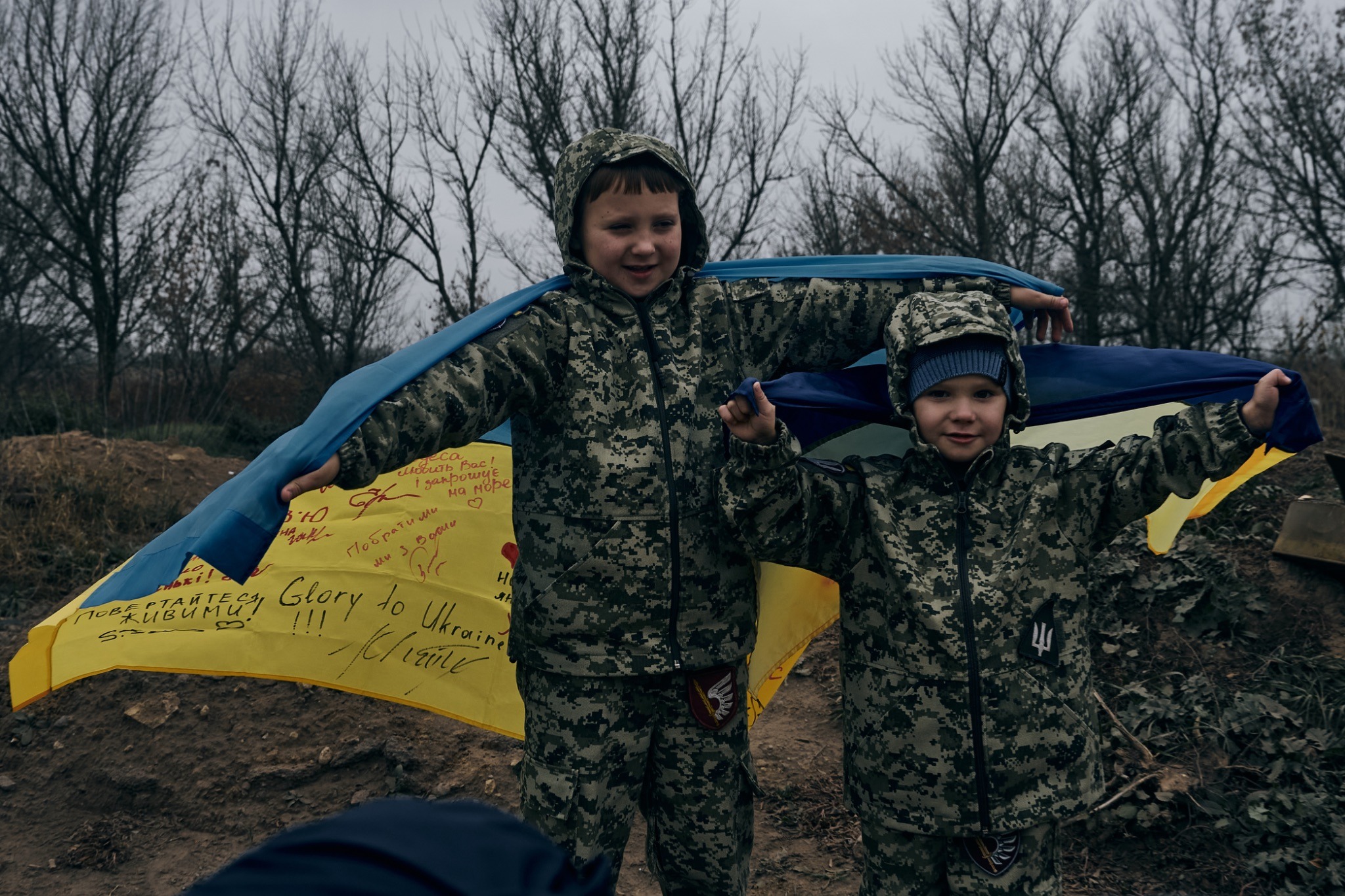
Photographs of soldiers being embraced by Kherson civilians in Liberty Square, and blue-and-yellow flags on the streets, swept the covers of all major publications worldwide. Footage from liberated Kherson finally proved to Western partners that providing weapons to Ukraine yields real results, and that Ukraine's victory is an entirely achievable goal.
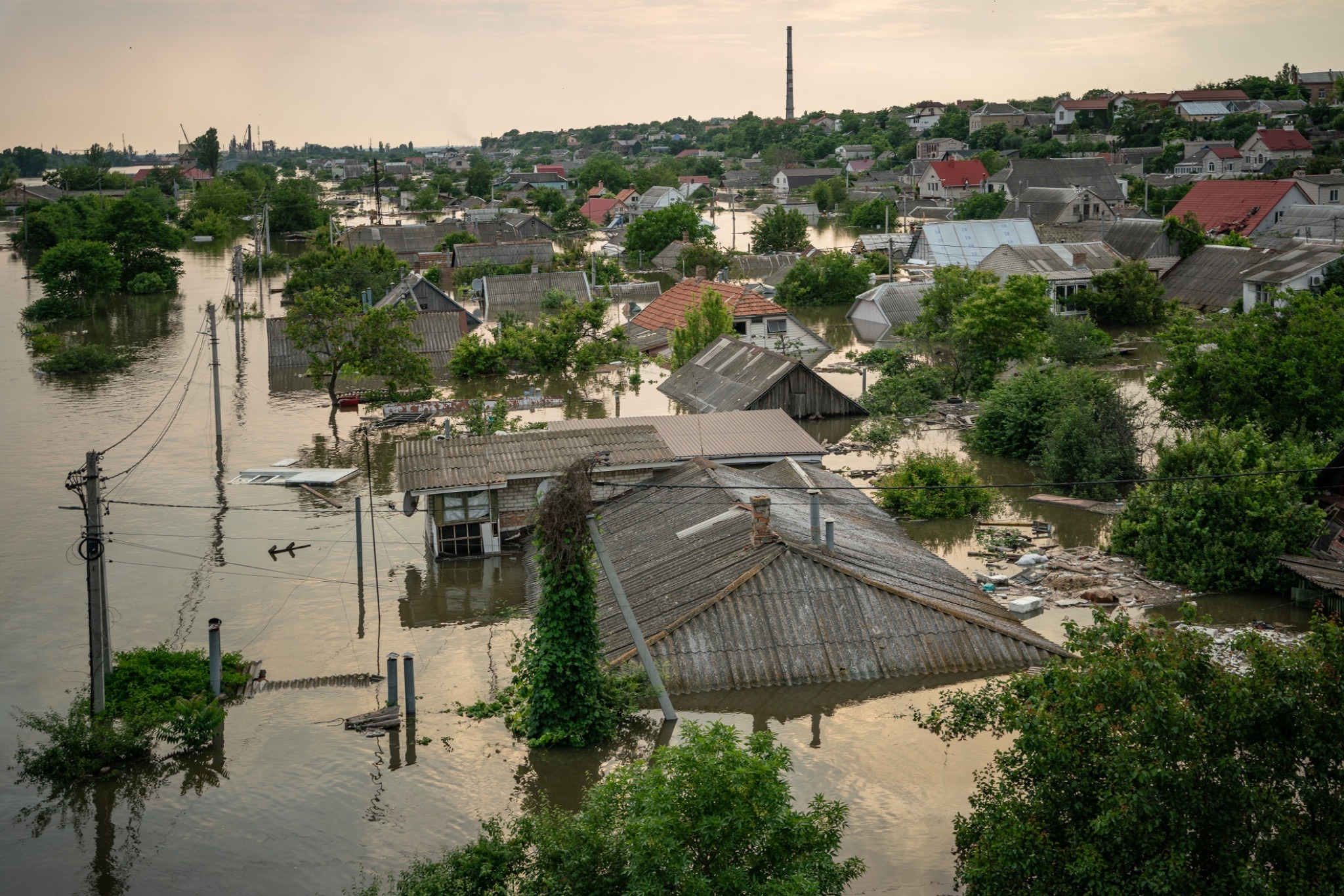
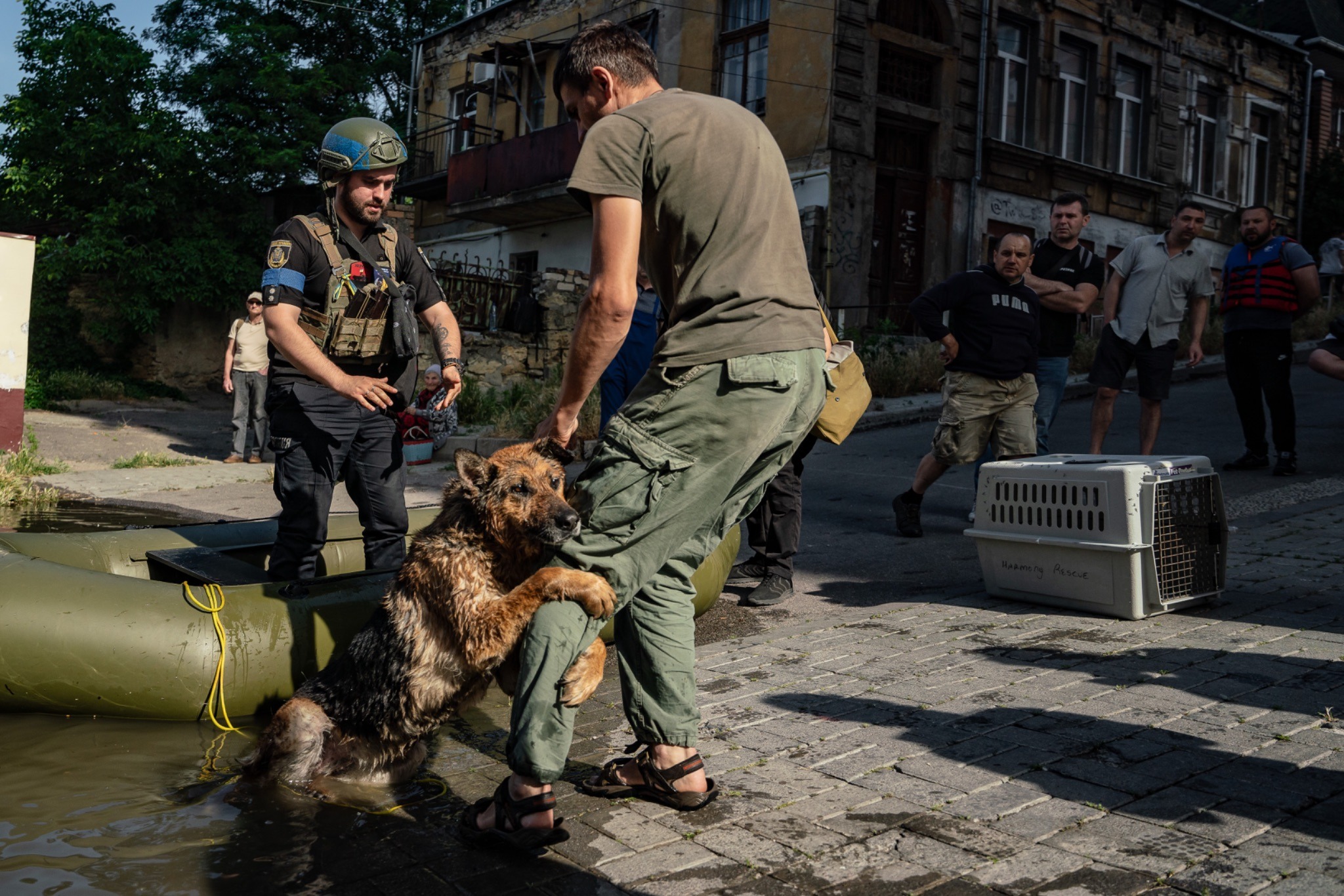
Destruction of the Kakhovka HPP — an environmental disaster resulting from the blowing up of the Kakhovka HPP dam by Russian military on June 6, 2023. The explosion led to an uncontrolled release of water, flooding dozens of settlements in the Kherson and Mykolaiv regions.
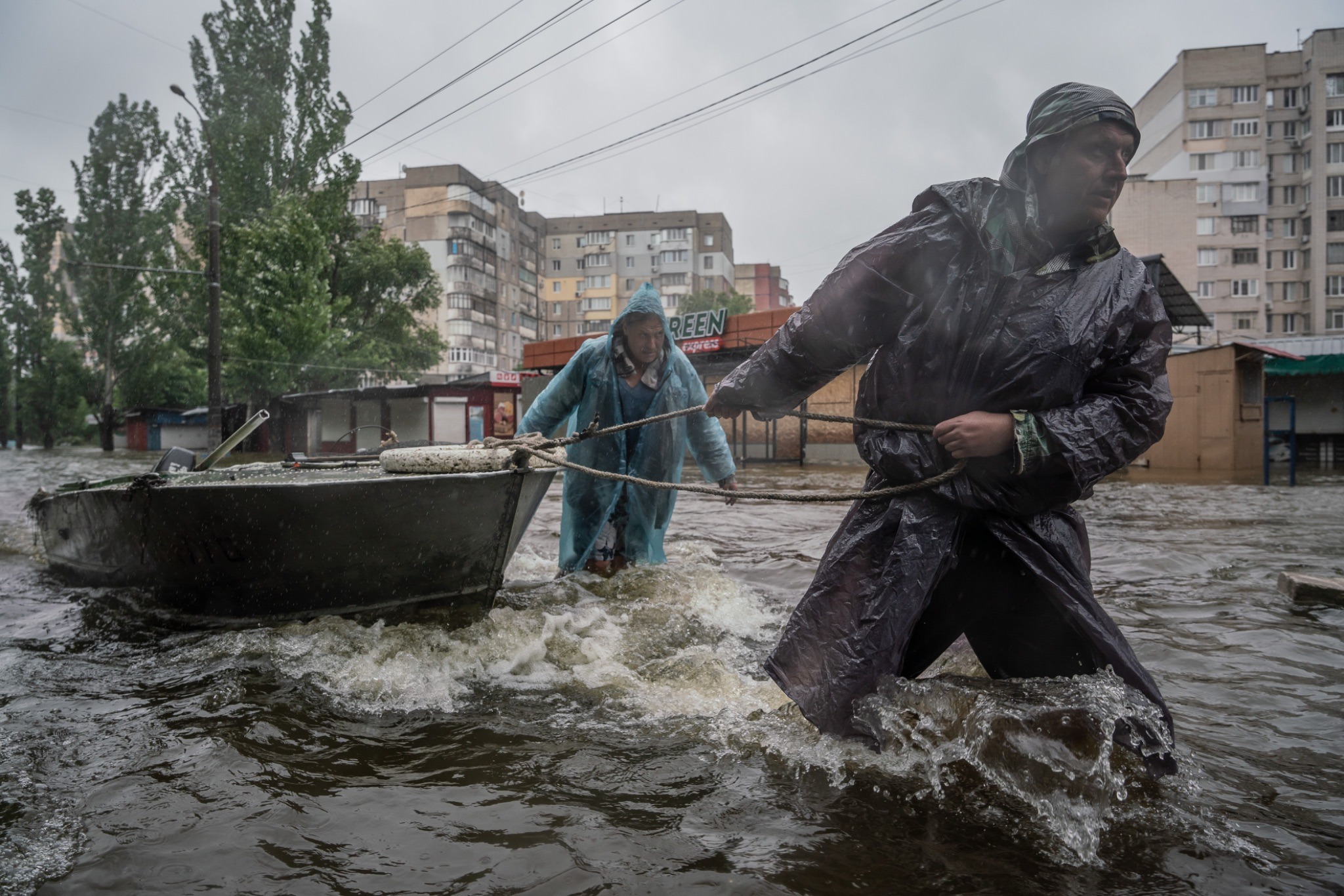
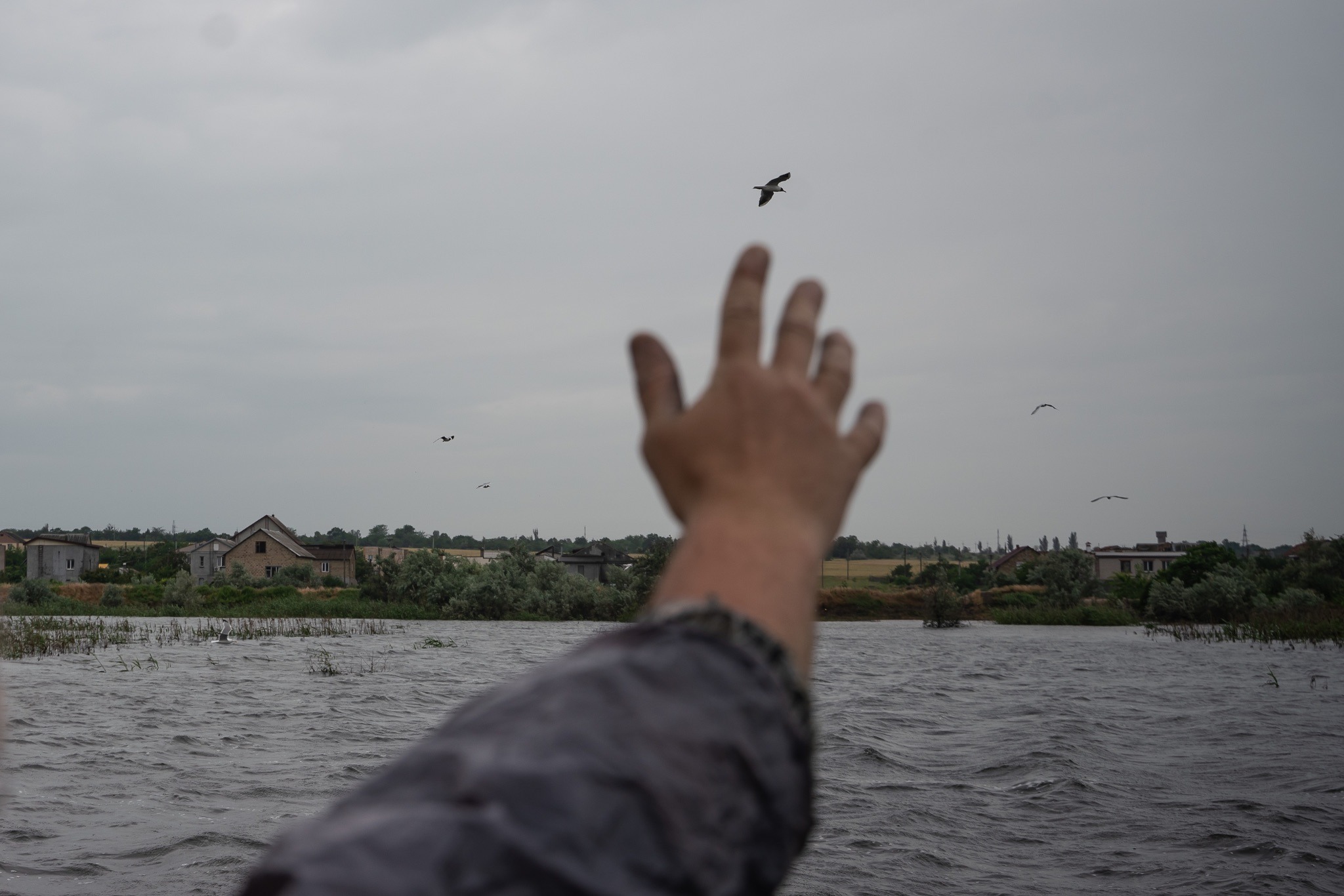
Photographs of flooded houses in Kherson, animal rescues, and the drained Kakhovka Reservoir shifted the discussion about the war into the realm of ecocide. International environmental organizations launched official investigations to assess the damage to global biodiversity. The UN directed humanitarian and financial support to the areas affected by the destruction of the Kakhovka dam.
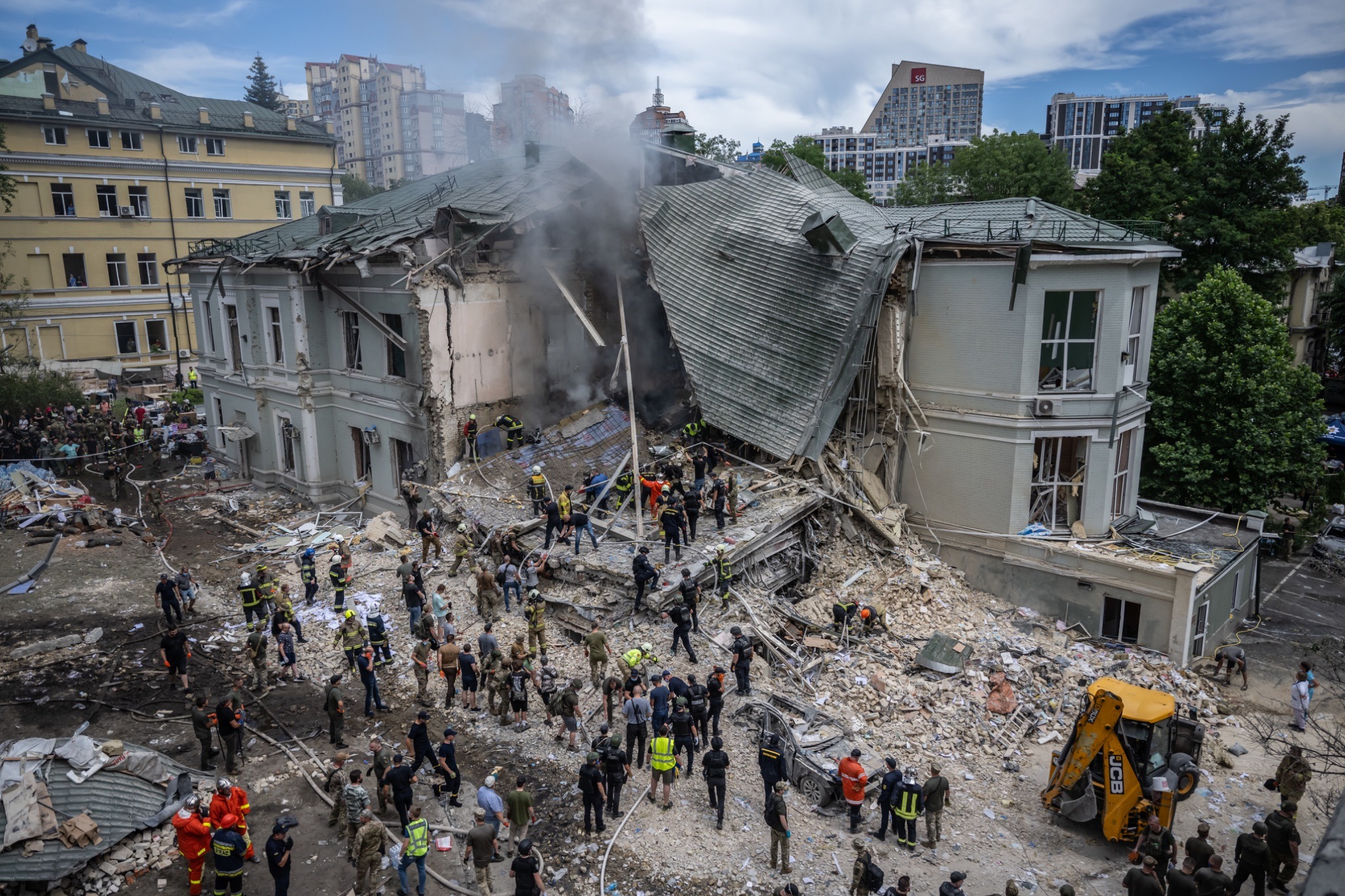
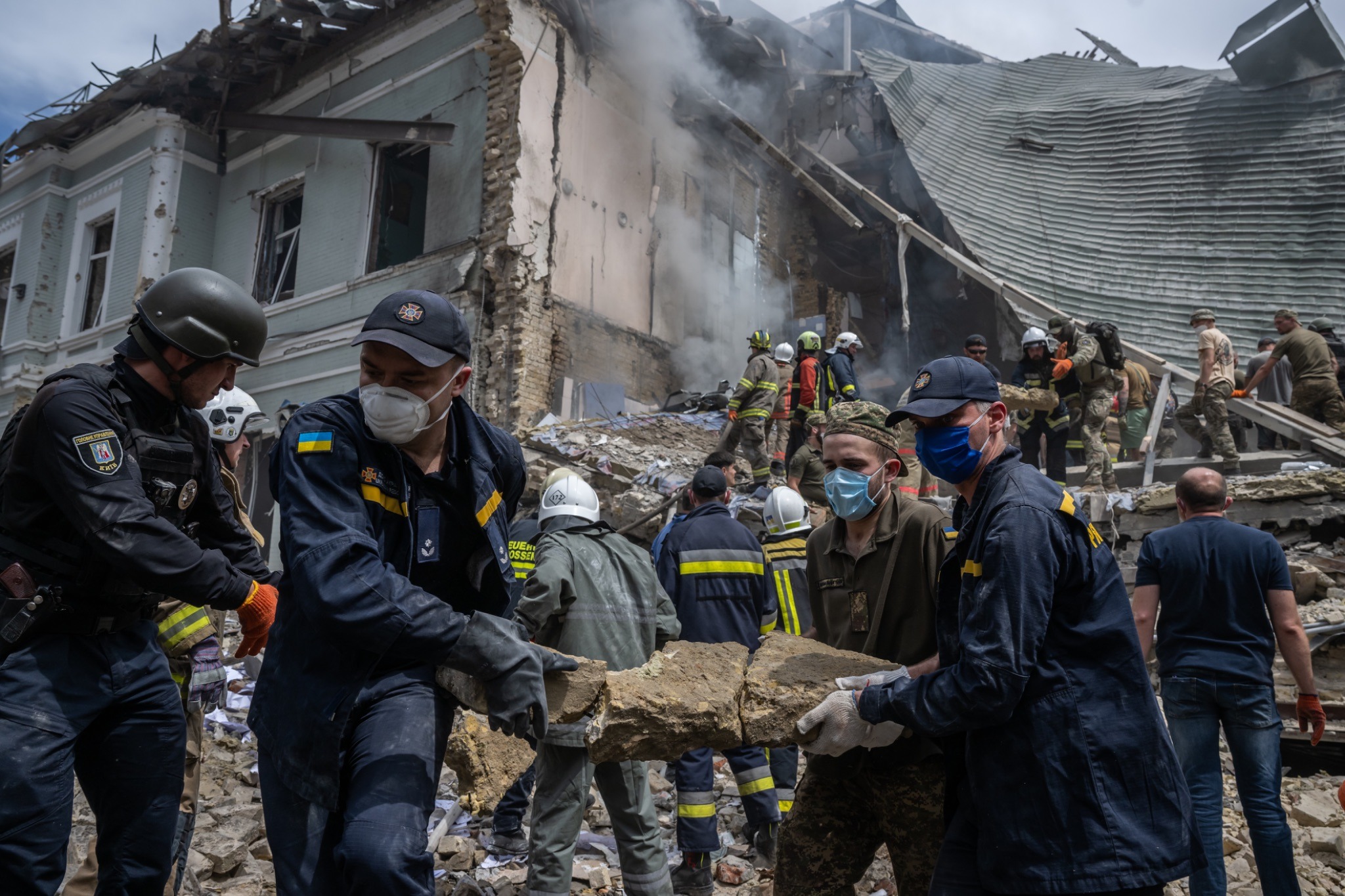
Missile Strike on the "Okhmatdyt" Children's Hospital — on July 8, 2024, during a massive shelling of the Ukrainian capital by RF troops, one of the missiles struck the specialized children's hospital "Okhmatdyt." The victims of the attack on the medical facility included two adults, one of whom was a doctor at the institution; at least 16 people were injured, including seven children. That day, several photographs swept the world, immediately appearing on the front pages of global media thanks to the work of documentarians.
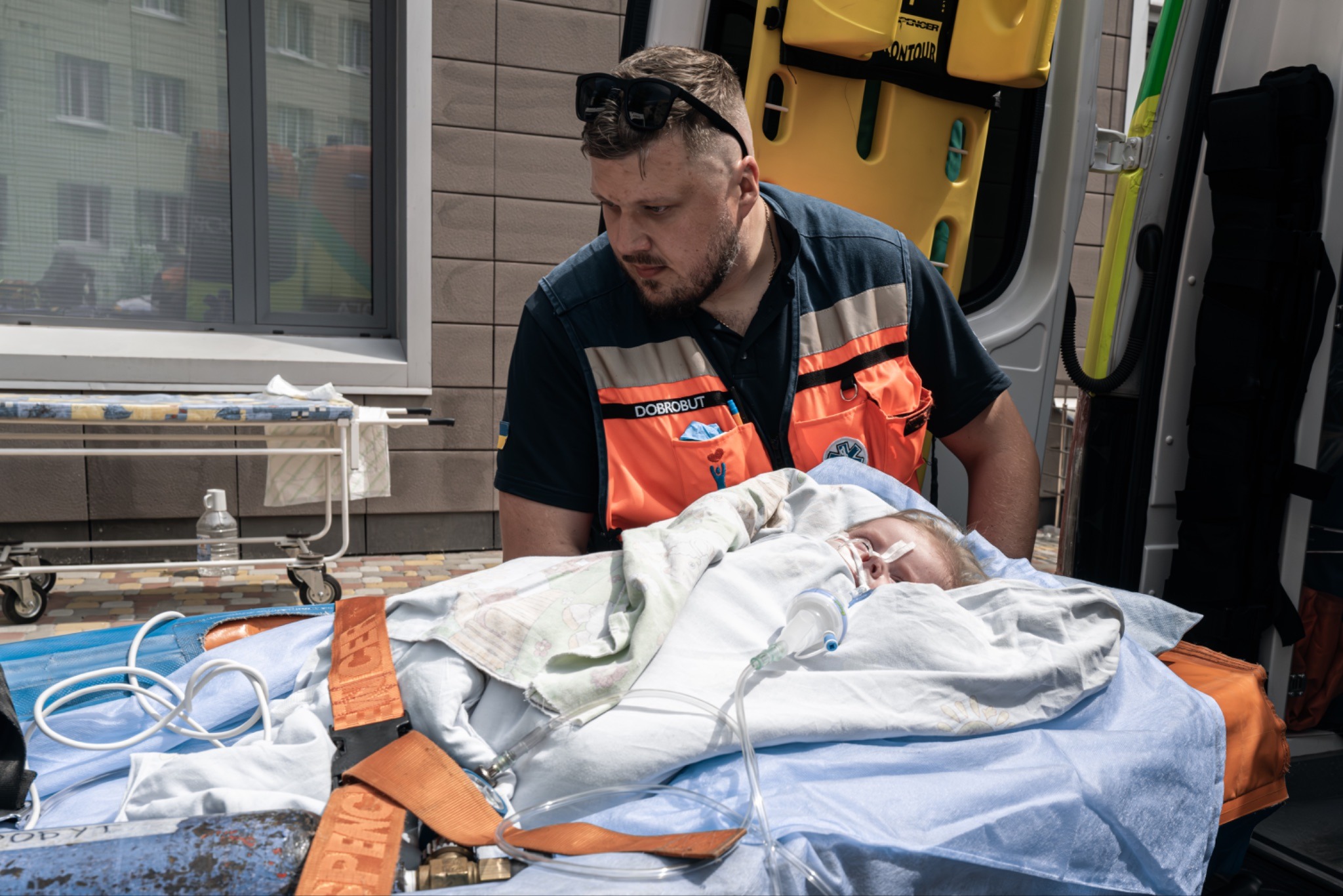
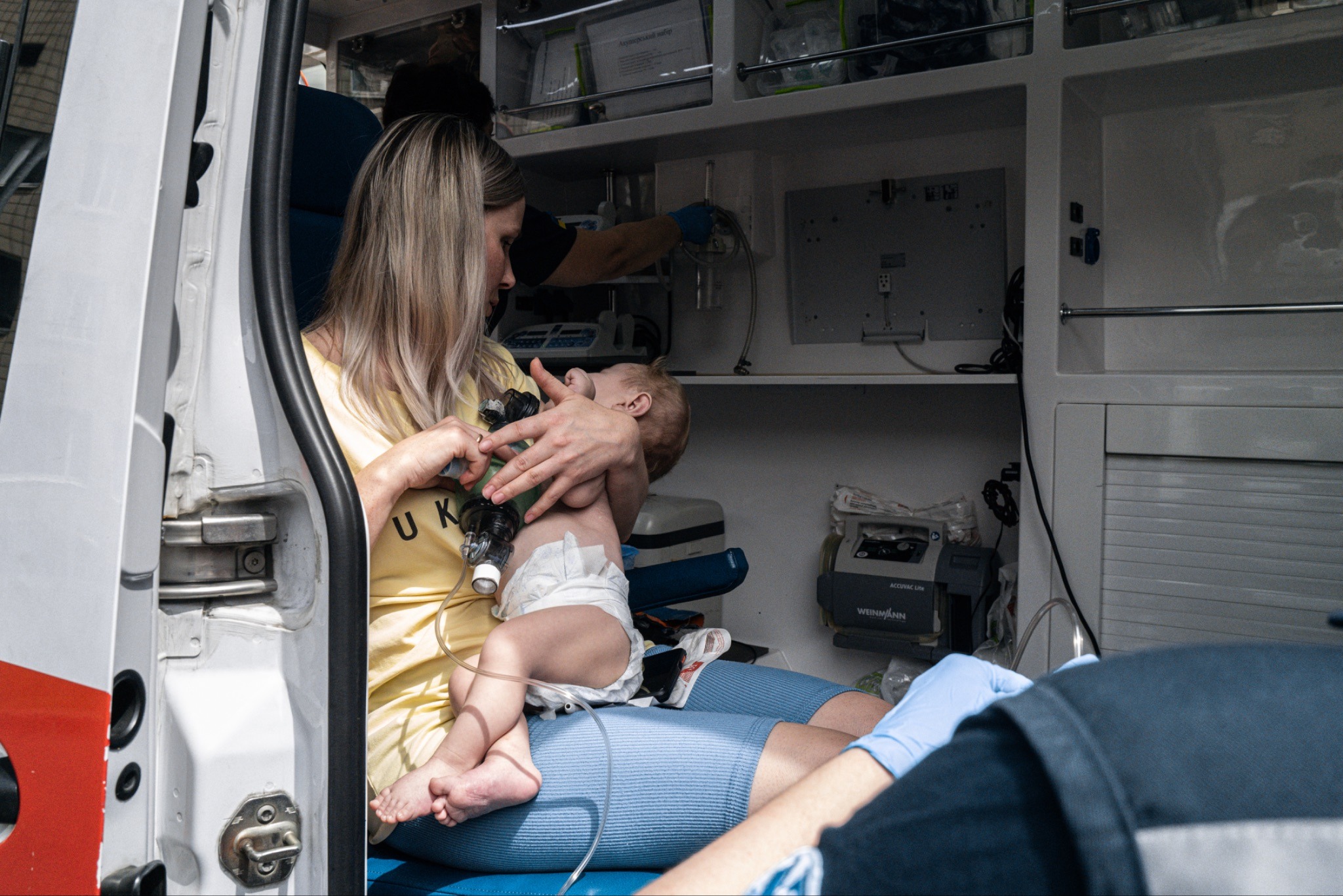
Following the Russian strike on the "Okhmatdyt" hospital, the crime scene was personally visited by the Prosecutor of the International Criminal Court, Karim Khan, while ICC judges issued an arrest warrant for the Russian general involved in the attack.
The attack took place on the eve of the NATO 75th Anniversary Summit in Washington, July 9–11, 2024; during the summit, partners announced the transfer of air defense systems to Ukraine.
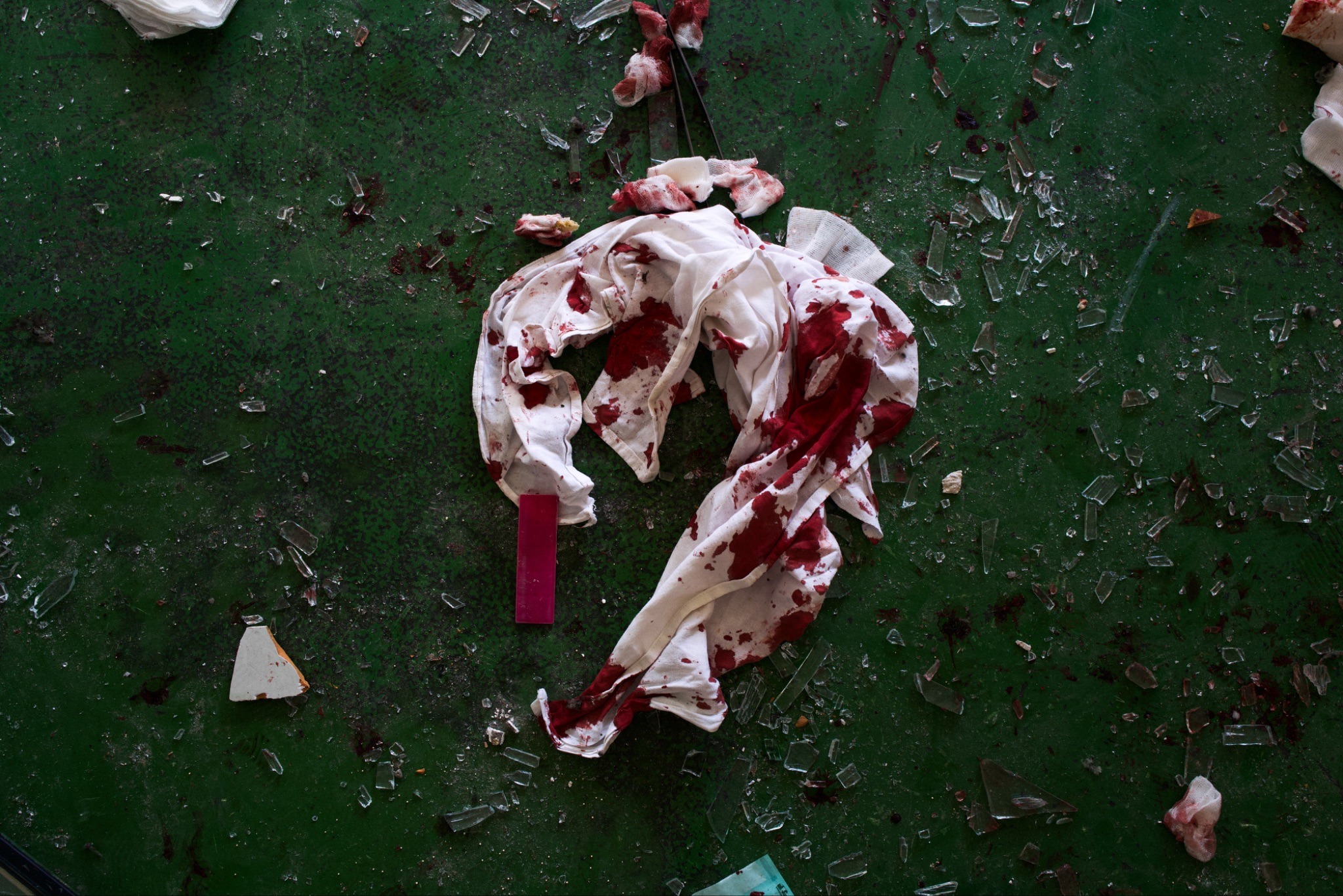
Susan Sontag warned: even the most horrific war images can lose the power of their initial shock over time and become part of the routine news flow. However, it is precisely at the moment of the first encounter that photography is capable of shattering the safe distance between the viewer and the event. It forces one to see not dry facts and statistics of war crimes, but specific people, their pain, losses, and dignity.
A child's toy among the debris, the eyes of an elderly woman in the ruins of her home, the hands of a military medic, a wounded pregnant woman, an evacuation under fire — in such details, war ceases to be abstract. It becomes an experience from which it is impossible to turn away. This is exactly how Ukrainian documentary photography has forced the world to see the Russo-Ukrainian war not as a distant "conflict," but as the reality of concrete human lives and systematic crimes.
A special role in this belongs to Ukrainian photographers, who work within their own context—knowing the language, places, names, and what existed before the destruction. Since 2013, they have consistently fought for Ukraine's right to be seen through its own eyes: without Russian interpretations, imperial cultural layers, and propagandist myths. Their work combines the uncompromising nature of reportage with a deep personal responsibility for what will be preserved for the world.
Every honestly captured frame is more than just a documentation of a moment. It is a way to prevent the crime from dissolving into the news cycle, and the tragedy from becoming just a number. It is work against forgetting, denial, and future attempts to rewrite history.
Ukraine War Archive — a non-profit partnership platform for the preservation of digital materials about Russia's full-scale war against Ukraine. The Archive creates a single registry of video, audio, and other materials (photos, texts, reports, analytics, etc.), systematizes them, and helps Ukrainian and international organizations work with evidence and historical testimonies in legal, historical, and cultural contexts. The platform works with metadata and file descriptions: a separate card is created for each material, and a team of analysts processes and tags them using a system of keywords (over 400) based on the classification of war crimes under the Rome Statute and their own methodology. Copyrights are not transferred to the Archive: the rightsholder/partner retains rights and determines the level of access to the materials themselves. Access to the Ukraine War Archive is granted only to authorized users who undergo preliminary verification; materials are available for viewing but not for download. The initiative was created in cooperation with the NGO Docudays and the British organization Infoscope.
Credits:
Subject researchers, authors of text: Yana Yevmenova, Olha Kovaliova, Ukraine War Archive team
Photo editor: Olga Kovalova
Literary editor: Yuliia Futey
.jpg)
.jpg)