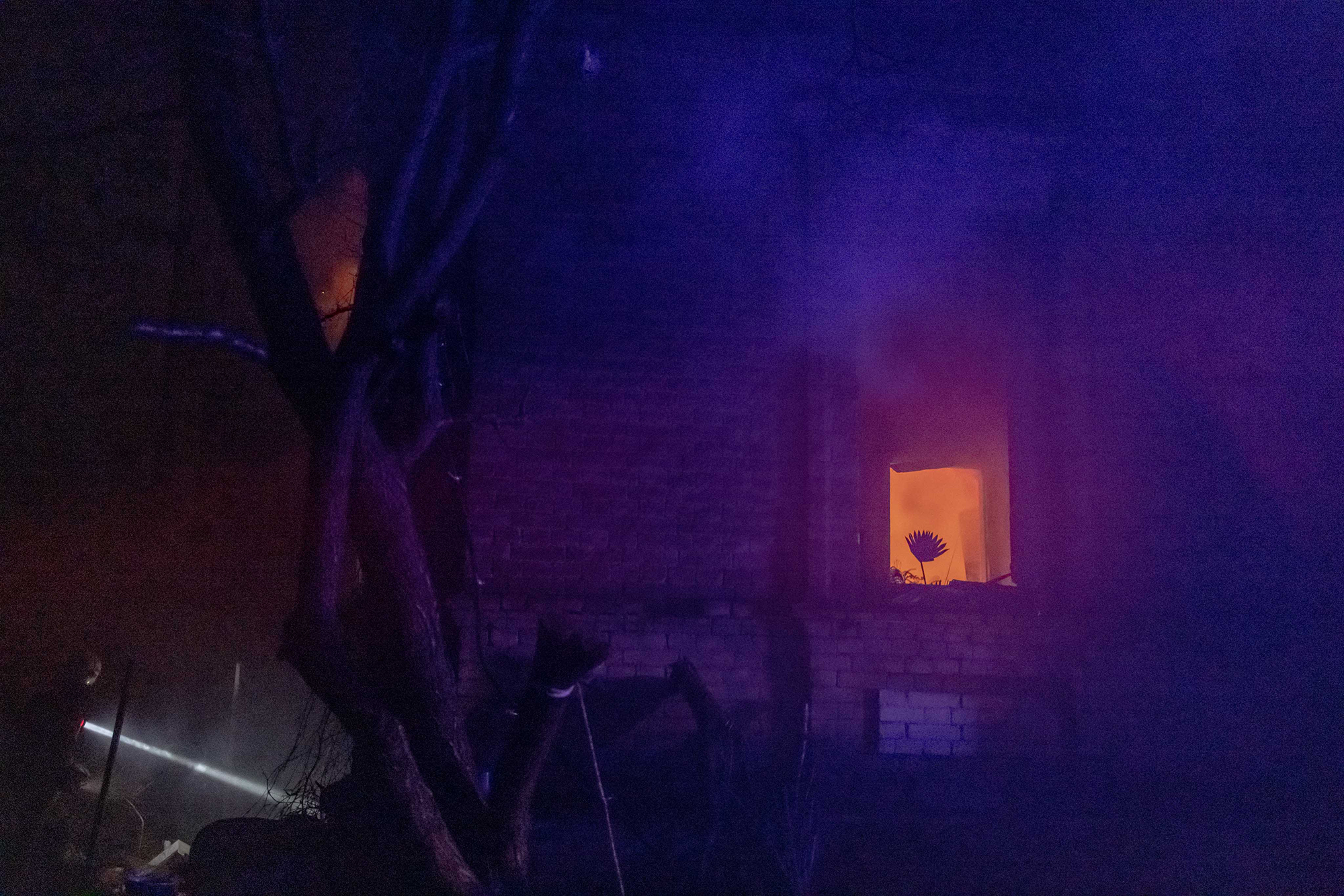
Ukrainian photographer Yevhen Titov works at the intersection of documentary photography, journalism, and cinema. He is known as a freelance photographer whose work is published by leading Ukrainian and international outlets. Since the start of Russia's full-scale invasion, he has been actively documenting events in Ukraine, particularly in the Kharkiv and Donetsk regions. His photographs of the consequences of Russian shelling, the work of rescuers, and military personnel regularly appear in selections of the best photos of the year by news agencies, such as Associated Press. In addition, Yevhen Titov works as a documentary camera operator.
Yevhen Titov spoke about the difficulty of combining the work of a photographer and a video operator, how filming movement practices helps convey extraordinary life circumstances in the frame, and shared the stories that he remembers most vividly from his years working in the war.
– You graduated from a university of cinematography with a specialty as a “cinematographer.” When and why did photography appear in your life?
In fact, photography appeared earlier than videography—back in childhood. I’ve been photographing since about eight years old. My first camera was a “Smena.” I later realized that I was shooting with the same focus as Henri Cartier-Bresson, and that captivated me. I learned about photography from my father, and our neighbor, a commercial photographer, also told me a lot. He had many magazine clippings featuring Magnum shots. It was there that I first saw the photograph of the “Man Jumping the Puddle.”
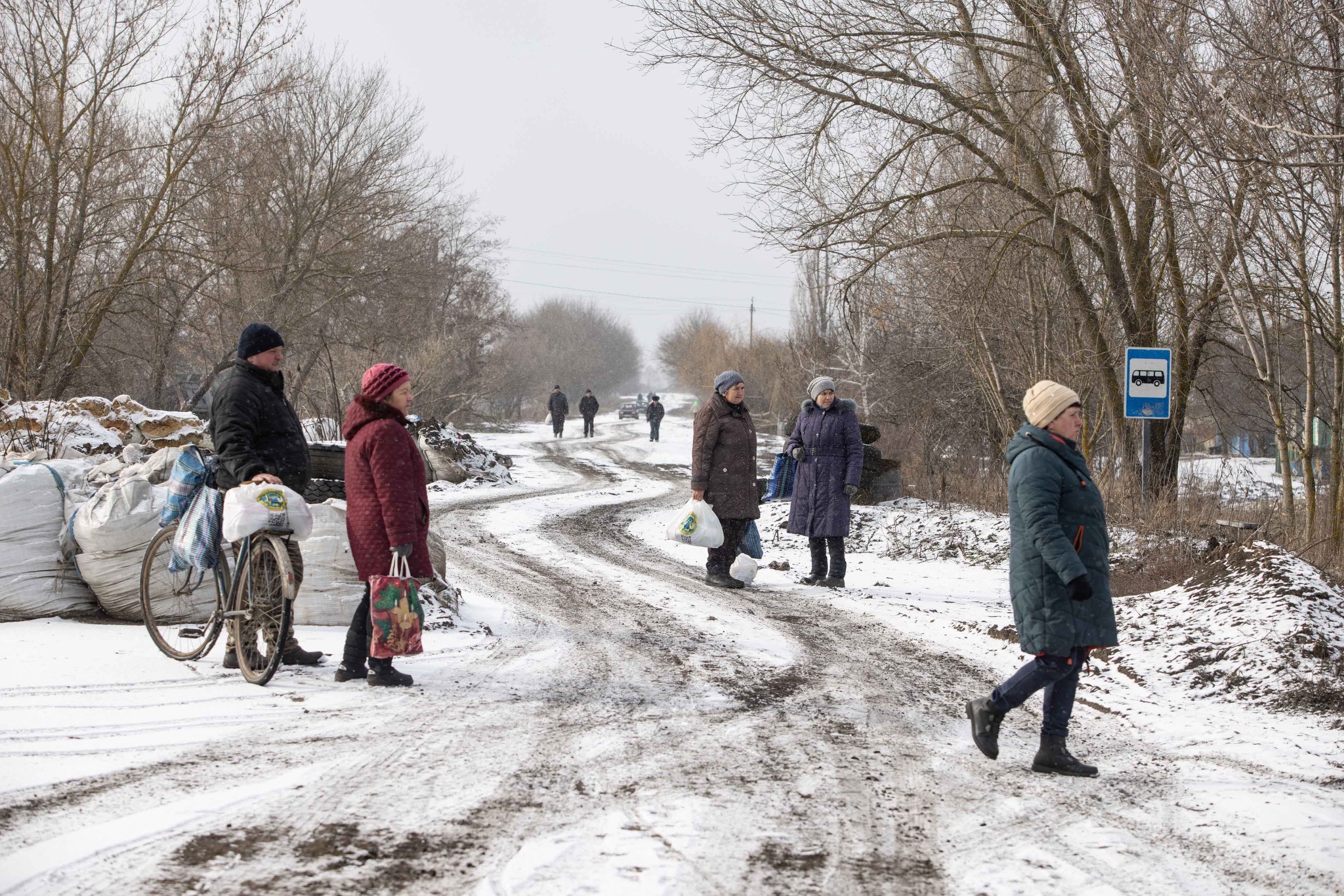
From today's perspective, my first attempts at photography seem quite naive. Then I had a period of utilitarian application of photography—I was inspired by astronomy. I became passionate about it in school and entered the university for this specialty. I created my own developer formula back in 7th grade. During my studies, I used photography as a tool for researching the starry sky. Astronomers at that time shot on large glass negatives with exposures up to an hour. The first digital sensors had just appeared—and specifically in science. I first defended my degree in astronomy, and worked in that field. However, those were the turbulent nineties, everyone was looking for different opportunities and freedoms, and science at that time was in decline.
– How much does your cinematographer education help you in photography? Is it difficult to combine the work of a photographer and videography?
To go study cinematography was my conscious and mature decision. I had a period when I worked with images at an industrial level: I was involved in polygraphic design and typography. At some point, I got tired of it, and I started shooting equestrian sport, show jumping—professional tournaments in Europe. I was very interested in moving images—many frames per second, like in the famous shooting by Eadweard Muybridge. That’s how my cinematography education came about.
Combining the work of a photographer and a camera operator is not difficult. At the same time, you always do one thing, you make a choice, because the tools are different. However, creating professional photo images or film frames is helped by the same understanding of the nature of perception, light, movement, and color. I am very much inspired by the authenticity of the picture. Directing is, for me, more of an improvisation toward an artistic goal, within what is technically possible, but the main thing is a living presence.
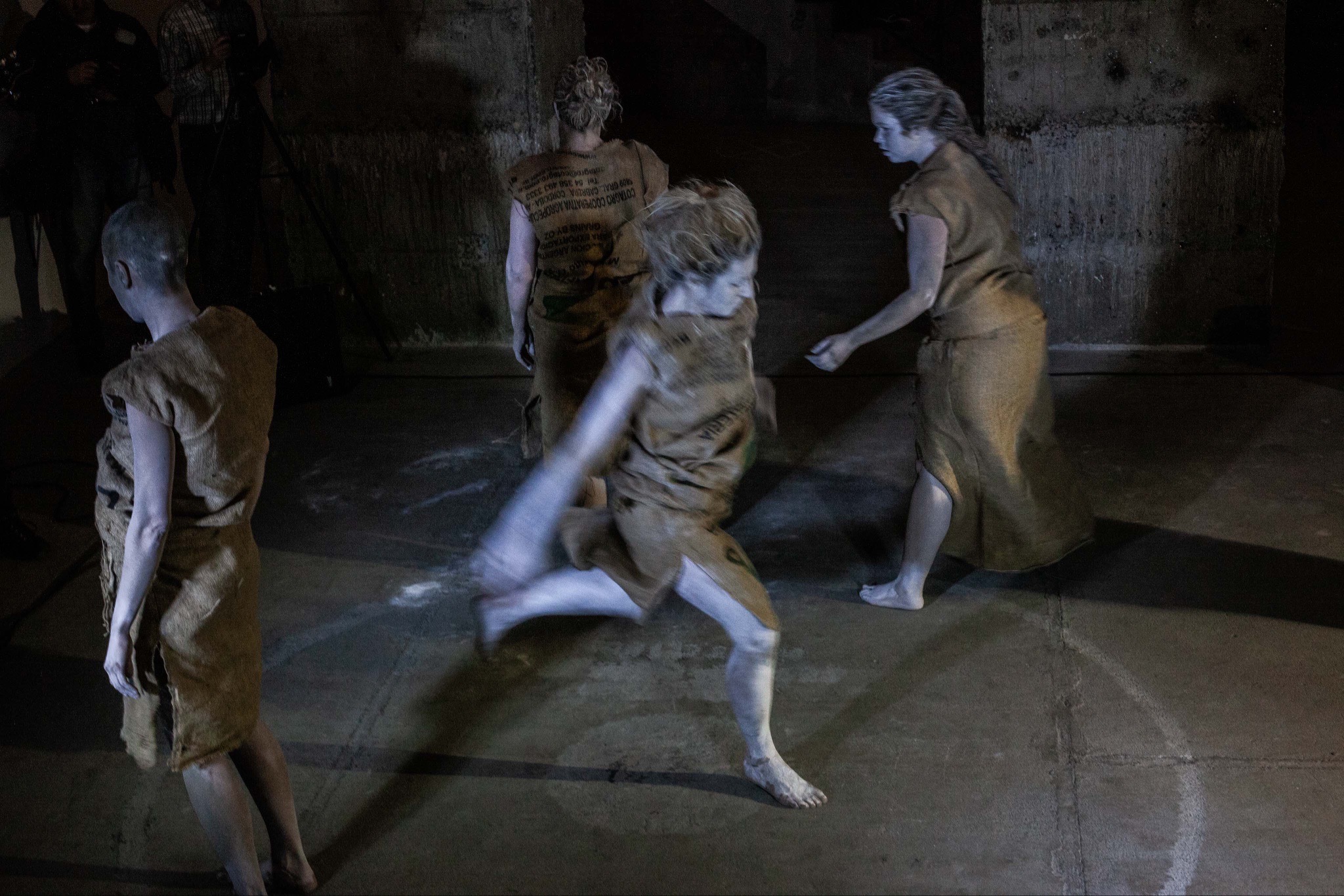
During my studies, I was fascinated by filming movement and performance. I worked a lot in the theater, but in some cases, I felt the limitations of classical theatrical form. For almost seven years, I professionally filmed contemporary performative events in Europe. I am very much inspired by Butoh—it is an avant-garde Japanese performance art that emerged after World War II as a reaction to trauma and cultural crisis. It is a practice that explores the boundary between the living and the inanimate, focusing on deep internal work, emotions, and their transformation through intuitive movements. Butoh dance has a very deep philosophical foundation.
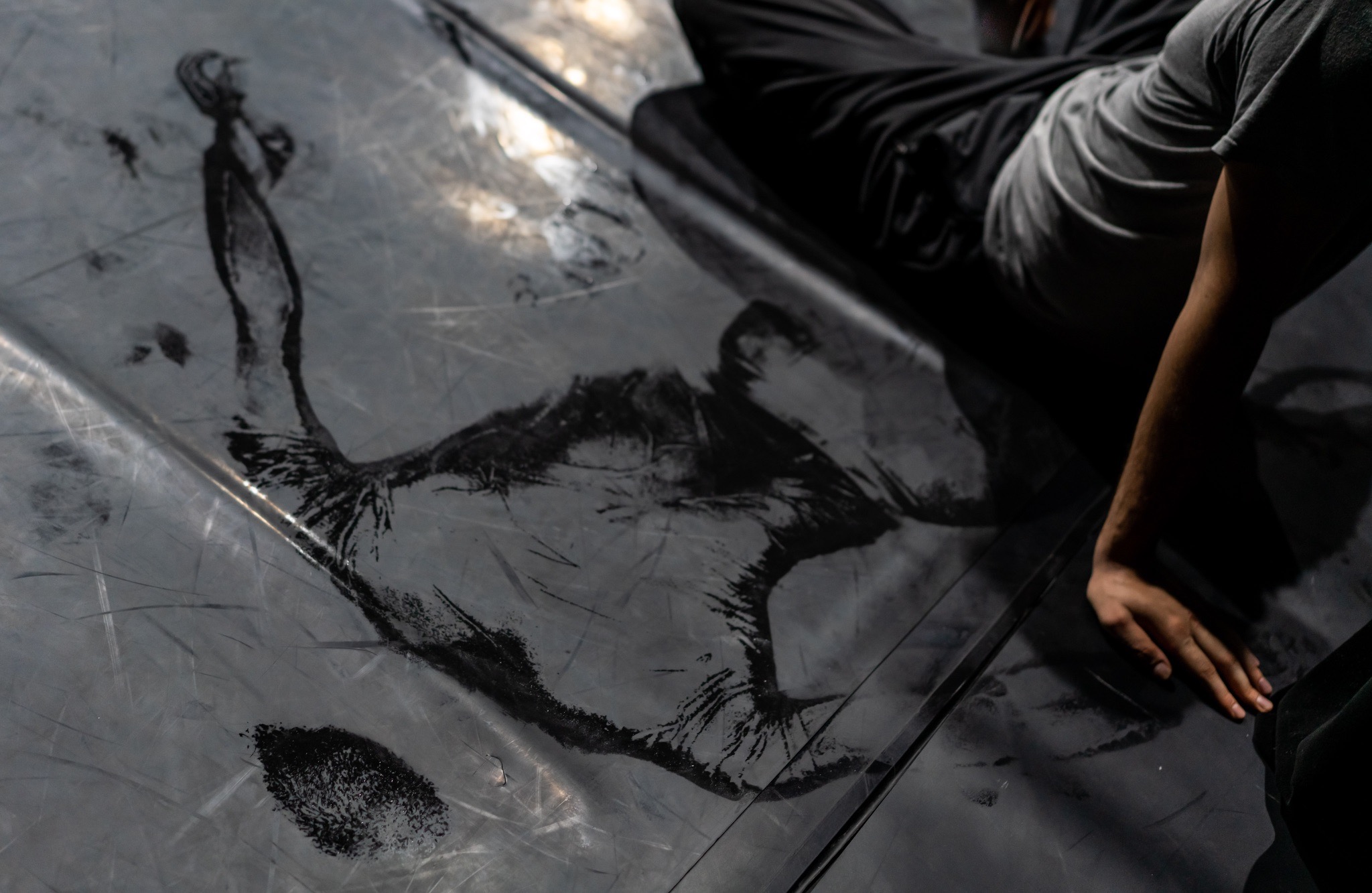
I filmed several short films on the theme of corporeality. I am captivated by shooting the body and depicting its aesthetics. I like the performativity, the presence in movement, when you need to be fully engaged in the process and understand the philosophy of Butoh. I practiced it myself. Butoh classes gave me a lot for understanding reportage photography, where you also need to be fully engaged in the process.
– How would you characterize your visual language? When did you start shooting documentary photography?
Authenticity in contact with the subject and the shooting circumstances is important to me. I am always deeply engaged in the frame—it is, essentially, the same bodily presence as in a dance performance. I shot a lot in a documentary style, starting with fixing performative practices on camera.
Since 2014, I have been working in the Donetsk region. Initially, I did a project for a foreign foundation that provided legal support to miners. During the ATO (Anti-Terrorist Operation), miners were no longer receiving their salaries on time, and the foundation's lawyers helped them. Later, trips to the Donetsk region became more frequent and regular.
– Which documentary photographers influenced you as an artist? Whose work inspires you now?
The photographers I crossed paths with or worked alongside immediately come to mind. Undeniably, these are the works of Oleksandr Hlyadyelov, Filippo Dana, and Anatoliy Stepanov. I first saw many photographs and then shot together with the Dutch photographer Eddy van Wessel. Since my perspective was formed in Kharkiv, the existence of the Kharkiv School of Photography inevitably influenced me. I think I remember the works of Serhiy Solonskyi, Borys Mykhailov—their images are often very somatic—somewhere on a bodily level.
– How much has the list of topics you worked on before the start of Russia's full-scale invasion changed, and what projects are you working on now?
I have, perhaps, two main directions: working with a document or an event, and projects that unfold over time but, due to internal tension, are not subservient to sequence but only to the artistic image.
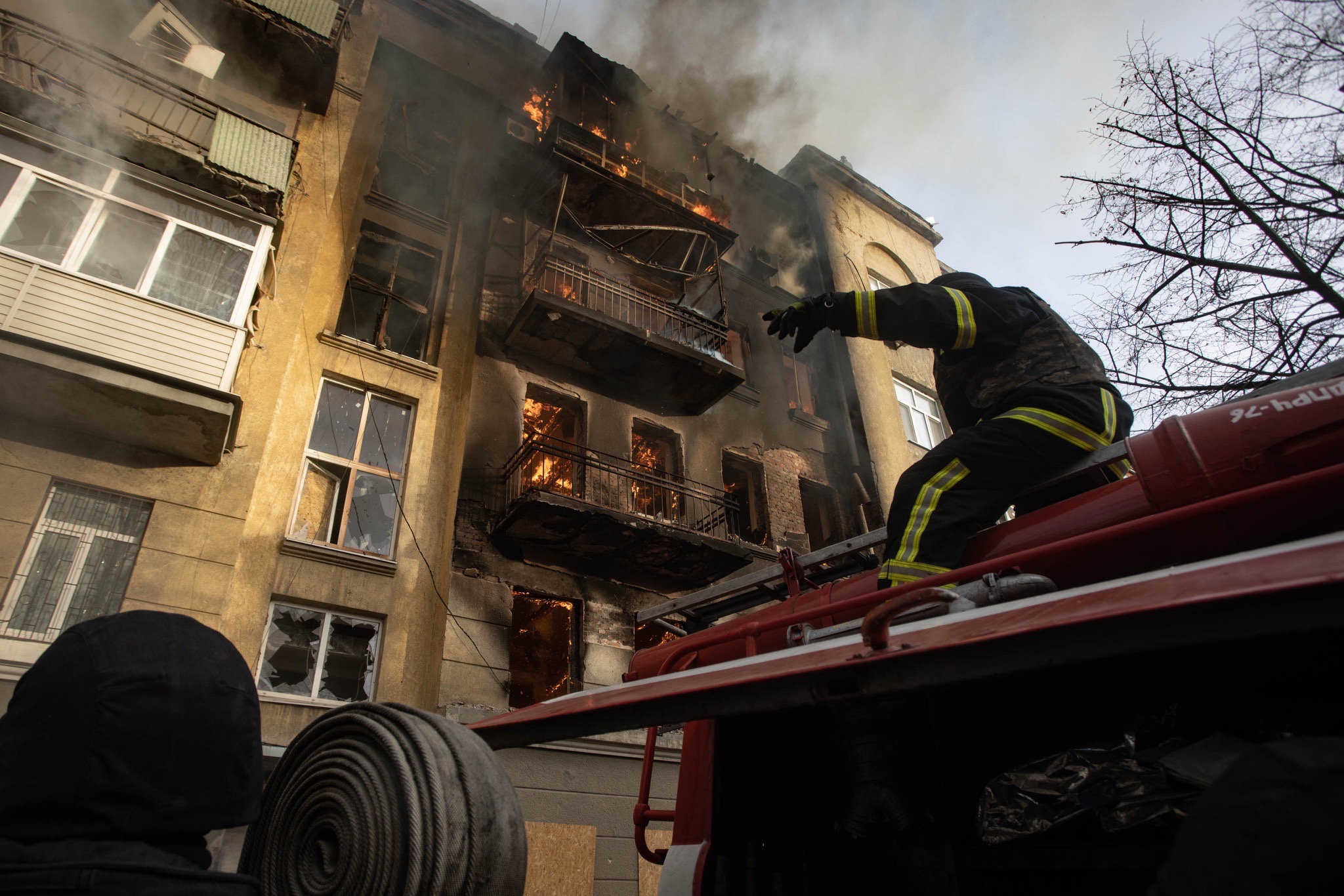
At the beginning of the major war, I took my family to western Ukraine and returned to Kharkiv with the intention of documenting Russia’s war crimes. During the first months of the full-scale war and throughout 2022, I mostly shot in Kharkiv, the Kharkiv region, and in the East. We teamed up with colleagues and went to work. In the spring of 2022, my house resembled a journalistic hub, where foreign and Ukrainian photographers gathered. I immersed myself in reportage. During the strikes on Northern Saltivka, I could shoot side-by-side with James Nachtwey, Mstyslav Chernov, and meet colleagues whose perspective on events remains my benchmark even now.
I combined the work of a photographer and a fixer. When foreign photographers appeared nearby—of course, I helped them. But I also gained inspiration. For a long time, I worked with the Israeli photographer Eduard Kaprov. I filmed a documentary project about his work, “Ukraine: A Photographer in Wartime,” for ARTE France. Together with his laboratory (and he works in the rare 19th-century technique of wet-plate photography or ambrotype, creating images on glass plates), we traveled around the Donetsk region. We worked in the city of Bakhmut when combat operations were already ongoing on the outskirts.
Literally within the first weeks of the full-scale invasion, I started working for foreign photo agencies. Later, colleagues introduced me to the editors of major agencies. I gained an understanding of which photographs would interest them. After four years of the major war, I still cooperate with two or three photo agencies, which allows me to support work on personal projects. However, I now want to focus more on my own long-term stories.
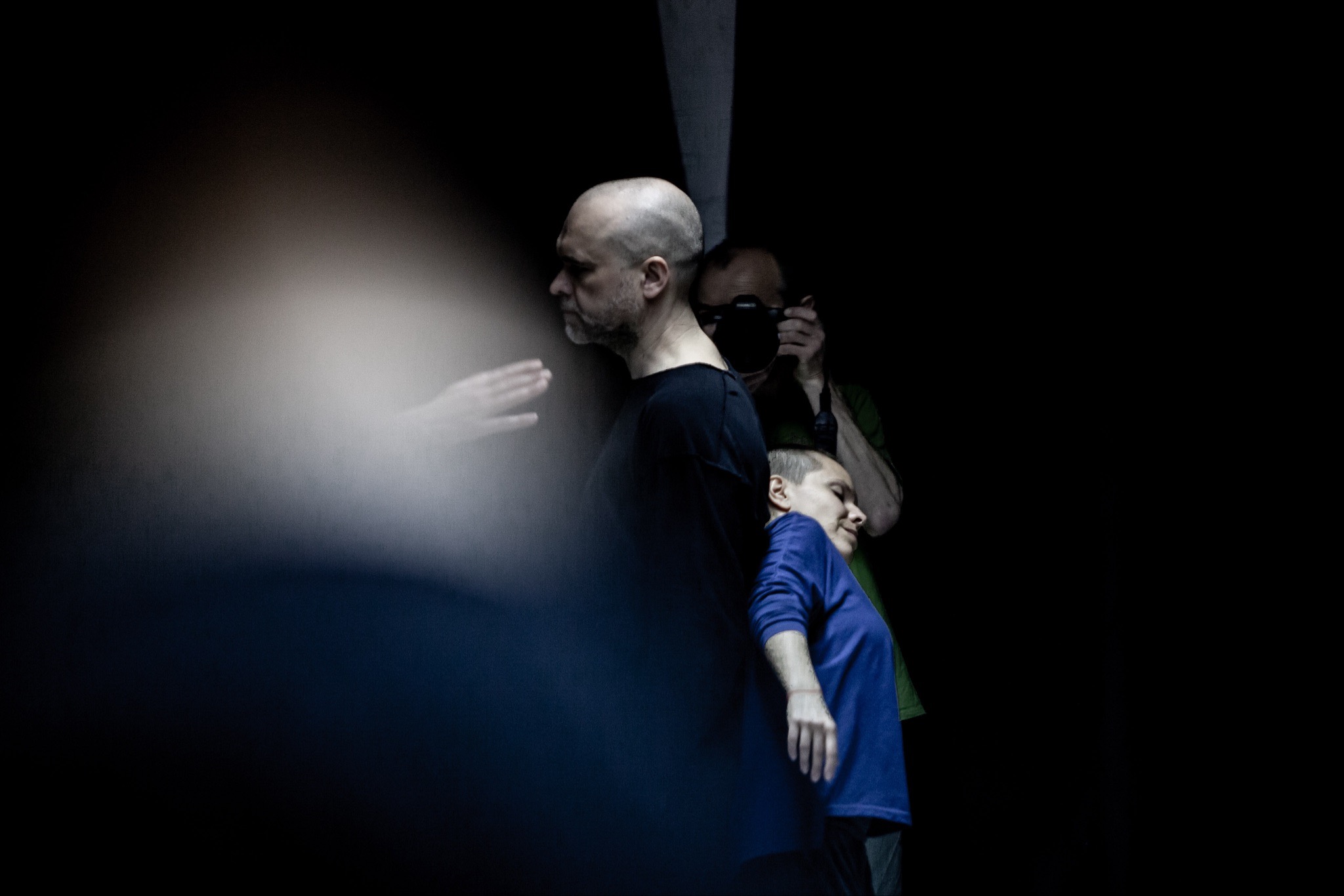
I am researching the topic of how people remain in frontline Kharkiv and try to process and realize the challenges of war. We have a consistent group of people who engaged in consciousness practices, Authentic Movement, and returned to them after the start of the full-scale invasion as therapy, rehabilitation, and a way to work with meaning. I am present at these sessions and film them. Initially, these were movement practices only for civilians. However, recently, military personnel have joined our group. For them, this is an effective and simultaneously rehabilitative practice. I have been shooting this photo and video project for more than four years.
In a broader context, this work is my creative research into somatic perception. I am interested in the philosophical aspects of corporeality: viewing the body as a process formed through the interaction of organs, objects, and environment. Perception emerges as a mobile optics. In this approach, the body is included in a broader network of connections, where experience arises through contact and exchange, transforming individual somatics to the scale of a model of the social and collective body.
– How has the war affected your work? What does it mean for you to be a photographer during the war? Why is it important for you to document events in Ukraine?
At a basic level, certain things must be fundamental—acoustics, air control, tactical medicine, information security, and shoot planning.
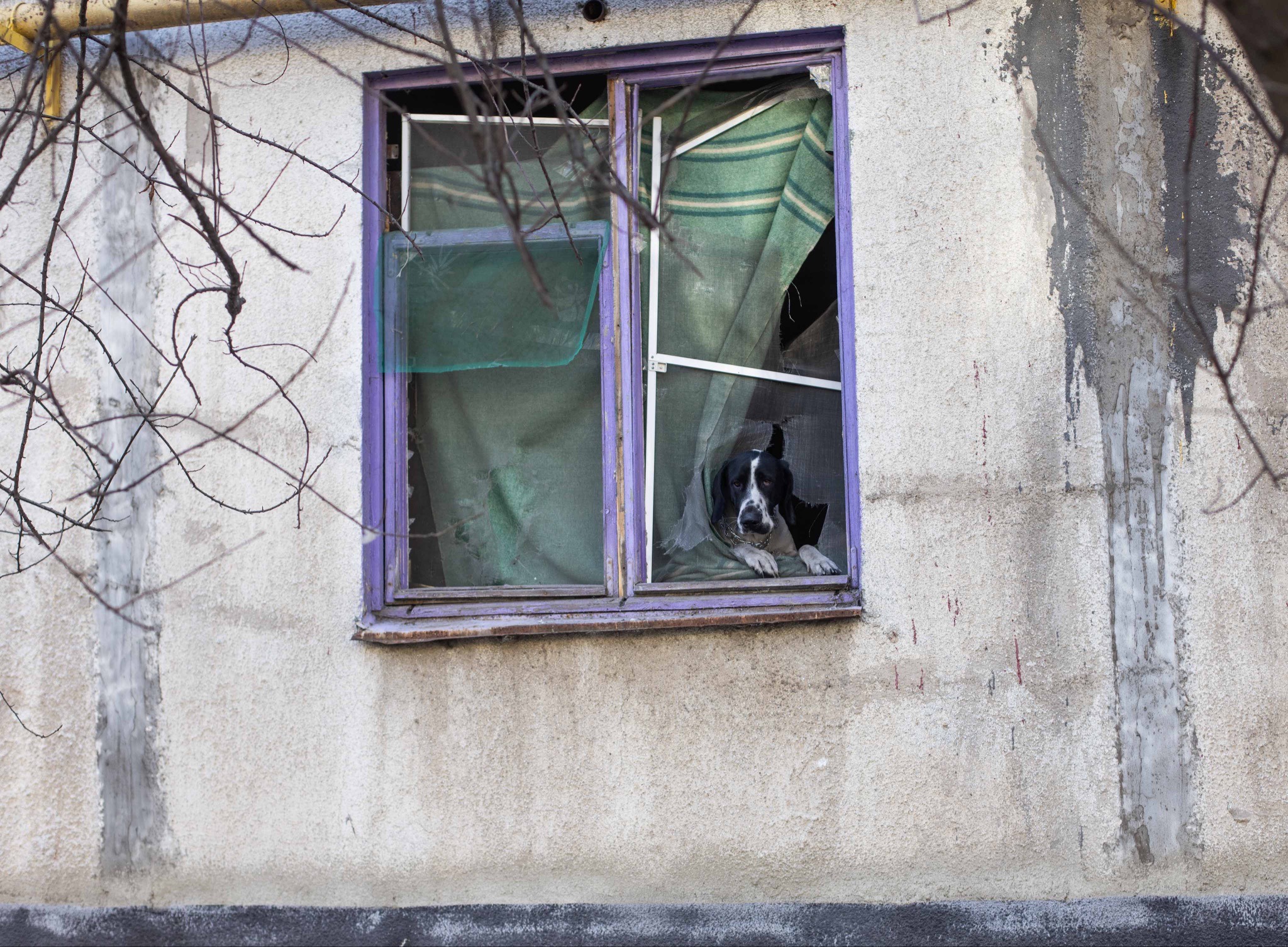
First, there is a readiness to work at any time of day. If shelling occurs in the city, you must be on site as quickly as possible, alongside the emergency services. It also happens that you arrange a shoot with the military for a long time, and then they call and say you need to be on site in 15 minutes. And you must leave immediately—my camera and gear are always with me. The work demands complete engagement in the process. It has happened that my family and my dogs ended up in the car with me at a strike site, because there was no time for logistics.
Second, a large part of the projects not related to the context of the war has completely fallen away. I probably won't find a subject now that isn't connected to the war in one way or another. It is critically important for me to document these events.
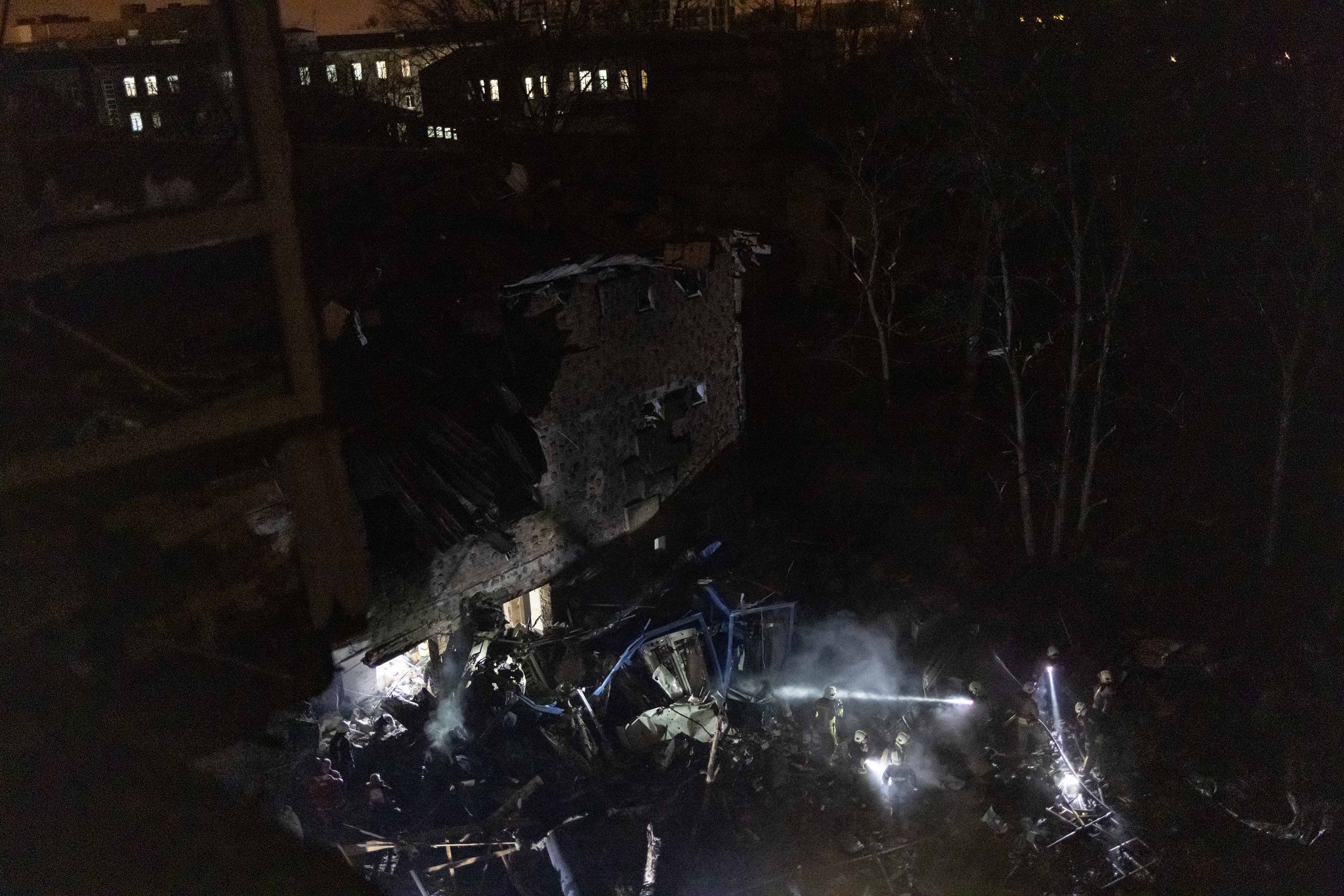
The influence of photography today manifests through emotions. The frames that reach news agencies directly convey these emotions. Filming transmits impressions and the effect of presence in a certain situation. This is important for attracting support.
– Please tell us, which shoots or frames were the most difficult for you?
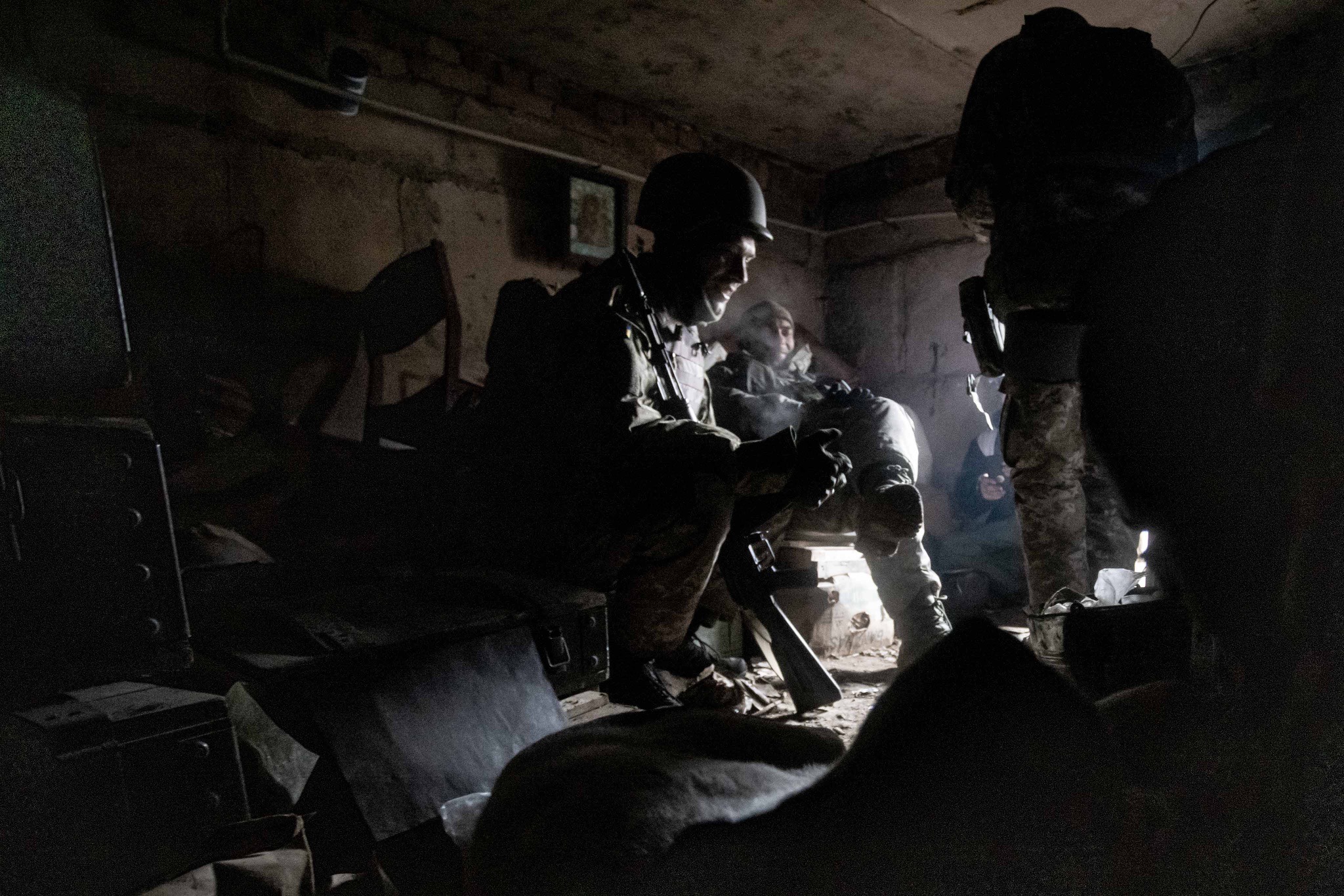
Shoots where there are wounded or dead people on site are difficult for me. This is a very complex moment, but I always choose to shoot. I have photographed the exhumation of graves and worked in stabilization points many times. Emotions manifest at the stage of selecting images for publication, whereas at the moment of shooting, I concentrate more on professional aspects. Despite this, many frames remain that I was never able to take due to ethical considerations.
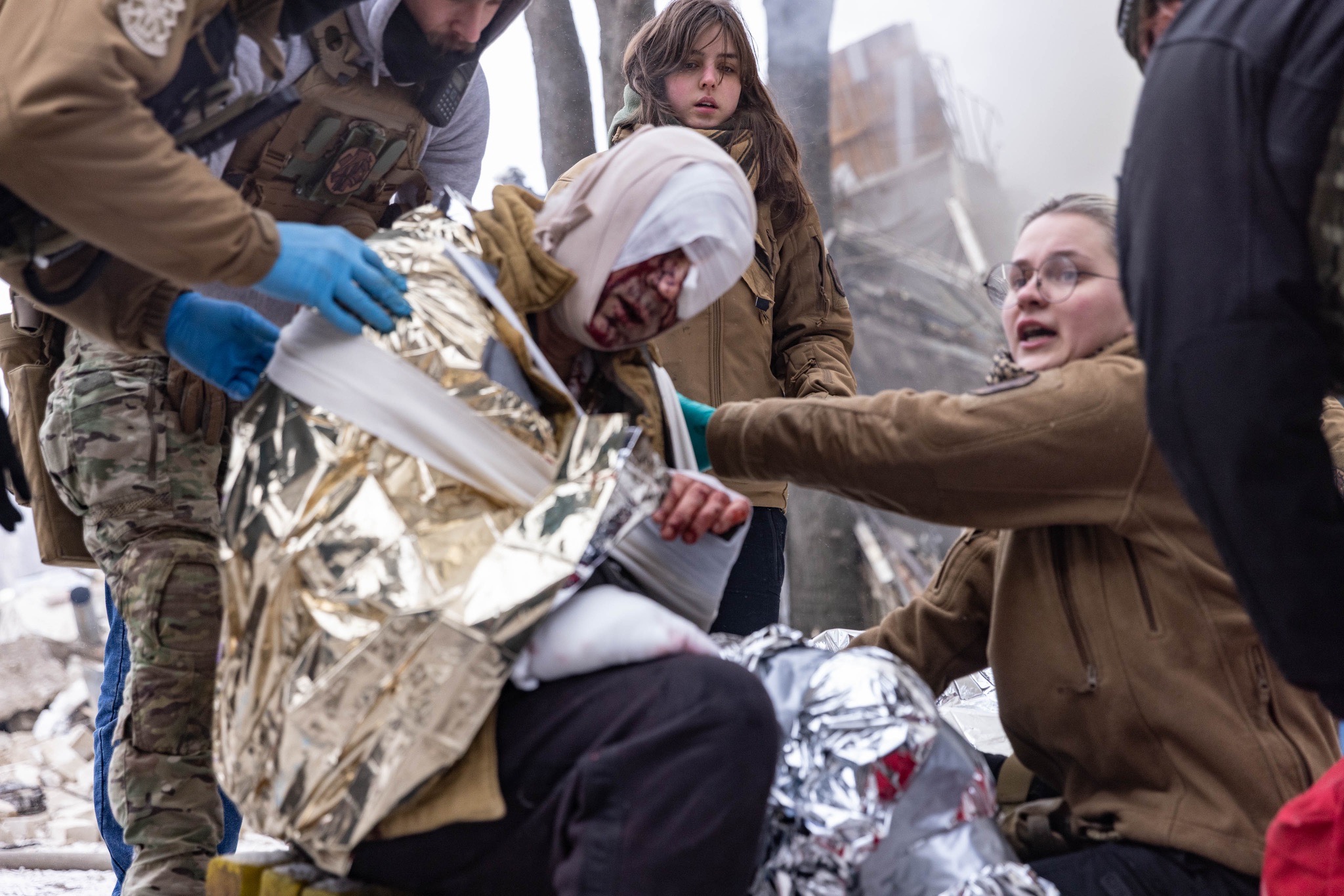
The hardest choice is whether to film a person in a state of trauma. For example, during a shoot in the city of Dnipro, when a Russian missile hit an apartment building in January 2023. The building was almost half-destroyed, and filming the clearing of the rubble was very difficult because of body fragments. Even filming people's reactions was a difficult choice.
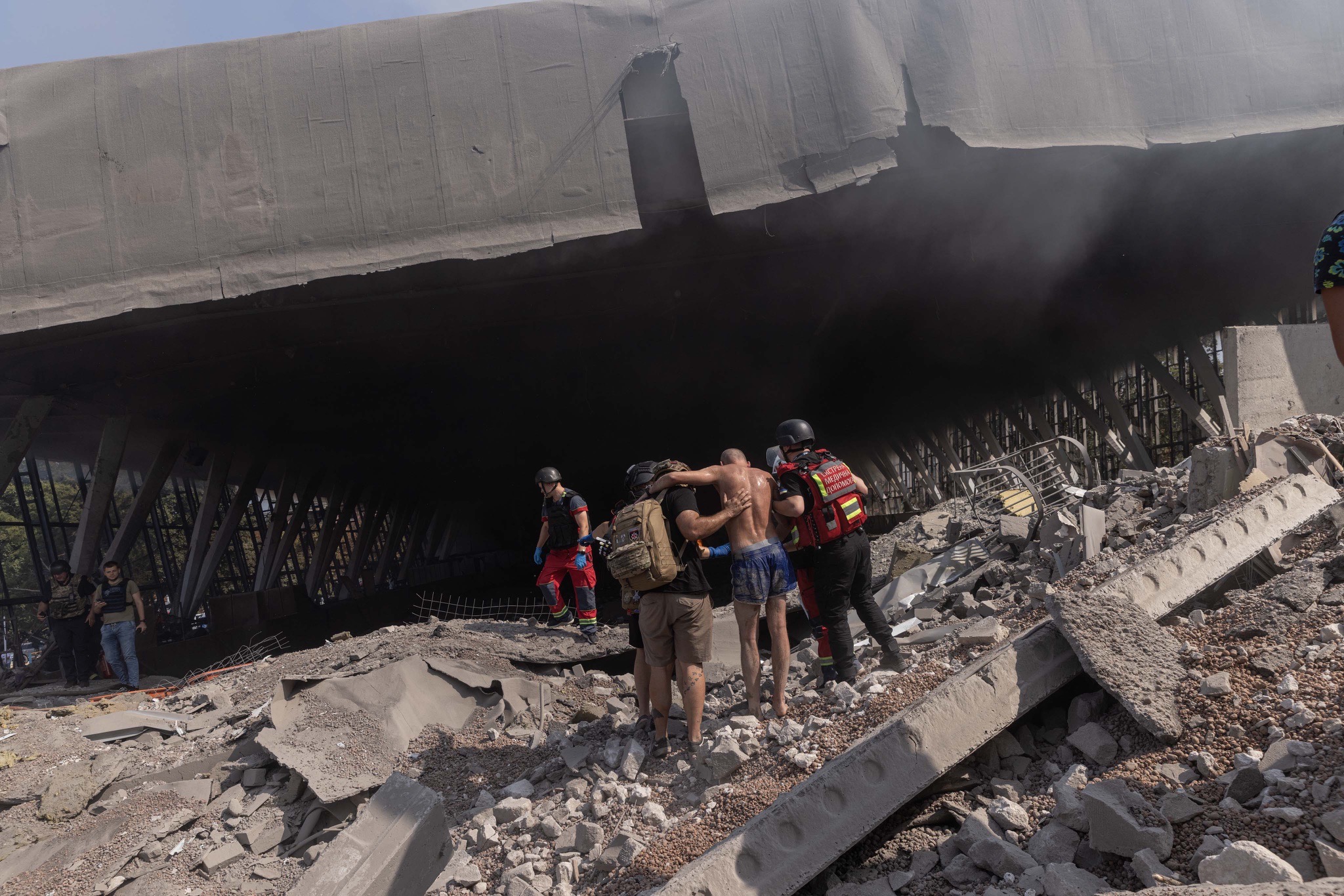
I remember the shoot in Budy, where Russian forces launched a repeat strike on rescuers and civilians. I was on site after the first missile strike—it was near my parents' house, where I was staying. I was applying tourniquets to an injured woman. The second missile concussed us as we were carrying out the wounded. I only managed to take a few frames after my hands were free from rescue tasks.
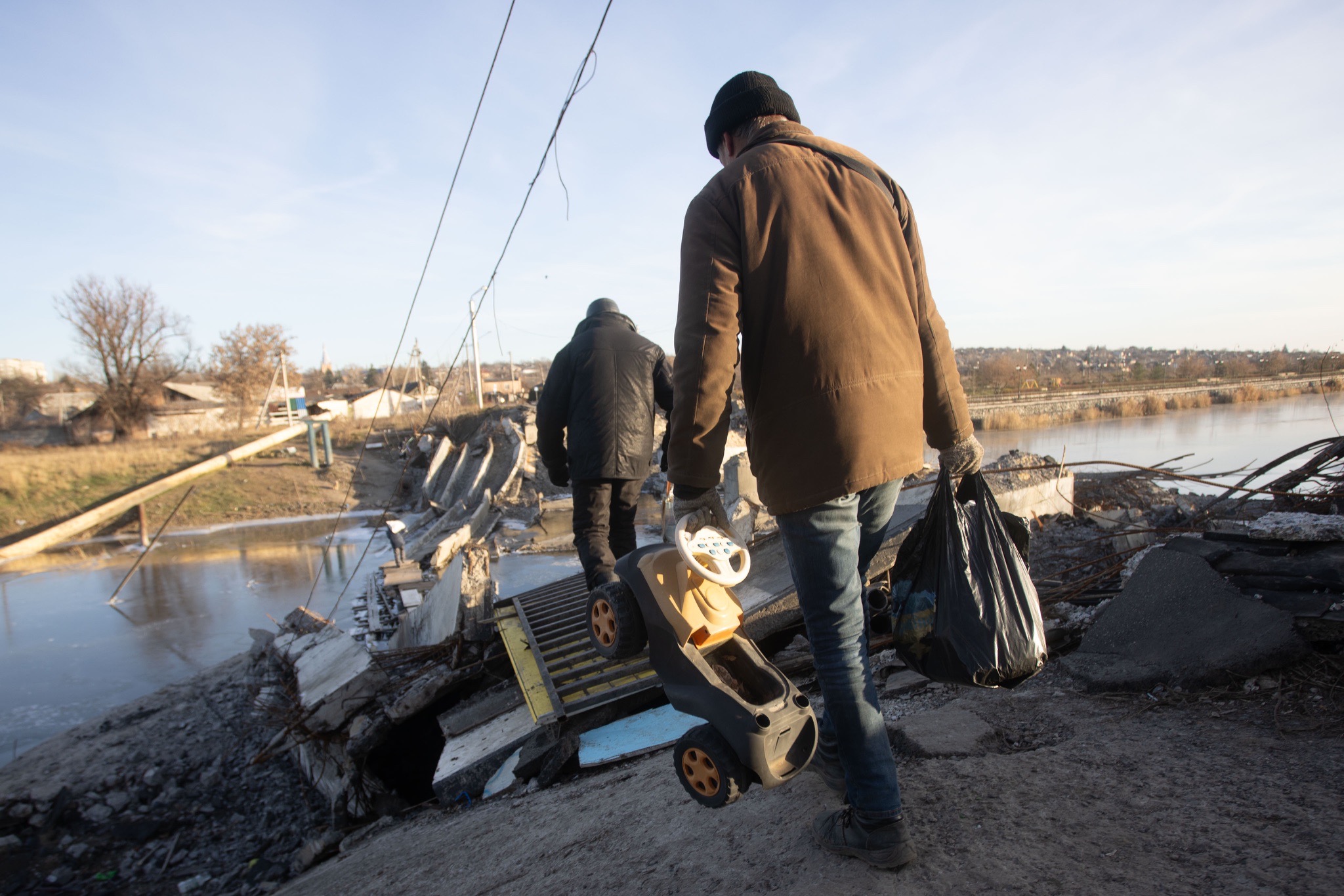
The shooting conditions in Bakhmut were specific; there were small arms battles and artillery was working. However, it is much more difficult now in Kostiantynivka, where you have to walk nearly 10 kilometers to reach the site and constantly monitor the sky for drones and KABs (guided aerial bombs).
In the gray zone, you also encounter civilians who remain there. In such circumstances, they react to the camera. In the fall of 2025, Russian forces struck volunteers; 5-6 thousand residents remained in the city, and after a strike on the humanitarian hub, they began to “salvage” supplies. And the distribution was by the right of the strongest—they carried everything they could take. The following days, children, women, and the elderly were left without water or food. In such circumstances, people reacted openly aggressively to the filming.
When Eduard Kaprov and I were working in Bakhmut, near the almost frontline positions, we met a grandmother—a “divine dandelion”—with her goats. She lived beyond the Bakhmutka river, in the private sector, and survived thanks to her goats. She had a half-destroyed house, and she read poems aloud to us; she asked us to bring her a small potbelly stove. We loaded Kaprov's mobile laboratory with humanitarian aid kits and delivered the stove. I have a photograph of this grandmother with her goats.
I also recall a music teacher from the city of Bakhmut. She worked her entire life at the music school, teaching children. My colleagues called her “Miss Fox,” because she wore a coat with a fox fur collar. She spoke a lot with journalists, telling them about the students of the music school.
– Is photography for you a way to remember or to experience the moment?
Photography is a way to experience the moment. What leaves an imprint is difficult to feel immediately. It is very important to look at an event through the eyes of others, to understand what they will remember. An experienced frame—it does change the world. And, at the same time, I change when I create it.
Yevhen Titov — Ukrainian photographer and documentary filmmaker. His artistic practice is formed at the intersection of somatics, geophilosophy, and posthumanism; he collaborated with theaters for a long time, worked in performative laboratories, and participated in Ukrainian and European art projects. He is educated as an astronomer and a cinematographer. Since the beginning of the full-scale invasion in 2022, he has been working as a war journalist, documenting the war in eastern Ukraine, creating objective visual testimony for an international audience.He collaborates with leading agencies Associated Press, Reuters, AFP, Getty Images, EPA, PAP; his work has been published by The New York Times, The Wall Street Journal, The Guardian, Le Monde, Deutsche Welle, BBC, CNN, Al Jazeera, and other media.
He is the author of the documentary films “Ukraine: A Photographer in Wartime” (ARTE France, 2022) and “Izium 21.09.2022” (#BABYLON’13, 2022). He is a participant and author of solo exhibitions, including Files of Routine Action. Body of War (Vienna, 2023) and Files of Routine Action (Bern, 2024).
This material was created with the support of the British Council program “Creative Economy Grants.”
Credits:
Topic Researcher, Text Author: Katia Moskalyuk
Photo Editor: Vladyslav Krasnoshchok
Literary Editor: Yuliia Futei