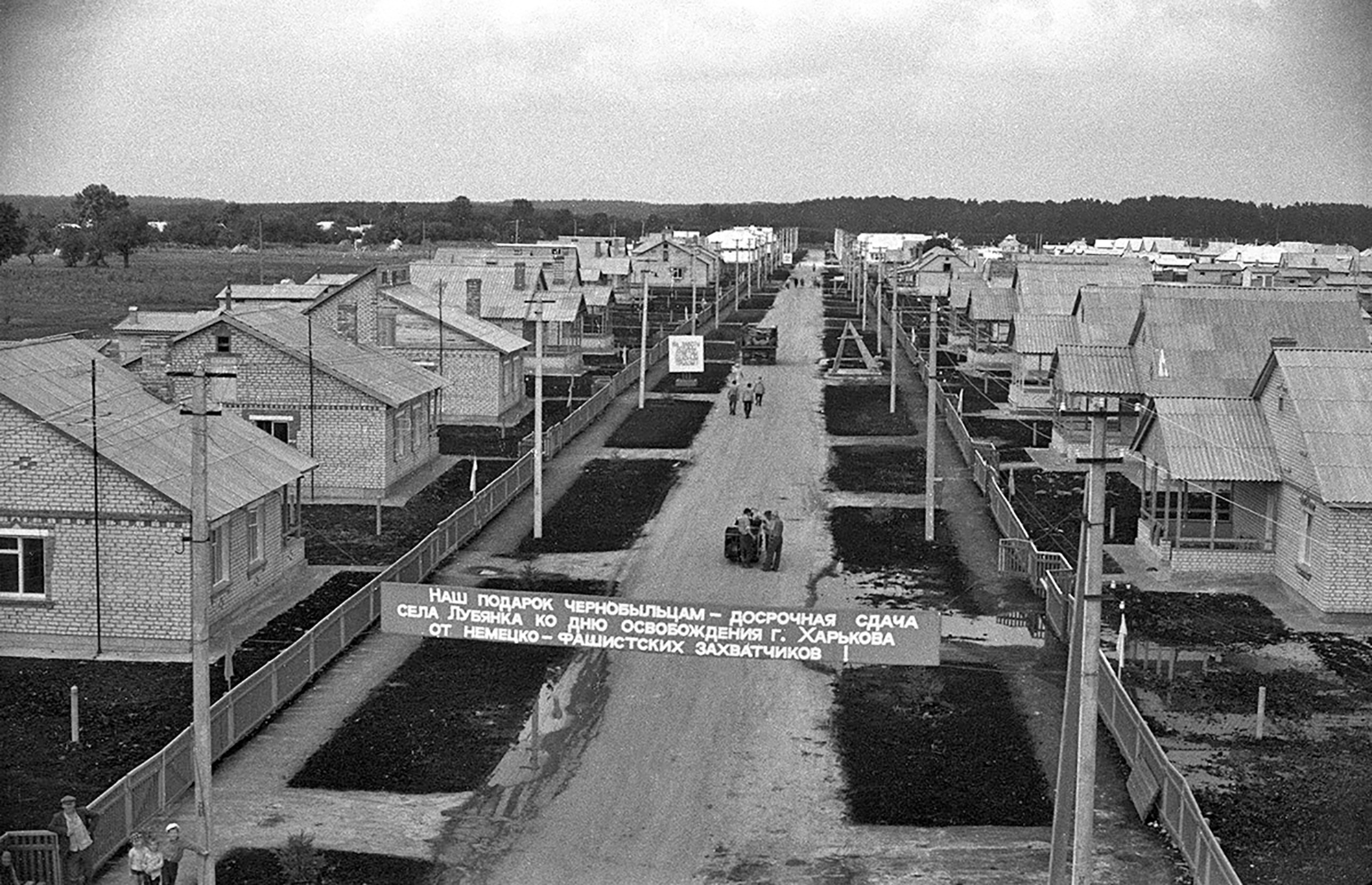
40 years ago, on April 26, 1986, one of the largest man-made disasters in human history occurred—the accident at the Chornobyl Nuclear Power Plant. In early May, the Soviet leadership decided to evacuate the population from the 30-kilometer exclusion zone. By the end of 1986, over 90 thousand people had abandoned their homes. The authorities built housing for the forced migrants in the Kyiv, Zhytomyr, and Chernihiv regions.
Photographer Oleksandr Klymenko documented the process of constructing new settlements and the housewarming ceremonies for the people evacuated from the exclusion zone. At the housewarmings, the settlers simultaneously rejoiced and wept. These families would now be called internally displaced persons. During the Russian-Ukrainian war, far too many people know how difficult it is to leave their native places and start a new life elsewhere.
Oleksandr Klymenko spoke about his work as a photojournalist in the first months after the accident at the Chornobyl Nuclear Power Plant, about shooting the construction of new homes for forced migrants, and the complex emotions of people who lost their homes. What follows is the author’s direct account.
Building Homes
After the 1986 accident, residents of 76 villages and two cities—Pripyat and Chornobyl—were evicted from the Chornobyl exclusion zone. In total, over 90 thousand people were resettled from the Ukrainian part of the zone. By the end of August 1986, the first villages for those evacuated from the Chornobyl zone were already complete. For example, in the village of Arkadiivka, Kyiv Oblast, builders from Kremenchuk constructed 160 new homes. 353 people from the villages of Rudka and Roz’yizdzha in Chornobyl Raion resettled here. At the housewarming, the displaced people cried and rejoiced at the same time, because it was not so bad—to receive new housing in four months.
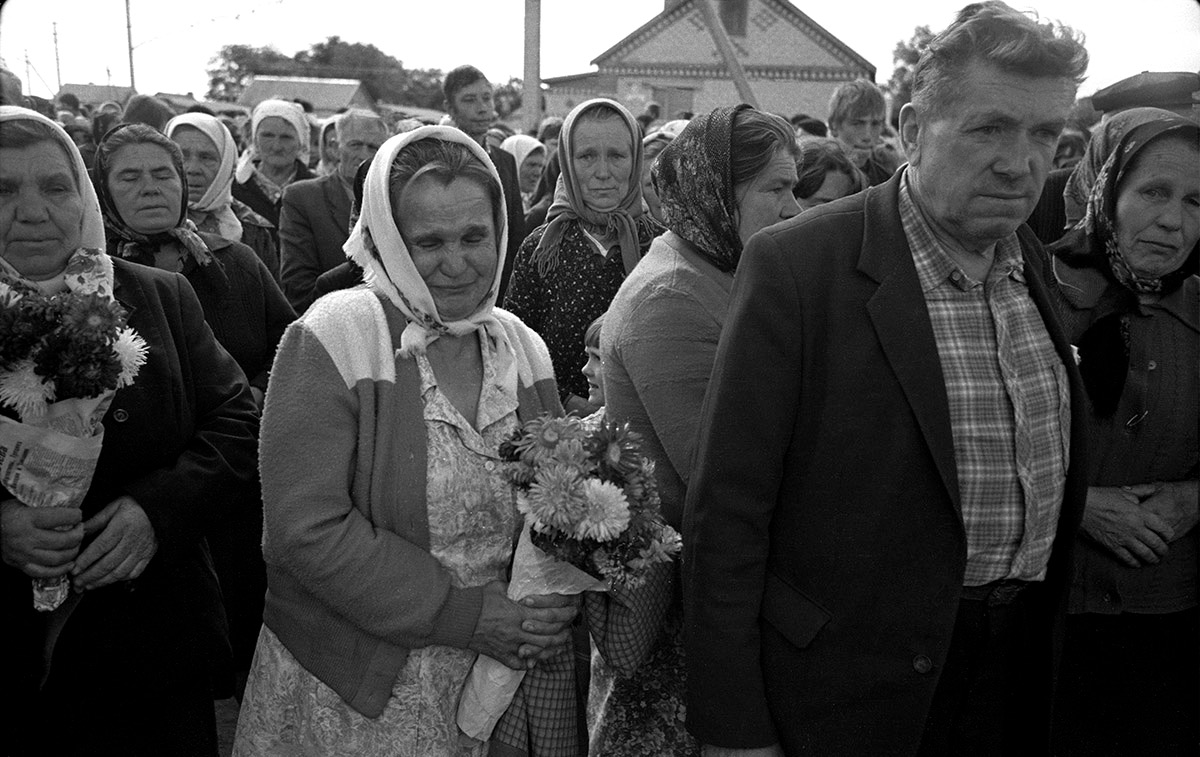
Today we already know how difficult it is to leave one's native places, and we call such people internally displaced. The former residents of the Chornobyl zone were not accepted abroad, and the USSR would not have let them leave anyway. The misfortune was brought upon the exiles then, just as now, by the northern neighbor.
I graduated from the Faculty of Journalism in 1986. On the eve of the accident at the Chornobyl Nuclear Power Plant, I went with my wife and five-month-old daughter to my parents in Chernihiv. On April 26, 1986, we did not even know that a man-made disaster had occurred at the Chornobyl NPP, and we did not even imagine its scale. We decided that my wife and daughter would go to her parents in Vladikavkaz. In the early morning of May 1, when the infamous May Day demonstration was raging in Kyiv, I took them to the Boryspil airport, and when I returned to Kyiv—the city was deserted. It seemed to me that I was the only one walking on the street. Later, I saw photographs from the Kyiv train station, where many people were trying to board a train. Tickets were almost impossible to get. For me, this is yet another parallel with the beginning of Russia’s full-scale war against Ukraine, when train stations were completely overcrowded with people. However, I stayed in Kyiv.
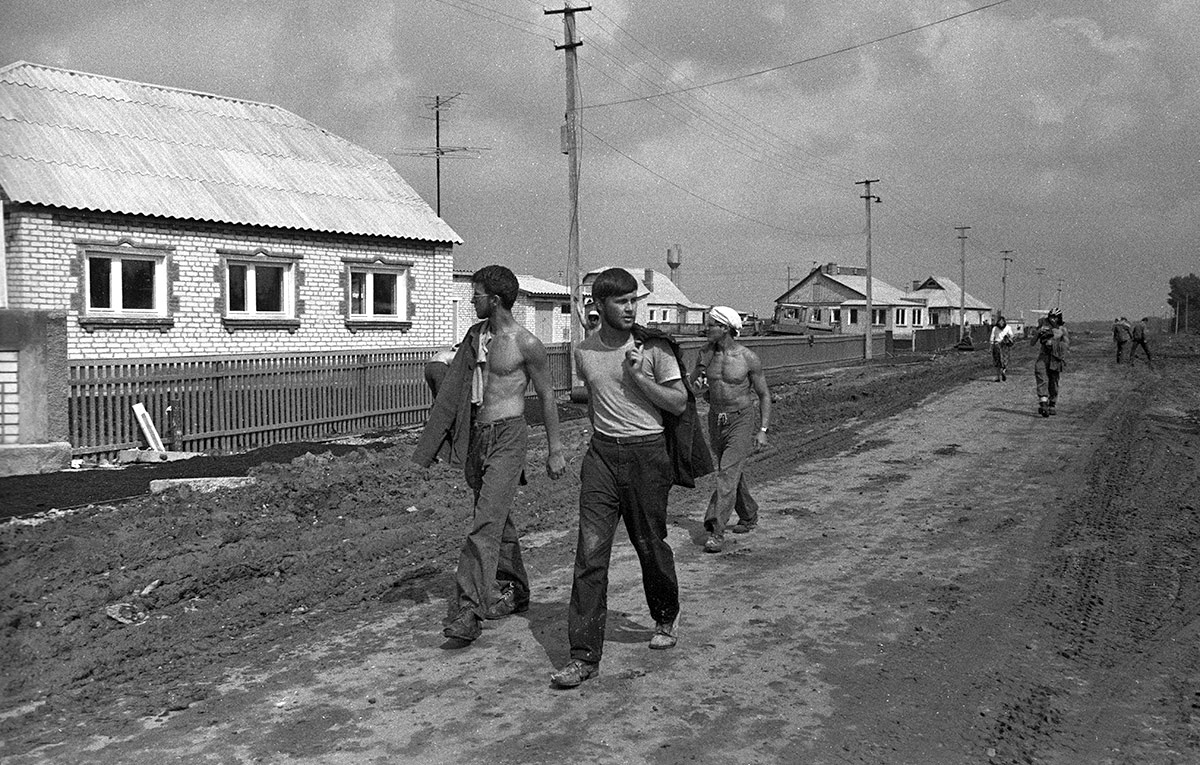
As a young journalist, I had to shoot a lot of the construction of houses for the displaced people evacuated from the exclusion zone. The editor of the “Silski Visti” newspaper, who was present at my diploma defense, hired me. Starting August 1, 1986, I began working as a permanent freelance photo correspondent for the newspaper, as there was no staff position. I had all the rights of an employee and, as they would say now, a social package—sick leave, vacation, work experience, and a decent salary.
My colleague, whose mother lived in the exclusion zone around the Chornobyl NPP, constantly traveled there to photograph. My editor, Ivan Spodarenko, told me that I was still too young and he would not let me go to the Chornobyl zone. My main task was to shoot the new buildings for the resettlers. However, it is unknown where there was more radiation at that time—in the exclusion zone, where everything was carefully washed and controlled, or among the dust at the construction sites.
Housewarming
After the ChNPP accident, new settlements and homes for resettlers were actively built in Ukraine. During the summer and autumn of 1986, over 50 new villages and separate residential areas in existing villages were constructed for evacuated families in Kyiv Oblast. The largest project was the new city of Slavutych, built from scratch in record time for the employees of the Chornobyl Nuclear Power Plant and their families.
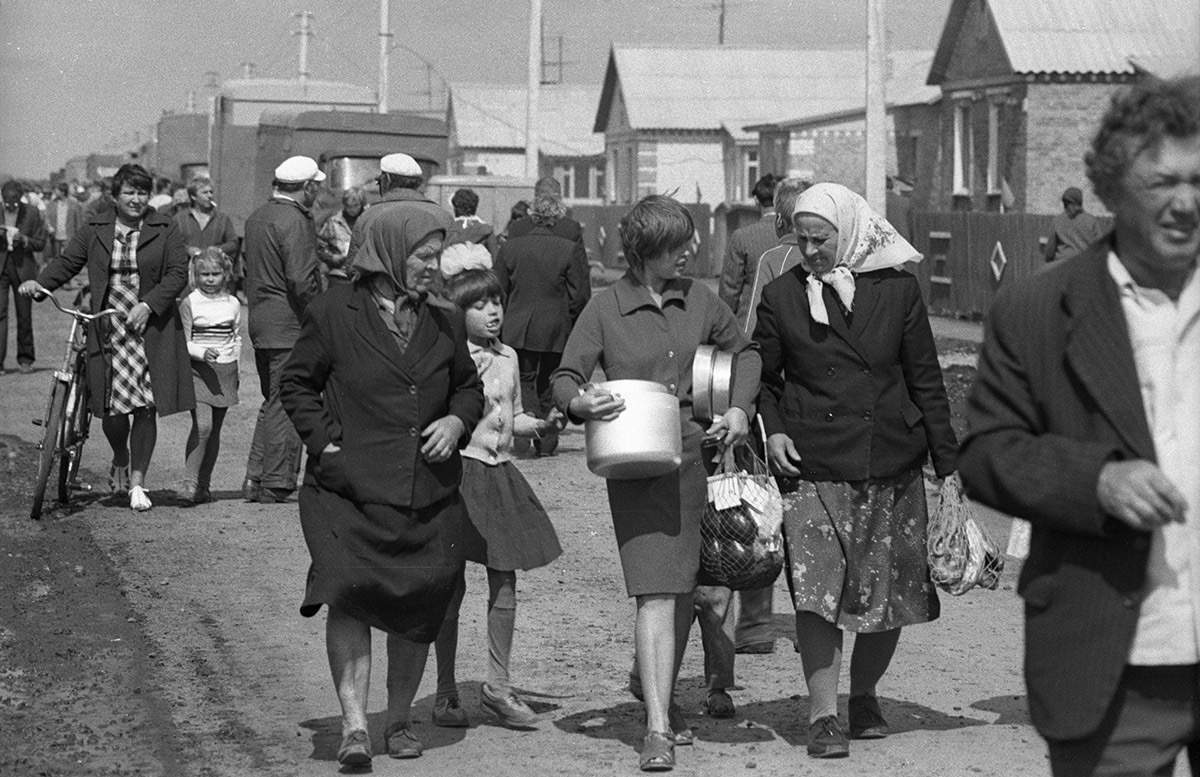
I traveled a lot around the Kyiv region—I almost lived on electric trains. There was a lot of work—it was as if I was thrown into a river where I had to learn to swim. In addition, the head of the department, Larysa Serhiichuk, fell ill, and the artist Sashko Nechytailo went on vacation. I had to perform the duties of the head of the illustration department in addition to shooting. The days were busy—a planning meeting at 12 o’clock, then a trip by electric train, shooting. The next morning, I developed the film and printed photographs, and then again a planning meeting, electric train, and shooting. This repeated very often for months—it was my baptism by fire in journalism.
I will say honestly: I experienced no censorship and received no special instructions regarding the shooting. The main goal was to take a good picture. I would come to the builders, photograph them, and return to the editorial office to develop the films and print the photographs. At the newspaper, they asked me for photographs that would confirm the fact of the construction of new housing for the resettlers. No one asked me for a series of portraits of the workers with dramatic lighting—these are not pictures for a daily newspaper.
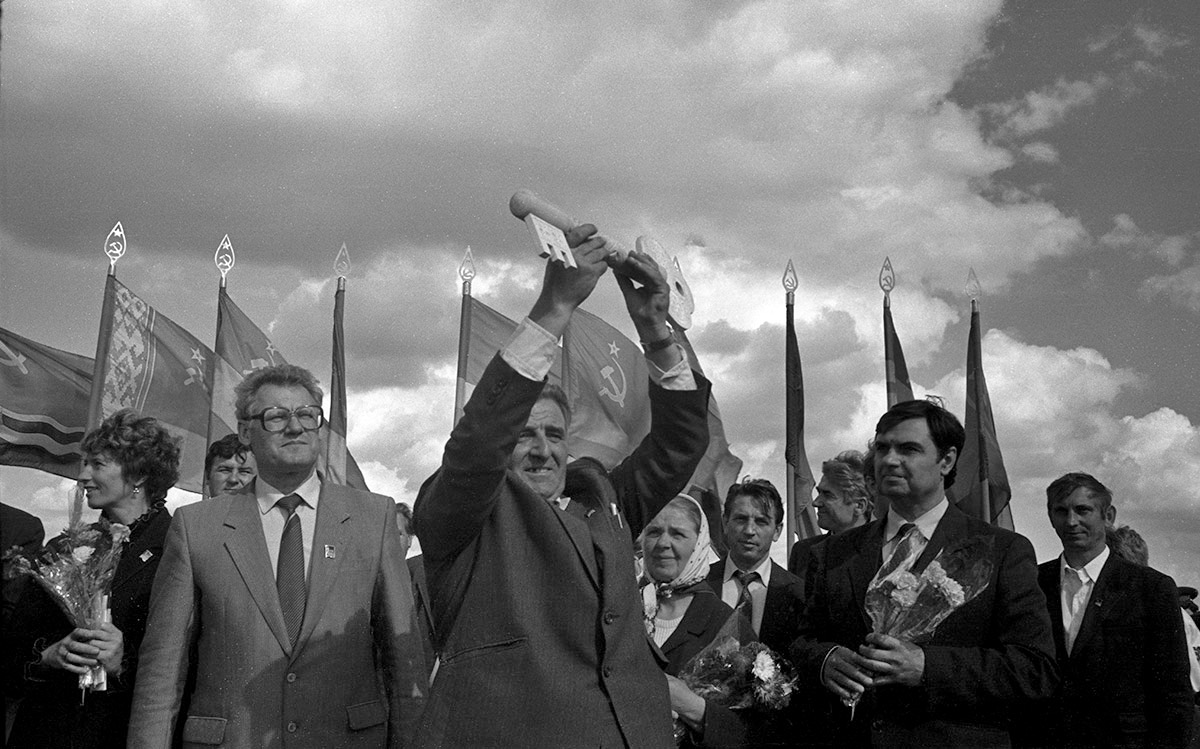
Photo shooting at the construction sites of new villages for the displaced from the Chornobyl exclusion zone was monotonous—every day I photographed practically the same thing. I was young and craved action. At the end of August, one of the first housewarmings took place—the first residents settled into the newly built houses of the village of Arkadiivka. The shoot contained many emotional and dynamic moments, action, so to speak. However, the resettled people perceived this joy of a new life sadly, because one's native home, the place of birth, always remains the most cherished.
One can now encounter information that people who remained in the zone live longer than those who were resettled. They do not experience the longing for their small homeland, for their native places. I photographed the samosely (self-settlers) in 2010, and one old man told me that in the Chornobyl zone, there is freedom and liberty.
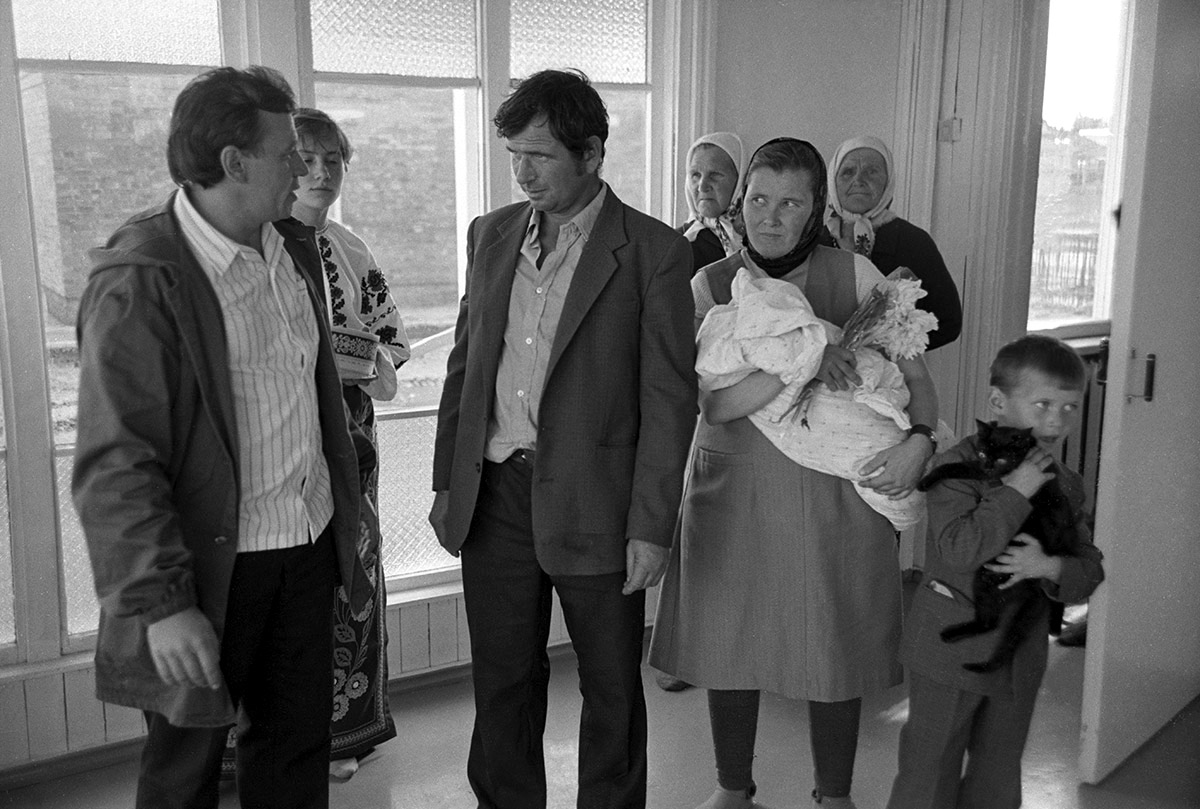
I shot many housewarmings, but not all the negatives have been preserved since then. The most important and brightest shots—remained. For example, many people came to the official opening of the village of Arkadiivka in Kyiv Oblast. I photographed people walking toward the houses; there are frames where families stand on the threshold of their new homes and where a builder shows the housing to the new residents. In the 90s, I came back to Arkadiivka again and took shots where the resettler families are plowing the land with a horse-drawn plow.
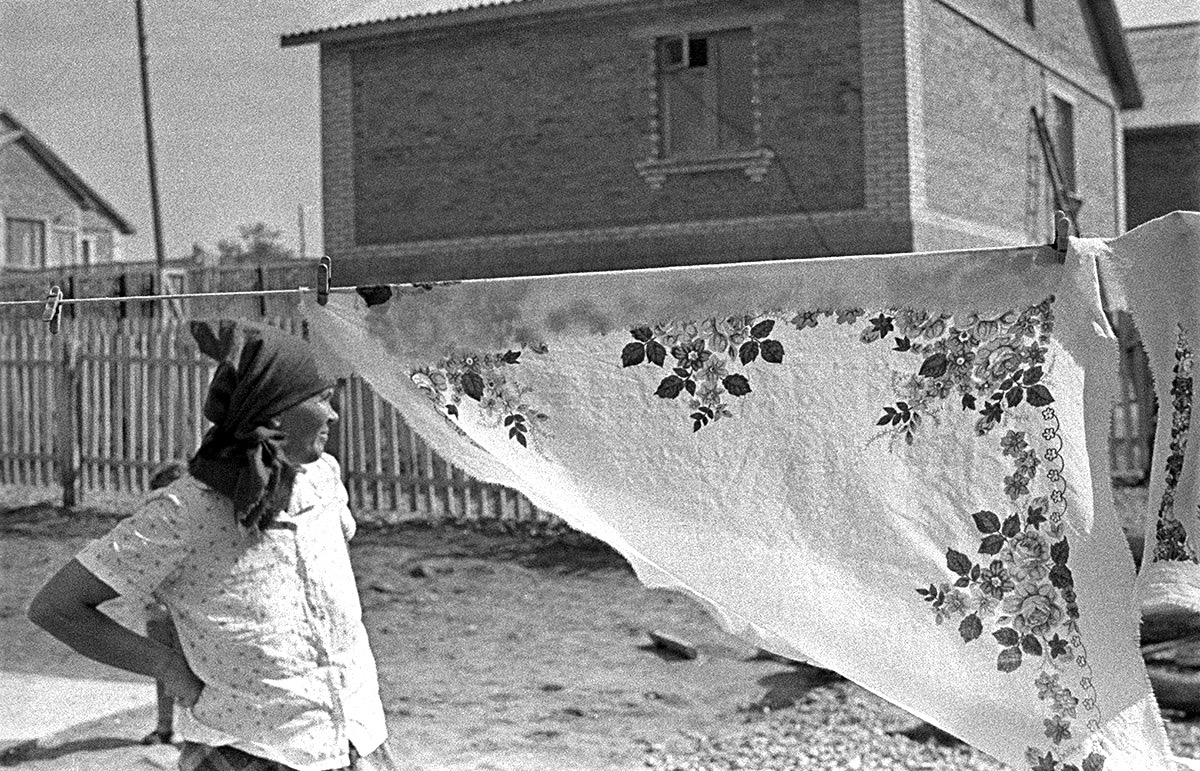
Of course, not all photographs from those shoots were published in the newspaper—only a few were used for the article. It was a kind of conveyor belt where new photographs were needed every day. I still love the frames where people evacuated from the Chornobyl exclusion zone walk toward their new homes.
Oleksandr Klymenko was born in the Chernihiv region. A graduate of the Faculty of Journalism at Taras Shevchenko Kyiv National University. From 1991 to 2024—photo correspondent for the “Holos Ukrainy” newspaper. In 1992, he documented events in Transnistria, then in the countries of the former Yugoslavia, as well as in Lebanon, Kuwait, Sierra Leone, Liberia, Côte d'Ivoire, South Sudan, and the Democratic Republic of Congo. During the Revolution of Dignity, Oleksandr was wounded while in the very epicenter of the events. Since the beginning of Russia’s military aggression in 2014 in eastern Ukraine, he has been documenting events on the front line. Oleksandr is the author of several photo albums, including: “Ukraine. 10 Years of Progress” (2001), “Peacekeeping Activity of the Ukrainian Military. The First Decade” (2004), “Through Fire and Tears” (2009), “Frontline Album” (2016). “Modern History of Ukrainian Journalism. From Maidan to Maidan” co-authored with Yuriy Nesteriak, Yuliia Nesteriak (2022). He held personal photo exhibitions at the UN Headquarters in New York (2012), NATO Headquarters in Brussels (2012, 2013, 2014), in Lithuania (2015), Poland (2015, 2016, 2023), Luxembourg (2015), Norway (2023), Latvia (2022), and participated in collective exhibitions about the war in Ukraine in the parliaments of Great Britain (2015) and Denmark (2014).
This material was created with the support of the British Council program “Creative Economy Grants.”
Material Prepared by:
Authors of the text: Oleksandr Klymenko, Katia Moskalyuk
Photo Editor: Vladyslav Krasnoshchok
Literary Editor: Yuliia Futei