
On the night of June 15, Russian forces carried out a massive attack on Kyiv, Dnipro, and Kharkiv, using missiles and drones against residential buildings and historical landmarks. As a result of a deliberate Russian strike, a large fire broke out on the roof of the Dormition Cathedral of the Kyiv-Pechersk Lavra. In Kharkiv, during the clearing of the aftermath of the strike, repeated shelling claimed the lives of five rescuers and a civil protection specialist from the Kharkiv Regional Military Administration. The cities of Zaporizhzhia, Kherson, Sloviansk, and Kramatorsk remain under daily fire from the occupiers; this week, Russian aviation also terrorized Kharkiv and Sumy. Animals also suffered from Russian aggression — the enemy shelled a zoo in Kharkiv and an equestrian school in the Sumy region.
Chronicle of Russian Shelling from June 14 to June 21, 2026
On the night of June 15, the Russian army deployed 611 UAVs and 70 missiles of various types against Ukraine. Preliminary data indicates hits from 20 ballistic missiles and 27 attack UAVs across 42 locations, as well as the fall of shot-down UAVs and their debris in 12 locations. Air defense forces managed to intercept (neutralize) 50 missiles and 582 drones. The main focus of the strike was Kyiv, Kharkiv, and Dnipro. 11 people were killed, and over 50 were injured. In the morning, the enemy shelled the Korabelnyi district of Kherson, killing a man and injuring three people, including a 17-year-old girl who was hospitalized in critical condition. Two people died, and nine more were wounded in the Zaporizhzhia region. Throughout the day, another 11 people were wounded in the region: drones attacked an ambulance on the premises of a medical facility, civilians during the distribution of humanitarian aid, and the regional center. Specifically, a UAV struck a rescue unit, blowing out windows in the building and damaging a fire tanker and a service vehicle. In Sumy, UAVs hit a non-residential building and a high-rise apartment block, injuring three people, including a child. "Kordon Media"** reported** a drone hit on the Palace of Children and Youth, damaging two changing rooms and a martial arts hall where children practiced. In Mykolaiv, critical infrastructure facilities were attacked, causing a fire.**
On the morning of June 16, Russians attacked a minibus with a drone in the Korabelnyi district of Kherson, killing one person and injuring two others; one person died in the Beryslav district. In the Sumy region, two people were killed and eight others injured, including four children; drones damaged the city council and an educational institution in Hlukhiv. In the Zaporizhzhia district, drones attacked a Ukrposhta vehicle and a civilian car near a cemetery; in total, 14 people were wounded in the region. One person died in Zaporizhzhia, seven wounded were hospitalized, and the Zaporizhzhia National University and residential buildings were damaged, with an office center almost completely burned down and a fire breaking out in one of the residential buildings, covering a total area of 800 sq. m. In the Odesa region, a UAV hit damaged a residential building, causing a fire; an elderly couple was injured, and the woman was hospitalized. In the Zhytomyr region, shelling sparked a fire covering about 25 hectares in a forest area on the territory of the "Drevlianskyi" nature reserve; emergency services extinguished the blaze after four days. In Kramatorsk, a Russian UAV hit a high-rise building, causing a massive fire over an area of 1,000 sq. m; four people were injured, and six were rescued. The Sloviansk community was struck twice, first by drones and then by FAB-250 bombs and MLRS. Hits were recorded in the residential sector in various parts of the city and in the industrial zone. There were three separate fires covering a total area of 700 sq. m, with 120 private houses and a service station damaged or destroyed, and three people killed and eight wounded.
On the night of June 17, Russians attacked the grounds of an equestrian school in the Sumy region with UAVs, where children trained daily; the strike hit a stable, killing three horses and injuring over ten people. In the Trostianets community, the enemy launched a massive strike on a gas station, causing significant damage and injuring four people; two drones attacked a post office in Sumy, damaging the premises and causing a fire; in the Shostka community, a UAV killed a cyclist. In Kramatorsk, a Russian FPV drone hit a municipal vehicle traveling along a road towards a solid waste landfill; the community suffered 31 enemy strikes: by drones of various types and nine FAB-250 bombs. In the Chernihiv region, the enemy continued attacking energy infrastructure, hitting two energy facilities and damaging two trucks on company premises.**
On June 18, in the Sumy region, three people were killed and seven injured; Russians struck the outskirts of Sumy with two guided aerial bombs, causing a massive fire in warehouse facilities where remnants of sulfur-containing substances were stored; according to monitoring, air quality indicators at most control points in the affected communities and the regional center were within normal limits. In the Poltava region, industrial and private enterprises and warehouses came under attack. Russians launched two airstrikes on Sloviansk, damaging or destroying at least 35 private houses, shops, an educational institution, a service station, eight cars, and outbuildings. In Kramatorsk, a woman died as a result of a UAV strike on a high-rise building. A man died in Kherson, and three people were wounded in Zaporizhzhia.
On June 19, Russians attacked two civilian vessels in the Black Sea, killing a crew member on one of the ships and injuring five sailors, one of whom remains in critical condition. In the south of the Odesa region, the attack ignited empty fuel tankers and a gas tanker at a truck parking lot, killing one person and injuring four, with one person hospitalized. In the Mykolaiv region, the enemy attacked energy infrastructure, damaging a gas station and cars, and killing a man. In Kherson, Russians once again shelled public transport, damaging two buses and injuring four people waiting at a stop; one person died in the Korabelnyi district. Four people were wounded in Zaporizhzhia; throughout the day, the enemy attacked a gas station, a critical infrastructure facility, and a logistics operator's building. In the Sumy region, two were killed and four injured; Bilopillia is recovering from a strike by guided aerial bombs, with residential areas damaged and some houses completely destroyed. In the Chernihiv region, energy facilities and border communities were under attack. Russians launched a massive strike on Kramatorsk, using various types of drones, FAB-250 bombs, cluster-type "Tornado-S" MLRS, and "Grad" systems, killing three people and injuring eight, most in critical condition; nearly two dozen private houses, three high-rise buildings, a dormitory, a service station, a car wash, an administrative building, a café, and vehicles were damaged.
On June 20, as a result of attacks on Zaporizhzhia and the district over the past 24 hours, 19 people were injured, including a wounded police officer, and 12 residential buildings were damaged in the regional center. The enemy attacked the south of the Odesa region: a fire broke out at a gas station, engulfing a gas tanker and the cladding of the operator's building; there were hits on the premises of transport and construction enterprises, and empty fuel tanks were damaged. In Mykolaiv, windows were shattered in a preschool institution and four private houses, and in the region, a gas station, the windows of two high-rise buildings, a bakery, and cars were damaged, with three people wounded and two hospitalized. In Trostianets, Sumy region, a UAV hit the territory of the American company Mondelez, and one person was hospitalized. The enemy struck the outskirts of Sumy with aviation again, killing a man and injuring five people, including a child, with one person hospitalized and private houses damaged.
On the night of June 21, the Russian army attacked Ukraine with two "Iskander-M"/S-400 ballistic missiles, two "Kinzhal" aeroballistic missiles, and 105 strike UAVs of various types. As a result of an airstrike on Zaporizhzhia, five people were killed and 12 injured; residential and non-residential buildings, social infrastructure buildings, and the territory of an equestrian club were destroyed and damaged. In the Sumy region, ten people were injured; in the Shostka district, a fire tanker caught fire due to a repeat strike; an increase in the intensity of strikes by guided aerial bombs on the outskirts of the regional center was recorded, and in the morning, Sumy was shelled with artillery, with five damaged houses and six injured reported. At night, a fire broke out at an infrastructure facility in Kropyvnytskyi as a result of an attack. In the Poltava region, two people were killed and 14 injured, including six children; there were fires at enterprises. The enemy attacked residential infrastructure in the Izmail district of the Odesa region. Overnight, Sloviansk was under fire from "Smerch" MLRS and FPV drones; a high-rise building, private houses, and vehicles were damaged in the central part of the city.
Kyiv Region
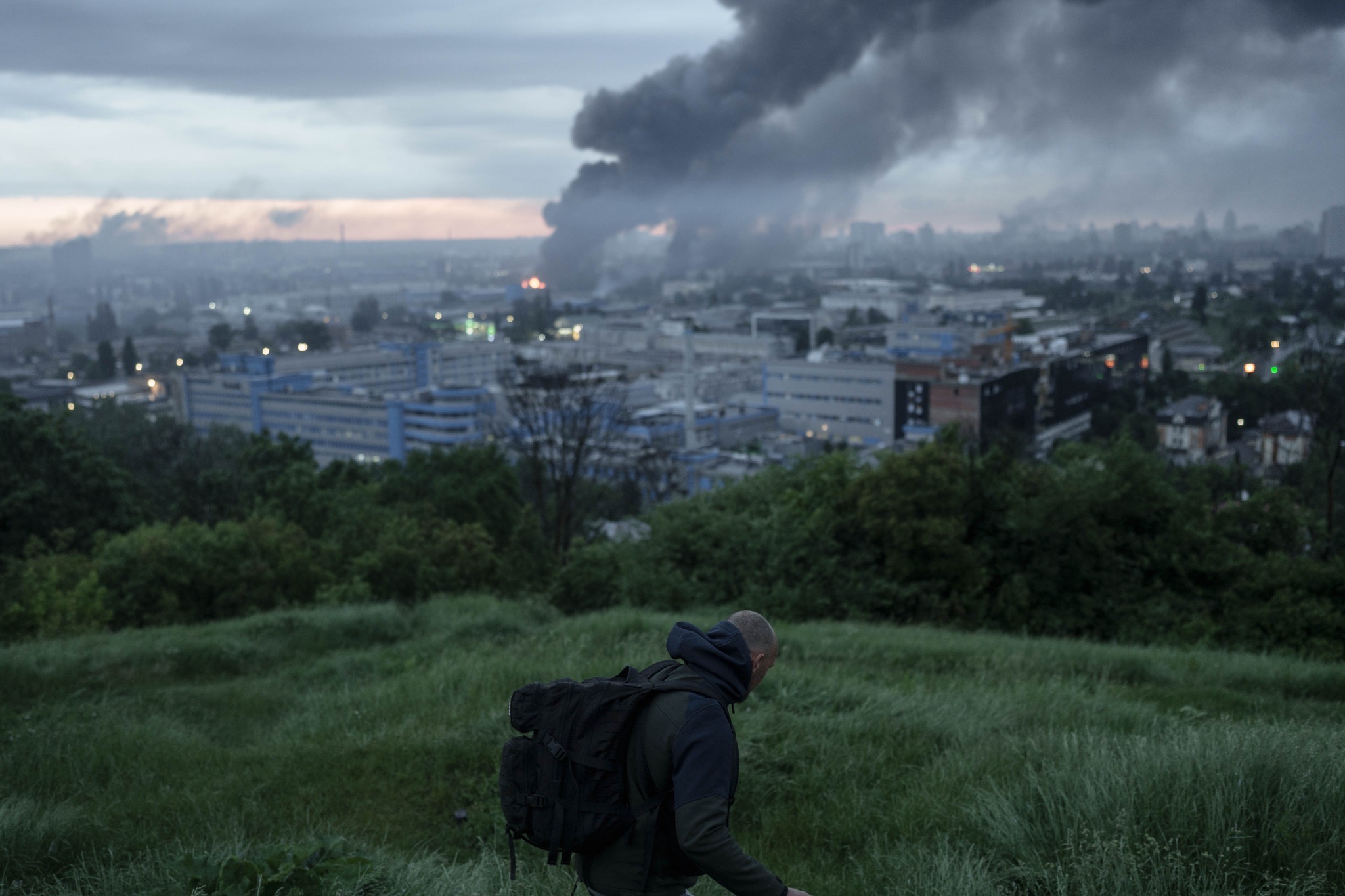
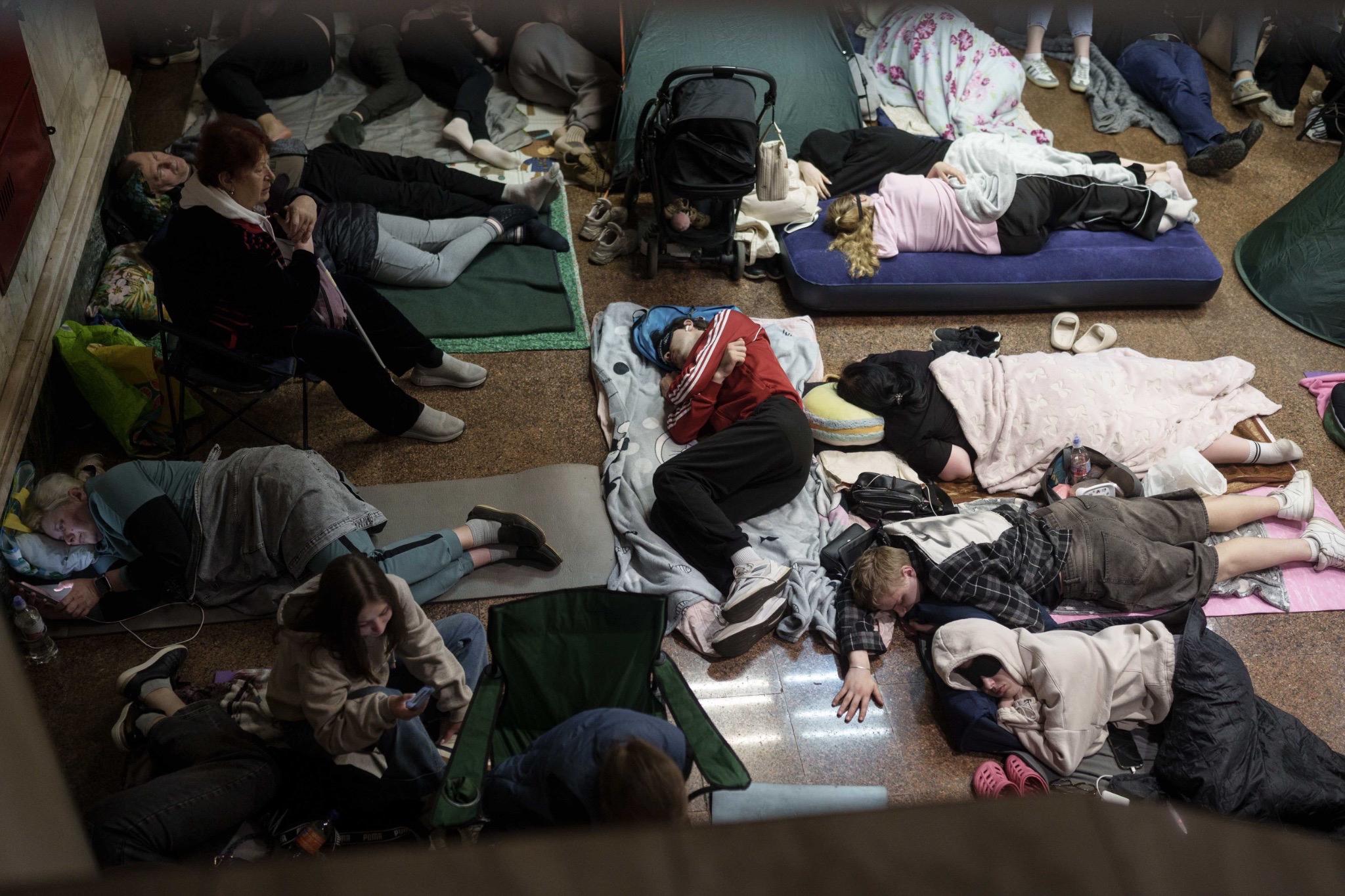
On the night of Monday, June 15, the Russian army launched a large-scale attack on the capital, killing five people and injuring 44 others, including two children and a pregnant woman. At least 26 residential buildings were damaged; hits and fires were recorded on the territory of the "Kyiv-Pechersk Lavra" sanctuary; a workshop of the O. Dovzhenko National Film Studio was destroyed; the building of the High Anti-Corruption Court, children's educational institutions, including the Academy of Modern Education, a business center, and a market near the Pochaina metro station were damaged; the largest innovative sorting terminal of "Nova Poshta" and a Rozetka branch were destroyed.

In the northern part of the city, 140,000 subscribers were left without electricity due to damage to power lines; power was restored by energy workers in less than 24 hours. A production site and special transport were also damaged, reported DTEK.
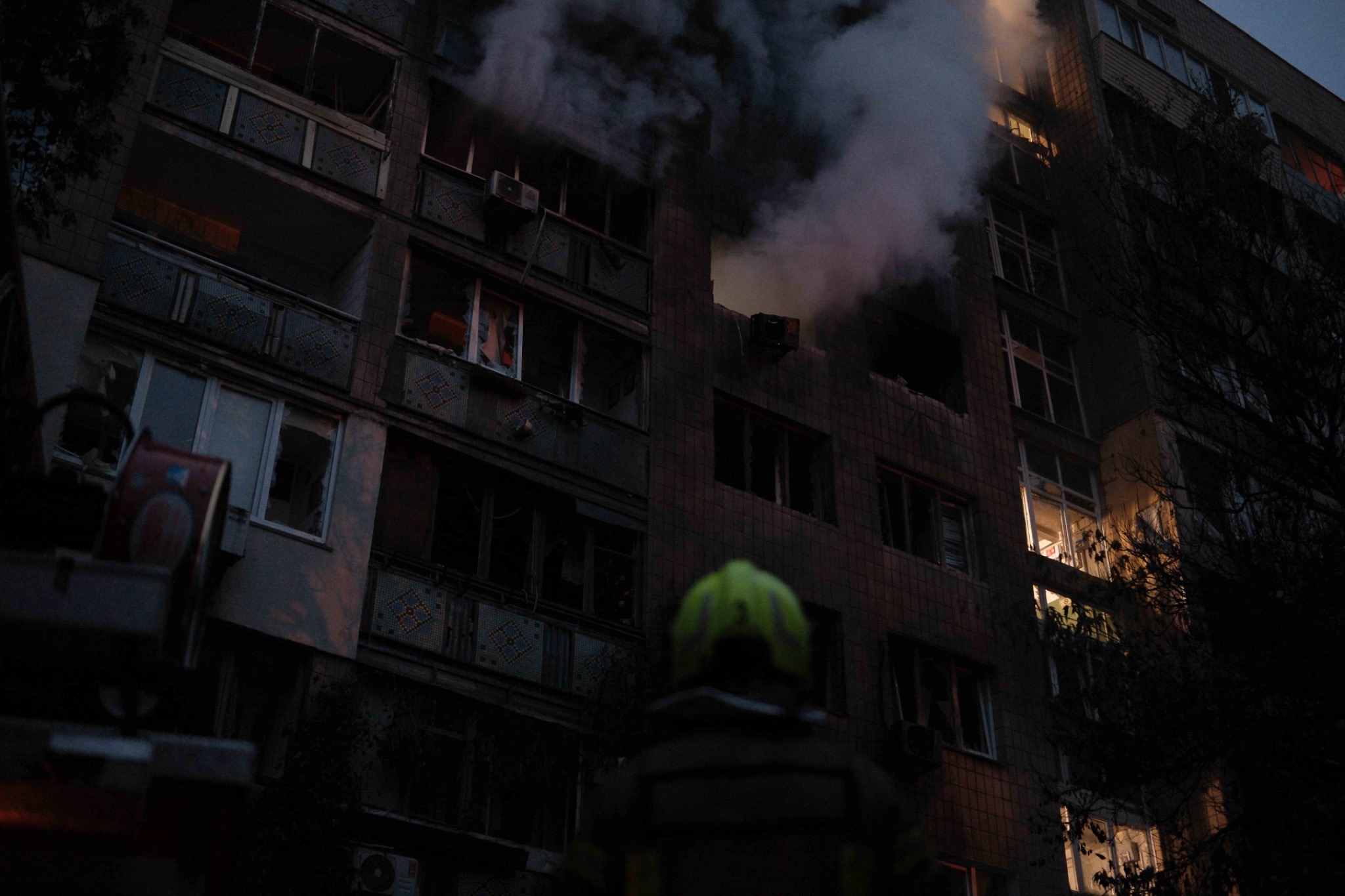
More than 1,200 SES rescuers and police officers worked to clear the aftermath of the attack. Firefighters extinguished 26 fires covering a total area of nearly 6,000 square meters; assigned operational response teams and SES aviation were also involved.
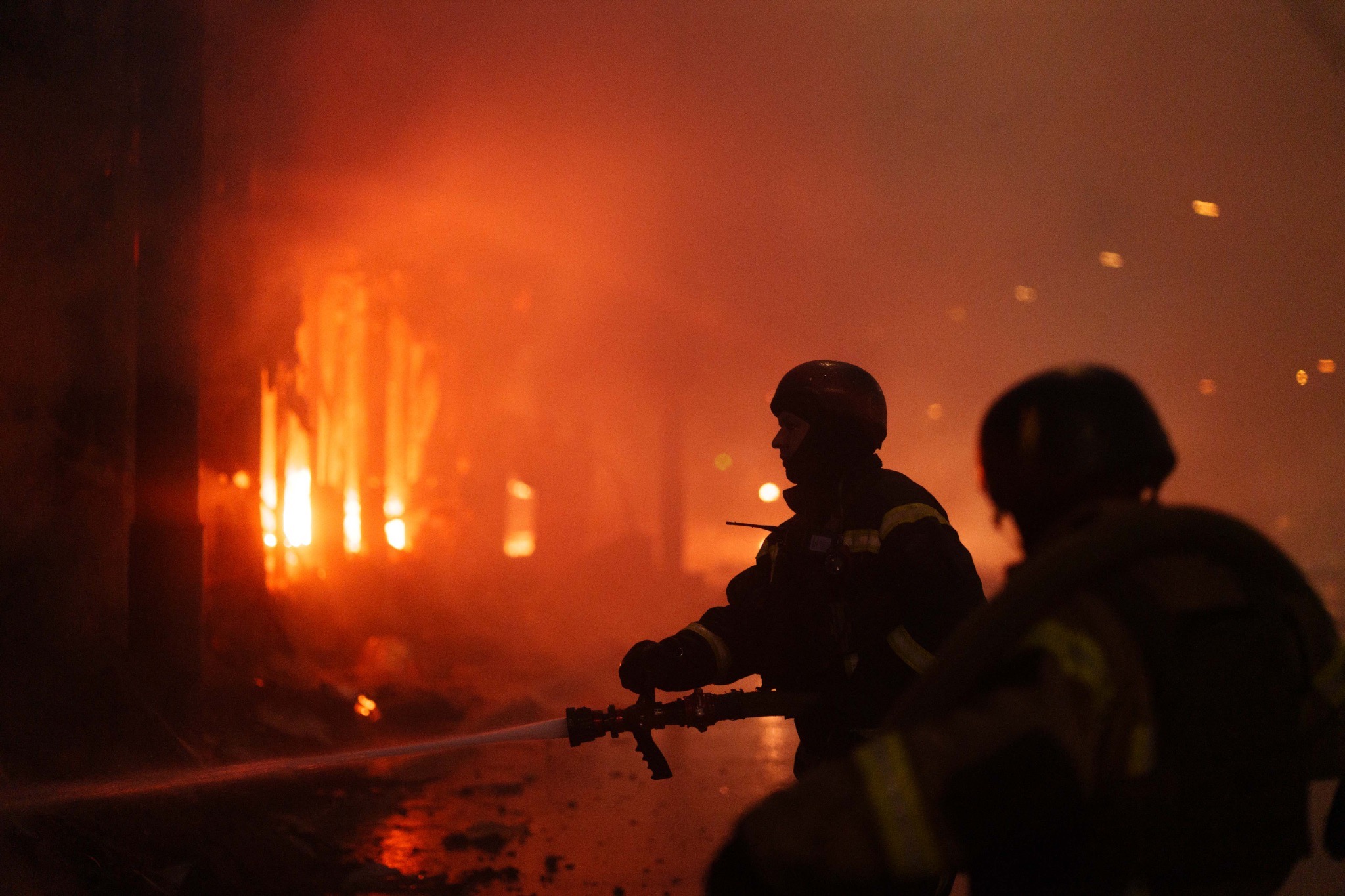
Hits on residential buildings were recorded in the Obolonskyi, Desnianskyi, Pecherskyi, Solomianskyi, and Shevchenkivskyi districts of the capital. In the Obolonskyi district, there were two hits on a nine-story building; additionally, there was a fire and destruction between the third and fourth floors in one of the multi-story buildings, and 30 cars and warehouse premises were burning. In the Desnianskyi district, a nine-story building was also hit, followed by a fire; there was a fire on the premises of an educational institution, and three private houses were destroyed due to falling debris. In the Solomianskyi district, a fire broke out on the fifth and sixth floors of a nine-story residential building due to a hit; emergency services rescued 15 people, including two children. In the Shevchenkivskyi district, there were hits on a non-residential building, residential buildings, and retail facilities; a fire broke out in a 25-story building, where four people were rescued.
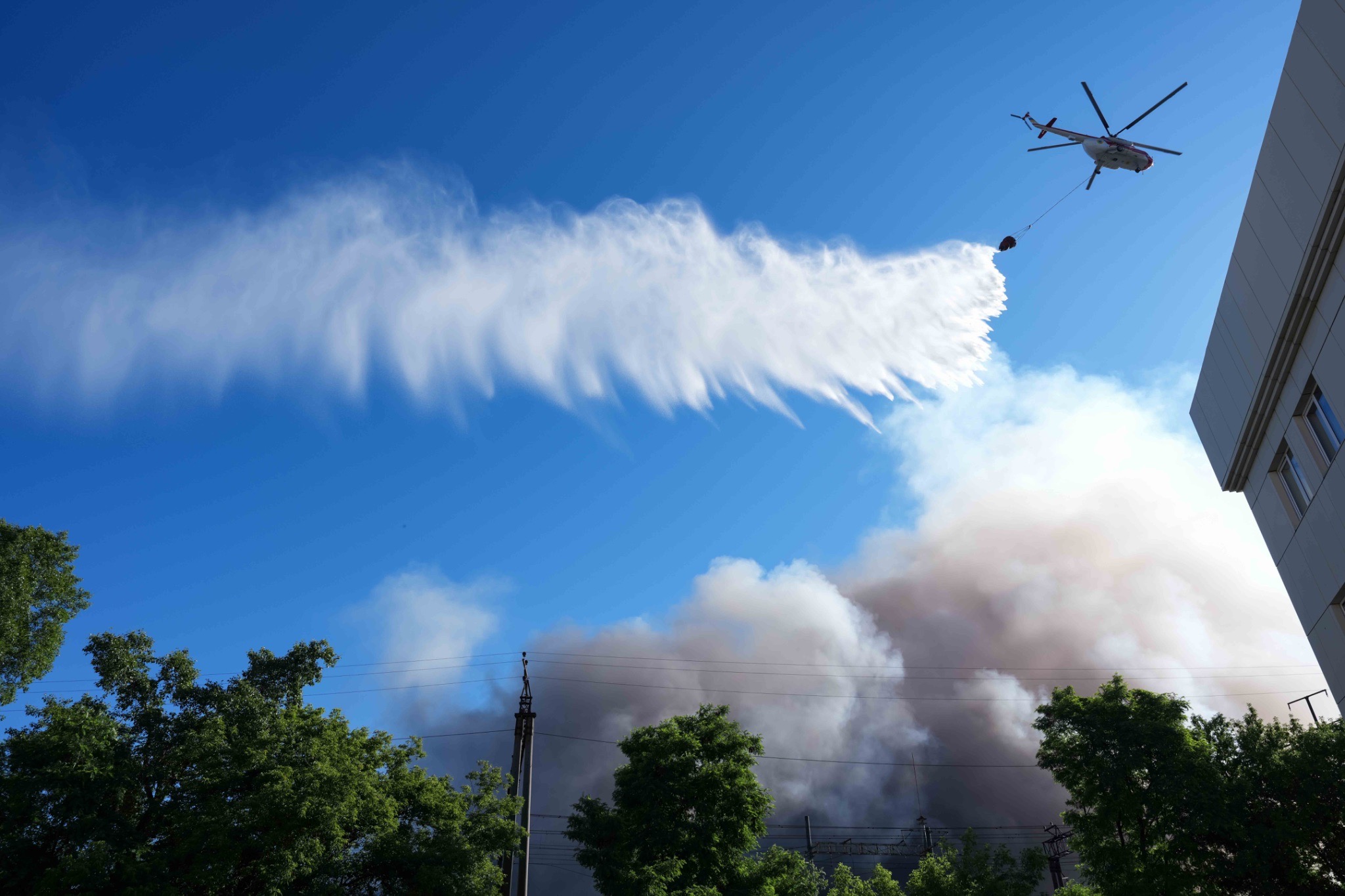
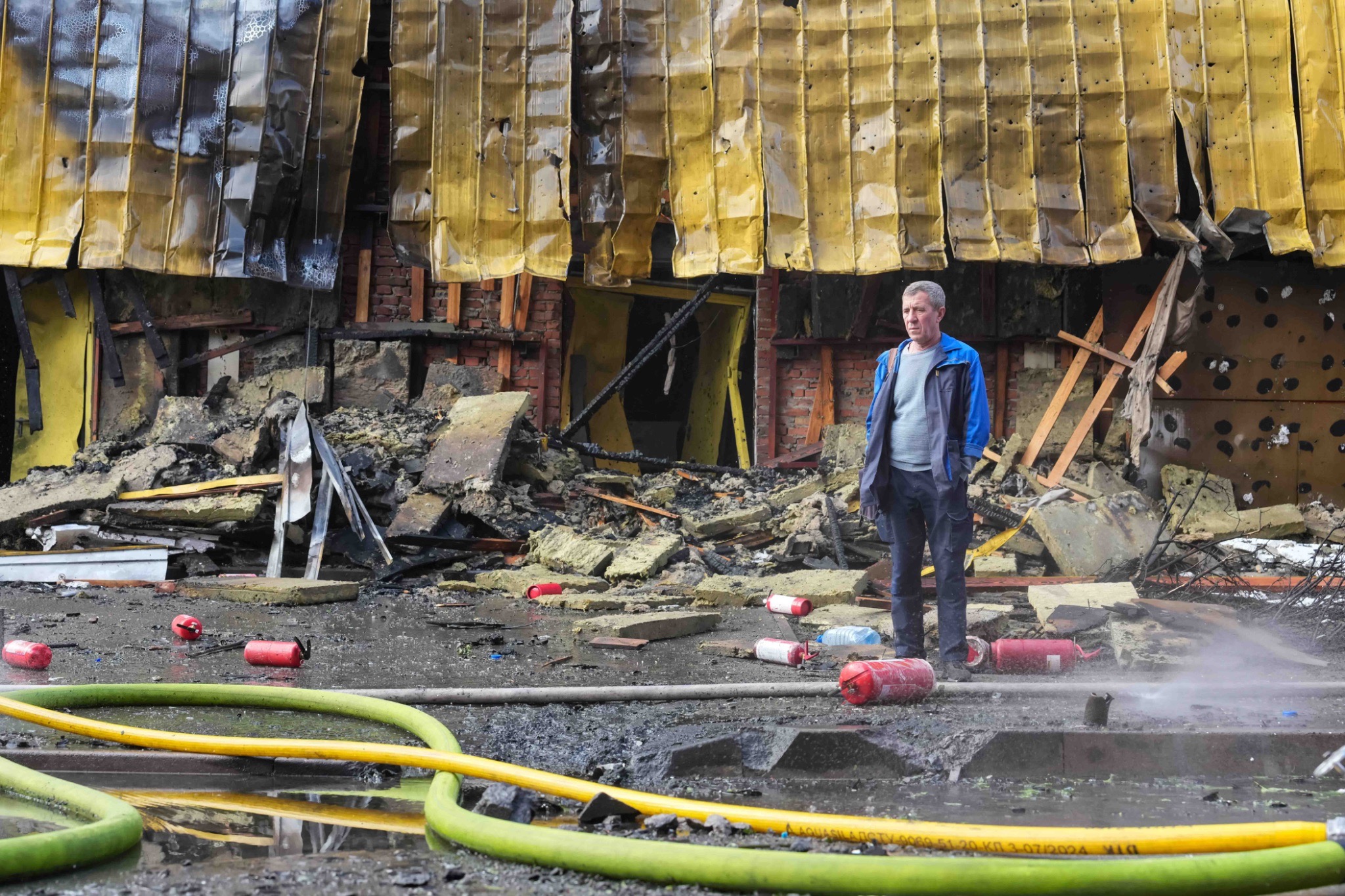
In the Holosiivskyi district, fires broke out in a warehouse, a hit on a critical infrastructure facility was recorded, and there was a fire in a residential multi-story building. Residential buildings were damaged in the Darnytskyi, Dniprovskyi, Podilskyi, and Sviatoshynskyi districts, in some places with fires.
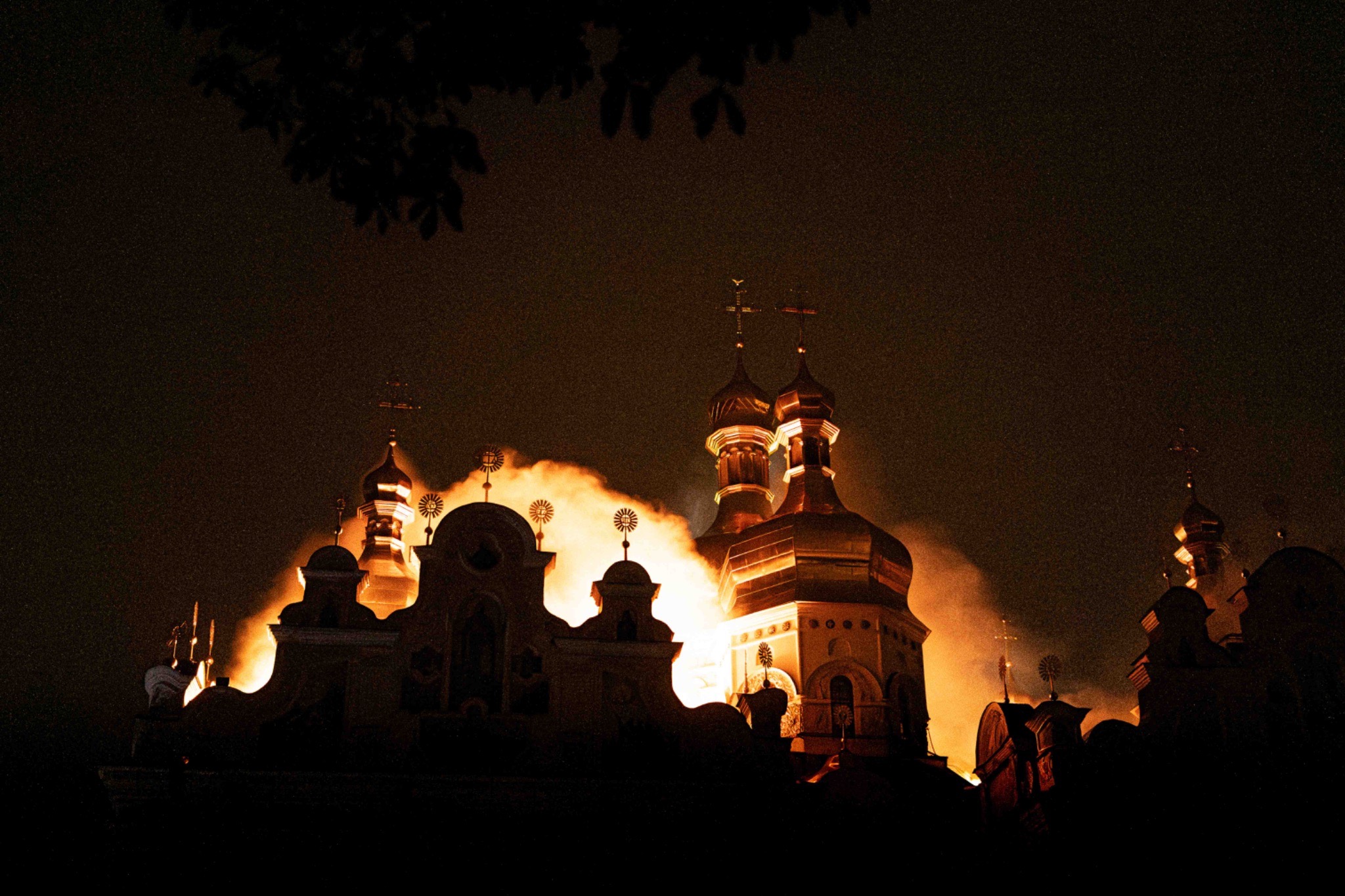
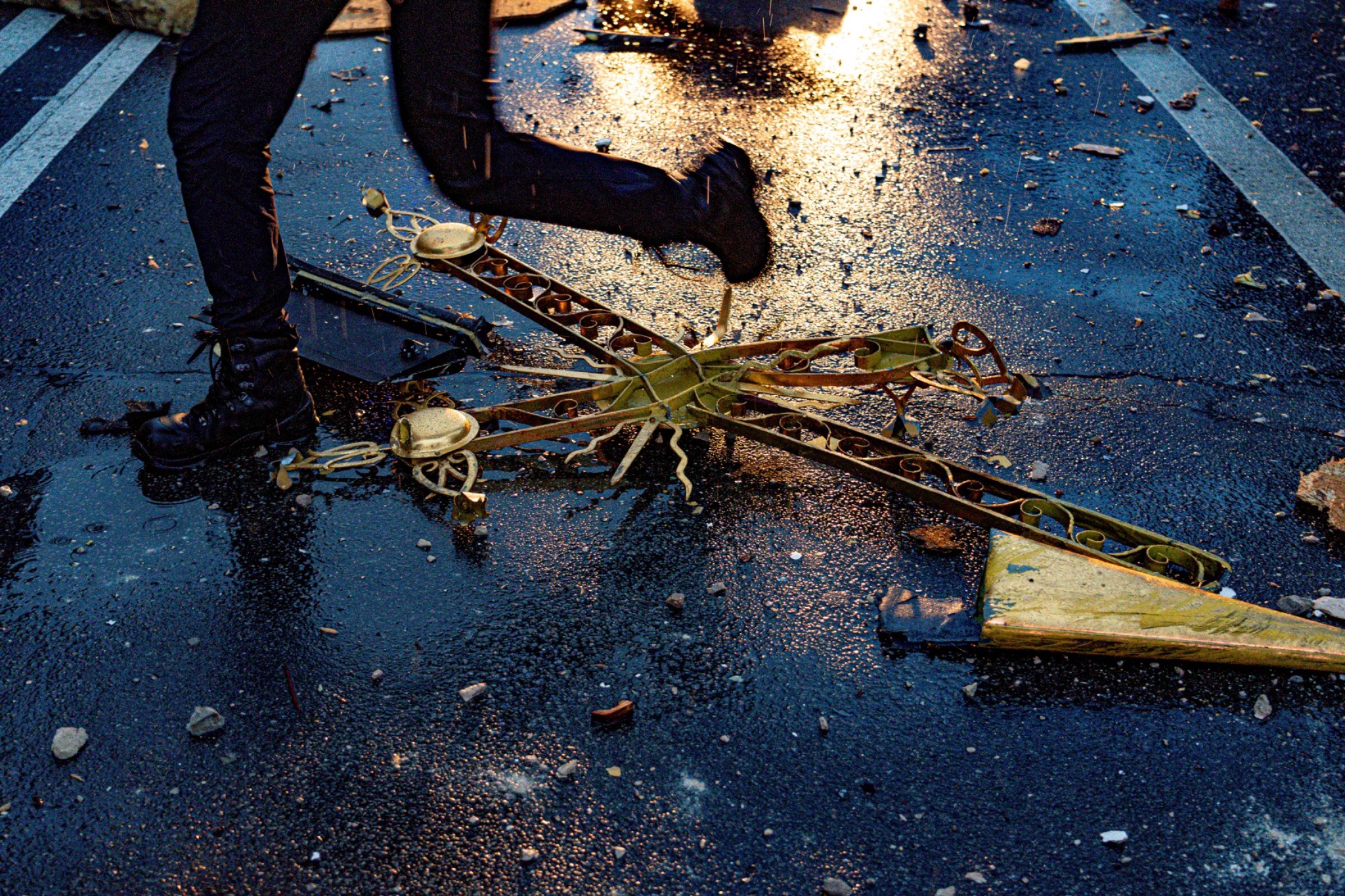
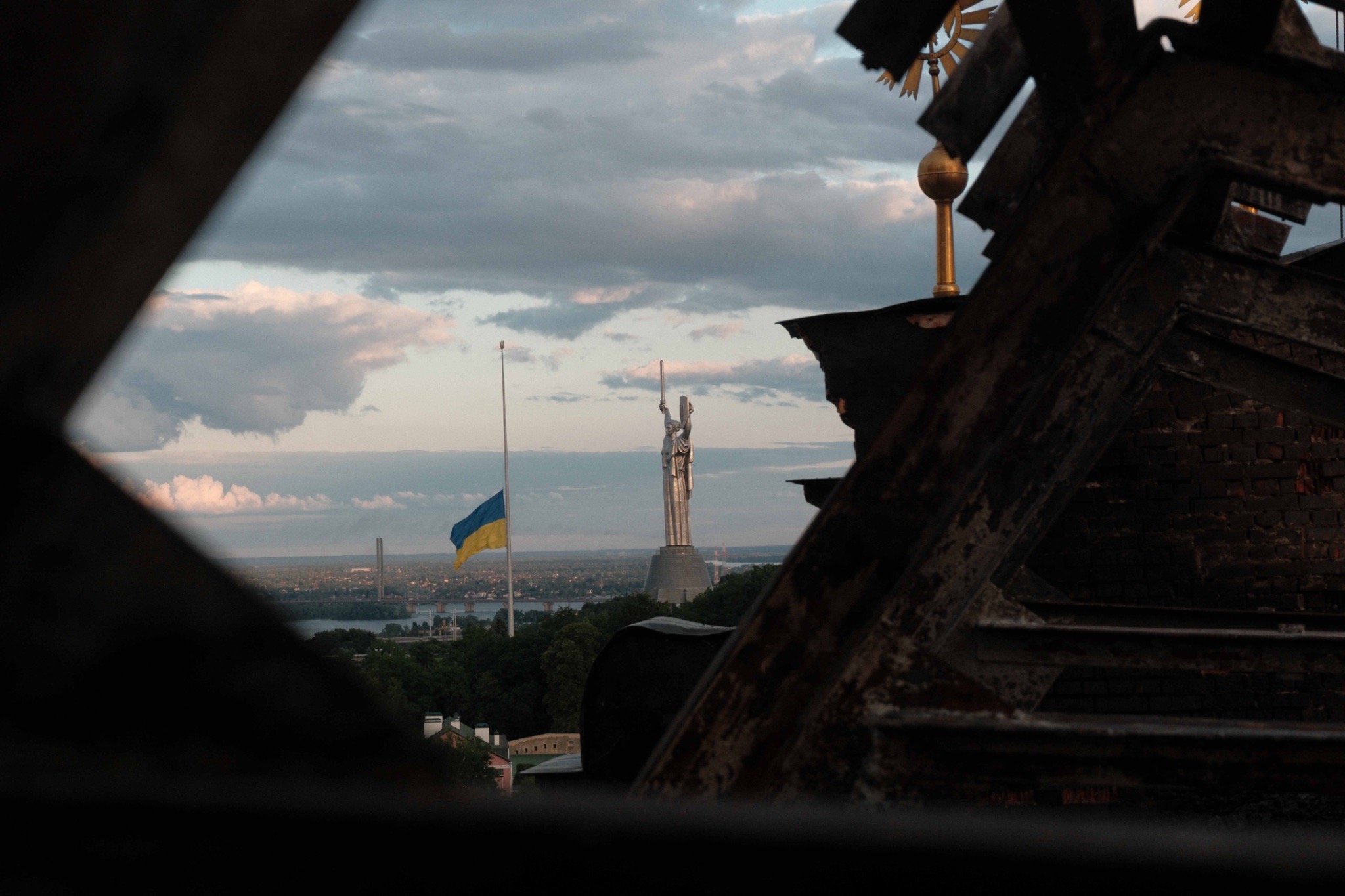
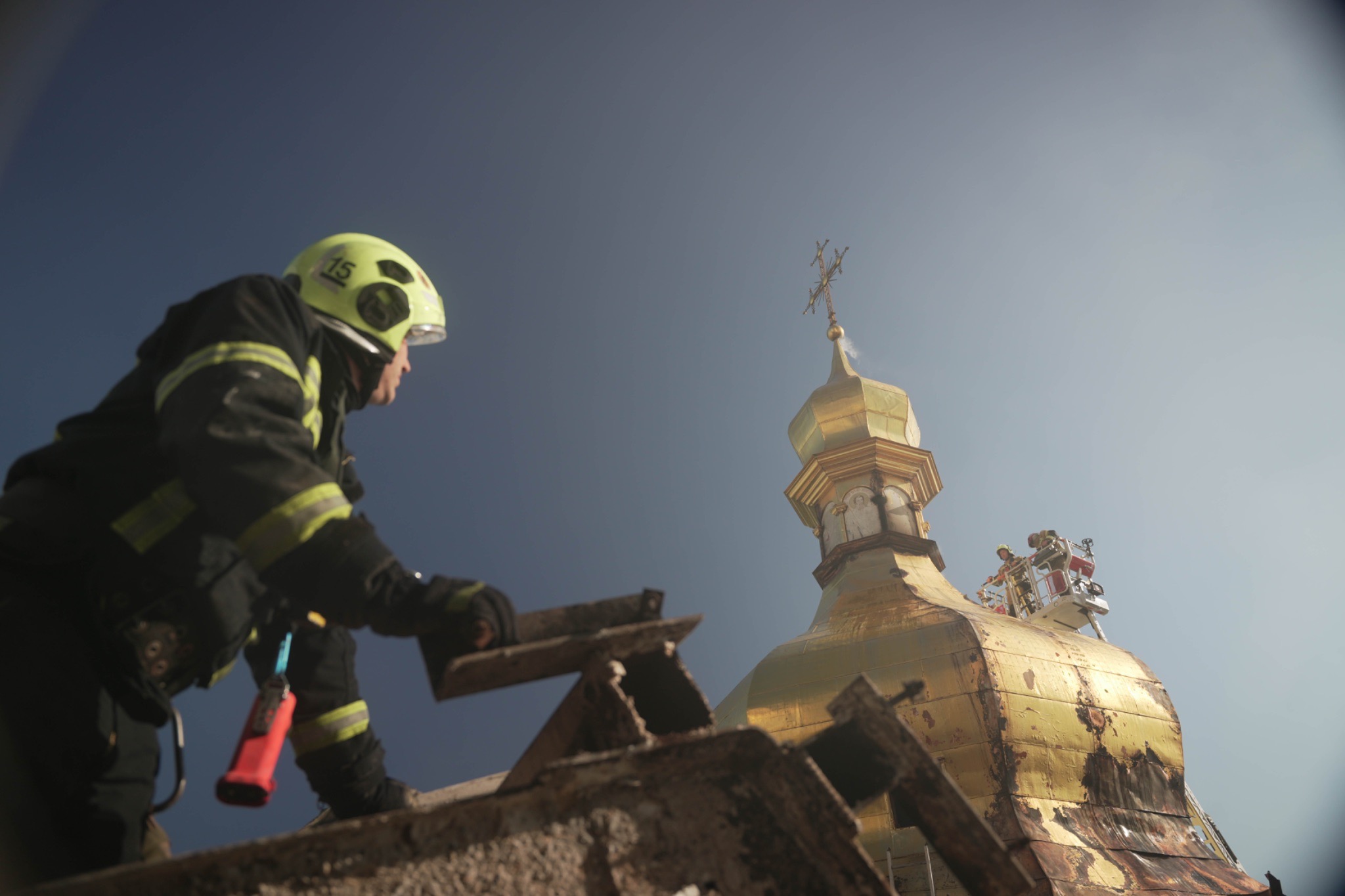
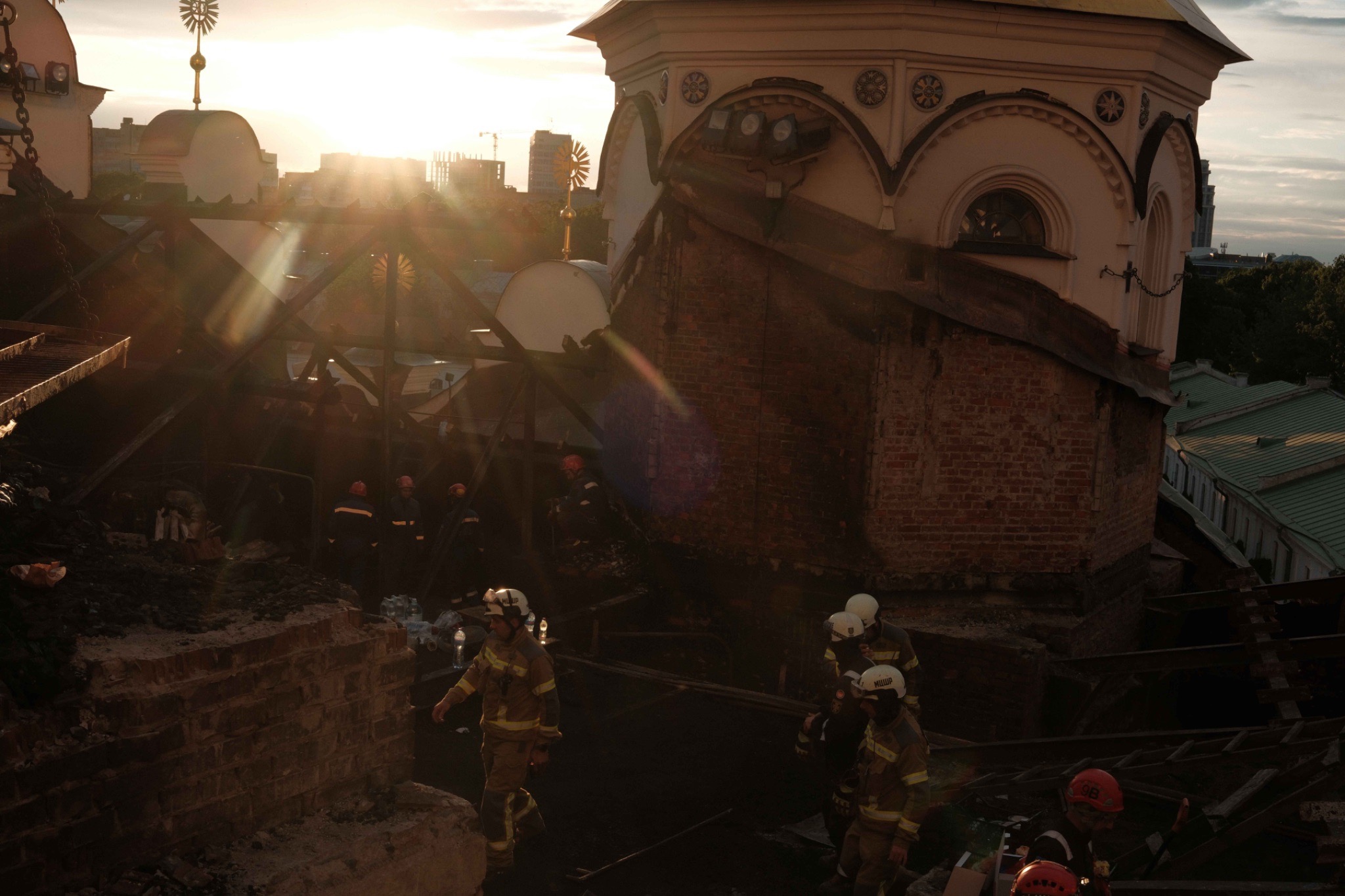
During the nighttime Russian attack, a "Geran-2" strike drone hit the St. Stephen's chapel of the Dormition Cathedral — the main church of the Kyiv-Pechersk Lavra, which is a UNESCO World Heritage site and a monument under the highest level of protection according to the Hague Convention. The fire covered an area of 800 sq. m; the domes, walls, and glazing of the cathedral were damaged. In the first hours after the strike, all valuable items and relics were urgently evacuated from the church; emergency services quickly localized the fire, thanks to which the fire did not spread inside the church.**
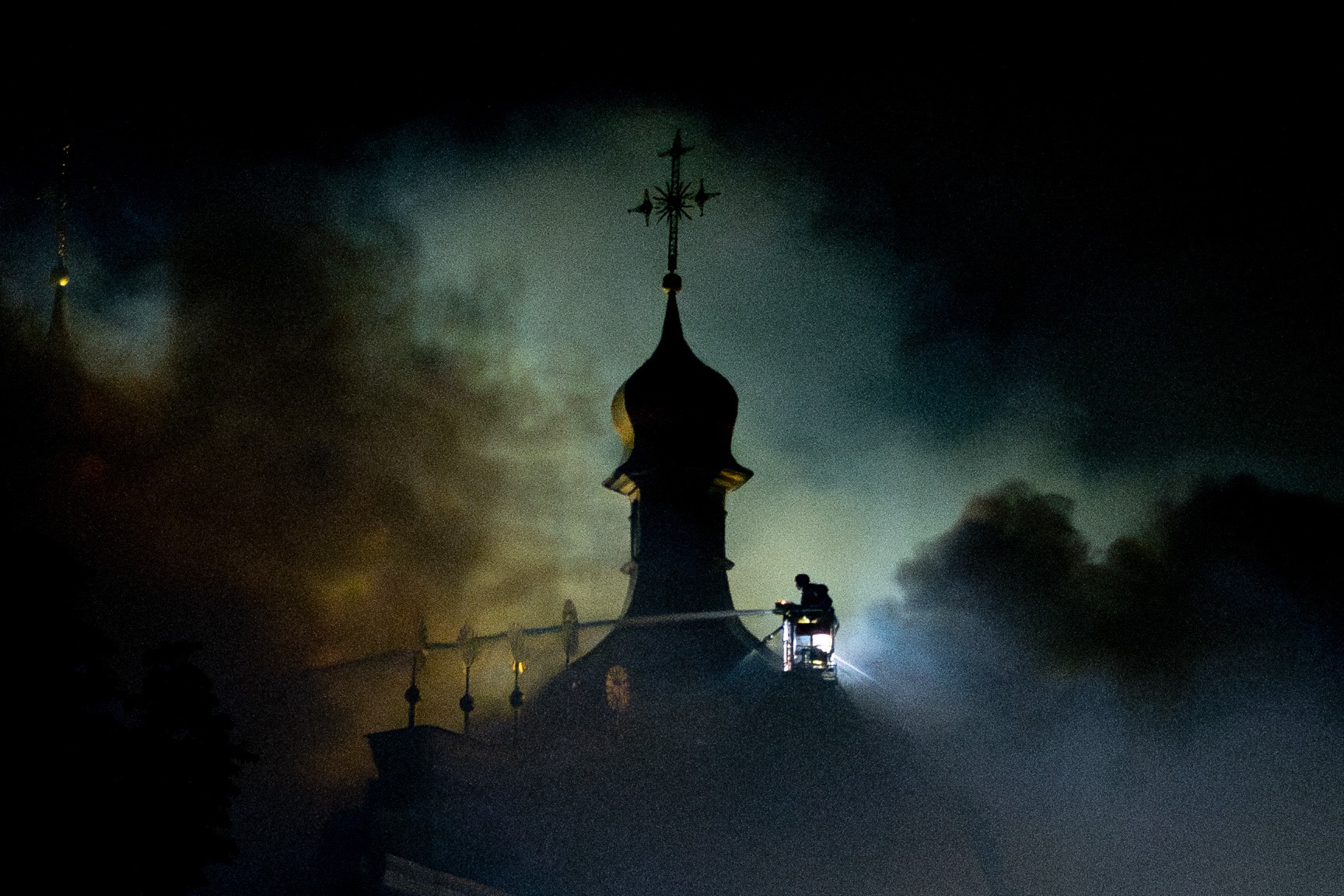
In the morning, the Russian army attacked the territory of the sanctuary again; a drone hit the "Mystetskyi Arsenal" National Culture, Art and Museum Complex, located opposite the Kyiv-Pechersk Lavra, causing a fire over an area of 1,000 sq. m; a large part of the roof of the left wing of the complex was seriously damaged.
As reported by "Ekonomichna Pravda," 80% of the roof of the Dormition Cathedral is damaged, and preliminary estimates indicate that it will take about two years to rebuild the cathedral. Nearby historical buildings were also damaged, including elements of the Lavra's fortification complex and the Ivan Kushnyk tower. "Ukrainska Pravda.Zhyttia" reported that the Treasury of the National Museum of History of Ukraine, the Museum of Book and Printing of Ukraine, the National Academy of Culture and Arts Management, the National Historical Library, and the storage facility of the National Museum of Folk Architecture and Life of Ukraine were damaged.**
SBU investigators initiated criminal proceedings for a war crime under Part 1 of Article 438 of the Criminal Code of Ukraine. According to the Minister of Foreign Affairs of Ukraine Andrii Sybiha, the state is initiating international legal procedures, in particular within the framework of UNESCO, and demands a decisive response from the international community to the Russian strike.**
At the O. Dovzhenko National Film Studio, as a result of the Russian missile strike, the central building of the directorate was damaged, where about 300 windows were blown out, and the costume warehouse was completely destroyed along with a unique collection: about 100,000 film costumes from different years and three million items of clothing, footwear, and accessories. In total, windows were blown out in all 18 buildings of the film studio.
In the Kyiv region, as a result of the nighttime attack on June 15, three people were injured, including a child; the boy suffered an acute stress reaction. The aftermath of the attack was recorded in five districts of the region. In the Brovarskyi district, a multi-story building, three passenger cars, and warehouse premises were damaged, and a fire broke out on the warehouse premises. In the Vyshhorodskyi district, a private household was damaged. In the Fastivskyi district, a private house was burning, and a car was damaged. In the Buchanskyi district, warehouse premises ignited, with a fire area of over 1,000 sq. m. In the Boryspilskyi district, a private house was damaged, and a fire occurred.

On the night of June 18, the enemy attacked communities in the Kyiv region with strike drones and ballistic missiles. In the Vyshhorodskyi district, hangar premises were damaged. In the Boryspilskyi district, a private house, an educational institution, and an enterprise territory were damaged. Another attack on the Kyiv region occurred during the day on June 20; warehouse premises caught fire in the Boryspilskyi district, and four people were injured. In the Vyshhorodskyi district, there were three wounded, all taken to the hospital.
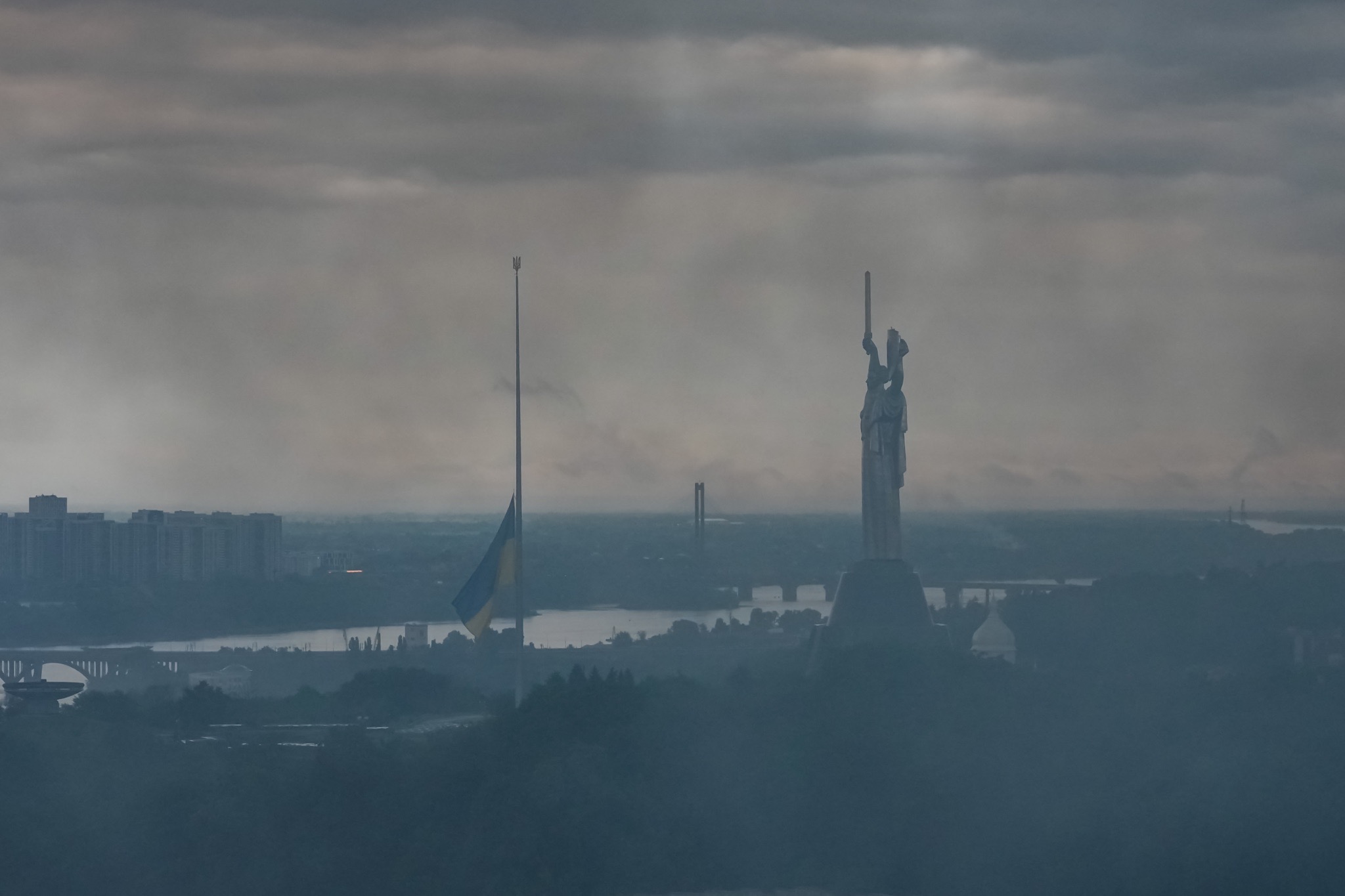
Kharkiv Region
On the evening of June 14, the Kholodnohirskyi and Kyivskyi districts of Kharkiv came under enemy strikes. In the Kholodnohirskyi district, an abandoned warehouse and the fence of warehouse premises were damaged. In the Kyivskyi district, a UAV hit the building of the Kharkiv Art Museum, which is a local architectural monument; a fire broke out on the roof covering an area of over 1,200 sq. m, and window glazing was damaged in office buildings. Rescuers, volunteers, concerned city residents, and government representatives participated in rescuing museum exhibits. Five women and an infant were injured in the enemy attack.
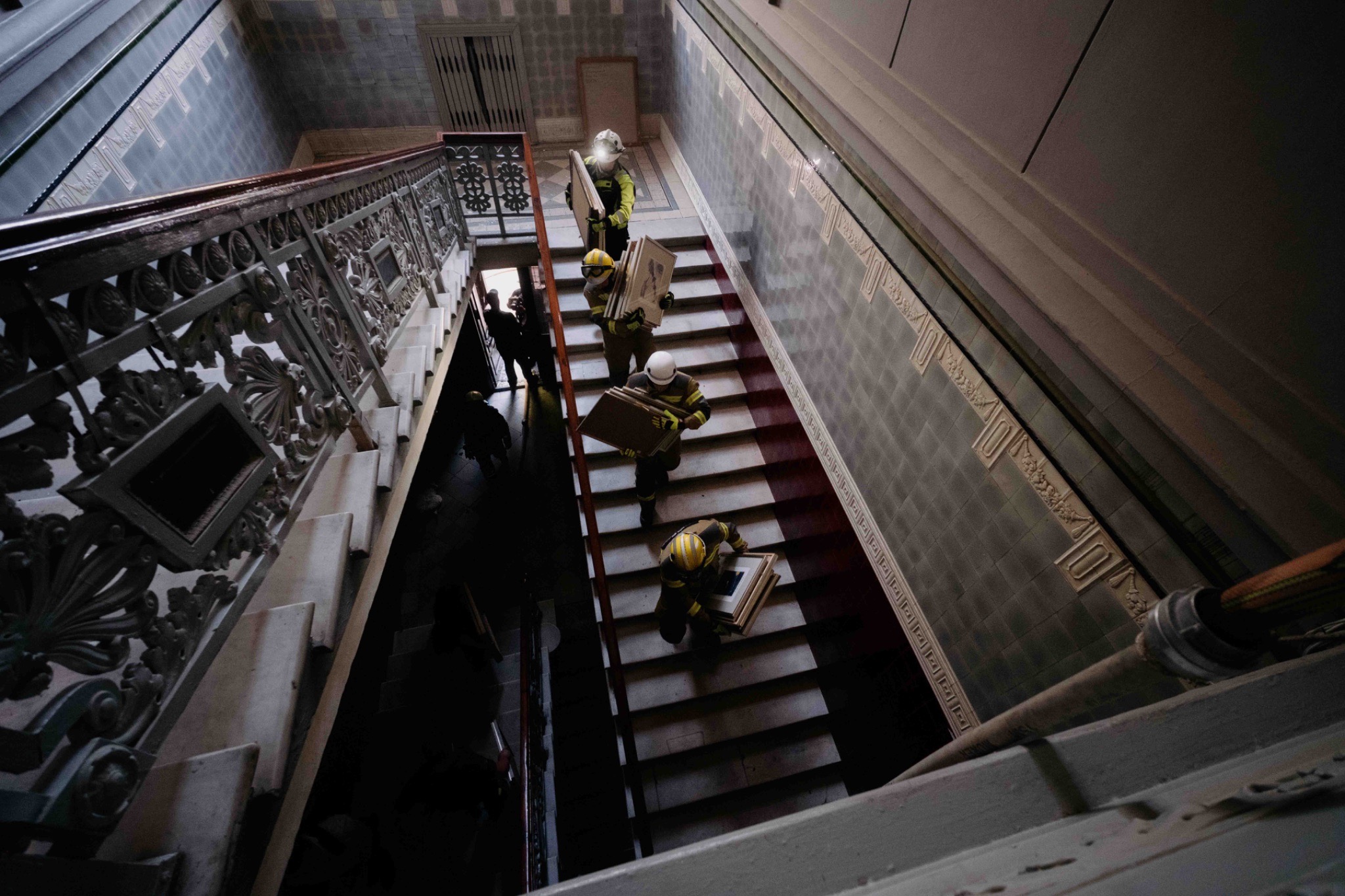
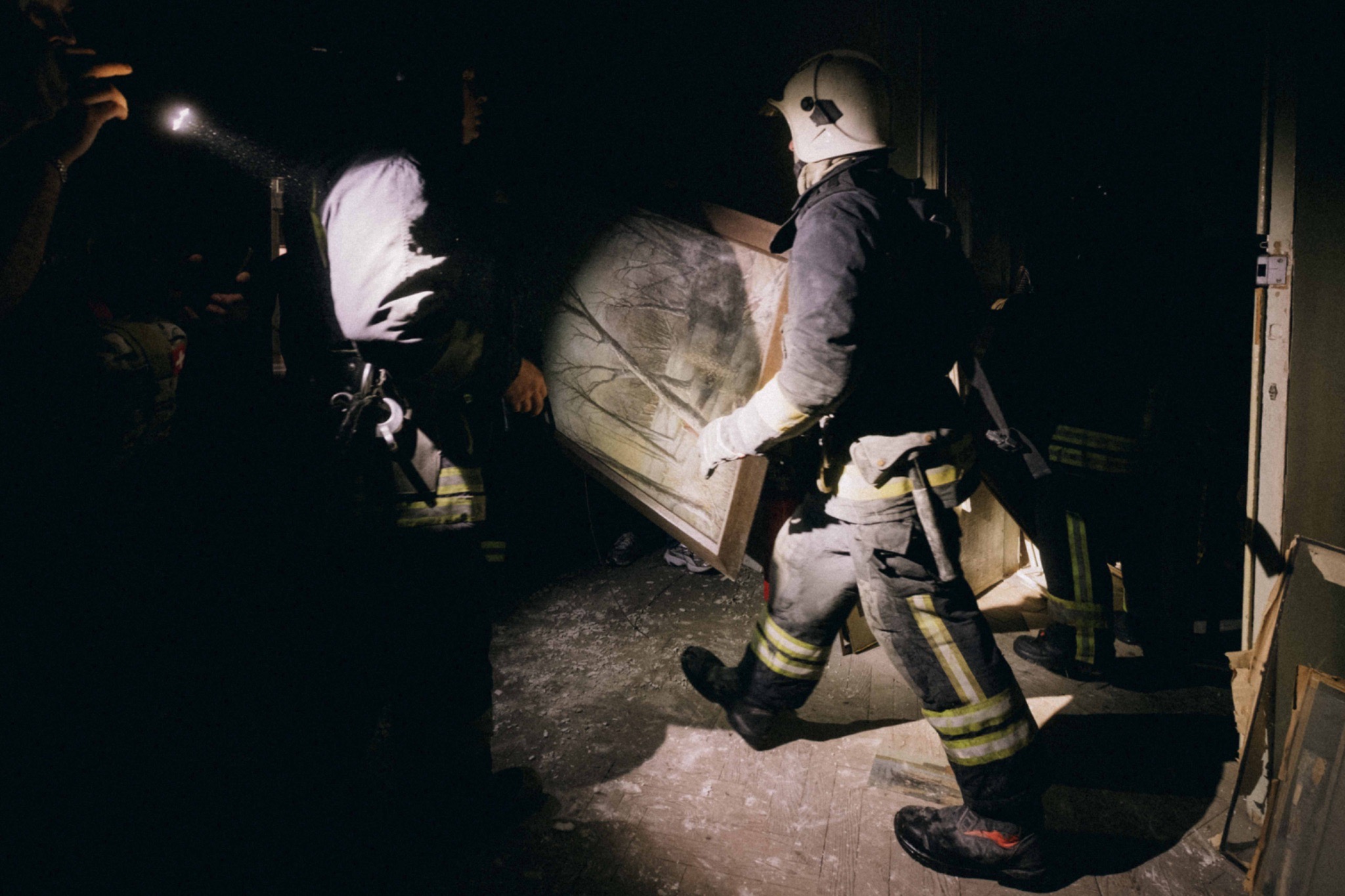
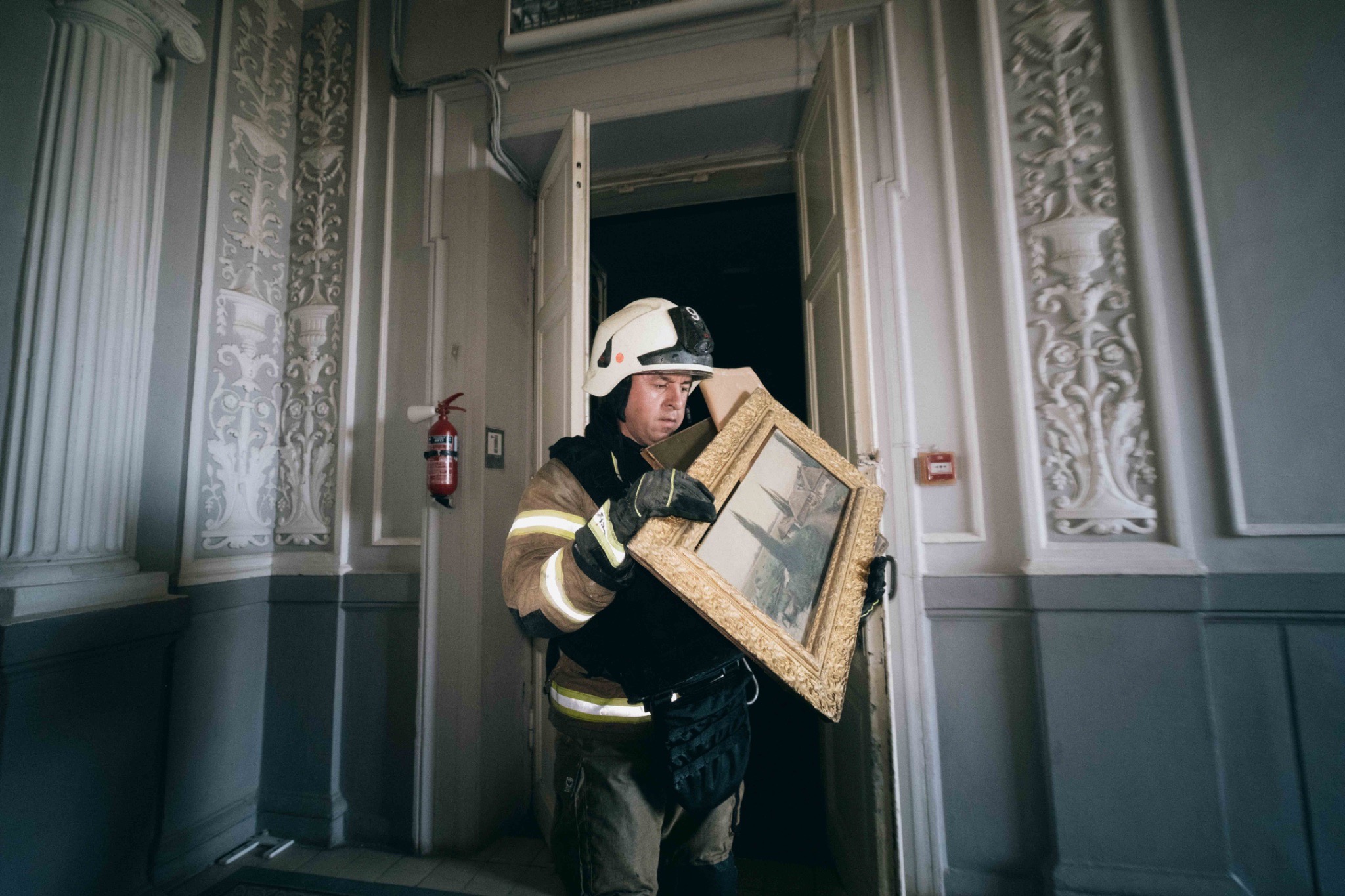
On the night of June 15, another enemy strike caused a fire on the territory of a civilian enterprise in the Kholodnohirskyi district of Kharkiv. During the extinguishing of the fire, the Russians launched a repeated missile strike, killing four SES rescuers, fighters of the sixth state fire and rescue unit of the city of Kharkiv: Dmytriy Boiko, Danylo Tishchenko, Serhii Makovetskyi, Vadym Zinchenko, and an employee of the Department of Emergency Situations of the Kharkiv City Council, Oleksii Dorozhkin; another nine rescuers were injured, and one critically injured rescuer, Mykola Derkach, died in the hospital. June 17 was declared a Day of Mourning for the victims.
In total, 24 people were injured in the region, including two children; the art museum building, a warehouse, two civilian enterprises, an apartment building, and seven cars were damaged.
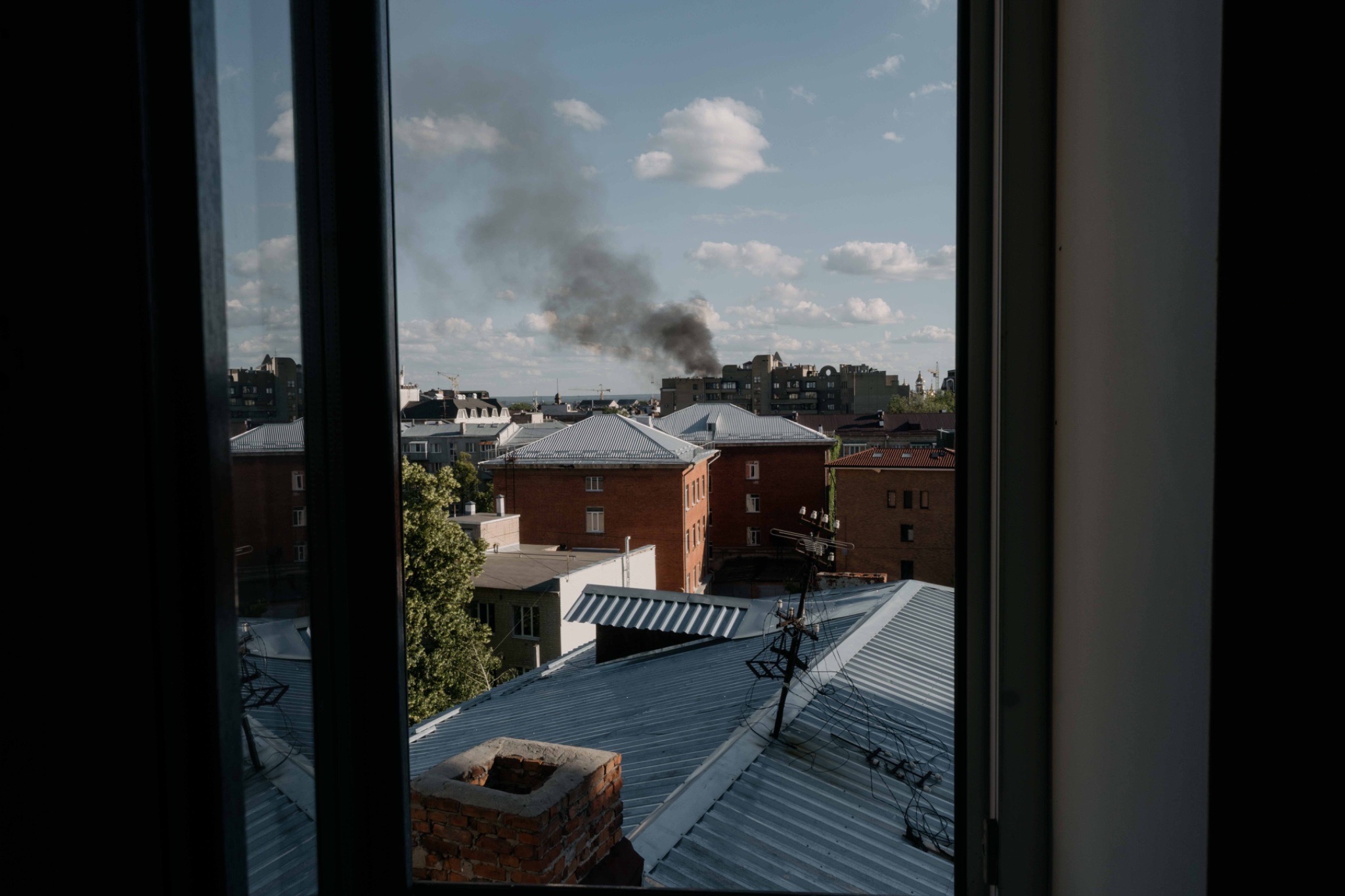
On the evening of June 15, Russians attacked Kharkiv with drones, with a hit on the territory of the zoo followed by a fire; the enemy also launched a missile strike on the village of Dobrene in the Berestynskyi district and attacked Balakliia with UAVs at night. Over the day, 23 people were injured, including four children; the zoo's infrastructure was damaged, and animals were killed and injured.
On June 17, there were 11 victims in the region, four of whom were in Kharkiv; a civilian enterprise and three cars were damaged; reports were made regarding the fall of enemy drones in the courtyard of a multi-story building and on the territory of a church.
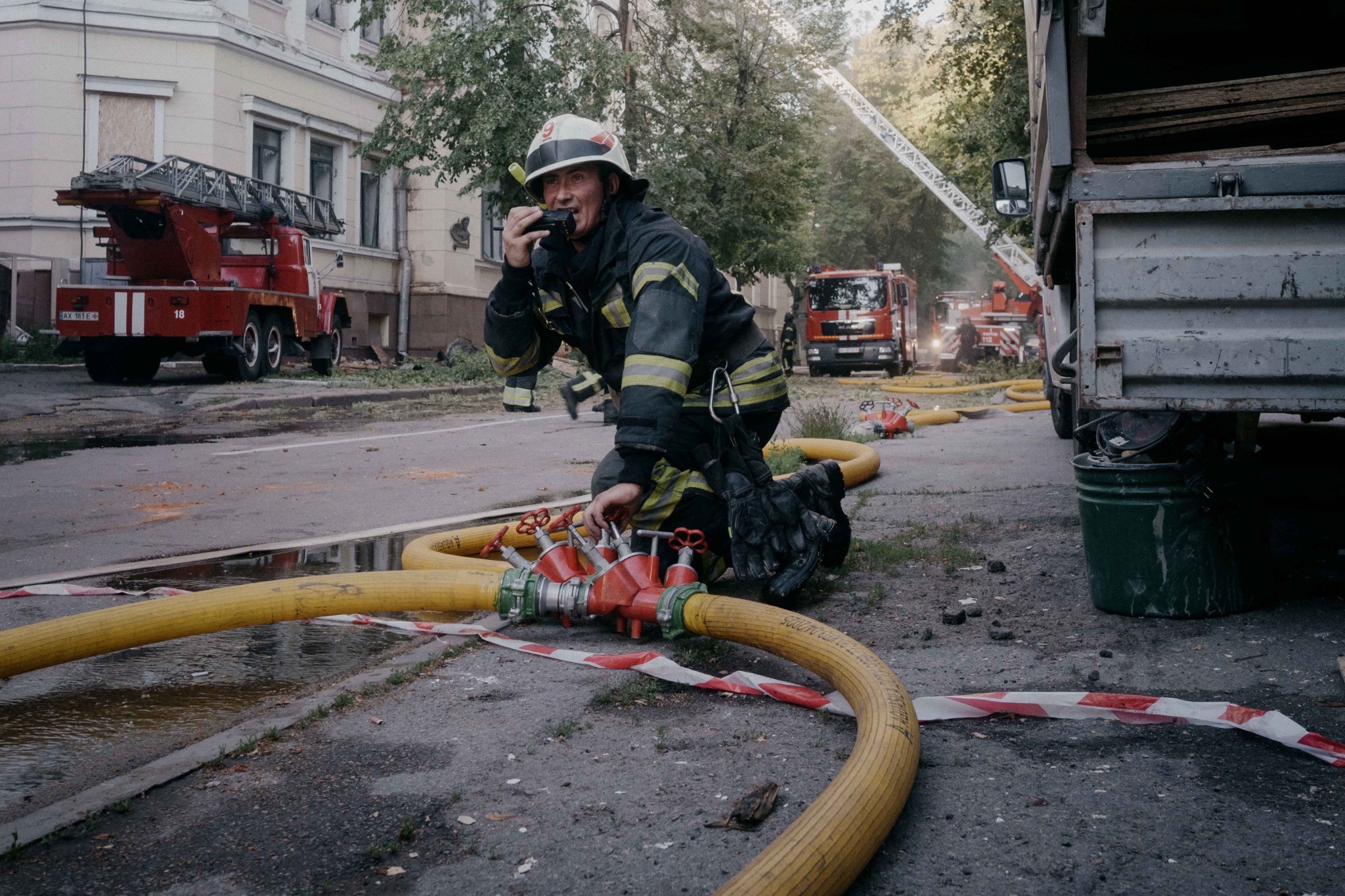
Russians attacked the Kholodnohirskyi district of Kharkiv twice with guided aerial bombs (KAB). On the night of June 19, there were hits in the private residential sector and a warehouse building; a fire broke out, injuring nine people, including four children. At least 40 private houses, cars, and warehouse premises were damaged. During the clearing of the aftermath at the site of the airstrike, fragments of a human body were found. On the night of June 20, the enemy again attacked the Kholodnohirskyi district with aviation; two people were killed and ten injured, including a child; a residential two-story building was damaged due to the hit.
In the Kyivskyi district, on the evening of June 19, an FPV-drone on fiber-optic cable presumably hit a civilian car moving along the road; the driver died on the spot, and the passenger was taken to the hospital.
On June 20, in the Kharkiv suburbs, Russian UAVs hit a postal terminal building, several buildings and cargo trucks caught fire; one person died in the region, and another 13 were injured, including four children; three gas stations were damaged in the Bohodukhivskyi district.
Dnipro Region
On June 14, Russians attacked Dnipro, damaging a light industry enterprise; in one of the premises, the ceiling was destroyed, and production equipment was mangled. Seven people were wounded, three of whom were hospitalized. In the region, one person died, and three others were injured, including a 16-year-old girl.
On the night of June 15, Russians struck Dnipro again; enterprises, a college, a cultural institution, and infrastructure were mangled in the city; one person was hospitalized in moderate condition.
In the building of Lyceum No. 36, ceilings, doors, and walls were mangled; the premises of the international charity organization TAPS, which helps the families of fallen servicemen, were also damaged. In the House of Organ and Chamber Music, a unique organ was broken — the only one in the four nearest regions; only German specialists can restore it. All of this was reported by the mayor of Dnipro, Borys Filatov.
"Ukrainska Pravda.Zhyttia" reported that the dome of the House of Organ and Chamber Music and gold-plated sheets were damaged, and the stained-glass windows were almost completely shattered; the institution will be able to resume concert activities only after a full restoration.

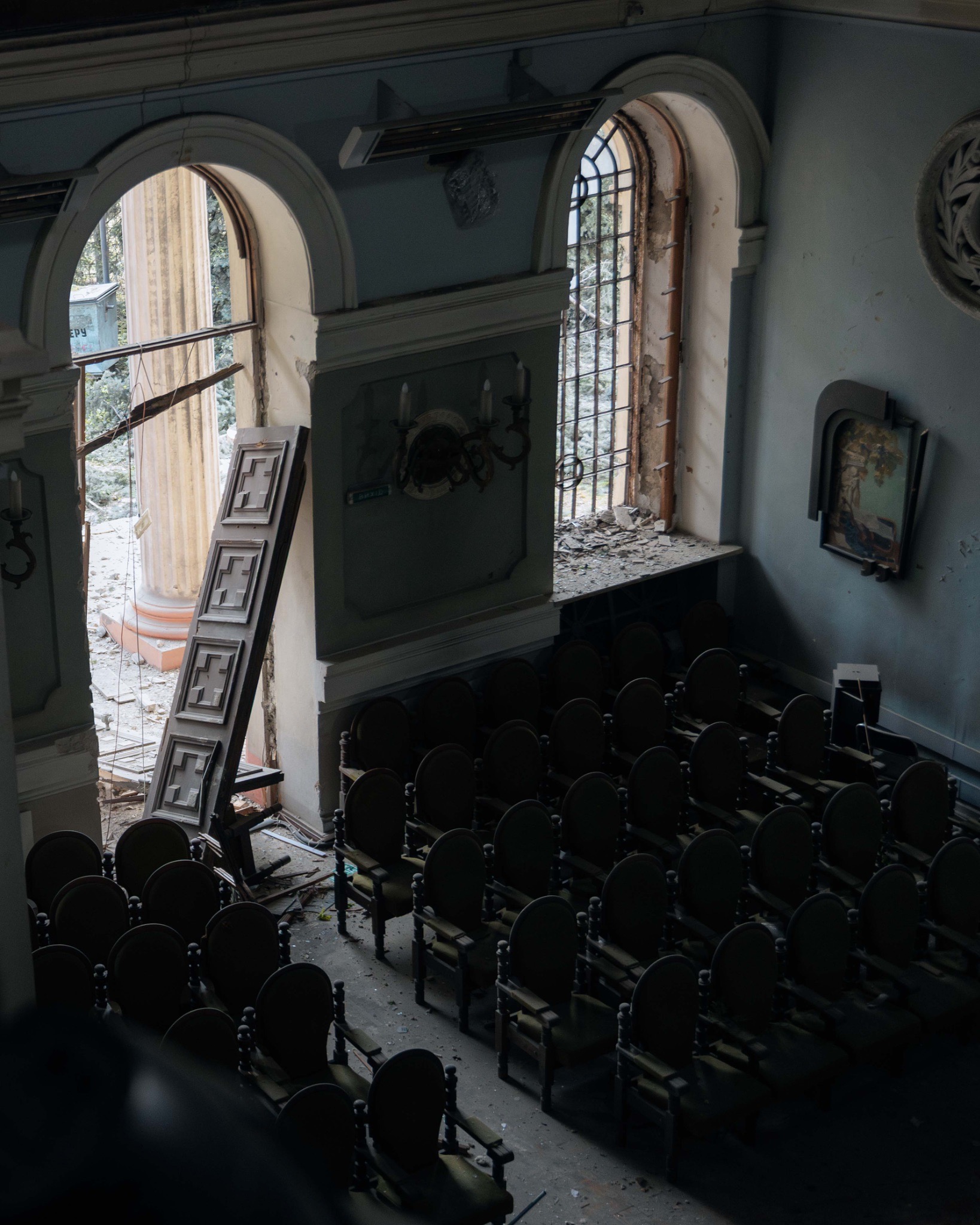
On June 16, Russians attacked people on the road in the Nikopol district with an FPV-drone, killing three people and injuring three others; a cathedral, an enterprise, residential buildings, an administrative building, and cars were damaged. June 17 was a day of mourning in Nikopol for the victims. In the Kamianske district, two people were injured, and gas stations, cars, and an enterprise were damaged; in Samara, an administrative building was damaged.
On the morning of June 18, Russian missile strikes on Dnipro claimed the life of another citizen — an operator of a production site died, 12 people were injured, nine were hospitalized, and a private enterprise was damaged. On June 19, an eight-year-old girl died as a result of the attack on Pavlohrad, three were injured, and one person was hospitalized with a wound; a private residential house was destroyed, and more than ten houses were damaged. June 20 was a day of mourning in Pavlohrad for the victims. Over the weekend in the Dnipro region, one person died from Russian shelling, nearly two dozen were wounded, and residential infrastructure, an enterprise, and a wheat field were damaged.
Material created with the support of the British Council's "Grants for Creative Economy Development" program
Working on the material:
Topic researcher, author of the text: Yana Yevmenova
Photo editor: Olga Kovalova
Literary editor: Yuliia Futei
.png)
.png)
.png)