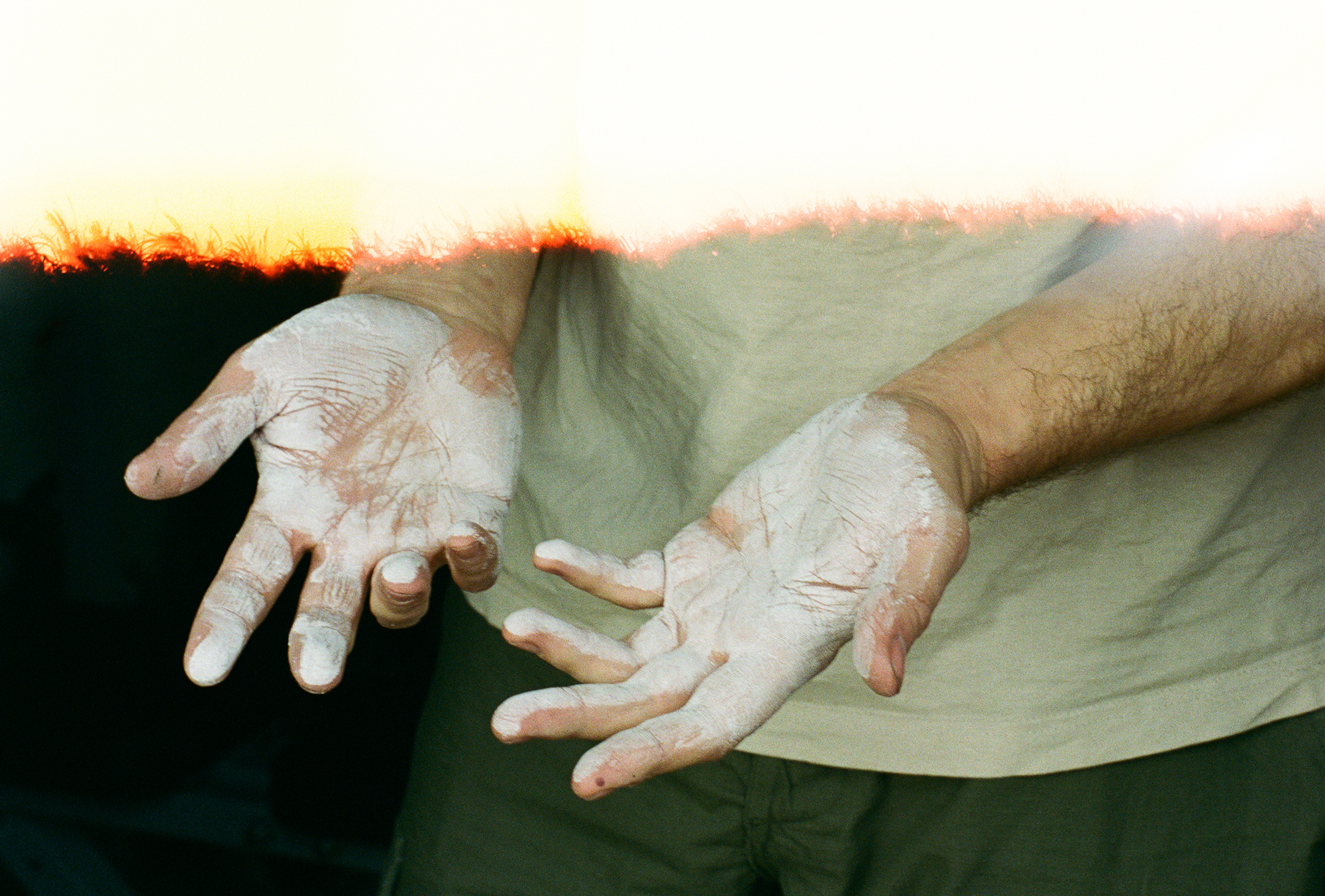
Khrystyna Voitkiv's project "Beneath the armour" explores the inner world of Ukrainian soldiers through their passions. Before the full-scale Russian invasion, many of them were artists, athletes, or public figures. Now, despite the colossal pressure of war, they maintain their former interests and practices. This is not just a hobby; it is a manifesto for preserving one's personality outside of the military context.
"A look at the inner world of a soldier, whom we are used to seeing as a tough hero in armour"
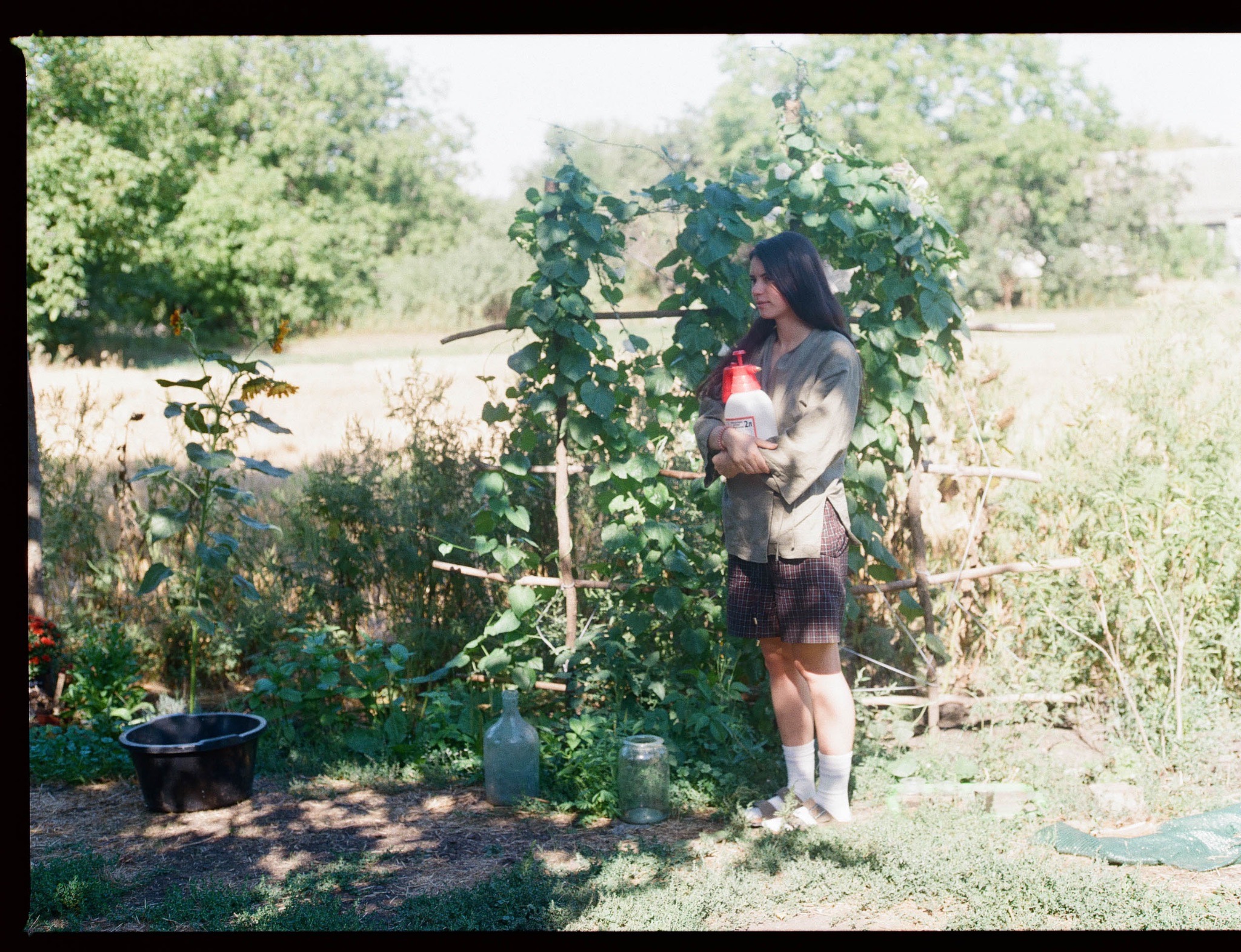
My friend Diana went to serve in 2024. Along with other soldiers, she performs important work in the Zaporizhzhia sector. In the summer of 2025, Diana and her comrades-in-arms began planting a garden near their base. When I heard about this initiative, I realized that these are the stories I want to tell. At the beginning of the full-scale Russian invasion of Ukraine, I started working on various projects. However, I shelved them, feeling that they weren't my topics.
I went to visit Diana in a frontline village. Their permanent deployment point was an ordinary village house. In the intervals between combat missions, Diana and her comrades began planting plants. She used to say, "I don't know if I'm taking care of the garden, or if it's taking care of me." It was a very small garden, but to me, it looked incredibly poetic and surreal at the same time: living green plants as a symbol of life where war is raging very close by. At the moment, the village, unfortunately, is occupied, and the fate of the garden is unknown.
The project "Beneath the armour" is a look at the inner world of a soldier, whom we are used to seeing as a tough hero in armour. I am interested in finding out what inspires soldiers, what motivates them to remain themselves, to live, and to continue the fight. I look at the hero not as an image, but as the person behind it.
My project focuses on documenting the personal rituals of Ukrainian defenders who are far from home and family. Before serving in the military, many of them were creative professionals, developed sports careers, or created projects important to society. Today, despite the circumstances, military duties, and risks, they preserve practices that help them not to lose their sense of identity — some play sports, some create music or watch the stars, play a favorite instrument, or tend to a small garden. It is these activities that support their mental resilience and emotional balance.
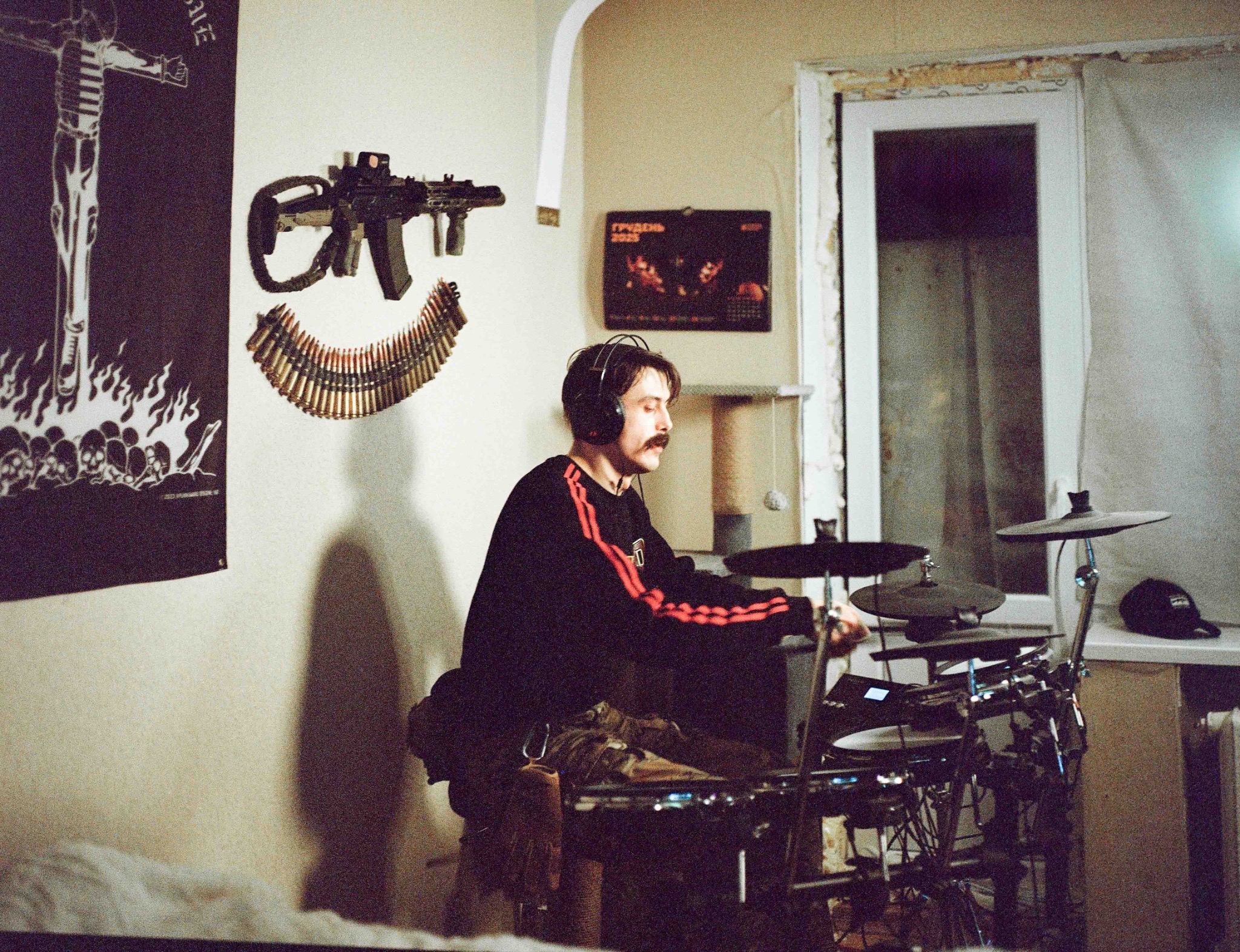
"I do not focus on direct depictions of war"
When I arrive in frontline cities and towns, I look for opportunities to talk to soldiers and document their favorite activities. I do not focus on direct depictions of war. The project "Beneath the armour" is about how people who have become soldiers preserve the part of themselves that war cannot take away. Through these stories, the project highlights inner resilience and the complex experience of people, while also reminding us that the war is still ongoing.
I do not plan the frames or their composition in advance. I usually decide everything on the spot — I never know to the end what the shooting locations will be. Not all soldiers can send me photographs to show their living conditions. I also cannot do portraits of everyone, because there are people who avoid it.
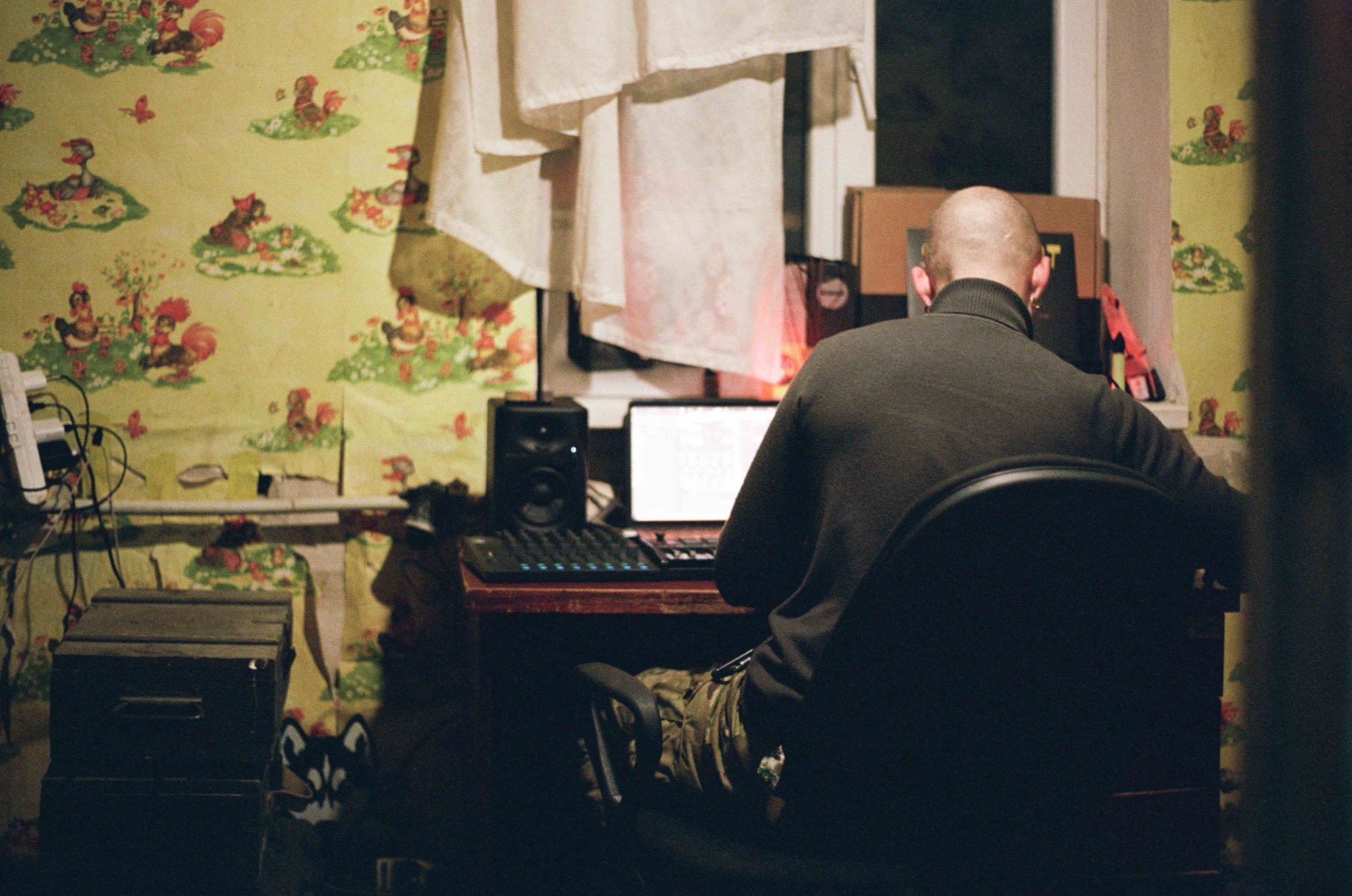
My story is documentary. For me, the most important thing during the shoot is to start from how my heroes feel and what the space around them looks like. I observe and I take photographs.
Initially, I photographed my friends. They are all mostly from Kyiv and have creative professions. After I started working on the project, information about it went viral among my acquaintances. Several times I posted on social media that I was looking for heroes for the project, and a lot of people wrote to me. Currently, I have a list of over twenty soldiers with very different stories and a wide range of interests. Some paint icons, some box at their positions, and some conduct Vedic rituals before heading out to their posts.
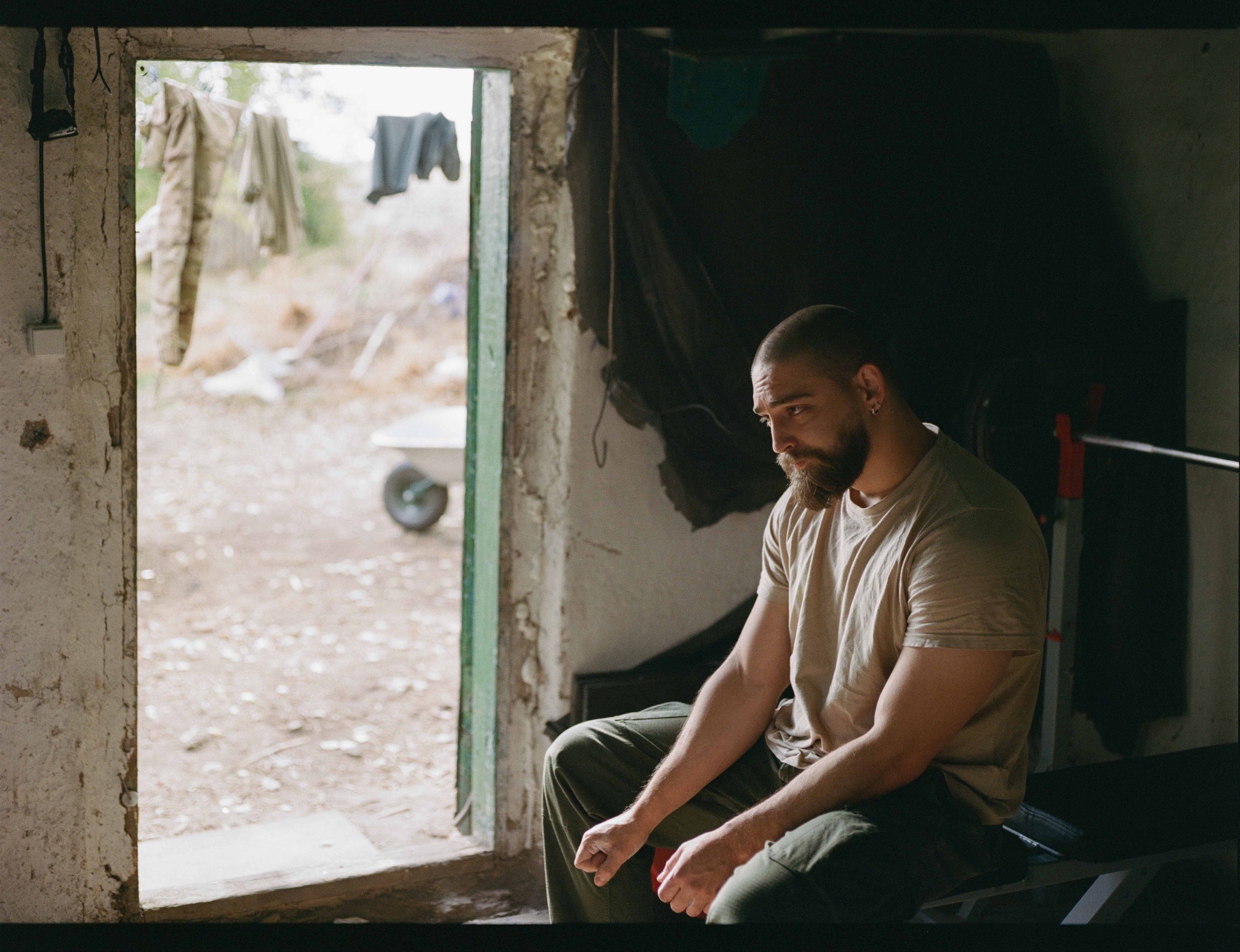
"The most important thing is to create an atmosphere of safety, which becomes a bridge of trust between me and the hero"
Soldiers agree to participate in the project because they want to be visible primarily as people. It is important to them that someone is interested in their lives, and not just in whether they have completed a combat mission. Most of the soldiers I photographed for the project were inspired to continue their work and realized that their example motivates others.
I try to spend as much time as possible with each hero of my project, although it is not always possible. Sometimes there is very little time, as the guys have important tasks. Whenever possible, I bring the soldiers delicious food and drinks, we sit down, and talk for a long time. Only then do I move directly to shooting. The most important thing is to create an atmosphere of safety, which becomes a bridge of trust between me and the hero. For this, I can sometimes tell more about myself so that they understand that there is openness between us, but mostly I listen a lot to extraordinary stories from combat or other topics of life that are currently available to them.
Of course, photography is capable of evoking strong feelings and a sense of connection, because each of us has rituals that keep us grounded in current realities. However, for a full-fledged story, photography as a sole medium is sometimes not enough. On my next trip to the soldiers, I want to take a video camera and record our conversations. I also plan to work with texts — to combine the visual image with important stories and words that I hear directly from the soldiers.
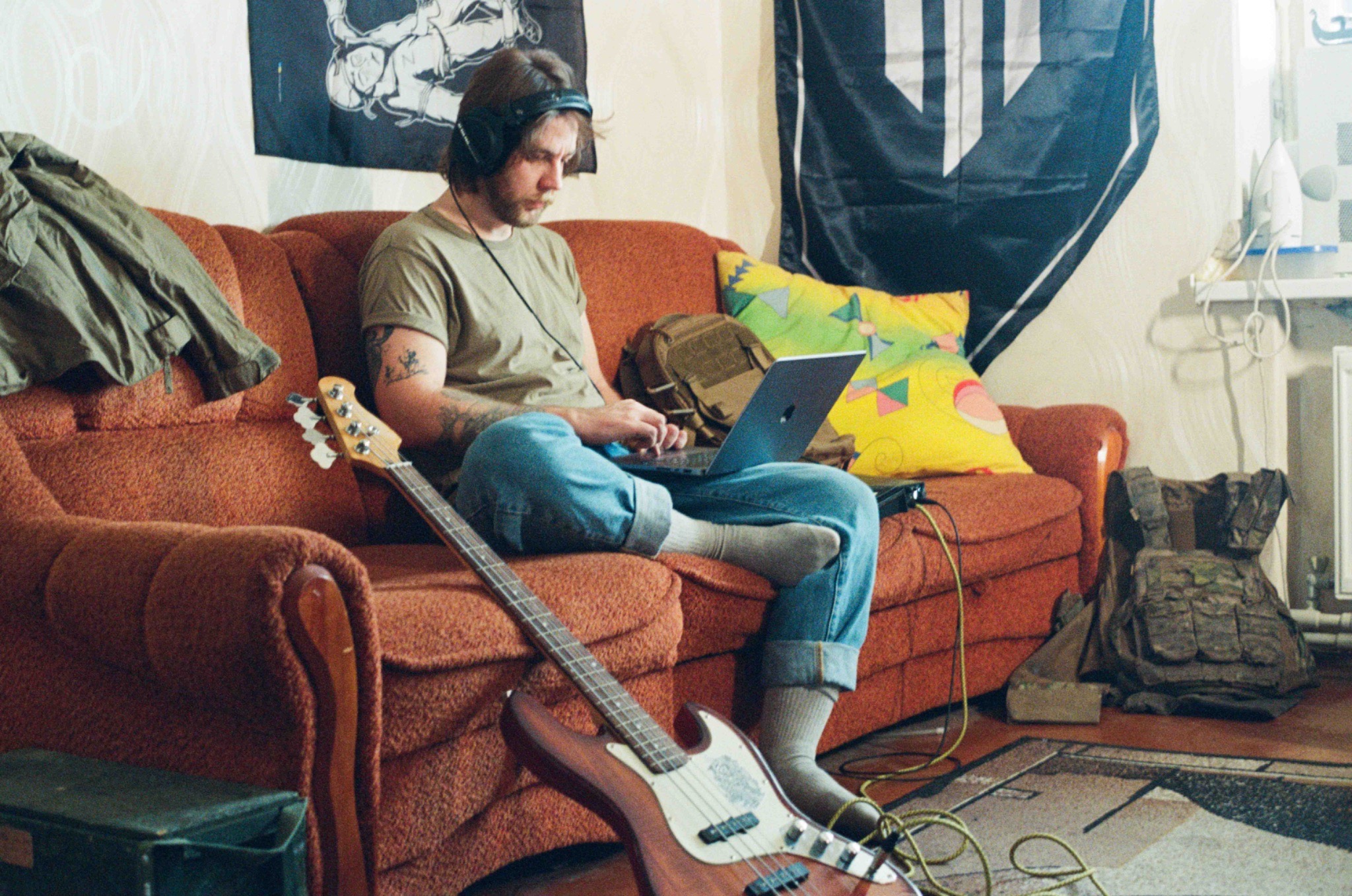
In the photographs, it is important for me to show how fundamentally different worlds coexist in a person's life. I have a frame where, next to a weapon, an aggressive marker of war, stands a guitar as a symbol of sensitivity. When I come to a soldier, he usually does not have a private room. Many people live in one space, and their belongings chaotically coexist with each other. I don't even need to specifically look for objects that will mark the presence of war in the lives of my heroes.
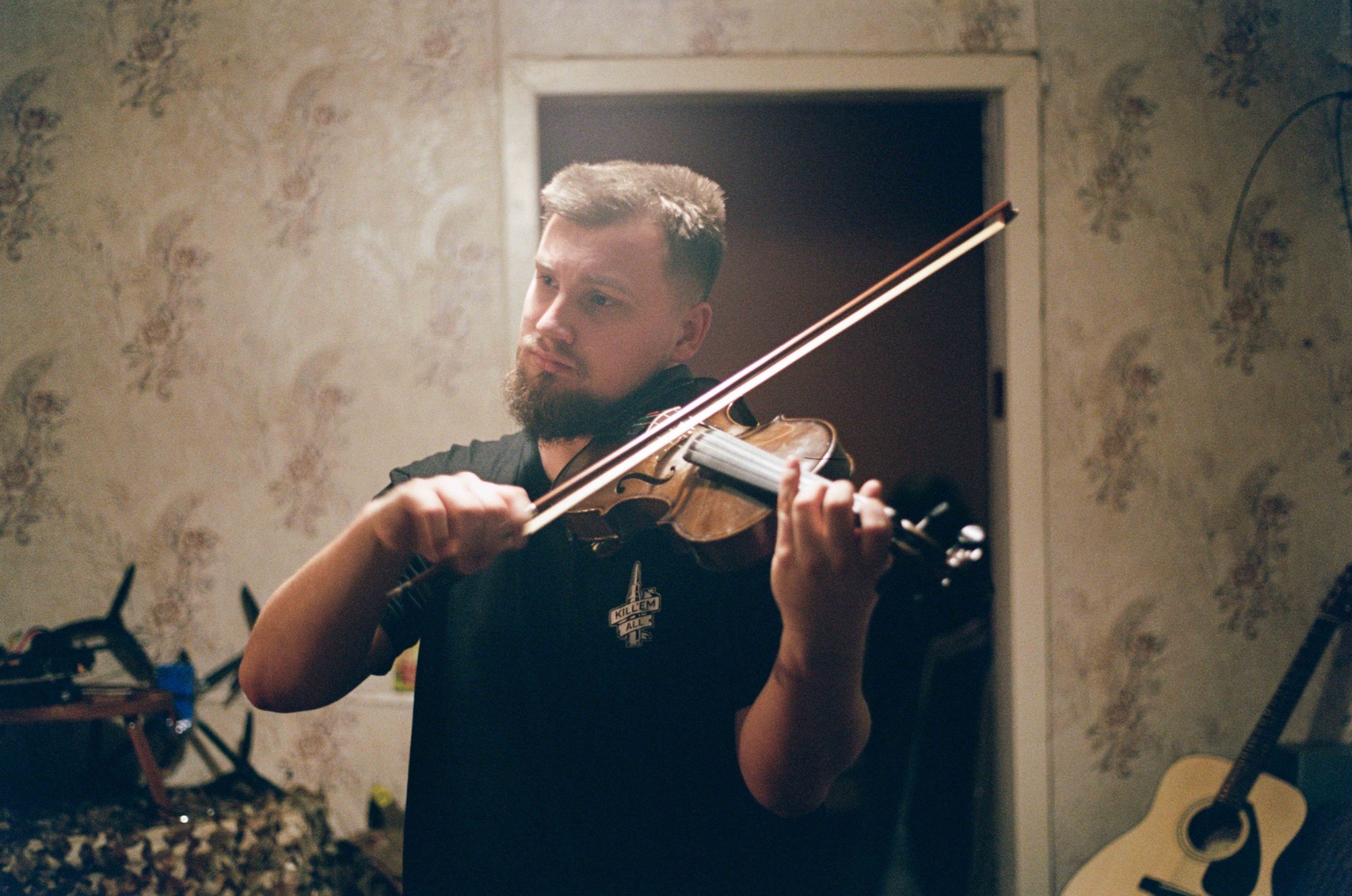
"A project about hope, warmth, and light that is in each of us"
I had a short break when I wasn't taking photos specifically for "Beneath the armour". During this time, I had the opportunity to think about how to transform my project. Previously, it was portraits and a look at the soldiers' favorite pastimes. Today, I want to take a video camera and record interviews with the soldiers, to research the topic more deeply.
When I was photographing for "Beneath the armour", I did not feel any emotional exhaustion. I do not perceive this project as work on a complex military topic. "Beneath the armour" is a project about hope, warmth, and light that is in each of us.
The hardest part of working on the project is learning about the death of its heroes. I planned to return to the soldiers I had previously photographed to record videos with them. Two heroes from the list, unfortunately, I will no longer be able to film. This aspect of the work triggers me a lot. I am in a great hurry, but at the same time, I freeze because I have a fear of not making it in time to visit everyone. I become emotionally attached to each person, to their story, because it is simply impossible to be detached.
For me, it is fundamentally important to maintain a connection with the heroes. I in no way want it to look like I am using their experience — as if I simply captured the stories of the soldiers and disappeared from their lives.
"My involvement and documentation of the soldiers' lives outside the military context is a space where their personal history is born"
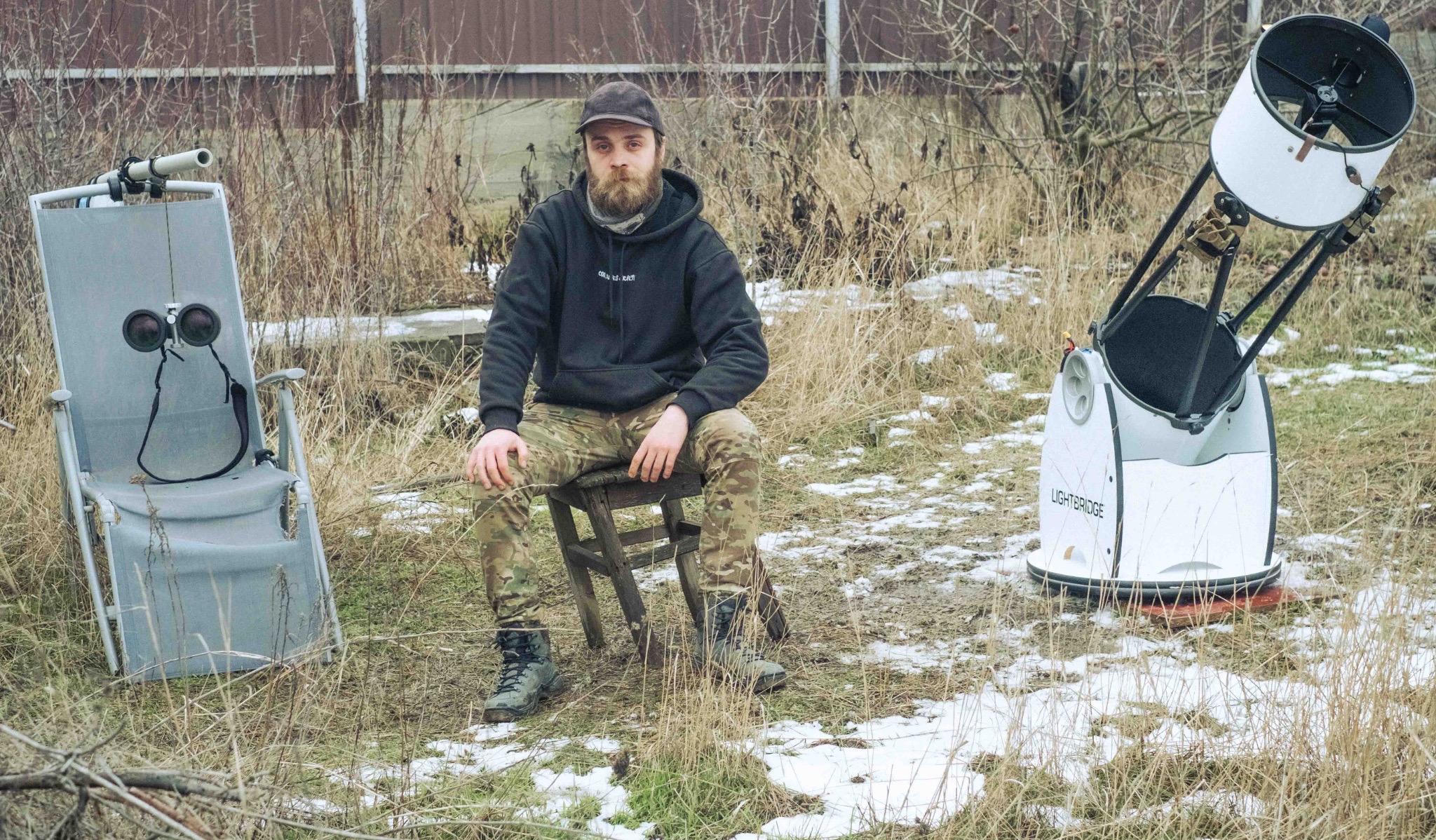
I know for a fact that the shoots for the "Beneath the armour" project inspired many soldiers, as they shared this with me themselves. It is important for soldiers to know that someone is genuinely interested in their lives. This gives them an understanding that they are doing something really cool and meaningful, first and foremost — for themselves. For example, Danylo, a soldier with whom I am often in touch, shared this feeling with me. He is currently in the Donetsk region, and when he has the opportunity, he watches the stars. He bought himself a lot of equipment to observe the sky.
After the shoot for the project, Danylo was very inspired by the fact that his story was interesting to others, especially his notes and observations of the stars. He is now working on a book called "Stellar Happiness of the Donbas." My friend Diana, who created the garden, started returning to her art practice and is painting a lot now.
My involvement and documentation of the soldiers' lives outside the military context is a space where their personal history is born. Such connection reminds soldiers that they are important not only as generalized images of heroes, but primarily as unique individuals. It is this realization of their own value beyond the war, as I see it, that gives them inspiration.
"War is not a sentence, but a long marathon"
I continue to work on the "Beneath the armour" project because many people from my close circle volunteered for the war and are still serving. Most of them are creative people who were developing their own businesses or working on creative projects. I sincerely admire these soldiers and strive to support them at least with my art. With my project, I want to continue this special connection with people who are truly close to me.
We talked a lot with Danylo, who loves to look at the stars through a telescope. He said that he is actually happy to be in the military and feels he is in the right place, but it is this fascination with telescopes that keeps him in balance.
It is important for Danylo to inspire other soldiers. He says that war is not a sentence, but a long marathon. Therefore, soldiers need to be able to combine service with their hobbies, sometimes force themselves to switch off, inspire each other, and do something together — talk and create. The war has been going on for a long time, and no one knows how much more lies ahead. Inner resources must be preserved right now. In these realities, it is extremely important to support yourself — to look for your own foundational meanings, and at the same time be a pillar for one another.
Material created with the support of the British Council's "Grants for Creative Economy Development" program
Khrystyna Voitkiv is a Ukrainian photographer and artist, originally from Ivano-Frankivsk, currently living and working in Kyiv. She came into photography in 2018, starting intuitively by shooting stories of people close to her. In 2019, she completed a course by Serhii Melnychenko, which influenced her conceptual perspective and visual language. In parallel, she works with video art, cinema, and performance practices.In her practice, Khrystyna explores intimacy, memory, and corporeality, focusing on states of vulnerability, closeness, and human transformation — especially in conditions of trauma, war, and deep social change.
After the start of the full-scale invasion, she focused on volunteering and co-founded the girls' association TSVIT, which has been supporting the military since the first days of the war. In 2022–2024, together with soldier and photographer Semen Kuchvara, she created an intimate photo diary Us by Us. The project was included in the UKRAINIAN WARCHIVE and is currently presented at the Västerbottens museum, Sweden. In 2023, she joined the Ivano-Frankivsk art collective Memory Lab, where artists collectively realized three multidisciplinary projects supported by UNESCO, the Ukrainian Emergency Art Fund, PerForma, and the Goethe-Institut.
Contributors to the material:
Topic researcher, author of the text: Katia Moskaliuk
Photo editor: Olga Kovalova
Literary editor: Yuliia Futei
.png)