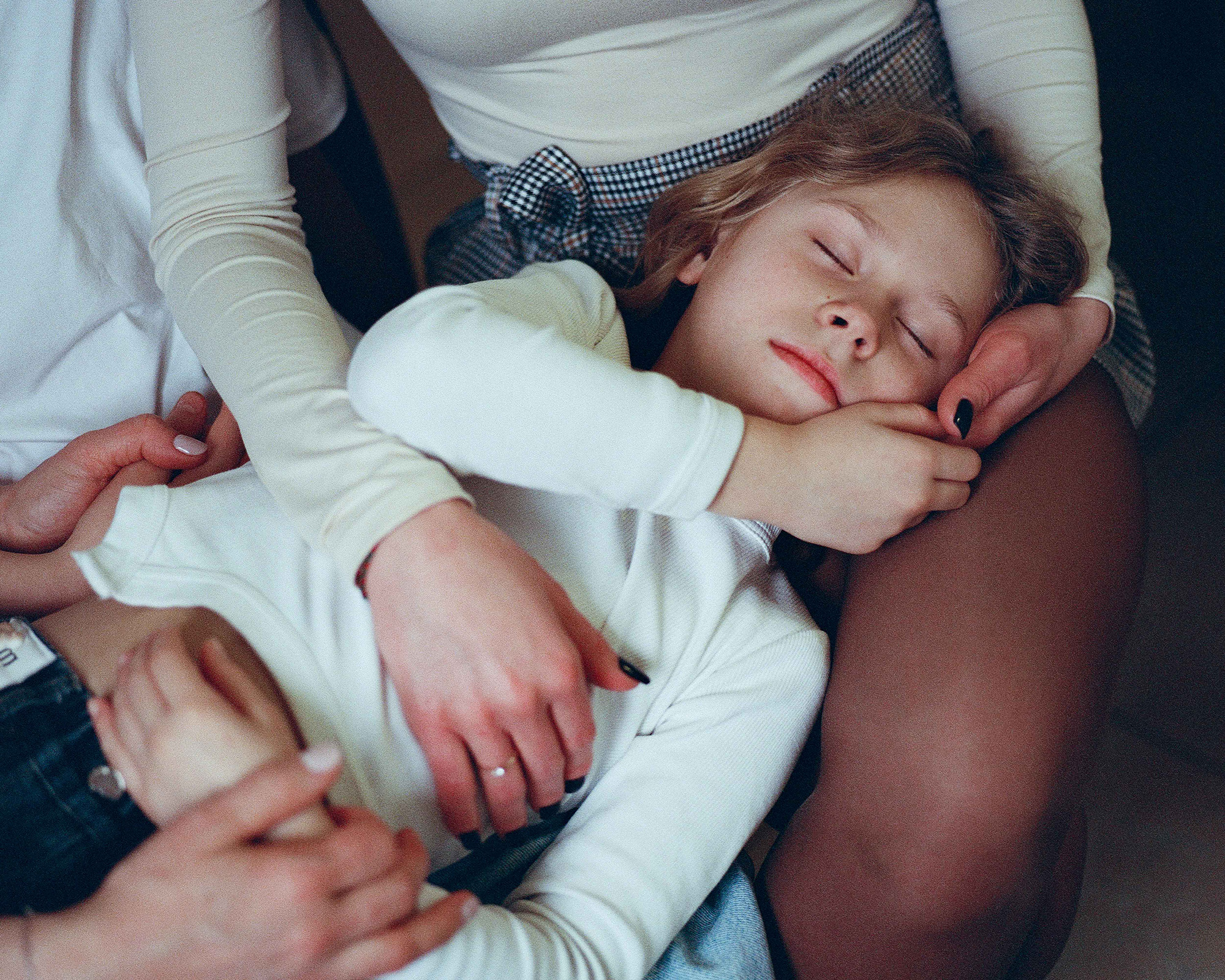
Photographer Anya Tsaruk lives and works in Berlin, but most of her projects are dedicated to her native Ukraine. She explores themes of migration, identity, and the fragility of private boundaries during the war. Her projects have received international recognition — the Grand Prix of the Sarajevo Photography Festival, the V&A Parasol Foundation Prize, and Cortona On The Move with the BarTur Grant.
Anya Tsaruk talked about why film allows her to slow down time, how photography shapes perception of Ukraine abroad, and how people's personal stories transform into photo projects.
— When did you feel that photography became your main language of communication with the world?
— It happened with the start of the full-scale invasion. Before that, I took photos, but it was mostly street photography, travel shots, and pictures of friends.
With the start of the full-scale invasion, I felt an inner need to communicate with the world about the war in my country and to somehow process this experience. I needed another language to tell what was happening. And that's when I did my first project — "Mother Land". It's about my mother, who came to Berlin, where I was already living, after the full-scale invasion began, and how our relationship started to change. Photography became a way for me to communicate about the war in Ukraine, as well as an opportunity to experience and express my own thoughts and emotions.
— Who opened the world of photography to you, and how did the desire to shoot appear?
— My grandfather gave me his camera for Christmas, which his grandfather used to use. I started shooting on film, stayed with it to this day, and the transition to digital hasn't really worked out for me yet — perhaps there is simply no need for it.
During the coronavirus epidemic, my friend and I lived together in Berlin. I found this camera, and since there was not much else to do, we did a photoshoot in the apartment. Later I went to study a one-year course at a Berlin photography school. My studies coincided with the year the full-scale war began. That's when an amateur hobby turned into something fundamental. I developed a strong desire for my photo projects to be seen, for Ukraine to be talked about. I started actively submitting photos to competitions and exhibitions, after which the first publications in media appeared. For example, the story Wie geht Heimat? ("What does the word 'home' mean?") for Spiegel about Kateryna from Kyiv and her search for a sense of home in Berlin.
— Who influenced your formation as a photographer at the beginning of your career? Perhaps these were classics of world photography or people from your immediate surroundings?
— In fact, it is very difficult for me to separate individual influences, because it is a huge collective picture. It has always been interesting for me to look at the work of other artists: I actively visit exhibitions, festivals, and peer into photobooks. All this shapes my vision of the world and understanding of the medium. For a while in Berlin, I even ran a book club where we read and discussed texts on the theory and history of photography.
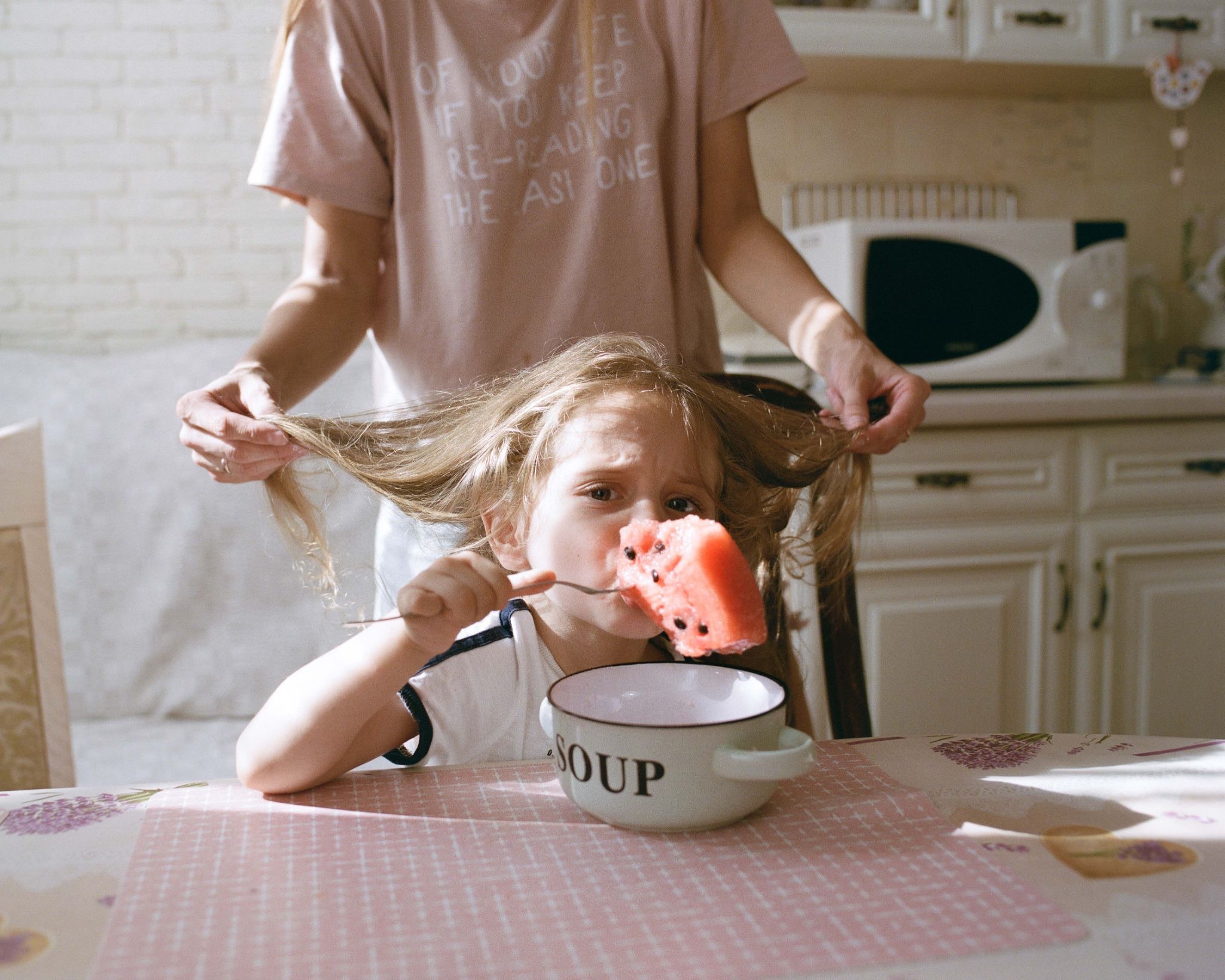
I was incredibly lucky in life to find something that I am so interested in constantly learning about, reading, watching, and communicating with other people about. Therefore, my style and vision are the sum of everything I have seen, read, and with whom I have communicated.
— How important is visual education for a photographer, and how exactly did it affect your worldview?
— Since I don't have a full specialized education — I didn't complete a bachelor's or master's degree in photography — a one-year course became my foundation. It helped me a lot, but probably what worked most was my huge desire to learn and an inner need to take the maximum from what was given in this school. This training was almost five years ago, but after it I never stopped learning: I continue to participate in workshops, portfolio reviews, and mentorship programs. I know that I don't know a lot of things, but I can learn anything.
It seems to me that education is important, but not necessarily in an institutional sense. We all learn very differently: someone needs a clear structure, while someone needs a strong passion. In fact, it is important to simply see, look, be interested, and take something from the world, and the way you do it is secondary.
Even Instagram stories can strongly influence perception. Since I work between Germany and Ukraine, I often look at what my friends in Ukraine photograph right on the streets. Such everyday things also shape our idea of the world. It doesn't necessarily have to be high culture, art, or literature — our vision is influenced by many aspects of daily life.
— Your photos are mostly stories. Why did you choose documentary photography and why is this genre most interesting to you?
For me, photography is also a certain way of self-discovery, so I work a lot with my family and friends. In order to learn something about the world, it is important first of all to learn something about yourself. Photography gives me the opportunity to look at myself in different roles: as a daughter and granddaughter visiting her family, as a friend, as a Ukrainian, as an emigrant, and as a woman. I turn to my inner circle, and this knowledge becomes the first step to knowing the world. I am curious about how this will develop later — whether I will move away from family and friendly themes, or if they will remain a common thread through all my work. These are internal processes and callings that guide me. My task is to be able to listen to them.
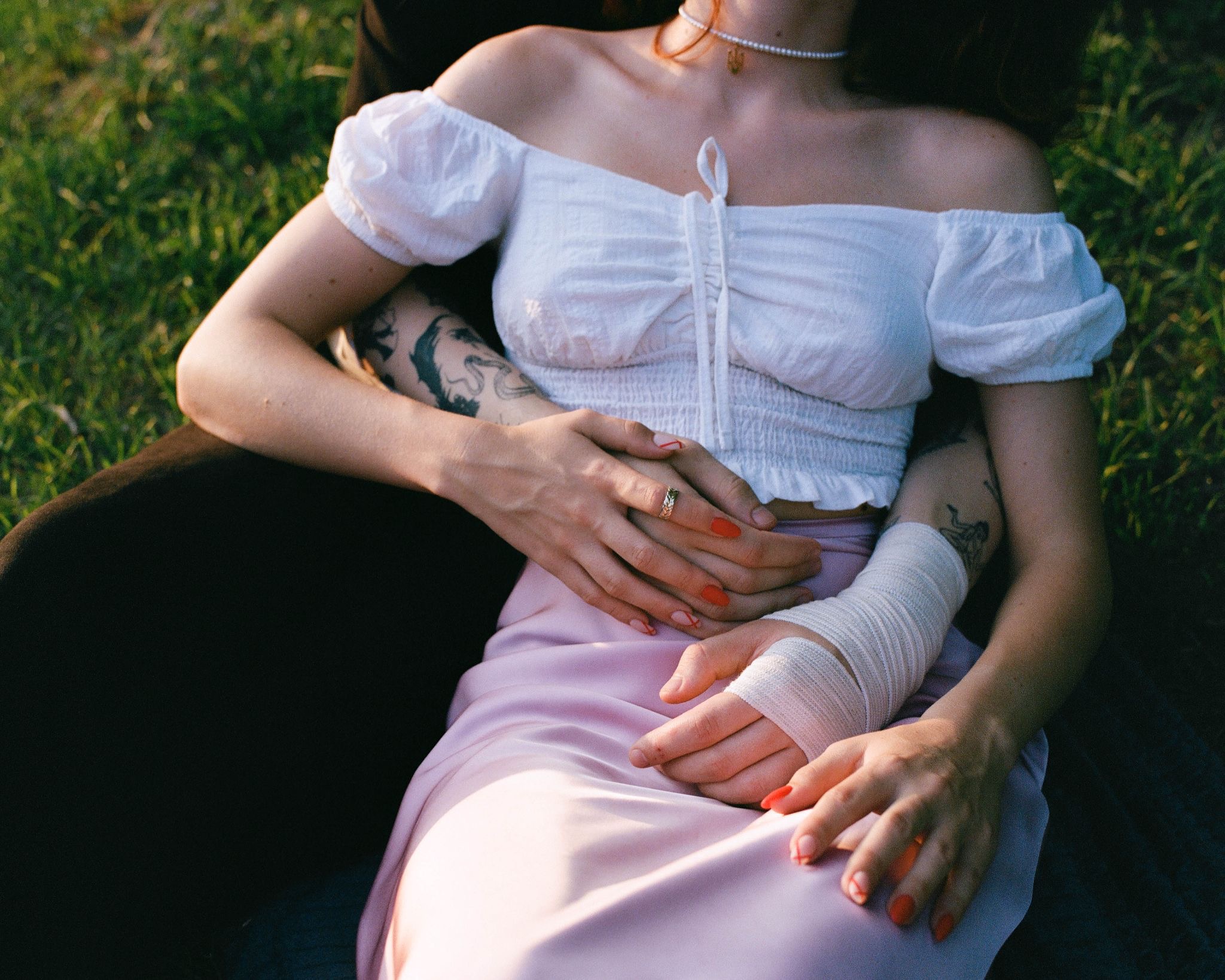
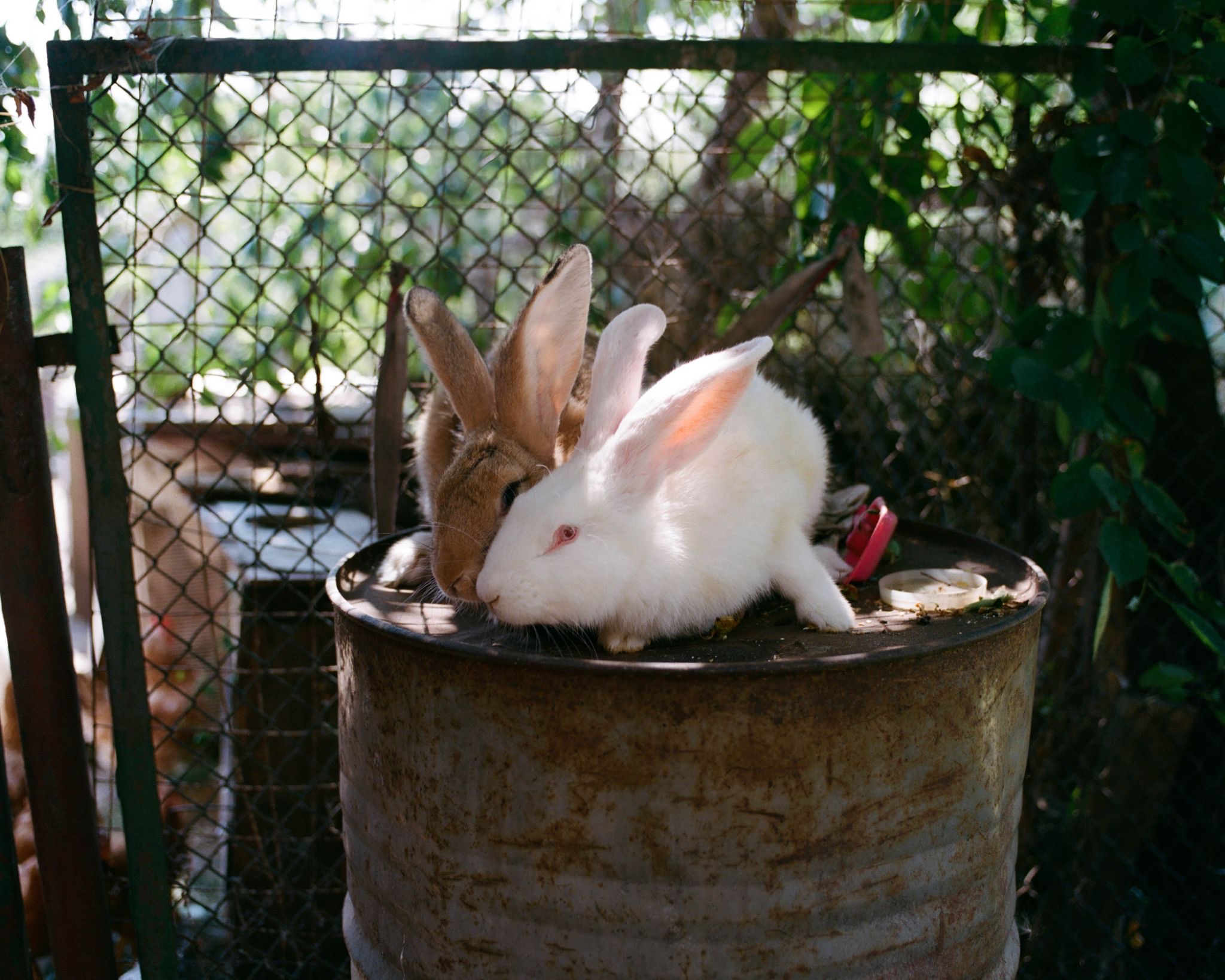
Ideas for projects arise from an inner need and further unfold later on. That is, I might think, for example, that I am doing a project on a certain topic, but in the process of work, new levels of understanding and depth always appear. My ideas start from the heart, and then the mind finds theoretical support for them.
— How much does film photography as a tool help you implement these projects, and why do you still prefer it over digital?
— For me, it is probably primarily about rhythm, about calm, about the opportunity to slow down and take time to make a photo. It seems to me that film photography is often slower in perception as well, so this tool appeals to me very much. I tried working with digital, but the image comes out a bit flat for me, and it requires more post-production. That's also a certain art in itself; I know photographers who master it, and I admire it very much.
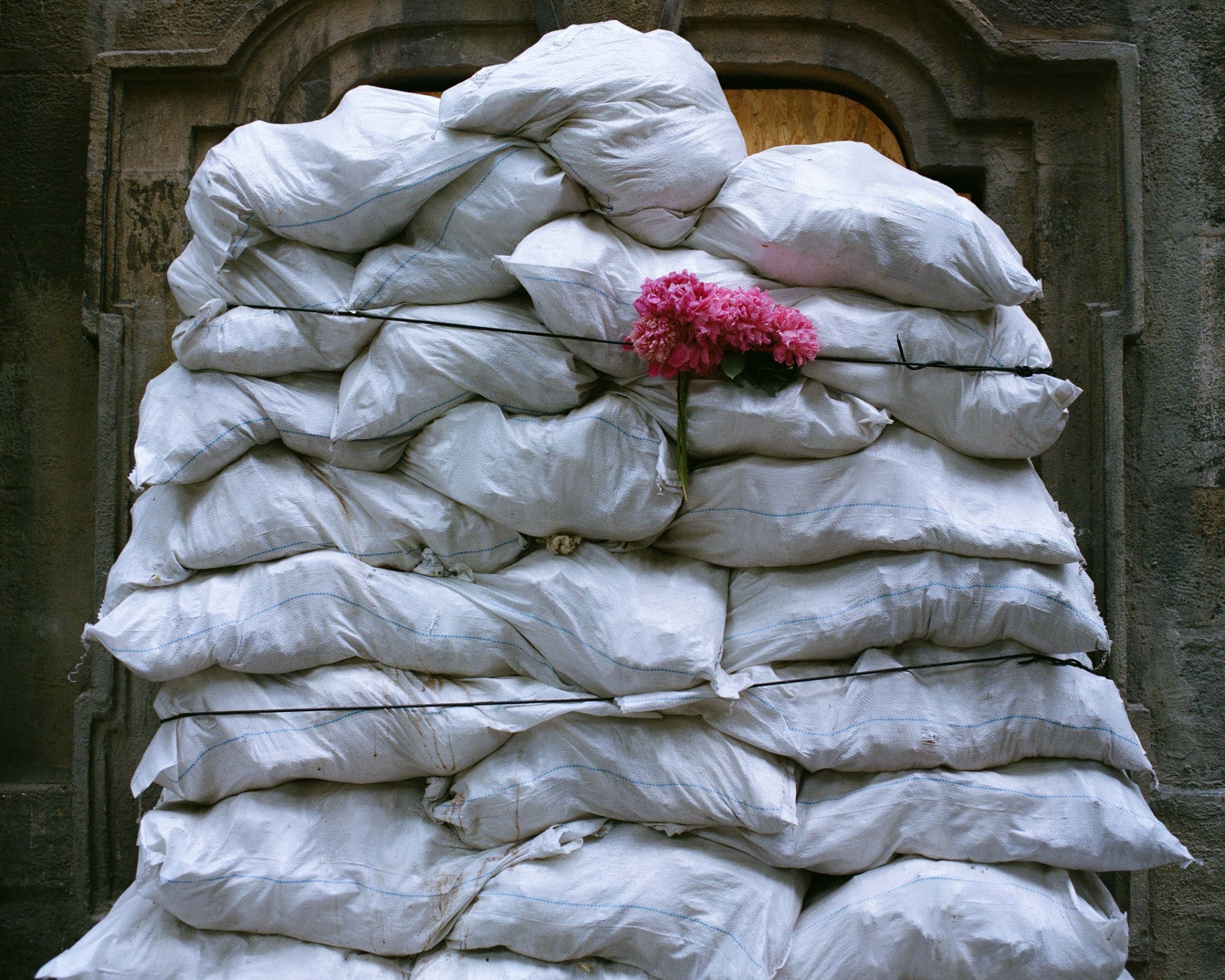
But for me, film is an opportunity to slow down, to spend time with the people I photograph, and then create a suitable field of perception for the viewer. Overall, I have a very fast pace of life, but with film everything is different. It's a special moment when you look into the camera and have literally a few frames. Then for a few seconds it seems that nothing else exists besides this. A digital camera and its screen do not give me such an effect.
— You live in Berlin, but most of your projects are dedicated to Ukraine. How does this distance and being in a European context affect your focus as a documentarian?
— I really shoot mostly in Ukraine, although I have lived abroad for about ten years. Since I closely associate myself with my country, it is important for me to return and shoot precisely there. Distance affects and gives me a certain stance: I have an understanding of how Ukraine is seen abroad, what visual stereotypes exist.
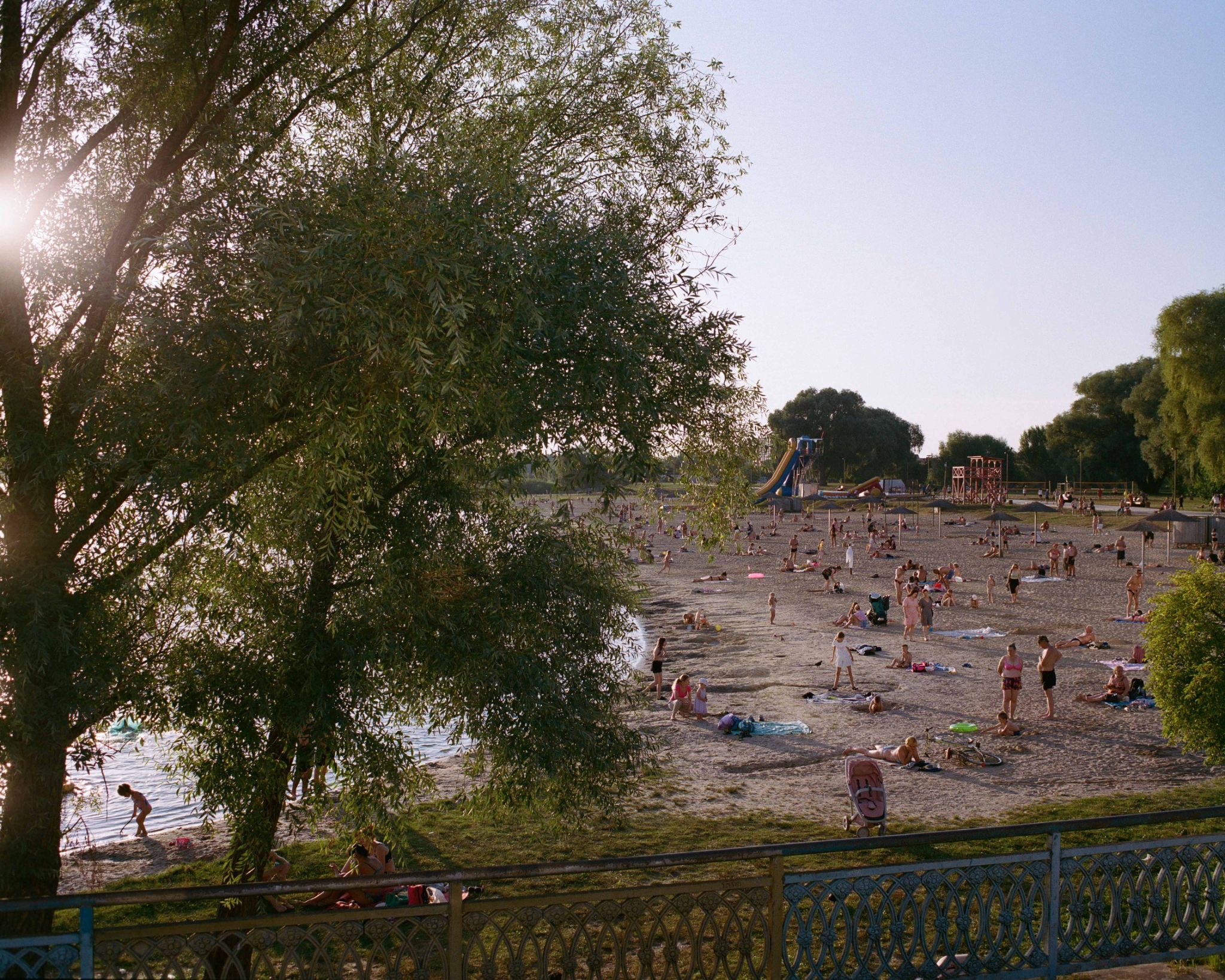
Often foreigners' perception of Ukraine is limited to images from the media. Such photos are very important, but they do not always convey how I know my Homeland and how I see the country where I grew up. I strive to make this image more complex, to find new visual ways of communication, to create images that make you want to look closer.
People often tell me that looking at my photographs makes them think of their own family. For me, this is a sign that I succeeded in something.
This is how empathy is experienced — when looking at art, people can try on someone else's experience, but at the same time understand the context in which the depicted moments occur. For example, celebrating Christmas can bring people memories of their own family, but the awareness of the context of war greatly changes this perception, even if there is no explicit shocking element in the image. It is present in the viewer's mind, and this gives the images semantic depth.
— How much do personal stories of Ukrainians resonate with European viewers today, and are they ready to perceive big themes through the prism of individual human fates?
— I find it interesting that everyone has their own connections with art and different expectations. As for me, what interests me as a viewer and touches me the most are personal reflections and human experience. They can take very different forms, different visual language, and different focus.
Therefore, perhaps that's why I work like this — that's how I see the world. For me, it is valuable in the work of others when a person is able to create something material from their vision of the world, from their inner experience, that will touch me and make me feel or think about my own experience upon contact with this work. If I manage to do this somewhere, it is a great happiness for me.
— Where is the line for you between artistic frankness of shots and protection of the private space of the subjects in your photos?
— The concept of photography is very complex, and it is important to understand that a portrait of a person is no longer the person themselves. It is a certain hint, a fragment of reality that is often constructed. A photo is a combination of the world of the person in the image, my subjective vision, and the connection that arises between us. Later on, the viewer's gaze is also added to this.
When you shoot relatives, friends, or acquaintances, it gives very good access to the topic and enables a deeper understanding of it. It seems to me that often, especially at the beginning when I shot my family, nobody took me seriously as a photographer. For my family, I was a daughter, granddaughter, niece with a camera. In a way, it even helped, because it removed a certain tension and fear of making a mistake. On the other hand, the greatest responsibility I had was to myself: the responsibility to follow an inner impulse to shoot in Ukraine, to search for my own language, to trust my inner voice, to filter external criticism, to delve into family stories, to deepen relationships. This is not always easy, because sometimes in order to understand and feel something, you need to face unpleasant feelings, difficult questions, tension, pain, memories. But I am sure that by avoiding this path, I wouldn't be living a full life.
— Please tell us about your project "Mother Land". Why was it important for you to create this story?
— With the start of the full-scale invasion, when I was still studying at the photography school, the first reaction, of course, was to go to the train station in Berlin, where many Ukrainians were arriving at that time, and shoot a more journalistic news story. Then I brought these photos to class and realized that they had no more weight than informational value. That is, yes, perhaps these photos could be published in media as proof, as a fact, but they lacked me.
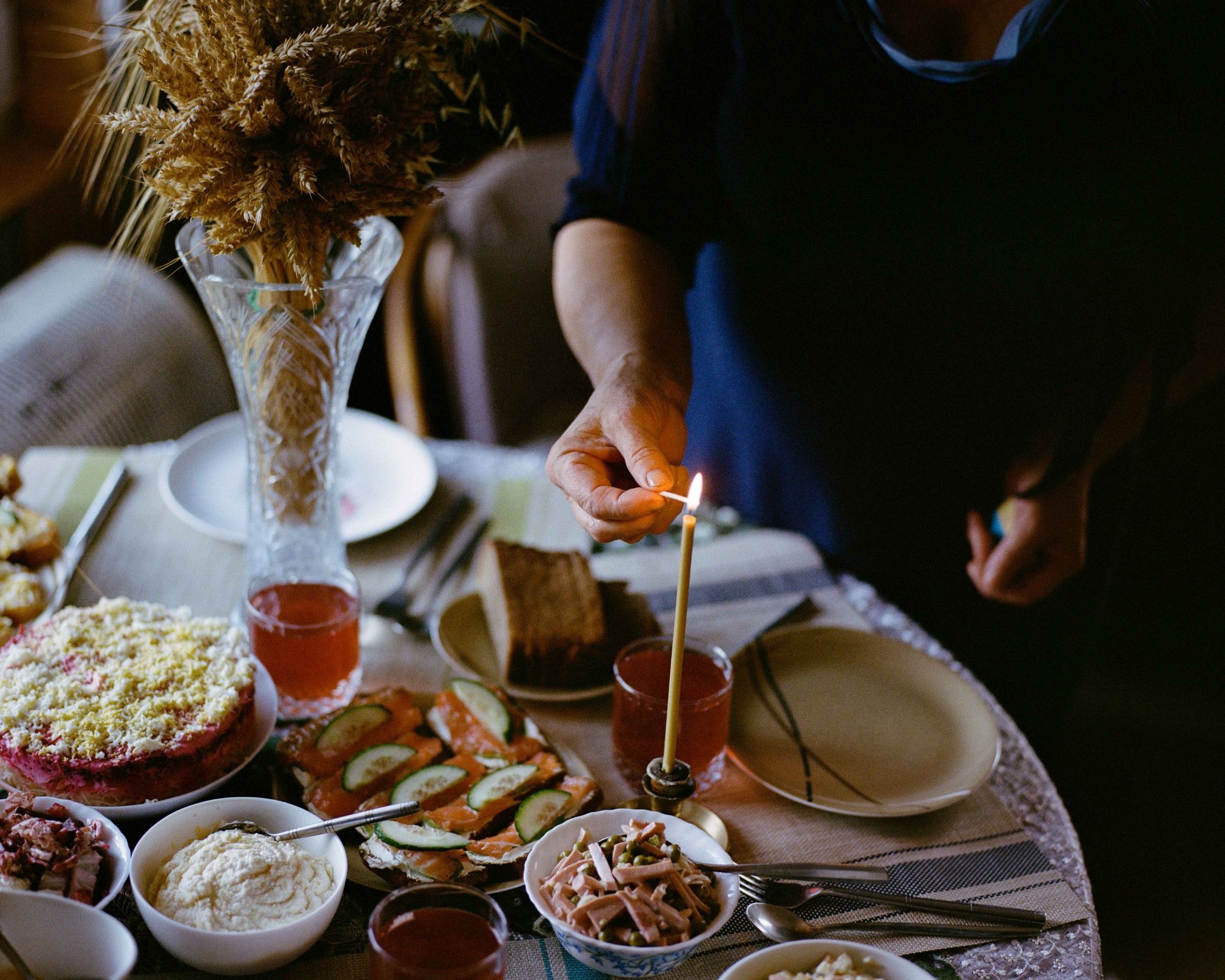
That's how the idea for the project "Mother Land" came about. My mother moved to Berlin then and we started living together after I had already lived abroad for about six years. That is, my mother and I lived in different countries for a long time and met perhaps once or twice a year to talk about life. And suddenly we started living this life together in the same apartment, going through the experience of the war in Ukraine. One day I suggested photographing my mother — and she agreed.
When we started shooting, I gradually included myself in the photos as well. Thus, this project became a statement not only about my mother, but also about the transformation of our relationship. Now, analyzing the work, I understand that I also sought to comprehend the image of a Ukrainian woman, particularly a refugee abroad. I wanted to overcome that flat and superficial view with which women who left are often visually portrayed.
For me, it was fundamentally important to show my mother not in the role of a victim, but as an individual, beautiful in her versatility.
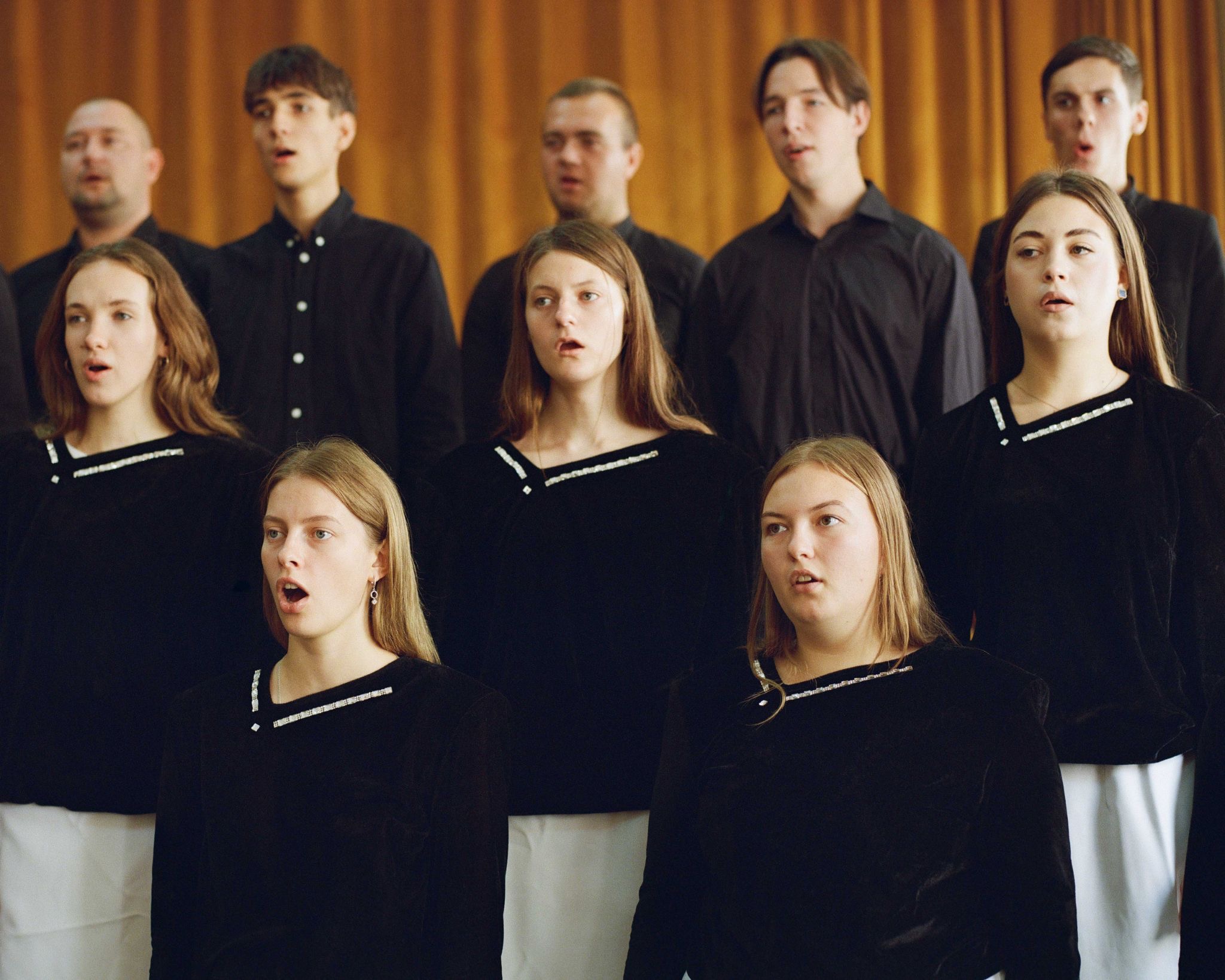
In addition to photographs, Ukrainian songs became part of the project. My mother sings very beautifully, and in my childhood she sang lullabies to me every night. This lasted until I was about five years old, until I declared that I was already an adult and no longer wanted to listen to them. However, on the first day of the full-scale invasion, towards evening, I felt an acute feeling that I wanted to hear my mother's lullaby again.
Then she sent me an audio message with singing, although she noted that she would like to sing under completely different circumstances — when we are both calm and well. I was surprised by this instinctive desire of mine, because my mother's voice turned out to be the only thing that could protect and calm me down then. Later, when my mother arrived, we recorded these songs in a professional studio. Thus, five symbolic lullabies became a conceptual part of the project.
This project became a space for a very personal dialogue between us: photography became my language, and singing became hers. It was extraordinarily important for me not only to show my mother through the prism of my view, but also to give space to her own experience. This singing is her voice in our project.
— How self-sufficient is photography as a medium for conveying to the world the truth about what is happening in Ukraine now?
— Our experience will never be fully understood by those who have not lived through it. No matter what methods or ways we look for, there is no tool capable of making someone from the outside completely feel and understand what Ukrainians are experiencing. However, it is still necessary to try. My projects about Ukraine are an act directed both outward and inward. I don't know if this will ever be enough.
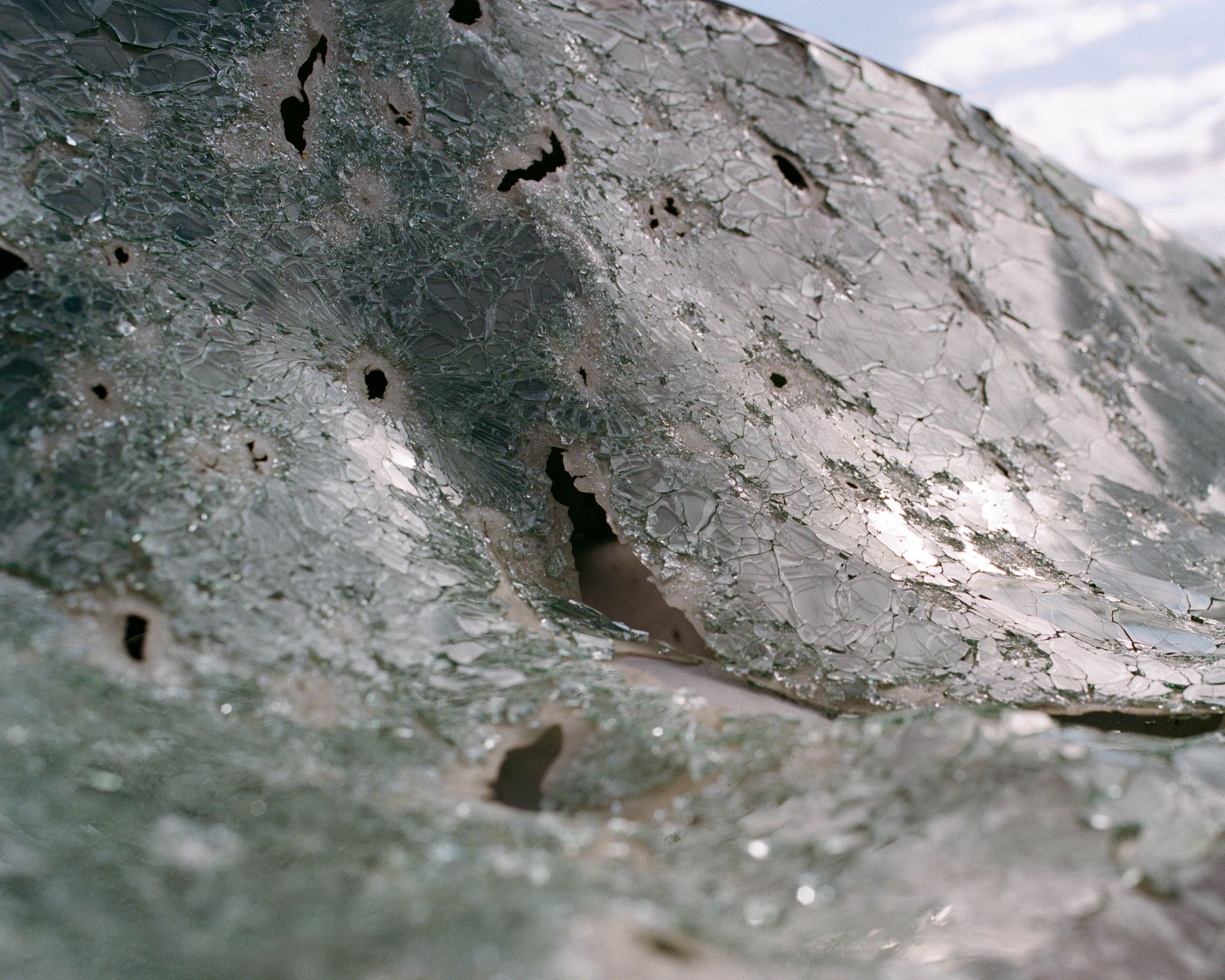
For me, art is important because it acts not only on an informational level. This is my way of feeling the world and materially transforming this experience. Someone does it through poetry, music, or painting, and I do it through photography. It is probably impossible to completely convey such pain, like any other deep human experience. However, at the moment of contact with a photograph, each viewer inevitably projects it onto their own story.
— The series "I Hope Your Family is Safe" resonates with everyone — regardless of where the viewer is located. What do you think is the secret to such a strong emotional resonance of this project in Ukraine and beyond?
— The project "I Hope Your Family is Safe" is about universal things that unite us on a much deeper level. It is about love, family, connection with one's land, as well as universal human experiences and hopes. When basic values understandable to everyone are threatened, they become a point of contact for people. Seeing my shots from Ukraine, a foreign viewer can more easily read this context, because they understand what exactly is being destroyed now, and how precious this everyday life is.
Today, my perception of safety differs from what it was two or three years ago. My task at the next stage of work on the project is to capture this change, this liminal space, and the state of waiting that I notice in myself, as well as in the circle of my family and friends.
While the war continues, an ellipsis inevitably remains at the end of the project. After all, it is a big question: how to appropriately finish a project about life during war when the war itself is still going on?
— How did the transformation of your worldview affect your understanding of the role of photography? What is it for the world today — just a document or something more?
— Photography shapes our perception of the world. It determines how we see phenomena and places where we have never been, creating an image of how they look and what they make us feel. For me, photography is a way not so much to find specific answers as an opportunity to ask questions, primarily to myself, and later to the viewer. It allows one to hesitate, not to know, to be disoriented and vulnerable, and to invite others into this space. Of course, photography cannot radically change the world, but it is capable of supplementing our knowledge about it and reinforcing the desire to continue searching for the truth.
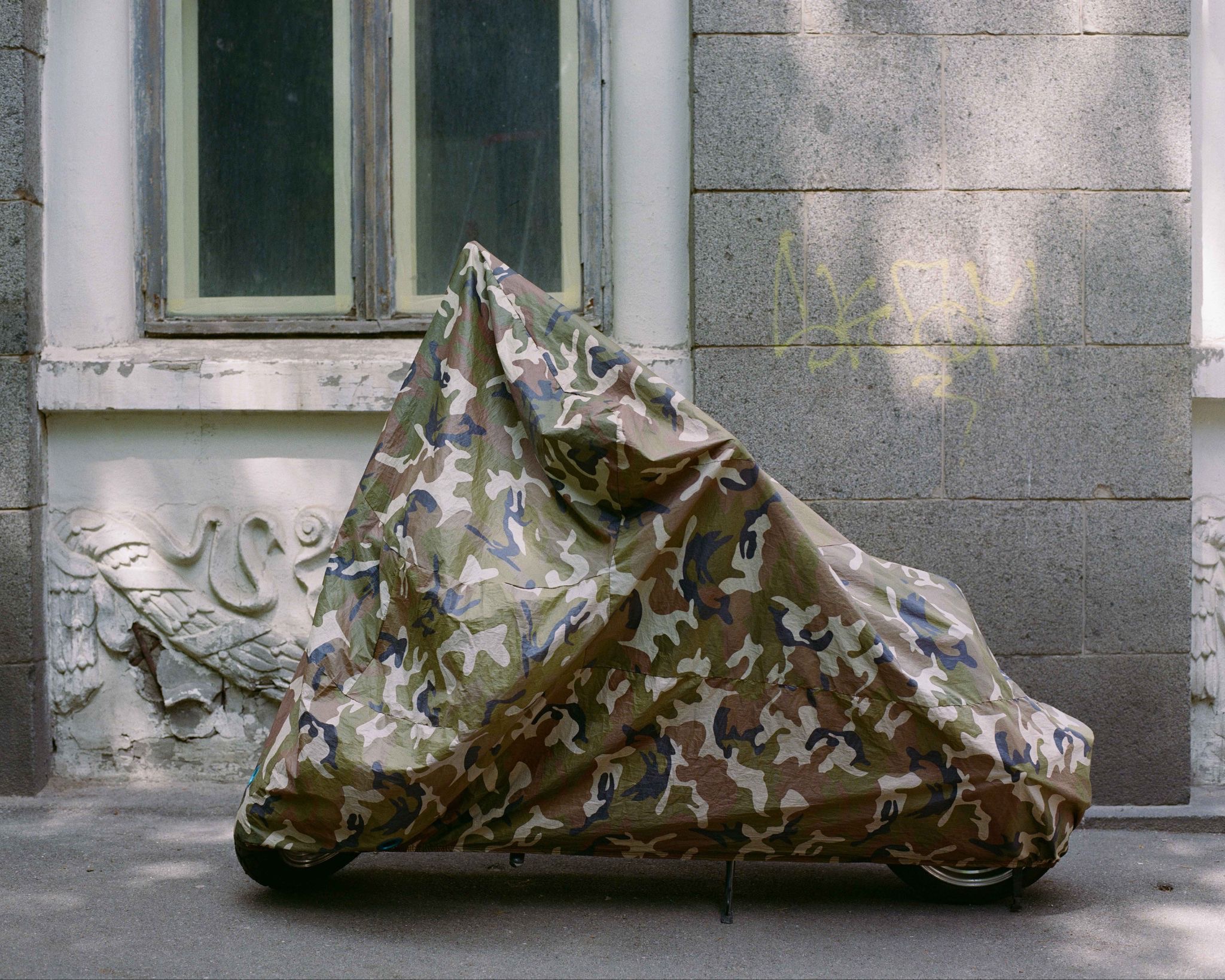
Today we live in completely different realities than during, for example, the Vietnam War. Back then, when photos from the front were just starting to appear in the press, they were of colossal importance because they opened people's eyes to the unknown — society did not know what was happening there until they saw the shots.
Now the situation is radically different. There is no information vacuum: the whole world already knows about the war in Ukraine, about the genocide in Palestine. Horror and violence are not hidden today. The question arises: why does this knowledge change nothing? Why, under conditions of full awareness, does this pain get lost so easily in the daily information noise? This is a question about the nature of our reaction or, on the contrary, indifference. About why our perception of someone else's experience depends so much on where exactly the events unfold and from what angle they are shown. Contemporary art should not just state facts, but deal with why human empathy fails where everything has long been known.
— Tell us, please, about your process of working on photographs?
— I am amazed at how often the creative process submits to the subconscious. At the moment of shooting, an instant internal "click" occurs — hands do their job intuitively, without prior logical calculation. True understanding comes later, at the editing stage. When I print small shots, lay them out on the table, and start combining them, I suddenly notice hidden connections. Elements and motifs that repeat from frame to frame catch my eye. I absolutely did not record them during shooting, and now I look and ask myself: "I wonder why my eye subconsciously caught precisely this?".
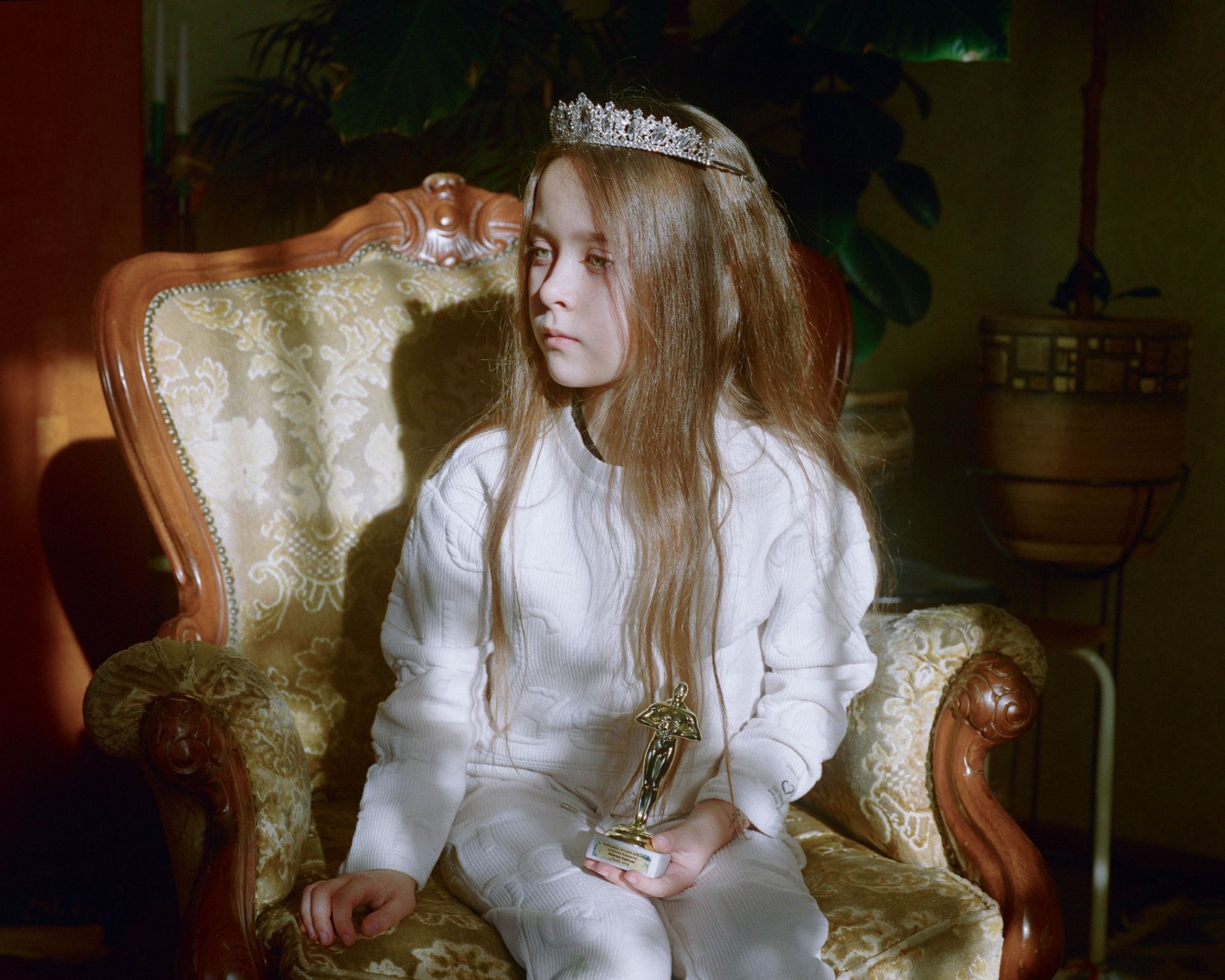
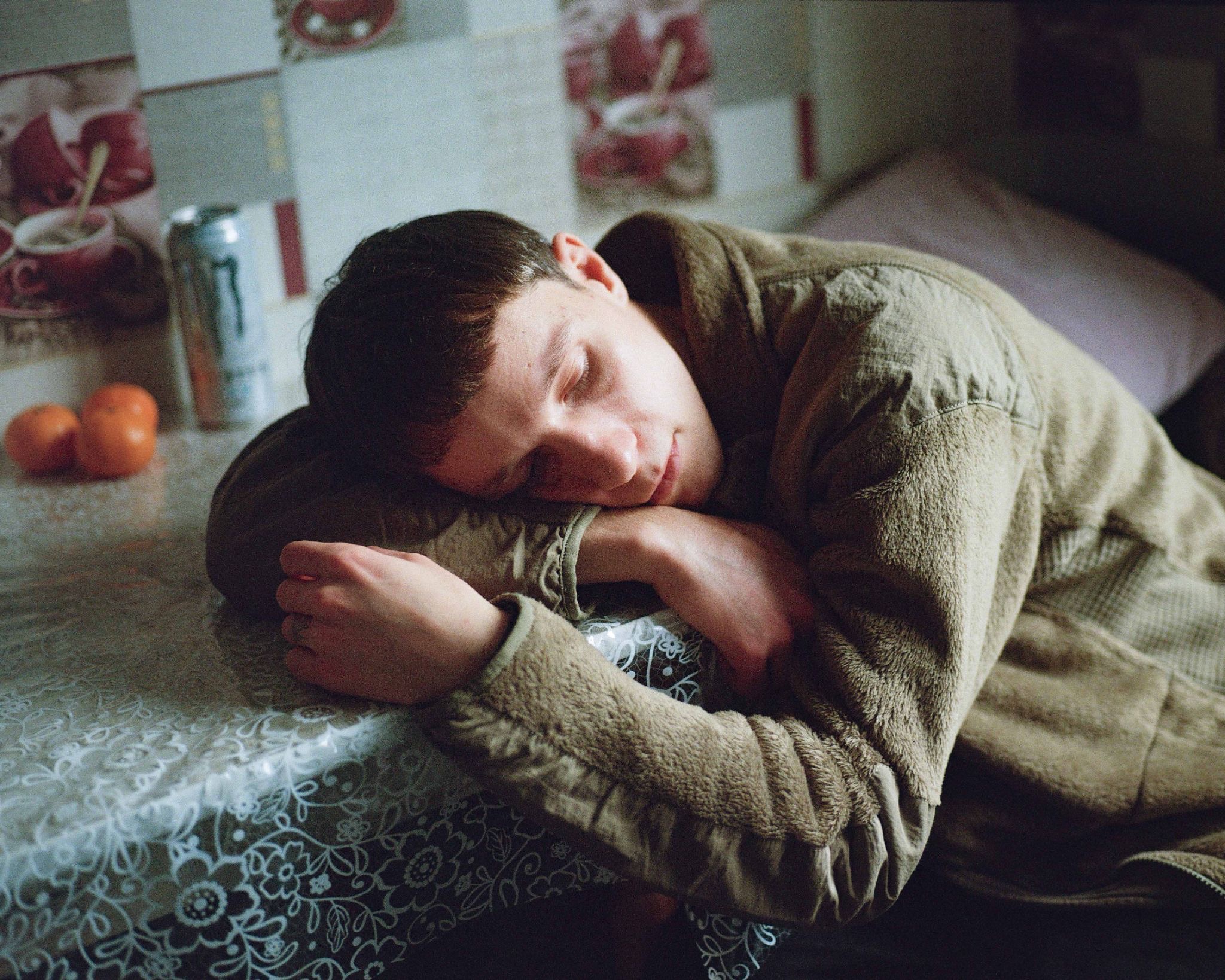
Ultimately, photography gives me a colossal knowledge about myself — precisely through this subconscious impulse when you shoot first and analyze the finished material later. My practice shows that the best work is born when the shooting process and the analysis process are separated in time. At the beginning, shooting was much easier for me, and this is probably a classic story for big projects where the last 10% of the work turns out to be the most difficult. At the start, I didn't rationalise every individual frame; it was a pure moment of intuitive response to the reality around me.
When I start analyzing material from the perspective of the entire project, I often catch myself on purely rational thoughts: "Yes, I still lack a portrait of dad" or "Need to add a landscape like this." However, as soon as I turn on my head and try to shoot according to this plan, the frames come out artificial and forced. Therefore, now, despite forcing myself to keep the overall structure of the project in mind, during the shooting itself I still try to turn off logic. I have to feel each frame separately, giving it space to be independent, and only later, over time, do these frames intuitively fit into a shared story.
— Why does photography still remain important and full of meaning for you today? What exactly inspires you to continue on this path?
— For me, photography remains something deeply mysterious and complex. It is paradoxical: in our perception, this medium is inextricably linked with reality, although in fact it is not, balancing between absolute objectivity and subjectivity. I sincerely cannot imagine my life without photography and am endlessly glad that I live in an era when it exists. If I were born, for example, three hundred years ago, life would be incredibly difficult — both because of the lack of women's rights then, and because of the absence of photography.
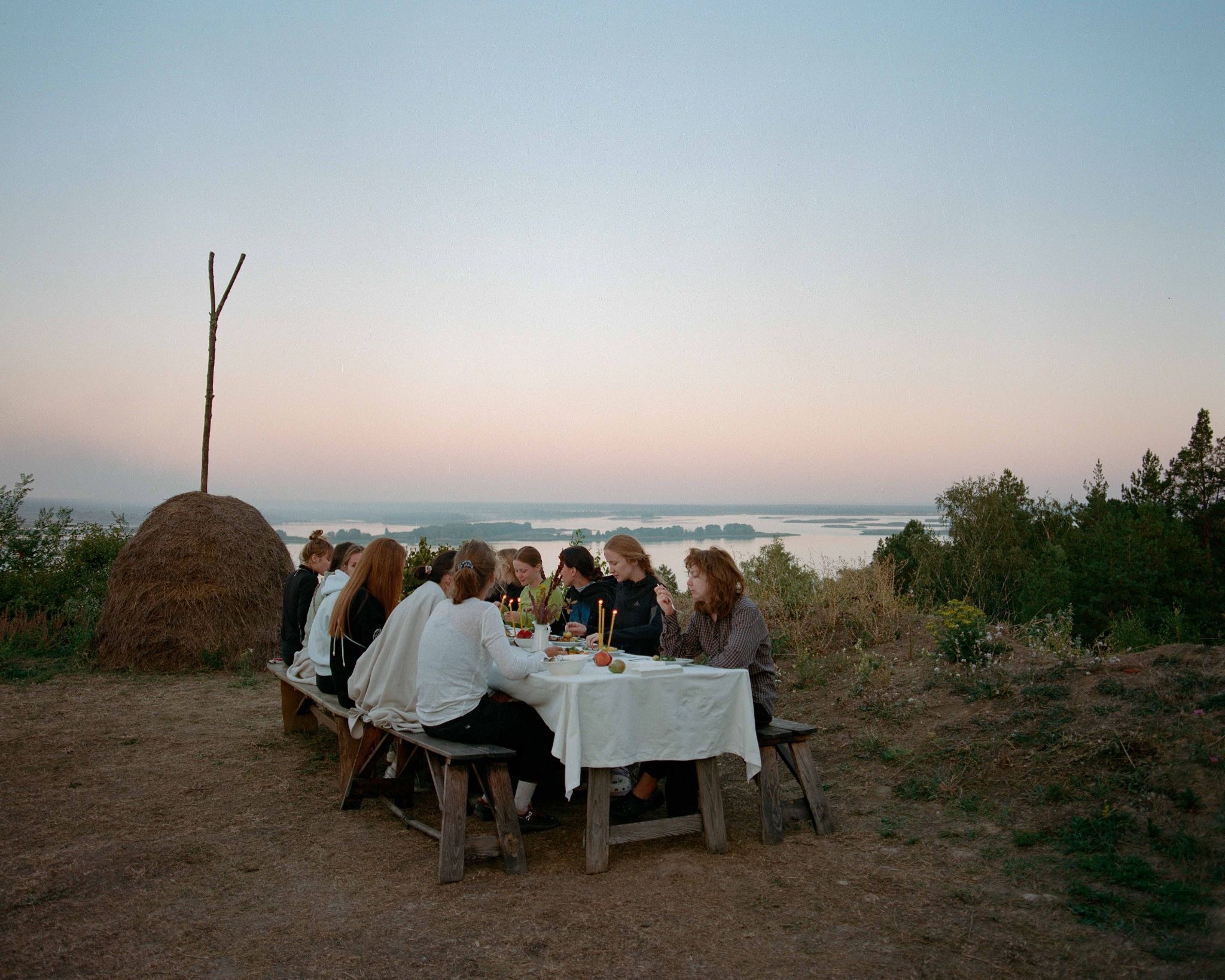
For me, photography is a sphere in which I am in a constant internal dialogue, continuously asking: "How does this work? What does it mean? Why am I photographing this? Why in this particular way?". There are no unambiguous answers, but curiosity itself and the impossibility of finding a final solution give me colossal inner strength.
On the one hand, photography is a very social thing, because you interact with people and capture social realities. On the other hand, this process is deeply lonely. You don't work like a film director in a team with many specialists; only you and your vision remain alone with the material. This is a path of individual comprehension, where you bear personal responsibility for every choice and for every final frame.
Photography is full of controversies and paradoxes, because it exists simultaneously in many different dimensions. It can be high art, or it can remain a purely everyday, utilitarian act — like a photo of a gas meter. However, even such a mundane shot is capable of ending up on a museum wall under certain conditions. This conceptual flexibility makes photography such a complex phenomenon that it will never stop generating questions to which there are no simple answers. And it is precisely this endless process of searching, discovery, and constant questioning that fascinates me most.
For me, photography is like meeting an incredibly interesting person whom you will never be able to fully understand, but strive to learn more and more about. There are no simple categories in it, there is no black or white, it is not purely good, evil, or unambiguously smart. It combines absolutely everything simultaneously, manifesting in a multitude of different dimensions. And it is this awareness that a living, unpredictable phenomenon is before you that makes the process of shooting and observing so exciting for me.
Anya Tsaruk is a Ukrainian photographer working at the intersection of documentary and fine art photography. With the start of the full-scale Russian invasion of Ukraine, her work focuses on themes of identity, home, belonging, migration, and community. Through photography, she seeks to present her homeland in its complexity and challenge the "othering" of people whose lives have been touched by war.
Tsaruk's projects have been exhibited internationally and recognized with the Grand Prix of the Sarajevo Photography Festival, Cortona On The Move | BarTur Grant — Emerging Prize Under 30, and the Fotografica NEXT Prize | Festival di Fotografia Bergamo. Her works are part of the collection of the Preus Museum in Norway.
Worked on the material:
Interviewer: Katya Moskalyuk
Photo editor: Vladyslav Krasnoshchok
Literary editor: Yulia Futey