We continue with a series of interviews with professional Ukrainian documentarians.
About the experience of working as a photojournalist in the newspaper, the experience of filming the war in the Balkans and in Ukraine, as well as about the advantages of black and white photography, we talked with Oleksandr Klymenko.
Watch the full interview with Alexander on YouTube:
About the work of a photojournalist
I like the concept of “photojournalist”. My job is live reporting, photographing life. A photojournalist, on the other hand, is the kind of person who walks and removes assignments from the editor. I define myself as a photojournalist. When you work a lot, you try to decide for yourself what you will shoot and what you will do. Of course, I worked since 1991 as a photojournalist for the newspaper “Voice of Ukraine”, which was not long ago. He performed some tasks, but tried to look for tasks and topics for himself. It was beautiful and I liked it very much.
I will tell you a little about the history of the newspaper. The newspaper appeared at the end of 1990. The name was invented by Dmitry Pavlychko by analogy with the “Voice of America”. It was 1990, there were these communist newspapers “Pravda Ukraina”, “Soviet Ukraine”, “Working Newspaper” and “Village News”, by the way, where I worked after university, and it was very cool. Dmytro Pavlychko and the democratic majority decided, and with this everyone agreed, that the Verkhovna Rada should have its own newspaper, which will communicate their opinion, and not the opinion of the communists, so to speak, the general one. When there were all kinds of rallies, demonstrations, there immediately began such a massive propaganda attack in these communist newspapers, which was done by the Banderians, nationalists, and so on. Our newspaper resisted to some extent. Not even to a certain extent, in fact we were a free newspaper: the deputies decided that each of them had the right to express their opinion in the newspaper, and each quota and quota was in the party. That is, the communists could disagree with the “movers”, but the deputies could write anything they wanted. In the first year, the circulation of our newspaper immediately reached one million. That was nice. It was a pleasure to work in such a newspaper, in a free press.
The newspaper “For a Free Ukraine” was published in Lviv, which could be subscribed throughout Ukraine. She also had a huge charge. I subscribed to it and she came to Kiev, to my mailbox without any problems. I even have a photo there. On April 16, 1991, a big strike took place in Kiev — employees of the trolleybus plant did not go to work, the factories “Leninskaya Kuznya” and “Arsenal” - these were industrial giants of that time. There stood a chain of police and one of them read “For a free Ukraine”. It was very famous.
In the newspaper “Voice of Ukraine” I had a chic laboratory, two-room. I printed photos there. He shot on film, of course, black and white. I showed photos because I had to make it to the room. The deadline was somewhere around twelve or one o'clock. You had to take a picture, run and give a photo.
The newspaper was published five times a week, except Monday and Sunday. It was driving — I took pictures, ran, showed, printed, because the films were not scanned — I needed a photo, quickly dried and gave it away. It was interesting. What did we shoot? They filmed life. Then all these turbulent processes began. A lot of events both in Kyiv and outside Kyiv — there were strikes, rallies, demonstrations. For example, in Donetsk there was a very big miners' strike in 1990, by the way. It seems to me that the photos that I have now are very historical, they are about how our Ukraine began. However, unfortunately, the period is now completely different.

About the iconic photos of the formation of Independence
This is a very long period, I will not be able to identify only five iconic photos during this time. We will assume that the turbulent path to the independence of Ukraine began at the end of 1989. Then excavations began in Bykivna - this is a place near Kiev, a forest between Kiev and Brovary, where there were mass burials of people repressed, killed by the system, killed by Stalin, people. They talked about it for a long time. At first they denied that “no, no, this is a German burial, they killed the Germans there”, and so on. After all, we went there in April 1989. We went with the correspondent of the newspaper in which he worked at the time — “Village News”, to film how it was being excavated. There was the police, then the police, the investigators, and they said, “No, you can't.” However, there was a correspondent with me, such an old grandfather as it seemed to me at the time, although in fact he was 65 to 70 years old, and he said, “No, you all...” In a word, we went to the shooting. I took pictures of these bodies being dug up. There is a photograph - a human skull right with a hole in the head, that is, it is clear that it is a person who has been shot. Next, I saw boxes with a mountain of bones there. I wanted to go further, but I was not allowed. Shot with a telephoto lens. This is one such iconic photo.
.jpeg)
In 1990, there were strikes of miners in Donetsk. It is also such a strong picture — the entire area in front of the then Party Regional Committee is filled with miners who have just come out of the mine. They are unwashed, they are black. I arrived in the morning — there was such light, such a contrast in the morning. I shot on black and white film and shot a few frames per slide. The slide film didn't work out very well — all yellow and lots of black people. These people, miners, they felt strength in themselves.
.jpeg)
I recall the shooting in Kolomyya — there was the “Cathedral of the Spiritual Republic”. It was organized by Oles Berdnyk — writer, science fiction writer, dissident. Thousands of people went up to the mountain and held prayers there. I have interesting pictures from there.
.jpeg)
August 24, 1991, of course. Actually the day when the Verkhovna Rada of Ukraine adopted the Act of Independence. He filmed all passions in the hall of the Verkhovna Rada and near the hall of the Verkhovna Rada. For example, such a simple photo that everyone knows is just a poster with the inscription “Ukraine leaves the USSR” and people shout something. Actually, I don't really like photos that need to be read. The photo should speak without text. For example, when a foreigner looks at this photo, he will not understand what it is. However, on the other hand, this photo without text cannot be understood. “Ukraine leaves the USSR” - then it was a very kind of theft, and now we are free.
.jpeg)
I remember the photo with Vyacheslav Chornovol, which he took on August 18 in Zaporizhia, on the eve of the putsch. There was a music festival “Red Ruth”.
I want to mention a couple more iconic photos. In the fall of 1990, there was a huge rally at the stadium. People walked from the central stadium to the then Lenin Museum. They carried all kinds of posters, among which was the inscription “We do not want the Moscow yoke.” There was also Lenin's coffin, very creative. And the final photo from August 24, 1991, when everyone — the People's Council, Chernobyl, other people, gathered at the podium and began to sing. It was over, the flag was raised, and they began to sing — first “Red Viburnum” and then the anthem. This is a photo, it is very iconic.
.jpeg)
Historian and writer Alexander Zinchenko has now published a book “How Ukrainians Destroyed the Empire” based on his own film. The book is illustrated entirely with my photographs and this photo of everyone singing is on the cover.
About photos of iconic figures
Vyacheslav Chernobyl showed the trident with his hand and so it was shown by all the others at all the rallies. On the eve of the 30th anniversary of Independence, some creative agency, supported by the Minister of Culture Alexander Tkachenko, decided to show the trident in a different way. The discussion began. I posted a photo with Vyacheslav Chornovol and Channel 5 journalist Olya Snisarchuk, the wife of my friend Vladislav Sodel, made a post and said: “Here is a trident.” Everyone picked up this post.
I filmed a lot of Vyacheslav Chornovol. He is in the photos for the most part very sad, premeditated. I look at these pictures sometimes and feel pain. Chernobyl spoke on August 24 — he shouted, waved his hands, he was a very emotional person.
.jpeg)
I also filmed a lot of Kravchuk, we can remember Kuchma. I worked for Der Spiegel magazine, and they agreed to interview Kuchma immediately after his election as president. A large delegation arrived from Hamburg, from the magazine, there was a deputy editor, journalists. We went to him to the office of the Ukrainian Union of Entrepreneurs, which is in Khreshchatyk. Then he was still there. He was talking, I was filming, and suddenly he laughed very hard. I like it, he laughs very sincerely. Of course, the photo was not included in the interview, which was very official. Instead, I still have the photo, it was printed in books. There is no contempt in this photo.
.jpeg)
About the experience of photographing war
We can say that the further we go, the more photos. I can't even imagine that, for example, in 2000, someone would shoot with a phone. Do you have a phone? You are a photographer. I say this without irony - with the phone you can take anything and of decent quality. If you find yourself in the right place, where a significant event is happening, and you have a phone, you take it off. It is said that our war is the most filmed, and it is true. A lot of photos. I follow the photos from the war. However, for example, I can only mention Maloletka — his photos from Mariupol are truly iconic. I believe that these photographs, if they did not stop the war, they changed the attitude of the world towards it. I remember the photos of Kozatsky, the guy who was in Mariupol in the basements, managed to transfer these photos and it was also very cool.
There were a lot of pictures of Bucha, there were a lot of people there. It was a free place and anyone could, in theory, go there and take a photo. No one could go to Mariupol. There was a great risk to life, as shown in the film. This is my opinion on why the photos from Mariupol are iconic.
In fact, in the world everything goes in a circle. Alas. I mentioned the excavations in Bykovna and when I saw the excavations in Izyum, it was almost one on one. It was just possible to shoot freely here, there were many people, but the themes, plots and unearthed graves were almost the same. I filmed the destroyed library in Sarajevo, and then in Marinka. Now there are many photos with destroyed libraries. Why don't we see these photos? I don't know. The world is wide, there is a lot of information, it is difficult for us to follow everything.
I filmed the war in the Balkans. In 1994, the press service of the Ministry of Defense asked me if I would fly with them, if I was not afraid. And what to be afraid of? Everything is fine. We flew on an IL-76 plane, landed in Ancona. There were a lot of people, 130 or 140 soldiers on board, and we couldn't fly any further. We had to refuel and fly on. There was an explosion in Sarajevo, landing was banned at their airfield and we stayed overnight in Ancona. They flew to Sarajevo in the morning, reached the base where the 240th Ukrainian battalion was located - there was a former military school. It was a place among the mountains, there were snipers firing, there was mortar shelling of people blocked in Sarajevo. Several of our soldiers who were in this school were also killed. The building was shelled from the mountains, the military made barricades out of sacks. That was the first day. The next day I was struggling to shoot something. There were two other photographers — Pavlo Pashchenko and Valery Solovyov. That is, we are in Sarajevo, which the whole world looks at, and we sit on the base and shoot some far-fetched footage. In the end, we found a man who took us through Sarajevo.
.jpeg)
We did not even have accreditation and we could not go to the city ourselves. By the way, I was almost arrested there, but immediately released. In Sarajevo, a man with a camera is a spy. Where does she come from? What does she photograph? Oh — it's a spy if you don't have the inscription “Press” on you. We walked through the city. Of course, I took some pictures there. We stopped at the library in Sarajevo, then there was another place where people ran through the streets. There was the bus and then the space that was shot out of the mountains. I shot it. Such iconic photos from Sarajevo. Then I saw people picking up water. He shot everything I wanted to say.
.jpeg)
.jpeg)
.jpeg)
I have emotional pictures. We flew from Nikolaev and, on the eve of the flight, the soldiers went to the church. The priest said, “Whoever among you is not baptized, I will now be crucified.” Many people, about twenty, agreed to be baptized. I shot it. They stood on their knees, listened to the priest, put candles. I have such a separate series.
Filmed in the city of Mostar. I have a photo of my husband Zvonko on Tserkovnaya street in Mostar. The street is completely shot, it simply does not exist. Of course, this is not comparable to what we are doing now. There were just houses cut through by bullets. There is no flat surface, everything is bisected by bullets. We went and there was such a grandfather. We talked. “Hello” — “Hello”. “Who are you?” — “We are journalists from Ukraine”. “Oh, and I'll tell you...” - and the man began to tell us. He began to lament: “I fought, I am a veteran. They don't give me money there.” Such a grandfather is emotional. In Mostar, he also removed a broken house, everything burned down, and next door, joint to joint, one wall has already been rebuilt. White marble... Such a contrast.
.jpeg)
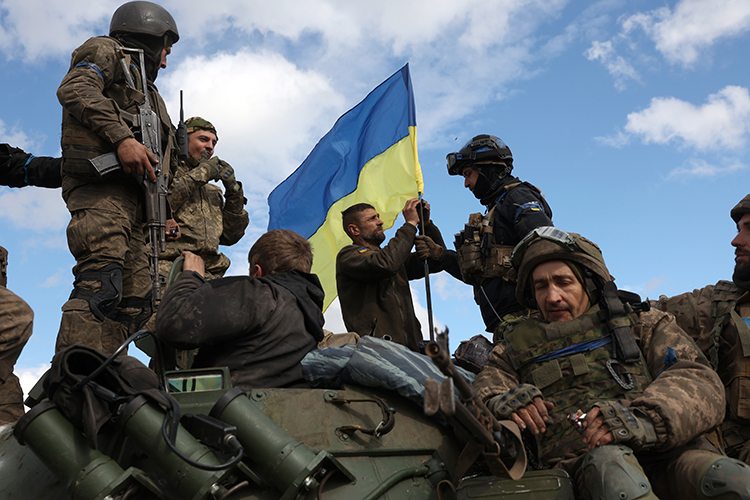
Now shooting war is expensive. For example, I have to take a car from Kiev, go, spend fuel, spend the night somewhere, in a hotel, not in a hotel. The last time I was in April last year near Bakhmut, in Ivanovsky. The photos he took there, he sold to foreign agencies.
About the features of work in the war
I was in the role of a foreign journalist when I went to the former Yugoslavia. I came, looked at that “oh, how bad”. I came to Kiev and everything was fine there. In 1994, he photographed the war in the Balkans. It seems to me that these are the general rules of journalism. In Sarajevo, there was no such shelling as we have when you get somewhere in Ivanovskoe, since 2014. You have to be careful. If you shoot, lie down.
What does it mean that young colleagues were not ready for war?
Journalists should always be ready for anything.
We talked to them about PTSD. Maybe I have it sitting deep somewhere in my subconscious, but I can't say that “oh how I suffer, I've seen death” etc. There was one time and I think it passed quickly. Then we drove for two hours in a car, where two corpses lay. It was in July 2014 in the Luhansk direction. One soldier's head lay in a bag, a lot of blood. It touched me, I think it was the worst thing. Then we were there under shelling, but I was not caught...
They say that not only the photographers who see the war, but also the editors of the agencies that track the war, who just see all these brutal photos on the screens, should not give themselves up so much, otherwise they will burn very quickly. You don't have to swoon. You have to read books, fish and treat it like a job.
Journalism education and experience helps in this. You read something somewhere, heard something somewhere. For example, in 2014, I read, if you are afraid to go to war, if you feel bad there, don't go. However, if you leave, then do not be afraid, you have already arrived - and you will not change anything. Just behave carefully. If something happens, you have to be ready. Before the trip, you must put all your affairs in order. If, God forbid, something happens to you so that later they do not scavenge and say bad things after you. You should have everything clearly finished, if it did not sound scary. I am not a hero, I am the same as everyone else.
In 2014, under the shelling, when the mines were falling, I was just as scared. We were near the village of Tonenke, near Avdieva, where there was a road to the airport. Such was an accidental shooting in the fall of 2014. We walked along the road with my colleague, a journalist, the “hail” began to fall, mines began. There is shelling, we ran to a clay hut, where there were soldiers. The shelling continues, we are lying on the floor, and opposite, across the road, a concrete hangar — there is a fire department and it is safer there. We still ran there. The shelling continues, everything around is buzzing and gurgling. I wrote about it in a book. It was such an impression, you throw everything, run out into the street and run. You just run somewhere from this place and that's it. There were thoughts that it is bad to die helpless - you lie, and you are killed. It is better to run somewhere in the attack with a machine gun, shout “Hurray!”, then it's more interesting.
I want to say that all journalists - me, young, old, and new, we left and came. We have the impression that “oh, yes, I was under fire there.” Nevertheless, in the war, the guys sit in the trenches for a month, two, three, a year. That's why we're just a kindergarten. We should not be heroized.
About shooting in the Verkhovna Rada
It is in this case that I can be called a photojournalist who went to the Verkhovna Rada on assignment. I worked in the newspaper of the Verkhovna Rada “Voice of Ukraine”. The only thing that was interesting was August 24, when I was shooting with my soul and heart. Maybe there were other cases...
.jpeg)
In February 2014, the Verkhovna Rada played no role, but maybe I'm wrong. In 2004, when there was the Orange Revolution, the Verkhovna Rada passed laws and took an active part so that nothing terrible happened. In 2014, the Verkhovna Rada did nothing.
I took pictures in the hall downstairs. There were three of us photographers, and two of us went to the Verkhovna Rada alternately, a week later. In fact, to put it mildly, it was boring, not interesting. It all depended on the personalities, when the deputies were interesting - then it was interesting to work. I mean the first convocation — Pavlychko, Drach, Hare, Ivy, Lviv deputies. There were some constant conversations that were interesting to listen to.
About color in photography
After university, I worked in the “Village News”, then in the newspaper “Voice of Ukraine” - I shot on black and white film. Then I worked at Der Spiegel magazine, where basically there was only black and white photography. There was already a color film, but they shot only in black and white. Perhaps in 1995 they switched to color. In the newspaper, we switched to color, colored film, even before the number, in 1996 or 1997.
I love my black and white photos more. It's hard for me to explain why. I remember how I did it with my own hands: I shot, showed, printed. By the way, I now print photos, I have a saved lab.
Now I take pictures in number and in color. Shooting on a figure in black and white is easy, you can always add an effect in Photoshop. However, when you shoot on black and white film, it's a completely different chemistry. After you shoot on the figure, when you are not thinking about saving, you just press the button and wait for the best photo. When you shoot, switch to black and white film, you forget and also sew, like from a machine gun. I went to Africa several times and was sure to take a camera with me, took black and white film. Well, a lot of it was spent, and you know — this is an expensive process now. I like my black and white photos more. Maybe it's because they're more historical. Perhaps because, really, there were not as many photographers as there are now. I don't know...
I love my black and white photos not because they are nostalgic. Color is distracting when you look at a photo. Instead, I filmed the explosion in Donetsk — it was in the autumn of 2014. Everything was burning there, I was shooting, and suddenly it exploded, and I have everything ready, I'm shooting here. Of course, there are colors like that. I thought if I shot it on black and white film, the frame would not be as impressive as this color is. On the other hand, something else in black and white would be better.
The material was worked on:
Author of the text: Katya Moskalyuk
Literary Editor: Julia Foutei
Site Manager: Vladislav Kuhar
.jpg)
.jpg)