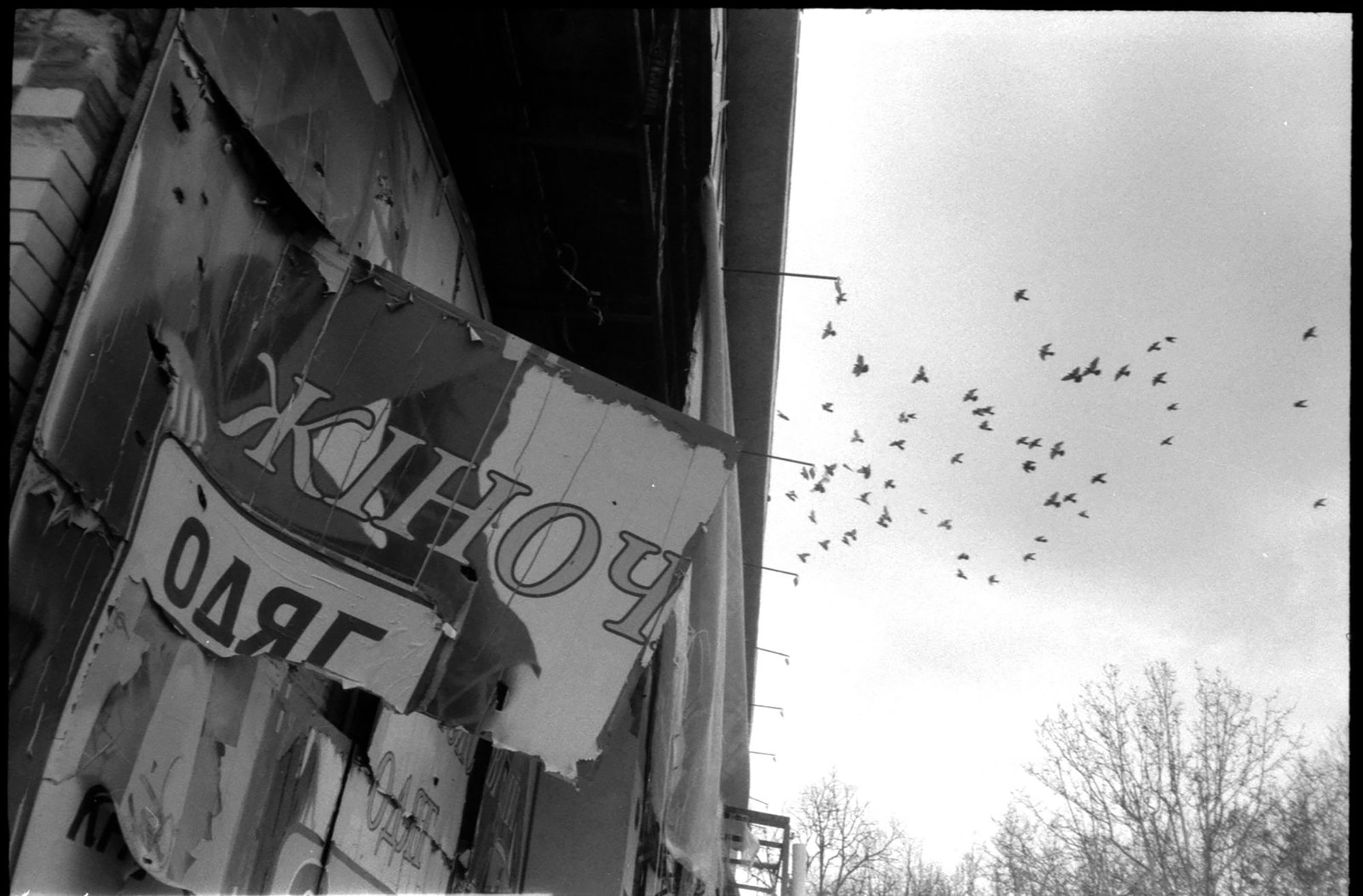
Kherson today is especially fragile and vulnerable, just like its image on glass. The half-ruined city and its inhabitants, imprinted in memory by a silver emulsion as delicate as pollen on a butterfly's wings. Photographer Stanislav Ostrous returns to his native city once again to document its life. This time, he uses ambrotype—a 19th-century photographic technology. He converted concrete shelters into darkrooms, because the development of ambrotypes, just like life itself, cannot be postponed.
“I was once again overwhelmed by the stunning feeling of silence on the streets of Kherson”
There is no direct connection between Kharkiv and Kherson today. I had to travel through Kyiv. I arrived in the city on Easter—I left my things and immediately went to church. Despite the constant danger and threats of drone attacks, the church was crowded and a service was underway. The only exception was that the blessing of the Easter baskets took place inside, not outside as usual. It's safer that way.
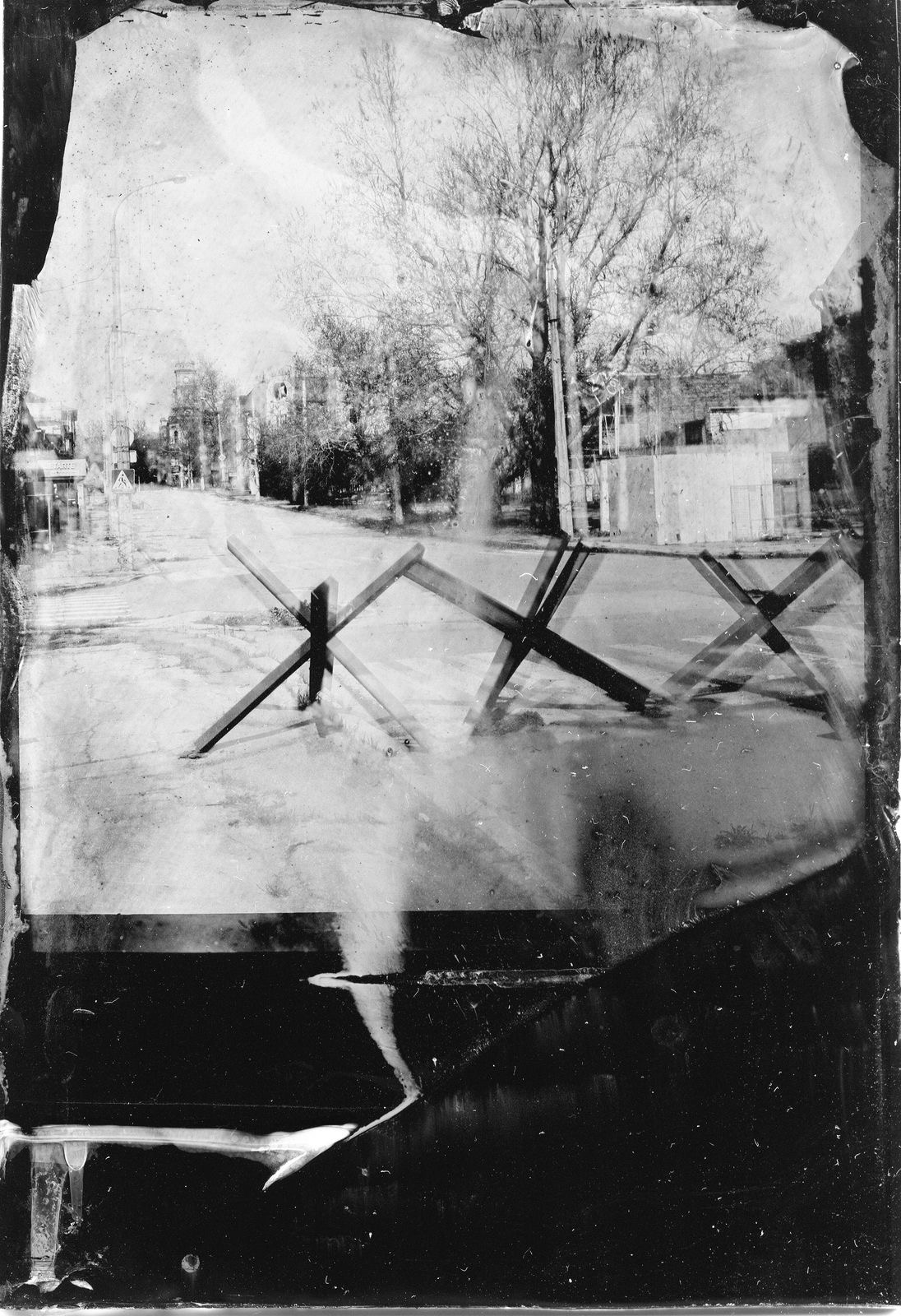
In the church, I met my Kherson colleagues who work for local media—Oleksandr Korniakov and Oleksandr Andriushchenko. Together we photographed the festive church service and went to the city center. I was once again overwhelmed by the stunning feeling of silence on the streets of Kherson. Silence should be calming, but it is depressing due to the awareness of danger and the expectation of something terrible. My colleagues no longer work in the coastal areas of Kherson, as their newsrooms do not dare to send photographers there due to the very high probability of shelling. Instead, I go to Suvorova Street—once the busy central pedestrian street of the city.
“I don't know what makes people stay here—desperation, stubbornness, indifference, or perhaps all of it combined”
On the way to the central streets of Kherson, I meet its last inhabitants, people who are quite marginalized. I don't know what makes them stay here—desperation, stubbornness, indifference, or perhaps all of it combined. One of the men was very aggressive, didn't want to be photographed, while another—Arsen—was calm and composed. A "petal" mine lies in the yard of his house. He called the sappers several times, but they were unable to reach him. Eventually, Arsen fenced off the mine with car tires so as not to step on it accidentally.
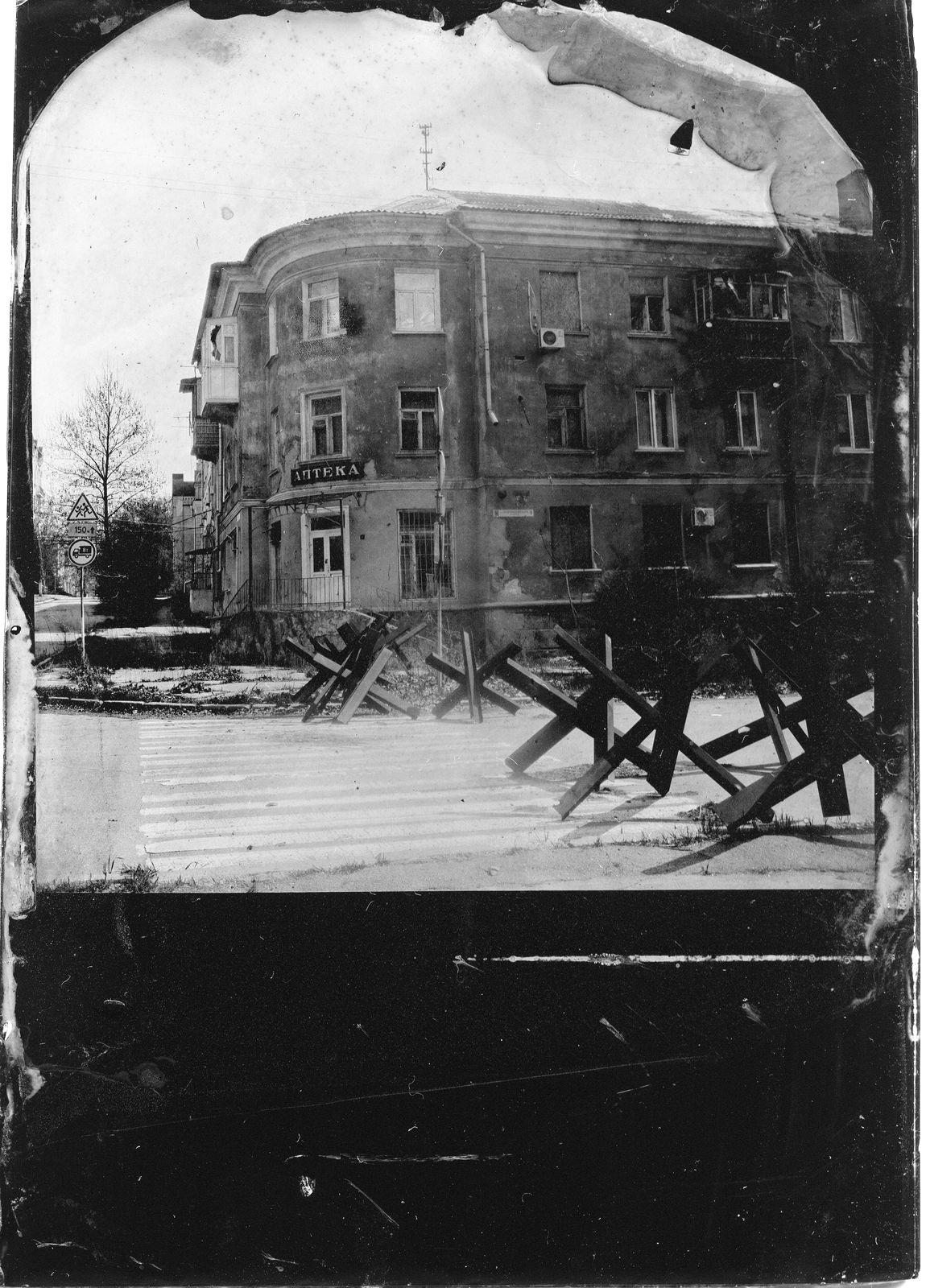
Suvorova Street was the soul of Kherson—a pedestrian street with beautiful historical buildings, it absorbed the city's energy and atmosphere. Suvorova Street is not only a symbol of love for Kherson, but also a part of my personal biography, as many memories are connected with it. I walked its entire length and went down to the river port of Kherson, to the Dnipro itself. This place is very dangerous now, but I was lucky—it was relatively calm here during the Easter holidays.
Both sides announced a ceasefire for the holidays, and despite morning violations by the aggressor country, the city is genuinely very quiet. For me, this was an ideal opportunity to walk around the city. However, a sleepless night on the train reminds me of itself—fatigue increases and, after wandering the familiar streets, I return home. Nevertheless, I dedicate the next three days entirely to shooting.
“I had the task of finding a ‘red zone’ for photos amidst the ‘red zone’ of war”
This time I came to Kherson to shoot ambrotypes—a 19th-century photographic technology. I shot on a small Rolleiflex medium-format camera so as not to carry large glass and many reagents. The shooting process takes place in several stages. I take ordinary glass, pour a collodion solution onto it, and immerse it in a silver nitrate bath for three minutes. This way I get a light-sensitive plate, like film or photographic paper, which must be kept in the dark or under red light. If sunlight hits such a plate, it instantly fogs, meaning it is ruined.
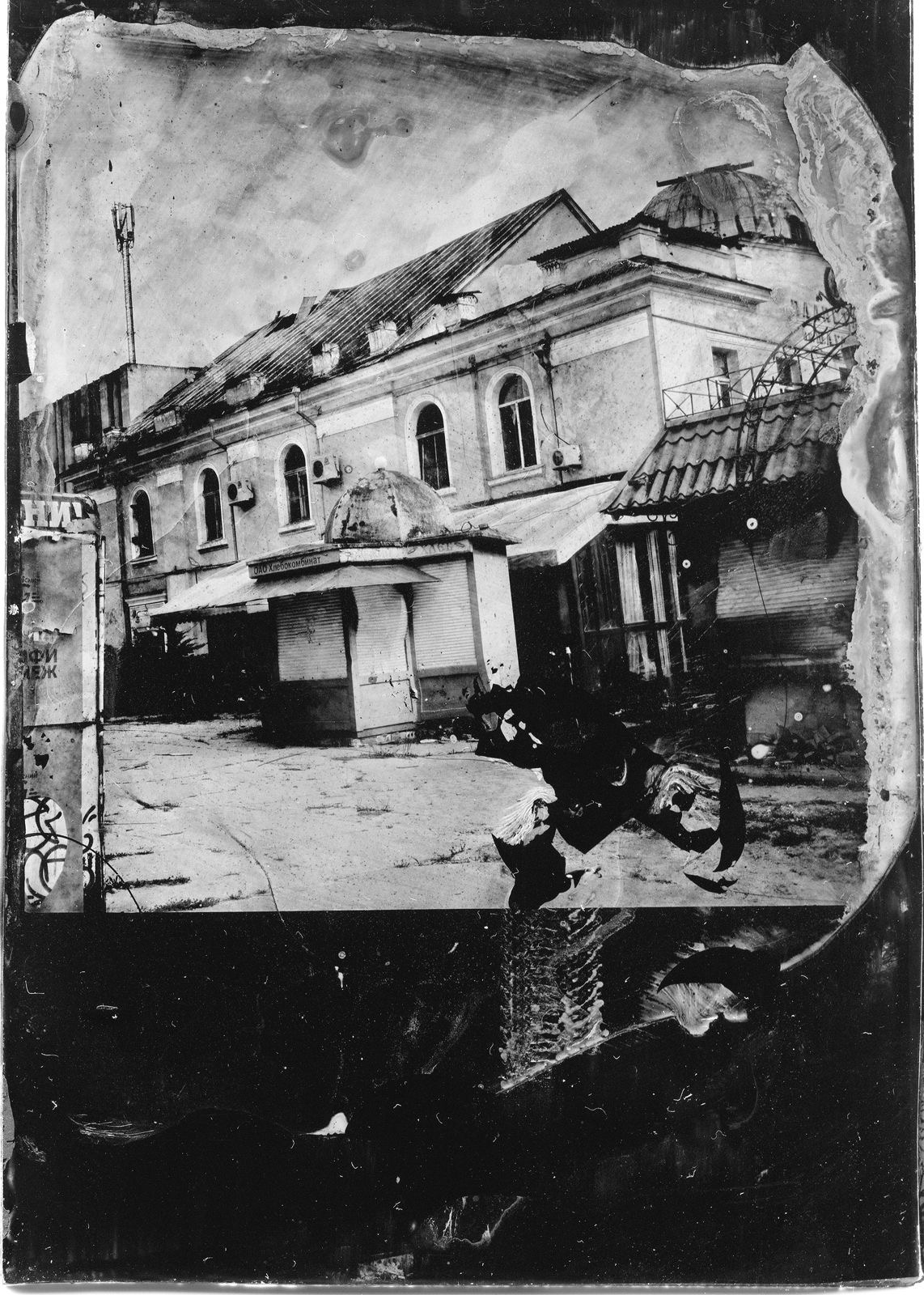
After I get the light-sensitive glass plate, it must be placed in a special cassette, and the cassette into the camera. The shot must be taken within five minutes, otherwise, the glass plate dries out and loses its properties. However, the challenges do not end there. The already exposed glass should be developed immediately in a darkroom under red light, otherwise the image will be spoiled.
The development of glass plates cannot be postponed, just like film development. They cannot be stacked on top of each other, otherwise they will instantly stick together and the photographs will be lost without any possibility of restoration. Accordingly, this entire process requires a darkroom with red light, where the plate for the photo can be prepared and then developed. I had the task of finding a “red zone” for photos amidst the “red zone” of war.
“The half-ruined city is imprinted on the glass with a silver emulsion as delicate as pollen on a butterfly's wings”
The first day of shooting was unsuccessful. I hoped that I could do all the processes under the dark, dense fabric that I specially bought. However, light penetrated from all sides, and nothing worked out for me. I decided to convert the concrete shelters that the Kherson city administration installed throughout the city into a darkroom. I closed the entrance to the shelter with black opaque film, which was given to me by a friend—Israeli ambrotypist Eduard Kaprov, who is shooting a documentary film about the city's life in Kherson. In such a darkroom, I can work with ambrotypes, lighting myself with a red light from a headlamp.
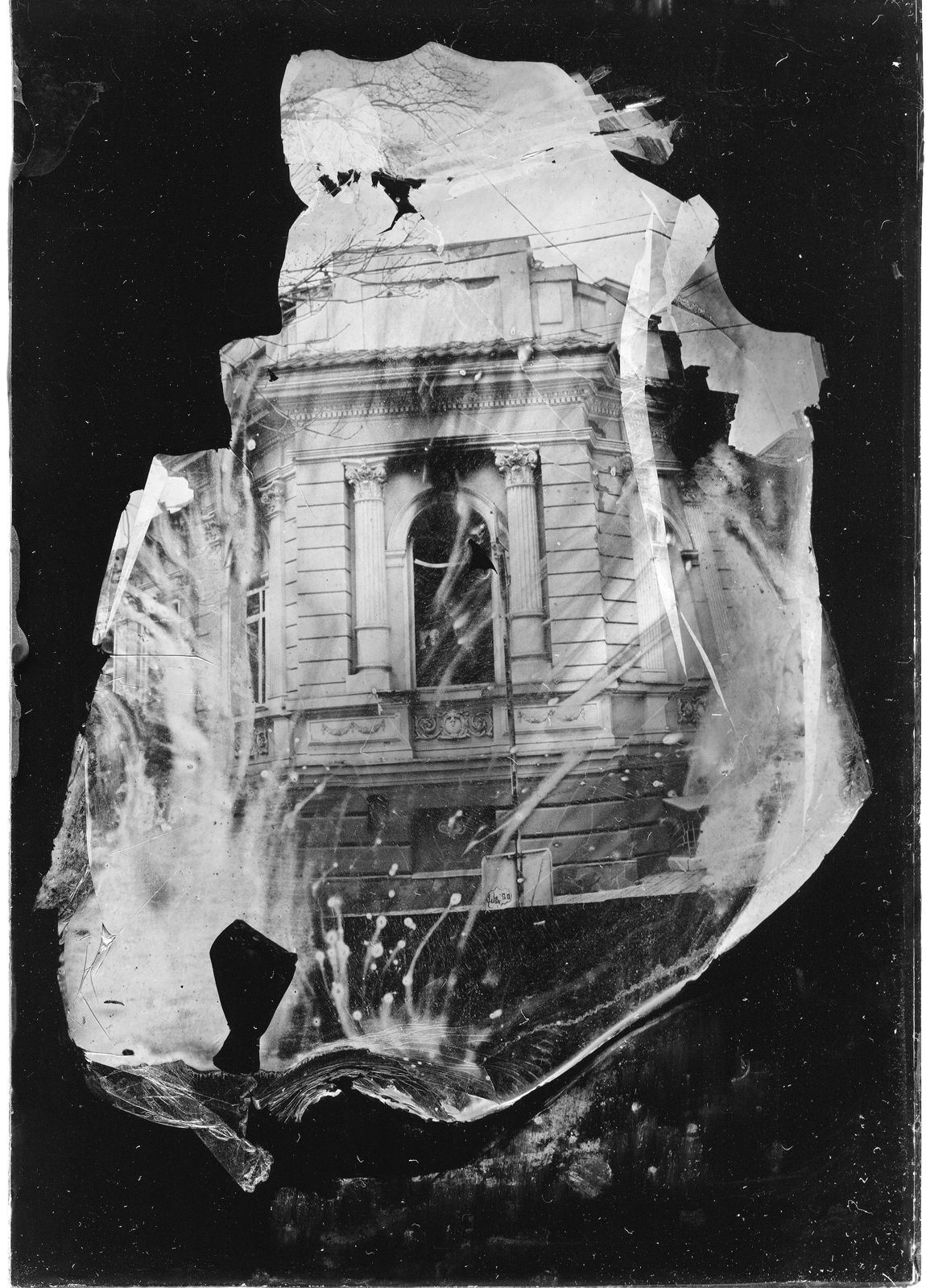
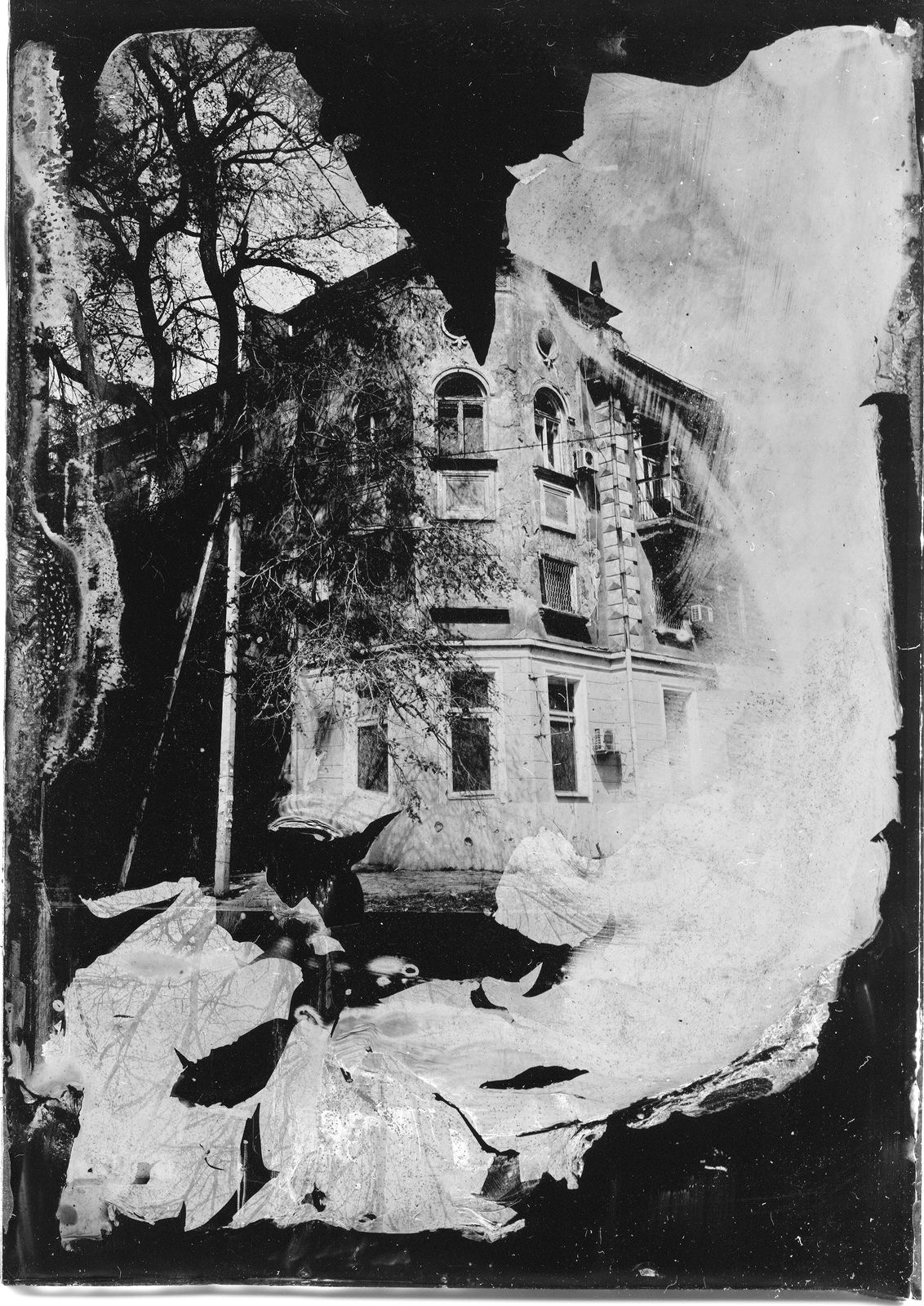
The shooting process was quite slow—from shelter to shelter. From time to time, I hear drones hovering over the shelters. I listen closely, wait for silence, and go out to take photographs. I am shooting what were once my favorite walking places. Unfortunately, I cannot photograph buildings that are further than a five-minute walk away. Not because I am afraid to move away from the shelter, but because of the properties of the emulsion. Now the half-ruined city, amidst the incredible ringing silence, is imprinted on the glass with a silver emulsion as delicate as pollen on a butterfly's wings. The achievement of the first day is 8 plates measuring 6×9 centimeters.
“The forced imperfection of the photographs only complements my inner feelings about the destroyed city”
Due to my mistake in cutting the glass, the plates are too small and do not fit in the box slots. I carry them almost at arm's length, but they still stick together and the image on them deforms and cracks. I was very nervous about this at first. But then came the realization that everything should be this way—this forced imperfection of the photographs only complements my inner feelings about the destroyed city.
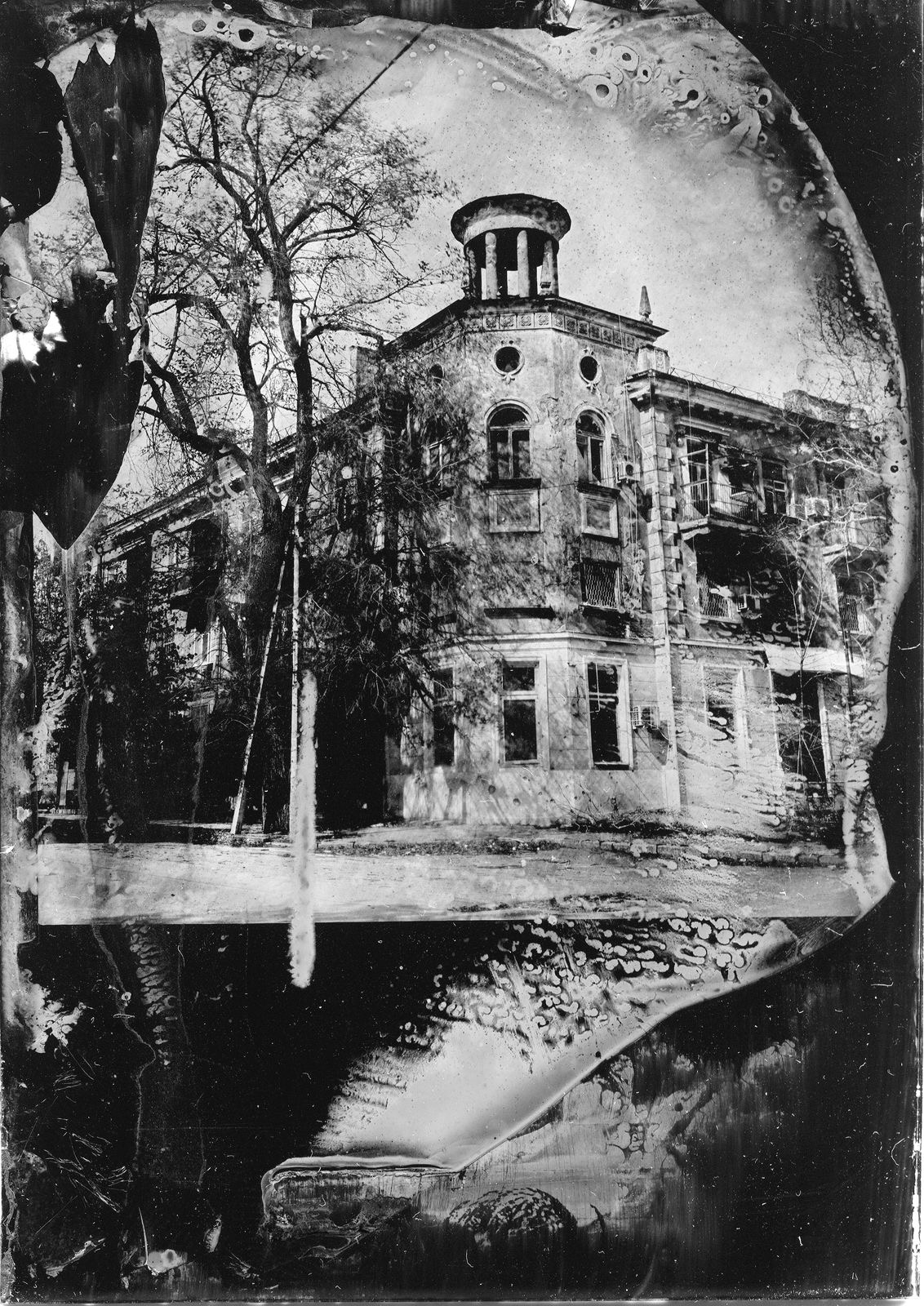
One time, police officers looked into my shelter. They were genuinely surprised by what they saw, and I sincerely told them about this process of creating a photographic image. The next time, military personnel came to me, and the situation repeated itself. On the third day of the photo shoot, I ran out of developer. Its remnants, just as exhausted as I am, leave white, dull spots on the images. This phenomenon in ambrotype is called “fog” or “foggy.” All that remains for me is to pack my things and return home.
Stanislav Ostrous — born in 1972 in Zhmerynka, Ukraine. Started photographing in 2012. Member of UPHA — Ukrainian Photographic Alternative and MYPH. Finalist of the Leica Oskar Barnack Award 2025. Participant in the main exposition of the “Batumi Photodays” festival (2016—2019). Shortlist PhotoCULT 2019. He currently lives and works in Kharkiv, Ukraine.Photographer’s social media: Instagram та Facebook
This material was created with the support of the British Council’s “Creative Economy Grants” program
The material was prepared by:
Text Authors: Stanislav Ostrous, Katia Moskalyuk
Image Editor: Vladyslav Krasnoshchok
Literary Editor: Yuliia Futei
.jpg)
.jpg)