Attention! The material contains sensitive information, and the photos are scenes of cruelty that can shock you.
Ukrainian military entered the city of Bucha in Kyiv region on April 2, 2022. Together with the units of the Armed Forces, journalists and photographers came here. The pictures from Bucha shocked the whole world.
Today, the Ukrainian Association of Professional Photographers publishes photos of Oleg Petrasyuk, taken in the first days of Bucha's release. Oleg's family home is located in Bucha, so this story is quite personal for him.
Hundreds of civilians killed in Bucha
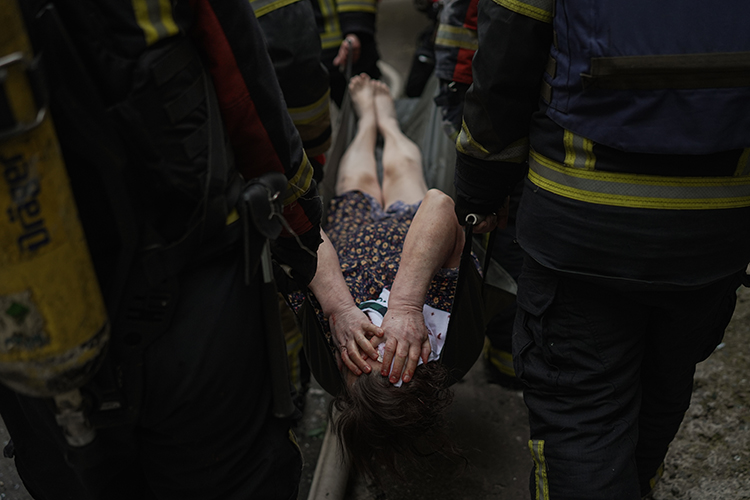
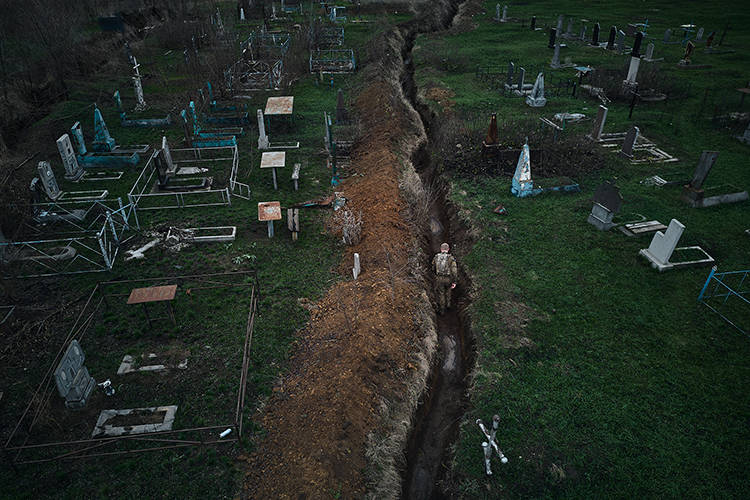
President of Ukraine Volodymyr Zelensky called the actions of the Russian army a genocide of the Ukrainian people. According to preliminary estimates, more than 420 people died in Bucha during the month of occupation and a new cemetery appeared.
The city of Bucha has been under threat of occupation since the first days of the full-scale Russian-Ukrainian war. On February 24, near Bucha, the Russian army landed a helicopter landing in the town of Gostomel, briefly taking control of the Antonov airfield. The next day, Bucha was shot by Russian helicopters. Local residents who tried to leave the city by car were killed. On February 25, however, the city had not yet been captured.
At the end of February, the Russian military awaited another unsuccessful attempt to capture Bucha and move on to Irpin. At the intersection of Yablunska and Vokzalna streets, the Ukrainian military smashed a column of Russian equipment. The locals hoped that after this battle the occupiers would retreat. Instead, on March 5, Russian troops entered the city from the town of Vorzel. On Yablunska they established their base — they occupied nearby houses, and local residents were evicted to neighboring houses or driven into cellars. In March, Yablunskaya turned into a street of death. After the retreat of the Russians, the bodies of the dead were found there. During the occupation of Bucha by the Russian army, dozens of civilians died or were killed by the Russian military.
A mass burial was discovered on the territory of the temple in the center of Bucha. Since March 10, 2022, the Russians have buried civilians there. The bodies of 67 people were found in the burial, some of whom have not yet been identified.


I ventured into the city
Photographer Oleg Petrasyuk as a child often came to his grandmother's house in Bucha. Twenty years later, from 2016 to 2019, he lived a quiet life there with his wife.
On the day of Bucha's release, Oleg learned from colleagues about a column of broken equipment in Dmitrovka, also decided to go and see. “That day I left for work quite late, closer to lunch. It was April 2, 2022. I came to Dmitrovk, saw the well-known broken Russian column there, made a series of shots, met several colleagues,” the photographer recalls.
Oleg says that after finishing shooting in Dmitrovka, he decided to try to get to Bucha. He was curious about what had happened to the city under occupation, and finally to see his home. At that time, entry into the city was still prohibited for civilians.


“I decided to get to Bucha just for luck, I was interested to try. I drove along the beaten track: due to the damp weather on the ground, it was clearly visible that they were driving here, so I was not too worried about safety. At the checkpoint, I showed a journalist's ID and I was missed,” Petrasyuk recalls. When he entered the city, he saw the bodies of people killed by the Russians. They lay along the streets on sidewalks or right on the road.
“I arrived quite late in Bucha, about 3 o'clock in the afternoon. It was very gloomy. In the de-occupied cities of the Kiev region, there was no light at that time. I took literally a few shots of bodies in the streets. Most of them were removed so quickly that on the way back, an hour later, I did not see them anymore, - continues Oleg Petrasyuk. “Then I decided to go to Vokzalnaya Street to my house.”


Grandma's house
The house belonging to the photographer's family, in which he himself lived for several years, is located on Vokzalnaya Street. On the same street where the Armed Forces of Ukraine smashed a long-bladed column of military equipment. Oleg's house was almost not damaged, but next to the house were burned “cans” of Russians.
“I entered the house, the door wide open, the glove compartment inside, things taken out into the street. Very unpleasant sensations, it was a bit overwhelming, because I did not know what “gifts” the enemies left me. I very carefully went into the yard, looked into the house. I did not go inside, I took only one thing that I saw at the entrance, and went out. At this moment, an employee of the State Emergency Service comes to meet me and carries my journalist ID and says: “You are lost.” And it was one of my old editorial cards, which I left in the house from where the Russians threw it out into the street. I grabbed the rescuer's hand and said: could you inspect the house for mines. He replied that he was not a sapper and would not help, but gave a couple of tips,” says Petrasyuk.
Then the photographer took several pictures of the burned column near the house, went around the nearest neighborhoods, talked with locals and had to go to Kiev because it was getting dark. Back then, it was quite dangerous to move around in the dark.


Oleg Petrasyuk — Ukrainian photographer, almost 15 years in photojournalism, has worked with many Ukrainian media, including the English-language Kyiv Post. For many years he has worked with the European Pressphoto Agency (EPA), of which he is part of the team today.
Photographer's social networks:
www.facebook.com/oleg.petrasiuk
www.instagram.com/olegpetrasiuk_photo
Recall that the Ukrainian Association of Professional Photographers has started a series of materials dedicated to key events of the Russian war against Ukraine, where he publishes memoirs and photographs of Ukrainian documentary photographers.
The project is implemented thanks to support of ZMIN.
The material was worked on:
Researcher of the topic, author of the text: Katya Moskalyuk
Bildeditor: Vyacheslav Ratynskyi
Literary Editor: Julia Foutei
Site Manager: Vladislav Kuhar