The Russian army captured the city of Trostyanets in the Sumy region at the beginning of a full-scale invasion — on March 1, 2022. The Ukrainian Defense Forces liberated the city from Russian troops less than a month later — on March 26.
Today, the Ukrainian Association of Professional Photographers publishes photos of Oleg Pereverziev, taken in the spring of 2022 in Trostyanets. The photographer was one of the first to arrive in the liberated city and filmed the consequences of the Russian occupation.
Occupation of Trostyanets
In the evening of February 24, a column of Russian military equipment stopped on the outskirts of the city of Trostyanets. The city is located only 30 kilometers from the border with Russia. On the first evening, the Russian army shelled the Trostyanetsky District Museum of Local Lore, which is an architectural monument. According to locals, the Russian military fired at everything that seemed good to them.
On the morning of February 25, fighting began in Trostyanka and neighboring Akhtyrka. Ukrainian military blew up a bridge across the Vorskla River to prevent the advance of Russian troops along the Sumy — Poltava highway. The next day, Ukrainian artillery destroyed a column of Russian equipment that was moving around the destroyed bridge. However, on February 28, a column of Russian military equipment entered Trostyanets from the city of Lebedin and occupied the railway station “Smorodyne”.


The next day — March 1, 2022, the Russian army entered Trostyanets in three columns and completely occupied the city. The Russian military demolished the gate in the Round Yard with a tank, smashed the picture gallery. In the city, almost all power lines and roads were damaged, the Internet disappeared, television and radio were not broadcast. The army of the Russian Federation placed military equipment in residential areas of the city and the inhabitants of Trostyanets actually became hostages.
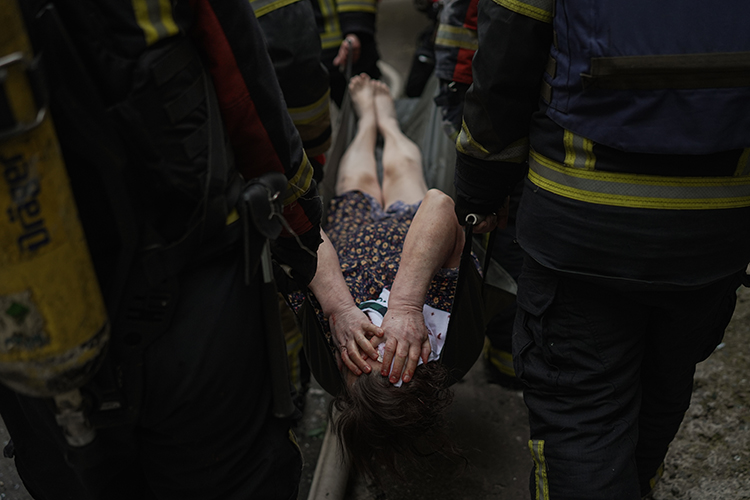
Throughout March, Russian troops looted shops and destroyed office premises. Civilians were killed during the occupation of the city. For example, on the night of March 8 to 9, Russian artillery shelled the former Elektrobutprylad plant. Three people were killed, including a 13-year-old boy. There was no heating, water or food in the city. People used wells to collect water. Schools, kindergartens and a local restaurateur baked bread and distributed free of charge to people. In early March, it was impossible to leave Trostianets — there were no evacuation corridors. The “Green Corridors” began operating from March 10.


Without anxiety
On the night of March 16, the troops of the 93rd Separate Mechanized Brigade “Kholodny Yar” were able to destroy a howitzer division of Russian troops located at the railway station in Trostyanets. On March 18, Ukrainian troops destroyed a column of enemy vehicles near Trostyanets. The column consisted of the T-80UM2 experimental tank “Black Eagle, which was in service with the Russian Federation in only one copy. Late in the evening of March 22, fighting and artillery shelling began in Trostyanka, and a large-scale fire broke out in the city. The city has been without water, electricity and the ability to refill medicines for almost a month.
Intensive fighting for the liberation of Trostianets began on March 25. On March 26, Ukrainian troops of the 93rd Separate Mechanized Brigade “Kholodny Yar” liberated the city of Trostyanets from the Russian army. The city suffered significant losses and destruction. The Russian military replaced many civilian facilities.
Photographer Oleg Pereverzev came to Trostyanets on the second day after the liberation of the city and filmed there during March 28-29. By this time, he had been in Kharkov for almost a week. In the early days, Trostyanets was difficult to get to. The bridge over the Vorskla River near the village of Klimentove was damaged, and the pontoon crossing turned out to be impassable for the photographer's car. “From Akhtyrka to Trostianets they drove around, through the surrounding villages, following a minibus of volunteers carrying humanitarian aid,” recalls Oleg Pereverzev.

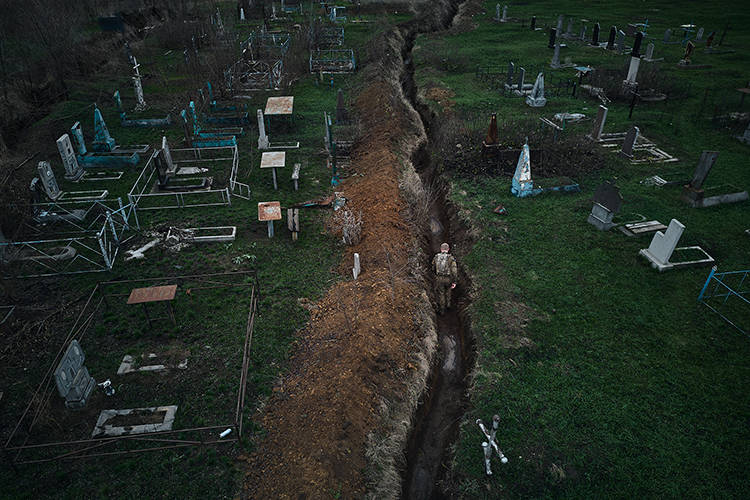
Upon entering, the city seemed unscathed. Traces of destruction began to appear closer to the station square. On the square itself and near the station stood damaged and burned military equipment, many buildings were destroyed. The passage to the railway station was blocked by a large trench. It was from there that the journalists who came to the city began their work.


“Despite the significant destruction, there was no sense of danger and anxiety that was felt a few days earlier in Saltovka, in Kharkiv, or later in Borodyanka,” Oleg Pereverzev shares. - Although I was one of the few photographers who got to Trostyanets immediately after his release, I believe that it was taken in very little. In the city there was no mobile connection and in case of urgent departure I had to be near the car. It was difficult to focus on shooting when I had to keep in view the photographers who came with me and periodically return to the car.” Oleg Pereverzev helped photographers Maxim Dondyuk and James Nachtwey with transport.


Oleg Pereverziev — Ukrainian documentary photographer. Published in Ukrainer and many other publications.
Photographer's social networks:
Facebook
Instagram
Recall that the Ukrainian Association of Professional Photographers has started a series of materials dedicated to key events of the Russian war against Ukraine, where he publishes memoirs and photographs of Ukrainian documentary photographers.
The project is implemented thanks to support of ZMIN.
The material was worked on:
Researcher of the topic, author of the text: Katya Moskalyuk
Bildeditor: Vyacheslav Ratynskyi
Literary Editor: Julia Foutei
Site Manager: Vladislav Kuhar