.jpg)
We are used to perceiving photography as the most reliable archive of our lives, and documentary images as undeniable and objective historical evidence. However, in the era of digital technology and artificial intelligence, the line between capturing reality and its subjective interpretation is becoming increasingly blurred. What does it truly mean to "preserve memory" through a camera lens, and how does the lens shape our perception of the past?
During a webinar organized by the Archive of War with the support of the "Partnership for a Strong Ukraine" program, curator and photography researcher Kateryna Radchenko, documentary photographer Serhiy Korovainyi, historian and historical memory researcher Vitaliy Nakhmanovych, and historian and archivist Liana Blikharska discussed in detail what recording the past through a lens genuinely entails. In particular, the focus was on documentary photography—exploring the boundary between the objective reflection of reality and its interpretation, as well as how a photograph shapes public perception of history.
Liana Blikharska: What place does documentary photography occupy in your professional work? What approaches do you use when working with it, and how exactly do you utilize this medium to research or preserve memory?
Serhiy Korovainyi: Documentary photography is the method I work in. That is, when a photographer observes reality and tries to portray it as it is, without embellishment. Here, we can talk about the degree of the author's presence in the frame. If we look at traditional photojournalism, we generally strive for objectivity—meaning as little presence of the photographer in the work as possible. Although today, documentary photography is somewhat losing its distinct boundary with conceptual photography. Nowadays, it is common to see documentary projects that feature a strong presence of the authors themselves and their personal artistic vision, and that is also completely valid.
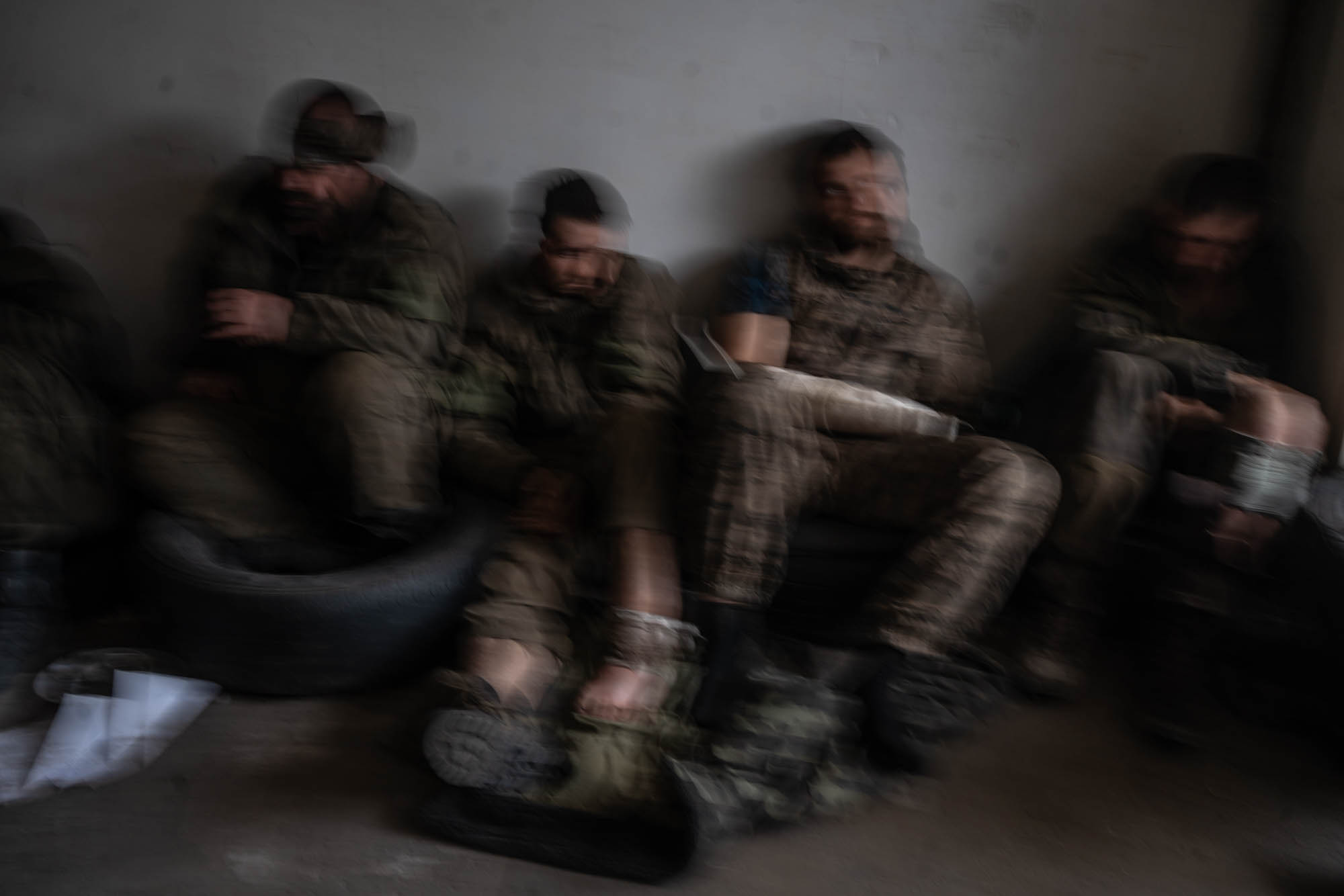
Speaking of advocacy and activism—I sometimes work more along the spectrum of news photography, though I aim to do less of it. In that domain, it is believed that there should be no activism or taking a side in a conflict or story. A photographer, like a journalist, should stand above the story and try to remain objective. But I must admit that since I, like the vast majority of my colleagues, am currently working on covering Russian aggression across very different formats and topics, I can definitely say this about myself.
In my work, although it mostly adheres to journalistic standards and ethics (at least I try, though that too is not so straightforward), there is still a certain advocacy for Ukraine's position in this war. Because, on the one hand, I am Ukrainian, a citizen of Ukraine, and I sincerely root for our country. On the other hand, the Ukrainian side here is not the aggressor. It is very easy for us to tell the truth and be objective—that is our strategy. So here, it seems to me, activism and advocacy naturally coexist.
Liana Blikharska: Which topics are the most difficult to work with in documentary photography today, which ones does society consider "timely" or "untimely," and how do these ethical dilemmas intensify when documenting war?
Serhiy Korovainyi: In my practice, I am increasingly realizing that I work best when I choose close and deeply resonant topics—things I can speak about sincerely and confidently. At the beginning of the full-scale war, like many of my colleagues, I was extremely active. Back then, we were all learning to live with this new, terrifying reality, as events unfolded continuously around us—frightening and shocking news. During that period, we simply reacted to what was happening around us and shot relentlessly.
.jpg)
Now I try to focus on things that are personally meaningful to me. Much of my work stems from my own history, as I was born and raised in the Donetsk region, in a small town near Donetsk that has been under occupation since 2014.
A few years ago, I realized that I wanted and needed to focus on the topic of the Ukrainian East, my native Donetsk region, and I consciously began documenting this territory from an insider's perspective—as someone who loves it. This year, my first book was published; working on it felt very natural because it is essentially about my life as a person and a photographer. It seems to me that this is precisely the secret to our success and accomplishment as journalists.

I would say that the community of Ukrainian documentary photographers covers a wide spectrum of topics very well. Our community shoots almost everything: military, civilian, environmental, and social issues. However, for instance, Kateryna Radchenko often criticizes me. Speaking for myself, apart from my story about Donbas, I rarely shoot truly deep projects—projects that involve extensive research and where the material is studied beyond simply "arriving and taking photos." At the same time, I understand that it is not easy to do this in the midst of an ongoing war. In this documentary landscape, there is still a place for classic photojournalistic work. And that, too, is entirely normal.
Liana Blikharska: Ms. Kateryna, how do you define documentary photography in your work? How do you engage with it in the projects you curate?
Kateryna Radchenko: Speaking about my position and attitude toward documentary photography, I will probably start by saying that for me, photography in general serves as testimony and narrative. Yet at the same time, I believe that photography is inherently a subjective perspective. No matter how hard photographers try to convey objective reality, every author finds themselves in a specific moment, selects a frame, chooses a perspective, assesses the situation, and then constructs their story when selecting the photos shown publicly or presented through the media. Furthermore, editorial intervention and accompanying text are added later. Therefore, a photograph is merely one specific piece of the puzzle. For researchers, it is vital to examine any photograph within its context, as viewing a photograph without context directly opens the door to manipulation.
In our history, we have many cases demonstrating how a photograph was used under a different context or paired with a different text block, entirely altering the story. Thus, on one hand, it is evidence and history; on the other hand, documentary photography is also a puzzle to me—a collection of different testimonies and authorial perspectives to find an answer, for instance, to what event took place at a specific moment, which we can examine through visual material.
I also make a distinction for myself, because I work not only with professional photography—meaning photographers who continuously document for media or personal projects—but also with amateur or vernacular photography.
In the professional sphere, I distinguish between foreign and local photography because they bring different approaches, distinct perspectives on history or events, and different levels of access. As Serhiy noted, his book project was an immersion into his own life—a reflection on events and territories that matter deeply to him.
However, when speaking of amateur or vernacular photography, I currently hold a clear distinction: photography by civilians versus photography by military personnel. These represent completely different accesses to stories, distinct viewpoints, and different reflections. Therefore, documentary photography currently has these specific branches for me. Depending on the exhibition or text I am working on, specific focus areas or research approaches emerge when dealing with a given photograph.
For me personally, every exhibition or article reflects my own stance. I shape this personal stance with the help of other authors, building a unified statement through a curated visual sequence that operates as a cohesive voice.
Regarding criticism—it stems from my distinction between international and local photographers covering the war in Ukraine. In my view, when we talk about foreign authors, there is a phenomenon known as "parachute photography" or "parachutism." This occurs when an author arrives for a limited time for a specific event, "parachutes" into a location, stays for a short period—a few days, a few weeks, a month at most—shoots the story, and returns home.
In contrast, Ukrainian authors remain continuously immersed in the context of the war. With this lived experience, they have the opportunity to delve deeply into topics, uncovering greater complexity. Working with both international and Ukrainian photographers, I push local authors—through constructive critique—to immerse themselves more deeply into contexts. I urge them not merely to show obvious, event-driven stories, but to explore subjects that remain underexposed.
I will share an example that aligns with our discussion on documentary photography. If we look back at the evacuation period in 2022, we will not find a single photograph taken inside evacuation trains by professional photographers. There are clear reasons for this: at that time, it was impossible for a photographer to take up a seat meant for an evacuee. It was a critical period, and priority was strictly given to women, children, and the elderly. From an ethical standpoint, it would have been unacceptable for a photographer to occupy space just to take pictures. Consequently, we have no professional photography from inside those trains during that time.
.jpg)
.jpg)
Instead, we have a wealth of amateur photographs taken directly by people inside those trains. At the moment, they were taking photos without thinking about history, context, or archival value; it was an immediate reflection on the event and a way to preserve personal memories. Today, however, these images serve as research material and vital evidence of those events. This illustrates how inner immersion and the personalization of history emerge through vernacular photography.
Furthermore, regarding events that international photographers cannot access—where Ukrainian photographers have access due to language and local context—it is crucial to document these visual gaps. This allows us to build a comprehensive picture of this history and its context.
Liana Blikharska: Ms. Kateryna, please tell us about your experience working with different domestic audiences. How does the perception of documentary photography differ between the professional community and the broader public, who usually see it only in newspapers? And how is your engagement with international audiences structured in this context?
Kateryna Radchenko: Yes, that is a crucial observation, because how information is conveyed and received depends directly on the audience. For example, I work less with traditional media, but in exhibition settings, I notice that the visual messages or narratives we present in Ukraine do not resonate abroad in the same way, and vice versa. This is particularly evident in how depictions of violence are received.
First, graphic depictions of violence are generally taboo abroad, and very few galleries would risk showing them openly. Second, explicit imagery of violence often fails to connect because it is a matter of lived experience. If viewers lack the corresponding background, no matter how tragic the imagery is, it will not evoke a deep internal response.
I had an interesting and somewhat perplexing experience while presenting various stories from Ukraine about the Russo-Ukrainian war abroad over several consecutive years. I observed that audiences processed the information on a purely rational, intellectual level, but there was a lack of profound empathetic engagement. In contrast, during an exhibition focused on protest movements over the past 30 years across Ukraine, Georgia, Iran, Kyrgyzstan, and Kazakhstan, I witnessed strong empathy and reflection from people of diverse backgrounds and nationalities. Initially, it surprised me that purely Ukrainian war stories did not evoke the same emotional reaction as narratives about protest movements across different countries.
The reason is straightforward: international audiences have their own experience with protests in one form or another. Thus, those visual stories were easily decoded—they were understood through empathy and filtered through personal experience. Therefore, when working with viewers—whether we are photographers, researchers, or media professionals—we must address three key questions: What specific story do we want to convey? Who is our audience, and how will we communicate and structure the visual narrative accordingly? What outcome do we aim to achieve? Based on these three considerations, we can construct an effective visual narrative that truly resonates and connects with our audience.
.jpg)
Liana Blikharska: Mr. Vitaliy, how do you work with documentary photography? How can documentary photography serve historians in generating knowledge and establishing scientific facts?
Vitaliy Nakhmanovych: To answer how I work with documentary photography, I would say: cautiously. One must understand that, like any document, it is highly subjective, capturing only what a specific individual sees at a specific moment and location.
Consider a contemporary, familiar scenario for Kyiv residents. If you exit the "Lukyanivska" metro station in Kyiv today, you see the repeatedly damaged "Artem" plant on one side of the street, a destroyed shopping center on the other, and a market behind the station. This apocalyptic scene can be photographed and presented as evidence of the consequences of Russian aggression.
However, one could choose a narrower angle and photograph the Lukyanivskyi Market, which continues to operate amid these three destroyed structures. People stand in tents, conducting business. If photographed so that the damaged buildings remain outside the frame, we obtain a picture of daily life in wartime Kyiv.
Both instances constitute documentary photography. Yet, depending on the photographer's intent and framing, you receive entirely different images. The same principle applies to historical photographs.
Personally, I prefer to use photography primarily as illustration. As a curator and museum professional who designs exhibitions, I often need to visually support a thesis formulated in text and conceptualized for a display. This is where I incorporate photographs, whether concerning the German occupation, the current war, or broader events in Ukrainian history. In these contexts, photography serves an illustrative purpose: I select specific images that correspond to the narrative I wish to convey.
Relying on photography as primary evidence for reconstructing historical events carries significant risk. It is easy to misinterpret details, generalize a single frame, and project it onto other times and spaces. Therefore, I advise treating documentary photography with the same critical caution as documentary cinema. For instance, Serhiy Loznitsa's film "Babi Yar. Context" exemplifies how historical facts can be manipulated by arranging archival footage to fit a predetermined director's thesis. This approach reflects the author's personal narrative rather than an objective analysis of historical documentation.
Liana Blikharska: Our Center for Urban History operates an Urban Media Archive. Recently, through the assistance of a German family and Professor Leo Ensel, 49 photographs taken by a Luftwaffe serviceman between 1941 and 1943 were donated to the Bakhmut Museum of Local Lore. Our institution digitized these materials, incorporating them into our archival collections.
Examining these photographs reveals that they do not reflect the perspective of a professional military photographer or propaganda journalist. Rather, they represent the viewpoint of an individual soldier documenting his daily life in Bakhmut. This collection raises various research questions. First, it touches upon military history, documenting the presence of a specific unit in Bakhmut. Second, it highlights the soldier as an amateur photographer, illustrating the widespread popularity of photography during that era for personal record-keeping alongside official propaganda.
Third, World War II photography prompts critical historiographical discussions. For example, Mr. Vitaliy works with the photographs of Johannes Hähle. When these images were donated to the Hamburg Institute for Social Research for an exhibition on the Wehrmacht, they prompted broader discussions regarding the involvement of regular military units in war crimes.
Thus, documentary photography operates across multiple dimensions. It allows us not only to study past events, but also to critically analyze the image itself, questioning its intent and context. Ultimately, this leads to a broader question regarding the role of documentary photography in contemporary historical discourse.
Liana Blikharska: Mr. Serhiy, how do you envision the future of your work? Have you considered whether you see your materials becoming part of a public or state archive, or do you view them as a private collection? How do you imagine the long-term preservation of these photographs, and what should future archivists and researchers keep in mind when working with your collections? What qualifications should they possess to handle these materials properly?
Serhiy Korovainyi: Being actively engaged in the field, it is difficult to allocate time for archival management. Therefore, I am grateful to the professionals and institutions dedicated to archiving. As a Ukrainian living through war and a photojournalist working at its center, I lack the operational bandwidth to manage long-term archiving. Nevertheless, I strongly hope that my colleagues' work will be preserved. Many document this war at great personal risk, facing injury or death, particularly in combat photography.
Provided humanity addresses global challenges, I hope these photographs endure as record of Ukraine's resistance against Russian aggression. They should assist future generations in analyzing the geopolitical and military dimensions of this conflict. As the first conflict featuring modern technological integration on this scale, it represents a significant shift in military history, making these materials essential for military historians and museum curators.
The primary challenge for current and future archivists and historians will be managing the sheer volume of data. Compared to World War II or 20th-century photojournalism, where material constraints limited output, contemporary digital technology allows for an unprecedented volume of images.
%20(1).jpg)
I hope that those managing my archive possess strong curatorial and editorial skills to identify key historical elements. While filtering is part of my current workflow, future specialists must be equipped to identify significant work that might be overlooked during active field reporting.
Furthermore, these archives will be evaluated within a post-war geopolitical framework. It is critical that the perspectives of Ukrainian and international documentary photographers documenting events from the field are preserved, rather than state-sponsored Russian narratives.
Liana Blikharska: Ms. Kateryna, as a curator, how does working with processed, historical archival sources differ from working with unarchived materials? This applies to both recent contemporary work and older collections that have not yet been formally integrated into archives.
Kateryna Radchenko: I work with both archival and contemporary photography. Regarding archival methodology and attribution, current institutional approaches require modernization. For instance, in Ukrainian archives, technical specifications regarding the original medium are frequently absent, particularly when physical access to the original artifact is restricted.
Understanding the physical medium is essential. A duplicate image may indicate that the original was lost, seized, or destroyed. In the Soviet context, specific prints were systematically distributed across institutions because they aligned with official state censorship. Analyzing the technical process and medium yields valuable data regarding both the historical context and the chain of custody of the document.
Contextual framing can significantly alter the interpretation of an image. Photographs are inherently susceptible to recontextualization. Therefore, as Liana noted, a researcher's primary methodology must involve critical inquiry into the source materials.
When archival gaps exist for periods where photography was widely established, researchers must investigate the causes, which often point to systematic destruction rather than a lack of documentation. Today, archivism faces two concurrent challenges: preserving historical collections from the 19th and 20th centuries vulnerable to conflict in frontline areas, and structuring the active archive of the current war.
This involves managing vast digital output from professional photojournalists—raising questions about selection criteria for historical inclusion—alongside vernacular photography and aerial reconnaissance footage.
In restricted combat zones where civilian journalists are prohibited, military personnel serve as the sole source of documentation, often via functional media such as drone footage. While initially classified for operational security, these records eventually serve as primary data for analyzing structural and topographical changes to the landscape.
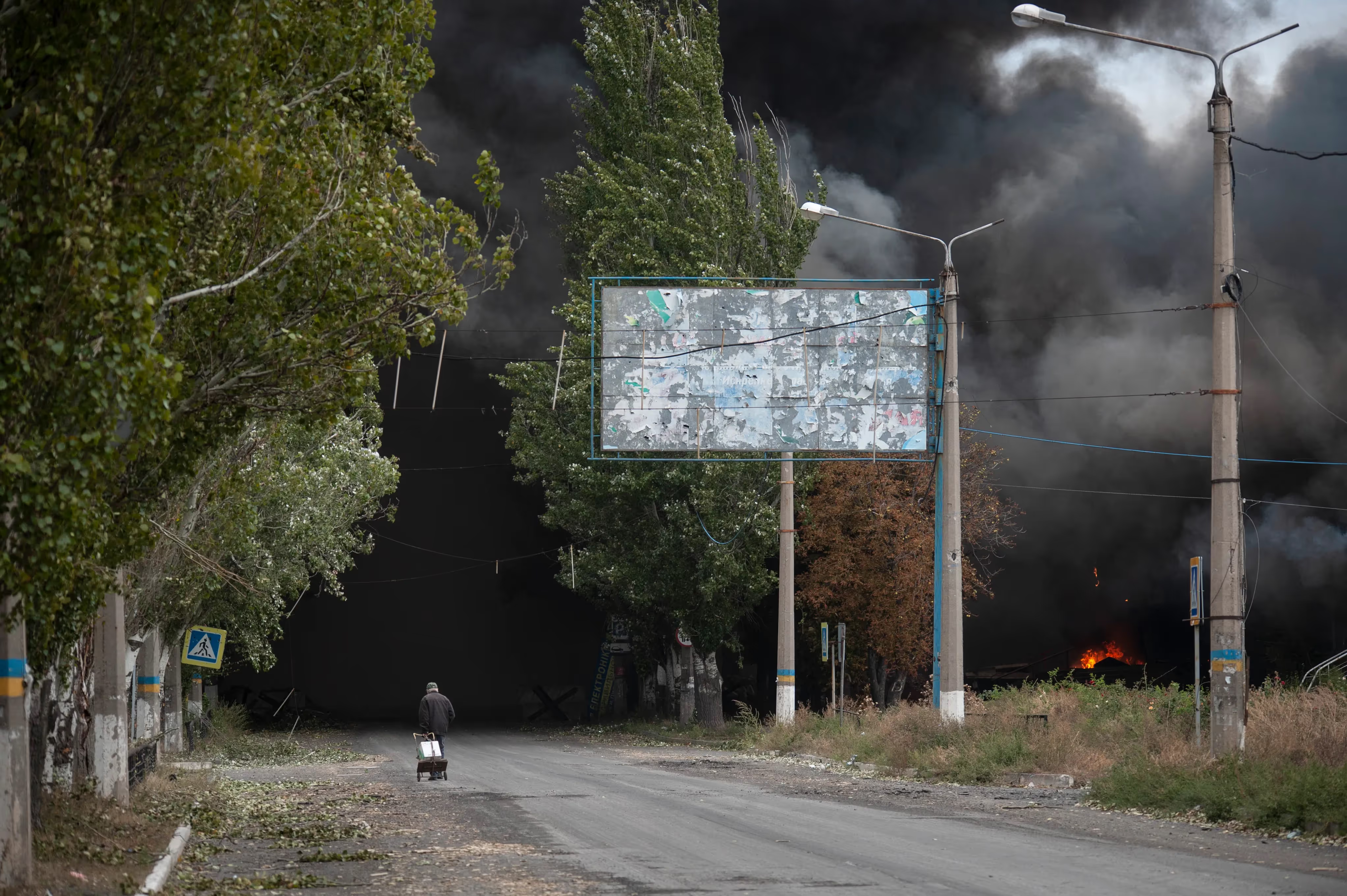
These methodological questions remain active areas of debate within archival science and contemporary history.
In my curatorial practice, I integrate historical and contemporary photography to analyze recurring patterns. Historical precedents, such as the ideological purging of Soviet archives, find parallels in the current destruction and looting of cultural institutions in occupied territories, resulting in the loss of primary documentation.
Currently, contemporary war documentation lacks centralized archival management. Field photographers are burdened with managing their personal archives alongside active reporting, creating significant preservation risks.
Furthermore, emergency evacuations frequently lead to the permanent loss of private archives and family albums, depleting the vernacular photographic record of the region.
Addressing this issue requires a decentralized archival model. A single institution cannot process this volume of material; instead, a network of specialized institutions focusing on distinct aspects—such as technical methodology, military history, or social documentation—is necessary to ensure comprehensive preservation.
Liana Blikharska: Mr. Vitaliy, how, in your view, does photography assist in forensic and historical site identification?
Vitaliy Nakhmanovych: Photography serves as a useful secondary tool, but its scope is limited. While I do not study Johannes Hähle's photographic archive exclusively, I have utilized his photographs of Kyiv and Babi Yar in exhibition curation.
The debate regarding the precise execution sites in Babi Yar emerged historically through non-expert site identification in the late 1980s, leading to the placement of the Menorah monument near the former Jewish cemetery. Precise spatial boundaries were initially secondary to the collective imperative of commemoration.
Subsequently, discourse shifted toward commemorative politics, with competing claims regarding victim demographics and specific execution locations within the ravine complex.
Following the collapse of Soviet censorship regarding the Jewish genocide at Babi Yar, arguments emerged attempting to spatially segregate victim groups across different sectors of the site.
These debates later intersected with municipal land use and commercial development proposals, where spatial arguments were used to justify construction on specific parcels by claiming an absence of execution sites on those exact coordinates.
Micro-locational precision should be secondary to preserving the broader landscape of memory. Given that the bodies were exhumed and burned by Nazi forces and the topography was subsequently altered during the Soviet period, exact boundaries are difficult to isolate. However, defining spatial parameters became necessary to prevent commercial encroachment on the mass grave sites.
In this context, researchers analyzed Johannes Hähle's photographs. It should be noted that no photographic documentation of the actual executions in Babi Yar exists; images presented as such are either from other locations or film stills. Hähle documented the immediate aftermath, allowing researchers to extrapolate specific spatial features.

However, executions occurred across multiple sectors over a two-year period. Hähle photographed a single day in early October 1941. Consequently, these photographs identify only a specific locality used during that specific operational window, rather than the entire execution complex.
Generalizing these frames to represent the entire duration of the massacres leads to historical inaccuracies, demonstrating the limits of photographic evidence in historical reconstruction.
Regarding the Bakhmut photograph mentioned by Liana, the photographer's institutional affiliation as a Luftwaffe serviceman is significant, distinguishing his perspective from propaganda company personnel like Hähle.
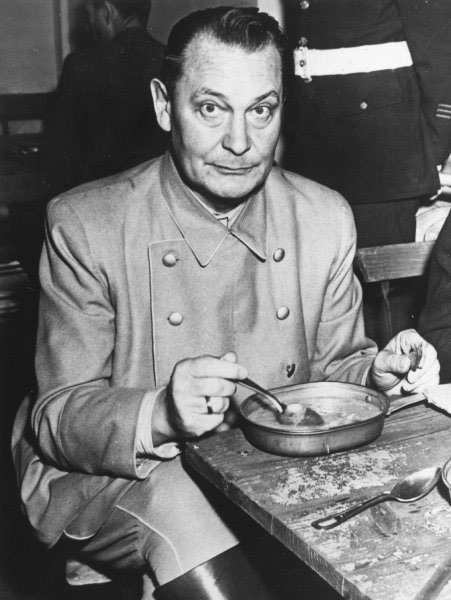
The Luftwaffe maintained distinct institutional norms compared to the regular army. This internal culture was reflected in its leadership and institutional structure, shaping how its personnel observed and documented their surroundings.
The perspective of air force personnel differed substantially from infantry forces, directly influencing their photographic documentation.
This underscores the necessity of source criticism when evaluating photographic evidence. Every photograph represents a selective frame bounded by time and space, leaving adjacent events unrecorded. This structural limitation must be accounted for in historical methodology.
Vitaliy Nakhmanovych — Ukrainian historian, ethnopolitologist, museum curator, and public figure. Active in Holocaust studies in Ukraine and advocate for the dignified commemoration of all victims of Babi Yar.
Kateryna Radchenko — photographer, photography researcher, director of the Odesa Photo Days Festival, head of the European jury, and member of the international jury for World Press Photo 2023.
Serhiy Korovainyi — Ukrainian photojournalist widely recognized for his coverage of the Russo-Ukrainian war. Regular contributor to The Wall Street Journal. His work has been featured in numerous publications and organizations, including Time Magazine, National Geographic, and the UN. In 2022, he was awarded the James Foley Award for Conflict Reporting. Prior to the war, he focused primarily on environmental documentary journalism in Ukraine. Fulbright alumnus, holding a Master of Arts in Photography from Syracuse University.
Liana Blikharska — historian, researcher, and archivist for the Urban Media Archive project. Earned a Bachelor's degree in History from the Studies in Central and Eastern Europe: Histories, Cultures and Societies program at Jagiellonian University, defending her thesis "Educational Ideals in a Dominican Lower Seminary (Boarding School) in Żółkiew" (2020). She earned her Master's degree in History from the Faculty of Humanities at the Ukrainian Catholic University, defending her thesis "'Becoming a Soviet Scholar': Ivan Krypiakevych and the Soviet System" (2022). She is currently completing her PhD studies at the Ukrainian Catholic University, working on an intellectual biography.
Text adaptation of the webinar prepared by Katya Moskaliuk
.jpg)
.png)