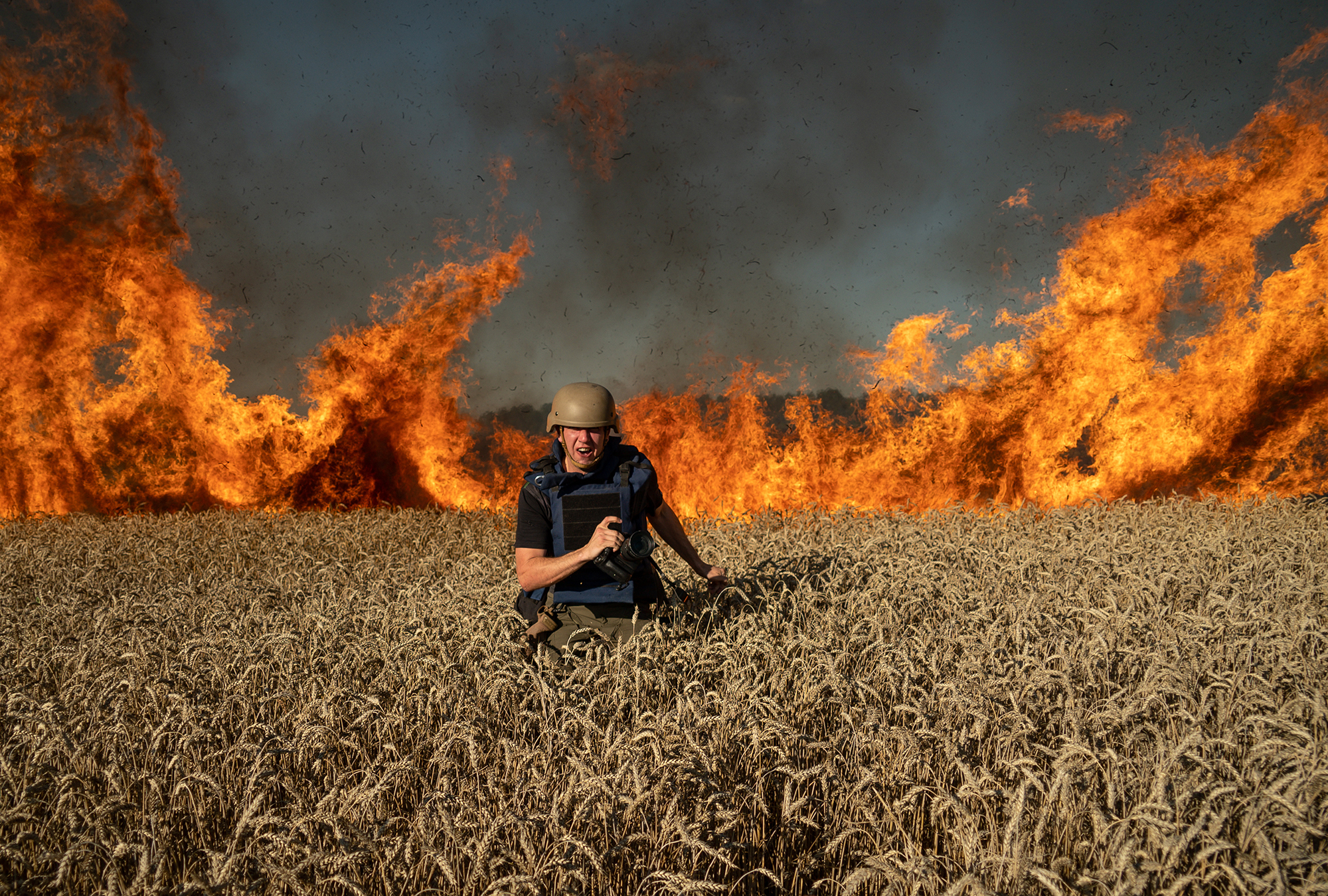
In the final frames of Christopher Nolan's Odyssey, viewers watch Troy burn. Then a high tower collapses—or rather, implodes unnaturally. Like a house of cards, it folds neatly to the ground instead of shattering into debris and kicking up a cloud of dust. Watching this, I wonder: do those who have never witnessed buildings collapsing from missile strikes notice this detail?
The writer Jorge Luis Borges claimed that there are only four stories in existence, and every work of art reduces to one of these eternal plots. People will continue to recount them in one way or another, for as long as we have time left. Alongside the return home, the search, and self-sacrifice stands the plot of the siege and defense of a city.
When I first came across a photograph by Vyacheslav Ratynsky, to my chagrin, I involuntarily thought of fine art. To my chagrin, because my mind conjured images of a burning Troy or Pompeii. To my chagrin, because those paintings always seemed beautiful to me.
To my chagrin, because unlike paintings, which are an artist's interpretation of events, this photograph is a fragment of a living city. A city burning from jet-powered Russian drones in the middle of a workday.
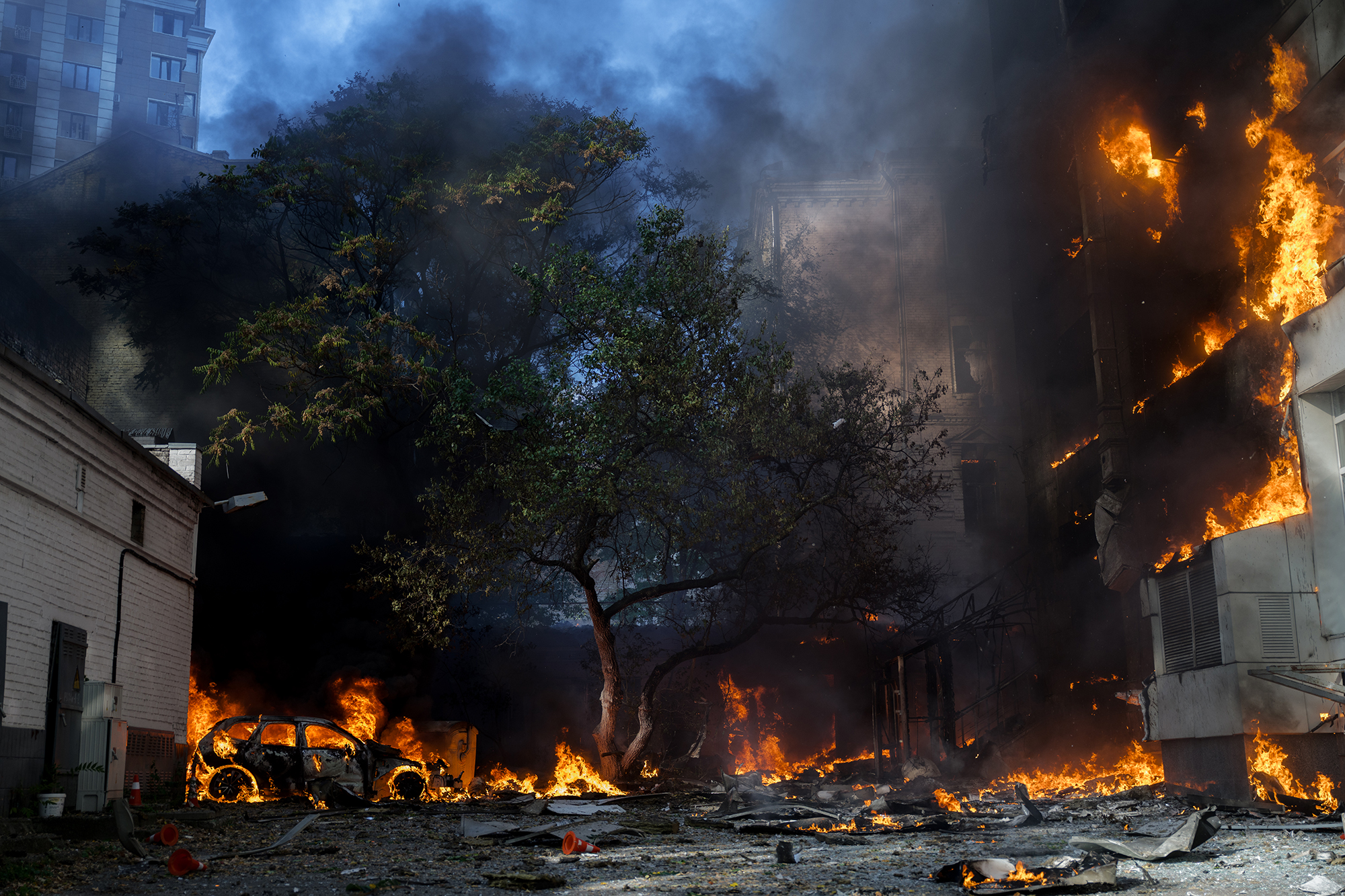
The photographer, as the author, is simultaneously the creator and a participant in reality. A tree engulfed in flames sits at the center of the photo. Majestic and motionless, it stands frozen in that moment when everyone has already fled the building, but the firefighters have not yet arrived. A scorched tree that does not burn. Yes, this too has happened before: the biblical burning bush, the bush that burned with fire and was not consumed. The bush from which God spoke to Moses and called on him to lead his people out of slavery. In a beautiful reading, this is a story of resilience and steadfastness. Beautiful, until we learn about the victims of the strike.
I feel uncomfortable because I, too, call this photo beautiful. By calling this fragment of Kyiv's reality beautiful, I seem to aestheticize it, converting it into the beauty of an eternal plot. But eternal plots are beautiful only until they become reality. Until we find ourselves living inside them.
Why then do we still strive to drape an eternal myth over our own story? Perhaps this is how we make our pain visible: amplifying its scale, inscribing it into history. Proving our connection to a universal myth. Seeking confirmation that these sufferings are not in vain. That someone has already been through this. Someone has survived it. That it can, indeed, be survived.
I permit such aestheticization only to us—those who exist inside this eternal plot. If anyone outside it attempts to call a scorched tree in the courtyard of a drone-struck hospital beautiful, I would most likely call it an unethical aestheticization of war.
Photo: Vyacheslav Ratynsky
Text: Valeriia Andriichenko