
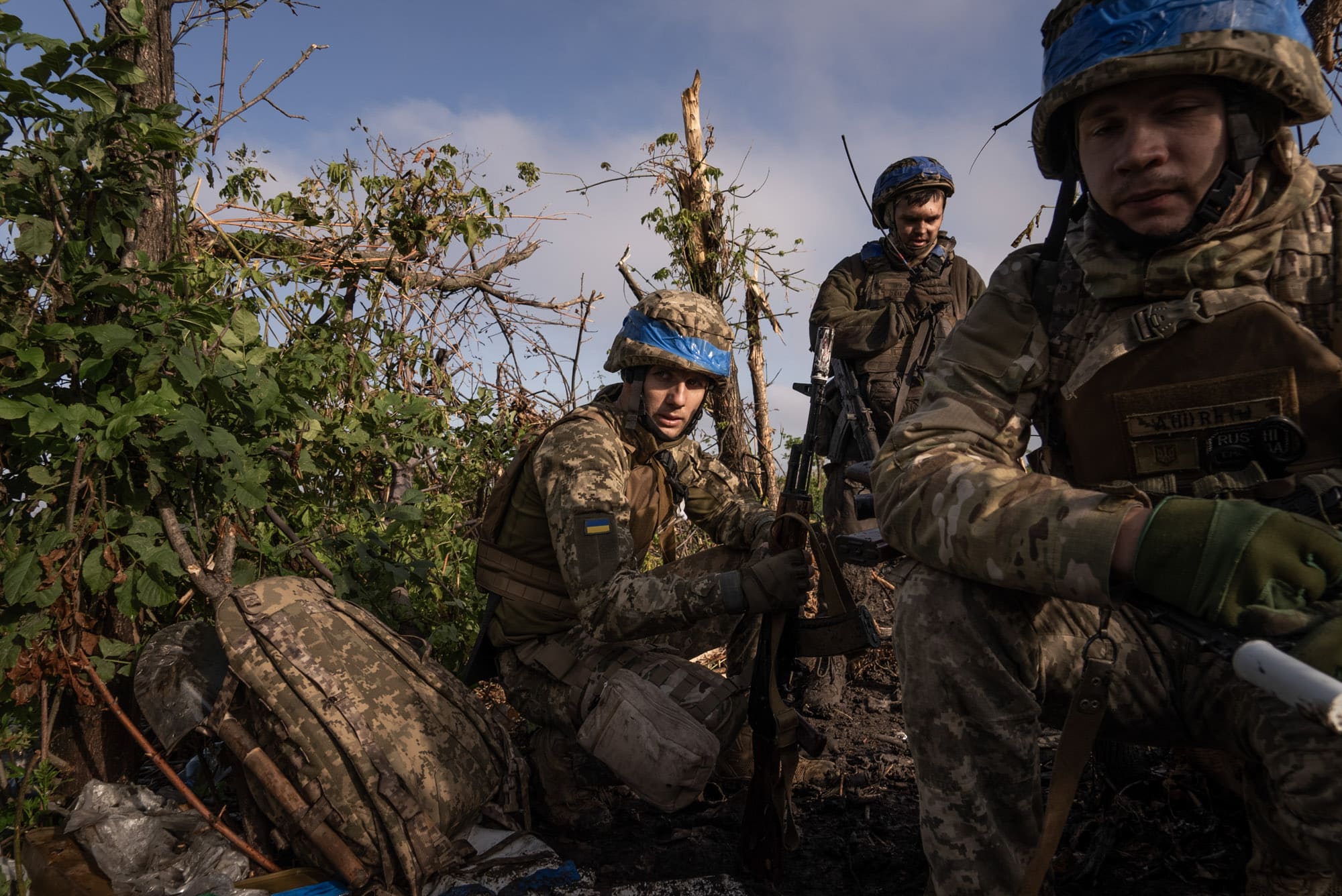
Last year, Mstyslav Chernov became the first Ukrainian to win an Oscar for documentary filmmaking for the film “20 Days in Mariupol.” Now he returns with a new work, “2000 Meters to Andriivka.” In this film, the front appears not as an abstract line on a map but as a specific distance of two thousand meters—a space of life and death between Ukrainian fighters and Russian occupiers.
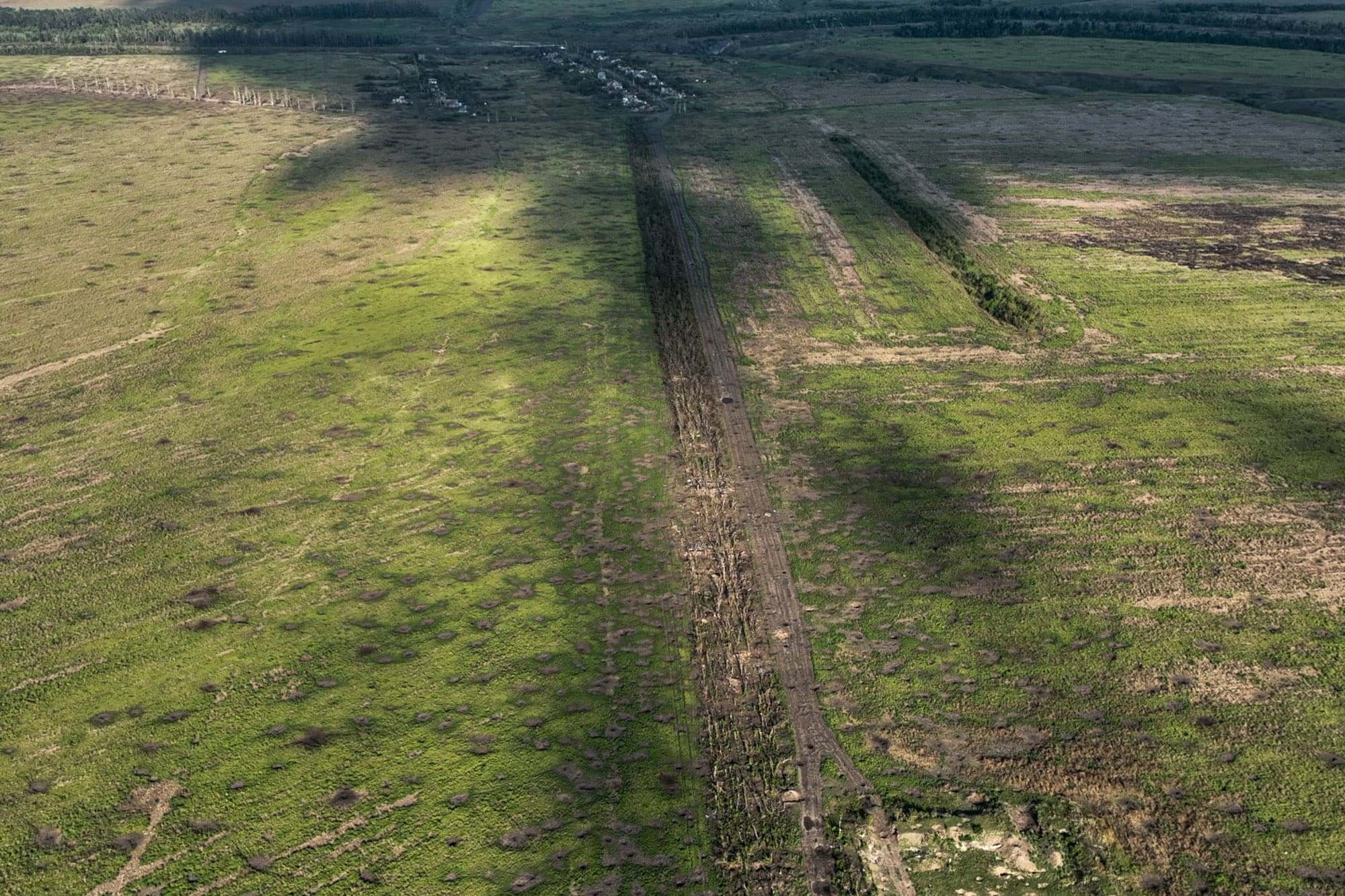
The new film transports the viewer to the village of Andriivka—a tiny settlement ten kilometers from Bakhmut, where fewer than a hundred people lived before the full-scale invasion. With the advance of the front, Andriivka turned into a key point of the Ukrainian counteroffensive. It is separated from the positions of the Third Assault Brigade by a narrow, ruined tree line, strewn with mines and human bodies. Its length is two thousand meters. And it is precisely these two kilometers that became the border of life and death, which the military is fighting for at the cost of numerous casualties.
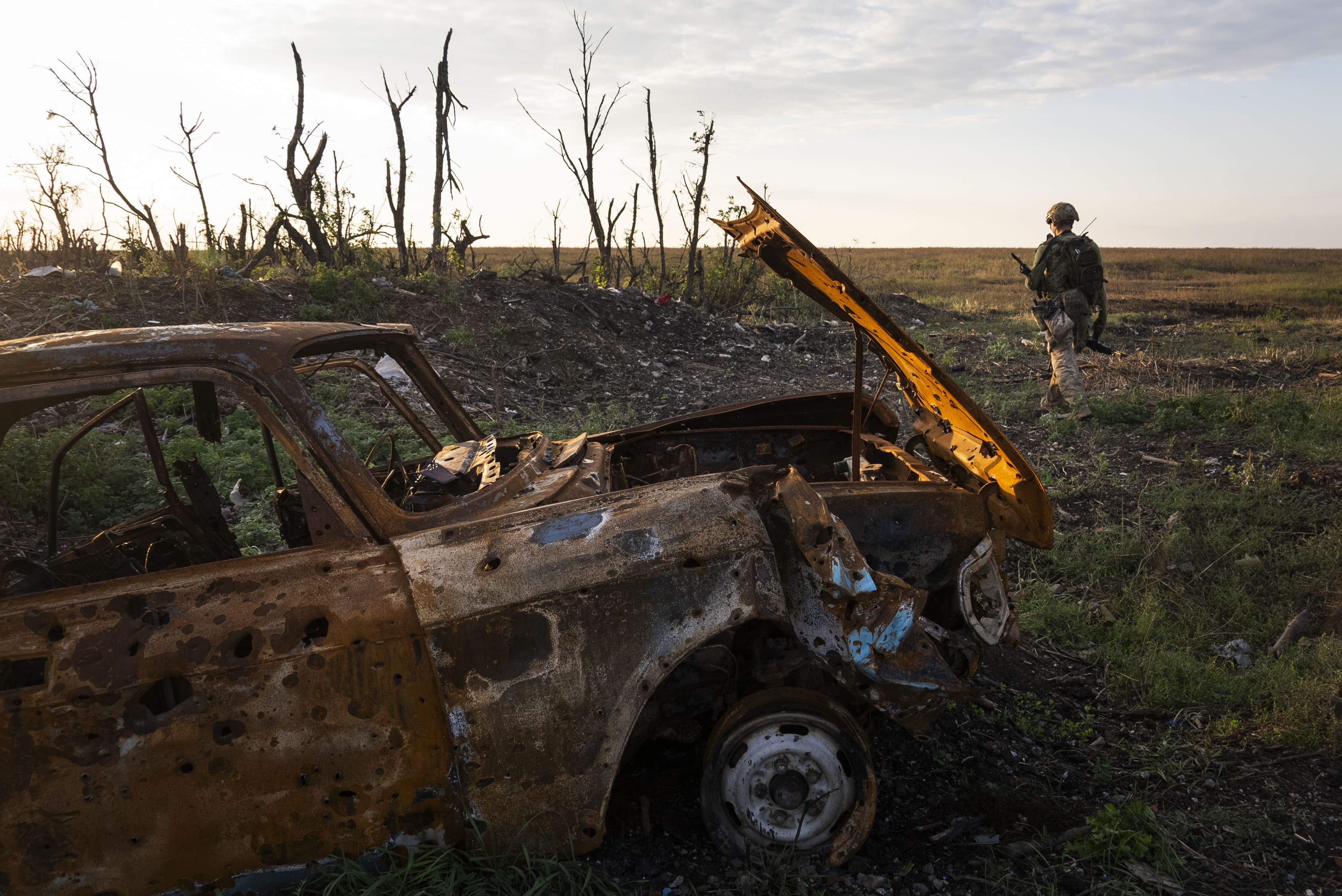
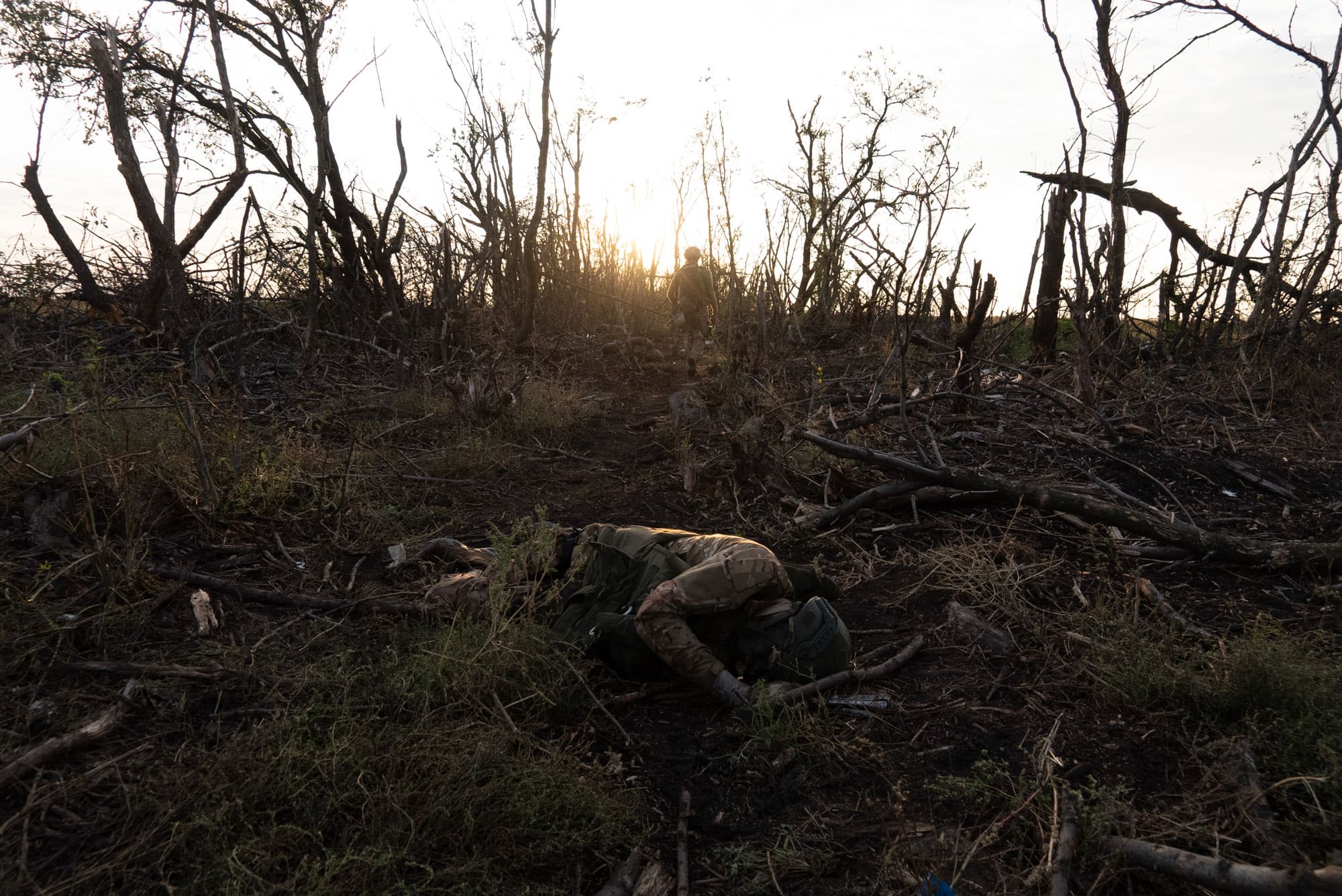
Chernov shows this distance not only as geographical but also as a metaphor for choice. A fighter with the call sign Fedya takes up a weapon, and the director himself takes up a camera.
Even before its release, the film received glowing reviews in the United Kingdom. The Times called it one of the most important films of the year, and The Guardian stressed that the viewer finds themselves in the trenches alongside the fighters and does not leave the theater unchanged after watching.
In Ukraine, “2000 Meters to Andriivka” will appear in distribution on August 28. American screenings kicked off on July 25 in New York at the Film Forum cinema, and a week later, the film was presented in Los Angeles at Laemmle Monica. Following this, the picture entered national distribution in the USA.
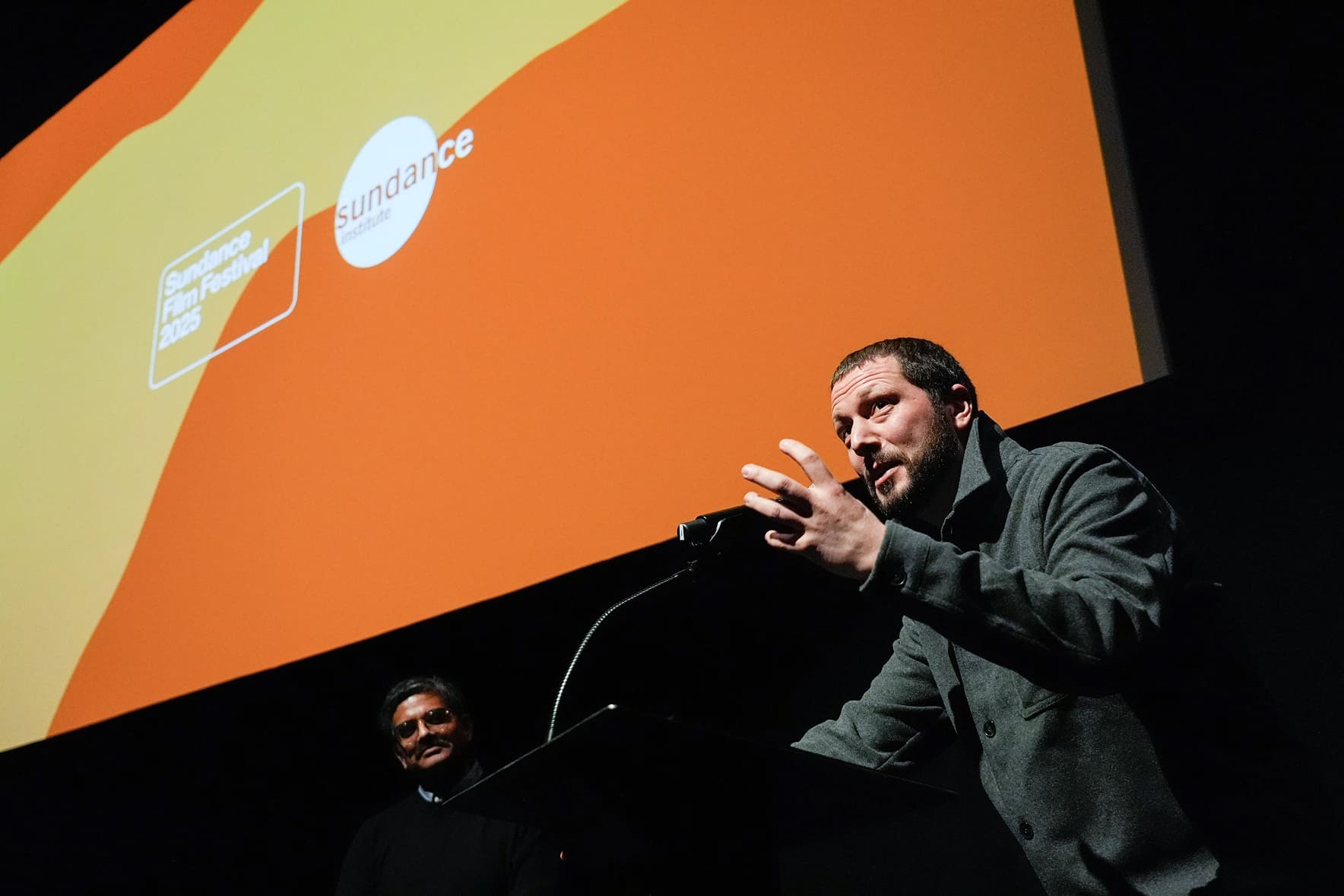
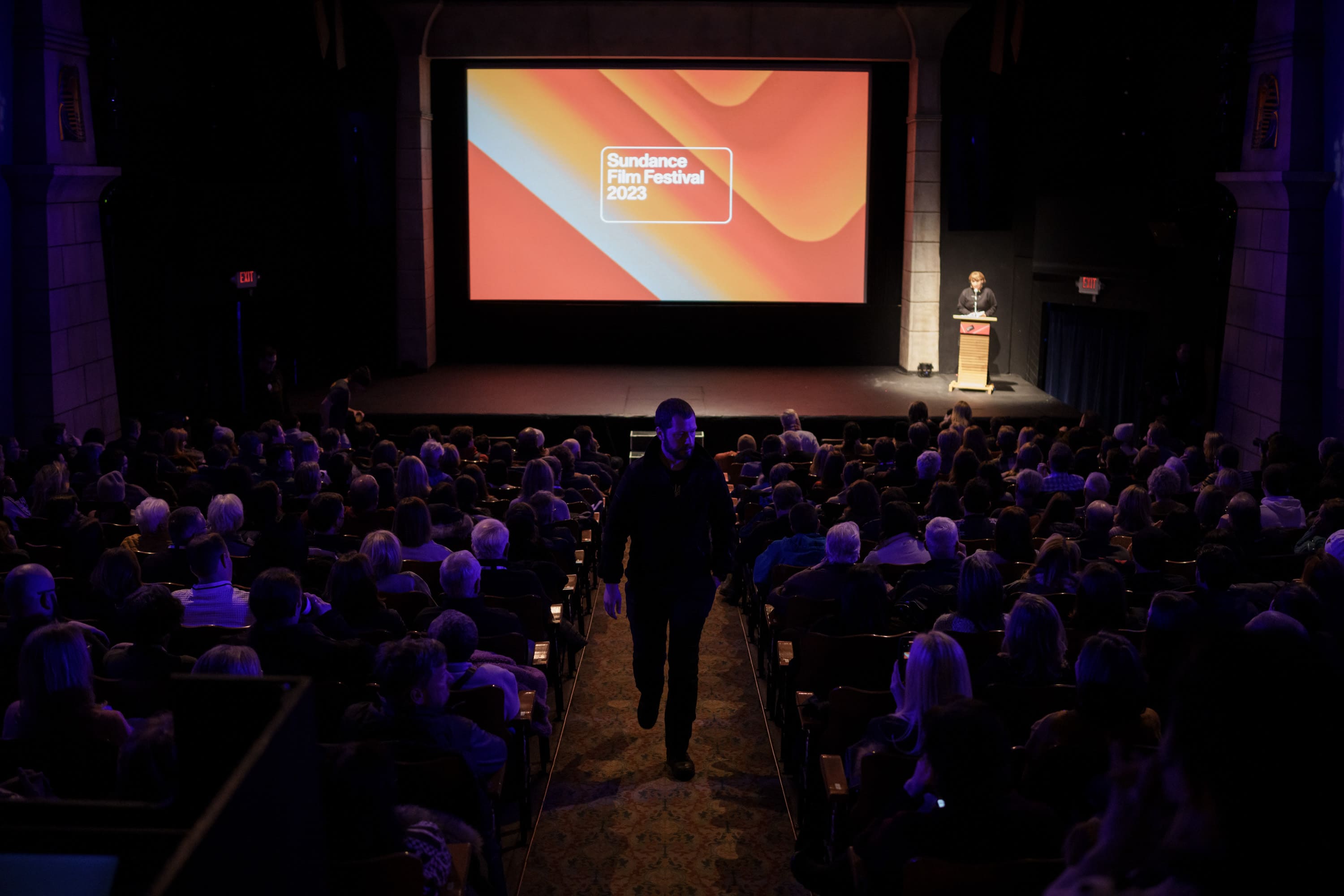
The film “2000 Meters to Andriivka” generated significant buzz. In numerous interviews, Mstyslav Chernov discussed why he chose Andriivka among the hundreds of settlements where fighting continues; what he experienced during the shelling on positions; where he finds the strength to continue filming the war; and also—how his daughters turned the Oscar and BAFTA awards into an element of a home game.
Over the past months, the director has shared these stories with many Ukrainian media outlets. Below are key excerpts from several conversations with him.
In an interview with Ukrainska Pravda, Mstyslav Chernov recalls that the summer of 2023 became a turning point for him, both personally and professionally. On one hand—the roaring success of “20 Days in Mariupol” in American distribution, where the film ran alongside the year's major blockbusters. On the other—the front engulfed in flames in Ukraine, where he returned literally from the red carpets.
“The summer of 2023 was probably one of the hardest in my life. We had just started showing ‘20 Days in Mariupol’ in American theaters. This is the most important time when you get the most press, and you speak not to a festival audience, but to a wide audience. I remember someone telling me not to be sad if people didn't come. Because at the same time as our film, ‘Barbie’ and ‘Oppenheimer’ were released. But the halls were full anyway—people went to the cinema a lot then. And I was so interested to see our poster hanging among the posters for those films. Back then, I talked a lot about Mariupol, about cinema. Red carpets began, interviews, cocktail parties where you meet film critics, Oscar experts, and so on. But at the same time, the front was ablaze in Ukraine.”
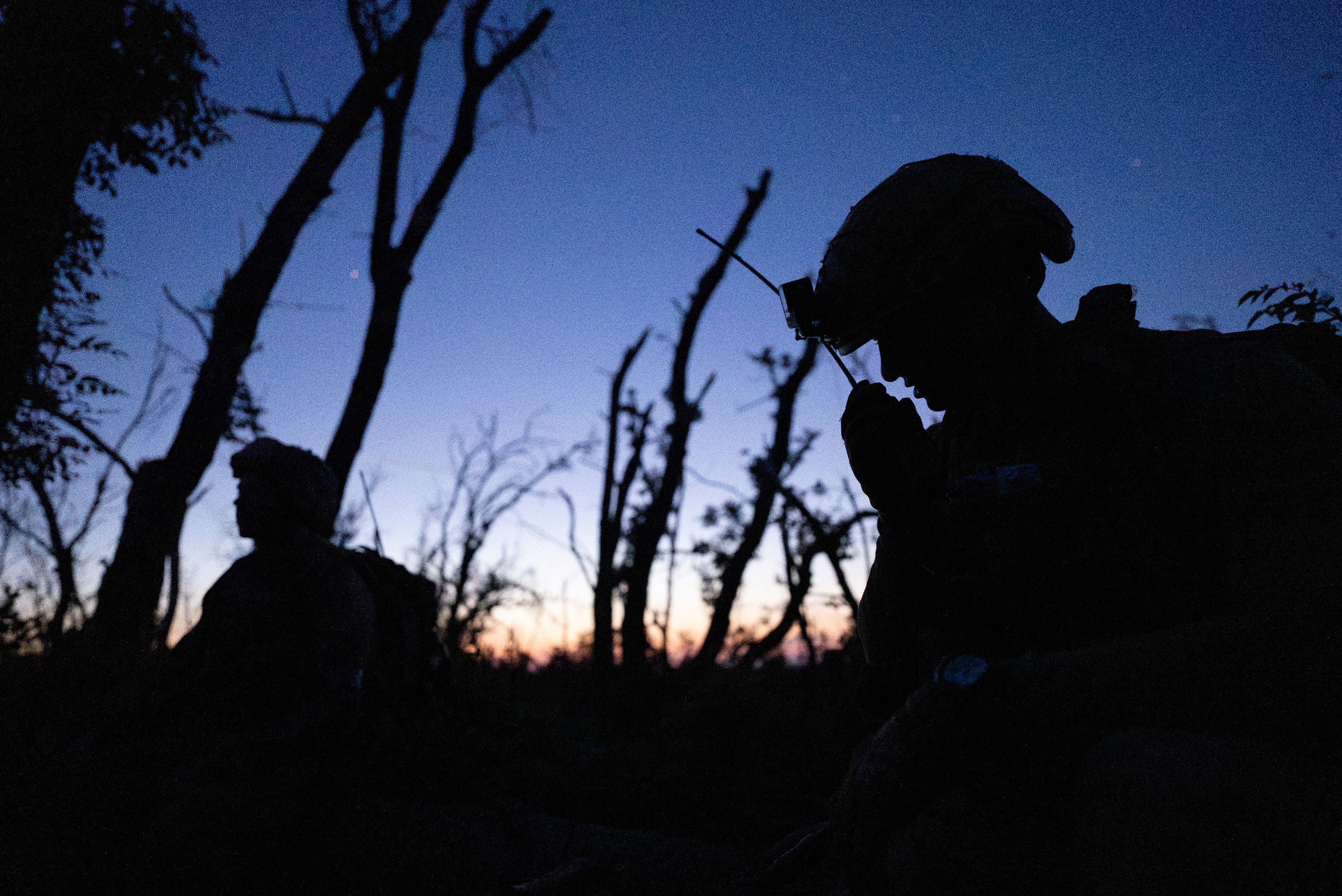
It was precisely then, against the backdrop of the counteroffensive, that Mstyslav Chernov got the idea for a new film. He initially planned a broad panorama of the fighting, but a meeting with the “Hydra” unit of the Third Assault Brigade and an acquaintance with the fighter Fedya changed the director's plans. The camera remained precisely with them—and this choice defined the entire film.
“We had several units we worked with on different fronts. Initially, the idea was to tell a broad story about the entire counteroffensive. But when we met Fedya and the ‘Hydra’ unit of the 3rd Assault Brigade, when we started filming them, and I saw the first frames, we decided to focus precisely on this. On the battle where Gagarin (the call sign of a 3rd Assault fighter) died. This is the main moment of the film, such a heroic and very heavy loss. We were just looking at the footage when we had just returned from the fight, we looked at the map, and I saw that tree line that leads to Andriivka. Then I realized that if we could tell the story of Andriivka, the story of the 3rd Assault, Fedya and his unit, it would be a symbol of the entire frontline, a symbol of the whole counteroffensive, and that would be enough for the film.”
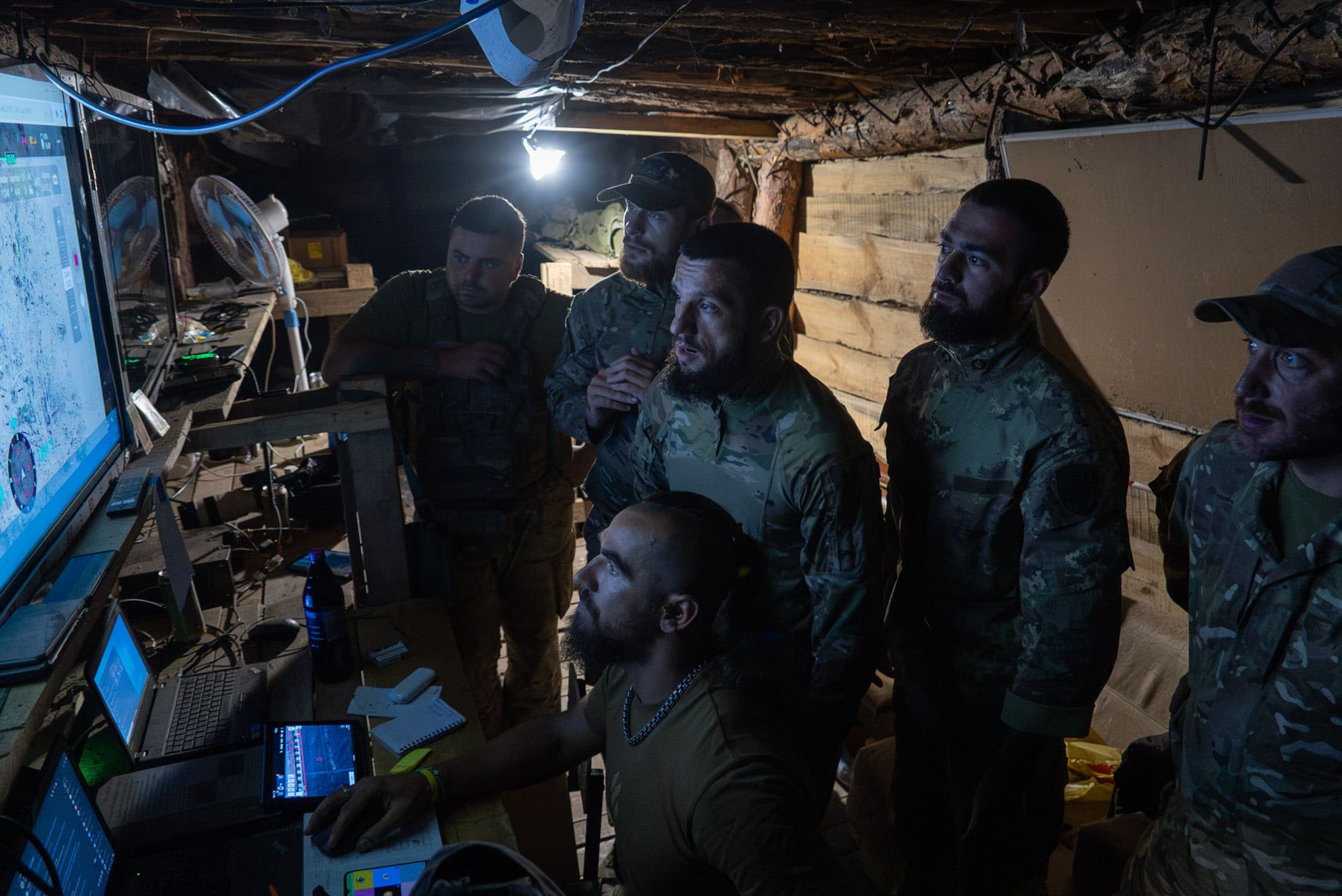
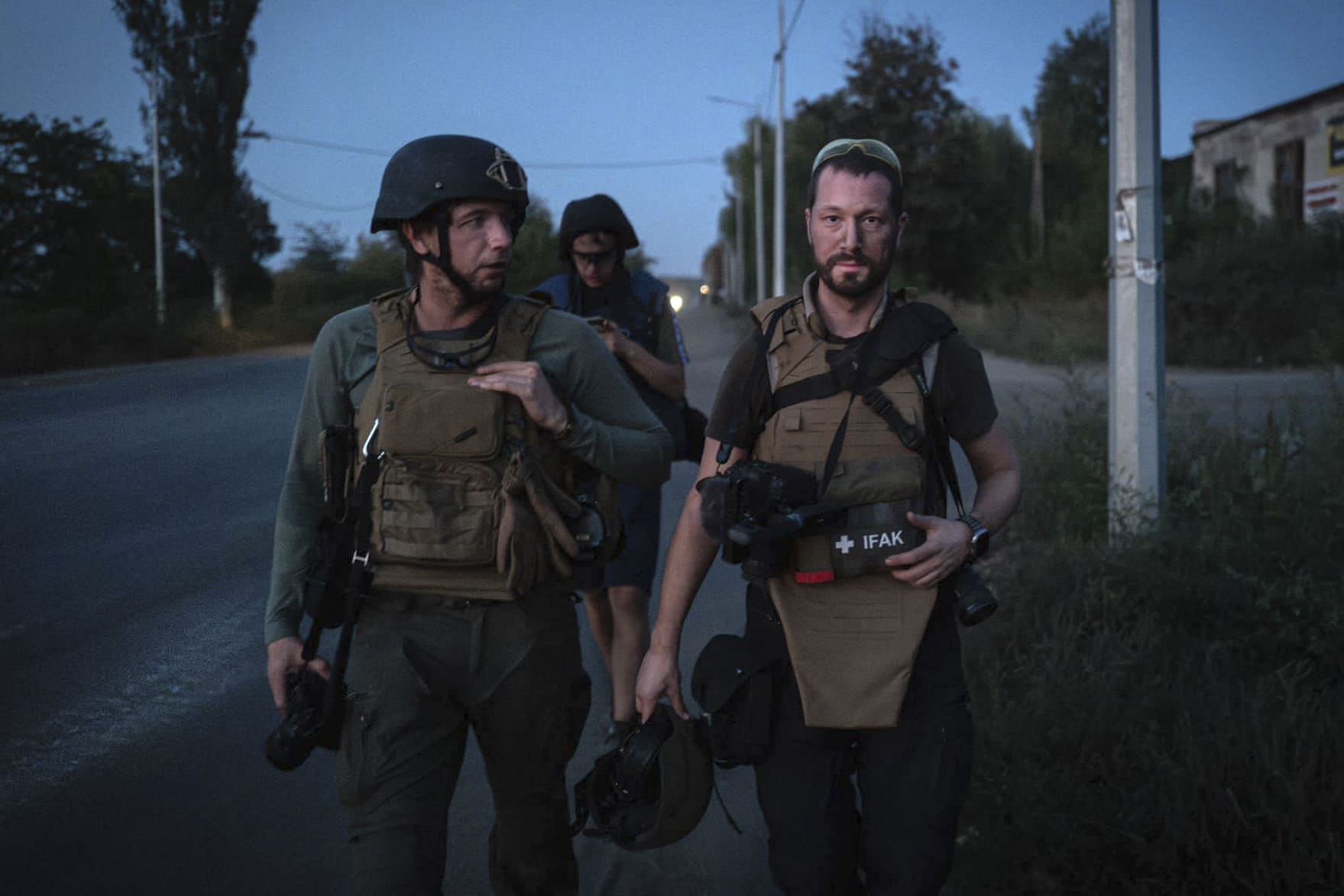
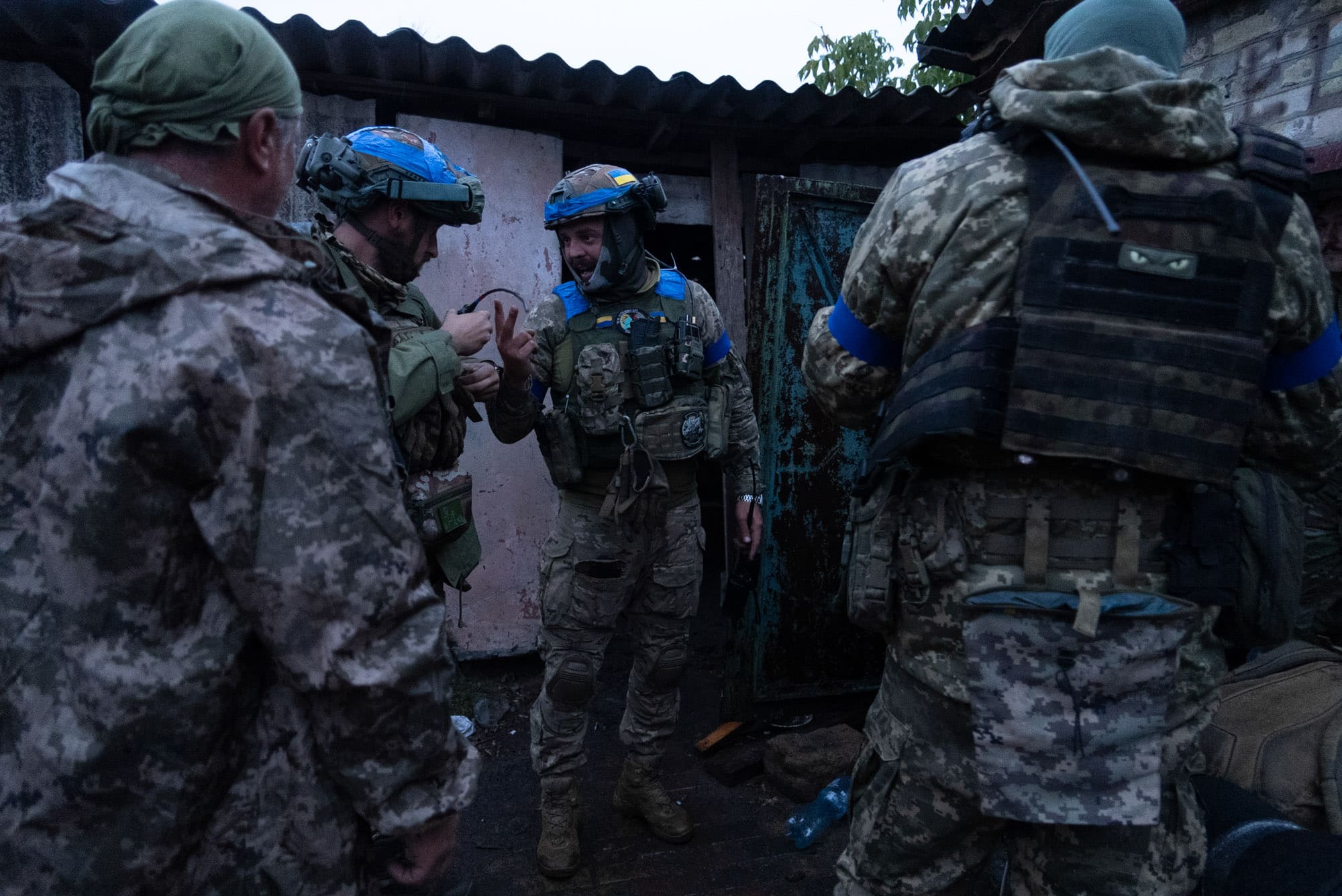
The film crew worked side-by-side with the fighters: setting up GoPro action cameras, filming at command observation posts, alongside mortar crews and drone operators.
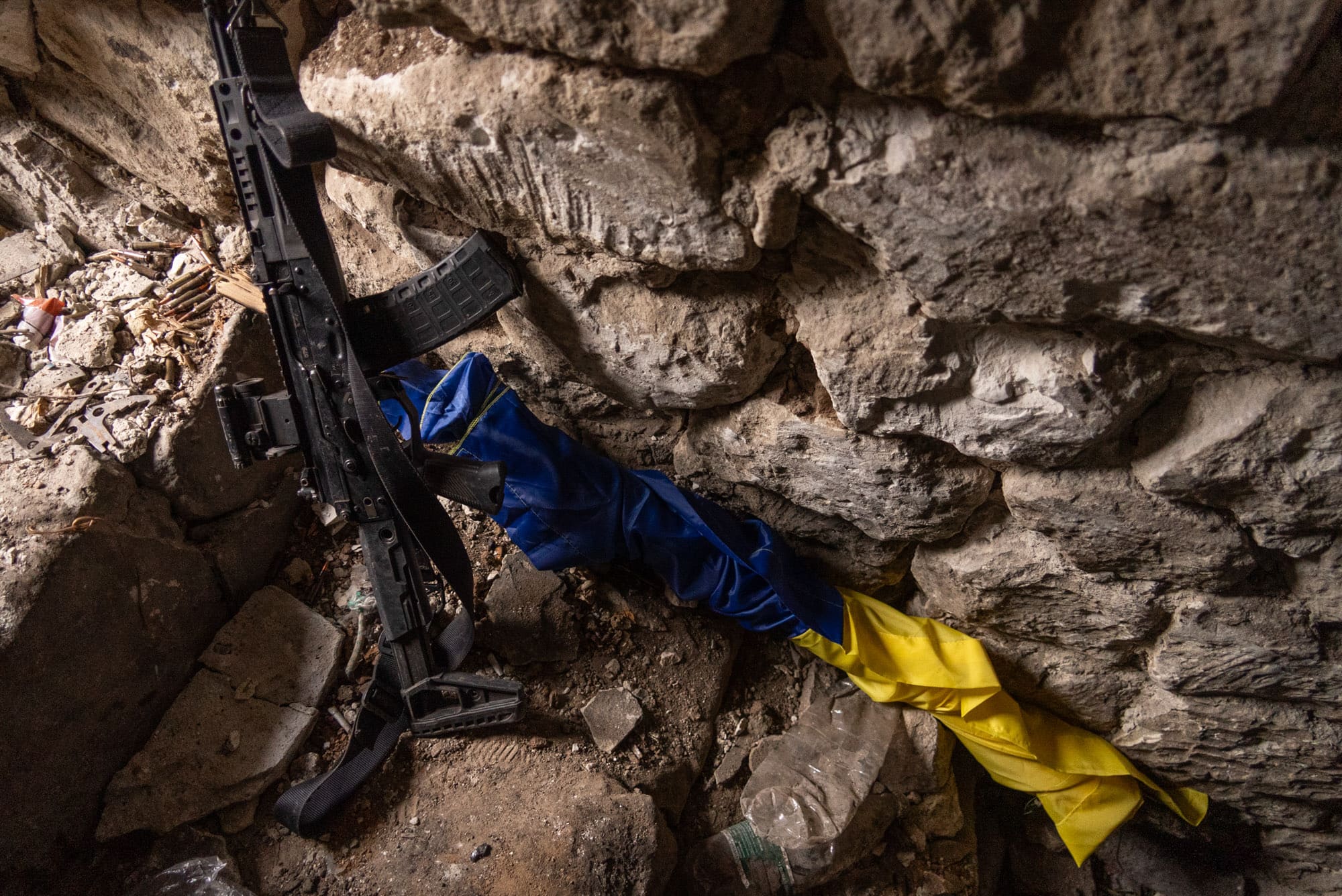
“On the days when Fedya carried the flag, we went with him, hoping that the liberation of Andriivka would be the end of our film... This is documentary cinema, so when you start filming, you never know if you will finish the film, or if you will even be alive.”
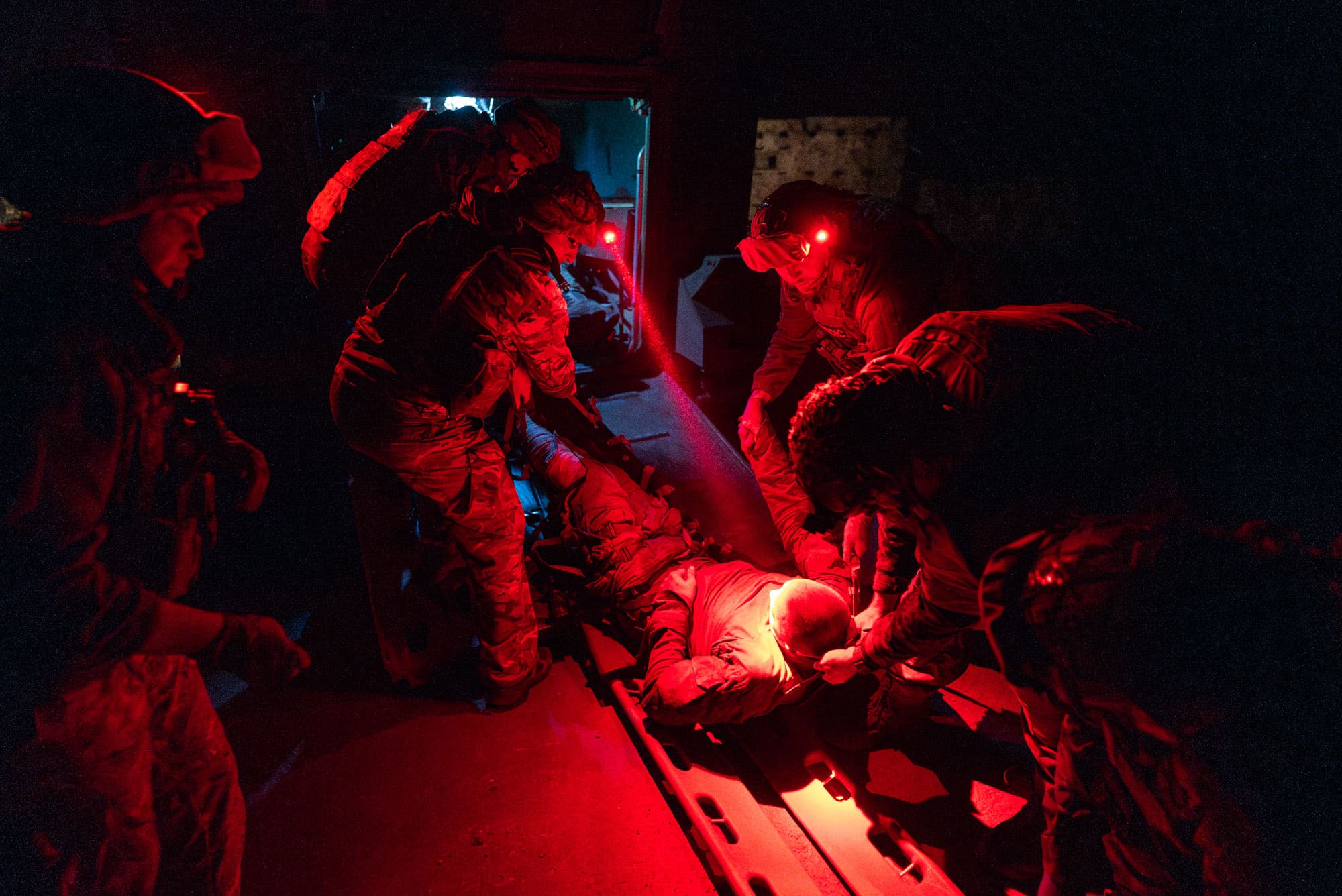
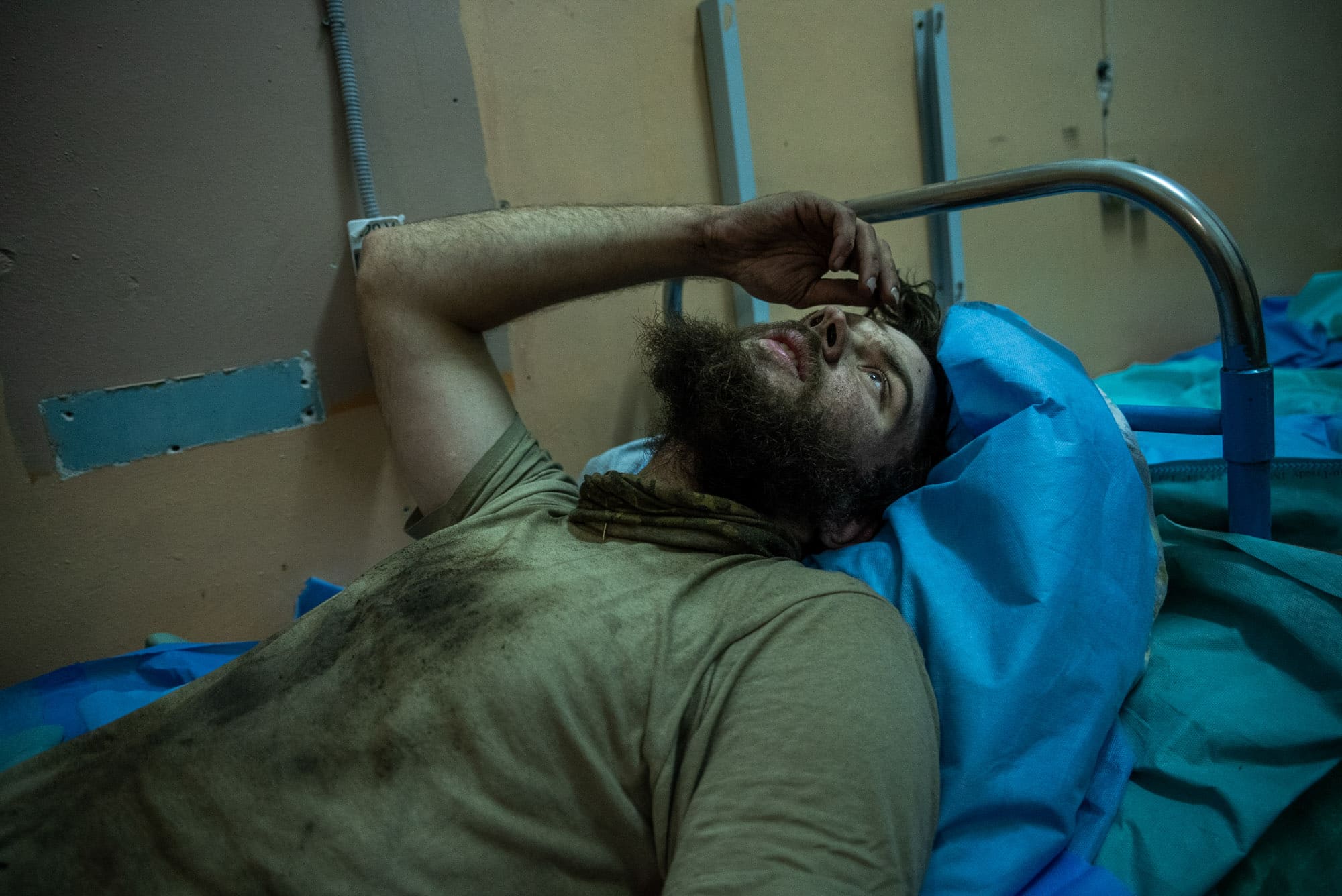
The contrast between the front and Hollywood seemed incredible to the director. Chernov recalls returning from the dusty trenches to premieres in Los Angeles, where he was reproached for not wearing a suit.
“The fighting is ongoing, and someone from the team tells me, ‘Why aren't you wearing a suit?’. And I'm in a military jacket and pants, still covered in dust from the front line. I had meetings with representatives of various large studios, and everyone asked me when the filming would end and how the film would conclude. But I realized I didn't have answers to these questions. We decided to film until we couldn't film anymore, and only after the final wrap did we find a studio that could become the official producer.”

A separate topic of conversation was the trust between the film crew and the military. Chernov emphasizes that the fighters consciously took responsibility for his safety, but at the same time perfectly understood the importance of documenting the events. Because without the footage—the story might not exist.
“If the brigade and the commanders had not agreed (to take the film crew under their responsibility — Ed.), it would have been impossible, it would have been simply disrespectful. But we live at a time when war is fought not only in the physical realm but also in the media space. This doesn't mean that journalists are a weapon for the military. It means that the military understands: if they raised the flag over a city, or over a village during its liberation, and there is no photo or video of that moment, then no one will know about it. It will be as if it didn't happen. Because history is not what happened, but what we remember. That's why everyone understands—filming the moment of raising the flag is just as important as raising the flag itself. It is an honor for me that I was allowed to film this. But the Russians understood this too. And this was the problem: we hid while walking to Andriivka precisely because we knew—if the Russians saw the flag, if they saw journalists traveling with the flag, then we would be a priority target. They also understand the power of photography, reportage, or cinema.”
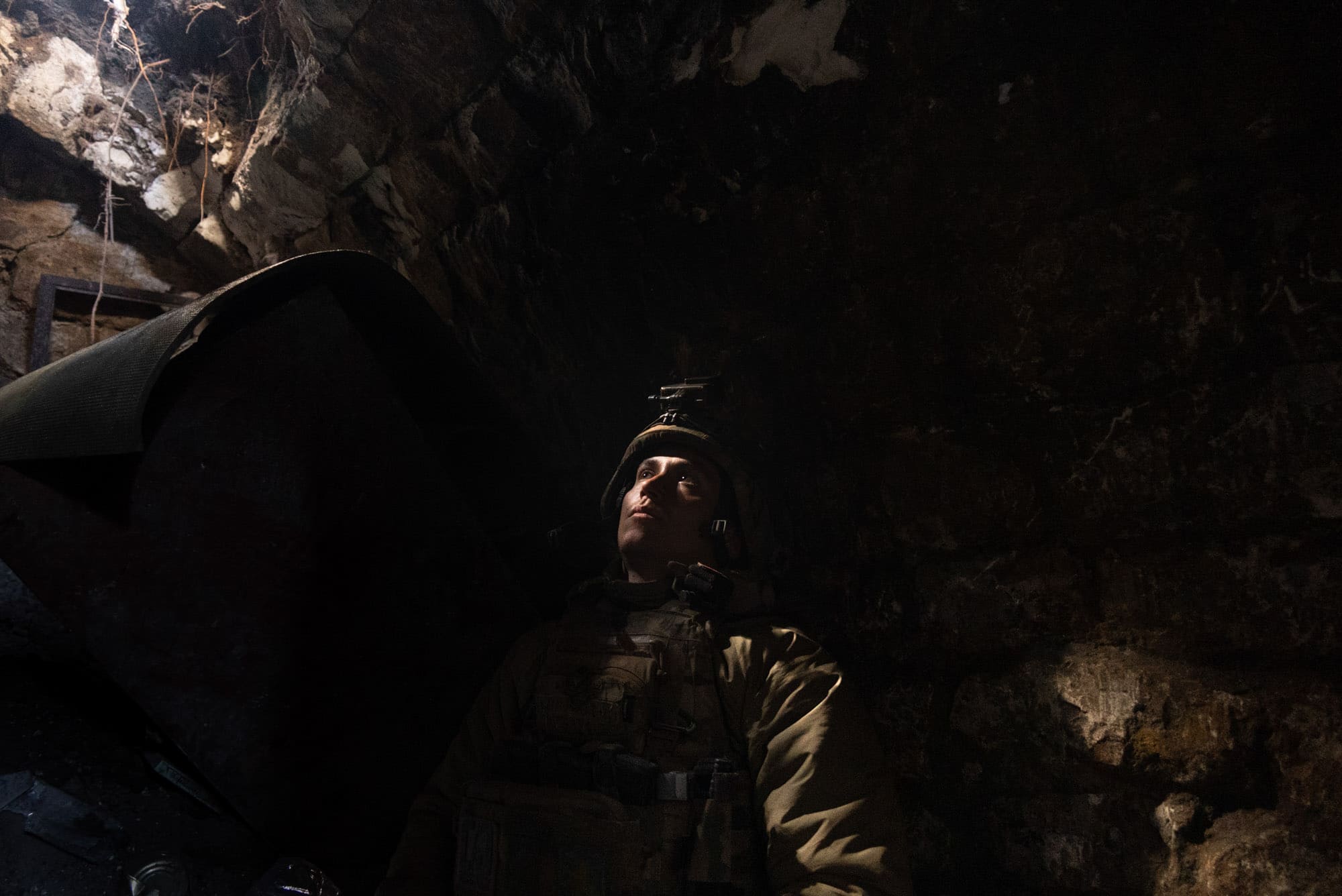
In a conversation with BBC, the journalist asked Mstyslav Chernov if he was afraid to take on a new project after the huge success of “20 Days in Mariupol.” After all, following the Oscar, BAFTA, and Pulitzer, expectations for any of his subsequent work inevitably became extremely high.
“There was a fear of doing too little, but that is not related to expectations at all. You just realize how much was achieved with ‘20 Days in Mariupol,’ what a large audience this film found, and what impact, hopefully positive, it will have on the world. And of course, starting a new work, you want it to find its audience just the same, to have significance both for Ukraine and for the international audience. Therefore, you carefully seek what is important at the very moment of filming: what is important to you, what is important in the world. You look for some universal theme. Let's put it this way: the expectations that arise after the Oscar, BAFTA, and Pulitzer work in reverse: all this has already been done, and you can forget about it and focus only on cinema. ‘2000 Meters to Andriivka’ was made exactly like that.”
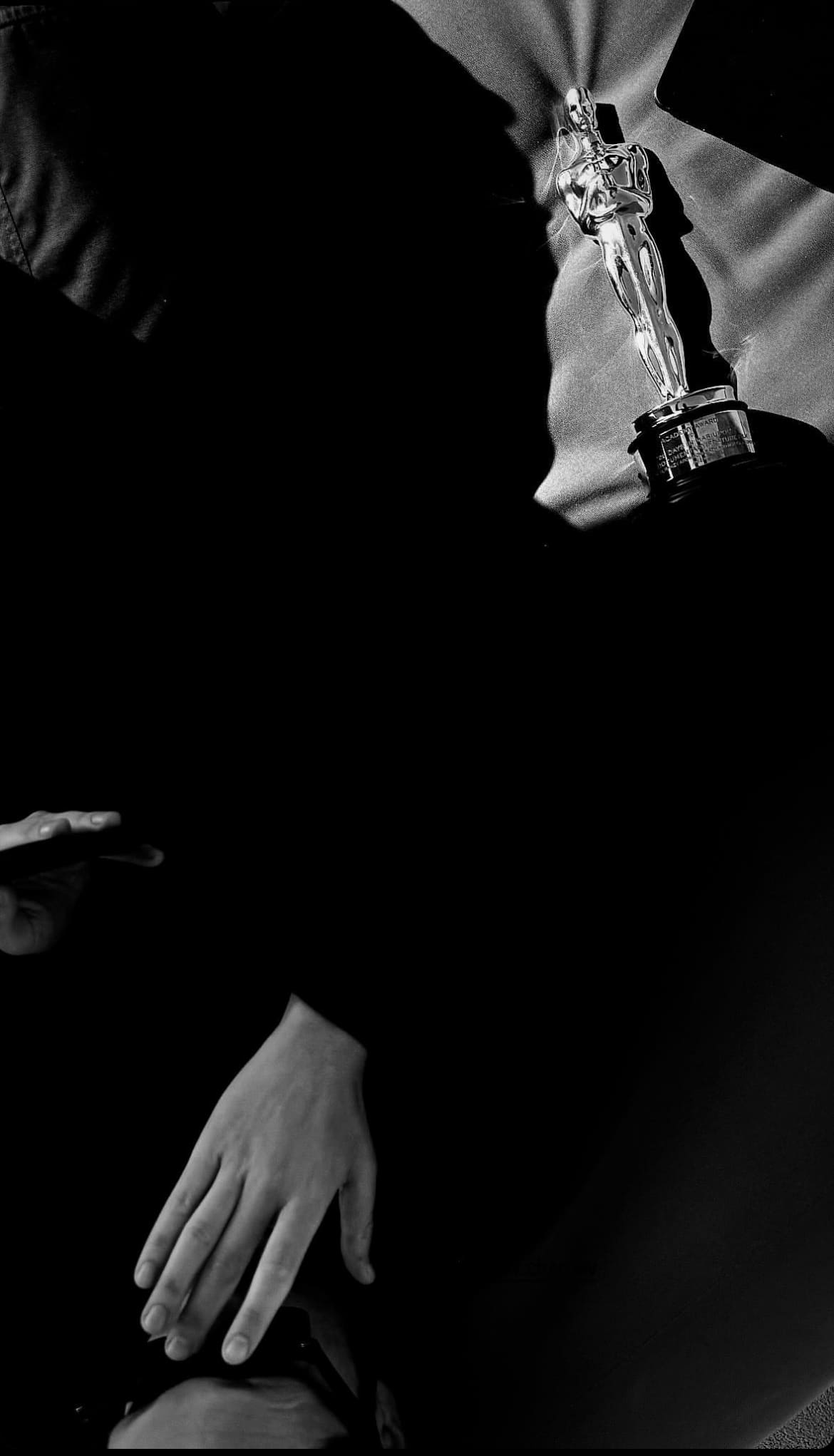
When asked by the journalist where the Oscar statuette, which Mstyslav Chernov received in 2024, is now kept, the director replied with a smile:
“My daughters play with it now. We deeply respect such awards, but one should not take material objects too seriously; it must be remembered that both the BAFTA, the Oscar, and other awards were received for a film about people’s tragedies, it is a memory of people, and that is more important than material awards.”
The conversation then turned to the main topic—the new film “2000 Meters to Andriivka,” which documents an episode of the Ukrainian counteroffensive near Bakhmut. It has already been seen in various countries around the world, and the journalist inquired how the international audience is reacting to the film.
“Reactions differ in different countries. It's interesting that we showed this film in America even before Donald Trump's election victory. At that time, the audience thought less about politics and more simply about the personal stories of the military. Now, of course, the international audience also views this film from a political perspective. And that is a good thing, on the one hand.”
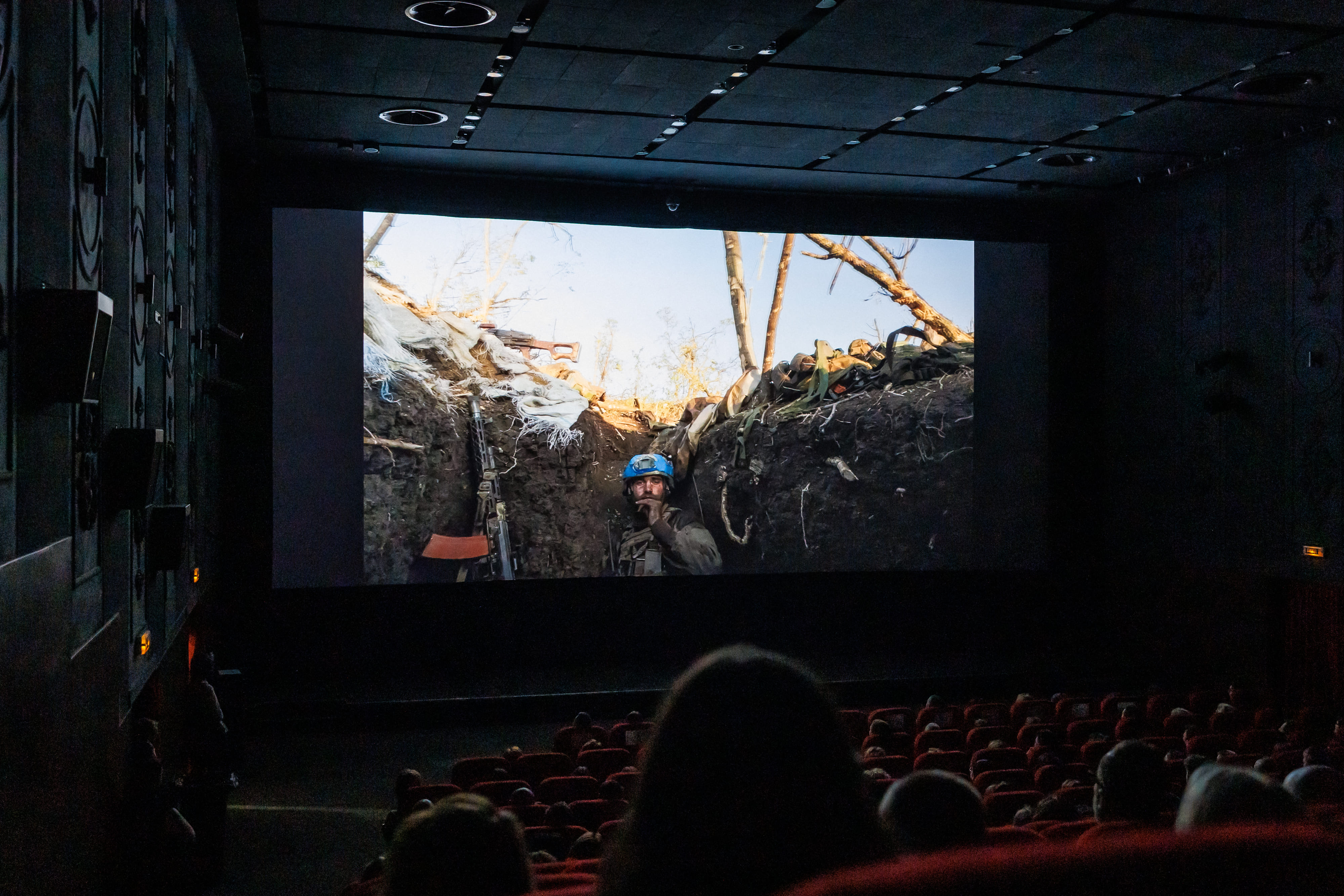
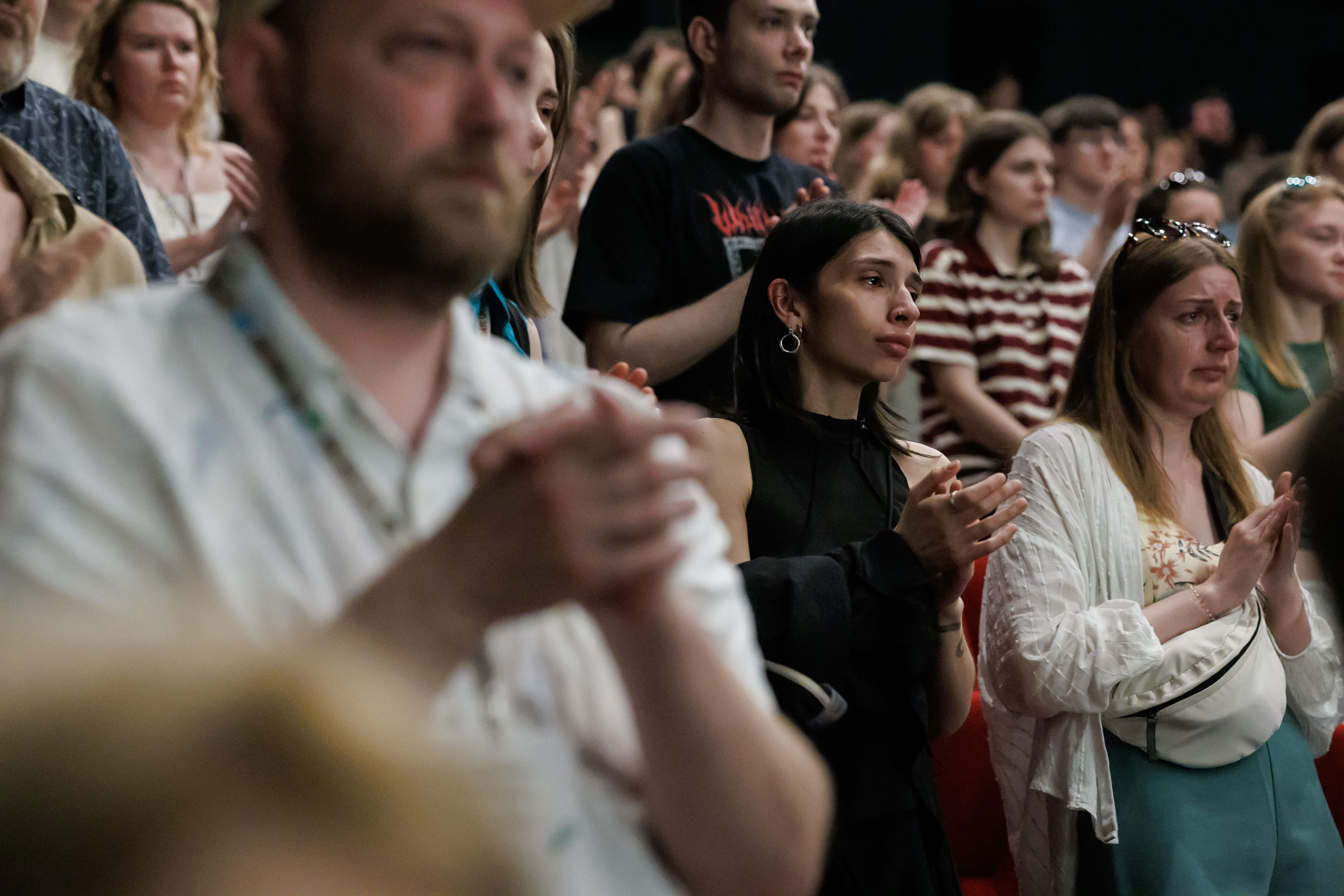
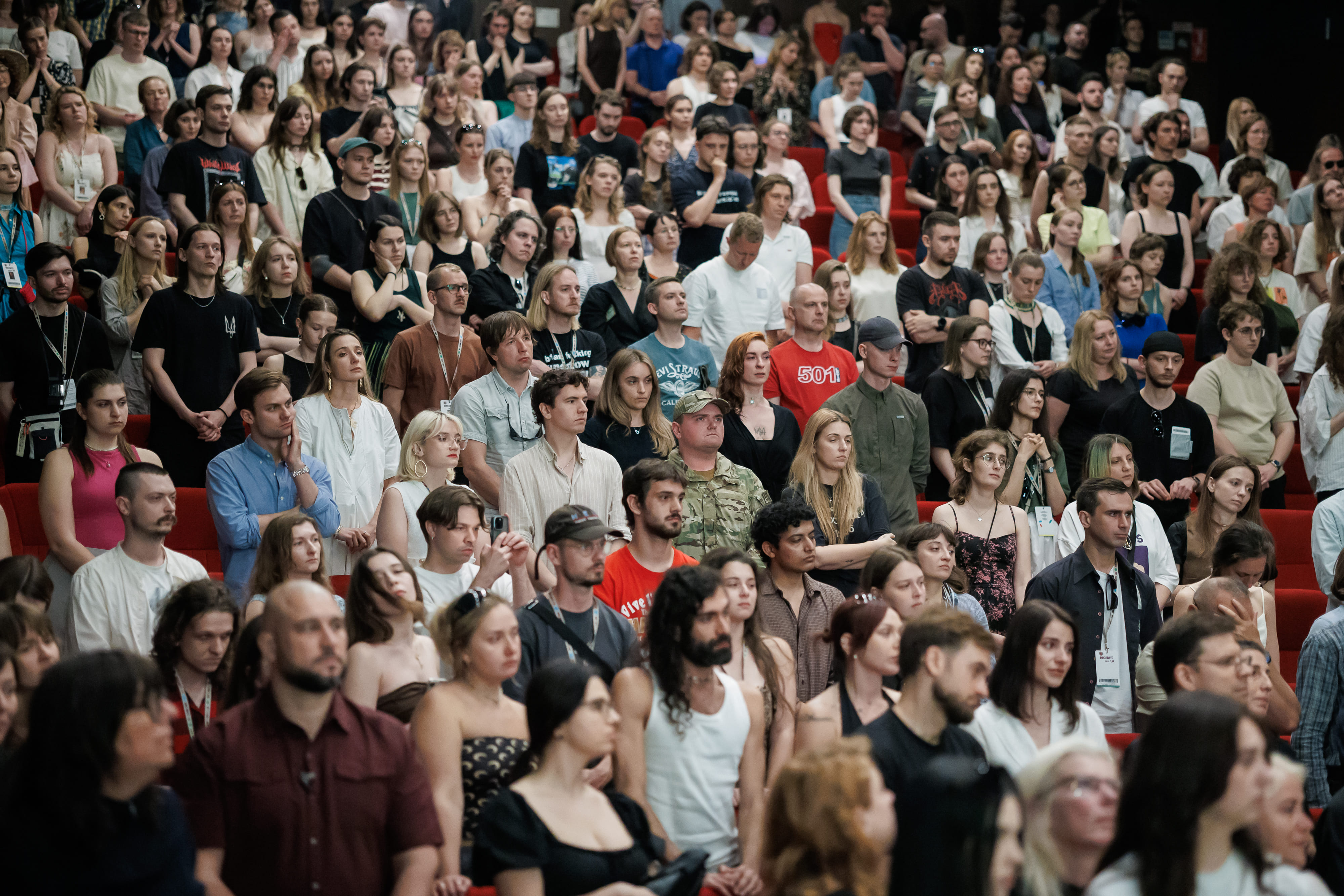
I really want people who constantly hear quite abstract information about Ukraine to feel something else. They see politicians meeting, they hear some statistics: the number of dead, the amount of territory occupied by Russia… But these are all very abstract figures. If the film provides enough context to politicians, to the diplomatic corps, and simply to the general audience, if it transforms this abstraction into very concrete faces of real people, obviously just civilians, who took up arms and went to defend their home, are ready to die for Ukrainian land, for freedom, and talk about it openly—then it works. This is not a Soviet view of the war, where everything is heroic and ‘everything is fine.’ This is a very realistic and honest film. And I want this honesty to reach the international audience.
I see people leaving the screenings. I see how the distance between a cinema in Copenhagen, London, Paris, and Bakhmut—two or three thousand kilometers—is shrinking. And that is why the film is called ‘2000 Meters to Andriivka.’ It is a film about distances: not only to Andriivka, but also from Europe to us, to the Ukrainian military. Because, in reality, they are now protecting Europe from Russia's invasion. When a young person leaves a screening at a festival in Karlovy Vary and realizes that they have just seen young people just like themselves, very close to their own city, and that they themselves could end up in their place if their country does nothing to help Ukraine—it works.”
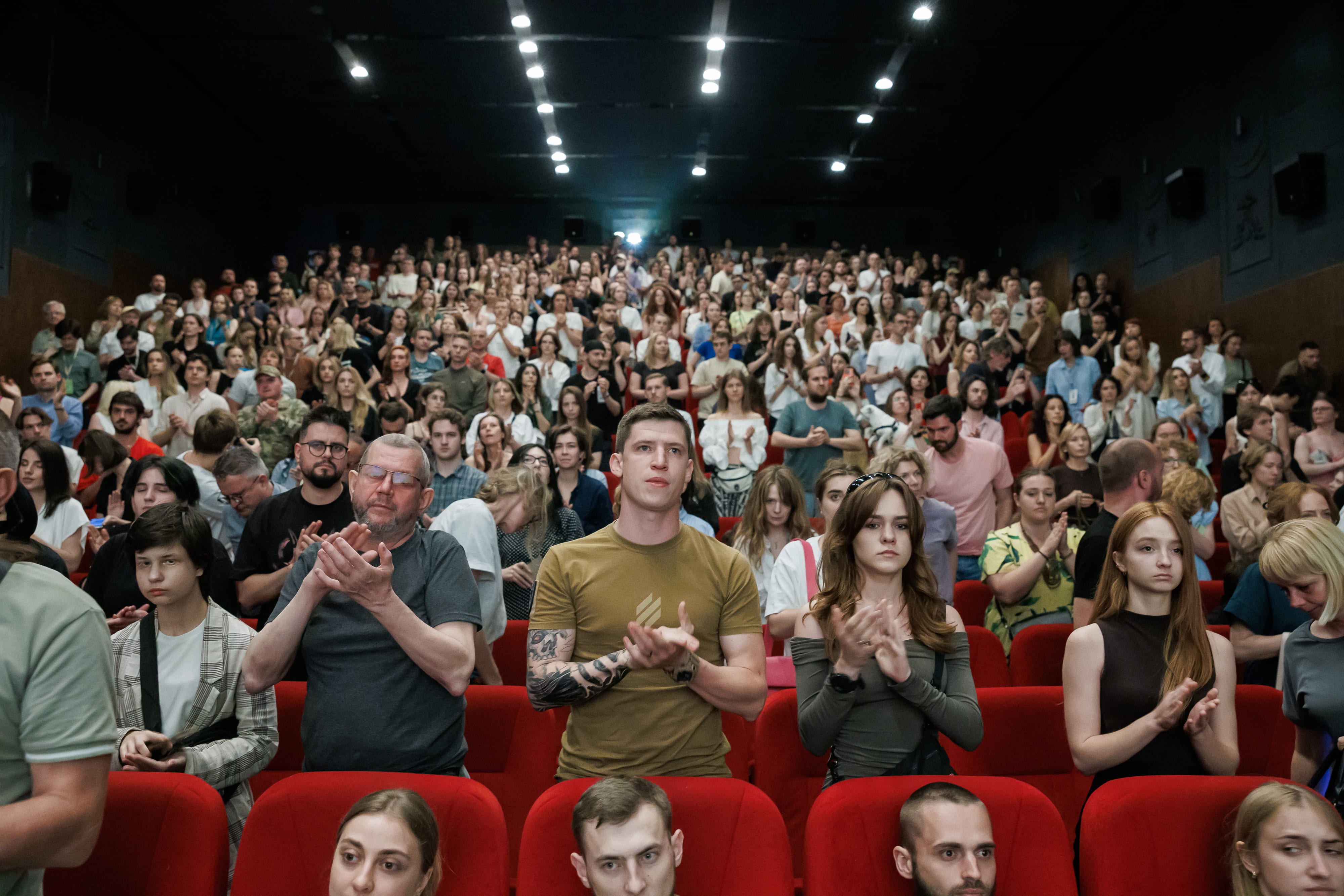
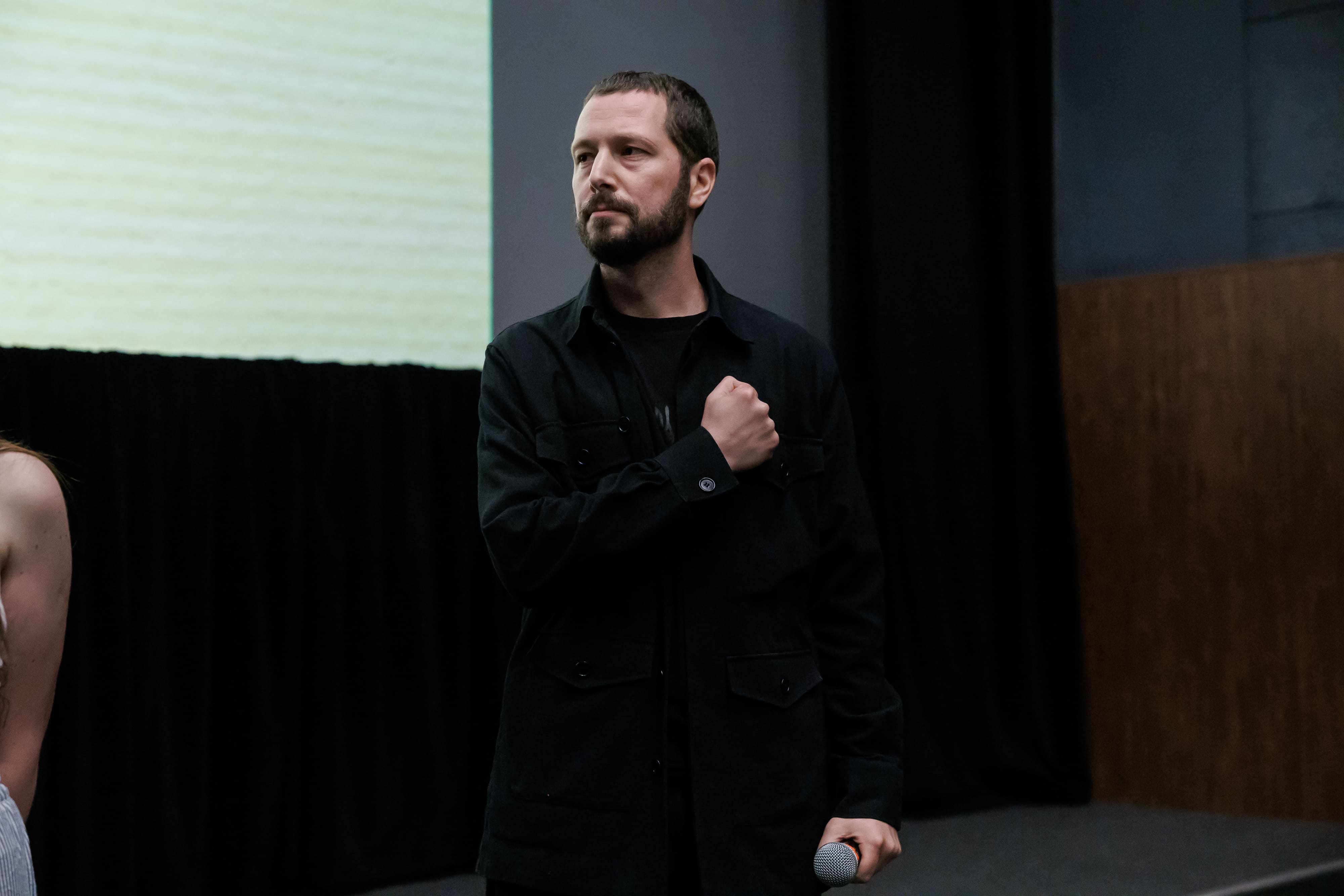
One of the film's key phrases is posed as a question: “What if this war lasts for the rest of our lives?” Mstyslav Chernov notes that most viewers assume these words belong to the military, but in reality, he asked the question himself in the film.
“It is a question without an answer. But I feel calmer knowing that the people I ask this of — Fedya, his comrades, and other military personnel on the front line—know the answer: ‘We will continue to fight.’ But for me, this is a fear—I do not want Ukrainian children to live and lose their childhood and youth in war. I do not want their lives to be deformed by war.
This is the paradox: war is the most terrible thing humanity can do, and at the same time there is the understanding that one must fight for peace and freedom, they are not free, they have their price. This paradox is encoded in my question.”
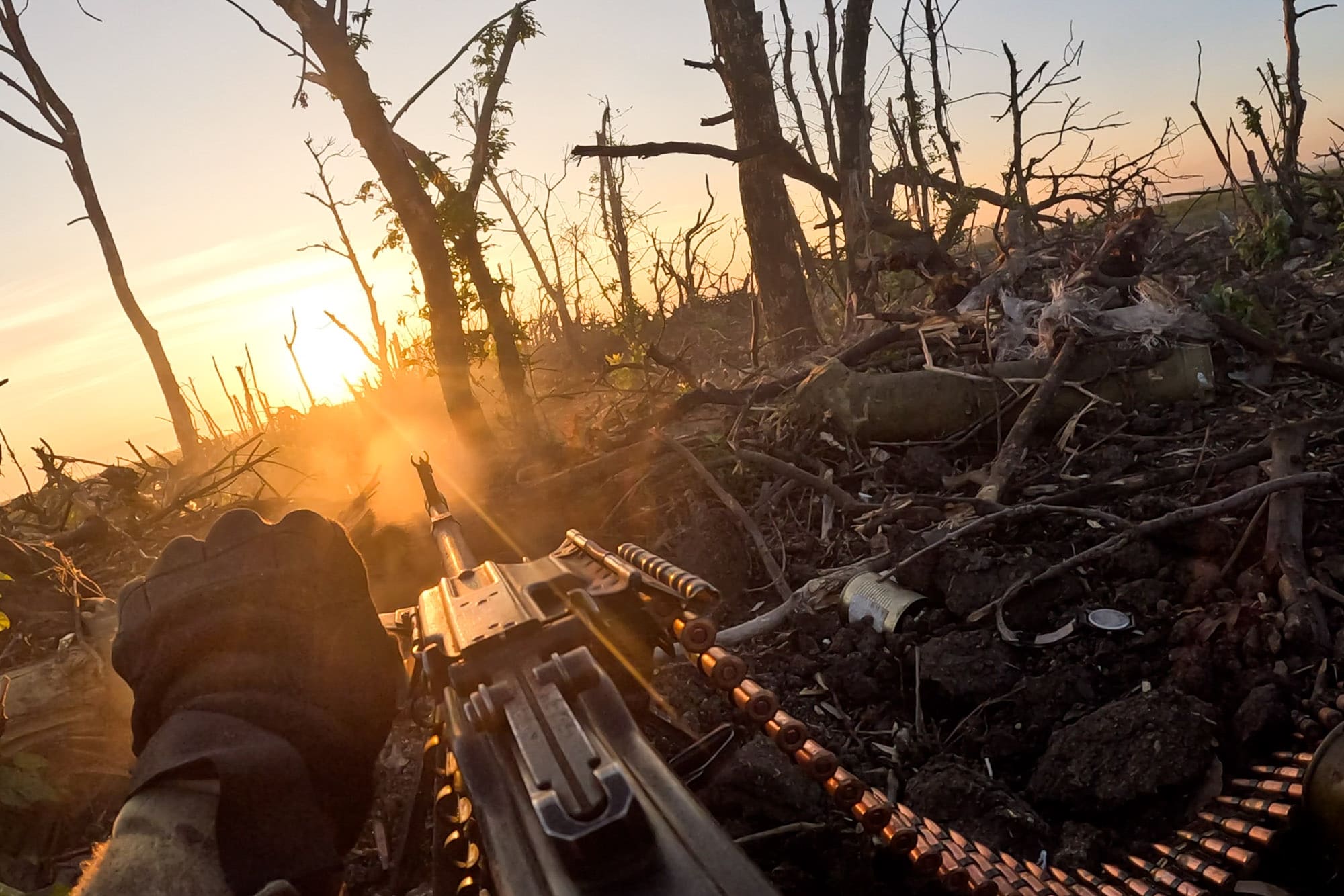
Chernov was also asked what he imagines on the day the war ends.
“I will be happy for my friends. Even now, I don't think about my own feelings, but about those who are currently on the front line—about the military, medics, volunteers, and civilians living in cities partially occupied by Russia. I know for sure that I will feel relief. But it's not the relief of ‘oh, I can rest,’ but more likely, ‘how to film this, how to show this, how to preserve this.’ Which means even more work. But it will be a feeling of relief for those who survived, that their lives are no longer threatened. Because every day you wake up and fear that you will see that one of your friends is no longer alive. That is my main fear.”
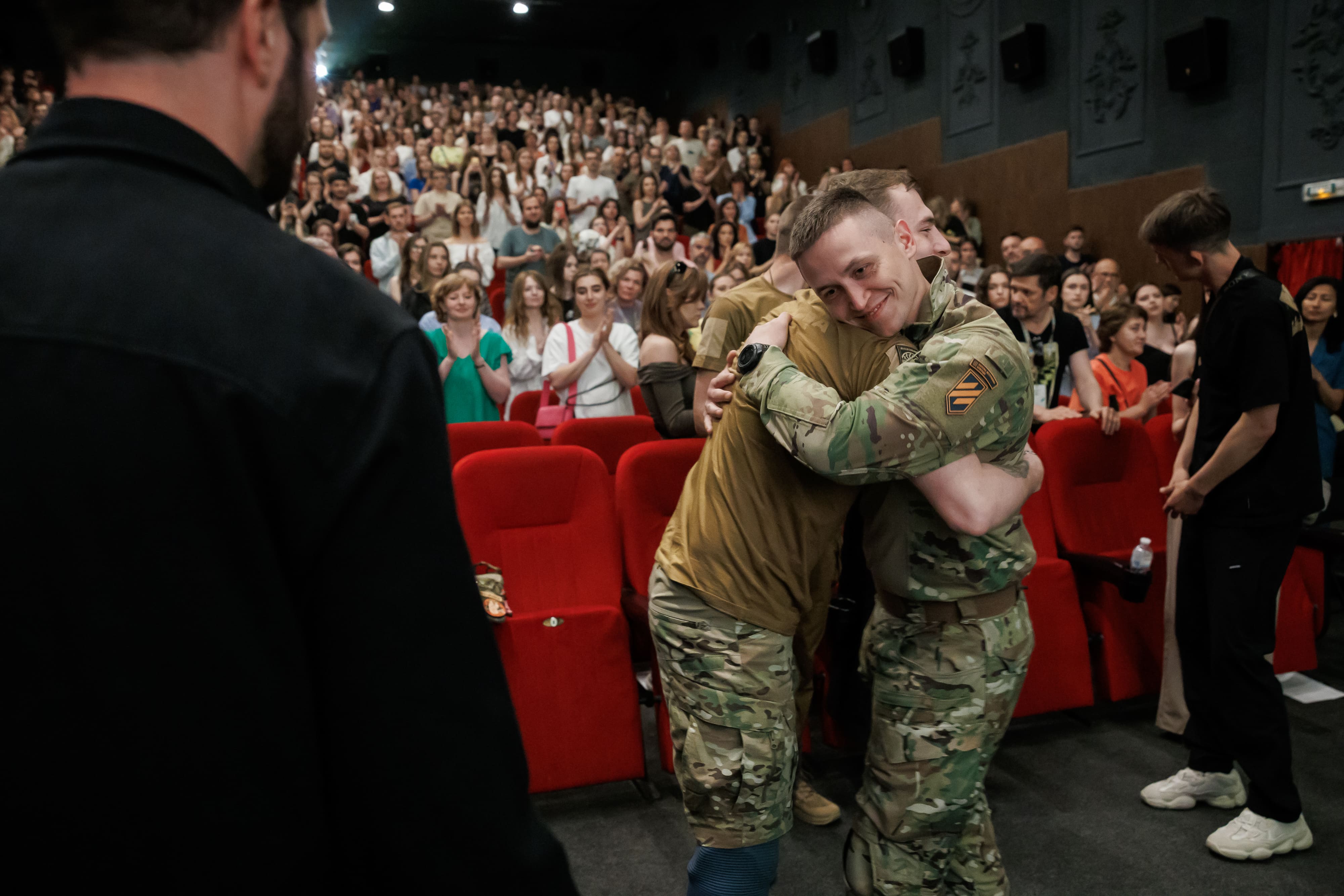
Finally, Mstyslav Chernov shared what gives him the strength to continue documenting the war in the fourth year of the full-scale invasion:
“It seems to me that none of us, taken individually, have any strength left. If each of us were left alone, we would fall. But we do not fall thanks to the people next to us who hold us up. You lean your shoulder on the person next to you—and you move forward. That is not your strength, that is their strength: the military, medics, volunteers, civilians who help the army, journalists, documentarians, politicians who are fighting for peace in the political arena. All of this supports you. Alone, we have no chance.
I think that the lesson we learned (I hope we learned it) over the last six months is that if we want to survive and win this war, we can only rely on ourselves and the person next to us. We cannot rely on America or Europe to help us. We are grateful to them, but survival is in the hands of our own, Ukrainian society. My survival, too, is in the hands of the people I walk alongside.”
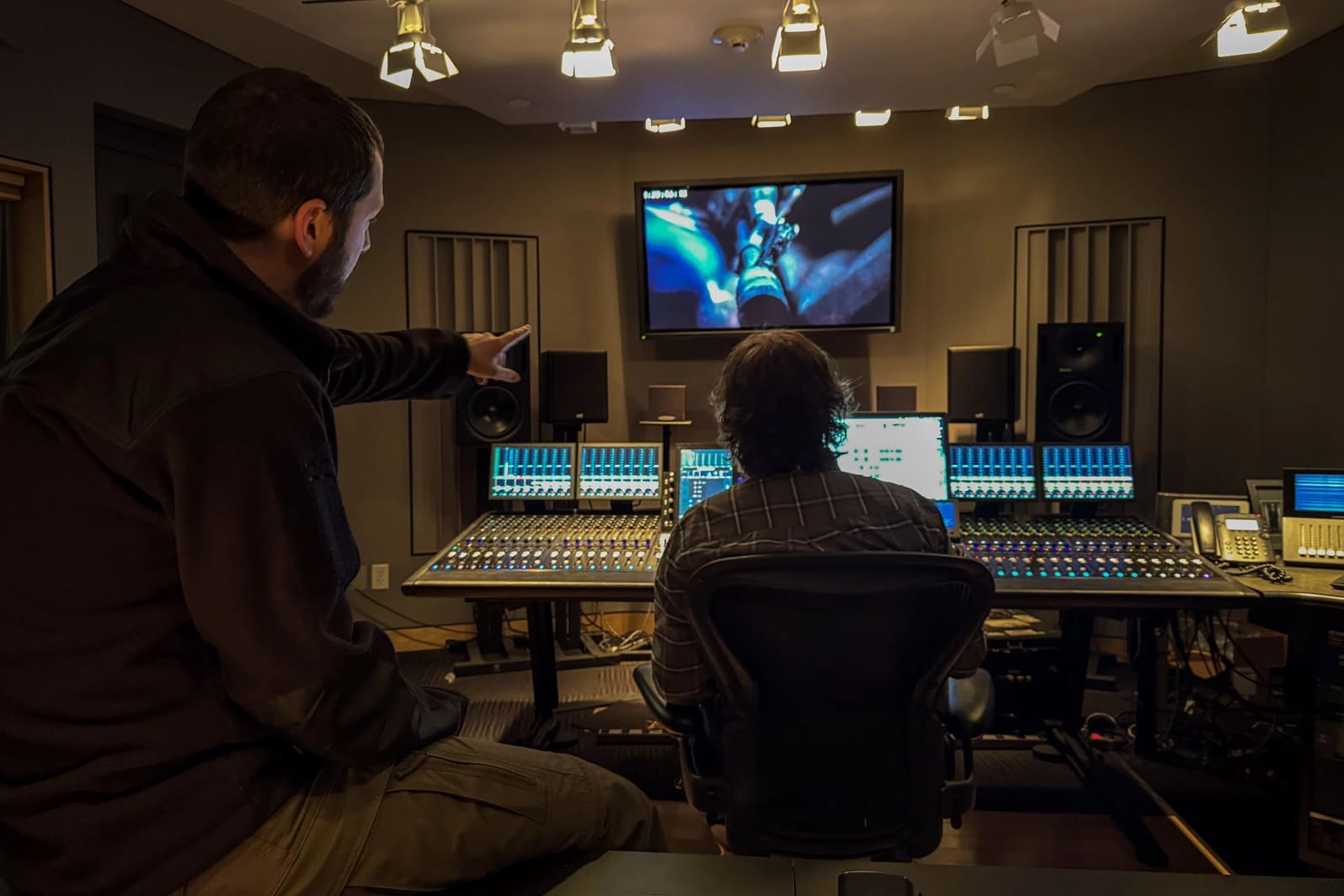
In an interview for Skvot, Mstyslav Chernov separately focused on the topic of music in the film “2000 Meters to Andriivka.” The soundtrack for the film was written by Sam Slater—a two-time Grammy winner, known for his work on the series “Chernobyl” and the film “Joker.” Slater is a long-time friend of Chernov, and his wife, an Icelandic cellist, also participated in recording the music for the film. Mstyslav Chernov shared that the collaboration with the composer was the most interesting part of working on the film.
“Sam specializes in creating music from sounds from the surrounding reality. For example, in ‘Chernobyl,’ they made music from the sounds of the reactor. When I came to him, I said: ‘Sam, let's make music that will partially take on the task of sound design,’ because we didn't have a sound designer. That's how we started collecting sounds from the battlefield. Machine gun sounds turned into the sounds of drums, radio sounds—into a new musical instrument that doesn't yet exist in the world. Together with the music producer, they even built a completely new instrument with a unique sound, which no one had heard before, called the kobophone.”
However, to create unique musical accompaniment, the composer first needed a clear definition of the genre and orientation for the mood of a particular scene in the film. Here, Mstyslav Chernov had his own vision:
“I told Sam: ‘20 Days in Mariupol’ is a horror film, and ‘2000 Meters to Andriivka’ is a war drama, an action thriller, but one where you can't predict what will happen next. Then Sam asked me what viewers should feel in different scenes. For example, we have a funeral scene—I didn't want people to cry during it. When I was there myself, at the burial of Gagarin, Kobzar, I felt anger and dissonance. The viewer needed to feel the same. Therefore, no piano, no harmony—there is a cello that is in dissonance with the voice. This dissonance is important: the cello and vocal cords vibrate, creating tension, and then the tension gradually eases. And harmony appears only in the final scene. This is the moment of catharsis, the only moment where crying is allowed. Because when you are on the battlefield, you do not cry.”
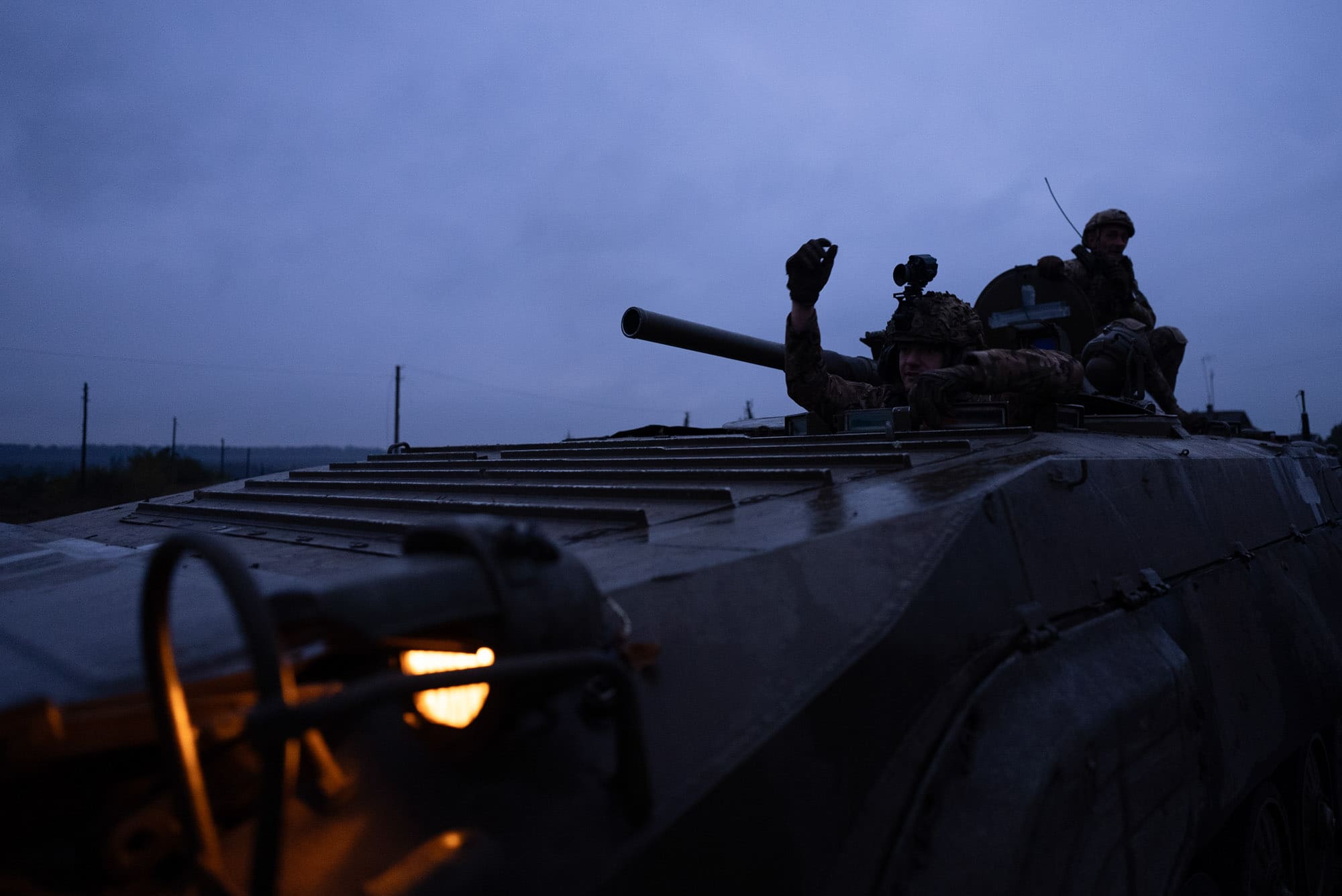
For Mstyslav Chernov, it is important to fully immerse the viewer in an experience from which there is no escape:
“The main task of the film is to take the viewer and lead them through those 2000 meters so that they cannot leave. Because when you or a soldier are there, in those circumstances, you cannot say, ‘That’s it, I’m leaving, thank you.’ You stay. We wanted the viewer to stay too.”
At the end of the conversation, Mstyslav Chernov shared his plans for the future. He is working on both documentary and feature projects, but his biggest dream is to make a film about the end of the war.
“I have a dream: to make a third film — about the end of the war. I want the film I am currently shooting to be about the end of the war. Whether that will truly be the case, we will see, but my dream is alive.”
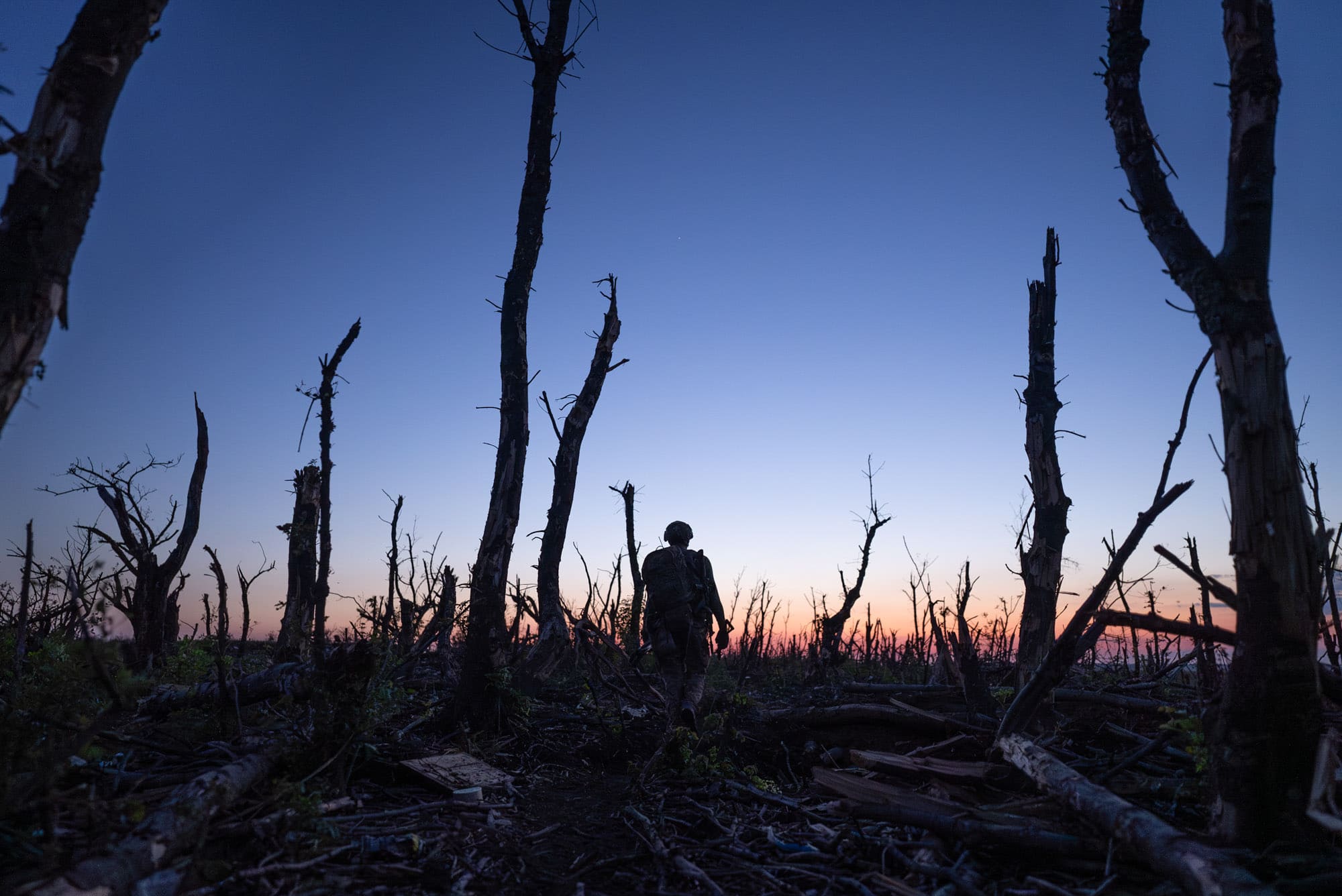
The film premiere with the participation of director Mstyslav Chernov will take place on August 26 at 20:00 at the “Oskar” cinema (Gulliver Mall). Following this, special screenings with discussions await audiences in Kyiv: August 29 at 19:00 at “MULTIPLEX Respublika Park,” August 30 at 16:30 at “Planeta Kino” (River Mall), and August 31 at 16:45 at “Zhovten” cinema. The series of meetings will conclude on September 1 in Lviv—at 19:00 at “Planeta Kino” (Forum Lviv), Hall 1.
Details are on the Arthouse Traffic website.
Mstyslav Chernov — Ukrainian photographer, Associated Press journalist, director, war correspondent, president of the Ukrainian Association of Professional Photographers, honorary member of Ukrainian PEN, and writer. He covered the Revolution of Dignity, the war in eastern Ukraine, the aftermath of the shooting down of Malaysia Airlines Flight 777, the Syrian Civil War, the battles for Mosul in Iraq, and the Russian invasion of Ukraine in 2022, including the blockade of Mariupol. For this work, he received the Deutsche Welle Freedom of Speech Award, the Heorhiy Gongadze Prize, the Knight International Journalism Awards, the Biagio Agnes Award, the Bayeux Calvados-Normandy Award, the Elijah Parish Lovejoy Award, and the Free Media Awards. By the end of 2022, he was included in the ratings “NV People 2022 in the Year of War” and “14 Songs, Photos, and Art Objects that Became Symbols of Ukrainian Resistance” by “Forbes Ukraine,” and video materials from Mariupol became the basis of the film “20 Days in Mariupol,” which in 2024 was awarded the Oscar for the first time in the history of Ukrainian cinematography.
Social media for the photographer: Facebook Instagram
Contributors:
Researcher of the topic, author of the text: Vira Labych
Picture editor: Olga Kovalova
Literary Editor: Julia Futei
Site Manager: Vladislav Kukhar
.jpg)
.jpg)











.jpg)


