
%20(750%20x%20360%20%D0%BF%D1%96%D0%BA%D1%81.).png)
The Kremlin continues to push disinformation about a “favourable climate for taking Kherson”. In official statements and on the pages of propaganda outlets, Russia performs concern for a so‑called “federal subject under occupation by the Kyiv regime and under shelling by the Armed Forces of Ukraine”; in reality, it terrorizes the local population and commits war crimes against them. This has been documented by Ukrainian photo documentarians, the authorities, and international observers.
“Road to the Future”
In early autumn 2025, the so-called governor of Kherson oblast, Volodymyr Saldo—who chose to cooperate with the Russian authorities and now heads the occupied part of the region—reported to Russia’s President Putin on his “achievements.” In particular, he spoke of a good harvest, active road construction, and the provision of gas and electricity.
He was especially proud of the reconstruction of the highway leading to occupied Crimea. The region, so to speak, has not seen road construction of this scale since Soviet times. He insists that roads were the biggest demand of the local population—and that all of this is being done for the sake of integrating the “new regions.”
The Crimea project of Radio Liberty’s Ukrainian Service, “Crimea.Realities,” reported — citing Serhii Khlan, a deputy of the Kherson Oblast Council—that since the start of the war Russia has used southern Ukraine as a logistics corridor and a staging ground for troop rotations. In other words, the “road to the future,” as Russian propagandists optimistically call it, is nothing more than a road of war.
The right bank under fire
The de-occupied part of Kherson oblast is under constant fire from various types of weapons. Russia is implementing a strategy of creating a “grey zone”: “Russian forces are now expanding the grey zone through shelling,” writes the propaganda outlet Arguments and Facts. In a number of districts in Kherson oblast there is no electricity, no gas, and no water. The evacuation zone is gradually expanding. Today, Russian FPV drones hunt ordinary people here—even children—attack highways, and these attacks keep increasing.
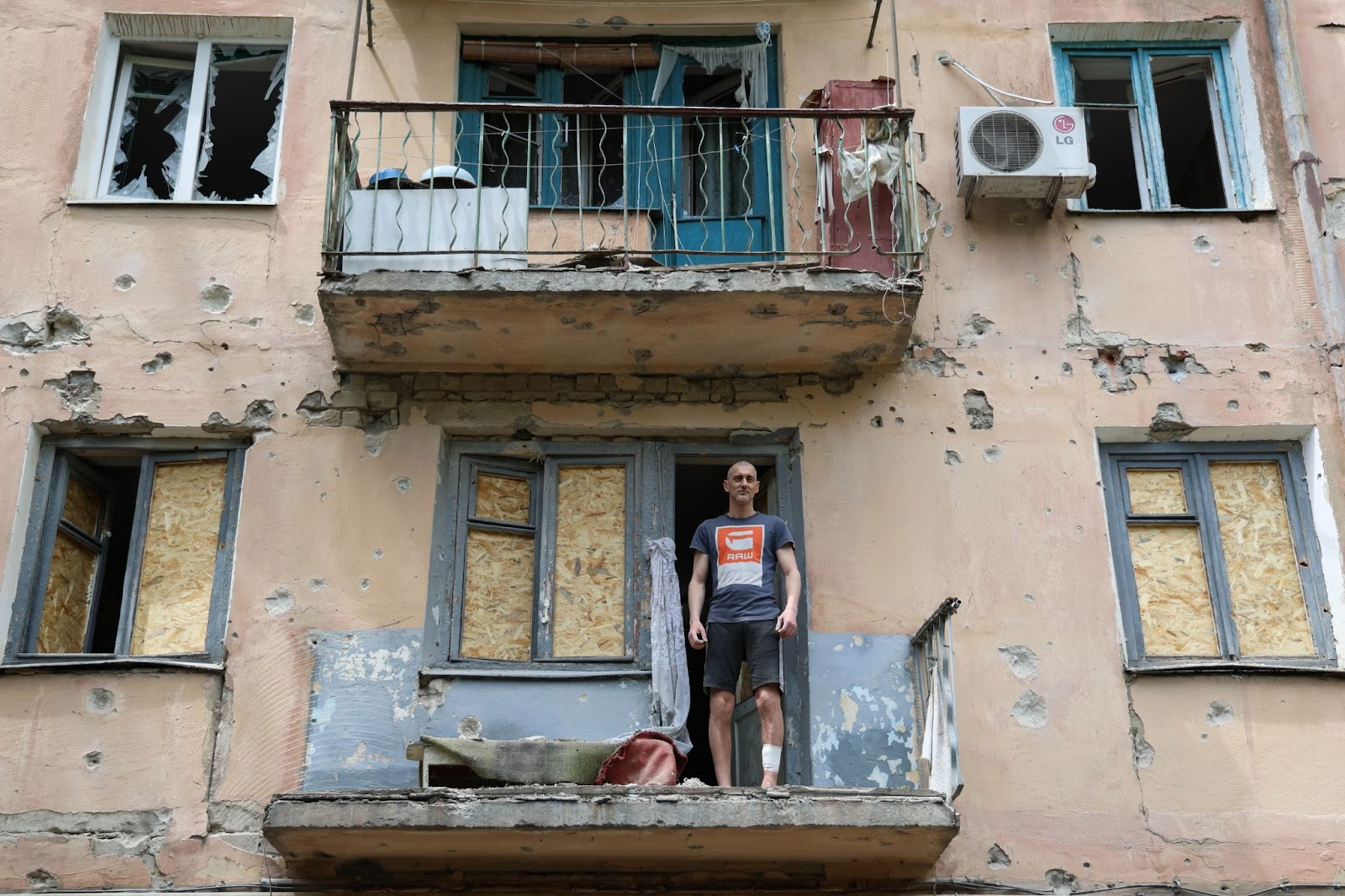
Photo by Ivan Antypenko for Suspilne News
One of the most widespread pieces of Russian disinformation is the denial of mass FPV-drone attacks on civilians in Kherson oblast, combined with attempts to blame Ukraine’s military for these actions.
The fact-checking team at Stopfake.org published a debunk of this anti-Ukrainian disinformation, citing a 2025 report by the Independent International Commission of Inquiry on Ukraine. The UN commission of observers confirmed Russian attacks on civilians and civilian vehicles, attacks on emergency service cars—the first to provide assistance in shelled areas—the use of “double-tap” tactics, and did not confirm AFU attacks on their own population.
“The UN report states that since July 2024, Russian forces have repeatedly killed and injured civilians along a stretch of more than 100 kilometres of the right bank of the Dnipro River in Kherson oblast,” Stopfake.org recounts. “It notes that the drone attacks are large-scale, systematic, and carried out as part of a coordinated Russian state policy [...]”.
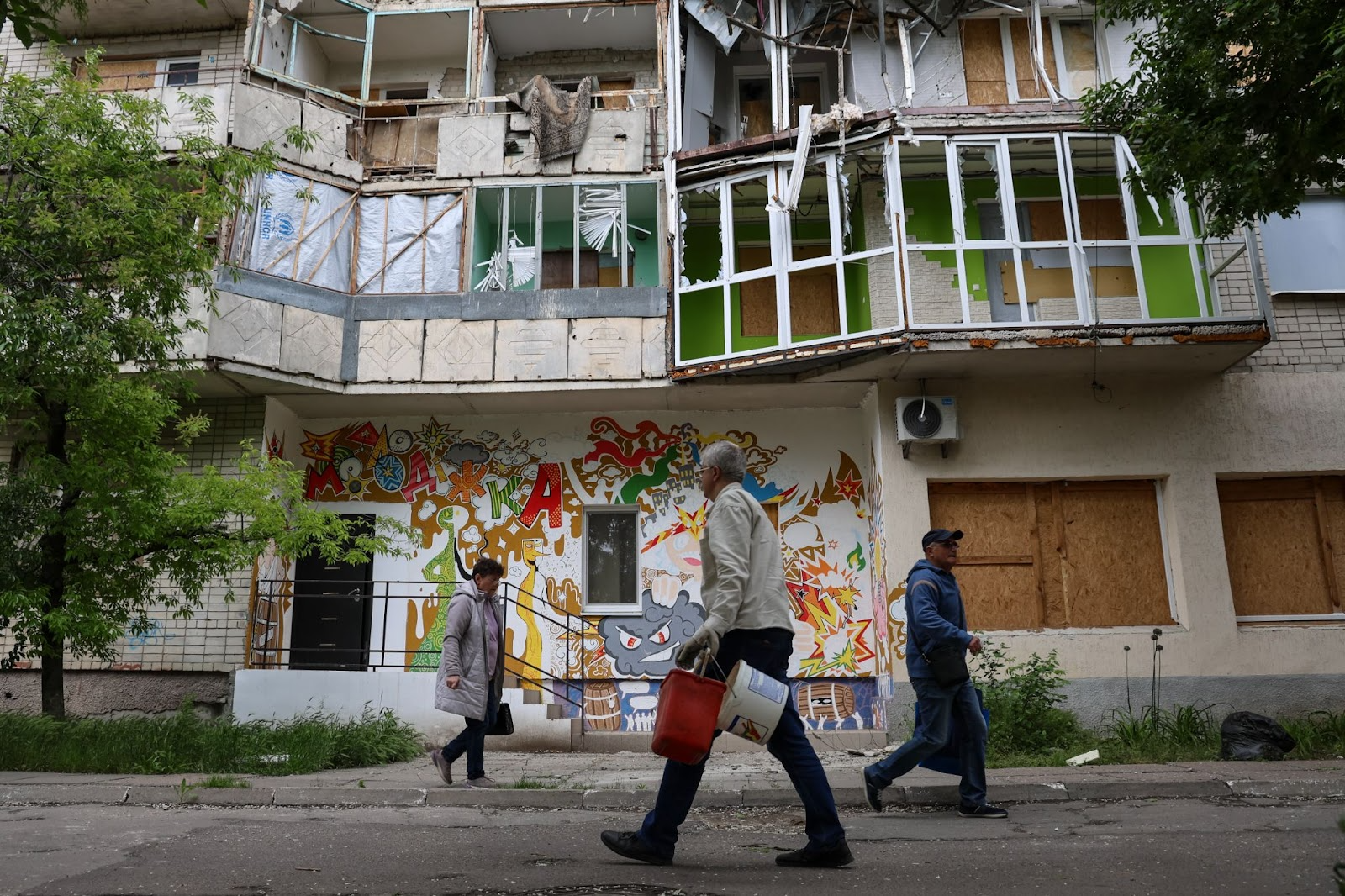
Photo by Ivan Antypenko for Suspilne News
Kremlin propaganda tries to spread panic among the population by mixing lies into truthful information: “The AFU are preparing to flee Kherson; anti-drone nets are being installed at all exits from the city to ensure a safe withdrawal,” the propaganda outlet Lenta.ru quotes the collaborator Saldo as saying.
In fact, roads are being covered with anti-drone nets because of the relentless attacks by enemy drones. After his most recent trip to his hometown of Kherson in August 2025, photojournalist Ivan Antypenko posted about the dire situation in the city:
“The city is holding on with all it has against a harsh reality. There is very little room for romance in it. Drones kill residents in the streets, artillery destroys our homes, aerial bombs bring down bridges. Once, they connected us to the Kherson we loved most. Today we are playing roulette on roads of life and death just to be able to say: ‘I’m home.’”
A dangerous neighbourhood
Kherson’s Korabel microdistrict—known locally as Ostriv (the Island)—was among the hardest hit after the destruction of the Kakhovka Hydroelectric Power Plant in June 2023. Now, because of Russian shelling, it could be cut off from the mainland part of the city. On 2 August 2025, Russia dropped two aerial bombs on the road bridge connecting Kherson’s Ostriv microdistrict with the mainland part of the city.
Propagandists claim the attack on the bridge is preparation for a battle for Kherson. Russians justify the strike as the achievement of a military objective, alleging that “the AFU have turned the island into a fortress,” i.e., a military base. They claim that Ukrainian forces deployed drone operators and spotters on the roofs of residential buildings, set up mortar positions in school yards, stockpiled military equipment and ammunition in the premises of a ship repair plant, and mined residential buildings on Ostriv.
They report that by destroying the bridge they have isolated the Ukrainian garrison on Ostriv, completely severing the logistics of the Ukrainian grouping and forcing it to rely on dangerous crossings.
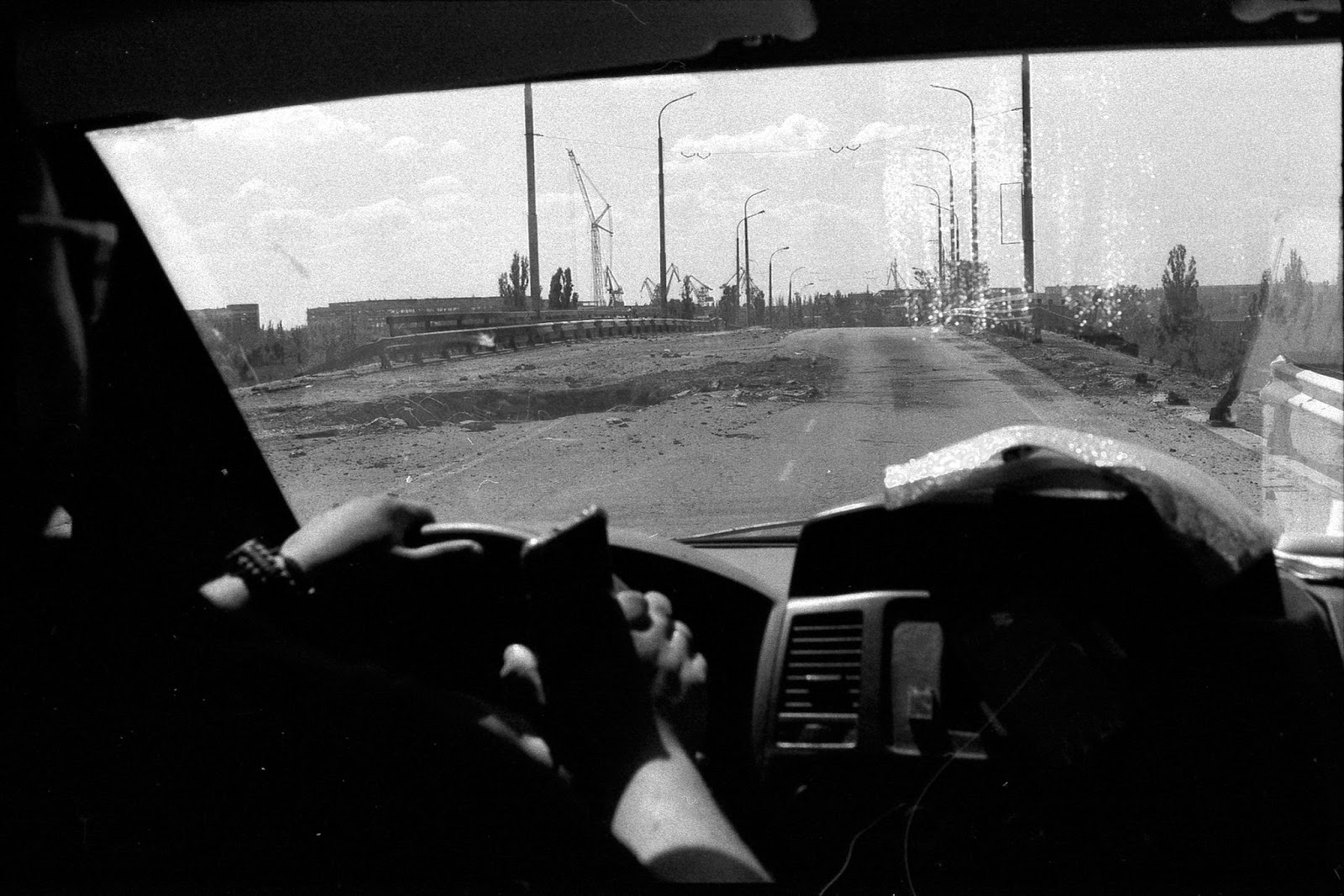
Photo by Stanislav Ostrous
As Ukrainian online outlet Ukrainska Pravda reported, the spokesperson for Ukraine’s Southern Defence Forces, Vladyslav Voloshyn, told Ukrinform that Russia’s claim that the bridge played a decisive role in Ukraine’s defence was false. He called the Russian strike on the bridge an act of terrorism intended to deprive civilians in the Korabel microdistrict of normal living conditions.
Overall, the Kherson sector is one of the most difficult because of its geography. One of the tasks of Ukraine’s defenders along this stretch of the front is to prevent the enemy from seizing and entrenching itself on the islands in the Dnipro delta.
Ukraine’s Southern Defence Forces report that over the week of 25–31 August 2025, the enemy made seventeen unsuccessful attempts to storm Ukrainian positions near the Antonivskyi and Railway bridges. Ukrainian troops detect and destroy sabotage and reconnaissance groups attempting to gain a foothold in the island zone.
A risky evacuation
After the Russian strike on the bridge, the Ukrainian authorities began evacuating residents from the microdistrict while it was still possible to cross the damaged bridge. It is the only road bridge to the neighbourhood, which is surrounded by water on all sides.
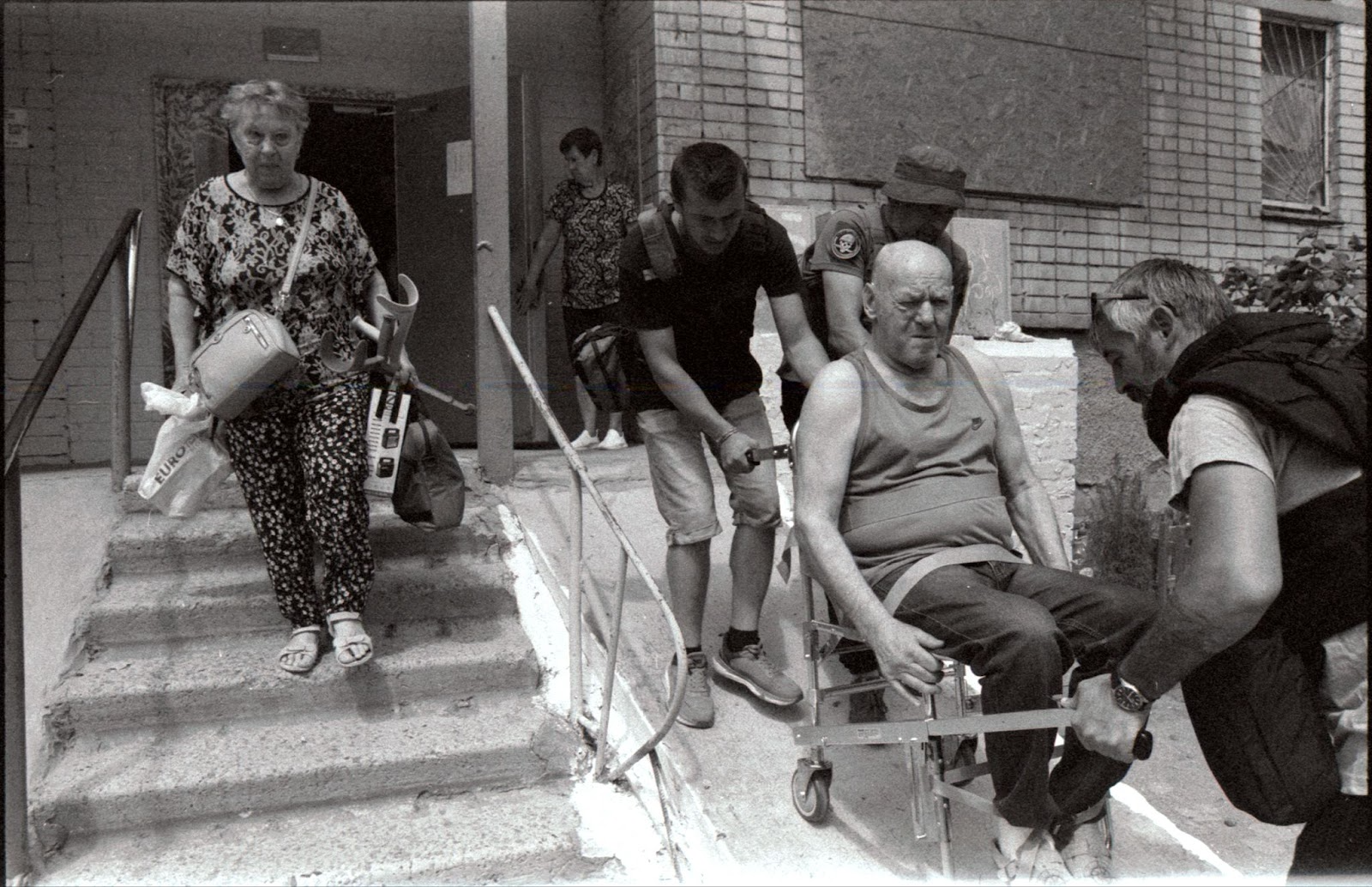
Photo by Stanislav Ostrous
After the strikes on the bridge, propaganda tried to discredit the evacuation from Ostriv in order to sow discord, panic, and distrust in the authorities. “The Kherson authorities insist on evacuation, even though they are unable to organize it,” wrote the propaganda outlet Ukraina.ru.

The collaborator Saldo told Russian media that locals from Ostriv have to evacuate on foot. And that pensioners without their own car, to reach an official assembly point, must hand over a month’s pension. The evacuation route, he claims, runs along the most dangerous road—“which the AFU use for their needs and which, of course, is constantly shelled by the Russian Air Force,”—and those who do make it to their destination face “overcrowded barracks and beggarly payments.” Therefore, the propaganda outlet insists, the most promising option for locals—despite the danger of shelling—is to wait for “liberation” by the authorities of the “Kyiv regime.”
In its News of Pryazovia section, Radio Liberty’s Ukrainian online outlet reported—citing local authorities—that people were taken to relatives in other parts of Kherson, to temporary shelters suitable for living in, or evacuated to safer regions of Ukraine.
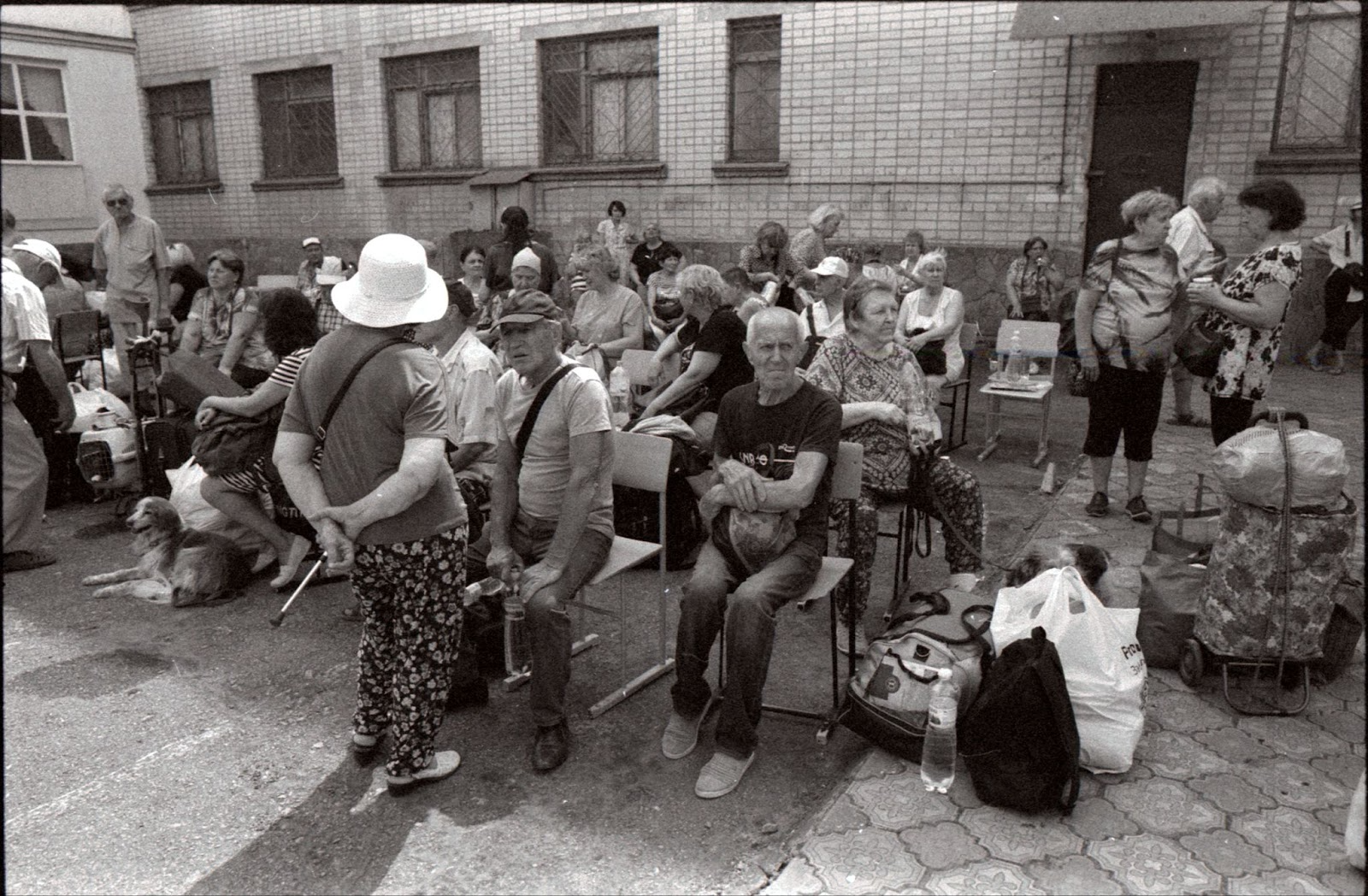
Ukrainian photographer Stanislav Ostrous helped volunteers evacuate residents from Ostriv and photographed the evacuation process. In a comment to UAPF, he refuted Russian disinformation about poor organization of the rescue operation and shared details of how it unfolded.
“I worked together with volunteers who were evacuating elderly and people with limited mobility—those who cannot move without assistance—and I assure you that no one took any money for it. People were evacuated at risk to the rescuers’ own lives along the only possible road, across the bridge damaged by Russian strikes with guided aerial bombs; there is no other way off Ostriv,”,the photographer says. “There is also a railway bridge, but you cannot cross it by car—indeed, not everyone would even dare to walk there. So bedridden and low-mobility people were evacuated directly by armoured vans, and for everyone else there was a route from the bus stop at the Ostriv market across the bridge, and then other buses through the city; both the military and volunteers were working there. The only difference was that people had to get to that bus stop themselves.”
As of 5 September 2025, according to the Kherson City Military Administration, all children have been evacuated from the Korabel microdistrict; 220 adults remain there, reported Ukrainska Pravda.
Russian propaganda does not stop trying to turn front-line Ukrainian territories into an environment where local people do not know whom to trust. The aim of propaganda is to influence people’s feelings, sow panic, and shift thinking so that it serves the aggressor. Ukrainian photo documentarians continue to record the truth about this war, despite the threat to their lives, to prevent the enemy from carrying out its plans.
Produced by:
Researcher, text author: Yana Yevmenova
Photo editor: Olga Kovalova
Literary editor: Yuliia Futei
.jpg)
.jpg)














.jpg)


