Konstantin and Vlad Liberova began their journey in photography 4 years ago, focusing initially on creative and emotional engagement. At the beginning of the war in Ukraine, they changed the vector of their work, focusing on feature documentaries: their photos from hot spots in Ukraine go viral on social networks, gaining hundreds of thousands of reposts, they are published by influential media such as BBC, Welt, Vogue, Forbes, and also take to their social networks the President of Ukraine and other high-ranking members of Ukraine assigned persons. We talked about objectivity in documentary filmmaking, where to get the resource and how to recover.


To which audience are you currently directing filmed content?
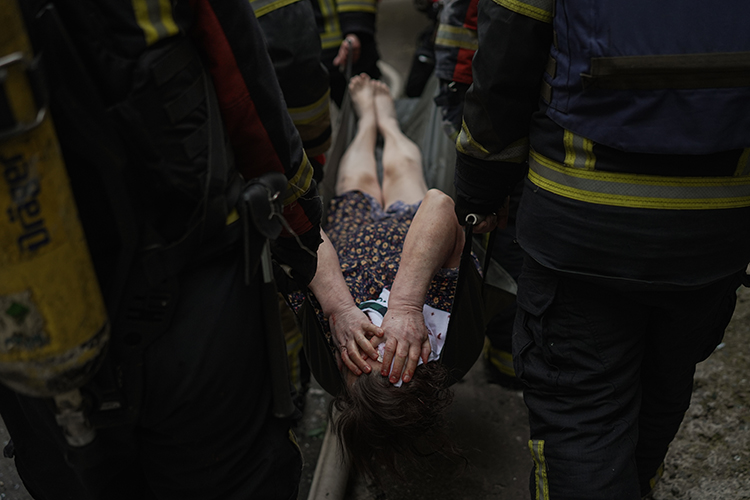
No matter how strange it may sound, but first of all we direct our photo to the average Ukrainian. In 2015, I, like the vast majority of Ukrainians, forgot that there is a war in our country. And this war, which had been going on for eight years at that time, did not enter my media field. I, Vlada, set a goal to make ordinary Ukrainians not forget about the war. Document events like this, make a photo that will not just inform, but which will try to talk to the viewer. We want our photo to scream. Show the pain, sweat and tears that are enough in war.
The coverage of the war in Ukraine by a Ukrainian citizen is often perceived as preoccupation and bias by EU residents. Do you agree with the opinion that Ukrainians are not objective in covering events in Ukraine?
There is no such thing as objective photography. In any case, the personality of the author will be felt on top of the photo: his values, pain, interest, etc. If you take into account the top foreign photographers who are currently filming the war in Ukraine — their photos, even from the same events — will be different. And if we take the world trends in the coverage of war, the world has less and less interesting facts, but they are interested in the author's sense of these facts. Therefore, it would be more correct to say that we all carry the TRUTH: through the prism of our “I”, our vision, and our pain.

Where do you get the resource to document? Motivation is, of course, good, but it is only enough for a certain time.
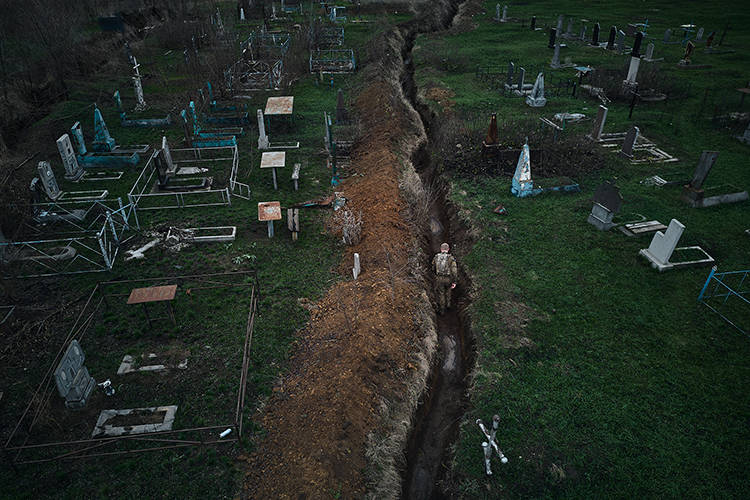
Returning to the answer to the first question: Vlada and I are working for a Ukrainian. It may be a little daring, but I believe that our photo goes beyond the bubble of the military sphere and can reach a conditional girl who is now lying on a chaise longue somewhere in Odessa and not let her forget, at this very time — the war continues. For I myself lay on that deckchair for eight years and did not remember that we had a war. And that is why today we take such a photo that simply has no boundaries in the media space. Wherever you are, you will stop, you will look, and if we have done everything right — you will think. And if we talk about the resource, then this is the feeling of this mission: to constantly give Ukraine the feeling of war. Immerse people in a trench. Let you feel the blood, pain, and sweat. So that the guys from this same trench never feel alone again.

Your Personal Top 5 Non-Obvious Things a Documentary Filmmaker Should Have
Adhesive tape, a stock of clean socks, American dry cloth, a comfortable bag, a towel. And we have learned to talk about something other than war.
How do you recover from trips to zero and what can you advise documentarians from your own experience?
At this point, I can say that there is no way to recover. In addition, when we arrive in Odessa, where our bright, spacious apartment — on the second day you are already overwhelmed with the feeling of “how everything plagues me”. This is a completely irrational feeling that does not rely on anything. But I look at people who live ordinary lives and that does not connect in any way with the life that we see at zero. As soldiers without rotation for almost a second year in the trench, and here the guys go to the gym to play sports. I have no suggestions. It's just a feeling that overwhelms. And we have learned to talk about something other than war. As soon as we shoot the holiday of victory, we will go somewhere to the islands and rest. And when we return — we will think about how to leave memories of heroes and how to help with rehabilitation after the war.
Konstantin Liberov— Ukrainian photographer, photojournalist. Knight of the Order “For Merit” III degree (2023). One of his photos was selected by Time magazine among the 100 Best Photos of 2022. During the full-scale Russian invasion of Ukraine, together with his wife Vlada Liberova, they filmed the consequences of the war in Kharkiv, Severodonetsk, Lysychansk, Svyatogorsk, Nikolaev, Bucha, Irpen, Kyiv and other cities. Photos of Konstantin were published by The Kyiv Independent, The New York Times, Los Angeles Times, The Wall Street Journa, The Insider, The Independent.
Photographer's social networks:Instagram, Facebook
The material was worked on:
Researcher of the topic, author of the text: Marusya Maruzhenko
Site Manager: Vladislav Kuhar