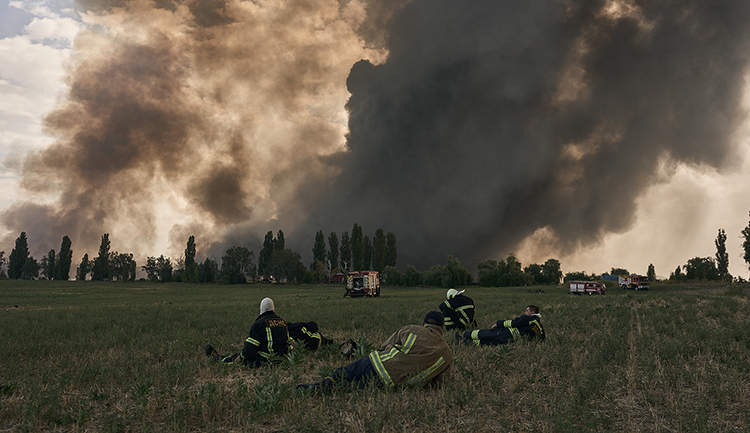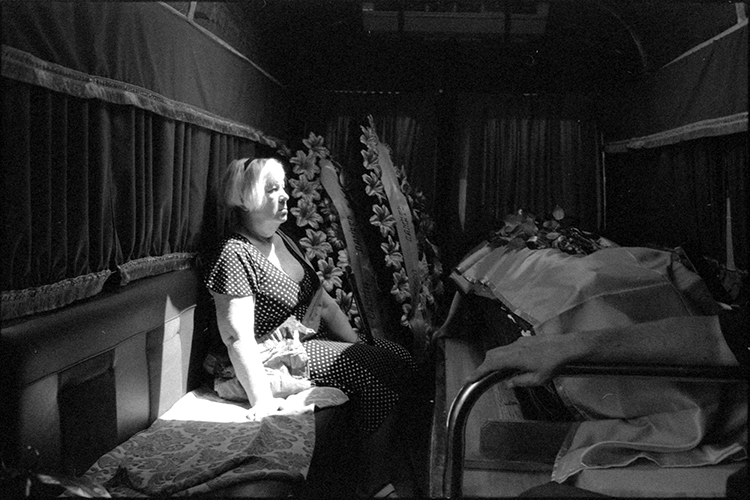
Yakiv Liashenko is a documentary photographer who today captures everyday life and war in the special forces battalion “Donbas”. He records death and pain on a digital camera, and life and beauty on black-and-white film. His photographs are documents of our time: ruined buildings, mutilated bodies, and the faces of people who have seen a lot of pain yet have not lost their zest for life.
— Please tell us, when did photography appear in your life?
— I became interested in photography back in school — in 1998 I first came to a photo club located in a former kindergarten near my home. I learned to shoot on film, load it into special developing tanks, and print photographs. I decided to join the photo club because at that time my cousin was already shooting with a “Smena-8M” camera. He made different quirky flash photos of my sister and me, for which we looked for interesting clothes and did fun hairstyles. I still have those photographs.
I also had a “Smena-8M” camera, which I took apart and never managed to put back together. I didn’t have another camera, so I forgot about photography for about ten years. In 2008, I met a guy who was passionate about photography. That photo vibe came back to me, and I wanted to shoot again. I bought my first digital camera on credit — a Canon 350D — and I’ve been photographing ever since.
— What topics interested you at first?
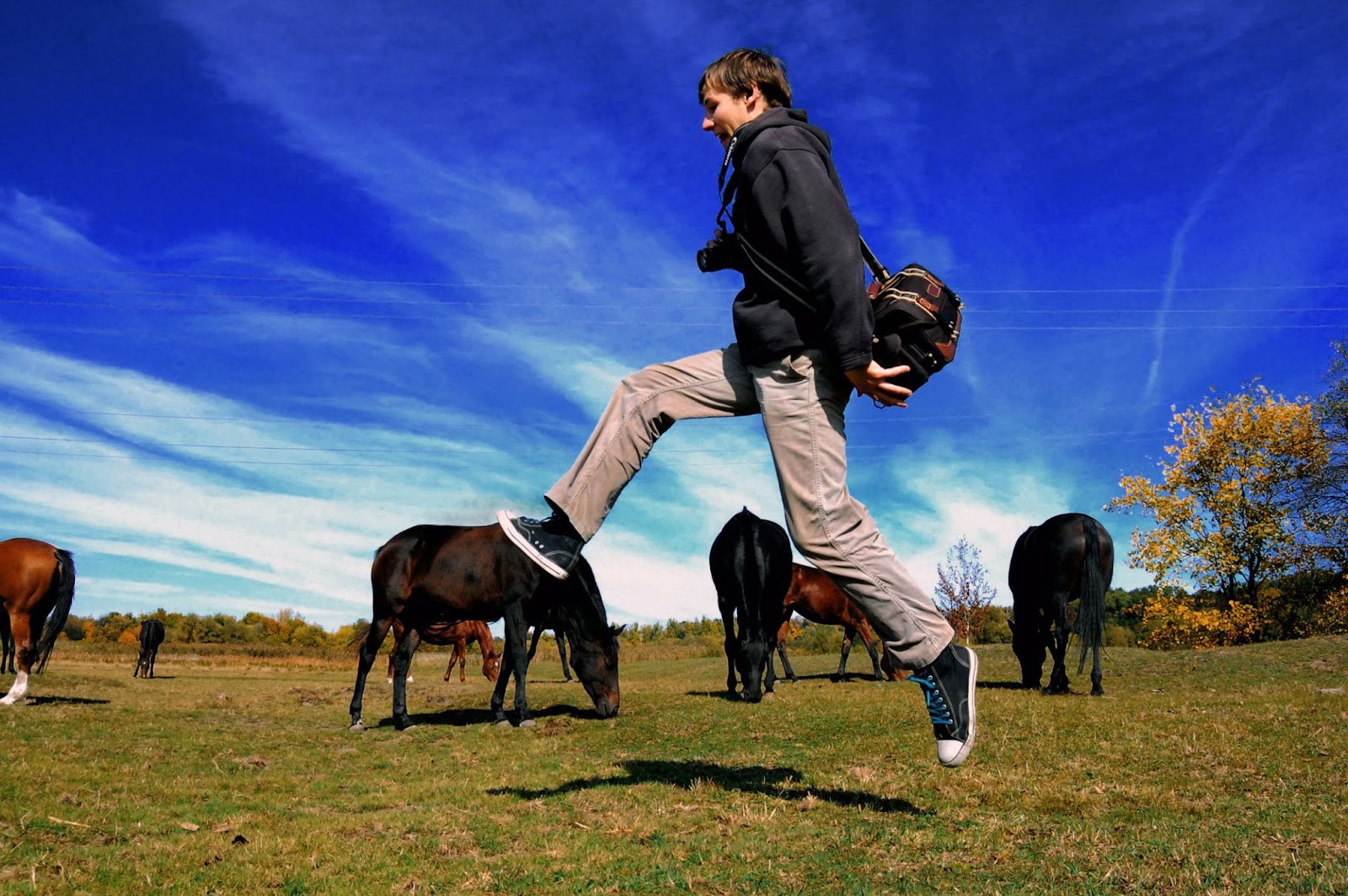
— I’ve always been fascinated by photographing people — at events, on the street, or portrait work. I remember that when I bought a camera, I practically didn’t let it out of my hands. I liked it that much.
— When did you start doing photography professionally and realize that this is your profession?
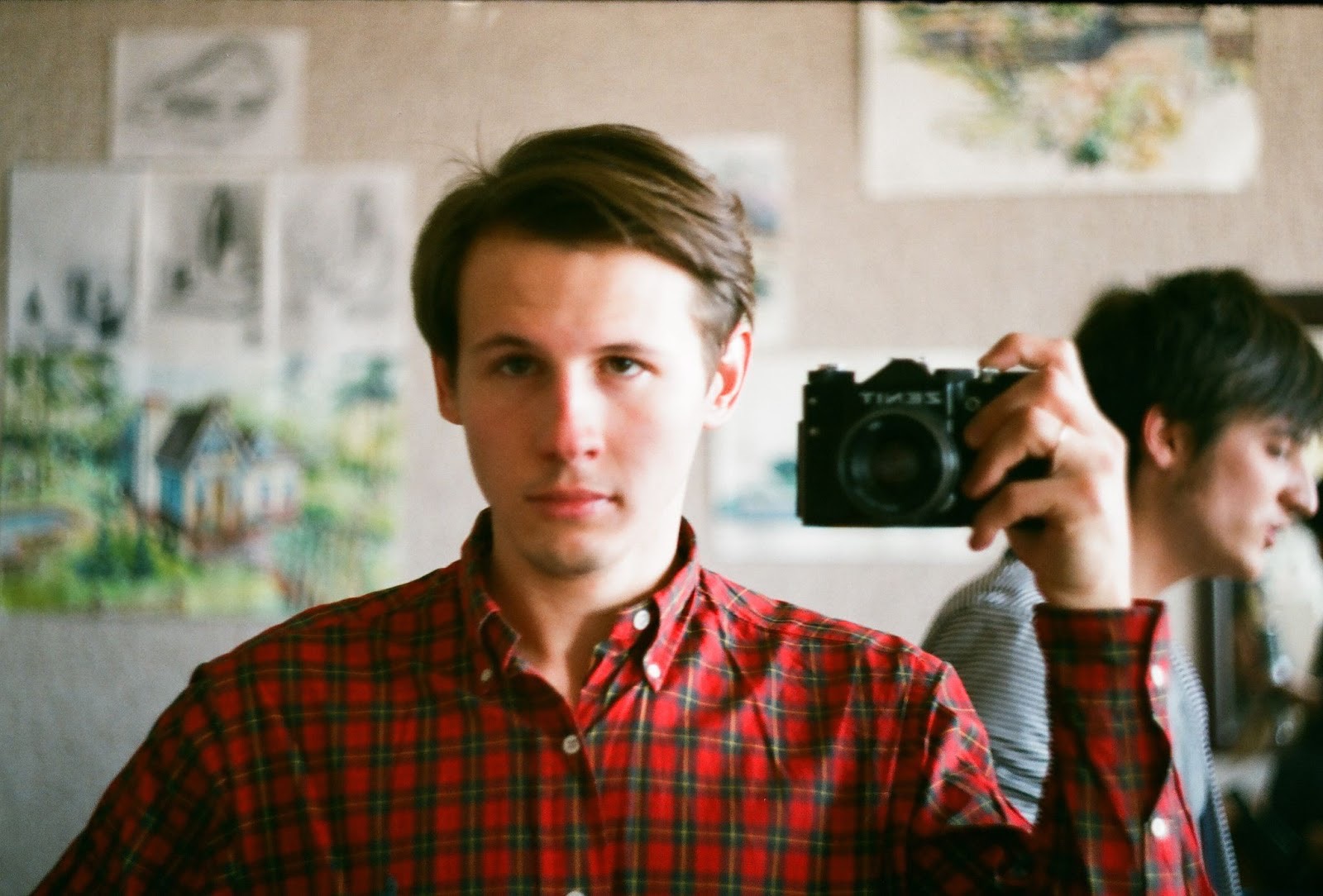
— After buying my first digital camera, I started shooting a lot. I realized I really liked it and wanted to photograph more. Soon I received my first fee as a photographer. A few years later, photography became my main profession and provided a stable income. I positioned myself as an event photographer — I shot various events, traveled a lot around Ukraine, and I enjoyed it.
— Did you document on camera the events that have been taking place in Ukraine since 2014?
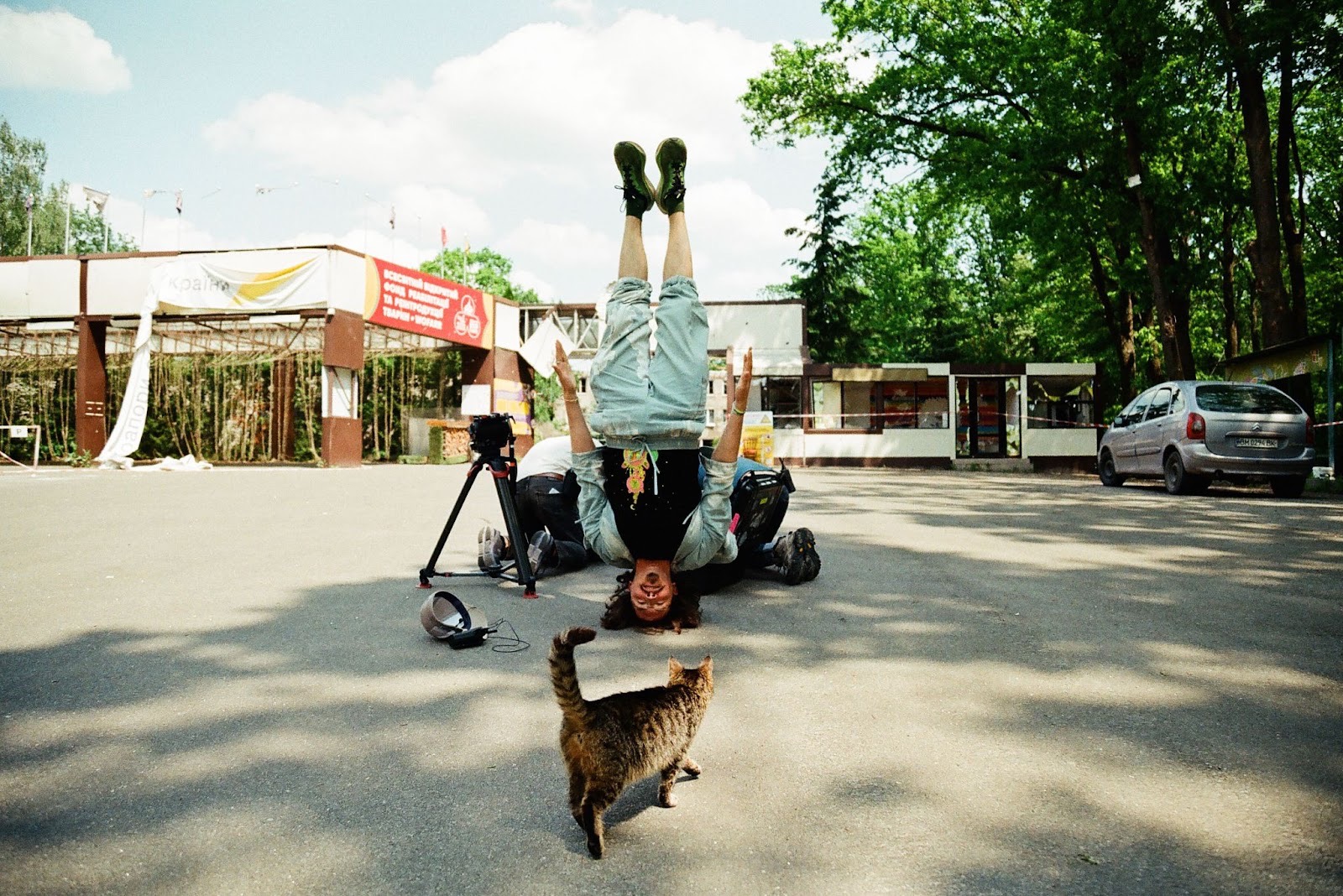
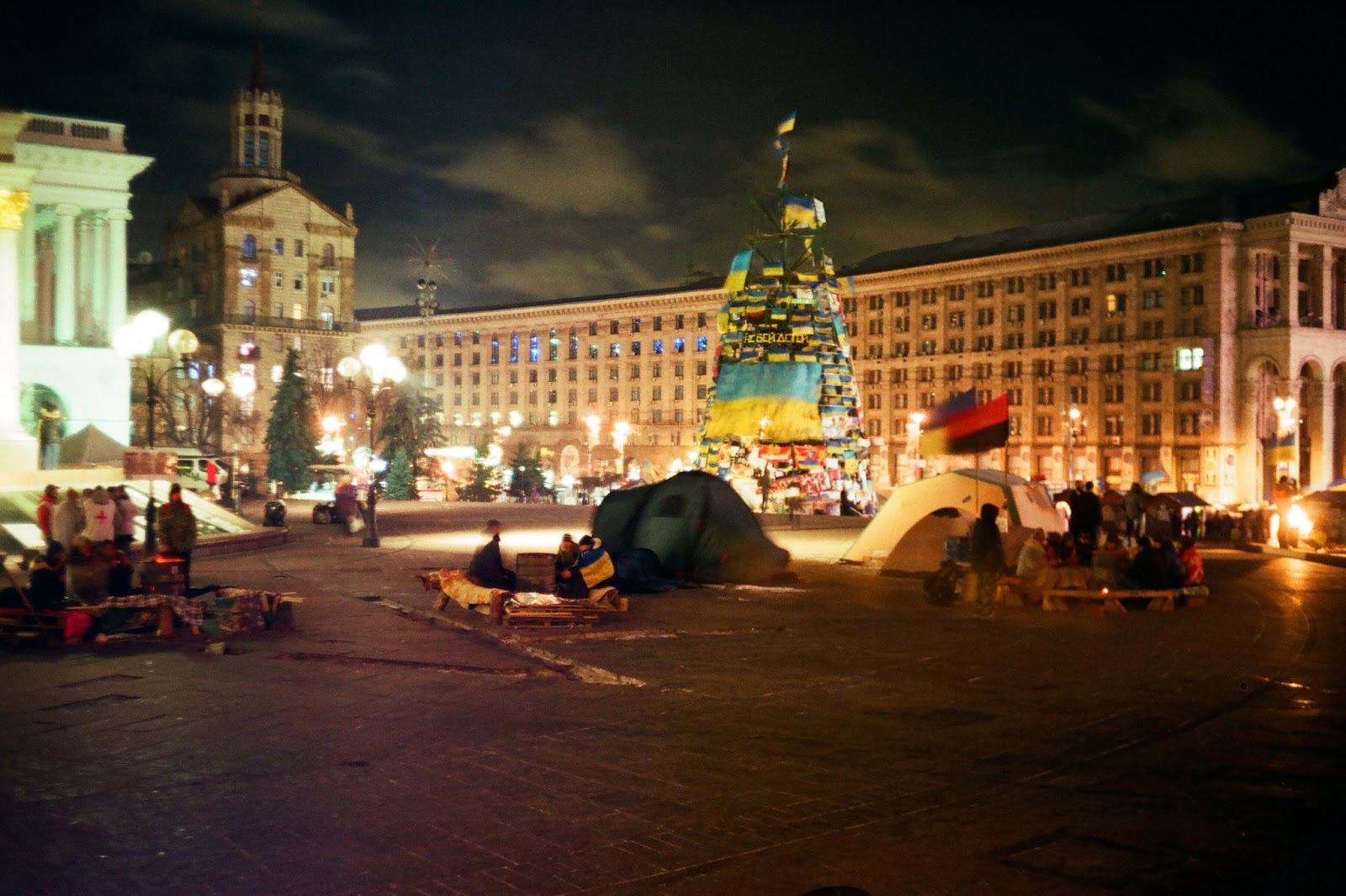
— I took part in the Revolution of Dignity. However, I really regret that I shot so little there and missed many interesting frames. Of course, I have a series of photographs, but back then I saw my role more as a participant rather than a photographer of the events. I photographed people’s everyday life and clashes on Independence Square in Kharkiv, and the storming of the regional administration building by pro-Russian forces. During the Revolution of Dignity, I traveled to Kyiv, where, unlike in Kharkiv, I shot only on film. Today I also shoot with a film camera, but only for myself — for my own enjoyment.
— What did you shoot at the beginning of the full-scale Russian invasion?
— On the eve of the full-scale Russian-Ukrainian war, photography was once again my hobby rather than my profession. I was producing bags, and I photographed only occasionally. I think I burned out creatively because I had been shooting a lot. I photographed during the COVID pandemic, but again — very little. I had a period when I didn’t pick up a camera for a whole year. I gave myself a break.
When the full-scale war began, I moved all my equipment — a computer with my archived photo files and my camera — to my mom’s place and hid it in the basement. I was afraid my apartment in Kharkiv would be destroyed by strikes and everything would be lost. My camera lay unused for several weeks, and then I simply realized I was losing a huge number of frames. I understood that for the sake of documenting history, I was ready to lose the camera.
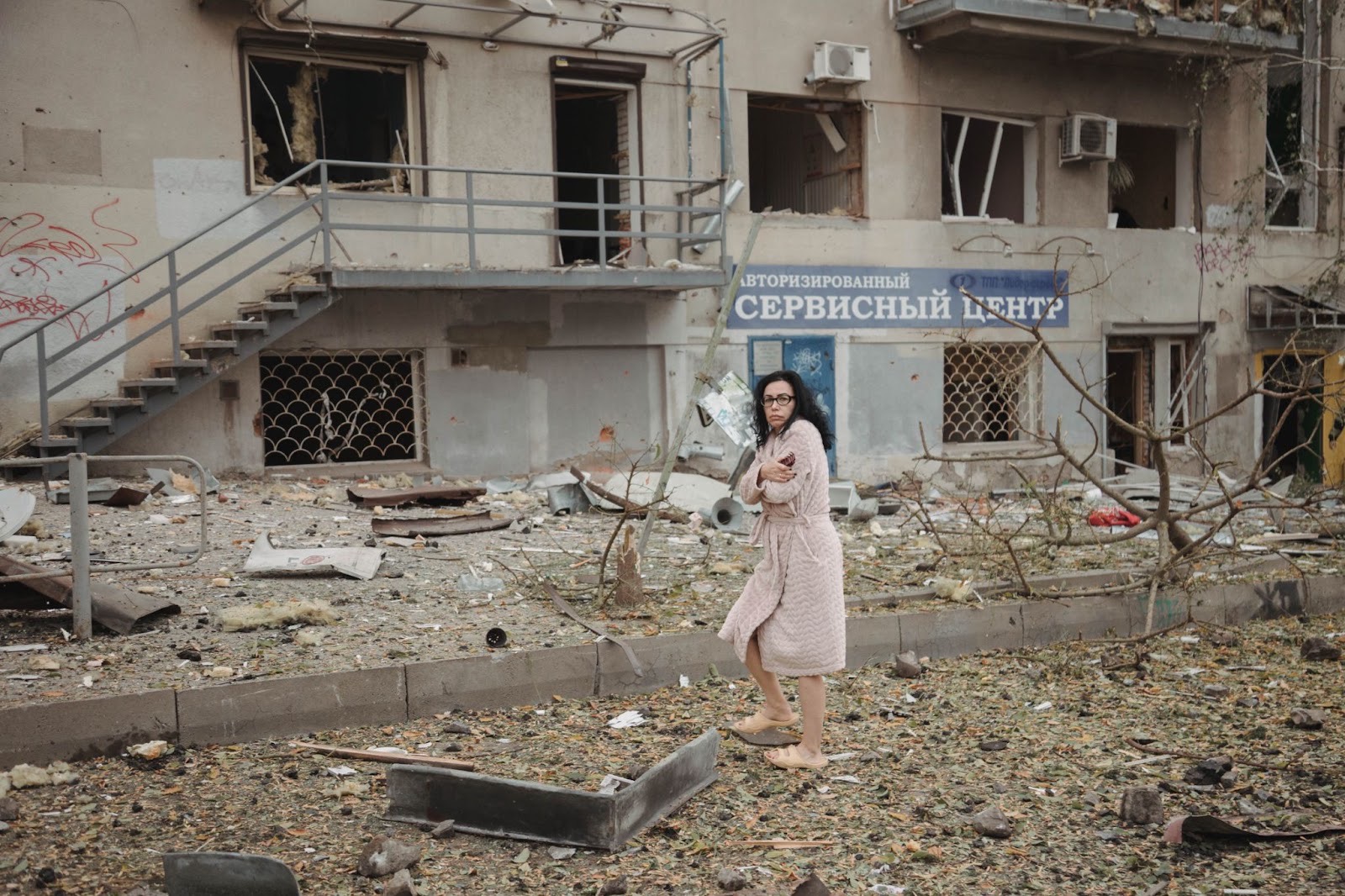
At first it was very difficult for me, because I had never photographed war. Everything was new and hard both morally and physically. At that time, a lot of foreign photographers came to Ukraine and, in particular, to Kharkiv. I worked as a fixer, and working with foreign colleagues inspired me to photograph again. I learned a lot from them and gained experience I would not have had without the war.
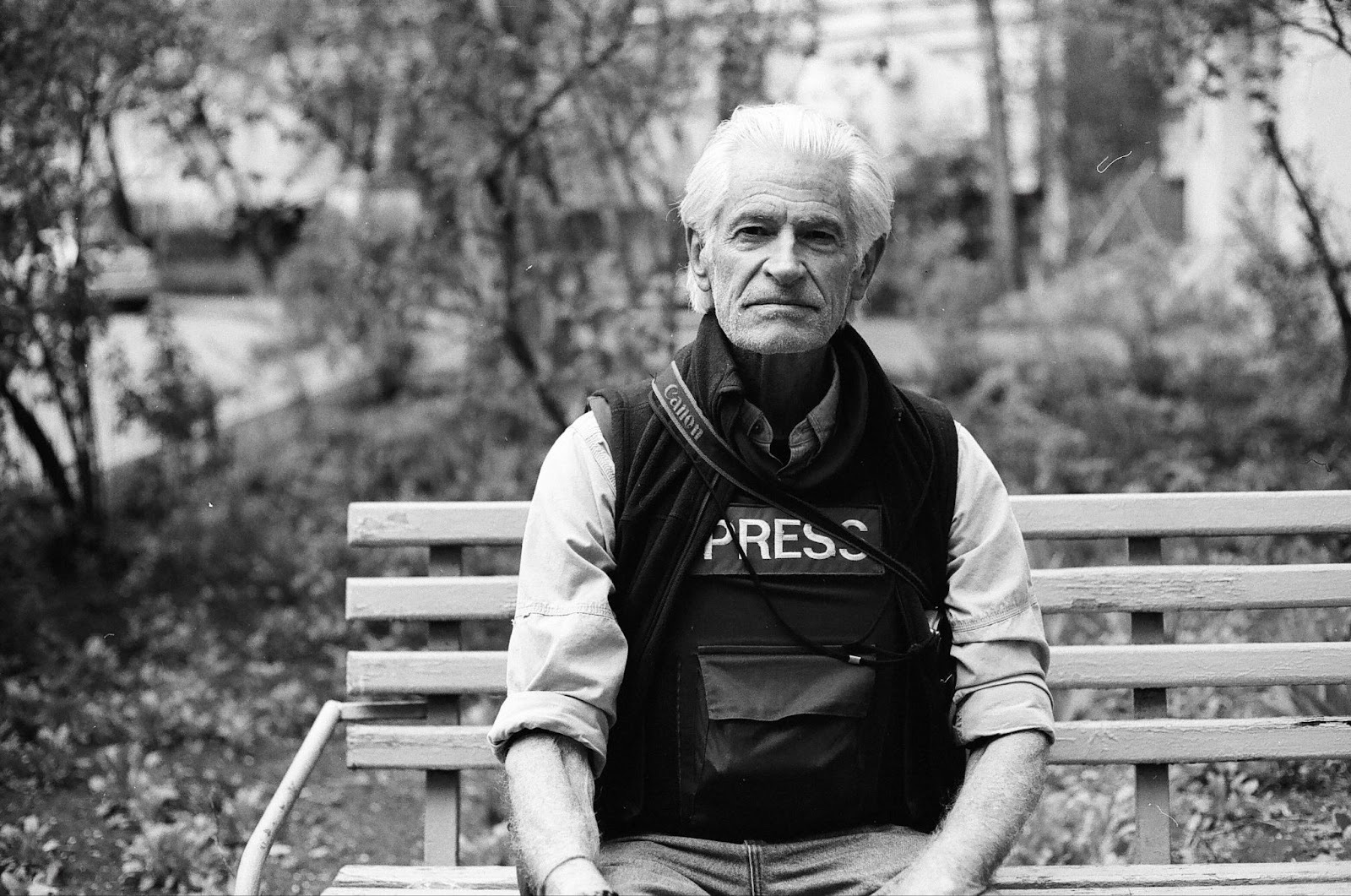
I focused on photographing people and their stories. I wasn’t working on creative author projects; I was documenting events during the war. It’s important for me to preserve evidence of war crimes — if you don’t photograph an event or record it on video, it’s as if it never happened. In our history, unfortunately, there are many human stories, grief, and suffering that no one will ever learn about.
— When and how did you join the Defense Forces of Ukraine?
I joined the Defense Forces in 2024 — I ended up in the special forces battalion “Donbas”. It was one of the first volunteer battalions in Ukraine, and I really appreciated its history — when ordinary people, for example entrepreneurs, teachers, and others, voluntarily became soldiers. The battalion’s history resembles the history of our armed forces, which began with guys who, perhaps, were holding a weapon for the first time, and is now one of the strongest military formations with combat experience.
— How did your photography change when you joined the “Donbas” battalion? Do you feel limitations as a documentary photographer?
— Of course, my photography changed. Before, I photographed strikes on Kharkiv and other cities. Today I’m focused on documenting the life of my battalion. We have many stories that need to be told. Many of the guys have been through captivity; some joined the military back in 2014. We even have children of those who served in the first battalion — they joined us at the start of the full-scale invasion. So entire families serve with us. My task is to tell the world about the fighters of our battalion and show their combat work.
Of course, service in the army implies certain limitations, but all of them are justified. Careless work by a photographer or video operator can cause irreparable harm. For example, I have photographs I took last year that I still cannot publish, because they would reveal the locations of our military.
— How do you decide which frames are worth shooting and publishing? Do you have such a concept as “self-censorship”?
— I don’t think it’s a secret for anyone that in the army, footage goes through approval. There are different things we cannot show — new types of weapons or our location. This is not censorship, but necessity.
Now photographing the war is getting harder and harder. If in 2022–2023 we could be very close to enemy positions, now that’s unrealistic. Shooting at a distance of 500 meters from the line of contact is impossible to even imagine today. A distance of 3–4 kilometers can now be deadly dangerous. Honestly, I can’t imagine what it will be like in a year.
It seems to me that in the near future it will already be impossible to show the real war from the front line. Probably only GoPro cameras mounted directly on fighters and drones will be able to provide images. The kill zone is expanding, and the war is becoming ever more brutal and dangerous.
— Which three of your photographs taken during the full-scale Russian-Ukrainian war would you single out? Which frames have become special for you during this time?
— The first photograph is my personal story. My colleagues and I went to make material about the city of Bakhmut. When we had just entered the city, shelling began. We managed to hide in the archway of a building. Then two Grad salvos hit Bakhmut, and we went to look at the aftermath. At the epicenter, it turned out, was the building where, before 2014, my grandmother and grandfather had lived. They sold it and moved to my parents in Kharkiv.
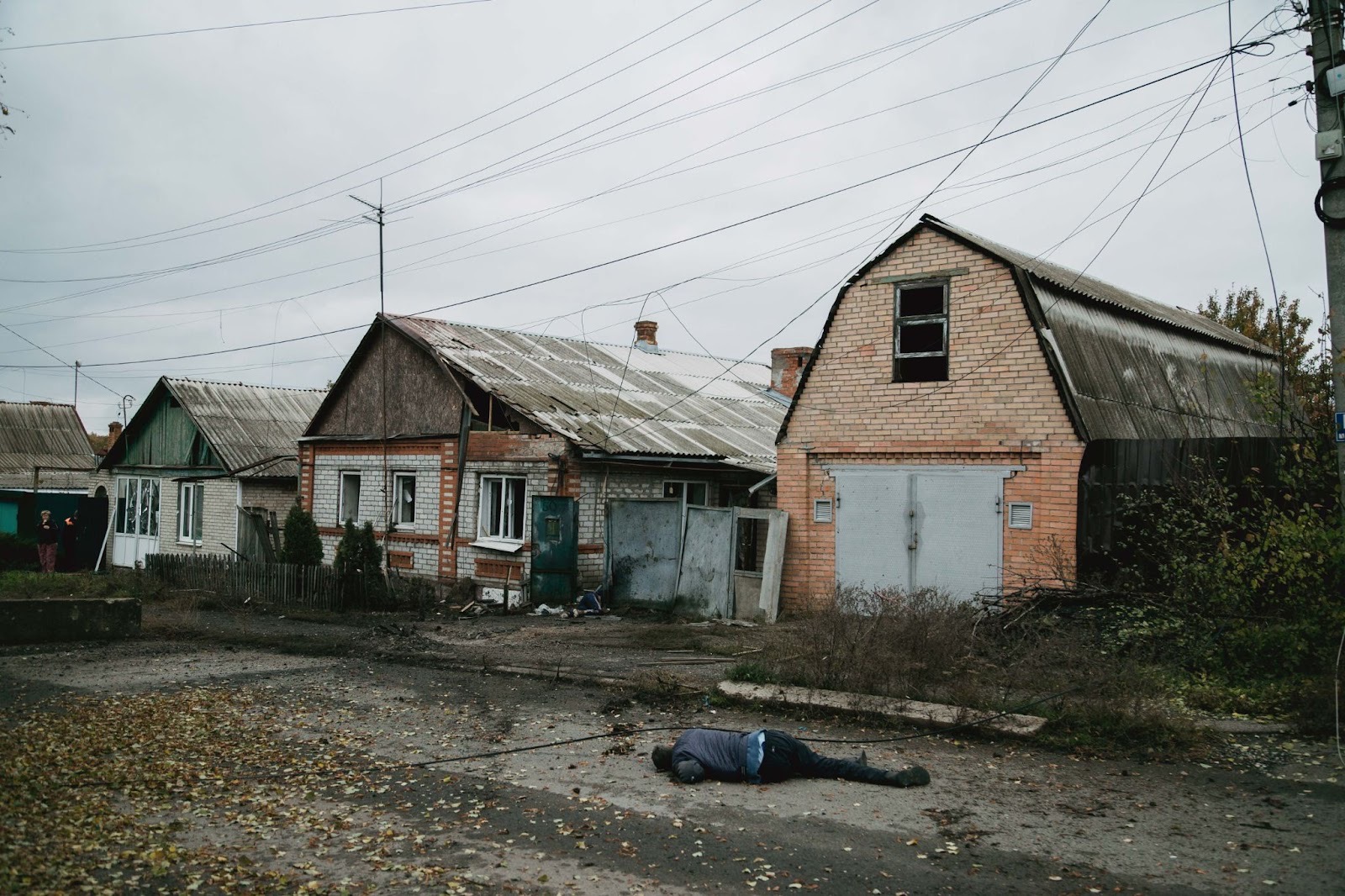
I did not recognize the building right away — it had changed on the outside, and the trees nearby had been cut down. In the entrance archway lay a dead woman; opposite her — a man. I came to Bakhmut for the first time after the start of the full-scale war and, by irony of fate, ended up at the building I had often visited as a guest when I came to see my relatives. I have many memories, and it was very painful.
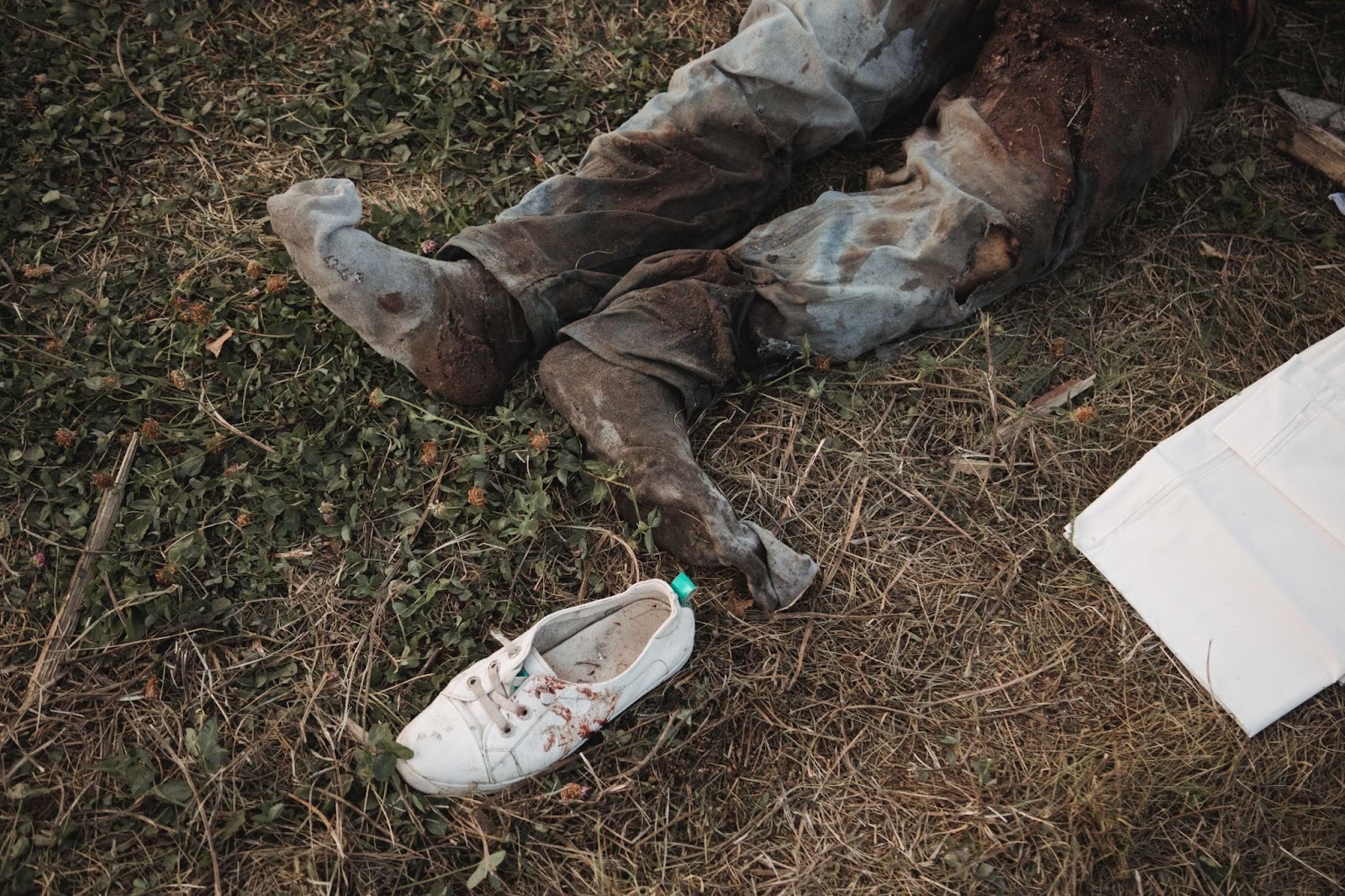
The second photograph I want to recall is the tragedy in Hroza. For me, it was a huge shock when I arrived and saw just a pile of bodies. I remember the smell of people who had just died — a raw, meat-like smell, when arms and legs are torn off. There were about fifty people killed there — just separate fragments of bodies. It was very hard.
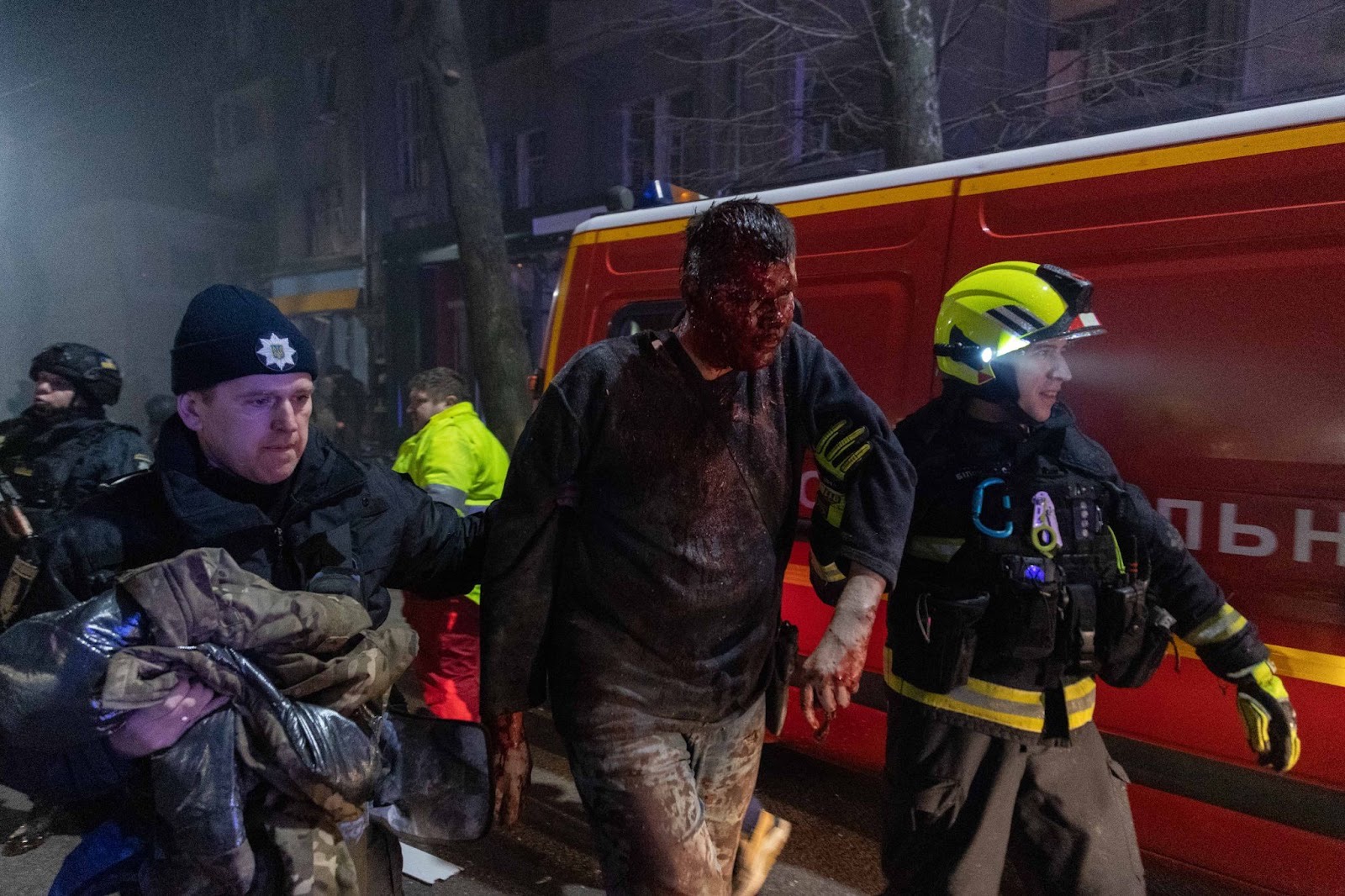
The third story is when Shaheds hit a house in the private sector twice in a row. I went to make photo and video material. I was filming the aftermath of the first strike when the second happened — literally a hundred meters from me. The second Shahed flew in between fire engines and people were killed — three State Emergency Service workers were killed on the spot and a police officer, who died a month later from his injuries. I also perceive this story as personal.
— In such difficult moments, how do you decide what photograph is worth taking? How do you think in such situations?
— In stressful situations, it’s very hard to think rationally. Usually you do what you know how to do. Later, when you sort the photographs, you decide which ones to choose and which are worth publishing. By the way, I have a huge archive of photographs that I haven’t published yet. Perhaps in the future I’ll make a separate photobook from such frames. Right now, because I’m very busy with service, I don’t have time to do that.
— Today, a great many photographers — both foreign and local — are working in Ukraine. Every day we receive a huge amount of visual information about this pain and suffering. In your opinion, is it worth showing all this in such quantity right now?
— In my opinion, it makes sense to show it, because ordinary people abroad do not understand at all what is happening here. If we show a lot, there is hope we will receive more empathy and help, including weapons. It is important to document everything that is happening in Ukraine during the war. So that we do not repeat the Soviet Union situation, when everything was hidden so that people would not know the truth.
— How do you work with recurring themes and subjects in your work? Do you feel like your eye gets dulled?
— It is very difficult to find unique topics to shoot. However, even the same idea can be realized in completely different ways, in different circumstances, at different times, and with different people. Perhaps creativity can help transform an idea into an interesting project and execute it well.
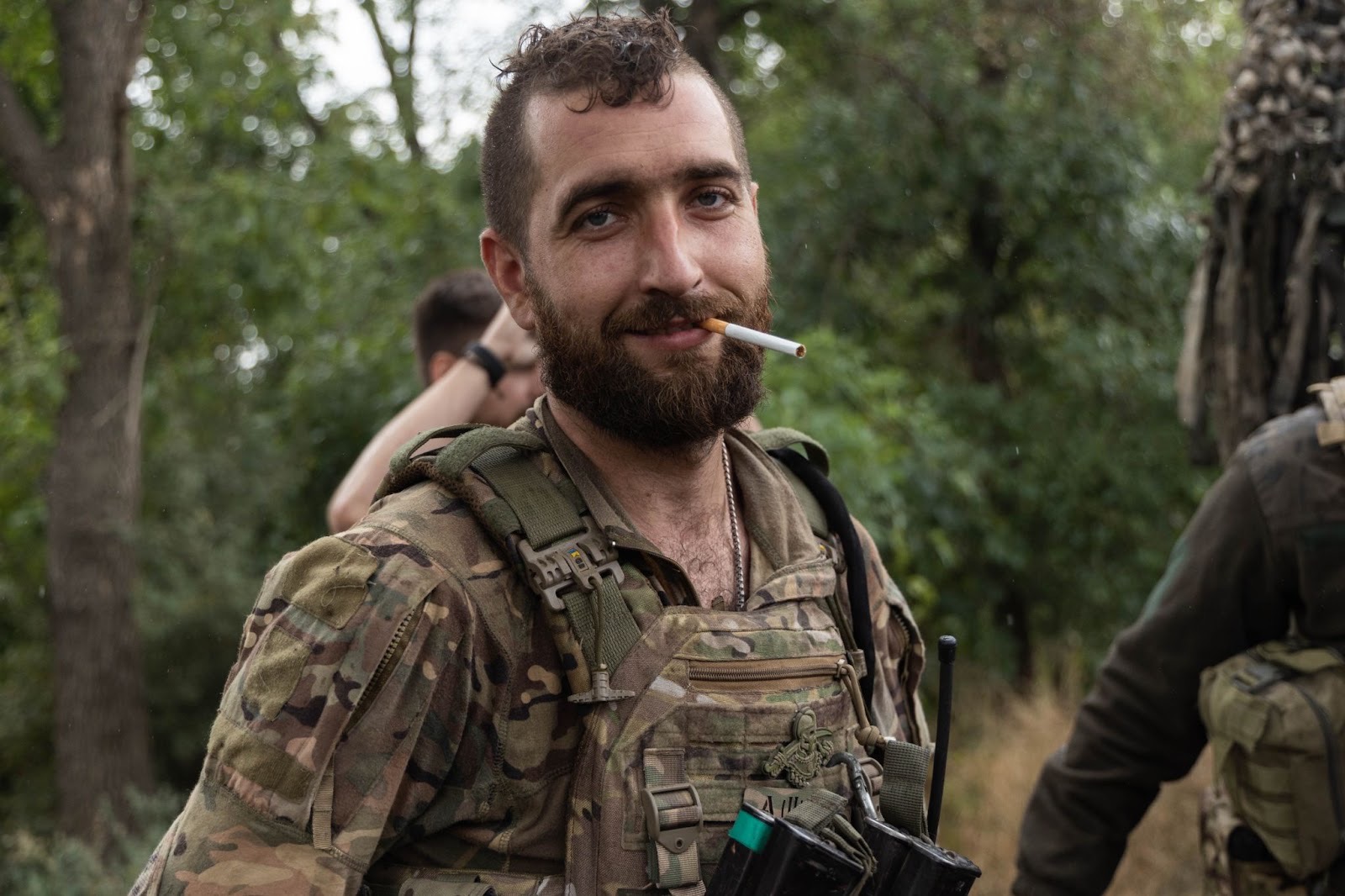
The experience I have accumulated during the war makes it possible to work more efficiently and faster. In 2022, my eye was not dulled at all, but I lost many frames because I was scared and had no practice. Now, in that sense, it is much simpler and better.
— When you photograph, do you let everything pass through you, or do you try to keep distance?
— I try to keep distance. In 2022 I went to a psychologist, because it is impossible to carry all this on your own. In 2022, every day I saw bodies, torn-off legs and arms, pools of blood, tears, and suffering. Letting all that pass through you is very painful. Distance is simply protection. For example, in an emergency on an airplane you must first help yourself, and then a child or those who need it. A photographer also needs to learn to help themselves first — otherwise there will be problems with mental health.
— There is an opinion that photographers who work in the military do not shoot documentary projects, but propaganda. Do you think there is some truth in this?
Of course, there is some truth in this. When I was an independent photographer, I could shoot anything within the law. Now, in my work, there are clear criteria and limitations. However, as I said above, I see these limitations not as censorship, but as necessity.
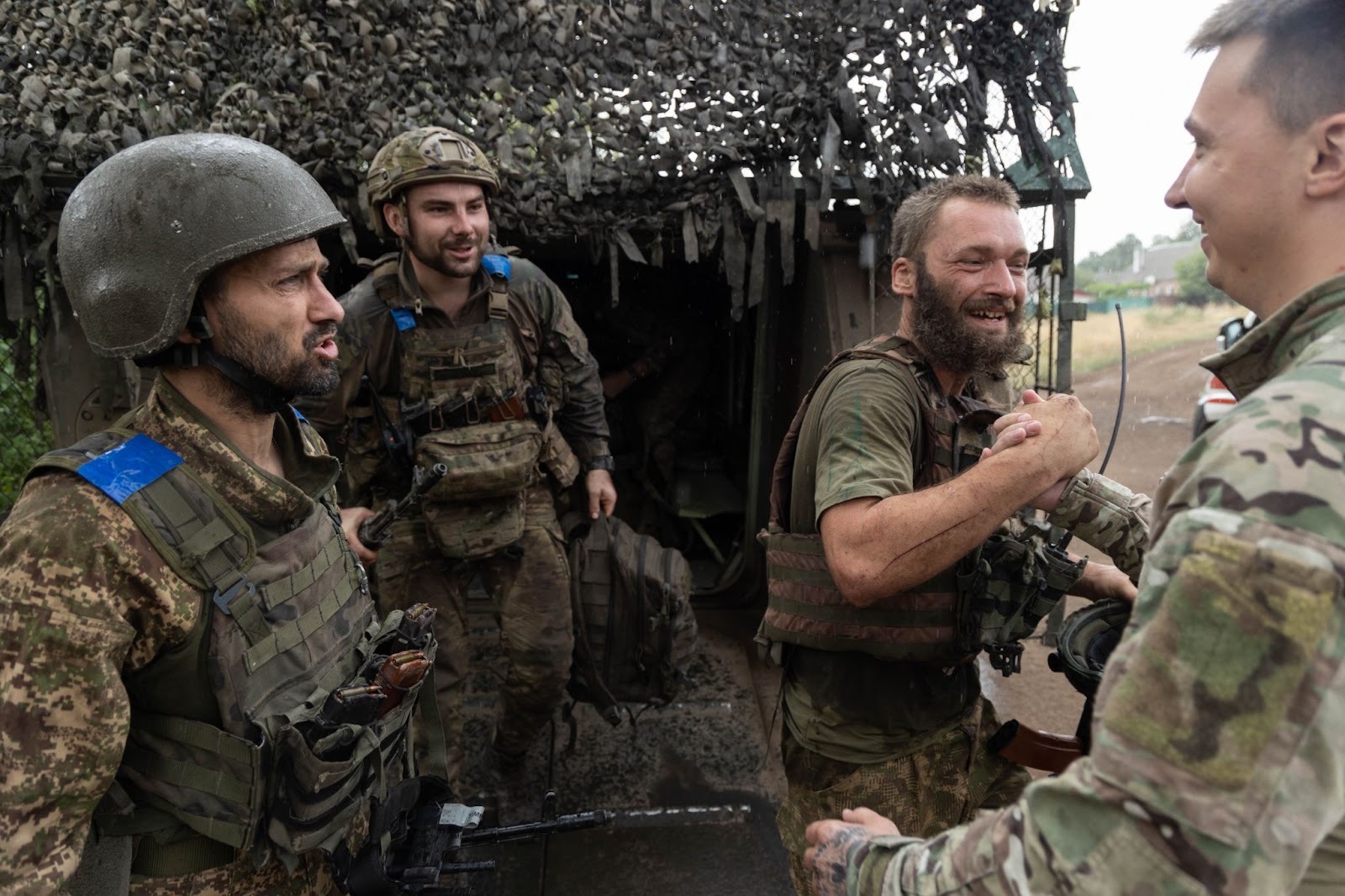
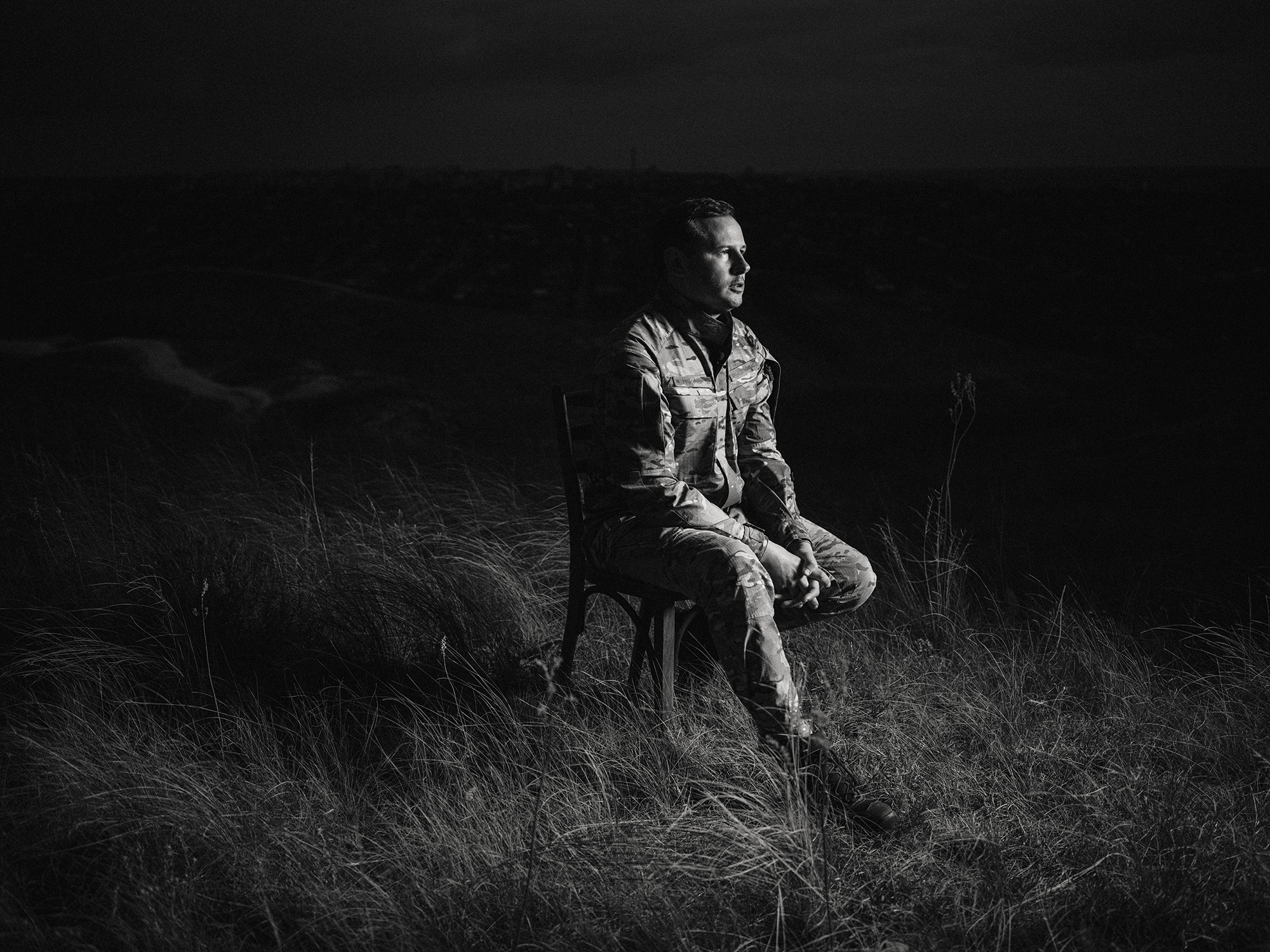
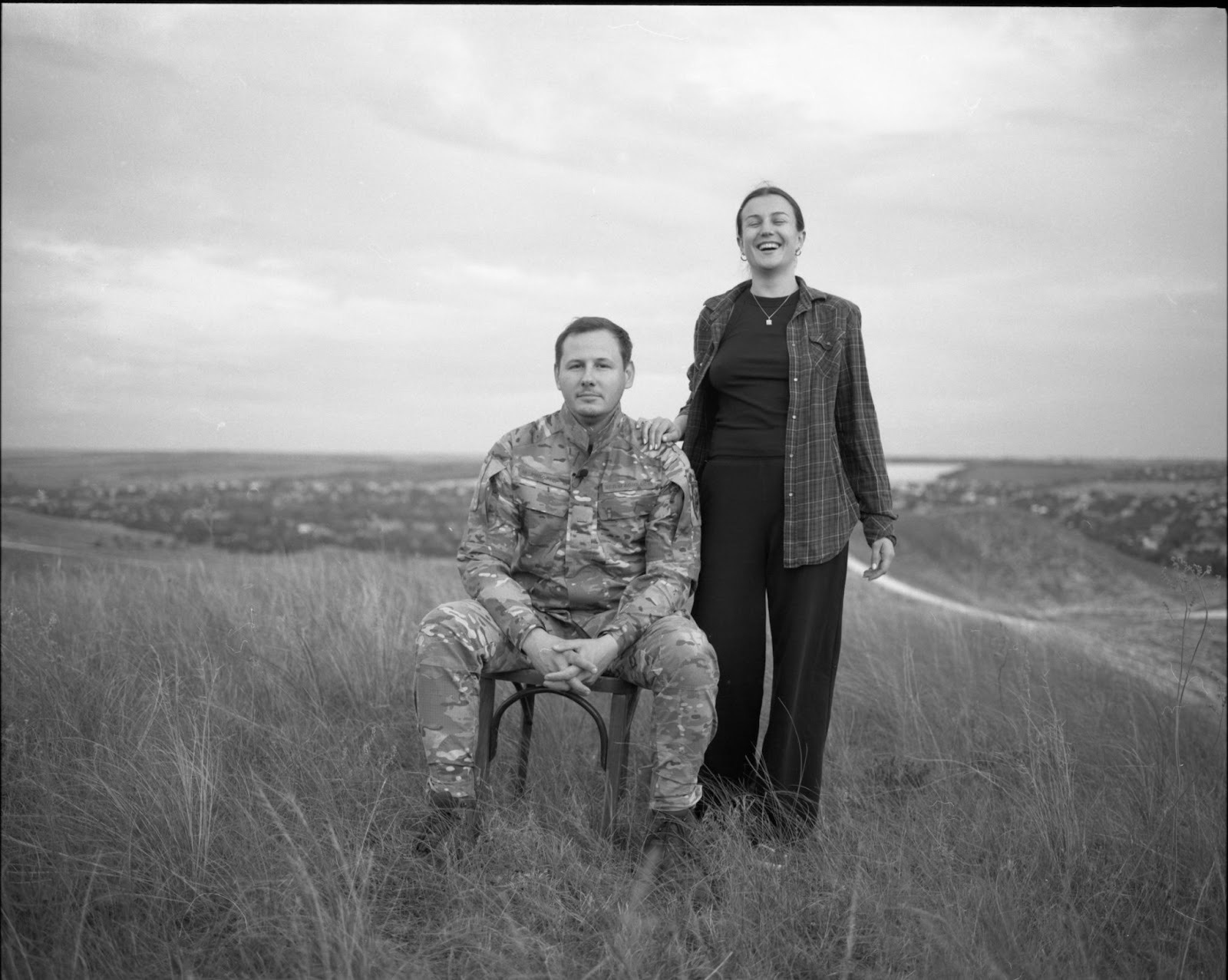
But even in the military you can photograph in different ways. You can shoot outright propaganda, or you can, for example, make portraits of service members — the faces of people who have seen a lot of grief. I don’t see propaganda in that.
— Why is it important for you to convey people’s emotions through photographs? How do you convey pain without exploiting it? Please tell us about your internal ethics of shooting.
— If a photograph does not evoke any emotions in people, it is empty. It is important to convey the mood and emotions of an infantryman who has come out of a position, a driver who successfully completed a task, a cook, a mechanic — anyone.
Of course, I have photos from the morgue or close-ups of mutilated bodies. But I don’t want to harm people. You need to understand the balance so as not to harm the relatives or loved ones of the dead. On the other hand, we also cannot not show these stories. As documentarians, we are obliged to show our reality, even if it includes torn-off limbs, the bodies of the dead, or a mother by the coffin of her child. We must have confirmation that these events happened, even if they are very tragic.
— In your opinion, what is the role of documentary photography in this war?
— The role of photography today is extremely important. At one time, I was interested in the history of the Second World War. Soviet propaganda created many myths because people did not have photographs. If now we do not have confirmation that a Russian missile flew into an apartment and killed people, we will not be able to prove anything. We are dealing with a cynical enemy who twists facts, tries to present truth as lies and vice versa. Our task is to prove with facts that these events happened and what they were like.
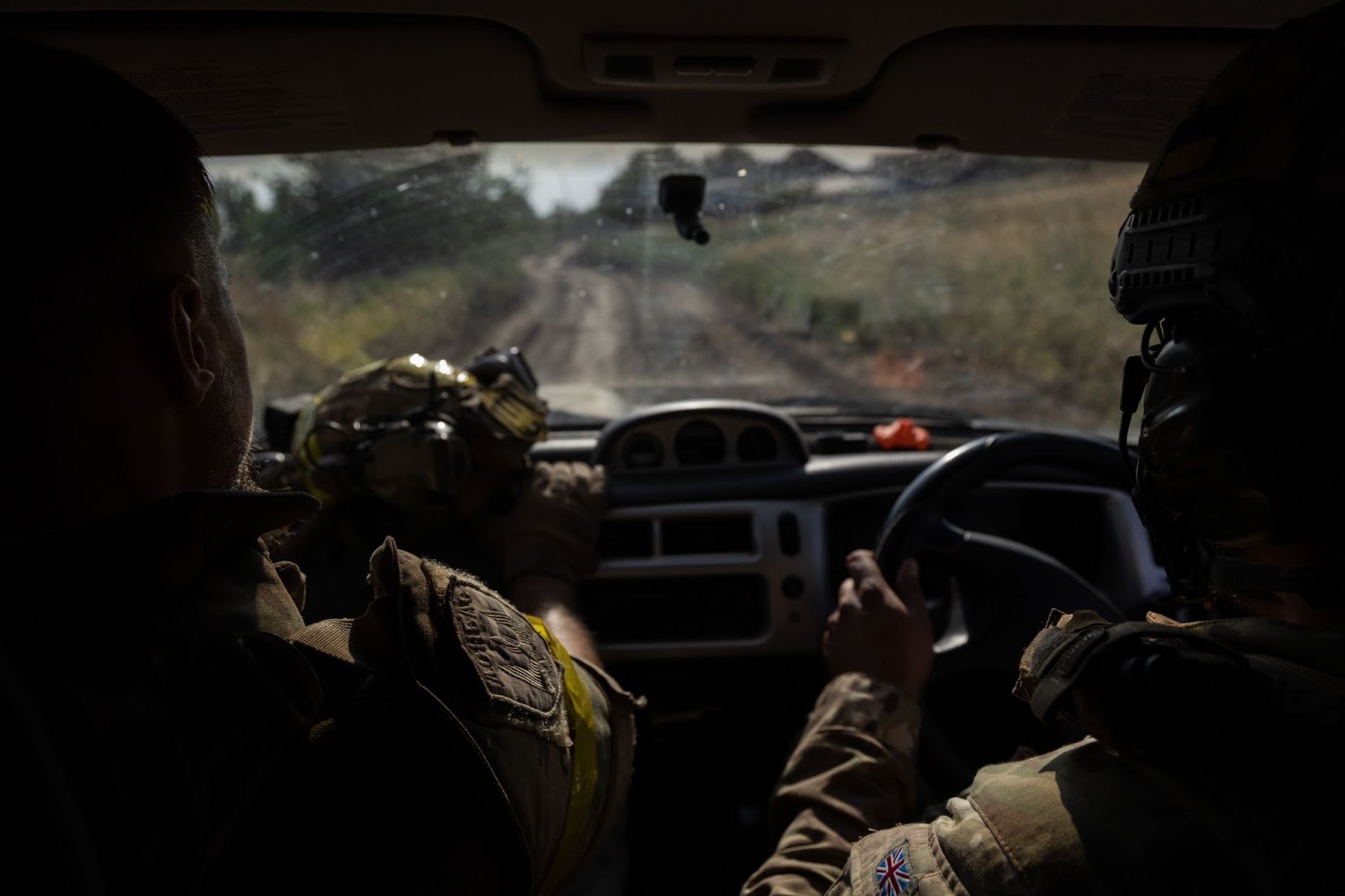
During the Second World War, photographers did not have many opportunities to document events. Soviet propaganda worked very effectively. By contrast, today’s war is happening almost online and in 24/7 mode. Every meter of the front line is being filmed right now. Everything is captured on camera — and that is our reality.
— At the beginning of our conversation, you said that you shoot on film “for the soul.” What are you capturing on a film camera today?
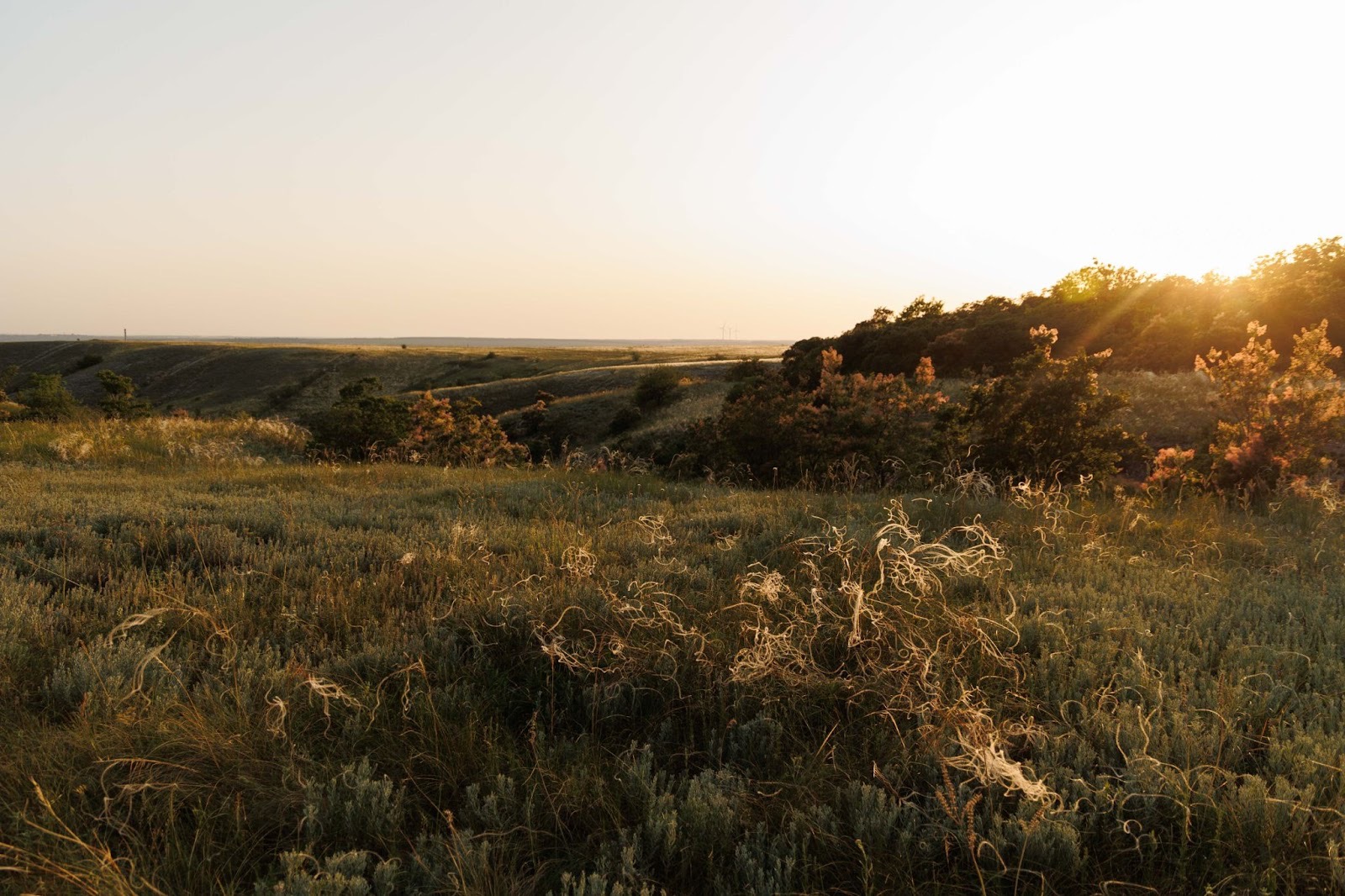
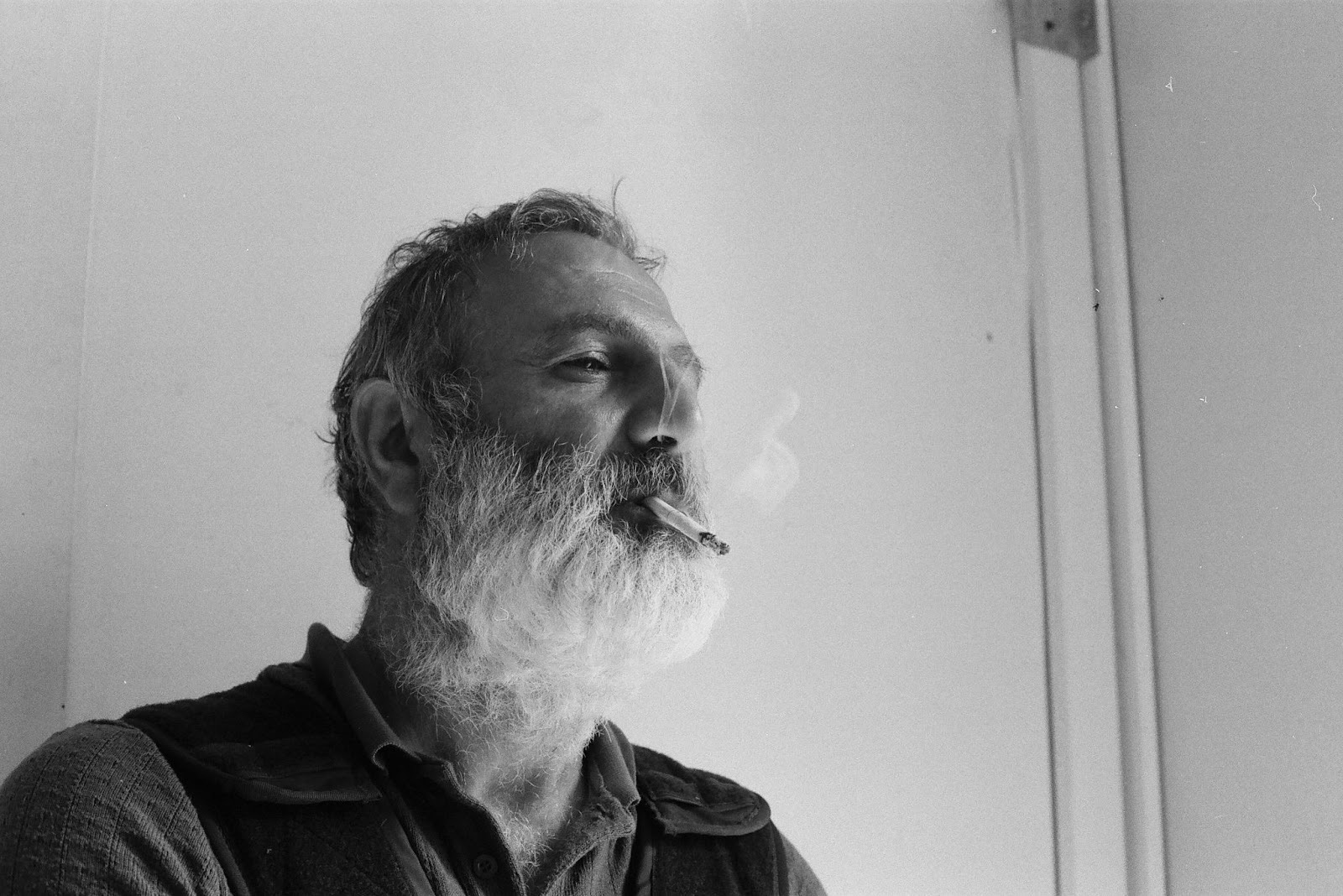
— With a film camera, I shoot my everyday life. I simply photograph life and look for something beautiful in what surrounds me. It can be nature, people — anything. In fact, there is a lot of beauty around us, even in such terrible times.
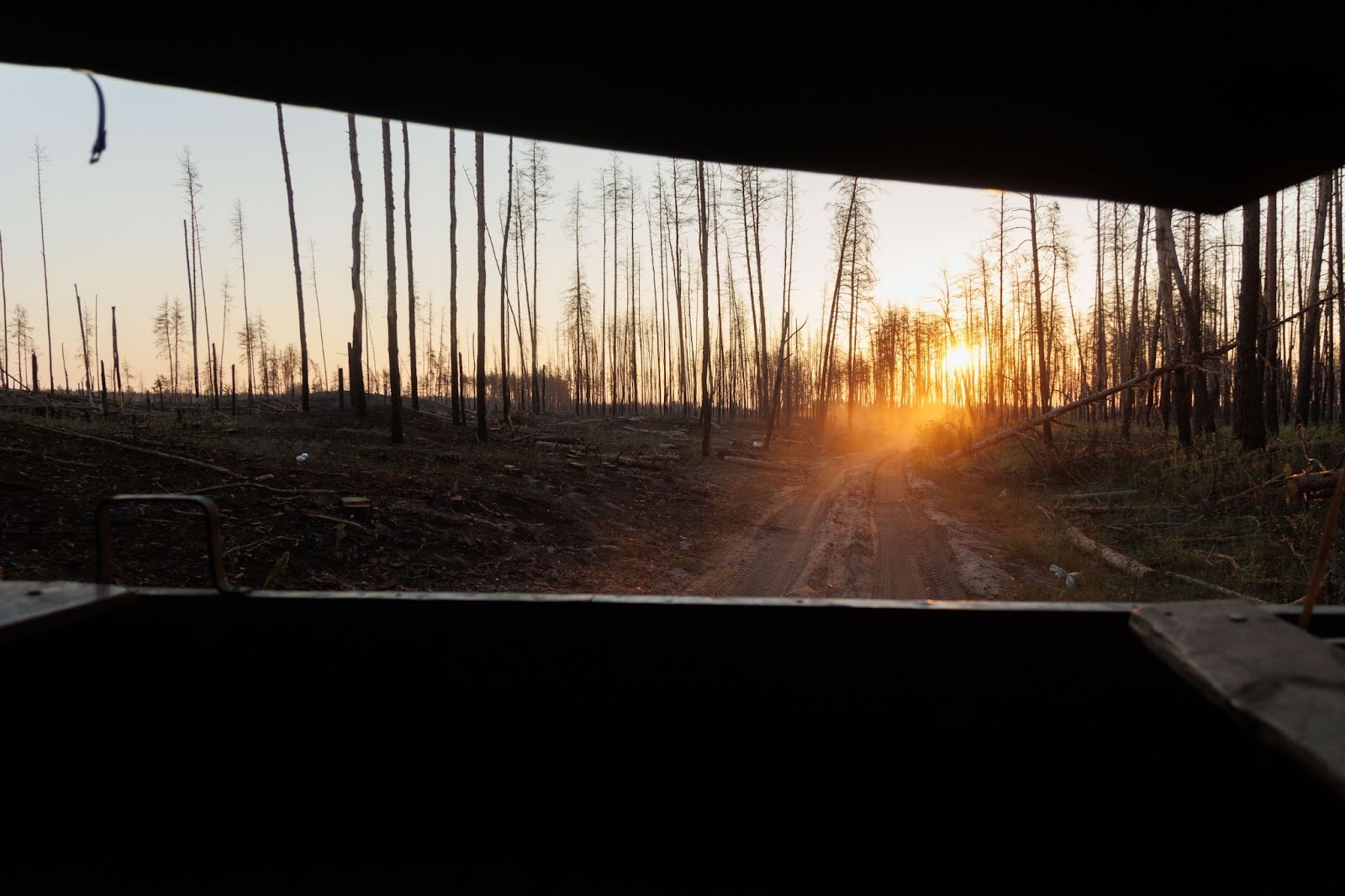
Donetsk region is incredible. People know very little about the nature of Donetsk region, but there is sea, and mountains, and spoil tips, and steppes, and forests. For example, the Chalk Mountains are not high, but simply amazing. On film, I photograph everyday romanticism — when in ordinary life you can see something beautiful.
— What do you like most in Donetsk region?
— My father was born in Donetsk region, and I spent my childhood there. In fact, I didn’t know Donetsk region. Now, during the full-scale war, I discovered it for myself, and it is incredible. I’m trying to photograph a series about the nature of Donetsk region. When I have time, within the radius of my work I look for beautiful places.
I very much regret that I will no longer be able to visit many places, because they will either be mined for many more years, or already completely destroyed. Half a year ago I could still calmly photograph the Bilokuzmynivka chalk cliffs, and today it is already too dangerous — enemy drones fly there. Donetsk region has shrunk greatly and continues to shrink; it is very sad.
— How do you reveal a person through your optics?
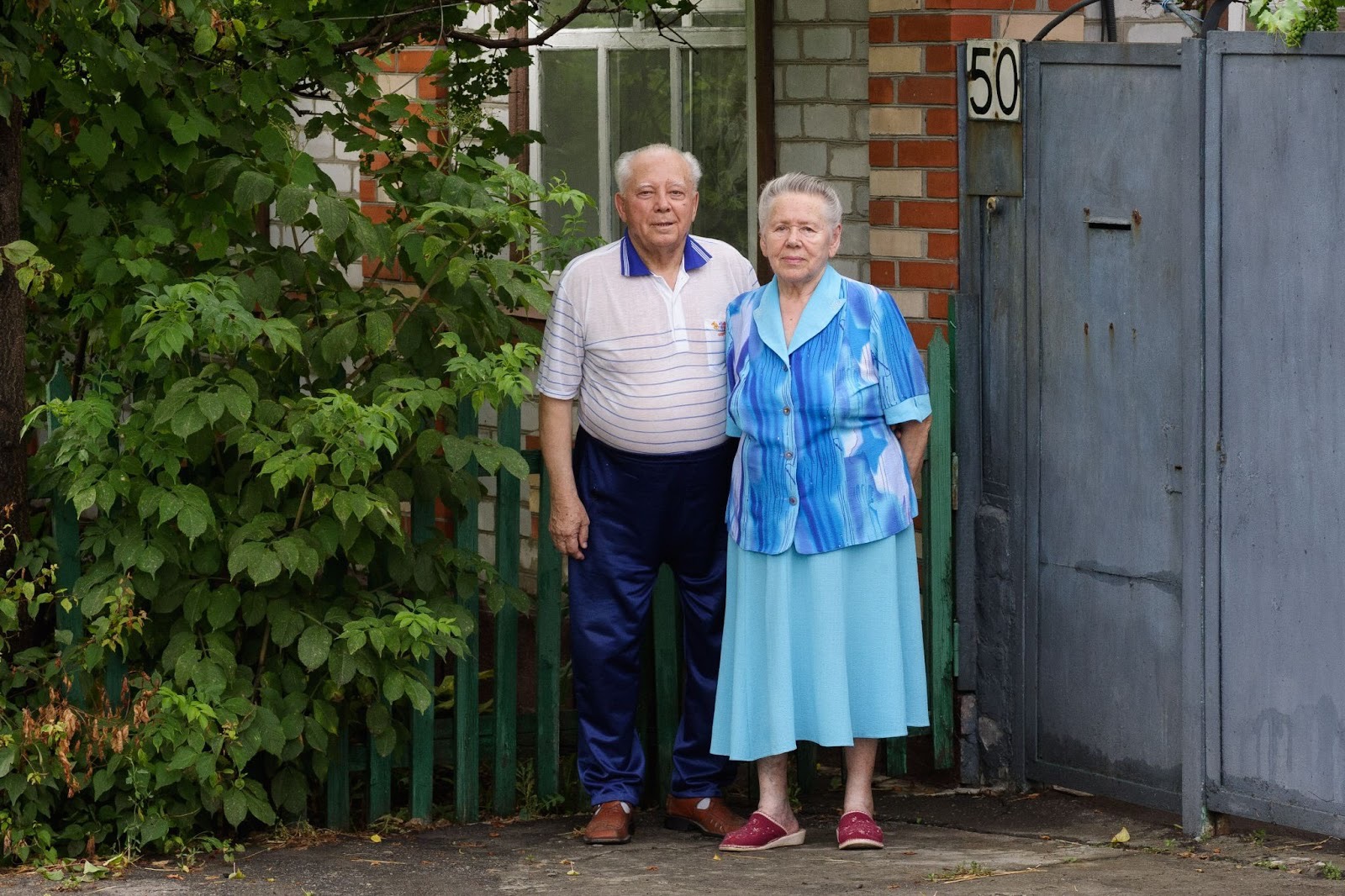
— I try not to interfere in the frame and to shoot everything as it is. I allow a person to be themselves; I don’t direct them during shooting. I have one favorite portrait of a fighter who has been fighting in our battalion since 2014. He was in Ilovaisk, he was in captivity. He has been at war for 11 years already, and he has a very deep and eloquent gaze.
— Why do you keep photographing?
— Because I really like photographing. It inspires me and gives me strength. There are periods when you don’t even want to pick up a camera, but then you catch that vibe and that’s it — it’s impossible to stop.
Yakiv Liashenko — a Ukrainian photographer from Kharkiv. He began his professional career in 2012. After the start of the full-scale invasion, he worked as a fixer for prominent photographers and, in parallel, documented the events of Russia’s invasion of Ukraine. He is currently a freelance photojournalist at EPA Agency.
Photographer’s social media: Instagram, Facebook.
Worked on the material:
Topic researcher, text author: Kateryna Moskaliuk
Photo editor: Vladyslav Krasnoshchok
Literary editor: Yuliia Futei
.png)