
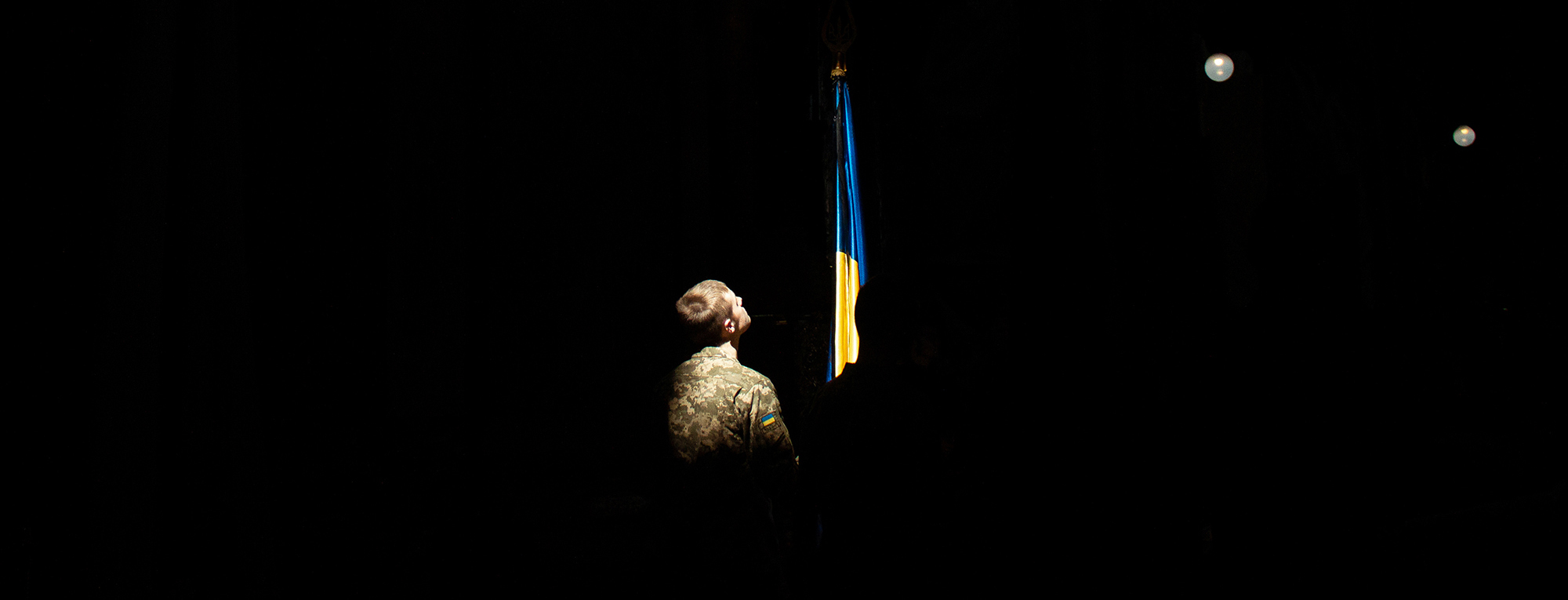
Ukrainian photographer Petro Chekal captures life during the war, and also makes music, writes texts and poems. He tries to combine poetry with prose, metaphors with documentary, and the roles of artist and art curator. Petro Chekal spoke about searching for his own visual language and for light that does not blind but, on the contrary, illuminates, and why for him to stop photographing is the same as losing his sight.
— On social media you are signed as writing.light. What does “writing with light” mean to you in the context of conceptual art and documentary photography?
— In the name of my social media pages I wanted to play with the literal Greek translation of the word “photography,” which means “light writing” or “drawing with light.” I work a lot with the theme of light; it interests me the most. Recently I began exploring Japanese photography of the 1970s, which is considered its “golden age.” Authors who are very interesting to me include Yoichi Midorikawa (Yoichi Midorikawa), Ihei Kimura (Ihei Kimura), and many others. At that time there were many experiments there, characterized by a radical departure from traditional documentary practice and the search for a new visual language.
I do not consider myself a conceptual or documentary photographer; I just shoot. As an art theorist, I previously tried to conceptualize my practice somehow — to structure my experience and understand its uniqueness. In the end, these attempts led to a crisis, and the photographs became very overexposed. I deliberately made them that way so that no one could understand what was happening there. I myself could not make sense of reality.
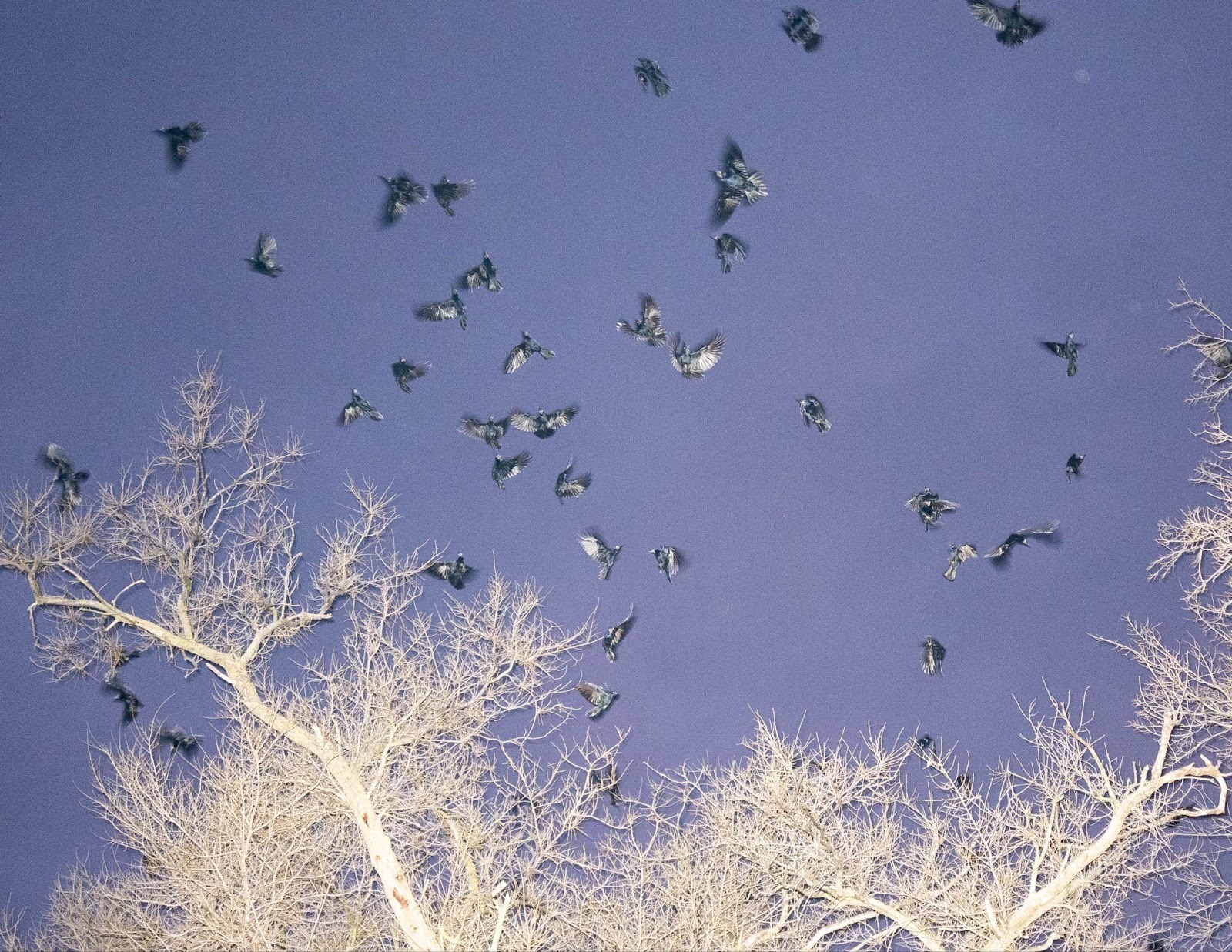
Now I continue to explore the world and myself through photography. For example, today I am interested in flash photography — I bought a couple and am trying to work with them. A lot of people work with flashes now; it is a popular tool. Still, I do not want to use flash like Rafal Milach, Mykhailo Palinchak, or the way the Chinese photographer Ren Hang did. With a flash, photography can acquire a new language, and I want to find mine.
— When did photography appear in your life? Who influenced you as a photographer?
— Photography was always around me, and I started shooting quite early — at eleven. I found an old budget Canon camera at home with a “kit” lens and tried photographing with it. I liked it. I am grateful to my parents, because they supported my interest in photography — they bought a semi-professional Canon 70D. I met the full-scale war with this camera. By the way, I still have it.
At fifteen, I went to photography courses with Kharkiv photographer Oleh Shyshkov. At one time, Sasha Maslov attended his classes. Then I studied at Ihor Chekachkov’s Academy of Contemporary and Conceptual Photography and at Serhii Melnychenko’s MYPH School of Conceptual and Art Photography. There we talked a lot about documentary and street photography, shot ourselves and discussed the frames we had taken, talked about philosophy and literature. Of course, it is important to look at and discuss other photographers’ projects, note what photographers managed to do in these projects and what they did not, flip through photobooks, but without practice it is impossible to learn photography.
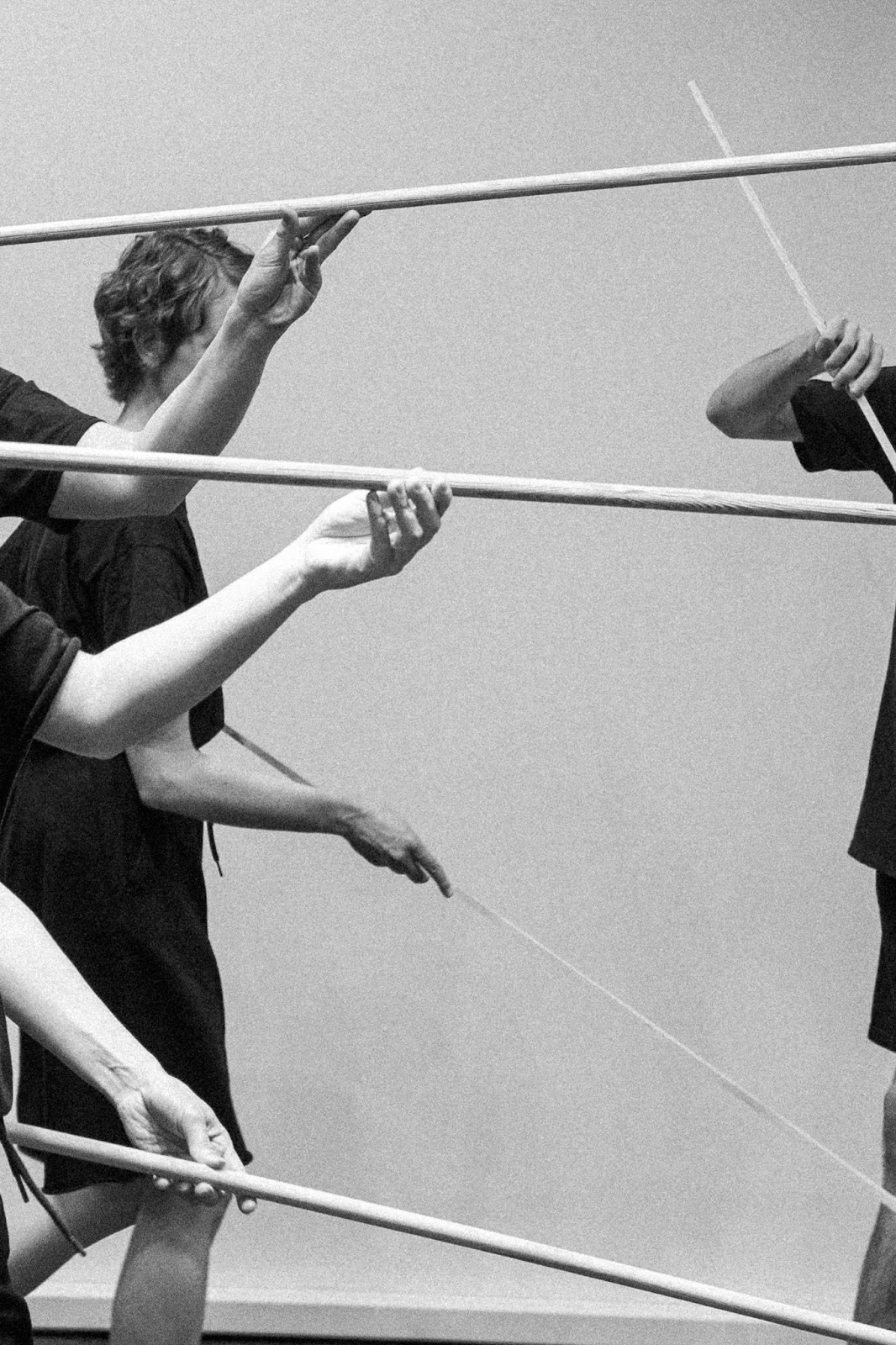
If we talk about photographers who influenced me at the beginning, it is probably worth mentioning Taras Bychko, Garry Gruyaert. I am very glad that at one time the book Magnum Streetwise came to me. However, I try to develop in different directions of photography as much as possible, and each time I discover the work of very different photographers.
Even before the full-scale war began, I was one of the organizers of a photo circle in Kharkiv. We would get together with friends and talk about photography, and then go photograph, for example, homeless people near the market.
— Your father Oleksii Chekal is a calligrapher and designer, and your mother Larysa Chaika is a book illustrator. How did growing up in an artistic family influence your sense of composition and framing?
— I thought a lot about why children of famous figures often get lost in the shadow of their parents’ fame. But in my case, another metaphor can be used — I grew up not in the shade of the crown of the family tree, but directly in that crown. I had favorite branches where I found something for myself — for example, photography and music. Recently my dad said he was asked whether he knows photographer Petro Chekal. Now the recognizability of the surname works both ways, and that is pleasant. I feel that the older I get, the more my father and I have a shared dialogue in art — for me this is very valuable.
My mother, Larysa Chaika, is a well-known book illustrator. She works on illustrations for works by Yuri Andrukhovych and many other authors, creates paintings and sketchbooks. I also do curatorial work and really want, in the near future, to work on an exhibition about my parents’ work. For me, one of the paths of development as a curator is the reactualization of family heritage.
— You mentioned that “photography is the only salvation from time.” What is photography for you today?
— For myself, I chose three directions in which I try to develop: literature, music, and photography. On the one hand, they strongly conflict with each other, since photographic thinking differs significantly from building a textual narrative. Yet photography can borrow certain things from music — so it is a constant dialogue as well. Previously, I wrote essays about photography — I noted down my observations and reflections. Now, for me, the polysemy of photography is important — its ability to convey mood and thoughts.
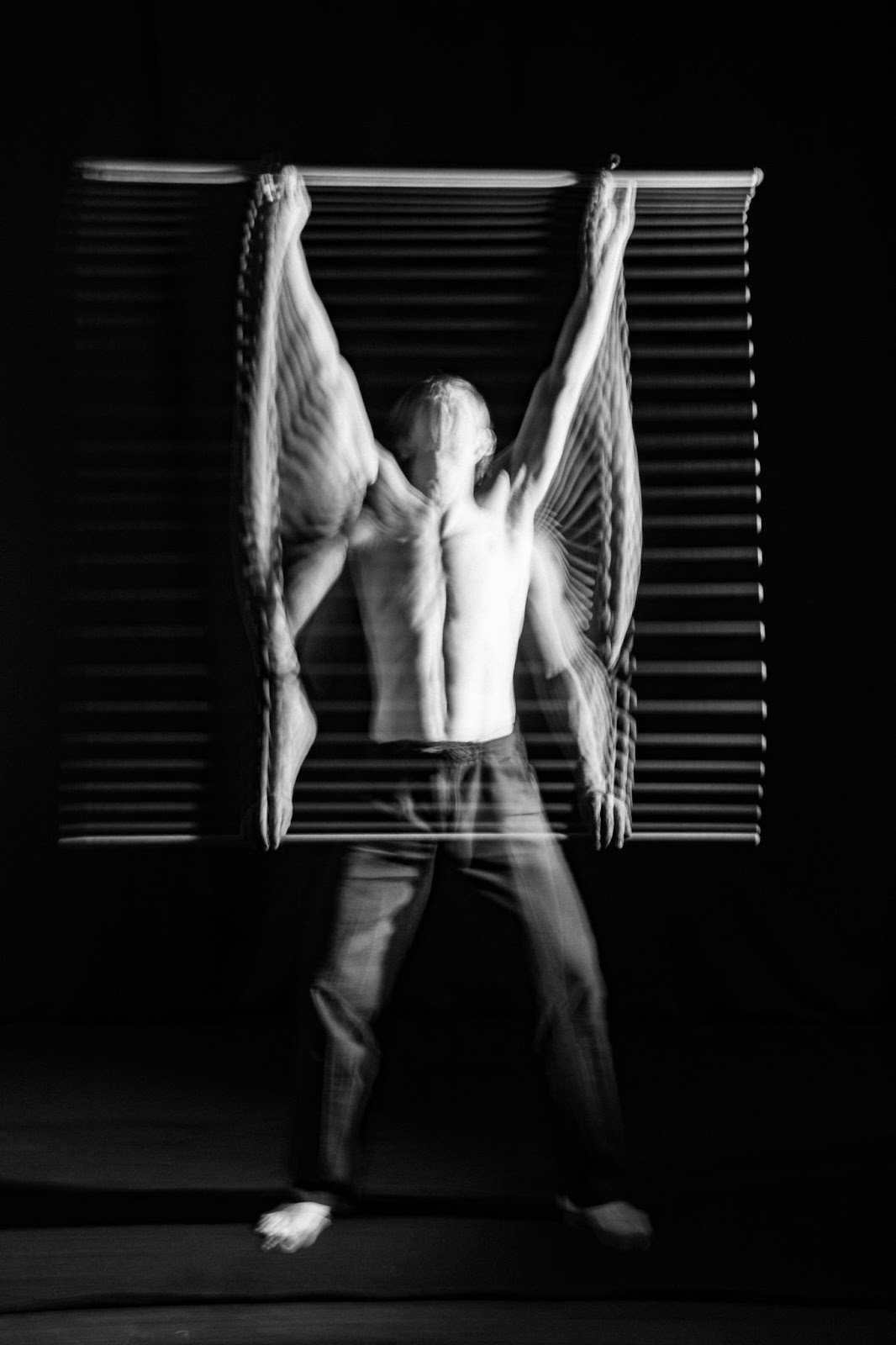
Now I understand that photography is like music. Through images I can convey thoughts and emotions that I cannot say in words. Photography is a tool for me that makes it possible to speak wordlessly.
— How did meanings in photography change after February 24, 2022? How did the idea for the series “Photographer’s Diary. 42 days of the full-scale war” arise?
Actually, this is a normal process for any artist, when their vision and the meaning of the work change over time. And they can change almost every day.
I remember well that strange freshness of five o’clock in the morning. That day I realized that the air had become different and that every frame taken after five in the morning on February 24, 2022 would be special, would be different, would be filled with a different story. Then everything around me became extraordinarily important. I tried to cover as many themes and events as possible. It was during this time that the “Diary” emerged.
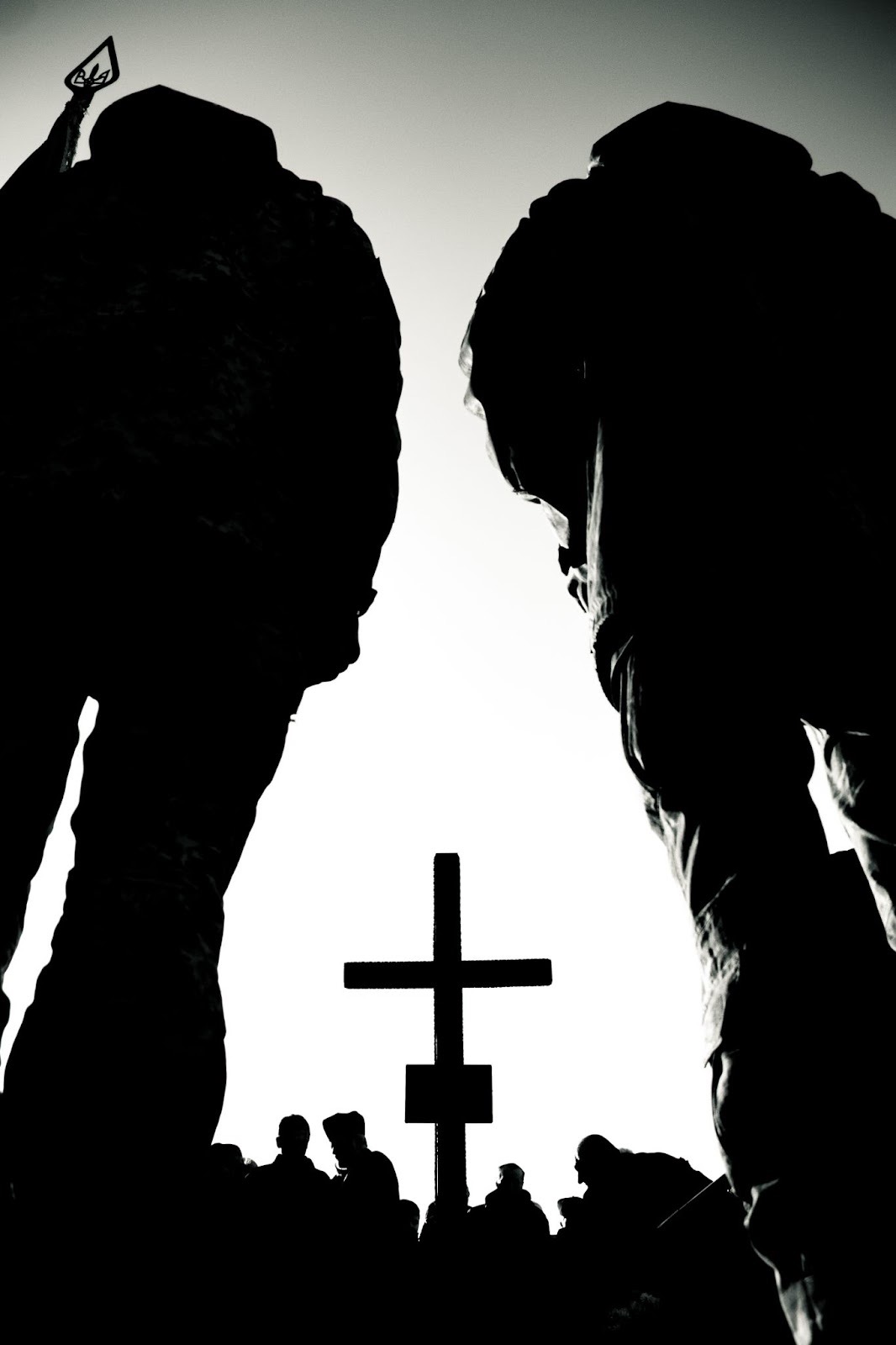
The beginning of the full-scale war showed me which interests are truly important to me — literature, music, and photography. And among these three directions, it was photography that allowed me to do important things during the war — to tell and convey our life. For me it was normal to go outside every day and look for frames. I tried to photograph different events, and in documentary I looked for beauty. Kharkiv turned into a forest for me, in which I searched for traces of life.
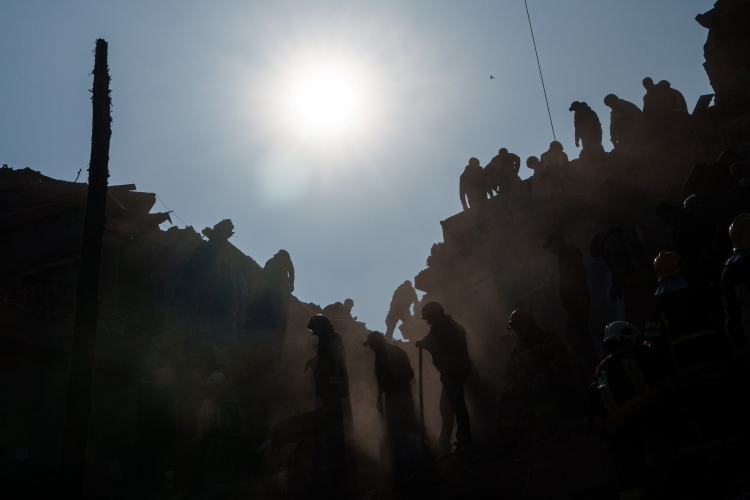
Throughout the first year of the full-scale Russian invasion, I was constantly shooting. It was important for me to photograph any micro-movement; I shot the aftermath of strikes, burials of soldiers, volunteers, internally displaced families.
— Which media outlets did you establish cooperation with after the start of the full-scale Russian-Ukrainian war?
— Indeed, with the start of the full-scale Russian invasion I began collaborating with media more. Before that I had only a few commissions and mostly shot for myself. Ukraïner helped me understand what I can do in Ukrainian photography and where I can work.
However, I cannot say that I am actively collaborating with outlets now. When there is an opportunity, I do not refuse, but it is not my main goal. Shoots for media make it possible to work on interesting projects that other people do not have access to, and to meet extraordinary people.
At home, my whole wall is covered with sheets of ideas and notes about my own projects. But I cannot say that I am focused right now on just one topic. Photography is always with me, and if I do not have a camera with me, I shoot on my mobile phone.
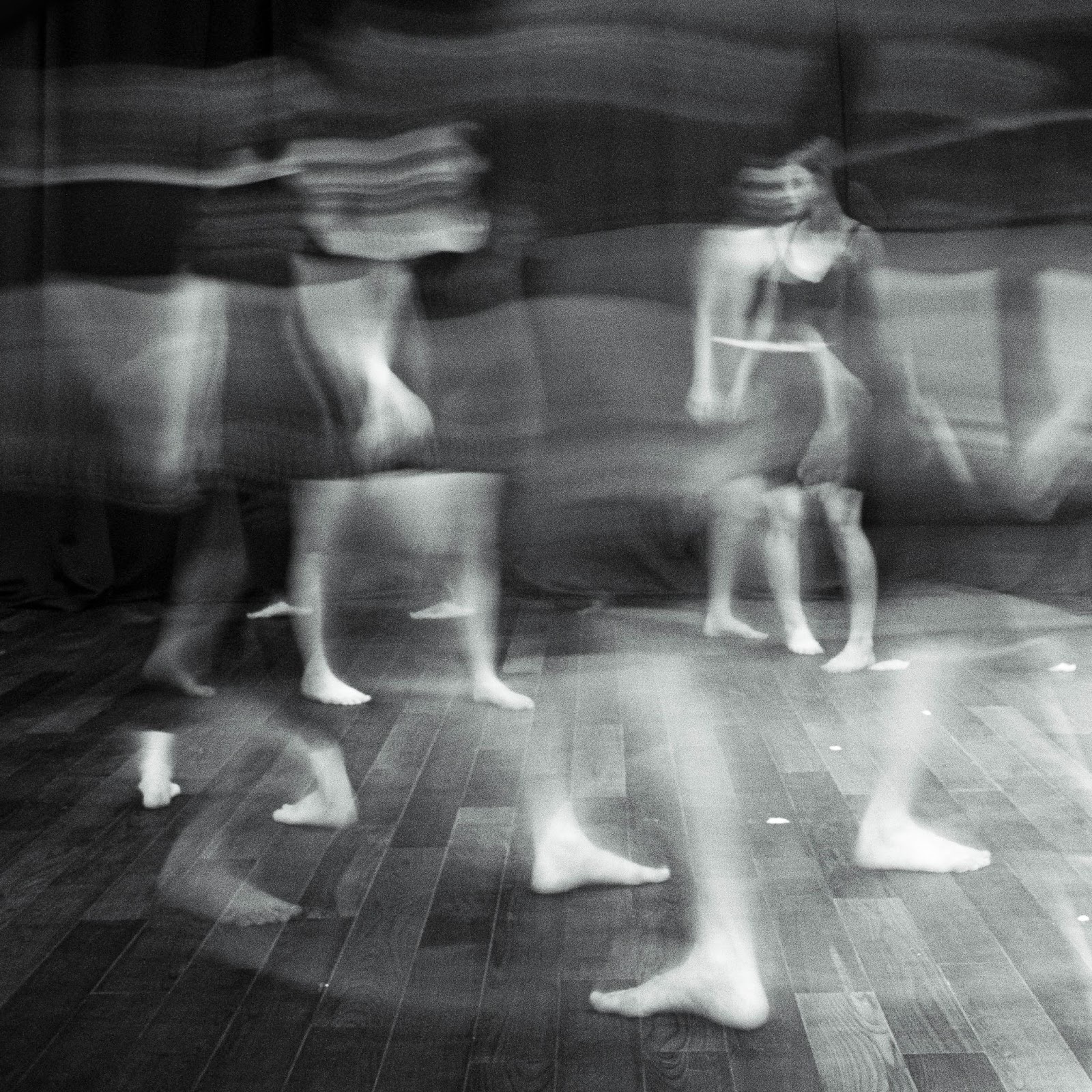
Now I mostly photograph “for the drawer,” and I’m enjoying it. Of course, it will be pleasant if the photographs are published. But at this stage it is enough for me if a few people important to me say that these photographs are cool. A lot of material has accumulated, and I might try to make a small photobook this year.
— How has your perception of photography changed during the full-scale war? Which topics remain important for you?
— After February 24, 2022, I shot many events, but I would not say it was news photography. I looked for new approaches and angles, a certain graphic quality. Besides, news is not at all what I would like to do in photography.
With the start of the full-scale Russian invasion, I became interested in the contemporary photographic context in Ukraine. I used to do street photography, and now I have discovered many new Ukrainian photographers who work in different genres. I began communicating more with colleagues.
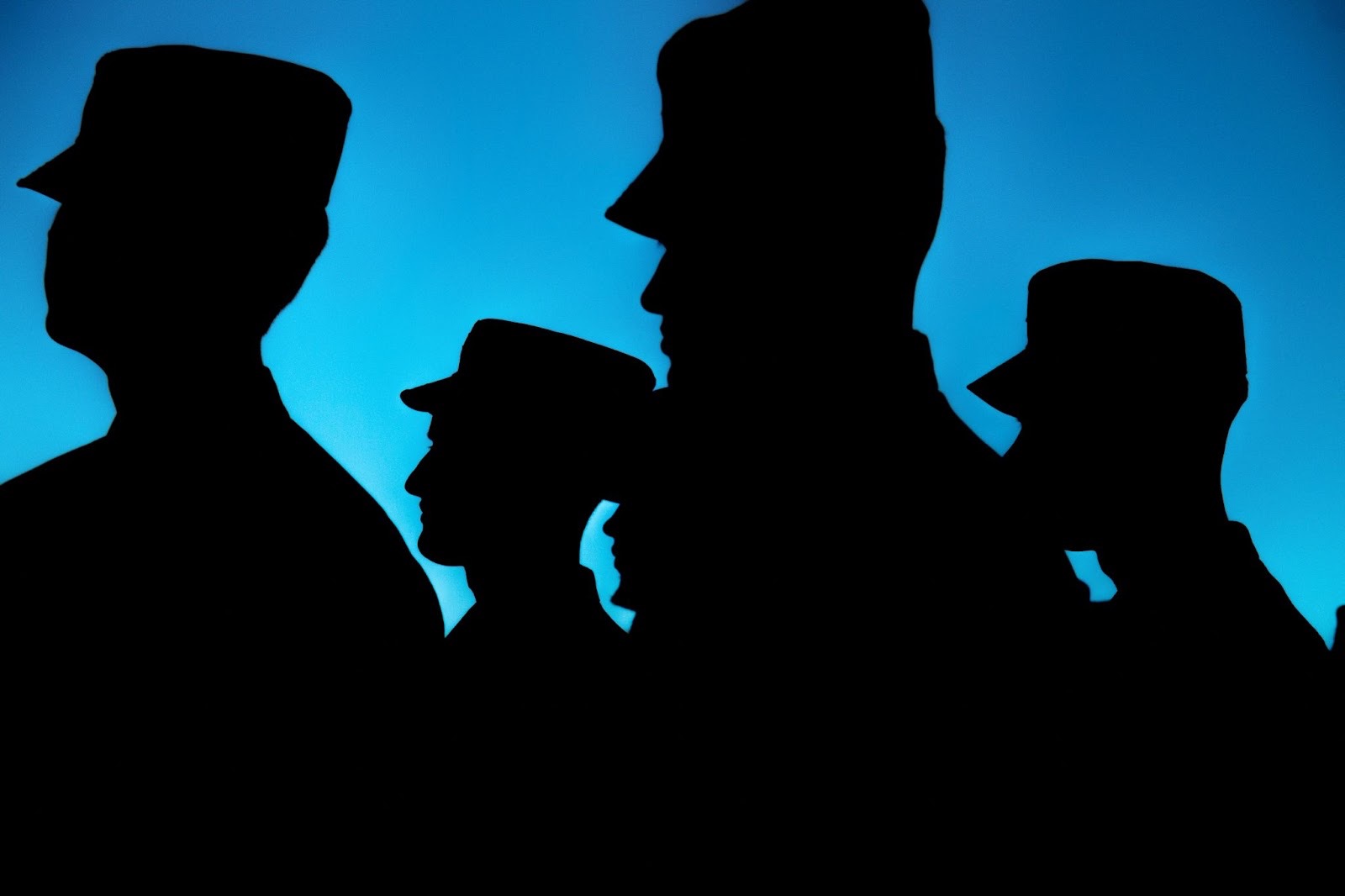
It seems to me that now all photography in Ukraine, one way or another, concerns the war. Once photographer Boris Mikhailov said that photography has several dimensions, and one of them is historiographic. All the frames shot will someday be important. I traveled a lot to near-frontline territories in search of myself and the themes I want to photograph. Now, in fact, I would be interested in working with photography in a militaristic context and understanding what I can say there.
— Let’s talk about you as a curator. How did the concept of the exhibition “Show your documents…” arise? Why did the theme of the “document” become central for artists?
— “Show your documents…” is our first project with Yurii Rassokha in the “YermilovCenter” space. Yurii Rassokha wrote a thesis in which he researched documentation as a cultural phenomenon. We propose looking at the document not only as a bureaucratic formality, but also as a tool of memory and an attempt to leave a trace of oneself in this world.
It is very cool that we had the opportunity to place our project in an art space. For the exhibition we involved three photographers: Kostiantyn Hlyvlias, Roman Piatkovka, and Serhii Melnychenko. It is nice that, in addition to well-known artists, for example like Pavlo Makov, there were many new names at the exhibition. For many artists, it was their very first exhibition at all.
I really like working on exhibitions and, perhaps, I will find a niche for myself specifically in curatorial work. I would like to promote talented photographers and help them say their word in art. At the beginning of the full-scale war, together with Heorhii Ivanchenko and Taras Fedorenko we created a platform for uniting Ukrainian photographers and developing documentary-reflexive photography, which we called “Roots.” We organized several exhibitions, and unfortunately that was the end of it.
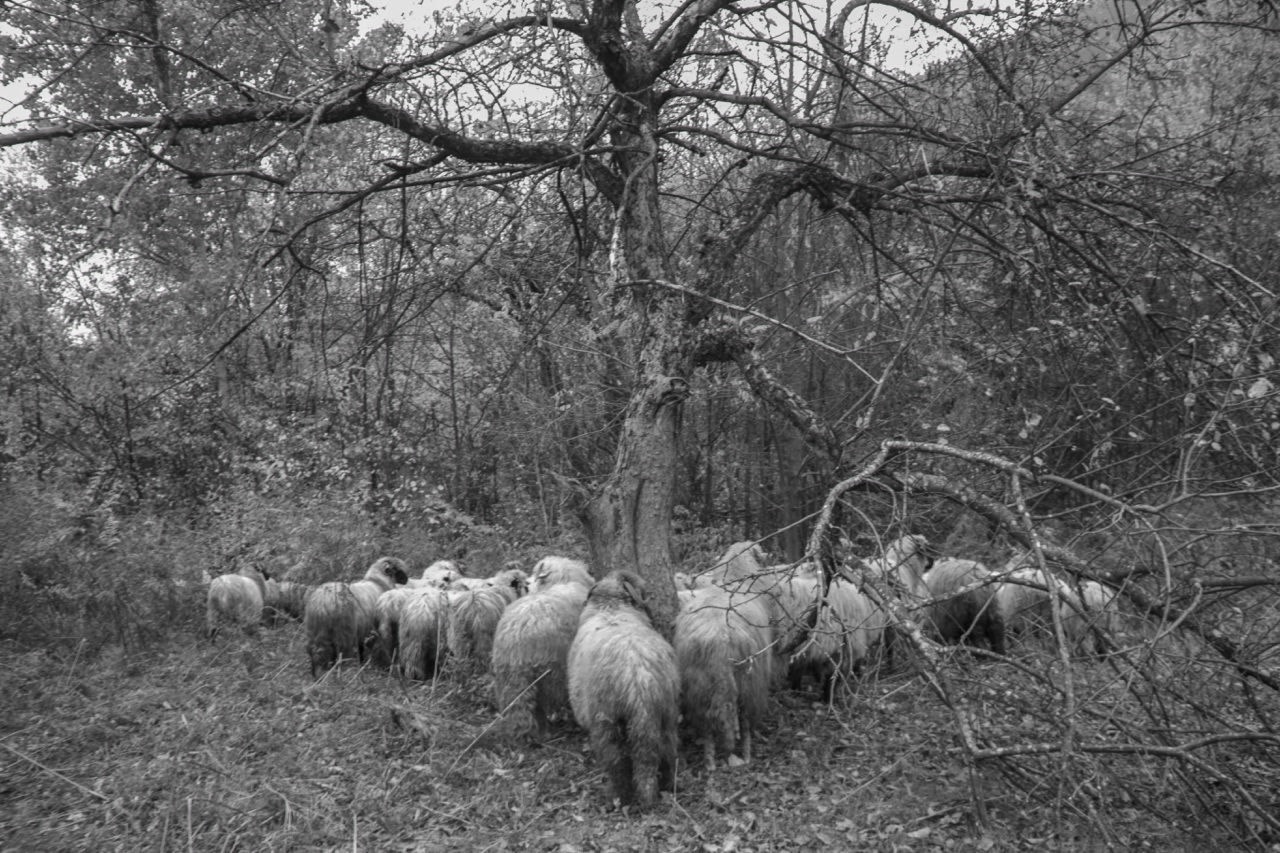
I really miss a large-scale photographic institution in Ukraine that would unite many photographers and create a dialogue between generations, between photographers and artists. Therefore, for me it is important to join the Ukrainian Association of Professional Photographers, whose values I fully share.
— What inspires you and does not let you lose meaning and the desire to photograph now?
— I simply cannot not photograph. However, I had a period when I stopped seeing, when I could no longer take photographs. My state then resonated strongly with the mood of the main character of the book “The Temple of the Golden Pavilion” by Japanese writer Yukio Mishima. In the plot, for a young monk the temple becomes a symbol of beauty that always remains unattainable. The beauty of the temple captivated the boy so much that he no longer noticed anything else around him. In the end, the novice dared to burn down the temple. He felt better after burning it, because he became free from the beauty of the temple. Beauty was the cause of his blindness to the other. And this meaning of blinding was very important for me, as was the desire to free myself from beauty that blinds.
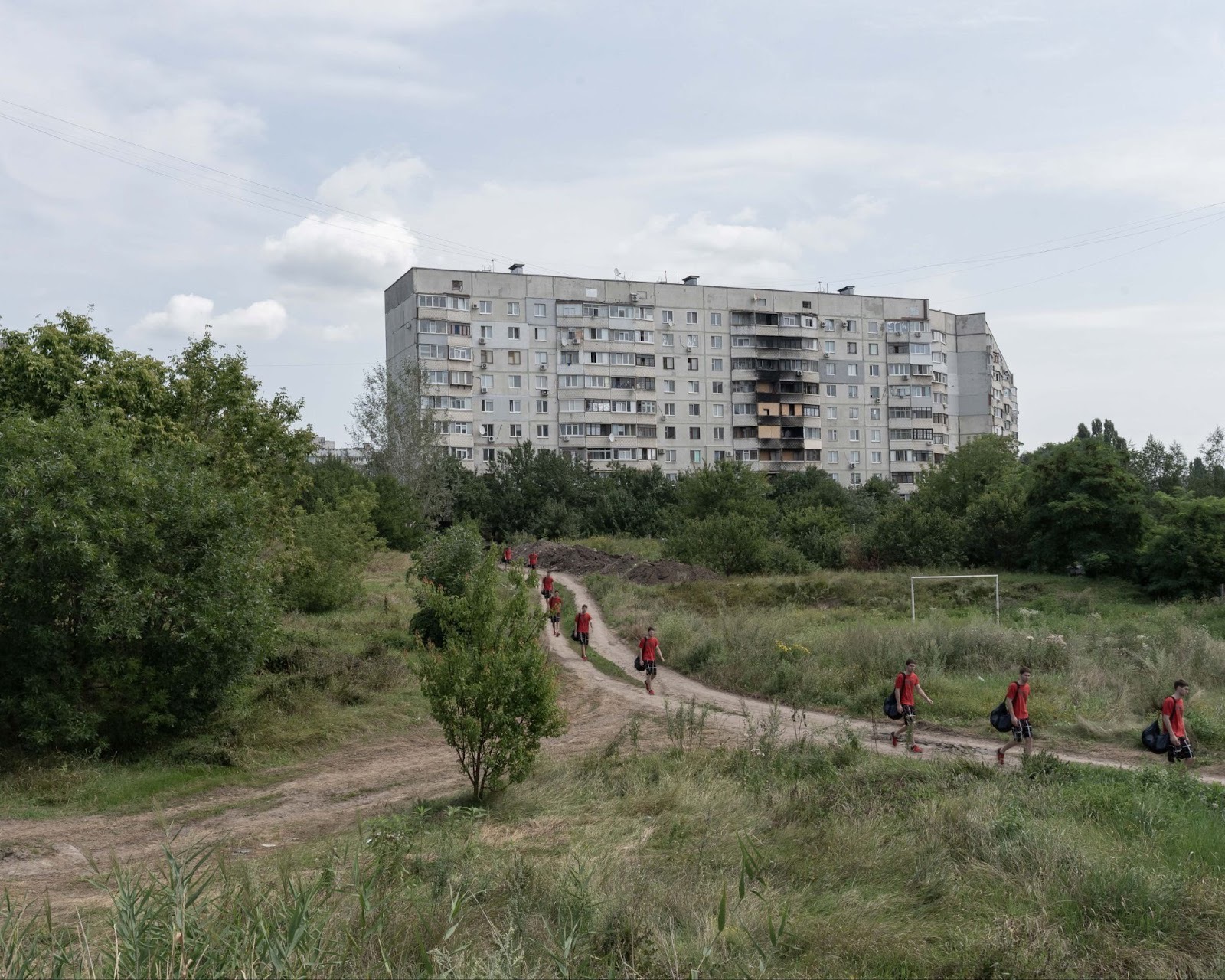
At a certain moment I felt a very similar overload from the constant search for beauty and attempts to photograph it. I began to burn out badly and realized that I no longer see frames. It is a very painful feeling when you try to look, but you see nothing. Even at home in a room you can find countless interesting subjects, but during that period I did not notice them. Colleagues, a sense of togetherness and community helped me get out of the state of blindness. We went to Izium with friends and with Vitalii Matukhn’s project. During the trip I began again to remember what photography is and how I can see it. In the end, now I work at the Kyiv-Pechersk Lavra both as a photographer for them and as a photographer in search of my own beauty. Now I cannot imagine myself without photography, because for me it is the same as living and not seeing.
I am interested in photography at the moment of its doubt about itself. Where photography can still be photography, but no longer reduces to familiar notions of it, and at the same time where photography retains the ability to convey reality and the experience of this reality. Yes, I feel that my research is currently insufficient, since I have not approached photography radically enough. At the same time, I feel that I am fairly close to this boundary.
Chekal Petro — a Ukrainian photographer, artist, musician, curator, and cultural scholar, born in 2001 in Kharkiv. He works with documentary and conceptual photography, combining visual practice with theoretical research into culture, photography, and literature. His works have been presented in Ukrainian and international institutions, in particular at YermilovCenter (Kharkiv), Dzyga Art Center (Lviv), Kunstraum Kreuzberg/Bethanien (Berlin), PinchukArtCentre (Kyiv), as well as in exhibition spaces in France, Italy, Germany, and the United States.
He collaborated as a photographer and producer with Ukrainian and international media and institutions, including Ukraïner, New York Magazine, BBC, UNICEF, Council of Europe. He is a participant and co-initiator of inter-institutional exhibition and research projects, including “Show your documents…”.
He received a Master’s degree in Cultural Studies from V. N. Karazin Kharkiv National University. He obtained photographic education at Chekachkov Photo Academy, MYPH — the school of conceptual and art photography, as well as through specialized programs and labs dedicated to contemporary photography and curatorship.In 2024, he became a laureate of the President of Ukraine’s Grant for Young Artists. He also works with documentary cinema; his film Lily of the Valley Collector received the Best Cinematography award from Media Development Foundation (2023).
Social media: Facebook, Instagram
Worked on the material:
Topic researcher, text author: Katya Moskaliuk
Photo editor: Vladyslav Krasnoshchok
Literary editor: Yuliia Futei











.jpg)


