.jpg)
The book by Ukrainian photographer and press officer of the 158th Separate Mechanized Brigade, Dmytro Kupriyan, “The Art of War, or Rules for Rifle Maintenance,” is a story about the daily life of war, the routine of service members, and finding support in ordinary things. Dmytro Kupriyan spoke about the logic of the book’s composition, the mechanics of endurance, and how to capture humanity with a camera when everything around is collapsing. Below is the author's direct account.
Three Photographs
The title of the book “The Art of War, or Rules for Rifle Maintenance” consists of two parts: the first refers to Sun Tzu’s work of the same name, and the second explains its content. Through black-and-white film photographs, the book tells the story of the daily, monotonous actions of service members necessary for survival. Military personnel also need to maintain their daily lives and perform routine tasks, although these include additional items like weapon maintenance.
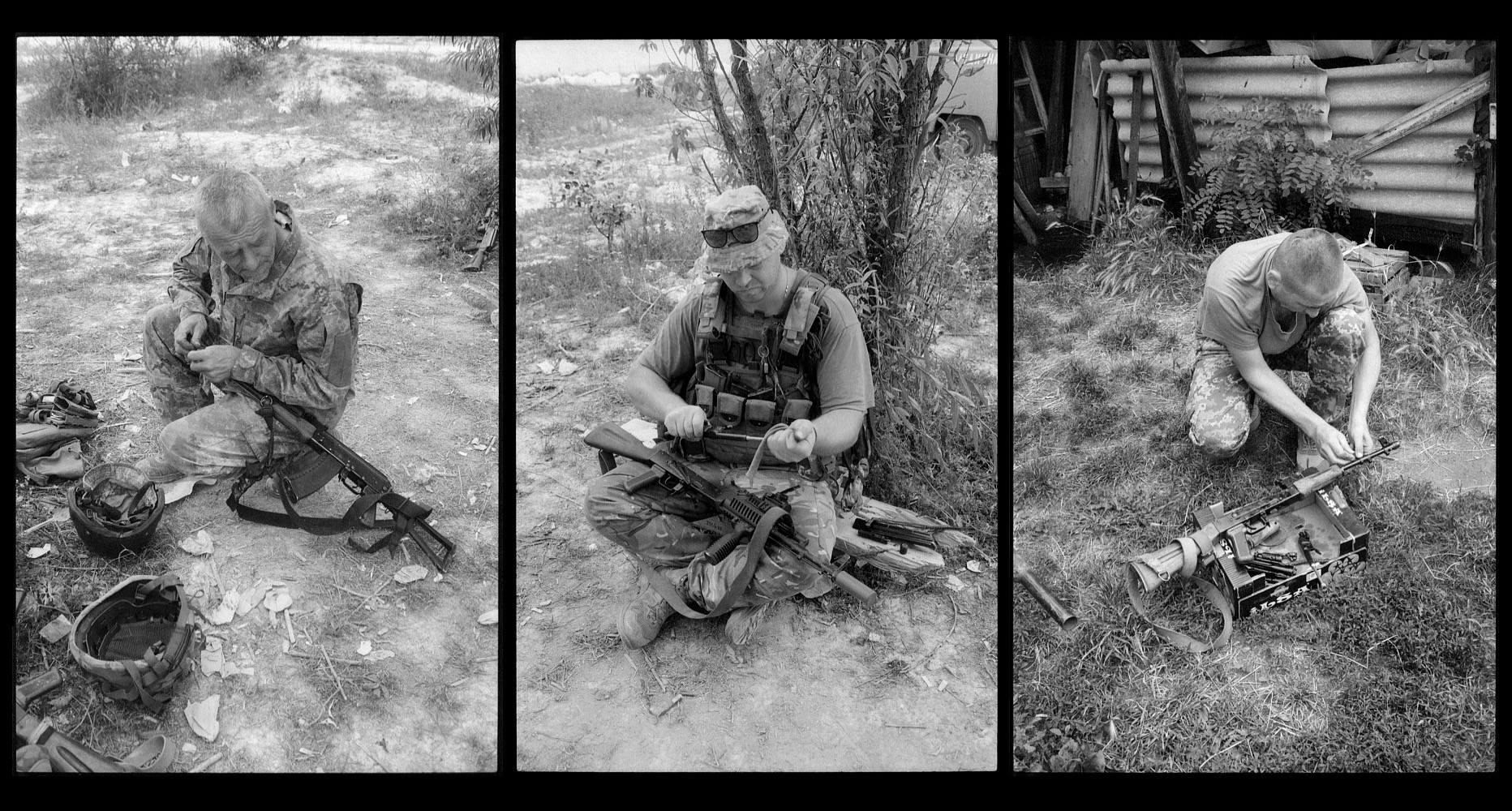
The book has no chronological development of events. I combined the photographs into triptychs, which are grouped by themes rather than by time frames. The book includes shots of comrades before and after assaults, their portraits when they pose for the camera, and moments when soldiers clean their weapons—mostly their rifles.
The works are assembled into triptychs and appeal to the work “War” by German painter Otto Dix. This is one of Dix's most important works, created based on his personal experience on the fronts of the First World War. The composition resembles religious altarpieces, where the central part depicts ruins, and the side panels show scenes of soldier life and death.
.jpg)
The triptych format is also a way to tell the story of military routine, of the daily repetition of the same actions. One photograph is a document of an event or a page in history, two is a search for visual parallels, and three is already a short story, an opportunity to show the monotony of actions.
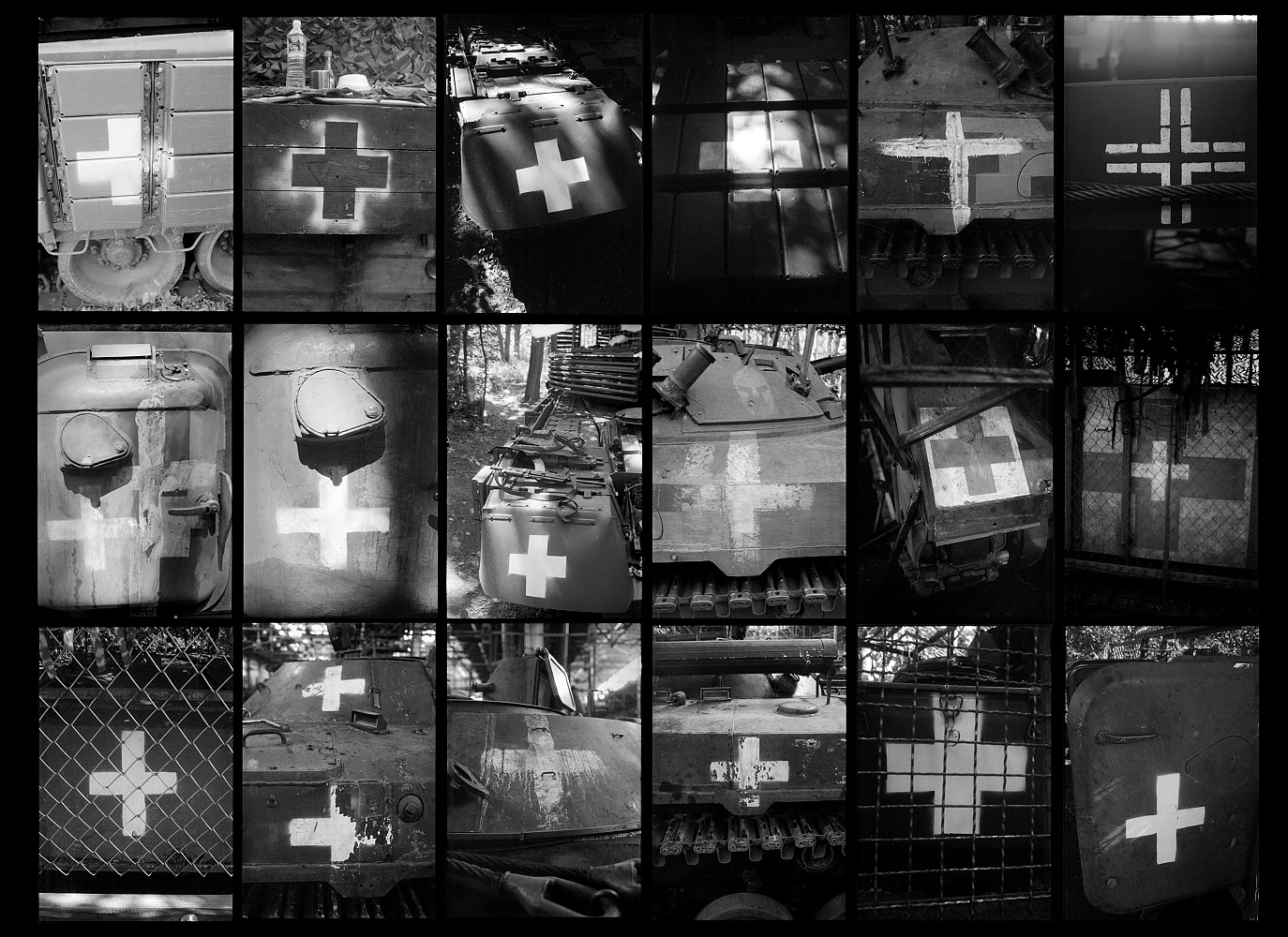
However, in the project “The Art of War, or Rules for Rifle Maintenance,” in addition to triptychs, there are huge panoramas formed from many frames. For example, from photographs of the "pluses" that soldiers use to mark equipment. There are large collages of photographs of military gear and equipment. Between training sessions, the guys would take off their armor, helmets, and lay down their rifles—and I would photograph how these things lay. I searched for beauty in ordinary objects. A similar typological approach can be found in the works of French photographer Antoine d’Agata. He worked in Ukraine after the de-occupation of Kyiv region cities, including Bucha, and created monumental grids of shots, each depicting only one item—a children's toy, a shell casing, a forgotten boot, or a household item from a destroyed house. Such combinations of frames are not new, but they are always striking.
Seven Reasons to Die
I personally handled the selection of photographs and the initial layout of the book “The Art of War, or Rules for Rifle Maintenance.” I showed the dummy book to Italian photographer Mauro d’Agati, founder of 89books publishing house, and he immediately agreed to publish it. Mauro focuses on experimental photo books where form—design, paper, binding method, etc.—is just as important as the content. Incidentally, “The Art of War, or Rules for Rifle Maintenance” has a soft cover and pleasant-to-the-touch matte paper. I turned to Mauro d’Agati because I already had experience collaborating with him—89books published my book “Hoverla” in 2024. I worked on the book for a long time—I created several layouts, Mauro changed its format and size, and I also wrote the text and translated it into English.
Stories about the soldiers I served with who died in battle are important to me. One of the chapters of the book is called “Seven Reasons to Die”—it is a list of risks that exist alongside daily life and routine. A couple of years ago, a young man wrote to me, planning to make a book or film about the military. He needed a description of combat operations where people die. The young man never followed up, but I wrote the text. I joke that, like a cat, I once had nine lives. I should have lost the first one in Pisky near Donetsk in 2014, and seven more in Bakhmut in 2023, so now I only have one left. Soldiers like to joke about death and life; it's normal.
The book is aimed at a foreign audience—I use the language of art to talk about the Russian-Ukrainian war, which is currently taking place in the very center of Europe. I hope that this kind of indirect photography will interest foreigners and encourage them to understand our situation. There are no photographs in my book that could be labeled as “sensitive content.” However, I do not want the essence of the images to be obscured by their beauty. For documentary photography, this can be a trap. It is necessary to balance between the visual persuasiveness of a photograph and its content. A good example of such photography for me is Oleksandr Hlyadyelov's project on the tuberculosis epidemic, particularly in prisons and among the homeless.
Twelve Years of War
I photograph the war, but you shouldn't call me a military photographer. There is a war in our country, and when it ends, my colleagues and I will become ordinary photographers again. The process of photography for me is also a connection to my civilian life. You need something to rely on to maintain your mental health. Not to constantly think about survival and fighting, but sometimes to look for beauty.
It is sometimes difficult for me to combine the work of a press officer with artistic projects. It happens that I arrive at a shoot with two cameras—a film camera, which I use for my personal stories, and a digital one, which I use for work. It probably looks strange from the outside when I photograph a person first with a film camera and then with a digital one. Sometimes I have to prioritize, as shooting with two cameras at once is impossible. Especially in combat conditions, where searching for a beautiful angle is a 99% guarantee of death. In our current reality, unfortunately, it is very difficult to shoot combat operations.
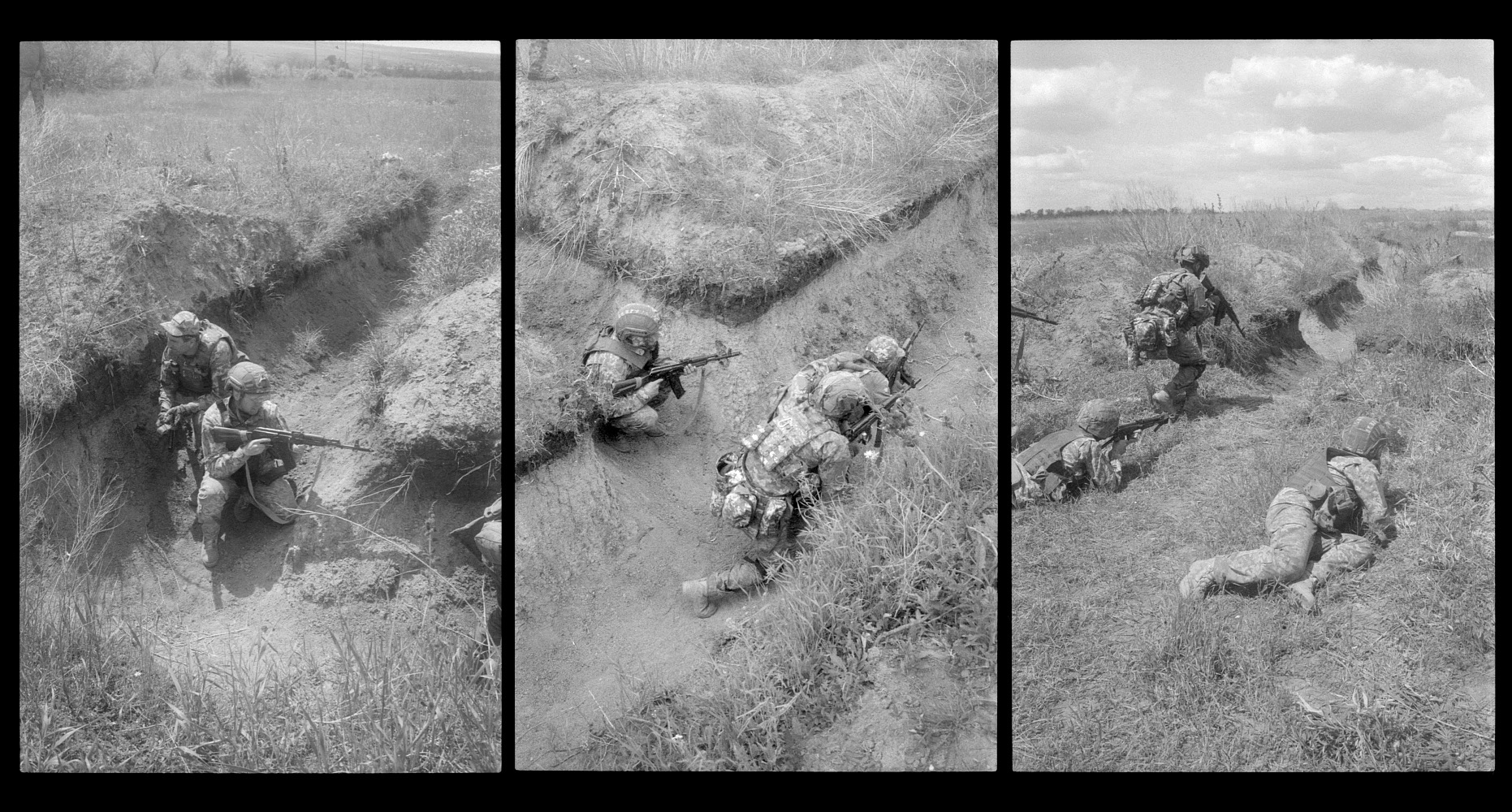
Training, downtime, and equipment maintenance can be photographed without issue. I currently have many photographs where people specifically pose—looking directly into the camera. During weapon cleaning, service members experience two diametrically opposed states. The first is when we chat and joke—it reminds me of stories of women who once washed laundry by the river. The second is when everyone focuses on the work and sinks into their own thoughts. This is documentation of the “quiet” moments of confrontation, when equipment is in reserve and everyday routine can tell a lot about the war.
.jpg)
Daily life is an integral part of life for both the military and civilians. For example, I have a triptych where soldiers are getting haircuts. In the first photograph, a young man cuts his comrade’s hair, and in the second, they have switched roles. A photograph with a similar subject from 2015 fit these frames perfectly.
One Wish
I wanted the book “The Art of War, or Rules for Rifle Maintenance” to retain the spontaneity and lightness of photography, stripped of special professional tricks. I tried to return to my past self, who didn't quite know how to photograph yet—didn't construct complex compositions with multiple planes, didn't play with blurring, but simply stopped the aperture down to 8.0 to keep everything sharp, and photographed life around me. However, colleagues still said the “photographer’s ear” was visible—they recognized my work.
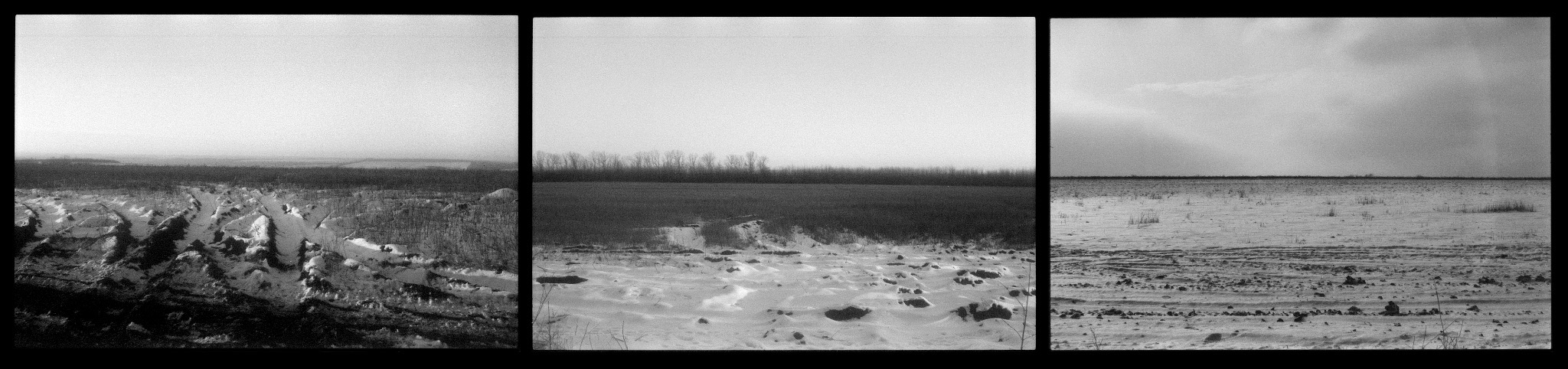
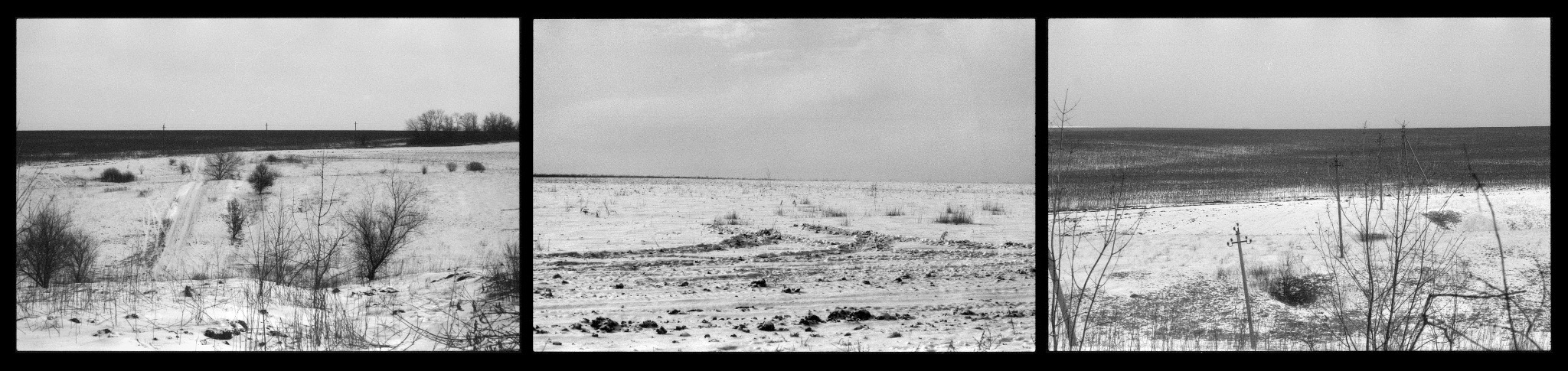
The book features landscapes of the gray zone. I recall that back in 2015, I really wanted to go to the front line to shoot this “gray zone.” At that time, Ukrainians found themselves on different sides of the front, and there was no dialogue between them. However, dialogue is the main path to understanding and reconciliation. For me, the gray zone was a very successful metaphor for this situation. At that time, I never managed to shoot it, but later, in 2023, I reached the front line, where I could shoot such scenes to my heart's content. One should be wary of one's wishes, because they have a tendency to come true.
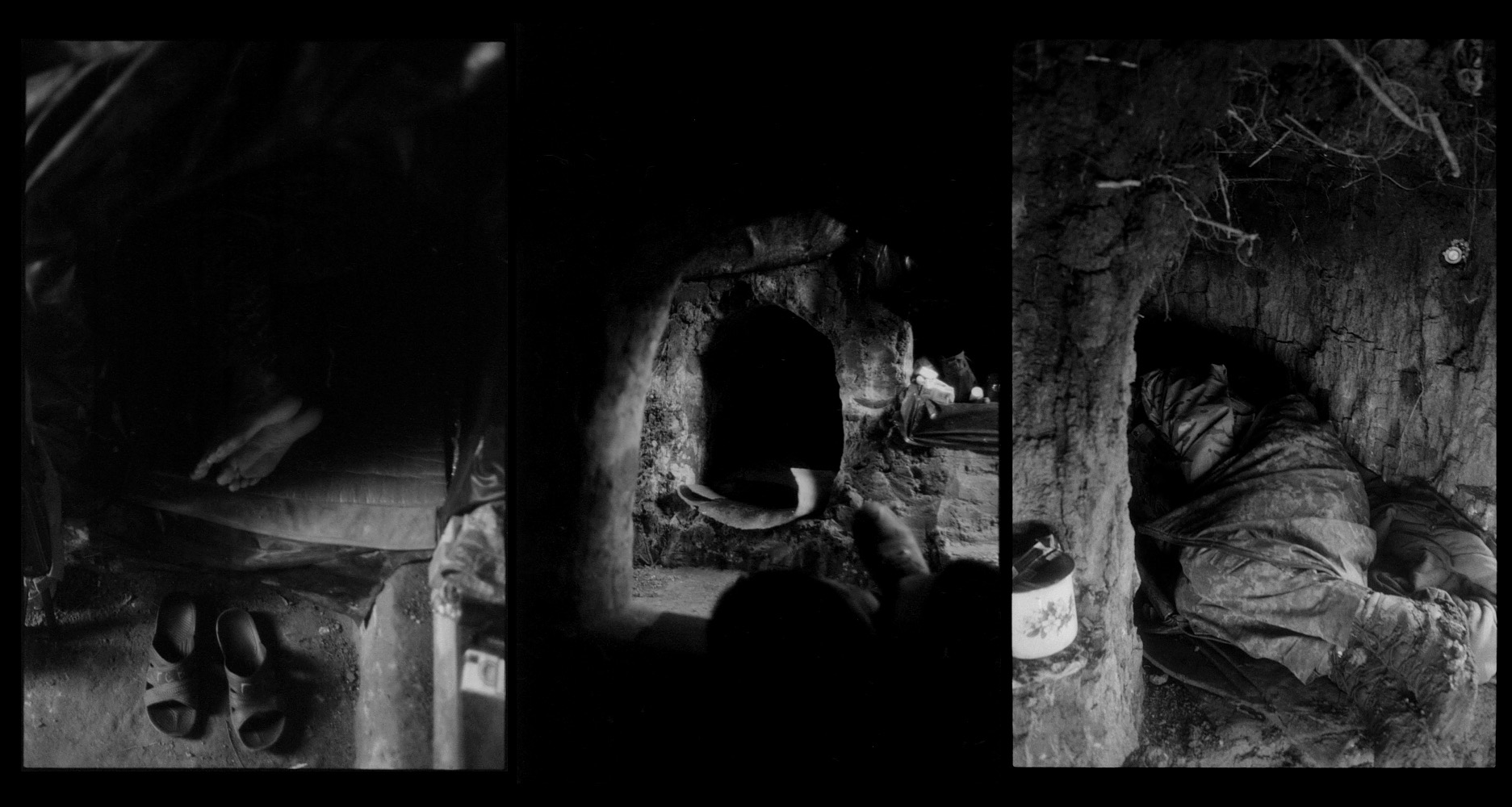
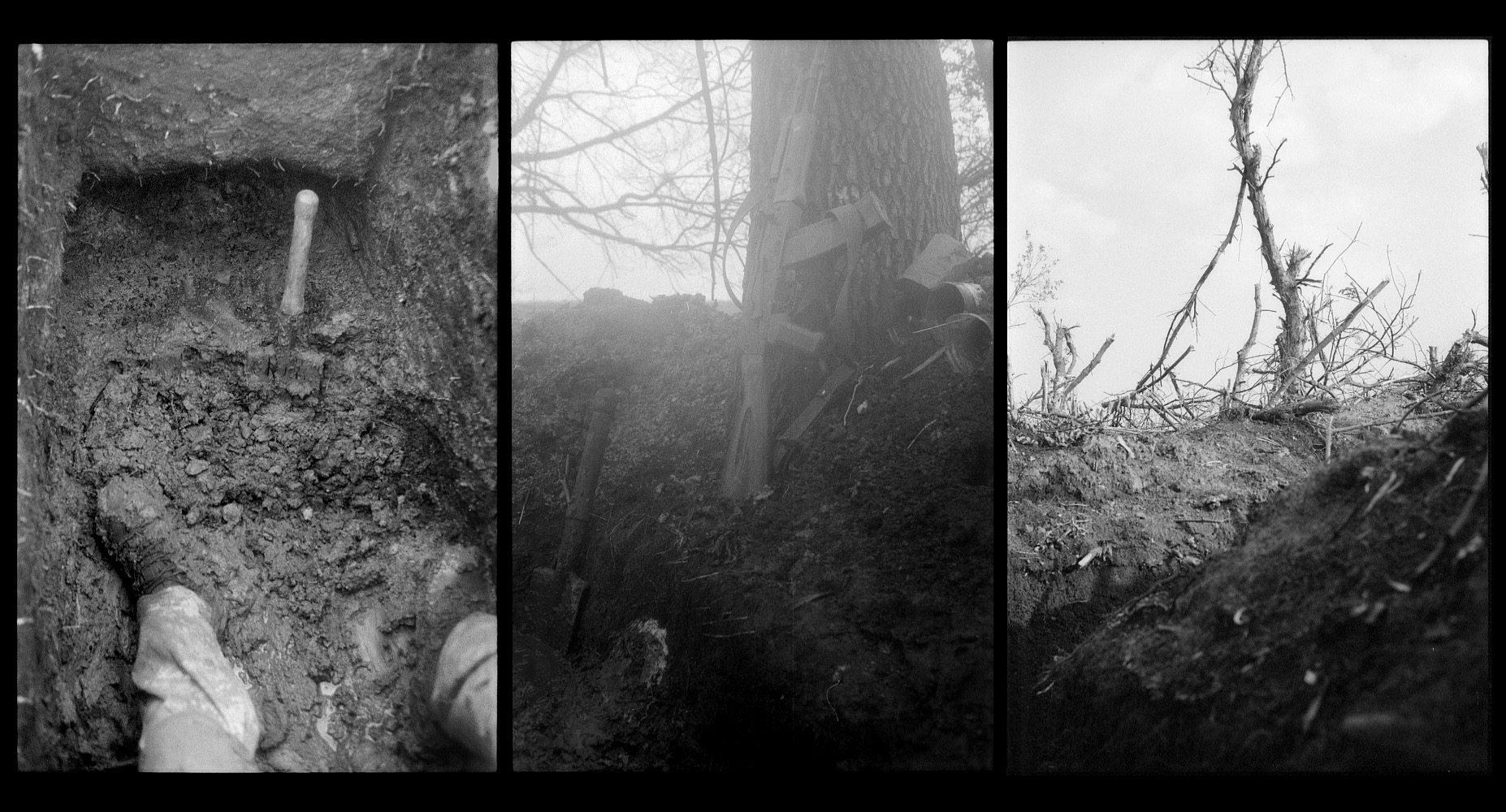
Among the most important images in the book for me are the photographs of comrades killed in battle—it is difficult to look at and remember. These are people with whom we lived in the same house, trained together, and talked. It is important to preserve their memory.
Dmytro Kupriyan was born in Kyiv in 1982. He worked on the topic of torture, shooting a project about violence and its consequences in the Ukrainian police (“Katovani”/“Tortured”). Developing the theme of violence in a broad sense, he created projects about the war in Ukraine (“Oskolky viiny”/“Shards of War,” “Banalnist ahresii”/“The Banality of Aggression,” and “Koly zakinchytsia viina”/“When the War Ends”). He later shifted to the topic of dialogue as a means of reconciliation and filmed videos promoting its necessity. In the videos, the author attempts to show that the only way to solve problems and misunderstandings in societies is through dialogue in all its manifestations: verbal, sub-verbal, physical, etc. In 2015, due to Russia's aggression against Ukraine, he was called up from the reserve for military service, during which he also filmed and worked on war projects. He subsequently focused on the themes of human environment and self-identification in society. He is the author of the photo series “Thirty-Six Views of Hoverla,” inspired by the engravings of Katsushika Hokusai. He currently serves in the Armed Forces of Ukraine (AFU).
The photographer's social media: Instagram and Facebook.
This material was created with the support of the British Council program “Creative Economy Grants.”
Credits:
Topic Researcher, Text Author: Katia Moskalyuk
Photo Editor: Olga Kovalova
Literary Editor: Yuliia Futei

.jpg)
.jpg)