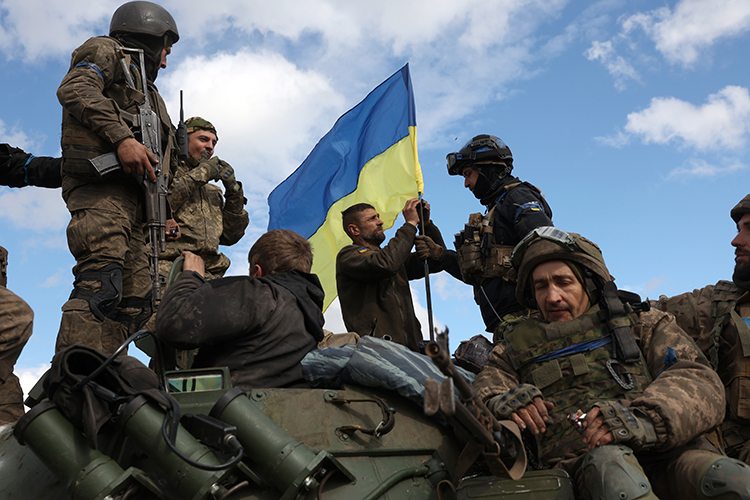
Ukrainian documentary photographer Oleksandr Rupeta with his series of photos “Other Days of Life” won the Xposure Photography Award 2024 as the best independent freelance photojournalist. For more than a year, he filmed life in different parts of Ukraine to show the war from a different, personal, perspective.
Oleksandr Rupeta shared the details of the work on the series “Other Days of Life”, about the opportunity to talk about the full-scale war in Ukraine and why it is now important to focus on personal feelings of war.
— Please tell me where the first day of a full-scale war took you? Did you think you would document the war in your country?
— My parents' house is located near the military airfield. On the first morning of the full-scale Russian invasion, I returned there by car to drop off relatives and watched the arrivals along the road.
He has been photographing the war in his country periodically since 2014. However, I did not have any special documentation plans in the event of a full-scale invasion.

— When did you start documenting the full-scale Russian-Ukrainian war? What were the first shots made?
“For the first months of a full-scale war, I almost did not take my camera in my hands. I only returned to filming when I was convinced that all my loved ones were relatively safe. The first photo I took appears to have my mother in a refugee apartment.
— What topics of war are important for you to show, document? Why?
The Russian side commits crimes every day. Documenting each new crime is a necessary and important process. At the same time, photography, if viewed as art, makes it possible to find other than literal means to show the horrors of war. For example, this can be the understanding of individual experiences or the tracking of general trends; in the end, everything that the author considers necessary is reflected with the help of visual images.

— Before the start of the full-scale Russian invasion, did you film a lot of vulnerable groups of the population? Do you continue to work on such projects?
— Before the beginning of the full-scale war, I researched topics in Ukraine and abroad, mostly focused on the challenges for the individual posed by the organization of public life around. I still keep in touch with some of the heroes of my projects. However, the biggest challenge at the moment is war — I don't see a more important topic in the circumstances.
How beautiful and aesthetic can a photograph from a war be?
“Beautiful” and “aesthetically” are not identical concepts for me. Documenting with the author's detachment is also an aesthetic choice. If there is a vision with which the material is reached, it implies an aesthetic choice. Photography can be anything, if the author takes a certain approach as a means and has an understanding of what it is for and how to apply it — it will work.

— Do you think that certain “stamps” have already been formed in the filming of a full-scale war in Ukraine?
— It seems that the stamps in the filming of the war were formed long before the war in Ukraine. Something new is difficult to remove at all, regardless of the war. I think that in the question of avoiding stamps, the answer lies in the plane of understanding one's own experience, and everyone has his own.
— What emotions do you think your photos of a full-scale war should evoke in the audience?
I prefer to trust the audience in their interpretations.
— Tell us, please, about your project “Other Days of Life”? When did the idea arise, where and how long did they work on the project?
— Initially, I planned to make a series of pictures about Bakhmut: I spent several months filming, but was not entirely satisfied with the result. So I decided to expand the topic and not be limited to a specific area of the front. As a result, the series consists of photographs taken in about a year.
I would not call the series “Other Days of Life” a project, because it consists of different aspects of life that were affected by the war, and I shot it under different circumstances. If possible, he photographed for the series, in other cases - used the opportunity to get to the front. He shot to order, but always kept the frames in his head to later select into a series. Photographed mainly in Donbas and Kharkiv region, but there are also photos from other parts of Ukraine.


— Who helped you choose the photos for the series? What photos were not included in it and why?
I have a few close friends whose advice I trust. This year I was selected for the mentoring program VII of the agency, so I have the opportunity to discuss the photos with the mentor and other colleagues. However, he worked on the series “Other Days of Life” even before this event. I do not have a final version of the series - at some point the selection made seemed the most successful.
— Which heroes of your films do you remember the most and why?
— Difficult question. If we talk about photographs after the full-scale Russian invasion, children and the elderly are most remembered as more helpless victims. Their stories are mostly sad, not for the whole.
Behind many photos is the tragedy of an individual, a family. It is difficult for me to separate a case.

— With the “Other Days of Life” series, you won the nomination as the best independent freelance photojournalist at the Xposure Photography Award 2024. Please tell me why this contest is important to you?
— Ukrainian and Russian versions of the view on war came to the final of the competition. It is good that the view from Ukraine won.
— Is it possible to maintain interest in the war in Ukraine with the help of photography? Which photos do you think “work” best for a foreign audience?
— Of course, it is possible to maintain interest in a full-scale war in Ukraine with the help of photography. However, it is difficult for me to summarize the audience. The more diverse the material exists, the more layers can be covered.

— Working on author's projects allows you to dive deeper into the topic. Do you have that opportunity now?
— In the series I'm working on right now, I want to focus on the personal feelings of war. The work is progressing more slowly than we would like, but hopefully everything will work out in the end.
Material created with support The Free Word Foundation.
The material was worked on:
Researcher of the topic, author of the text: Katya Moskalyuk
Bildeditor: Vyacheslav Ratynskyi
Literary Editor: Julia Foutei
Site Manager: Vladislav Kuhar
.jpg)
.jpg)