Is a photograph enough to remember a tragedy? To prevent photos of ruins from becoming "just another image" in a cluttered archive of memory, so that a specific experience does not dissolve into a sea of general, impersonal pain?
After ammunition detonated in Vyshneve, some media outlets captioned photos of the charred streets with a generic "In the Kyiv Region." As a journalist, I understood that this was a common approach for an accessible explanation: not everyone knows about a small settlement with a fairly common name in the suburbs of the capital. In the comments, someone mistook these ruins for those of towns on the frontline.
I cannot mistake photos of these ruins for any other, because I walked past the gray five-story building visible on the horizon every day on my way to work. And a little further, beyond the frame, lies the residential complex with my rented apartment. On the morning of July 6, nothing was visible there: the city was enveloped in black smoke, through which shrapnel and unexploded ordnance flew.
When, after two hours of endless explosions and the shattering of glass, I stopped believing I would survive, my sister—with minimal driving experience—pulled into the archway of my building. Traffic lights weren't visible then, but there was no need for them anyway: traffic heading toward the epicenter of the detonation was non-existent.
When we got out of the car, she asked me to grab her Crocs—large rubber clogs adorned with daisies. I looked down and noticed my sister was barefoot in pink socks. She explained:
— It's easier to drive this way.
Back then, I wanted these ruins to finally be named.
War broadcast live means daily documentation of crimes and collection of evidence. Amateur photos and videos of the September 11 terrorist attack in New York became the basis for expert analyses and engineering investigations—specifically to track how fire spread and how the structures of the North and South Towers deformed. This attack became part of the collective memory even for those who had never set foot on the American continent. But can we remember each of our own tragedies, even the most well-documented, if every single day it exists alongside a dozen others?
The routes of drones and missiles plot previously unknown towns and villages onto our personal geographic maps. Perhaps we would never have learned about them otherwise. Perhaps after this, we will never hear of them again. Yet how many settlements can our consciousness hold? And how long do they remain on these maps?
Residential suburbs resemble one another: the same layout of courtyards, panel high-rises alternating with Khrushchev-era apartments, and playgrounds fenced off with old car tires. Even the balconies, spontaneously insulated with light-green plastic siding, are identical to the ones in my home city of Slavuta. Previously, this helped me not feel lonely in new cities—all it took was turning into one of those courtyards.
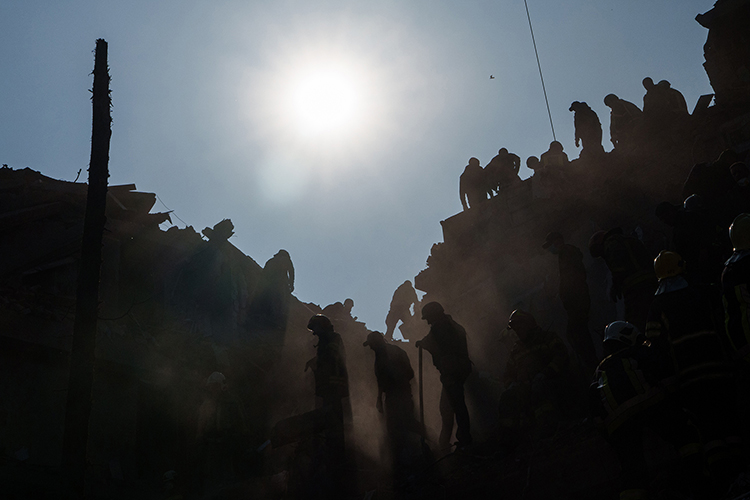
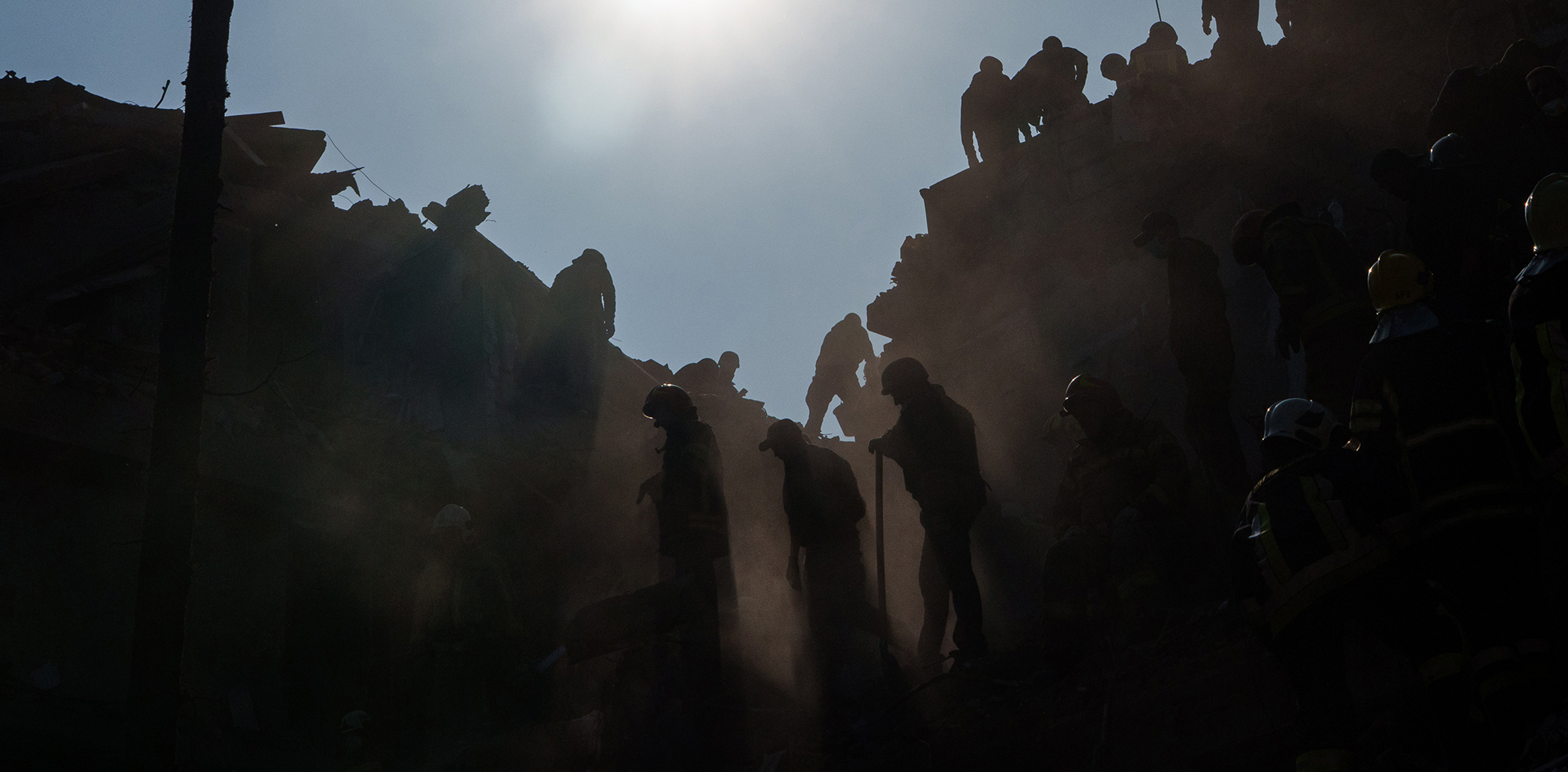
Reflecting on the photograph by Yevhen Maloletka, I first sort through visual associations in my head: the silhouettes of rescuers like Brocken specters, the monochrome nature of colored light. Compared to other photos from this series, this photograph allows me to catch my breath a little. It seems there is less overt pain in it. It hides within the contours outlined by the backlighting.
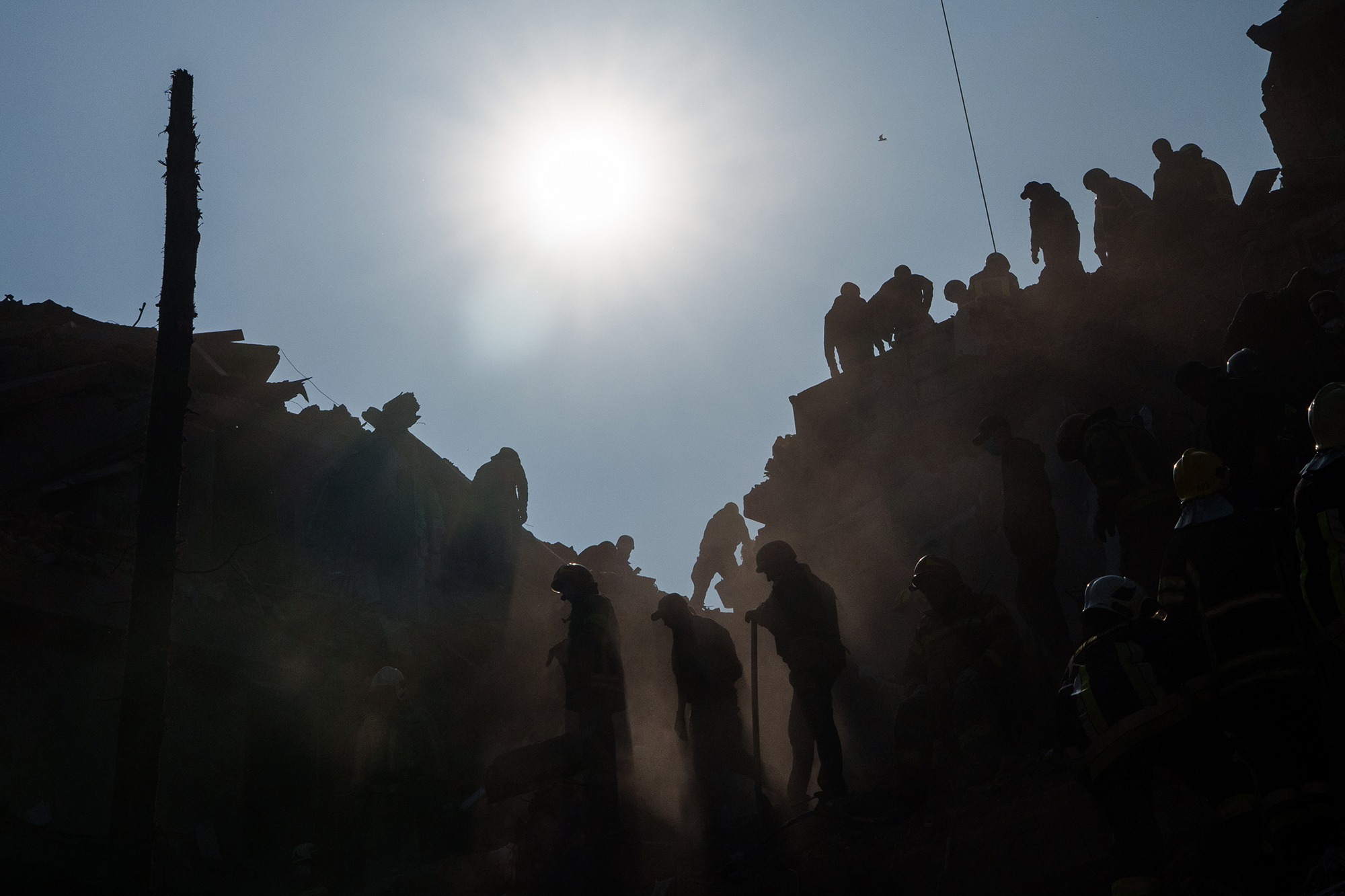
However, first and foremost, I pay attention to the caption. Not Chernihiv Region, not the Chernihiv Oblast, and not the northern region, but a specific city—Pryluky. The city of tragedy is named.
I write the site of the crime onto the photo evidence before sealing another imaginary envelope of remembrance and placing it into my internal archive. Because now I fear most of all failing to recognize, confusing, or dehumanizing these similar suburban neighborhoods when I look at their ruins.
Photo: Yevhen Maloletka
Text: Valeriia Andriichenko