«Nature “300”» is one of the projects selected for thethird annual micro-grants programme supporting Ukrainian documentaryfilmmakers, implemented by UAPP. The programme aims to back authors whocontinue to document the experience of a country resisting aggression and tocreate visual testimony of events that shape the history of modern Ukraine. Theprogramme is carried out with the support of the Embassy of the Kingdom of theNetherlands in Ukraine.
Andrii Kasianchuk’s project grows out ofhis father’s practice: in 1989–1993,soon after the Chornobyl disaster, he kepta school nature-observation diary, recording the smallest changes in the flora and fauna of his area. Thatnotebook, preserving the atmosphere of a post-Chornobyl childhood, became anarchive of attentive coexistence between people and the environment.
Today Andrii continues that form in a newhistorical reality — in the time of a full-scale war. His diary turns into achronicle of ecocide: using digital media, he gathers evidence of the war’simpact on nature — from fires and polluted rivers to the disappearance ofspecies and the transformation of landscapes. The digital space becomes a fieldof contemporary observation, where data, images and messages from the webacquire the status of documents of their time.


March 2022
At the beginning of March 2022, scrolling through thenews, I started seeing photographs of dead dolphins washed up on the shoreline.At some point there were so many that it felt as if the Russians had a personalscore to settle with these animals. With the sudden increase in the number ofvessels running active sonars, mine explosions, and missile launches, the sea’sinhabitants had little chance of survival. Disoriented, frightened and wounded,the animals were thrown onto the coast. Later, large volumes of petroleumproducts were added to the mix — oils spilling from ships and tankers. Thisalso caused the deaths of vast numbers of birds, fish and other fauna of theBlack and Azov seas.


August 2024: Water pollution in the Seym River
After pollutants entered the river, the organismsliving in it — fish in particular — died or moved into tributaries where thewater is cleaner. Official data from Ukrainian authorities provide very littleinformation. Reports mention only organic pollution from the Tyotkinsky SugarPlant (Russian territory). But the picture appears, at the very least,incomplete: during the very first wave of contamination, exceedances of maximumallowable concentrations of pesticides were recorded at 2–7 times the limit. Thesesubstances were banned back in Soviet times and are therefore prohibited bothin Ukraine and in Russia as well. Their presence in the water points to theillegal use of toxic chemicals along the river’s course. And the fact that thisdisaster occurred in a border area adjacent to enemy territory suggestsdeliberate sabotage by the Russian Federation — poisoning the environment andthe people who live in this region.
Unfortunately, such cases are not isolated, nor arethey the only source of groundwater pollution during the war. Both surface andunderground waters suffer major damage from shell explosions, flooded mines andmilitary equipment, the destruction of factories and housing. Everythingproduced by these actions slowly but steadily makes its way into the water.Heavy metals, chemicals, explosives and petroleum products are carried overlong distances by underground flows. In nature, everything is interconnected: aphosphorus munition strike near Bakhmut in 2022 will inevitably manifest itselfagain — somewhere else in the world — through a well, through food, throughaltered ecosystems.

June 2023
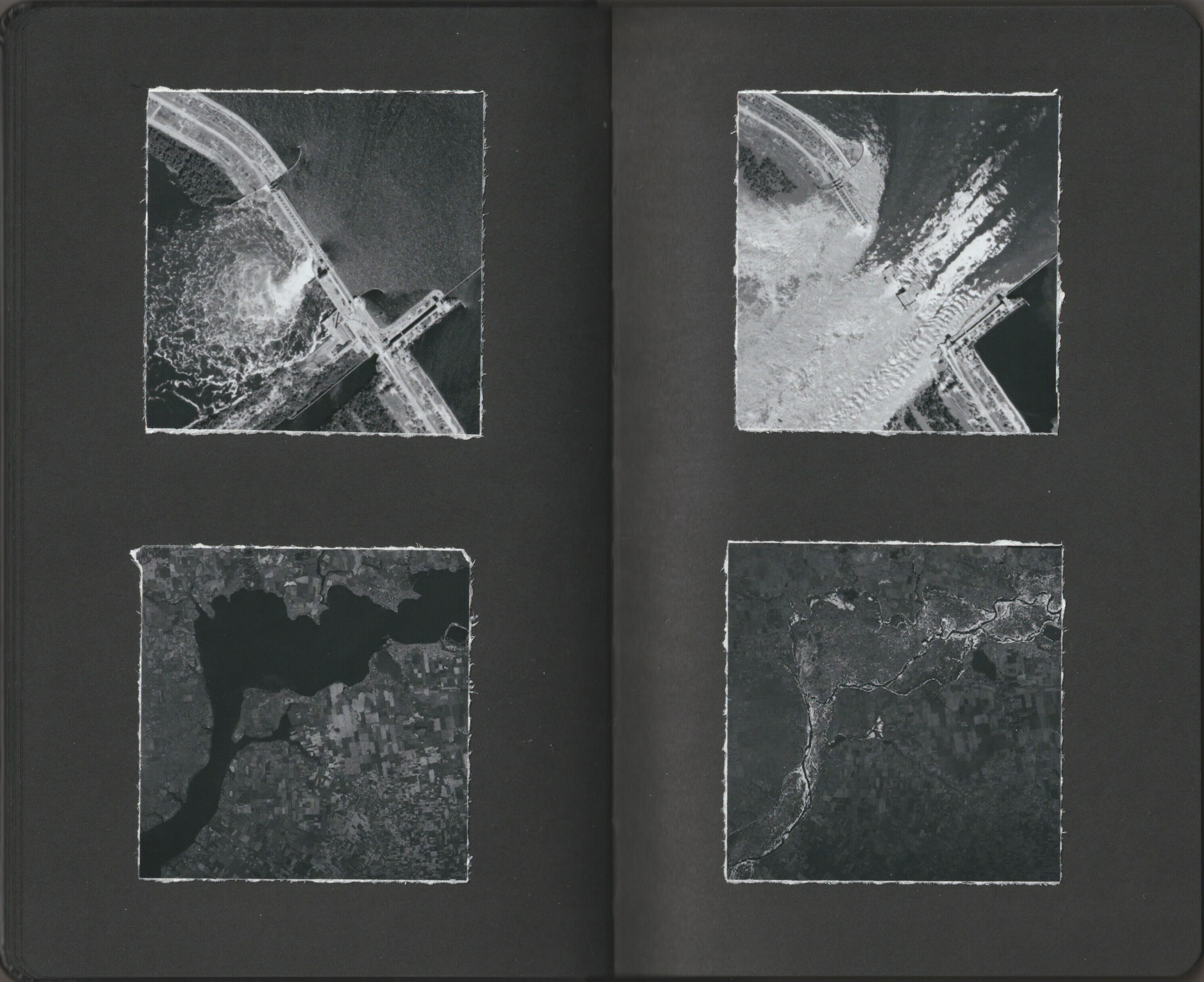
On the day Russian forces blew up the KakhovkaHydroelectric Power Plant, I woke in my room to sunlight falling straight ontomy face. It was a warm summer morning — my day off. I learned about theexplosion immediately after waking up, from the news. At first it was hard tograsp the scale of the tragedy. Lying in bed, I scrolled through Telegramchannels: information came in fragments — messages, photos, videos, officials’comments. A full understanding formed gradually. That same day, a wave of volunteer initiatives began.People drove to the flooded areas, organised evacuations for residents andanimals, raised money for boats, food, water and other essentials.
The next dayI saw UAnimals’ fundraiser to rescue pets in Kherson. I printed several of myphotographs as cyanotypes, toned them, and put them up for sale on Twitter.Within minutes, every print was sold and the money transferred to thefundraiser.
September 2023
A few days after the dam was blown up, the water beganto recede and levels in flooded towns started to drop. Then the true number ofdead animals became known. Many people had left pets locked inside homes — dogstied up, animals in enclosures, and zoo aviaries. That is only on the rightbank of the Dnipro; how much horror unfolded in the occupied territories we maynever know.
It is now known that the Kakhovka Reservoir lost over70% of its water volume. This led to mass die-offs not only among domesticanimals but also river flora and fauna. Flooded protected areas, farmlandinundation, cemeteries washed away, household waste swept into the sea, and ahuge volume of fresh water that for a time sharply changed the chemicalcomposition of coastal waters — all of this left a mark on the region’secology.
And yet many scientists rushed to these places toconduct research and observations — to study the emergence of new ecosystems,develop theories of how this territory might evolve, and look forarchaeological finds. Sadly, this is neither the first nor the last damdestruction in this war. But it is deeply revealing.


October 2025
I am repeatedly struck by nature’s ability to adaptand recover even in the most unfavourable circumstances. Nearly four years offull-scale war — forests and fields destroyed — and still, every spring, treesand grasses bloom, creating surreal landscapes. Yet beyond the direct mechanical impact on flora(explosions, fires), there are other consequences that harm vegetation:uncontrolled logging for fortifications; pollution by plastic, packaging fromfood, weapons and shells; demining debris; and chemical contamination of air,water and soils. So far, not many scientific studies havesystematically documented and analysed the damage the war has inflicted onUkraine’s plant life. Partly because access to certain areas is impossiblewhile active fighting continues; partly because of long-term cumulative effectsof some impacts. Today, one can find documented observations byscientists from de-occupied territories. Most often, these reflect the effectsof mechanical damage. The most frequent and large-scale disturbances occur inmeadow communities, typical of Ukraine’s forest-steppe zone. This type of plantcommunity recovers fastest thanks to local wild species that readily adapt toanthropogenic change. Trench and dugout areas are most often overgrown byalien plant species (Anisantha tectorum, Solidago canadensis, Phalacrolomaannuum, Oenothera rubricaulis Klebahn, Urtica diodica, Sonchus arvensis,Sisymbrium loeselii) and other invasive species.

October 2025
Steppe communities are the most vulnerable comparedwith other vegetation types and have fewer opportunities for rapid recovery.Local and alien grasses dominate (Anisantha tectorum, Bromus japonicus, Hordeummurinum, Papaver rhoeas, Convolvulus arvensis, Tragopogon dubius). In areaswith more complex disturbance (burned ground with additional impacts, likelychemical pollution), predominantly perennial rhizomatous species persist(Elytrigia repens, Calamagrostis canescens, Euphorbia virgata).
In forest communities,damaged ground cover is overgrown mainly by synanthropic flora (Elytrigiarepens, Anisantha tectorum, Acer negundo, Geum urbanum, Urtica diodica).

Translationof a British soldier’s letter from the First World War:
“Summer has masked the desolation of the woundedearth. Only a few months ago all its wounds were open. Bare, stuntedtree-trunks — slashed and broken. Gaunt walls, scarred by shrapnel, and ruinedbuildings; and everywhere the face of the earth torn and mangled. Long lines oftrenches twist here and there, crossing and parting again. Deep shell-holesfilled with muddy water; smashed wagons and farm implements left to rot.Everywhere, a stark devastation. Now everything is different. To go up throughthe trenches is like wandering along a country lane: tall grass and wildflowershave grown so thick along the sides and on the parapets that they nearly roofthe trench over. In the neglected gardens of ruined houses, flowers stillbloom. Birds — everywhere.”
14.07.1916

November 2025
The territories where active fighting is underway havealso become massive dumping grounds. Fields, rivers and forests are coveredwith the remains of burnt-out vehicles, shells, solid waste, plastic, packagingand more. All of this contaminates the environment, and cleaning it up may takehundreds of years. In the meantime, heavy metals, microplastics and otherpollutants will seep into soil and water. The environment is also threatened by unburied bodiesof fallen soldiers and dead animals. This can spread disease and toxins.


November 2025
Today I woke up quite late. Almost all night there wasan air-raid alert: Shahed drones, ballistic and cruise missiles were attackingthe city, including a thermal power plant. Winter is close. I waited out theattack in the bathroom; my cat was constantly anxious and wouldn’t let me sleepeven for a few minutes. Throughout the night several explosions sounded verynearby. Each time the building and windows shook, but thankfully everythingheld. In the morning I watched a thick smog that had formed from fires causedby the shelling.

June 2025
Many wars in history have been fought for territoryand resources, but war itself is what most exhausts and pollutes these lands.Although Russia’s war against Ukraine is no longer about territory but aboutUkrainians’ existence as a nation in their own country, territory was still notthe last reason for its outbreak.
This war has become an example of a conflict in whichvirtually all known types of weapons act on soil at the same time: artillery,MLRS, tanks, armoured vehicles and heavy military equipment, mines, bombs,aviation and drone strikes — all of it leaves its imprint on the earth. Beyondphysical destruction, each explosion brings chemical and thermal damage.Shockwaves disrupt the soil’s structure and layers, destroying micropores whereair and water circulate. Metal fragments, explosive residues and other chemicalsenter the ground. Where heavy vehicles pass, soil becomes compacted and losesits ability to absorb water.
Even the construction of defensive structures(trenches, dugouts) changes soil structure and disrupts moisture systems.Chemical impact is far more dangerous: propellants, fuel and lubricants,fragments of munition casings become sources of toxic compounds and heavymetals that persist for years. Lead, cadmium, mercury, chromium, copper andzinc accumulate in upper soil layers and then migrate deeper with water,eventually entering food chains.
Add to this physical and thermal effects: hightemperatures during explosions bake the soil. Organic matter, microorganisms,animals, insects and amphibians die. The result is a fundamentally differentkind of soil than what existed before.

June 2025
As a result of attacks on civilian and energyinfrastructure, alongside emissions into the air there are also emergencyblackouts. To keep work, production and the functioning of hospitals, schoolsand businesses going, diesel and petrol generators are widely used.Decentralised, mass use of these devices creates additional emissions becausecompliance is hard to control. Over three years of Russia’s full-scale invasion,scientists have estimated the additional harm to the world’s climate situationfrom CO2 emissions. The current figure is the equivalent of 237 million tonnesof emissions — additional damage caused by the war that could have beenavoided. Beyond CO2, a significant number of other chemical substances enterthe air: CO, NO2, SO2, HF, Hg, CH2O, Cu, Mn, Al, Mg, Fe, C, Pb, NO, C20H17,CH4, NH3, H2S, HCl, Cl2, H2SO4, and others.

June 2025
I love coming to the village in Kyiv region where Iwas born. I spent the first months of the full-scale war there with my family. Every year I try to return to rest and recover.
With the first money I earnedas a fee from exhibiting my photographs, I bought a camera trap. My father andI set it up in a nearby forest. We watch the lives of local roe deer, hares,families of foxes and badgers.
Recently my father sent our family chat a photo fromthat same spot where, a few days earlier, the camera trap had captured a buck. Now the crowns of trees were shattered, bullet marks scarred the trunks, andpieces of the fuselage and engine of a Russian Shahed attack drone layscattered there.


December 2025
Forest fires are among the most severe andlong-lasting consequences of war for nature. From 2022 to 2025, thedistribution of forest fires almost traced the front line. I have not been ableto find precise data on how much land was affected over these years; differentsources suggest areas in the hundreds of thousands of hectares. Within theAskania-Nova Biosphere Reserve alone, by 2023 there were seven recorded firesthat destroyed 5,300 hectares.
Overall, one third of Ukraine’s protectednatural areas have been affected — more than 900 separate sites. Some lossesare irreversible.


February 2026
War also affects animals’ feeding habits. Predatorsrarely pass up an extra source of protein — especially now, when winter isharsh and many bodies remain in combat zones. This significantly eases life forwolves and foxes. In areas close to the front line, harvesting on fields hasstopped; grain left uncollected becomes food for rodents, which in turn becomeprey for canids. All of this contributes to an increase in predator populationsbut also creates risks of disease spread, including rabies (as is happeningtoday in Kyiv region, where an epidemic has lasted for almost a year).
Recently, it has also been recorded that, besides wildanimals, feral dogs and pigs feed on human remains.

September 2025
Recently I saw a news story saying a falcon knockeddown a drone over the city of Nikopol. In combat zones, such incidents can beentirely natural. Birds often mistake a drone for another bird and may attackit. For a time, in the United States birds were even specially trained tocounter such aerial threats. Unfortunately, in that kind of exploitation birdsare injured by drone propellers. And the tactic turned out to be ineffective:birds often stopped pursuing the drone and switched to other targets they foundmore interesting.

November 2025
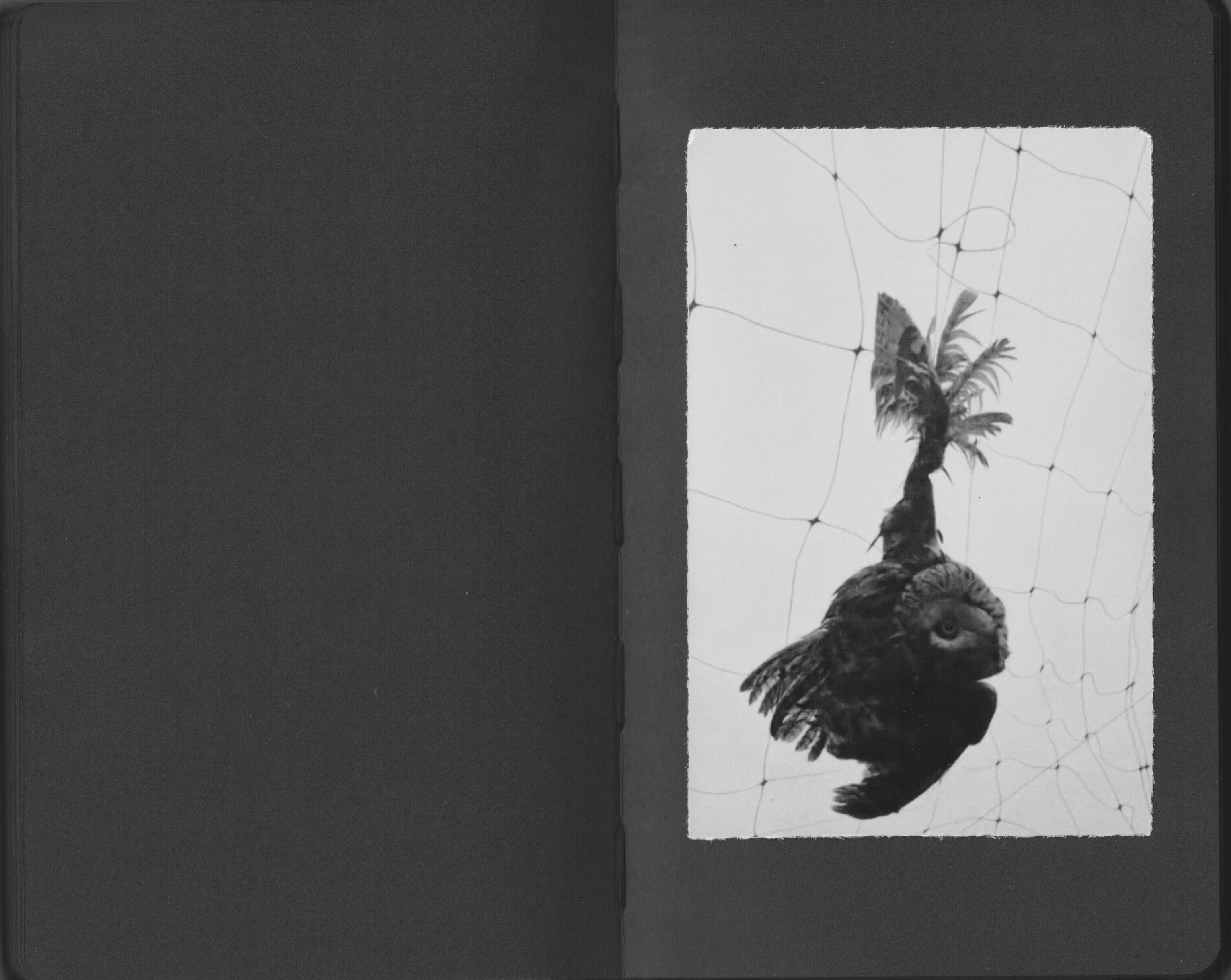
As FPV drones became more widespread at the front, theneed emerged to protect logistics routes with anti-drone nets. Hundreds ofbirds get caught in these traps. Having flown beneath them or become entangled,most can no longer escape and face a slow death. Flocks are forced to fly alongsupply routes under stretched nets, hoping to find a gap and get out.

March 2025
The war has led to a massive decline in birdpopulations across Ukraine. Rare species such as the short-toed eagle and thegriffon vulture have suffered greatly from the destruction of protected areaswhere they lived. Shelling and fires in these regions have resulted in thedisappearance of 40% of populations. Tree felling for military needs hasworsened nesting conditions for the black stork, reducing its population by 25%compared with the pre-war period.
Damage to fragile ecosystems also threatens speciessuch as the common tern and the grey heron. Due to contamination by heavymetals and petroleum products, close to 35% of nesting colonies have been lost.More than 30% of bird nesting sites in the Chornobyl Reserve have been affectedby forest fires and military activity.

January 2026
When the first news and photos appeared of Russiansagain dragging horses and donkeys into the war for assaults and logistics, mymemory painfully seized on an episode from an Erich Maria Remarque novel I readas a child. That episode seems to have cut the deepest into my imagination, andit returns to reality now:
— What happened there? I ask.
— A direct hit on thecolumns. The screaming doesn’t stop. But it’s not people screaming; peoplecan’t scream like that.
— It hit the horses. I’ve never heard horses scream,and I can’t quite believe it. It is the whole world groaning, a mutilated beinghowling from savage, raging pain.


February 2025.

February 2026
Today the air temperature outside is around -10°C; itfeels like -16°C. There is ice everywhere; overnight, 10 cm of snow fell. Inthe flat it’s 12°C because, due to constant attacks, the heating hasn’t beenswitched on for about a week.
It’s strange to think about this now, but youstill want to look for something positive. These prolonged frost and snowfallthis winter may benefit the land: snow and ice cover the ground and holdmoisture. Unlike recent years, when winters were warm and nearly without precipitation,water did not have time to accumulate and levels in rivers and lakes dropped tocritically low.

Andrii Kasianchuk is a Ukrainian photographer living andworking in Kyiv. He has been involved in photography since childhood; adecisive stage in shaping his practice was a course in artistic and conceptualphotography with Ihor Chekachkov (2021), after which he focused on working withcontext, time and memory. In his series he combines documentary clarity with apoetic sensibility, treating photography as a tool for observation andreflection.
Education:MYPH School of Conceptual & Art Photography (2025), Ihor Chekachkov’sPhotography Academy (2021), Kyiv National University of Construction andArchitecture, MSc (2019). Published in SITUATIFE.COM, ZOOTMAGAZINE, LFMAGAZINE,FISHEYE MAGAZINE. Participated in exhibition projects in Ukraine and Europe,including Rebirth. Tales of Ukrainian Renaissance (Paris, 2025), the soloexhibition “12” (Kyiv, 2024), and group shows DIA KINETS (2024–2025) and Lifegoes on (2022–2023). The author’s works are held in the private collection ofthe Korsaks Museum of Contemporary Ukrainian Art.

.jpg)
.jpg)