
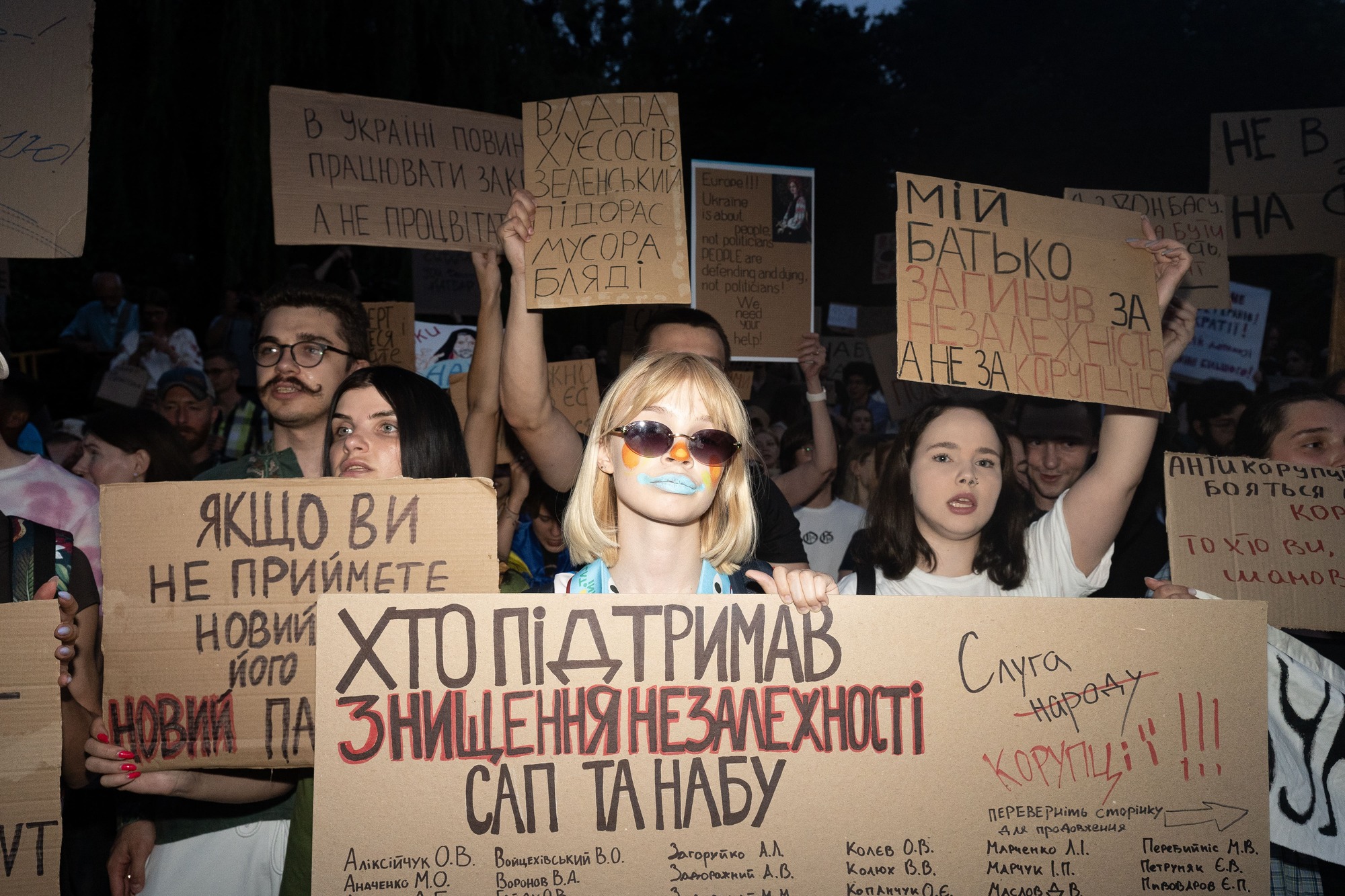
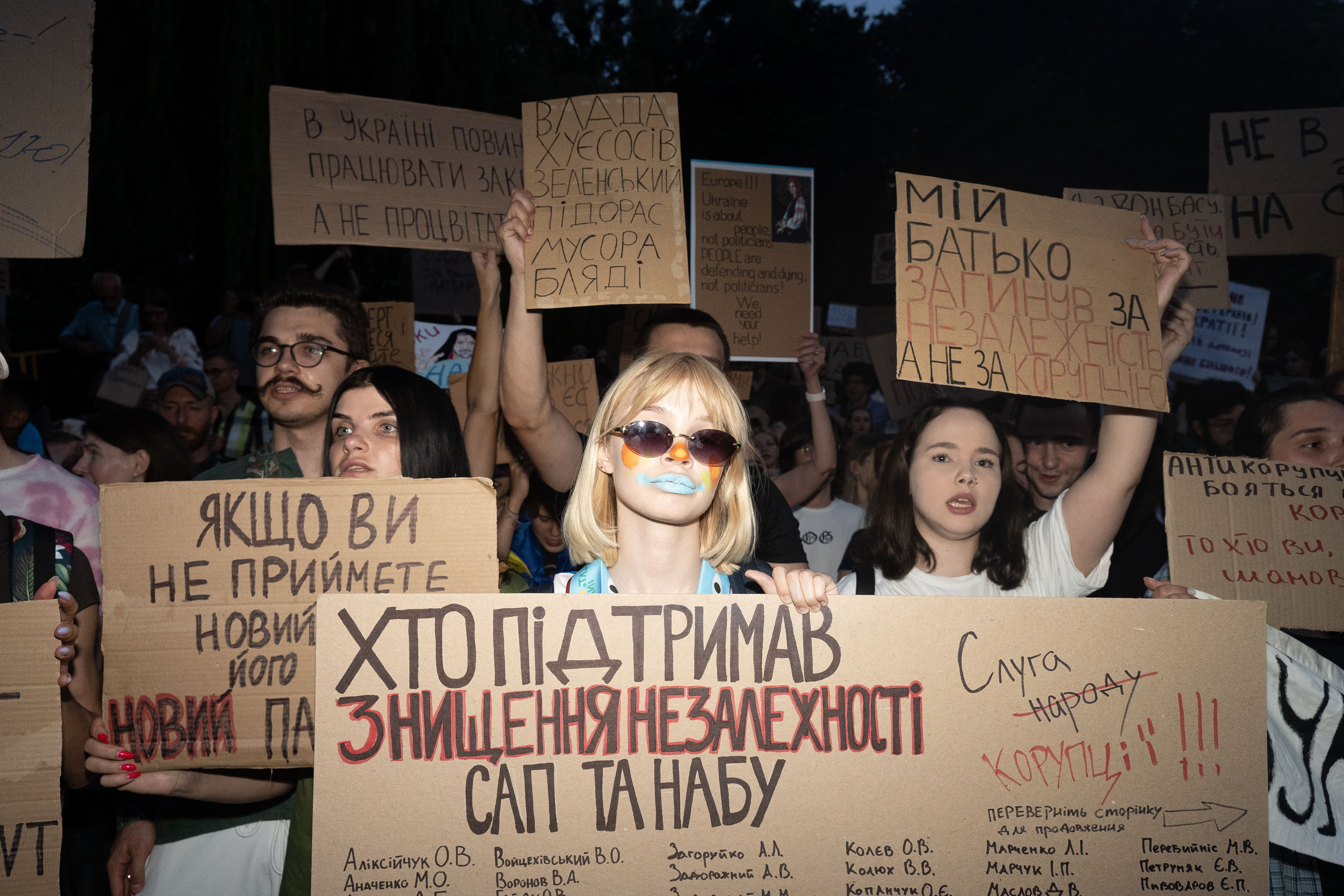
End of July 2025. Ukrainians with children and dogs, wearing prostheses and wheel chairs gather in the streets and squares of major cities to protest. These are mostly young people, they hold cardboard posters with slogans and yellow-blue flags in their hands. For the first time since the start of the Great War, mass protests are being held in dozens of Ukrainian cities. Protesters demand that the president veto the law №12414which eliminates the independence of the National Anti-Corruption Bureau of Ukraine (NABU) and the Specialized Anti-Corruption Prosecutor's Office (SAP).
Kremlin propaganda reacted quickly to the events in Ukraine, using the theme around peaceful protests for information attacks, including those involving Kremlin operatives in the West. The Russian Federation systematically monitors and uses intra-social phenomena in Ukraine, for example, it has long been heating up the narrative of corruption in Ukraine.
The Kremlin deliberately distorts the content of the protests: “In Ukraine, everything goes to the new Maidan. Zelensky is fed up with Ukrainians, and European curators have big questions”, — writes the Russian edition “Notebook.ru”.
The Ukrainian Association of Professional Photographers monitors what narratives and fakes spread about the Ukrainian protests by propaganda media and telegram channels.
“Political crisis in Ukraine” and “dictatorship in a democratic way”
How notifies the Foreign Intelligence Service of Ukraine (SZRU), pro-Russian platforms present changes in anti-corruption legislation as an “anti-American coup” and an attempt to “minimize the influence of the West within the political system of Ukraine”.
The international Russian publication “Medusa” writes about the “political crisis in Ukraine”.
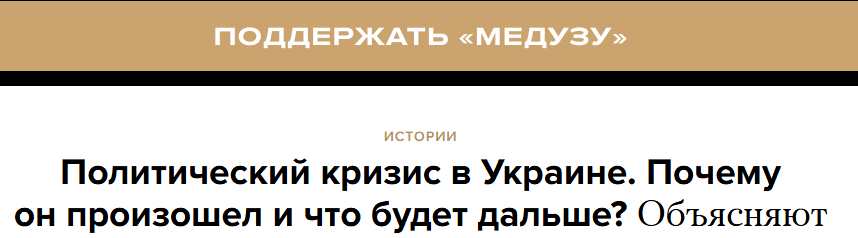
“Political crisis in Ukraine. Why did it happen and what happens next?”
Russian media refer to Western countries as organizers of rallies in Ukraine, using labels such as “mini-playground”, “Maidan of the Forties”, whose structures were cleared by Zelensky. The name “forties” comes from the name of the American billionaire and philanthropist George Soros, who founded the network of charitable foundations “Open Society” in many countries of the world, including Ukraine. These funds provide grants to support democratic processes in countries: freedom of speech, equal rights of citizens, transparency and accountability of government, etc. Russians refer to people as “forties” who work under Soros Foundation grant programs, or anyone whose activities are funded by Western grants, explaining this as a “worldwide conspiracy theory.” This name is part of the Russian conspiracy theory about the billionaire Soros, who allegedly seeks to take over many countries of the world. This theory is actively used by Russian propaganda and pro-Russian political forces in Ukraine.
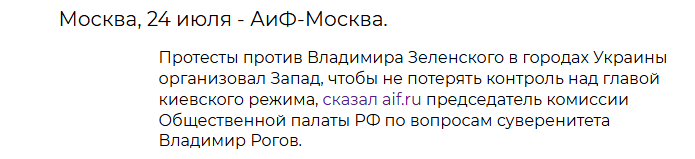
“Protests against Vladimir Zelensky in Ukrainian cities were organized by the West in order not to lose control over the head of the Kiev regime, said on aif.ru the head of the Russian Social Chamber's Commission on Sovereignty Volodymyr Rogov”(former pro-Russian Ukrainian politician, collaborator auto.).
In this way, the Kremlin is trying to discredit Ukraine in the international arena and weaken support and assistance from Western partners. For example, Kremlin spokesman Dmitry Peskov said that the Ukrainian authorities had stolen Western financial assistance.
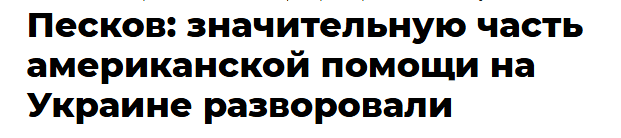
Peskov: Much of US aid to Ukraine was stolen(“Arguments and Facts”).
Following Russian propaganda, the distortion of the meaning of Ukrainian civil protests also occurs among the American establishment. How writesAmerican edition The Washington Post, Representative of the House of Representatives, Republican and critic of Ukraine Marjorie Taylor Green claims that the protests in Kyiv are taking place because Zelensky is a “dictator”. It also declares the need to remove him from office and stop financial and military assistance to Ukraine.
“The vast majority of the money provided by the United States is spent inside the United States itself, not in Ukraine. A significant portion of U.S. and European military aid is directed toward military training and intelligence.” reports American think tank Institute for the Study of War (ISW).
SZRU tells that Russian propaganda presents European voters with a distorted picture of the West's frustration with Ukraine's reforms, talks about possible sanctions and the loss of visa-free regime for Ukraine due to out-of-context and distorted comments from world politicians, journalists and diplomats.
The Russians have been spreading messages about the Ukrainian dictatorial president and the fascist “Kiev regime” since the beginning of the Great War, shifting responsibility for the shelling and the war in general to the Ukrainian authorities. Some publics, such as the Telegram channel of Russian publicist Alexei Volynets, say that there is no democracy in Ukraine, and protests for democratic values are only a “facade of democracy of the Kiev regime”.
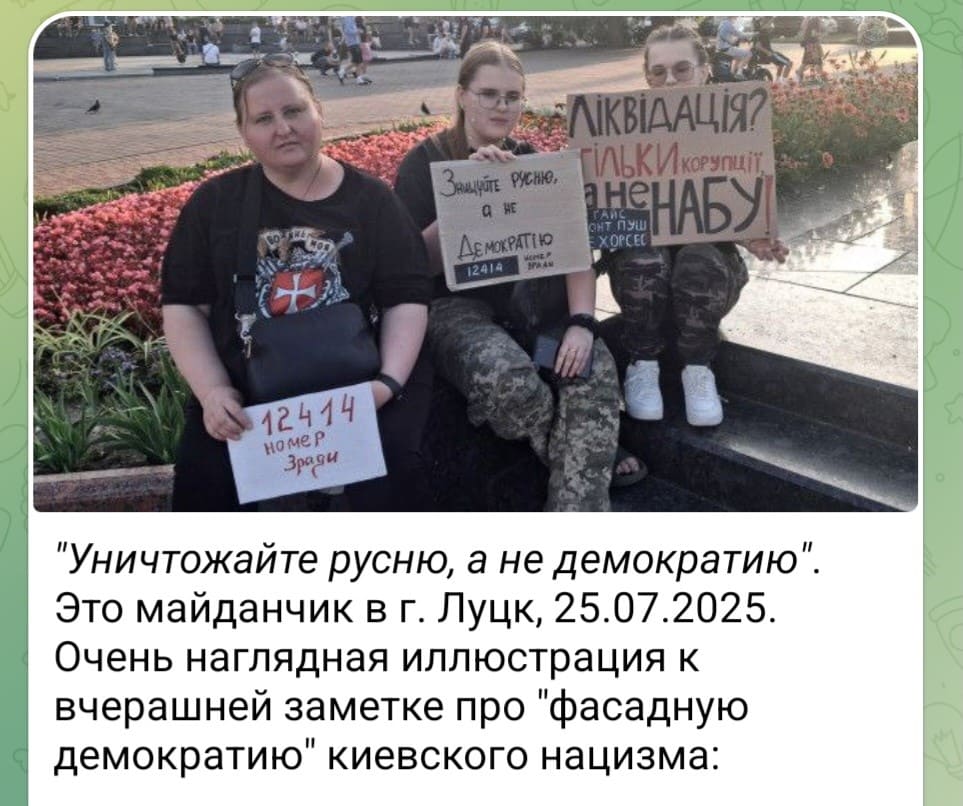
“Destroy Russia, not democracy.” This is a site in the city. Lutsk, 25.07.2025. Very demonstrative illustration of the “facade democracy” of Kiev Nazism”.
At the same time, Russians spread misinformation about anti-war rallies in Ukraine. Center for Countering Disinformation reported that Russia also tried to create a picture that Ukrainians are protesting against the war and demanding surrender. To do this, they faked photos from protests in Kiev, where activists allegedly hold posters with symbols of the Russian invasion. In the original picture, the inscription on the poster had a completely different meaning. CPD refuted this fake by verifying the image.
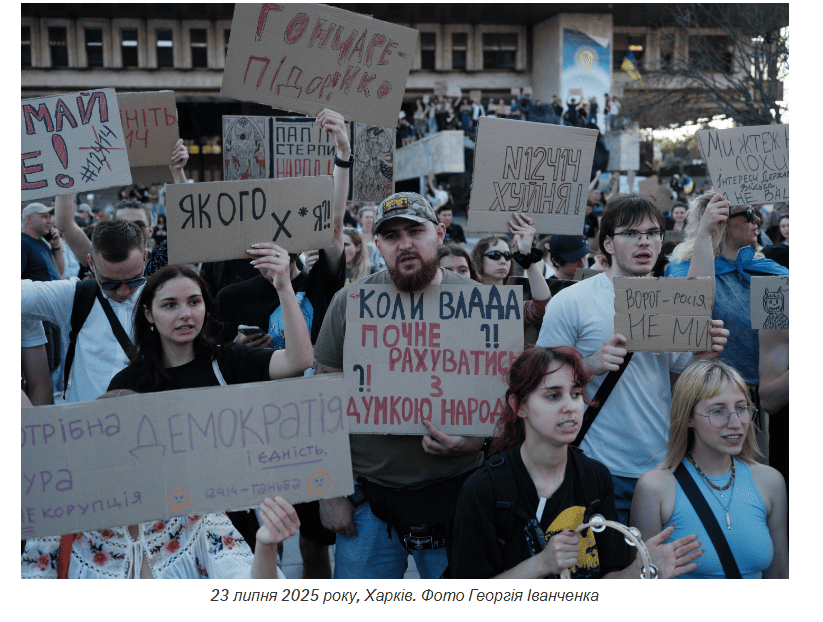
In fact, Ukrainians went to rallies in major cities immediately after the adoption of draft law No. 12414 by the Verkhovna Rada on July 22, 2025, demanding that the president veto it. After a few days of protests, the president submitted another bill, which was supposed to take into account the public request. Now the Verkhovna Rada, which has already gone on vacation for four weeks, must gather for a vote. Meanwhile, protests continue with the aim of public control over the processes.
The Washington Post actively covers the protests in Ukraine. Quoting a protester, the American media once again notes that there is democracy in Ukraine that must be maintained. ““This is what democracy should look like.” said Anton Avrinsky, 41, a tech entrepreneur who joined the crowd along with his wife Vitaly and their 9-year-old son Ivan. In times of war, the country should unite around the president,” he said, “but also should not be afraid to correct his mistakes,” the media wrote.
The WP edition holds the opposite opinion with Republican Taylor Green: “As always, she is wrong. In fact, the recent protests show why Ukrainian democracy should be upheld — and why Putin is determined to destroy it.”
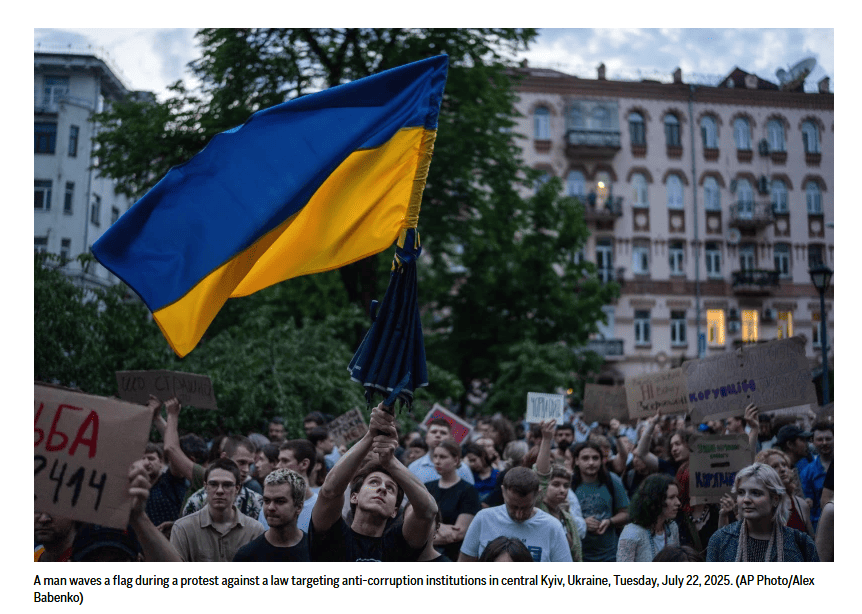
Ukrainian photojournalists attend daily protests in Ukrainian cities. Ukrainian documentary photographer Oleksandr Babenko sharedin his Instagram post on what democracy is for Ukrainians: “Thousands of people gathered in Kyiv to call on the president to veto a controversial bill that threatens anti-corruption departments. Democracy is the most important thing we have in this country, and corruption must be ended forever. This struggle began 12 years ago and continues to this day. It is not the end, but there is hope to achieve it.”
“Uprising against Zelensky” and “Cardboard Maidan”
Propagandists present Ukrainian protests not only as a reaction to the draft law, but as an uprising against Zelensky.
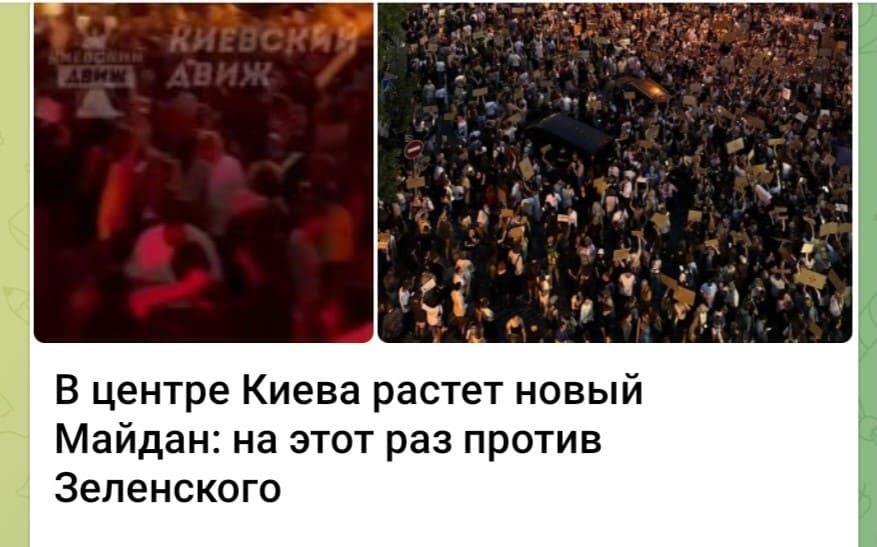
“A new Maidan is growing in the center of Kyiv: this time against Zelensky.”
Propagandists draw parallels with the Maidan in 2014. On February 21, 2014, as a result of the Revolution of Dignity, then-President Yanukovych fled the country. The Russians called it a “coup.” Now, unable to defeat Ukraine on the battlefield, Russia is trying to divide and divide Ukrainians through hybrid attacks. To do this, pro-Kremlin forces speculate on sensitive topics for Ukrainians, hang labels, incite and even intimidate.
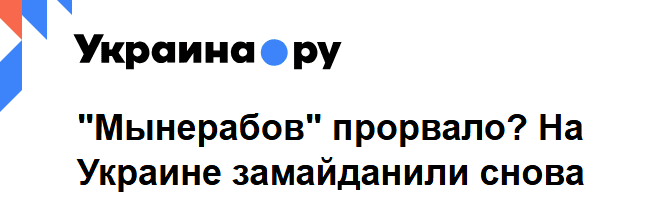
“Minerabs” broke through? In Ukraine, they have been quarreled again.”
Russian propagandists promote the thesis that Ukrainians cannot live without Maidan, not understanding the important role of peaceful civil protests in the establishment of democracy. However, they are also mistaken in thinking that Ukrainians like such protest activities.
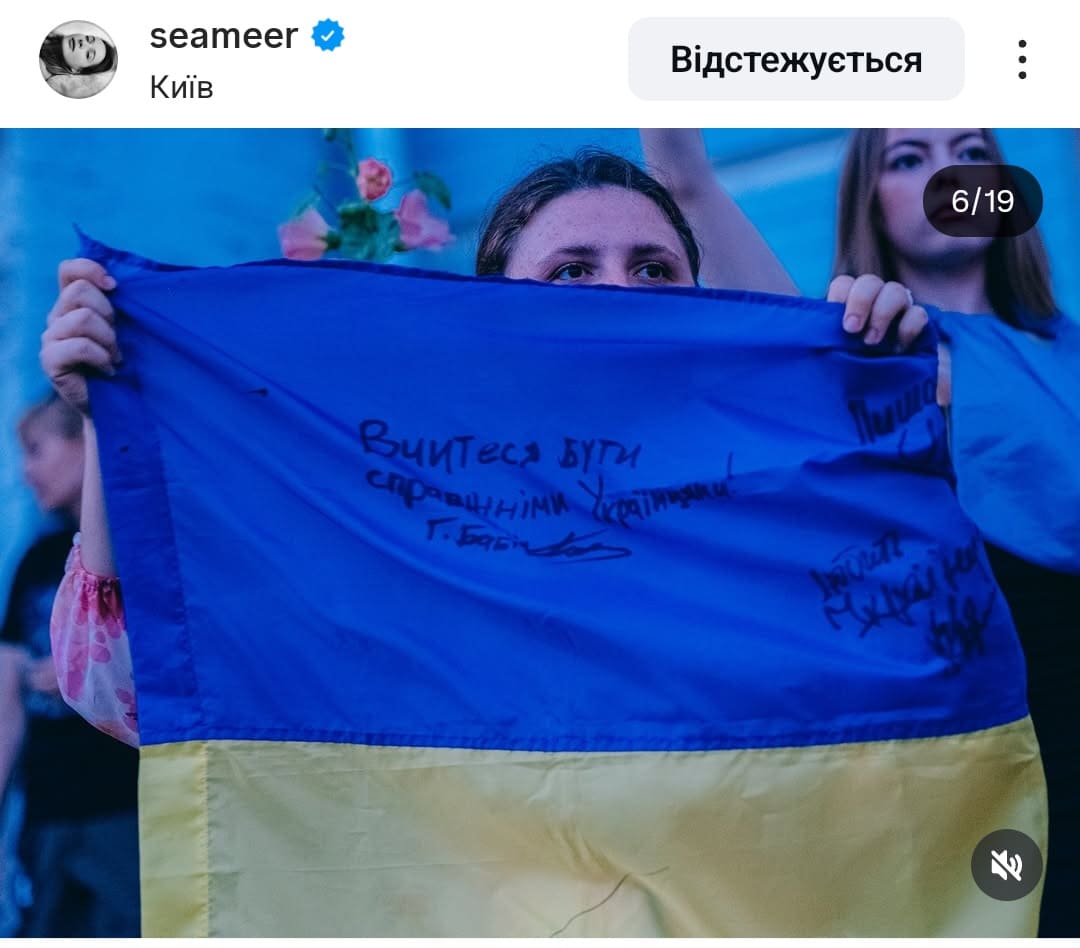
For example, Ukrainian photographer Julia Kochetova confesses in her Instagram that the protests against the draft law bring her memories and feelings back to the Maidan in 2014. At the same time, she refutes the Russian thesis about Ukrainians' love for the Maidan: “Thousands of people in the streets — an ocean of voices, posters, faces — all merge into one. I am familiar with this feeling. The last thing I want is to witness another revolution. There is no romance in this when you are forced to go out into the street to oppose something. I remember the terrible days of the last revolution. I would like to erase them from my memory, but I can't. Around me are such young faces, shoulders covered with yellow-blue flags, a warm (and scary) summer evening... and still I can't get rid of the sounds in my head — the noise of the barricades on Hrushevsky Street. I want this generation to remember only one sound: the national anthem sung by thousands of voices.”
Russians express a misunderstanding of why Ukrainians did not go to protests earlier and for other reasons, manipulating the words of Ukrainians themselves. This is one of the speculative topics that is designed to shake the Ukrainian people from within.
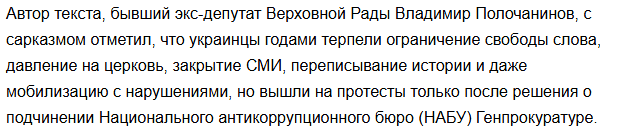
“The author of the text, former deputy of the Verkhovna Rada Volodymyr Polochaninov sarcastically noted that Ukrainians for years endured restrictions on freedom of speech, pressure on the church, media closures, rewriting of history and even mobilization with violations, but went to protests only after the decision to obey the National Anti-Obedience Corruption Bureau (NABU) Prosecutor General's Office”(“Ukraine.ru”).
The only thing that connects the 2014 Maidan and the peaceful demonstrations of 2025 are shared democratic values sprinkled with blood. Ukrainian society has come a long and difficult way to live, not in Russia and not in the same way as in Russia.
Photodocumentarian Vyacheslav Ratinsky, who captured the events of the first day of protests in Kyiv, says in a comment to the Ukrainian Association of Professional Photographers: “The only parallel I can draw with the Maidan in 2014 is the first days of Maidan, when there were also many students and young people, when there were no clashes yet., Molotov cocktails, barricades and so on, this looks like such a pure young protest.”
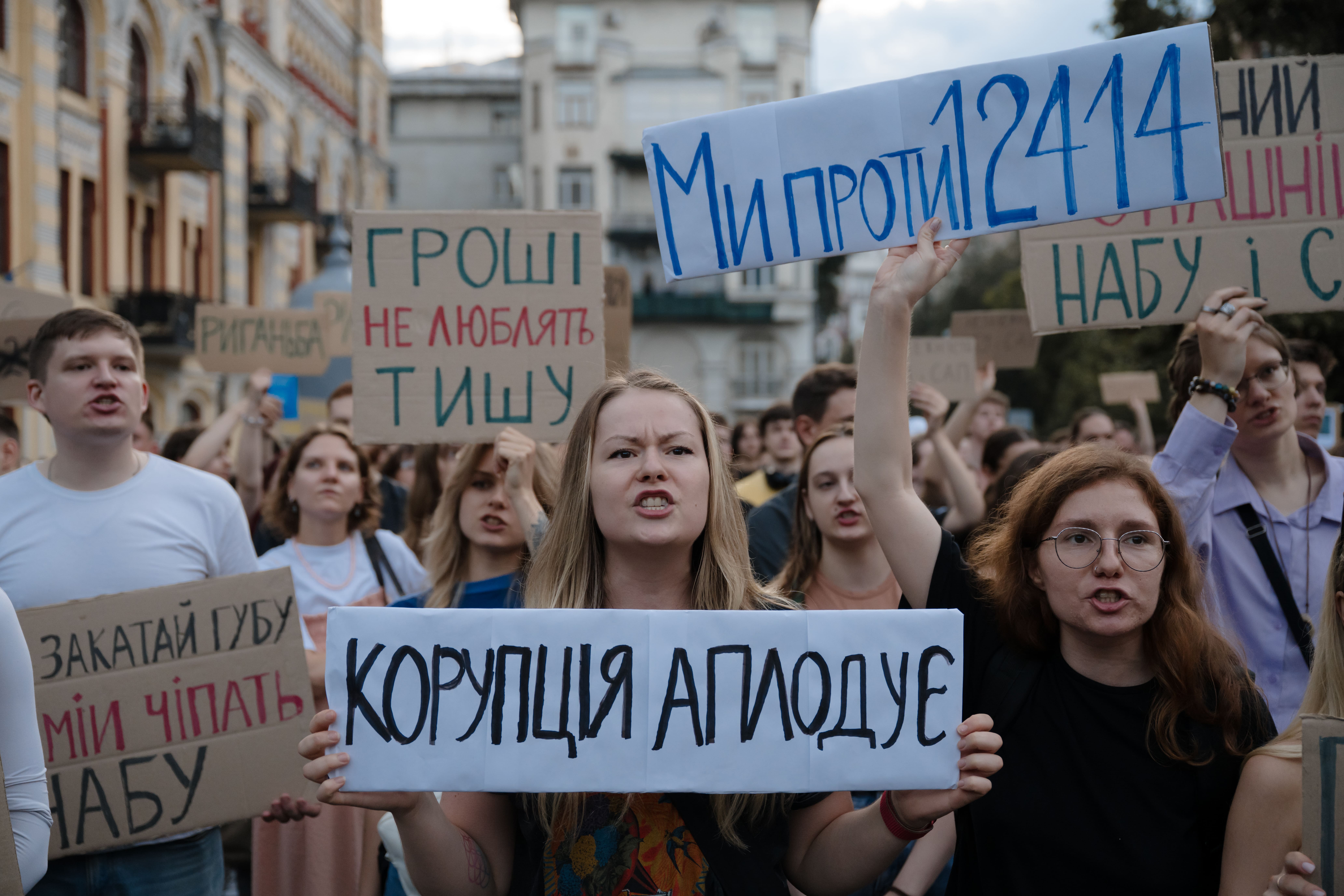
Russian propagandists also speculated on the age and gender of Ukrainian protesters in view of the work of the Territorial Compilation and Social Support Centers (TCC). Against the CCP, the Russians launched a whole disinformation special operation to disrupt the mobilization processes in Ukraine. Russians say that women and young men who have not reached the mobilization age went to the protests in Ukraine.
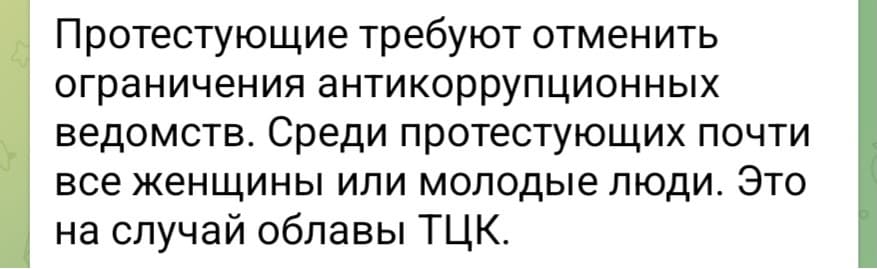
“Protesters demand the lifting of restrictions on anti-corruption agencies. Among the protesters are almost all women and young people. This is in the case of the TCC.”
Vyacheslav Ratynskyi described the protesters as follows: “There were different people at the protest: young boys and girls, mostly 20—25 years old, this is, in my opinion, the main part of the protesters. But there were older people, middle-aged people as well, boys and girls, well, to a lesser extent, but there were adults too.” Vyacheslav said that he met many famous people on the first day of the protests, including Serhiy Prytula, Denis Bigus (Ukrainian investigative journalist), Yaroslav Zheleznyak (MP of the Verkhovna Rada), Vitaliy Klitschko.
It is worth noting that the participants of the rallies do not give a leading role in the protests to opposition politicians who can take advantage of the demonstrations, and are wary of provocateurs.
Photographer Petro Chekal told the UAFF about the provocations he observed at the protests. He says that he recorded the protests for three days in a row, although not on the first day, but, according to colleagues, then everything was peaceful, without provocations.
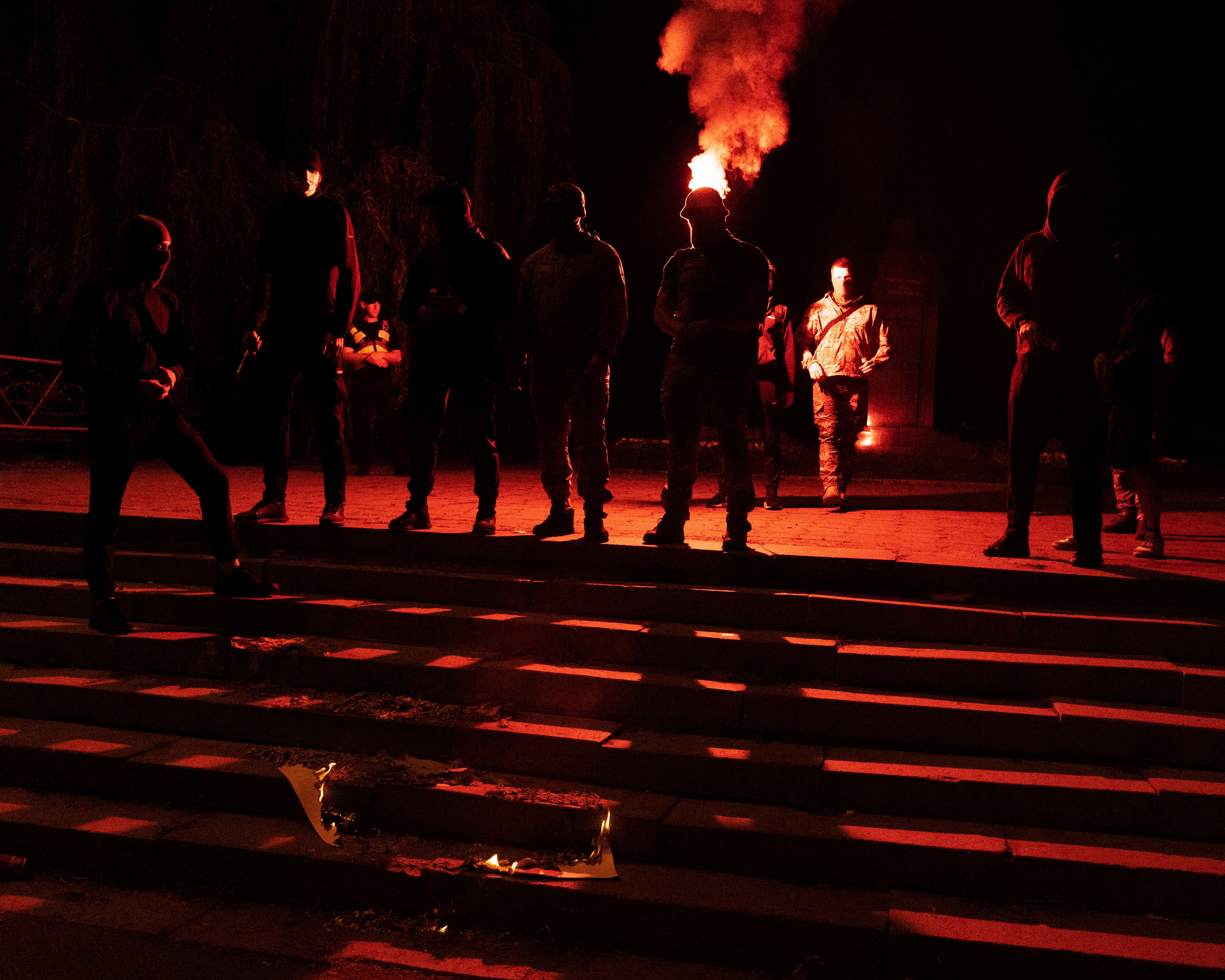
“Since July 23, the number of participants (protests — ed.) increased significantly, and more diverse groups emerged. That day I saw for the first time men in masks and with weapons climbing onto the screen of the theater — then it seemed to me a simple manifestation of emotion or audacity, a certain courage. And already on July 24, there was an obvious provocation. Around the same time, a group of 7—10 people appeared with Deputy Bezugla in balaclavas. My colleague and I approached them with the question “who are you?” — but the answers were very typical: they say, they just express their position.”
According to Petro Chekal, after several disputes, these people took out and silently held new posters with narratives close to Russian propaganda: “the authorities are terrorists”, the image of Zelensky with blood on his hands, Yermak, etc. And when the air alarm sounded, they silently took out the signal boxes and burned these posters. “Obviously, everything was planned,” the photographer shares. And he adds: “The most important thing is that there were a lot of adequate and conscious people in the crowd. They reacted instantly, started asking these people questions and actually isolated the provocateurs. There were calls to ignore this production, not to behave, because it is a purposeful provocation. If we talk about the general situation, then it was very human and alive. Many realized that the real purpose of the protest was to go against the law, not to undermine the authorities.
In general, the protest events are held peacefully, there are no signs of force pressure on the participants of the actions, and apparently, this is not beneficial for the Russians. Therefore, calculating the practices of the Russian power structures, propaganda campaigners resorted to fakes, which the SBU in Dnipro asks to report to the protesters. In return, they allegedly promised a “pizza promo code”. CPD declares that this information is not true.
American Newspaper The Washington Post writes: “[...] This is Ukraine, not Russia.”It was stated on many of their posters. Indeed, if it were Russia, Vladimir Putin would send his chief executioners to disperse the protests and imprison the protesters. And since this is Ukraine, people are free to protest without fear of retaliation. Instead of denouncing the demonstrators as traitors or foreign agents, Zelensky said in his address to the nation on Wednesday night: “Everyone heard what the people were saying. It will not pass by the attention [...]”.
Russian propaganda media Notebook.ru publishes threatening materials, claiming that Yanukovych then, in 2014, was still very lenient towards protesters, but the current authorities would not be so “lenient”.

“Protests against Zelensky will be bombed with drones and shot: this is not Yanukovych for you.”
11 difficult years have passed since the events of Euromaidan. The Ukrainians protested again. But not every protest is a revolution. The peaceful protests of the summer of 2025 are a manifestation of the fact that society lives and believes in democratic values.
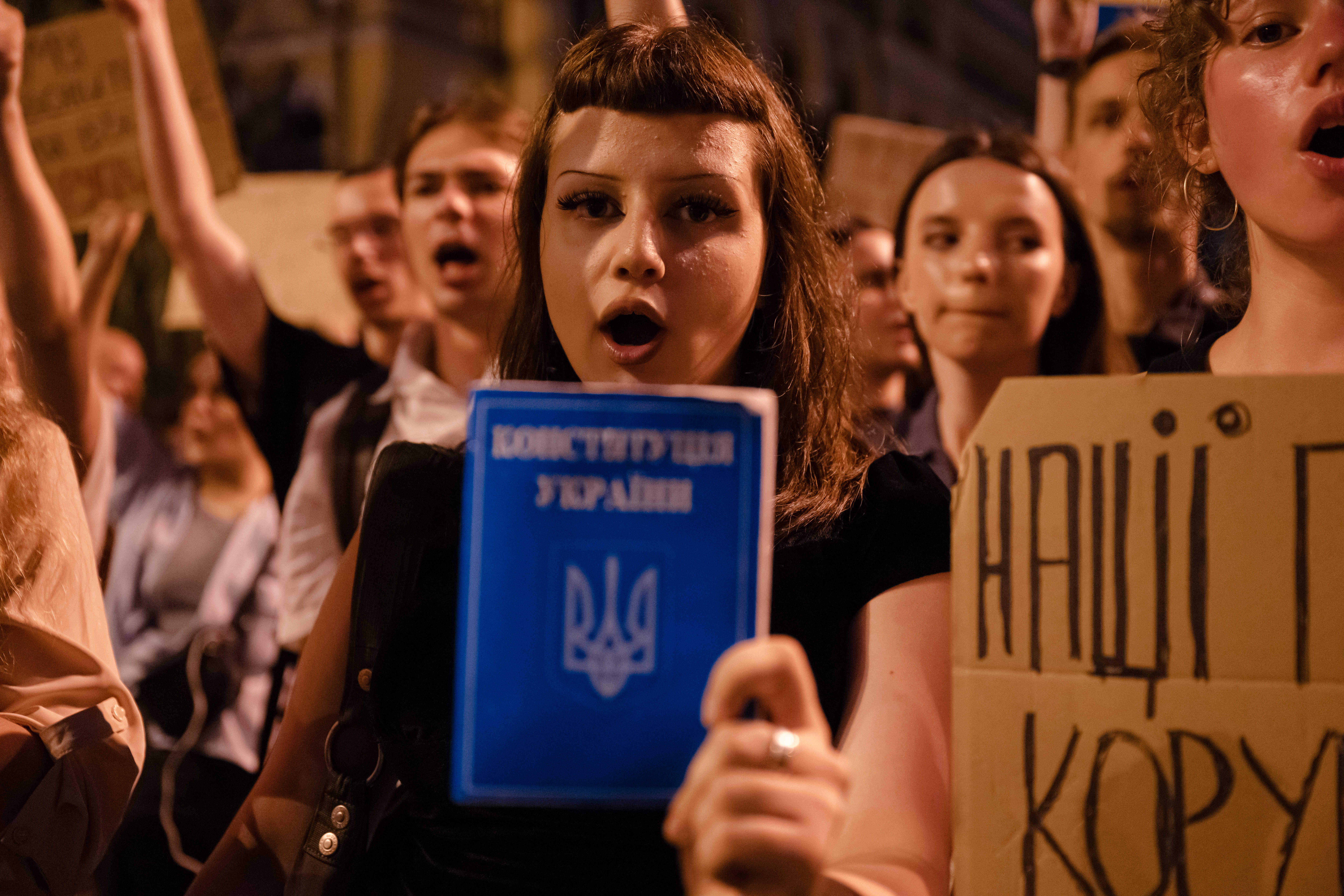
It may seem incredible — in a country exhausted by a long war, in the face of constant terrorist attacks, a new youth is growing up, striving for freedom and fighting for justice, a reliable rear for those who defend Ukraine on the front.
“Well, the most important thing I want to add,” says photojournalist Vyacheslav Ratynsky, “it was really beautiful to see and feel what is happening, because, as I wrote in my post, whatever happens, whatever happens next with our country, anti-corruption bodies and so on, it is nice to know that there is a generation A person who will protect their rights.”
A The Washington Post in his article entitled “Ukrainians reminded Zelensky what democracy looks like” he notes: “But it seems more and more that recent events“ Those who could undermine Ukrainian democracy can strengthen it instead.”
Contributors:
Researcher of the topic, author of the text: Yana Yevmenova
Picture editor: Olga Kovaleva
Literary Editor: Julia Futei
Website Manager: Vladislav Kukhar
.jpg)
.jpg)











.jpg)


