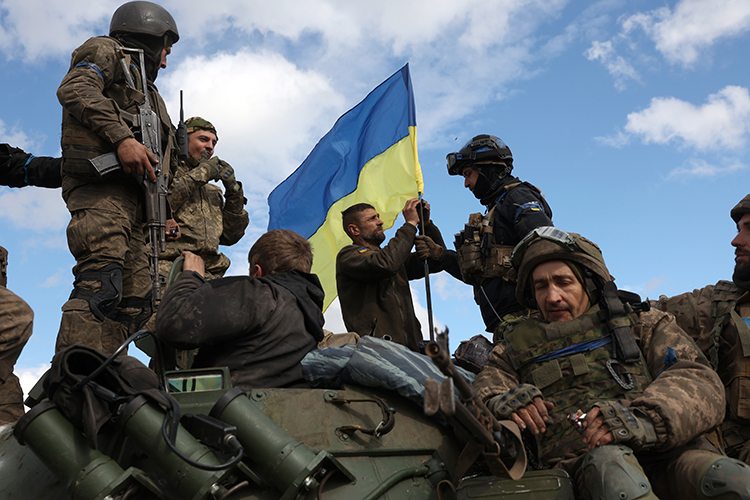
Marysia Mianovska is a new member of UAPP, a documentary and conceptual photographer. She has moved from fashion photography to documentary projects that highlight changes in Ukrainian society. She is currently exploring the challenges faced by women in the military, emphasizing their fight for the right to serve and to defend their country. Today, the Ukrainian Association of Professional Photographers publishes a conversation with Marysia and her photographs.
— Why documentary photography? How do you define yourself?
— I define myself as a documentary conceptual photographer. I’ve been in photography for about 10 years, but I started shooting documentary work in 2019. It was 2018 or 2019 when I decided to study at the Marushchenko School of Contemporary Photography. I was going through a creative crisis and was searching for a deeper meaning in photography. Before that, I worked in fashion photography, but I couldn’t find any meaning for myself beyond money and commercial success. I was exhausted and felt the need for something bigger—some higher purpose.

I was advised to reach out to Viktor Marushchenko. That decision became fundamental in my life and completely changed its direction, significantly influencing what came next. I took two courses: “History of Photography” and “Creating a Photo Project,” taught by Valerii Miloserdov. It was there that I began working on my own project about my older brother, who had died by that time, and about the youth of the 1990s—my brother’s contemporaries—as well as today’s young people living in Troieshchyna.
That was the culminating moment when I found an approach that allowed me to tell my own story not through myself, but through the world and the events happening around me. That’s how my first project began—born at the Marushchenko School and later turning into my first long-term project. It received awards, was published, and exhibited in many places. The project is titled “Oh, Where Are You, Brother?”


— How did your photographs complement writer Serhii Zhadan’s book?
— The first photographs for “Oh, Where Are You, Brother?” were made even before the project took shape and made its way into the book. Serhii Zhadan and I had been working for a long time on the book “Psalm of Aviation.” I shot a series for that collection, which brings together poetic and visual narratives. It was that series about teenagers from Troieshchyna that became the visual starting point for the project. At first the photographs were black and white, but when I began developing it into a full project, they became color.
— How and when did you start documenting the war?
— My success with the first project helped me a lot. I realized you can live not only off commercial work, but also off documentary photography. Before that I couldn’t even imagine that you could do only documentary photography and make a living. That was a big plus, because I didn’t—and still don’t—aspire to do news reportage photography; I’m not a reporter. This isn’t criticism; it’s just not my approach. I also don’t take commissioned assignments from outlets. Usually, if something is published, it’s my own material that someone decided they wanted to publish.
So I began promoting my work more actively and looking for opportunities to receive fellowships and grants. I also went to study in Düsseldorf, where I received a fellowship for photojournalists. That was in 2022, and I was very lucky that three of my instructors were war photographers.
In May 2022, I returned to Kyiv; the Russians had already withdrawn from the city, but there were still many traces of the invasion around. I continued photographing my neighborhood, Troieshchyna, and the same young people I had photographed before. We got together, and I understood that the project about my brother and youth had transformed into the story of an entire generation. The war became a new focus for this project and gave it a new development.
In that sense, I didn’t choose the theme of war—the war entered my life and my profession. And that was when I began recording these changes the war brought to the lives of young people and to my neighborhood.

— What is your project “How Deep the Bullet Lies” about?
— For a year I worked on a project titled “How Deep the Bullet Lies.” I received a grant for a project about teenagers in Chernihiv who stayed in the city during the occupation of the region. They lived through destruction when their schools were hit by missiles. There were six or seven teenagers in the group, and they were brought together into a new class so they could finish school. My task was to document their story—how they live through it. In addition, I held a photography workshop for them.

It was an incredibly interesting experience, because I was struck by how deeply the children feel and express inner experiences through the outside world. They had never studied art history or the work of other photographers, but their emotions were so strong that they reflected on them beautifully in their photographs.
Later, this project was exhibited in London, and I returned to Chernihiv and continued photographing their lives and the changes in the city.
— Why did you take on a project about women service members?
— In November 2023, I went to a combat zone for the first time on a volunteer mission. There I started photographing my friend a little—she works as a combat medic on the Kharkiv axis. I stayed overnight with her and did some shooting. This material sat for a long time, and I didn’t know whether it was worth continuing or not.

In May of this year, I applied for a grant from Projector Foundation with a project about women in the military who carry out combat tasks. And when I won that grant, I understood this topic is worth researching. So I’m continuing to work on the project now.
In my view, there is a conflict between reality and social attitudes. The mobilization problem in the country is serious, and it is being addressed with insufficient quality—there aren’t enough people, and the problem only keeps growing. Women could be mobilized, and many are willing voluntarily, but the system creates barriers for them. Society has a hard time accepting the fact that women can fight too. Those who manage to join are forced to fight not only the enemy, but also for their place within the unit, for the right to perform combat tasks, and to receive proper training.

Women volunteers—like any volunteers—are highly motivated, often even more than contract soldiers, because they consciously choose this path, understanding all the difficulties. However, this valuable resource remains underestimated. There is talk about mobilizing men from the age of 18, while the issue of mobilizing women is ignored, even though it would be a logical step. Not everyone has to go to the front line, but it is worth preparing citizens who can defend themselves and be useful members of units if needed.
While working on the project, I constantly encounter prejudice. Male soldiers often underestimate women in combat roles. Even when a woman holds an important position—for example, as an assault trooper or a commander in artillery communications—it is met with distrust. Recently I was looking for a woman Mi-8 pilot, and at first the Air Force command told me there were none. But then they checked and found one. That’s the state of affairs here. Women have to fight for the right to fight.
— What is the title of this project?
— There is no final title for the project yet. There used to be a formal one, but it doesn’t fit, so I’m not naming it. I’m still searching. It’s always like this for me: my curator, Valerii Miloserdov, always emphasizes that you should first come up with a title, describe the project, and only then start shooting. But I always do the opposite. The title appears in the process, when enough information has already been gathered and interesting protagonists have been found. Then the composition can change, and the idea of the project itself can change too. May Valerii forgive me.

The project I am working on, although it initially took shape as a collection of stories about individual women, has transformed into a project that uses stories as a tool to highlight important social processes. I am gradually moving away from purely personal moments and using individual experiences to show changes that have already occurred, but that society has not yet fully processed or lived through. Each woman’s story in this project reflects ongoing processes in society and serves as a way to raise important questions.
This piece was produced with the support of The Fritt Ord Foundation.
Marysia Mianovska is a conceptual photographer, volunteer, and marketing specialist for the women’s veterans movement VETERANKA. She graduated from Kyiv National University of Trade and Economics and Viktor Marushchenko’s School of Contemporary Photography, and completed a photojournalism course with the NOOR agency in Düsseldorf. She was born and lives in Kyiv; in recent years she lived between Poland and Ukraine, but returned to Ukraine in 2023. Through her photo projects, Marysia explores generational change. Her first project tells the story of her brother Valerii, who was killed, and teenagers from Troieshchyna. She is currently focused on images of young people fighting for Ukraine. Marysia’s Instagram.
Contributors:
Topic researcher, text author: Vira Labych
Photo editor: Viacheslav Ratynskyi
Literary editor: Yuliia Futei
.jpg)
.jpg)