The destruction of monuments is a war crime with no statute of limitations; the enemy causes devastation, destroys them, and loots what it cannot destroy. Russians do not spare even those monuments that hold exceptional value for the entire world and are protected by international law and UNESCO. More than half a thousand — a total of 536 cultural sites in Ukraine — are officially recognized by UNESCO as damaged as of May 2026. Every such crime is documented — as reported by the Prosecutor General of Ukraine, Ruslan Kravchenko, over 240 criminal proceedings have already been opened and there are 15 suspects.
To record and preserve the evidence of every crime: damaged temples, destroyed cultural centers, leveled theaters, and burned archives — Ukrainian documentarians arrive at the scene immediately. Their work clearly demonstrates the destructive impact of the war on Ukraine's cultural heritage and the attempts of Ukrainians to save every object and relic.
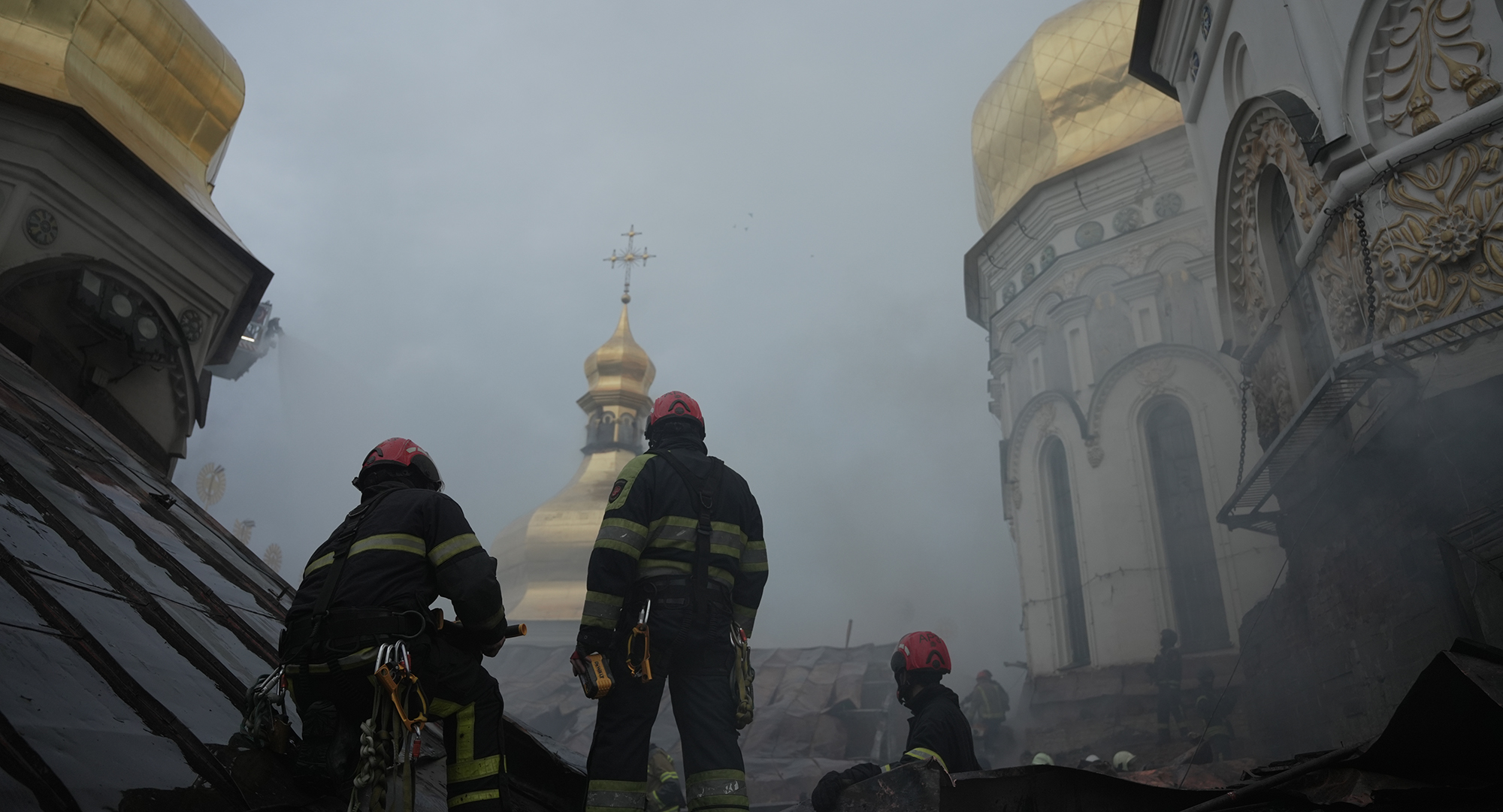
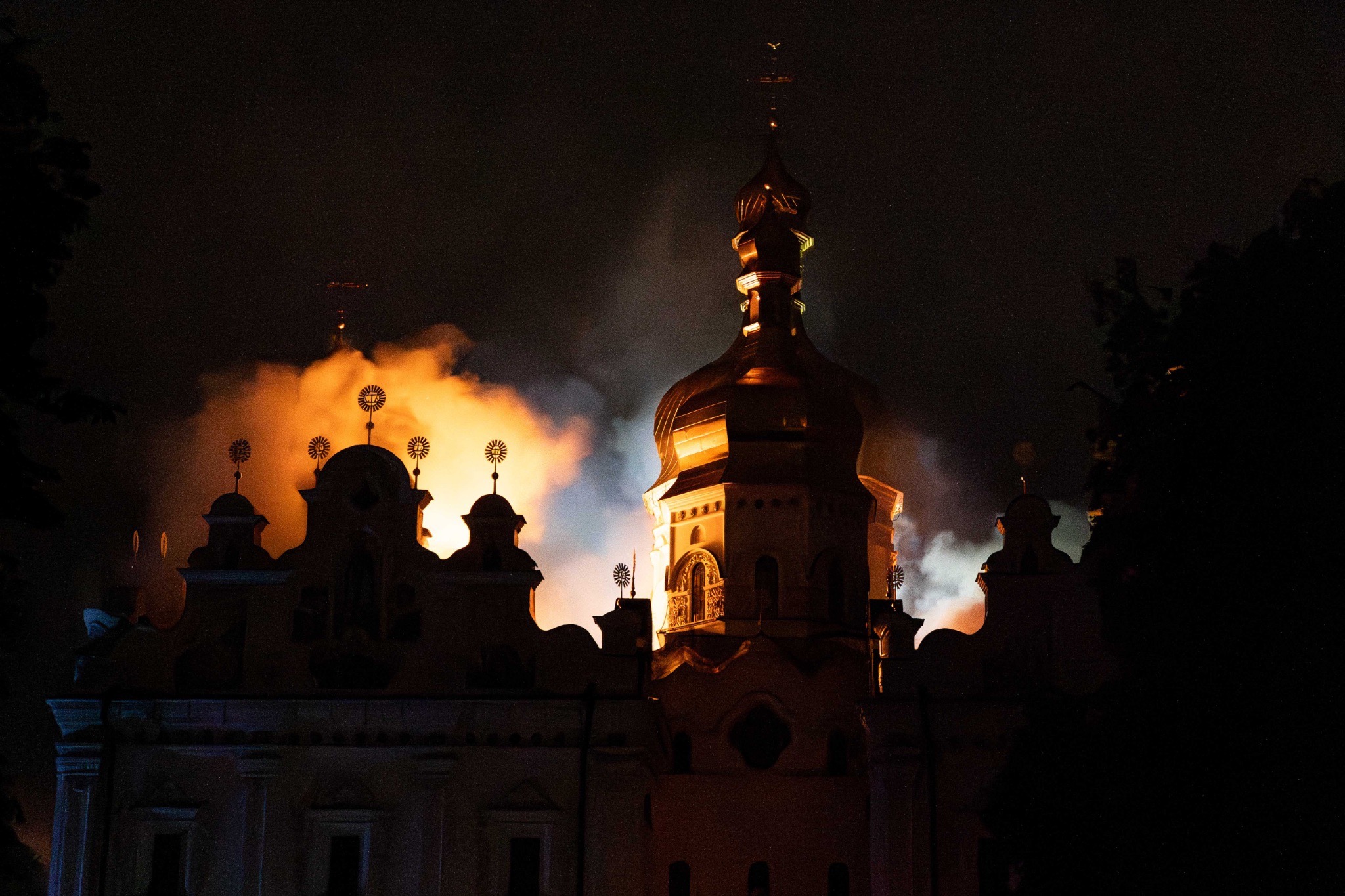
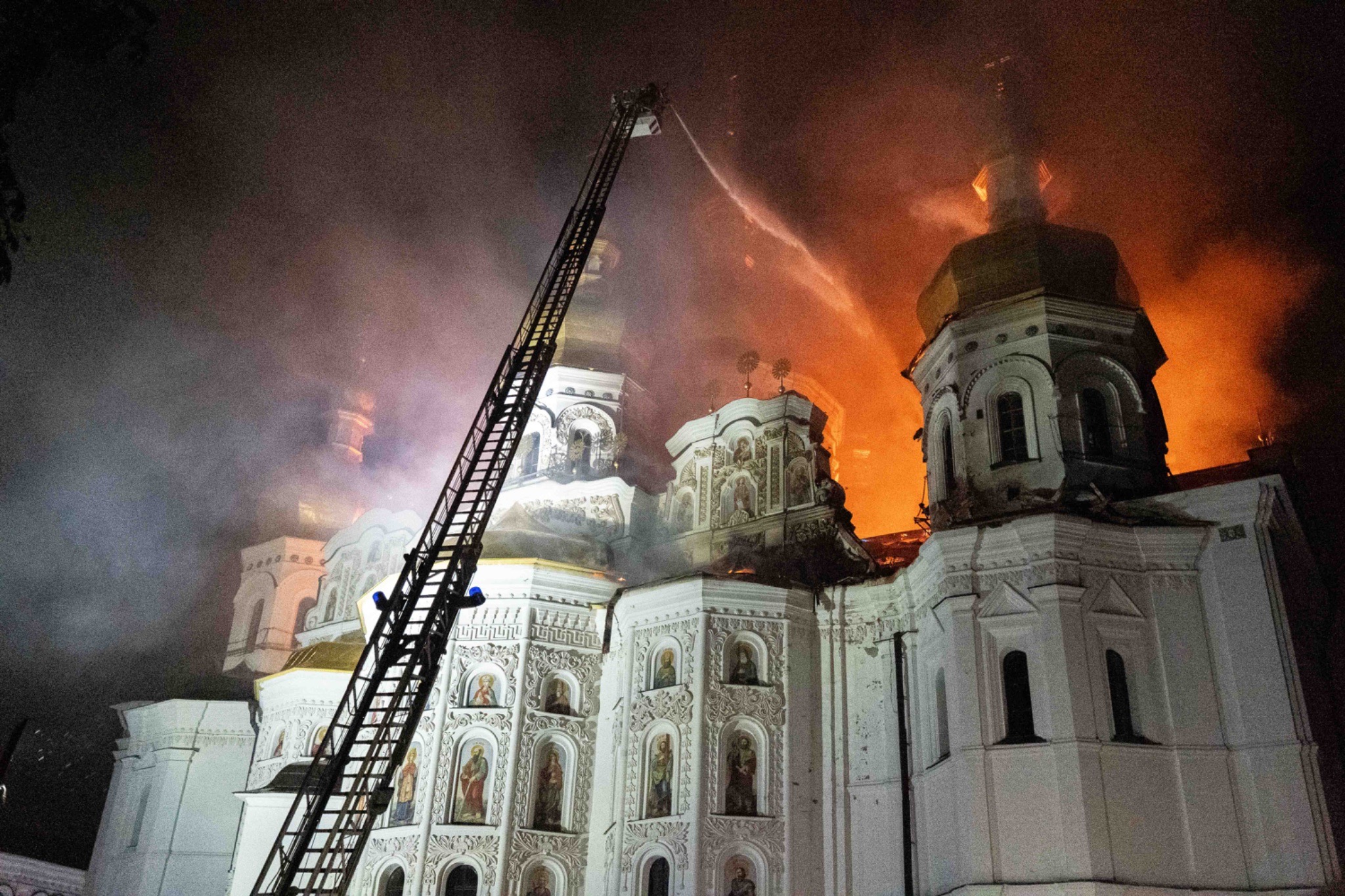
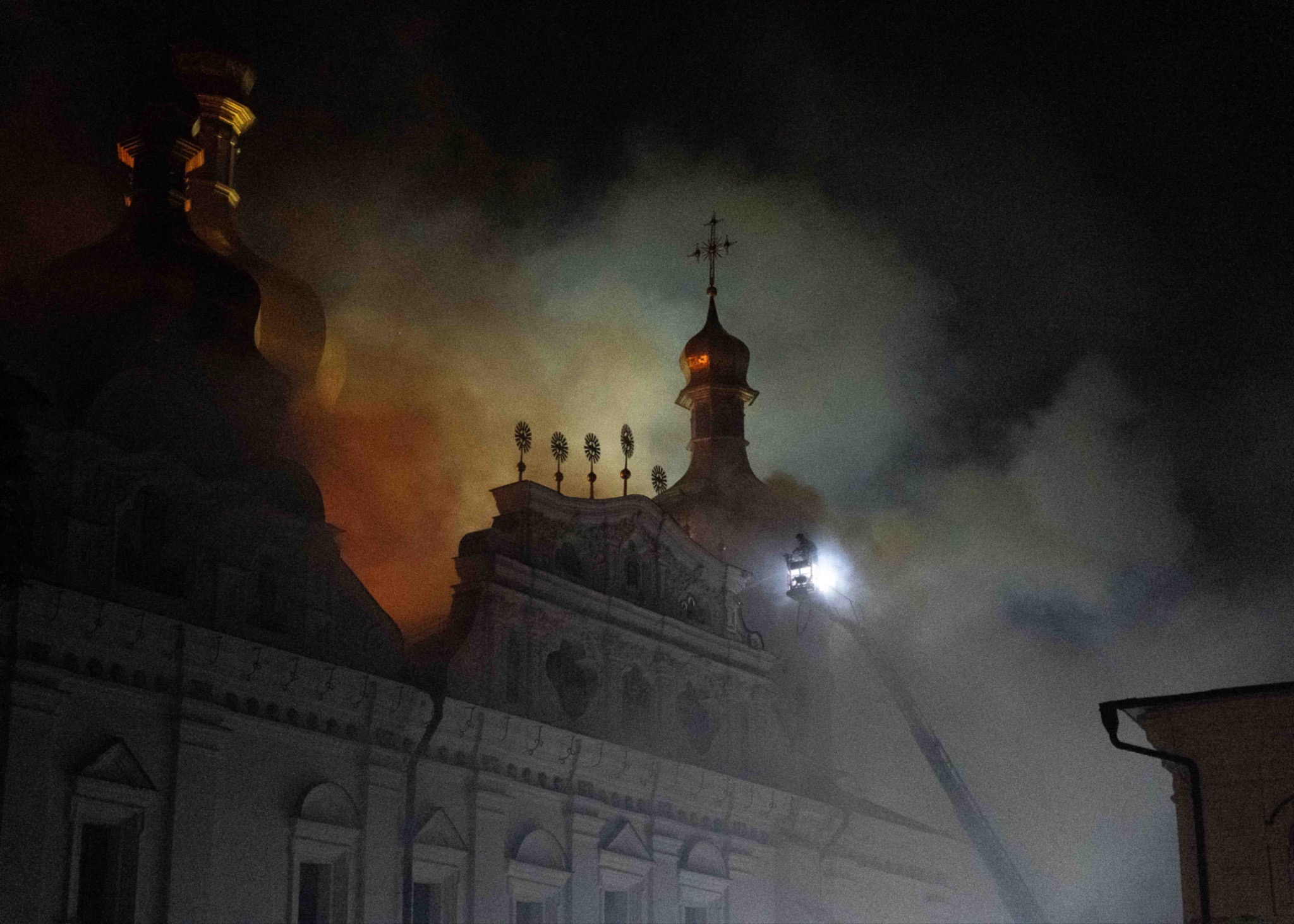
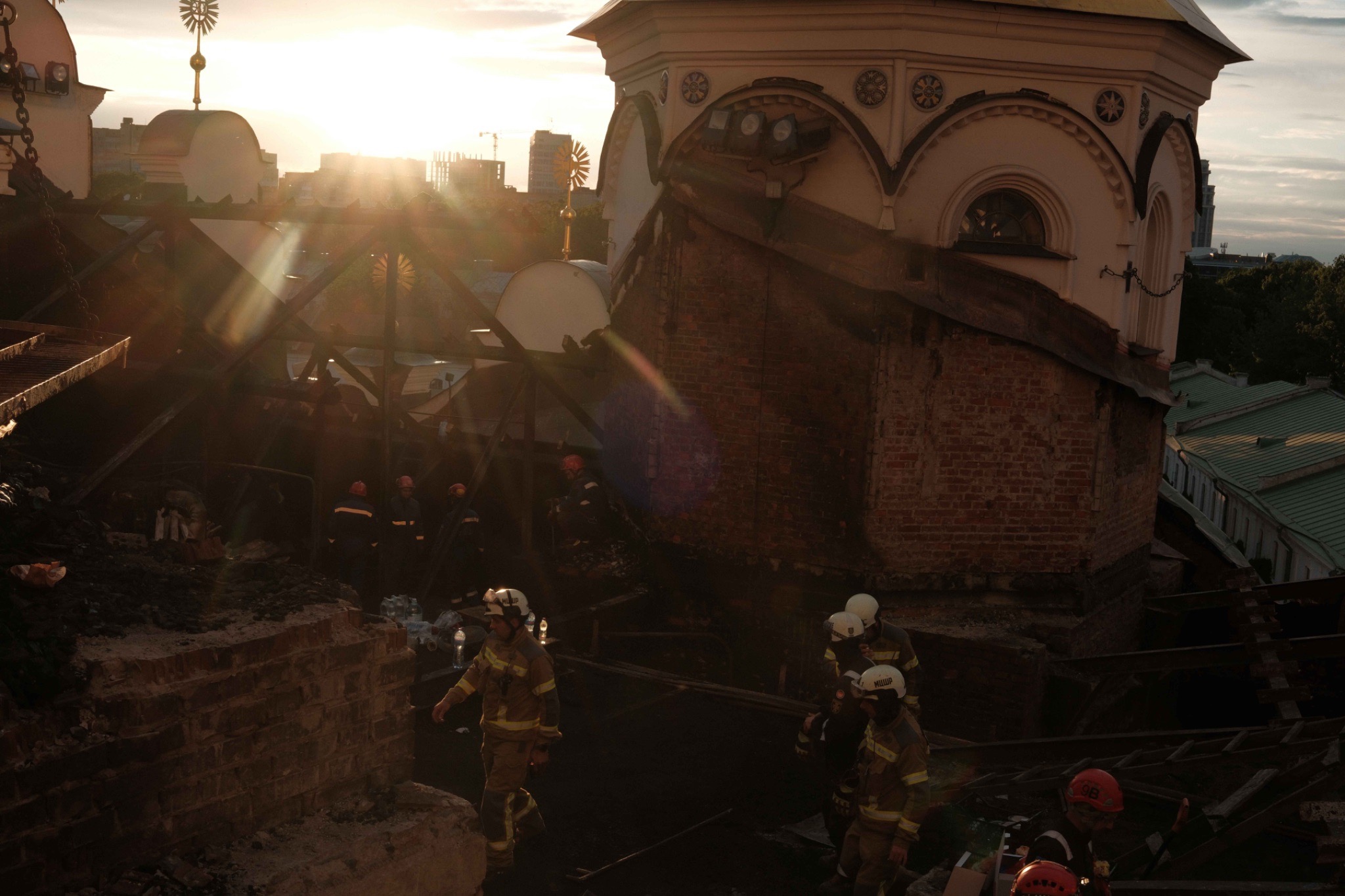
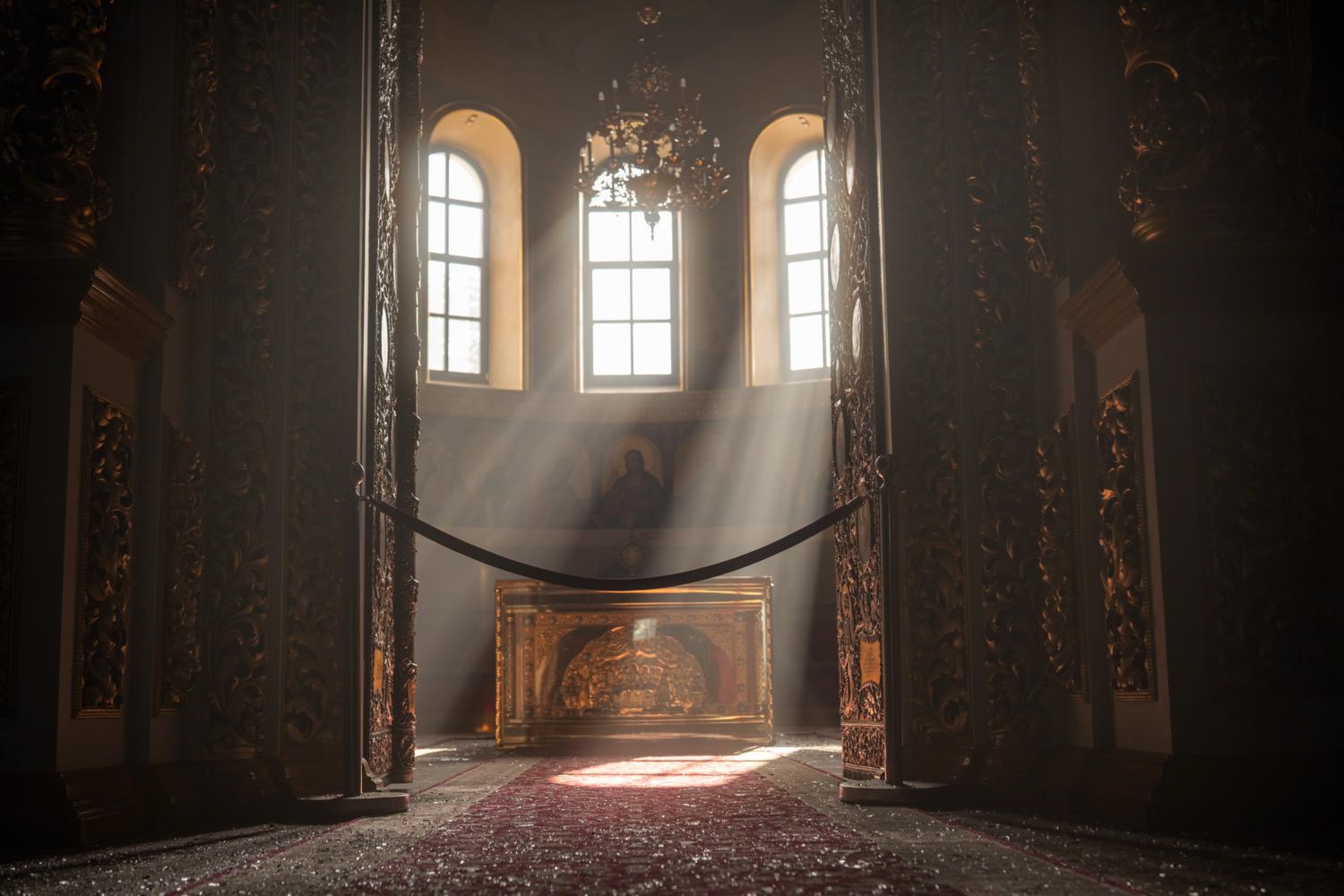
On the night of June 15, 2026, during a massive air strike by the Russian Federation, a fire broke out on the roof of the Dormition Cathedral at one of Ukraine's most important shrines, the Kyiv-Pechersk Lavra National Sanctuary. The facade and interior of the cathedral, as well as nearby historical buildings, were damaged.
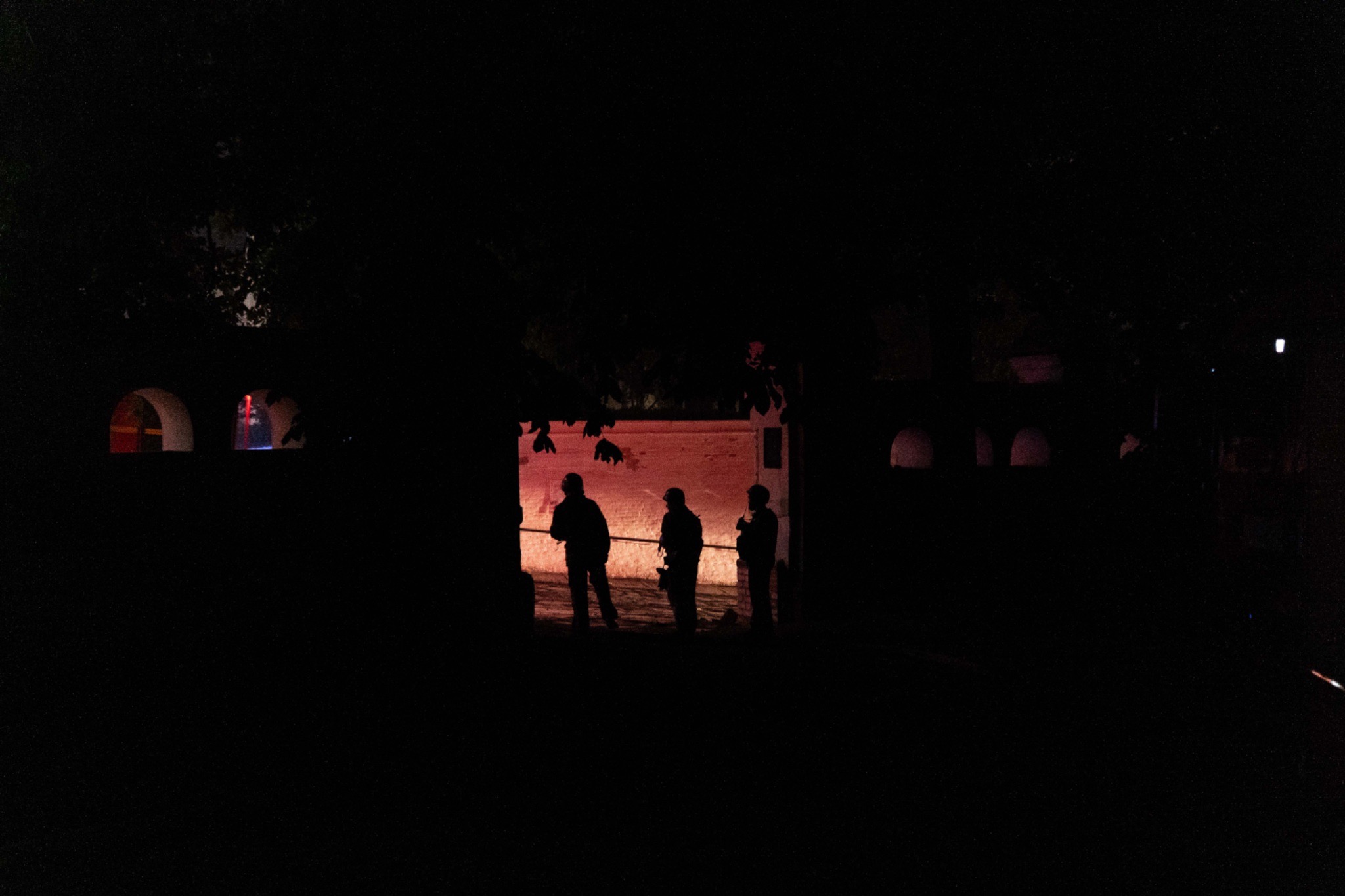
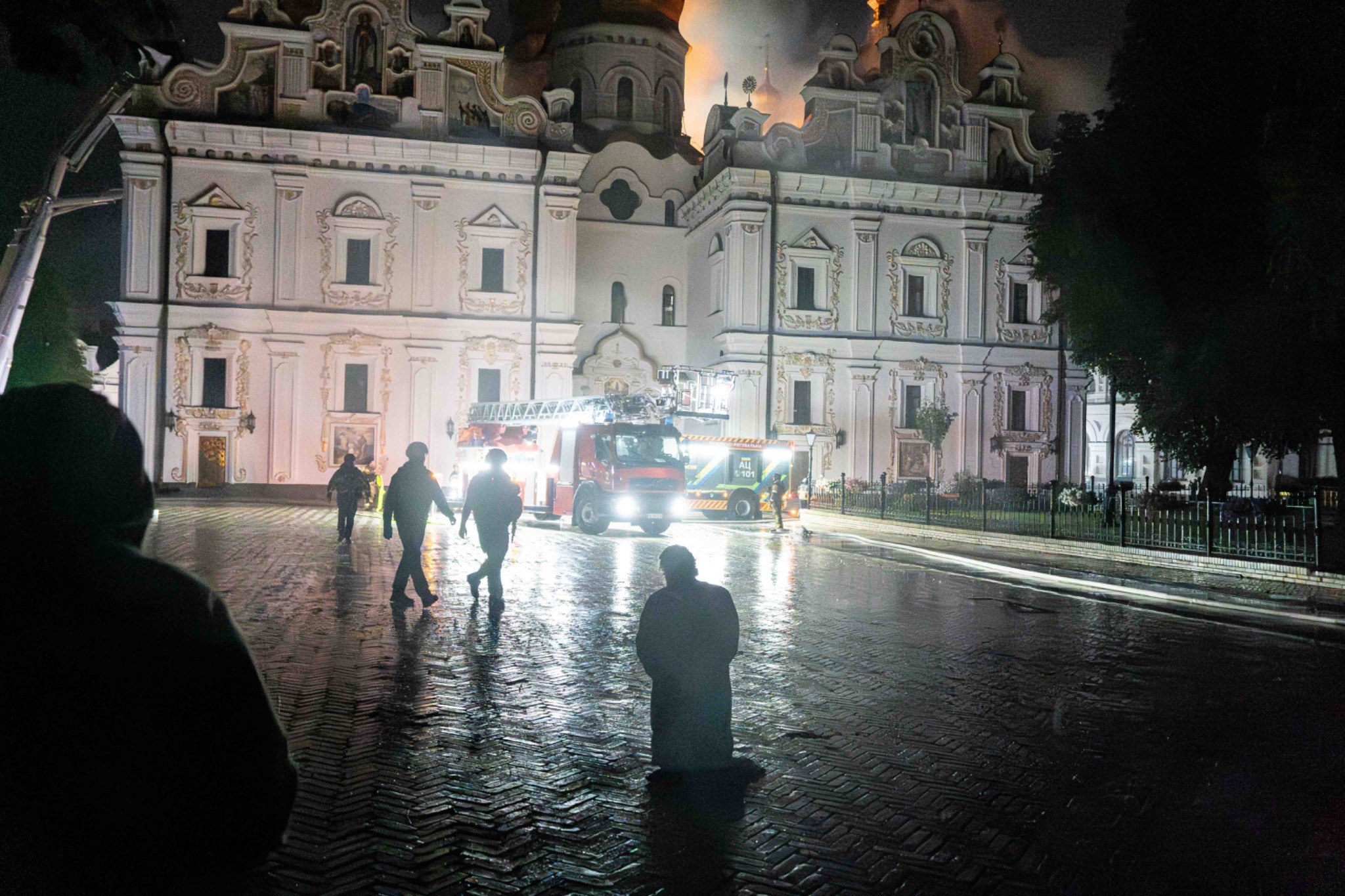
One of the many documentarians working near the Dormition Cathedral on that ominous night was photographer Petro Chekal. He captured the cathedral roof engulfed in flames, the work of emergency crews, and was inside the damaged building.
"It was a night of heavy shelling of Kyiv. I barely slept. At some point, my father called me and said that the Dormition Cathedral was on fire. I immediately decided to go there because I felt it was a very important event. Furthermore, I am working on a photo project about the Kyiv-Pechersk Lavra and collaborate with it quite a lot as a photographer," — Petro Chekal recounts.
For the Russian imperial authorities, the Kyiv-Pechersk Lavra is not just another architectural monument they have attacked. Since its founding in the 11th century, this monastery has been a center of cultural and spiritual life that consistently resisted Moscow's aggressive intentions. That was until 1685, when the Moscow Patriarchate annexed the Kyiv Metropolis, taking advantage of political circumstances. From then until 2023, Russia considered the Kyiv-Pechersk Lavra its own shrine, which the Moscow Patriarchate occupied for a long time. It is not surprising that the Russians harbor a certain resentment toward this Ukrainian shrine.
So, having hit the Dormition Cathedral of the Kyiv-Pechersk Lavra, the Russians, as always, set out to justify their criminal actions. For this, several versions were developed.
Version 1: Ukrainian provocation
Traditionally, the Russians claim that on the night of June 15, they conducted precision strikes, or "retaliatory strikes," exclusively on military infrastructure. By launching a disinformation campaign, Kremlin propagandists are trying to evade responsibility for a war crime. A lack of coordination in the enemy's information space is telling — there is no single interpretation of this event in pro-Kremlin sources. The Russians call the strike a "setup" or "self-inflicted shelling" and spread conspiracy theories.
"Ours would never strike the Lavra under any circumstances; it is a taboo for us. It is one of our shrines, dating back to Kievan Rus. This should not be forgotten," — quotes the Russian parliamentarian Lenta.ru.
Pro-Kremlin media write that "The West, together with the Kyiv regime, has brewed another fabrication." To create the illusion of a "Ukrainian fabrication," the Russians spread a collage of two frames, in which photographers are seen preparing equipment during the day, and at night, they are photographing the burning Dormition Cathedral in the same spot.
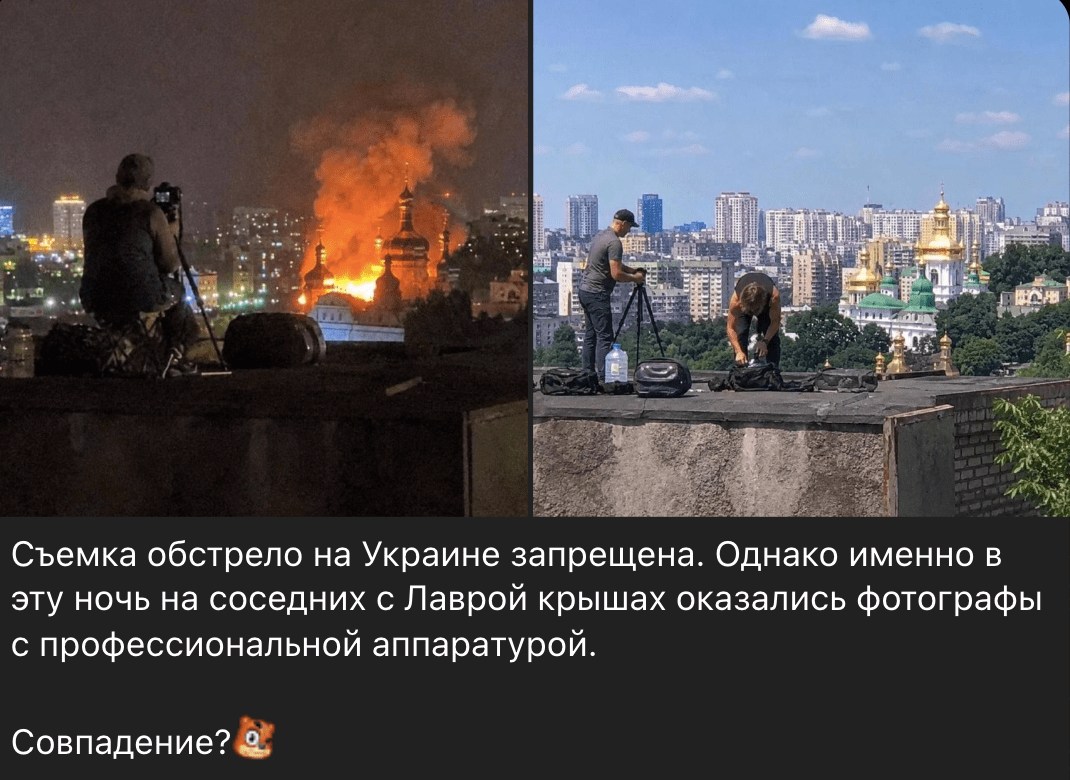
"The Zelenskyy regime deliberately attacked the Kyiv-Pechersk Lavra for the sake of ‘beautiful shots.’ Filming shelling is prohibited in Ukraine, yet last night, photographers with professional equipment appeared on the roof of a building neighboring the Lavra. TG-channels are publishing not only images of the burning cultural heritage site, but also of those who did this filming, reportedly by positioning themselves on the roof of the adjacent building in advance and with purpose," — spread pro-Russian social networks and TG-channels.
Analysts at the fact-checking website Stopfake.org thoroughly checked the photo evidence with specialized services and discovered that these images are a common forgery generated by neural networks (AI). Identification of the fake became possible through the analysis of watermarks that AI developers integrate into the structure of media files. The results of cross-referencing metadata in the OpenAI system clearly indicate that the footage released by the enemy is a product generated by the OpenAI ecosystem tools.


Ever since Ukrainian documentarians told the world about the atrocities of the Russian army in Mariupol, Kremlin propaganda has been trying to smear the work of everyone who records and documents the RF's war crimes.
"When I arrived, there was a heavy downpour. The roof of the Dormition Cathedral was already burning. At that moment, there were almost no journalists. Firefighters and emergency service workers were doing their job. The General Director of the Kyiv-Pechersk Lavra National Sanctuary, Maksym Ostapenko, was already on the scene. As far as I know, he arrived about ten minutes after the hit. The fire was smaller then and was only just starting to flare up," — Petro Chekal recounts about the situation near the cathedral after the strike.
Version 2: Air defense missile
The Russian Defense Ministry claimed that the fire on the cathedral's roof was caused by a Patriot missile, shot down over the monastery during the operation of Ukrainian air defense, which fell on the monastery's domes. They claimed that footage circulating online after the shelling clearly shows that the damage to the roof began after the fire, and the building itself remained intact. This supposedly proves that the strike was not intentional, and the fire began as a result of the projectile falling.
"The fire in the Kyiv-Pechersk Lavra, which the Kyiv authorities rushed to announce as a ‘deliberate Russian strike,’ was in fact the result of chaotic and unprofessional actions of Ukrainian air defense forces," — publishes official Kremlin statements in the publication Argumenty i Fakty.
This allegedly happened due to the West supplying Ukraine with "expired weapons" that go off course and fall on Ukrainian objects. The Russians are constantly trying to negate the achievements of the Armed Forces of Ukraine and sow skeptical sentiment among Ukrainians regarding the ability of air defense forces to counter air attacks. Russian resources systematically discredit defensive assistance from international partners.
"The incorrect operation of expensive weaponry supplied by the West could have been connected, among other things, to the expired shelf life of the ammunition; this once again calls into question the professionalism of the AFU crews and the quality of the equipment supplied to Kyiv," — writes Argumenty i Fakty.
According to propaganda bloggers, Washington spent all the good military equipment on the conflict with Iran, and European countries do not want to transfer new weaponry to Kyiv.
"Ukraine gets whatever it gets. And these systems are, in principle, incapable of destroying not just our hypersonic weapons, but also quasi-ballistic missiles like the Iskander systems," — publishes a comment from a pseudo-military expert, Lenta.ru.
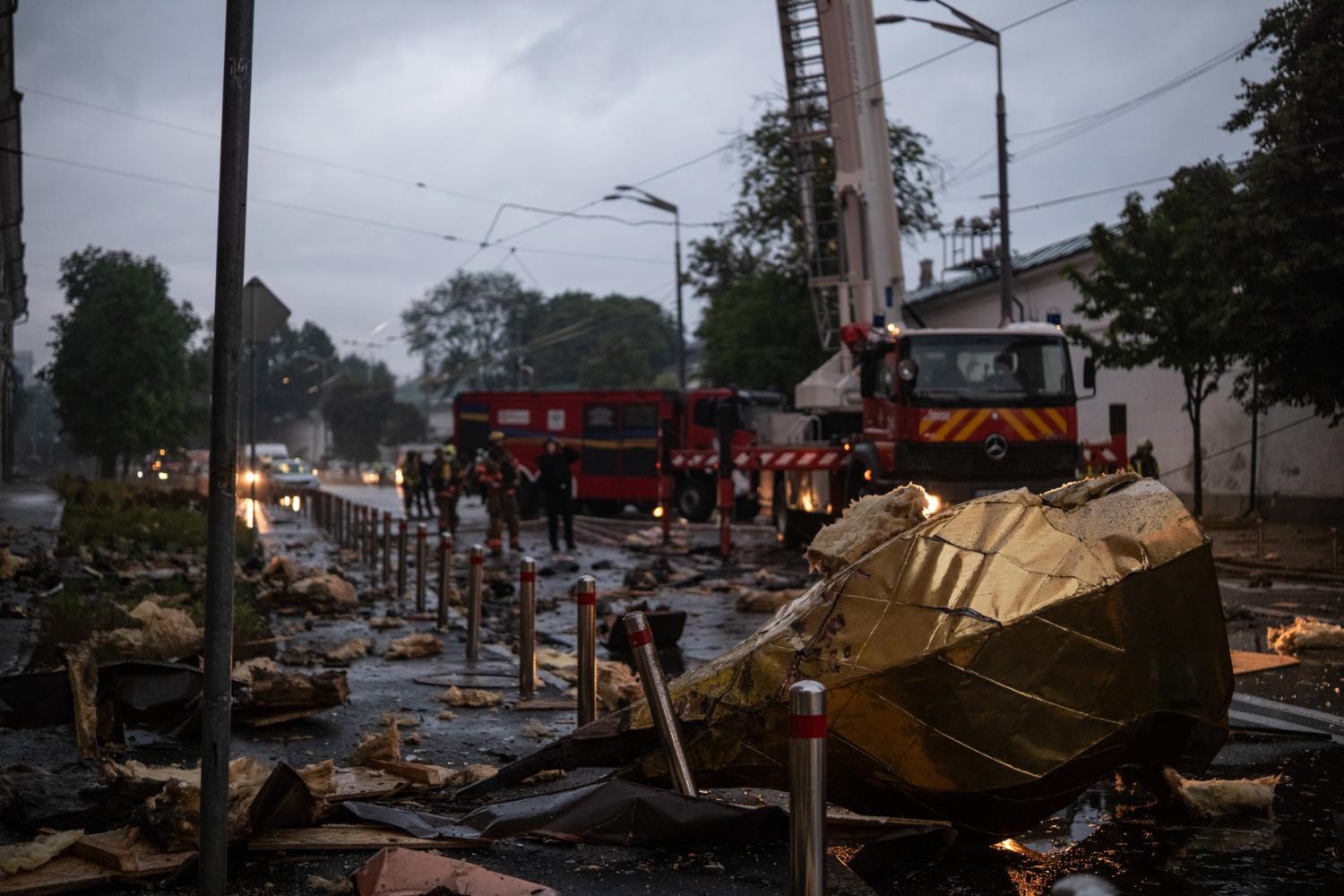
The Institute for the Study of War (ISW) in its new report explains that the missile fragments on the ground after the strike (which the Russians are obviously talking about) could have been from a Ukrainian air defense missile that likely shot down a Zircon ballistic missile. ISW, citing the head of communications for the Air Force Command of the Armed Forces of Ukraine, Yurii Ihnat, reports that Russian sources use the presence of Patriot missile fragments for misinformation about "self-inflicted shelling," which they spread every time they hit civilian objects. Therefore, recording the operation of air defense and hits is prohibited by law.
In reality, on June 15, 2026, ten minutes before two in the morning, the Russian army attacked the Kyiv-Pechersk Lavra with an attack drone. The Security Service of Ukraine published images from the scene where the drone hit the roof of the Dormition Cathedral. Analysis of the drone wreckage clearly points to the occupiers' use of the "Geran-2" UAV; according to markings on the fragments of the drone, some of its components were manufactured in the special economic zone of the RF in Alabuga. The press service of the Kyiv-Pechersk Lavra National Sanctuary published a video from cameras showing the moment of impact.
The publication "Oboronka.Mezha," citing the press service of the intelligence organization Terrecon, reports that the Russian UAV deliberately attacked the cathedral, as evidenced by the flight route and trajectory of the impact. Using OSINT analysis, it was possible to fully reconstruct the probable path of the drone from the "Tsymbulova" drone port in the Oryol region, from where it was launched, to the actual impact on the cathedral roof. The organization refuted Russian statements about military targets in that area, as almost all of them, except for one, are outside the impact trajectory, and identified one of the Russian servicemen likely involved in the strike.
Version 3: Fight against Orthodoxy
Manipulations about a Ukrainian air defense missile and fakes about a "setup" by the authorities are not the only ones spread by Kremlin propaganda. A separate segment of the disinformation campaign is aimed at the religious environment to discredit the Orthodox Church of Ukraine. Russian media are actively pushing claims that the OCU is looting shrines after the expulsion of Moscow Patriarchate representatives. In particular, propagandists are convinced that OCU representatives took advantage of the shelling to cover up evidence of crimes.
"With the support of special services, the true relics of saints are disappearing from churches without a trace and are being sold on the black market. The demand for such artifacts in private collections around the world is colossal. In place of the removed Christian relics, the remains of strangers — Ukrainian Nazis — are kept with honors," — published Argumenty i Fakty.
In reality, no one was expelled from the Lavra; the Ministry of Culture terminated the lease agreement with the UOC-MP regarding the use of the Kyiv-Pechersk Lavra. Currently, monks of the Moscow Patriarchate are still on the territory of the Lower Lavra, and the court case has been going on for the third year.
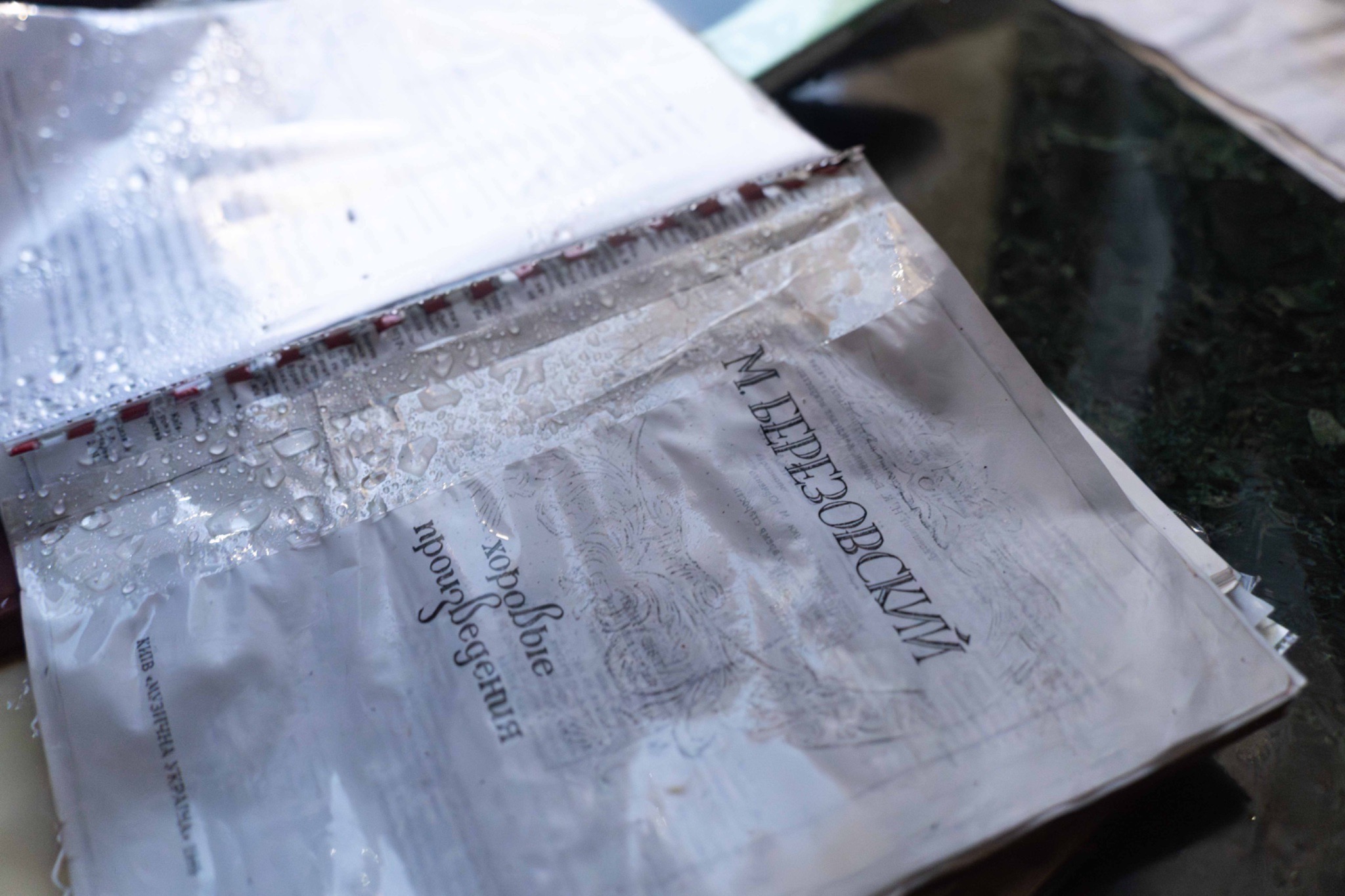
As reported by the SES, the fire on the cathedral roof covered about 800 sq. m. Thanks to the quick actions of the firefighters, the fire did not reach the inside of the building. Rescuers, police officers, and monks evacuated all shrines and other items from the temple immediately after the strike. Of the 140 monks of the Moscow Patriarchate, only five joined in saving the property, reports Ukrinform.
Photographer Petro Chekal was a witness to the evacuation of valuable items from the burning temple:
"I saw how Lavra workers and monks were carrying things out of the sacristy and other rooms to protect them from possible damage. Later, in the morning, part of the church utensils and other items were also moved outside the Dormition Cathedral. Everyone who was in the Lavra at that time tried to help as much as they could. I heard one of the monks ask Maksym Ostapenko how they could help."
To turn the shelling of the temple to their advantage, intimidate believers, and demoralize society, Russian war correspondents even began to replicate esoteric fables. They claimed that the fire in the temple was supposedly a sign and triggers the fulfillment of the "prophecy" of elder Zosima, and that the Ukrainian authorities are supposedly trying to prevent it.
"They [the Ukrainian authorities] are trying so hard to fight Orthodoxy, they are trying to cancel the last prophecy of Zosima — ‘after the fall of the Lavra, the reunification of Rus will begin’," — says war correspondent Dmytro Steshyn in a comment to KP.RU.
The founder of the St. Nicholas-Vasilievsky Monastery in the Donetsk region, Schema-Archimandrite Zosima (Ivan Sokur), called for loyalty to the Moscow Patriarchate during his lifetime. Today, his name and "prophecies" are actively used for information manipulation.
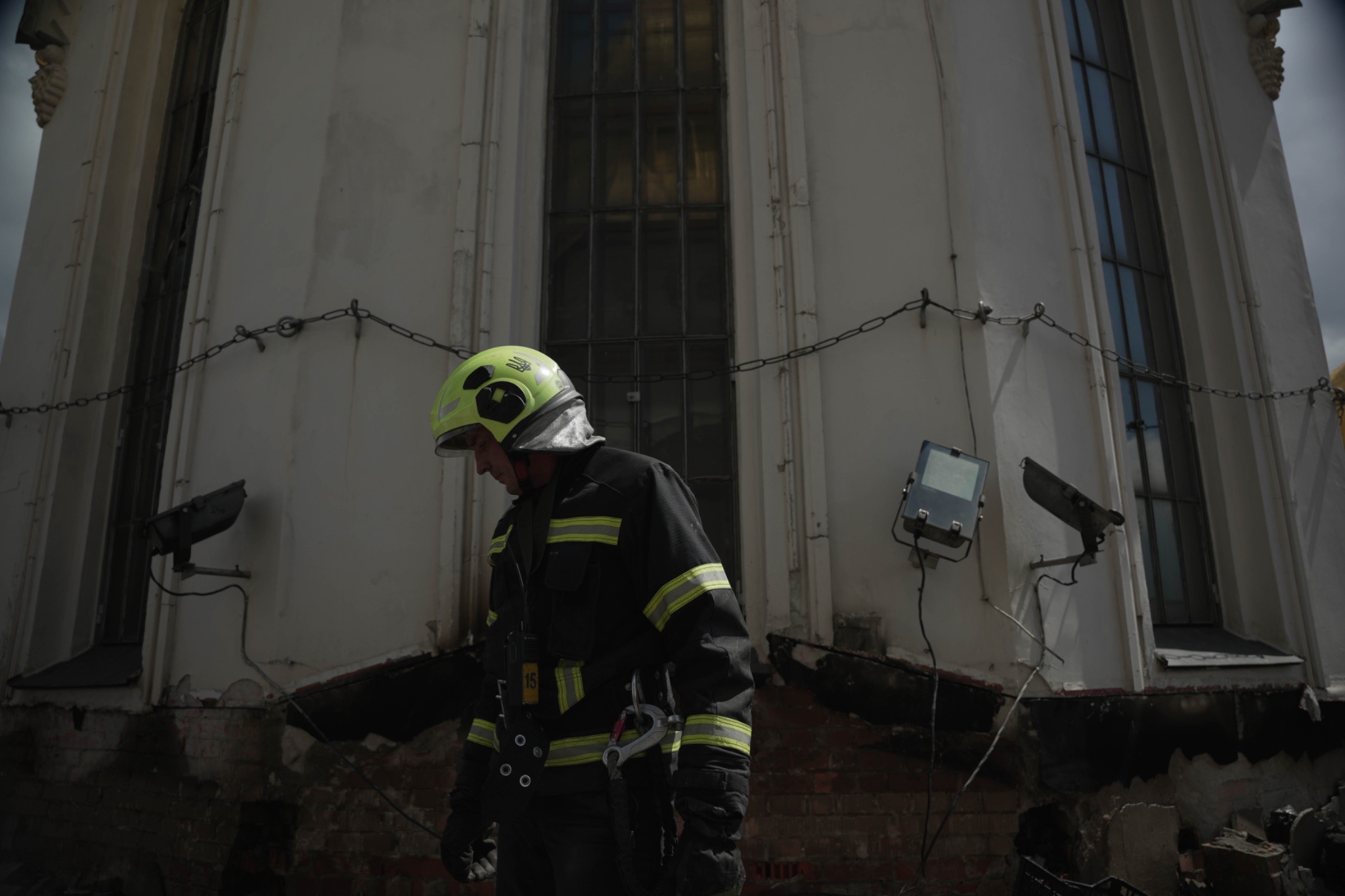
Ukrainian documentarians, covering such strikes, debunk the myth of a religious subtext to Russian aggression. The strike on the Lavra is another link in the chain of destruction of Ukrainian identity. Only as a result of the attack on June 15, 29 cultural sites were damaged in Ukraine, and on the territory of the Lavra — 19.
Reacting to the massive nighttime attack on June 15, the Ministry of Foreign Affairs initiated an urgent meeting of the UN Security Council, as well as all relevant procedures within the framework of UNESCO and other international mechanisms. The sluggish reaction of the world leads to Russia expanding the scale of its aggression and striking objects that were previously considered untouchable.
Material created with the support of the British Council's "Grants for Creative Economy Development" program
Contributors to the material:
Topic researcher, author of the text: Yana Yevmenova
Photo editor: Olga Kovalova
Literary editor: Yuliia Futei
.png)
.png)
.png)