On November 21, Ukraine celebrates the Day of Dignity and Freedom, commemorating the anniversaries of two significant events — the Orange Revolution of 2004 and the Revolution of Dignity 2013-2014. These events have become symbols of Ukrainians' desire for democracy, freedom and European values. Today, during a full-scale war with Russia, the struggle for these ideals continues.
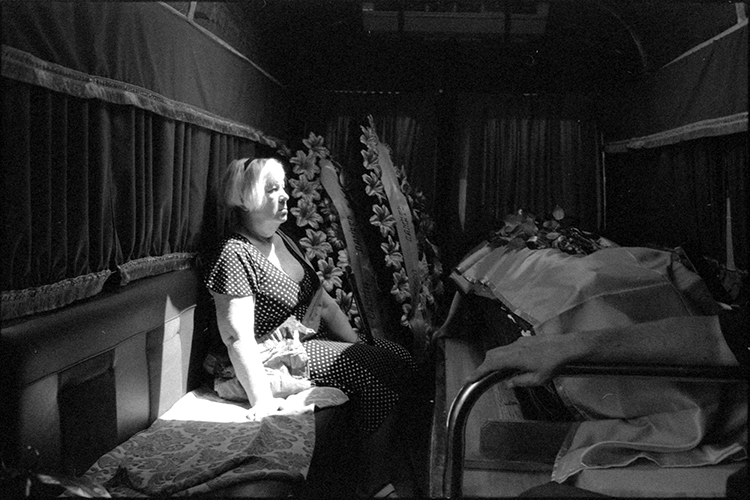
On this day, the Ukrainian Association of Professional Photographers publishes footage of Mstislav Chernov, who captured the historical moments of the Revolution of Dignity. His photos convey the atmosphere of those turbulent days when Ukrainians began the struggle for their democratic and pro-European future.
Excursion to history
The Revolution of Dignity began in November 2013 and lasted until February 2014. This symbolic date highlights 11 years of struggle of the Ukrainian people for freedom, dignity and European choice. The mass protests that swept Kiev and the whole country turned into large-scale resistance to the regime of President Viktor Yanukovych, culminating in his escape, bloodshed and further struggle for independence. This changed the political identity and mentality of Ukrainians.


On November 21, 2013, the government of Nikolai Azarov announced the suspension of preparations for the signing of the Association Agreement with the EU, which caused outrage among the public. On social networks, Ukrainians called on each other to protest, and already at night more than 1.5 thousand people gathered on the Independence Square. In the following days, the number of activists increased, and solidarity actions began in all cities of Ukraine.
Violent Suppression and a New Stage of Protests
On November 30, 2013, Berkut special forces violently dispersed peaceful protesters, mostly students, on the Maidan. This was a turning point: the protests became massive, the focus shifted from European integration to the fight against the Yanukovych regime.

On December 1, Kiev held the largest rally at that time, in which about half a million people took part. Protesters occupied the buildings of the Kyiv City State Administration and the House of Trade Unions, creating the National Resistance Headquarters.


On December 8, on Taras Shevchenko Boulevard in Kyiv, protesters deposed a monument to Lenin. This started a “Leninopad” in all regions of the country.


The climax
On December 13, Viktor Yanukovych sat down for the first time at the negotiating table with opposition leaders, but the dialogue never took place. On January 16, the Verkhovna Rada adopted the so-called “dictatorial laws”, which significantly limited the rights of citizens, in particular, to conduct peaceful protests. This caused a wave of indignation among protesters who went to the parliament building. Security forces used light and noise grenades, pump-action rifles and water cannons, and protesters responded with Molotov cocktails and set fire to barricades to protect themselves.


On January 19, 2014, the confrontation went into a force phase. Clashes between protesters and security forces began on Hrushevsky Street, which lasted for several days. Hundreds of people were injured during this confrontation.


On January 22, the first activists Sergey Nigoyan and Mikhail Zhyznevsky were killed. These tragic events became a symbol of the Revolution of Dignity, and the dead were called the first heroes of the Heavenly Hundred. The security forces began kidnapping activists, brutally beating and torturing them. Witnesses of those events recall the large-scale pressure and violence that the protesters had to face.
On February 18—20, 2014, the bloodiest events took place. Protesters were pushed to the Maidan, and the authorities launched an assault. On February 20, snipers opened fire, killing more than 100 people. Despite this, the protesters went on a counteroffensive, forcing the security forces to retreat.


On February 21, Viktor Yanukovych fled Kiev, and on February 22, the Verkhovna Rada officially announced his removal from office. The Revolution of Dignity ended with the victory of the activists. Ukraine has embarked on the path of democratic reforms and European integration, but already in 2014 it faced new challenges — Russian aggression, the annexation of Crimea and the war in the Donbas.


Revolution of Mstislav Chernov
Mstislav Chernov, a well-known Ukrainian photojournalist and documentarian, actively covered the events of the Revolution of Dignity 2013—2014. He worked at the epicenter of the protests in Kyiv, capturing key moments that have become part of Ukraine's recent history. During the shooting, he was attacked several times by security forces. In December 2013, police officers injured a photographer's arm, tore his journalist ID and destroyed photographic equipment. In January 2014, a policeman threw a light-noise grenade at Mstislav, although it was marked “Press”. Shrapnel from the grenade wounded the journalist's legs and eyes.

Chernov's photographs became one of the main sources for international media covering the Revolution of Dignity. His work has been published in publications such as The New York Times, The Washington Post, and the BBC.
In his interviews, Chernov often stressed that the Revolution of Dignity was not only a political but also a cultural phenomenon. He spoke about the commitment of Ukrainians to their cause and their ability to unite for the future.

“The Maidan is not just a protest. It is a symbol of the changes that society is ready for. Changes that are expensive, but they are worth fighting for. I saw people with despair and faith at the same time standing on the Institutskaya. The war, the Revolution of Dignity, the annexation of Crimea and the Russian invasion of the Donbas and the full-scale invasion are all steps of building unity and building a whole generation of people who understand that the fate of their country depends on them. — says Mstislav in one of his Interviews.
Mstislav Chernov ---- Ukrainian photographer, Associated Press journalist, director, war correspondent, President of the Ukrainian Association of Professional Photographers, honorary member of PEN Ukraine and writer. He covered the Revolution of Dignity, the war in eastern Ukraine, the aftermath of the downing of the Malaysia Airlines Boeing 777, the Syrian civil war, the battle of Mosul in Iraq, the Russian invasion of Ukraine in 2022, including the blockade of Mariupol. For this work, he received Deutsche Welle Freedom of Speech Award, Georgy Gongadze Award, Knight International Journalism Awards, Biagio Agnes Award, Bayeux Calvados-Normandy Award, Elijah Parish Lovejoy Award, Free Media Awards. According to the results of 2022, he was included in the ratings “People of NV 2022 in the Year of the War” and “14 songs, photos and art objects that became symbols of Ukrainian resistance” from “Forbes Ukraine”, and video materials from Mariupol became the basis of the film “20 Days in Mariupol”, which in 2024 was for the first time in the history of Ukrainian cinema Awarded an Oscar. Photographer's social networks: Facebook Instagram
The material was worked on:
Researcher of the topic, author of the text: Vera Labych
Bildeditor: Vyacheslav Ratynskyi
Literary Editor: Julia Foutei
Site Manager: Vladislav Kuhar
.png)