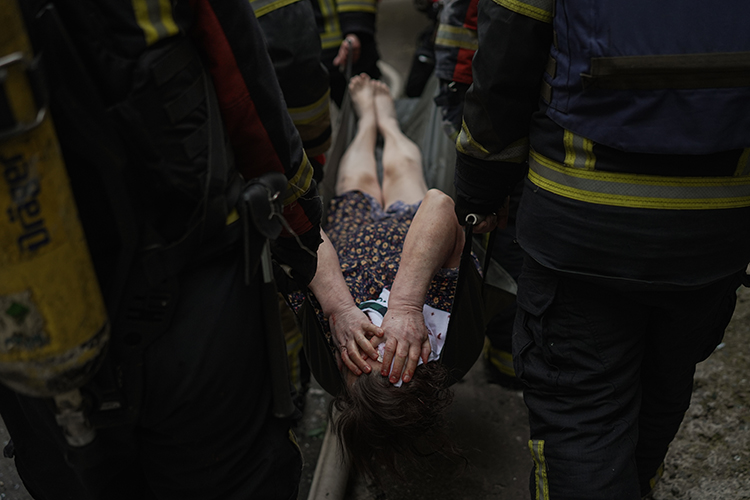
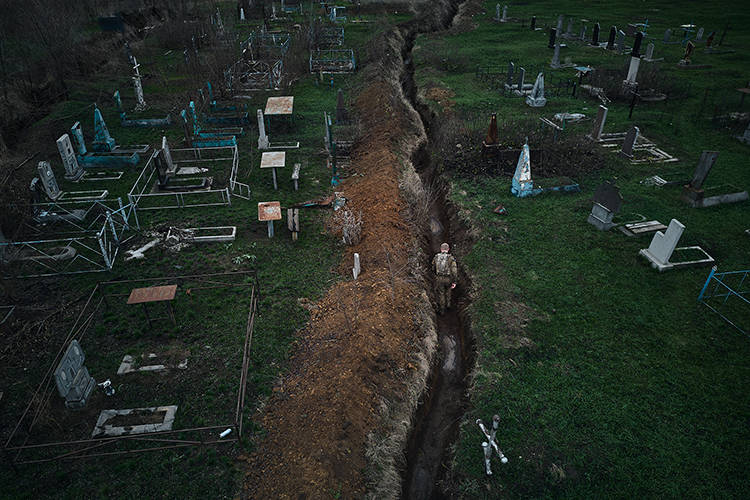
Photojournalistand documentarian Georhii Ivanchenko won the “MYPH PHOTOGRAPHY PRIZE 2024”photo contest with a series titled “Warhole.” Shot through a door peephole, theseries offers an alternative view of war—leaving space for imagination anddrawing attention to details. In it, Ivanchenko combines documentaryphotography with artistic elements, using a deliberately limited perspective toconvey the broader context of the war.

Rethinking
GeorhiiIvanchenko admits that the impulse for creating the “Warhole” series came fromconversations about disappointment in classic photography that he happened tooverhear. “You often hear people say about war photo exhibitions:
‘It’sthe same thing again—this is boring!’ It hurts to hear, but to be honest, manyexhibitions really have become repetitive—full of raw, purely informationalphotographs that don’t always connect with viewers emotionally. Photographyshould speak not only through facts, but also through feeling and conceptualreflection,” hesays.
Georhiifound inspiration for the technical approach in street culture and hip-hopscenes of the 1980s and 1990s.
“I’dseen photos from those scenes shot with a fish-eye wide-angle lens. Theycreated this special sense of presence, and I started thinking: why notphotograph the war the same way? Why not use that style, but in a differentcontext?”
Thesolution came unexpectedly.
“Afriend of mine from Chișinău sent me photos where an American had attached adoor peephole to a camera lens. I looked at it and thought: ‘This is exactlywhat I was looking for!’ So I went to a store and bought a door peephole. Itwasn’t a perfect setup—the image wobbled a bit—but the result was worth it.”
Theproject’s spontaneity
The“Warhole” series was created in parallel with Ivanchenko’s reporting work.
“I wasworking on a report near Toretsk, on the road running from Kostiantynivka toPokrovsk,” he says.— “It was an important route for our forces, and it gets shelled heavilyevery day. At the same time, I was shooting on a second camera, using the doorpeephole.”
The ideafor the series emerged spontaneously, but it gained conceptual meaning as thework progressed.
“Istarted shooting at the end of July and finished in August 2024. It was asearch for new artistic tools to convey the war. I see meaning in it—there’svisual beauty, and most importantly, there is a message.”
Acomplete picture
The processof selecting images for “Warhole” was both technical and intuitive, Ivanchenkosays.
“Whileshooting, I began to understand the technical nuances: by stopping down theaperture, you can expand the space in the frame, and by opening it up, theimage becomes tighter. But there was never enough light—so I had to eitherraise ISO or slow the shutter, and sometimes add flash for certain shots,” the photographer shares.
He saysworking with exposure in low light was especially challenging.
“In twoor three photos in the series, I definitely used an extra flash to bring outdetails.”

One of themost important photographs in the series is an image titled “Sunflowers.”
“I tookit on the road under shelling. Back then dozens of cars used that road, thoughnow it’s hardly used. I wanted to shoot something conceptual—in the spirit ofpop art. It’s a different kind of image; it conveys reality differently, and Ilike that.”
Theselection process happened quickly and naturally:
“Ididn’t know exactly how many images the series should have, but a few feltobvious right away. I chose the ones that were closest in spirit, thestrongest—and the ones that, together, create a complete picture. In the endthere were ten, and I thought: ‘Great—no more is needed."

One of theframes surprised Ivanchenko: a shot of artillery firing near Pokrovsk.
“Asusual, I was shooting on my main camera, hoping to catch the moment of theblast. But when I looked through the photos, the frame didn’t work on the maincamera. It did, however, work on the second camera with the door peephole.”
Thephotographer says this frame became special to him precisely because it wasaccidental—he didn’t expect to catch it.
Aboutpeople and flowers
One of themost emotional images in Ivanchenko’s series is a photograph of a man puttingout a fire in a field.
“It’sthe village of Nova Poltavka, about five or six kilometers from the front line.A wheat field caught fire—most likely from a drone. I can’t confirm that as ajournalist because I didn’t see fragments, but that’s what locals said. Mycolleague and I ran there—three kilometers across the field—because we saw atractor and farmers trying to put the fire out. They wereordinary workers, saving their field.”

Working onthe series, the photojournalist began to look differently at the smallestdetails of nature.


“Inoticed that I like photographing plants through the door peephole. It givesthem new meaning, shows them differently. For example, I have a photo of threetrees. At first glance they’re ordinary trees, but when you look at them, theygive you this special sense of calm. I can’t explain it, but it’s there,” he says. — “The photo with thetree and the burning field is one of my favorites. The smoke rose so high thatit partly covered the sun, and through the peephole it created an incredibleeffect. The light flares, and the image looks almost divine. I even printedthat photograph and gave it to my father.”

Thephotograph with daisies is another important symbol in the series. The imageshows a roofless hangar, and daisies blooming against it.
“Theycould have been just flowers under the sky, if not for the war. War leaves itsmark even on the simplest things.”

Ivanchenkoalso shared a personal story about the “Sunflowers” photo.
“Mydad’s birthday is on Oct. 1, and my mom’s is on Oct. 3. I decided to print thephoto for them and said: ‘I’m giving you flowers!”
Andy Warhol and “Warhole”
GeorhiiIvanchenko chose the title for his series unexpectedly, inspired by a chanceencounter.
“I wassitting in a café and thinking about what to call my work. Shooting through adoor peephole feels more like a fun thing—something you shouldn’t take tooseriously. I didn’t take it seriously then, and I still don’t. But while I wassitting there, a guy walked into the café wearing a T-shirt that said‘Warhole.’ I thought it was a play on words: ‘war’—and ‘hole,’ the opening welook at war through. And then I noticed the name ‘Andy’ on the shirt, whichimmediately made me think of Andy Warhol.”
In thatway, Warhol—known for elevating ordinary things and turning them into culturalicons—became the perfect inspiration for the series title.
“Andymade art out of banal things, turning them into something iconic. I thought itwas the perfect title for a series that uses a pop-art approach to highlightwar.”
Despite hisself-irony, Ivanchenko understands the ambiguity of this approach.
“I cancriticize this approach, but it lets you convey a message about the war in adifferent way—not mindlessly, but with a new perspective. It was an experiment.I’m not sure how exactly I feel about it, but I do know one thing: visually, Ilike it. This series emerged alongside my main work as a photojournalist, and Iwas curious how people would respond to it.”

“Is thismy first work in pop art? Yes—absolutely my first,” Ivanchenko says.
As for thefuture, he says he doesn’t yet have a clear vision:
“MaybeI’ll keep shooting with the door peephole and develop the series into aproject—or even make a mini-book. But I’m not sure whether it’s worth goingdown that path. I’m drawn to exploring new approaches.”
Thephotographer emphasizes that spontaneity matters more to him than rigidconceptual work.
“I don’tplan in advance what I’m going to shoot. I react to what I see in themoment—just like in reportage photography. Artists interfere with the frame andbuild a concept, but that’s not close to me. I’m a reporter; I traveland photograph the war.”
GeorhiiIvanchenko is a Ukrainian photographer who has worked as a freelance reporter indocumentary and journalistic photography since February 2022. From the firstmonths of the invasion, he began shooting for the Associated Press and theEuropean Pressphoto Agency. Starting in the Borodianka area, where Georhii wasborn, he continued along the front line—through Mykolaiv, Kharkiv, and Khersonoblasts. Today his focus is on Donetsk Oblast. A turning point in hisphotography was nearly a month spent living in Bakhmut. Throughout December andJanuary, he documented the lives of residents with only a backpack and sleepingbag, sharing daily life with local volunteers, medics, soldiers, andfirefighters in basements. In April 2023, while working on a story about ChasivYar, his car was shot at and destroyed by a Russian shell. Despite this, hecontinues to reflect on the many situations he has encountered and is workingon his first project, “Way of War” (working title). The photographer’s Instagram.
Workedon the piece:
Topic researcher, text author: Vira Labych
Photo editor: Viacheslav Ratynskyi
Literary editor: Yuliia Futei