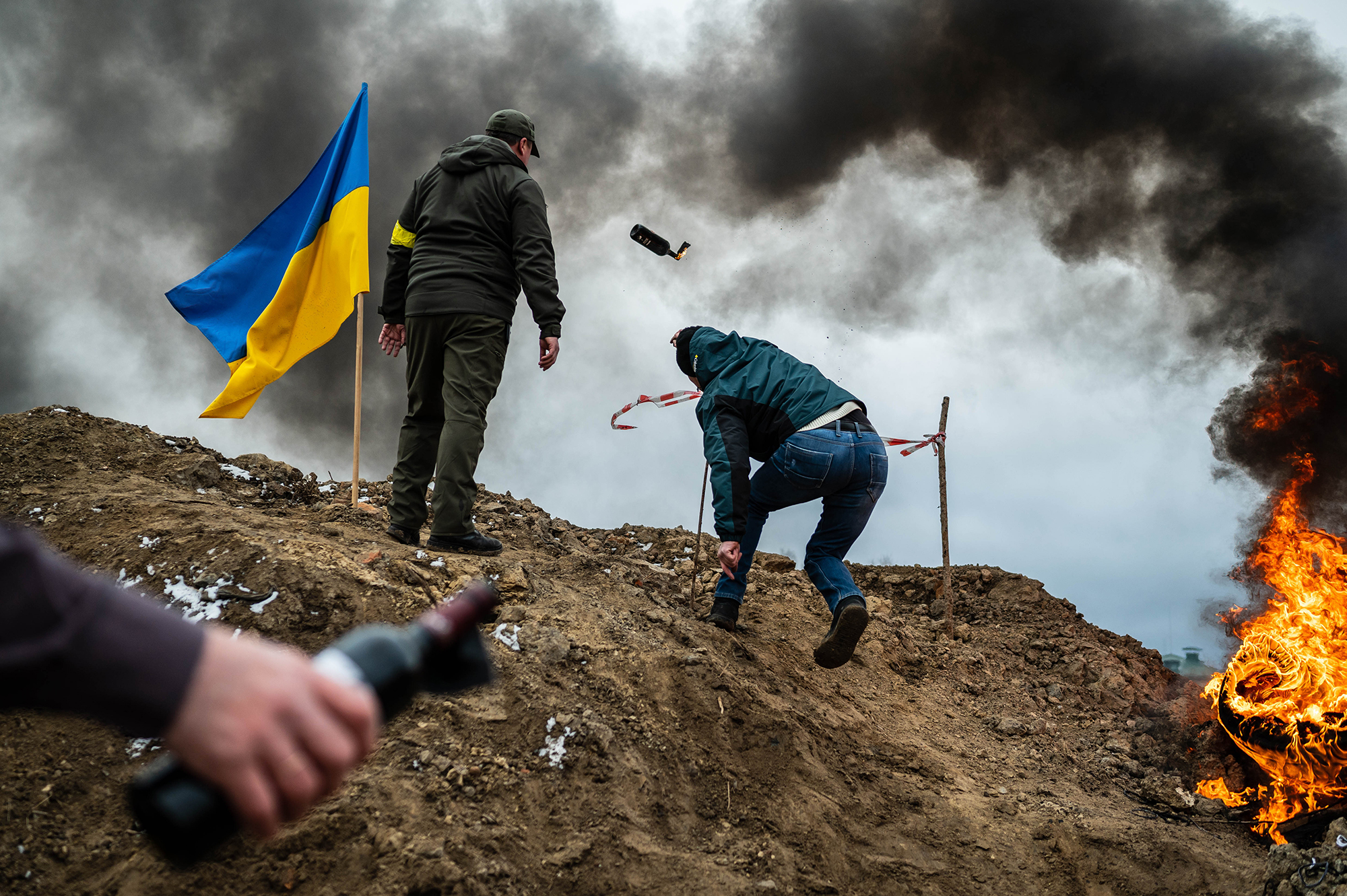
Ukrainian documentary photographer Viacheslav Ratynskyi spoke about key frames shot during the Revolution of Dignity, about the role of a photographer in the combat zone, and about silence, fatigue, and people’s sleep in war.
ABOUT THE MAIDAN AND A FORMATIVE POINT
What does the day of the Revolution of Dignity mean to you now?
I had never experienced such emotions before the Revolution of Dignity and, probably, I will never feel them again in the future. For me it was the first time, as it was for many people who were there. When the events on the Maidan were unfolding, I understood that history was being made.
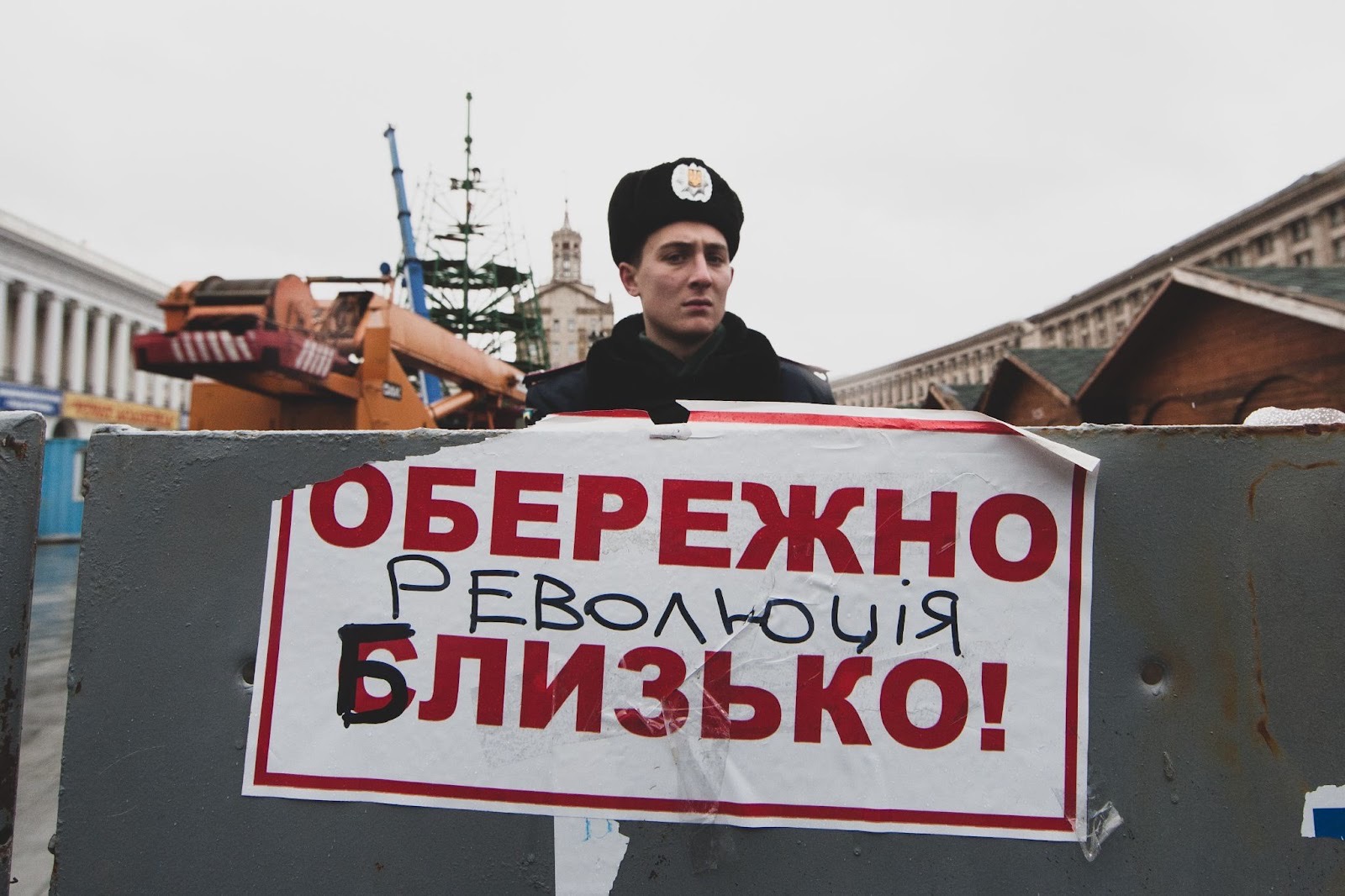
I was 23 and had just moved from my hometown of Zhytomyr to Kyiv. At that moment, I still had no friends or acquaintances in Kyiv. I met my photographer colleagues already on the Maidan. I still didn’t know the area very well and simply didn’t understand where it was better to run from “Berkut” and which side of the Maidan it was better not to go to. Besides, in the first days of the Revolution, there was very heavy rain.
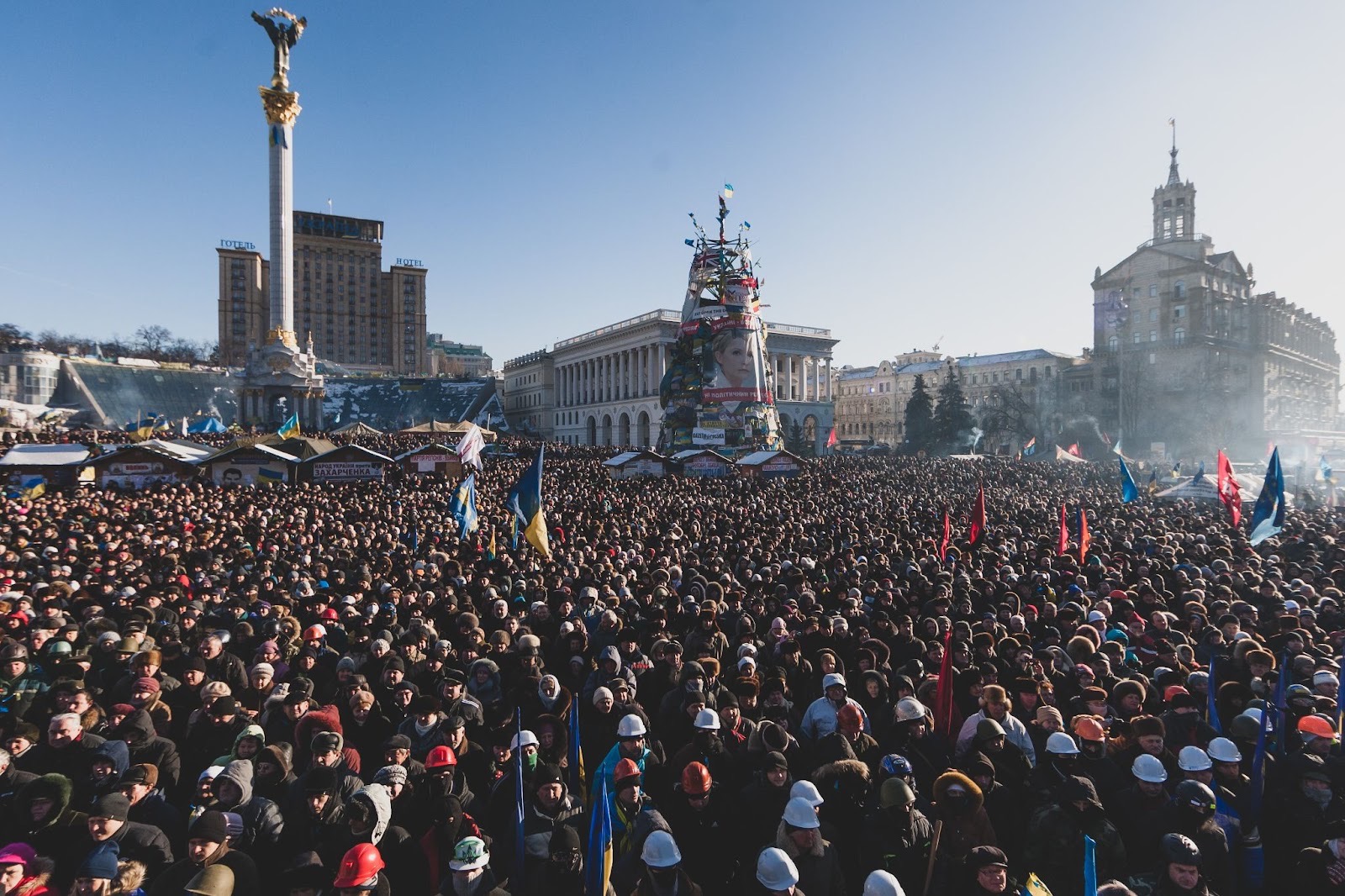
The Revolution of Dignity began with dancing and at first resembled the protests in Belarus in 2020. There was a lot of music, singing, flowers, and flags. Then everything started changing very rapidly. In my photos, you can still see the entire Lenin monument, which protesters later dismantled. I didn’t manage to shoot that moment because I was in another part of the Maidan.
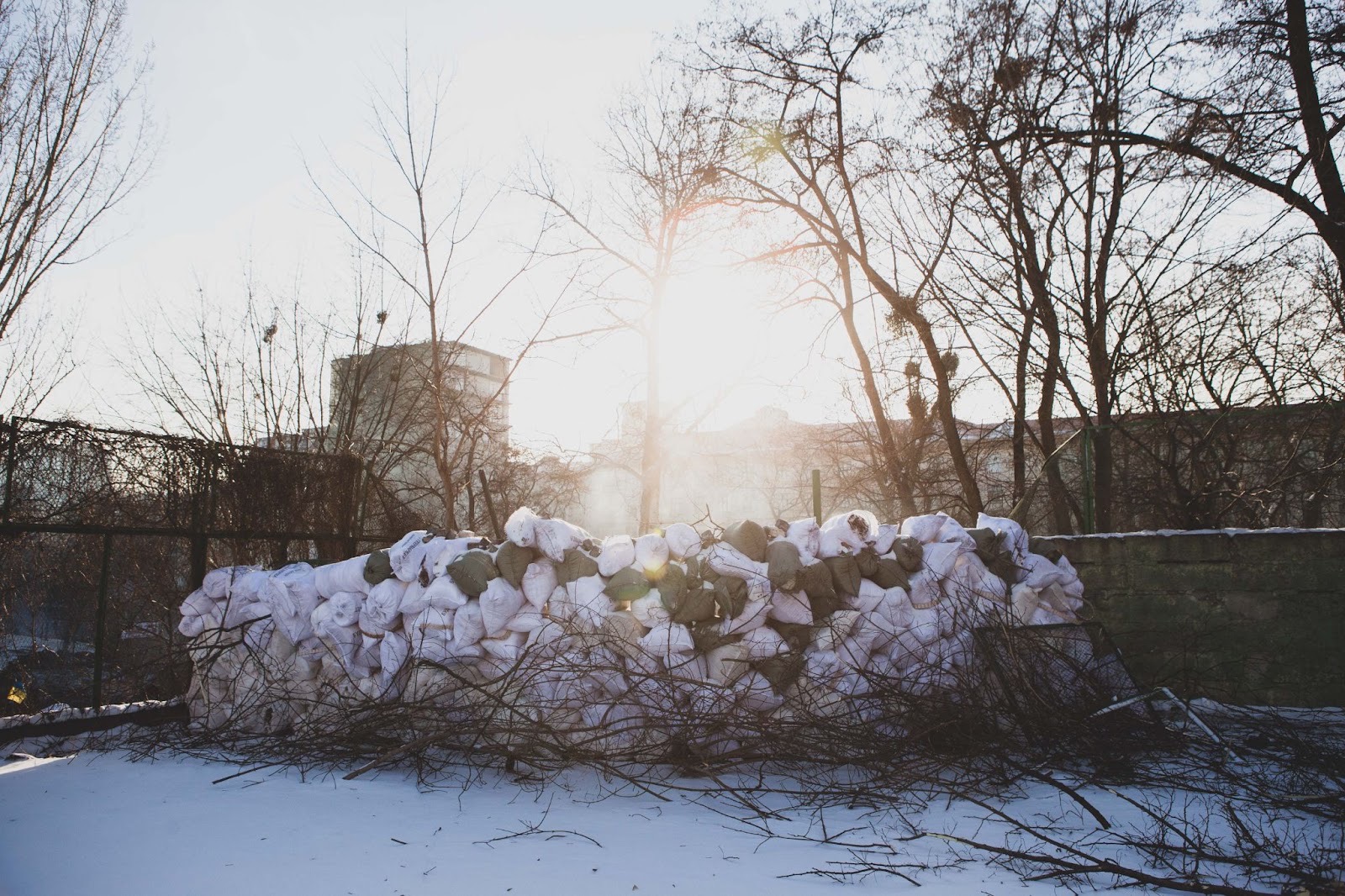
Near the Office of the President, barricades were built everywhere. Protesters had no helmets and no protection at all; only one man had prepared — he put on goggles. At first, it was literally bare hands. In the photo from December 11, you can see that on the barricade on Hrushevskoho Street people had already started putting on helmets. Each clash brought even more people to the Maidan. What happened next — we all know.
Do you remember a frame that became not the loudest, but the most important to you personally?
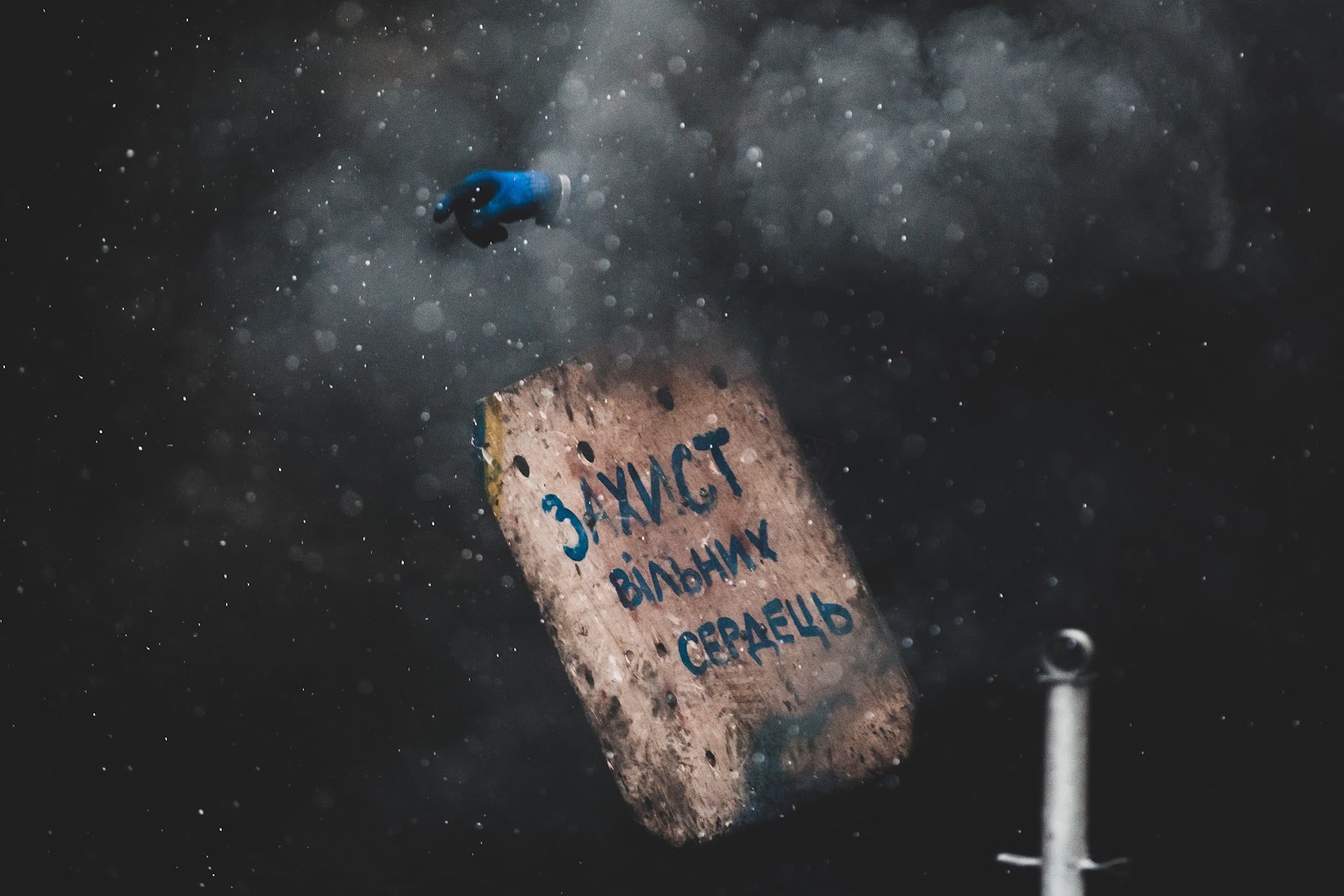
At first, I didn’t even notice the frame with the shield that says “Protection of free hearts”. When we were selecting photos together with Reporters photo editor Danylo Pavlov, he said: “Oh — show me this picture.” He added contrast, and the photograph began to look interesting. I thought about why I hadn’t paid attention to it earlier. First, at that moment the inscription seemed too pompous to me. Now, after time has passed, these words look very appropriate. Second, the composition didn’t seem perfect to me — it felt “collapsed,” and the pole got in the way. Today, that pole is a plus; at the very least it shows that the shot wasn’t generated by artificial intelligence.
Do you agree with the idea that the Maidan shaped a new generation of Ukrainian documentarians? Do you feel you are part of it?
It’s unlikely that we can say the Maidan formed a separate generation of documentary photographers. I think that many people, including me, while shooting the Maidan understood that photographing and documenting matters. And it matters not only for you personally, but also for the people around you. Then, as in the period after 2022, there was huge attention on events in Ukraine. Many legendary photographers came to us and even held master classes — for example, the famous American photojournalist and war photographer Stanley Greene. The situation during the Revolution of Dignity was like a horror no one could have imagined. In that moment, many people understood that documenting is important and that it is something you need to do.
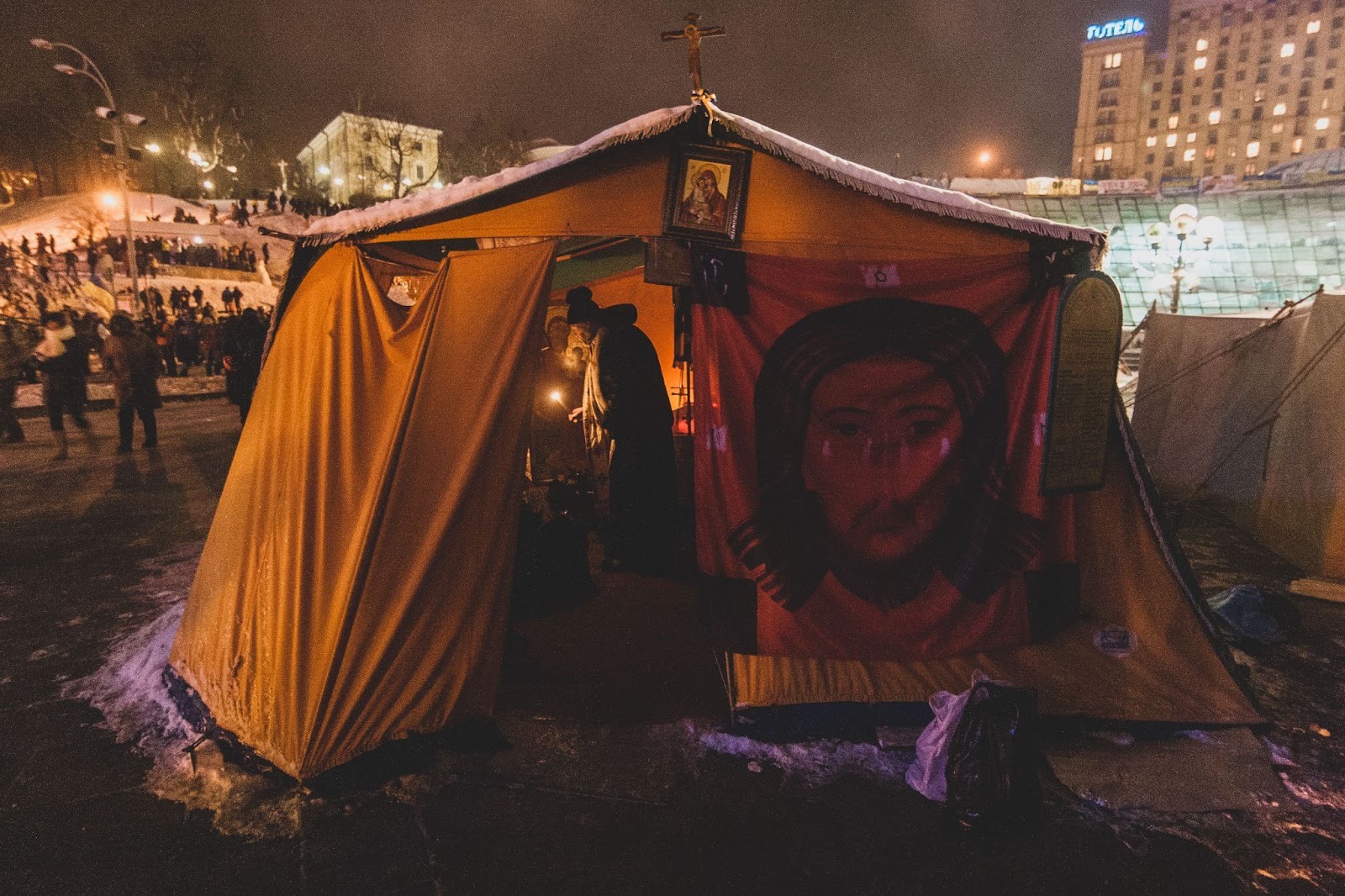
At the same time, many people photographed the Maidan — and photographed it well. It always seemed to me that someone was making shots far better than mine. That’s why at the time I showed and published almost nothing — the frames seemed uninteresting and unnecessary.
Over time, some Maidan photographers moved into video formats, some started shooting commercial work, and some left the profession entirely or left the country. It seems to me that similar things may potentially happen now as well. Some photographers may disappear from view when events in Ukraine stop being relevant. That is probably normal, but it becomes sad when people with strong potential leave the profession.
How has your vision changed over these twelve years: what exactly is worth photographing in Ukraine, and how should it be done?
Of course it has changed — many years have passed, different events have taken place, and I have gained experience in photography. I began to see differently and to approach shooting differently, to understand processes better, including through life experience.
Still, just as twelve years ago, I am interested first and foremost in working in Ukraine and on topics important for Ukraine. It seems to me that after the war, Ukraine will have a vast, untapped field of stories that will need to be researched and shown. There will be even more stories; the main thing is not to lose motivation.
Do you see a connection between the Maidan and the war? Is photography a bridge between these historical phases for you?
For me, the connection between the Maidan and the war is unquestionable. Of course, not in the sense spread by Russian propagandists — that, supposedly, people “jumped” on the Maidan and brought war upon themselves. Rather, I mean that because of the protest on the Maidan and the weakness of the state at that time, Putin seized Crimea and started hostilities in Donbas. These are obvious things that do not need to be explained. Undoubtedly, all of this is part of one chain and one historical process that we are living through now.

Photographs from the Revolution of Dignity and photographs from the war are each valuable on their own, but in terms of historical context they are inseparable. The Maidan ended not only with the fall of Yanukovych’s government, but also with former Maidan participants uniting into volunteer battalions and going to the training ground in Novi Petrivtsi, where units of the National Guard of Ukraine train. There, their former enemies taught them how to use weapons. People from the Maidan went to defend Donbas.
ABOUT BEGINNINGS AND MOTIVATION
When did you realize that photography is your profession and your voice?
I started in journalism early, and a camera was always nearby. At first I worked in regional media and had to do everything — write, photograph, and shoot video. When the events on the Maidan happened, I understood that photography was exactly what I wanted to do. Of course, like many photographers, I had crisis moments when I thought about quitting, because it’s difficult, no one wants to help, no one wants to pay for the work properly, and it feels like no one needs it except me.
How did studying in Lviv — at the journalism faculty — influence you?
Studying at Ivan Franko National University of Lviv laid a valuable values-based and theoretical foundation. In addition to journalism, we studied history, philosophy, political science, and so on, and this formed a certain system of values and worldview.
However, honestly, if I had the opportunity to choose an education now, I would stop at something more applied. It seems to me that journalism does not have to be a first degree; a good master’s program in journalism would be enough. The main part of learning should take place in good newsrooms, in practice. Then we will have good journalists.
What were your first topics? What interested you then — and how does that differ from your view today?
At first I did regional journalism, writing and shooting about local events. But I have a huge archive of ordinary everyday life in Lviv and Zhytomyr — two cities I often had to travel between. Recently I was organizing my shoots and came across photos I made at the turn of the decades — street scenes, celebrations, and an endless mass of ДТП frames. These kinds of photos were considered clickbait and were popular in local media. I have a frame of a wrecked car, next to which a person lies on the asphalt covered with a jacket. Across from this scene stands a crowd, and in the middle of the frame stands my father. He was driving by and stopped to find out what had happened.
Perhaps I will have time and inspiration, look through my archival photographs, and assemble them into a project. An entire generation has already grown up that did not see and does not know what life was like in the first decade of the 21st century. For example, our generation is very interested in looking at photographs by Oleksandr Chekmenev and other talented photographers shot in the 1980s and 1990s. So I recommend everyone preserve and organize their archives.

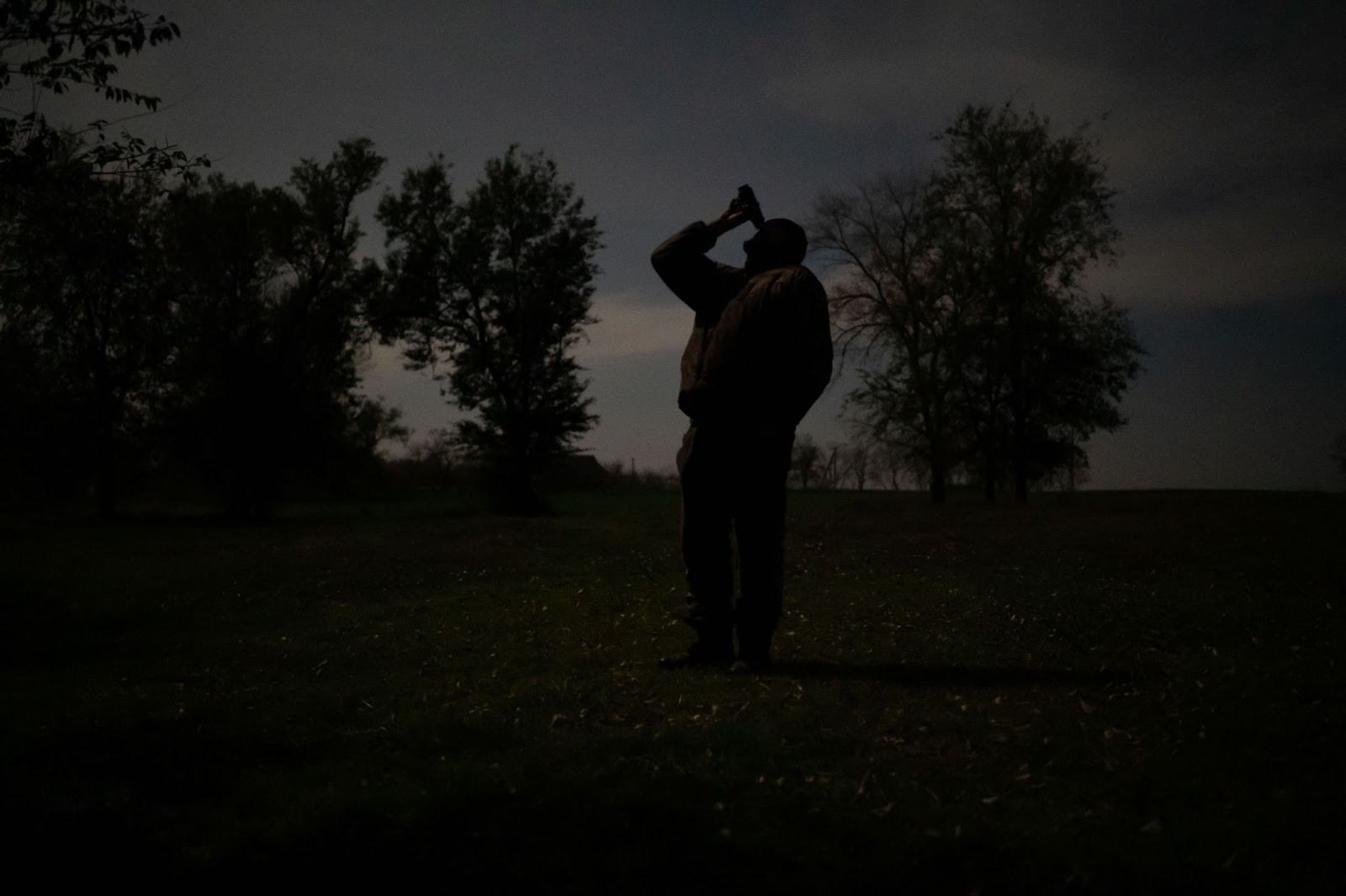
ABOUT WAR, THE FRONT LINE, AND CHOOSING TOPICS
In one interview you said: “The front line is not a safari for photographers.” Has your attitude toward shooting at the front changed over time?
Of course, the front line is not a safari for photographers. I still believe that. I said this at the beginning of the full-scale war, when a very large number of foreign photographers came to Ukraine. Quite often their work did not look very good when they came for a short term, behaved rather arrogantly, and had access to shoots that Ukrainian media could not get into.

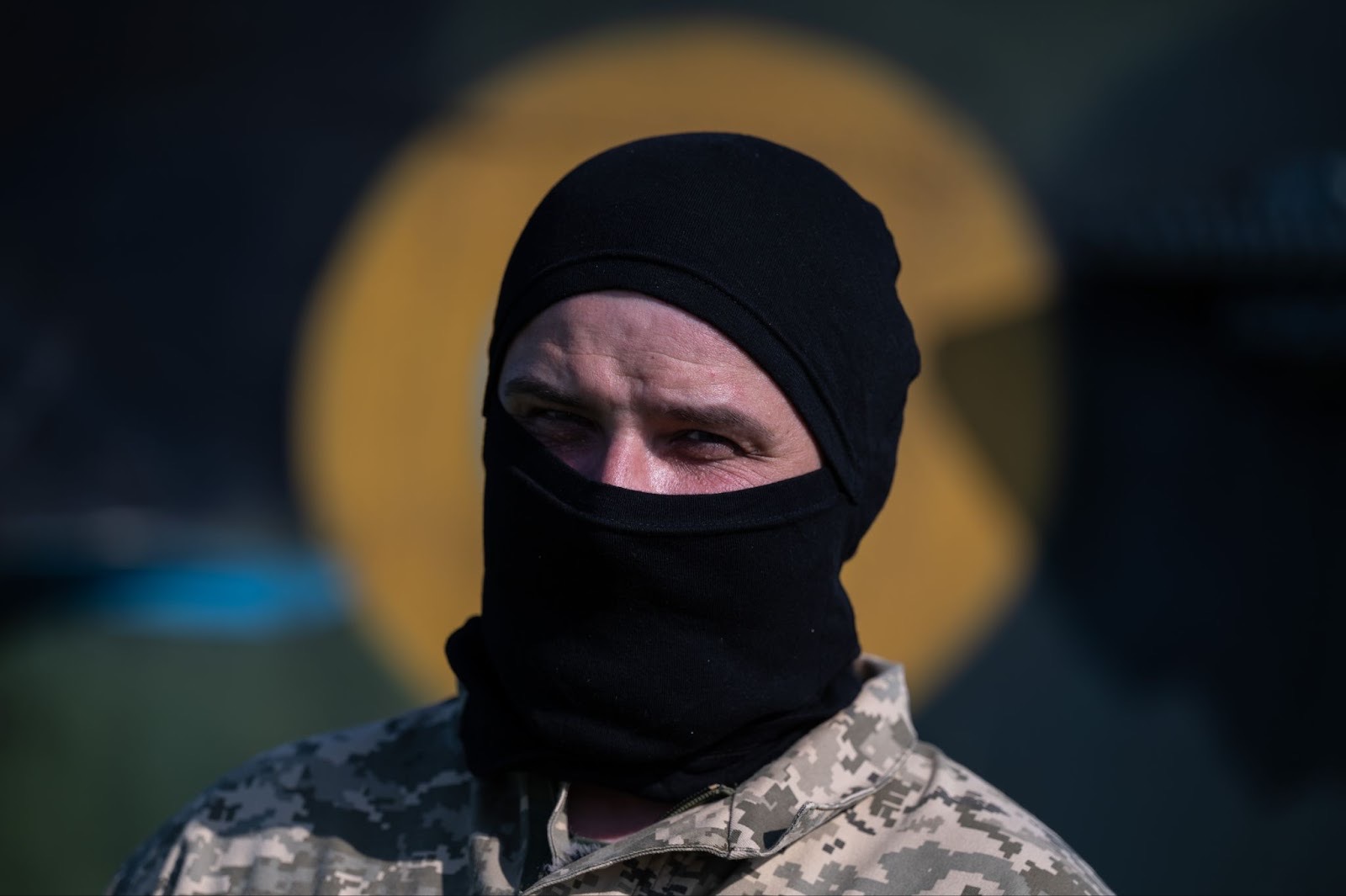
Today, very few foreign photographers continue working in Ukraine. The situation at the front has changed so much that now it is important for a photographer not to become a target for a “safari” of Russian drones. Such cases have been increasing lately, and each time it becomes harder to travel and document the war — even in places that, at first glance, seem safe and far from the front. Now you have to be careful everywhere.
It is difficult for me to give safety recommendations. I arrive for a week or two, photograph the war, and when I return a month later, the situation has changed drastically. I saw on social media that anti-drone nets now stretch already from Izium, though just a few weeks ago they were not there. Kramatorsk and Sloviansk, which were rear cities where we slept, ate, and rested, are now already in danger, and Pokrovsk and Kostiantynivka are destroyed.
How do you work when access to a topic is limited—press officers, logistics, risks? How does that change your choices?
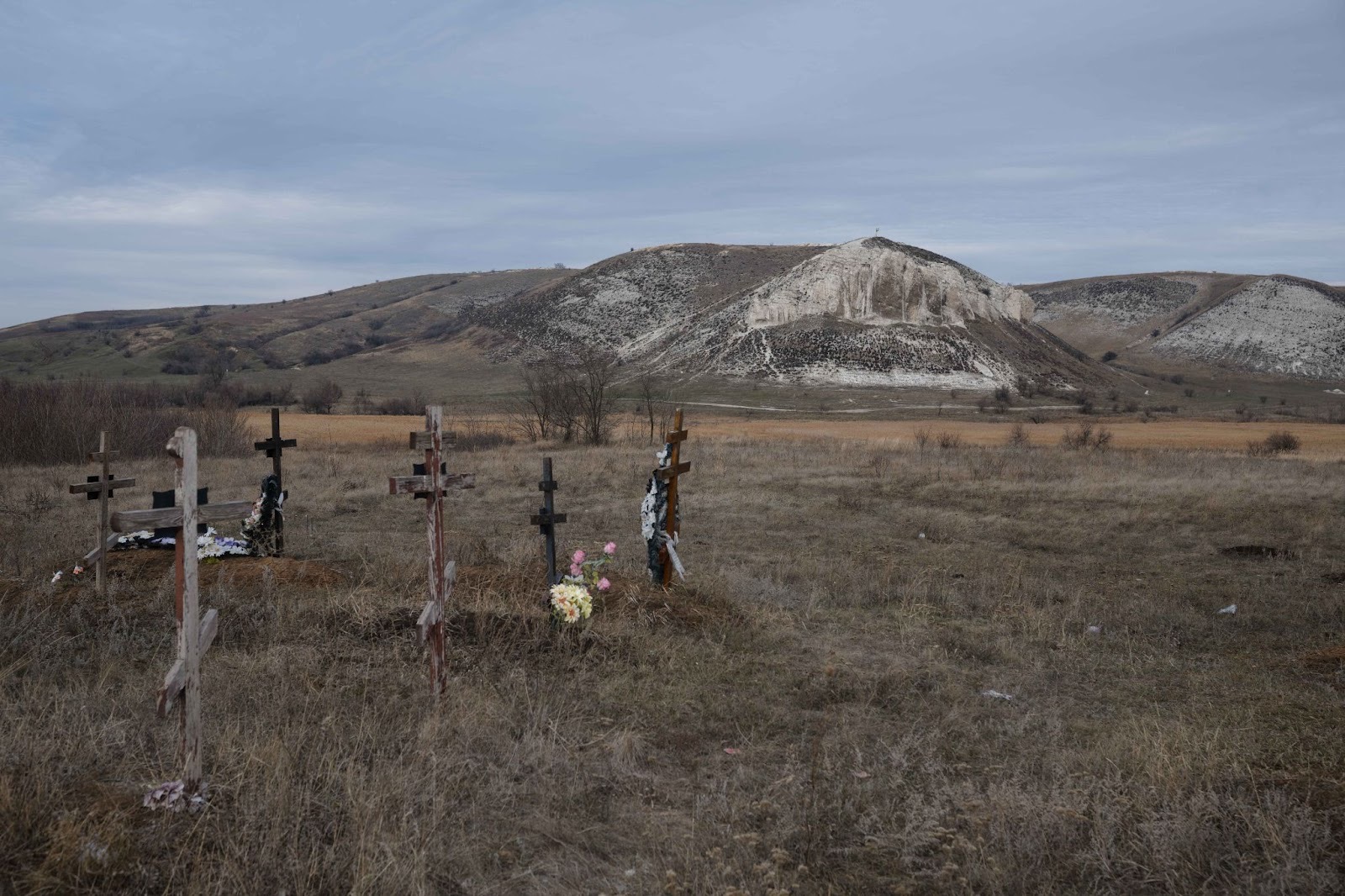
It affects the work a lot. Though right now, the most limiting factor is the situation at the front. Of course, besides security-related limits, there are others. For example, when I started working on a project about fallen service members and those missing in action, it turned out that the topic is very closed. Still, I found a police officer who has access to many stories and helped organize some things. The main advice is: if you knock on one door and it’s closed, you should knock on the next. If it’s closed there too, you need to find a third. If you truly want to work on a project and are convinced you need it, sooner or later the opportunity will appear — you just have to wait.

In Project 206 you photographed the return of the bodies of the fallen. What ethical boundaries do you have to draw in such situations?
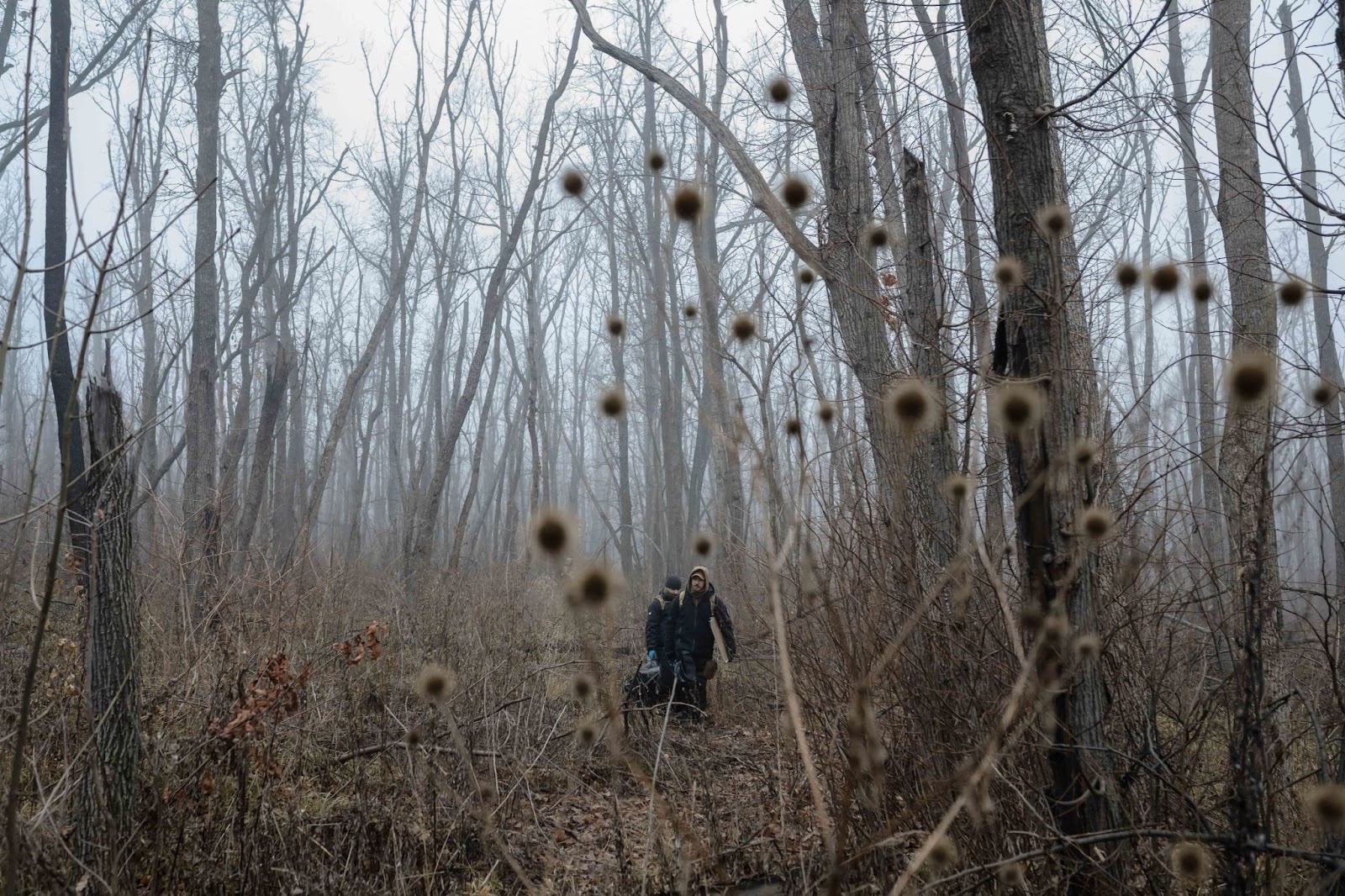
By the way, I called the project differently — “Each Finding Is a Key”. I guess I like long titles. As for boundaries, ethics must remain in all topics, not only in war. That is what I relied on while working on the project. For example, I tried not to add photographs of openly mutilated bodies that had already almost decomposed. Such images are needed neither by me nor by the viewer, and they add nothing to the story. Of course, I do have separate photographs with bones and skulls. But I don’t want these images to look disgusting; I want them to preserve the dignity of the people who died in the war.
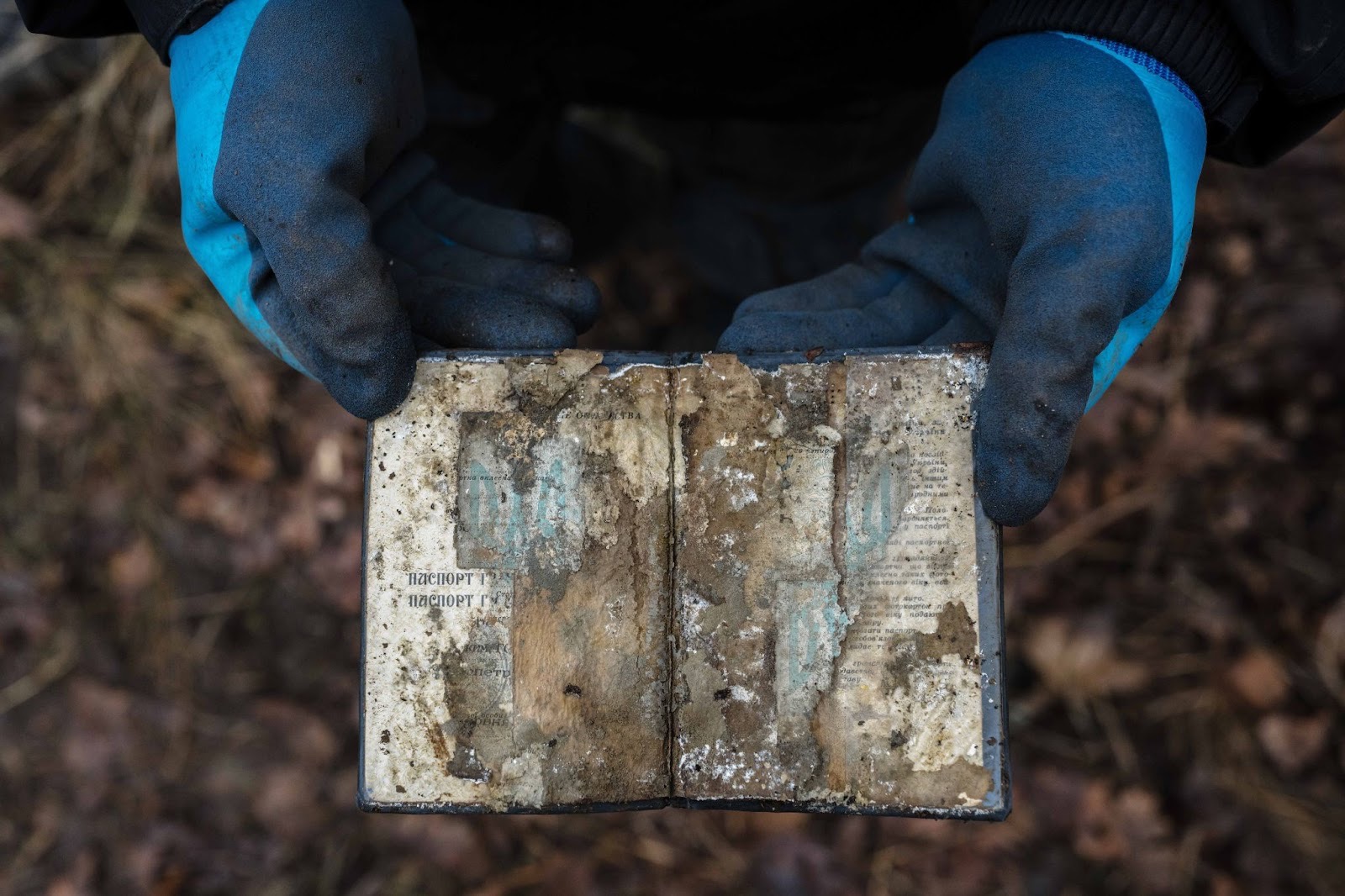

We talk a lot now about the ethics of shooting in war, but it seems to me these conversations are not so much about ethics and boundaries as they are about humanity. You can always find a way to show a situation decently. Of course, I try not to aestheticize the war — I want the frame to look interesting and well built, but not to become postcards. I don’t want my photographs about war to be as beautiful as a sunset landscape, but I also don’t want them to be sloppy or voyeuristic. I always look for a balance so that the frame is interesting thanks to different compositional approaches, but without pictorial beauty.


I try to shoot as much as possible, but that doesn’t mean everything needs to be shown immediately. Today we talked about archives, and I believe time forgives a lot. The frames that cannot be published today will, over the years, become valuable documentary images that can even be used in investigations. For example, this is how we already look at photographs from the Maidan today. Not many people photographed Serhii Nihoyan, and he is one of the key figures of the protest. So even if he had said not to shoot, it still would have been necessary to shoot.
ABOUT THE “SLEEP” SERIES AND SILENCE IN WAR
In the series Sleep, you showed a very vulnerable side of war — sleep, fatigue, silence. Why did this topic resonate with you?
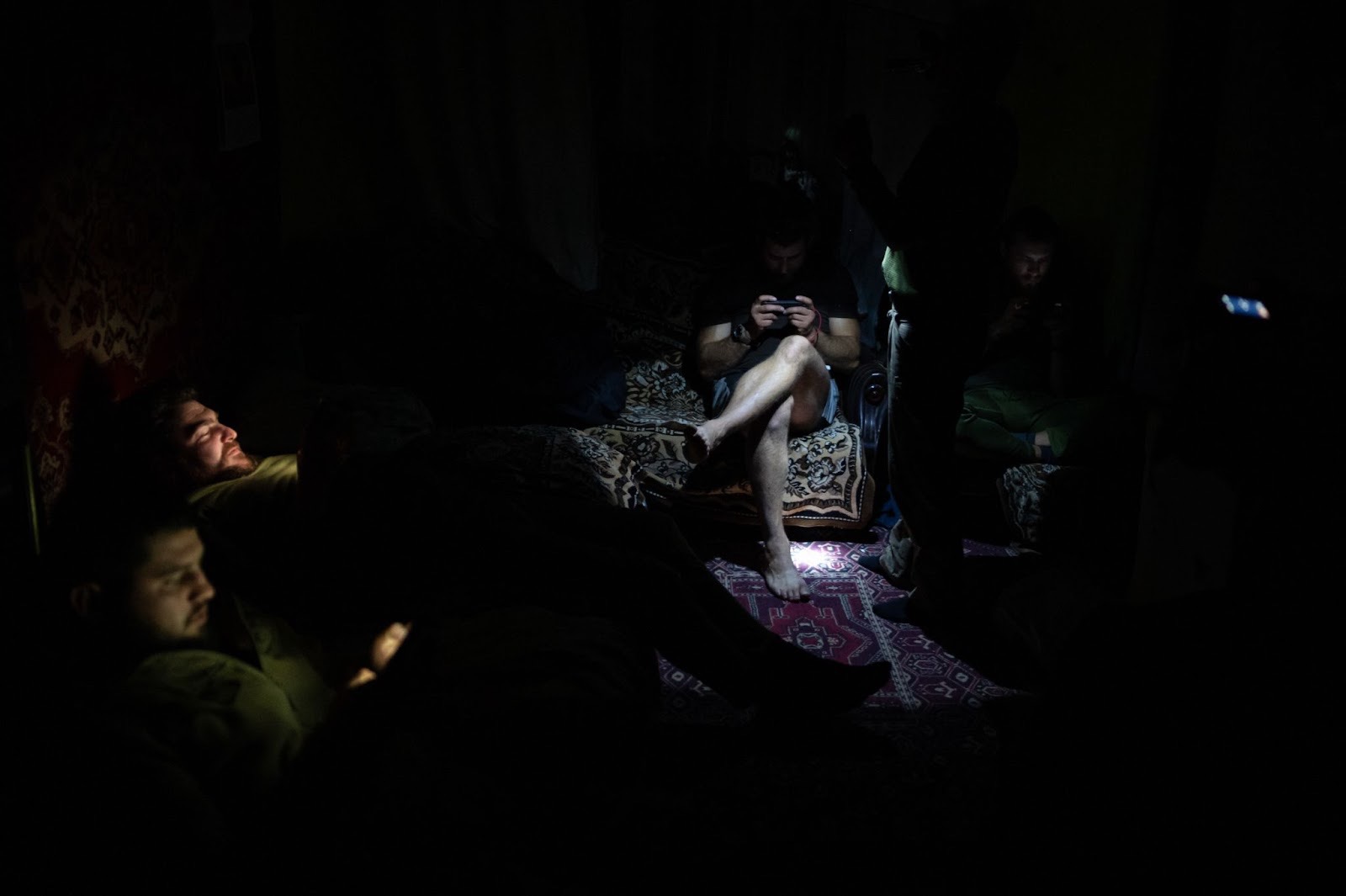
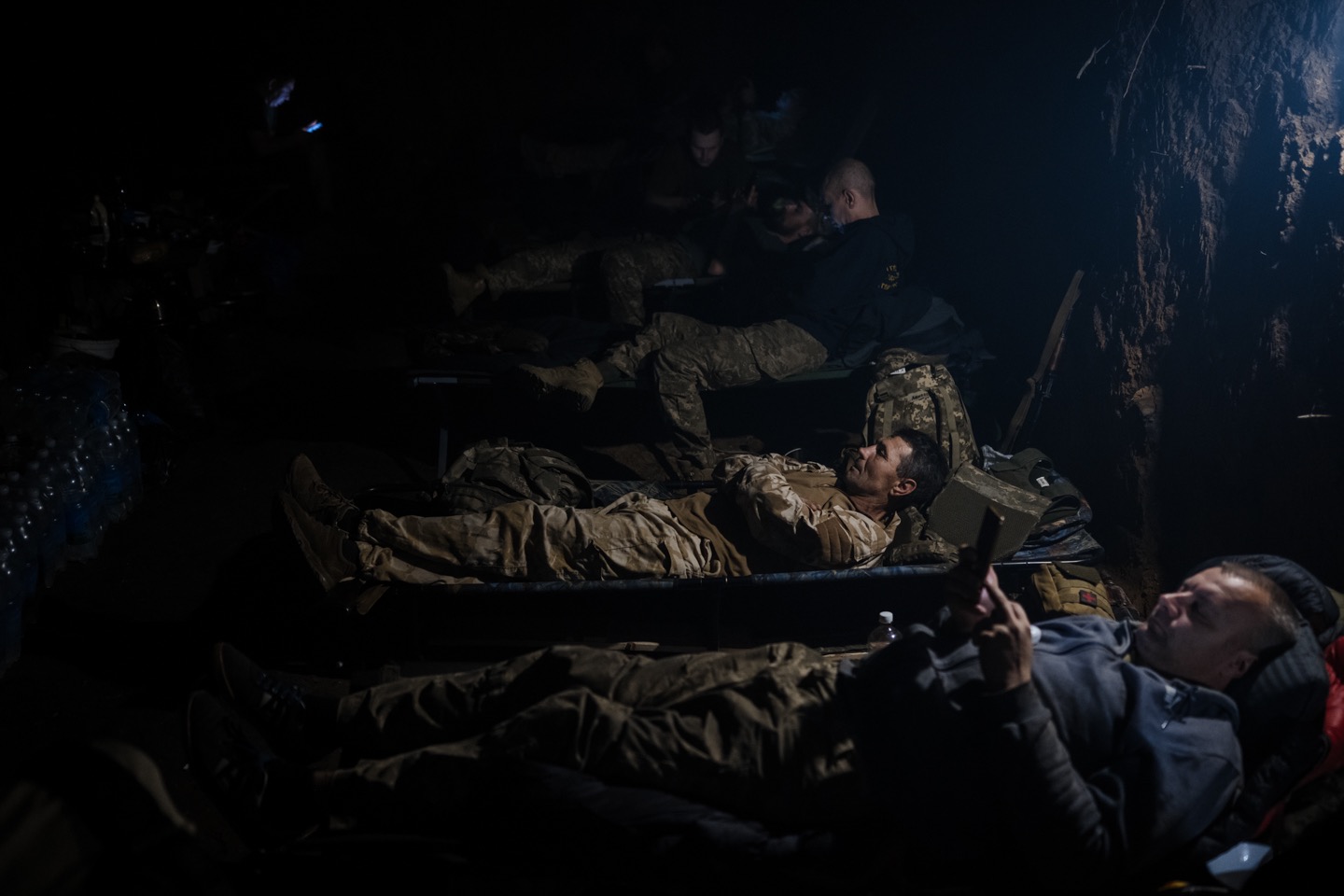
I started shooting the Sleep series last summer. The first was a photograph where one nice-looking man is sleeping very soundly. I thought it could become something very interesting, and I decided that whenever I had the opportunity, I would shoot. Since then I started paying attention to sleeping service members. The point is that earlier it wasn’t that I didn’t notice service members resting — I just rarely ended up in situations where they were sleeping. Before, I would come to a position for an hour or two, photograph, for example, artillery firing, and go back. When FPV drones appeared, entering and leaving positions had to be done at the edge of day and night. That means you spend at least 10 hours with the military, and sometimes 24. When you sit for a long time in a dugout or a house, you simply start photographing everything around you.
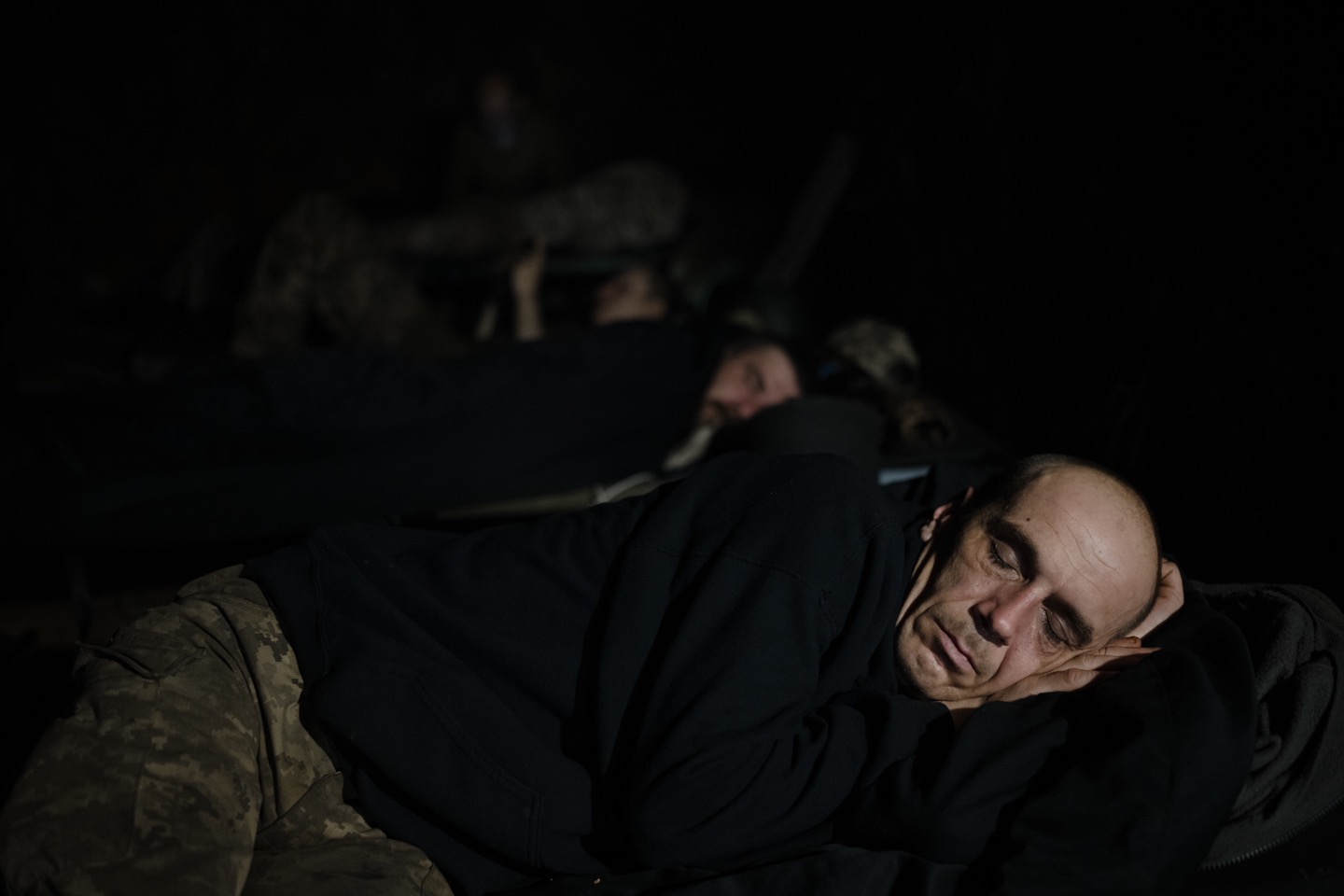
I did not plan to publish these photographs now. But the organization “Pryntsyp”, which supports service members, came to me. They suggested doing an exhibition, and I remembered the idea of a project about sleep. The organization’s staff ran the exhibition themselves and reached out to media so the photographs would be published. That’s how the photographs appeared in the media, including in Reporters magazine.
But something else outraged me. When you crawl through mined forests and morgues, photograph bones, and help search teams load bodies, people look at your project with half an eye and debate ethics. But when the project is about soldiers’ sleep, everyone suddenly finds it interesting. Probably people want something good, understandable, and, so to speak, simple. Sometimes the most interesting things are literally right under your feet.
Were there frames you decided not to publish — out of respect, ethics, an internal sense of the boundary?
There were no such frames. People usually look good in these moments. Later, when you show them these photographs, they smile and are in a good mood because they slept well. None of the people in the photographs said that something was wrong. If the opportunity arises, I continue working on this series.
ABOUT EXPERIENCE, CHANGE, AND RESPONSIBILITY
How has the full-scale war changed you — not only as a photographer, but as a person?
I have become more confident in myself. Over these years, I’ve gained an enormous amount of experience — like many Ukrainian photographers who have been shooting since the Maidan. It’s great experience not only professionally, but also in life. Sad experience, but we have learned a lot. Still, it’s unknown how this experience will affect us in the future. Of course, there is already fatigue, but it cannot be compared to the fatigue of service members.
Are there frames or series that became turning points for you — after which something changed forever?
Probably frames from the Revolution of Dignity. It’s simply still too little time to analyze. I have photographs I love very much, but that doesn’t mean they are good or bad — I just like them. I try to work on projects or series of photographs, but sometimes I lack experience. I’m not ashamed to ask colleagues for advice; it’s not hard for me to admit that I don’t know something. I don’t have a visual education, so I often come for advice to Danylo Pavlov, Ivan Chernychkin, or Sasha Rupeta. I’m grateful for mentoring projects and grant support from the Ukrainian Association of Professional Photographers, because it makes it possible to gain new experience and start working on new projects.
If tomorrow there were no limitations — no risks, no censorship — what story would you want to shoot?
Right now is a time when there are not so many limitations for work. At least that’s how I feel. Now all paths are open to implement any ideas. Ideas just come gradually — it’s an accumulation of different experiences and life moments, when everything comes together and you understand what you will be doing. I have one story I truly want to do. I would simply like to travel around Ukraine — not to big regional centers, but to small towns and villages, because in my view life there differs greatly from life in cities. I would like to spend time in those communities to see their real life. I would travel through all regions of Ukraine to make a general story, a cross-section of the time we live in today and will live in after the war. I am partially implementing this idea now, because together with journalist Myroslav Laiuk we travel to frontline towns and document the situation there.

Viacheslav Ratynskyi is a Ukrainian documentary photographer and photojournalist. He has worked in photojournalism for more than 10 years. He collaborates with international and Ukrainian news agencies and media, including UNIAN, Reuters, The Guardian, Le Monde, Sueddeutsche Zeitung Magazine, and others.
His work has been published in many Western and Ukrainian media, including: Time, The Wall Street Journal, The Washington Post, The New York Times, Der Spiegel, and others.
He has participated in many photo exhibitions in Europe, the U.S., Japan, and South Korea. His photographs have been published in several books.
Viacheslav Ratynskyi works in Ukraine. In his work, he explores the impact of war on society, social and political issues, as well as the lives and problems of Ukrainian youth and children.
Social media: Facebook Instagram
Worked on the material:
Topic researcher, text author: Katya Moskaliuk
Photo editor: Vladyslav Krasnoshchok
Literary editor: Yuliia Futei


.jpg)